• Skip to primary navigation
  • Skip to main content
  • Skip to primary sidebar
  • About/Contact
  • Fusenews
  • Reviews
  • Librarian Previews
  • Best Books
    • Top 100
    • Best Books of 2022
    • Best Books of 2021
    • Best Books of 2020
    • Best Books of 2019
    • Best Books of 2018
    • Best Books of 2017
    • Best Books of 2016
    • Best Books of 2015
    • Best Books of 2014
    • Best Books of 2013
  • Fuse 8 n’ Kate
  • Videos
  • Press Release Fun

31 Days, 31 Lists: Best Picture Books of 2024

31 Days, 31 Lists: Best Picture Books of 2024

December 31, 2024 by Betsy Bird

And just like that . . . it was over.

I always end with picture books when I do my 31 Days, 31 Lists series because in many ways I feel that they’re the backbone of the children’s book publishing industry. People connect to them in visceral, deeply emotional ways. They have ties to our own youth. The picture book you loved as a child cannot really be replaced by any other book in your lifetime. Now I cannot say I read every picture book this year, but I am far more confident with saying that these are the best of the best. The cream of the crop. You’ll see titles here you missed in 2024. You’ll not see some titles here that you adore, and you’ll wonder what’s wrong with my head that I didn’t include them. As is right. For now, enjoy what is inarguably a lovely list of books. And thank you for reading my lists this month!

Here’s to more good reading in 2025.

You can find a full PDF of today’s list here.

Curious to see what the previous years’ lists of picture books looked like? Behold the fruits of my past labors!

  • 2023
  • 2022
  • 2021
  • 2020
  • 2019
  • 2018
  • 2017
  • 2016

Best Picture Books of 2024

All That Grows by Jack Wong

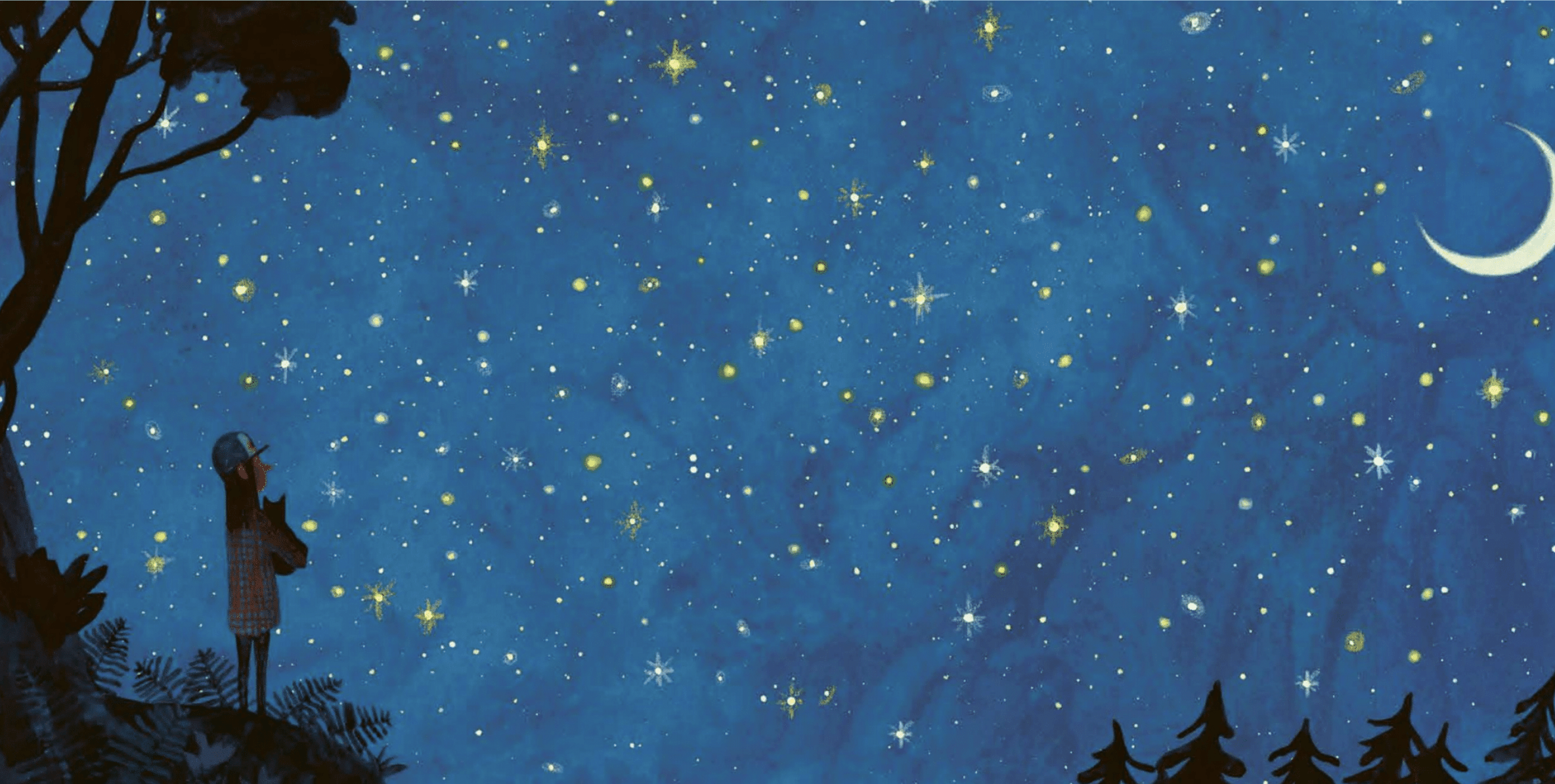
Thanks to his older sister, a boy learns cool plant facts, like that magnolias smell like lemon cake and dandelion greens can be eaten with spaghetti! A moving sibling tale on how much there is to learn in the world. Maybe I’m just a sucker for any books that remind me of spring right now, but I thought that this informative little title hit all the right sweet spots. This is kind of a foraging picture book and it’s doing things with the art that I found very interesting. Look at that spread where the boy lies in bed in the dark, and how Wong is doing fascinating things with the faint amount of light and the black lines on the deep navy background. It’s real gentle and quite nice. 

A Bear, a Fish, and a Fishy Wish by Daniel Bernstrom, ill. Brandon James Scott

One bear. One fish. An empty tummy. Prepare for gentle rhymes amid ensuing hijinks as our hungry hero gets in over his head (literally). Brandon James Scott has a way with pupils, man. The eyeballs on this bear are incomparable. And you can tell that Scott worked in animation because he has this sense of timing worthy of the best Looney Tune cartoons (Bear is essentially the spiritual soulmate of Wile E. Coyote). Bernstrom keeps the gentle rhymes ah-coming, and though I don’t usually truck with books where the predator lets the prey go out of the goodness of his golden glorious heart, you can’t but give this book a pass. Plus, it nails the wordless ending. Previously seen on the Funny Picture Books List.

Being Home by Traci Sorrell, ill. Michaela Goade
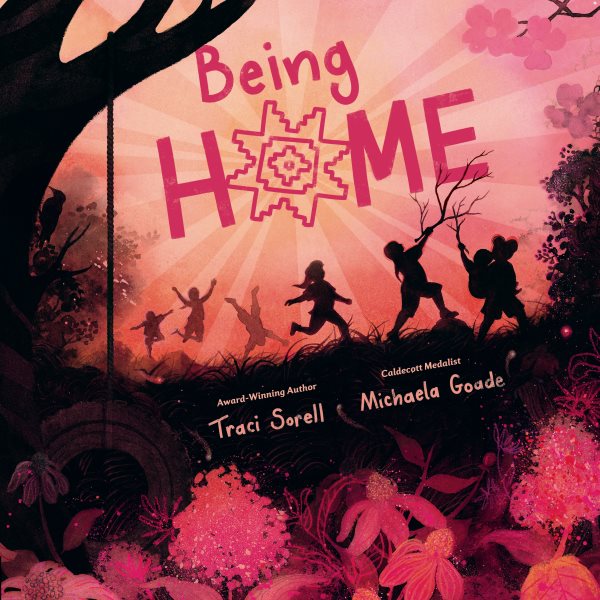
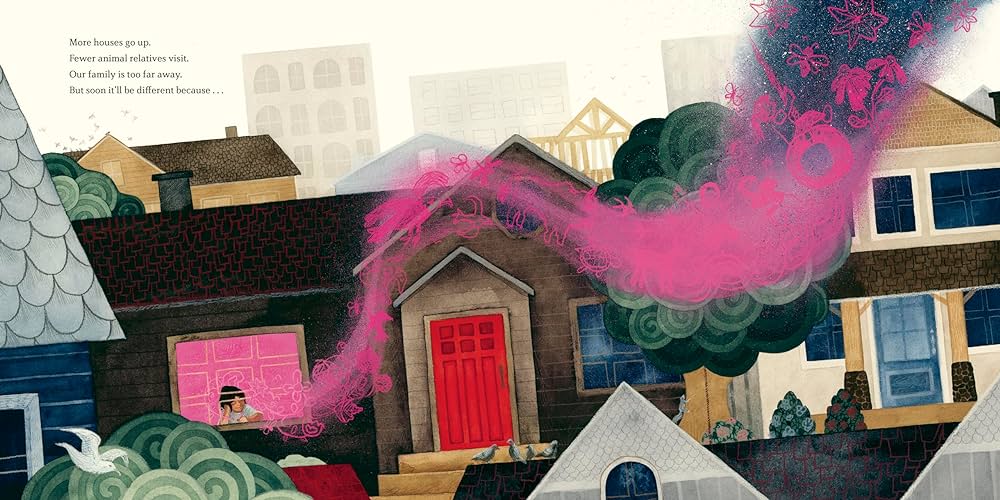
“Today is moving day!” A happy tale of one indigenous family’s relocation from the city to their ancestral lands. Oh, absolutely. This is what you want to see in a book. First off, I’m fairly certain I’ve never even encountered a cheerful moving day book before. Most picture books that tackle moving are instructional, or trying to get the kids on board with a major life change. This book takes an entirely different tactic, and I think it works wonders! I’m so glad a co-worker of mine pointed out to me the use of the fluorescent pink in the art, else I might have missed it. I truly feel like Goade is just becoming more and more accomplished as an artist with every book she does. Here, the art seems to be all about juxtapositions. The mesh of the city life and people and then, later, the very different crush of friends and family outside. Those images of the kids running in the twilight should be sold as framed art. Gotta love this. 

A Better Best Friend by Olivier Tallec, translated by Anthony Shugaar
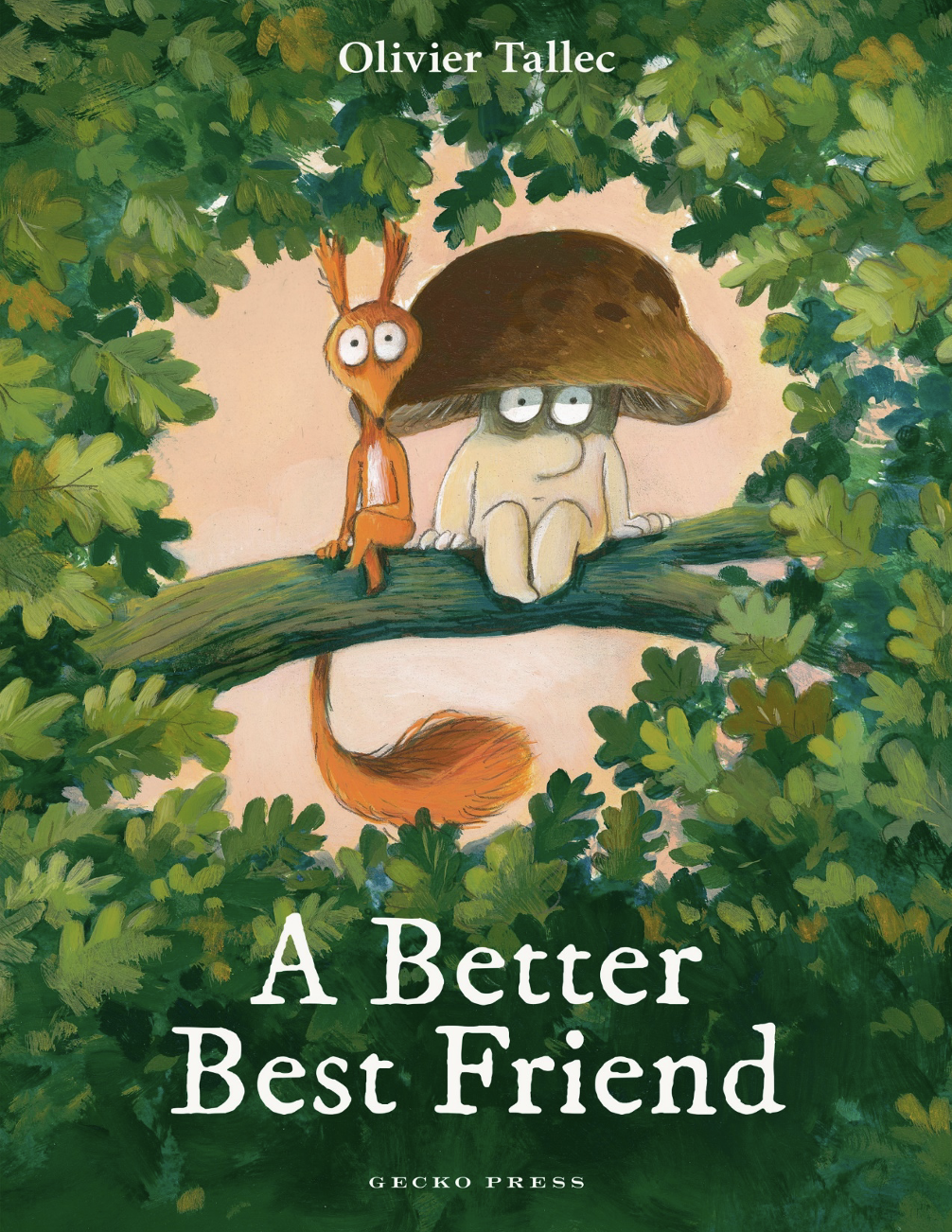
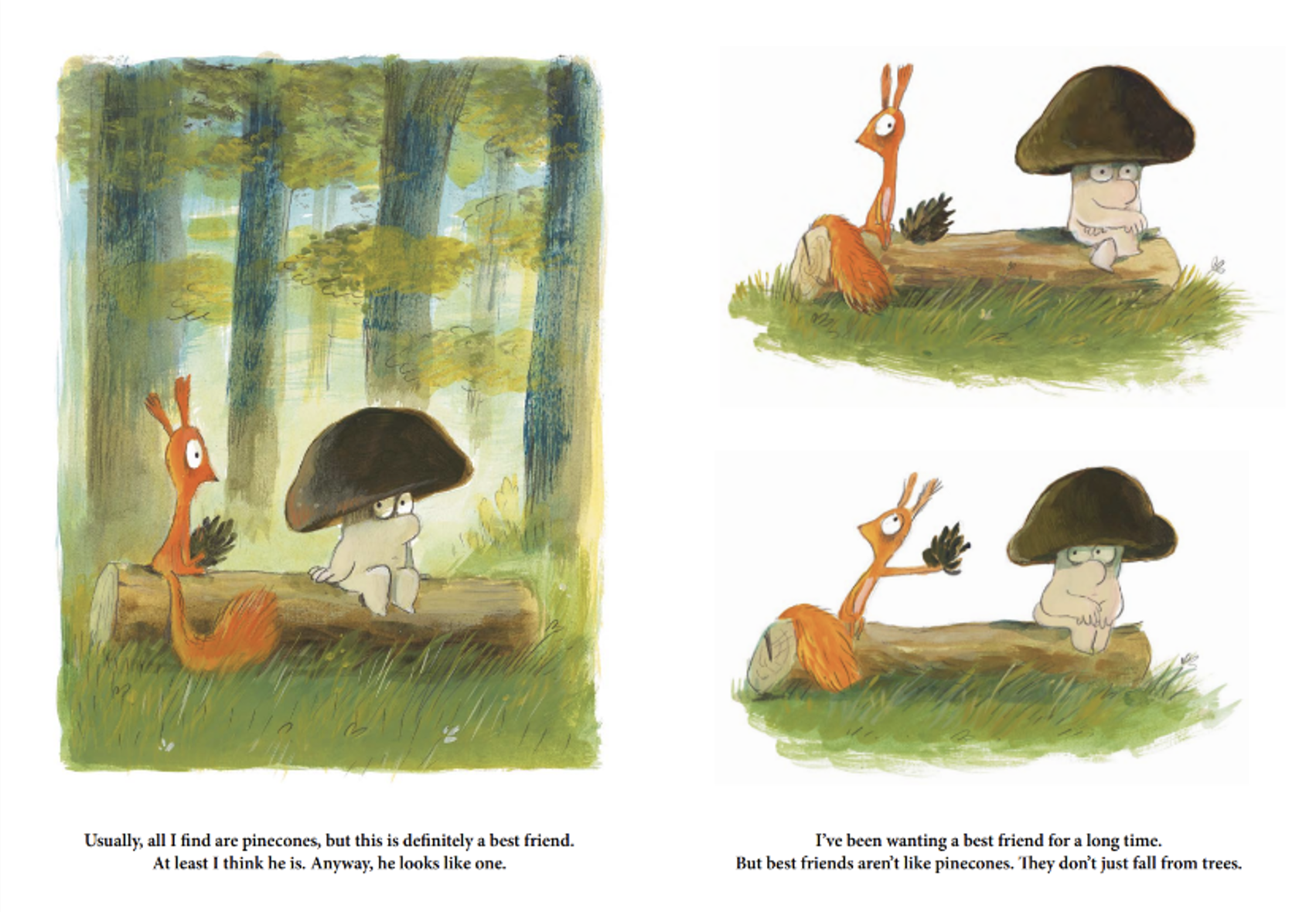
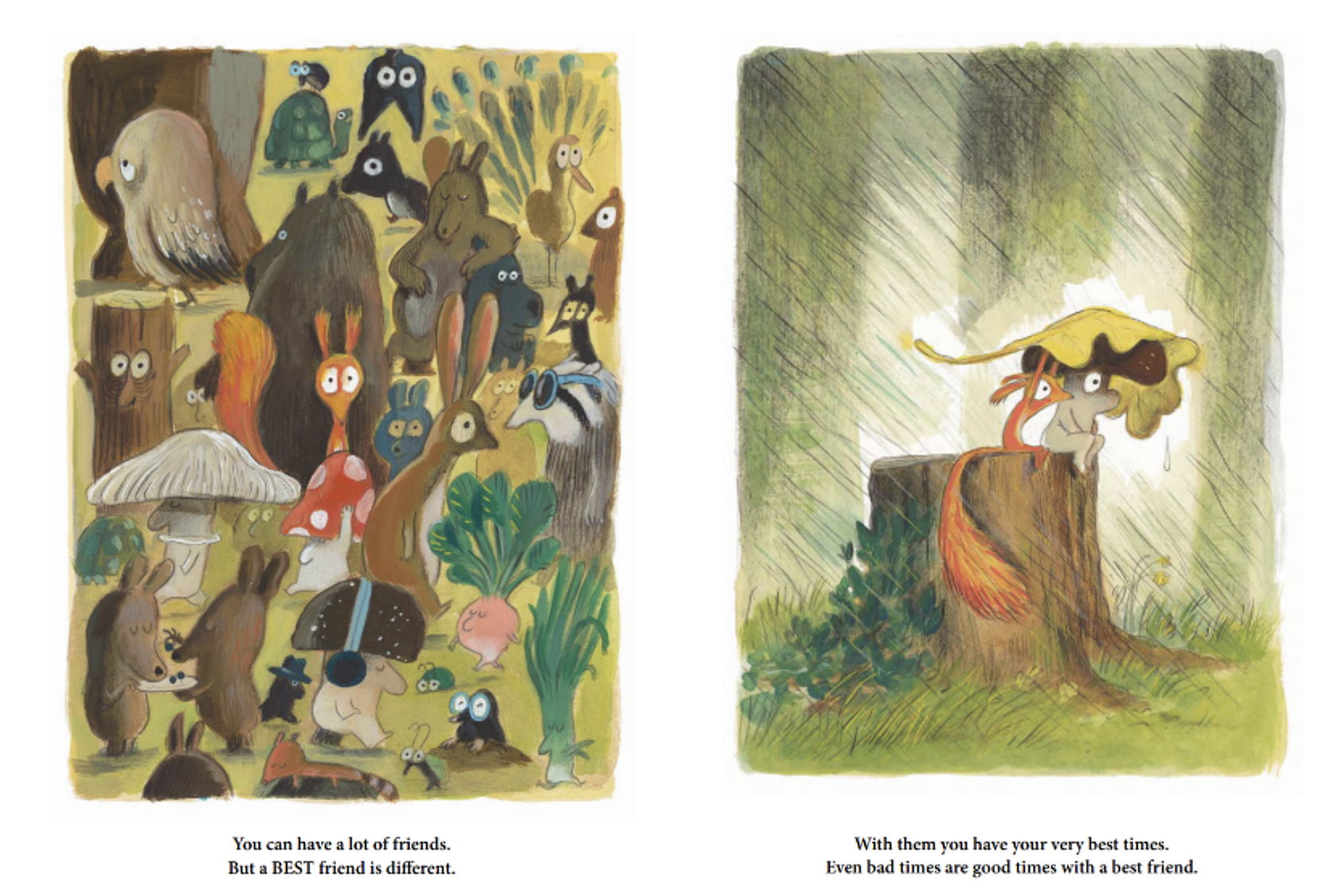
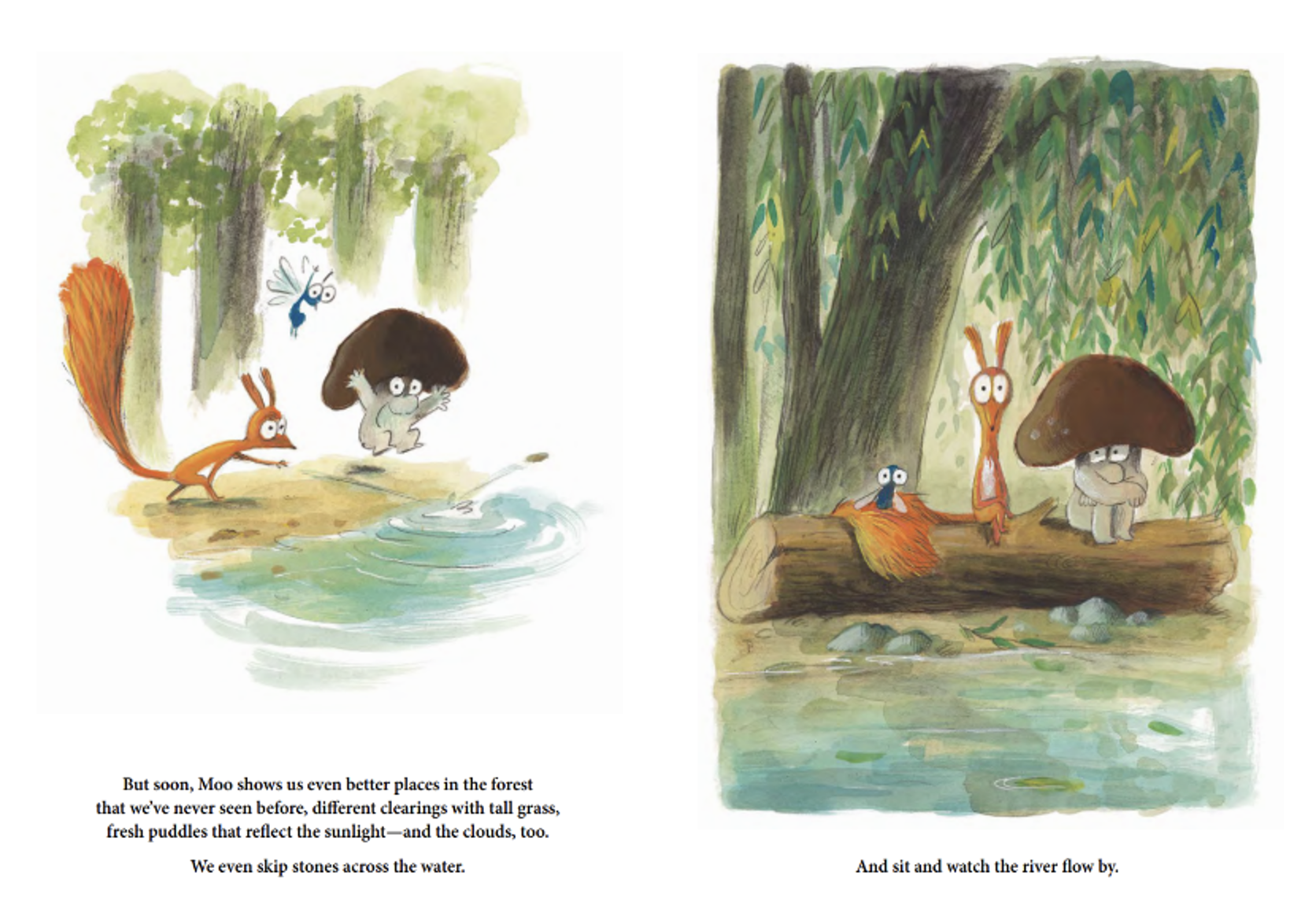
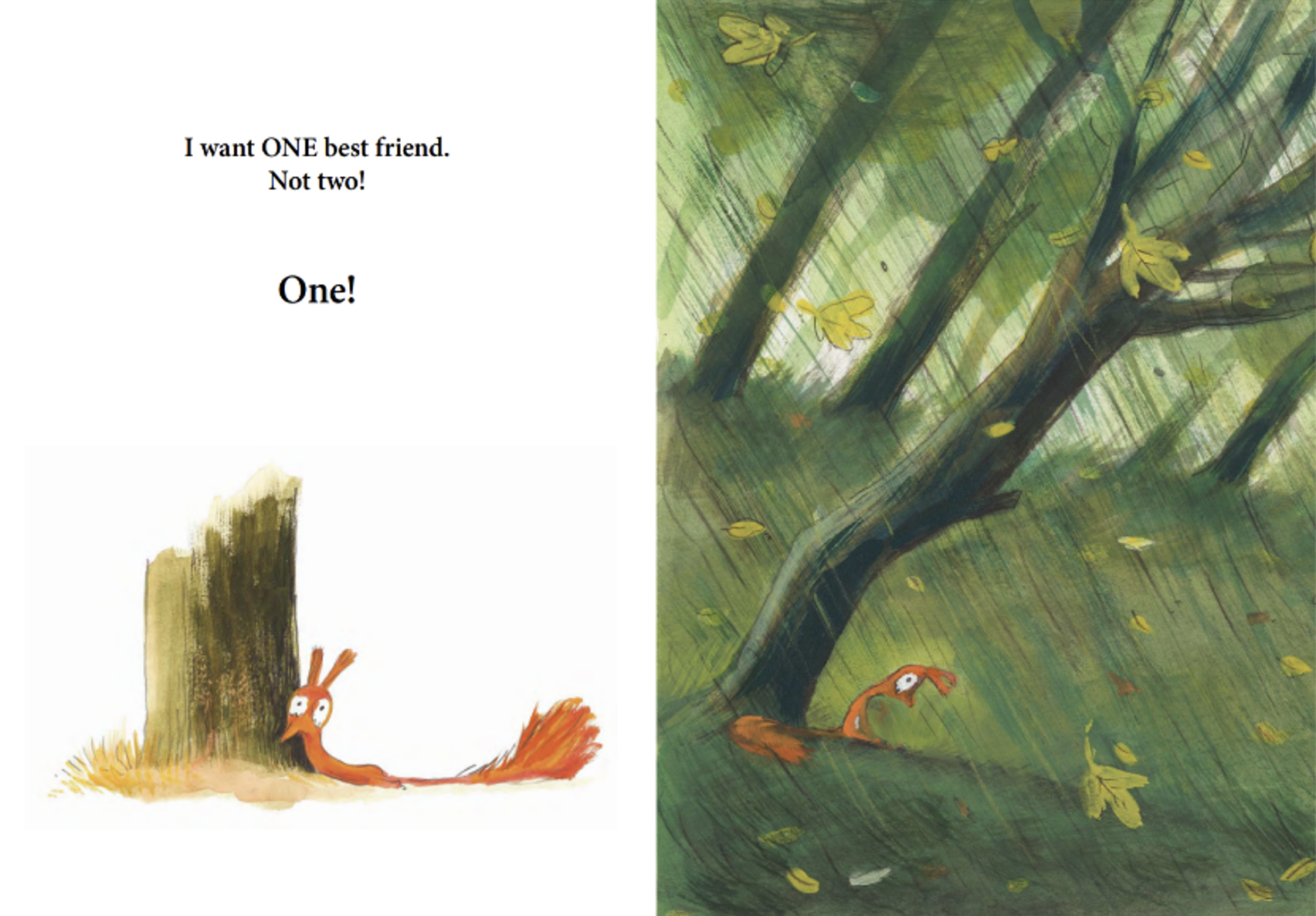
Having a best friend is great! A little red squirrel has just made friends with Pock, a somewhat awkward little mushroom, and things are great. That is, until a third friend comes along. Can someone have TWO best friends?!? Look. Look DEEP into the eyes of this anxious little mushroom on the cover and tell me you’re not intrigued by this book. This little French translation taps into the anxiety of having a best friend. Not acquiring one (though it makes it clear how that can be hard too) but what to do when you have two of them! I dunno. It’s the little details in this that just slay me. The way the squirrel crosses its legs, just so. The rings under Pock (the mushroom guy)’s eyes. I also kind of love that it makes it clear that a quiet person who doesn’t say much can be a very good friend, and that it’s okay to have more than just one. It’s small, slight, subtle, and unmistakably French. Previously seen on the Translated Picture Books List.

Big Bear and Little Bear Go Fishing by Amy Hest, ill. Erin E. Stead

“ONE DAY Big Bear says to Little Bear, I’m just in the mood for fishing.” Between getting ready to fish and waiting for the fish to show, two bears have a lovely day in this quiet book sporting a classic feel. This is kind of a funny book to kick off a readaloud list with, since it is definitely a read-aloud-in-hushed-tones kind of book. There is a place in this world for such books. Titles that exude coziness without dripping sentimentality. As it turns out, Amy Hest plus Erin E. Stead is an inspired pairing (and since this is a Neal Porter title, this is my surprised face). It’s real gentle, but not cloying. And consider its amazing readaloud potential! Like this line: “Big Bear and Little Bear pull on baggy blue pants for fishing. And boots. They stuff their feet into tall black boots. Their coats are yellow with pockets and hoods.” As a picture book author myself, this kind of thing makes me just want to hang up my hat entirely (or, god forbid, get better). As for Stead, she works in these little moments of affection between the two bears that ring true. Really authentically charming stuff. Previously seen on the Readaloud List.

The Cafe at the Edge of the Woods by Mikey Please

Could someone please talk to Harper Collins about returning once again to sending out physical galleys? I missed SO MANY of their titles this year, and came a hair’s breath away from this being one of them. Thankfully, I caught it in the nick of time. The plot involves Rene, who really and truly wants to be a great chef. When she opens a cafe at the edge of the woods, only Glumfoot applies for the position as waiter. And when they finally do get a customer, it take a handy mix of Rene’s skills and Glumfoot’s smarts to pull the event off. Look, this book is just delightfully disgusting and hilarious and just a tiny bit meaningful as well. An irresistible combo.

The Cat Way by Sara Lundberg, translated by B.J. Woodstein
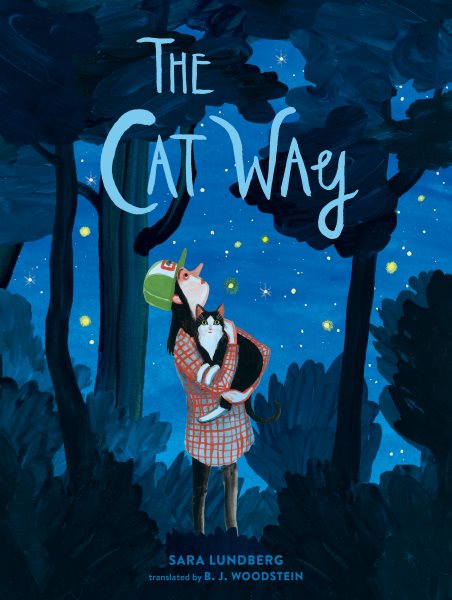
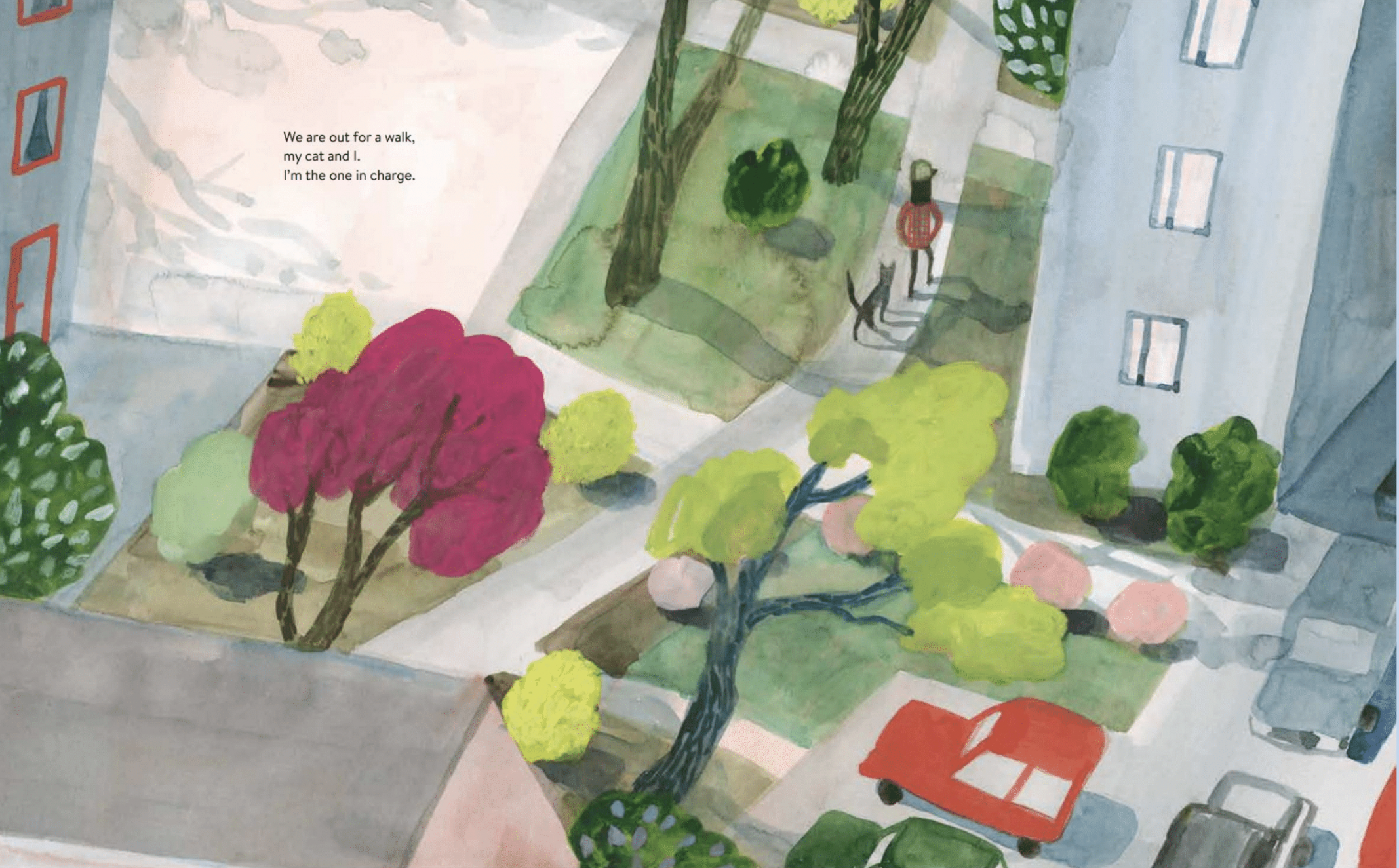
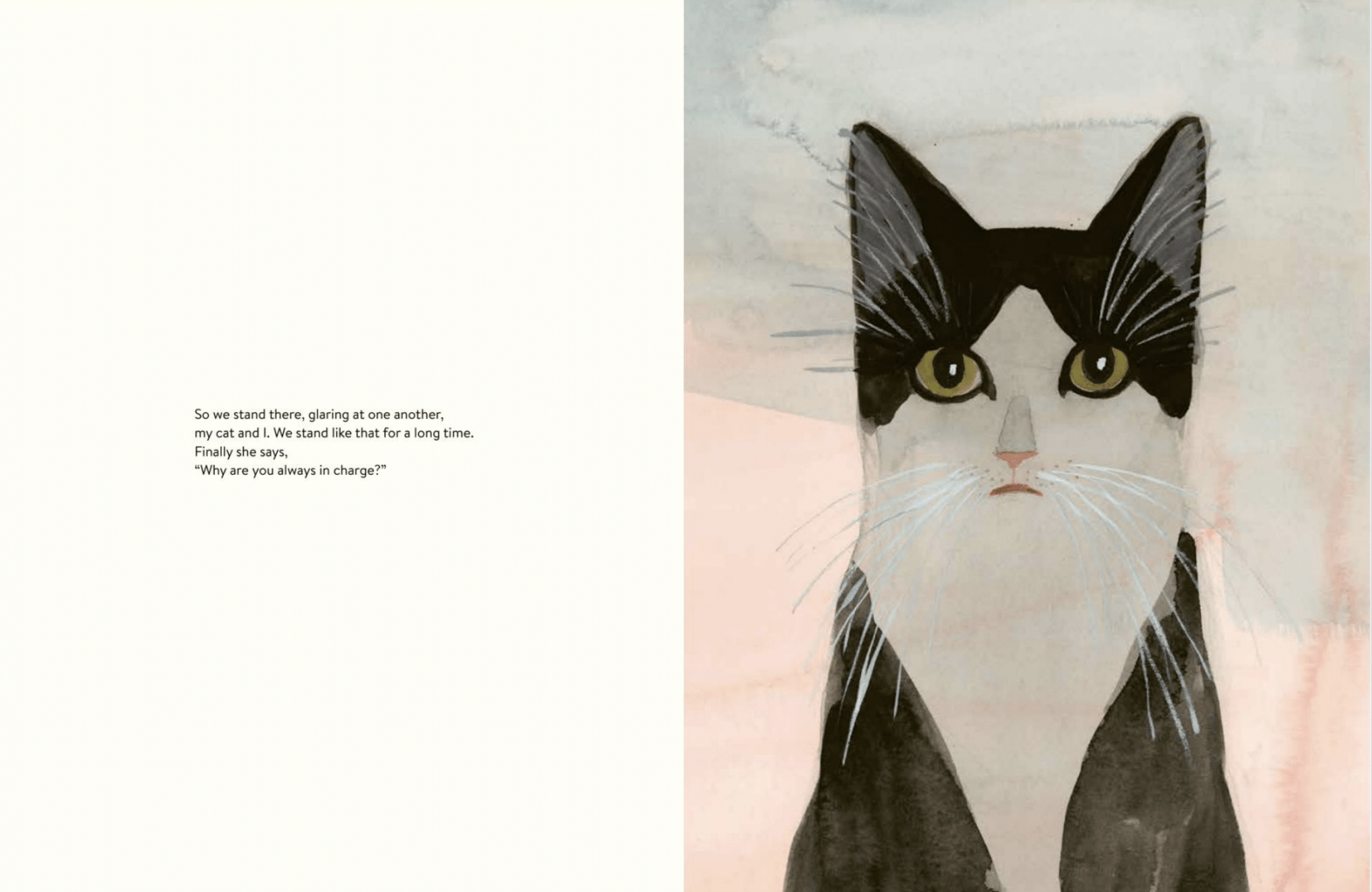
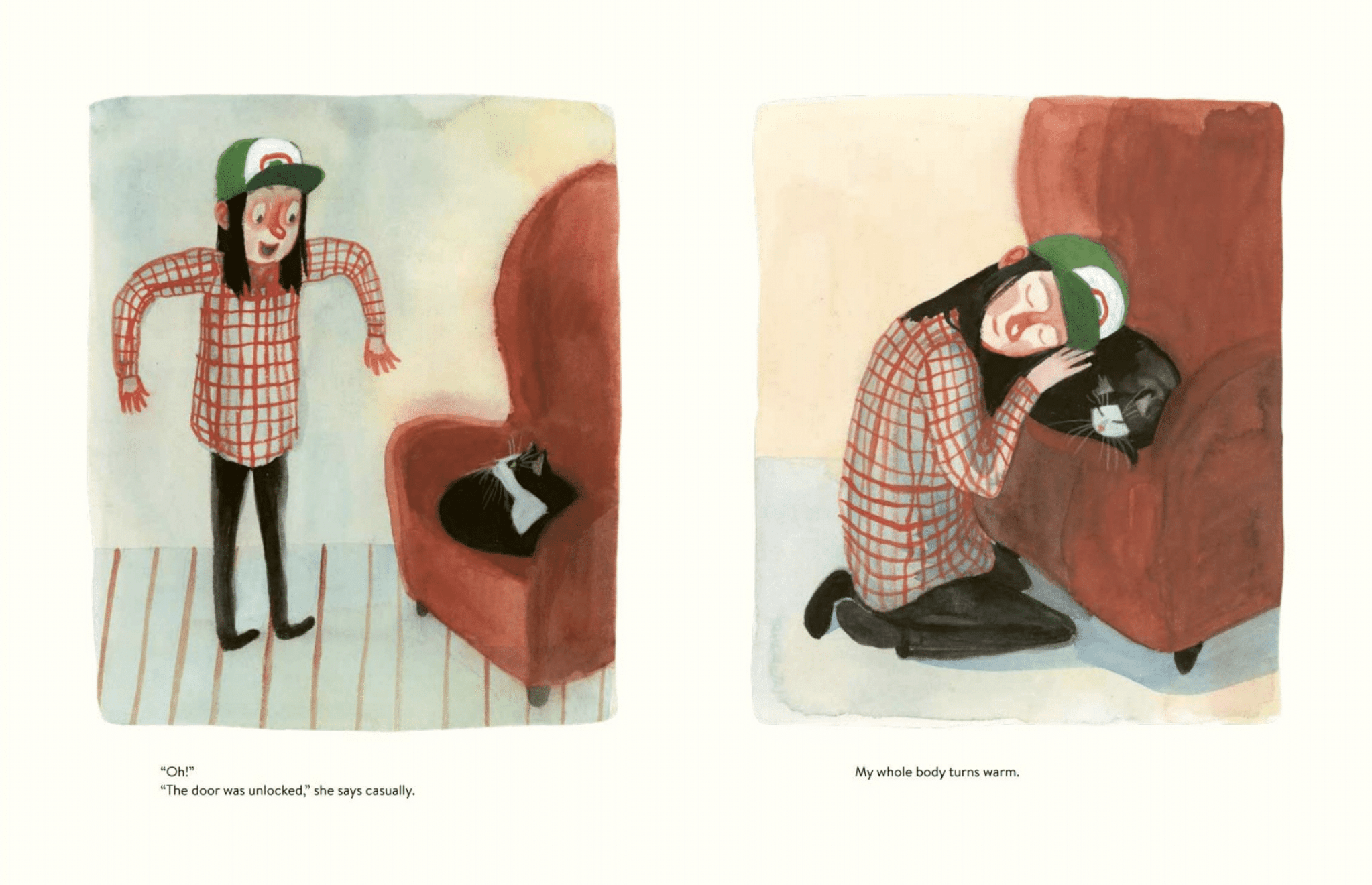
Usually when the human and the cat go walking, the human decides what they should do and where they should go. When things flip and the cat gets to take the lead, it’s the human who begins to see things in a whole new way. First off, it’s very satisfying to see a book where the main character knows how to hold a cat correctly on the cover. I also am intrigued by the fact that this is the rare picture book where an adult is the main character. There’s a funny surreal quality to this story, while at the same time the emotions are so real to me. It’s both telling its own story straight, while also feeling like it’s talking about a lot more than just the relationship between a woman and her cat. The art is fantastic, I love the gatefold (a rare three-page gatefold, no less!) and the simplicity of the telling. GREAT work by translator B.J. Woodstein, by the way! It really gets the tone of the book down JUST right! Previously seen on the Caldenott List and the Translated Picture Books List.

Chooch Helped by Andrea L. Rogers, ill. Rebecca Lee Kunz

Lot to love in this one. Written and illustrated by a Cherokee author and artist, respectively, I hope we see more from them in the future. This is an exceedingly simple text, but one that packs a big punch. Sissy has had it up to HERE with her little “baby” brother (she would be quick to inform you that he’s actually two-years-old) Chooch. As far as she’s concerned, the kid gets away with murder. She then recounts all the times that Chooch has “helped” their various relatively, never effectively. When Chooch attempts to “help” Sissy as she makes a bowl, she explodes at him. This leads to a rather clever part of the book where it reads, “My parents yelled, ‘Shouting is no help!’” This is one of those under-the-radar titles that may well win things come award season. The art is an incredible mix of Cherokee iconography and traditional motifs and symbols, all worked seamlessly into the story. Part of the reason this book works as well as it does is that everything about Cherokee life is built into both the text and the art without having to tell rather than show. It’s an elegant book when you get right down to it. Previously seen on the Simple List.

Dance Fast by AR Cribbins

Bizzy cannot WAIT to make her own dance regalia dress for an upcoming ceremony. But what happens when a mistake in it is evident to everyone? A great Pomo tale on how perfection is the enemy of good. We’ve just seen so many picture books about dancing this year, and that’s wonderful! From Jam Too to Soul Step to Why We Dance, it’s been a dancing year! But looking at all these books, I find that the ones I like best are the ones that are about more than just dancing. I like the dancing to be worked into a bit of a storyline. AR Cribbins is a Pomo author/illustrator and this story about Bizzy wanting to have her own regalia for an upcoming ceremony probably appeals to me because the art is just so charming. I love how Cribbins does faces and emotions. I love the sheer levels of frustration at work here, and how this author/artist cleverly highlighted the idea of purposefully leaving in imperfections so that you can strive for quality and not perfection. It’s a fantastic lesson for kids out there. I just have a lot of affection for this little book.

The Day Moon and Earth Had an Argument by David Duff, ill. Noemi Vola

Meet the book that officially made me a Noemi Vola fan. This is one of those titles where I read it and liked it, and then as time went on and I kept showing it to other people, I didn’t just like it. I LOVED it. Maybe that’s just because I think the story is a funny take that I’ve never really seen before. Or maybe it’s because illustrator Noemi Vola is a certified nutjob. How else to explain art that seems to have crawled out of an Underground Comix hole circa 1969? The basic premise is right there in the title. Moon and Earth have an argument (we never really know why) and the Moon takes off in a huff. I mean, why shouldn’t it just hang out with one of the other planets instead? So it goes to them one-by-one and if you EVER wanted to get kids to know the differences between the planets, this book is my #1 recommendation for drilling that information home. That’s how you’re going to find out that Venus is toxic, Mercury moves too fast, Mars already has two moons, Jupiter has ninety-five of the darn things, Saturn has even more but also has cool rings, Neptune is really cold, Pluto isn’t really a planet and likes solitude, and Uranus is . . . . a lot man. In fact, you should pick up this book for Uranus alone. Something is wrong with that dude. Seriously. The colorful art includes things like Spielberg’s E.T.s running about, and who can resist the knee socks the Moon is sporting? Seriously, you’ll have seen nothing like this before and nothing since, but it’s a trip and a delight and well worth remembering. Previously seen on the Funny Picture Books List.

The Dictionary Story by Oliver Jeffers and Sam Winston
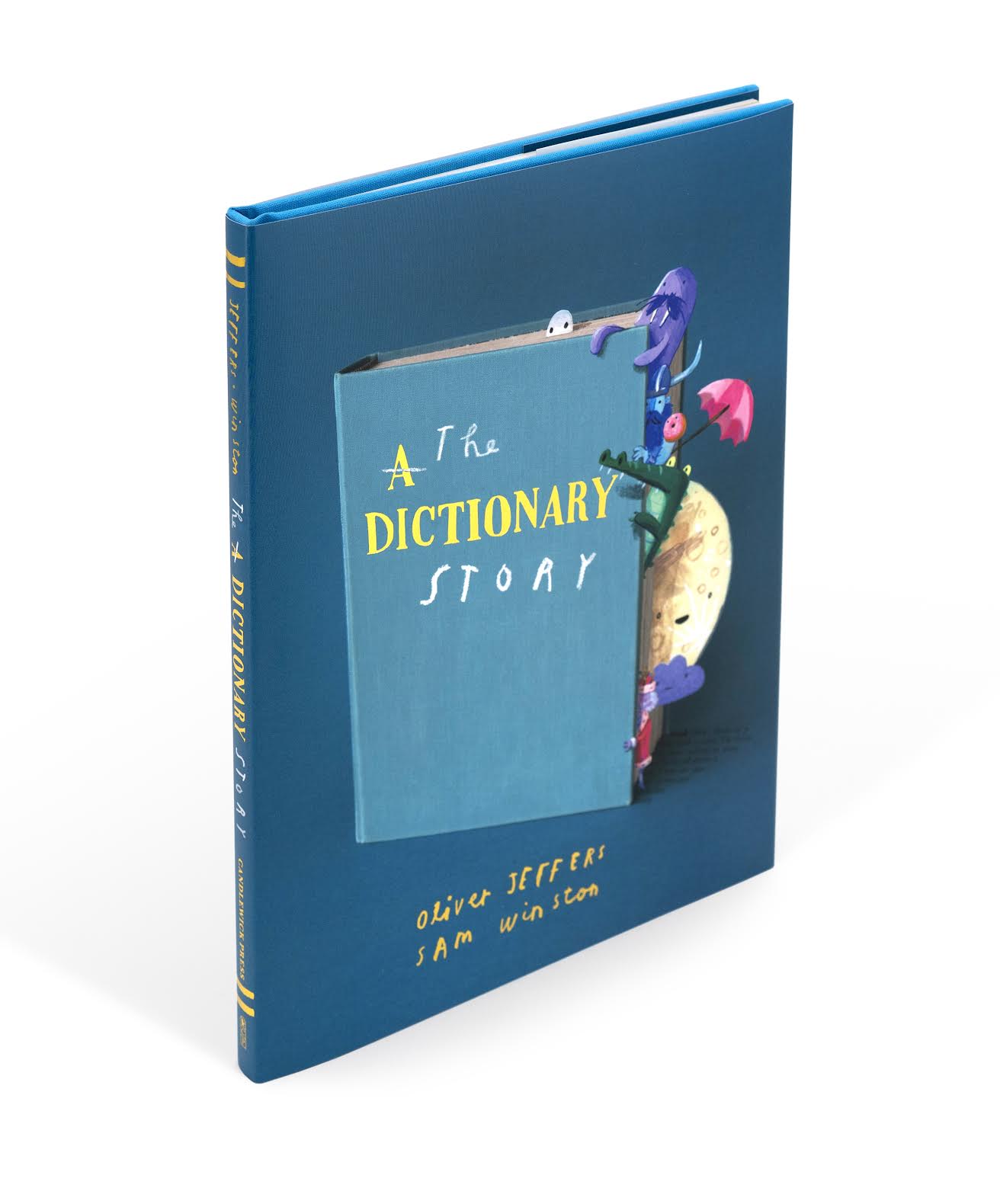
Why should books with stories get all the fun? A jealous dictionary attempts to tell a tale, with incredibly disastrous results. A truly original delight of a story. The sheer SHEER amount of work that went into this book just leaves me dumbfounded. When I worked out that every single solitary definition wasn’t just original but hilarious… jaw on floor, folks. Jaw. On. Floor. And then to top the whole thing off the art is amazing AND the story is good and funny? This is the best book Jeffers has worked on since Stuck (my personal favorite and, as far as I’m concerned, the peak of his career). Would love to know more about what the Jefferson/Winston collaboration consisted of. Did Winston make the physical book itself? I loved how tattered it looked by the story’s end. This is pretty amazing. Previously seen on the Funny Picture Books List.

Drawn Onward by Daniel Nayeri, ill. Matt Rockefeller
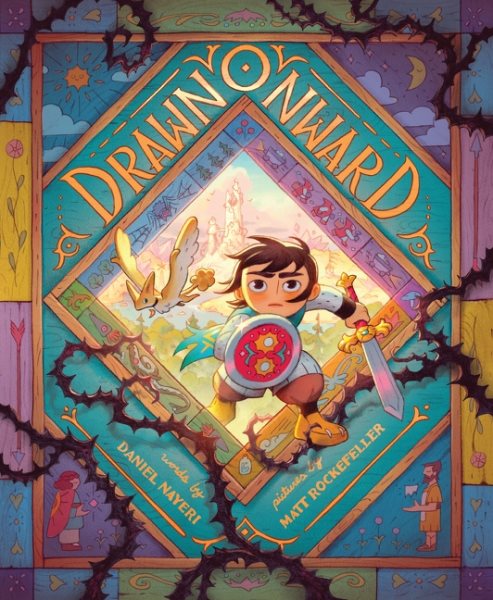
Show of hands. Who here is getting Steven Universe vibes from this one? Anyone? Just me? That’s cool. So having captured a Newbery Honor of his very own, Nayeri plunges onward to try his hand at an entirely different kind of book for kids: The epic adventure (with graphic novel elements) picture book. Now I initially (and mistakenly) tried to slot this book into my Wordless Book category, before I remembered that it does indeed have words. In point of fact, it has a narration that carries the reader on throughout the book. But the story, the one that kids are going to consciously pay attention to (the narration will work its way into the nooks and crannies of their own gray matter, don’t you worry) is of a visual storytelling nature. Does his style look familiar to you? That’s probably because he worked on First Second’s 5 Worlds series for quite a while. Here, however, he gets to shine with only a single other collaborator. It must be freeing. He certainly is having a ball with repeated objects (check out how the shot of the house in the beginning compares with the shot of the house at the end), colors, thematic elements, and more. Hand this one to the kids who went goofy for Aaron Becker’s Journey series. Previously seen on the Fantasy List.

Emma Full of Wonders by Elisha Cooper

Do dogs dream? Emma does. Little dreams that culminate in a great big dream she can share. A quiet book, and quiet books always have a little bit of difficulty getting onto end of year lists. It almost feels like Cooper by way of Kevin Henkes, if nothing else. And me? I went into this thinking it was going to be another dead dog book. This isn’t that nutty a thought considering how many dead dog picture books we see in a given year (though admittedly in 2024 there was a dead chicken book that was my top favorite), and the fact that previously Cooper created what might be the greatest dead cat book of all time. So you can understand how unprepared I was for the twist. Definitely a book for dog lovers, and for dog tolerators as well.

Exactly As Planned by Tao Nyeu

Moose and Fox are about to have tea together and each wants to make something special for the other. Read one story two different ways, showing how things don’t always go according to plan (and that’s okay). To put it plainly, Nyeu has gotten all complicated on us. This book, surprisingly enough, reminded me of David Macaulay’s Caldecott Award-winning Black and White in the ways in which it plays with the linear text. Ostensibly, this is two stories about the same two characters, each from the other’s p.o.v. The thing is, when you start to compare them, you notice all kinds of clues linking the two stories together. I was particularly fond of the basket’s origin’s and the fate of the crow’s sweater. Far cleverer than its seemingly simple and sweet storyline would have you believe.

The First Week of School by Drew Beckmeyer

When something unexpected happens on the first day of school, nobody realizes that the new kid who arrives soon after is going to be quite as… interesting as they are. Ho ho! You know what this is, don’t you? This is a science fiction first day of school book. Now I have a working theory that each year there is always one first day of school book that stands apart from the pack. I think we’ve found the one for 2024. It kind of feel like a Wes Anderson book brought to life (even the cover has that feel), and I am down for that. Definitely on the upper end of the comprehension scale for picture book readers, there’s a lot to keep up with and notice when you read it. Plus, I like the sheer variety of Beckmeyer’s books. You just never know what that dude is gonna do next. Previously seen on the Science Fiction List.

The Gale by Mo Yan, ill. Zhu Chengliang, adapted by Gu Xiaoxiao, translated by Ying-Hwa Hu
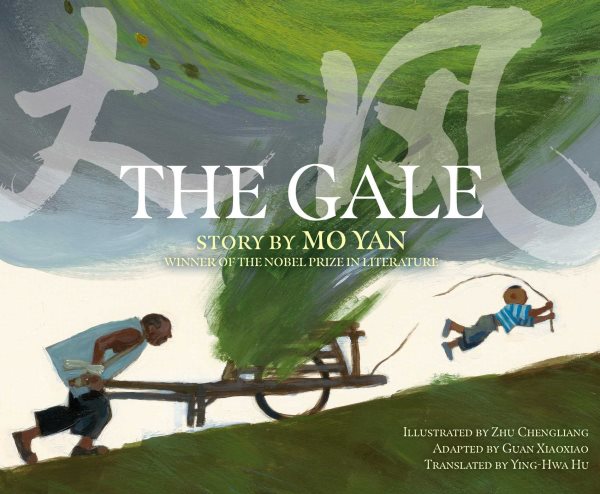
Having just turned seven, a boy is finally allowed to accompany his grandfather to work, cutting grass for their livestock. But when a massive wind hits them, will they both survive the trip? So the question we lay before you is this: Is this book by Mo Yan, a winner of the Nobel Prize in Literature, appealing to kids at all? I can tell you this much, this book sticks in your brain. I mean, it’s an interesting tale I’ve never really seen before. It reminds me of that old Reading Rainbow book about the farmer whose plow accidentally falls into a hole that becomes an active volcano. Like that book, a farmer must face head on a natural disaster. Only in this case, it’s a real man vs. nature situation, and you don’t know who’s going to win. You might spend a fair amount of time yelling at this book, “It isn’t worth it, man!!!” Still, it doesn’t read like a translation, or even an adaptation, at all. It’s exciting and beautiful to look at. We get a lot of grandparent books in a given year but NONE of them are like this one. Previously seen on the Caldenott List and the Translation List.

Harriet’s Reflections by Marion Kadi, translated by Marion Kadi and Abram Kaplan
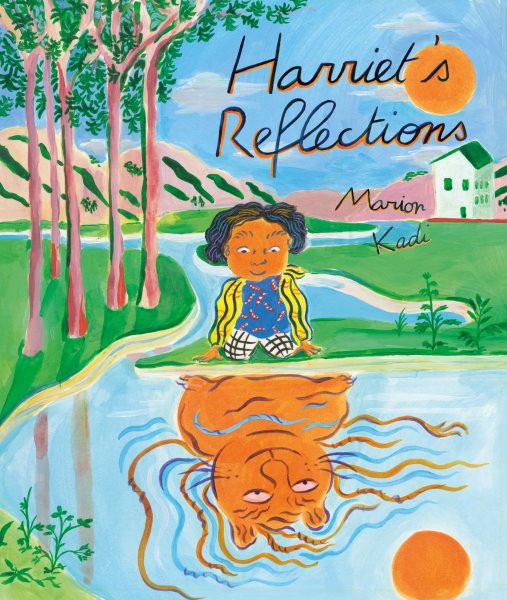
One day a lion’s reflection decides to become the reflection of a little girl named Harriet. Initially she’s delighted, but what happens when she wants her old reflection back again? I’m just all about the French translations this year. Maybe that is because I love a book that works by its own illogical logic. The metaphor is strong with this one, no question. I think we’ve known more than one kid in our lives that had a lion inside themselves from time to time. I love fierce little Harriet and how she slowly comes to realize that it’s not a great idea to be wild all the time. I also love shots like the lion reflected in the teacher’s glasses. The solution is unexpected but if we’re carrying this metaphor to its logical end then I think it works rather beautifully. And, of course, it’s hard to resist the beautiful acrylic colors all over these pages. A book unafraid to roar a little. Previously seen on the Translation List.

Heatwave by Lauren Redniss

Can a book burn you? Can you actually feel waves of heat emanating off the pages? Here’s my advice to you on how best to read Redniss’s Heatwave. Find yourself the chilliest, coldest, nastiest day in winter. Maybe one of those days where the damp and the dank just seep into your bones from the moment you wake up. Next, take this book. I’ve rarely seen a title this adept at really showing you how it feels to be infused with summer heat. The red in this book is inescapable. So much so that when those clouds start rolling in you’re cheering them on like a fan in the stands. Then you get that one blue raindrop on the page, its incredible liquid blue almost vibrating against the sea of red. By the time everything cools down the world is infused in blue, but it’s not a cold blue. It’s just that warm blue you get on a hot night. This book feels like a European import, but is 100% American to its core. I expect it’s going to do VERY well overseas, just the same. A cool story that I’m so pleased we get to experience. Previously seen on the Unconventional List.

Home in a Lunchbox by Cherry Mo

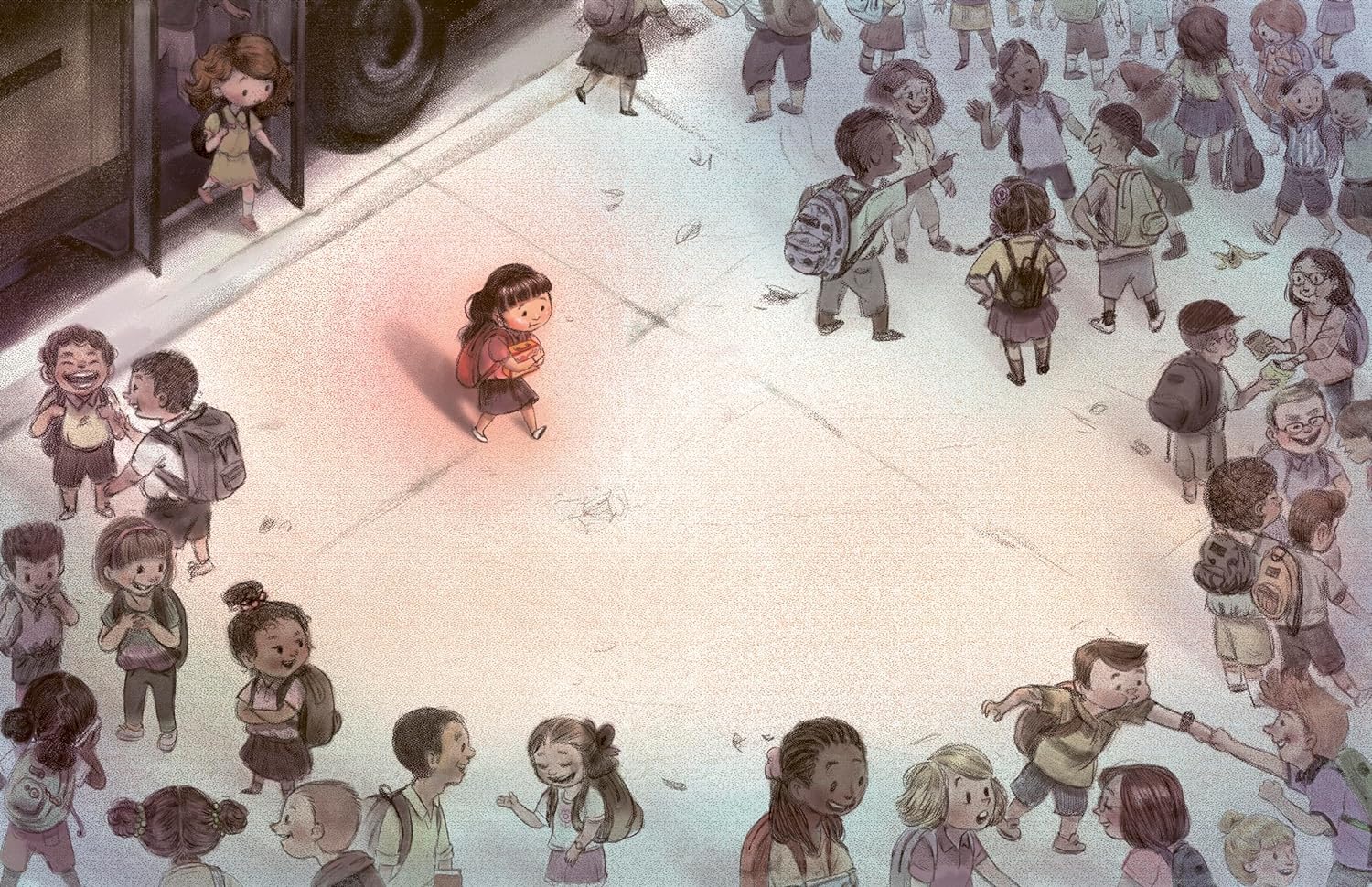
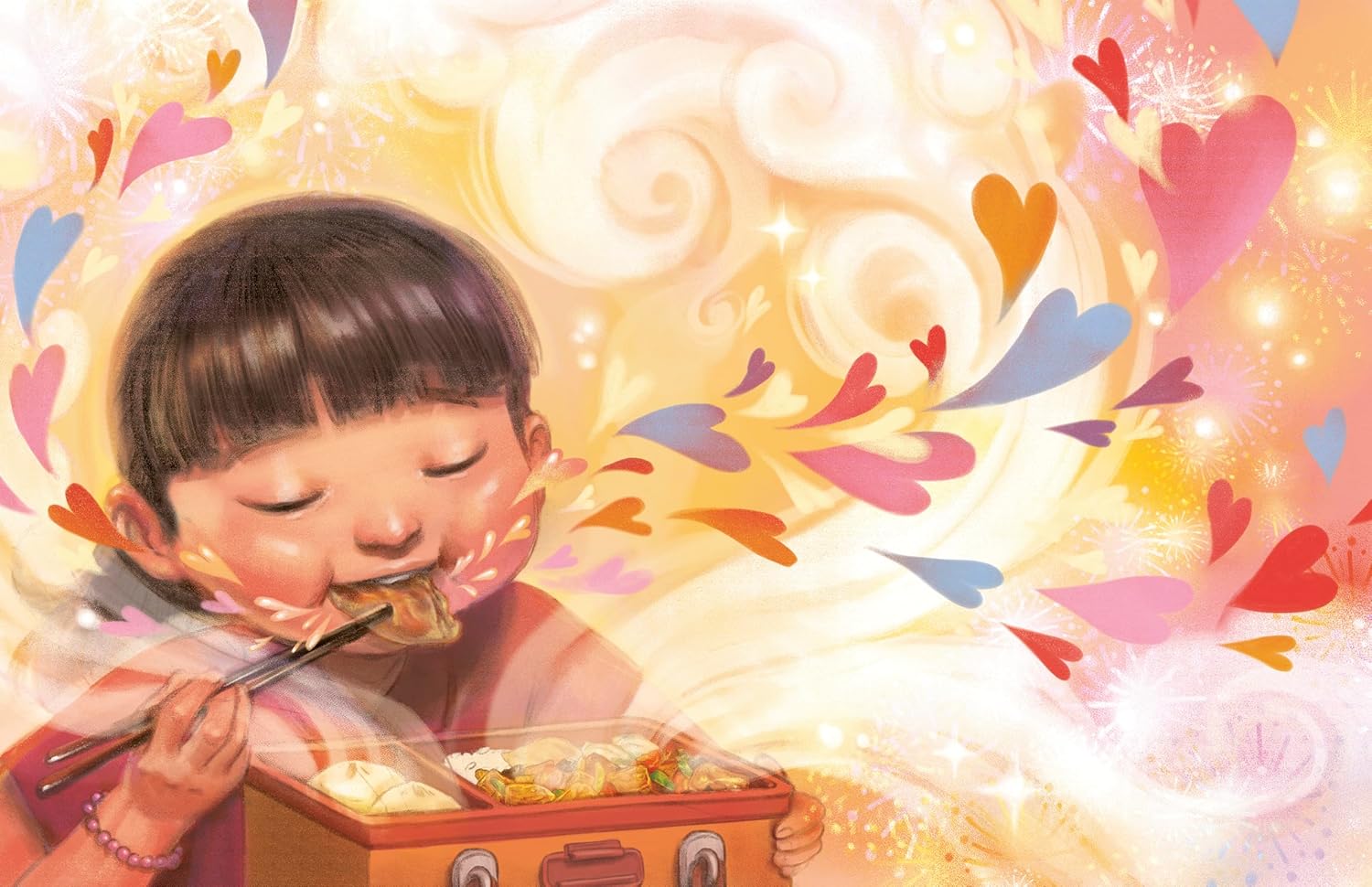
A completely wordless tale tells the story of one little girl who has immigrated from Hong Kong to America and the ways that food ties her to her memories. Evocative, engulfing art tells a tale of empathy and delicious dumplings. See, this is what I mean when I say that you can take any subject, even one that’s been done a hundred times before, and put an entirely new spin on it. This book has a lot of similarities to others we’ve seen before (Gibberish by Young Vo comes to mind) but Cherry Mo is so good at changing her illustration style throughout the story that the emotions of the reader are completely guided by how she switches from one kind of art to another. I actually had to look at the book again right now to remember whether or not it was wordless, because honestly it’s so good that you kind of put your own words onto it. A standout of the year. Previously seen on the Wordless List.

A Home That Means the World by Victoria Turnbull

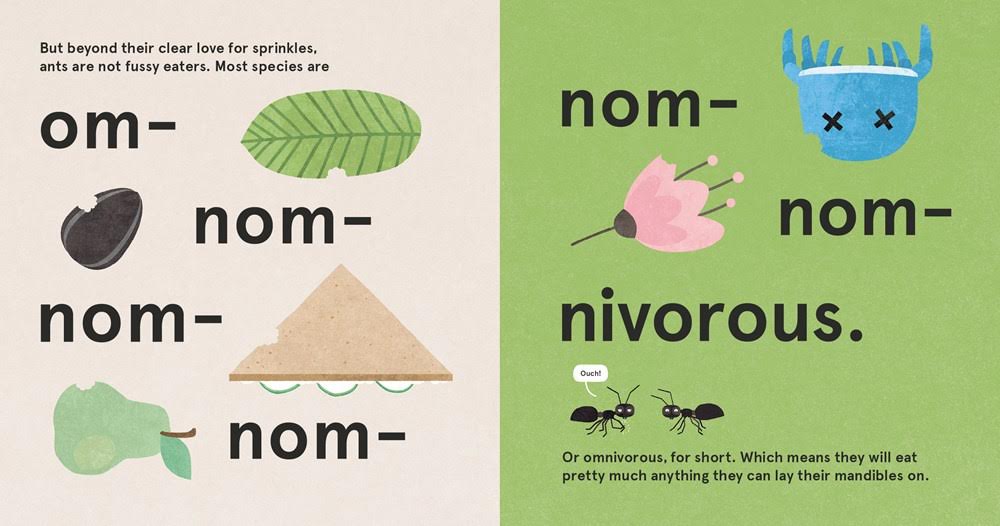
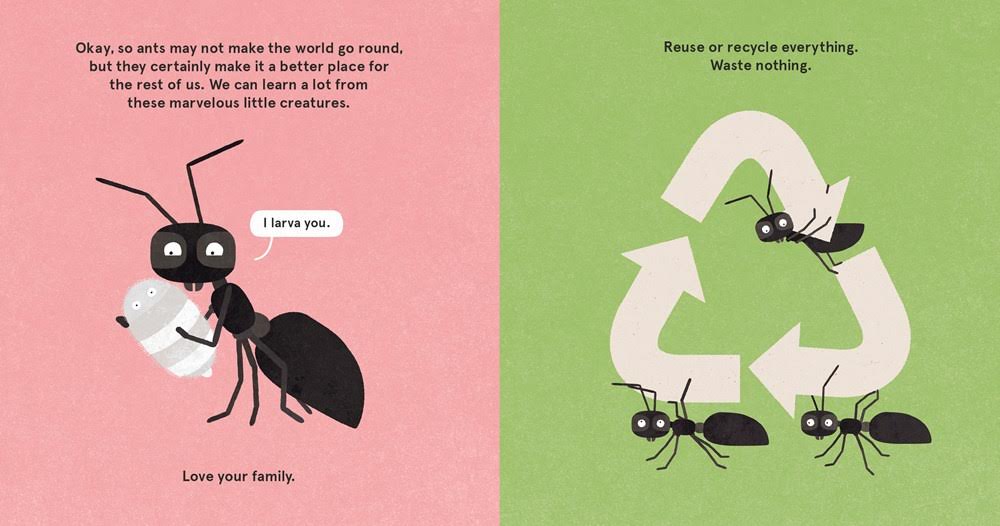
When a small ant family loses their home and must search for another, they find unexpected kindnesses amongst strangers. A gentle story of displacement and found family. This little beauty is about being displaced from your home and finding kindness amongst strangers if you can. I don’t think I’ve seen anything by Turnbull before (she’s British) so this is quite the treat. It has both a classic feel and a very contemporary message. Honestly, it would pair very nicely with We Are Definitely Human, since both picture books involve strangers taking in immigrants and helping them along. It’s hard not to fall for this title. It’s a treat.

How We Share Cake by Kim Hyo-Eun, translated by Deborah Smith
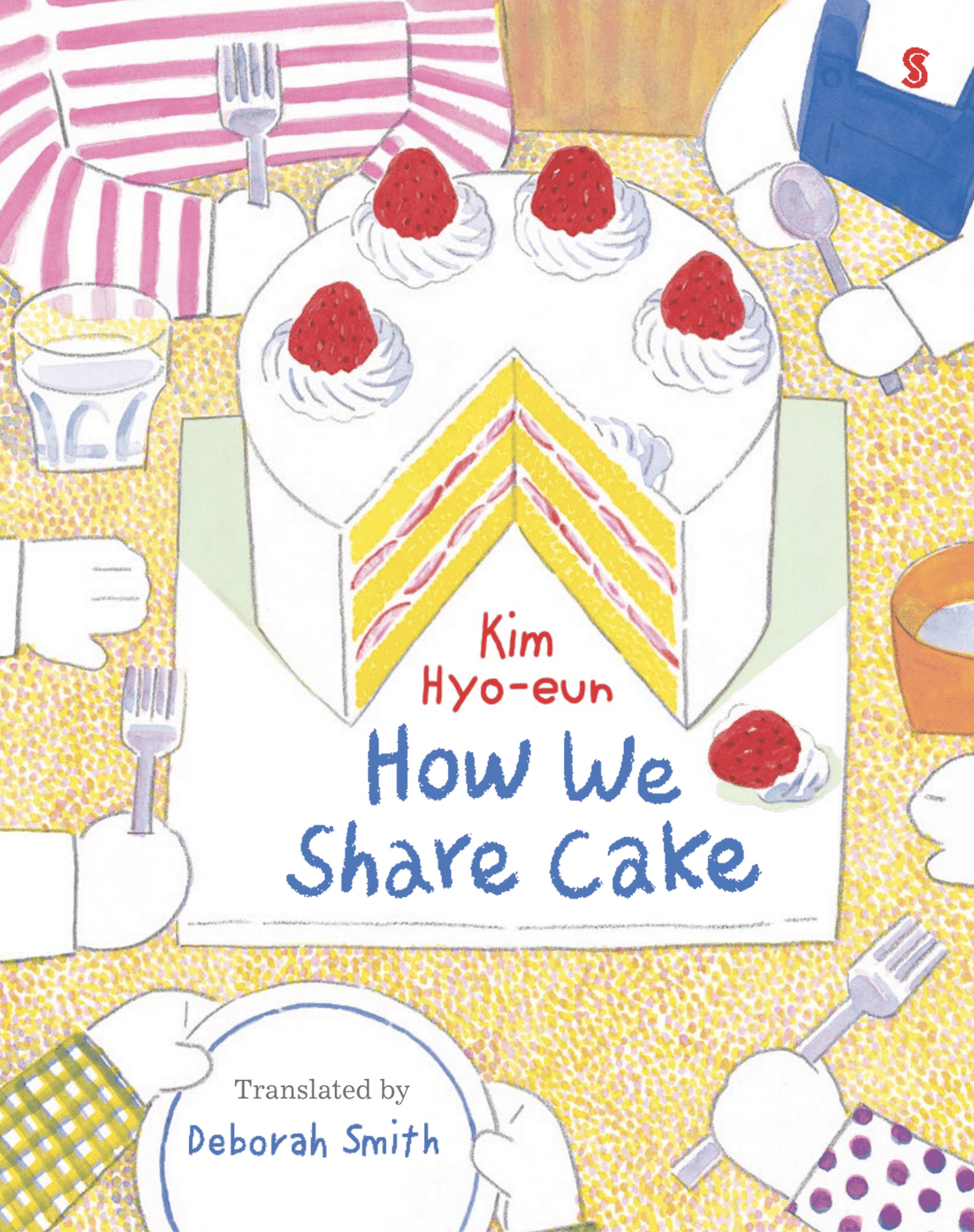
The logistics that go into fairness, particularly when you have multiple siblings to contend with. Kim Hyo-eun doesn’t just understand this concept. She’s able to render it on the page with so much verve and humor than even if you grew up an only child you’ll find yourself laughing in recognition time and time again. I particularly loved the logistics of sharing food following by a consideration of how one “shares” an uncle. You do not want to miss this. Previously seen on the Funny List and the Translation List.

If You Run Out of Words by Felicita Sala

A young girl’s father uses a LOT of words in a given day. What if he runs out of them? When she asks him that very question, he spins for her a magnificent reassurance that involves elves, pirates, rocket ships, and more! Touching and incredibly fun. This is a pretty good example of a book slowly growing on you over the course of a week or so. First off, I adore Felicita Sala’s art, but so rarely is she paired with an author who can match her style with words that blaze with the same intensity. I guess she just needed to write and illustrate her own book, then. The beginning of the book is very much in the key of My Parents Won’t Stop Talking, and then it plunges into this rather delightful combo of a child’s fears of abandonment and a father’s comfort and sheer creativity. The colors and art are out of this world and the ending just sticks the landing (not always a given). I didn’t mean to, but I think I fell in love with this book. 

I’m Sorry You Got Mad by Kyle Lukoff, ill. Julie Kwon
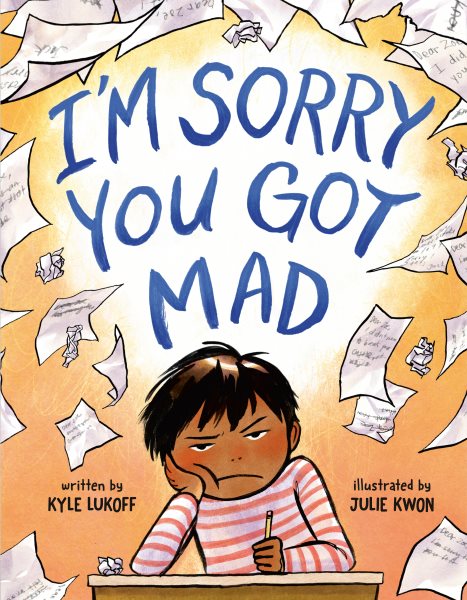
Jack knocked down Zoe’s block castle and now has to write an apology. At first it doesn’t go all that well. What happened and will Jack ever learn how to write a real apology? Touching and hilarious by turns. I like an epistolary picture book that justifies its format completely, right from the start. Lukoff’s book is also rather brilliant. It’s a series of apologies, but it’s also a mystery at its heart. Why did Jack knock down that castle in the first place? This is the first book I’ve seen from Julie Kwon where I felt like she could really lean into her comic timing skills. Plus Lukoff’s story just felt so real to me. It’s the kind of book you wish you could force adults with their sorry-not-sorry apologies to read themselves. Love that the teacher is clearly guiding all of this from behind-the-scenes, and this may have my favorite post-titles sequence on the publication page of the year. Unique. Previously seen on the Funny List.

John the Skeleton by Triinu Laan, ill. Marja-Lissa Plats, translated by Adam Cullen

Meet my favorite Estonian picture book of all time. The last time I fell for something from Estonia it was The Ear by Piet Raud, and I stand by my love of that title, but this is something special. First and foremost, I’d like to state for the record that I think the cover is just a touch misleading. I’m not sure why illustrator Marja-Liisa Plats chose to cover John in snails. I think if he was just waving nicely then he’d be fine without them. It sort of gives the impression that the book is going to be creepier than it is. It is not, for the record, creepy at all, but rather a very sweet testament to growing old, friendship, comfort, and routines. John is a skeleton in a school, but over the years he’s lost some of his digits and bones. He ends up in the possession of Gramps who lives in a cottage with his wife, deep in the woods. They both become very fond of John, and as he acclimates to his life as a “retired skeleton” with them, he becomes close not simply with them but with their grandchildren as well. The book is just broken up into all kinds of little interstitial stories, and as we watch, Grams dies and Gramps has to adjust to life without her. It’s sweet, moving, and touching, and there’s this wonderful little moment in the backmatter about the real John where it says, “An ordinary Estonian’s dream is to live in a house where their closest neighbors are at least half a kilometer away. When John got the chance to retire and live on a farm in Vörumaa, which is one of the farthest corners of the country, his dream came true.” Strangely comforting in an all new way. Previously seen on the Unconventional List.

Joyful Song: A Naming Story by Lesléa Newman, ill. Susan Gal
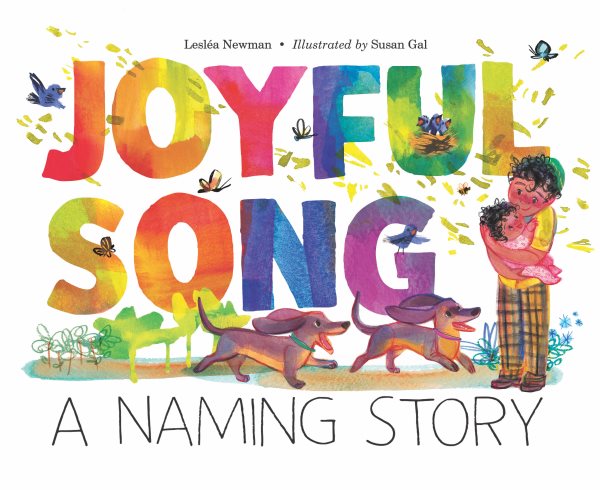
Zachary’s sister is going to her very first Shabbat where she’ll have her first naming ceremony too! As each person asks what her name is, Zachary and his moms invite them to the temple. A gentle tale of a joyful day. You kind of have to see the jewel-like tones of Susan Gal’s art to truly appreciate what’s going on in this story. That moment when Zachary is holding his little sister in the temple, my tear ducts made a break for it. You just never know what’s going to hit you emotionally in a book, but this one does a good job. I think the repetition of 3s both at the beginning and the end of the book work particularly well, and it’s just a really nice story about a big brother. It makes him feel important, even when the focus is squarely on his little sister. Would actually pair very nicely with What a Good Big Brother by Diane Wright Landolf. A class act!

Jump for Joy by Karen Gray Ruelle, ill. Hadley Hooper
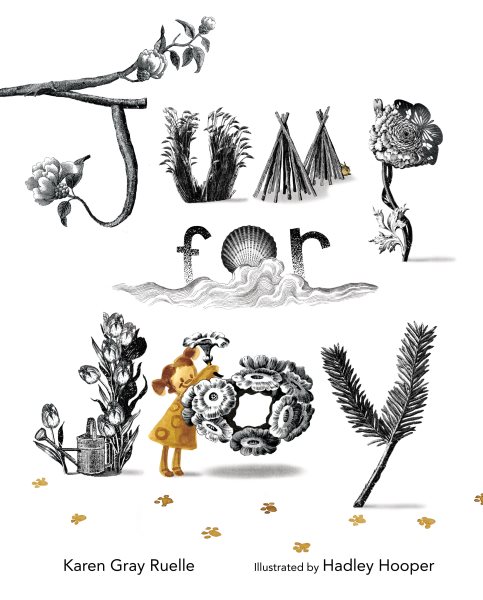
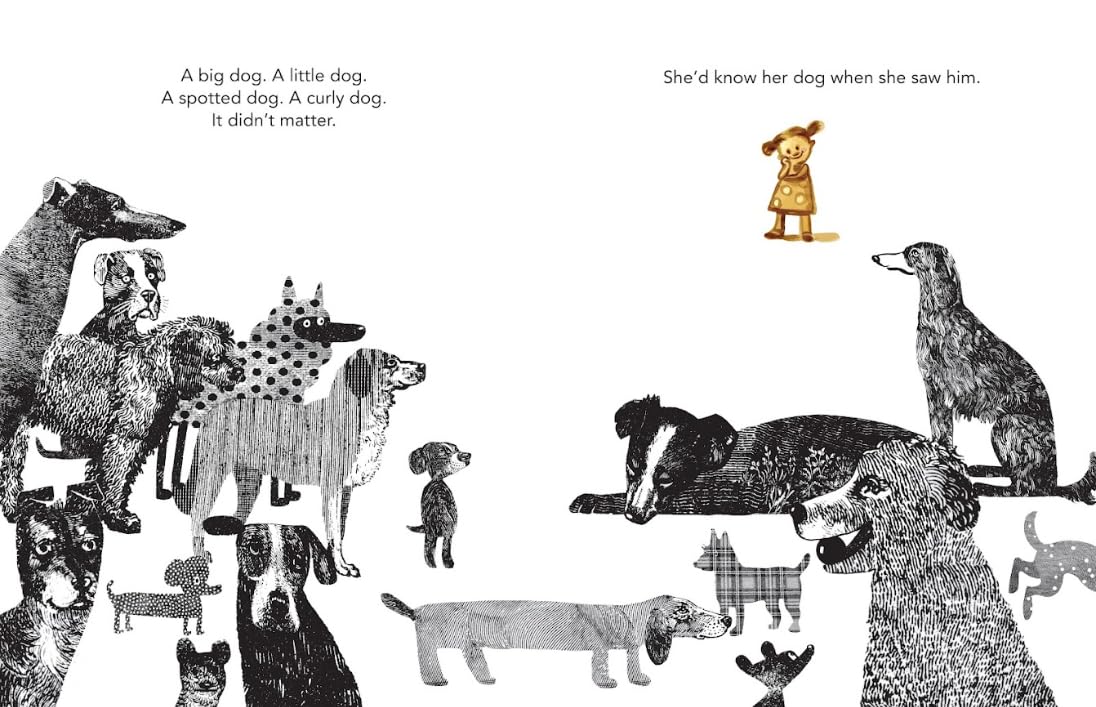
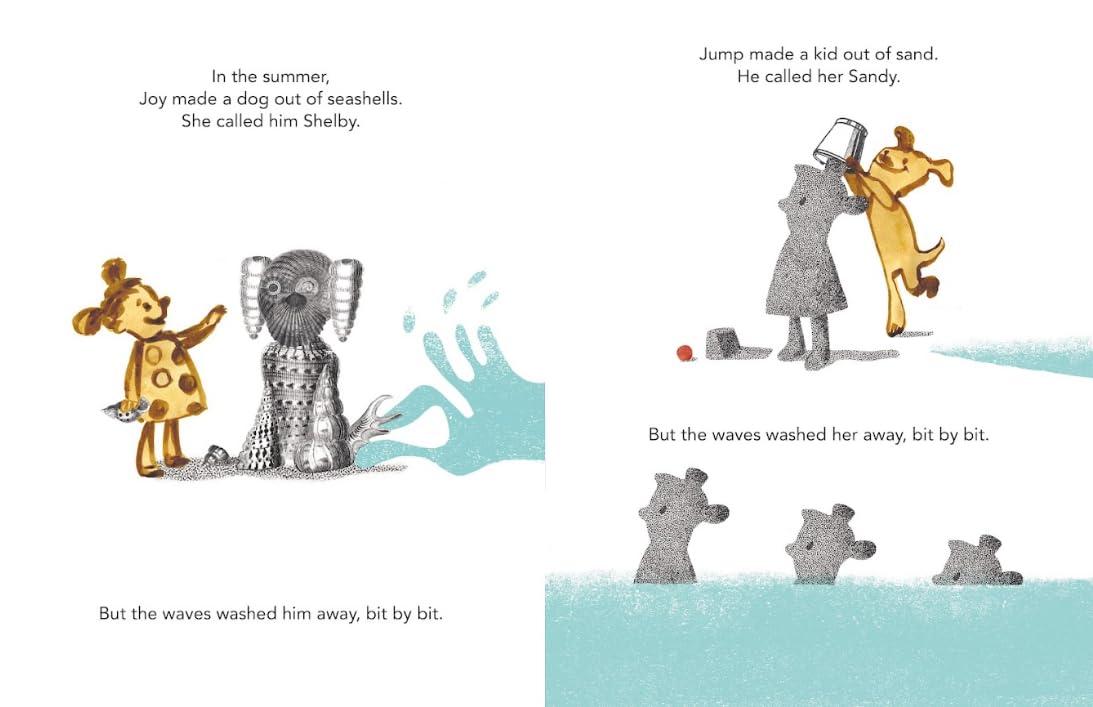
Joy’s a kid who wants a dog. Jump’s a dog who wants a kid. Will these two wayward souls ever find one another? Original, eclectic art and genuine heart combine in a wonderful loving tale. This one completely won me over. You just don’t know what you’re getting when you look at that cover. As it turns out, this is one of those books where the text is really strong, and then the artist has brought to in an entirely unique take. I can imagine that had this fallen into another artist’s hands the final product would be rote and dull. Instead it just springs to life. I feel like I need to pay much closer attention to what Hadley Hooper is up to (and apparently she’s done eleven picture books already). Collaging art from the 18th, 19th, and 20th centuries is such a cool idea. And that moment of joy at the end where Joy finds Jump and Jump finds Joy and the colors explode on the page? This is top notch work. Brava!!

The Last Stand by Antwan Eady, ill. Jarrett and Jerome Pumphrey
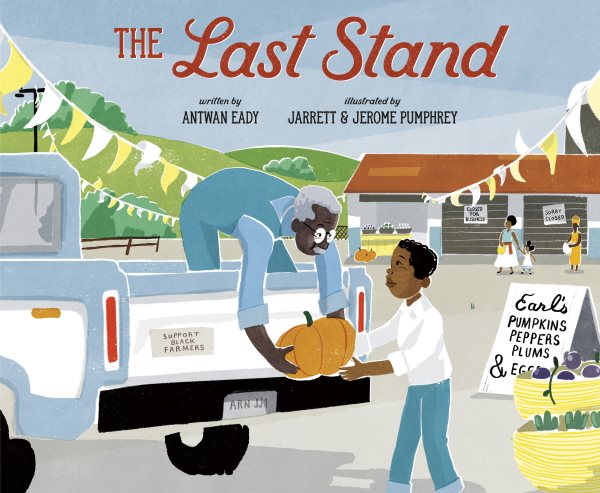
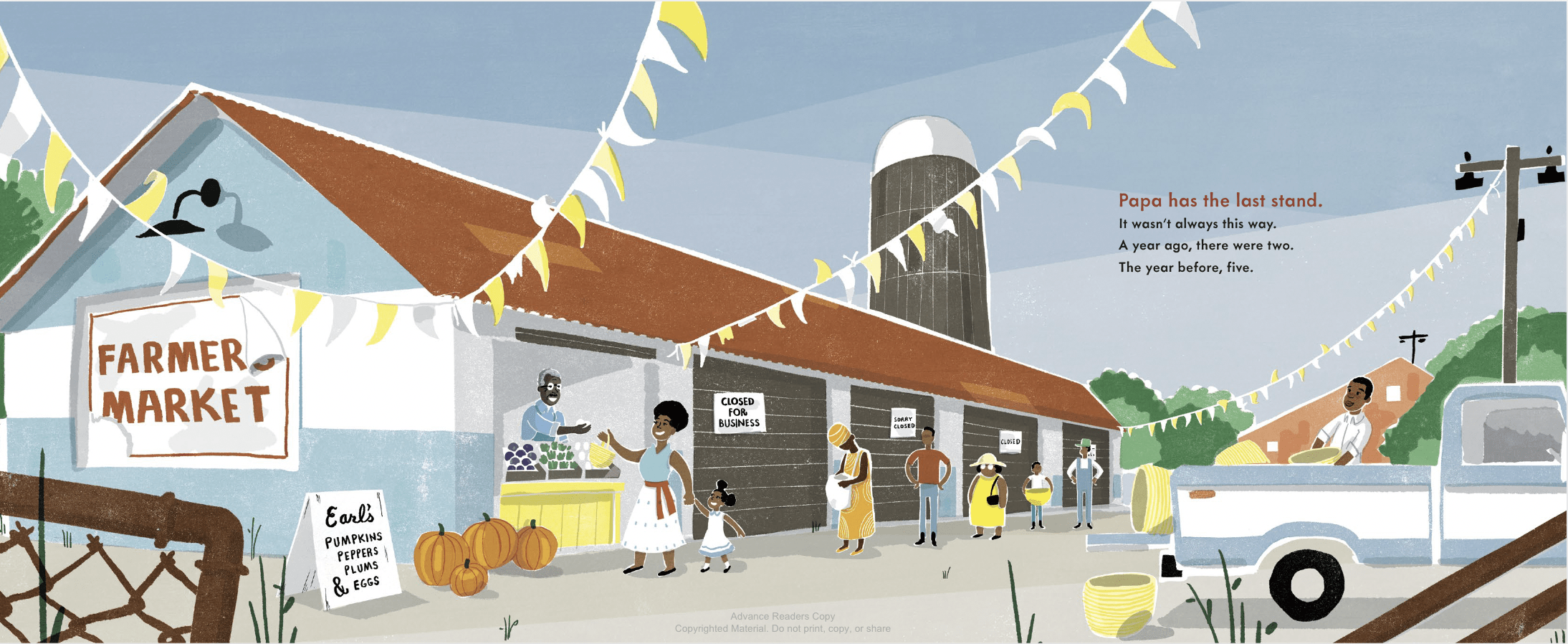
People rely on Papa to bring them the fresh farm fare they need. But when Papa can’t do his route anymore, can his grandson do it alone? A tribute to strong Black farming communities everywhere. Marvelously done! Just watch what Eady’s doing with this storytelling. The book is split into thirds, and the Pumphreys are so clever in figuring out precisely how to echo each section without repeating them exactly. First you have the grandfather and his grandson prepping for market, Then the grandson alone (and messing things up), then the grandson alone but confident. The larger issues focused on Black farming communities is great for the adults, but the important thing is that it’s still a strong book for kids, even without the additional information. It’s really nice seeing the Pumphreys getting to do these meaningful (and really well-written!) projects these days. A marvelous immediate follow-up to their Caldecott Honor win!

The Last Zookeeper by Aaron Becker
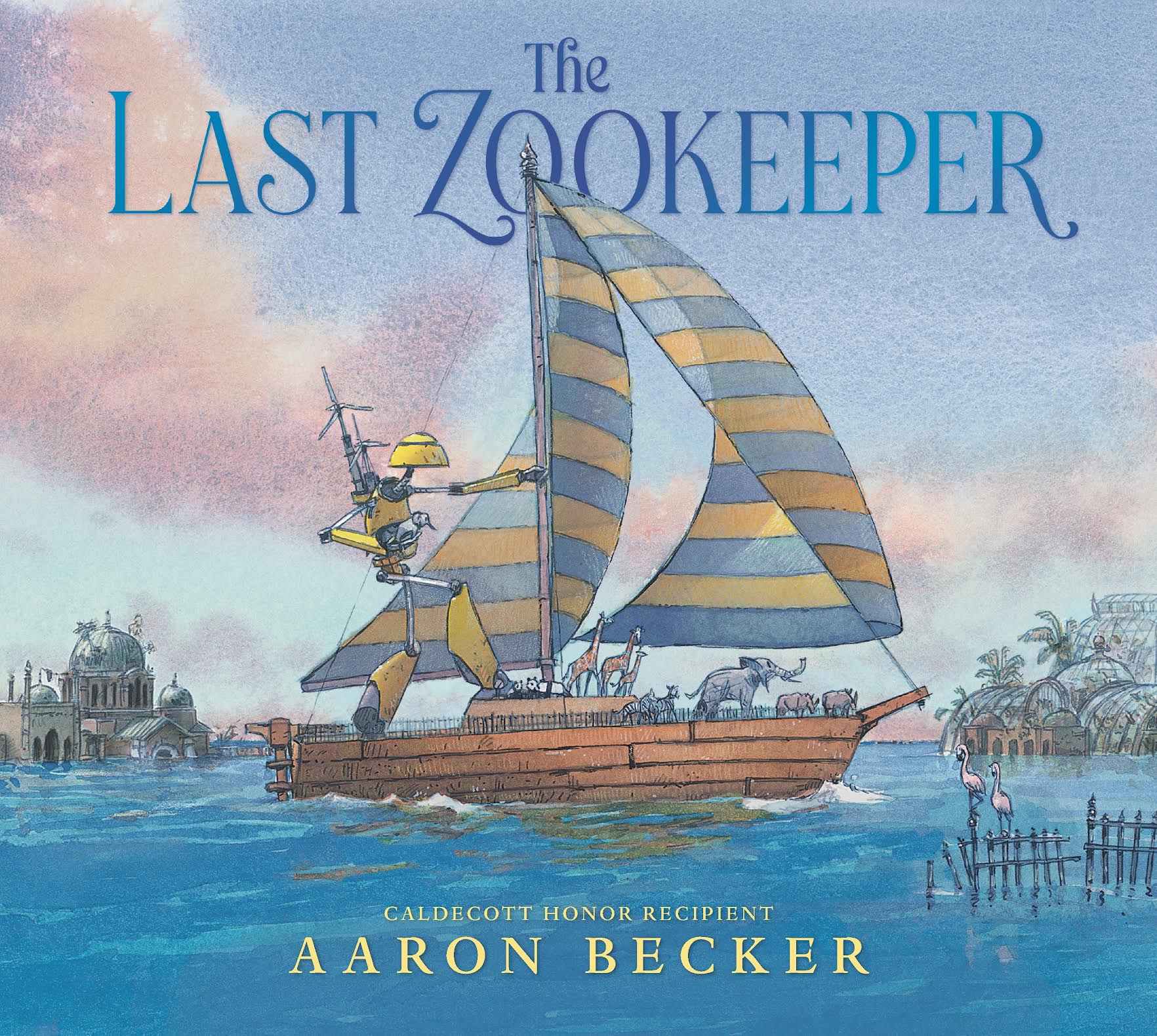
In a flooded world, a single giant robot works hard to save all the animals it can find. Wall-E meets Noah’s Ark in this magnificent, wordless tale. If you found yourself recently wondering, “Gee, has Betsy found her favorite post-apocalyptic picture book of 2024 yet?” consider this your answer! Again with the Becker. Is the book wordless? Of course. Does it have an ecological message? You bet it does! And is there a grandiose storyline involving storms and cute tiny rhinos and a happy ending? Yes and yes again. Now am I just reading too much into this, or doesn’t this also kind of feel like it starts out like Noah’s Ark and ends like the story of Adam and Eve? Knowing Mr. Becker, I suspect that this isn’t just me. This is for those older kids that love their picture books when their picture books are full of adventure and epic storytelling. Previously seen on the Wordless List.

Let’s Go! haw êkwa! by Julie Flett

From a window every day, a child sees the big kids skateboarding and wants to give it a try too. It isn’t instant. It isn’t easy. But sometimes with friends it can be a lot more fun. I could be wrong about this, but I do believe that this is the first picture book that Julie Flett (Cree-Métis) has both written and illustrated, and it’s good! I like how she’s come up with the sound “Cacussh! Cacussh! Cacussh!” to describe the sound of a skateboard’s wheels on the ground. This book actually pairs really well with Touch the Sky by Stephanie V.W. Lucianovic. In both cases you’ve a kid who has to learn something new (in this case, skateboarding) and isn’t instantaneously good at it. And even when they get decent, there’s that fear that comes with being around the big kids who might make fun of you. I thought the integration of Cree words into the text was really well done.

Little Shrew by Akiko Miyakoshi

Three small stories follow a little shrew as it takes small pleasures in everyday living. A gentle reminder to make time for the things you love. The fact that the world does roll out a parade every time Akiko Miyakoshi comes out with a new picture book will never not be baffling to me. If you haven’t read The Tea Party in the Woods or The Way Home in the Night, then you may not quite know what I am talking about. Let this book be your guide then. Miyakoshi excels in furry animals living very calm, contemporary, city-based lives. This may be the most extreme version of that, since Little Shrew literally has a bank job (exchanging foreign currency, if I don’t miss my guess) but also gets this deep satisfaction out of little things like having friends from out of town over once a year or staring at a poster of Hawaii. I’m just charmed by this. And, judging by the fact that it won a NYPL/New York Times Best Illustrated Award, I’m not alone.

Looking for Peppermint, or, Life in the Forest by Maxwell Eaton III

Where is Peppermint the dog? Learn about what it’s like in the forest as a young girl goes searching for her lost pet in this hilarious tale. I had a devil of a time figuring out if this should go in the Nonfiction picture book section or a fictional one, and ultimately with its story about Peppermint the dog I decided the safer route was to opt for fiction. Even so, this book is so packed with information about the forest of the Adirondack Mountains that you’d have a difficult time not learning something from it. Eaton has, by this point, kind of sunk into the beauty of teaching nonfiction with humor that he’s practically a Yankee Phil Bunting. In this particular story, you get the facts, you get the overarching story of our heroine searching for her dog, and you also get flashbacks. With a lesser book creator this could all have ended up a hopeless jumble, but here it plays out more like a symphony. I absolutely loved the storytelling, the art, and now I wanna see a fisher too! Previously seen on the Funny Picture Books List and the Informational Fiction List.

The Man Who Didn’t Like Animals by Deborah Underwood, ill. LeUyen Pham

I’m one of those picture book fans who gets super excited when two of her favorites get paired together on a project. Underwood + Pham? Yes and please!! So this one’s pretty cute, and while I understand why there’s a leading line on the cover that gives away the surprise ending, I kind of wish the part that says, “Before there was Old Macdonald, there was…” had been left off. Even so, this is so cool to watch. The front endpapers concern our hero, a middle-aged man who studiously avoids any and all contact with the local animal population. His house is (at the start) utterly immaculate (and we are giving Pham extra points for the clever inclusion of just E, I, and O Scrabble tiles on his coffee table). Then, one day, a cat shows up and the man is not only unable to shoo it away, he grows fond of it. It is joined by a second cat. Then a dog. Then a second dog. As time goes on the man starts to accrue more and more animals, the book tipping nicely from the believable to the point where a herd of cows show up. The man’s neighbors, who started by being indulgent about his newfound love of animalia, eventually call upon him to put an end to these hijinks. That twist I alluded to? He moves to the country and starts Old MacDonald’s Farm. The text? Fun. The art? Pham’s usual extraordinariness, of course. Just try not to be charmed by this one.

My Block Looks Like by Janelle Harper, ill. Frank Morrison
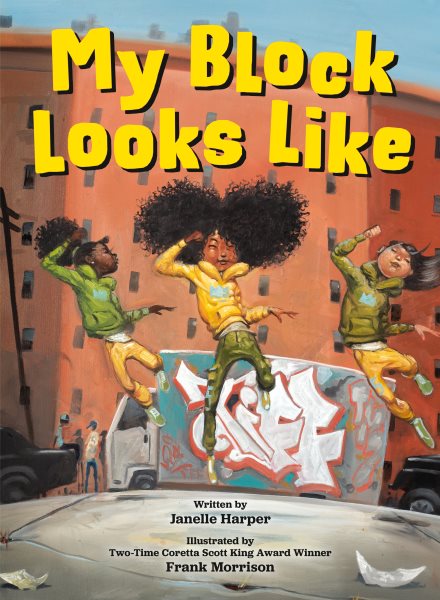
“My block looks like a collision of cultures / a melting pot of cool.” A young girl pays homage to her city as the pages spring to life. A book with heart, heat, and energy crackling on each page. It’s just been so much fun watching the progression of Frank Morrison’s art over the years. Not that his style changed beyond recognition or anything, but when he’s feeling a book you get this incredible elastic energy on each one of his pages. Trouble is, you never know if he’s truly into a book that he’s illustrating or not until you’re reading it. This one? Frank clearly connected with the material. There’s this image early on of the young female lead doing this leap, head thrown back, bubble gum bubble above her mouth, that just perfectly captures the LIFE on these pages. And, as ever, Morrison is also at his best when the writing he’s paired with can match his style. I was surprised to see that this is Janelle Harper’s debut. She just knocked this text out of the park with its celebration of what it looks like living in New York City (though it’s rarely named, so I think kids from a lot of other cities could relate easily). An electric pairing of art and text.

My Daddy Is a Cowboy by Stephanie Seales, ill. C.G. Esperanza
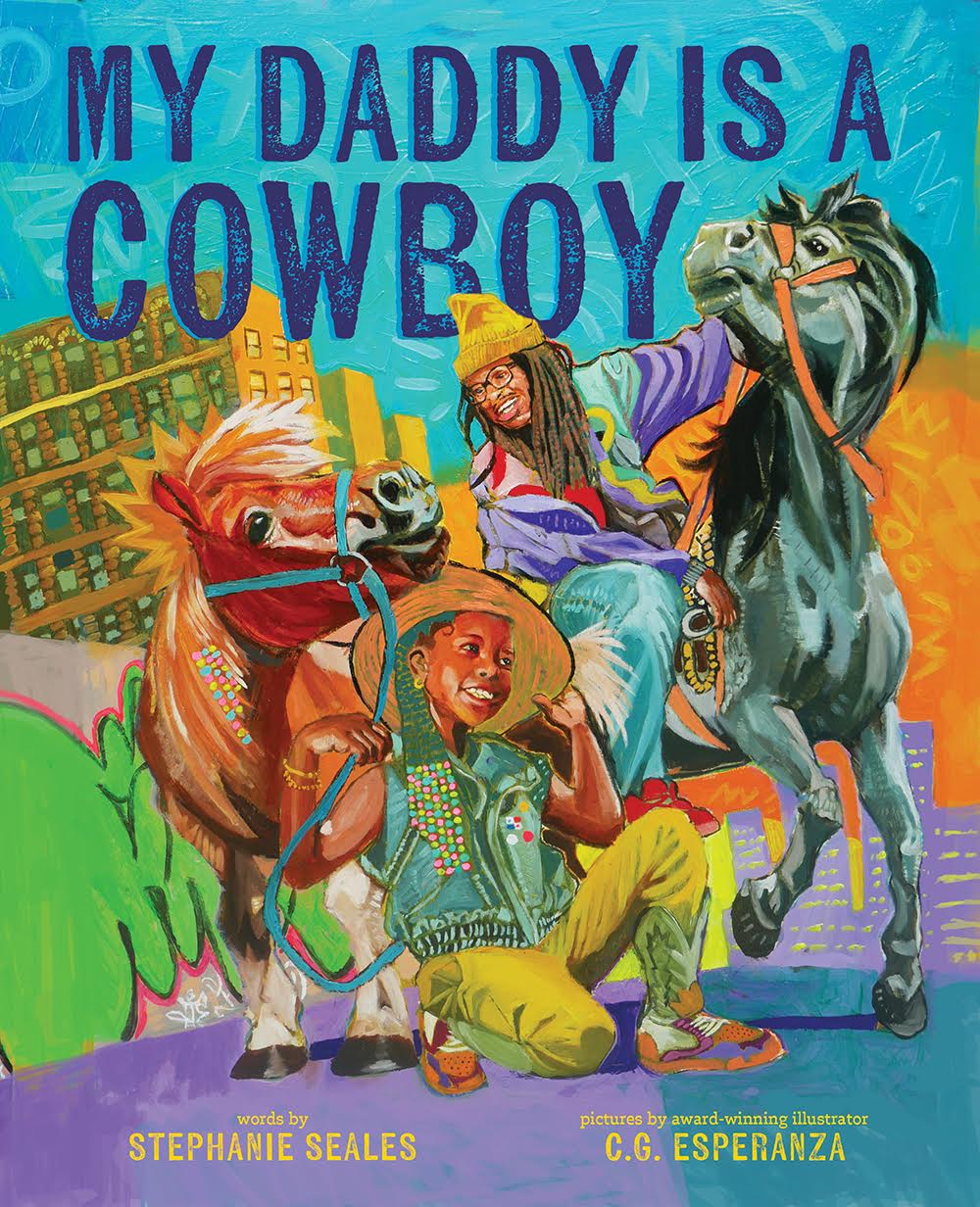
When everyone’s asleep, before the sun has even risen, a girl and her daddy ride their horses through the city. A beautiful father/daughter story infused with some serious horse-love. Ooooooo! This IS interesting. It feels like a Cowboy Carter-era inspired take on My Papi Has a Motorcycle. The two would definitely pair beautifully together. The text on this one is great, with this really lovely and touching daddy/daughter storyline going on. But of course it’s Esperanza’s art that’s going to be what draws people to this book. You cannot tell me that the illustrator didn’t base these characters after real people. That daddy feels like someone you could meet tomorrow, he’s so realistic. Love the dynamic, the horse facts, and the whole feel of this book. This one’s a keeper.

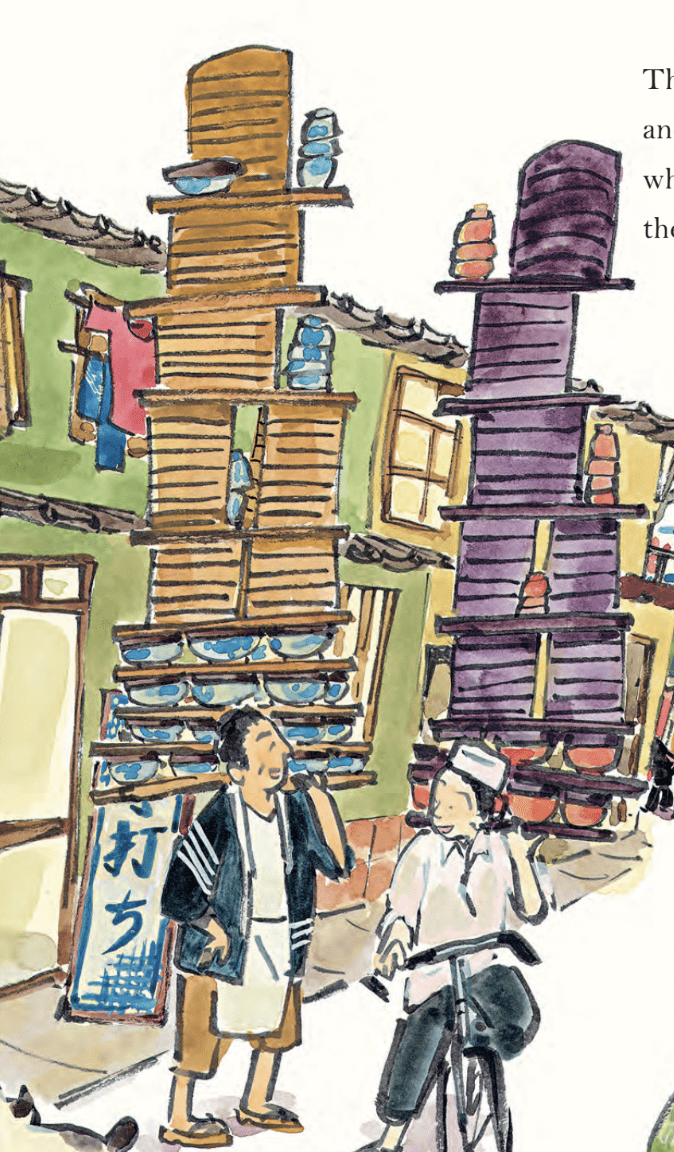
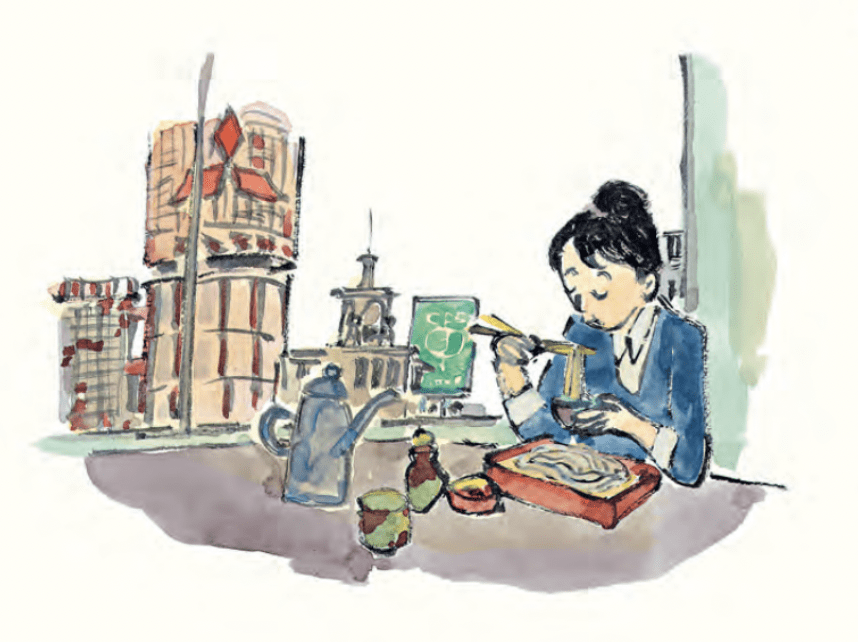
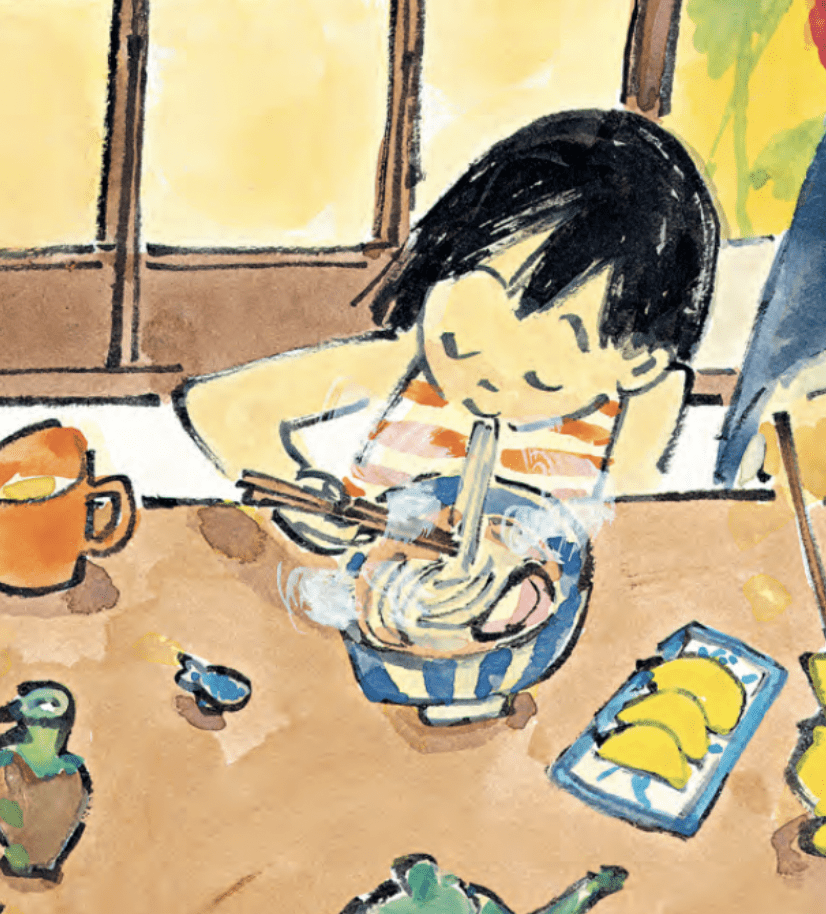
Noodles on a Bicycle by Kyo Maclear, ill. Gracey Zhang
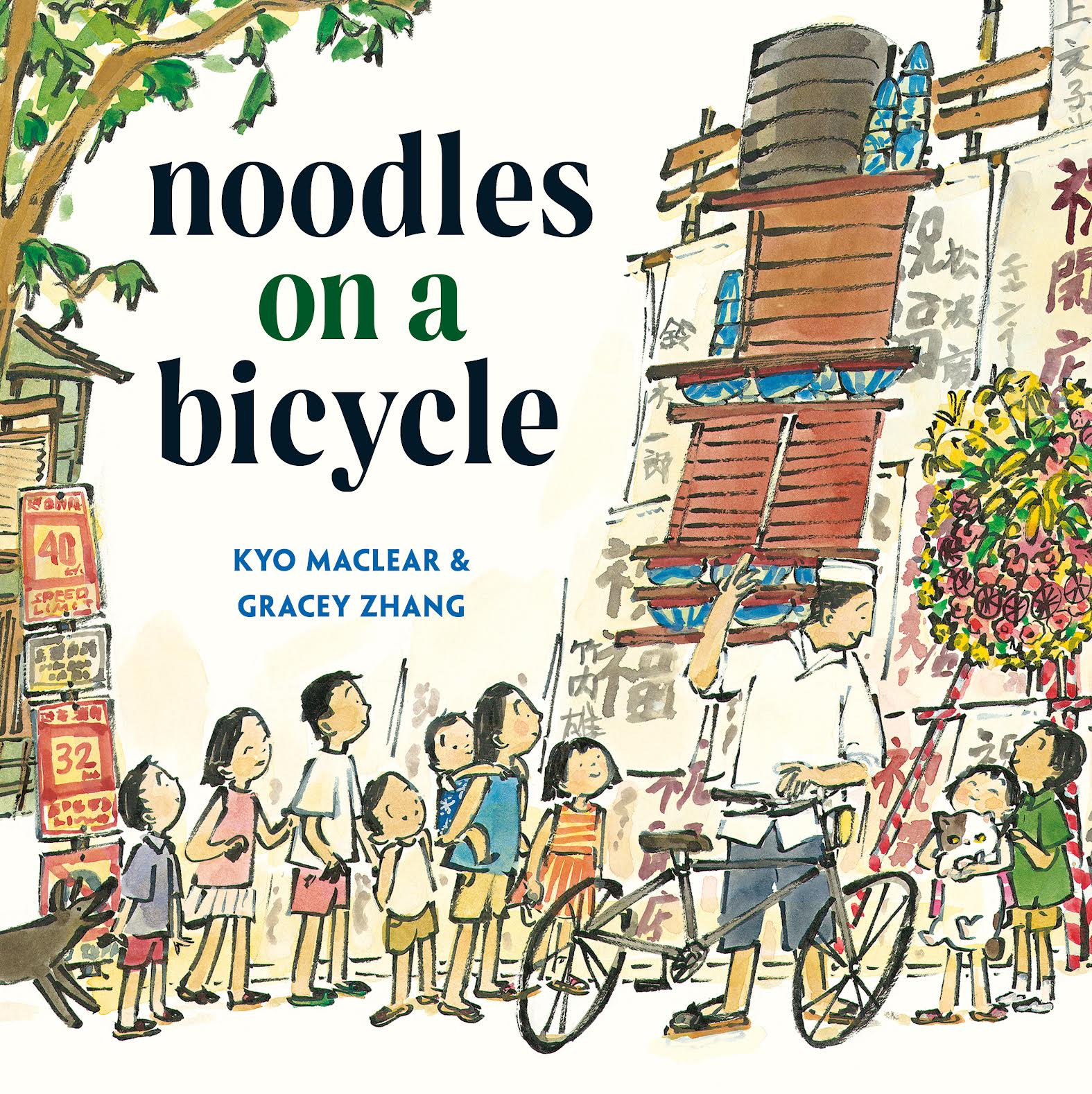
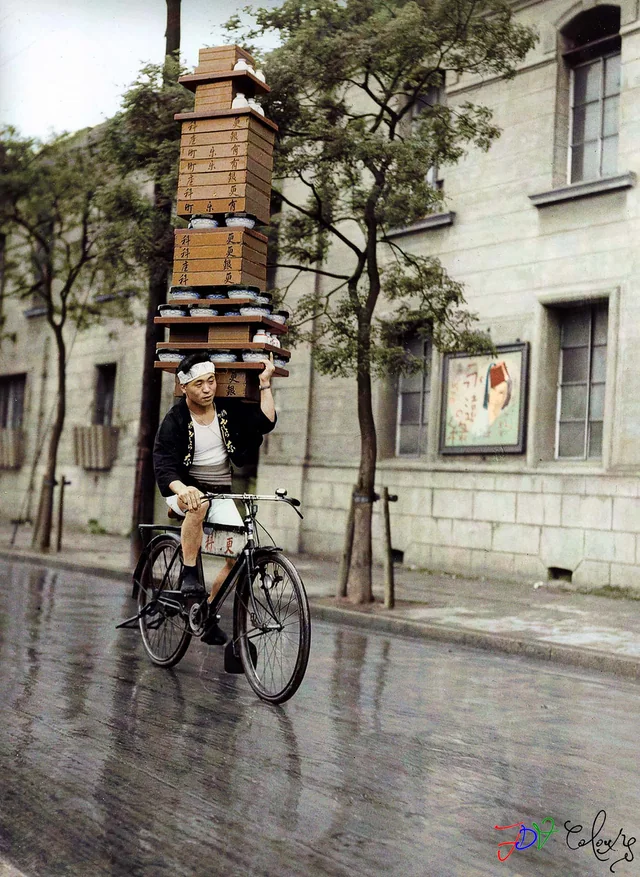
Who can make towering piles of noodles and deliver them with acrobatic speed and agility every day? The demae of Japan, of course! A love letter to the skilled workers of the past. I just want to state for the record that I have heard folks say that Gracey Zhang’s art in this book is exaggerated. But all it takes is a single Google search to prove such statements wrong. Now I was already a huge fan of Kyo Maclear and Zhang’s The Big Bath House a couple of years ago, so seeing them together again just makes my heart sing. And again, Maclear is drawing upon something she saw or experienced when she was a kid in Japan and turning it into just a killer picture book. In anyone else’s hands this would be an “Oh, what a neat thing” type of book, but Maclear adds this ending that really grabs you by the heart. Warning: You cannot read this and not want to eat noodles afterwards. Not at all. 

Not a Smiley Guy by Polly Horvath, ill. Boris Kulikov

Wow. I hereby award the Best Last Sentence in a Picture Book Award to (drumroll please) POLLY HORVATH! In this tale, a little boy named Ernest just, as the title says, is “not a smiley guy”. Nothing wrong with that except it freaks the heck out of other people. I love the description of what happens when baby Ernest gives smiling a try. “But aside from the interesting stretchy face sensation it was not for him.” When pressed by his parents to explain what would truly make him happy he confesses that what he really wants is an elephant. When he gets one (named Marcia, no less) his parents are baffled. Why isn’t he happy now? Ernest has to explain that he’s actually happy most of the time. His parents then ask if there was some way that he could show it. So the occasional jig is decided upon. And as the book concludes, “You don’t have to change, but for the people you love you do what you can.” I may have that line embroidered on something someday, it’s such an incredible message. Kulikov, for his part, has a lot of fun working elephant silhouettes into the art long before Marcia’s appearance. This one’s a joy. Previously seen on the Message/SEL List.

Pasta Pasta Lotsa Pasta by Aimee Lucido, ill. Mavisu Demirag
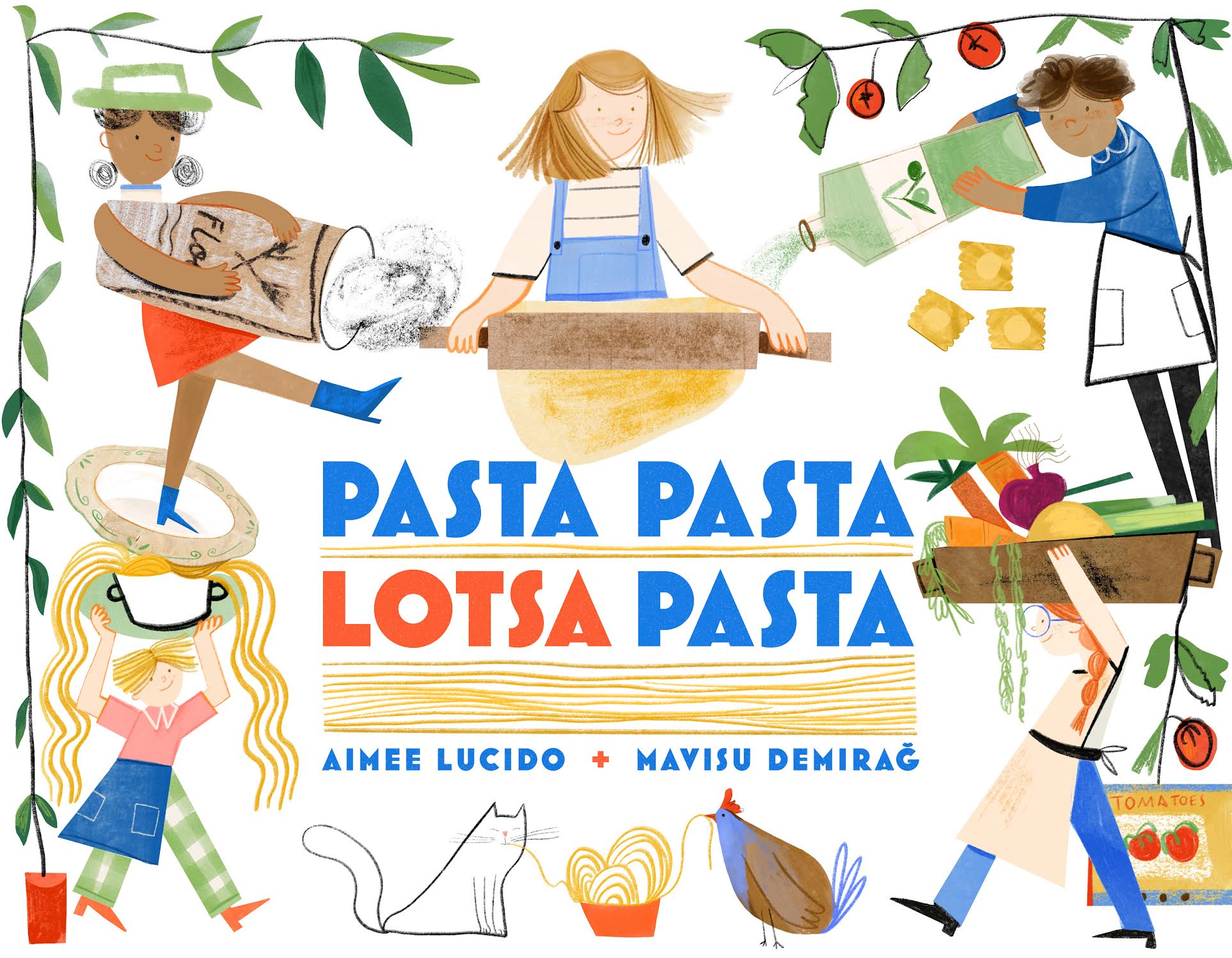
Incredibly bouncy cooking energy infuses this delightful tale of a girl and her pasta loving family. Guaranteed to make you hungry! Surely SURELY this cannot be the first pasta-related picture book to realize the rhyming potential of Italian foodstuffs. And yet, I say that I can’t come up with anything to compare to this. It has all the rhythm and bouncy energy of Bee Bim Bop (and that’s the highest compliment I can bestow). We always need books that would work well in a storytime. This book earns your respect. I think we just found a readaloud winner! Previously seen on the Readaloud List.

Pepper and Me by Beatrice Alemagna
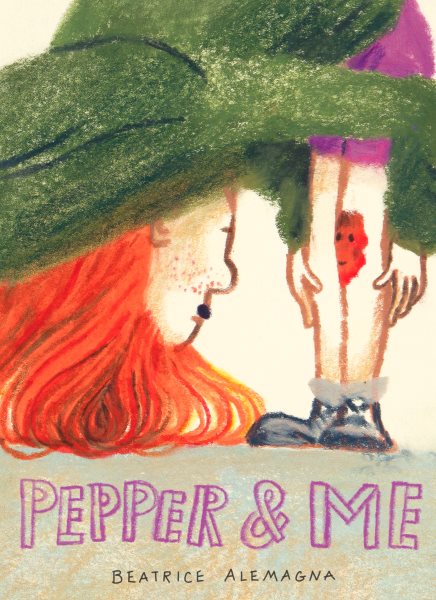
When a little girl gets a scab on her knee it is NOT beautiful. Even so, she names it Pepper and she and her scab learn to live with one another, for a time. An oddly touching tale. I like ‘em weird, sure, but I also like ‘em to have an honest connection to what it’s like to be a kid. And a talking scab? Tell me more! I don’t think I’ve had a significant scab since I was a kid, but I had them ALL the time back then. A child really does have a whole relationship to their scabs too. When I first heard about this book I worried that it would have a whole friendship aspect right from the start, but instead this is much more interesting and talks about the love/hate relationship kids have with their wounds. Fun Fact: In the French edition I believe the scab’s name is “Bertha”. Utterly original. Utterly bizarre.  Previously seen on the Unconventional List.

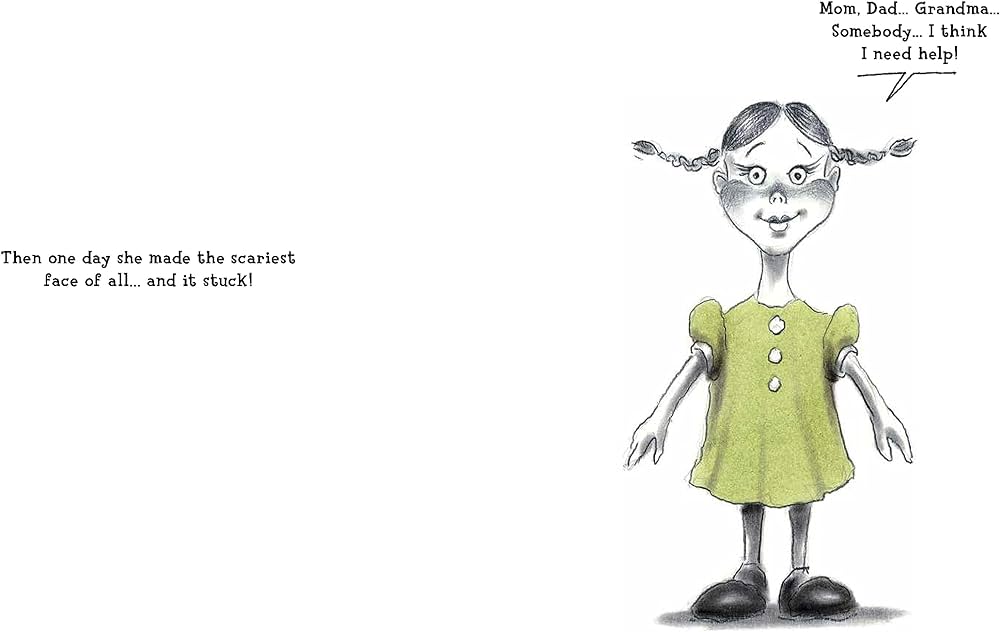
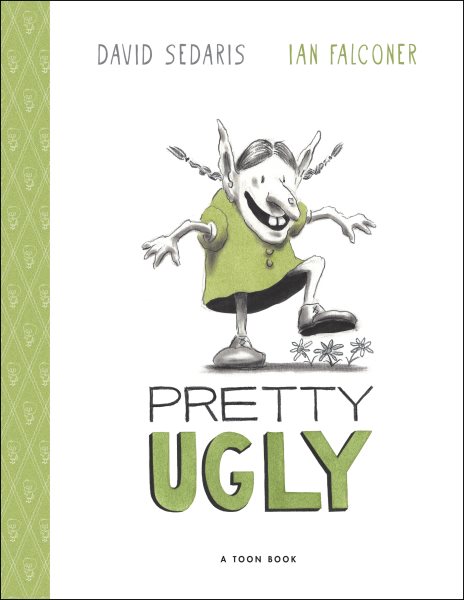
Pretty Ugly by David Sedaris, ill. Ian Falconer
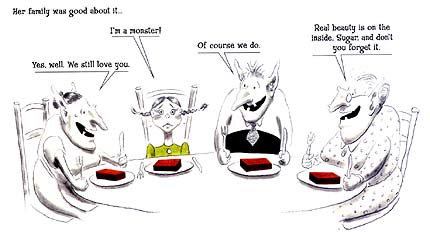
You know that old saying not to make faces or one might stick that way? Anna Van Ogre finds it out the hard way, but fortunately comes up with a truly disgusting solution, in this twisted take on finding beauty within. This is a weird one and no question. You probably know Ian Falconer best as the guy behind the Olivia books. He died last year in 2023 and it makes me kind of sad to read this book. In it, he goes so completely off the rails that I can only imagine what other fun and wackadoodle books he probably had in his future. This book actually elicits gasps from its readers, it is so beautifully twisted. I imagine it’s going to become quite the cult hit. If you read it, don’t say I didn’t warn you… Previously seen on the Unconventional List.

Ride Beside Me by Lucy Knisley

A child and mom hop on their bike when “the morning is bright” and join countless other cyclists on the streets. Gentle rhymes bring the fun of bicycling home. It sort of feels like Lucy Knisley, knowing as she does that the bicycle is second only to the horse in terms of illustration difficulty, set herself up for the ultimate challenge. And won! This could have simply been a basic we-like-bikes type of tale, but there are lots of little elements to elevate it above the pack. I loved the mom getting incredibly tired going up the hill. I like the seek and find aspect of trying to spot her with her kid in the big groups. I adore the endpapers, the different kinds of bicycles, and the fact that this is one of the few moments when bicyclists can all work together. A lovely little book paying homage in a way I’ve never really seen on this level before.

Simone by Viet Thanh Nguyen, ill. Minnie Phan

When Simone and her mom have to flee a wildfire threatening their home, she learns about  her mom’s long ago flight from Vietnam and considers how people can help one another.  I interviewed the author of this book earlier in the year, and did a kind of quick read of this book beforehand. I think I did it a bit of a disservice, or maybe I just needed to see a physical copy in my hands. Whatever the case, something about this story and its writing hit a lot harder this second time around. It isn’t just the fact that it centers Vietnamese people who’ve had to flee war (in the past) and forest fires (in the present), though that’s a powerful connection for any picture book creator to make. There were just these little moments that stuck with me so hard. Like when the girl finds out that prisoners fight fires and asks if they did bad things. The mom’s answer is, “Maybe, but now they’re doing good things.” This is just a deeply caring book.

Sister Friend by Jamilah Thompkins-Bigelow, ill. Shahrzad Maydani
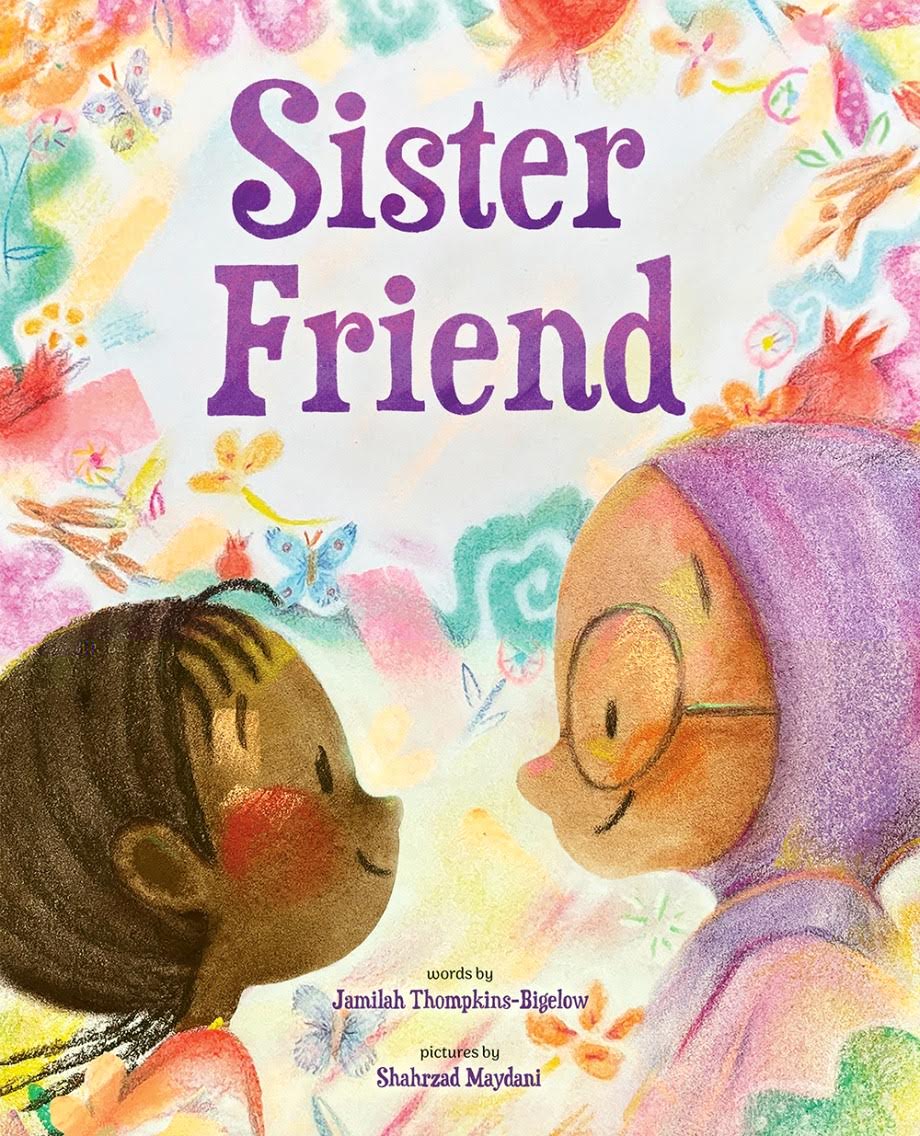
Sometimes it takes the right text for you to be able to see an illustrator in a whole new light. Shahrzad Maydani has illustrated a slew of picture books in the past already, but there’s something about her work on SISTER FRIEND that feels completely different. And not gradually throughout the book but right there at the start. That initial sequence of Ameena playing hopscotch by herself just has so much zip and personality to it! It’s an incredible introduction to a story that’s unafraid to touch on pain. Ameena’s the only Black girl, and certainly the only Muslim girl, in her class. When a new classmate arrives named Sundus, Ameena is delighted. But this isn’t a story of instant friendship or anything. Misunderstandings and miscommunications plague the two girls, keeping them from connecting. And what Ameena takes as rudeness eventually resolves itself as an embarrassment over Sundus’s inability to speak English fluently. Did I tear up at the end? I bloody well did tear up at the end yep. Previously seen on the Message/SEL List.

The Spaceman by Randy Cecil
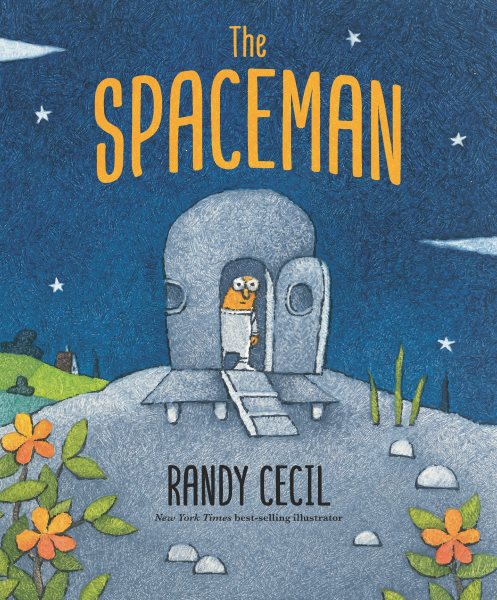
Talk about traveling a lot for work! A tiny spaceman has worked for who knows how long at “collecting samples, labeling and filing them, and moving on to the next planet.”But what happens when he finds a planet that he doesn’t want to leave? Anyone else notice the significant uptick in space-related children’s books in 2024? Maybe all that talk in the news about UFOs and UAPs has filtered into our children’s literature. Whatever the reason, if that means we get more books like The Spaceman then I’m all for it! I could recognize Randy Cecil’s style, but as far as I’m concerned this is his breakout hit. The subtlety of the Spaceman’s little tiny expressions is worth the price of admission alone. I love his tiny smiles and the oh-so-casual way with which he “accidentally” tips his spaceship into the pond. This book is an absolute delight. More of this, please! Previously seen on the Science Fiction List.

Spider in the Well by Jess Hannigan

Oh no! The town’s wishing well is broken and no one is getting their wishes anymore? But what’s this? Is the sneaky spider behind it the villain or is there more than meets the eye? A hilarious tale of clever kids and riches galore. Okay, this works particularly well. I mean, any book where a spider engages in side-eye this spectacular is well (ha ha!) worth considering. Is it strong? It is! Hannigan happens to be a hilarious writer, and her artistic style reminds me of nothing so much as a sneaky Byron Barton (which, obviously, would be the BEST Byron Barton). Love its twists and its turns. And love that little spider. They’re sure having a heyday in picture books, aren’t they? Previously seen on the Funny Picture Book List.

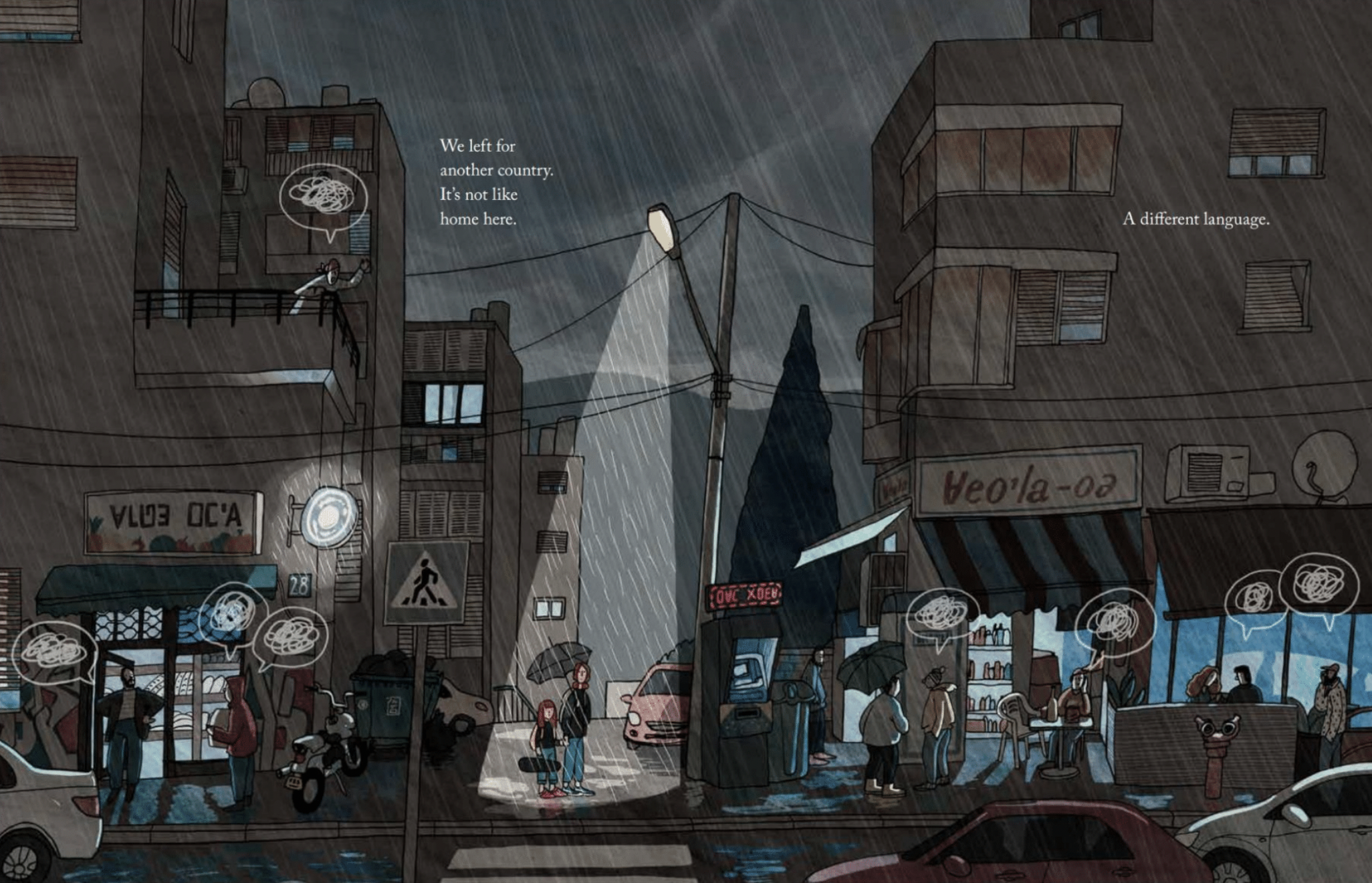
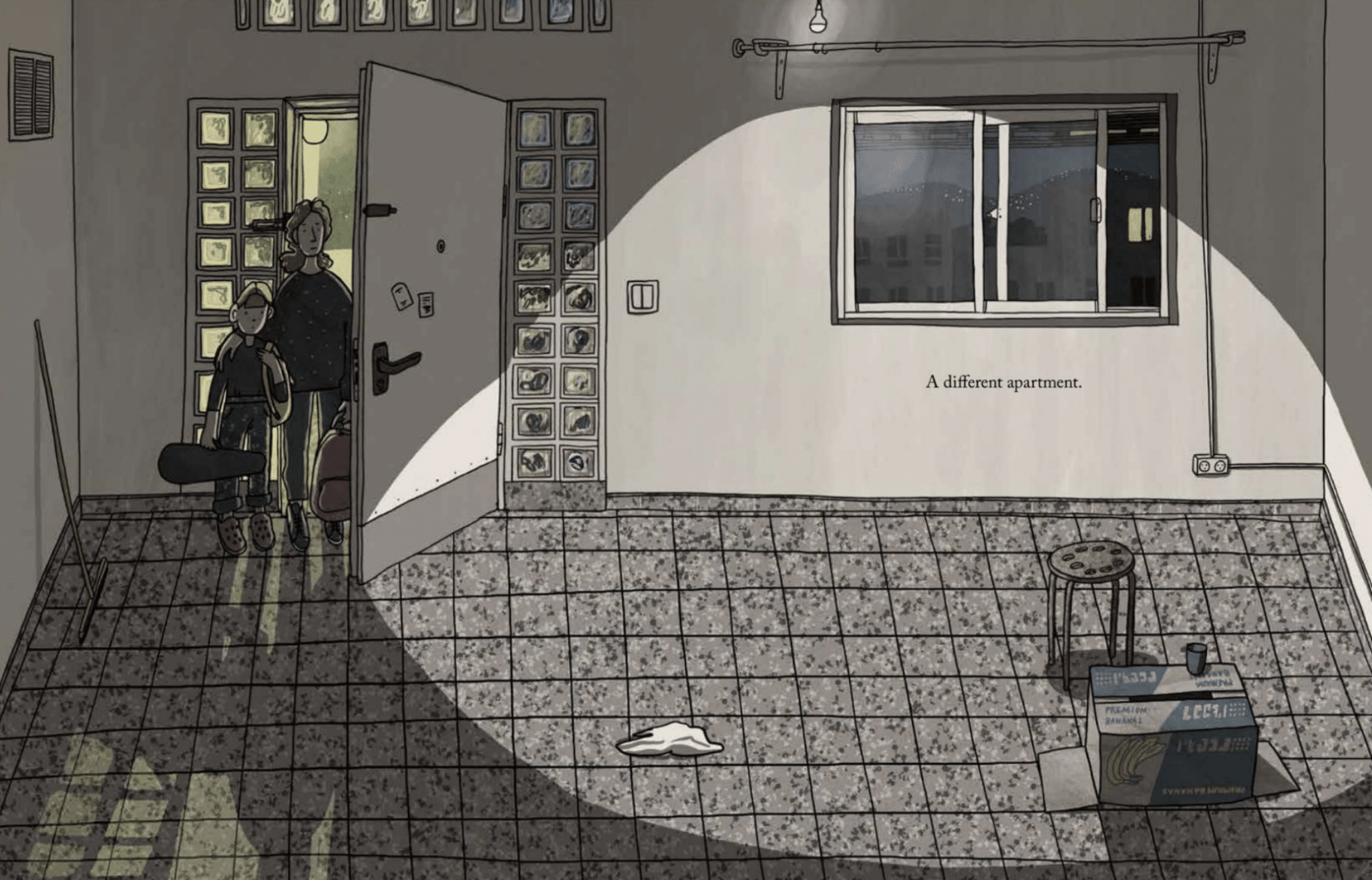
A Star Shines Through by Anna Desnitskaya
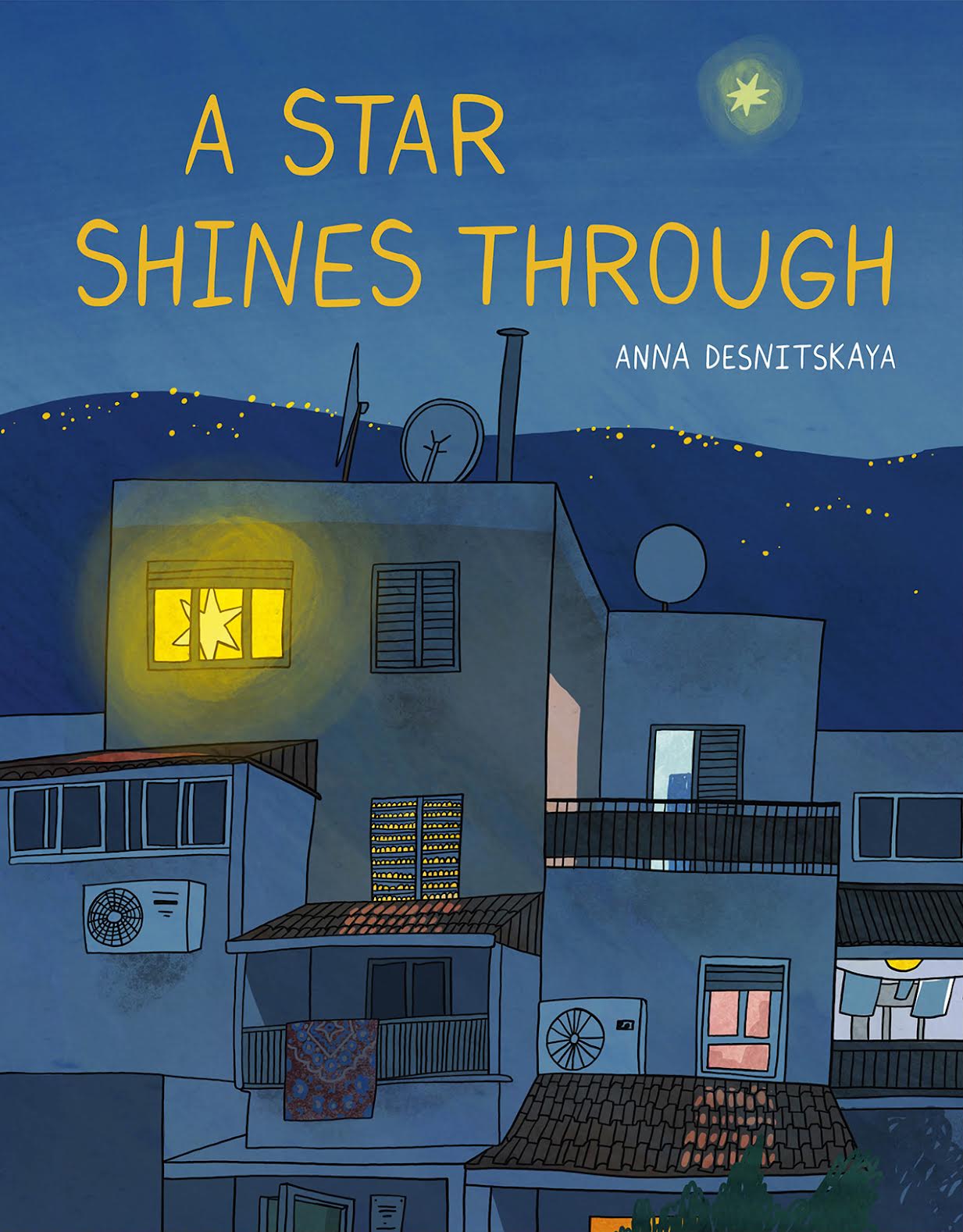
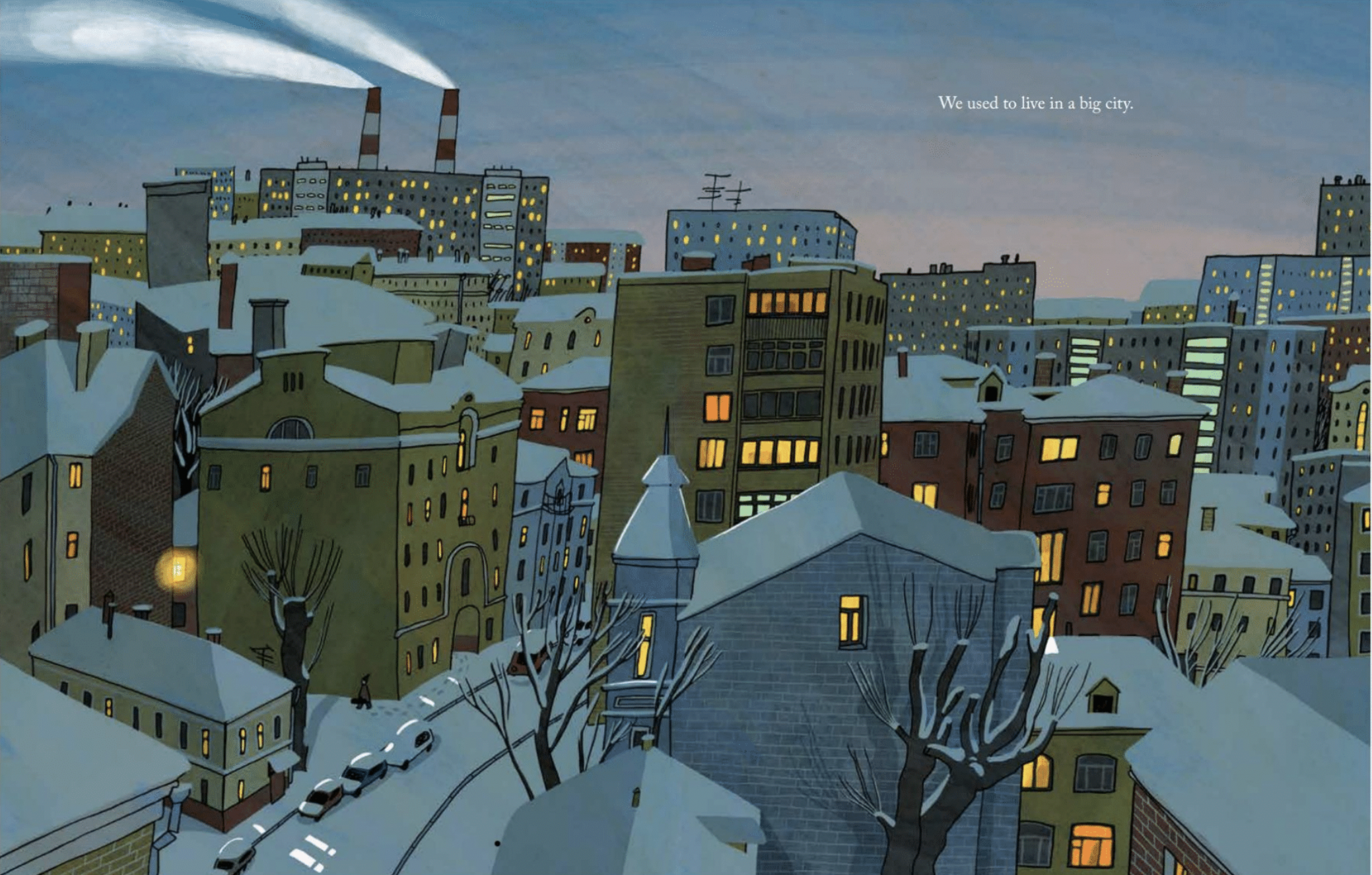
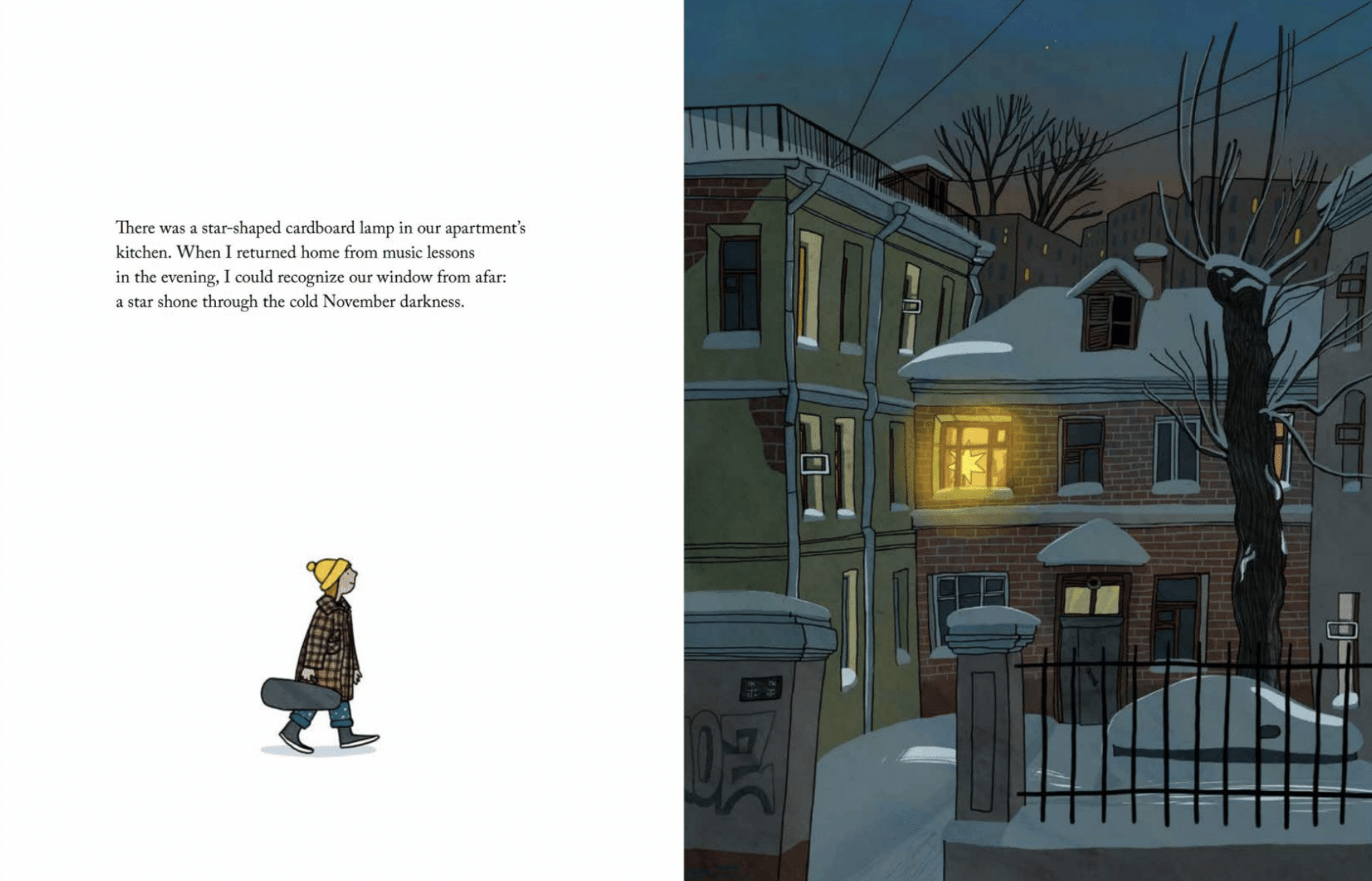
“We left for another country. It’s not like home here.” A girl and her mother leave everything behind to start a new life. A beautifully wrought tale of immigration and finding home. Also, a perfect pairing of art, tone, and writing. The scenes of the empty apartment that the girl and her mother enter are just pitch perfect. I was particularly taken with the acknowledgement that neither the mom nor her daughter are the same after their move, but they find ways to make it work. The fate of the girl’s father (left behind in the old country) is left unclear, which I also kind of appreciated. This is a hard one to forget.

The Table by Winsome Bingham and Wiley Blevins, ill. Jason Griffin

One table, two families. Lyrical and funny and touching all at once, a single table connects two entirely different groups of people, sharing their lives over the years. And the award for Best 2024 Book With the Worst Cover goes to . . . The Table, everybody! Yay! Okay so I was handed this at an ALA lunch and was distractedly skimming through it while other authors spoke and EVEN THEN it hit me so hard. When I finally had a chance to give it my full attention it hit even harder. Jason Griffin won a Caldecott Honor for that YA GN he illustrated for Jason Reynolds a couple years ago. In this book, however, he makes this conscious decision not to show any faces in the book. Hands at most, and bodies, if they have to be seen, are far away. But there were other choices as well. That shot of the dog under the table, for example. And then there’s the text. I’m tempted to yell, “The EARTH done SPUN ‘Round!!” at my kids to wake them up every day now (or maybe I have to wait to be a grandmother). In any case, this one’s memorable and different. 

The Teeny-Weeny Unicorn by Shawn Harris

A miniscule unicorn feels completely overlooked by its giant siblings, until it discovers that it’s only small in one sense. And as the book says, “We are all teeny-weeny. We are all giant. And we are all the right size.”  It almost feels like a dare. I like to think that there’s someone out there confronting Caldecott Honor winners, daring them to write amazing unicorn-related picture books. Harris has broken out what looks like his old colored pencils again to write a book that’s basically about relativity (which means this book would pair beautifully with the Mo Willems titles Are You Big? and Are You Small?). We’ve had books before that tell kids that no matter how small they may feel in one sense, they are absolute giants in another. It’s a good strong lesson, and this book conveys that idea beautifully. I just love the shot of the unicorn fitting its hoof into the thoroughly pummeled roadster, with a look of extreme guilt on its face. No one draws a guilty unicorn better than Shawn Harris. Also, I’m already calling my Halloween costume for this year. I wanna be the gnome. She is going to be a LOT of fun to read aloud. Previously seen on the Fantasy List.

Terrible Horses by Raymond Antrobus, ill. Ken Wilson-Max
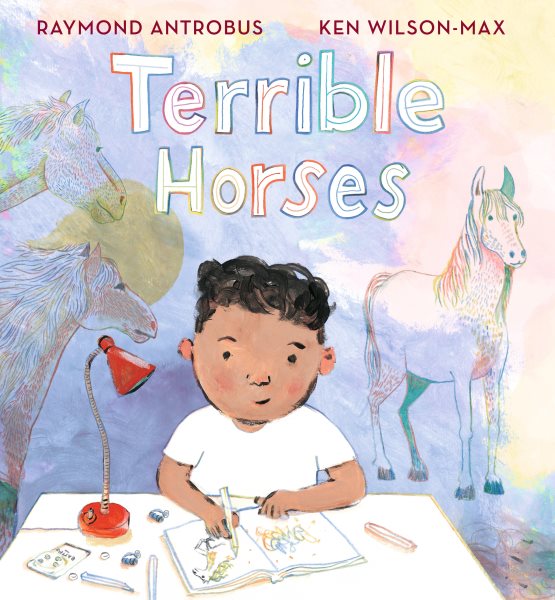
A little brother adores his older sister, but when they clash he writes stories of terrible horses and the pony they ignore. An amazing inclusive story of sibling love and frustration. Do you happen to remember the picture book Can Bears Ski? that came out a couple years ago? I only mention it because its author is back with this new picture book, and to my mind it’s even better than his first. Recently a friend of mine reached out and wondered if I could recommend any books where a kid happened to have hearing aids. I had just read this book and I pretty much told her that this not only did I think it was perfect for her, it’s one of my favorites of the year already (I made a list of other titles for her here). Antrobus does so much with so little. He just taps into that little sibling longing to be with the older kids so well. Plus just listen to his language. “… their terrible trampling, their ghastly galloping, their nagging neighing…” And I’ve been guilty of thinking of Ken Wilson-Max as a fairly simply illustrator in the past. I’ll never make that mistake again. This man KNOWS how to draw a horse. You gotta check this out. 

A Terrible Place for a Nest by Sara Levine, ill. Erika Meza
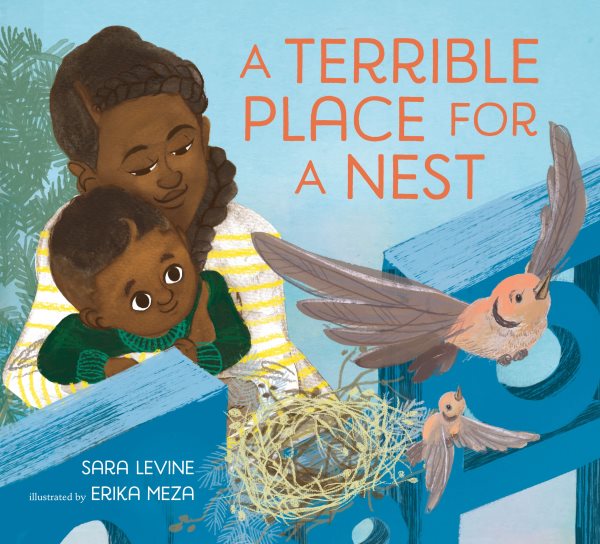
Having lost their home, Juno and his mom find a new place to live alongside a mourning dove nest. But when the birds lose their eggs in an accident, Juno has to determine if this really is a “terrible” place to live. I was about halfway through this book before I found myself thinking, “Why do I like these characters so much? Who is this illustrator?” Lo and behold it was none other than Erika Meza, she of last year’s incredible To the Other Side, which I loved so very much. Meza just has a way with eyes and emotions, but it’s Levine’s text here that just hits home so very hard. I don’t know how much kids are picking up on what’s going on below the surface of our young hero’s initial decision that this new place is a terrible place to “nest”, but this book nails its ending with keen skill. You gotta see this. Previously seen on the Blueberry List.

Time to Make Art by Jeff Mack

What exactly is art? What can it be? As one small child asks these questions, artists ancient and modern make it clear that art is whatever you want it to be. Inspiring and fun! You know, I didn’t think it could necessarily be done, but Jeff Mack has managed to create a book where a ton of artists are visually referenced and it’s actually really very good! This feels like the second in a series that Mack started with MARCEL’S MASTERPIECE. Like that book, this one is helping kids to question what “art” really is. I like any book that breaks down their objections to creation, and this one is brilliant. I’m also giving it extra points for making it clear that photography is art (Cindy Sherman gets a cameo), which is something that most art books ignore (for adults AND kids). Love the message, love the style, and love how damned inclusive it is. Plus there were quite a few folks in here that I want to now discover for myself. Previously seen on the Message/SEL List.

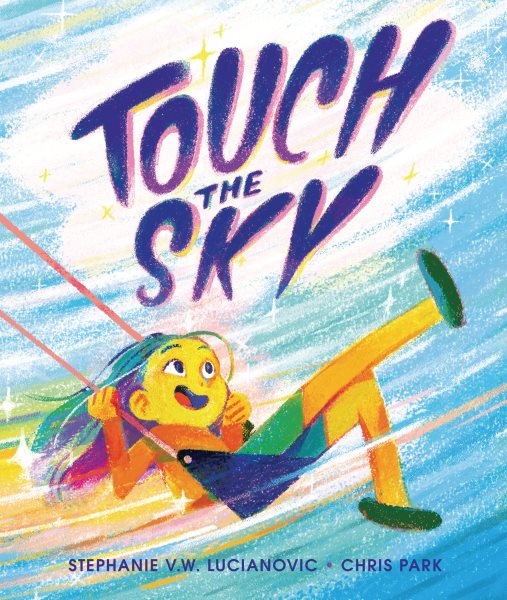
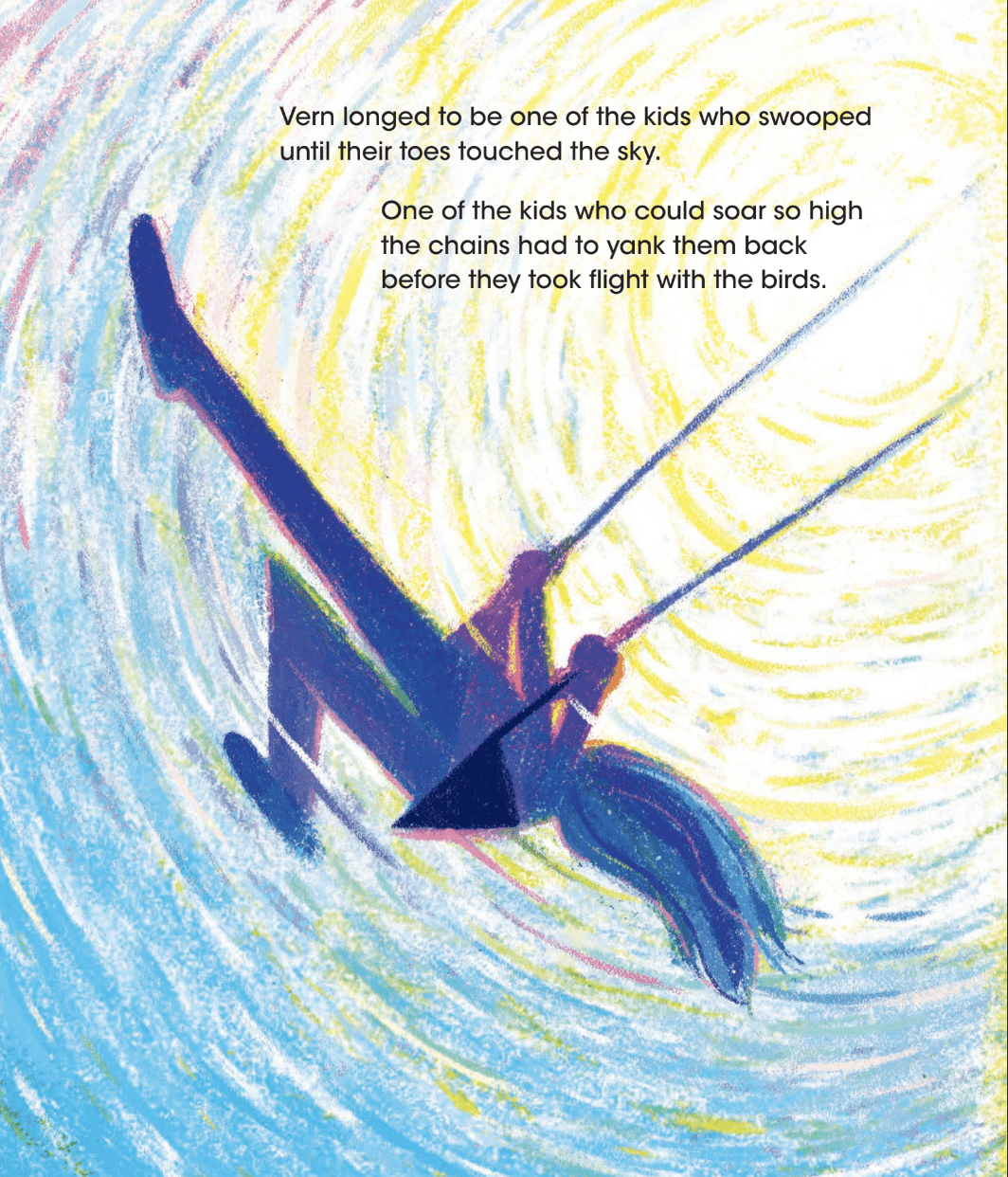
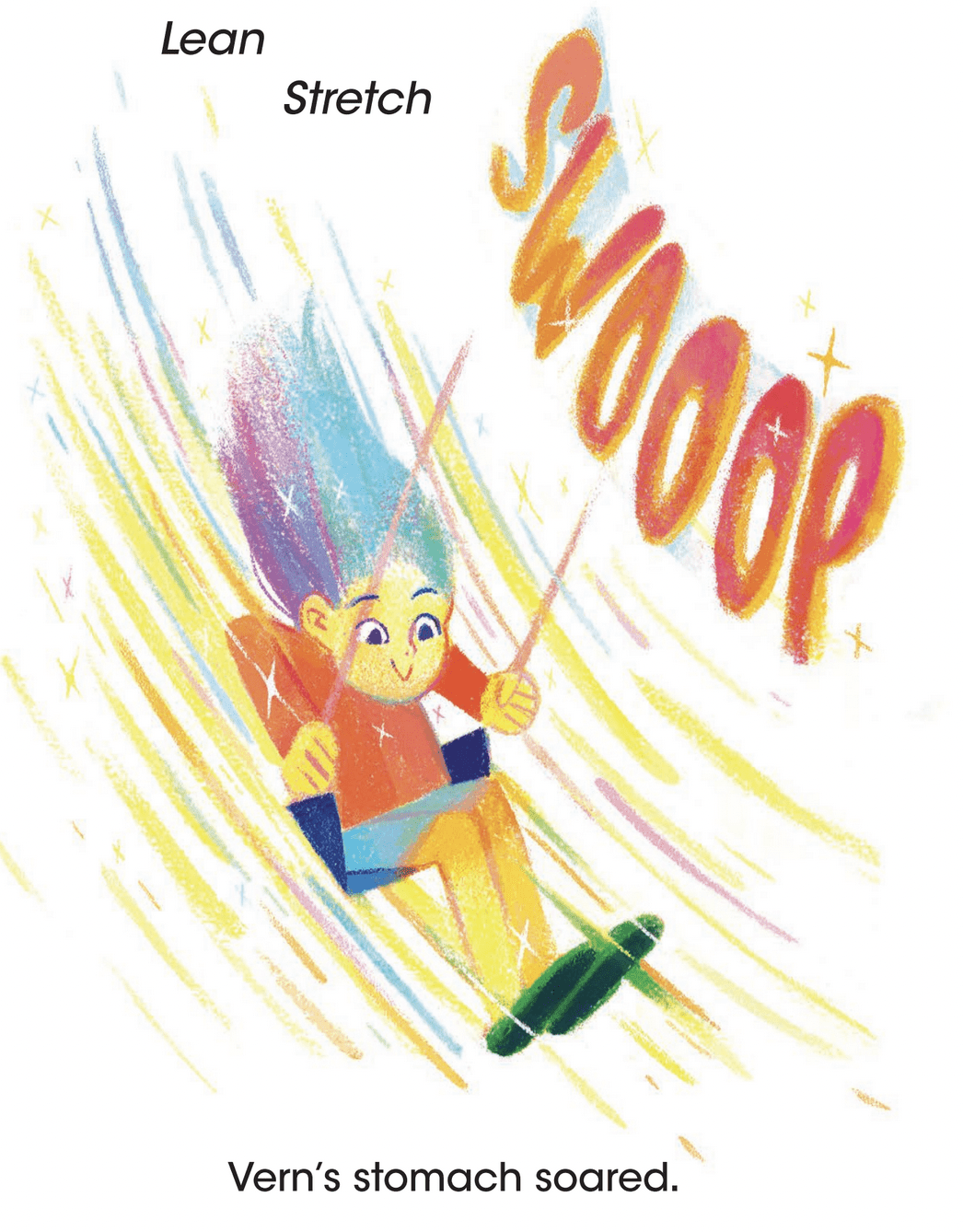
Touch the Sky by Stephanie V.W. Lucianovic, ill. Chris Park

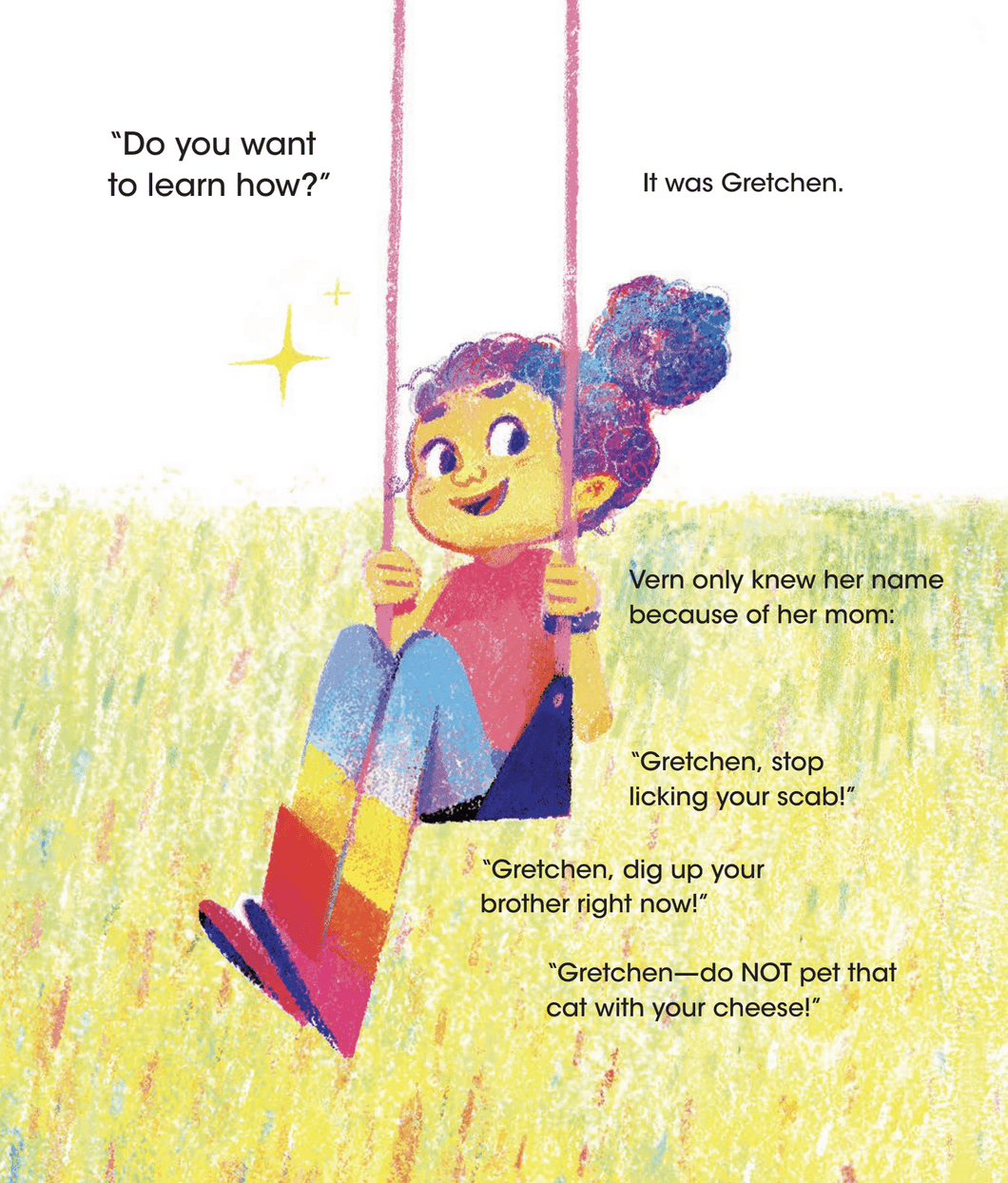
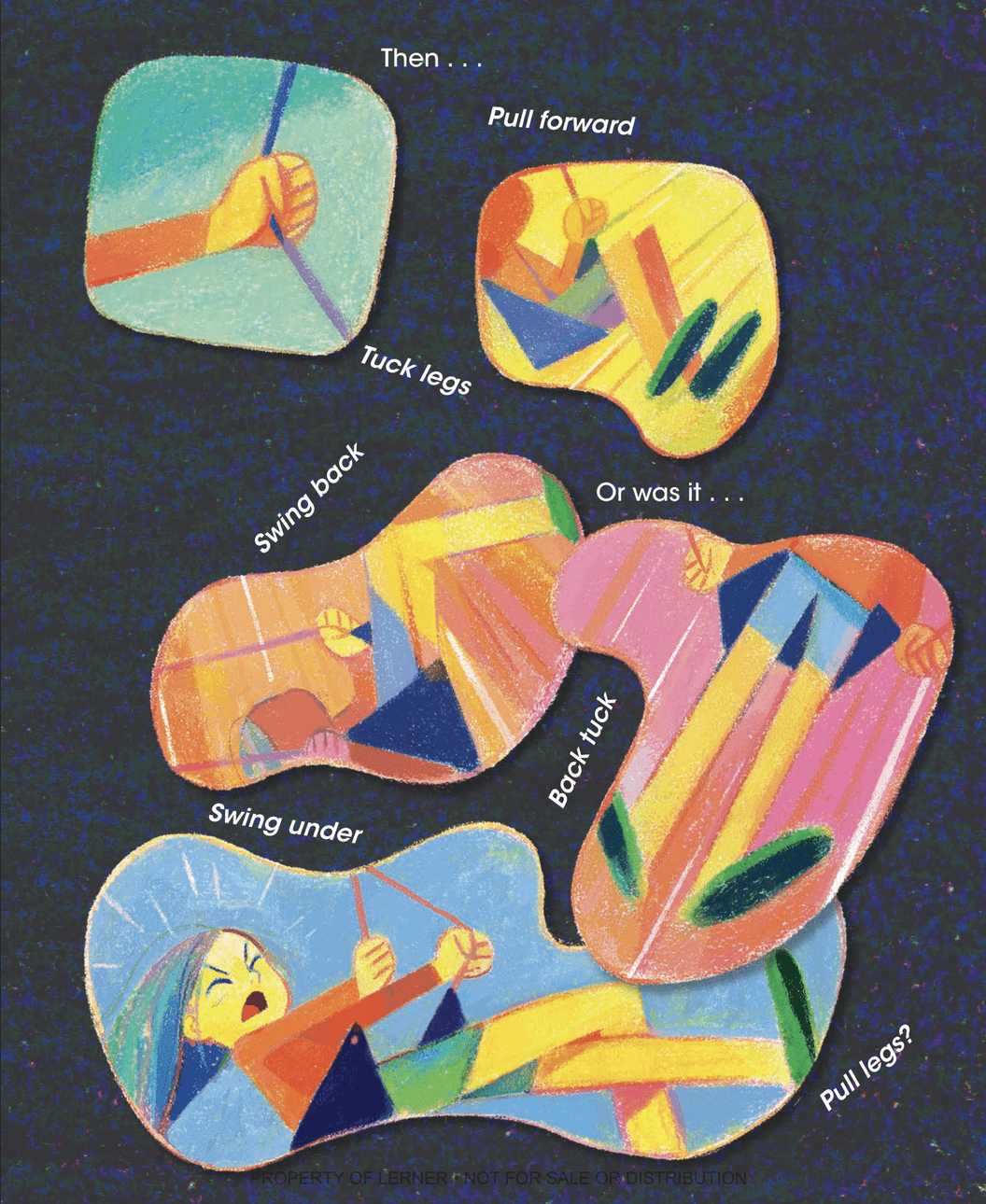
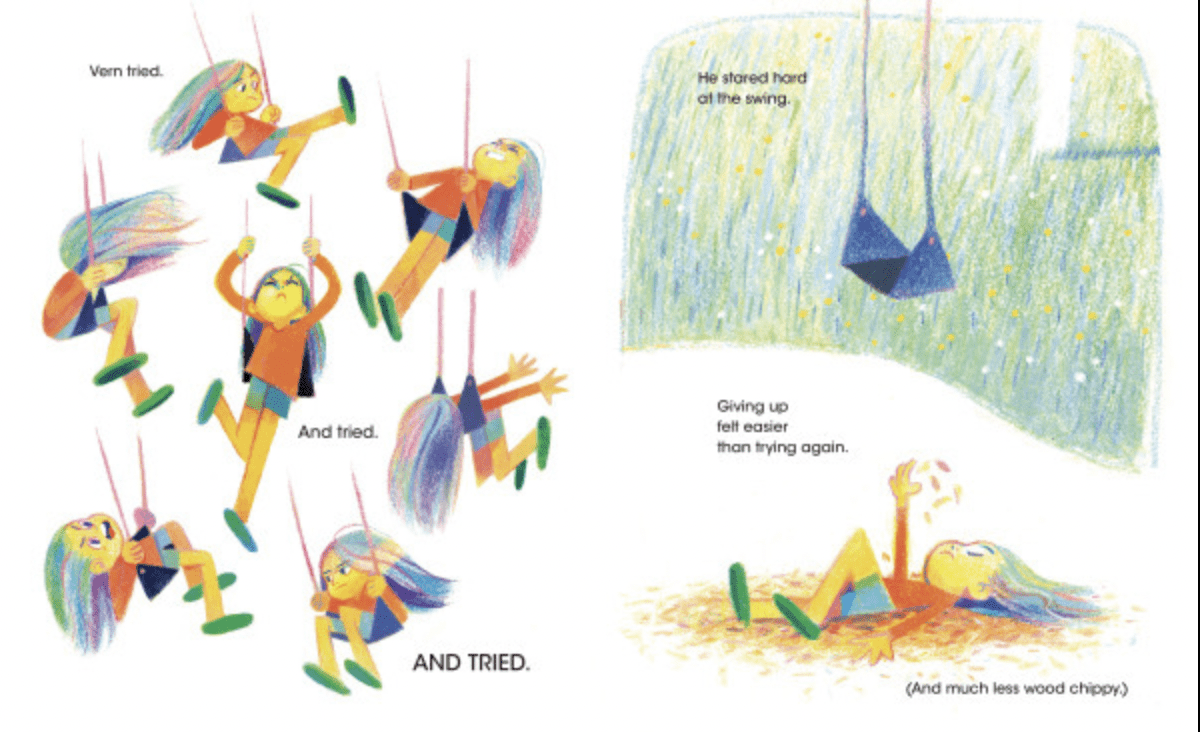
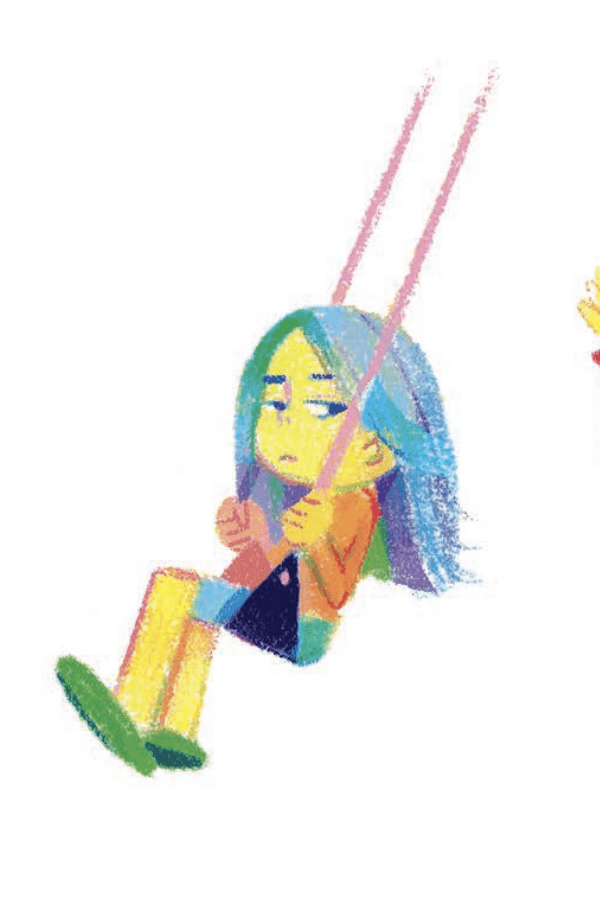
Vern loves to swing, but doesn’t know how to pump yet. Why is it so hard to learn? Fortunately, it takes a patient friend like Gretchen to set Vern on the right path.  First and foremost, I’m a little shocked that this is the first picture book I’ve read that focuses on how kids actually have to learn how to pump their legs and how frustrating it can be before you get it. There’s a lot to enjoy in this book too. First there are the fun phrasings (“Gretchen, stop licking your scab!”), and the fact (which I particularly enjoyed) that Vern doesn’t instantly get it after two tries. Plus Chris Park is just going above and beyond the call of duty as well. The colors in this book! When we read playground picture books, they’re rarely this vibrant. An absolutely delightful telling of an everyday occurrence.

Tove and the Island With No Address by Lauren Soloy

Trust the Canadians to bring us an evocative, odd variation on the young life of Tove Jansson. Inspired by the stories she wrote about her childhood, this book is just brimming with Moomin-inspired oddities (though it adheres a little more closely to our own standard storytelling requirements). In this tale, when she is seven, Tove and her family do what they do every year in Finland and spend the summer in a cabin on “an island with no address.” Free to wander the wilds, little Tove has a grotto where a “secret friend” abides. He’s small and shy and has five girls “as tiny as shells with hair as wild as seagrass, and he had no control over them at all.” One day, Tove offers to take the girls for a walk, but no sooner does she set out than the wind picks up and blows the girls away. There are some incredible shots of the sun peeking through the dark clouds in god rays as Tove, who is level-headed throughout, determines to get those girls back. Soloy’s art is just as evocative as her storytelling, and I’m probably not the only one who wishes that she could get some prints of this book to hang on her wall. The sky, man, the sky! Using her smarts and moxie, Tove gets the girls back and to their father (“he was proud of the girls for being so wild, but he did a good job of pretending to be disappointed”) and goes home to her own family where her mother wraps her in a big sweater and gives her piping hot pancakes covered in jam. This is unconventional if only because the combination of elements you find inside are like nothing anywhere else. At the same time, I can see a child getting lost in these pictures. While there is peril, there is never danger (does that makes sense?). A paean that Tove herself would approve of. Previously seen on the Caldenott List.

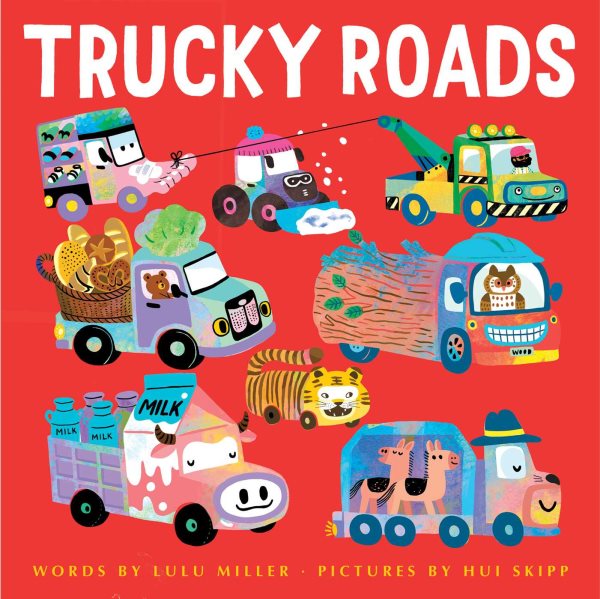
Trucky Roads by Lulu Miller, ill. Hui Skipp

Think you know trucks? You don’t know ‘em like Trucky Roads. Join him as he takes you through a world of inventive, imaginative truck varieties where this sky is truly the limit. It’s interesting, but I’ve seen European children’s books do something similar to this book, but rarely do Americans go this route. This has a kind of dreamy, creamy rainbow coloring to it, even as it gets seriously silly along the way. It starts out being one kind of book and then definitely goes in another direction entirely. Think Richard Scarry by way of Daniel Pinkwater. It’s hard to resist its weirdness and weird choices. Definitely a book on the younger end of the spectrum. Worth a gander.

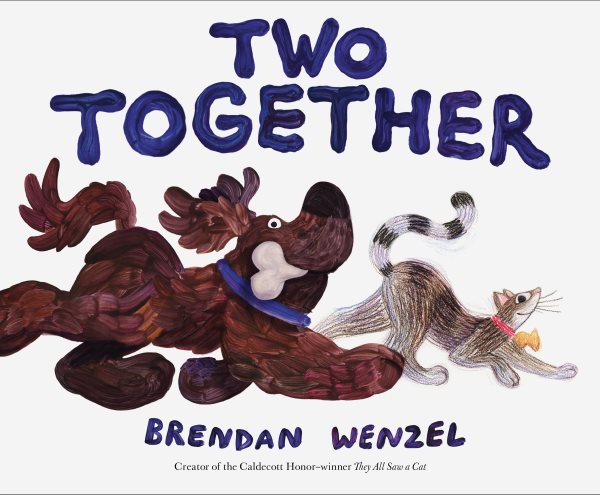
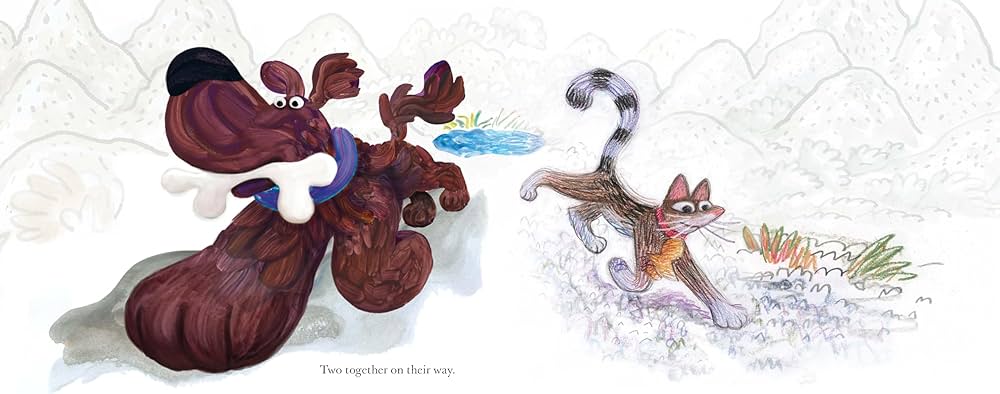
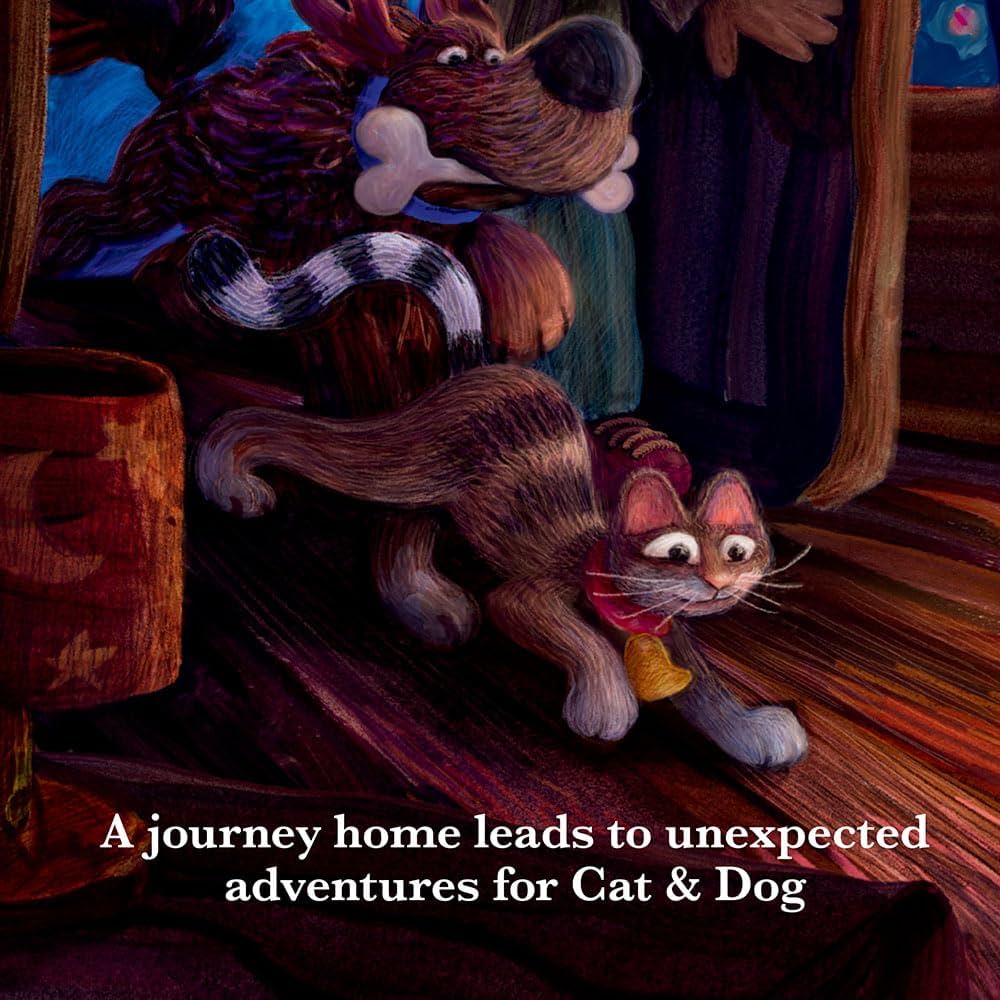
Two Together by Brendan Wenzel

“Two together headed home. Cat and dog. Bell and Bone.” Join these furry friends as they get distracted by the rain, escape angry bears, and ultimately make it home, ready for even more adventures. Readaloud fun! I don’t want you to think that I’m the kind of person who gets so enamored of an author/illustrator that I am incapable of looking at their work with a studied eye. I say that, because when I tell you that this is the best book that Brendan Wenzel has ever done, I mean it sincerely. I liked his book last year (Every Dreaming Creature) well enough, and the ones before that were fine and beautiful too. However, with this book Wenzel appears to be testing himself. Here’s what I want you to consider when you read this book. Look very carefully at how what the dog sees (and is painted) and how the cat sees (and is drawn). Notice when that splits (when they see their reflections). Notice when their styles merge into one (when they enter the house). It got me thinking about whether or not Wenzel is considering how a dog sees vs. how a cat sees, or is he instead talking about how we perceive ourselves? And what makes that change? Clearly as a kind of unofficial companion to his Caldecott Honor winner They All Saw a Cat, it’s on his mind. On top of that, it’s just a fun story about a dog and cat having adventures, palling around together. Works for everybody!

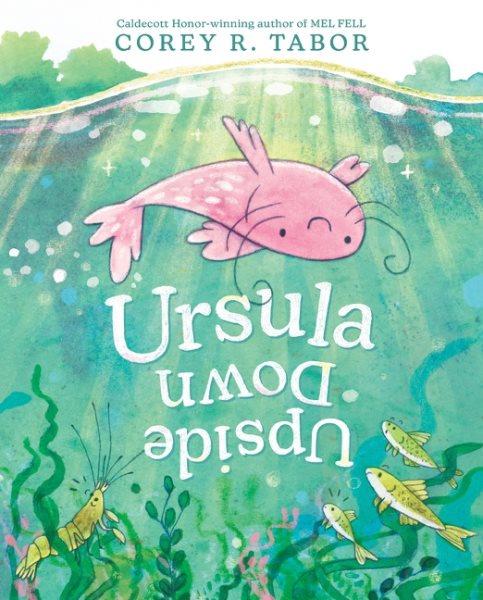
Ursula Upside Down by Corey R. Tabor

Ursula is a merry little catfish, happily swimming about her day, until other creatures try to tell her she’s completely upside down. A flipped-format picture book with a clever bit of messaging inside. Clearly I have the memory of a goldfish myself. I picked this book up, started reading it, and when it started to utilize all these neat ways of twisting and turning it to keep reading I found myself thinking, “This is really neat! It really feels like a book that Corey R. Tabor would do!” So, I guess, the man’s consistent if nothing else. As with his other science-y picture book titles, he’s unafraid to use animals to make larger points. This one could probably be summed up as “Find your tribe” as well as the more pedantic “Don’t be afraid to be yourself”. I have a feeling that there are a lot of little upside-down catfishes out there that are going to relate to this book. Pair with Robo-Sauce for a truly twisty-turny storytime.

We Are Definitely Human by X. Fang

Someone has crashed in Mr. Li’s field and they are quick assure him that they are “definitely” human. A hilarious and strangely touching story of helping strangers in need. I believe it was last year that I missed X. Fang’s Dim Sum Palace for my library’s 101 Great Books for Kids list, and by gum we’re not missing her again! I love how many alien and science fiction related picture books we’re getting this year. This pairs very well with Randy Cecil’s The Spaceman, and has a not dissimilar message. Of course what I take from this book is a rather progressive call to action for communities, in this case rural, to embrace otherness and help people who need it because that’s what we do. And the fact that it pokes fun at our attitudes towards Europeans? That’s just a bonus. Previously seen on the Science Fiction List.

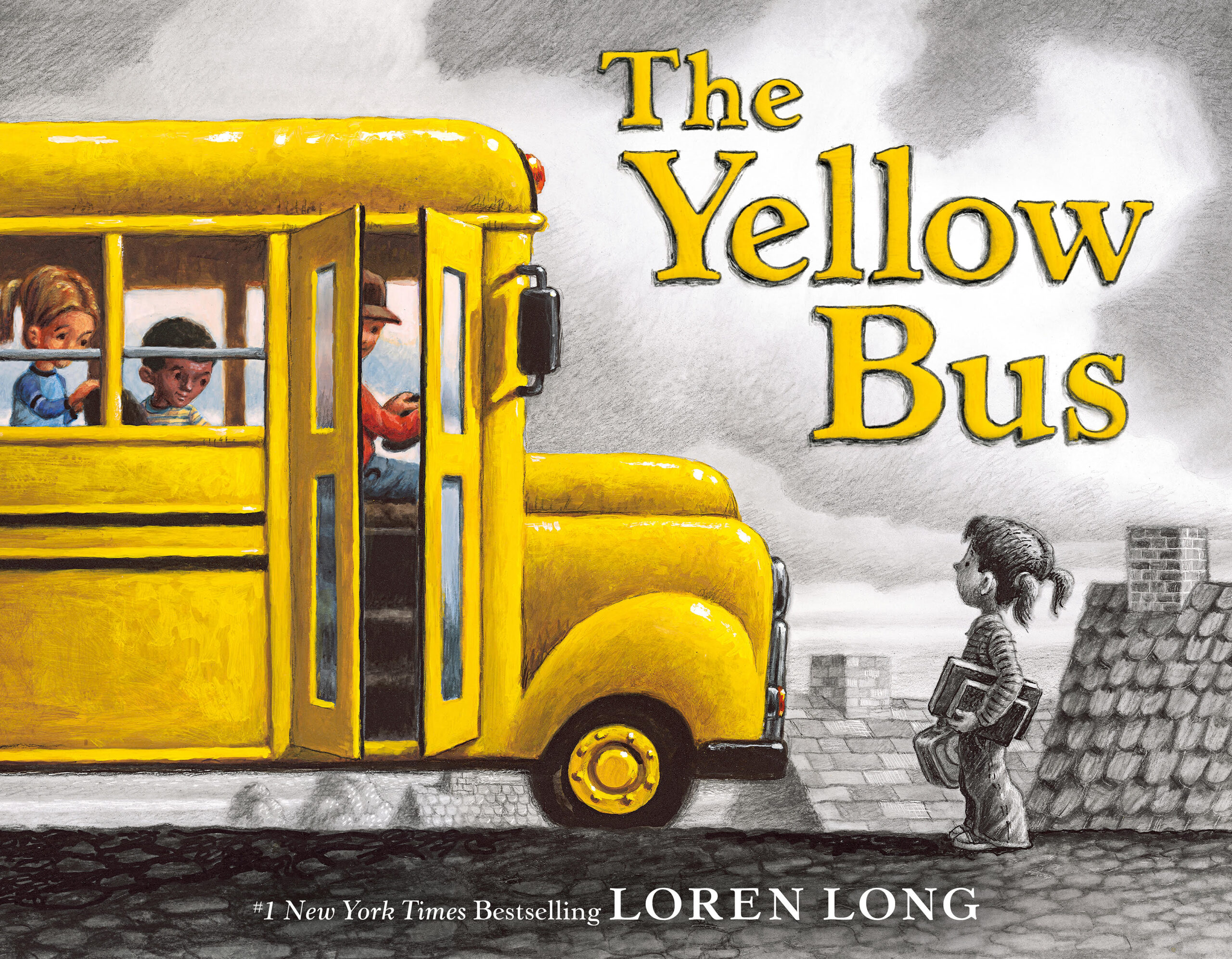
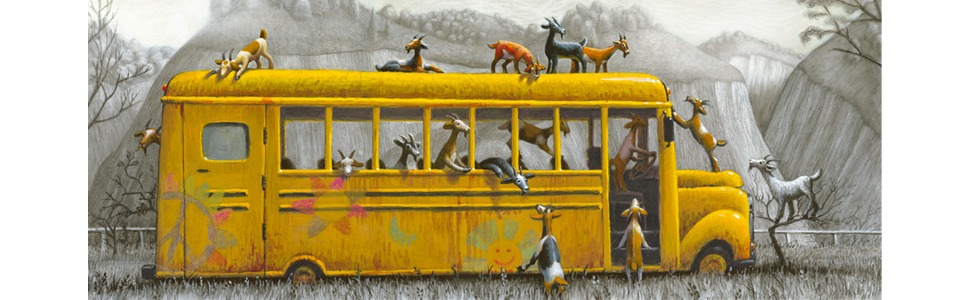
The Yellow Bus by Loren Long

“There was once a bright yellow bus who spent her days driving.” The life cycle of a familiar vehicle, and the changes she witnesses as her town grows older alongside her. I had seen this book earlier in the year and just sort of thought to myself that it was pretty and kind of cool but just fine. Then I go to ALA and the publisher pulls out all the stops. And darned if hearing Long talk about his process and what went into the book, and then doing a close read of it over and over and over… well, it’s hard not to have a newfound appreciation of this. It carries all the hallmarks of other picture books with anthropomorphized heroes (The Little House by Virginia Lee Burton coming most closely to mind since Long isn’t drawing a face on this bus or anything). The limited colors, the compassion for the unhoused and elderly, and the goats! Tons o’ goats! There’s even seek-and-find elements in the front and back images of the town in the past and present. Darn it. I like this a lot. 

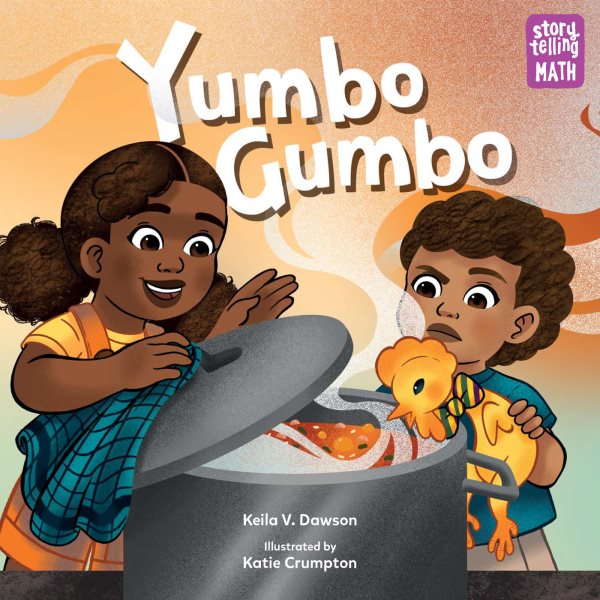
Yumbo Gumbo by Keila V. Dawson

I am so pleased that the Storytelling Math series is coming out in both English and Spanish these days. So remember librarians, if someone comes to you asking for math-based picture books in Spanish, you have at least one resource right here at your fingertips. Warning: Do not read this book on an empty stomach. The “Storytelling Math” series from Charlesbridge is one of the very few from a major publisher to actually focus primarily and exclusively on math. But what makes the series so good is that they cover so much more than counting and subtracting. They delve into pattern recognition, and size comparison and, in this particular case, voting, data, and problem solving. It’s actually one of the cleverer books on the subject I’ve seen, and that’s entirely apart from all the delicious gumbo on its pages. In this story Annabelle is learning to cook gumbo but she wants to make it with okra. Her brother (who, to my mind anyway, is correct) thinks okra is too slimy and wants chicken gumbo. When Annabelle takes a vote from her family, she finds it’s three to three. The introduction of seafood gumbo sounds like the solution, except that then the vote becomes two to two to two. The solution? Annabelle has everyone vote on their least favorite. And when that happens, the vote is split in a good way between chicken and okra. Seafood wins! Backmatter delves into the history of gumbo itself, a glossary of some of the Louisiana Creole terms that pepper the text, info on the math and even a “Try This” section care of Dr. Yvelyne Germain-McCarthy (a Consultant and Professor Emerita of Mathematics Education) on voting with your own family. I never really thought of voting as a math related activity, but this book has definitely convinced me otherwise. Previously seen on the Bilingual List and the Math List.


If you’d like to catch up on all the lists we did already, here is the total accounting of lists in 2024:

December 1 – Great Board Books

December 2 – Picture Book Readalouds

December 3 – Simple Picture Book Texts

December 4 – Transcendent Holiday Picture Books

December 5 – Rhyming Picture Books

December 6 – Funny Picture Books

December 7 – CaldeNotts

December 8 – Picture Book Reprints

December 9 – Bilingual Books for Kids

December 10 – Math Books for Kids

December 11 – Books with a Message / Social Emotional Learning

December 12 – Fabulous Photography

December 13 – Translated Picture Books

December 14 – Fairy Tales / Folktales / Religious Tales

December 15 – Wordless Picture Books

December 16 – Poetry Books

December 17 – Unconventional Children’s Books

December 18 – Easy Books & Early Chapter Books

December 19 – Comics & Graphic Novels

December 20 – Older Funny Books

December 21 – Science Fiction Books

December 22 – Fantasy Books

December 23 – Informational Fiction

December 24 – Gross Books

December 25 – Science & Nature Books

December 26 – Unique Biographies

December 27 – Blueberry Award Contenders (Celebrating the Environment)

December 28 – Nonfiction Picture Books

December 29 – Nonfiction Books for Older Readers

December 30 – Middle Grade Novels

December 31 – Picture Books

Filed Under: 31 Days 31 Lists, Best Books, Best Books of 2024 Tagged With: 2024 picture books, 31 days 31 lists, Best Books of 2024, picture books

31 Days, 31 Lists: 2024 Middle Grade Novels

December 30, 2024 by Betsy Bird

Now I really really REALLY didn’t get to read all the middle grade fiction I wanted to this year. As a result, consider today’s list not to be a “Best Of” but rather a “What I Read and Legitimately Thought Was Splendid” since I missed a whole slew of titles. Feel free to mention in the comments what I should have also have read. Next year I vow to try to get more books in.

If you’d like a PDF of today’s list, you may find it here.

Curious about past middle grade lists? Then check out the ones from previous years!

  • 2023
  • 2022
  • 2021
  • 2020
  • 2019
  • 2018
  • 2017
  • 2016

2024 Middle Grade Fiction

Benji Zeb is a Ravenous Werewolf by Deke Moulton

As if Benji didn’t have enough to worry about! He has to study constantly for his upcoming bar mitzvah, he’s a werewolf in a kibbutz full of other werewolves, and now his frenemy/crush from school Caleb Gao has just shown up as a werewolf too! Well, apparently last year’s vampire/Jewish combo (Don’t Want to Be Your Monster) was just a warm up for Ms. Moulton. This year she has a werewolf/Jewish combo and it is intense! The book runs the usual danger of including almost too much exposition on a SLEW of different topics, but I think the writing and the plotting make up for it. The most touching thing, for me, is how one character has watched someone they loved go down the rabbit-hole of toxic FoxNews b.s. (they never name the station but there is definitely a QAnon character lurking around the pages). It’s a really good character study that touches on everything from anxiety to the history of Chinese workers in America to the logistics of how you precisely turn into a werewolf. And it’s fun! Plus, now I have an excuse to sing 30 Rock‘s “Werewolf Bar Mitzvah” on a loop. Previously seen on the Fantasy List.

Chronicles of a Lizard Nobody by Patrick Ness, ill. Tim Miller

Zeke’s having a rough time. He has family problems, bully problems, and the country of France on his knee (it’s a whole thing). A hilarious tale of friends, villains, and fromage. If you are looking at this book and saying to yourself, “Wait, is that The Knife of Never Letting Go Patrick Ness?” then that is the correct reaction. And yes. Yes it is. But who knew that the man had such a good sense of humor? I feel like a stuck record saying this, but increasingly I have a deep and abiding respect for authors who go weird. And about the time that the nation of France appears on our hero’s knee, I had a suspicion that this was precisely the kind of story I wanted. I was right. Tim Miller provides the perfect counterpart to Ness’s wild visions. I have complicated feelings about the weight issues brought up, particularly when the pony gets involved, so I’d love to have a conversation about that, but in the end I think it holds up brilliantly. For anyone who has ever felt like a bit of an outsider, this is the monitor lizard for you.

The Color of Sound by Emily Barth Isler

Rosie seriously impresses as a music prodigy. It doesn’t hurt that when she plays and listens to music, she can see the vivid colors with each note. But when she starts craving a break from the violin, Rosie’s mother is NOT on board with the plan and their relationship suffers. Over a summer living with Rosie’s grandfather, the girl discovers new friends, new interesting, and an unexpected connection to her mother’s past. While admittedly I was caught entirely off-guard by the time travel element to this story, I thought Isler did an excellent job of keeping everything simple and working within its own internal logic. The synesthesia isn’t played like a superpower or anything (something I’ve noticed that other authors have attempted in the past). It just informs Rosie’s character. Also, I was all set to loathe that mom character, but Isler so deftly keeps you from really being able to do that. I also appreciated that by the end the mom wasn’t perfect but she was at least getting better. That dad, though! Man! Talk about a realistic and seriously annoying guy!

Dinner at the Brake Fast by Renee Beauregard Lute

This is a title I came to late in the year and ended up listening to on audio. Now when I listen to things off of my Libby account I tend to not finish them before they’re due. And some books are very difficult to return to later, mid-point in the storyline. Not this one. I knew it was worth exploring when my co-workers raved about it earlier in the year and they were right. The premise is that Tacoma Jones works in her family’s roadside diner, primarily serving an all-day breakfast to the truckers that stop there. Frankly speaking, she is sick of serving breakfast. Tacoma’s dream, and I love how small this is (but it rang true), is to serve… wait for it… dinner! One that doesn’t involve pancakes in any way. Aiding her is Denver, a kid stuck traveling with a rock band, when their bus breaks down near the Brake Fast. But before anything can be cooked, Tacoma is determined to steal back a photograph that no good trucker Crocodile Kyle stole from her dad. In getting it back, she and Denver end up with a third accomplice, Hudgie, who happens to be Kyle’s nephew. This book has laughs and thrills and some tense moments and a truly creepy highway curios store. It also has a psychotic rooster, and what story isn’t improved significantly by a psychotic rooster? Tacoma’s dad suffers from some serious depression, but beyond that the book is fairly free of angst. It’s kind of a road trip, but more an adventure, and I am here for it! 

Drawing Deena by Hena Khan

Deena has a lot on her mind. How can she juggle her dreams of being an artist with her parents’ money problems, her attempts to help her mom’s business, and the fact that she feels sick every single morning? A loving portrayal of doing what you love and letting go of what you don’t need. I was so picky this year. Maybe it’s because 2023 was so particularly strong in middle grade novels, but I had a hard time sticking with anything I pick up in 2024. Thank goodness for Hena Khan then. Even if this book isn’t filled with action packed drama, Khan has a gentle style that is capable of keeping you engaged, even when a scene is as basic as our main character getting her teeth cleaned. And as the mother of an anxious child, I couldn’t help but appreciate the depiction portrayed here in this book. I liked Khan showing that even a sympathetic character like Deena’s dad can be wrongheaded when it comes to dealing with mental issues like the ones in this book. Reads like a dream and feels wholly satisfying by the end. 

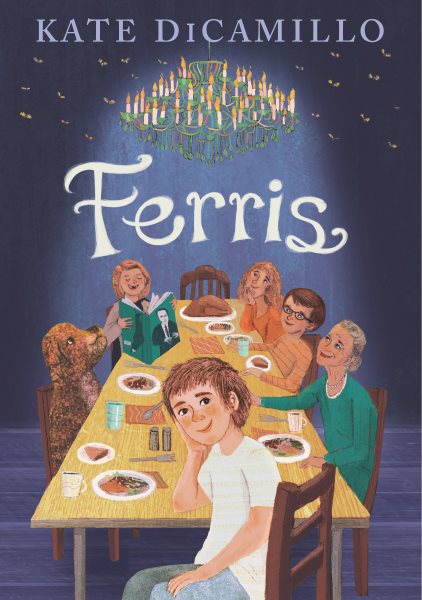
Ferris by Kate DiCamillo

Ferris has some problems. Her beloved grandmother isn’t just getting older but is now seeing ghosts, her sister is determined to be an outlaw, and other family members are having issues of their own. Fortunately, one thing always rings true: “Every story is a love story”. Even when it’s not. This is without a doubt DiCamillo’s most personal book to date, so it’s not what one might call a “plot-forward” story. That said, it has all the hallmarks you’re looking for. That thread of darkness coupled alongside a lot of hope with some love tied in there as well. Kooky characters in a small town and surprisingly present details (I can smell the inside of that steakhouse even now). No one does what this woman does, nor could they even come close if they tried. A good one. 

The First State of Being by Erin Entrada Kelly

It’s 1999 andMichael is terrified of what will happen when Y2K hits. When he meets a teen time traveler named Ridge he’s convinced he has the key to his problems in hand. A strange, fun tale of living in the now. Also, it’s definitely a toned down version of When You Reach Me. I liked it just fine. Always happy to see another science fiction book on our shelves. I was a little sad that the book missed a golden opportunity with Y2K, of course. I always thought the cool thing about Y2K is that we were really worried that something bad was going to happen but then a bunch of people all around the world worked together to solve the problem. When nothing bad happened, people just thought it was a hoax when it was really people working together well. But Kelly’s not interested in that story, which is a bummer. That aside, the book is nice. Sort of a very soft 12 Monkeys. Previously seen on the Science Fiction List.

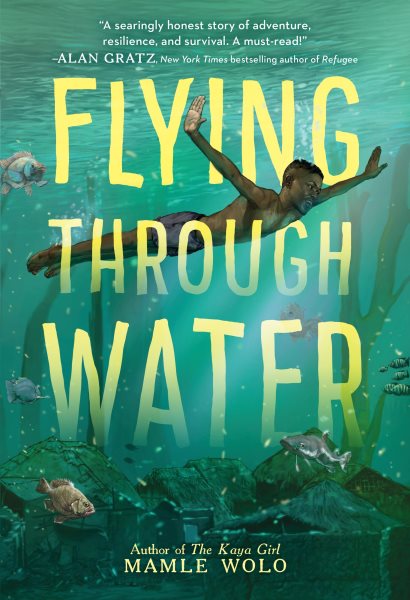
Flying Through Water by Mamle Wolo

Living in rural Ghana, Sena knows his future depends on his schooling and grades. But when a chance to make money for his family arises, he jumps at the chance. Now he’s trapped and must make his way back home so he can help others too. Mamle Wolo was the author behind a previous book on my best books list, The Kaya Girl, which I absolutely adored. Now she’s returned as America’s #1 Ghanian middle grade author (which, in 2024, is an interestingly tight race) to a tale of fisher boys and contemporary slavery. Again, we’re in Ghana and her switch to a boy’s p.o.v. is seamless. She’s just so good. Too good, maybe. The ending is left on a bit of a cliffhanger, and while it bodes for good things, the 10-year-old in me wanted an unrealistic scene of Sena busting up his previous captor’s home and saving Baby Joe. I had no idea just how Hatchet-esque the story was going to become. It’s both frustrating and satisfying but in the end it’s accomplished. Would love you to give it a read.

A Game of Noctis by Deva Fagan

In the city of Dantessa nothing is more important than games. Now Pia needs to compete in the ultimate challenge if she’s going to save her grandfather from life as a pawn. But when everything’s a game, who do you trust? Look, I’m not gonna say it’s Hunger Games with magic, but I’m not not gonna say it either. I was convinced for quite a while that I’d read a Deva Fagan book, but it turns out I was getting her confused with Jenn Reese (understandable). After getting a good tummy full of trauma in my middle grade fiction this year, I wanted something fun and this book delivered tenfold. It’s an alternative Venice where games are literally everything. Fagan’s having a blast making up games, as well as getting you to fall in love with her characters. It’s short and it’s sweet and it’s a standalone fantasy (which is like a unicorn these days). The cover of the book is brilliant too (I only just noticed that the Noctis board and the final players’ mascots are hidden in the details). If you need a palate cleanser, this is the one to grab. Previously seen on the Fantasy List.

Island of Whispers by Frances Hardinge, ill. Emily Gravett

Milo knows he’s not cut out to be a ferryman like his father, transporting the dead to their next destination, but when tragedy strikes and danger threatens the passengers, it’s up to one dreamy boy to do what’s best for both the living and the deceased. Let it be known that in an era of bloated fantasy novels (I had to put down the 426 page tome I was reading recently because halfway in I realized it just wasn’t any good and that is a LOT of time wasted figuring something like that out!) this slim, sleek little book clocks in a handsome 112 pages, and not a bit of it is bloat. I was already a Hardinge fan, but this is a distinctly different beastie for her. Plotwise it’s very much her thing and full of inventions and internal logics that only she could conjure, but she’s gone a bit younger with it, and that’s impressive. Even so, you have plenty of bad guys, death, and weird bird things with monkey hands for feet. So, y’know, typical Hardinge. I loved the plot, the resolution, and the fact that this woman is just so good at her craft. Previously seen on the Fantasy List.

Keep It Like a Secret by John David Anderson

Mouse has a plan. Sure his older sister Morgan is away all the time, but he’s sure he can get her to move back home. But when she takes him on a day of fun and adventure, things may not go the way either of them expects. Pretty darn impressive. And, bonus, horrendously realistic too. This mom character proved to be way too real for me in this story. Anderson does this incredible job of managing to switch your loyalties from the mom to the sister within the course of the narrative. But honestly, you really feel the most for poor Mouse, our narrator, by the end. I wouldn’t necessarily recommend the audiobook since it does a poor job of distinguishing the past from the present, but I thought emotionally the book does a really remarkable job of focusing in on small town America in a way I haven’t much seen before. It’s just damn capable.

Kwame Crashes the Underworld by Craig Kofi Farmer

After a tricky little aboatia steals something precious from him, Kwame takes a dive into the underworld to get it back. Soon he meets figures from Ghanian mythology, and one with diabolical plans. Can Kwame save us all? Funny, fast-paced, but with lots of heart. So how is this the first book Farmer has written? I tell you, writing a book of this sort is an art and Farmer is already a master. Right from the start he does this incredible job of pulling you in and introducing all the emotions and pertinent details as quickly and efficiently as possible. The fantasy world is complex but not overwhelming and doesn’t require 500 pages of exposition. But most importantly is what it’s doing with the character of Kwame. His grief and emotional journey just click. Plus it has one of those prophecies that actually work on the page rather than just annoying you. This is a fascinating pairing with another Ghanian middle grade novel Flying Through Water. The two books couldn’t be more different but they complement one another nicely. Previously seen on the Funny Books for Older Readers List and the Fantasy List.

The Long Way Around by Anne Nesbet

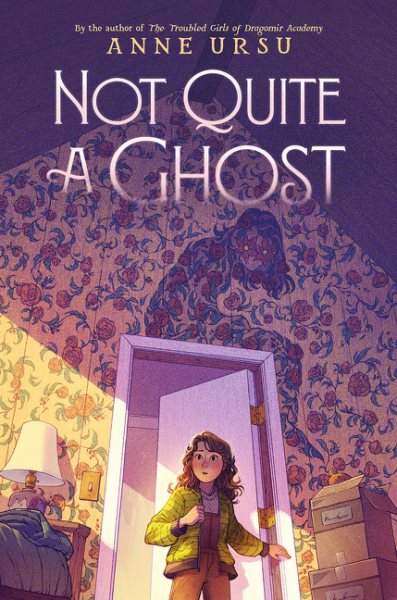
Cousins Owen, Vivian, and Amy may be young but their parents are allowing them to do a little camping on their own. But when an earthquake cuts them off from help and other people, they decide to search for help on their own, no matter what happens. I was utterly enthralled by Nesbet’s Cloud & Wallfish back in the day, so you’d think I’d remember to read this book earlier rather than later in the year. I’ve been saying that the first chapter in Not Quite a Ghost is my favorite of 2024, but Nesbet might give Ursu a run for her money. This book is trim, slick, and fun. It really does pair well with Mountain of Fire by Rebecca Barone, though it’s far less dire. I thought it did a really super job of drilling into these three characters’ fears and development. Yeah. This is great. Previously seen on the Blueberry List.

Louder Than Hunger by John Schu

So I read this book to myself and then thought about it. Then I sat down with my 10-year-old son and we read it together right after that. Now this is one book that seems like it’s just a graphic novel memoir in the making. Indeed, I wouldn’t be at all surprised if Candlewick hasn’t already thought of this and is imagining the perfect artist to adapt it as we speak (it should be Dave Valeza, by the way). The story is a fictionalized memoir following a kid named Jake who’s having a helluva time. Between some seriously messed up bullying at school and his own anxieties, Jake has developed a full-blown eating disorder. What the book does really well is show how getting help isn’t this instantaneous process. There are ups and downs (some serious downs) and in the end Jake gets out of it but you can tell it’s never going to be this “cure” that solves everything. I thought John did a good job with both the voice of the book and the Voice of the book (the words Jake hears that keep him down). Written in verse, so it goes down real smooth and easy for any reluctant reader who balks at the page count. A good strong read.

Magnolia Wu Unfolds It All by Chanel Miller

Magnolia Wu and new friend Iris are on the hunt to locate the owner of every missing sock found at her parents’ laundromat. An investigation that delves into the heart of what makes NYC special. I love a NYC middle grade where it feels like the author has actually lived in NYC for a significant amount of time. And I thought this book did such a nice job of showing both the dirty, grimy, hot and annoying side of the city as well as what makes it so special. It’s nice too to have a shorter middle grade work of fiction in the mix. Too often chapter books for kids are either early chapter books or heavy tomes. This book slots neatly into older but not too old fiction. Loved the characters and thought this was an original take on trying to see your immigrant parents through the (kind) lens of others.

Max in the House of Spies: A Tale of World War II by Adam Gidwitz

Sent off to Britain to escape the Nazis, Max Bretzfeld finds himself hosting two immortal creatures on his shoulders. And when he discovers his new hosts have connections to Britain’s spy ring, he’ll do anything to take part. A rip-roaring adventure! A World War II thriller where a kid has to learn how to spy on Nazis? Yes and please! The fact that Adam Gidwitz is the author is just icing on the cake. Now is this book fast-paced? You bet. Does it involve my favorite trope in literature (clever people being clever)? It does! My one quibble is the magical realism element which I found them a bit superfluous. But you know what’s nice about the guys on Max’s shoulders? Jokes! They have them ah-plenty! Oh, and this book is DEFINITELY the first in a series, so watch out for that. You’ll learn spycraft, you betcha, just don’t expect to use it too much. Previously seen on the Funny Books for Older Readers List.

Mid-Air by Alicia D. Williams

Isaiah and his friends love biking, skating, and trying to break world records. When an accident claims the life of his buddy Darius, Isaiah feels responsible and lost. Will he ever learn to forgive and accept himself? I don’t know why I was putting off reading this. I guess I missed reading the Newbery Honor winning title Genesis Begins Again and that made me worried about picking up anything else by Alicia D. Williams. Plus it’s a verse novel on tough topics, and that’s not as much fun as other titles out there, right? So glad I actually did read this though. I get now why Ms. Williams won a Newbery. LYRICAL is precisely the word you have to use for this book. She’s actually doing this really complicated story about grief compounded by violence that you wouldn’t think a middle grade author could pull off, and yet she does. Expertly. This is one book you canNOT miss this year.

Not Quite A Ghost by Anne Ursu

There’s something deeply wrong with Violet’s new house, but only she seems to know it. Too bad, since the thing in her wallpaper has its eyes on her, and as she becomes more and more ill, it seizes a horrible opportunity. As with most books I went into this one not knowing anything about it. The first thing that occurred to me, though, is that this is probably the best first chapter of a middle grade novel of 2024. Seriously, Ursu should teach entire classes of up-and-coming authors on how to do what she does in this book. You read that chapter and you are HOOKED. It also made me wonder if the story had any relation to The Yellow Wallpaper by Charlotte Perkins Gilman. Not only is it based off of that story, but Ursu manages to hook in all these more contemporary issues of women not having their symptoms believed by the medical establishment (something Ursu has experienced herself). And I take issue with the folks on Goodreads who didn’t think it was sufficiently ghost storyish enough. To me, it felt like The Grudge lite. The title is pretty accurate, and I liked the parallel between the house having an infection and Violet having an infection. GREAT writing too.

Not the Worst Friend in the World by Anne Rellihan

“Reasons I Think I Was Kidnapped”. When Lou gets this message from the new girl at school she has to decide how to be a good friend in a situation that feels out of her control. A good title on how people willfully misunderstand things because it’s easier than facing the truth. I though bisecting the book between the past and the present, and featuring three girls (rather than just two) with particularly complicated relationships was clever. The book does follow a bit too directly into the footsteps of Harriet the Spy at one point (I think Rellihan is trying to raise the emotional stakes) but overall it’s a pretty smart take on the nature of friendships and the simple act of saying sorry. Plus, I like books where the “mean girl” has so many sympathetic sides.

One Big Open Sky by Lesa Cline-Ransome

It’s 1879 and Lettie’s daddy has decided the family needs to pick up and move from Mississippi to Nebraska to start a new life. A marvelous glimpse of the Black exodusters and what it took to cross America on foot. I listened to the audiobook of this which was cleverly cast with three different voices, all women. It could easily have just stuck with one voice, but I really got a better feel for the story having the three women separated like it was. I also didn’t have much trouble telling the characters apart since Ransome tends to try to remind you who folks are as you go. It’s a lot of walking but also a lot of death and drowning, so I found it fairly exciting all the way through. Did NOT expect some of those deaths either! Initially I was not particularly pleased that there were zero mentions of displaced Indigenous people mentioned, but Ransome makes up for that, to a certain extent, in the backmatter. Better still, she manages to avoid having the characters come up with 21st century ideas in a 19th century world. Pretty cool.

The Pumpkin Princess and the Forever Night by Steven Banbury

I would like a movie of this please. Like, right now, please. You know all those lamentable Nightmare Before Christmas spin-offs we’ve seen recently? The comic prequels and half-hearted middle grade novels? Forget all those. Disney should be snapping up the rights to THIS book since it contains the same vibes but with a wholly original story of its own. There are lots of adult and YA tales of girls being whisked away by dark romantic figures. Personally, I am far more interested in middle grade stories of girls being whisked away by dark father figures instead. In this story young Eve is attempting yet again to escape her orphanage when she encounters The Pumpkin King. Like, he literally has a pumpkin head. Fairly swiftly he decides he will adopt Eve as his daughter, but now this undead creature of the night has to deal with how to be a parent, and Eve has to learn what it means to be a pumpkin princess. Not gonna lie. I was reading this in the car with my family while traveling, tears streaming down my face as I got to the pair’s deep heart-to-heart near the end of the book. But that’s not all! It’s also funny, strange, and a mystery all at once! I did NOT see the true villain coming, and there’s at least one scary bit that’s legit scary. I seriously think your kids are going to get a real kick out of this one. 

Read at Your Own Risk by Remy Lai

Imagine if the Dork Diaries were ghost-written by David Cronenberg. That’s what you find in this body horror-ific tale of blood, teeth, and curses gone awry. It’s a helluva thing. I doubt I’ve ever seen that much blood in a children’s book before. And the whole bugs crawling out of your face element? chef’s kiss That said, I do feel like I had to reread the ending twice before it made any kind of sense to me. We’re living in a rather golden era of children’s book horror, and this feels like Remy Lai wanted to push the envelope as far as she possibly could. The end result? Beautifully upsetting. Previously seen on the Fantasy List and the Gross List.

Slugfest by Gordan Korman

The Bad News Bears meets the Great British Bakeoff… sorta. Can a group of kids that all failed physical education not only make up for it but go on to win a football seven-on-seven championship? A hilarious tale of slugs, stars, and sumptuous baked goods. I love it! We’re always on the lookout for strong sports-related titles, but boy howdy are they (a) hard to find and (b) not something (quite frankly) that some librarians are crazy about reading. Now have I ever read a Gordon Korman book before? Odds are good that I must have at some point in the past, but darned if I could remember what it was. This book, in contrast, will live in my memory a nice long time. Korman’s clearly a pro at writing a middle grade novel, but he’s also just fun to listen to. You get very invested in these characters. One note? Not sure why he failed to give Fiona her own p.o.v., but aside from that I’m a big time fan. Just don’t read it while hungry. Previously seen on the Older Funny Books List.

The Tenth Mistake of Hank Hooperman by Gennifer Choldenko

I credit my readers with alerting me to Choldenko’s latest and how good it really is. I opted to do the audiobook of Hank, and it went down really nicely. In this story, Hank’s one of those kids with the weight of the world on his shoulders. He loves Boo, his preschool little sister, but when the book opens they’ve run out of food. His mom took off one evening five days ago and she hasn’t been back since. Out of desperation, the two find their way to an unknown woman that their mom listed as an emergency contact on a permission slip once. Lou Ann, the woman in question, runs a daycare and is able to help the two kids out a lot, but her dislike of teenaged boys (Hank’s tall for his age but not a teen yet) taints her relationship with Hank. As he and his sister finally start to settle into their new life, there’s always the fear of Lou Ann sending them to foster care… and then Hank’s mom shows up again one day. I was looking through the Goodreads reviews and like a lot of people I just find the adults in this book to have some seriously twisted understandings of how much responsibility Hank should be held accountable for. He’s placed in an impossible situation and is made to apologize for his actions repeatedly, which really jarred. Other than that, though, it’s a deeply satisfying book and Geri, Hank’s mom, is certainly in the running of Worst Mom of 2024 (which is worth a blog post in and of itself). Good stuff. 

Wrong Way Home by Kate O’Shaughnessy

Fern is miserable. Her mom has taken her away from the only home she’s ever known, and now the girl is desperate to get back. But what if the home you’re looking for is the wrong one to seek?  A show of hands. How many of you were screaming, “DON’T GET INTO THAT VAN!!!” near the end of this story? My god. This may be the most realistic girl-escapes-cult-and-wants-to-go-back book I’ve ever read. I found it freakin’ gripping, even if it’s not written that way. How many books can you name where you’re actively rooting against the heroine to succeed? I loved how good and bad were wrapped up in The Farm, and the slow rise in realizing how freakin’ creepy Dr. Ben is. As I told my kids, I think there’s a lot more going on at The Farm than Fern was aware of, but this book has to be appropriate for kids, so it didn’t get into all that. Still, the moment her new friend mentions the word “cult” for the first time, I was pumping my fist in the air. This book is a ride, I’ll tell you. Incredible.


So with all that in mind, here are the other lists for 2024:

December 1 – Great Board Books

December 2 – Picture Book Readalouds

December 3 – Simple Picture Book Texts

December 4 – Transcendent Holiday Picture Books

December 5 – Rhyming Picture Books

December 6 – Funny Picture Books

December 7 – CaldeNotts

December 8 – Picture Book Reprints

December 9 – Bilingual Books for Kids

December 10 – Math Books for Kids

December 11 – Books with a Message / Social Emotional Learning

December 12 – Fabulous Photography

December 13 – Translated Picture Books

December 14 – Fairy Tales / Folktales / Religious Tales

December 15 – Wordless Picture Books

December 16 – Poetry Books

December 17 – Unconventional Children’s Books

December 18 – Easy Books & Early Chapter Books

December 19 – Comics & Graphic Novels

December 20 – Older Funny Books

December 21 – Science Fiction Books

December 22 – Fantasy Books

December 23 – Informational Fiction

December 24 – Gross Books

December 25 – Science & Nature Books

December 26 – Unique Biographies

December 27 – Blueberry Award Contenders (Celebrating the Environment)

December 28 – Nonfiction Picture Books

December 29 – Nonfiction Books for Older Readers

December 30 – Middle Grade Novels

December 31 – Picture Books

Filed Under: 31 Days 31 Lists, Best Books, Best Books of 2024 Tagged With: 2024 middle grade fiction, 31 days 31 lists, Best Books of 2024, middle grade, middle grade fiction

Fuse 8 n’ Kate: Where Is the Green Sheep by Mem Fox, ill. Judy Horacek

December 30, 2024 by Betsy Bird

I confess to you today that I am inordinately delighted to finally be doing this particular Mem Fox book on our podcast today. I have been waiting YEARS to finally get to do today’s book. Literally! But it took Kate announcing her very first pregnancy for me to remember it again. I read this book over and over and over and over to my small children, and I have every intention of doing the same to Kate’s incipient child. Today we get to talk about sheep! Sheep of every type and stripe! We also discuss, for some reason, Australian armor-clad bushrangers, which of these sheep is the most impressive skill-wise, and whether or not this is just Hippos Go Bezerk with sheep!

Listen to the whole show here on Soundcloud or download it through iTunes, Stitcher, Spotify, Google Play, PlayerFM, Audible, Amazon Music, or your preferred method of podcast selection.

Show Notes:

Just as a reminder, this book appeared on my Top 100 Picture Book’s poll at #97.

As I said, I’ve read this book a million times, but it wasn’t until Kate pointed out the title page that I realized that this book was foreshadowing the answer to the question sitting there. The answer is right before your eyes, people!

We object to this being called red. My vote: Rouge. Kate’s: Cranberry.

We are concerned. “The skis are in NO WAY attached to this sheep.” This is an optimistic sheep.

Behold, Kate’s most impressive sheep. This sheep isn’t just playing a bunch of instruments. After all, the xylophone is being played… by a mallet attached to its knee. This is clearly the most impressive sheep. The band sheep is the coolest sheep.

How can you tell that this book is Australian? The broken down car is on the left-hand side of the road.

Looking at this image, I keep flipping between seeing the nose as a nose and seeing it as a small smile.

One question: Why is this sheep holding up a flag of surrender in space? Or were different nations where this book was published supposed to plug in their own flag designs?

And here is the actual most interesting sheep in the book. Y’all don’t believe me about Australian outlaw Ned Kelly being in this book. I can see that you don’t. Okay, if you want proof, check out this site. Straight from the horse’s mouth.

Kate’s freaked out about this green sheep. I think he reminded her too closely to the sickly king in Babar:

Kate Recommends: This watercolor painting of her pets from @paintbrushjasper

Betsy Recommends: A Compete Unknown now in theaters

Filed Under: Fuse 8 n' Kate Tagged With: Fuse 8 n' Kate, Judy Horacek, Mem Fox, Where Is the Green Sheep?

31 Days, 31 Lists: 2024 Nonfiction Books for Older Readers

December 29, 2024 by Betsy Bird

As with any list of longer titles, I have to say right off the bat that what you’ll find here is more of a representative sample of the great older fiction of 2024 than what was actually the “best”. After all, I’m just one person and I wasn’t able to read all the older informational titles available in 2024. Would that I could! I leave that job to ALA’s Sibert Committee. In any case, I was able to scrounge up some truly magnificent books. You’ll have seen a number of these on other lists, but there are two brand new outliers as well. See if you can spot them!

If you’d like a PDF of today’s list, you can find one here.

Interested in similar titles? Check out the Older Nonfiction lists of years past:

  • 2023
  • 2022
  • 2021
  • 2020
  • 2019
  • 2018
  • 2017
  • 2016

2024 Nonfiction Books for Older Readers

Asteroid Vs. Comet by Dr. Marc J. Kuchner, ill. Matt Schu

The ultimate interplanetary smackdown comes alive on the page as these two titans of space head straight towards one another at incredible speeds. Who? Will? Win? I’ve been disappointed by a fair share of “ultimate showdown” books out there, but not this time! I absolutely love using the idea of what would happen if a comet hit an asteroid to be an excuse for learning a ton about the both of them. I also have a tendency not to trust books where the author has a “Dr.” in front of their name. Again, not a problem here. Kuchner may be an astrophysicist but he knows how to write gripping texts for kids. I’m placing into the older nonfiction section, but it really does make for a quick read. I could see a teacher reading this aloud in a class, getting votes from the kids on which object will survive this incredible collision. The design and layout of both the images and the text really hold up too. I declare this book to be a winner! Previously seen on the Science and Nature List.

Born Naughty: My Childhood in China by Jin Wang with Tony Johnston, ill. Anisi Baigude

I’ve a particular penchant for fun stories from the past set in countries all around the globe. The first thing I thought when I laid eyes on Born Naughty was that it might make a nice companion to the graphic novel Little White Duck by Na Liu and illustrated by her husband, Andrés Vera Martínez. When that book came out, one of my Chinese co-workers was so relieved that for once there was a historical work that wasn’t JUST about the Cultural Revolution. I think she’d like this book as well. Jin Wang grew up in Inner Mongolia, and we get to hear all the fun stories of her wild and rambunctious childhood. It’s got everything from being attacked by wild dogs and getting the rabies sucked out by bricks (I ain’t kidding) to beating boys by climbing trees, snot-nosed family portraits, getting your tongue stuck to metal in the winter, and more. Some clever editor knew to pair Wang and Johnston with illustrator Anisi Baigude, who brings a particularly fun feel with her art to the piece. For this reason I would actually recommend that you eschew the audiobook. The art and text are integral to the piece’s success. Definitely a great addition to the genre of girls being wild and having fun genre. Previously seen on the Biography List.

Call the Bee Doctor! How Science Is Saving Honey Bees by Sandra Markle

Worried about what’s happening to the honeybees? Scientists are on the case! A book that acknowledges the problems facing bees and finds solutions. Though the book does get a little text heavy in some sections, this is a fascinating book of solutions to problems that I found really heartening. By this point kids may have heard that the honeybee numbers have declined due to viruses, exhaustion, and mites, as well as environmental factors. This book shows how scientists have come up with some seriously clever solutions. For example, I love that the scientists noticed sick bees drinking water from logs with certain types of fungus and as a result they realized that that fungus can help heal bees medically. That’s so neat! The photographs are also incredibly gorgeous. I had no idea honeybee wings could be iridescent! Previously seen on the Science and Nature List.

Chasing Guano: The Discovery of a Penguin Supercolony by Helen Taylor

How do you find a massive, previously undiscovered colony of penguins? Satellite photography of their poop, of course! A fun tale of scientists in the field. This one sort of straddles the picture book/older reader line, but due to some of the complexity of the ideas and language I’d say it belongs here. Penguins are kind of an easy sell to begin with, but this is particularly cool because it includes (A) a hidden penguin colony (which is just neat) and (B) a really nice look at the amount of work that scientists have to do to solve a problem with research. You can read the main text and ignore all the bits and pieces in the sidebars if you want, or just read the whole kerschmozzle if you’re a science-y kid. A great pairing with G. Neri’s My Antarctica. A bonus for the Citizen Scientist info at the end. Previously seen on the Science and Nature List.

The Dark! Wild Life in the Mysterious World of Caves by Lindsey Leigh

How well do you know your cave dwellers and systems? Learn more about the incredible creatures and constructions that exist where the sun don’t shine. I was such a fan of Lindsey Leigh’s previous book The Deep that it makes sense that I’d be naturally inclined to also greatly enjoy her follow up, The Dark. I’m wracking my brain, trying to think of another book that’s done such a deep dive (ha ha) into cave dwellers, and I’m coming up empty. Leigh’s great strength is her ability to encapsulate such a large number of creatures, locations, types of cave formations, and more within a relatively short number of pages. Better still, she adds humor and smarts to make the whole book appealing to kids. When we talk about making science interesting to young readers, this is what we mean. I learned more about what glow worms really are, why we call oilbirds by that name, the ecosystem of bat guano, and more than I ever expected to find. Previously seen on the Science and Nature List.

The Enigma Girls: How Ten Teenagers Broke Ciphers, Kept Secrets, and Helped Win World War II by Candace Fleming

Imagine you’re just a teen and you’ve been recruited to monitor and/or break codes, and catalog German intelligence information. The thrilling story of the young women who helped break the German ciphers. I primarily went into this trying to figure out if the book was more teen or middle grade, and after my read I can definitely say that in spite of its teen protagonists, this is 100% MG. The romances are there but awfully odd and British (Gwen’s is by far my favorite) and Fleming cleverly cuts the narrative up with spy and codebreaking information. It even works as an audiobook! You get a real feel for these girls, and I loved how much silliness made its way in. Plus, I’m sorry but it’s kind of a relief to read a WWII book for once that doesn’t have to do with the bomb (apologies to Oppenheimer).

The Incredible Octopus: Meet the Eight-Armed Wonder of the Sea by Erin Spencer

Think you know everything that there is to know about octopuses? Think again! Take a deep dive with these incredible creatures. I know we’ve seen a slew of octopus books in 2024, but those have all tended to be on the younger side. This older reader exemplifies perfectly how a book can be written for kids in the upper grades, retain that complex text, and still remain interesting. First off, it’s all about the design. This book understands how to use those sidebars, pull-out boxes, and extra text. The illustrations and photographs are woven together seamlessly. Then there’s the fact that there are two sections on environmental issues that both include “How To Help?” portions, which I really appreciated. Check out that Glossary. Marvel at that list of websites a kid could visit. There’s even a site for educators on how to use this book. The icing on the cake? I took out a copy of this from the library and it was WELL loved. Kids are actually reading this thing. What better indication of a great book could there be than that? Previously seen on the Science and Nature List.

A Meerkat Diary: My Journey Into the Wild World of a Meerkat Mob by Suzi Eszterhas

Wildlife photographer Suzi Eszterhas takes you up close and very personal with a meerkat family and their various trials and tribulations. Adorable and informative. I regret to inform you that Suzi Eszterhas does it yet again. To my mind she’s too darn reliable. Every book she creates is just chock full of great research and amazing photography. Now what’s so strange about this book is that this particular mob of meerkats has been specifically groomed, so to speak, to be comfortable around humans. That doesn’t mean the humans intervene and I do wish there were more explanation for why this has occurred, but if I were to hazard a guess it’s for research purposes, so as to study them more closely. The photographs in this book are, as you might imagine, extraordinary. You simply will not find better meerkat images anywhere else. It’s the perfect length and chock full of facts. Resist if you can. Previously seen on the Photography List and the Science and Nature List.

Mountain of Fire: The Eruption and Survivors of Mount St. Helens by Rebecca E.F. Barone

When the earthquakes started, it looked like Mount St. Helens would blow. But when would it happen? A truly gripping and terrifying recounting of the people who survived (and the ones that didn’t). Worst cover. Gripping book… but not at first. A co-worker pointed out to me the fact that it starts kind of slow. You meet all these scientists and reporters and not a lot happens which, of course, is what actually happened when Mt. St. Helens started to rumble. But I tell you, once that thing blows you are in for a whirlwind ride with all kinds of people trying to survive. Did you know that if trees start falling down after a volcano explodes you should jump in the pit where their roots were to escape the fiery blast of air that’s to come? You do now! And now here’s a secret: I kinda like that inaccurate cover. Just don’t be surprised when the readers drawn to it just skip to the good parts of the book. Previously seen on the Science and Nature List.

My Antarctica: True Adventures in the Land of Mummified Seals, Space Robots, and So Much More by G. Neri, ill. Corban Wilkin

Take a trip with G. Neri as your guide to the coldest, windiest, highest, and driest place in the world. Ideal for budding scientists of all stripes! So THAT’s where G. Neri’s been! I hadn’t seen the guy around in a while, so it was a relief on a couple of levels to see this book coming out. And whatta book! This is just fun. Fun fun fun fun fun. It answers every darn question you ever had about Antarctica and teaches you just loads of stuff. Stuff like, who’s there now and why? And what do you eat when you’re there? Neri never shies away from the fact that he’s one of the few Black guys there during his time. The copious photographs are keen but I thought it was clever of someone to add in art by Corban Wilkin as well. I have never, not a day of my life, ever wanted to visit Antarctica before. Now? Seriously tempted… Previously seen on the Science and Nature List.

The Mythmakers: The Remarkable Fellowship of C.S. Lewis and J.R.R. Tolkien by John Hendrix

If you love the Narnia and Lord of the Rings books and want to know the story behind them, look no further! A fascinating dual biography of the best friends who wrote the titles together. This is definitely for the very good readers who peruse our shelves. Honestly, I think this book is ideal not simply for Lord of the Rings and Narnia lovers, but for kids who want to write fantasy. I mean, this is all about the origins of the kinds of fantasy that we love today. Hendrix is one of the very authors I know who can get away with talking about Christianity in non-Christian publisher books, and he does it exceedingly well. This book also does something I haven’t seen since Louis Sachar wrote The Cardturner. He has these long in-depth discussions for older readers that the younger readers can skip if they want to. I’d consider pairing this with Nathan Hale’s Treaties, Trenches, Mud and Blood, since it’s one of the best encapsulations of the inanity of WWI for kids I’ve seen. Previously seen on the Fantasy Book List and the Biography List.

The Observologist by Giselle Clarkson

You don’t have to be an adult scientist to explore the world. Become an observologist and use this highly hilarious and factually accurate book to explore nature in your own backyard. It seemed fitting for me to read this after reading the aforementioned How It All Ends by Emma Hunsiger since the two books have a very similar sense of humor. You’d expect that in a comic, but not necessarily in a nonfiction book of this sort. I’m so delighted this got a Kirkus star, since it would have been an easy one to miss. In spite of the fact that this is a New Zealand import, they’ve managed to make this book applicable in a lot of ways to American kids. Granted, they may wonder why “pillbug” isn’t one of the many names given to rollie pollies, and they might notice the sheer number of weirdo New Zealand bugs held up as examples, but there are enough familiar faces here. Let’s just all ignore the fact that being an observologist in New Zealand definitely gives kids of that country an advantage over our own children. This one is a huge hoot. Previously seen on the Older Funny Books List and Blueberry List.

One Long Line: Marching Caterpillars and the Scientists Who Follow Them by Loree Griffin Burns, ill. Jamie Green

Two scientists, separated by a century, try to unlock the mysteries of the pine processionary caterpillars. A fun and clever look at how scientists ask questions and come up with experiments to test their answers. Let me tell you how much I like this book. I like it so much that I don’t even mind that it talked at length about my LEAST favorite insect of all times: tent caterpillars. Where I come from we call them tent worms and they were my #1 childhood fear creature. Like maggots in spiderwebs, that’s how I always saw them. Fortunately, this book is about the far more adorable pine processionary caterpillars. I thought it was an amazing look not simply on the scientific process and how to test theories, but also how to disprove old theories that may not have taken certain factors into consideration. Best of all, it’s one of those books for kids that ends by pointing out just how much we still don’t know about the world. I love it when authors make that clear. Previously seen on the Science and Nature List.

Outspoken Paul Robeson, Ahead of His Time: A One-Man Show by Carole Boston Weatherford, ill. Eric Velasquez

From the moment he was born to the day he died, take this deep dive into the remarkable life of one of America’s great heroes. Activist, actor, athlete, and scholar, there never was, nor will there ever be, anyone quite like Paul Robeson. Dear lord. I swear, you never know what you’re going to get with a Carole Boston Weatherford biography, do you? This is one helluva book, and sort of turns on its head my usual statement about how picture book biographies don’t have to be birth to death. It’s like Weatherford read that and said, “Oh yeah? I am going to show you EVERY aspect of this man’s life!!” I have literally never seen a picture book bio goes this deep into anyone, but if any subject deserved it then it would have to be Paul Robeson. I learned a ton about him here, and the author isn’t afraid to show the controversies that dogged his life either. Also didn’t expect to see an image of someone getting electroshock therapy in a mental institution on my 2024 bingo card, but here we are. I’ve put this in the Nonfiction for Older Readers section for good reason. I think it’s fair to say that you have never read a picture book biography like this. Just be prepared to carve out a little time in your day if you want to read it. Previously seen on the Biography List.

Sounds Good by Hans Könnecke, ill. Ole Könnecke, translated by Melody Shaw

Discover 50 instruments, accompanied by delightful animal musicians, as they introduce you to a world of music. From glockenspiels to bongos and congas, a marvelous entry point for any kid looking for an instrument to love. Whenever people try to claim that Germans don’t have a good sense of humor, Ole Könnecke’s the one I like to offer up as a counter-example. So this is, at its heart, just a book meant to introduce kids to a range of instruments, but something I really love about it is that it isn’t afraid to take a trip outside the usual European orchestra ones. As a result you get a nice worldview that includes things like the sitar, didgeridoo, steelpan, kalimba, and more. My personal favorite, was definitely the theremin, and for that one I just had to try the QR code that appears on every page. Apparently the author composed a musical piece for each instrument. I didn’t listen to the code where all the instruments play together, but I can attest that that’s one fine theremin at work.

Spooky Lakes: 25 Strange and Mysterious Lakes that Dot Our Planet by Geo Rutherford

Generally speaking, the words “The Official Book Based on the Hit Tik Tok Series!” do not inspire a great deal of confidence. I mean, you show me the best children’s book born out of TikTok and maybe I’ll change my tune… oh. Shoot. It just happened. Because this book? It’s excellent, y’all. Now I know it’s one of those large 14 inch by 10 inch nonfiction books that are the bane of our shelves (onto its side it goes when it comes to fitting on our library shelves, amiright?) but let’s see if you can’t display this prominently in some way to get young eyes on it. I mean, it’ll definitely work during the Halloween season (they ain’t lying about the “spooky” part of this) but any time is the right time for decomposing bodies in the deep. Right off the bat I learned some interesting facts. You know The Wreck of the Edmund Fitzgerald? Well apart from being one of my favorite songs to annoy my kids AND my mom with simultaneously (“Does anyone know where the love of God goes, when the wave turn the minutes to hourrrrrs?”) I literally assumed from that song that the wreck happened in the 20s or 30s or something. Nope! Thanks to this book I now know that happened in 1975. So… pretty much right before that Lightfoot song came out. Geez. This book also has all sort of good gory stuff, like the creepy corpse made out of soap that floats in its boiler room to this day and doesn’t decompose due to the cold fresh water. If ever you wanted to read a book with topics like “Crusty Death” and “Blood Gold” and is full of itty-bitty ghosts hidden throughout, this is the one for you. Love it! Previously seen on the Gross List.

Urban Coyotes (Scientists in the Field) by Mary Kay Carson and illustrated with photographs from Tom Uhlman

The wily coyotes of Chicago are the subject of this latest entry in the Scientists in the Field series. Find out why they’re here, what they eat, and how much of a problem they truly are. Boy, coyotes are hard to resist, aren’t they? First off, love the local Chicago connection here. But aside from that, let’s just examine what it is that Mary Kay Carson is doing to make this book appealing to young readers. The Scientists in the Field series has been around a number of years at this point and I feel that though the essential elements have all remained the same, the design has subtly shifted to become more reader friendly over time. In this book, right at the start, Carson outlines six essential questions about what urban scientists need to know about coyotes. This is separated out into a little box with questions like “Are they a danger to Chicagoans?” and “Are they eating pets and garbage or rats and rabbits?” The design of these pages also does such a nice job in filling them occasionally with just photographs and captions. This is great! Previously seen on the Science and Nature List.

What Is Color? The Global and Sometimes Gross Story of Pigments, Paint, and the Wondrous World of Art by Steven Weinberg

We use colors all the time but what are they exactly? Join this wacky deep dive into all your favorites and their murky, dangerous, and often gross beginnings. This is color like you’ve never seen it before! Oh boy, oh boy, this is just loads of fun! I’ve seen plenty of books try to explain where colors come from individually, but rarely do I see a book try to tackle the whole spectrum in one fell swoop. Turns out, Steven Weinberg is just precisely the right guy to do it, though. Honestly, this reads like an advanced version of Jeff Mack’s Time to Make Art (and the two would pair beautifully in a presentation or display hint hint). The book is definitely aimed at older readers, but that’s part of what makes it so much fun. It’s like an inclusive Monty Python running through everything from the LGBTQIA+ flag to cow pee. Lots and lots of cow pee. To my mind it’s all worth it for the sequence on green fashion laden with arsenic and the arms reaching out saying zombie-like, “Must… wear… cool… clothes”. This is a hoot! Previously seen on the Older Funny Books List and the Gross List.

Who Knew? The Wonders of Biomimicry by Kathleen E. Madden

How have moth’s eyes changed your iphones, polar bear fur affected space travel, and bats inspired new robots? Discover the incredible world of biomimicry, where scientists take a page out of nature’s book. Admittedly, every year we see one new biomimicry book for kids come out and they’re usually perfectly decent but not all that interesting aside from the subject matter. This one, I’m rather taken with. Maybe it’s the photography, which is really nicely designed and incorporated with the text. Maybe it’s the fact that I like how the big focus is on the natural world with the sidebars being about what the human scientists are doing. I’m placing this in the older nonfiction section because of the content but honestly the author keeps all of this pretty simple. We’re not going to dive into the logistics of who made these inventions or how. The only one that left me with more questions than I liked was the lobster vision, since I couldn’t exactly understand how the lobster’s field of vision inspired an x-ray imaging device. Would be worthy of your children, in any case. Previously seen on the Science and Nature List.


So with all that in mind, here are the other lists for 2024:

December 1 – Great Board Books

December 2 – Picture Book Readalouds

December 3 – Simple Picture Book Texts

December 4 – Transcendent Holiday Picture Books

December 5 – Rhyming Picture Books

December 6 – Funny Picture Books

December 7 – CaldeNotts

December 8 – Picture Book Reprints

December 9 – Bilingual Books for Kids

December 10 – Math Books for Kids

December 11 – Books with a Message / Social Emotional Learning

December 12 – Fabulous Photography

December 13 – Translated Picture Books

December 14 – Fairy Tales / Folktales / Religious Tales

December 15 – Wordless Picture Books

December 16 – Poetry Books

December 17 – Unconventional Children’s Books

December 18 – Easy Books & Early Chapter Books

December 19 – Comics & Graphic Novels

December 20 – Older Funny Books

December 21 – Science Fiction Books

December 22 – Fantasy Books

December 23 – Informational Fiction

December 24 – Gross Books

December 25 – Science & Nature Books

December 26 – Unique Biographies

December 27 – Blueberry Award Contenders (Celebrating the Environment)

December 28 – Nonfiction Picture Books

December 29 – Nonfiction Books for Older Readers

December 30 – Middle Grade Novels

December 31 – Picture Books

Filed Under: 31 Days 31 Lists, Best Books, Best Books of 2024 Tagged With: 2024 older nonfiction, 31 days 31 lists, Best Books of 2024, nonfiction, older nonfiction

31 Days, 31 Lists: 2024 Nonfiction Picture Books

December 28, 2024 by Betsy Bird

We’re down to the big final lists of the year now. If you’ve been following this series this month then you’ve seen me me talk about a lot of nonfiction picture books until now. This list takes the best of them, as well as a couple titles that don’t slot neatly into categories. I consider these the best of the best. The ones you cannot miss. See if you can find one you missed before now.

Would you like a PDF of today’s list? You can find one here!

Interested in previous years’ Nonfiction Picture Book titles? Try these:

  • 2023
  • 2022
  • 2021
  • 2020
  • 2019
  • 2018
  • 2017
  • 2016

2024 Nonfiction Picture Books

Are You Big? by Mo Willems

Are You Small? by Mo Willems

Are you big or are you small? To a cloud, our moon, the sun, or even a galaxy cluster you might be small, but as a little bug at the end reminds us, to an insect you’re big! A book on relative size brought by the man who created The Pigeon, Elephant & Piggie, and more. Mo Willems is trying his hand at nonfiction for our younger readers these days. Feels like that should be a bigger story (a lot bigger than the Pigeon getting a book about graduating anyway). I kind of had to calculate what the moment was where I was on board with these books. For me, I think it was when I was reading Are You Big? and Australia walked on, bold as brass, grinning widely. I’ve a natural affection for books that go to extremes, and any title for younger readers where a galaxy cluster gets to gather on a page like showgirls in a Vegas stage is going to have my attention. Part of what I like so much about these books is that they put impossible measurements into a child’s head and then explain how everything in this life is relative. You may be tiny but to some creatures you’re enormous. You may be large but there’s a galaxy out there that’s bigger. It’s kind of what Jason Chin’s been doing in some of his recent titles, but in a method that a Kindergartner might grasp. Whatever his reason for making these books, I like it! Previously on the Simple List.

The Bee Mother by Hetxw’ms Gyetxw (Brett D. Huson), ill. Natasha Donovan

It’s spring once again and Nox Ap, the bee mother, emerges to become nature’s gardener once more. The bumblebee, the honeybee, and the yellow jacket all get their moment in the sun in this stirring examination of insects in the Xsan ecosystem. Personally, I shall not rest until the world is just as baffled and fascinated by the life cycle of bumblebees as myself. I mean, what other creature restarts its entire colony from scratch each spring? Seems like a terrible plan, but that’s how the bumblebee rolls. This book is the seventh in the “Mothers of Xsan” series. The series focuses on the animals in the Xsan ecosystem, and tends to balance both the facts about the animals as well as their direct connection to the Gitxsan Nation. And I should clarify that this book doesn’t focus solely on bumblebees, but an array of mother bees in nature. Add in the art of Natasha Donovan (who can resist it?) and you have yourself a winner. Previously seen on the Science and Nature List.

Call Me Roberto! Roberto Clemente Goes to Bat for Latinos / Llámenme Roberto! Roberto Clemente Alza La Voz Por Los Latinos by Nathalie Alonso, ill. Rudy Gutierrez

The highs and lows of one of the greatest baseball players of all time is told here with a special focus on how Clemente fought racism throughout his whole career. A bio of a hero. Also available in Spanish! I’m always on the lookout for good sports books for kids and the fact that this is illustrated by Rudy Gutierrez is just the icing on the cake. Ms. Alonso takes a slightly different tactic with this Clemente book than, say, all the other Clemente picture book bios that have come out over the years. She doesn’t skimp on the fun baseball details, but at the same time she balances them out expertly with what the man had to go through as a Black Latinx professional ball player living through Jim Crow times. Great writing, beautiful art, and the backmatter is to die for. Previously seen on the Biography List and the Bilingual Books List.

City of Leafcutter Ants: A Sustainable Society of Millions by Amy Hevron

Ah ha! The FOURTH ant book I encountered in 2024 (following Philip Bunting’s The Wonderful Wisdom of Ants , There Are No Ants in This Book by Rosemary Mosco, and Jay Hosler’s Ant Story), but the first leafcutter ant book I’ve seen in a long while. Hevron is the kind of nonfiction picture book author who likes to look closely at very specific areas. Tonally, this probably has the most in common with her previous title The Tide Pool Waits, even though the author on that one was Candace Fleming. Here, Hevron was inspired by a trip to Costa Rica. I envy her the fact that she got to see these little guys working in the wild like this. The book keeps its text fairly simple, with a nice big font that won’t scare off some of the younger readers. And, naturally, the way to any librarian’s heart is if it can include at least one fact that an adult reading this might not have encountered before. For me, it was some of the jobs that the ants separate into. For example, in one section “tiny inspectors clean and process leaf cuttings” while in another, “small pharmacists use antibiotics produced from their bodies to keep the city free of disease.” I just had to sit there and read that one over a couple of times before it truly sank in. Hevron does a great job of showing the size differences between the ants, even when they’re from the same species. Sometimes a librarian’s job is to instill a sense of wonder in kids. These ants? They make the job easy. Previously seen on the Science and Nature List.

Club Microbe by Elise Gravel

Do germs get a bad rap? Maybe some of them, but Elise Gravel is here to give you the down and dirty on all sorts of microbes. The very good, the very bad and the very strange as well. You just say the magic words “Elise Gravel” and instantly I am interested in what you have to say. Gravel has a very distinctive style. Honestly, she pairs beautifully with Philip Bunting and Maxwell Eaton III. Like Bunting she likes to slap eyeballs on everything and like Eaton she loves doing deep dives into nature with funny jokes on the side. Here she really breaks down beautifully all the different kinds of microbes out there, from viruses to bacteria and beyond. Good and (weirdly enough) never too gross (which is why it never appeared on the Gross List). Previously seen on the Science and Nature List.

Comet Chaser: The True Cinderella Story of Caroline Herschel by Pamela S. Turner, ill. Vivian Mildenberger

Was Caroline Herschel going to be doomed to be her mother’s servant for the rest of her life? Find out how this 18th century woman became the world’s first professional female astronomer in this scintillating tale. This is not the first picture book bio of Caroline Herschel I’ve ever seen, but it may well be the best. I thought the subtitle “The True Cinderella Story” was a bit cheeky, but it’s not actually all that far from the truth. Caroline was pretty much destined for a mostly sucky life, had it not been for her brother’s fondness for her. And not only did she get out of her mom’s clutches, but she managed to become a major scientist in her own right. Turner leans way into the drama of the situation, but you never feel like she’s sensationalizing Caroline’s life. The art’s gorgeous, the backmatter beautifully extensive, and Turner just clinches it all with that final line: “Let whatever shines be noted.” Top notch work! Previously seen on the Biography List.

The Doll Test: Choosing Equality by Carole Boston Weatherford, ill. David Elmo Cooper

I legitimately wonder sometimes if many of the children’s nonfiction picture books out there are written with one eye on kids and the other eye on the caregivers who are most certainly going to learn a thing or two from the history or science or math or what have you involved. I had the vaguest memory myself of The Doll Test, dating back to some classes I took in college. Weatherford does something here that I think is so deft and difficult that few would even attempt it. Put simply, she presents the work by pioneering Black psychologists Kenneth and Mamie Clark and the landmark court case Brown vs. Board of Education and how the doll test study was integral towards declaring school segregation illegal. Psychologists don’t show up in a lot of picture books, by and large (they tend to write them, and poorly too). Weatherford has honed her writing talents to the point where she can say a lot with very little. She also makes the complexity of the doll test so simple that a kid can instantly understand why it was a problem. For those of you who aren’t familiar with it, this was a test where Black children were presented with a white baby doll and a Black baby doll and asked questions like “Show me the doll that looks bad” or “Show me the doll that is the nice doll.” Part of why this book stands out too is the art of David Elmo Cooper. He does amazing things with halftone screens, which are sort of dot matrix looking photographs of the dolls, set against illustrations of the kids and psychologists. Or, as he puts it, “I then intertwined my illustrations with warped collages of the dolls.” It gives the dolls a strange otherworldly quality. Oh. And the backmatter? WHAT backmatter! Glorious, amazing, gorgeous backmatter. This one’s a keeper. 

Ernö Rubik and His Magic Cube by Kerry Aradhya, ill. Kara Kramer

A fan of puzzles, Ernö Rubik wondered if he could build a big cube made of smaller cubes that moved around and stayed connected. The true story behind one of our favorite, brain-bending toys. Y’all know that I’ve a weakness for any book that integrates math in a fun way, and I’d say this supremely fascinating book about the guy who came up with the Rubik’s Cube fits the bill. Part of what makes this book so interesting is the concept of someone trying to come up with something that’s never existed before, but that anyone could play with. I’m still a little fuzzy on how precisely a Rubik’s Cube actually, physically works but this book does a good job of explaining it as best as it possibly can. And I absolutely love that Ernö hadn’t really considered the idea of “solving” the cube when he first came up with it. If kids are looking for biographies of people who are still alive today, consider this one of the very few math-related bios of such a subject. Fun and strange. Previously seen on the Math List.

The Ever-Changing Earth by Grahame Baker-Smith

How are all living things connected? How has the Earth changed and changed and changed again? Big questions are coupled with even bigger art in this awe-inspiring encapsulation of our world. While I love Baker-Smith’s art, his nonfiction has always been sadly bereft of backmatter (he’s European, so there ya go). I may make an exception for this particular book (and you may disagree) if only because I think he’s doing a really good job of clarifying some of the concepts that I’ve been trying to explain to my 9-year-old lately. Stuff like the fact that it wasn’t just the asteroid that killed the dinosaurs but the volcanoes and tsunamis as well. Or that ice may have come to Earth in asteroids. Or the sheer weirdness of life on earth before all those other extinctions (I do wish this explained that there were multiple extinctions on Earth before, but that’s a different Baker-Smith book). This book is just amazing because it puts everything we learn in dry textbooks into context and ties it all together nicely. Plus he just nails that ending. 

Evidence! How Dr. John Snow Solved the Mystery of Cholera by Deborah Hopkinson, ill. Nik Henderson

It’s 1854 and people are dying. Can Dr. John Snow discover the origins of cholera before more lives are lost? A gripping medical mystery brought to life. Ooo. Yes, this is what we’ve been looking for. A book that sets up Dr. Snow’s discovering of cholera’s origins as a mystery in need of solving with lives on the line. Excellent! Hopkinson basically already wrote a longer version of this book for kids when she wrote The Great Trouble back in the day. This is incredible in both its brevity and its ability to get to the heart of the matter. It’s also just a great story about a hero. I’m in awe of Hopkinson’s ability to pull out both pertinent and interesting details. Add in the art by Nik Henderson, which somehow manages to be both sepia-toned and NOT boring (an almost impossible feat) and we have a clear winner. Previously seen on the Science and Nature List.

The Fastest Drummer: Clap Your Hands for Viola Smith by Dean Robbins, ill. Susanna Chapman

Born into the family band, Viola Smith was a drummer from the start. Watch and see how for a century she broke barriers and drummed her heart out in this energetic book full of voom and pizzazz! Susanna Chapman is apparently channeling Steven Solerno with this book, and I am here for it. You know, we get a LOT of picture book bios in a given year, so I’m always on the lookout for, quite frankly, the fun ones. The ones that you’d not only enjoy reading, you’d enjoy reading them out loud. I can just imagine a music teacher in an elementary school reading this to a class in some way, and really getting into it. It doesn’t hurt matters that Viola Smith (someone I’d never really heard of before) was amazing. I mean, here we have a lady who was still beating on the drums until she was literally 100 (she lived to be 107). This book (as the cover clearly shows) is also a hoot. It acknowledges the prejudice she faced without lingering on it. And it just seems to be so much fun to have put together. I suspect more than one kid (particularly those who identify as girls) will want to pick up some sticks after reading through this. And extra points for showing how she wasn’t this instant genius but had to learn from other people and work at it. Previously seen on the Biography List.

Fighting With Love: The Legacy of John Lewis by Lesa Cline-Ransome, ill. James E. Ransome

Born into love, raised to do what is right, this biography focuses on the young life of the beloved Civil Rights leader and shows where he got his strength of purpose. A beautiful new telling. I think I like the Ransomes best when they work together rather than separately. This book is a pretty darn great example of what they can accomplish when they work together. It’s an interesting change to James Ransome’s usual style. I always think of him more in terms of paints, but here he’s using “found, painted, and purchased papers with pencil drawing,” which makes for an interesting cut-paper look and feel. There was something about it that felt really nice to me. James dedicates the book to Jerry Pinkney, and I almost feel like he’s doing his own variation on Pinkney’s style with this bio. As for Lesa, she is so good at writing these bios. I think this might be my favorite John Lewis picture book bio yet (and there are a LOT to choose between). It’s really interesting watching her end with that walk over the Edmund Pettus Bridge, mere moment before getting his skull cracked by the waiting police, but it works, man, it works. Love the backmatter too. A great new take on a familiar subject. Previously seen on the Biography List.

Go Forth and Tell: The Life of Augusta Baker, Librarian and Master Storyteller by Breanna J. McDaniel, ill. April Harrison

There’s something unique about the experience of reading a book about someone you’ve heard about in the past but never had a clear picture of before. When I worked for New York Public Library the name “Augusta Baker” was legendary. She’d retired long before my day (I started in 2003 and she passed away in 1998) but her name was everywhere. We all knew her to be the first Black coordinator of children’s services for New York Public Library. What they didn’t tell us was the sheer amount of good things she got behind. Fortunately we have Breanna J. McDaniel to put all the pieces together, and April Harrison to bring them to life. I mean just look at the cover of this book. This is what I wish we saw a bit more of in our children’s book biographies. A little more creativity and visual metaphors at work. In fact, Harrison is pulling out all the stops on this book. I feel like she was given the go ahead to really lean into her natural inclinations towards gorgeous mixed media. Additionally, if you’ve ever thought to yourself, “Gee, I’d really like to see what April Harrison’s version of Ernie and Bert looked like” your somewhat bizarre wishes have been granted. As a former NYPL employee I also geeked out over a map that appears at one point in the book showing a map of NYC and distinguishing between NYPL, Brooklyn Public Library, and Queens Public Library (I won’t be that person who checks to see if the branches seen are accurate to the time period, though I suspect that they are). And I would be amiss in not hat tipping to McDaniel’s form of storytelling as well. This book covers all its bases but doesn’t load you down with details you don’t need. It’s quick, succinct, and smart. Just like Augusta Baker herself, I suppose. Previously seen on the Biography List.

The Great Lakes: Our Freshwater Treasure by Barb Rosenstock, ill. Jamey Christoph

A deep dive (literally!) into the Great Lakes, their history, present, and future. Learn everything you ever wanted to know about their six quadrillion gallons of freshwater and how vital they are to the world. There are fish that can grow seven feet long and live more than one hundred years in our Great Lakes and I’m only hearing about them now?!? Feels like this should be a bigger story. Yeah, this is great, and not just because I live next to Lake Michigan and all. Rosenstock is the perfect person to write this, seeing as how she’s local to the Chicago area and knows how to pen a great nonfiction book. I adored this breakdown of the lakes, particularly the “Great Lakes in Profile” section where you get to see how far down they all go (woo-hoo to Lake Michigan being the second deepest!). Plus that two page spread of all the water in the world shown as bottles and only one of them being freshwater? That really stuck with me. VERY happy to see a message from Kathleen Smith of the Great Lakes Indian Fish & Wildlife Commission (enrolled member of the Keweenaw Bay Indian Community) at the end. This is top notch work. Previously seen on the Blueberry List.

Hello, I’m a Pangolin / Hello, I’m a Quokka / Hello, I’m a Sloth by Hayley & John Rocco

Meet three of nature’s most interesting animals. Simple text and big beautiful pictures combine to introduce children to the lives, and challenges, of these incredible creatures. I saw the sloth and quokka books in this series first and was fairly certain early on that the Roccos were just focusing on the smiling animals of the natural world. Thank goodness they went with a pangolin next (though they are doing an axolotl book next year). Rocco has been on an environmental tear this year, traveling the world and even working on a David Attenborough picture book biography. I’d argue that these books are my personal favorites, however. Apart from the near photo realistic covers, the Roccos do a really nice job of using really simple sentences and art to introduce kids to the lives of these three animals. I think they balance out the environmental concerns alongside the purely interesting nature of these animals well. They’re interesting takes and a clever little series that is bound to be popular. Worth looking at closely! Previously seen on the Science and Nature List.

I Am Gravity by Henry Herz, ill. Mercè López

“You feel me, but cannot see me. I reach everywhere, touching everything…” Meet gravity. A lyrical introduction to a complicated science told with wit, fervor, and accompanied by breathtaking art. Some of you may recall the rather remarkable I Am Smoke from a couple years ago. Well, I am here to tell you that as good a book as that was, gravity here is better. It was as if that first book was just a running start for this one. What we have here is a complex force made not simply comprehensible to kids but exciting and new! Hertz, meanwhile, is just in top form with this writing. I love how he can talk about gravity controlling the puff of a dandelion on the one hand, and then show how it “warps the path of light around stars and planets” on the other. My favorite science books are the ones that can feel dreamy and gargantuan all at once. This book fits that description. Previously seen on the Science and Nature List.

I See Color: An Affirmation and Celebration of Our Diverse World by Valerie Bolling and Kailei Pew, ill. Laylie Frazier

“You say you ‘don’t see color’? “Do you not see me?” A celebration of people and the vast array of colors they represent, celebrated in this collected picture book biography of over thirty incredible leaders. This one’s interesting. It had me mulling a bit. The danger of a book of this kind (a kind of quickie collected biography for kids) is that it might seem to just blend in with a lot of other books. But Bolling and Pew do something interesting from the title onward. They take that old outdated phrase “I don’t see color” and turn it entirely on its head. It then describes, with great lyricism, the color of each person in this book by their skin tone. From “rich sepia” and “powdered oak” to “smoky quartz” and “radiant bronze.” I thought the art and text worked in close tandem at every step. I don’t usually like collected bios of this sort, but I like this one. I think it has some interesting things to say and makes a complicated, and usually adult, issue comprehensible to kids (and, let’s face it, their caregivers as well).

If I Were a Fungus by Gaia Stella, translated by Nanette McGuinness

If you were a fungus you wouldn’t be an animal or a plant, but something very special. A strange and wonderful book about a strange and wonderful species. Surely I’m not the only person who sees this title and starts singing an old Tim Hardin song (and I’ll leave it to you to figure out which one I mean). I admit that we’ve seen a LOT of fungus books in the last few years. We have also seen a lot of fungus-with-eyeballs books (a genre that I didn’t expect to come across, but here we are). Even so, I do feel like this comes across as an ideal companion to last year’s Philip Bunting book The Gentle Genius of Trees. Here we’re entirely fungus based, though trees do get a mention. And there are all kinds of facts explained simply and beautifully in this book. It’s an excellent example of how you can take the same subject and explain it a host of different ways, depending on the book’s creator. Previously seen on the Science and Nature List.

The Iguanodon’s Horn by Sean Rubin

What did the iguanodon really look like? Follow its discovery and the different ways humans have pictured it over the centuries in this magnificently illustrated deep dive into how we’ve changed our minds about dinos. Great first page right from the start. “The iguanodon died a long time ago. A really long time ago. Bit of a bummer way to start a story, but hang on.” From there, Rubin does this marvelous job of not only showing not simply the various interpretations of what an iguanodon might look at, but he takes care to draw those wildly inaccurate images over and over again, improving them slightly each time. The end result is that you’re left not only understanding how science allows for change over time, but also the different ways we’ve viewed dinosaurs over the course of the centuries. But even better than this is the fact that when you get to the end you realize that we may STILL not really know what the iguanodon looks like even now. It gives kids the understanding that there’s always something new to discover. I love that. The technicolor dinos with “baggy bits and saggy bits” are worth the price of admission alone. Previously seen on the Science and Nature List.

Life After Whale: The Amazing Ecosystem of a Whale Fall by Lynn Brunelle, ill. Jason Chin

Death for one whale means life for an entire ecosystem of creatures. Take a deep dive into the fascinating science behind a single whale’s contribution to ocean life. I KNEW it! I knew that there would be a really good whale fall book out for kids one of these days! No shade on other whale fall titles, but after reading this one you’ll see how it really was showing just the tip of the iceberg. Brunelle is going to give you a deep dive (forgive me) into not just a whale’s death, but some really fascinating facts about the same whale during life (did you know that you can tell how old a whale is by the rings of earwax it has?). It’s kind of unfair to bring Jason Chin into all of this too. I mean, the man’s a ringer. Once he’s on board you may as well throw in the towel and declare the book a winner. Full of facts that I can guarantee you’ve never heard before, and a wonderful circle-of-life type of storyline as well. But the real reason I was so delighted by this book? Zombie worms, baby! Adequate zombie worm usage! So gross! So wonderful. Previously seen on the Gross List and the Science and Nature List.

Marina Abramović Turned Herself Into Art and Wasn’t Sorry by Fausto Gilberti

What happens when you turn yourself into your own art project? View the many performances of Marina Abramović, an artist unafraid to try anything. I adore Gilberti’s books and this is his best since his Banksy bio. I guess I’d heard of various projects by Abramović in the past, but I never connected them to her and I never really knew her name. At the same time, the ding dang book is written in the first person. It’s a literary technique and it doesn’t say anything that Abramović herself didn’t think or say. So I’m willing to give it a pass, since it truly is unique (and I adore that photograph of her at the end). Hardly any backmatter though. *sigh* Previously seen on the Biography List.

My Lost Freedom: A Japanese American World War II Story by George Takei, ill. Michelle Lee

What would it feel like if your country went to war and then imprisoned you for no reason? A kid’s-eye-view of living through the Japanese internment camps. I really shouldn’t be surprised that this is good, but I admit that I kind of am. Actors write picture books all the time and only the smallest smidgen of them are decent. Yet Takei had been telling this story already to adults and then later in graphic novel form to teens. I guess it was just a matter of time before he’d make it into a picture book, but I sort of imagined it would be so-so. Instead, he does this really interesting thing where he explains everything in a very kid-friendly manner. You understand this from his very young point of view every step of the way, and I found it extraordinarily effective. Previously seen on the Biography List.

Narwhal: Unicorn of the Arctic by Candace Fleming, ill. Deena So’oteh

Join a male narwhal in this deep dive into the lives of these incredible creatures. Dodging polar bears, finding air, using echolocation, you’ll never look at them the same way again. Fleming specializes in a lot of different types of nonfiction (including the much older Enigma Girls, also out this year) but who amongst us can forget her incredible Honeybee from a couple years ago. Narwhal is in the same vein and by gum you are going to learn a lot about them by the time this book is done. It helps that they’re funky looking. So’oteh does an incredible job and this is clearly a case where the backmatter isn’t more interesting than the frontmatter but is STILL engrossing (three words: collapsible rib cages). In a field of animal picture books, this is the one to beat. Previously seen on the Science and Nature List.

The Noisy Puddle: A Vernal Pool Through the Seasons by Linda Booth Sweeney, ill. Miki Sato

“LOOK! LOOK! Look over there… / a noisy puddle, cold and clear.” Gentle rhyming text talks about a vernal pool and all the critters that rely upon it. Very cool. A great example of how the best books of a given year have wonderful writing paired with stellar art. Sweeney takes the idea of a vernal pool (which we’ve seen done in picture books before) and really expands it and makes it knowable. She answers all the questions a kid might have about it, and has a keen writing style that would work particularly well in a readaloud. I also just adored how artist Miki Sato used clear plastic wrap to look like water. It gives the cut paper art this 3-D quality that you wouldn’t be able to get any other way (how come more books don’t do this?). So cool. Previously seen on the Rhyming Picture Book List and the Blueberry List.

Nothing: John Cage and 4’33” by Nicholas Day, ill. Chris Raschka

On August 29, 1952, pianist David Turdor sat down at a piano and played… nothing. How can nothing be something? A deep dive into one of John Cage’s best pieces of music, and why it was so important. Oh ho ho! From the man who brought us last year’s The Mona Lisa Vanishes comes a picture book that zeroes in on the most infamous John Cage piece of all time. This is one of those situations where I remember hearing about this piece as a young adult and automatically pooh-poohed it as stupid artists being stupid. So Day has a natural sense of the dramatic to him, and he couches the storyline within the parameters of the first time that it was ever “played”. He then makes it perfectly clear why this piece is important. We actually saw a rather good explanation of this in last year’s picture book biography of John Cage, Beautiful Noise by Lisa Rogers. This takes that story and just fleshes it out a bit more. The two would make for a marvelous pairing, actually. As for Chris Raschka, he loves doing books on musicians, so hat tip to the editorial genius who realized that this would be his bag. A successful explanation of something I never quite understood before.

By the way, I’ve never mentioned this before, but part of the reason I adore this cover of the book so much is that Chris Raschka included this woman in the upper left-hand corner and she amuses me greatly:

She is Just. So. Shocked.

Octopus Acrobatics by Sue Fliess illustrated by Gareth Lukas

I wasn’t kidding when I said you’d see more octopuses today. Behold the incredible octopus! Think you’ve heard everything there is to know about these creatures? You’re bound to learn something new thanks to the gentle rhyming text. The rhymes themselves (which are difficult to write in the first place) are very well done. Best of all, this not only covering all the octopus facts I wanted to see (brains in arms, moms die protecting babies, etc.) it included a couple I’d never heard of before (how have I never heard of octopuses riding jellyfish before?!?). I mean, this is great stuff. Previously seen on the Rhyming List and the the Science and Nature List.

The Painter and the President: Gilbert Stuart’s Brush with George Washington by Sarah Albee, ill. Stacy Innerst

As one of the leading painters of his day, everyone loved posing for Gilbert Stuart. Everyone, that is, except for George Washington. The true story of what happened when Stuart was asked to paint Washington’s most famous portrait. An author (not the author of this book) sent me this PDF because she thought it would be right up my alley and darned if she wasn’t right. Now right at the opening the book scared me, because it looked like it was leaning heavily on dialogue and I wasn’t sure if it was real. Happily, as an author Albee more than backs up every single direct quote to grace these pages. No fake dialogue here. Whew! The story isn’t one I’d really heard of before, and while this is one of those historical picture books that I’d say wasn’t “plot forward” (if you know what I mean) it gives a lot of context to a time period that too often comes across as unattainable. It’s also just a fun study in personality clashes. Previously seen on the Biography List.

Parrotfish Has a Superpower by Jill Esbaum, ill. Bob Shea

I just can’t stress enough how grateful I am to these animal nonfiction books that aren’t just funny, they’re also chock full of legitimately fascinating info. I feel like this Esbaum/Shea collaboration that began with Stinkbird Has a Superpower is like a younger version of the Superpower Field Guide series by Rachel Poliquin, illustrated by Nicholas John Frith. But see, the thing is, if you’re going to brag about the fact that an animal has a “superpower” you better be ready to put your money where your mouth is. Stinkbird paid off in dividends but what about the parrotfish? Turns out, Esbaum seems to have a keen sense of which creatures and critters are best suited to her unique scrutiny. And to be perfectly frank, she’s dead right about the parrotfish. I guess I’d heard about its superpower before, but this book makes it just how bizarre, strange, and wonderful it truly is. And you know what? I’m not gonna give it away. Just know that this book is hilarious (thanks in no small part to the illustrious and very funny Bob Shea, doing the art) and fascinating. If you read it aloud, expect to be asked for an encore. Previously seen on the Funny Picture Books List and the Science and Nature List.

Planting Hope: A Portrait of Photographer Sebastião Salgado by Philip Hoelzel, ill. Renato Alarcão

This story of the boy who grew up in the forests of Brazil, and who went on to photograph the lives and destruction of his fellow humans, shows how his art and his passion for environmentalism came together at last. A gorgeous telling of a life. It would be exceedingly difficult to write a picture book biography about someone like Salgado. How the heck do you write a story about a man who took photographs of people dying of famine and war and not turn it into some kind of white savior story? I think the trick lies in Hoelzel and Alarcão being aligned in their vision of the book. Hoelzel keeps his text respectful and that first photograph Alarcão shows is an image of joy. The story’s interesting too because it does this remarkable shift from the first half of Salgado’s work into the environmental second half. Again, not easy to pull off, but without front-ending it with all that information about his childhood, it wouldn’t work at all. And where the heck has Renato Alarcão been all these years? This art is gorgeous but also really adept. If he’s been making other picture books, please tell me about them. I want to see more of this in the future. Previously seen on the Biography List.

Space: The Final Pooping Frontier by Annabeth Bondor-Stone and Connor White, ill. Lars Kenseth

Waste in space is the focus of this hilarious deep dive into number two amongst the stars. Think we’ve always had this problem figured out? Think again. It is a simple fact of nature that if a book is written for children about pooping in space, I am going to want to read that book. And if that book is honest and somehow manages to almost rarely show any poop in the images? Oh man. I am in love. Ever since I learned years ago about the trials and tribulations of space toilets and all that they entail, I’ve been fascinated with this particular type of science. What I love so much about this title is that Space makes it perfectly clear that we STILL are not done when it comes to figuring all this stuff out. As the book itself says, “Scientists are always working to improve conditions for astronauts, whether related to their experience on the toilet or otherwise.” Try to read this and not be horribly enthralled. Previously seen on the Gross List.

This Is My Brain: A Book on Neurodiversity by Elise Gravel

My brain isn’t like your brain and your brain isn’t like mine. Find out how to make them happy and what it is that they can and can’t do. It’s the War of the Gravels! Which will you enjoy more? Her book on microbes or this one on differences between brains? Personally, I’d throw my hat into the ring with this little number. Gravel’s superpower is her ability to take complex ideas that kids need to learn early (fake news, mushrooms, microbes, etc.) and make it understandable AND fun for younger children. This neurodiversity number is no exception. She seems to have a preternatural ability to determine just how much information to give younger children, and where to cut things off. If they’re interested in learning more, they certainly can, but this is definitely Brain Science 101. Previously seen on the Science and Nature List.

A Tree Is a Community by David L. Harrison, ill. Kate Cosgrove

A poet-biologist takes a deep dive into the many critters, insects, animals, and more than live in a simply hackberry tree. Boy, you just can never tell with a book sometimes, right? I looked at this title and cover and figured it was just one of the millions and millions of A Tree Is Nice types of books we’d already seen. Should I already know who David L. Harrison is? According to his bio in the back, he has an elementary school named after him, so that’s not nothing. And fair play to Cosgrove, the art really is lovely in this story, but this is 100% down to Harrison’s wordplay. I don’t usually do this, but listen to this: “That busy tree has MORE tree business. That tree she CATCHES dust in the air and SAVES water with her deep, strong roots. She HOLDS the soil from WASHING away and makes us feel COOLER when the sun, it LICKS all over with its HOT tongue.” I dunno. This is just a hugely engaging bit of writing on a familiar topic, rendering it new. Previously seen on the Blueberry List.

Up, Up, Ever Up! Junko Tabei: A Life in the Mountains by Anita Yasuda, ill. Yuko Shimizu

The incredible true story of a woman who never stopped moving. Whether she was scaling mountains or trying to save the environment, Junko Tabei is a hero for our times. I’m peeved I didn’t get a chance to see this before we settled on my library’s 101 Great Books for Kids list because I would have fought HARD for this one (alas, Harper Collins sends relatively few print galleys). First off, I haven’t seen much of Yuko Shimizu’s work since that incredible book The Cat Man of Aleppo. This feels like her triumphant return. The art in this book is thoroughly stunning and the life of Junko Tabei?!? How are there not thirty picture book bios of her instead of just one? It’s like the woman couldn’t stop working! By the time you learn that she climbed a mountain just three months before her death (at the age of 77, thank you very much) you begin to wonder what ELSE she could have done if she’d lived a little longer. This book is a thrilling homage to an incredible person and the environmentalist focus is absolutely fantastic. We don’t hear a lot about how mountain climbers pollute while they’re there (I literally had never heard of the whole poop problem until this book) so this is eye-opening on a number of levels. Previously seen on the Biography List.

The Wonderful Wisdom of Ants by Philip Bunting

Are you ready for some ant facts? Are you ready to laugh out loud? Are you ready to learn more than you ever thought you’d be able to about these tiny little workers? Get ready for factual hilarity that’ll give you a newfound respect for our tiny friends. Why should bees have all the fun? The more I dove deep into this book, the more I realized how little it is that I actually know about them. Bunting once again is doing amazing stuff with topics that others have done before. He just does ‘em better. The sheer amount of information he’s able to cram into a kid’s brain using funny stuff cannot be overstated. I’m just so grateful we get to live in an era that has Philip Bunting in it. Previously seen on the Science and Nature List.

World More Beautiful: The Life and Art of Barbara Cooney, by Angela Burke Kunkel, ill. Becca Stadtlander

A lyrical, remarkable examination of what it means to live the life of an artist and how (and when) to make your own rules. When you find a picture book biography of a children’s book author/illustrator you have to be careful not to love it simply because you loved its subject. But I’m not someone who was ever very familiar with Cooney above and beyond Miss Rumphius, and I thought this a stellar title. The writing is downright lyrical, and the art astounding. Somehow, Stadtlander has managed to evoke Cooney without duplicating her work. I’m also highly amused that both Kunkel and Stadtlander worked on different Robert McCloskey picture book bios before they came together on this. Apparently they have a thing for children’s book creators from Maine! Previously seen on the Biography List.


So with all that in mind, here are the other lists for 2024:

December 1 – Great Board Books

December 2 – Picture Book Readalouds

December 3 – Simple Picture Book Texts

December 4 – Transcendent Holiday Picture Books

December 5 – Rhyming Picture Books

December 6 – Funny Picture Books

December 7 – CaldeNotts

December 8 – Picture Book Reprints

December 9 – Bilingual Books for Kids

December 10 – Math Books for Kids

December 11 – Books with a Message / Social Emotional Learning

December 12 – Fabulous Photography

December 13 – Translated Picture Books

December 14 – Fairy Tales / Folktales / Religious Tales

December 15 – Wordless Picture Books

December 16 – Poetry Books

December 17 – Unconventional Children’s Books

December 18 – Easy Books & Early Chapter Books

December 19 – Comics & Graphic Novels

December 20 – Older Funny Books

December 21 – Science Fiction Books

December 22 – Fantasy Books

December 23 – Informational Fiction

December 24 – Gross Books

December 25 – Science & Nature Books

December 26 – Unique Biographies

December 27 – Blueberry Award Contenders (Celebrating the Environment)

December 28 – Nonfiction Picture Books

December 29 – Nonfiction Books for Older Readers

December 30 – Middle Grade Novels

December 31 – Picture Books

Filed Under: 31 Days 31 Lists, Best Books, Best Books of 2024 Tagged With: 2024 nonfiction, 2024 nonfiction picture books, 31 days 31 lists, Best Books of 2024, nonfiction picture books

31 Days, 31 Lists: 2024 Blueberry Award Contenders (Celebrating A Love of Nature and the Environment)

December 27, 2024 by Betsy Bird

Is today’s list a shameless plug for an award produced by Evanston Public Library each year? Tis! Is it also a necessary list of books in this day in age. Simply put, the Blueberry Awards are given to, “honor children’s literature that strengthens kids’ connections with nature and fosters action for the planet.” Essentially these are nature and climate books with an eye to instilling a love of the natural world, as well as a celebration of those books that give kids an eye to a path forward WITHOUT instilling climate anxiety. Whew!

The award winners are announced at the sprint equinox, so naturally the books on today’s list aren’t the winners for this year. They are simply the books that I personally feel embody this award perfectly.

You can find a PDF of today’s list here.

This is the first time that I have tried out this particular list on this 31 Days, 31 Lists roster. As such, there are no previous years to compare it to, but if you’d like to see the previous Blueberry winners then you may wish to check out these:

  • 2023
  • 2022
  • 2021

2024 Blueberry Award Contenders

Board Books

A Family of Trees: My First Book of Forests by Peggy Thomas, ill. Cookie Moon

A beautiful accordion book tells us the many ways that trees are family to one another, as well as the many amazing types you can find all around the world. Beautiful and original! On the one hand, I’m mildly peeved that this book resembles a board book so closely (though, technically, it’s more of an accordion book) yet has such an advanced text. On the other hand, who says older kids can’t have accordion books, eh? I could see this being displayed in a library or a classroom, letting the kids read all the different sections. And part of what’s so cool about this is that there are a couple trees in here that I hadn’t heard of before. One side of the book covers why trees are families. The other side is just cool trees in general. No mention is made of the fungus that trees use to communicate, but one can’t have everything in this world.

Hello Hello Colors by Brendan Wenzel

Hello Hello Shapes by Brendan Wenzel

Join a plethora of animals from all over the world as they display their glorious colors and poise themselves into a wide array of fun shapes. Concept books are rarely this gorgeous. I mean, let’s just admit that if Brendan Wenzel wrote a board book called Hello Hello Phallocentric Patriarchy I’d probably still be a big time fan. Unbiased observer, I am not. The man has such a distinctive style, and he already created a board book a couple years ago that was just called Hello Hello. It makes sense that he’d continue the theme with his favorite subject matter: animals from the natural world. These books are perfect for the youngest of young readers, since they’re covering very simple concepts with very simple shapes and colors and texts. But the reason I’m particularly entranced is the backmatter. Not only does the man identify each animal, he also notes if they are near threatened, vulnerable, endangered, or critically endangered. He’s not making a big show out of that information or anything, but it’s useful to see it mentioned just the same. A marvelous way of hooking ankle biters into caring for our natural world through other concepts. Previously seen on the Board Books List.

Hide and Seek in Nature: Guess What It Is by Helena Haraštová, ill. Serafima Kosikava 

Look through these pictures. What do you see? Don’t let the cut-outs fool you. Nature is a lot trickier than you might expect! This is one of any number of titles in this series, but I’m rather fond of this particular one since I love that it doesn’t entirely play fair. The cutouts deliberately lead you astray, and there’s something in that set up of expectations and then complete disarray after that amuses me deeply. Definitely meant for some of the preschoolers out there rather than the toddlers, though honestly I think a toddler might even get a kick out of some of this. Besides, who can resist a good lift-the-flap book when it has such nice cutouts as well? Previously seen on the Board Books List.

Let’s Go Home, Baby Tiger by Caroline Búzio

Ace predators guide their babies through pernicious landscapes. Can you get baby tiger or baby shark home? You can, while learning about different landscapes, terrains, plants, and animals along the way. We’ve seen this particular style of board book before in the past. They’re the kinds where you’ve a little round cardboard circle that you guide through grooves on the page. The fact of the matter is that these kinds of board books really stand up to repeated use better than lift-the-flap titles or anything else with easily rippable parts. You want to get the baby tiger out of this book? Good luck with ALL that! Best of all, these books are particularly perfect at inspiring a love of nature since clever Ms. Búzio made sure to put labeled plants and animals on the left-hand side for kids to learn about and find on the right-hand side. So basically you have a seek-and-find, tactile, interactive, nature-loving board book that’s pretty to look at to boot. A winner all around!

Songs of the Birds: A Guide to North American Bird Calls and Songs by Isabel Otter, ill. Clover Robin

Love birdsong but can’t identify the birds? Let this clever little board book name each birdie and play its song for you. Informative and deeply fun!  Though normally I don’t like nonfiction board books to have too much text, this one’s distinctly appealing. I like the simple text that begins each section, the additional info for each kind of bird, and (of course) the fact that you can actually hear the birdcalls for each. It’s particularly nice to note how the book goes through a wide variety of landscapes and areas of the country, meaning that no matter where you live you should be able to encounter at least one bird from your area. The art is lovely and sheer variety astounds. Plus I learned more than one new fact (only female mallards quack? Really?). 

Welcome to the Cactus Hotel by Brenda Z. Guiberson, ill. Megan Lloyd

What’s the most hopping spot in all the desert? Welcome to the cactus hotel! Watch as birds, beasts, and insects all rely on a single cactus and everything it provides. You folks don’t know how many board books I reject on a regular basis for this list. But this one sort of proves to me that deserts are the hot new landscape (gah, I’m corny) of 2024. Now my #1 problem with nonfiction board books is often that there are too many words per page. Guiberson clearly knows what she is doing, however, because she keeps everything really nice and simple. It wouldn’t hand this to a baby, but a preschooler could really get something out of it. Plus, I just love how efficiently it shows a wide range of animals and insects living off of a single plant species. The economical use of words here is to be commended! All other nonfiction board books should take note of this one and follow suit.

When Water Flows by Aida Salazar, ill. Caribay M. Benavides

An abuela passes down her love of nature to her granddaughter in this Xicana board book. Bonus: A clever use of Spanish words used throughout. We had a bit of a debate as to whether or not this book was considered Indigenous and in the end the sheer complexity of the author’s Xicana heritage (50% of Mexicans either have an indigenous background or mixed indigenous background (mestizo) and changing the “ch” in Chicana to Xicana is a way to pay tribute to that mestizo heritage) gave us the impression that this tribute works on its own level. Plus you can’t help but enjoy that art.

Picture Books

Angela’s Glacier by Jordan Scott, ill. Diana Sudyka

Since childhood Angela has loved the Snæfellsjökull glacier. As she grows up, she grows distant from the magnificent ancient ice, and feels the need to connect again. Lush and lovely images about one woman’s true blue love. If you’re looking for books that instill a love of nature in children, I can hardly think of one better than a story of a girl who literally considers a glacier to be her friend. It makes for a marvelous mix of readaloud potential and good old-fashioned science and nature. I love how Angela’s father, and then Angela herself, chant the glacier’s name as they hike. “SNA (left foot) FELLS (right foot) JÖ (left food) KULL (right foot)”. Can’t you just see someone having a whole room of kids chant along with that? Sudyka, as per usual, uses her watercolors to maximum effect, really leaning into the beauty of the glaciers themselves. And look at that fabulous note at the end about the challenges the glaciers are facing these days! We see plenty of books about why glaciers are important. It’s kind of nice just seeing a book about someone who absolutely just loves one with all her heart. As for why I’m placing this in the Informational Fiction section, this story is actually based on the experiences of author Jordan Scott’s friend Angela Rawlings. So while it isn’t strictly a biography, it’s definitely treading along those lines. Previously seen on the Informational Fiction List.

Aqua Boy by Ken Wilson-Max

Aaron just wants to be like his big sister Angel and be able to put his head under the water. When his family rescues an octopus while cleaning the beach, will he finally have the courage? Oh yes! Yes indeed, this is a great book. Sublime! Delightful! And who doesn’t adore the art of Ken Wilson-Max? There’s plenty of story outside of the ecological message, but look how neatly Wilson-Max works a love of nature into this book. Best of all? It’s for younger kids! Ken Wilson-Max is one of our top simple picture book creators. The man is clearly good at what he does. I’m just pleased that he’s started to create books with more environmental themes (Eco Girl, being his last one). Previously seen on the Simple List.

Cactus Queen: Minerva Hoyt Establishes Joshua Tree National Park by Lori Alexander, ill. Jenn Ely

After falling head over heels in love with the Mojave Desert, Minerva Hoyt was determined to help make the Mojave a National Park. Could she do it? An inspiring, amazing story of a female powerhouse. Confession time. I read this book and then sort of discounted it for any lists. But even then, I held onto the book for some reason. And as I continued throughout my week, I just kept on thinking and thinking and thinking about Minerva’s story. This isn’t one of those big, flashy picture book bios out there, but there’s something so incredibly appealing about it. Maybe it’s the fact that this is a woman who fought tooth and nail to preserve a kind of landscape that didn’t slot neatly into our previous understandings of what “nature” entailed. By the way, has anyone else noticed that deserts are having an amazing year in children’s books? Between this, Desert Song and Welcome to the Cactus Hotel we have a very vital and interesting desert-based selection in 2024. Previously seen on the Biography List.

Can You Hear the Plants Speak? by Nicholas Hummingbird with Julia Wasson, ill. Madelyn Goodnight

Nicholas Hummingbird (Cahuilla and Apache) talks about the natural world, how it has changed in his lifetime, and what we can do to bring a little nature into our everyday existence. I always prefer it when a picture book surprises me. I began this book thinking it would be another rote I-dig-nature picture book, which is fine and all but we see so many of those. The book took a sharp right turn, though, when the main character’s ancestors’ tree got bulldozed. It’s not accusatory, but it shows the truth of what has happened historically to spaces important to Indigenous people. Then it ends with this really nice look at urban spaces and how you can introduce nature there. The tips in the back are great as well.

Change Is in the Air: Carbon, Climate, Earth, and Us by Debbie Levy, ill. Alex Boersma

What do kelp, mangroves, and dirt have in common? They’re helping humans solve the problem of too much carbon in the air! Take a deep dive into what carbon is and how we and nature can work together to solve our problems. So I walked into this, a bit worried, since it seems predicated on a problem. I know we’re always concerned when we encounter books for kids that discuss environmental problems through a doom and gloom lens. Here, the amount of carbon in the air is the concern. But as I read through the book I thought that it was doing a great job of showing not just how the carbon problem is being solved by plants but also people. It says, “Yes, there’s too much carbon in the air. But the Earth, and we people of the Earth, have the power to make this better, together.” So I think it has a helpful, hopeful take on the matter. As an adult I was enraptured by the boring part at the beginning that talks about what carbon even is (and presumably most folks would skip that part with kids). But what I really liked was how the book focused on the kelp, the mangroves, and the everyday trees. The art is gorgeous ( the illustrator lives in Chicago!) making these sometimes complicated and complex ideas understandable. Altogether, a class act of a book. 

Desert Song / Canción del desierto by Laekan Zea Kemp, ill. Beatriz Gutiérrez Hernández

Join a desert dwelling family as they dust off their instruments and sing along with the insects and animals found in this arid landscape. This one is definitely about the appreciation of desert life, but within the context of a family making their own music. It doesn’t take much digging to get a feel for the book’s interconnectedness between not just the characters but the landscape they live in. Would have loved backmatter (since I’m a backmatter loving fool) but I can live without it since this isn’t selling itself as nonfiction. I’m very fond of the art by Hernández and the gentle, lyrical writing by Kemp keeps everything flowing nicely. “The sun rules in the desert, telling us when to rise and when to sleep. The sun sits atop the mountain while cracklings snap and hiss on the stove. The sky blushes and it’s time for tea. For porch swings and belly rubs.” As nice a bedtime book as you could wish to have. Bonus: Bilingual!! Previously seen on the Bilingual List.

Farmer Eva’s Green Garden Life by Jacqueline Briggs Martin, ill. Christy Hale

Eva’s farm is close to trees and sea. A lovely true story of a farmer connected to the microbes under the soil and the people she provides with good food. I always like the Readers to Eaters books, which very specifically focus on the relationship between gardening, the Earth, and the food we eat in a sustainable way. I wouldn’t say that this particular title is what I’d call plot-forward, but there’s something oddly compelling about this woman’s journey farming her own patch of land. You’ll need to determine if the backmatter is more interesting than the frontmatter since I found it to be particularly good backmatter. I’ll leave that decision to other readers.

A Flicker of Hope: A Story of Migration by Cynthia Harmony, ill. Devon Holzwarth

As Lucía watches the butterflies migrate away to the north towards America, so too does her papa. He tells her he’ll be back when the monarchs are, but can she wait that long? A rather lovely conflation of the monarchs’ migration alongside the migration of many people from Mexico (specifically Michoacán and Estado de México) to the United States. The book doesn’t shy away from the science of the book and ties it directly into the human factor. There’s an interesting section at the end about ecotourism, which I’ve never seen mentioned before. Something to consider, anyway.

The Great Lakes: Our Freshwater Treasure by Barb Rosenstock, ill. Jamey Christoph

A deep dive (literally!) into the Great Lakes, their history, present, and future. Learn everything you ever wanted to know about their six quadrillion gallons of freshwater and how vital they are to the world. There are fish that can grow seven feet long and live more than one hundred years in our Great Lakes and I’m only hearing about them now?!? Feels like this should be a bigger story. Yeah, this is great, and not just because I live next to Lake Michigan and all. Rosenstock is the perfect person to write this, seeing as how she’s local to the Chicago area and knows how to pen a great nonfiction book. I adored this breakdown of the lakes, particularly the “Great Lakes in Profile” section where you get to see how far down they all go (woo-hoo to Lake Michigan being the second deepest!). Plus that two page spread of all the water in the world shown as bottles and only one of them being freshwater? That really stuck with me. VERY happy to see a message from Kathleen Smith of the Great Lakes Indian Fish & Wildlife Commission (enrolled member of the Keweenaw Bay Indian Community) at the end. This is top notch work.

Jelly-Boy by Nicole Godwin, ill. Christopher Nielsen

When a jellyfish falls in love with a strange looking jelly boy, she has no idea how dangerous he really is. A clever fable of trash in the sea. Girl, don’t date that guy! So I like weird books. I like books for kids where you vaguely wonder how a certain storyline got published. This book hits that sweet spot right on the nose. I just kind of love the idea that sometimes you really need to listen to your family when they tell you that boy is no good. There’s also kind of a horror element to this tale as well. That shot of all the plastic bags in the sea… I’d say it’ll make QUITE the impression on young readers.

Loop de Loop: Circular Solutions for a Waste-Free World by Andrea Curtis, ill. Roozeboos

Our planet needs loopier thinking! If nature works on a cycle, why not people? Learn more about repurposing, repairing, and designing waste out of the system. The question we shall have to ask ourselves with this particular book is whether or not the tone gives the right balance of urgency and comfort in equal measure. This has a rather interesting take on the nature of sustainability, bringing up issues I’ve never really seen mentioned in a book for kids before (like businesses taking responsibility for replacing parts in the products that they make). I like the art quite a lot (this is visually busy without being distracting) and I thought the writing was just the right level of information without overwhelming the young reader.

Nature Spy Guide by Shelley Rotner

What does it take to be a nature spy? Well, you’ve got to get outside and listen and taste and look and feel. There’s a whole world out there ready to explore, and this book with its vibrant photographs will help get you excited to do so! So I was quickly scanning the publication page here to try and see if Shelley Rotner utilized any Getty images or Shutterstock photos for her book. And insofar as I can tell, the answer is NOPE! Not a jot! This is pure Rotner goodness, all the way. I like very much the hook of turning kids into “nature spies”. Gives observations outdoors a sort of extra oomph, don’t you think? This book reads young, encompasses a wide range of seasons, and really makes you want to get outside and observing. If we’re looking for books that inculcate a love of nature in young readers, I can hardly think of a better selection. Previously seen on the Photography List.

The Next Scientists: The Unexpected Beginnings and Unwritten Future of the World’s Great Scientists by Kate Messner, ill. Julia Kuo

As a kid I just had only the vaguest sense of how realistic any given occupation I looked at was. I mean, think about the term “astronaut”. Nobody actually becomes one, right? So now that I’m an adult, I like any book that lets kids know that not only is it possible to get one job or another, but that also goes a step further and tells them that the people in those jobs were once normal kids with a variety of interests. It’s that “variety of interests” part that Messner is leaning into particularly with this title. Now she already sort of did this with her previous title The Next President but I’m going to confess to you that I like her work on this one even more. You see this wide range of scientists as kids grouped together by the interests you might expect (building stuff, looking at the sky, etc.) as well as some you wouldn’t (sports n’ such). Julia Kuo is an interesting person to pair with this title, since last time it was Adam Rex making the art. Her big comma-eyed people style works very well, and gives the book a calm throughline that I appreciated. There’s also a kind of fascinating end section of “scientists’ favorites” in terms of what they read as kids. It’s probably the only place you’re going to find the Doctor Dolittle series mentioned (Jane Goodall, naturally) sans context. I was pleased to see that Donna Shirley liked The Martian Chronicles, that Vijay Kumar was a fan of Hercule Poirot, and I was amused to see what Isaac Newton thought was fun (for the record, it’s The Mysteryes of Nature and Art by John Bate.” 

The Noisy Puddle: A Vernal Pool Through the Seasons by Linda Booth Sweeney, ill. Miki Sato

“LOOK! LOOK! Look over there… / a noisy puddle, cold and clear.” Gentle rhyming text talks about a vernal pool and all the critters that rely upon it. Very cool. A great example of how the best books of a given year have wonderful writing paired with stellar art. Sweeney takes the idea of a vernal pool (which we’ve seen done in picture books before) and really expands it and makes it knowable. She answers all the questions a kid might have about it, and has a keen writing style that would work particularly well in a readaloud. I also just adored how artist Miki Sato used clear plastic wrap to look like water. It gives the cut paper art this 3-D quality that you wouldn’t be able to get any other way (how come more books don’t do this?). So cool. Previously seen on the Rhyming Picture Book List.

The Ocean Gardener by Clara Anganuzzi

When the coral reef Ayla and her marine biologist mom live by starts to die, how can they help? Learn all about coral gardening and reef restoration in this fun and informative tale. A kid-friendly tale of reef restoration, and an excellent example of a title that I walked into with assumptions that were promptly shut down. In this story, Ayla and her mother notice the dying coral reefs and determine to do something about it by starting their own ocean garden (hence the title). I sort of watched the story and enjoyed the proactive nature of the characters, but was left wondering how practical it was. If warming oceans is the problem, won’t the reefs just die again? But then I got to the two pages on “The inspiration behind the story” which follow an actual marine biologist and her own coral nurseries. My bad! And the photographs of the coral nursery are absolutely fascinating. Happily, this story and art are good enough that we don’t have to worry about the backmatter of this book being better than the front matter. If we’re looking for stories that inspire a sense of hope and a love for the natural world, this is a perfect example of people seeing a problem and doing something to help, even if it’s on a small scale. Very cool. 

Of Words & Water: The Story of Wilma Dykeman, Writer, Historian, Environmentalist by Shannon Hitchcock, ill. Sophie Page

Told with incredible modelwork and mixed media art, the life of an early environmentalist shines in this moving biography. A book to inspire clean water lovers everywhere. Now Sophie Page is such an eclectic and dazzling illustrator that I had to step back a moment and figure out if I liked this book because of the art alone, or if the text stood on its own. Honestly, I think the latter. Dykeman’s life is placed in the context of the larger environmental movement, and even if you’ve never heard of Silent Spring or why it’s significant that Dykeman’s work came before Carson’s, you’ll understand why her life was important. This is a far simpler picture book biography of a life than we’ve tended to see before, but it’s no less gripping for its brevity. Definitely deserves additional eyeballs. Previously seen on the Biography List.

A Place for Rain by Michelle Schaub, ill. Blanca Gómez

What can you do with a raindrop? Well, you can let it get away, or you can collect it and use it for all sorts of things. A sweet little dive into all kinds of water collection. Interestingly, I almost missed this one this year. I’ve been wracking my brain, trying to come up with any other water barrel or water collection titles out there, but I’m not really thinking of anything. This is an interesting take for a number of reasons, including the fact that it covers rain collection not simply in barrels but in terms of rain gardens as well. There’s some nice backmatter with resources, though I would have liked to have seen a listing of plants you can put into rain gardens. But that’s a fairly nitpicky critique. If the artist looks familiar, some of you may remember the book Very Good Hats from last year. Same illustrator.

Prunella by Beth Ferry, ill. Claire Keane

We’ve all heard of people born with a green thumb. So what does it mean that Prunella was born with a purple one? Meet a wide world of peculiar, prickly plants, sure to fascinate budding botanists. I include this with tongue pressed firmly into cheek. Is it about an appreciation of nature? It is! Is that nature full of venomous and carnivorous plants? It is! But by gum, sometimes venus flytraps need love too. Plus the endpapers are just rife with interesting information about odd little plants. It’s not my normal Blueberry contender, but I submit to you that it will entrance those kids who think that plants are all sweet little daisies and clover. A wonky, slightly goth, inclusion.

A Terrible Place for a Nest by Sara Levine, ill. Erika Meza

Having lost their home, Juno and his mom find a new place to live alongside a mourning dove nest. But when the birds lose their eggs in an accident, Juno has to determine if this really is a “terrible” place to live. I was about halfway through this book before I found myself thinking, “Why do I like these characters so much? Who is this illustrator?” Lo and behold it was none other than Erika Meza, she of last year’s incredible To the Other Side, which I loved so very much. Meza just has a way with eyes and emotions, but it’s Levine’s text here that just hits home so very hard. I don’t know how much kids are picking up on what’s going on below the surface of our young hero’s initial decision that this new place is a terrible place to “nest”, but this book nails its ending with keen skill. You gotta see this.

A Tree Is a Community by David L. Harrison, ill. Kate Cosgrove

A poet-biologist takes a deep dive into the many critters, insects, animals, and more than live in a simply hackberry tree. Boy, you just can never tell with a book sometimes, right? I looked at this title and cover and figured it was just one of the millions and millions of A Tree Is Nice types of books we’d already seen. Should I already know who David L. Harrison is? According to his bio in the back, he has an elementary school named after him, so that’s not nothing. And fair play to Cosgrove, the art really is lovely in this story, but this is 100% down to Harrison’s wordplay. I don’t usually do this, but listen to this: “That busy tree has MORE tree business. That tree she CATCHES dust in the air and SAVES water with her deep, strong roots. She HOLDS the soil from WASHING away and makes us feel COOLER when the sun, it LICKS all over with its HOT tongue.” I dunno. This is just a hugely engaging bit of writing on a familiar topic, rendering it new.

Walking Trees by Marie-Louise Gay

Lily only wants one thing for her birthday: A tree! Once she starts taking it for walks around the city, other people get trees of their own and join in. A delightful tale of bringing tree cover to urban areas. Absolutely love this. I mean, I liked Marie-Louise Gay already anyway, but I thought this was such a clever way of tackling the question of urban spaces in need of tree cover. I give extra points to any book with a sense of humor too. Beautifully told and charming to boot!


Older Readers

Animal Climate Heroes! by Alison Pearce Stevens, ill. Jason Ford

A fun and sassy take on explaining climate change and the importance of intact ecosystems to kids. Climate Change is a supervillain and arrayed against him are the incredible ecosystem services of kelp forests, land forests, desert plants, and the awesome whale pump! Additionally, Ms. Stevens does a great job providing actions kids can do and how they support the animals she spotlights or others like them. A delightful science-filled pep talk.

Force of Nature: A Novel of Rachel Carson by Ann E. Burg, ill. Sophie Blackall

As Rachel Carson grows up, she comes to adore writing and science, particularly the natural world. A fictionalized verse novel focusing on the extraordinary (and very ordinary) life of the author of Silent Spring. I have great admiration for folks who can figure out how to write middle grade fictionalized narratives like this. Burg’s been in the business a long time, so her writing is smooth and clear. She makes Carson’s life feel both completely ordinary and also a keen example of being in the right place at the right time to make a serious change. I really didn’t know much about her, so this was a treat. Definitely on the upper end of great middle grade environmental fiction.

The Long Way Around by Anne Nesbet

Cousins Owen, Vivian, and Amy may be young but their parents are allowing them to do a little camping on their own. But when an earthquake cuts them off from help and other people, they decide to search for help on their own, no matter what happens. I was utterly enthralled by Nesbet’s Cloud & Wallfish back in the day, so you’d think I’d remember to read this book earlier rather than later in the year. I’ve been saying that the first chapter in Not Quite a Ghost is my favorite of 2024, but Nesbet might give Ursu a run for her money. This book is trim, slick, and fun. It really does pair well with Mountain of Fire by Rebecca Barone, though it’s far less dire. I thought it did a really super job of drilling into these three characters’ fears and development. Yeah. This is great.

The Observologist by Giselle Clarkson

You don’t have to be an adult scientist to explore the world. Become an observologist and use this highly hilarious and factually accurate book to explore nature in your own backyard. It seemed fitting for me to read this after reading the aforementioned How It All Ends by Emma Hunsiger since the two books have a very similar sense of humor. You’d expect that in a comic, but not necessarily in a nonfiction book of this sort. I’m so delighted this got a Kirkus star, since it would have been an easy one to miss. In spite of the fact that this is a New Zealand import, they’ve managed to make this book applicable in a lot of ways to American kids. Granted, they may wonder why “pillbug” isn’t one of the many names given to rollie pollies, and they might notice the sheer number of weirdo New Zealand bugs held up as examples, but there are enough familiar faces here. Let’s just all ignore the fact that being an observologist in New Zealand definitely gives kids of that country an advantage over our own children. This one is a huge hoot. Previously seen on the Older Funny Books List.

Save Our Forest! by Nora Dasnes, translated from Norwegian by Lise Laerdal Bryn

What do you do when you’re just a kid and the adults around you aren’t serious about ecological sustainability? When her school’s backwoods is slated for demolition to build a parking lot, Bao and her friends band together to make good trouble. Boy, this book doesn’t pull its punches, does it? There’s a heady realism to this storytelling that I really enjoyed. It feels like a book that truly respects its child audience. Bao’s drive is both admirable and infuriating, which is a wonderful kind of protagonist to follow. Moreover, I loved how the adults tend to pay lip-service to change and the participation of children, but when money is involved they aren’t going to entertain sustainability any further. I thought the solution (getting Bao’s mom to read the legal documents and find the flaw is SO much more realistic than having a kid do it) was great and I loved the casual Norwegianess of it all. All told, this is supremely well done. Previously seen on the Graphic Novels List.


So with all that in mind, here are the other lists for 2024:

December 1 – Great Board Books

December 2 – Picture Book Readalouds

December 3 – Simple Picture Book Texts

December 4 – Transcendent Holiday Picture Books

December 5 – Rhyming Picture Books

December 6 – Funny Picture Books

December 7 – CaldeNotts

December 8 – Picture Book Reprints

December 9 – Bilingual Books for Kids

December 10 – Math Books for Kids

December 11 – Books with a Message / Social Emotional Learning

December 12 – Fabulous Photography

December 13 – Translated Picture Books

December 14 – Fairy Tales / Folktales / Religious Tales

December 15 – Wordless Picture Books

December 16 – Poetry Books

December 17 – Unconventional Children’s Books

December 18 – Easy Books & Early Chapter Books

December 19 – Comics & Graphic Novels

December 20 – Older Funny Books

December 21 – Science Fiction Books

December 22 – Fantasy Books

December 23 – Informational Fiction

December 24 – Gross Books

December 25 – Science & Nature Books

December 26 – Unique Biographies

December 27 – Blueberry Award Contenders (Celebrating the Environment)

December 28 – Nonfiction Picture Books

December 29 – Nonfiction Books for Older Readers

December 30 – Middle Grade Novels

December 31 – Picture Books
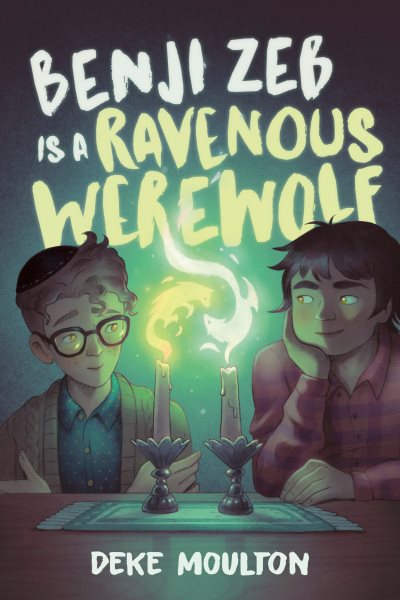
Filed Under: 31 Days 31 Lists, Best Books, Best Books of 2024 Tagged With: 31 days 31 lists, Best Books of 2024, Blueberry Awards
  • « Go to Previous Page
  • Page 1
  • Interim pages omitted …
  • Page 60
  • Page 61
  • Page 62
  • Page 63
  • Page 64
  • Interim pages omitted …
  • Page 1048
  • Go to Next Page »

Primary Sidebar