• Skip to primary navigation
  • Skip to main content
  • Skip to primary sidebar
  • About/Contact
  • Fusenews
  • Reviews
  • Librarian Previews
  • Best Books
    • Top 100
    • Best Books of 2022
    • Best Books of 2021
    • Best Books of 2020
    • Best Books of 2019
    • Best Books of 2018
    • Best Books of 2017
    • Best Books of 2016
    • Best Books of 2015
    • Best Books of 2014
    • Best Books of 2013
  • Fuse 8 n’ Kate
  • Videos
  • Press Release Fun

31 Days, 31 Lists: 2022 Poetry Books for Kids

31 Days, 31 Lists: 2022 Poetry Books for Kids

December 16, 2022 by Betsy Bird

It always catches me a bit by surprise how soon the poetry books appear on these 31 Days, 31 Lists. While we still have tomorrow’s “Unconventional Books” to go through, poetry is where we really begin to shift from the picture books to the older titles. All too soon we’ll be discussing all kinds of books for the 9-12 year old set. And, truth be told, some of them are on today’s list. Poetry knows no age borders. At the same time, I was delighted by some of the offerings this year. There are books on today’s list that I thoroughly believe should win Newberys and Caldecotts. And if you read them too, you’ll see why . . .

Interested in previous years’ poetry? Then check out these beauties:

  • 2021
  • 2020
  • 2019
  • 2018
  • 2017
  • 2016

2022 Poetry Books for Kids

At the Pond by David Elliott, ill. Amy Schimler-Safford

A whole pond wakes up and goes about its day. From beavers to water striders, dive deep into the ecosystem with luscious art to match. I feel a little bad starting anything off by saying, “Don’t discount this one on sight!” but I feel that caveat has to be stated. After all, this looks like yet another pond poetry book. They’re not exactly uncommon. That said, Elliott is a particularly clever poet, and here’s my favorite example: “Polly! Polly! Pollywog! / Golly! Golly! Golly! Frog!” How has no one ever written that before? Once that poem broke down my defenses I was ready to acknowledge and appreciate this ecosystem-heavy telling of what you can find in this particular landscape. The art is naturally gorgeous but the design is what stood out for me. Consider it with a practiced eye.

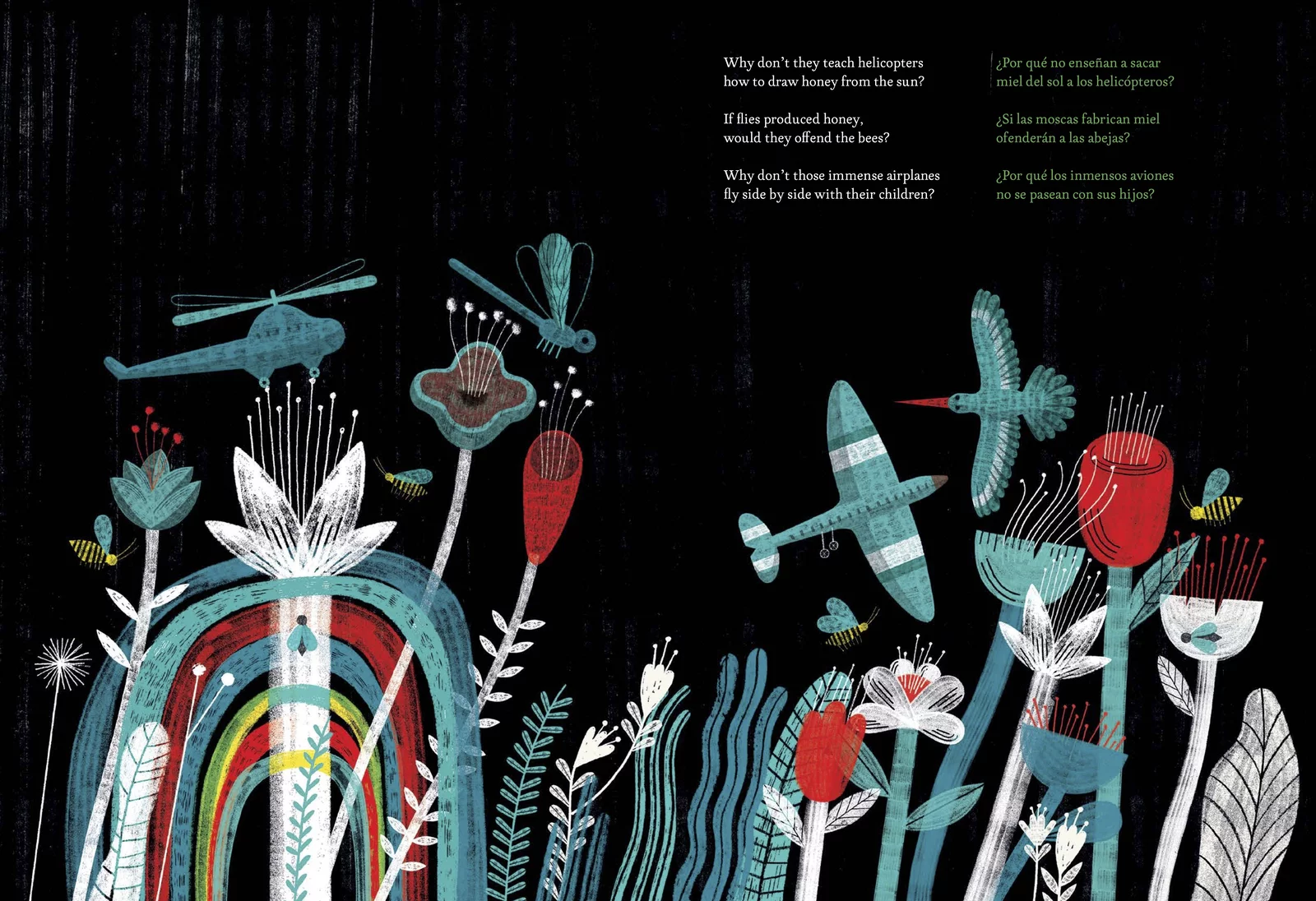
Book of Questions / Libro de Las Preguntas by Pablo Neruda, ill. Paloma Valdivia, translated by Sara Lissa Paulson
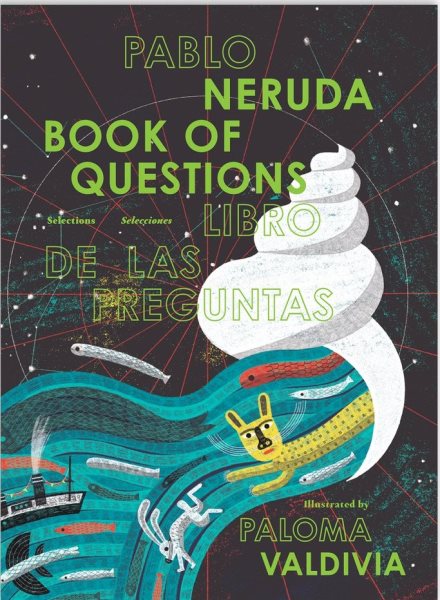
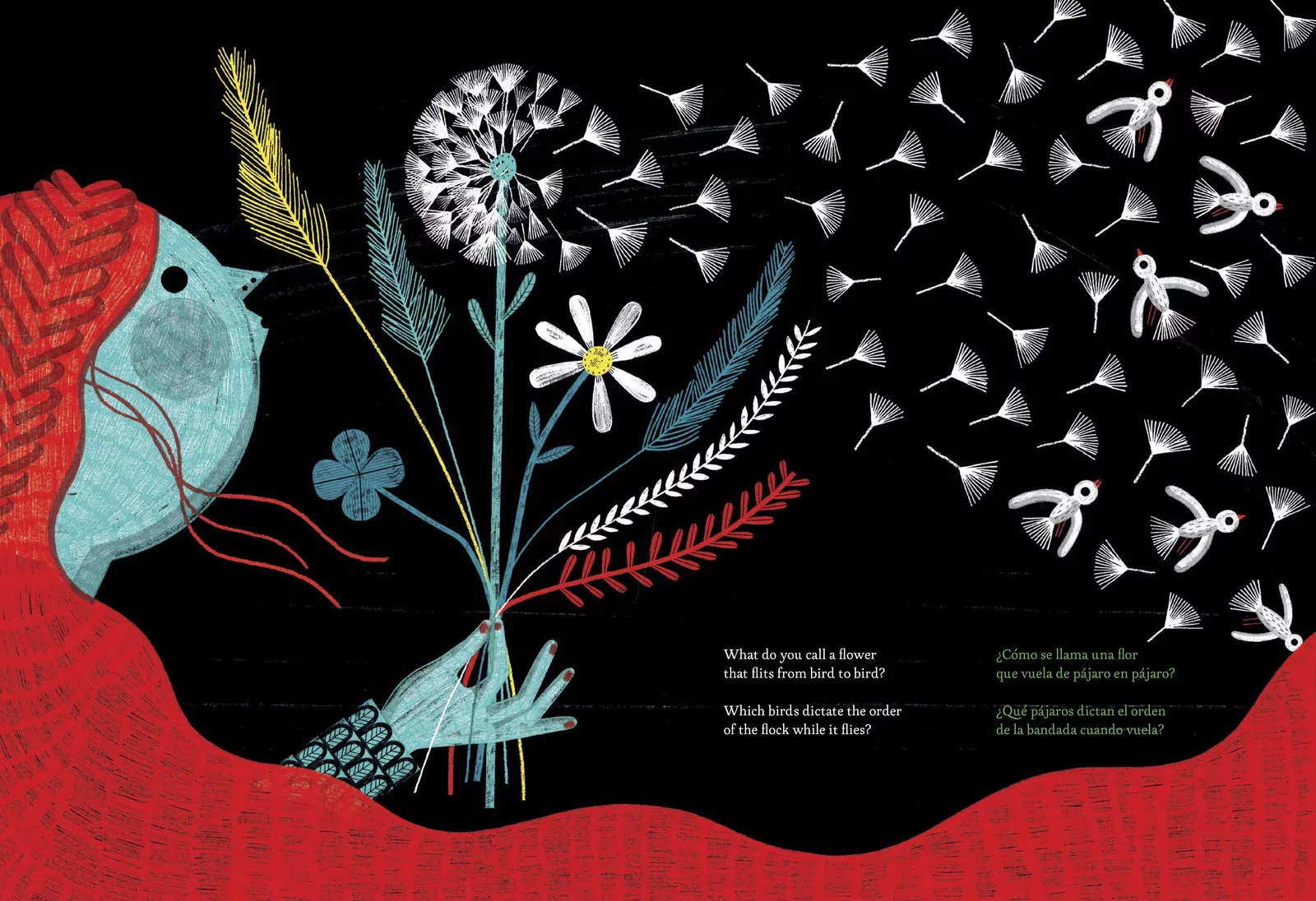
Neruda’s last great work of poetry is reimagined for kids in this sumptuous collection. 70 questions of the original 320 are presented thematically to kids, and the results are ridiculous thoughtful, and often unanswerable. Oo. Considering how much time and effort and work it often takes to find decent children’s poetry in a year, I was just blown away when I was sent this book at the beginning of the year. It’s so clever in its construction. Neurda’s Book of Questions is taken and the questions are selected, split up, and placed together thematically. It’s a smart way of presenting them, and the result really is more poetic than anything else. Some are philosophical, some practical, and all will make kids think. Meanwhile, it’s on today’s list because artist Paloma Valdivia, who is Chilean like Neruda was, just goes to town with the art. My particular favorite image came when Valdivia interpreted rice like teeth. Be careful not to miss any of the marvelous gatefolds, which are almost hidden throughout the book. I often had to go back and make certain that I wasn’t missing anything. Extra points for the fact that the book is bilingual too. This is a beauty, truly.

Build a House by Rhiannon Giddens, ill. Monica Mikai
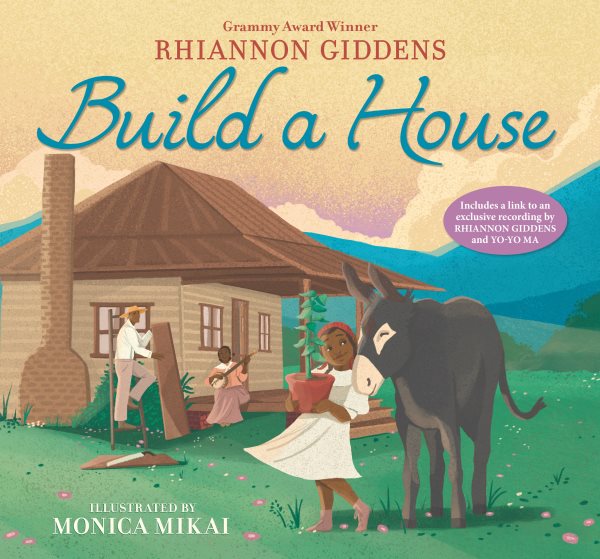
Written to commemorate the 155th anniversary of Juneteenth, this song tells the tale of sorrow and joy, pain and triumph, and always with the child reader in mind. A marvelously honest look at how to sing when the world has left you nothing at all. Let the record show that I was into this book even before I watched the video of Giddens performing it with Yo-Yo Ma. As a general rule I don’t like it when celebrities write children’s books. Turns out, I don’t mind it as much as I thought I did. I just don’t like it when they do a crap job. Ms. Giddens, as it happens, has adapted this song perfectly to the 40-page picture book format. I think what it does so perfectly is acknowledge pain and trauma without giving it power. This book is ultimately hopeful but you see the darkness at its edges. Nothing in this storyline or this art (created by the accomplished Monica Mikai) comes across as simplistic. This is a marvelously nuanced adaptation. Whether you put it in the picture book section or the poetry section, it deserves to be on your list.

Listen to it, performed by both Ms. Giddens and Yo-Yo Ma here:

Counting in Dog Years and Other Sassy Math Poems by Betsy Franco, ill. Priscilla Tey
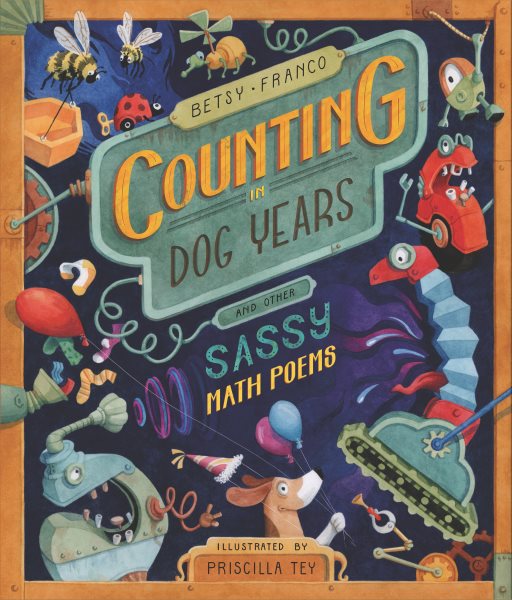
Am I on board with sassy math poems? Yes, I am on board with sassy math poems. The question is how sassy are we talking here? On a scale of one to ten, with ten being the most sassy and one being only mildly sassy, where would this particular book fall? Squarely at five. We’re talking medium level sass. In terms of the poetry and the math itself, though, much higher! While on the Mathical Book Prize committee I’ve always been astounded by math books for children that are afraid of their own math. Franco doesn’t give me that impression. Poems like “How Old Am I?”, for example, go through fractions as they relate to age and birthdays, which I found pretty darn impressive. Meanwhile you’ve these exceedingly delightful gouache pieces of art from Priscilla Tey that can take that poem about fractions and turn it into this rather beautifully rendered side-view of a person’s head as house (trust me, it makes sense when you’re looking at it). The math is strong with this one. The poetry? Strong too!

Free At Last: A Juneteenth Poem by Sojourner Kincaid Rolle, ill. Alex Bostic
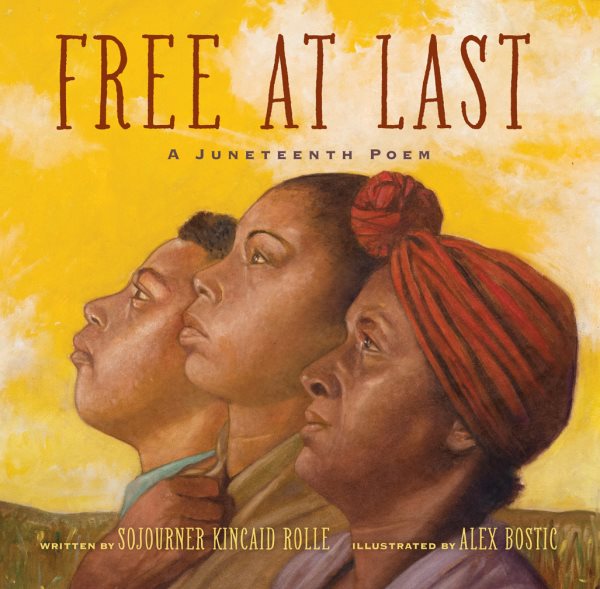
The official poem of Juneteenth is brought to life in a stunning adaption for children. June 19, 1865 is truly celebrated in a poem that will last through the ages. Full disclosure, I interviewed Mr. Bostic as part of SLJ’s last Day of Dialog. And what I learned from our talk was the degree to which he meticulously makes sure that the clothing of his subjects is authentic to the time period. He’s part of this larger trend of editors tapping professional Black painters to start illustrating picture books. The history of this poem (and Sojourner Rolle’s own role in the creation of the Juneteenth holiday) is fascinating for adults in the backmatter, but the poem itself, for kids, is good and strong. A neat adaptation to the picture book format worth considering.

Marshmallow Clouds: Two Poets at Play Among Figures of Speech by Ted Kooser and Connie Wanek, ill. Richard Jones
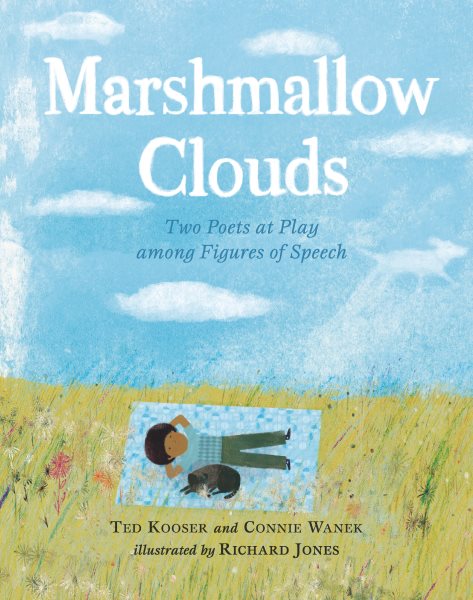
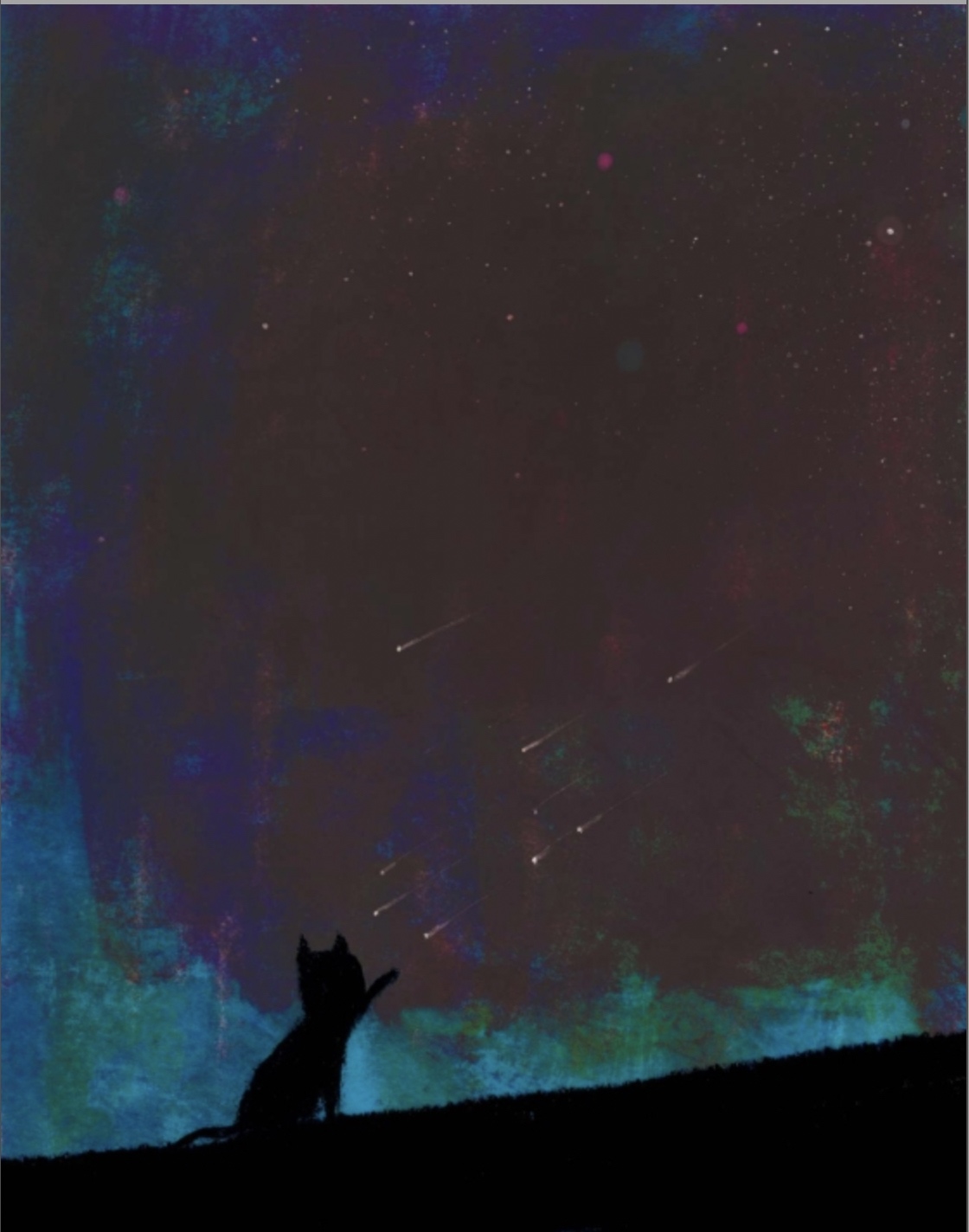
Thirty poems complemented with evocative paints play with images and metaphors, constructing whole new ways to encounter the world. First off, I’m a bit peeved that this book can’t win a Caldecott since its illustrator is inconveniently English. You wouldn’t be able to tell from the cover but the art in this book consists of a series of absolute stunners. I would tentatively propose that the Newbery committee consider this too, though, since Kooser and Wanek have constructed some of the best poetry for kids that you’re going to read in years. My favorite is probably “The World Without Me” which postulates about the mirror world you see in puddles just after the rain has stopped and then saves a worm from drowning. “In the world without me, the worm died. But in this world, I saved the worm.” One of my favorites of 2022.

On the Move: Home Is Where You Find It by Michael Rosen, ill. Quentin Blake
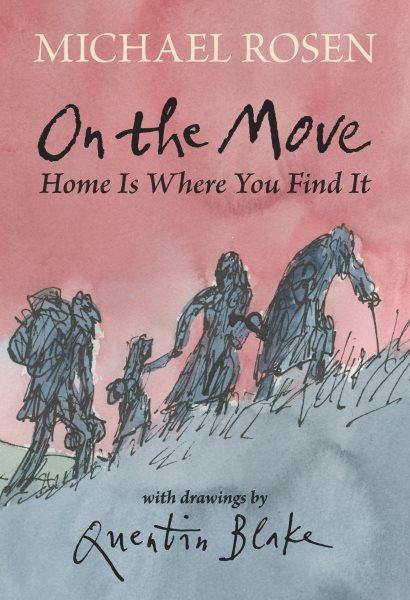
In 49 poems Michael Rosen tells the story of his family, lost to the Holocaust. He also ties their tale into the plight of migrants worldwide today. A book that puts our current world in context for kids. It’s a collection of poems all put together. It’s a memoir. It’s history. It’s not a single solitary type of book which, naturally, makes it all the more difficult to place. Even so, this may be the best thing Michael Rosen has put together in years and years (with apologies to this year’s Sticky McStick). I’ve seen too few books effectively tie the tide of migrants not simply to migrants in the past, but also to our own personal histories. It took me a little while to get into, but once you down this book it makes a huge impact. I keep thinking and thinking about the poem about the woman who thought she was walking around with diamonds in her heels, only to find out years later that it was just glass. 

Out of This World: Star-Studded Haiku by Sally M. Walker, ill. Matthew Trueman

“hugged by gravity / eight planets bask in sunlight / solar family.” Gentle haikus introduce young readers to the cosmos itself while accompanying art makes the concepts palpable and real.  It can be hard to resist space haiku combined with eye-popping mixed media art. Walker’s done haiku collections before (Earth Verse: Haiku from the Ground Up) but I like this particular change of pace. It starts with what I would consider the most easily spotted constellation in the sky, Orion, jumps to the Galileo and Hubble telescopes, and after that we’re off into the stars. Trueman gets to do everything from the Big Bang to Jupiter’s red eye in this book, and I just found it a lot of fun. Copious backmatter tells more (I had no idea that Ultima Thule looked like a space snowman) but you could easily use this book to introduce a lot of these concepts to young readers who are new to our solar system and beyond.

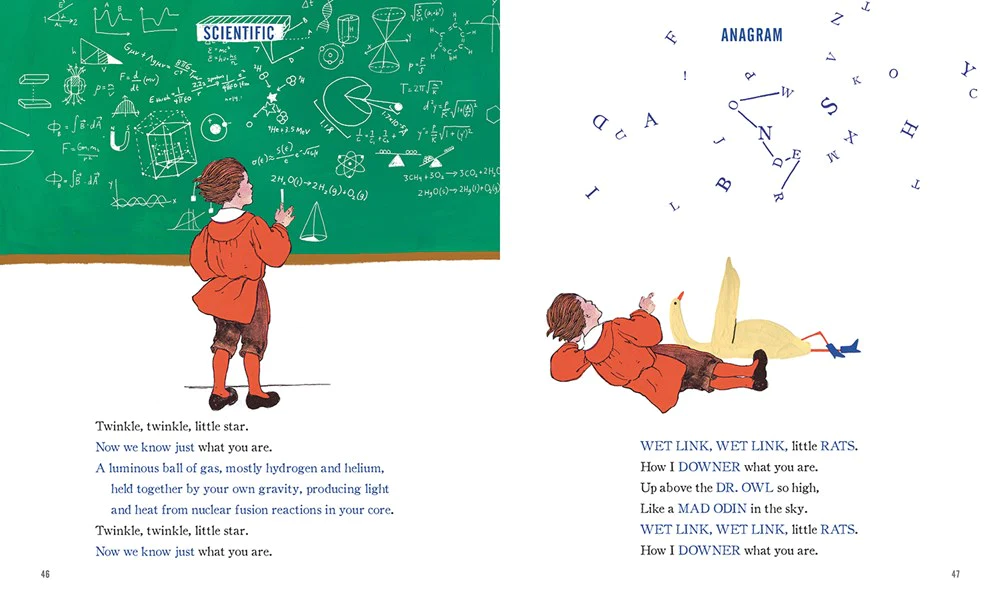
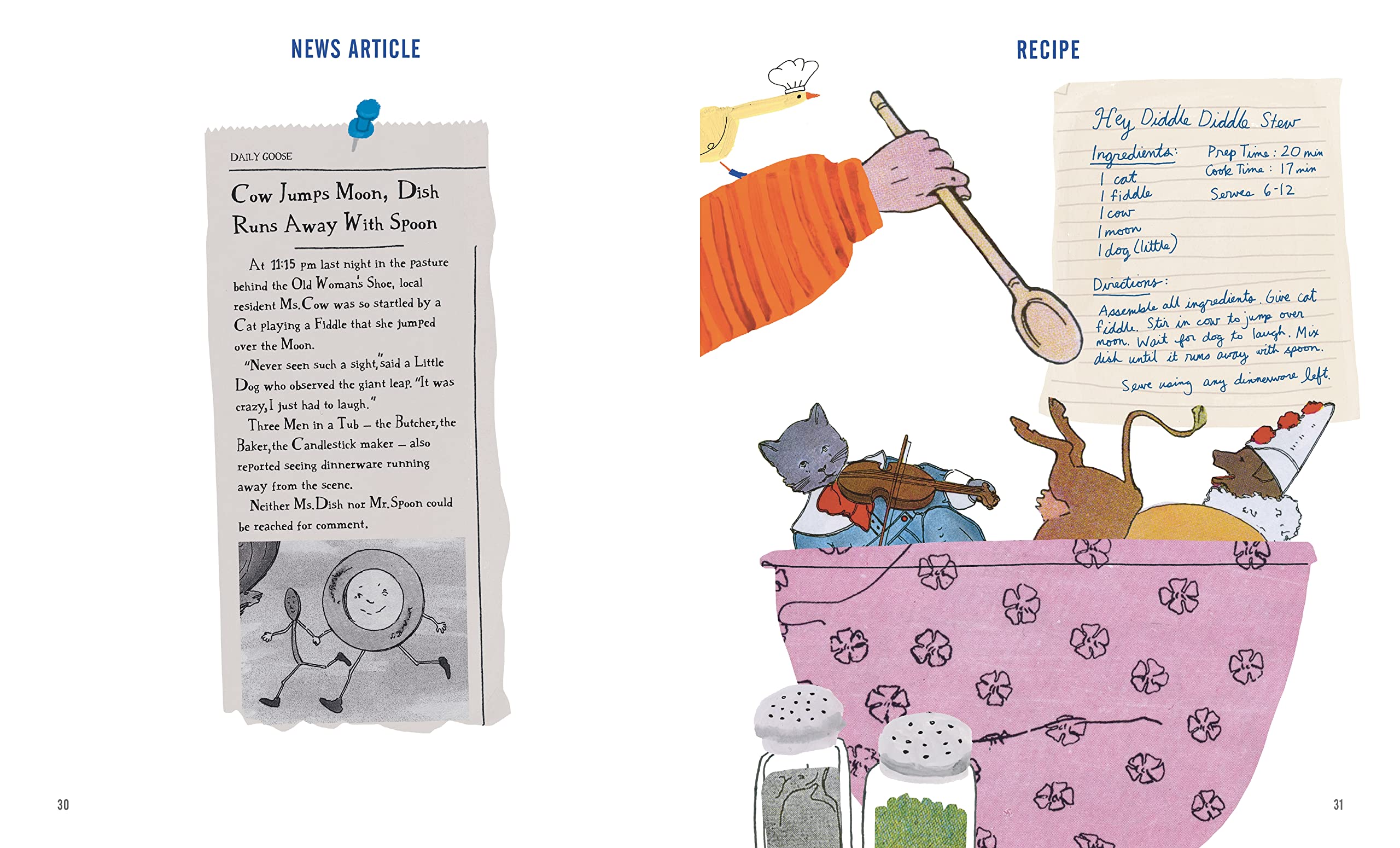
The Real Dada Mother Goose: A Treasury of Complete Nonsense by Jon Scieszka, ill. Julia Rothman
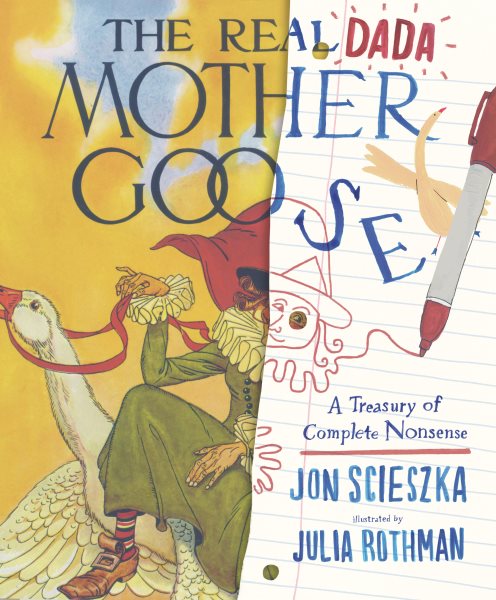
Master funnyman Jon Scieszka reworks classic nursery rhymes in ways that use everything from pig latin to secret codes. A rollicking reworking that’ll have you rolling in the aisles. The man who redefined fractured fairytales with his Stinky Cheese Man is now tearing up the nursery rhymes of the world in what has got to be the most brilliant deconstruction I have ever seen. I mean, first and foremost, it’s apparently a tribute to the Oulipo school’s Exercises in Style by Raymond Queneau. And if that reference isn’t ringing any bells, don’t worry. Me neither. Fortunately there is a ton of backmatter explaining stuff, like how the N+7 code was created by an organization that liked to invent different writing rules. Exercises in Style itself tells a simple story of a man on a bus, retold ninety-nine different ways. This book? It takes the very-much-in-the-public-domain The Real Mother Goose by Blanche Fisher Wright and then reworks six of her nursery rhymes, art and all, six different ways. We’re talking morse code, Esperanto, the military alphabet, anagrams, rebuses, spoonerisms, and way way more. I didn’t really know Julia Rothmann before but she does a great and lovely job of cutting up those old 1916 pictures. A hit, I say! A veritable hit!

Serengeti: Plains of Grass by Leslie Bulion, ill. Becca Stadtlander
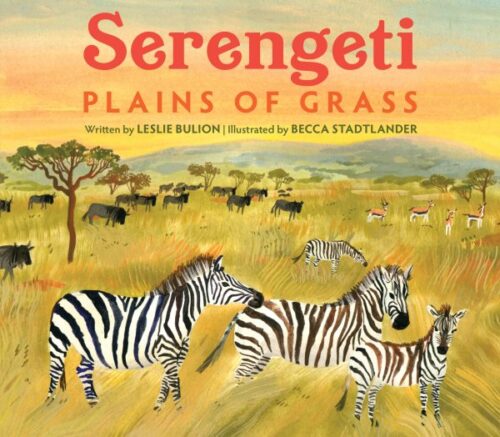
“Parched soil bed of volcano ash / roots asleep in a tangled mesh.” Lyrical poetry brings to vibrant life the interconnectedness of bugs, plants, and animals in a singular ecosystem. Hold the phone! Hold your horses! Stop right there and put aside your skeptical raised eyebrows. Yes, this is another Serengeti book. Yes, we are all a little tired of the Serengeti at this point. And yes, this cover, like the stripes on a zebra, camouflages it so that it is indistinguishable from all the other Serengeti books out there. That said, this may well be the best book I’ve seen to really dig down and explain the interconnected nature of life in this particular habitat. Ignore the first page that’s just full of text. I don’t know why that’s there. Should have been in the backmatter. Once you get beyond that you’ll encounter the poems, which are good, and highlight this really cool link between different species in a single space. Kids hear a lot of talk about “the circle of life” and all that. This book makes it a lot more real than I’ve found elsewhere. Evocative and informative.

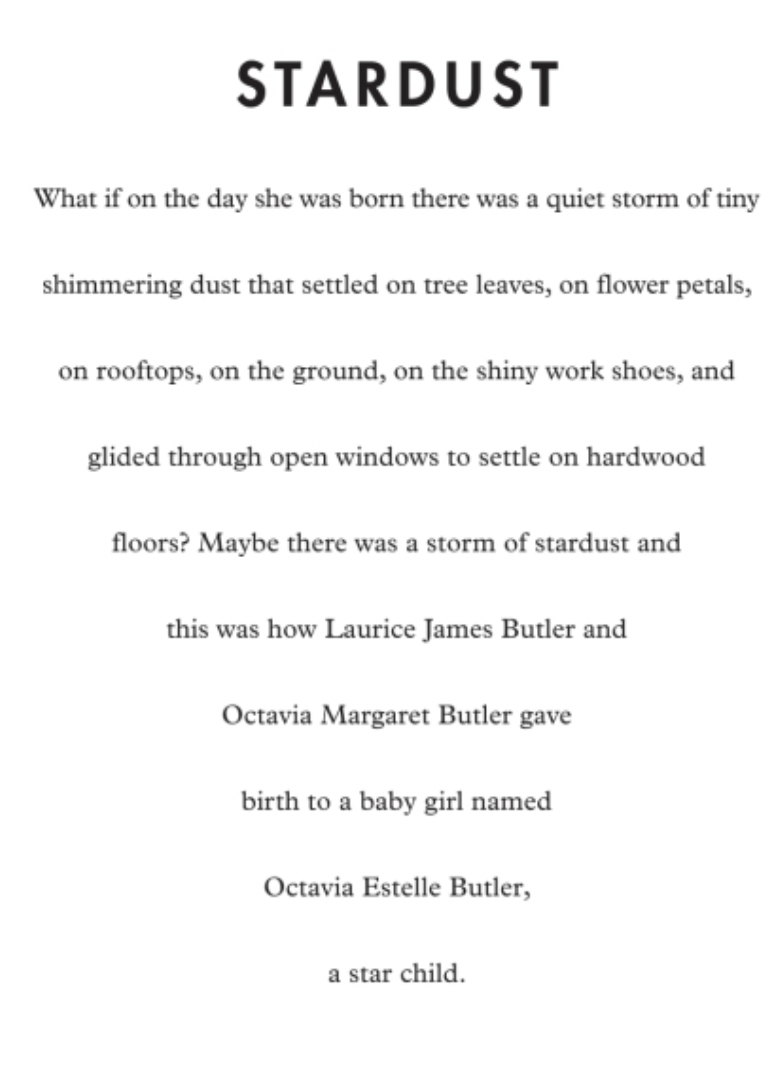
Star Child: A Biographical Constellation of Octavia Estelle Butler by Ibi Zoboi
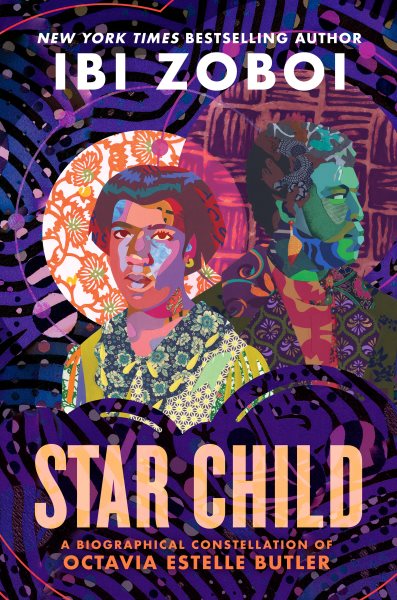
With vivid poems and engaging mini-chapters, Zoboi offers a cosmic look at the legendary science fiction writer’s youth and the events that inspired her to create such otherworldly stories. This is great! I checked out a copy from the library and loved everything about it. There are facts about Octavia’s life in here but it’s also just chock full of poems. But what really came through to me throughout the book was just how real Octavia was as a person. Taking archery so that she wouldn’t have to deal with other people? I felt that. A pity she never wrote anything for kids, but who cares? This is some really cool stuff and I want it on every list that there is!

Stopping by Woods on a Snowy Evening by Robert Frost, ill. P.J. Lynch
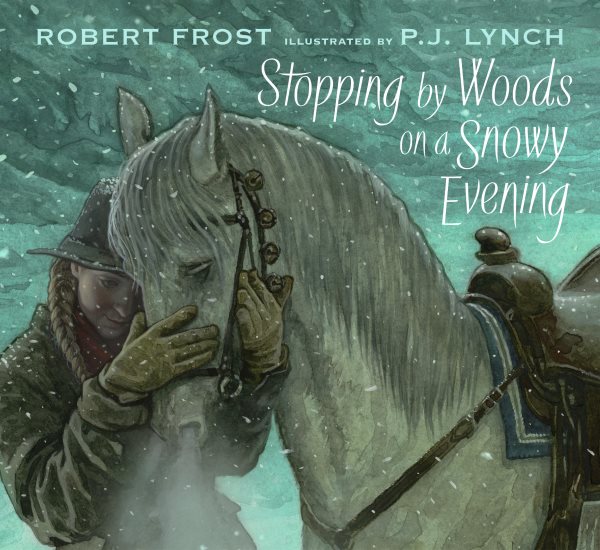
“And miles to go before I sleep…” The classic Robert Frost sees new life in this adept adaptation to the picture book page. Meanwhile watercolor and gouache illustrations bring Frost’s 100-year-old poem to remarkable life. Certainly if you’ve never seen a P.J. Lynch book before, you’re bound to be wowed by his images here. But of course the thing about Lynch is that he is, ultimately, a very faithful illustrator. I’ve never seen him try to interpret a text in a different image or style. Here, a poem that I normally association with an old white guy is given to a young white girl. Lynch perfectly captures that weird light you get when it’s nighttime and it’s bouncing off of the snow. I found the book strange and rather beautiful, even if I don’t think it breaks too much new ground.

Take Off Your Brave: The World Through the Eyes of a Preschool Poet by Nadim (age 4), ill. Yasmeen Ismail
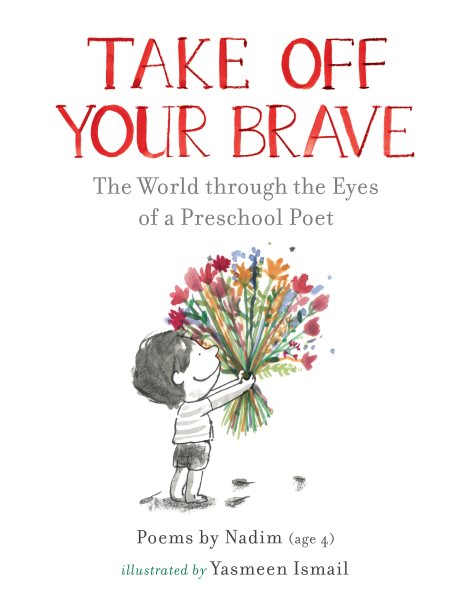
When Nadim was 4-years-old his mom told him that a poem is “a kind of story of a feeling or a moment.” Delve into Nadim’s 23 poems, each capturing what it means to really and truly be a kid. We all have these prejudices we carry around with us about books, even before we pick them up. One of mine is of books written by kids. I love kids. I love it when kids write books. But that doesn’t mean that they’re any good. The weird thing about this book, however, is that it’s really very good. Some of this is due to the fact that a genius editor thought to give the text to Yasmeen Ismail, who is one of England’s finest illustrators (I’ve always thought of her art as a combination of Quentin Blake and Lauren Tobia). But the poems really and truly do work. They’re cute and are unapologetically British (which may account for a lot of my love because what American can resist the term “baddies”?). It really does feel authentically “kid” and cute without being cutesy, y’know? I guess my bar was low when I read it, but this book completely won me over. Give it a try.

Wait – and See by Helen Frost, photography by Rick Lieder
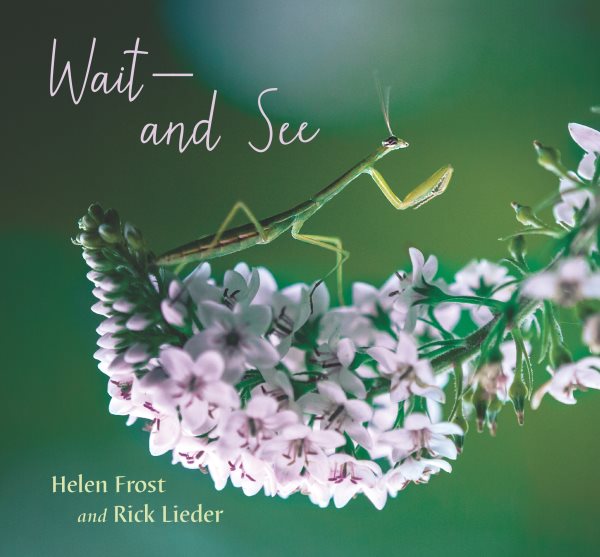
“If a quick small movement takes you by surprise,/ stop and look – move nothing but your eyes.” Jaw-dropping photography accompanies a delicate poem following the life of an ever patient praying mantis. Mmm. Okay, let’s all decide together whether or not we should place this in the picture book, the poetry, or the nonfiction picture book section. My vote? Poetry all the way. After all, the title page says that the “poem” is by Ms. Frost, and who are we to argue? We’ve seen Helen and Rick put together these remarkable and remarkably simple photograph-heavy picture books before. This one, however, may be my favorite. I know that there are praying mantises in the wild, but I’ve never run into them myself. So you have these magnificent shots of the bug on the one hand, and then there’s this image I have never, ever, even known about of an ootheca (the egg case a mantis creates) with hundreds of mantis nymphs emerging. It’s fascinating and more than a little unnerving and I love it. The poetry is, of course, fantastic as well. Pretty much one of the coolest photo illustrated titles of the year.

Yuck, You Suck! Poems About Animals That Sip, Slurp, Suck by Jane Yolen and Heidi E.Y. Stemple, ill. Eugenia Nobati
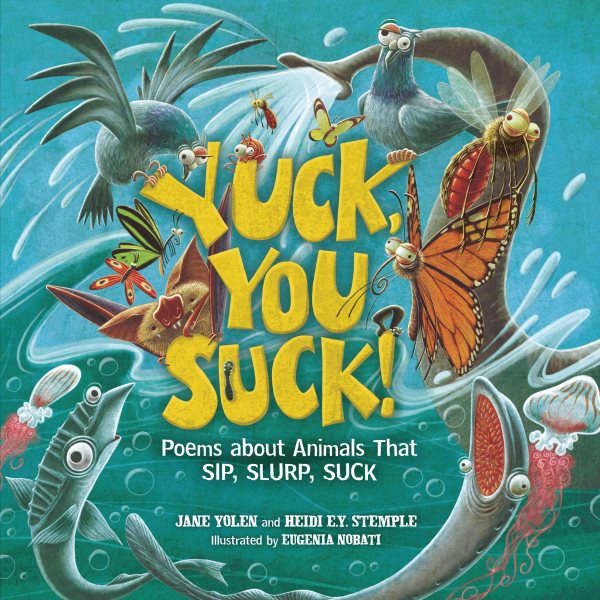
I want you to understand that deranged eyeballs on a poetry picture book will, many times, be sufficient to get me interested in the contents therein. Add in the fact that this book is technically a STEM title, but with a delightfully gross twist, and the poetry itself just becomes a helpful bonus. You want poetry with bite? You got it, babe. Mother/daughter team Yolen/Stemple have conjured up 15 different poems on creatures with sucking abilities. You’ll know some of them already, like mosquitoes or vampire bats. But did you know that pigeons have a beak that works like a straw (unlike many other birds)? Or that remoras don’t (actually) suck? There’s plenty of gross qualities to enjoy (I got one word for you: lampreys) and a wide variety of poetic styles ranging from haikus to concrete poems. Add in the great backmatter (“Anatomical Terms for Parts That Suck”, “Animals Suck for a Reason”, “Other Books to Sink Your Proboscis Into”) which also includes additional info on each sucker AND a glossary and you have yourself one heckuva disgusting class act.


Want to see other lists? Stay tuned for the rest this month!

December 1 – Great Board Books

December 2 – Picture Book Readalouds

December 3 – Simple Picture Book Texts

December 4 – Transcendent Holiday Picture Books

December 5 – Rhyming Picture Books

December 6 – Funny Picture Books

December 7 – CaldeNotts

December 8 – Picture Book Reprints

December 9 – Math Books for Kids

December 10 – Gross Books

December 11 – Books with a Message

December 12 – Fabulous Photography

December 13 – Translated Picture Books

December 14 – Fairy Tales / Folktales / Religious Tales

December 15 – Wordless Picture Books

December 16 – Poetry Books

December 17 – Unconventional Children’s Books

December 18 – Easy Books & Early Chapter Books

December 19 – Comics & Graphic Novels

December 20 – Older Funny Books

December 21 – Science Fiction Books

December 22 – Fantasy Books

December 23 – Informational Fiction

December 24 – American History

December 25 – Science & Nature Books

December 26 – Unique Biographies

December 27 – Nonfiction Picture Books

December 28 – Nonfiction Books for Older Readers

December 29 – Best Audiobooks for Kids

December 30 – Middle Grade Novels

December 31 – Picture Books
Filed Under: 31 Days 31 Lists, Best Books, Best Books of 2022 Tagged With: 2022 poetry, 31 days 31 lists, Best Books of 2022, funny poetry, middle grade poetry, picture book poetry, poetry

31 Days, 31 Lists: 2022 Wordless Picture Books

December 15, 2022 by Betsy Bird

The older I get, the more and more I love those wordless books. They cross boundaries. They cross time. They’re a method of communication that cannot be tied down. And this year I was delighted to find a wide range of the things. Some are from America. Some from overseas. And each and every last one of them (on this list anyway) worth discovering.

Love wordless titles? Then check out some lists from previous years:

  • 2021
  • 2020
  • 2019
  • 2018
  • 2017

2022 Wordless Picture Books

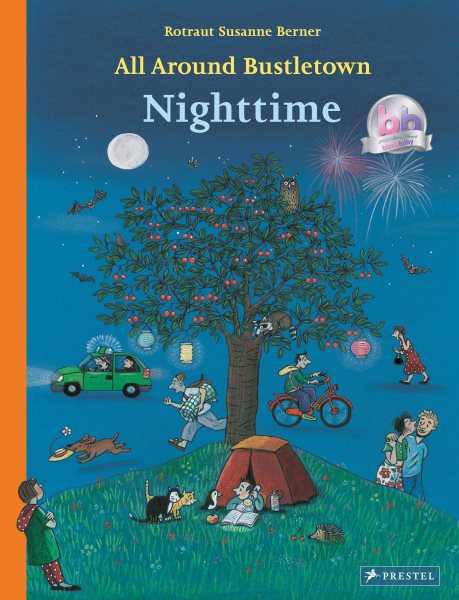
All Around Bustletown: Nighttime by Rotraut Susanne Berner

Bustletown has appeared on my 31 Days, 31 Lists before, and little wonder. They’re utterly charming! Imported from Germany, this is part seek-and-find, and part Anno’s Journey. In this story you are proceeding to the right, to the right, ever and always to the right. Your companions as you do so vary. There’s a fellow on a bike (identified as Frank on the back cover). There’s Cara and John, a couple taking a nighttime stroll. The book goes from the country to the city. As with other European imports I always worry about a lack of diversity, but this book at least has a variety of people (though not at the beginning). There are fun references to classic children’s books (spend some time looking at the book covers in the library where a sleepover is taking place to see how many you recognize). Just use this book to take a trip to Germany! It’s the cheapest fare you’ll find.  

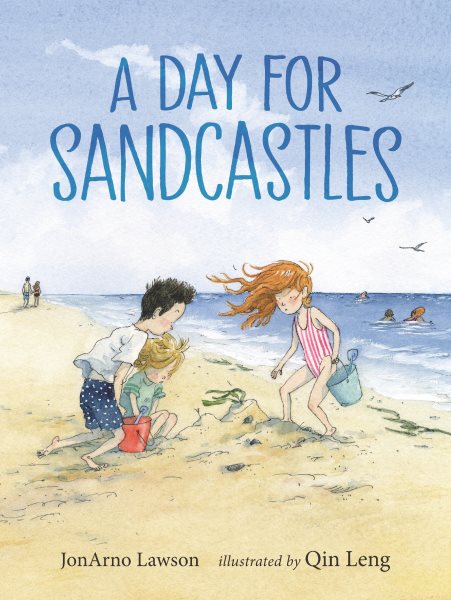
A Day for Sandcastles by JonArno Lawson, ill. Qin Leng

Lawson’s such an interesting guy. I know of few other picture book authors that have been able to establish themselves as the foremost wordless picture book writers (not illustrators) on the contemporary market. He and Qin Leng paired together last year with the lovely Over the Shop, and now they’re back with a single idea. Kids. At the beach. Making sandcastles. Sounds simple, no? And it is, but there’s an interesting drama to it. Any kid familiar with the damaging effects of the incoming tide on juvenile sand architecture will be able to relate. Heck, kids who’ve never seen a beach a day of their life will relate, since this is a classic story of frustration and a kind of weary inevitability. Tide and time wait for no kids. A good, gentle picture book beach read. 

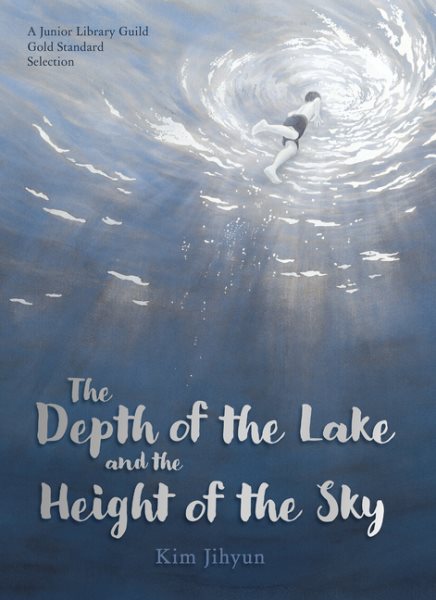
The Depth of the Lake and the Height of the Sky by Kim Jihyun

A wordless South Korean import celebrates nature, wilderness, and traipsing about on your own. Using a technique of writing ink and a “slow-dry blending medium”, it’s funny to think that when you get right down to it, this is a black and white picture book. Such things are rare on the market when they’re homegrown, so I wasn’t surprised to hear that this came from overseas. When Jules Danielson featured this book on Seven Impossible Things Before Breakfast she mentioned that its original title in Korean was merely “Last Summer”. So somewhere along the lines, someone at Floris Books had the wherewithal to give this book this luscious, loving title. As someone who, as a kid, loved bumming around woods by myself, this book tapped into that feeling beautifully. My favorite moment comes after the kid has been swimming and he simply lies on his back, on a dock, on a sunny day. You get this two page spread of what it looks like when the sun is directly ahead that is this remarkable example of how human hands can paint ink to look like light. It’s marvelous. If I could frame any sequence from this book, it would be that one. A gentle, wonderful example of accomplished wordless storytelling.

Field Trip to Volcano Island by John Hare

The third in the John Hare science fiction picture book series. I’ve read Field Trip to the Moon and Field Trip to the Ocean Deep before and I liked them fairly well. But out of all the books that Hare has done, I think that this one might be my favorite. Why? Honestly, I think he gets a lot more emotional heft and heart out of this story. In this tale a group of kids are wearing their protective hazmat suits and visiting an actual active volcano. One kid, however, is quite taken with the flowers that manage to grow in these harsh conditions. When the child accidentally stumbles on a family of, for lack of a better word, lava monsters, he’s touched by their sadness over being unable to hold the flowers. The solution is as clever as it is touching. Maybe it’s just that Hare does a more touching lava monster than he does an alien, but I really felt this one. A lovely little title without a word on the page.

Finding Fire by Logan S. Kline

Is it at all strange that, having learned that Neanderthals, at least, often sported red hair, it was kind of nice to see red-haired Homo Sapiens in this wordless adventure? I’ve always been intrigued by the lesser-respected (but still very much in demand) genre of wordless action picture books. These truly bridge the gap between books for younger readers and graphic novels. And, certainly in this case, it feels as though it’s only the page count that keeps this book from ending up in the comics section of the library. I was surprised to see that Kline doesn’t, apparently, have any animation experience. The book certainly feels like a Pixar short at times (and that’s a big compliment coming from me). In the story, a boy sets off to find fire and finds a friend along the way. A pretty cool bit of storytelling with ingenuity at its core.

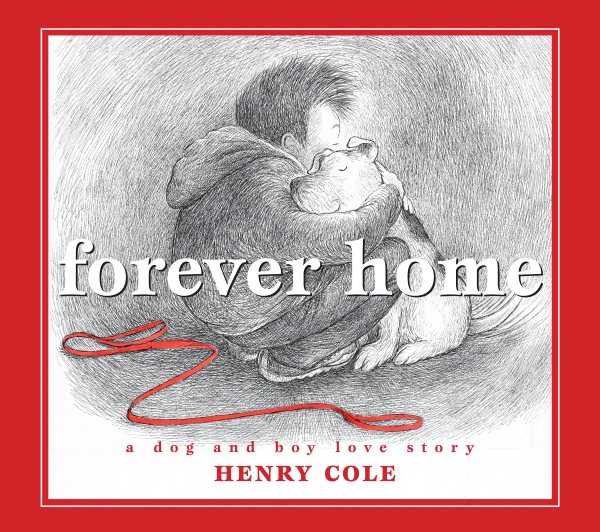
Forever Home: A Dog and Boy Love Story by Henry Cole

There are a few picture book author/illustrators that do exceedingly well when they engage with a wordless format. Henry Cole is amongst them. It’s been so interesting to watch his career over the last few years. Recently he’s been really into black and white, pen-and-ink books that use color as an important accent that’s pertinent to the plot. This story, interestingly enough, is explained at the end, when Cole discusses its inspiration. Even so, kids shouldn’t have a difficult time following along. In this tale a dog needs a home and a boy desperately wants a dog. His dads aren’t particularly convinced, however, since his room is a pigsty and there are chores to be done. Determined, he sets out to do all the chores and, as an extra added measure, takes a leash on a walk, rain or shine. I particularly liked the leash walking scenes. A heartfelt little thing with a dog right up there with the fellow 2022 doggie picture book Hot Dog. 

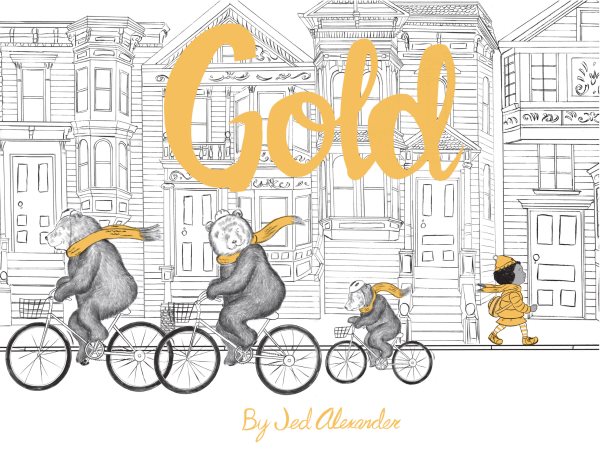
Gold by Jed Alexander

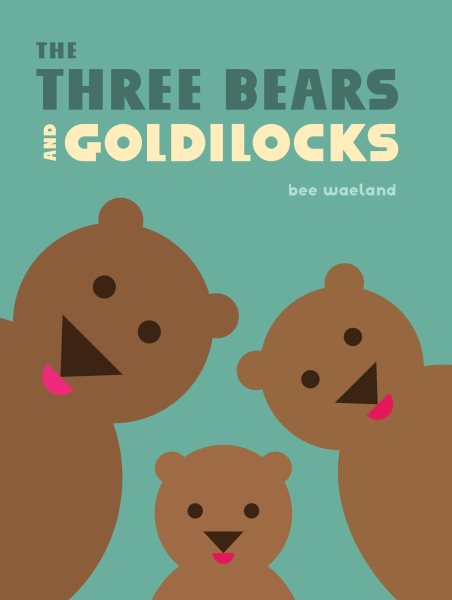
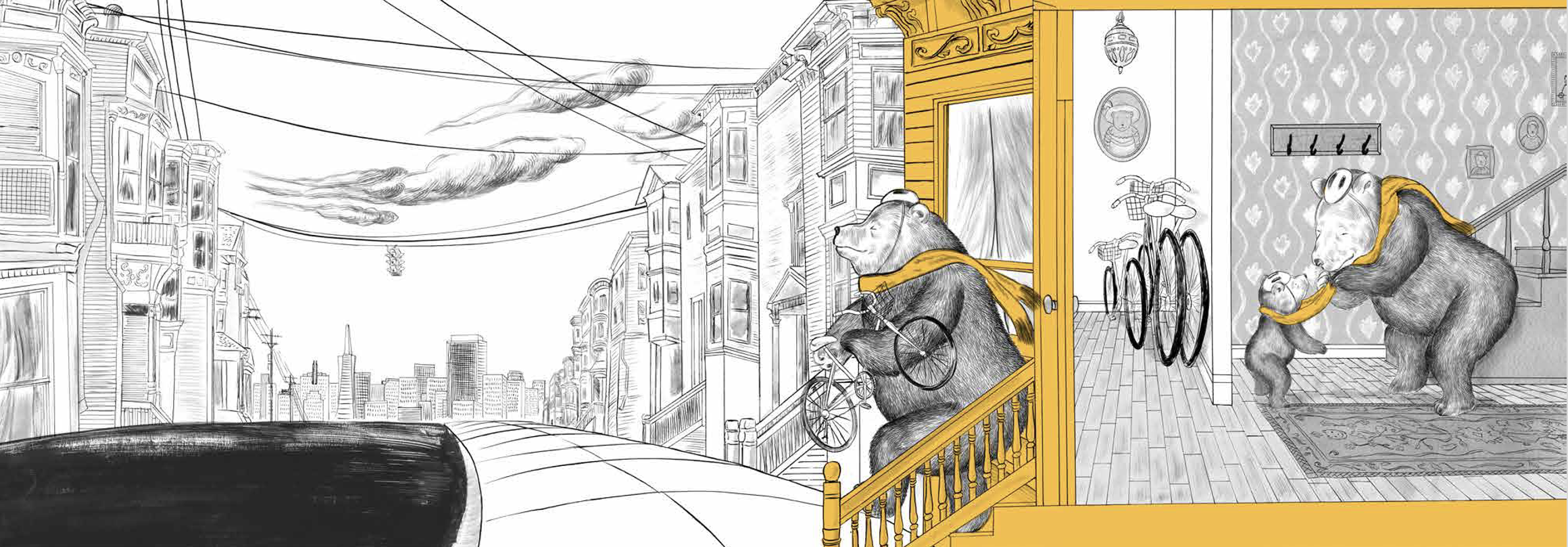
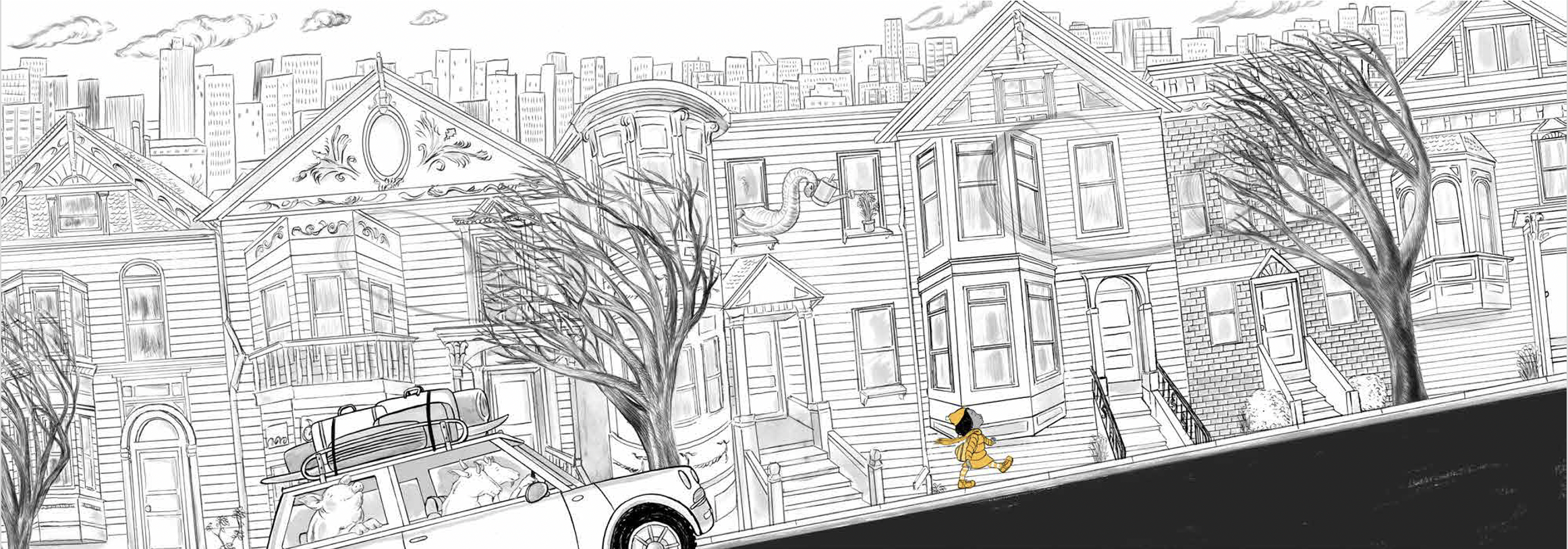
Three bears set out on their bikes while a little girl in yellow beelines for their house. In this wordless play on the Goldilocks fable, prepare to have expectations of all sorts upset by a story that redefines what a family can be. Also prepare to be utterly charmed or, at the very least, subtly impressed. We see a lot of books that are skewed takes on Goldilocks (look at the bottom of this list to see Bee Waeland’s The Three Bears and Goldilocks) and you kind of get a little sick of them after a while. This book upsets not simply storytime expectations but cultural expectations about who can and cannot be a family unit. I was immediately charmed by the San Franciscan setting and the fact that the bears’ bike helmets are so ridiculously small on their huge heads. Then you get to the beautiful use of the color yellow throughout. And of course the mess Goldilocks makes could be attributed to a child trying to “help”. Mr. Alexander already tried something like this with his previous book Red but I think that was just a warm-up for this little number. Completely, utterly, wonderful (and wordless!). 

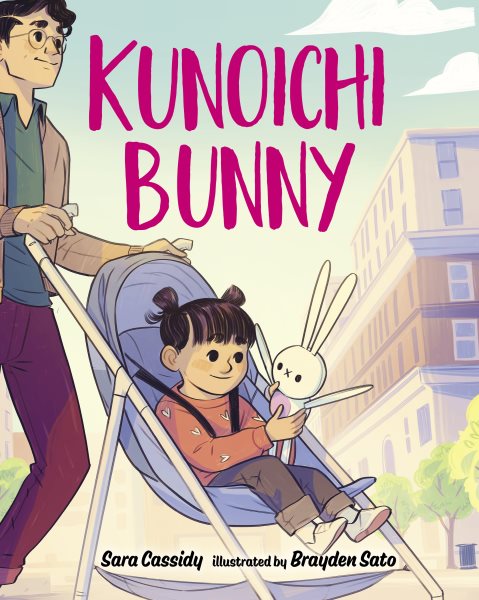
Kunoichi Bunny by Sara Cassidy, ill. Brayden Sato

Now if we’re going to get technical about it this book isn’t really wordless. It has words on signs and words that describe actions (like “Roll” and “Fling”). Plus our heroine is calling out, “Kunoichi!” on a regular basis. But you wouldn’t need to speak a word to understand what is happening. Now the plot written could have rendered this book good or bad, based solely on the quality of the illustrations. Fortunately, Brayden Sato appears to have been an absolutely perfect choice. Throughout the story, a girl in a stroller with her dad uses her bunny to, essentially, save lives and prevent injuries and I am NOT even kidding about that. She stops another kid’s stroller from tumbling out a bus door, prevents cats from fighting, and even redirects a baseball on course to beam a child in the head. Best of all, while her aim is spectacularly true, I found it all plausible enough. Kids, of course, will love seeing someone their age or even younger engaging in superheroics. The fact that the art is thoroughly charming doesn’t hurt. Apparently Sato has a webcomic called All That You Are. Guess what I’ll be reading next?

Once Upon a Forest by Pam Fong

One little marmot is determined to use its small garden of baby trees to help undo the damage wrought by fire. But will the little trees be able to survive? Marmots to the rescue! Sometimes a book looks so cute that it’s suspicious. You begin to question its intentions. Can you really be any good if you look this sweet? But don’t be fooled by our wordless marmot friend here. This is a critter with a job to do, and the book does a mighty fine job of showing how gardening can combat deforestation. I love the selective use of green from scene to scene. It’s not preachy, but it does a good job showing how hard work can make a little difference. Not a miraculous huge one. Just a tiny spot of help.

Three Bears and Goldilocks by Bee Waeland

Goldilocks has broken into her last house. A wordless retelling of the classic fairy tale, with some justice sprinkled at the end. Insofar as I can tell, this is a wordless Canadian import. It’s the classic story, clearly, but with a little twist. It’s interesting to ponder how much a child that didn’t already know the story might take from this particular retelling. Waeland is having a lot of fun with these visuals. The nose-picking scene alone takes you a second or two before you quite realize what’s going on. Extra points for the awful muddy footprints around the house (and the Goldilocks drool on the pillow). And don’t worry. No one’s getting eaten here. Just brought their just desserts.


Want to see other lists? Stay tuned for the rest this month!

December 1 – Great Board Books

December 2 – Picture Book Readalouds

December 3 – Simple Picture Book Texts

December 4 – Transcendent Holiday Picture Books

December 5 – Rhyming Picture Books

December 6 – Funny Picture Books

December 7 – CaldeNotts

December 8 – Picture Book Reprints

December 9 – Math Books for Kids

December 10 – Gross Books

December 11 – Books with a Message

December 12 – Fabulous Photography

December 13 – Translated Picture Books

December 14 – Fairy Tales / Folktales / Religious Tales

December 15 – Wordless Picture Books

December 16 – Poetry Books

December 17 – Unconventional Children’s Books

December 18 – Easy Books & Early Chapter Books

December 19 – Comics & Graphic Novels

December 20 – Older Funny Books

December 21 – Science Fiction Books

December 22 – Fantasy Books

December 23 – Informational Fiction

December 24 – American History

December 25 – Science & Nature Books

December 26 – Unique Biographies

December 27 – Nonfiction Picture Books

December 28 – Nonfiction Books for Older Readers

December 29 – Best Audiobooks for Kids

December 30 – Middle Grade Novels

December 31 – Picture Books
Filed Under: 31 Days 31 Lists, Best Books, Best Books of 2022 Tagged With: 31 days 31 lists, Best Books of 2022, wordless picture books

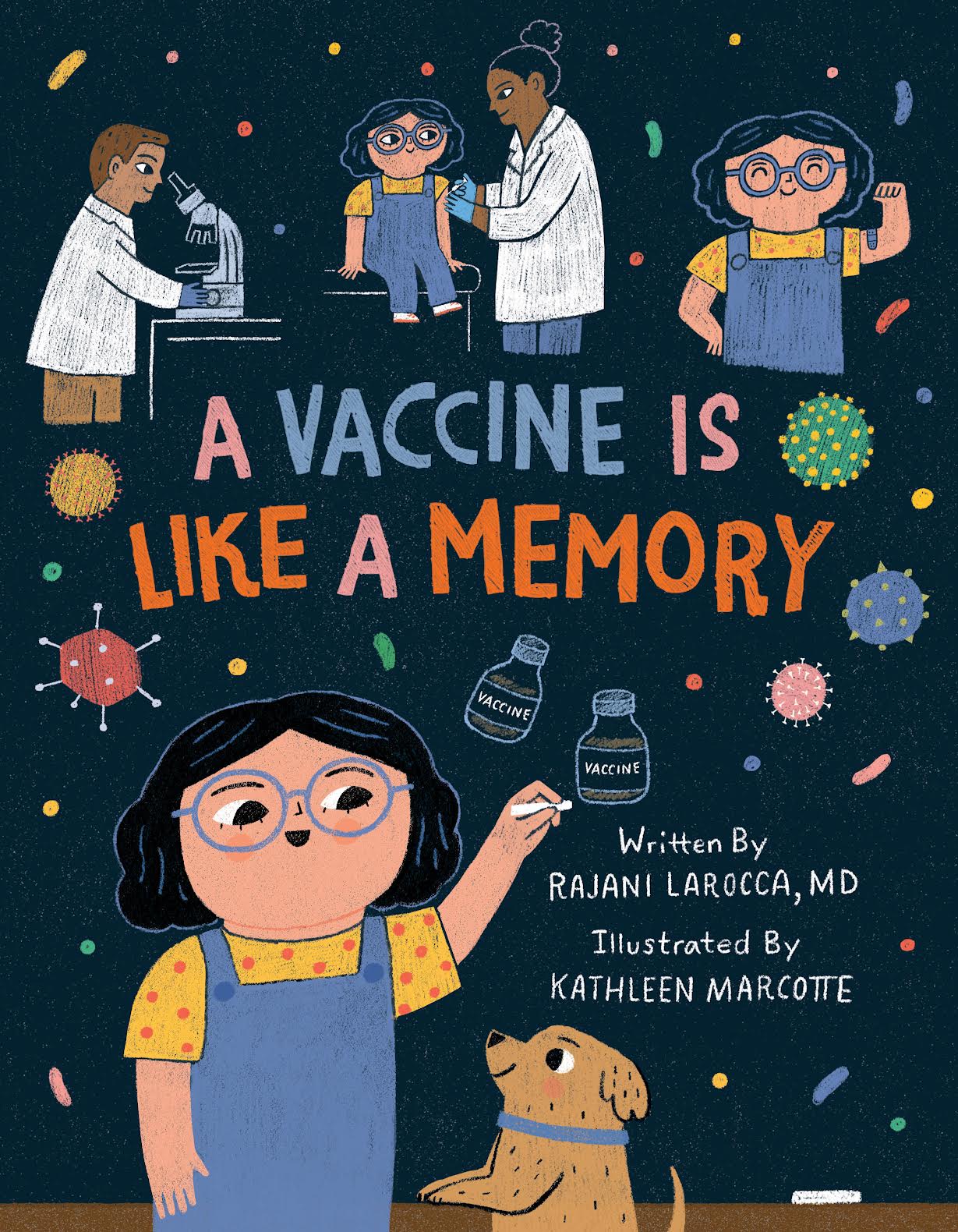
A Vaccine Is Like a Memory: Interview and Cover Reveal with None Other Than Rajani LaRocca

December 15, 2022 by Betsy Bird

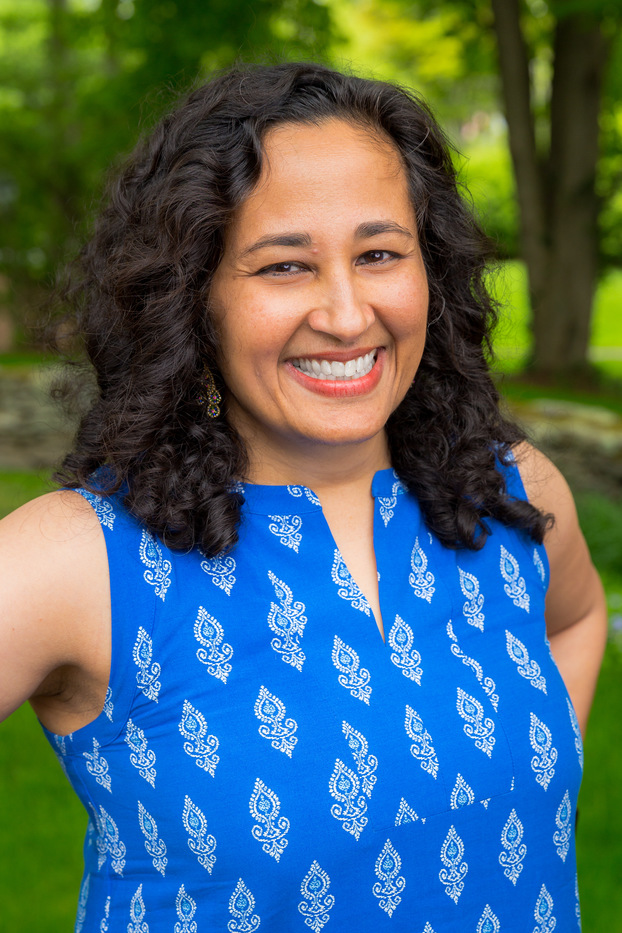
You know an interview has to be pretty darn good if it comes in the middle of my 31 Days, 31 Lists series. But when I read the latest coming out from Newbery Honor winner Rajani LaRocca, I just knew I couldn’t wait another minute to talk to her about it. If you know Rajani, then you know that in her spare time she’s a (checks notes) internal medicine physician. Who better, then, to talk to kids about vaccines? And with a tridemic surging, the time could literally not be better . . .


Betsy Bird: Rajani! So lovely to talk to you again and hear about your latest book. It would seem obvious that in an era of general misinformation (such as we’re living in right now) books about vaccines and how they work are imperative. What was your impetus for writing VACCINE IS LIKE A MEMORY in the first place? And what do you hope it might do?

Rajani LaRocca

Rajani LaRocca: Hi Betsy! It’s so great to talk to you again!

I first drafted this picture book on January 4, 2021—two days after I received my first COVID-19 vaccination. After a devastating 2020, I was so grateful that vaccines had been rolled out so quickly, and that they provided us with hope that we’d be able to prevent further serious illness and death. As a doctor, I’ve always been pro-vaccination, because vaccines are arguably the most significant medical achievement ever. But the pandemic demonstrated how devastating a disease can be when we have no immunity to it and no vaccines against it. But most of us today (including those of us in the medical profession in the US!) have never seen the diseases that vaccines prevent.

In that context, I became curious about the history of vaccines and decided to do some research and present this history and the science of vaccines in a way that was accessible to children. I wanted to explain in an approachable way the history of vaccines, how they work, and why they’re important.

BB: You yourself have been a primary care physician since 2001. How have your interactions with young patients influenced the way in which you wrote the book? What do you feel your work experience gives to you in particular?

RL: I’m a primary care physician for adults only, but I still administer plenty of vaccines: influenza, pneumonia, tetanus, Hepatitis B, HPV, COVID-19, and more. It is difficult to prove on an individual basis that a vaccine has prevented disease, but it’s clear on a population basis that vaccines help keep people healthy.

Because I work in a community health center, I have a particular viewpoint on vaccines: they’re not only important for individuals, but also for communities. Getting vaccines helps us protect ourselves and other people.

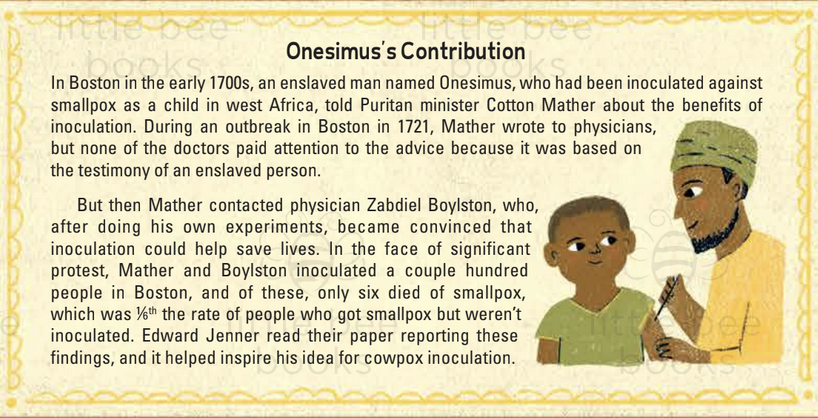
BB: One thing that I’ve noticed and appreciated mightily in some of the more recent informational picture books I’ve seen is a more thoughtful attitude towards broadening history (whether or not it’s medical) to include perspectives that aren’t solely white and Euro-centric. For example, in your discussion of smallpox vaccines this is the first book I’ve seen to give some additional time and space to the fact that inoculations were performed in China and India 200 years before they were done in conjunction with smallpox in England or America. How important was it to you to include this (as well as Onesimus who was inoculated in West Africa) in your narrative?

RL: I’ve been thinking a lot about history and how what we are taught depends upon who is telling the story. I was raised and educated in the United States—and that includes my medical education—so what I learned in terms of societal and medical history was focused on Europe and the U.S. But as I researched this book and others, I was reminded that ancient civilizations in China and India knew a lot about math and science, and many western “discoveries” were actually rediscoveries of concepts already known in ancient Asia.

The story of the enslaved person Onesimus and his contribution to the history of vaccines is significant not only because he had already been inoculated against smallpox in West Africa at a time when inoculation was not common in the west. Most doctors discounted his story because he was an enslaved person. Telling Onesimus’s story can help us reflect on what ideas we might reject today, consciously or subconsciously, due to our own biases.

BB: “Herd immunity” was a concept that got much maligned during the height of the COVID pandemic. You take special care to mention it in your book. Was that always the plan from the start? Why do you feel it was important to mention?

RL: I wanted to clarify what “herd immunity” actually means. It does not mean that everyone in a population has gotten a disease. Instead, it refers to the state when the rate of immunity from vaccination is high enough that the entire population is protected against a disease. This concept is important, because high vaccination rates can protect the health of those too young to be vaccinated as well as those with immune problems in whom vaccination may not be protective enough.

But once vaccination rates drop below a particular level, the entire population becomes at risk again.

BB: Were you aware at all of the art of Kathleen Marcotte before she illustrated your book? What do you feel she brings to it?

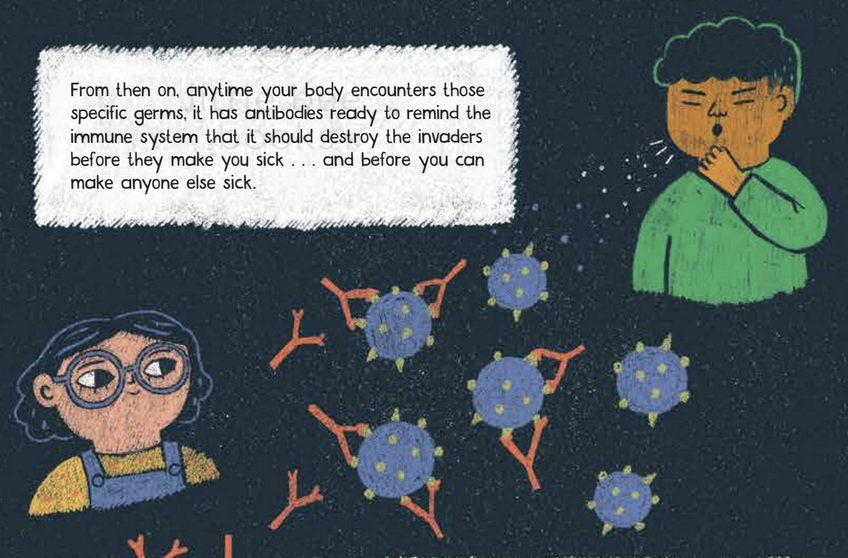
RL: I wasn’t familiar with Kathleen’s work before we considered her for this book. But as soon as I saw Kathleen’s art, I was immediately charmed. Her illustrations are approachable and sweet, but they also take a topic that is complex and potentially scary and makes it both easy to understand and reassuring. I love the way the main character explains immunity and bvaccination via a chalkboard, and I especially love the little dog and his expressions.

BB: Finally, do you have any intention of making any future books that tackle science so beautifully in this way, or was this a one-off for you?

RL: Oh, thank you so much for your kind words!

I have another nonfiction medical book coming soon: YOUR ONE AND ONLY HEART describes the contrasting characteristics of the human heart in poetry. Gorgeously illustrated by debut illustrator Lauren Paige Conrad, it will release from Dial Books for Young Readers on August 15, 2023!

My first science nonfiction picture book, THE SECRET CODE INSIDE YOU: ALL ABOUT YOUR DNA, released in September 2021. It’s been a big hit with kids and parents alike.

I’ve always loved science and I’ve always found biology, and especially the workings of the human body beautiful, inspiring, and poetic. I have many, many more ideas for medical-themed picture books, and I hope to keep writing and publishing them!


And now, the moment you’ve all be waiting for . . . the cover!

Thanks once again to Rajani for so carefully answering my questions today. Thanks too to Paul Crichton and the folks at Little Bee Books for setting up this interview and reveal in the first place. A VACCINE IS LIKE A MEMORY is out June 20th. Look for it then!

Filed Under: Cover Reveal, Interviews

31 Days, 31 Lists: 2022 Fairy Tales, Folk Tales, and Religious Tales

December 14, 2022 by Betsy Bird

I still love them. I do. I love them and they don’t quite get the attention that they used to in the past, but I don’t care. There’s something uniquely satisfying about reading both traditional and original folk, fairy, and religious tales. Somehow they feel simultaneously classic and contemporary. There’s really not that much more to say about them, except that I’ve been pleased with the slow uptick in these titles over the last few years. So with that in mind, here are the stories and legends that did a particularly good job in 2022.

And are you interested in seeing past lists of these titles? Then check these out!

  • 2021
  • 2020
  • 2019
  • 2018
  • 2017
  • 2016

2022 Folk, Fairy and Religious Tales

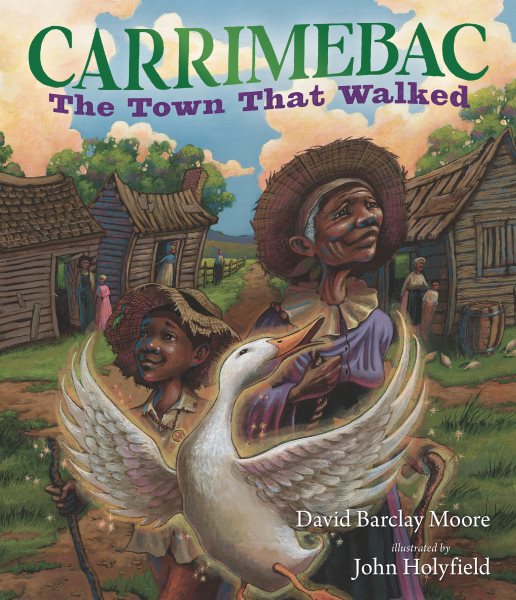
Carrimebac: The Town That Walked by David Barclay Moore, ill. John Holyfield

When old Rootilla Redgums and her grandson Julius Jefferson walk into Walkerton, Georgia, no one is ready for their wisdom and magic. But when the Black people in town get threatened by a hooded mob, these two will move heaven and earth to save the day. A marvelous original folktale. I think that back in the day I was reluctant to include “original fables” in this category, but sometimes a book is so interesting that you just kind of have to include it one way or another. And this book is just so interesting in its plot, characters, and metaphors. I mean, we’re talking about economics here and the KKK and the state of American in the Reconstruction era. Hoyfield’s got this kind of Loren Long/Frank Morrison thing going on with his art that’s at once elongated and exaggerated while also indulging in these close-ups of people’s faces, looking dead on at the reader, that really get to the heart of the characters. This books has given me a lot to chew on, and I’m still thinking about it.

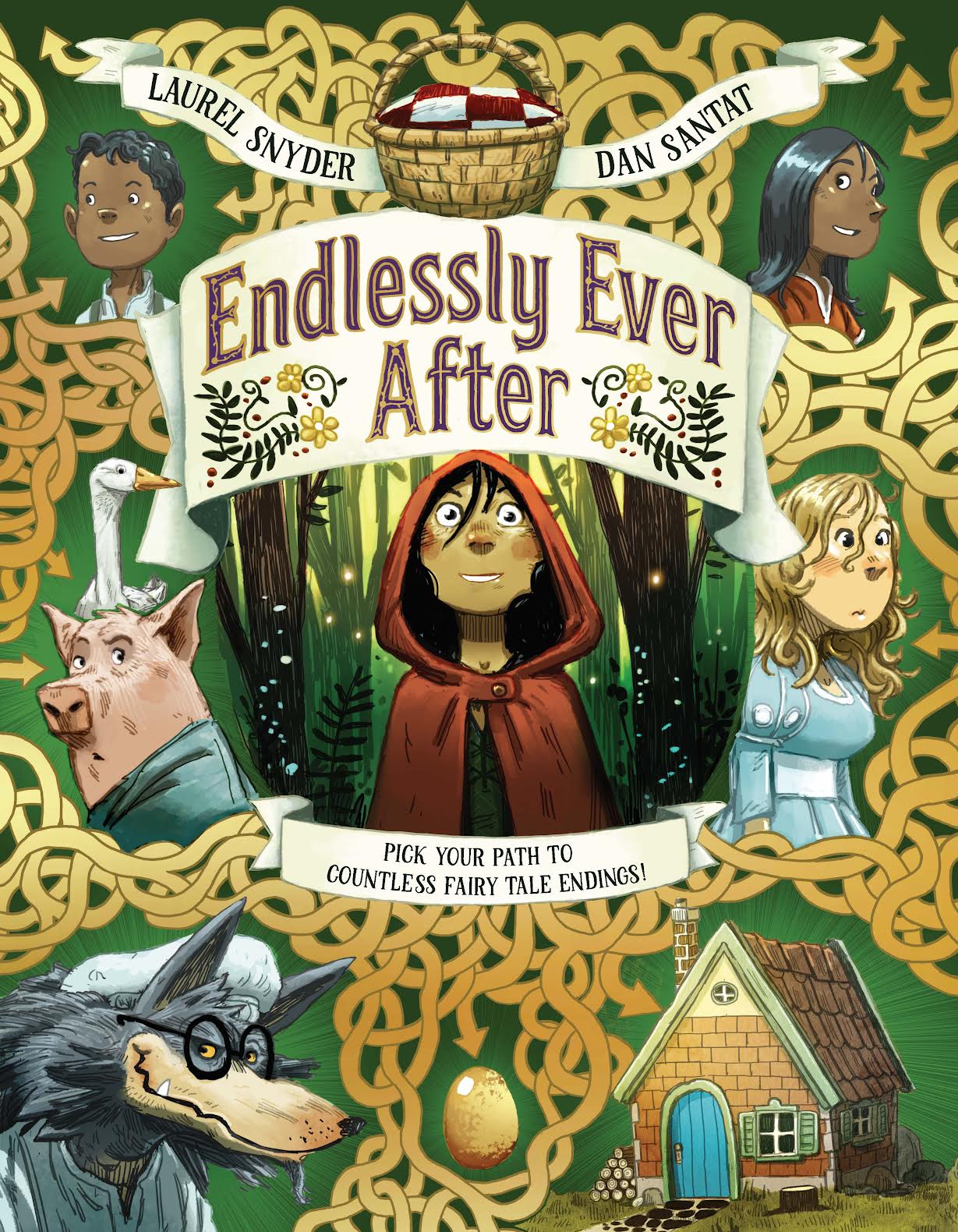
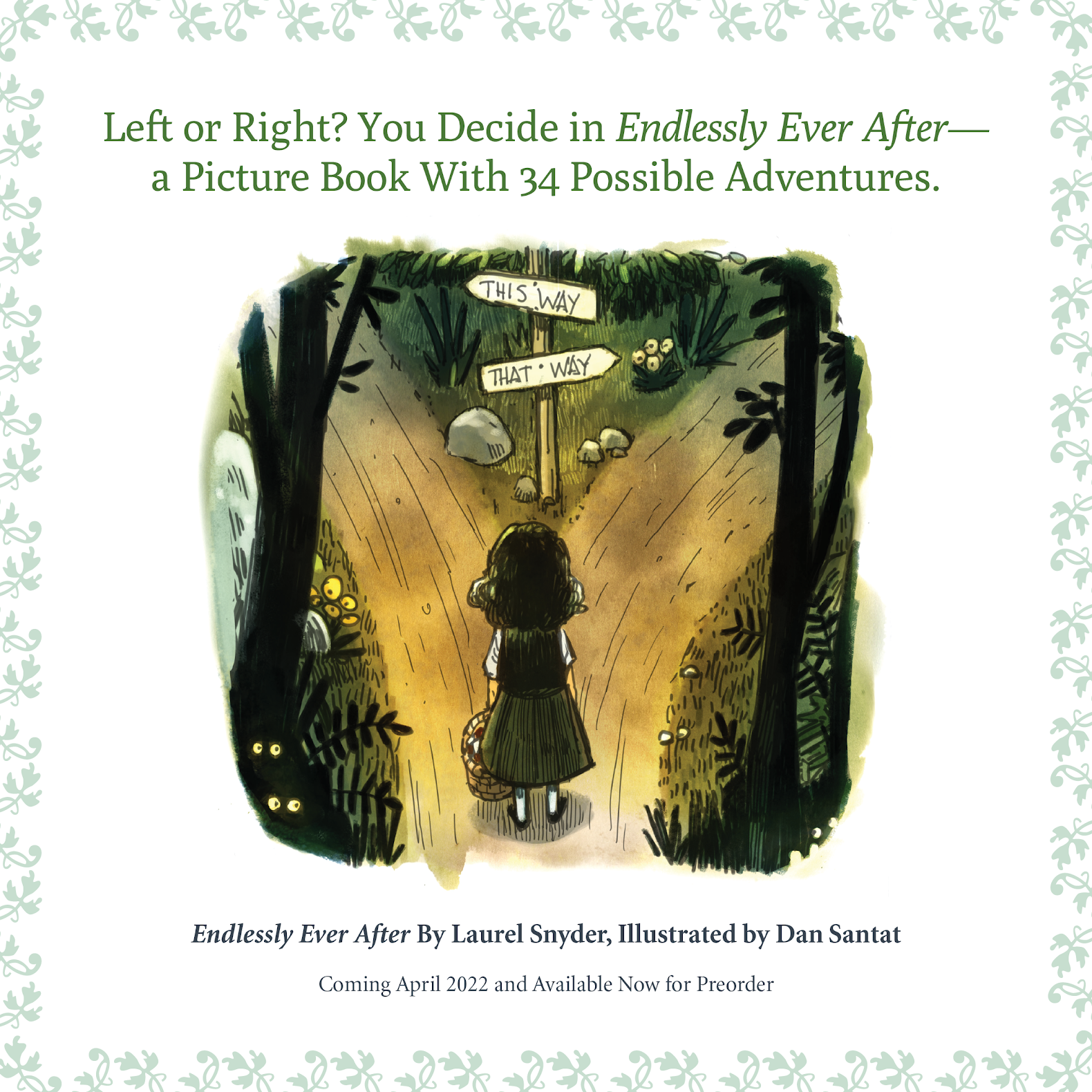
Endlessly Ever After: Pick Your Path to Countless Fairy Tale Endings by Laurel Snyder, ill. Dan Santat

Think you know your fairytales? How well would you do if you were actually in them? You’re Little Red and you’ve got to pick your adventures carefully. There’s more than evil wolves in these woods… Now be sure you set aside some time to read this. I thought I’d just whiz through this little fairy tale number, lickety-split. Instead, I found myself an hour later relentlessly trying to figure out how the heck you’re supposed to get to Sleeping Beauty when it’s so easy to get waylaid by the wolf. As someone who grew up on classic Choose Your Own Adventure books as a kid, it was enormously gratifying to discover how often one dies, actually dies dies, in this book. These are fairytales after all! People get eaten half the time anyway. What better medium than a Choose Your Own Adventure one? Dan Santat (who must have worked on this for months and months) is having a ball, and Laurel Snyder really lets herself go all in. My sole objection is that for some super random reason an evil queen shows up in Sleeping Beauty’s bedroom. What the whaaa? Otherwise, this is top notch stuff. See if you can get to the ultimate ending at the back. It’s worth it.

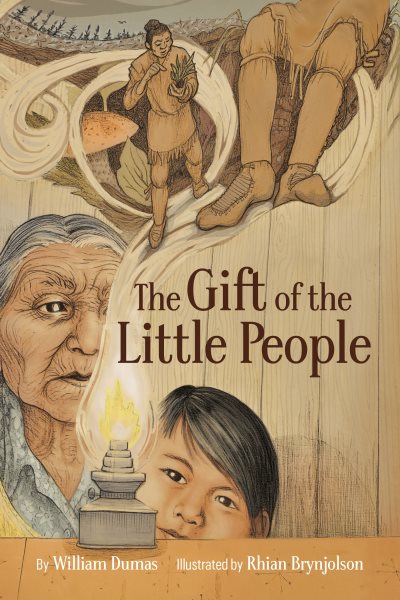
The Gift of the Little People by William Dumas, Rhian Brynjolson

A thrilling tale of a time when the Rocky Cree, suffering from a dread disease and were saved by a group of small people. An otherworldly tale of heroism. I’ve not run across this series before. The Six Season of the Asiniskaw Īthiniwak series tells a variety of stories from the Asiniskaw Īthiniwak (Rocky Cree) people. This particular one appealed to me since it had such a nice way of incorporating the art with the text. It’s a slightly longer story than you’d find in a picture book, which is partly why I think it fits so well here. William Duman is himself a Rocky Cree storyteller and it shows. The man knows how to tell a tale.

Gold by Jed Alexander

Three bears set out on their bikes while a little girl in yellow beelines for their house. In this wordless play on the Goldilocks fable, prepare to have expectations of all sorts upset by a story that redefines what a family can be. Also prepare to be utterly charmed or, at the very least, subtly impressed. We see a lot of books that are skewed takes on Goldilocks (this very year we’ve already seen Bee Waeland’s The Three Bears and Goldilocks) and you kind of get a little sick of them after a while. This book upsets not simply storytime expectations but cultural expectations about who can and cannot be a family unit. I was immediately charmed by the San Franciscan setting and the fact that the bears’ bike helmets are so ridiculously small on their huge heads. Then you get to the beautiful use of the color yellow throughout. And of course the mess Goldilocks makes could be attributed to a child trying to “help”. Mr. Alexander already tried something like this with his previous book Red but I think that was just a warm-up for this little number. Completely, utterly, wonderful (and wordless!). 

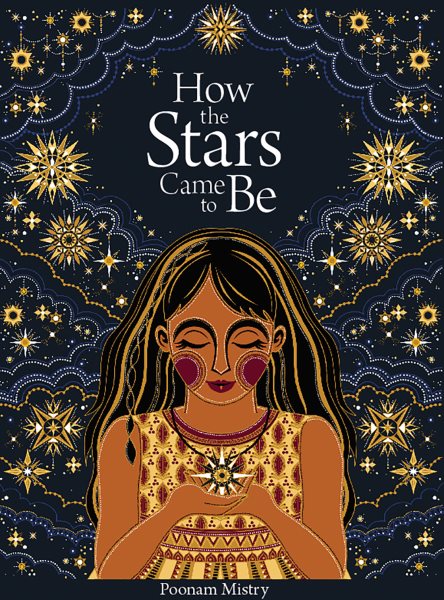
How the Stars Came to Be by Poonam Mistry

My list. My rules about what constitutes a folktale. In the past a children’s librarian would rather stamp their forehead with a date due stamp than allow an original folktale onto a list such as this. But times change and, to be perfectly frank, I had to include this book somewhere. Poonam Mistry is inconveniently not American, so many book awards here in the States are doomed to elude her. Never fear. This book was already shortlisted for the 2021 Kate Greenaway Medal and it’s just so darned pretty I wanted to pay it a bit of an homage here as well. Though fairly simple, the story is unique. In this tale there was once a fisherman and his daughter. For light, they had to rely on the sun in the day and the moon at night, and that was that. But occasionally there was no moon, and the girl would worry that her father wouldn’t be able to return home. After asking the sun for help, it bestowed on her broken pieces of a shining ray. The girl was instructed to place them carefully in the sky. However, a cheeky monkey got involved and … well, you can guess the rest. Mistry is heavily influenced by some forms of traditional Indian art, but this deluxe edition of her latest is even shinier and more sumptuous than any she’s put forth before. The storytelling too is one of her best. Ever wanted to give a child a gift, just to watch them ooh and ahh and coo over the cover? Mission accomplished. 

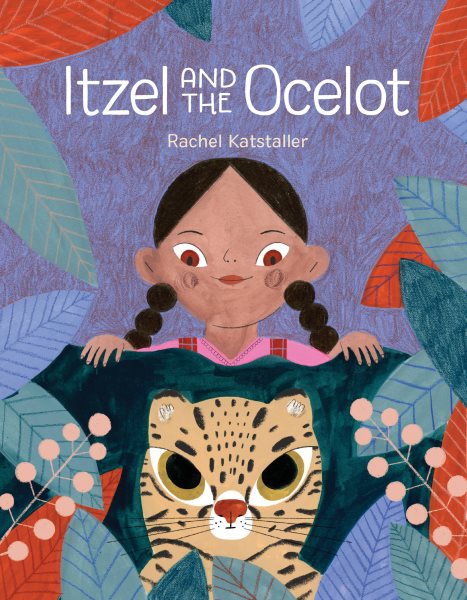
Itzel and the Ocelot by Rachel Katstaller

Itzel and her nana live happily at the edge of a jungle. But when the rains won’t fall it’s up to brave Itzel to summon them with an epic quest. A Salvadoran folktale inspired book by an author/illustrator from El Salvador? Yes and please! Note how Katstaller credits the precise location of the origins of the tale (the regions of Izalco and Santo Domingo de Guzmán, if you’re curious). As for the tale itself, it may be an exact replication of the original, but I appreciated that it had all the hallmarks of classic folktales. The repetition. The gathering of companions along the journey. The language itself was also delightful (love that opening line “Many, many years ago, although it might have been yesterday”) and, of course, I love the color scheme in the art. All reds and purples and pink/browns. A great way of updating an old tale to a modern one (and the Glossary of terms and pronunciations at the end are appreciated as well). 

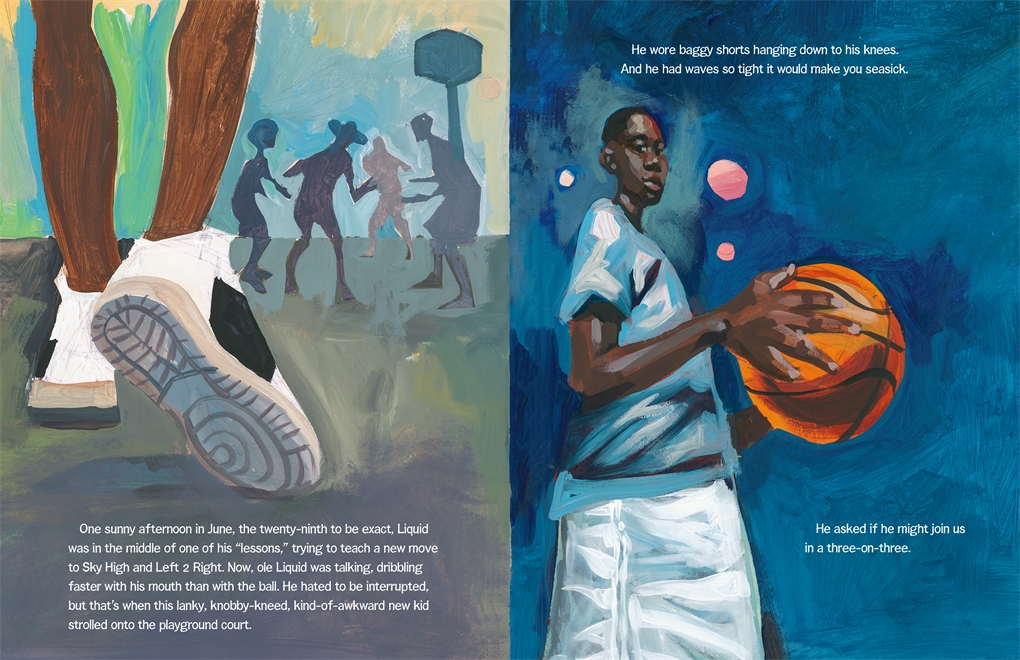
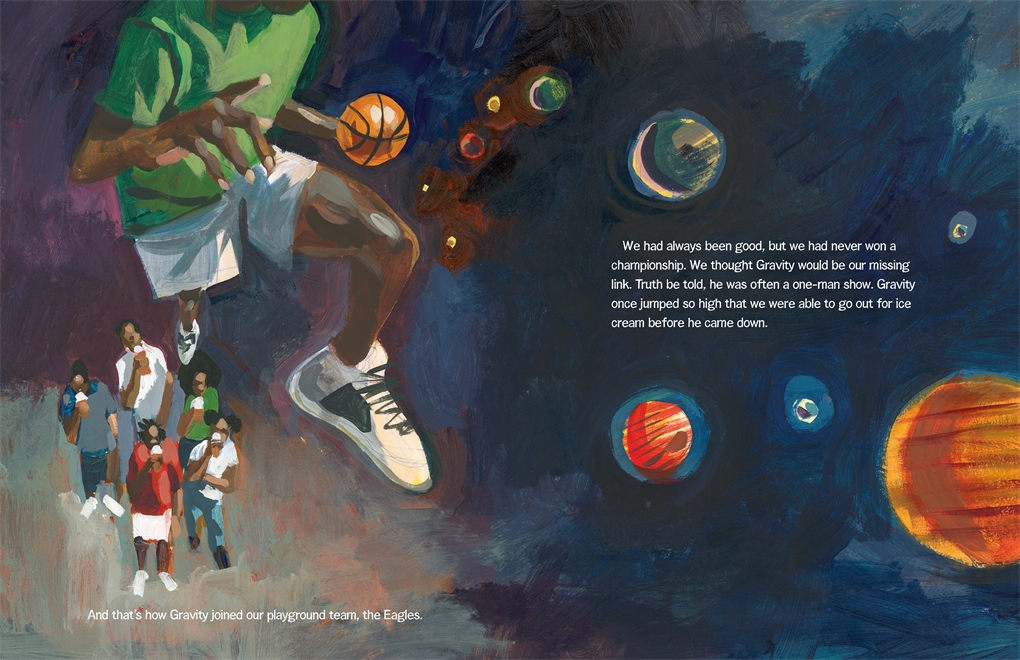
The Legend of Gravity: A Tall Basketball Tale by Charly Palmer

Let us bend your ear with the story of Gravity, a kid so good at defying centripetal forces that his feats are legendary. This is one of those legends. I figure tall tales fall squarely into the fairytale/folktale camp, wouldn’t you say? This book felt a lot like other tall tale tales I’ve seen on our shelves before, like that delicious Thunder Rose by Jerdine Nolen and Kadir Nelson from back in the day. We know Palmer was a great artist, but who knew he could play with words so well? This book cleverly combines trash talk and talking big with tall tale telling, and I love the end result. Definitely needs to be on your watch list.

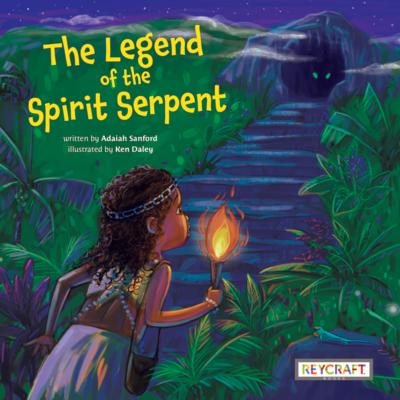
The Legend of the Spirit Serpent by Adaiah Sanford, ill. Ken Daley

No one but the leader of the tribe can ever visit the Spirit Serpent. If you do, you’ll get eaten! But Natari is just too darn curious. A retelling of a traditional Kalingao legend from the Dominica island. Hmm. It’s like all our stories based on folktales this year revolve around trying to find magical snakes (see the previously mentioned Itzel and the Ocelot by Rachel Katstaller). Look at it another way and it’s the year where we’re getting legitimately good books written by kids (see: Take Off Your Brave: The World Through the Eyes of a Preschool Poet by Nadim (age 4), ill. Yasmeen Ismail which will appear on an upcoming Poetry list). This retelling of a traditional Kalinago legend is told by the kid that won the 1st Annual Caribbean Writer’s Contest. It’s the tale of the daughter of a chief whose curiosity gets the better of her. I was quite fond of it, honestly. Would love to find a copy of the original tale (however you define that) to see what Sanford might have added or subtracted. A grand story of an adventurous girl.

Mrs. Noah’s Doves by Jane Yolen, ill. Alida Massari

Yeah, I’m a Noah’s Arc junkie. I admit it. I like that story. True, it ends with the bulk of humanity dying a watery death, but if you get around that part there’s an order and organization to it that’s quite keen. Now Yolen’s tried her hand on this storyline and the results are interesting. In her version the rains begin before Noah’s wife even hears about the whole Arc plan. She’s also the keeper of the birds, tending to the injured ones. You can see where this is all going with the doves, though there’s an interesting part where before the doves are sent the eagles and ravens go and do not come back. Italian artist Alida Massari lends her very distinctive style to the endeavor and it gives a cozy quality to it (even when you see little people drowning in the swells). I haven’t seen a beautiful looking Noah’s Arc in years. A real eye-pleaser. 

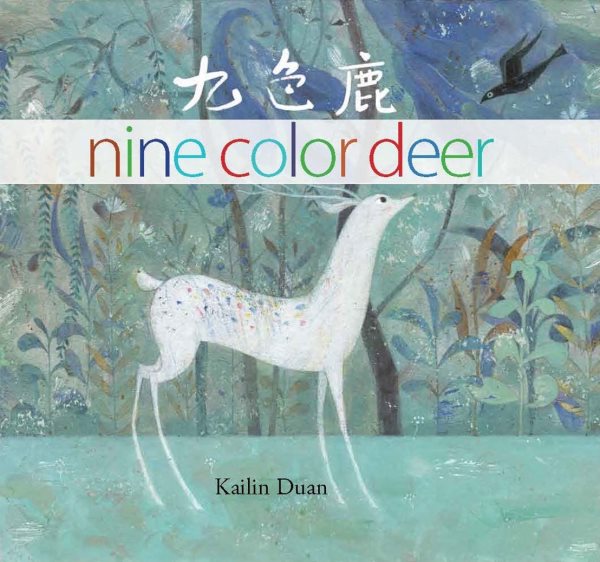
Nine Color Deer by Kailin Duan, translated by Jeremy Tiang

It’s nice to see a folktale from something other than the Grimm oeuvre show up multiple times over the years. I swear I’ve encountered the Nine Color Deer tale in the past but never with such thought, care, and attention as I’ve seen in Duan’s latest. Inspired by the images in the Mogao Caves in Dunhuang, China, this transition from cave painting to the picture book page is seamless. While the Translator’s Note at the end of the book gives context to both the story (its roots may lay in a Buddhist Jataka tale from India) to the art itself, what makes the tale work is how the story has been retold for 21st century kids. I don’t need to tell you that some folktales don’t always make the leap all that easily. Here, you thoroughly enjoy what comes across as a kind of environmental tale of betrayal and humbling in the face of nature itself. A five star winner through and through.

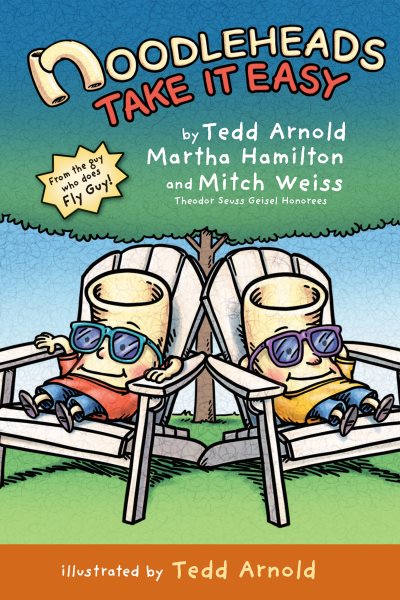
Noodleheads Take It Easy by Tedd Arnold, Martha Hamilton, and Mitch Weiss

Look, I’ll just lay it on the line. At this point in time, unless Tedd Arnold and his team purposefully attempt to screw one of these Noodlehead books up, I will always and forever include them on these lists. Now if you’ve never encountered a Noodlehead book before, you are in for a treat, my friend. They’re essentially Fool Tales that take their inspiration from a wide range of folktales. Reading through the book, you’d never know the sheer number of stories that are being referenced. That’s where the incredibly cool backmatter comes in. I do have some objection to the character of Meatball in the book being labeled in the backmatter as a “bully” when he is clearly a trickster. Even so, these books are always not only great folklore, they’re darned good easy reading titles as well. Again and again a delight to read. 

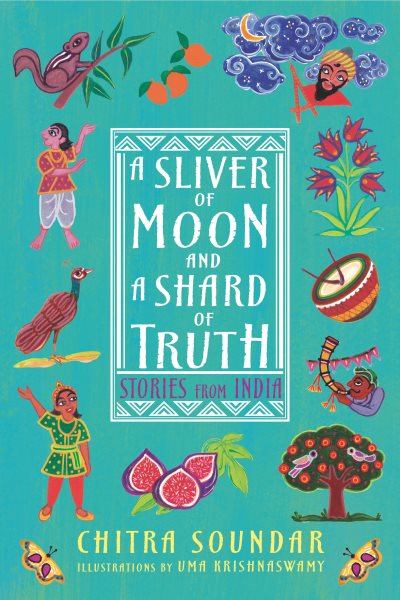
A Sliver of Moon and a Shard of Truth by Chitra Soundar, ill. Uma Krishnaswamy

Clever solutions! Who doesn’t love ‘em? I was a fan of Soundar and Krishnaswamy’s Mangoes, Mischief and Tales of Friendship back when it came out a year or so ago, so to see another book in the series was nothing but pleasing to me. Don’t think of this as a sequel, though. Soundar’s adept at catching you up right at the start of the tales as to what’s come before. You see, Prince Veera has a best friend named Suku. Suku’s from a poor family but his wit and intelligence put him on par with the prince. In this book the prince’s father’s uncle has sent for the boys, after having heard them give some pretty smart answers to problems in their own court. Once they arrive they immediately find all kinds of tangled situations to unravel. This book is rooted firmly in classic folktales, but feels like nothing so much as an equally classic boys detective series. I mean, essentially, both Veera and Suku are like royal Encyclopedia Browns, noticing details the adults never would, and getting out of sticky situations with brains rather than brawn. These are a ton of fun, integrating classic stories seamlessly into their plots. A great and necessary addition to any list. 

The Tale of the Unwelcome Guest by Rebecca Sheir, ill. Mert Tugen

Clever fool Nasruddin is thrilled when he learns that his wine will be featured at the governor’s feast. But when he arrives and people ignore him because of his clothes, he finds an ingenious way to teach them a lesson. A classic Middle Eastern tale with variants around the world. Boy, I can’t remember the last time I saw a Nasruddin folktale published. Rebecca Sheir is the host of a podcast called The Circle Round and she’s created a couple preliminary folktales this year. Of the ones I’ve seen, this one is undeniably the strongest. Illustrator Mert Tugen (from Istanbul) modernizes it a tad, but for the most part it retains the bones of the original very fun, ridiculous story. And there’s a whole heaping helping of backmatter, if that’s what you’re into. A Bibliography listing other Nasruddin stories that folks can read wouldn’t have been out of place, but that’s more a suggestion than requirement. More of this, please!

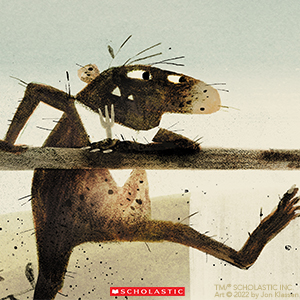
The Three Billy Goats Gruff retold by Mac Barnett, ill. Jon Klassen

The classic tale of three hungry goats and an even hungrier troll is told with flair and humor. Get ready to laugh out loud with this hilarious new interpretation. Barnett and Klassen tell it straight! That’s a bit of a surprise. When I’d heard that they were tackling that old tale of goats and a hungry troll I just assumed they’d wacky it up in some way. And sure, it has their signature style to it, no question. There’s actually this visual gag where you see the biggest billy goat that literally had me laugh out loud. Still and all, this is pretty much precisely what you’ll expect when you read the story. I was a bit sad that Asbjørnsen and Moe weren’t credited but that’s just the Norwegian in me. It’s not like every edition of Little Red Riding Hood mentions the Grimm brothers, after all. Altogether, this is an absolute hoot to read aloud. The troll’s rhymes about how he’ll prepare the goats are pitch perfect. Favorite line: “A goat flambé with candied yams. / A goat clambake, with goat, not clams!” I envy the lucky suckers that get to read this aloud to large groups of kids.


Want to see other lists? Stay tuned for the rest this month!

December 1 – Great Board Books

December 2 – Picture Book Readalouds

December 3 – Simple Picture Book Texts

December 4 – Transcendent Holiday Picture Books

December 5 – Rhyming Picture Books

December 6 – Funny Picture Books

December 7 – CaldeNotts

December 8 – Picture Book Reprints

December 9 – Math Books for Kids

December 10 – Gross Books

December 11 – Books with a Message

December 12 – Fabulous Photography

December 13 – Translated Picture Books

December 14 – Fairy Tales / Folktales / Religious Tales

December 15 – Wordless Picture Books

December 16 – Poetry Books

December 17 – Unconventional Children’s Books

December 18 – Easy Books & Early Chapter Books

December 19 – Comics & Graphic Novels

December 20 – Older Funny Books

December 21 – Science Fiction Books

December 22 – Fantasy Books

December 23 – Informational Fiction

December 24 – American History

December 25 – Science & Nature Books

December 26 – Unique Biographies

December 27 – Nonfiction Picture Books

December 28 – Nonfiction Books for Older Readers

December 29 – Best Audiobooks for Kids

December 30 – Middle Grade Novels

December 31 – Picture Books
Filed Under: 31 Days 31 Lists, Best Books, Best Books of 2022 Tagged With: 31 days 31 lists, Best Books of 2022, fairy tales, fairytales, folk and fairy tale reviews, folk and fairytales, folk tales, folktale review, folktales, picture book folktales, religious tales

31 Days, 31 Lists: 2022 Translated Picture Books

December 13, 2022 by Betsy Bird

2022 turned out to be quite the interesting year for those of us that love international children’s books in translation. The Batchelder Award, the only ALA award given out each year specifically to translated titles, is “awarded to a United States publisher for a children’s book considered to be the most outstanding of those books originating in a country other than the United States and in a language other than English and subsequently translated into English for publication in the United States during the preceding year.” Only this year the committee revised a submission requirement for this 56-year-old award:

A publisher who wants a book considered for the Batchelder will have to credit the translator on the cover and title page.

As it just so happens, I have actually begun to see a small change in how books of this sort looked this year. It’s not universal, but I had a much easier time crediting the translators that you’ll see on today’s list.

Today, we celebrate books from places all over the world. Too often they cannot win major children’s book awards in the States. Even so, check out these remarkable stories. The kinds that are so good, you won’t want them to escape your notice. And in spite of the size of today’s list, these really are only the cream of the crop that I saw this year. There were many many more beyond these.

Interested in other lists of translated children’s books? Then check out these lists from previous years:

  • 2021
  • 2020
  • 2019
  • 2018
  • 2017
  • 2016

2022 Translated Picture Books

Albie On His Way by Jutta Bauer, translated by Matthias Wieland

Translation – German

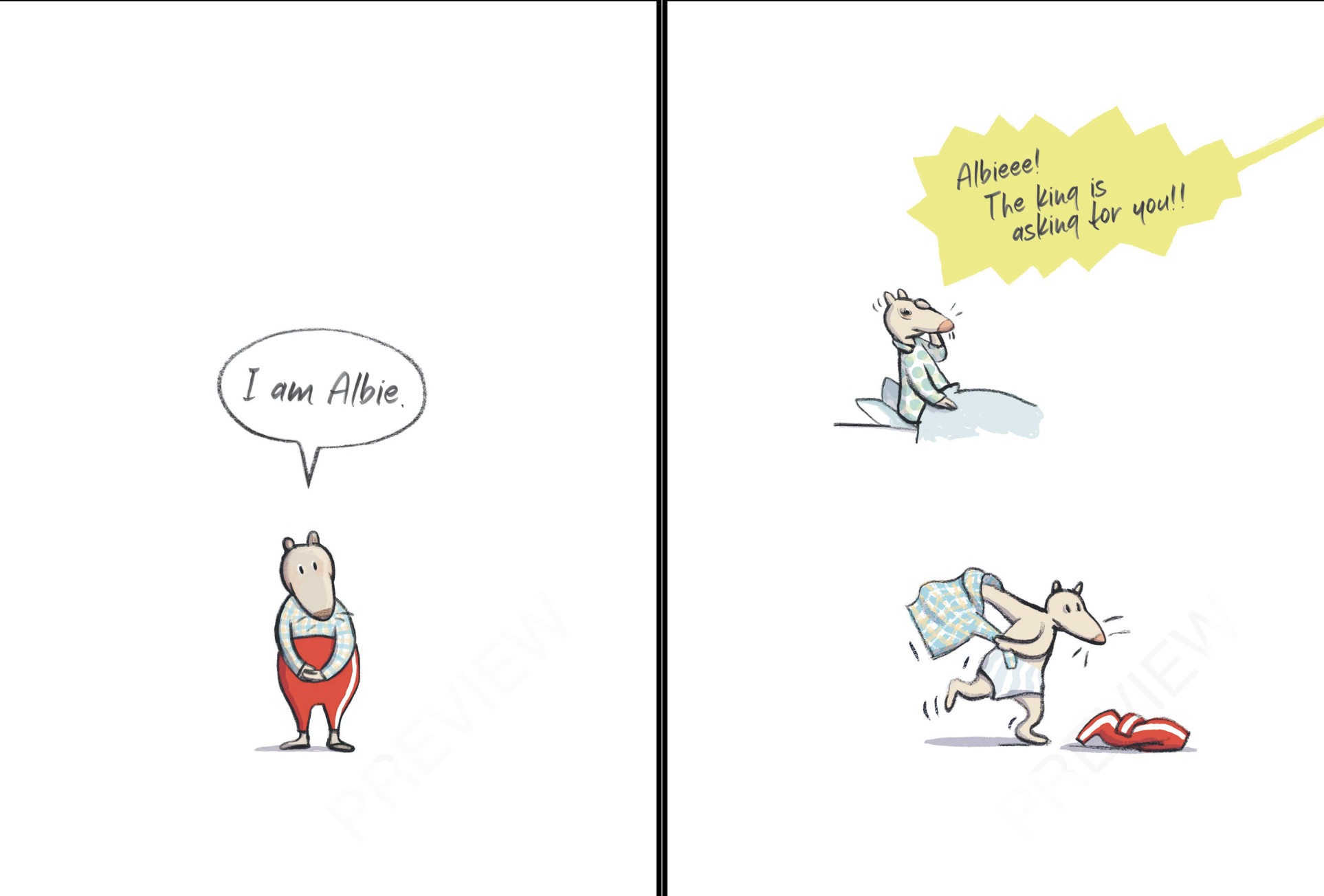
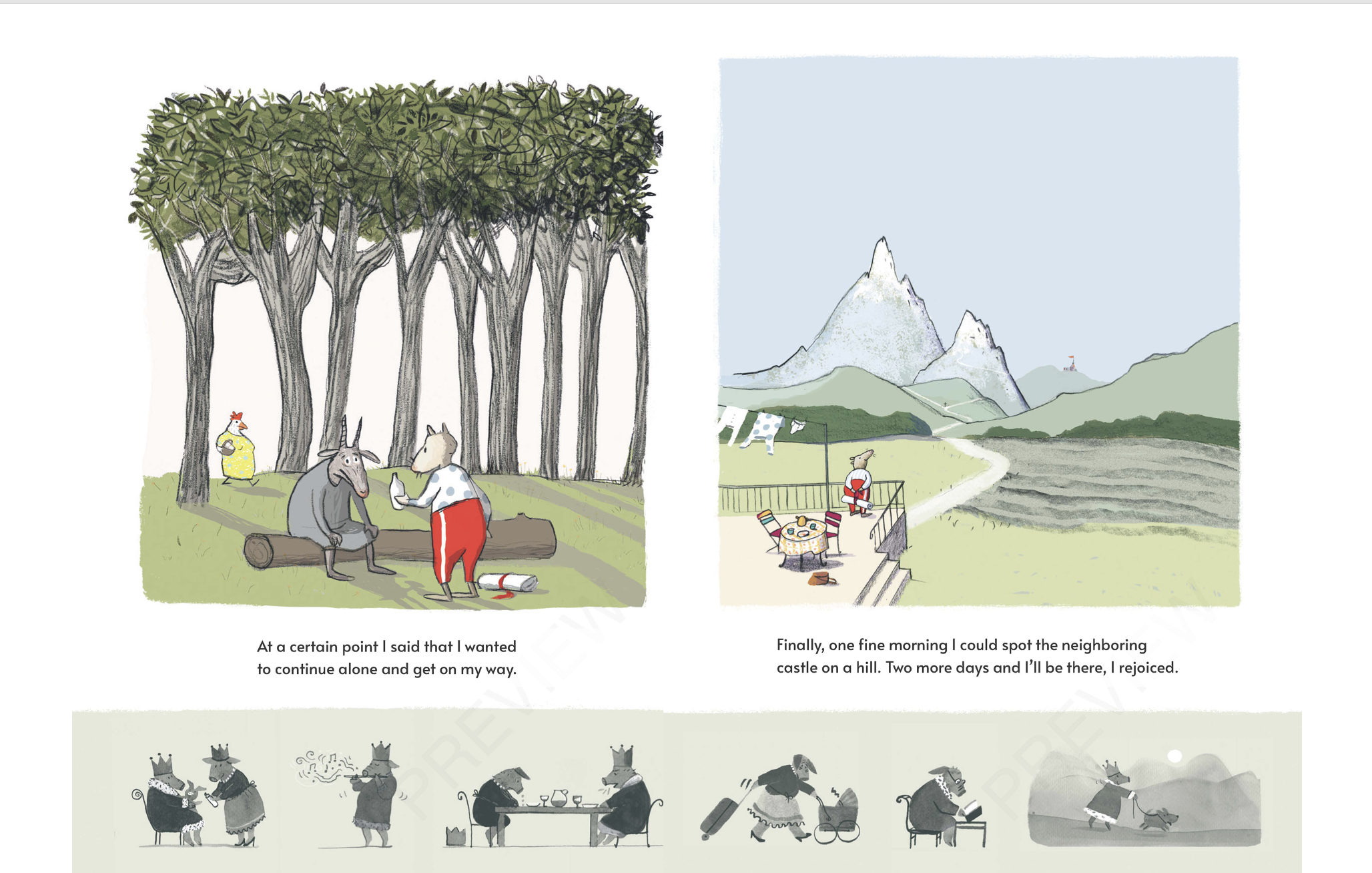
Hard not to be charmed by the old story-within-a-story genre. Albie, a rodent-like critter, is dispatched by the king to carry a message to a neighboring kingdom. Trouble is, Albie has a tendency to get sidetracked. In the course of his journey he just cannot keep from helping people. Meanwhile, back at the castle we get a silent black-and-white sequence at the bottom of the pages showing what the king is up to all this time. Both storylines actually turn out to be equally engaging, which is no small feat. The king himself actually manages to get married and divorced over the court of 3-4 pages, amongst other things. By the end, Albie also somehow manages to come full-circle back to the original castle, but by this point the king just wants to hear about his adventures. Then everyone from Albie’s adventures ends up moving next door to the king, making this one of the sweetest little endings I ever did see. Check out the back endpapers that show Albie’s movements in a very Billy-from-Family-Circus kind of way.

Bear and the Whisper of the Wind by Marianne Dubuc, translated by VeroK Agency

Translation – French

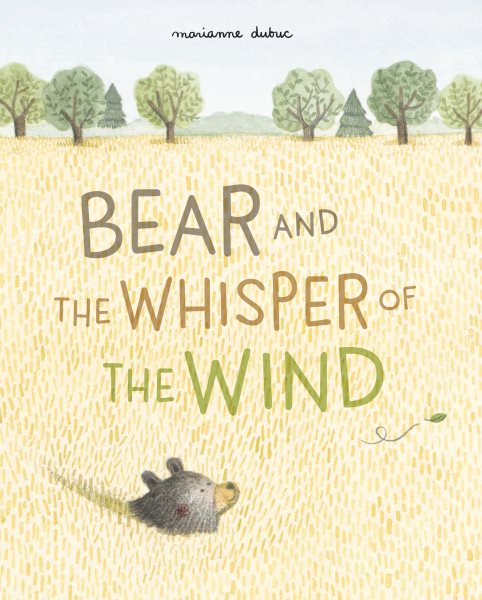
Seven Impossible Things did a feature on this book earlier this year that is well worth visiting, if you have a chance. It’s a strange, slight, nice book that unnerved me in some quiet part of my soul. I don’t know why I found it unnerving, though. I suspect that it’s a me thing, since there’s nothing wrong with the storyline itself. The whole premise is that a bear has a life that it loves but one day it picks up everything and simply leaves. The wind has whispered “It’s time to try something new.” So without a backwards glance, he’s off. And in time, he establishes a new home and new friends and he is content. The book is unapologetic about the bear’s decisions. It’s so interesting to see a story about travel that isn’t about escape or even has a distinct destination in mind. There’s a place for it on our shelves, undoubtedly. For future wandering souls. 

Bedtime for Bo by Kjersti Annesdater Skomsvold, ill. Mari Kanstad Johnsen, translated by Kari Dickson

Translation – Norwegian

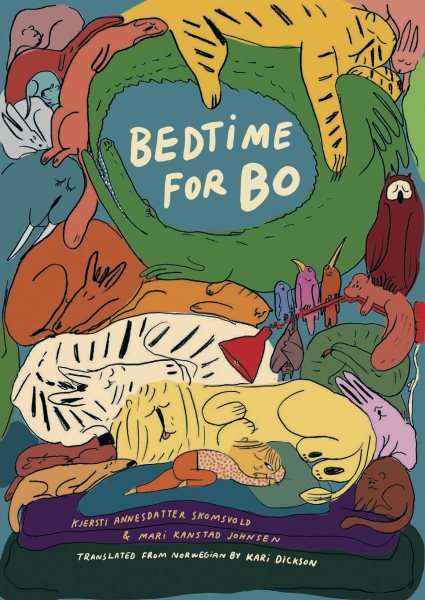
Mari Kanstad Johnsen draws my favorite moms. Kind of an odd statement to make but I’m standing by it. 2022 has been a good year for picture books that perfectly define some key aspects of childhood. So on the one hand you have books like My Parents Won’t Stop Talking, which pretty much explains itself with its own title, and then on the other you have something like Bedtime for Bo, in which a kid delays bedtime through the careful application of acting like different animals. There’s a casual chaos to the house here that I really appreciated. The stuffed animals that somehow have completely taken over. The socks? They are strewn. There’s a partially eaten fruit on a plate on the floor next to the couch. All this together creates such an overwhelming sense of not just familiarity but also comfort in this book. Also, kudos to Dickson for this translation. It’s hard not be charmed when the book says the Bo has been doing “tumblesaults on the sofa”. All around, a good egg.

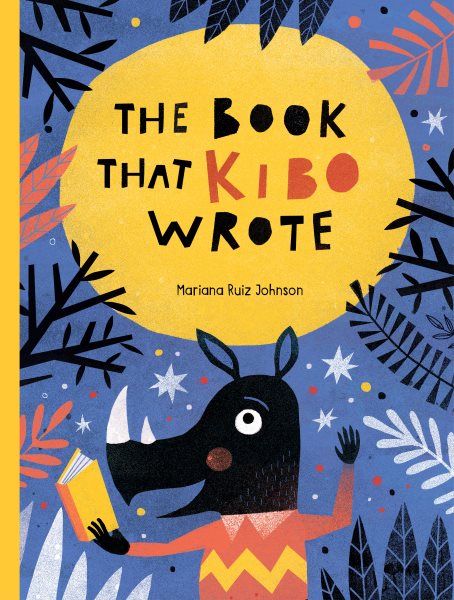
The Book that Kibo Wrote by Mariana Ruiz Johnson, ill. translated by Lawrence Schimel

Translation – Spanish

And a lovelier translation it would be difficult to find. Interestingly enough, this book has had a bit of an international journey. It was originally published in France under the title Le Livre de Kobo, though its creator is, in fact, from Argentina. Translator Lawrence Schimel, meanwhile, translated it from the original Spanish, and I think that shows. The story is simple enough. A rhino named Kibo writes what he knows about the savanna where he lives. When a crane binds his pages into a little yellow book, she then takes it to a large urban area. There the book passes from hand to hand (or, more accurately, paw to paw) as city dwellers, and other residents from around the world, read and take in the lovely writing. I love the art in this book, but the writing is also quite keen. Lines like, “The book that Kobo wrote told him about the warm, dried mud, the clouds of dust, the acacias that shook and sang in the wind.” A lovely translation of a lovely book about the power of writing.

Clover by Nadine Robert, ill. Qin Leng, translated by Nick Frost and Catherine Ostiguy

Translation – French

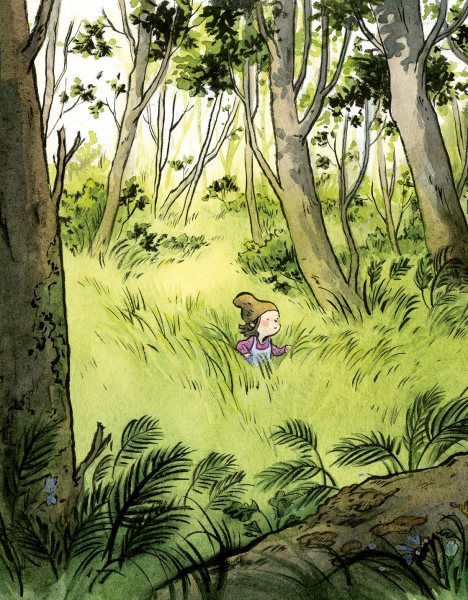
This was a hard book to track down. I’d seen it mentioned on a list online but not by name. All I saw was its cover and its jacket which, you will note, does not display a name. I was, however, able to determine on sight that the artist was Qin Leng. I then had to try and figure out what Qin Leng had illustrated in 2022, and that turned out to be a surprisingly hard thing to determine. At long last I tracked down the book’s name . . . only to have the book sent to me in the mail the next day. Ah well. It’s a slightly longer storyline than some folks here in the States are used to, but even so, it zips on by. In it, a child named Cricket is the youngest member of a big family full of older siblings. However, in true fantasy fashion, they all are happy to play with her. Cricket’s greatest conflict, then, is figuring out what group of kids to join with at any given time. Once the decision is made Clover promptly gets lost in the woods while chasing a baby goat. In spite of the fact that this is a tale about losing yourself, the forest here is never dark and scary. Kids reading the book may instead be left with a wistful desire to explore woods of their own for a time. Gentle, strange and sweet. 

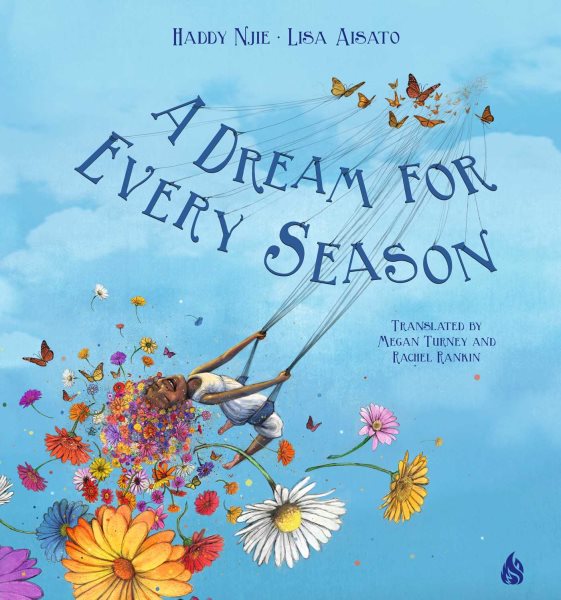
A Dream for Every Season by Haddy Njie, ill. Lisa Aisato, translated by Megan Turney and Rachel Rankin

Translation – Norwegian

Kind of love it when books make claims that I can neither prove nor disprove. “Lisa Aisato is Norway’s most popular and well-known illustrator.” Who am I to disagree (though considering how many Norwegians made it onto this list this year, the competition appears to be steep)? In any case, she’s certainly done a slambang job with this book. It’s a pretty cool concept, using repetition to lead the reader further and further into the seasons. Essentially, every time we experience a season, the next one is sleeping snug and warm somewhere. Spring sleeps under the snow. Summer, in the bud of an unopened flower. Fall in the heart of a growing apple. Winter beneath a toadstool. And you know how we Americans have this sense that the European imports we receive are never diverse enough? No worries there, this book does this magnificent job with showing both seasons and people in all stripes and shades. What I love about it, though, is that it pairs the sleeping seasons with sleeping children. The shot of a kid sleeping, while outside there are autumnal rains, may be my vote for coziest image of the year. My favorite seasons book of 2022, hands down, no question.

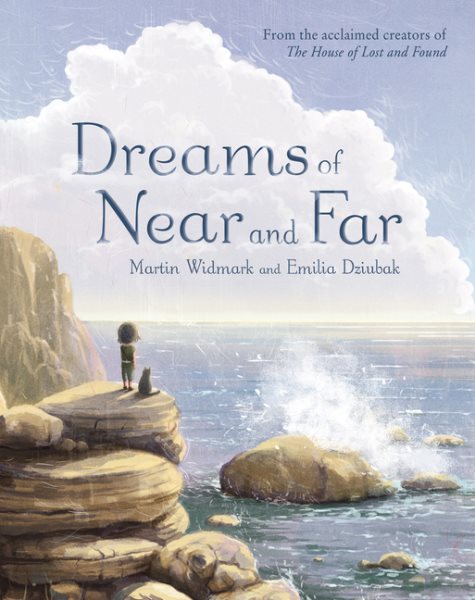
Dreams of Near and Far by Martin Widmark and Emilia Dziubak, translated by Polly Lawson

Translation – Swedish

“Maybe it’s a fairy tale?” So queried one of my librarians upon reading this book. For her, she felt that the suspension of disbelief required of the reader pushed it too far in that direction. Myself, I couldn’t disagree more. By gum, if we can’t suspend disbelief in a book of magical dreams and fantastically intelligent cats then when can we? “Dreamlike” is a more than appropriate term for the storyline, which is split between two children. In one storyline, a boy’s dog dies and the boy is overwhelmed by grief. In the other, a homeless girl wanders the world with her cat in search of a home. It’s a uniquely playful storyline, like a kinder, gentler Pinocchio, complete with a nasty guy locking our heroes up so that they’ll perform. Not only did I love the art in the book, I loved the design of the whole thing. Where the words fall on any given page is marvelous. This is a gentle book but not without drama. Good for dog and cat lovers alike.

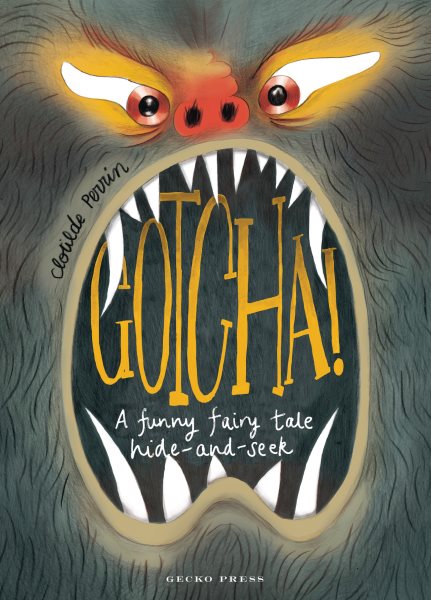
Gotcha! A Funny Fairy Tale Hide-and-Seek by Clotilde Perrin, translated by Daniel Hahn

Translation – French

There is a quote at the beginning of this book. “Perhaps all the dragons in our lives are princesses who are only waiting to see us act, just once, with beauty and courage” – Rainer Maria Rilke, Letters to a Young Poet. Drop the mic, Perrin’s done. If you’ve ever seen a Clotilde Perrin book on American shores then you know that it’s a bit of a wild ride. First off, this book clocks in at a marvelous 15” tall and, at least in this case, contain 40+ flaps. Like her previous title Inside the Villains, you’re playing with familiar fairytale tropes as you try to hide from an array of monsters. Translator Daniel Hahn gets extra points for coming up with terms like “frightful fur and feculent feet.” There’s also so much to find in the corners and crannies that this book is guaranteed to last you a long, long time. Also, there is a monster’s butt on the back of the book, and it’s adorable. Who are you to say no to a cute monster butt?

Grandad’s Pink Trousers by Lucie Hášová Truhelková, ill. Andrea Tachezy, translated by Andrew Oakland

Translation – Czech

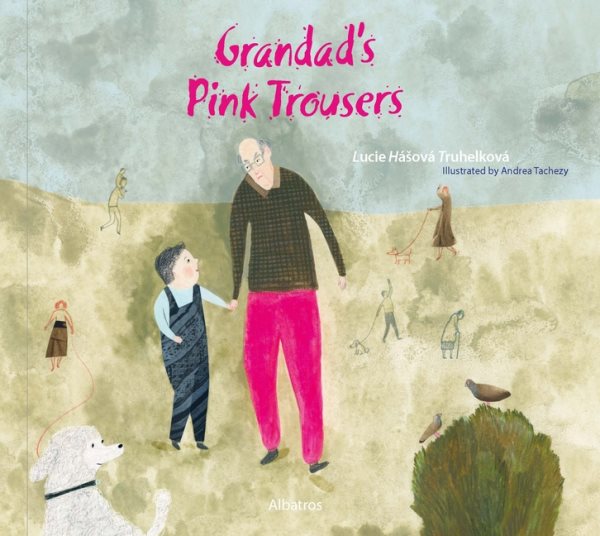
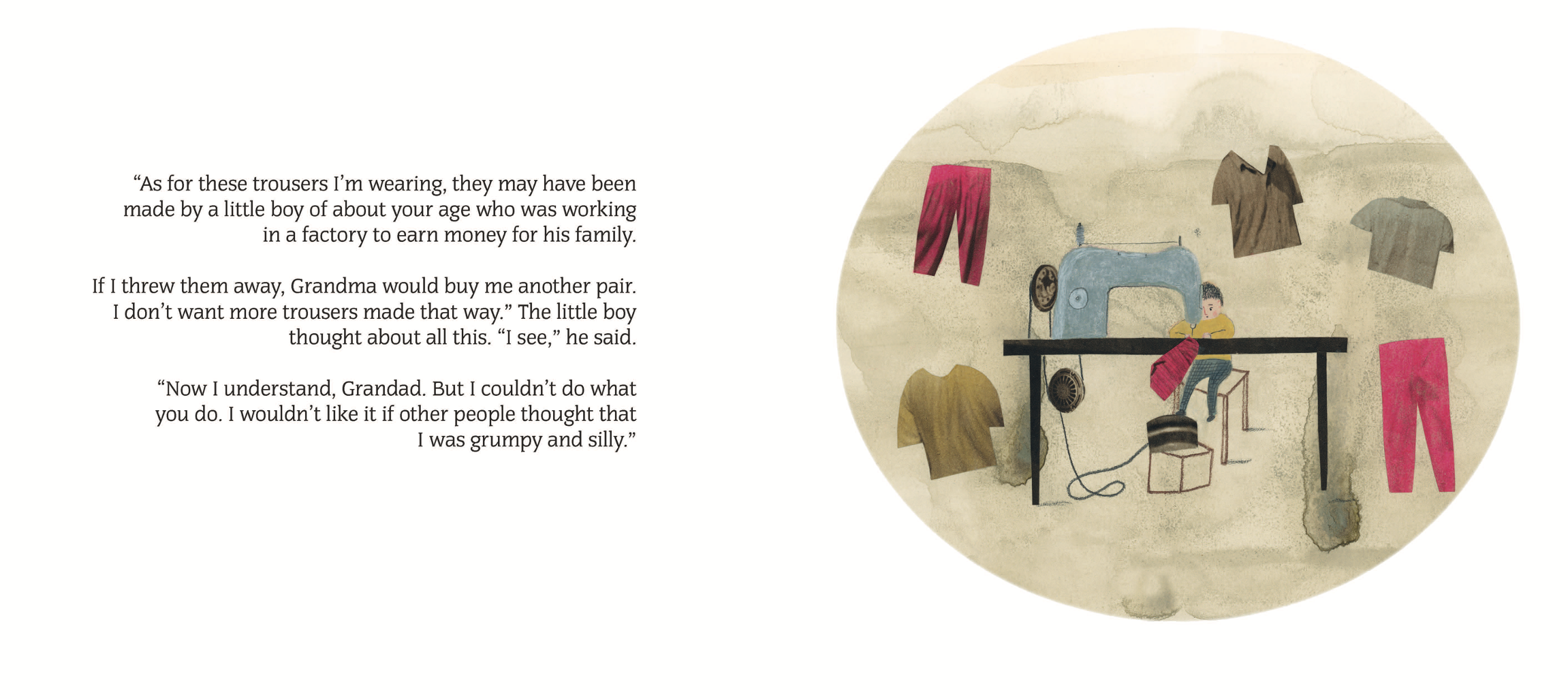
Is this Grandad the mean, cheap fellow everyone assumes, or is there something else going on? Only his grandson knows for sure. A book about being a conscientious consumer. Clever little dickens of a book, this one. You look at that cover and assume it’ll be one thing and then it turns out to be another. In fact, the point of the entire book is to turn your expectations on their head. The story follows a grumpy old man and lists his many sins. He won’t buy roses for his wife and he flushes his toilet with old bathwater. He won’t throw anything out. You just sort of assume the guy is stingy, but then he has a grandson and dedicates himself wholly to the kid. And when the boy later asks his grandpa why he does the things he does, you get this amazing lesson in sustainability. It’s probably one of the smartest books I’ve seen on how our assumptions need to change if the world is going to change.

A Head Full of Birds by Alexandra Garibal, ill. Sibylle Delacrois, translated by Vineet Lal

Translation – French

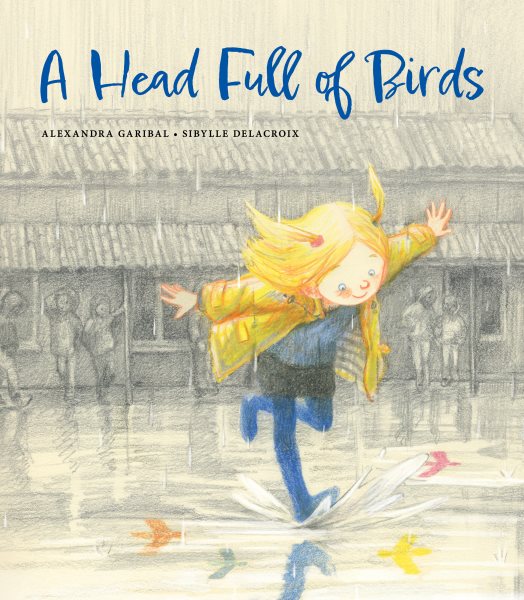
A translation that has all the finest features of a short film. A scholar could do worse than to track the changes in neurodiverse representation not simply in American picture books but picture books from other countries as well. This little French import follows Nanette, who loves puddles, spider webs, birds, you name it. Fellow student Noah, like many of the other kids in her class, finds her odd, but unlike the other kids he is also swept along into her world. Part of the reason the book works as well as it does is because of the art of Sibylle Delacrois, who does people, and particularly their faces, extraordinarily well. If I’m not too much mistaken, I think the art is done in colored pencils, and Delacrois has this way of using shading to highlight the important characters, separating them from the pack. And though it’s very different, I found myself pairing this in my head with the picture book I Talk Like a River by Jordan Scott and Sydney Smith. Something about the tone struck me as somewhat similar. We overuse the term “gem” when we describe books for children, so I’ll just call it what it is: a really good book. 

In the Neighborhood by Rocio Bonilla, translated by Maya Faye Lethem

Translation – Spanish

Sometimes all it takes is a single image to get you to fall in love with a book. Right at the start of this story (which is primarily concerned with the assumptions we make), Camilla the hen is pouring herself a cup of coffee. Camilla also has ten babies, and as you watch, that coffee is just pouring, pouring, pouring itself right down the sides of the cup to puddle on the floor. The sheer chaos of the room is magnificent. Now as for the story itself, it concerns itself with a neighborhood in which each household has made assumptions about another. No one ever really communicates. All that breaks down the day Mrs. Paquita, the owl, discovers that her internet has stopped working. From there, neighbors meet one another, start helping one another, and it just becomes this cozy, lovely, rather wonderful story. It’s not bright and flashy. It’s quiet and lovely.

It’s So Difficult by Raúl Nieto Guridi, translated by Lawrence Schimel

Translation – Spain

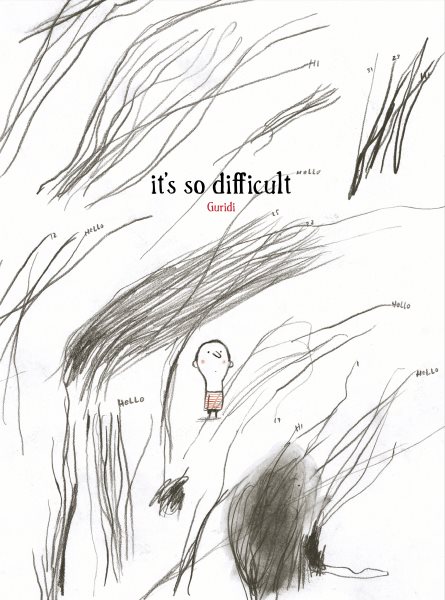
Any book attempting empathy, or to really and truly try to get someone to understand how the mind of another human being works, fights an uphill battle. So when I make this list of “Message” books, I tend to look at not simply those titles that are the most adept at fulfilling their own intentions, but also at those books that are able to imbue their storyline with a bit of beauty along the way. Not to keep bringing it up but I Talk Like a River by Jordan Scott did this. It’s So Difficult does it too. It’s a little Spanish import about a child that has to deal with sensory overload on a regular basis. For him, the simple act of saying “hello” requires an enormous amount of effort. The bio at the back of the book notes that this book was shaped in large part from Guridi’s own experiences as “a secondary school teacher”. Filled with wordless two-page spreads, mixed media consisting of blue inked sheets (timetables? calculations? monetary transactions?) the whole enterprise is a marvelous example of how to convey emotion and a sense of otherness on the picture book page through art and design. Subtle, but not so subtle that a kid’s not going to understand exactly what’s going on.

Madani’s Best Game by Fran Pintadera, ill. Raquel Catalina, translated by Lawrence Schimel

Translation – Spanish

With his bare feet there’s no one who can out compete Madani on the field. But when he goes off with his saved money to buy something in town, his purchase shocks his teammates. I love, and have always loved, translations. I also love books that eschew the kind of moralizing that a story about lower-income kids might otherwise engender. And, dare I say, this may be the best soccer picture book I’ve ever read. The perfect read for tiny Ted Lassos everywhere! The thing I like about it is the pride Madani feels. There’s not a moment when anyone tries to shame him or when he himself feels that shame. It’s just a lovely story about a kid who loves his mom and does whatever he can to have her close.

My GrandMom by Gee-eun Lee, translated by Sophie Bowman

Translation – Korean

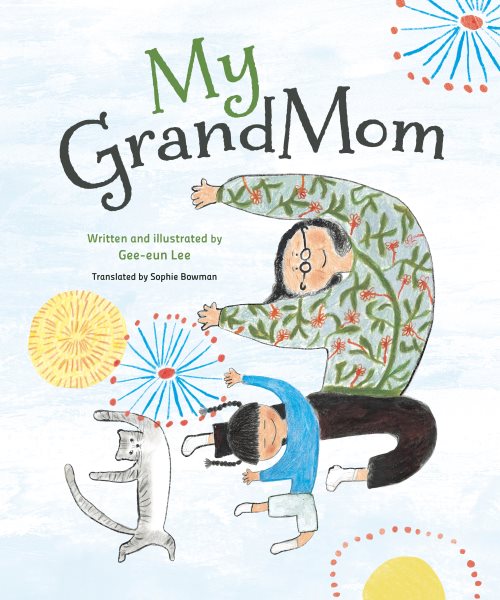
Sometimes a book feels so realistic that you can’t help but figure it must have come from real life. I was kind of intrigued by the curves on the cover as well. Essentially, this is the story of author Gee-eun Lee herself, when she was a small child, and the grandmother that would take care of her while her parents were away. This particular grandmother also happens to go above and beyond the call of duty. Have you ever heard someone complain because too often grandparents are portrayed in picture books as sickly and old? NOT the issue here. There’s this moment where Gee-eun’s school is having some kind of parent/child race and she wants to enter. So Halmoni gamely gives it a go. And, as one might expect, they come in last, but I love that Halmoni was really talking herself up in a tall tale kind of way beforehand (“They used to call me the Ox when I was young. The Ox! I could pull all the other kids over with only one arm.”). Part of the credit here has got to go to Sophie Bowman, who has dished up a fantastic translation. This is a bit of slice of life that feels desperately real. I just thought it was peachy. Consider pairing it with another 2022 game grandma book, Granny and Bean by Karen Hesse and Charlotte Voake (found on the Rhyming Picture Book list this year).

My Neighborhood by María José Ferrada, ill. Ana Penyas, translated by Kit Maude

Translation – Spanish

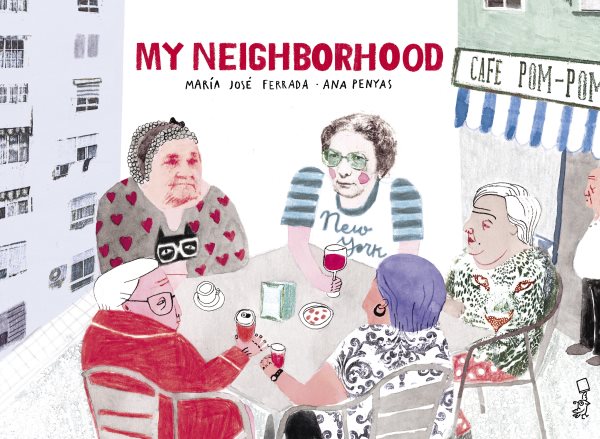
As I mentioned in a publisher preview earlier this year, this is not Ferrada’s only publication here in the States in 2022. And that is a good thing. As far as I’m concerned, the more María José Ferrada we see on our shelves, the better. Ferrada hails from Chile and you may remember her best from her 2021 publication niños: Poems for the Lost Children of Chile. My Neighborhood is a very different vibe, focusing on a single older woman during the course of a single day. We follow Ms. Marta. She lives on her own. She is older, and she is completely independent. From the photos on her wall we can tell that she’s had a full life, but she isn’t a grandmother or anything (and finding a picture book about a self-satisfied older woman who isn’t a grandma is like finding a needle in a haystack sometimes). She has a tattoo. She has a framed photo of her friends playing cards. Really, the whole book is this marvelous mix of photos and illustration, all done at the hand of the talented Spanish artist Ana Penyas. The last line sums it all up for me: “By now she knows: lives, like socks, are elastic.”

Nine Color Deer by Kailin Duan, translated by Jeremy Tiang

Translation – Mandarin Chinese (?)

It’s nice to see a folktale from something other than the Grimm oeuvre show up multiple times over the years. I swear I’ve encountered the Nine Color Deer tale in the past but never with such thought, care, and attention as I’ve seen in Duan’s latest. Inspired by the images in the Mogao Caves in Dunhuang, China, this transition from cave painting to the picture book page is seamless. While the Translator’s Note at the end of the book gives context to both the story (its roots may lay in a Buddhist Jataka tale from India) to the art itself, what makes the tale work is how the story has been retold for 21st century kids. I don’t need to tell you that some folktales don’t always make the leap all that easily. Here, you thoroughly enjoy what comes across as a kind of environmental tale of betrayal and humbling in the face of nature itself. A five star winner through and through.

Our Fort by Marie Dorléans, translated by Alyson Waters

Translation – French

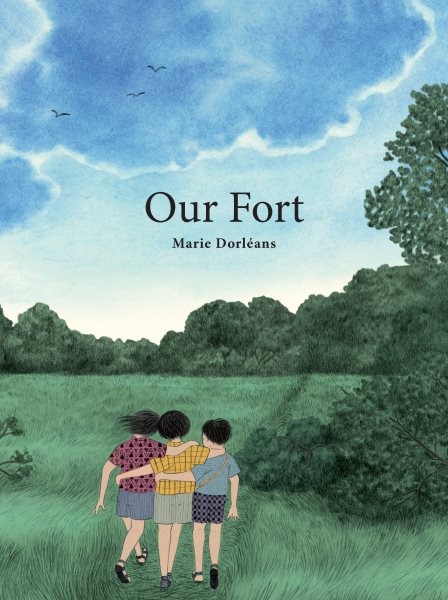
Three children set out to visit their secret fort in the woods. Will they survive the storm on the way? Will their fort still be standing? A book that captures all the imagination and delights of being a kid in nature. Oo. I think I like this one even more than a previous Dorléans picture book called Night Walk. Someone at my library, after seeing this book, talked about how neat it was that even in the thick of the windstorm that occurs over the course of this story, the kids never think of going home. And then you’ve got that wonderful moment where you see their glorious fort that they’ve been talking up this time . . . and it’s just a pile of sticks. Do they care? They do NOT! This book really does a remarkable job of putting you directly into the head of the child reader. I know that when I was a kid, a super windy day could have all the drama and excitement of the storm of this book. This is the kind of title that truly transports the reader to another place. Childhood encapsulated, and beautifully too.

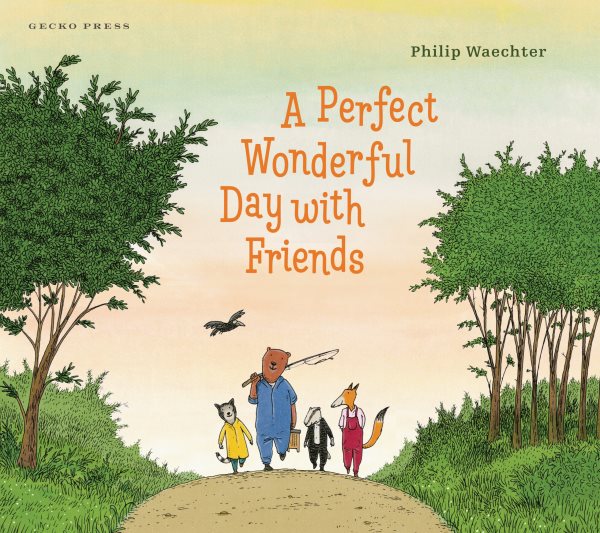
A Perfect Wonderful Day with Friends by Philip Waechter, translated by Melody Shaw

Translation – German

I happen to believe that there is no book in this world so good that lollygagging cannot make it better. In a lot of ways this sweet German import reminds me a bit of the previously mentioned, and fellow German import, Albie On His Way by Jutta Bauer. In both cases you have a larger mission waylaid by a series of distractions, with new friends made along the way. In this book Raccoon is bored so he figures he’ll pop on over Fox’s house to borrow some eggs to make an apple cake. At Fox’s the two realize that they need a ladder to help repair the fox’s roof. So it’s off to Badger’s they go, but once there they almost immediately set off to help get the answer to a crossword puzzle. After all is said and done the crew numbers five, is delighted to be in one another’s company, and soon they’re trading stuff, picnicking, and enjoying a delicious apple cake as well. The story has the gentle feel you might expect from this kind of tale, but the art is what will make you want to read it again and again. Waechter indulges in a multitude of tiny pen-and-ink details, and a world of watercolors so pleasant you just want to sink into those pages and join in on the fun. I see this as an almost aspirational picture book. It’s the kind of life any kid would love to live. Beautiful.

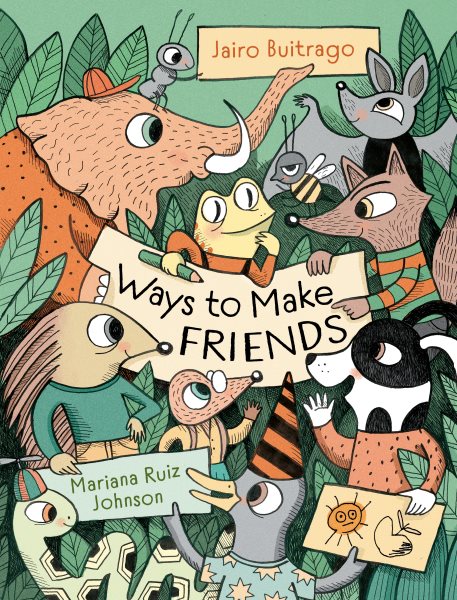
Ways to Make Friends by Jairo Buitrago, ill. Mariana Ruiz Johnson, translated by Elisa Amado

Translation – Spanish

So many books try to teach you the practical ways to make a friend. And, as I think we can all agree, those methods only sometimes work. This book has a narration born out of its adorable froggy protagonist’s efforts to find someone to befriend. My particular favorite moment is when it advises, “Say hi to the shy kid who never says hi to anyone. After you’ve said hi at least forty times, he might even say hi back, exactly like an old friend.” A lot of the success of this book can be chalked up to Elisa Amado’s translation, by the way. She really captures just the right tone. But of course the real standout in all of this is the moment when the book acknowledges that it is also okay to forget everything this book has just taught you and spend some time by yourself. “Drawing, reading, singing, shouting. These are good ways to pass the time and to learn to be your own best friend.” And THAT is a lesson I think every kid should learn too.

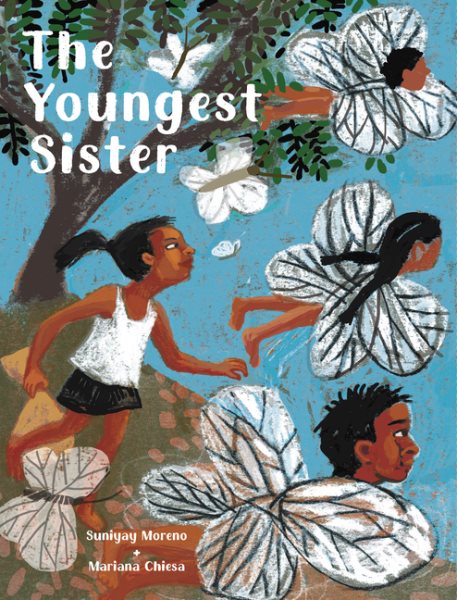
The Youngest Sister by Suniyay Moreno, ill. Mariana Chiesa, translated by Elisa Amado

Translation – Spanish

Not a lot of picture books include a special Translator’s Note at their end. This book does, and I’d like to type it in its entirety here. Elisa Amado writes, “The text, while in Spanish, is written as though it were spoken by this Argentinean Quechua community. The translation aims to respect the very special voice in which the story is told.” Remarkably, I think Amado does just that. The first page took me a second or two to get the phrasings straight in my head. Once you get going, though, it’s a wonderful tale. A youngest child, too small for any of the important jobs, is sent to get a flavor bone at Doña Ciriaca’s. She’s told not to delay, though the world is full of an awful lot of things that might distract a small kid. In fact, by the time she returns she’s in trouble, and decides to hide rather than get her own hide tanned. That is, until she spots and catches a tasty guinea pig. Redeeming herself, she is rewarded with the bone, which has lost its flavor anyway, with which all the children can play. Do I sound bloodthirsty when I say how grateful I was that this book didn’t have Picu, the child, release the guinea pig out of pity or anything? It’s a testament to the storytelling that you understand instantly what a boon the critter is to feeding this large a family. Some books transport you to another time and place with such ease that you feel a bit of a disconnect when you return. This is one of those books.


Want to see other lists? Stay tuned for the rest this month!

December 1 – Great Board Books

December 2 – Picture Book Readalouds

December 3 – Simple Picture Book Texts

December 4 – Transcendent Holiday Picture Books

December 5 – Rhyming Picture Books

December 6 – Funny Picture Books

December 7 – CaldeNotts

December 8 – Picture Book Reprints

December 9 – Math Books for Kids

December 10 – Gross Books

December 11 – Books with a Message

December 12 – Fabulous Photography

December 13 – Translated Picture Books

December 14 – Fairy Tales / Folktales / Religious Tales

December 15 – Wordless Picture Books

December 16 – Poetry Books

December 17 – Unconventional Children’s Books

December 18 – Easy Books & Early Chapter Books

December 19 – Comics & Graphic Novels

December 20 – Older Funny Books

December 21 – Science Fiction Books

December 22 – Fantasy Books

December 23 – Informational Fiction

December 24 – American History

December 25 – Science & Nature Books

December 26 – Unique Biographies

December 27 – Nonfiction Picture Books

December 28 – Nonfiction Books for Older Readers

December 29 – Best Audiobooks for Kids

December 30 – Middle Grade Novels

December 31 – Picture Books
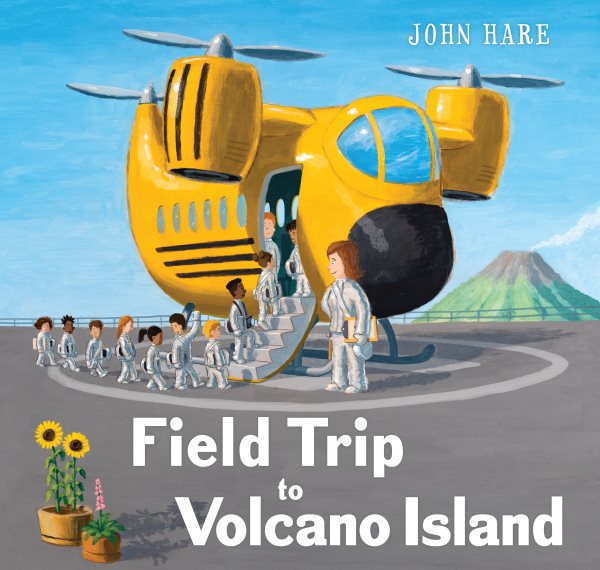
Filed Under: 31 Days 31 Lists, Best Books, Best Books of 2022 Tagged With: 31 days 31 lists, translated picture books, translations

31 Days, 31 Lists: 2022 Fabulous Photography

December 12, 2022 by Betsy Bird

Long ago, when I was young and foolish, I got myself a double major in college in English and Fine Arts with a concentration in photography. And I had a very serious decision to make after that. Either I could attend the Salt Institute in Maine and pursue that photography as an occupation, or I could move to Oregon with a bunch of friends and rent a house there while I figured out my life.

Reader, I am no photographer. But I’ve retained my love for it all these year it it manifests itself annually with this list. Today, we celebrate those folks unafraid to integrate photography of some sort into their works. A plethora of styles and takes abound here, so sit back and enjoy the media that, to this date, has yet to win a Caldecott Award proper. That said, another photography prize is waiting in the wings. For the very first time, in 2023 the Bologna Children’s Book Fair (the largest international rights fair in the world) will debut a Bologna Ragazzi Prize in a Special Category: Photography. Submit some of these books now, clever American publishers!

Curious about the previous years’ collections? Then take a gander!

  • 2021
  • 2020
  • 2019
  • 2018
  • 2017
  • 2016

2022 Fabulous Photography Books

The Adventures of Dr. Sloth: Rebecca Cliffe and Her Quest to Protect Sloths written and photographed by Suzi Eszterhaus

I’d say this is one for the younger nonfiction category. When Dr. Rebecca Cliffe set off to learn more about sloths, there was a lot we simply didn’t know about them. Join her and learn about their habitat, different species, and how we can protect them in the future. We humans just go nuts for animals with natural smiles. I think what makes this book stand out and apart from the usual ain’t-sloths-cute titles is the concentration on Rebecca Cliffe’s journey as a scientist. The look at how much wasn’t known when she started out is great, as is the backmatter where there’s a “How Can You Help Sloths?” section at the end. Add in the truly amazing facts and photographs and this is a true winner of a title. A book that stands apart, regardless of whether or not its subject matter is cute.

Busy Baby Animals by Suzi Eszterhas

And speaking of cute. Here’s another one by (you guessed it) Suzi Eszterhas, but it’s a board book. I think I’ve talked a fair amount about how torn I feel when I encounter a really good book full of excellent photography and then find that it’s all stock photos. I dunno. Maybe I’m naive but I like knowing the name of the photographer, y’know? Suzi Esztrhas is the kind of person I like to hear about. As a wildlife photographer this board book of hers is full of precisely the kind of inventive, innovative photos of parents and child animals that you wish you could see more of. Her photography? It can’t be beat. Throughout the story you’ve got this text that says what different babies do. So, for the page reading “Babies bugging” you see this baby cheetah fully enveloping its parents’ head, looking to be gnawing on an ear while the now blinded adult sits there, casually. The book is a little less capable when it comes to actual rhyming. Soft rhymes like “Babies swimming” alongside “Babies chilling” aren’t dealbreakers, but for those sticklers like me out there, lower your expectations. A fun, visual eye-popper of a book with a decent if not outstanding text. And if you’re a fan of Suzi, don’t worry. There’s a third book of hers on the list today as well.

Calm by Jillian Roberts, ill. Santi Nuñez

Any day you find a board book filled with photography is a day to celebrate! Awww. Just look at that cover photo too. The baby! So tiny! The book consists of a series of calming techniques for babies and toddlers, with appropriate photos with each. Are there faces? There are lots of faces. Are there emotions? Boy howdy there are emotions! And along the way there are also grandparents, and kids with parents of different races. There are kids of a wide range of ethnicities and just babies babies babies. Always a pleasure to see a book of this sort well done.

Happy Sloth Day! By April Pulley Sayre with Jeff Sayre

Sloth photographs: Part Two! Take a stunning sloth’s-eye view of the world in this beautiful and informative photographic nonfiction picture book from award-winning author and photographer April Pulley Sayre.  April died last year and I was so happy to find this, her final title, coming out this year. It’s always nice when a book creator goes out on a high note. I used this title in a presentation to Northwestern University students on the ways in which nonfiction picture books appeal to younger kids, older kids, and adults. The informational sections in the sidebars really are fascinating too. I mean, their claws are their bones, people. So, when you think about it, sloths are just real life versions of the X-Men’s Wolverine (except they can’t retract them). Beautiful photography, as per usual. And now, naturally, I want a harpy eagle as a pet. A sadistic, killer pet.

Hidden Animal Colors by Jane Park

From brilliant green eggs to pink sweat and blue blood, the natural world loves a hidden surprise. Check out these creatures and critters, captured on film, and perfect for read alouds. Ahh. Younger nonfiction with a brilliant premise and marvelous photography. Now THIS is a STEM storytime readaloud, if ever I saw one. It grabs you right from the start with that magnificent brilliant blue tongue and just goes from there. The text and photos work perfectly in tandem, but what I really admired was the order in which you encounter each creature. It’s laid out very admirably. I can hardly think of a better book out this year to ensnare young readers into loving nature.

Honeybee Rescue: A Backyard Drama by Loree Griffin Burns, photos by Ellen Harasimowicz

Uh-oh. Bees have moved into a rickety old barn. Who will move them to a safe spot before the winter? It’s Mr. Nelson, the bee rescuer! An informative and fun look at finding honeybees a brand new home. How much do I love this slightly older nonfiction book? Let me count the ways. I’ve heard of relocating hives of bees before but I always thought it just happened when homeowners found them to be nuisances or something. This is such a meticulous and fascinating encapsulation of the process. Honestly, you could probably sell it on the basis of the gentle bee vacuum alone. And I have the same reaction to seeing Jon Nelson handle live bees with his bare hands as I do to watching someone free solo. Which is to say: abject terror. Burns outdoes herself. This should be in every library

A Journey Under the Sea by Craig Foster and Ross Frylinck

I probably shouldn’t have read this book after watching the spoof of the film My Octopus Teacher by the television show Documentary Now (their version was called My Monkey Grifter). This is actually by the makers of the film, and so the book reflects their strengths and their weaknesses. Their strengths? The photography. Such a relief to see after so many gorgeous but relatively soulless Getty Image books we see each year (I try to keep them off of today’s list when I can). Here you can see that Clarion spared no expense to make the photos in this book as beautifully colored as possible. There isn’t even a hint of pixelation, and the shots are luminous and amazing. This probably contains some of the best underwater photography I’ve ever seen in a book for children. The problem? The writing is perfectly fine but talks down to its young readers a bit. Mostly, this isn’t a problem. It just sort of jumped out at me when I got to the end of the book and reached the final sentence, “Remember the wild, hold it safe in your heart, and return anytime the wind and the waves whisper your name.” Big old nope on that one from me there. But the photos? Top notch! That alone will make environmentalists out of young readers everywhere!

A Leopard Diary: My Journey Into the Hidden World of a Mother and Her Cubs by Suzi Eszterhas

Again with the THIRD Suzi Esterhas! After you read this one you’ll wonder how she ever had time for the sloth or board book ones. I mean, did you ever wonder about the sheer amount of work that sometimes goes into the creation of a book? As I read through Suzi Eszterhas’s work traveling to and from Botswana, tracking leopards (noted as being “famously shy”) so as to photograph them at a very young age (also hard to do), I decided that there must have been multiple reasons for this beyond the book. As it stands, however, A Leopard Diary is an incredibly impressive title! It’s also a great process title. You really get to see how much work it takes to keep tabs on leopards and care for them from afar. Written in a diary format, the book is just packed full of photos and facts. Almost as important? The design of the whole thing is fun and accessible. Though the text is for older readers, it’s just 40 pages long, so it doesn’t scare you off with its size. Big cat loving kids will just eat this up too cause this thing is packed full of baby leopards of various sizes. Baby leopards, people! Are you made of stone!?

Letters to Ammi by Aftab Yusuf Shaikh, photographs by Adrija Ghosh and Soumitra Ranade

The rare fictional picture book on today’s list (and for that, I weep). There are loads and loads of picture books out there that take place in famous cities. Famous, I should say, American and European cities. Cities in pretty much any other part of the world have a tendency to get forgotten. This book is a beautiful look at Delhi, and it’s coupled with a story that slowly unfolds itself as it proceeds. A girl is writing letters to her mother. Her mother used to live in Delhi, so the girl goes from place to place recounting not just her own experiences but the memories other people have of her mom in those places. You see everything from Jama Masjid, the largest mosque in India, to the Qutub Minar, the tallest brick minaret in the world, the market of Chandni Chowk, and more. The book is also illustrated with photographs of each of these areas, with illustrations sometimes continuing where the photos stop. It’s an epistolary picture book, but one where the mother will never write back, a fact you discover at the end when the girl visits her mother’s grave. A more serious travelogue than we usually see in the children’s room, and a necessary one.

Mercado: The Heart of the Barrio by Judy Goldman, photographs by Ilán Rabchinskey

The mercado as a space has had quite an uptick in inclusion these last few years. I’m thinking, of course, of Raúl the Third’s marvelous Vamos! Let’s Go to the Market (a book that my son read and then turned to me and said, “That place looks really fun”). Here’s another mercado, but one that is displayed in beautifully colored photographs instead. Generally I’d say that this was a picture book work of informational text, but the words are rather meant for older readers. For me, the photography is the true lure. I was reminded of those fabulous picture books like Let’s Go Nuts by April Pulley Sayre in terms of seeing luscious shots of wares on full display. In this book the colors are the true stars of the show. There’s this shot of some kind of a dessert with hot pink innards that makes me feel simultaneously entranced and repulsed. A kid would probably not feel the repulsion. It’s a good book that can make the seafood look as colorful as the pinatas. Warning: Do NOT read this on an empty stomach. And extra points for showing the edible bugs for sale. For a deep dive into a world some kids might not have seen before, this one’s hard to beat.

Seen and Unseen: What Dorothea Lange, Toyo Miyatake, and Ansel’s Adams’s Photographs Reveal About the Japanese American Incarceration by Elizabeth Patridge, ill. Lauren Tamaki

When your country makes a horrible mistake, how do you document that failure? Three great photographers saw the internment of Japanese American during WWII from different angles. Look through their eyes and determine where the truth lies, and where the lies start to sound like the truth. Expertly woven together. Though I’m placing this in the older nonfiction section, the actual text of this book is relatively short and to the point. Partridge is economic with her wordcount here. You really get a very essential if fast rundown of the history of the Japanese American incarceration here. The lens of the book (if you’ll forgive the pun) focuses squarely on three photographers and the different ways they portrayed the concentration camps for the greater American public. Lange wanted to show them honestly, but the government censored her images. Miyatake couldn’t show his at all, so took them in secret and kept them intact for years. And Adams wanted to show the residents of the camps in the best possible light, even if that was ultimately detrimental to the greater good. The text and use of photographs is great, but it was genius bringing in Tamaki to fill in the gaps with illustrations. The end result never flags in interest at any point. And, as a Photography major in college myself, I love how it shows the nuance between photojournalists trying to tell the truth to the world and the ways in which that “truth” can ultimately be manipulated. Heady stuff.

The Tower of Life: How Yaffa Eliach Rebuilt Her Town in Stories and Photographs by Chana Stiefel, ill. Susan Gall

What do you do when an entire town is erased? How do you remember the people that lived there? Yaffa Eliach found a way to bring the stories and lives of the Jewish village of Eishyshok to the world. A beautiful celebration of life. When you’ve a great big subject like the Holocaust out there then I cannot stress enough how exceedingly difficult it can be to write any thing for kids on the topic. I have read a lot of nonfiction picture books on the Holocaust in my day, but this may, and I mean this truly, be one of the best I’ve ever seen. I had to sit on it a little while to take it in. I know that when the only Jewish content you have on a list is Holocaust content then that is hugely problematic. But the whole reason this book works for me is because what it centers on isn’t the tragedy but the life of the people that lived in this small town of Eishyshok. The integration of photography with the illustrations (which are Susan Gal’s, so you know they’re going to be amazing) is so seamless that it actually reminds me quite a bit of the aforementioned older nonfiction book Seen and Unseen by Elizabeth Partridge. It’s an original story that adapts to the picture book form exceedingly well.

True You: A Gender Journey by Gwen Agna and Shelley Rotner, photographs by Shelley Rotner

I puzzle and puz a bit on why one book with a message for kids may work while another does not. By my estimation much of it comes down to sincerity. If you’re writing a book for a paycheck then that’s gonna seep into everything you do. But if you actually care about the subject matter, do your due diligence, finish your homework, show your work, and mean what you say. Gwen Agna does her homework. Shelley Rotner definitely does her homework (and has the paper trail to prove it). Together they’ve created this exceedingly simple book on gender expression. But writing a book of this sort, with simple text and bright colorful photographs of lots of kinds of kids, is actually just step one. You write this secure in the knowledge that a lot of the learning being done when it is read will be done by adults. So that takes you to the backmatter, where you must include a note to parents, like the one here alongside one for kids titled, “But How? For Kids Finding Out Who They Are”. Now let’s include a “Letter from a Grown-up Trans Girl” alongside a “Letter from a Family”. We’re not done. Agna and Rotner know for a fact that this book is going to be challenged in a library somewhere. So we’re putting in “A Introduction for Caregivers, Educators, and Loved Ones of Children on the Gender Spectrum.” Now an informative section on how language evolves with some transgender terminology suggestions. We’re NOT done yet, people. Here’s a section called “Therapeutic Support”, an extensive Glossary, and a marvelous listing of Resources & Sources. But at the end of the day how good is the actual book for kids? It’s great. Fun and uplifting. Clarifying and supportive. A book that could be a standard bearer for others, going forward.

Wait – and See by Helen Frost, photography by Rick Lieder

“If a quick small movement takes you by surprise,/ stop and look – move nothing but your eyes.” Jaw-dropping photography accompanies a delicate poem following the life of an ever patient praying mantis. Mmm. Okay, let’s all decide together whether or not we should place this in the picture book, the poetry, or the nonfiction picture book section. My vote? Poetry all the way. After all, the title page says that the “poem” is by Ms. Frost, and who are we to argue? We’ve seen Helen and Rick put together these remarkable and remarkably simple photograph-heavy picture books before. This one, however, may be my favorite. I know that there are praying mantises in the wild, but I’ve never run into them myself. So you have these magnificent shots of the bug on the one hand, and then there’s this image I have never, ever, even known about of an ootheca (the egg case a mantis creates) with hundreds of mantis nymphs emerging. It’s fascinating and more than a little unnerving and I love it. The poetry is, of course, fantastic as well. Pretty much one of the coolest photo illustrated titles of the year.

The Waiting Place: When Home is Lost and a New One Not Yet Found by Dina Nayeri, photography by Anna Bosch Miralpeix

The Waiting Place wants everyone in it to stay. Meet the children who fight back against the interminable boredom and tension of living in a refugee camp, refusing to be forgotten by the rest of the world. Welp, that just about killed me. So this would be Dina Nayeri, sister of fellow author Daniel Nayeri. She’s also the author of the very adult The Ungrateful Refugee, which got great reviews a year or two ago. Her challenge here is how to show kids defying the hopelessness of the Katsikas refugee camp outside of Ioannina, Greece. That cover is probably the smartest thing I’ve seen in a while, since it perfectly sums this book up. Now Dina’s taken the tricky method of giving the camp itself intention. I think it works overall. If we’re looking for books that help kids build empathy, I can think of few quite as powerful as this one. And, naturally, I love any book that knows how to use photography and use it well. Like nothing you’ve read before.


Want to see other lists? Stay tuned for the rest this month!

December 1 – Great Board Books

December 2 – Picture Book Readalouds

December 3 – Simple Picture Book Texts

December 4 – Transcendent Holiday Picture Books

December 5 – Rhyming Picture Books

December 6 – Funny Picture Books

December 7 – CaldeNotts

December 8 – Picture Book Reprints

December 9 – Math Books for Kids

December 10 – Gross Books

December 11 – Books with a Message

December 12 – Fabulous Photography

December 13 – Translated Picture Books

December 14 – Fairy Tales / Folktales / Religious Tales

December 15 – Wordless Picture Books

December 16 – Poetry Books

December 17 – Unconventional Children’s Books

December 18 – Easy Books & Early Chapter Books

December 19 – Comics & Graphic Novels

December 20 – Older Funny Books

December 21 – Science Fiction Books

December 22 – Fantasy Books

December 23 – Informational Fiction

December 24 – American History

December 25 – Science & Nature Books

December 26 – Unique Biographies

December 27 – Nonfiction Picture Books

December 28 – Nonfiction Books for Older Readers

December 29 – Best Audiobooks for Kids

December 30 – Middle Grade Novels

December 31 – Picture Books
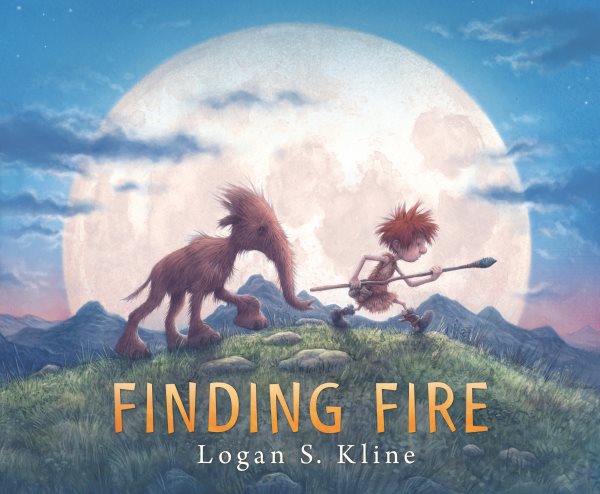
Filed Under: 31 Days 31 Lists, Best Books, Best Books of 2022 Tagged With: 31 days 31 lists, Best Books of 2022, photography, picture book photography
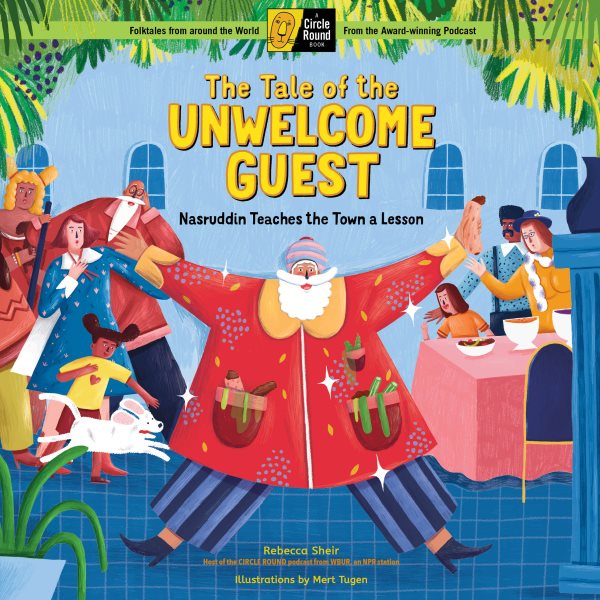
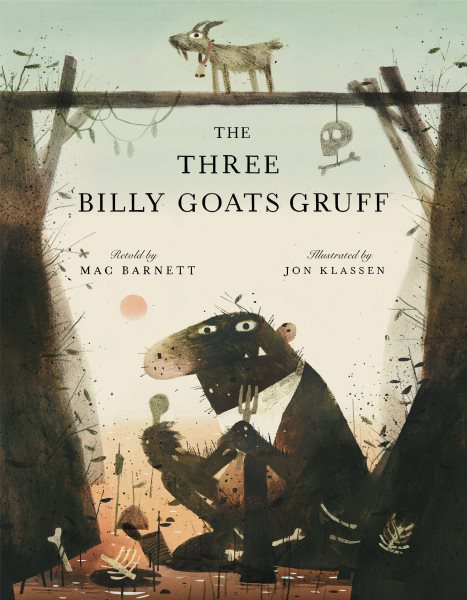
  • « Go to Previous Page
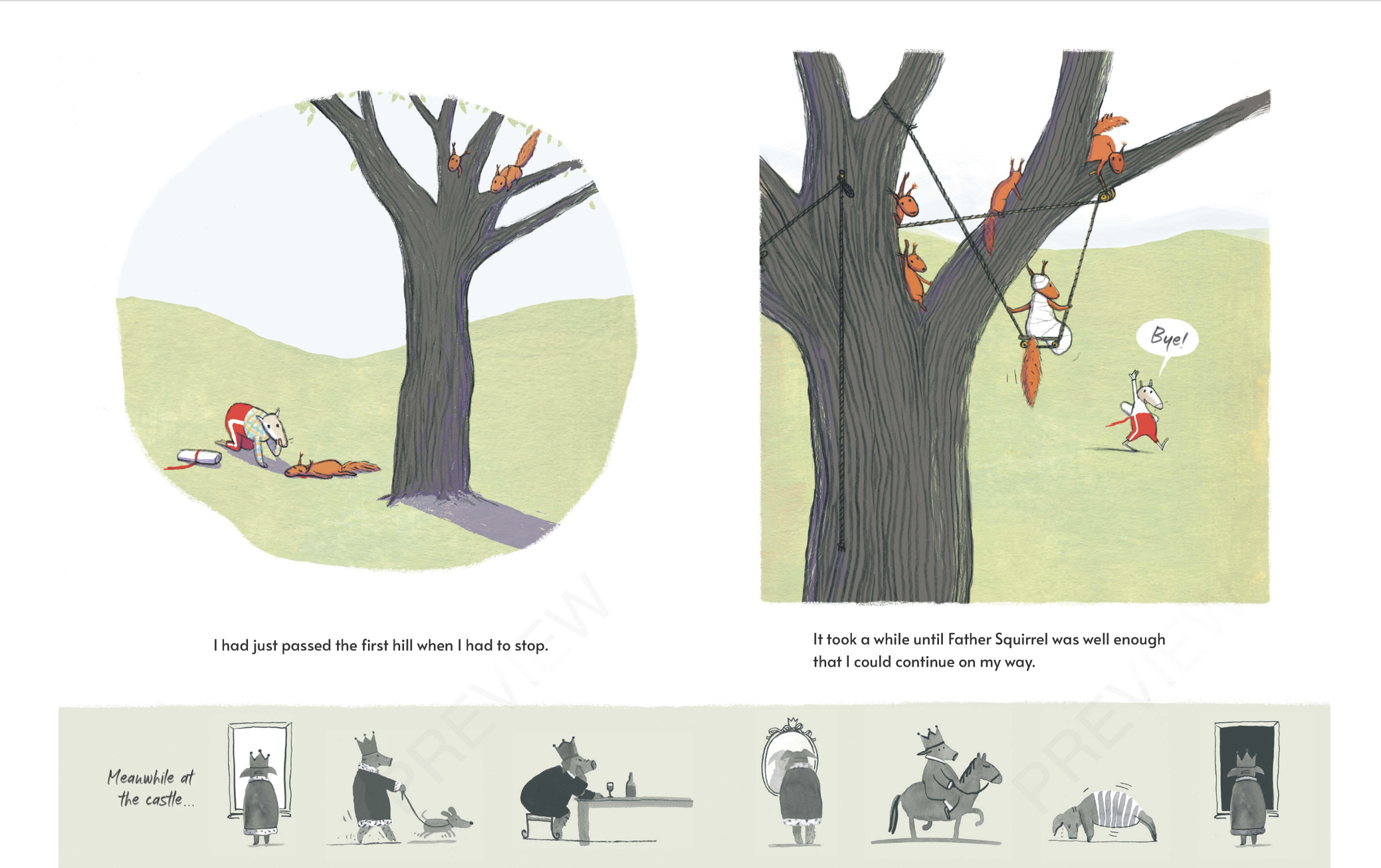
  • Page 1
  • Interim pages omitted …
  • Page 145
  • Page 146
  • Page 147
  • Page 148
  • Page 149
  • Interim pages omitted …
  • Page 1047
  • Go to Next Page »

Primary Sidebar