• Skip to primary navigation
  • Skip to main content
  • Skip to primary sidebar
  • About/Contact
  • Fusenews
  • Reviews
  • Librarian Previews
  • Best Books
    • Top 100
    • Best Books of 2022
    • Best Books of 2021
    • Best Books of 2020
    • Best Books of 2019
    • Best Books of 2018
    • Best Books of 2017
    • Best Books of 2016
    • Best Books of 2015
    • Best Books of 2014
    • Best Books of 2013
  • Fuse 8 n’ Kate
  • Videos
  • Press Release Fun

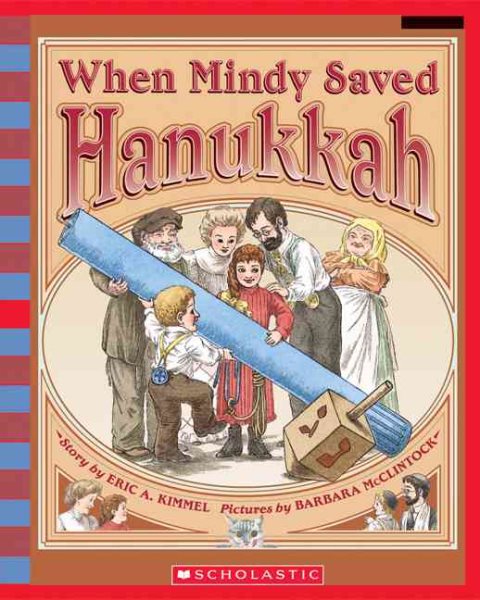
Fuse 8 n’ Kate: When Mindy Saved Hanukkah by Eric A. Kimmel, ill. Barbara McClintock

Fuse 8 n’ Kate: When Mindy Saved Hanukkah by Eric A. Kimmel, ill. Barbara McClintock

December 11, 2023 by Betsy Bird

Kate challenged me to come up with a Hanukkah classic we hadn’t done before and I . . . turned right around and asked social media for their thoughts. And let me tell you, social media had some GOOD suggestions! So many that I’m saving a long list to consult next year. The ultimate winner for today was selected because (A) You can trust author Eric A. Kimmel to present an original Hanukkah story every single time and (B) I was already on a Barbara McClintock kick this year thanks to her work on Tomfoolery! Today we step back in time to 1998 when Mr. Kimmel thought it might be interesting to go all Borrowers on us and create a tale of tiny people battling great big kitty cats. Tell me I’m not the only one getting An American Tail vibe from this.

Listen to the whole show here on Soundcloud or download it through iTunes, Stitcher, Spotify, Google Play, PlayerFM, or your preferred method of podcast selection.

Show Notes

By the way, if by any chance you are interested in a complete listing of ALL of the picture books we have done on our podcast to date, Kate updated the list and you can find it here.

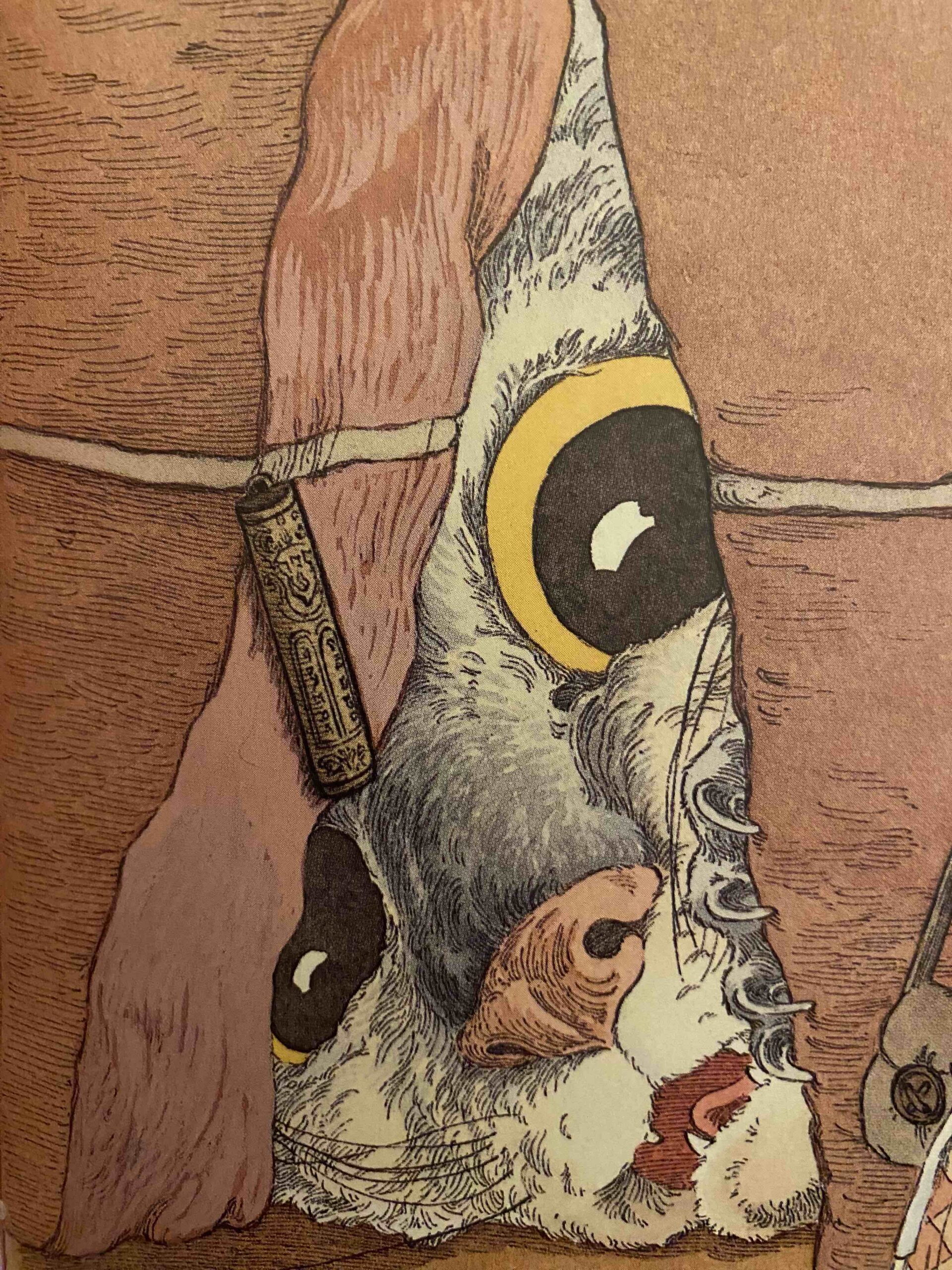
For the very first time Kate’s choice of tattoo from our featured book comes from the cover of the book in question. It’s the villain of the piece: the pussy cat. She just finds him so cute.

We spoke at one point about how beautiful this art is. You can actually make out both Mindy and the cat in this shot if you squint. I realized, looking at it, that this feels like nothing so much as a predecessor to Mary and the Mouse, the Mouse and Mary which McClintock would illustrate much later.

Having never encountered the detailed nature of Barbara McClintock’s art (and research!) before, Kate was particularly impressed that the mezuzah in this scene, hanging by the crack that Mindy and her family come in and out of, is at an angle.
This was the part that may have impressed me the most? This book was originally published in 1998 and look! Backmatter! A Glossary of terms! A rarity in books of the time and I LOVE it!!

Betsy Recommends: Manual Cinema’s Christmas Carol seen here:

Kate Recommends: The podcast Handsome
Filed Under: Fuse 8 n' Kate Tagged With: Barbara McClintock, Eric A. Kimmel, Fuse 8 n' Kate, Hanukkah, When Mindy Saved Hanukkah

31 Day, 31 Lists: 2023 Gross Books

December 10, 2023 by Betsy Bird

Of all the lists that I present on a day-to-day basis in December, the one most likely to get replaced in the future is probably the gross books list. Still, I have an affection for these books. Kids absolutely adore these titles, and once in a while it’s a good idea for me to actually consider what a kid would enjoy reading. Particularly a kid drawn to that which disgusts. So while it may not win me any awards for literary excellence, here are the books that make you say, “UGH!!!” It runs the gamut from picture books to older nonfiction to graphic novels.

You can find a PDF of this list here.

If you’d like to witness the only other time I’ve ever done this list, you can do so here:

  • 2022

2023 Gross Books for Kids

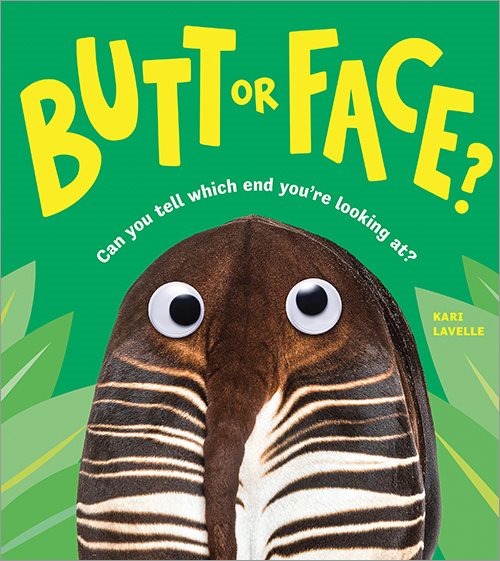
Butt or Face? by Kari Lavelle

Think you can tell a butt from a face? Test your skills against an array of insects, amphibians, birds and beasts. We bet at least one of them fools you! Normally I don’t get overly fond of titles where the entire premise is right there in the title. But as I read through this cacophony of buttocks and kissers I had to admit that Lavelle knows what she’s doing. There are an awful lot of difficult-to-distinguish butts v. faces. Admittedly she cheats a little, sometimes just showing a section of an animal’s anatomy, but by the point she starts doing it, you really don’t care. I like the design of it too and the way in which the little facts are added along the sides  for fun. Maybe not the most deep and insightful book up for consideration, but there is something to be said for fun (plus doesn’t that cover just invoke Everything Everywhere All At Once?).

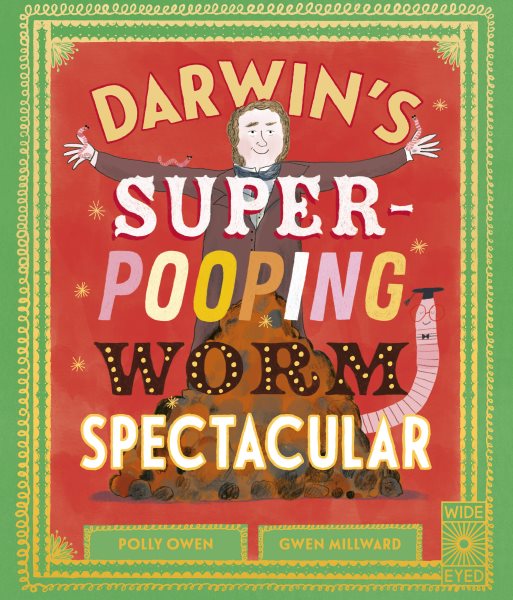
Darwin’s Super-Pooping Worm Spectacular by Polly Owen, ill. Gwen Millward


The Victorians were pretty sure that worms weren’t just gross, but utterly useless as well. It took Charles Darwin’s obsessive nature to prove that not only are worms important, but their poop is vital to nature! The most fun you can have with an invertebrate. Man. Polly Owen is toying with me. I’m this hard-nosed stickler for picture book nonfiction, right? I hate fake dialogue. I like my facts to be facts and not suppositions. All that stuff. So she goes and writes a book that is technically all-factual by skirting around the very edge of all my rules. For example, I don’t mind it when dialogue in speech bubbles is fake. Now in this book, Darwin is conducting experiments on the worms. I thought I could safely deem this book Informational Fiction when it showed him playing the piano, fife, and bassoon for the worms. But on the opposite page you actually see this little worm clarifying that, yes indeed, Darwin really did try out all those instruments with his invertebrates. The end result of this is a compelling (and oddly excrement-heavy) bit of good science wrapped in a gross-out package. Gwen Millward is also just going wacky with the art (the bassoon sequence is accompanied by what looks to be a disco floor complete with mirror ball). This is utterly ridiculous and, I’ll admit it, completely within the realm of fact. Kids will dig it (forgive me)

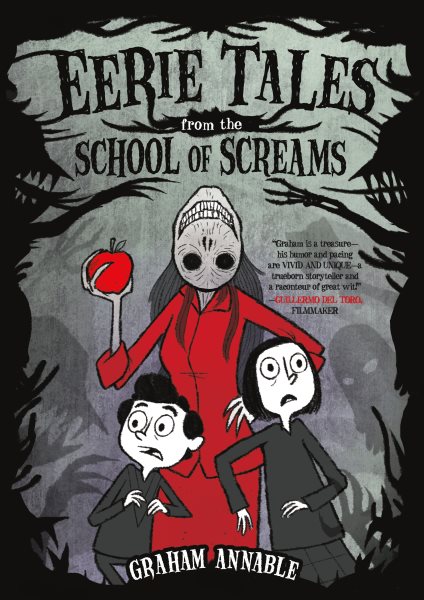
Eerie Tales from the School of Screams by Graham Annable

 Davis and Emily’s teacher asks her students to tell her the creepiest stories they know. Buckle up as you read through this array of scary, gross, and occasionally terrifying tales! Truth be told, this feels like a Treehouse of Horror episode of The Simpsons. Hard to believe that this is the same guy that gave us that adorable sloth-fixated GN series Peter & Ernesto. Annable has a real talent for just the right amounts of creepy and disturbing (please check out his Instagram account if you don’t believe me). And the array of types of creepy in this book are great. Space creep and folktale creep and contemporary creep. It helps too that the book features a kid listening to all this in a classroom, pointing out the inconsistencies. I thoroughly enjoyed this and I’ve no doubt your kid readers will too!

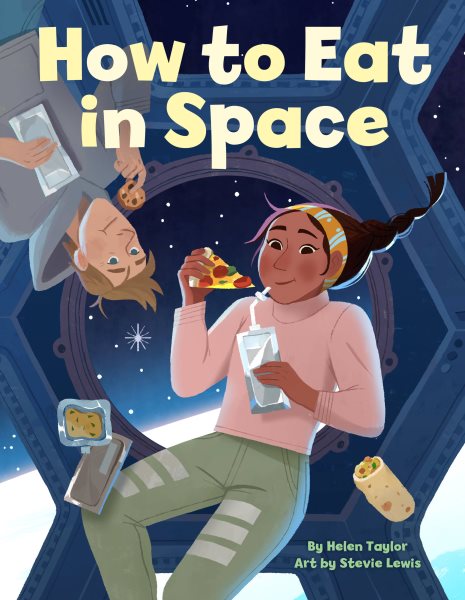
How to Eat in Space by Helen Taylor, ill. Stevie Lewis

Think eating in space is easy? Think again. Use this guidebook to food in space. What works, what doesn’t, and how to make more.  Reminds me a bit of last year’s wonderful (and wonderfully gross) young reader’s edition of Packing for Mars. The art gets the job done, and I really like the text and the layout of the information here. It goes through a practical understanding of what it would take to eat in space in a clear and realistic way. The book probably missed a couple opportunities for fun facts (example: the whole reason we even know that tortillas are perfect space food is that we started sending someone other than white men into space). But I just really think kids are going to get a kick out of this. It’s fun and funny at the photos at the end are a thrill. And yes. It’s also gross.

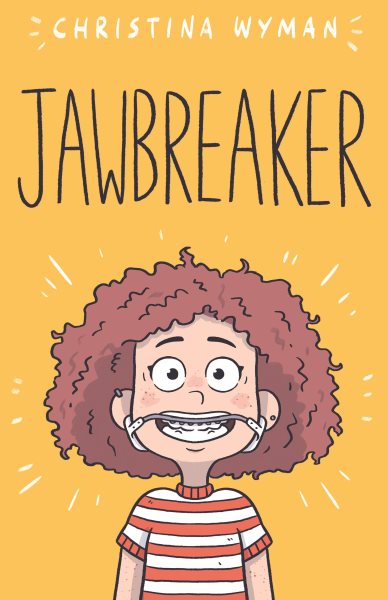
Jawbreaker by Christina Wyman

Max Plink is a 7th grader with a severe overbite, braces, and now headgear nicknamed “the jawbreaker.” She faces bullying at school, lots of problems at home, and dreams of being a journalist. She’s invited to a journalism scholarship competition, but the application is on video. Well, I have a pronounced dislike of middle grade bully books, no question. And this is a dyed-in-the-wool Grade A bully book extraordinaire, so you KNOW it’s gotta be good if I’m recommending it. Wyman’s a talented writer and she just sucks you into this narrative. Extra points too for that cover, which makes it feel so approachable (though it does look a tad like a graphic novel). A good novel pairing with SMILE by Telgemeier too. So why is it on the gross list? Let’s just say that when you’ve got head gear like this, there’s going to be a bit more drool than you’re used to in the book.

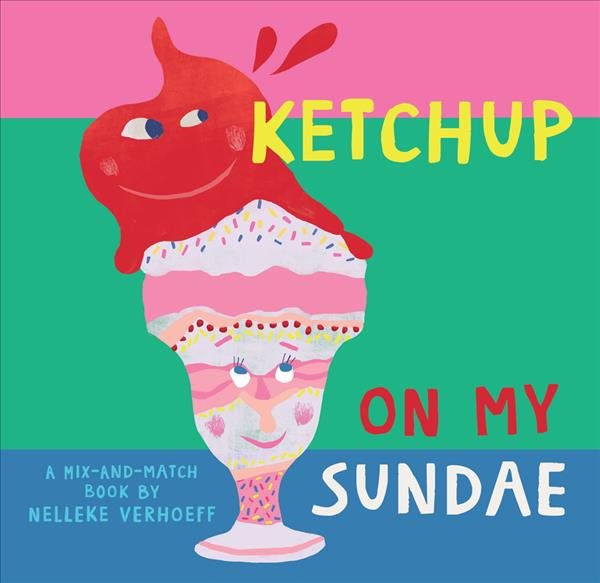
Ketchup On My Sundae by Nelleke Verhoeff

A companion to Verhoeff’s other board books, like this year’s Bruno Builder Bakes Bread. This is a mix-and-match book (if that is the technical term – I still don’t really know) intended for the preschooler crowd. Why do I say that? Because a kid needs to have at least a basic working knowledge of some of these foods for it to hit home properly. Otherwise you might create a sour cream waffle cone and not incur the proper “ewwwwwww!!”s. The top half of the book includes, well, toppings. “Zesty radish” or “salty feta”. The bottom half is what you’re putting those toppings on. “Pizza” or “Hot Chocolate”. I was pleased with the inclusion of foods on beyond the usual, like paella and couscous. There’s some real gross-em-out splendor on display!
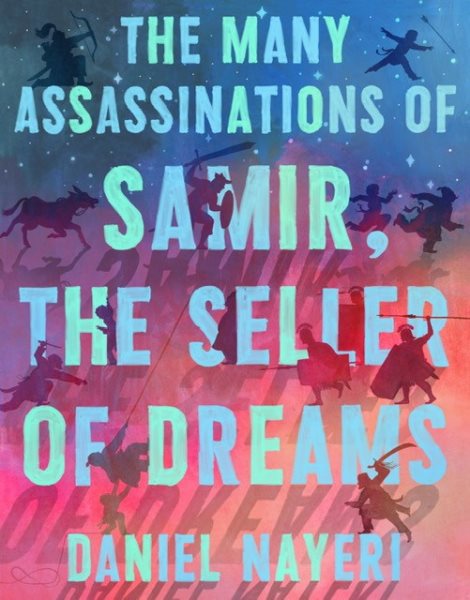
The Many Assassinations of Samir, the Seller of Dreams by Daniel Nayeri
Saved from a stoning by angry monks, a kid called Monkey is indebted to the fast-talking Samir, a merchant on the Silk Road. The problem? Seven hired assassins have Samir in their sights, and Monkey has a debt to pay. A plus but with some caveats! The last time Daniel Nayeri wrote a book it was of an ungodly length. This time it’s a slick 224 pages, which is much better. And the man’s a born storyteller, so there’s a lot to enjoy here. So what’s the problem? Well, some of the more complex ideas that go on in this book had me, a grown adult, rereading them several times to get the gist. I suppose that this is the book you could hand to one of those kids that claim they have read “every book in the library” and demand something more challenging. Obviously the man can string two sentences together with particular skill, and I liked the twists and the ending a lot (it really picks up when the assassins start showing up). Why is it on the “Gross” list? I’ve got two words for you: severed ear. You figure out the rest.

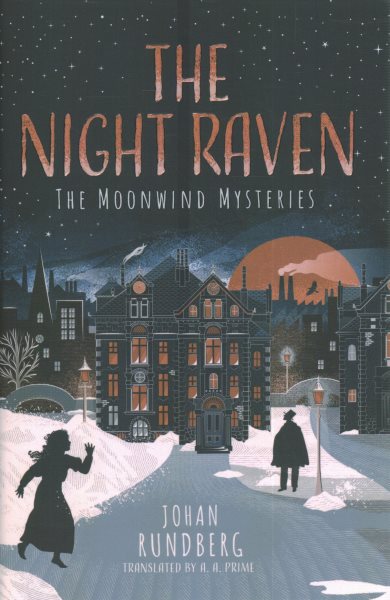
The Night Raven (The Moonwind Mysteries) by Johan Rundberg, translated by A.A. Prime

In 1880 Stockholm, orphan girl Mika leads a rough life. She also possesses gifts that would make her a first-rate forensic scientist. Can she solve a bunch of scary crimes? A gritty thriller that has won awards in Sweden. Oo! I’m always buying Swedish murder thrillers for the adults of my library, so it’s kind of amazing to see a kid-friendly-ish version here. I’m a sucker for a good detective novel and at first, as I read this, I had a hard time figuring out if this book was, indeed, a mystery. Then Mika started whipping out the Sherlock Holmesian observations and from that moment onward I was hooked. The author cleverly justifies why she would have these skills and (even more impressive) justifies why she’d want to help the inspector of this book with his investigations. If I’ve an objection it’s that there are still quite a few danging threads left about Mika’s own origins, but that didn’t mute my enjoyment of the text. Overall, this is a gripping ride. It’s also completely disgusting several times. I adored it all the more for that reason.

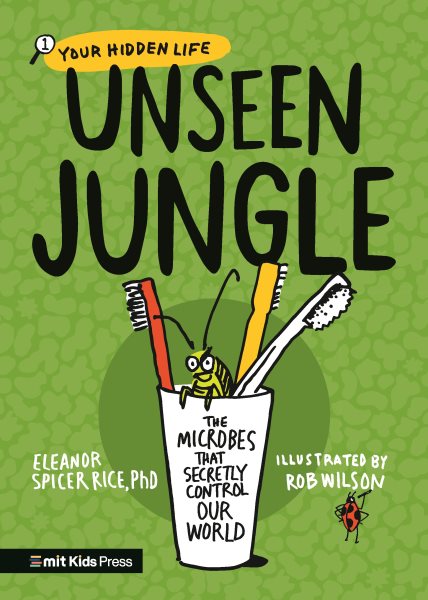
Unseen Jungle by Eleanor Spicer Rice, ill. Rob Wilson

Whether you’re an up-and-coming young scientist or just want a book with the grossest stuff in it, there’s a lot to love in this compendium of microbes and their unseen, highly disgusting, world. Sorry, folks. I hate to be the one to break the news but I found myself a nice super gross book for 2023 and I’m loving it. What’s the name of the game this time? Microbes! Specifically bacteria, fungi, protozoa, archaea, algae, super-tiny animals, and viruses (though Rice acknowledges that some scientists would say they don’t count). The book then systematically goes through every possible place you might encounter them. It gets two germ-encrusted thumbs up from me on the “yuck” factor, but you also learn a TON of info. For example, this may be the first time I’ve ever felt bad for flies. Read the book. You’ll see why.


Hope you enjoyed these! Here are the lists you can expect for the rest of this month:

December 1 – Great Board Books

December 2 – Picture Book Readaloud

December 3 – Simple Picture Book Texts

December 4 – Transcendent Holiday Picture Books

December 5 – Rhyming Picture Books

December 6 – Funny Picture Books

December 7 – CaldeNotts

December 8 – Picture Book Reprints

December 9 – Math Books for Kids

December 10 – Gross Books

December 11 – Books with a Message

December 12 – Fabulous Photography

December 13 – Translated Picture Books

December 14 – Fairy Tales / Folktales / Religious Tales

December 15 – Wordless Picture Books

December 16 – Poetry Books

December 17 – Unconventional Children’s Books

December 18 – Easy Books & Early Chapter Books

December 19 – Older Funny Books

December 20 – Science Fiction Books

December 21 – Fantasy Books

December 22 – Comics & Graphic Novels

December 23 – Informational Fiction

December 24 – American History

December 25 – Science & Nature Books

December 26 – Unique Biographies

December 27 – Nonfiction Picture Books

December 28 – Nonfiction Books for Older Readers

December 29 – Audiobooks for Kids

December 30 – Middle Grade Novels

December 31 – Picture Books

Filed Under: 31 Days 31 Lists, Best Books, Best Books of 2023 Tagged With: 31 days 31 lists, gross books

31 Days, 31 Lists: 2023 Math Books for Kids

December 9, 2023 by Betsy Bird

I no longer serve on the Mathical Book Prize committee (“an annual award for fiction and nonfiction books that inspire children of all ages to see math in the world around them”) and that is okay. It’s okay because I have retained my love and respect for children’s books capable of taking subject matter that many authors, and some illustrators, fear, turning it into something to be enjoyed. If you were to compare this year’s list with the first that I ever did on this site (2016) you’d see how the number of titles has just ballooned over the years. And as interest has grown, so too has the creativity and talent. Today we’re talking unapologetically about math math math! Get it while it’s hot!

You can find a PDF of today’s list here.

  • 2022
  • 2021
  • 2020
  • 2019
  • 2018
  • 2017
  • 2016

2023 Math Books for Kids

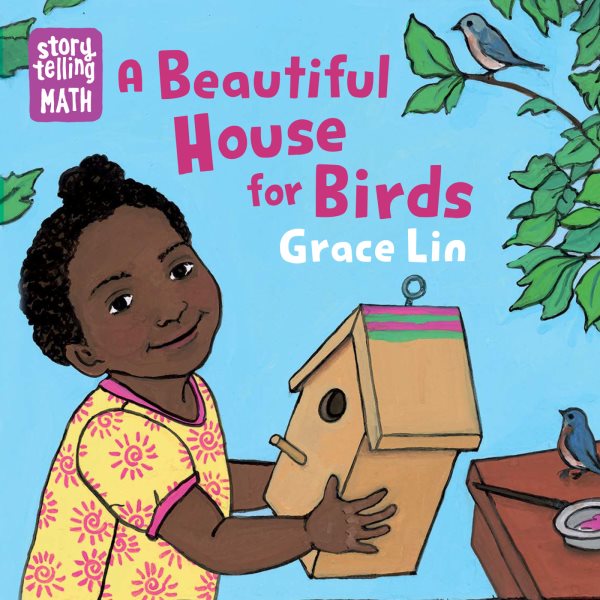
A Beautiful House for Birds by Grace Lin

A math board book sounds, on the outset, impossible. Or, at the very least, improbable. That is, until you realize that math has roots in some of the fundamental activities kids play with all the time. It’s always pleased me inordinately that Grace Lin gets this fact. Over the years she’s been contributing to Charlesbridge’s “Story-Telling Math” board book series, highlighting a variety of different concepts. I like some more than others, and I happen to like this one very much. The concept being highlighted here is “Patterns”. I love how such a simple storyline about painting pink and green lines in succession on a birdhouse roof, interrupted by an unexpected blue line, leads the young heroine to realize that this mistake can actually become a part of the pattern too. Exceedingly clever how Lin has figured out how to make something this smart for such a young audience. The words are never too complicated, and it makes a great point not simply about pattern recognition but also extending already existing patterns into something new. Previously Seen On: The Board Books List

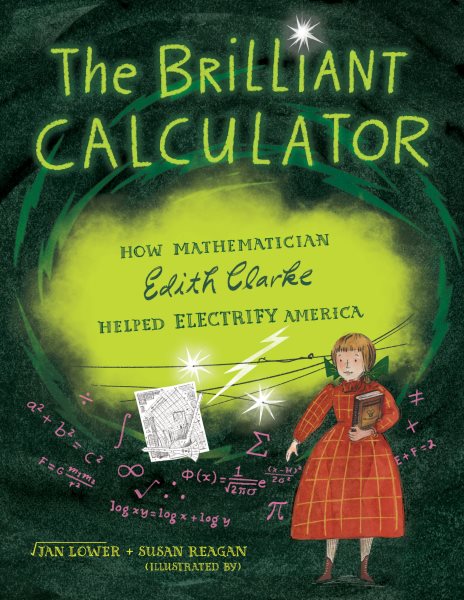
The Brilliant Calculator: How Mathematician Edith Clarke Helped Electrify America by Jan Lower, ill. Susan Reagan

Oh, me oh my, I DO so love a good picture book biography when it has something to do with math. And as I mentioned before, over the last 10 or so odd years there’s been a notable uptick in the marketplace. I wonder, though, if you were to look at which publishers create such books, would the same names come up time and again? For example, the Calkins Creek imprint appears to be better suited to publishing a book of this sort. Why do I say such things? Because when I read a book like The Brilliant Calculator about Edith Clarke I notice several smart choices throughout. Fake dialogue? Not present. Is the story itself more fun than the backmatter? You betcha. Plus this is a smart duo of author and artist to pair together. Lower’s A Song for the Cosmos: Blind Willie Johnson and Voyager’s Golden Record was an accurate but dreamy take on its subject matter, while Reagan’s work on Revolutionary Prudence Wright elevated a book that might not have gotten attention otherwise. Here they have to prove their mettle in one specific way: Are they afraid of numbers? I’m not kidding about this. Many is the mathematician bio that eschews almost any mention of actual math (check out the bulk of books on Katherine Johnson if you don’t believe me). Ms. Reagan does include math in the details of the art, though the equations reminded me of the year I served on the Mathical Prize committee and the mathematicians there started trying to solve the math in the art that they found in such borders. But with her accurate rendition of the Clarke Calculator patent, I am certain everything checks out. Great writing, an interesting person to learn about, and some truly awesome art. A winner!

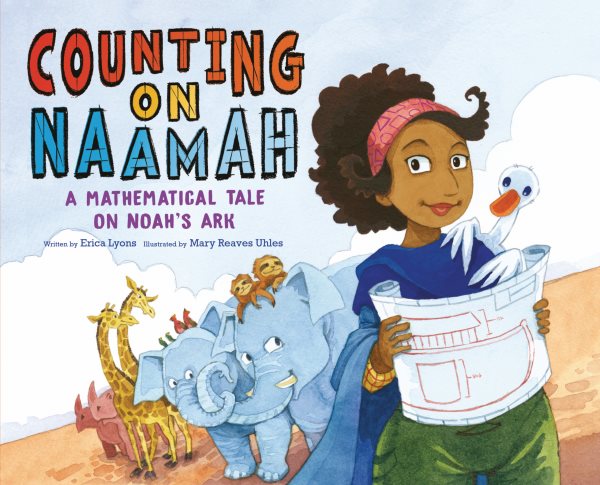
Counting on Naamah by Erica Lyons, ill. Mary Reaves Uhles

Ah! Another book for the Why Hasn’t Someone Thought of This Before category! To start of with, why hasn’t anyone turned the Noah’s Ark story into a math picture book before? Of all the tales in the Jewish or Christian religions, this one seems the most math friendly (though if Lyons and Uhles want to make a sequel, the loaves and fishes story might be a possibility). Best of all, Lyons gives the role of mathematician to Naamah, Noah’s wife. All kinds of different types of math are worked into the storyline, and the construction of the ark itself manages to teach and not bore. My sole objection? Well, aside from the fact that Naamah’s kids and their spouses somehow disappeared in the course of all this, there is the inescapable fact that this book would have been ripe for wonderful backmatter, and yet all we get are teeny tiny boxes on what a midrash is and who Naamah was. Such a lost opportunity! Lyons could have filled two additional pages with wonderful explanations of some of Naamah’s math, and even included little activities for kids to do. Ah well. As it stands, it’s a pretty darn good combination of classic tale and mathical mathiness.

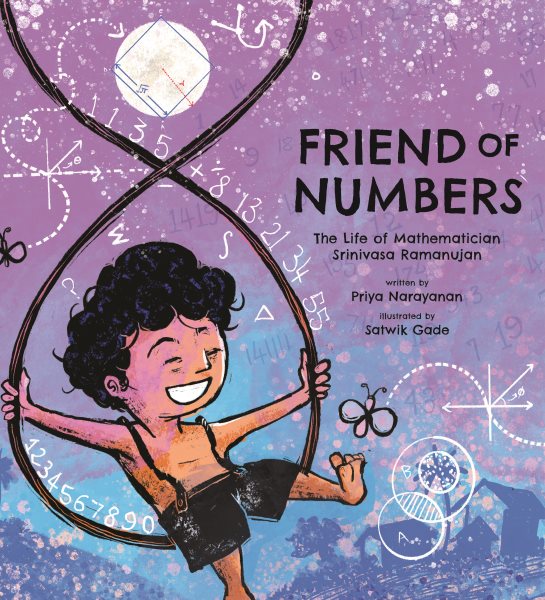
Friend of Numbers: The Life of Mathematician Srinivasa Ramanujan by Priya Narayanan, ill. Satwik Gade

Every single picture book biography out there is a challenge in an entirely different way. The author of such a book must determine the best possible way in which to introduce their subject without going the rote, “Mr. [Blank] was born on [Blank] in the country of [Blank].” You see what I’m getting at. Now add in an additional terrifying factor: Math. Math complicates things for authors. Very few children’s book creators have degrees in it. Many retain fears of it dating back to their own school age years. So when some of them write picture book bios of mathematicians they try to avoid the math in any way that they can. They may, for example, lean heavily on the illustrator to put numbers, charts, and graphs in the art (though, as I mentioned before, I’ve been with mathematicians who have looked at these art pieces and said, “This is just gobblety-gook!”). So one of the differences with Friend of Numbers is the the fact that not only does Priya Narayanan have a good grasp on how to tell the story of Srinivasa Ramanujan, but she also isn’t afraid to put math into the text itself. I was reminded of The Boy Who Loved Math by Deborah Heiligman, another book that understood innately how not to shy away from numbers. Satwik Gade’s art is just as enticing, and I was delighted to discover that this edition we’re seeing here in America is a reprint of a book that originally came out in India. In the front it says, “The author’s note, glossary, and mathematical content were created in collaboration with the author for the Eerdmans edition of this book.” You know what that means, don’t you? In other countries there isn’t a focus on backmatter, but here in the States we rather insist on it. And this book’s backmatter is INCREDIBLE! From the Author’s Note to different types of patterns that kids can practice on their own to a Glossary, this book is one of the best math-related titles for kids I’ve seen in a long long time. A glorious example for other publishers importing nonfiction from overseas.

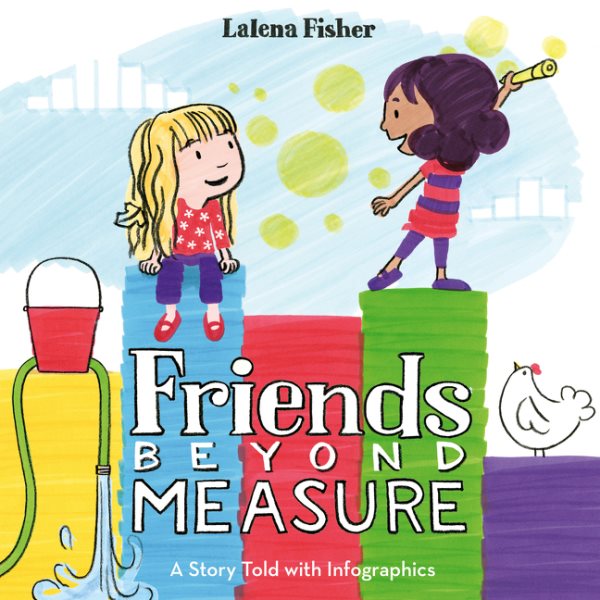
Friends Beyond Measure: A Story Told with Infographics by Lalena Fisher

Ana and Harwin are best friends for all time, but when Harwin’s family plans to move away will they survive the split? A clever, funny, and touching tale told in graphs, charts, hugs, and tears. With the given understanding that infographics are, almost by definition, more interesting to adults than they are to kids, I still think that this book does a stand up and cheer job of integrating the darn things into the storyline. Told with a healthy dollop of humor, the story literally charts the friendship of two girls who have a couple things, if not everything, in common (a Venn diagram shows this right from the start). I like how the charts begin as friendly but when Harwin is due to move away they take on a darker tone. Teachers are gonna go gaga for this one too (particularly when they check out the list of charts in the backmatter).

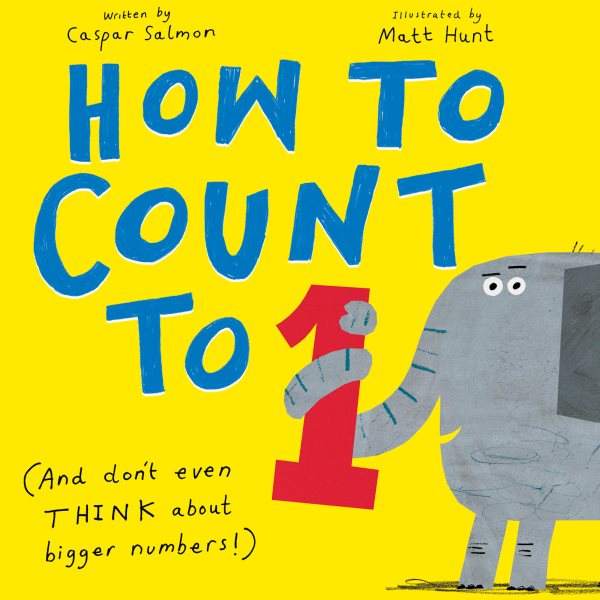
How to Count to 1 by Caspar Salmon, ill. Matt Hunt

Ah, the old reverse psychology picture book. Love the format. So this little British import essentially forbids kids from engaging in counting for fun which, naturally, will make them want to do it all the more. We talk a lot about how to make math engaging for children but did we ever consider trying to prevent it from happening? I think this is a mildly brilliant solution. The intrusive narrator of this book is going to be very clear with you. You are only allowed to count a single thing on each of these pages. But as the book goes on you start to see a numerically increasing number of objects with a teeny tiny single thing that’s the only thing you are instructed to count. Play your cards right and you, the adult reader, can be the one trying to prevent your kids from counting. Which, in and of itself, is fairly hilarious. It’s sort of the old The Monster at the End of This Book technique (you know, where Grover begs you not to keep turning the pages) but with addition. And the last two pages are full of 100 things, so if they’ve gotten bitten by the counting bug, they’ll know how to use those skills. Previously Seen On: The Funny List

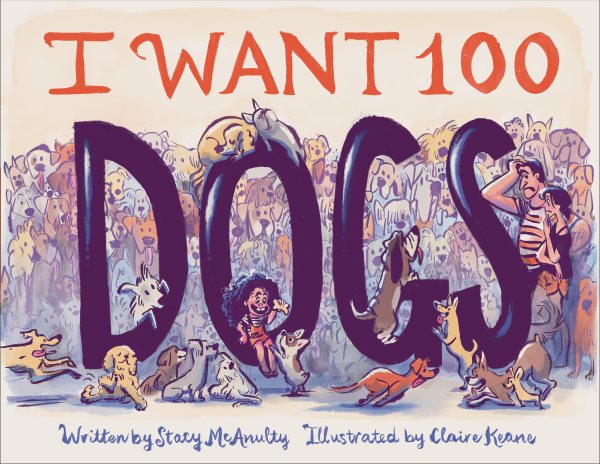
I Want 100 Dogs by Stacy McAnulty, ill. Claire Keane

Confession: I’m kind of a sucker for Claire Keane’s art. I can’t help it. Lady has range! Just look at her 2023 output alone! Between this and Make Way: The Story of Robert Mccloskey, Nancy Schön, and Some Very Famous Ducklings (which I also loved and which you’ll be seeing on a future list) she’s been busy this year. Here she’s paired with the very funny and adept Stacy McAnulty who is no stranger to math-related content in her books for kids. Her middle grade novel The Miscalculations of Lightning Girl was a winner of a Mathical Book Prize and that’s no small thing. Here a girl informs her parents that she wants 100 dogs. They keep talking her out of those high numbers, so each time she counters by saying she’ll want ten less. Essentially, this is a book about counting down by tens, but within a legitimately fun framework. There’s a fantastic twist at the end, meaning that book completely sticks the landing. I was hugely impressed with the writing (and any book that stars a girl with a significant gap between her teeth makes ME happy as well!).

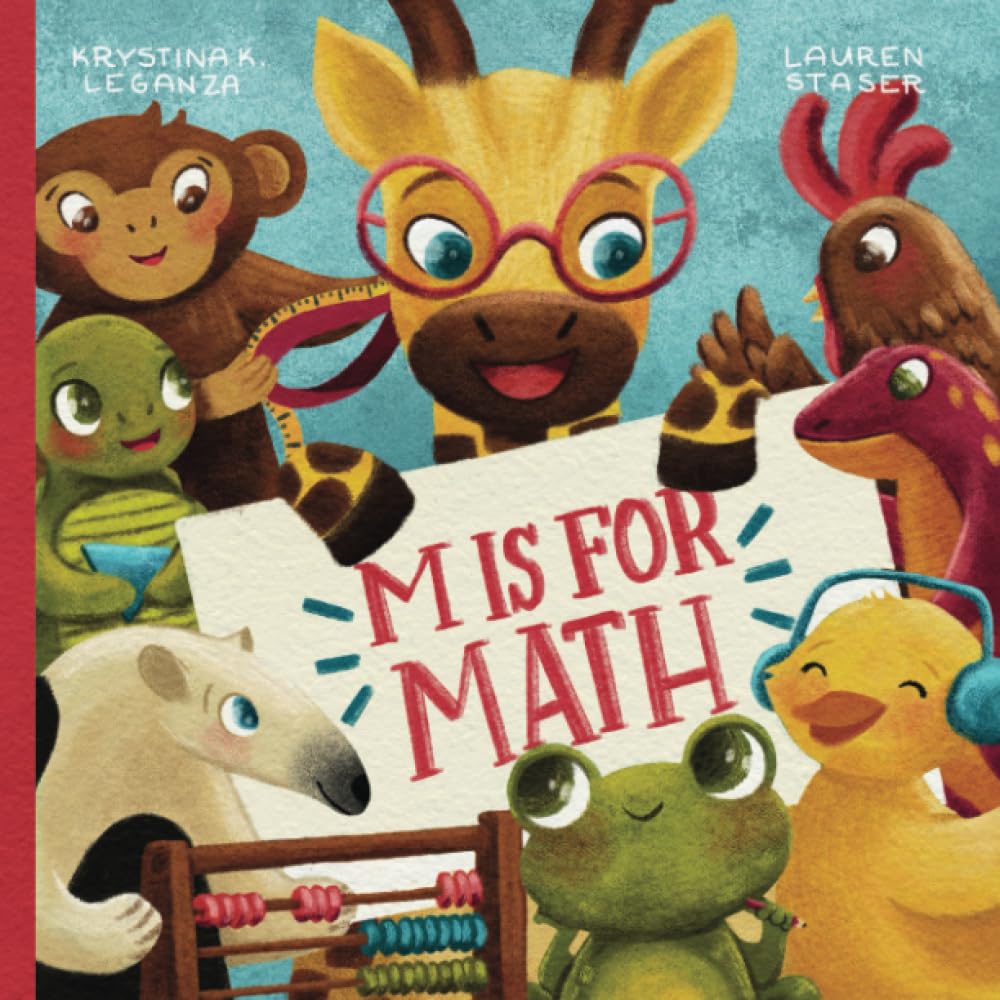
M is for Math by Krystina K. Leganza, ill. Lauren Staser

It’s an alphabet book and a math book all tied up together. But does it work? Surprisingly, it kind of does. So you might have “The chicken calculated the circumference of the circle,” on the left hand page and “The duck danced along the diameter of the disc,” on the other. You won’t get a clear cut sense of the circumference from its image, but you WILL from that image of the duckie boogieing along the diameter. All told, what the book does best is establish a certain level of comfort with different types of math terms. Naturally there’s a Note to parents and teachers at the end as well as a whole glossary of terms for those of us that don’t know our Klein Bottles from our xy-planes. I’m rather fond of this. Bets of all, I think kids might actually get a number of these concepts. And the cute duckies and frogs don’t hurt.

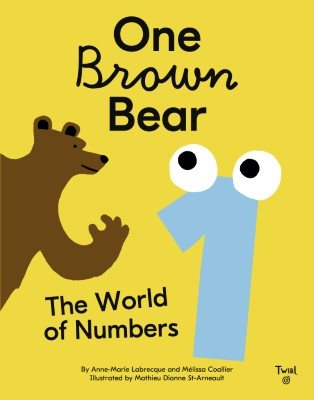
One Brown Bear: The World of Numbers by Anne-Marie Labrecque, and Mélissa Coallier, ill. Mathieu Dionne St-Arneault

Though it loses some points for not saying who, precisely, did the translation on this French import, I’m intrigued by its mathier qualities. At first the book resembles a board book but a quick opening of the cover shows that the pages, while sturdy and reinforced, are relatively thin. There are some helpful math definitions at the beginning that are probably for parents more than anything else, and then we’re off! Now what I really enjoyed about this book was how it constantly reinforced the different ways to think about numbers. So, on the first page, you see a bear. The text reads, “One brown bear sprays perfume in his hair.” And as those instructions you skipped at the beginning of the book explained, each number is presented in five ways: “in digital, with fingers, with dice, and in lowercase and cursive letters.” The book counts up to twenty and thank goodness we’ve the art of Mathieu Dionne St-Arneault to accompany it all. Truly, if the illustrations had not been delightful, this could come across as a slog. Instead, it’s colorful and fun. At the end is a chart that counts all the way up to 100. I know that a lot of adults are intimidated by math. Here, it’s gracefully presented, and in such a fun educational way. Definitely not one to miss.

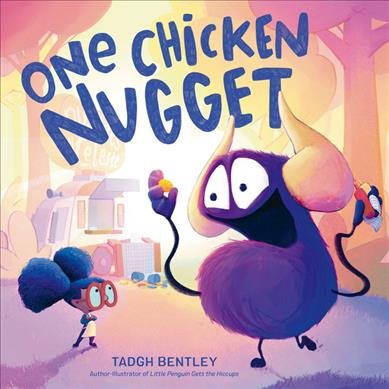
One Chicken Nugget by Tadgh Bentley

You have to respect any author who looks at Demi’s One Grain of Rice and thinks to themselves, “That’s pretty good, but what if you filled it with chicken nuggets and hungry monsters instead?” Thus is born a legitimately hilarious and downright bizarre math-friendly tale. On the front endpapers (which are filled with fantastic equations) there’s this clever little mention of “The Legend of Sissa ibn Dahir” which is one of the earliest variations of this tale. The story itself is all about exponential growth (as is explained in the magnificently helpful Author’s Note in the back) and gluttony. In it, a monster by the name of Frank has a single scintillating passion: chicken nuggets. Particularly, the nuggets produced by Celeste and her food truck. Trouble is, Celeste is not as enamored of Frank. Monsters aren’t great on the whole payment idea, and Frank has a tendency to eat Celeste’s stock entirely. So she goes to the library, reads up on marketing, math, and folklore (a super combo) and has a Double or Nothing Nugget Eating Challenge (which sounds like a TikTok challenge as well). It’s simple. If for 30 days you can eat double the nuggets you at the day before, and do it for 30 days, you’ll get nuggets for life. This is basically Mr. Beast: The Picture Book. Frank is sure he can handle it, since it seems so simple at the start, but he has no idea how many nuggets are in his future. It’s a hoot, and Bentley’s art perfectly complements the storytelling. Put this one in your yes pile (just be prepared to get hungry for chicken nuggets along the way). 

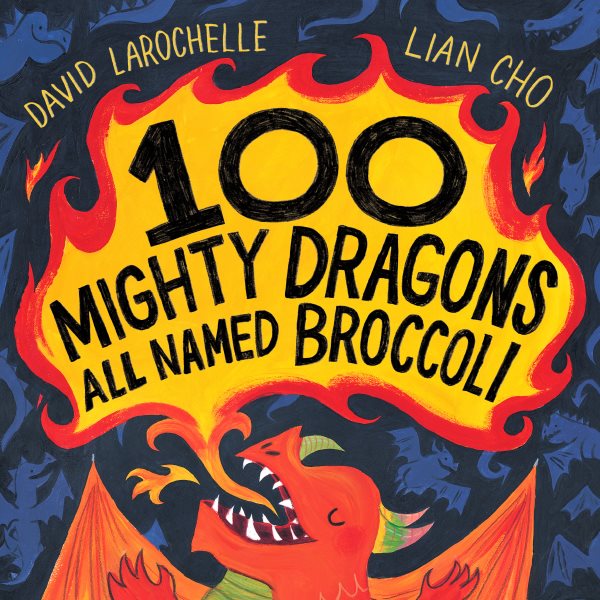
100 Mighty Dragons All Named Broccoli by David LaRochelle, ill. Lian Cho

I wonder what thoughts crossed Lian Cho’s mind when first she was handed this manuscript. Perhaps she wondered, “Do I really have to draw 100 different dragons for this book?” (she did). Or maybe thought, “Will I actually have to keep track of the dragons and make sure that I can tell one from another, and remember who they are, as I make the book?” (she did and quite well too). Now at first I thought that perhaps there weren’t 100 dragons at the beginning of the book. Then I realized that if you put the first three pages together, there really and truly are. But though this is a counting down book (sorta) LaRochelle is playing by his own peculiar set of rules. As he sees it, You could go from 100 to 50, 50 to 40, 40 to . . . 38? There isn’t any consistency that I can figure with the amounts by which the dragons decrease or (and this was a surprise) increase momentarily again at the story’s end. I do know that if you do the math, it works out. Plus, Cho gets to have loads of fun drawing dragons in places like South Dakota, West Virginia, or with the Green Bay Packers. But best of all? The man nails the ending on this one. It has a killer finish that I won’t ruin for you. A numbers book that shows how playful numerals can really and truly be.

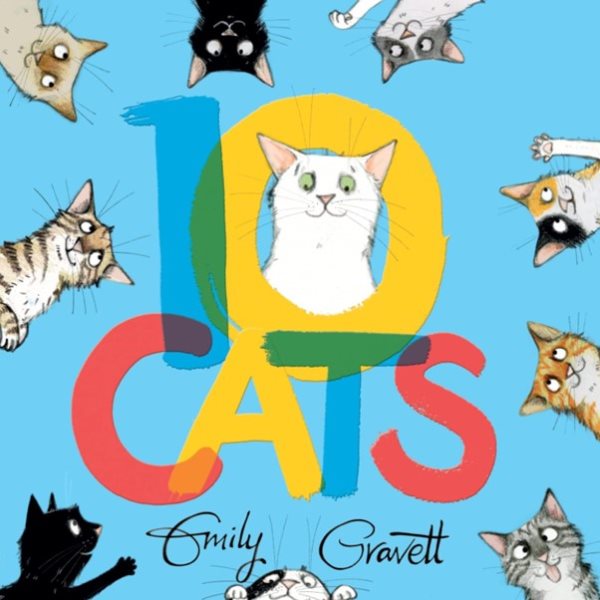
10 Cats by Emily Gravett

Nine kittens and mama cat get into a mess of feline trouble with colorful results. This is just your average counting/color mixing/pattern recognition/seek-and-find book filled to the brim with adorable kits. Now 2023 was a pretty heavy year in terms of serious, meaningful content. But when making my lists, I need to balance some of that sobriety out with lighter and younger fare. Enter, Emily Gravett. I like cats but I don’t just fawn over every cat picture book I see. This one, however, is exceedingly simple but is doing several things at once. It’s a counting book, a seek-and-find, and a color mixing title all at once. There’s also a bit of pattern recognition (which math aficionados love to see in picture books). I think I can honestly say it’s one of the better counting books I’ve seen in a long time. Simple but doing a bunch of different things at once and doing them exceedingly well. Making a book like this is harder than it looks!

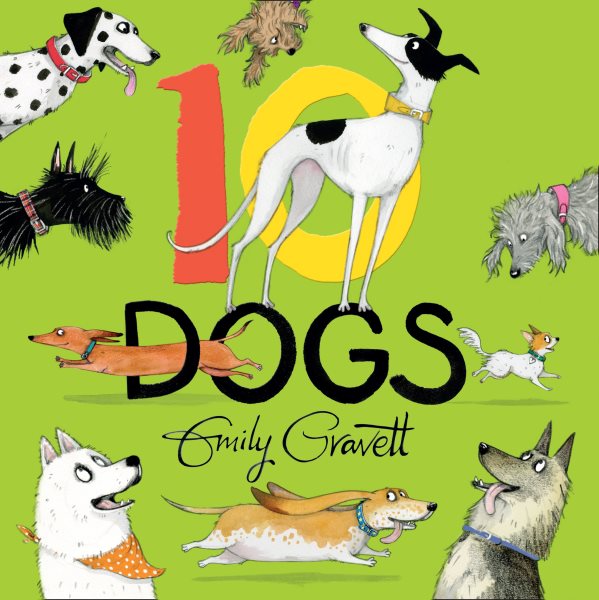
10 Dogs by Emily Gravett

Yeah yeah yeah, it’s the same book as 10 Cats, except this time with dogs . . . sorta. My personal opinion is that 10 Cats is technically the superior title. That book had (as I mentioned) counting, seek-and-find, color mixing, and pattern recognition. But really, it seems fitting that the cat book would be just a bit more sophisticated than the dog one. This one may not be attempting to wow you with its cleverness but its heart is in the right place. In our very first scene we see ten dogs and, on a table behind them, ten linked sausages. What follows is a doggie free-for-all where those sausages pass all around and yet mysteriously never get eaten until the very end. What’s kind of neat about this book is that the sausages always number ten but in different combinations. So you might have two on one page and eight on the other in one two-page spread, and then five and five on the other. As for the dogs themselves, it doesn’t take a genius to notice that Gravett is clearly a fan of them. Who’s a good book? You are! You are!

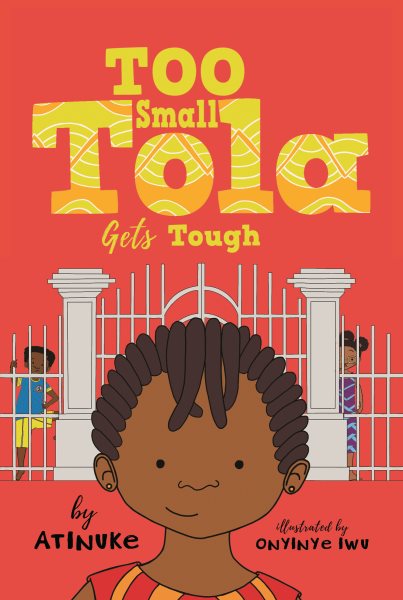
Too Small Tola Gets Tough by Atinuke, ill. Onyinye Iwu

Our only chapter book title on today’s list! When the pandemic hits Lagos, Nigeria, Tola finds herself working as a housegirl for the super rich, to help her family. And when her love of numbers comes in handy, she proves that even if you’re small you can still save the day. I couldn’t resist. I try to avoid sequels as a rule on my lists but every Too Small Tola title in the series stands entirely on its own and this one is SUCH a good one! In it, the pandemic hits Lagos and hits it hard. I can’t think of a single children’s book that’s ever explored what kids had to deal with during lockdown in other countries. Plus you know my fondness for math titles and this book is positively brimming with it! I didn’t find it particularly farfetched to believe that Tola could be the one to save the day here. And as with all of Atinuke’s books, there is a lot here that adults will understand that’s above and beyond what kids will. An absolute winner (and funny to boot).

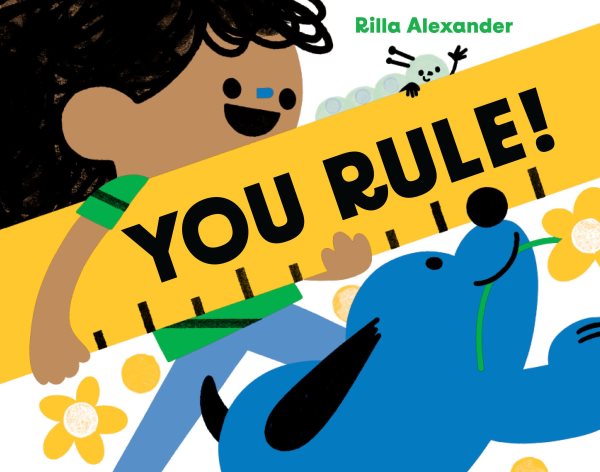
You Rule! by Rilla Alexander

How do you measure the immeasurable? How do you quantify the unquantifiable? Rilla Alexander takes a big swing with her latest book, attempting to (in the words on the bookflap) “think about time and love and what it might be like if there was a ruler for ideas and feelings.” The end result is a complicated book unafraid to present spectrum after spectrum after spectrum. These ranges are then incorporated into the art, which keeps it from feeling quite so much like an infographic brought to life and more (thanks in large part to the visual storytelling) like a tale for kids. So why am I putting it in the math category? One thing I learned from my time on the Mathical Prize committee is that instilling a love of math doesn’t mean making kids count or look at shapes all the time. It’s important to show how math is infused in every aspect of life, and what better way to do that then show multiple ranges of multiple things in a single day of a kid’s life? A cool concept rendered… uh… coolly.

Yumbo Gumbo by Keila V. Dawson, ill. Katie Crumpton

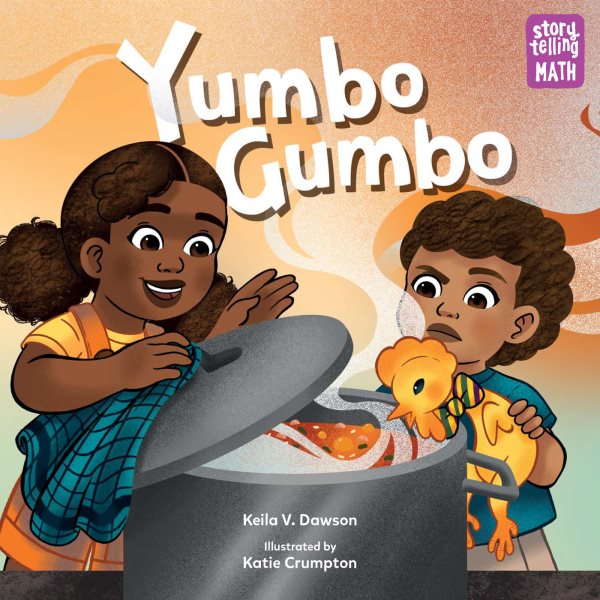
Warning: Do not read on an empty stomach. The “Storytelling Math” series from Charlesbridge is one of the very few from a major publisher to actually focus primarily and exclusively on math. But what makes the series so good is that they cover so much more than counting and subtracting. They delve into pattern recognition, and size comparison and, in this particular case, voting, data, and problem solving. It’s actually one of the cleverer books on the subject I’ve seen, and that’s entirely apart from all the delicious gumbo on its pages. In this story Annabelle is learning to cook gumbo but she wants to make it with okra. Her brother (who, to my mind anyway, is correct) thinks okra is too slimy and wants chicken gumbo. When Annabelle takes a vote from her family, she finds it’s three to three. The introduction of seafood gumbo sounds like the solution, except that then the vote becomes two to two to two. The solution? Annabelle has everyone vote on their least favorite. And when that happens, the vote is split in a good way between chicken and okra. Seafood wins! Backmatter delves into the history of gumbo itself, a glossary of some of the Louisiana Creole terms that pepper the text, info on the math and even a “Try This” section care of Dr. Yvelyne Germain-McCarthy (a Consultant and Professor Emerita of Mathematics Education) on voting with your own family. I never really thought of voting as a math related activity, but this book has definitely convinced me otherwise.


Hope you enjoyed these! Here are the lists you can expect for the rest of this month:

December 1 – Great Board Books

December 2 – Picture Book Readaloud

December 3 – Simple Picture Book Texts

December 4 – Transcendent Holiday Picture Books

December 5 – Rhyming Picture Books

December 6 – Funny Picture Books

December 7 – CaldeNotts

December 8 – Picture Book Reprints

December 9 – Math Books for Kids

December 10 – Gross Books

December 11 – Books with a Message

December 12 – Fabulous Photography

December 13 – Translated Picture Books

December 14 – Fairy Tales / Folktales / Religious Tales

December 15 – Wordless Picture Books

December 16 – Poetry Books

December 17 – Unconventional Children’s Books

December 18 – Easy Books & Early Chapter Books

December 19 – Older Funny Books

December 20 – Science Fiction Books

December 21 – Fantasy Books

December 22 – Comics & Graphic Novels

December 23 – Informational Fiction

December 24 – American History

December 25 – Science & Nature Books

December 26 – Unique Biographies

December 27 – Nonfiction Picture Books

December 28 – Nonfiction Books for Older Readers

December 29 – Audiobooks for Kids

December 30 – Middle Grade Novels

December 31 – Picture Books

Filed Under: 31 Days 31 Lists, Best Books, Best Books of 2023 Tagged With: 31 days 31 lists, math, math picture books

31 Days, 31 Lists: 2023 Picture Book Reprints

December 8, 2023 by Betsy Bird

Every picture book author has or will experience the sad day when one of their books goes out of print. Like a candle, it will do so softly and without fanfare. And yet… and yet… there are rare moments when a book is brought back to life by a publisher. But why? They know that a reprinted picture book can win no awards. They know that the likelihood that it will earn great gobs of cash is unlikely. No, my friends. The brave publishers that bring such books back do so for one reason and one reason alone: love. The love of the people who remember that book from their childhood. The love of the author and/or illustrator who put their heart and soul into those pages. This is the only explanation, and so today we honor that love. We honor that commitment. That raspberry in the face of capitalism that demands that everything be new and shiny. Today, and only for today, we honor the reprints.

Here is a pdf of today’s list, if you’d like one.

Care to see the previous years’ lists? Then check these out:

  • 2022
  • 2021
  • 2020
  • 2019
  • 2018
  • 2017
  • 2016

2023 Reprinted Picture Books

The Cat at Night by Dahlov Ipcar, with a tribute from Carl Little

50 points to you if you read this book’s title and don’t immediately start singing it to the tune of “Deep in the Heart of Texas”. I admit to not knowing a lot about Ipcar, though she had a “four-decade creative run” (great phrasing at work there) from the 1940s to the 80s. This book is really quite simple. It follows a black cat with white belly and paws as it roams about outside all night. “But what does the cat do out there in the darkness all night long?” The book makes it clear that the cat can see better at night than you or I by doing fun things with black silhouettes against a deep blue sky. Kids are given a chance to guess what those silhouettes are, before they are revealed. The cat’s adventures finally end in the morning, back at the house, where it falls asleep in an armchair as the farmer says, “What a lazy cat. He sleeps all night and he sleeps all day, too!” There’s a lovely little tribute at the end by Carl Little where he offers both a biography of Ipcar and a consideration of her work. “Her young audience, and those of us more advanced in age, experience a kind of enchantment when we turn the pages, as we look for the hidden animal or are dazzled by her designs.” For the people of Maine, she is considered a treasure. Makes sense for the rest of us to feel the same way too. 

The Chimpansneeze by Aaron Zenz

Zenz is back! But did he ever really leave us? One thing that did leave us is this book, and what a kooky journey it has had. Eleven years ago it appeared as a two dollar paperback only via Scholastic Book Club fliers. If you’re familiar at all with Zenz’s wildly successful Hiccupotamus (which I still find in my holiday catalogs that I receive in the mail) then it won’t surprise you to hear that Chimpasneeze here was intended to be a companion picture book. Trouble is, the way it got sold, no one really knew it even existed. Heck, I didn’t even know about it, and I’m a big time fan of its predecessor. This year Zenz decided to put his back into it and convince his publisher that this book was worth returning to the market and it worked! Now they’re releasing this as part of the “Hiccupotamus and Friends” series, which is good news for all of us. And the book? Utilizing his usual clever rhymes, he tells the story of a sneezy ape and the hijinks that inevitably ensue. I like it because at the beginning you meet the chimpanzee and its best friend, a kinkajou. You may be wondering, as I did, why a kinkajou? Well, it takes the whole book, but at the end there is (and if you guessed this then you’re a cleverer person that I) a kinkachoo! 

The Fearless Little Farm Boy by Astrid Lindgren, ill. Marit Törnqvist

I love me a little Astrid Lindgren and this Marit Törnqvist character seems to know what she’s doing. Originally published in Sweden in 1991, and then eventually in England under the title “Goran’s Great Escape” (and I can’t decide if I like that title better than this one or not), the original text is actually from 1950. This version seems to retain the original art from that 90s edition and concerns a bull that is being, as we say in my family, a bit of a pistol. One day the normally placid Goran, the bull, decides he’s in a bad mood, so he determines to escape. This happens on, of all days, Easter Sunday and proves to be the entertainment this small town so desperately craves. Trouble is, now that Goran’s in the yard and not in the barn, how is anyone going to get him back in. It takes one small boy with “small, dirty, farm-boy fingers” and kind words to do the deed. It’s just about the sweetest thing you’ve seen without ever getting saccharine, so give it a looksee when you’ve a chance. It’s a bit of a charmer.

Friends by Mies Van Hout

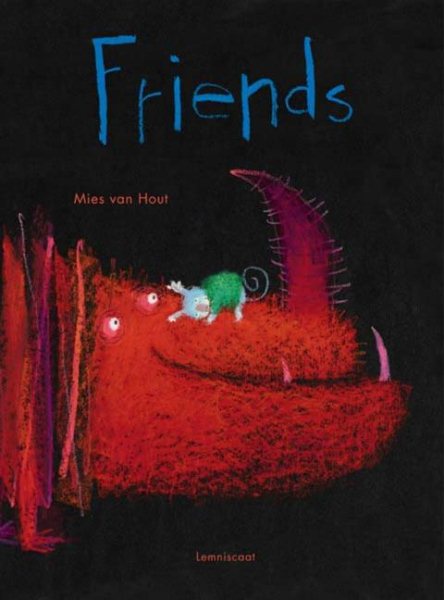
This year we saw the rerelease of Happy by Mies Van Hout (see below) come out in tandem with another reprinted title (on American shores anyway) Friends. These are Dutch titles, but their peppy, electric coloring is of universal appeal. Part of what I like so much about Hout’s books is their disinclination to slide, even ever so slightly, into pablum. Now with a title like “Friends” you might be wondering just how precisely the book’s creator, placing only a single solitary word on each page, could simplify without utter simplification. Well, the first word in this book might be “Play” but that is quickly followed up by “bore”, “tease”, “fight”, “cry”, “ignore,” and “embarrass.” Don’t worry. Things turn around after that. Best of all, the monsters on these pages are always different, so you’re not following the same pair across all these different emotional journeys. Is this a Social and Emotional Learning book? You bet your sweet bippy it is. It just also happens to be a legitimately good book on learning what emotions are as well. Covering all kinds of different areas, these brightly colored monstrosities against their black backgrounds are bound to capture a few hearts along the way.

Hansel & Gretel by Neil Gaiman, ill. Lorenzo Mattotti

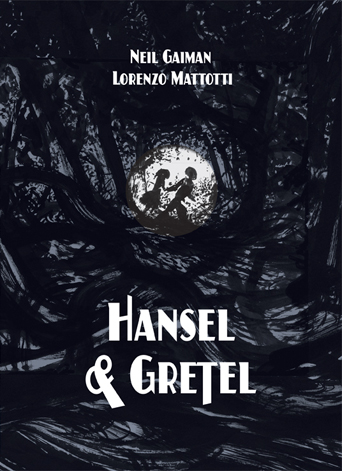
Like this year’s Bea Wolf by Zach Weinersmith, the true reason the public didn’t initially embrace Neil Gaiman’s interpretation of Hansel & Gretel has nothing to do with his wordsmithing (totally a word) or tone and everything to do with the fact that this book was published in black and white. You know, as much as I am ready, willing, and able to tell you that the American public is capable of handling black and white art in their children’s literature, the simple fact of the matter is that when it comes to American parents, colorless narratives freak them out. Sorry, but it’s true! The generation raised on He-Man and TMNT has very little ability to deal visually with what artist Mattotti calls “the evocations of shapes, the realm of the imagination.” Still, this is a wonderful book, Gaiman’s writing is above par, and TOON Books believed enough in this publication to reprint it after its 2014 release, back in the day. And I? I, for one, am HERE for it! It’s a straight retelling of the original tale. You can read my full review of the book when it originally was released here. As I said at the time, “It’s not about what we fear happening to us. It’s about what we fear doing to ourselves by doing terrible things to others. The fat from the meat is running down our chins. Best to be prepared when something comes along to wipe it up.” And no. I have no idea what I meant by that. 

Happy by Mies Van Hout

Who’s happy? I’m happy! Why am I happy? Because Happy by Mies Van Hout has been republished a full 11 years after it first came out! I can actually remember its first printing, and I was unaware that it went OUT of print in the first place. Fortunately this new Pajama Press printing boasts “extra-heavy pages that will endure through countless readings.” Good thing too because with its brightly colored fishies splayed across the page against deep black backgrounds are featured alongside single descriptions like “shy” or “brave”. This book has a simplicity that can be hard to find in a lot of older picture books. Little wonder it will be turned into a board book in 2024.

Little Red Riding Hood retold and illustrated by Trina Schart Hyman

Clever little Holiday House. With its 40th anniversary nigh, this book was perfectly timed in one particular way: It came out after Jason Chin’s Caldecott win. Did you happen to hear Jason’s Caldecott acceptance speech when he gave it? I’ve watched Jason present many times over the years, starting with the publication of his book Redwoods, and I’ve always found him to be an engaging, if a slightly quiet, speaker. But man, when he gave that speech I was absolutely riveted. It turns out that he has, what I would consider to be, a most unlikely mentor. Much in the same way that Jarrett Krosoczka was influenced by Jack Gantos, Chin was friends in his youth with Trina Schart Hyman. Now both Chin and Hyman have an ability to render reality in unique ways. Her strength always came in the faces of her characters. As he writes in his introduction for this republication, “Remarkably, Trina never asked anybody to pose for her. She just drew them from memory, a fact that still leaves me dumbfounded.” I also love that he alludes to the fact that this book was challenged back in the day due to the fact that Red Riding Hood is bringing Granny a great big old wine bottle (quoth Chin, “book banners be damned!”). The book itself is rendered beautifully, the colors popping as brightly as they did the day they were conceived back in 1983. Of course now I’m hoping that we get to see more Jason Chin intros to Trina Schart Hyman books in the future. Would love to see what he’d do with King Stork . . .

Need a House? Call Ms. Mouse! by George Mendoza, ill. Doris Susan Smith

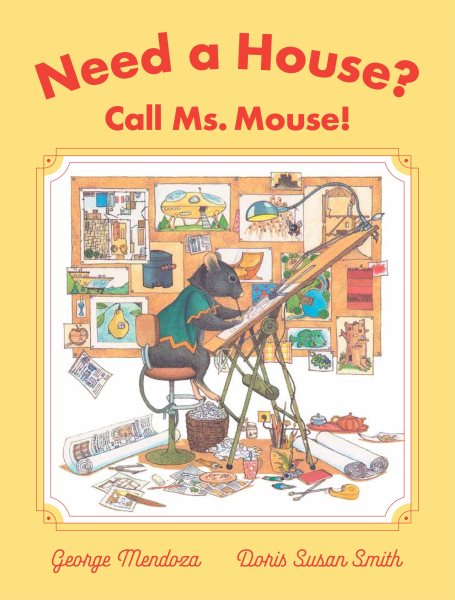
I cannot express to you in words just how desperately I wanted this to be a new book when I first saw it this year. Yes, I know it was published by the New York Review of Books and that they specialize in reprints, but there was just such a charming sensibility to the book that I hoped against hope (though the whole copyright being named “by the Estate of George Mendoza” probably should have been a tip off). As it stands, this really is a reprint of an old book. The original came out in 1981 and it feels like nothing so much as a modernized version of those old Brambly Hedge tales I used to read as a kid. So the real question becomes, is this something a kid would enjoy? Of course it is! Ms. Mouse (love than it’s “Ms.” right there) is this killer female architect, so right there, folks. Right there. Plus every house for every animal she makes is just so clever and filled to brim with neat details. I love intricate pen work, and Doris Susan Smith delivers over and over again. I confess that I suppose that I should have guessed that it was a reprint from the modernist styles utilized, but since everything old is new again, I simply wasn’t sure. As for kids, they can read through this and decide which of the houses they like best (and would like to live in someday). One of those books that makes me sad my kids are too old for picture books anymore. I would so read and reread this. 

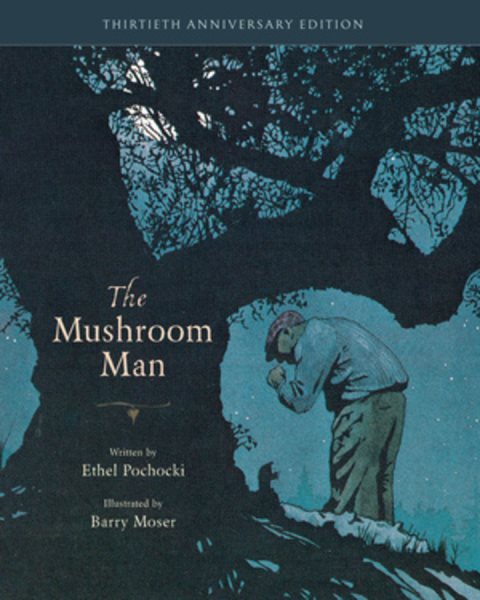
The Mushroom Man by Ethel Pochocki, ill. Barry Moser

Life’s too short not to occasionally rediscover something as thoroughly charming as this incredible and unconventional picture book about a lonely man finding a friend. Author Ethel Pochocki was a woman after my own heart. She worked for New York Public Library for many years (while raising EIGHT children) and wrote children’s books on the side. This book’s text was paired with the art of the incomparable Barry Moser, and I was so happy to see that with this 30th anniversary reprint Barry has offered a little essay at the back about working on this book. His piece is really worth the price of the title alone, but let’s just get into the story a bit. Our hero, the titular Mushroom Man, is a lonely fellow teased by the people of his town, particularly the local children (and no one does a horrible child’s face better than Barry Moser). He’s terribly lonely, and one day he befriends a cat. The cat remains with him a while, but ultimately abandons him. Bereft, he soon thereafter makes the acquaintance of a mole. Next thing you know, the two are absolute best friends, enjoying a Christmas together (“The mushroom man gave the mole a tin of worms imported from France..”). You will probably not find a sweeter story than this. This is one reprint that should be hailed to the hills as an incredible find!! 

The Wind in the Willows by Kenneth Grahame, abridged by Lou Peacock, ill. Kate Hindley

While I am naturally wary of abridged titles on the whole, I have to admit that if you’re trying to capture the original language of Grahame, but you don’t want to slog through “The Piper at the Gates of Dawn” chapter, maybe abridging The Wind in the Willows isn’t the worst way to go. Think of it as a gateway book. Then, if the kid likes it, you might wait a year and then try them out on the proper version (though I don’t envy you trying to decide which illustrated edition to use). Here we see art from one Ms. Kate Hindley who is perfectly comfortable with depicting powdered wigs, suspenders, bobbies and more. There’s no Pan, but it’s a rather charming compendium just the same. 


Hope you enjoyed these! Here are the lists you can expect for the rest of this month:

December 1 – Great Board Books

December 2 – Picture Book Readaloud

December 3 – Simple Picture Book Texts

December 4 – Transcendent Holiday Picture Books

December 5 – Rhyming Picture Books

December 6 – Funny Picture Books

December 7 – CaldeNotts

December 8 – Picture Book Reprints

December 9 – Math Books for Kids

December 10 – Gross Books

December 11 – Books with a Message

December 12 – Fabulous Photography

December 13 – Translated Picture Books

December 14 – Fairy Tales / Folktales / Religious Tales

December 15 – Wordless Picture Books

December 16 – Poetry Books

December 17 – Unconventional Children’s Books

December 18 – Easy Books & Early Chapter Books

December 19 – Older Funny Books

December 20 – Science Fiction Books

December 21 – Fantasy Books

December 22 – Comics & Graphic Novels

December 23 – Informational Fiction

December 24 – American History

December 25 – Science & Nature Books

December 26 – Unique Biographies

December 27 – Nonfiction Picture Books

December 28 – Nonfiction Books for Older Readers

December 29 – Audiobooks for Kids

December 30 – Middle Grade Novels

December 31 – Picture Books

Filed Under: 31 Days 31 Lists Tagged With: 2023 picture book reprints, 31 days 31 lists, picture book reprints

31 Days, 31 Lists: 2023 Caldenotts

December 7, 2023 by Betsy Bird

I thought of it just a little too late. You see, each year I write up my “Caldenotts”. These are books that, due to the current state of the rules regarding books that are eligible for the Caldecott Award and Honors, will never see that particular shiny sticker grace their book jackets. That’s okay. I think a lot of us know that these books usually are celebrated, if anywhere, on the New York Times/New York Public Library Best Illustrated lists. Personally, I like to celebrate them as well, but this year I realized a touch too late that I’ve been limiting myself. It shouldn’t just be Caldenotts I celebrate. I should have a separate list of Notberys too! Books ineligible for the Newbery Medal! I don’t know why I didn’t think of it before. Ah well. Next year, look for that particular inclusion on the list. This year, we’ll have to be content with these particularly beautiful book instead. Poor us!

You can find the PDF of the entire list today here.

Oh, and if you’re interested in previous years and their CaldeNotts take a gander at these:

  • 2022
  • 2021
  • 2020
  • 2019
  • 2018
  • 2017
  • 2016

2023 Caldenotts

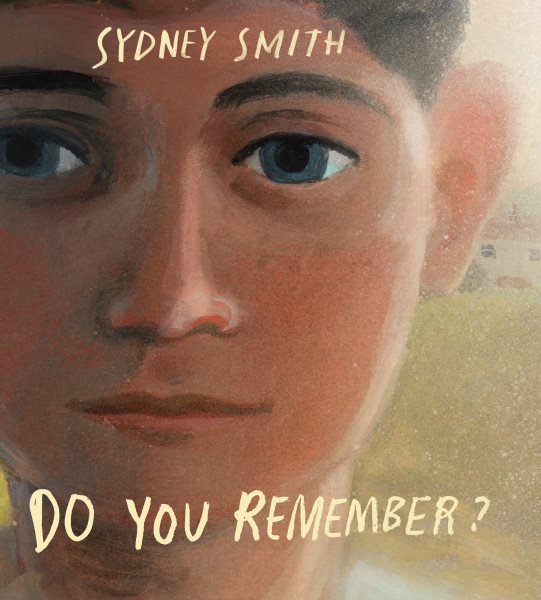
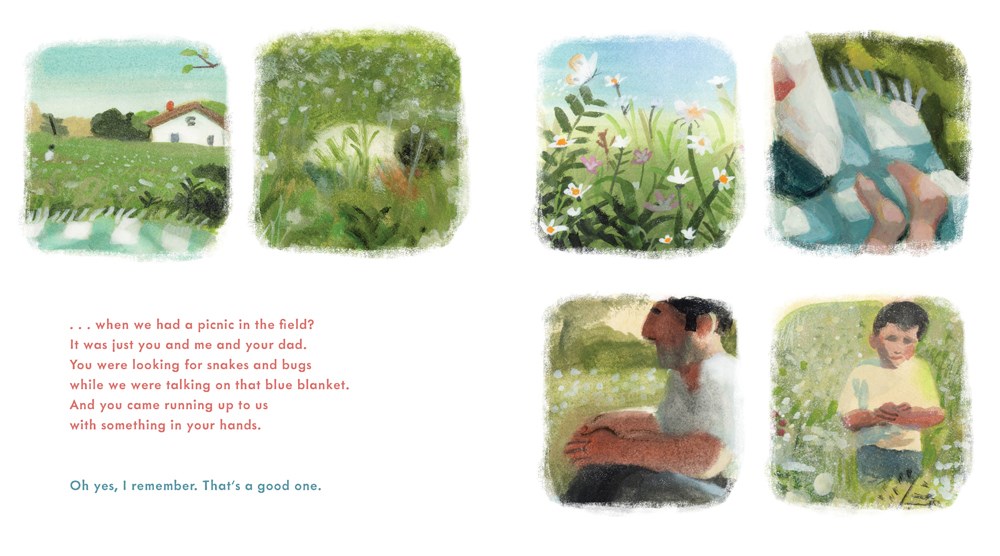
Do You Remember? by Sydney Smith

“Can we make this a memory too?” A boy and his mother lie in bed remembering happy and sad times from the past in this sweet and evocative tale. Doggone it, who gave Sydney Smith permission to put two books out in the same year? Not cool, Sydney. Now I’ve have to deal with a load of trouble on my hands figuring out which one to include on one list or another this month. I’ll confess that personally I still think that his other title My Baba’s Garden is my personal favorite (based entirely off of what he’s doing with light in that book) but we can’t discount this one at all. At first I thought it might be about a son and mom remembering a deceased father but it appears to be a lot more open than that. You could interpret this in a lot of different ways (which sort of reminds me of that picture book Boats for Papa, actually). Fabulous tone, writing, art, and design. This is the first instance you’ll see today of a Canadian artist who cannot win a Caldecott, but not the last.

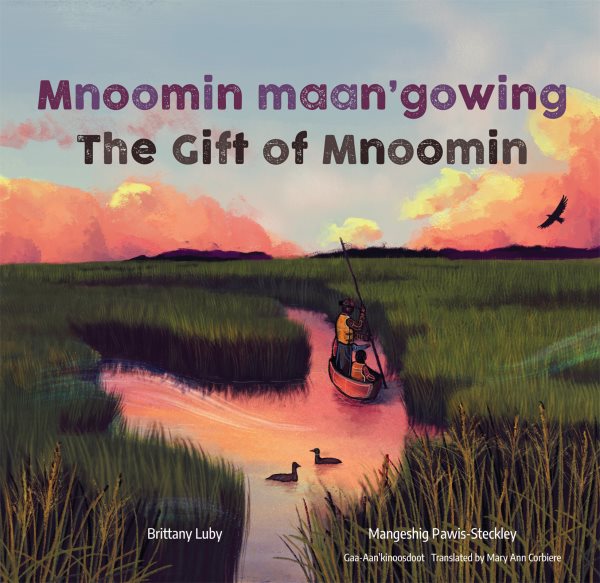
The Gift of Mnoomin / Mnoomin Maan’gowing by Brittany Luby, ill. Joshua Mangeshig Pawis-Steckley, translated by Mary Ann Corbiere

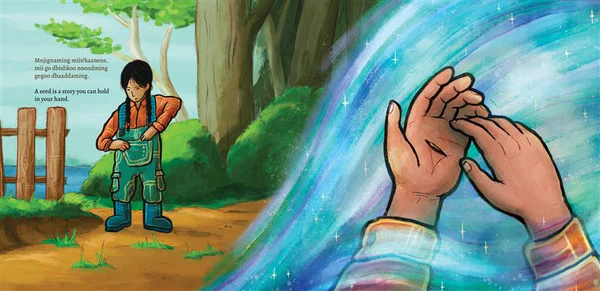
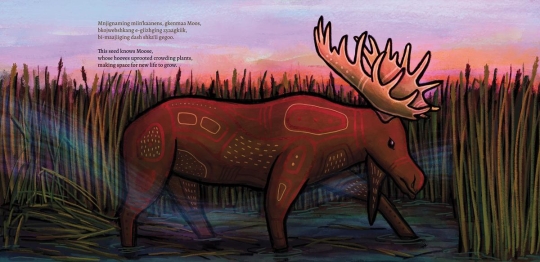
The ecosystem around the growth of mnoomin is highlighted in this sumptuous dive into the interconnectedness of nature, published simultaneously in English and Anishinaabemowin. Oo! Look at this little charmer. If you’ve a fondness for picture books that highlight the nature and how all aspects rely upon one another, have I got a book for you! The central focus of this book is the harvesting of a plant often mistermed “wild rice”. But rather than make humans out to be the primary instigators of its creation, this story shows how all the different insects, mammals, fish, and birds work together as the mnoomin continues to grow. And the art! Joshua Mangeshig Pawis-Steckley is an Ojibwe Woodland artist and he brings this incredible depth of color and style to all the art here. His sunsets and sunrises alone are worth looking into deeply. Truly beautiful and inconveniently Canadian.

I Wish I Could Tell You by Jean-François Sénéchal, ill. Chiaki Okada, translated by Nick Frost and Catherine Ostiguy

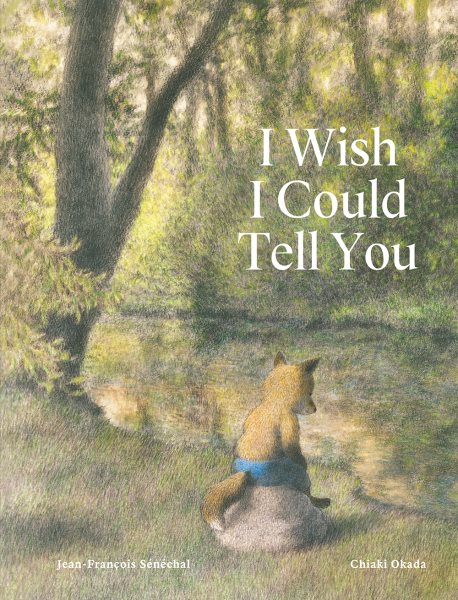
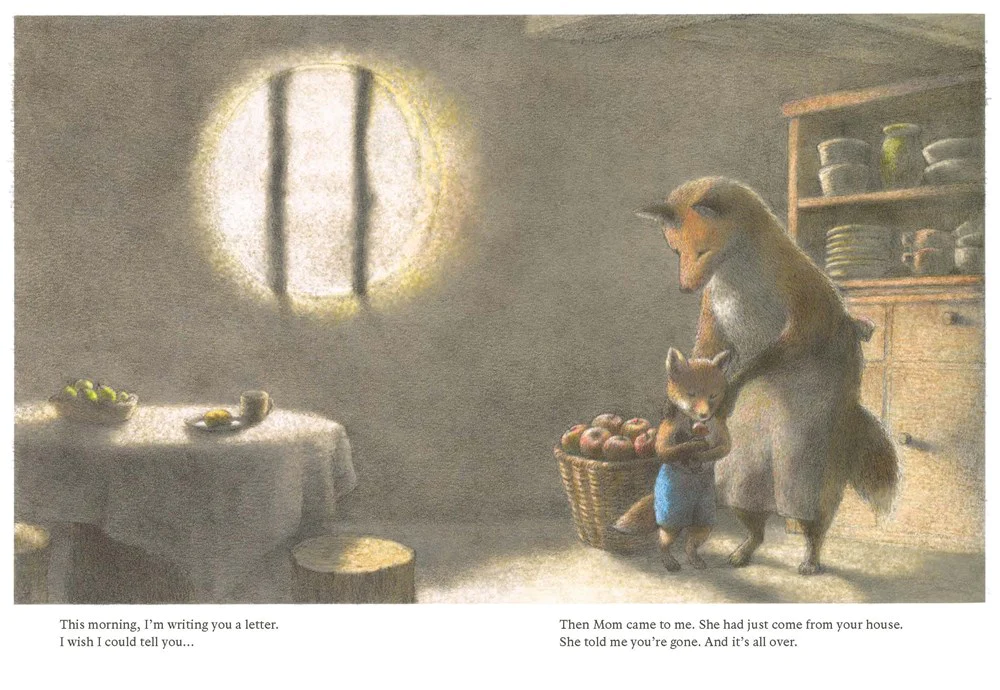
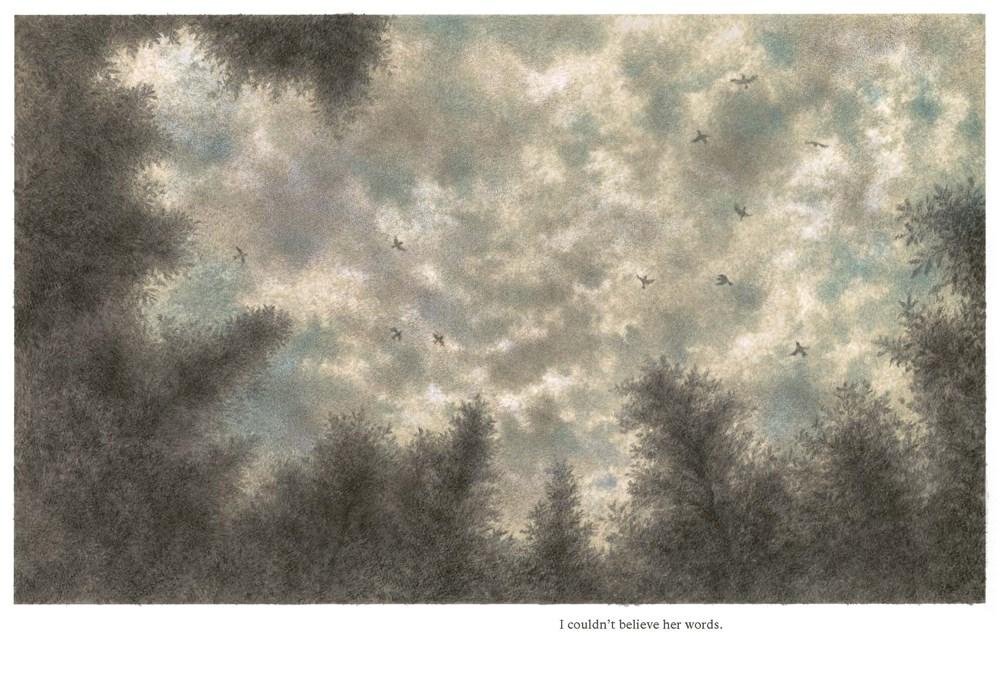
Meet artist Chiaki Okada. A Japanese illustrator, her weapon of choice is the grease-pencil, which gives her art this somewhat ethereal effect when it comes to light. According to publisher Milky Way Picture Books, this title is only her second English-language release, though she’s been published in Asia and Europe for years. For my part, I only really heard of this book when Travis Jonker at 100 Scope Notes did his annual round-up of titles he thought might have a chance at the New York Times Best Illustrated List (it’s one of my favorite lists that Travis does). In this story a little fox is writing a letter to his grandmother. She died not long ago, and the fox is wrestling with the fact that the last time he saw her, “I said nothing. Not a word”. You get these delightful flashbacks of the two making squirrels out of acorns and walnut shells and playing in other ways and as well. This is, at its heart, a grief book, but the kind where you just want to sit in the scenes for a while. Okada has a Vermeer-like appreciation for the way that sunlight in midday can stream through a window and hit the tops of a basket full of apples, or the way it can dapple a path in a forest. A book that is more than its subject matter. 

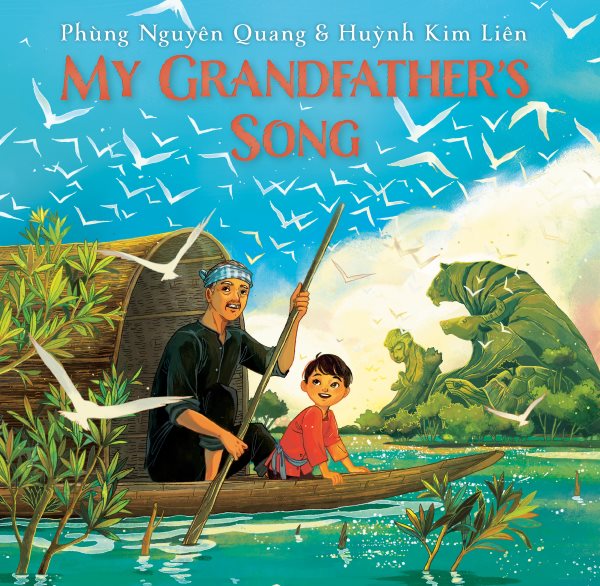
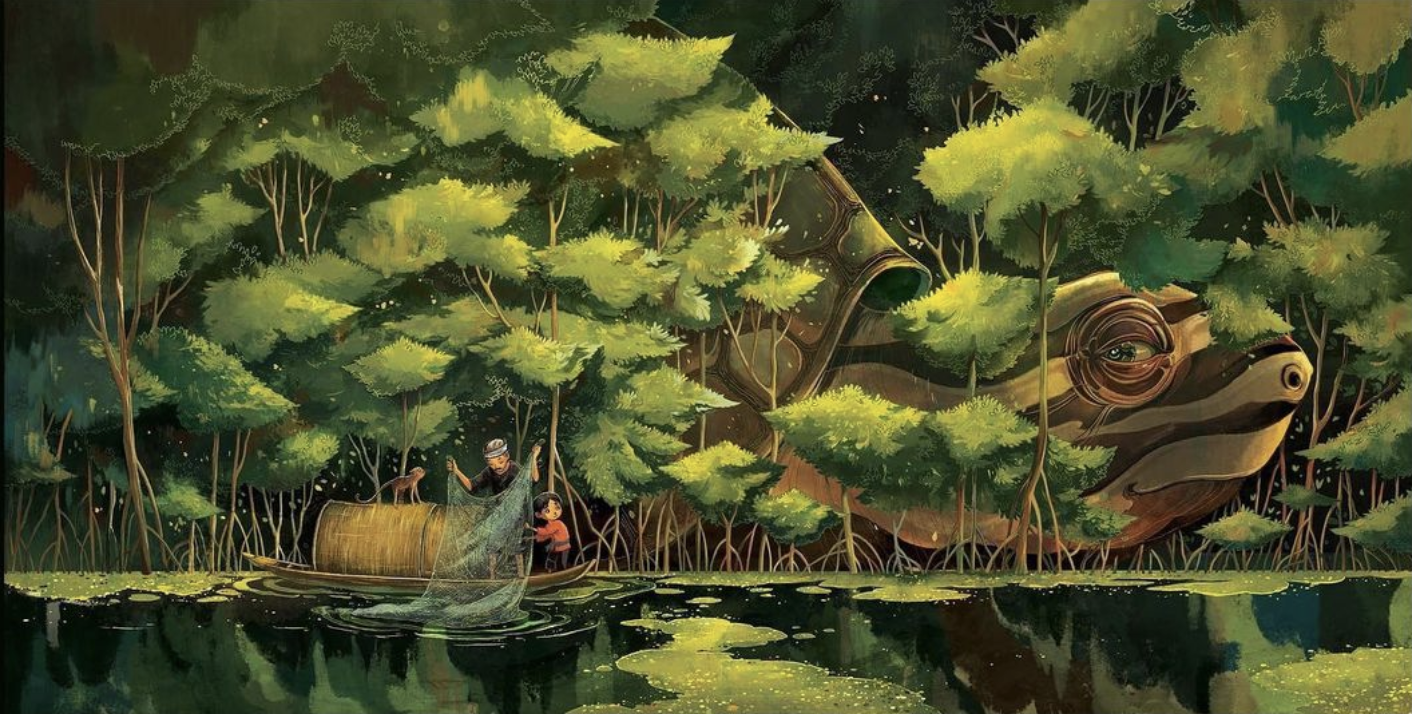
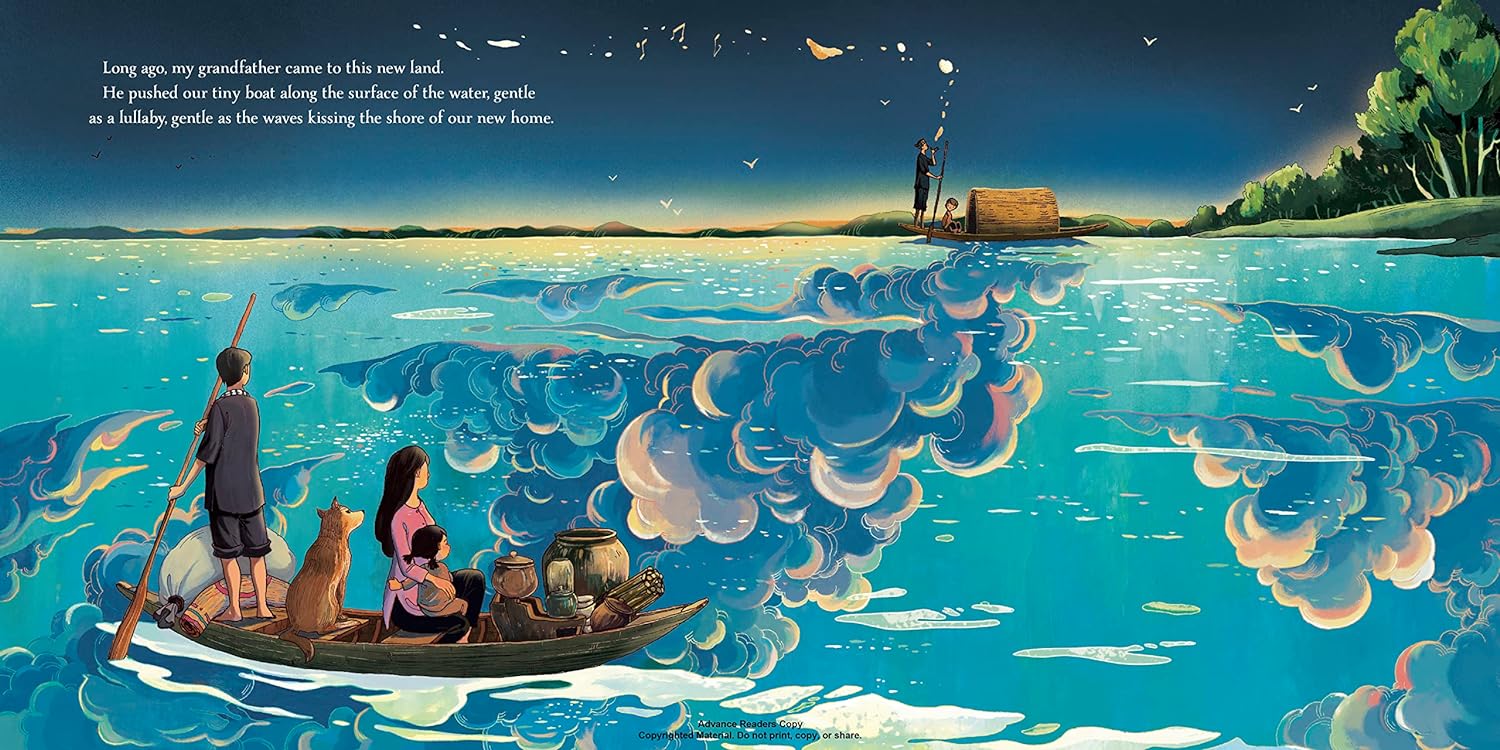
My Grandfather’s Song by Phùng Nguyên Quang and Huynh Kim Liên

Anyone want to join me in attempting to get to Quang and Liên to move to America? As it happens, you may have seen their work quite a lot this year. Perhaps you noticed the cover of Lei and the Fire Goddess or Meet the Megafauna. They’ve been patiently illustrating books for a while here, but this is (to the best of my knowledge) the first book that they wrote and illustrated themselves. In their Author’s Note, they discuss how personal this book is to them, and certainly it isn’t a story that I have ever heard myself. As they say, “We have written and drawn this story in tribute to the very first pioneers to the south of Vietnam. The story tells how they came, and tilled and sowed the land from marshes and jungles.” When the book opens, our only characters are a boy and his grandfather, living off the land and sea. The boy is continually afraid of the sounds of nature that surround them, so in a way this is kind of a fear-of-nature book as well. Only after a magnificent storm does the boy begin to grow comfortable with the world around him. In time, other families come and join them, the boy’s grandfather dies, and our hero teaches his love of the world to his own son. The book is illustrated entirely in Adobe Photoshop, but replicates the look of watercolors and even scratchboard art at times. It’s just a gorgeous use of the form, and my sole regret is that they would be ineligible for many a fine American literary award. 

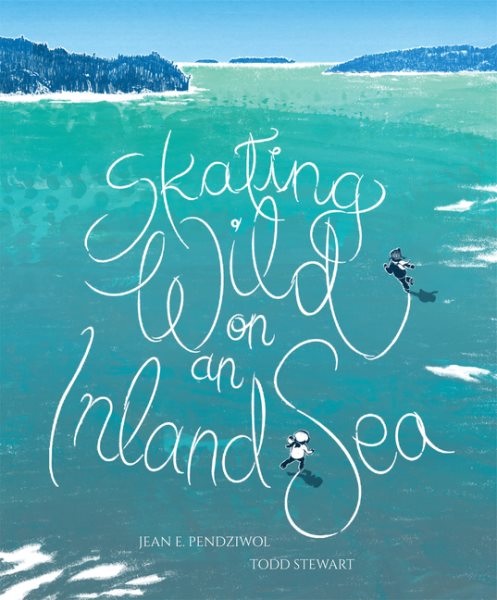
Skating Wild on an Inland Sea by Jean E. Pendziwol, ill. Todd Stewart

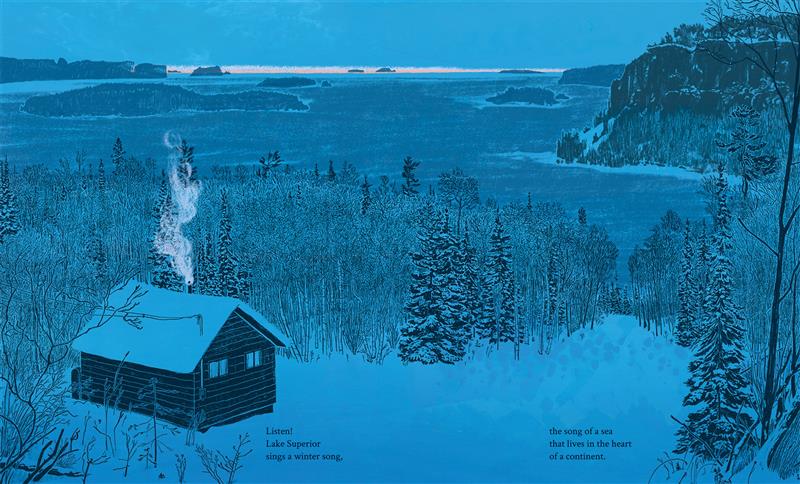
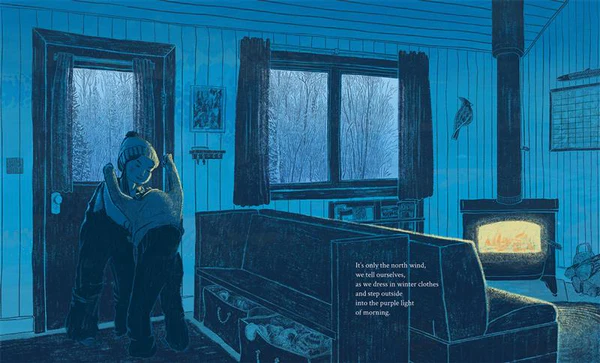
On the banks of Lake Superior, two kids wake in the early dawn, lace up their skates, and take a turn on the dark, wild ice. Well, here’s a beauty. And once more (I’m beginning to sound like a broken record here) this book would undoubtedly be a Caldecott contender if its illustrator were not so inconveniently Canadian. It’s a marvelous rendering of pre-dawn light on snow. I know we see a fair number of beautiful books in a given year, but there’s something so simultaneously cozy and grandiose at work here, that I think it’s worth considering. A marvelous wintery title.

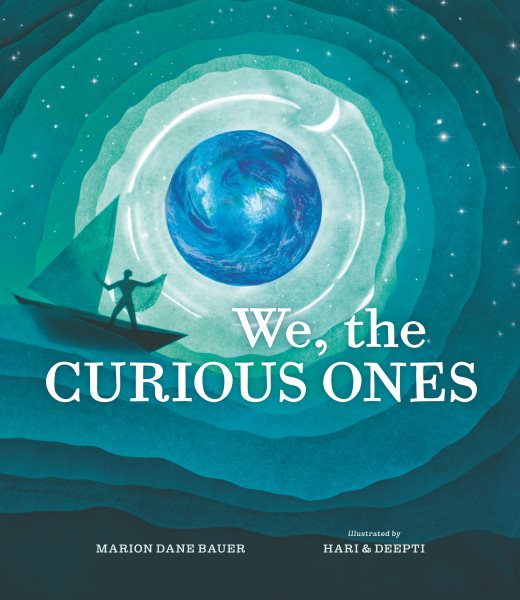
We, the Curious Ones by Marion Dane Bauer, ill. Hari & Deepti

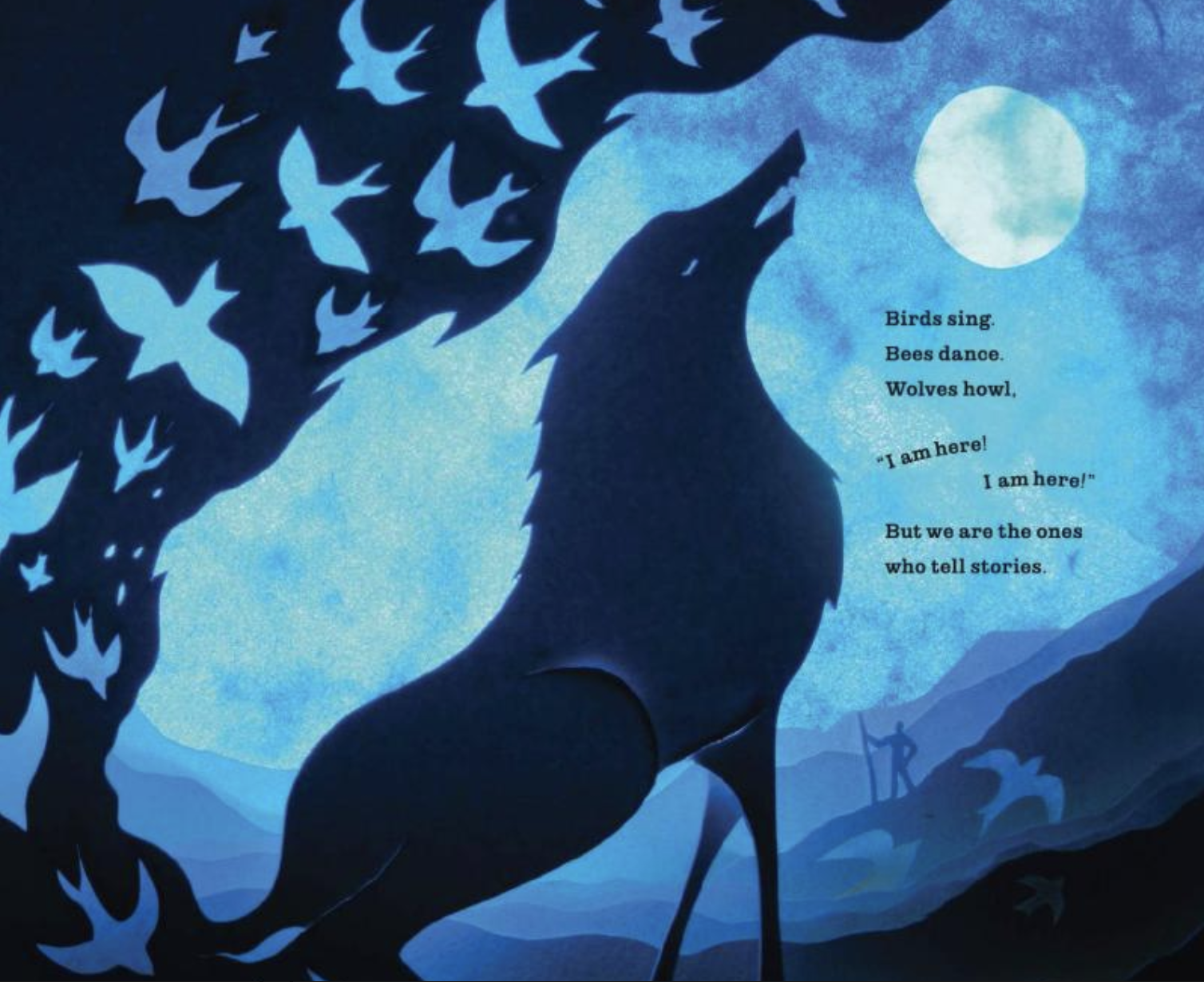
A companion, if you will, to Bauer’s previous book Stuff of Stars. I was joking earlier this year that this year the #1 trend in children’s books is The Anthropocene, but I wasn’t really kidding. I have never seen so many books for kids traipse headlong into that particular moment in human history. Bauer is no exception, though she’s definitely going to tackle the origins of humanity through a storyteller’s lens, more than anything else. “Birds sing. Bees dance. Wolves howl, ‘I am here! I am here!’ But we are the ones who tell stories.” She recounts how early humans made sense of the world around them through origin myths and other forms of storytelling. She discusses how those stories sometimes became ingrained, and when people tried to tell alternative stories (like who exactly revolves around whom when it comes to the earth and sun), that meant changing the narrative. Essentially this is a book about how our stories change as our understandings change, and how that connects to the universe itself. The art is by a husband-and-wife duo based in Mumbai. I enjoyed that in their contributor bio they open with, “Paper is brutal in its simplicity as a medium.” Oo! Tell me more! Here they create these incredible backlit paper dioramas that were “hand cut, painted, and photographed.” So no Caldecotts for them, but boy is this some incredible, inventive art. Come for the storytelling, stay for the engulfing beauty.

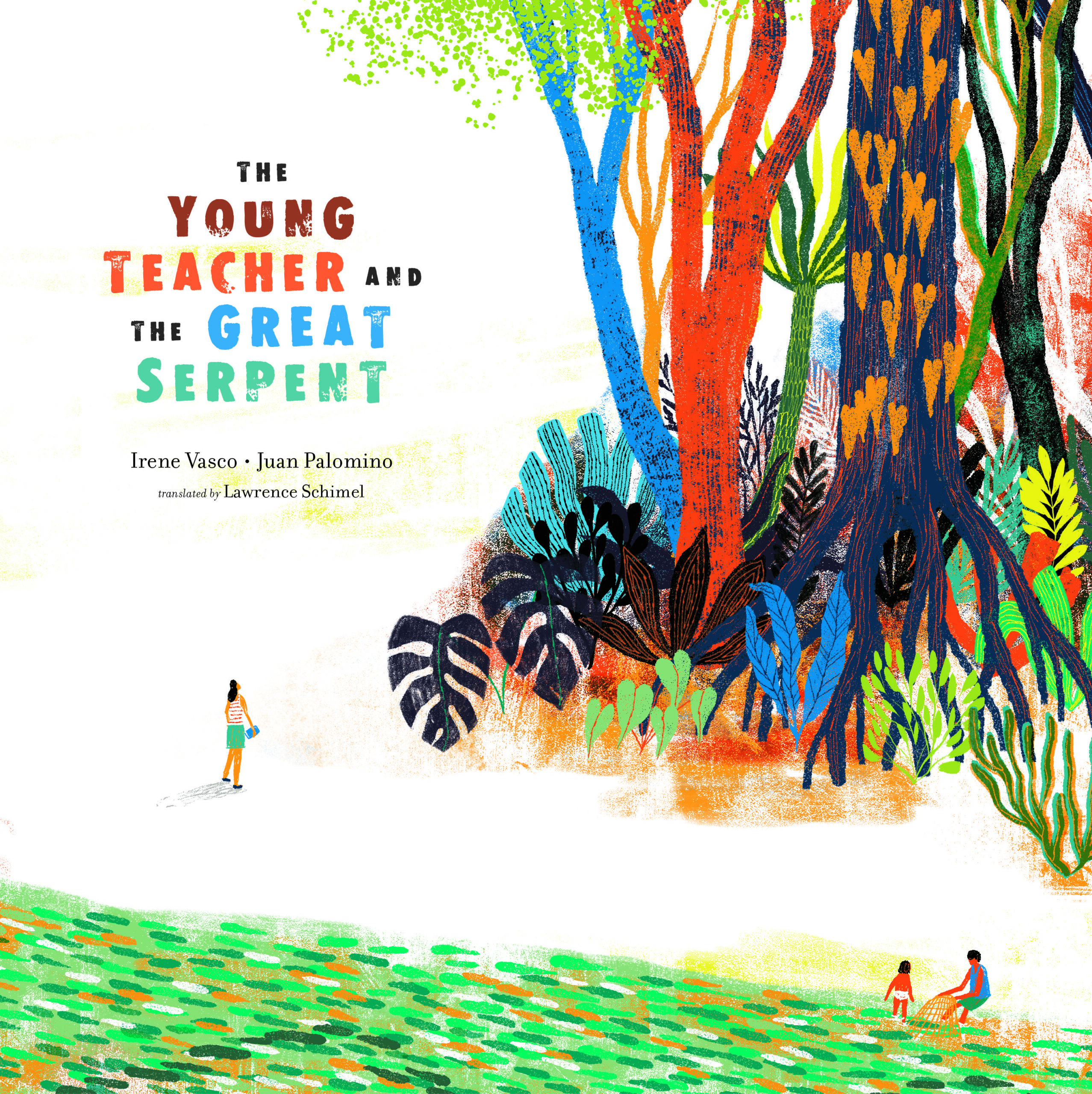
The Young Teacher and the Great Serpent by Irene Vasco, ill. Juan Palomino, translated by Lawrence Schimel

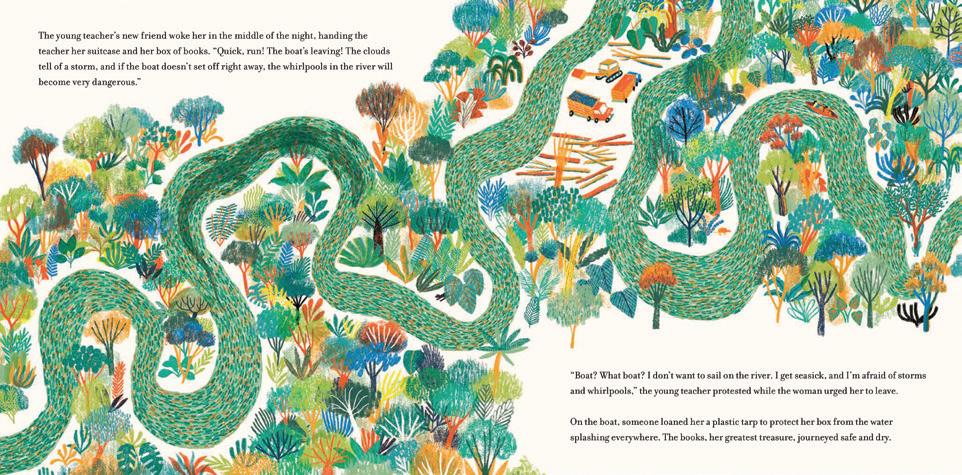
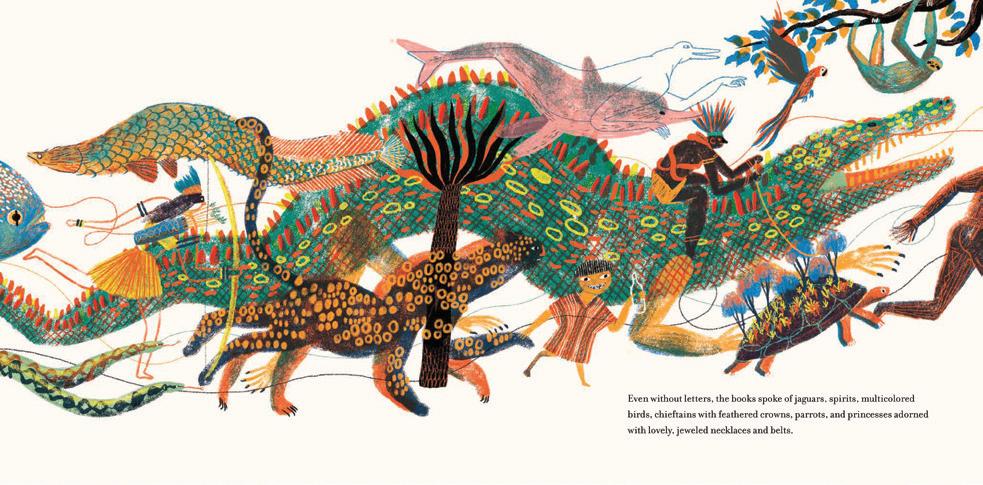
I’m getting mild Anno vibes from this, though I think that’s simply a response to the size of the characters themselves. The story is nothing the same. There’s a theory out there that you won’t see a picture book about an adult unless it’s nonfiction or the adult is a furry animal that wears clothing. Obviously in situations like Miss Rumphius this is not the case, but it’s true that they don’t happen as often as all that. This title is different. There’s a reality that I enjoyed behind this book, though, that I think kids will dig as well. It doesn’t hurt that Palomino has drawn these remarkable vistas on each page. I’m admittedly a little fascinated by what this book is doing with distance. You view all the happenings from a great height or distance, and it gives you a kind of omnipotent feel over the proceedings. Sometimes you get a bit closer, but that’s when you’re viewing story characters and not real people. That the art itself is frame-worthy, whether it’s lightning or the rage of a swollen river, is beyond question. Oh, and the story? A young teacher comes to a difficult to reach part of the Amazon on her first assignment. She also comes with a load of assumptions that may be somewhat upended with the help of nature itself. Just lovely.  Juan Palomino is a Mexican artist and you can find an interview with him here.

Hungry for more titles? Then check out this list Angela Reynolds created, which takes these titles and adds to it!


Hope you enjoyed these! Here are the lists you can expect for the rest of this month:

December 1 – Great Board Books

December 2 – Picture Book Readaloud

December 3 – Simple Picture Book Texts

December 4 – Transcendent Holiday Picture Books

December 5 – Rhyming Picture Books

December 6 – Funny Picture Books

December 7 – CaldeNotts

December 8 – Picture Book Reprints

December 9 – Math Books for Kids

December 10 – Gross Books

December 11 – Books with a Message

December 12 – Fabulous Photography

December 13 – Translated Picture Books

December 14 – Fairy Tales / Folktales / Religious Tales

December 15 – Wordless Picture Books

December 16 – Poetry Books

December 17 – Unconventional Children’s Books

December 18 – Easy Books & Early Chapter Books

December 19 – Older Funny Books

December 20 – Science Fiction Books

December 21 – Fantasy Books

December 22 – Comics & Graphic Novels

December 23 – Informational Fiction

December 24 – American History

December 25 – Science & Nature Books

December 26 – Unique Biographies

December 27 – Nonfiction Picture Books

December 28 – Nonfiction Books for Older Readers

December 29 – Audiobooks for Kids

December 30 – Middle Grade Novels

December 31 – Picture Books

Filed Under: 31 Days 31 Lists, Best Books, Best Books of 2023 Tagged With: 31 days 31 lists, Best Books of 2023, Caldenotts

31 Days, 31 Lists: 2023 Funny Picture Books

December 6, 2023 by Betsy Bird

There’s no one way, but there sure as heck is a wrong way. Ever read a picture book trying to be funny and you can just, somehow, feel it trying to make a kid laugh? Kids are one of the toughest audiences a performer can ever face. If they don’t like something, they often aren’t going to be polite about it. They are more than willing to tell you to your face when a joke lands flat or fails to take off in the first place. Today we celebrate the books willing to take that risk and potentially face that scorn. Now humor is, as I’ve often said, a deeply subjective art. What makes me laugh may not amuse you in the slightest. Even so, here are the 2023 picture books that I think deserve their time in the spotlight for hilarity. And be sure to tell me the ones you think that I missed!

You can download a PDF of today’s list here.

Previous lists of funny picture books are well worth seeking out too. They include:

  • 2022
  • 2021
  • 2020
  • 2019
  • 2018
  • 2017
  • 2016

2023 Funny Picture Books

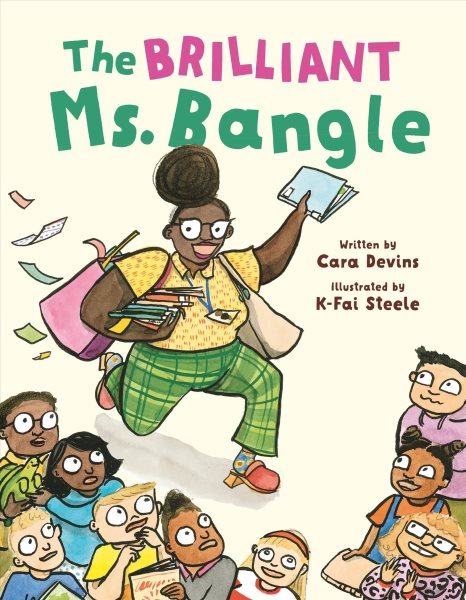
The Brilliant Ms. Bangle by Cara Devins, ill. K-Fai Steele

I’m in this weird position where if I like an illustrator enough I begin to plan and scheme about their future. More specifically, I want to do a book with them someday. K-Fai Steele? She’s on that list and you need go no further than The Brilliant Ms. Bangle to see why. This book expertly taps into kids’ predilections towards blind loyalty. In this case, the school librarian has retired and has been replaced by the wonderful Ms. Bangle. You will like Ms. Bangle. You adults out there would undoubtedly like to hang out with her and be her friend. And, naturally, if you’re a kid, you’re going to want her to be YOUR librarian. The kids in this book resist her as long as humanly possible, but it is impossible to resist Ms. Bangle entirely. Not when she’s offering the chance to read a book that literally had me laugh out loud called Daisy at the Lagoon (complete with a sad-faced blond child slowly sinking into the mire). For fun K-Fai ends the book with the kids in the class reading the entire Daisy series, which just seems to consist of her falling into various hilarious perils every step of the way. Extra points to author Cara Devins when she has Ms. Bangle offer to read the stubborn kids, The Rise of Lithographic Printing in Eighteenth-Century England. “Silly me… You’ve probably already read that!”

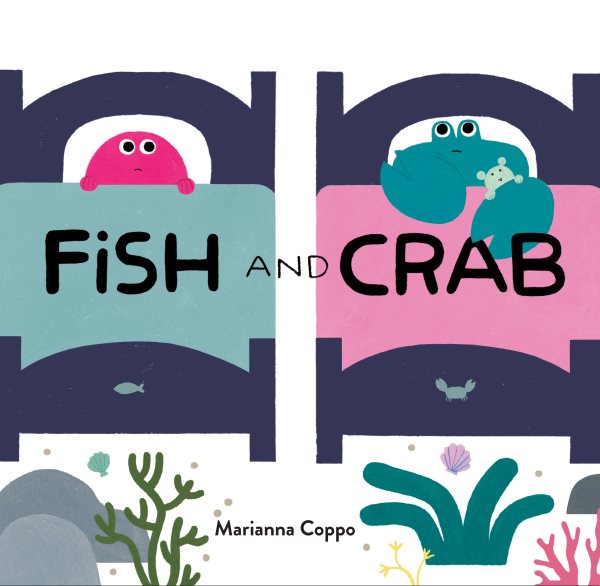
Fish and Crab by Marianna Coppo

Don’t worry, kids. Even crustaceans get anxiety. Fish and Crab are best friends and even share a bedroom ala Ernie and Bert. However, when nighttime falls Fish simply cannot get to sleep. There are weird noises to identify. There are worries to be attended to. When Fish enlists Crab’s help in alleviating his fears, Crab asks Fish to tell him ALL his worries. This is a mistake. As the fears pile up one by one (with Crab’s snarky commentary along the way) Fish’s mind is put at ease . . . and now Crab’s the one staring into the dark, full of existential dread. If you know me then you’ll know that I love me a little existential dread in my picture books. You get yourself two adults to read this book aloud and you could essentially make reader’s theater out of it. More than once I found myself snorting out loud at some of the more ridiculous elements. It’s a hoot, pure and simple. Bonus: Look under the cover if you get a chance. Worth it. 

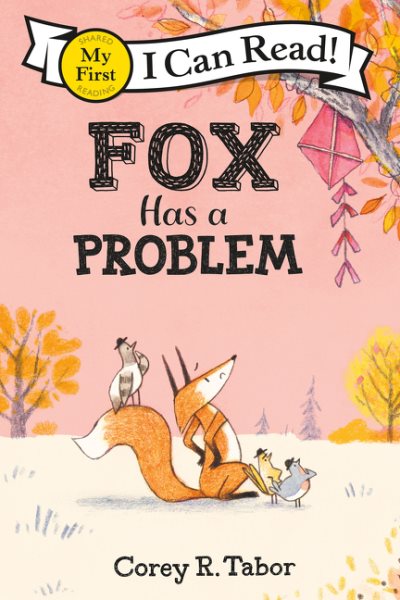
Fox Has a Problem by Corey R. Tabor

Doggone it, Corey. Stop being quite so good at what you do! You know, it seems just a little unfair to me that Mr. Tabor has managed to not only conquer the Easy Book genre with his inimitable Fox series, but picture books as well. You graphic novelists out there better start watching your backs. This man has talents. In this particular case we’re looking at a pretty darn simple easy book where our hero, the titular Fox, has gotten his kite caught in a tree. But the whole reason this book works as brilliantly as it does is that Tabor is a master of not simply the page turn but the funny page turn. So the first page may show Fox looking at his inaccessible kite as it says, “Fox has a problem.” Then you turn the page and see a small forest filled with kites caught in trees as the book says with incredible simplicity, “It is not a new problem”. Charlie Brown has NOTHING on Fox. The cure soon proves worse than the disease, and here I am with my jaw on the floor, in perfect awe of Tabor’s skills. Not since the Elephant and Piggie books have we had someone write easy books with this much raw talent. I say if you read only one easy book this year, read this one. 

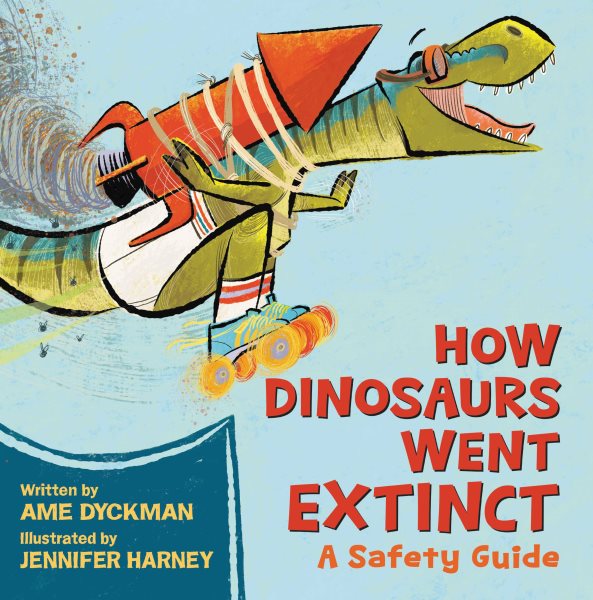
How Dinosaurs Went Extinct: A Safety Guide by Ame Dyckman, ill. Jennifer Harney

Children’s librarians and reviewers and booksellers (and probably editors and agents, for that matter) are often in danger of mission creep. You start out so delighted to read thousands and thousands and thousands of picture books and after a decade or two you’re still excited but now your frame of reference is so vast that nothing’s new anymore. You feel jaded. Like you’ve seen it all. Then someone comes up with a concept so obvious but that no one in the history of the universe has ever done before that you just sort of sit there stunned for a while. That’s how I felt when I read How Dinosaurs Went Extinct. I mean, we’ve seen safety-related picture books before (most famously in Officer Buckle and Gloria, of course) but this book has a memorable alternative take on the whole process. A kid goes with his parents to the museum (and you can see them running and warning him to slow down on the steps leading inside) and while there wonders why the dinosaurs went extinct. The mom begins with a real answer but the dad (wearing a fantastic, faded, vintage-looking Dadasaurus Wrecks t-shirt) proceeds to outline all the different ways that each species met its end. Gallimimus? Ran with scissors. Ankylosaurus? Tipped their chair book too far. Ornithomimus? Jumped on the bed. You never see the actual demise of any of these dinos, but you do see them participating in every possible bit of bad behavior. Extra points to Jennifer Harney not only making these dinos rival those in the Yolen “How Do Dinos” series in terms of fun and frenzy, but also for those endpapers where it’s now the kid warning his parents to be careful on the stairs. 

How to Count to 1 by Caspar Salmon, ill. Matt Hunt

Ah, the old reverse psychology picture book. Love the format. So this little British import essentially forbids kids from engaging in counting for fun which, naturally, will make them want to do it all the more. We talk a lot about how to make math engaging for children but did we ever consider trying to prevent it from happening? I think this is a mildly brilliant solution. The intrusive narrator of this book is going to be very clear with you. You are only allowed to count a single thing on each of these pages. But as the book goes on you start to see a numerically increasing number of objects with a teeny tiny single thing that’s the only thing you are instructed to count. Play your cards right and you, the adult reader, can be the one trying to prevent your kids from counting. Which, in and of itself, is fairly hilarious. It’s sort of the old The Monster at the End of This Book technique (you know, where Grover begs you not to keep turning the pages) but with addition. And the last two pages are full of 100 things, so if they’ve gotten bitten by the counting bug, they’ll know how to use those skills. 

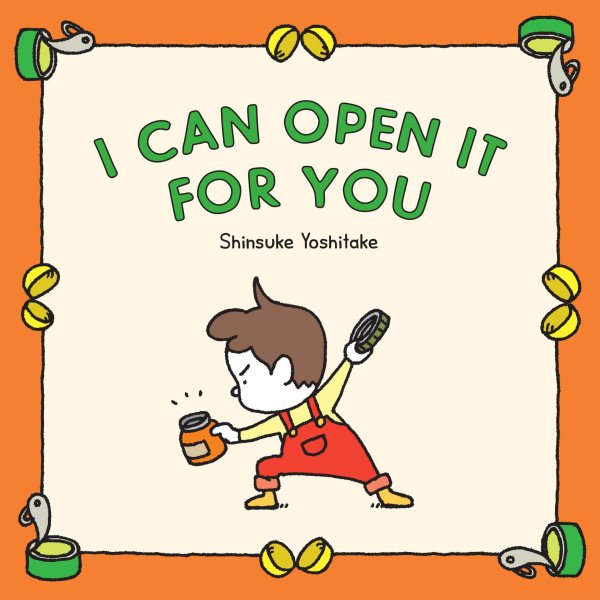
I Can Open It For You by Shinsuke Yoshitake, translated by Lisa Wilcut

You know, part of the reason that Shinsuke Yoshitake is as successful as he is at creating picture books is that he’s incredibly good that finding those childhood frustrations and challenges that we adults have all completely forgotten about. For example, the mere act of opening things. We do it all the time, but often kids need help, whether it’s a milk carton or a candy wrapper. In this book, a child fantasizes about all the different things he’ll be able to open when he’s bigger. His dreams start off pretty standard but quickly morph into their most logical extremes (“opening” a politician’s fly or a rock containing ancient bones). What sort of sets this book a little apart from some of Yoshitake’s other works is how it gets a bit touching near the end. The boy’s dad confesses to him that he enjoys opening things for his kid so much because he knows that someday soon he won’t have to anymore. As ever, Yoshitake nails the ending, and I love the more Japanese elements of the book are. From a bath in a home to bowing thanks to your mom when she opens something for you, it may be located in a specific place but it touches on a universal theme.

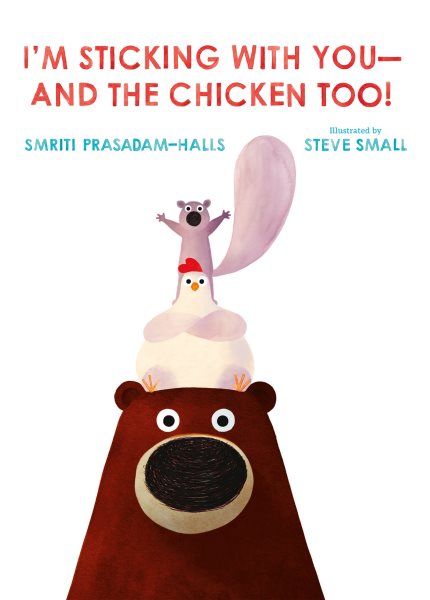
I’m Sticking With You – And the Chicken Too! by Smriti Prasadam-Halls, ill. Steve Small

Not to cast shade upon this book’s predecessor (I’m Sticking With You) but having 100% completely forgotten about it, I came to this book with an open mind and found it contains two of my favorite funny picture book animals: chickens and bears. Honestly, you could probably just do an entire chicken and bear picture book series and I’d be the first in line to buy it. Here, a squirrel and a bear are best buds and are strict adherents to the old adage that three’s a crowd. They are pestered (or so they’d say) by a friendly chicken who’d like to play her accordion with the duo. To say that they are not interested is putting it mildly. They’re downright rude! And the chicken, for its part, continues until it just becomes all too obvious that they don’t want it. Heartbroken, it replies to a sketchy ad looking for chicken musicians. Only then do the bear and squirrel (who feel pretty bad about their behavior) make it up to the chick. The text is good but the humor here is found in the art. Small can do a lot with eyebrows, accordions, and sidecars. Maybe it’s more of a droll humor book than that of the laugh-out-loud variety, but I’ll take it!

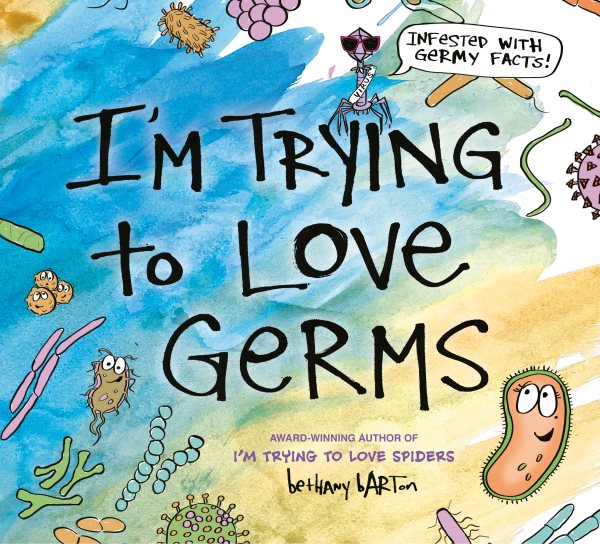
I’m Trying to Love Germs by Bethany Barton

Some nonfiction with your picture books? Absolutely. Any book that can claim to be “infested with germy facts” by a virus wearing red sunglasses is probably going to be worth your time and investment. Not that this is Barton’s first time at a rodeo. Or second. As it happens this is the sixth entry in the “I’m Trying to Love” series, following books dedicated to spiders, rocks, math, garbage and bees. But as a small microbe at the beginning of the book is quick to point out, the title of this book is all wrong. It should be called “I’m Trying to Love Microbes”. Aside from teaching me things that I actually did not already know (I’m particularly interested in bacteriophages now, as it happens), the book’s a hoot. Extra points for the moment when it compares germs to glitter (“Imagine if when you coughed or sneezed a whole bunch of glitter came out”). Funny and informative, but not in a gross way. 

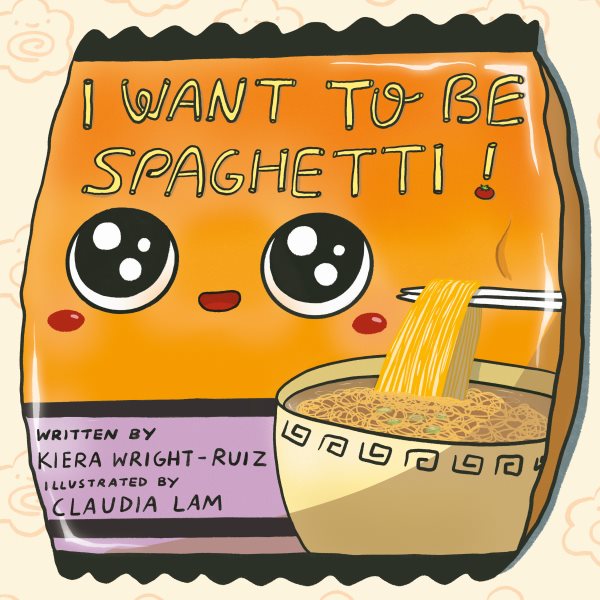
I Want to Be Spaghetti by Kiera Wright-Ruiz, ill. Claudia Lam

I was getting some strong Arnie the Doughnut vibes in this book early on, though the hero of this tale, while edible, actively WANTS to be eaten. Only it’s not just that. Ramen has dreams. Now I want you to look deep deep into the eyes of this tasty treat (which you can easily do with this cover) and realize that in this story this is a foodstuff that has failed to learn its own cultural roots. In this story Ramen wants desperately to be spaghetti because “everyone” loves it. While the other ramen packets object vociferously, Ramen is unmoved from this uncritical stance. Fortunately, all becomes clear when he is purchased and prepared. I loved the moment when half a hard boiled egg is dropped into his bowl and he has this moment of complete and utter confusion. “What are you doing here?” I had a similar moment when I encountered my first real ramen. Consider pairing this with one of my favorite ramen-related nonfiction picture books Magic Ramen by Andrea Wang (who happened to write a Caldecott-winning picture book, also food-related, by the name of Watercress not long after).

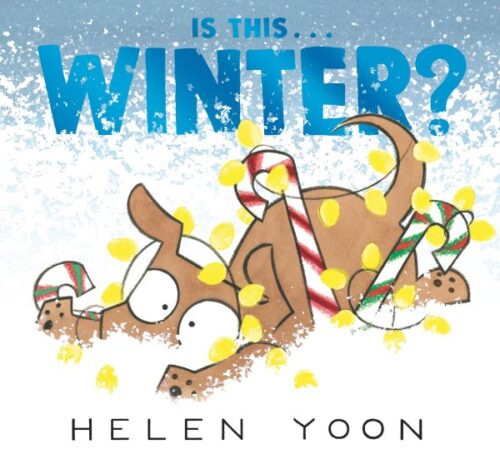
Is This … Winter? by Helen Yoon

Folks, we gotta do something. Something about the fact that Helen Yoon isn’t getting the levels of attention she so richly deserves. First off, I adore her angular style which manages to convey movement with a clever application of odd lines here and there. In this book a pup is totally out of its friggin’ gourd excited about winter. It’s high fiving mailboxes and freaking out squirrels and birds, but when it crashes into a snowman reducing it to rubble (is that the right term or should a busted up snowman be called something else?) things take a turn. Suddenly the pup notices some reindeer decorations and things start to get weird. For any child that has ever encountered holiday blow-up dolls that crossed a little too far into the uncanny valley, this book is for them. And, of course, Yoon’s art is a joy each and every time. Previously seen on the holiday booklist.

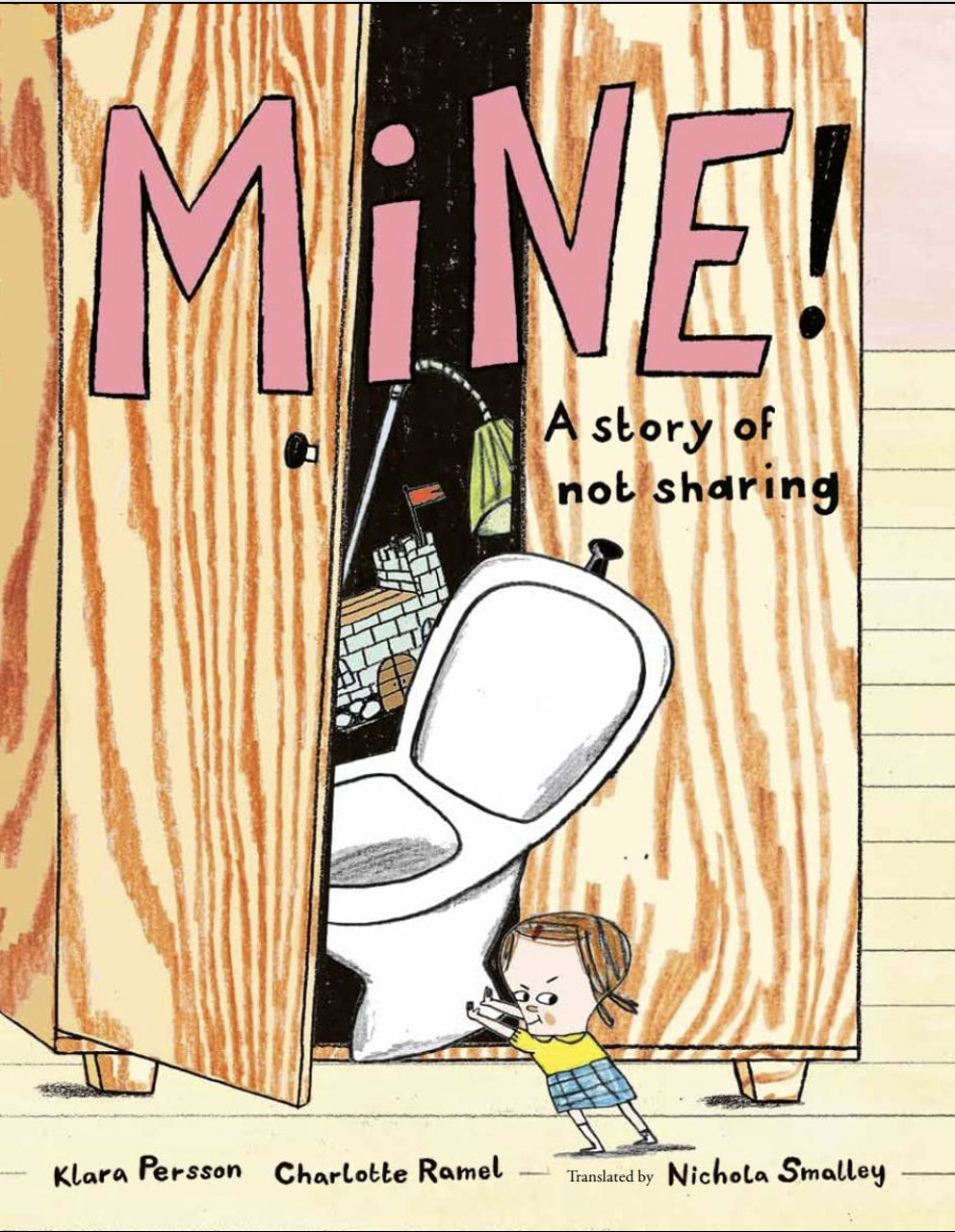
Mine! A Story of Not Sharing by Klara Persson, ill. Charlotte Ramel, translated by Nichola Smalley

We have all been Sally at some point in our lives. Sure, the whole concept of sharing sounds great on paper, but when push comes to shove and you actually have to do it? Count me out!! Sally’s friend Nico is coming over to play and right from the start Sally informs Mom that there is no way in the world that Nico’s going to play with her stuffed squirrel. Her mom, being a patient and logical soul, suggests putting the squirrel in the wardrobe until Nico’s gone. Unfortunately this well-meaning suggestion just gets Sally started. If the squirrel can go in the wardrobe then so can her train. And her car park (love that translation). And her fish you catch with a fishing rod. Then things start to get extreme. In goes her bed! Her bathtub! Her mom!! And even when Nico comes she doesn’t stop because what if her friend Eva came by and wanted to play with HIM? Into the wardrobe goes Nico! It’s only when Sally hears how much fun everyone’s having in the wardrobe without her that she relents and lets everyone and everything out. Persson ratchets up the humor by taking Sally’s instincts to their logical extreme. Meanwhile Ramel knows how to give this already spartan (compared to a couple American houses I know) home a real thorough emptying out. Sharing may be caring but hoarding isn’t boring. Forgive me. 

Mister Kitty is Lost! by Greg Pizzoli

I submit to you that though the shape of this book is picture book square, the simplicity of the text makes it an excellent candidate for the Geisel Award (given yearly to books for beginning readers). With die-cuts galore, a little white girl goes about trying to locate her lost kitty. Look closely at her drawing of her missing pet, by the way. It doesn’t give away the funny twist but, upon closer inspection, it does hint at it. A counting book as well, everything leads up to a big reveal. I suspect that this would also make an excellent readaloud for a large group of Kindergarten or 1st graders. Particularly with that surprise “ROAR!”. It really comes outta nowhere. Go, kitty, go! Previously seen on the readaloud booklist.

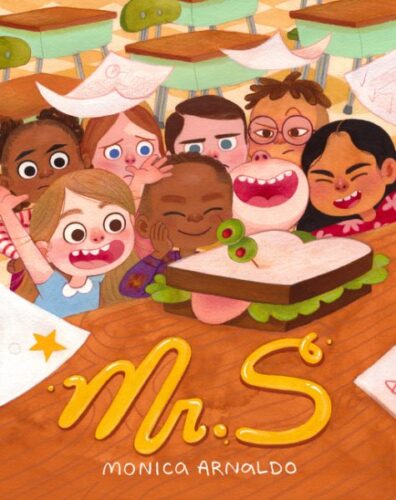
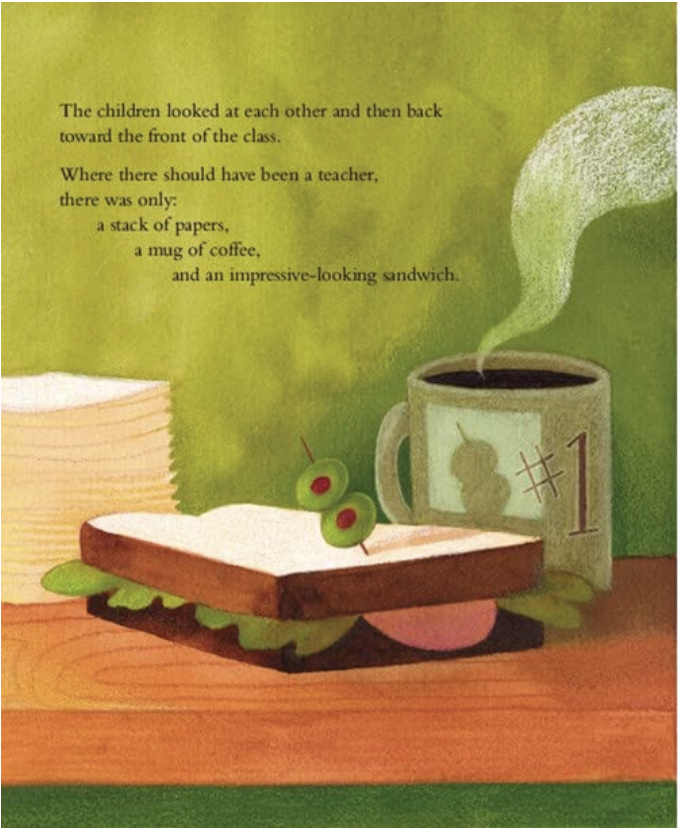
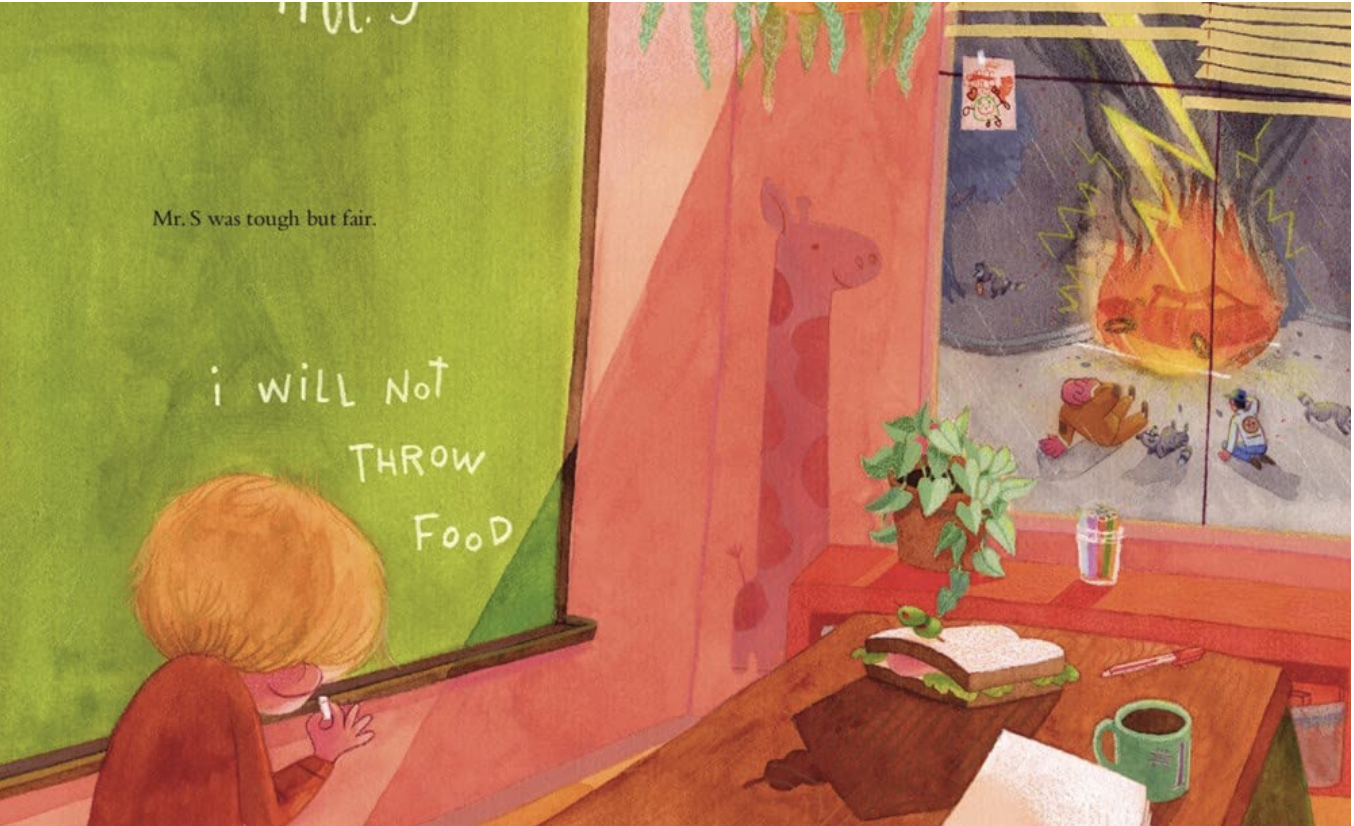
Mr. S by Monica Arnaldo

When a classroom full of new Kindergartners come in on the first day of school they don’t find any adults, just a sandwich on a desk. Could this be their teacher?!? Initially when I heard the premise of this book I thought it was just a logical extension of that moment on The Good Place where the main characters can’t figure out if a supernatural judge is a burrito on a desk or not. This lifts that premise and places it on the first day of school where a classroom of kindergartners come to the logical conclusion that the sandwich on a desk is definitely in charge. Personally I also loved the background story of what’s happening to Mr. Spencer (the man seen writing on the blackboard at the start) all the while. Good twist, great art, and you’ll see why Adam Rex’s blurb on the back says, “This might be the funniest first-day-of-school book I’ve ever read.” The man’s not wrong.

No Fair! by Jacob Grant

Ostensibly a follow-up to Grant’s previous picture book No Pants! (and that is, let us face it, a hard title to top), this book follows a kid’s innate sense of what is and is not fair. For example, it’s the kind of book where the main character will early on see a mom and child having the same size donuts at the farmer’s market, but when the time finally comes for his cider, Dad gets a big one and his kid gets a tiny one. Dad’s trying to be patient here, but Grant is expertly weaving between understanding where the father is coming from and being totally Team Kid. Best of all, there’s a nice capper at the end with the kid getting his comeuppance in more ways than one, thus balancing the fairness of the universe. And if there’s one thing kids can understand, it’s things not being just. So where’s the funny? Well, like the identification with the two characters, sometimes the joke’s on the kid and sometimes it’s on Dad. And watching Dad try to balance carrying a million groceries (including donuts and a huge pumpkin) at the end? Classic. 

Oh No, the Aunts Are Here by Adam Rex, ill. Lian Cho

Hard to say if I find this funnier for kids or adults. It may have to be taken on a case-by-case basis. But to start us off here, let me just recount for you a typical selection from this book. “The aunts lick their thumbs and polish your cheeks. There was something there, they tell you. Something there, on your cheeks, but they got it. You don’t know what it was and you never will.” This is what I like to call a Rex flex. He’s stretching his writerly muscles as far as they can possibly go, and doing what I like most about his writing: taking things to that sweet illogical extreme. Lian Cho was new to me. I’d seen two of the books she’d done before (The Oboe Goes Boom Boom Boom was a late in the year find that I was very fond of when it was released) and clearly some canny editor saw the high energy of that and felt it would make a great match with the Rex text (I can do this all day, folks). The plot, such as it is, is that a group of four aunts, all sorts, descend upon a young girl’s home, bringing annoyance as well, ultimately, as aunt-centric protection. I’ll tell you this much: You ain’t never seen a book like this before!

Problem Solved by Jan Thomas

I would walk across red hot coals to get my hands on the next Jan Thomas book, you betcha. She’s one of those author/illustrators that somehow had a pitch perfect instinct from day one for writing picture books with simple texts. But what always appeals to me in addition to her writing is her ability to tap into the occasional bout of crazed chaos. You can see it in the whites of the eyes of the problem-solving porcupine on the cover of this book. That’s Pete. When a rabbit with a messy room makes the mistake of saying, “This is a problem”, Pete’s on the scene to help. Sorry, I wrote that wrong. Pete’s on the scene to “help”. Because, you see, Pete’s help comes in the form of doing terribly ridiculous things. He’ll neatly fold the rabbit’s shirts… then attempt to feed them to his goldfish. “PROBLEM SOLVED!” Or he’ll stack up all the blocks… and then attempt to flush them down the toilet. The toilet actually gets a repeat performance in this book (to great comic effect) until Rabbit comes up with a clean room (through constant work following Pete) and a way for Pete to “help” someone else. Thoroughly wacky, but also perfect for new readers. Thomas knocks it out of the park again. 

Spreckle’s Snack Surprise by Sandra Salsbury

Any book that advertises itself as “100% Slug Free” is already going to be fairly interesting. Extra points if the book in question is about a little dragon raised by chickens. Now there are a number of different directions that this book could go in with a plot like that, but I’m awful fond of Sandra Salsbury’s style. For example, Spreckle is all on board with living on the farm except “the snacks were not very good. In fact, the snacks were becoming a real problem for Spreckle.” I love the understated nature of these complaints. The illustration style is naturally, in and of itself, funny. And the solution to the snack issue? Mildly inspired. Love the slugs. Love the art. Love the whole dang thing. Funny in an understated but vital way.

Stranded! A Mostly True Story from Iceland by Ævar Þór Benediktsson, ill. Anne Wilson

Almost all the facts in this book are true. Can you find the single lie? When the author’s grandfather got stranded on an active volcanic island with this friend their survival was NOT guaranteed. An unexpectedly hilarious and harrowing tale. Kooky little bit of writing, but I think it’s that kookiness that makes it work. First and foremost, this is really very funny. I think that there’s a lot to be said for authors writing stories about their grandparents’ stupid stupid decisions. About the point the glasses have melted, you are ON BOARD with this book. And the fact that you just happen to learn a lot about volcanoes and Iceland (and I’m grateful for now always knowing how to pronounce “Ævar”) is just the icing on the cake. A delightful read!

The Welcome Home by Amy June Bates

What do you do when you want something soft and waggy? Get a snail of course! Watch the antics pile up as Mr. And Mrs. Gargleson-Bittle fill their home with an array of critters, without knowing which one is truly missing. Wow! What a thrilling departure for Amy June Bates! She’s always been an emotional illustrator, tugging at those heartstrings for all that they’re worth. For a while there she was also the go-to for every politician that ever wanted to do a picture book biography. This book is a vast improvement and just look at her! She’s amazing at rendering sight gags! I just want to get a tattoo of that grumpy cat and grumpy owl for life. Truth be told, this is a delight. If I have a quibble, I feel she could have ended on a gag, but that’s a minor complaint. All told, this is strong.

What If I’m Not a Cat? by Kari-Lynn Winters, ill. Kelly Collier

Good-natured goofiness. Kids love a book where they can see where someone (preferably an animal) makes an honest mistake that they themselves can see right through. In this particular case, a donkey is fairly certain that he’s a cat. After all, why else would the Farmer say, “Goodnight, kitty cats!” when he’s in the room? Determined to be the best cat, if that’s his fate, Donkey does what he can but while some aspects of catitude is easy (pouncing and cuddling) others are not (catching mice, landing on four feet, etc.). As the book progresses you get to know the individual cats fairly well, and donkey’s just so lovable in his confusion. Sort of reminded me of a cloven-footed Lambert the Sheepish Lion. Kelly Collier has a lovely feel for facial expressions and while I wouldn’t call this one necessarily laugh-out-loud, there’s definitely a great deal of funny to be mined here. 


Hope you enjoyed these! Here are the lists you can expect for the rest of this month:

December 1 – Great Board Books

December 2 – Picture Book Readaloud

December 3 – Simple Picture Book Texts

December 4 – Transcendent Holiday Picture Books

December 5 – Rhyming Picture Books

December 6 – Funny Picture Books

December 7 – CaldeNotts

December 8 – Picture Book Reprints

December 9 – Math Books for Kids

December 10 – Gross Books

December 11 – Books with a Message

December 12 – Fabulous Photography

December 13 – Translated Picture Books

December 14 – Fairy Tales / Folktales / Religious Tales

December 15 – Wordless Picture Books

December 16 – Poetry Books

December 17 – Unconventional Children’s Books

December 18 – Easy Books & Early Chapter Books

December 19 – Older Funny Books

December 20 – Science Fiction Books

December 21 – Fantasy Books

December 22 – Comics & Graphic Novels

December 23 – Informational Fiction

December 24 – American History

December 25 – Science & Nature Books

December 26 – Unique Biographies

December 27 – Nonfiction Picture Books

December 28 – Nonfiction Books for Older Readers

December 29 – Audiobooks for Kids

December 30 – Middle Grade Novels

December 31 – Picture Books

Filed Under: 31 Days 31 Lists, Best Books, Best Books of 2023 Tagged With: 2023 funny picture books, 31 days 31 lists, funny, funny books, funny picture books, picture books

  • « Go to Previous Page
  • Page 1
  • Interim pages omitted …
  • Page 105
  • Page 106
  • Page 107
  • Page 108
  • Page 109
  • Interim pages omitted …
  • Page 1047
  • Go to Next Page »

Primary Sidebar