• Skip to primary navigation
  • Skip to main content
  • Skip to primary sidebar
  • About/Contact
  • Fusenews
  • Reviews
  • Librarian Previews
  • Best Books
    • Top 100
    • Best Books of 2022
    • Best Books of 2021
    • Best Books of 2020
    • Best Books of 2019
    • Best Books of 2018
    • Best Books of 2017
    • Best Books of 2016
    • Best Books of 2015
    • Best Books of 2014
    • Best Books of 2013
  • Fuse 8 n’ Kate
  • Videos
  • Press Release Fun

31 Days, 31 Lists: 2023 Rhyming Picture Books

31 Days, 31 Lists: 2023 Rhyming Picture Books

December 5, 2023 by Betsy Bird

The fun thing about this rhyming list is that I don’t have to limit it to fiction alone. It’s one of the rare lists I produce that can contain nonfiction, picture books, and board books all together. This seems as good a time as any to mention that if you’re a day-by-day 31 Days, 31 Books reader (and bless you if you are) you’re going to see a little bit if repetition at the beginning of today’s list. But here’s a tip about how I put these lists together: No book is allowed to show up on more than 2 lists unless it’s really and truly one of the best of the best of the best of the year. So if you see some repeats here, that’s okay. It’s bound to happen. Pay far more attention if you see a book show up THREE times.

The pdf of today’s list can be found here.

Oh, and are you interested in previous years’ rhyming picture book lists? Of course you are! Feast your eyes, then, on these:

  • 2022
  • 2021
  • 2020
  • 2019
  • 2018
  • 2017
  • 2016

2023 Rhyming Picture Books

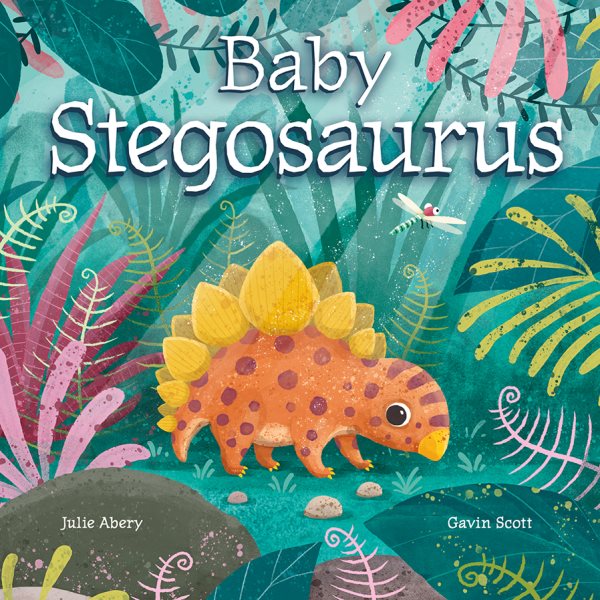
Baby Stegosaurus by Julie Abery, ill. Gavin Scott

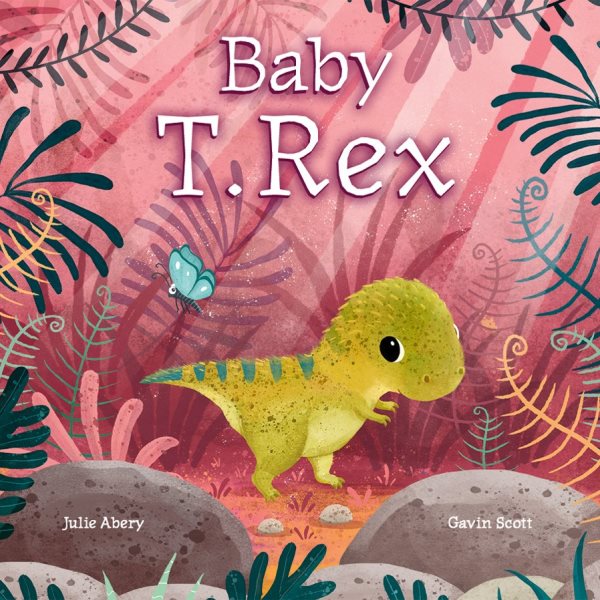
Baby T.Rex by Julie Abery, ill. Gavin Scott
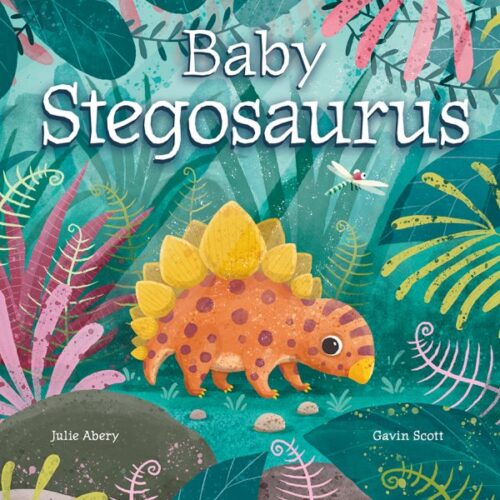
Our first repeat and it’s two board books! You might think that blatant plays for dino-loving toddlers is a cheap move on the part of board book creators. You might be right. But as someone who spent the better part of 2023 reading through egregious, and I’m talking EGREGIOUS, dino-related board books, please believe me when I identify a couple that are actually worth your time and money. Both of these little board books have the distinction of packing in a serious story in their scant 18 pages. Baby Stegosaurus focuses on an exploding volcano and a baby stego’s break for survival. Baby T.Rex, in contrast, is about saving a hitherto unknown sibling’s egg from destruction. Fairly heady topics for board books, are they not? And here’s the kicker: they rhyme. I kid you not! They rhyme! And they rhyme well at that! “Baby loves leaves / Rip, chew, and gulp! / Crunch a few pebbles. / Pummel the pulp.” If you thought you’d ever see the phrase “Pummel the pulp” in a board book before then I commend you, but generally speaking this is a rare rhyme for a rare series. Rethink your dino prejudices. Come to this delightful series from Amicus Ink. 

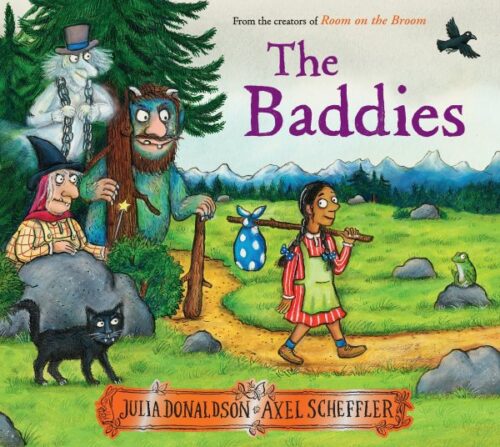
The Baddies by Julia Donaldson, ill. Axel Scheffler

Hey, The Gruffalo isn’t a worldwide sensation for nothin’, after all. It was the shock of my lifetime to travel to the Bologna Book Fair this past March and discover that Axel Scheffler is, in fact, German. Now is this book up to Gruffalo standards? Since I’m not a #1 Gruffalo fan, my answer would most certainly be yes. This actually would a rather nice Halloween storytime title, if you were so inclined to include it. Julia Donaldson is Britain’s top picture book rhymer (sorry Rupert Bear) for a reason. A witch, a ghost, and a troll compete between themselves to be the scariest (a plot not wholly different from another 2023 title, Benita and the Night Creatures by Mariana Llanos). When a mouse challenges the baddies to get the handkerchief of a young woman who’s just moved into the proverbial neighborhood, the race is on! Trouble is, this is a Donaldson/Scheffler heroine of a particularly calm and collected disposition. And yes, you guessed it, the one who gets the handkerchief is most definitely the mouse (but not, to my surprise, by scaring her). Ideal for the kid who wants something scary/not scary for the season.

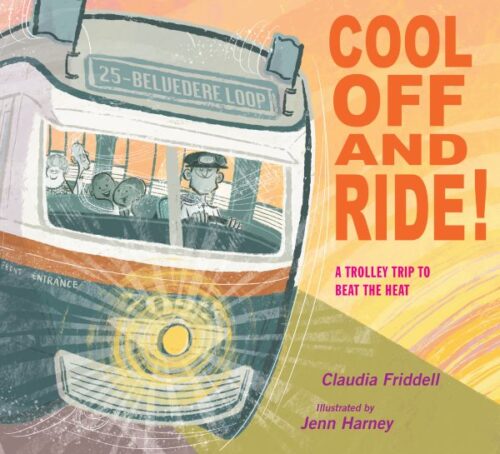
Cool Off and Ride! A Trolley Trip to Beat the Heat by Claudia Friddell, ill. Jenn Harney

Here’s the situation: It’s summer. You’re a children’s librarian or bookseller. You want to do a summer-themed storytime. You also want to include some new books in the mix, but since you’ve been doing storytimes for a while you know that not all books adapt to being read aloud to large groups all that well. Plus, you’d really like something that’s a bit inclusive. Then, lo and behold, you discover this title. It’s hot. It’s fun. It has a rhythmic bouncy rhythm that’s hard to beat. It friggin’ rhymes (and well)! Plus you can almost see the waves of heat just emanating off of the page. So much so that maybe I’m proposing this to you all backwards. Maybe the best time to read this isn’t in summer, when we’re all melting into our respective sidewalks, but rather in the dead of winter. February even! A summertime readaloud to invoke those days when all you want is to find a cool trolley car to relax in. So in this story a trolley car is riding around and a whole host of people are desperate to get in it and out of the sun. The magnificent backmatter makes it clear that this was inspired by the trolleys of Baltimore. There really was a Cool Off and Ride program in 1938 and Friddell dives deep not only into the program but their integration and even “What Do Streetcars and Roller Coasters Have in Common?” It’s a neat neat book, most recently seen on my knitting needles post for its correct placement.

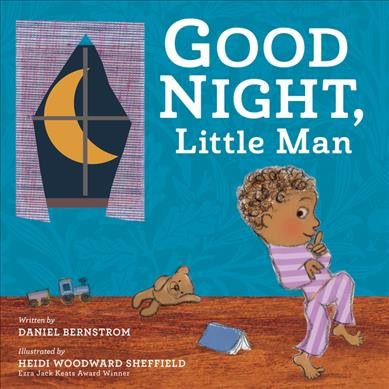
Good Night, Little Man by Daniel Bernstrom, ill. Heidi Woodward Sheffield

Uh-oh. It’s bedtime for Little Man but where did his sheep sheep go? It’s going to take the whole family to track down this missing stuffie. A wonderful, rhyming, bedtime tale. I’m just such a Daniel Bernstrom fan. You may remember him from such books as last year’s A Bear, a Bee, and a Honey Tree and One Day in the Eucalyptus Eucalyptus Tree. The man knows how to rhyme. Rhyming, as funny as it sounds, is exceedingly difficult. Yet somehow, amazingly, Bernstrom has an ear that compares to few. And while this is such a simple story, I was charmed by it in the end. I dunno. Maybe it caught me in the right mood, but I think it’s worth looking into. 

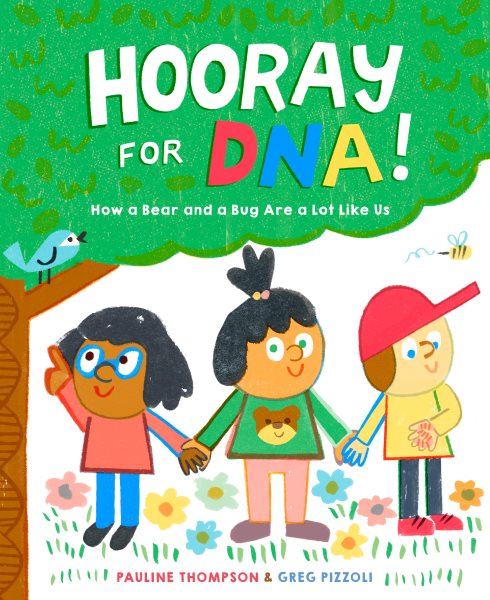
Hooray for DNA! How a Bear and a Bug Are a Lot Like Us by Pauline Thompson, ill. Greg Pizzoli

I actually do get asked sometimes to conjure up a list of rhyming nonfiction picture books on a regular basis. It’s not something we talk about a lot in children’s literature, but when it comes to making science and math accessible, I think it really helps adults out. Not kids. I honestly believe that they’re a lot more open to those subjects than their gatekeepers. So add a little cadence and a little rhyme and boom! Instant adult interest. Now I love DNA and I love the art of Greg Pizzoli, so getting the two together here seems equally logical and inevitable by turns. Thompson, for her part, does a great job at trying to break down this concept into its simplest terms. But I know what you’re thinking. You’re wondering, “Betsy, I’m happy to hear that the rhymes are strong and the science sound, but what’s the backmatter like?” You’re probably not actually asking me that, but you should because this backmatter (all of two pages) is fantastic! Info on DNA for older readers, a Bibliography of books, videos, and websites, and even a little “DNA Scavenger Hunt” where you can find out how much shared DNA we have with a range of critters and other living things. Worth the price!

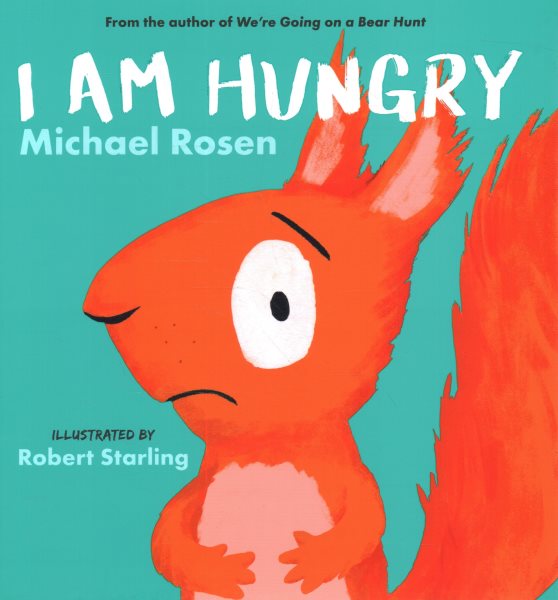
I Am Hungry by Michael Rosen, ill. Robert Starling

He’s still got it, baby! Not even COVID-19 could get Michael Rosen down for the count. He’s up, he’s at ‘em, and he’s very funny. It doesn’t hurt that his partner in crime here is Robert Starling who knows how to draw a red squirrel. I mean, look at the little guy on this cover. Awww. Who wouldn’t want to feed him? Naturally, you get some of your best gags when stuff is taken to a logical extreme. Anyone who has ever met a squirrel knows that they tend to operate within a state of perpetual hunger. I am reminded of the squirrel in Laura Amy Schlitz’s The Night Fairy as a beautiful example of this. With his typical rhyming wit, Rosen gives us a rundown of all the things this squirrel would be capable of eating right now, so grandiose is his hunger. And, as you would expect, it starts out logically and then rolls rapidly out of control from there. I also love the weirdness of the ending. Illustrator Robert Starling had to find a way to depict the lines, “One last pea, then I’ll eat… me!” What would you have done? I think he made the right choice. A book for the younger folks. 

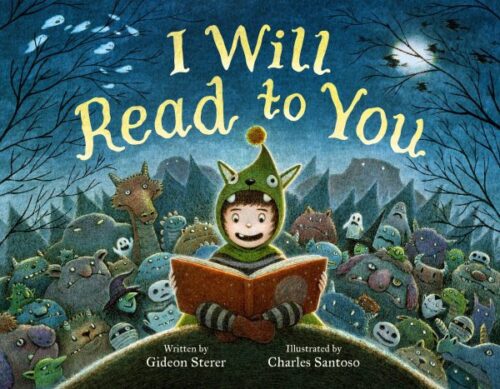
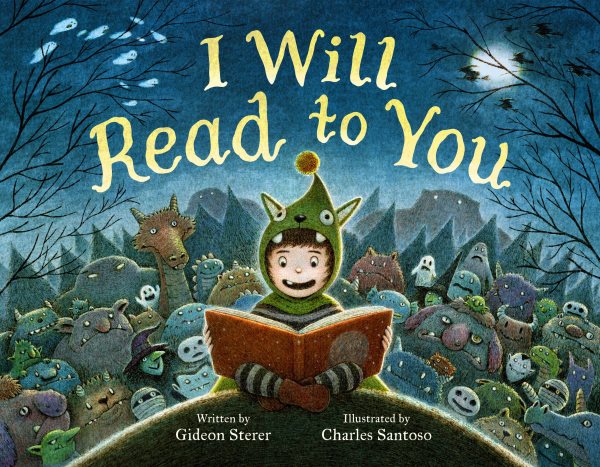
I Will Read to You by Gideon Sterer, ill. Charles Santoso

I was having a talk with a fellow picture book author the other day and we were lamenting the fact that when you write any kind of a book for kids that is holiday-adjacent, it’s a double edged sword. On the one hand, you have the guarantee that long after you’ve forgotten that you even wrote the book, it’s going to pop up in library’s holiday displays, long after you have left this great, green earth. On the other hand, its very connection to a holiday, even if it isn’t overtly stated, means that the likelihood that it ends up on Best of the Year lists is vastly decreased. For whatever reason, folks don’t like to put holiday fare on Best Of lists. Seems unfair. On the other hand, my own Best Of lists are 31 days long and if I want to blooming put a book like, say, I Will Read to You on TWO lists (Rhyming & Holiday) then I’m darn well going to do so. Ironically, the first time I ever noticed the books of Gideon Sterer, it was for his wordless bookThe Midnight Fair. Kind of a pity because the man can write! Evidence Proffered: This book. Here we have the story of a boy who’s got some serious Max from Where the Wild Things Are vibes going on. His mom says she’ll read to him (the repeated phrase “I will read to you” has a remarkable effect on the listener) but he’s more interested in reading on his own . . . to the monsters outside! They have no one to read to them! As he calls them together, he names each type of monster in a beautiful rhyming cadence, always ending with the promise “I will read to you.” Those cadences just stick in your brain and work wonders on the listener. Love how it’s creepy but never too creepy. Don’t just pull this one out at Halloween. This is a bedtime book that deserves year round attention.

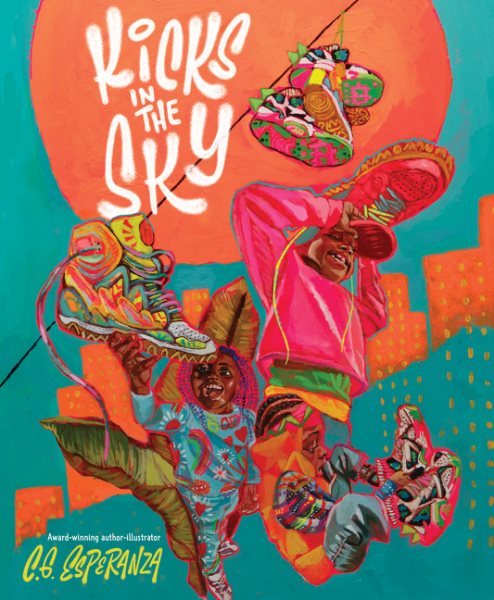
Kicks in the Sky by C.G. Esperanza

“High above the street where birds sang in a choir – KAROO KAROO / a cluster of kicks swung from a wire.” What happens when these magical kicks find themselves on kids’ feet? Get ready for incredible hijinks and superheroic abilities in a book filled to the brim with fun. It’s actually a pretty fun pairing with this year’s Jump In by Shadra Strickland and Like Lava in My Veins by Derrick Barnes since it combines having fun in the city streets with superheroic abilities. But it’s the colors you’re going to respond to. The term “vibrant” doesn’t encapsulate properly what Esperanza is doing here. This book feels like it would glow in the dark if you gave it half a chance, there is just so much sheer energy on these pages. The plot gets a little loosey goosey near the end, but it’s hard to deny how much fun the book’s creator is having with this title. And when he has fun, the reader has fun. 

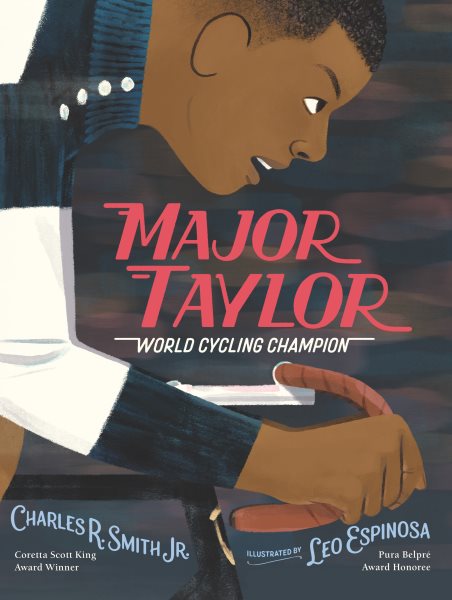
Major Taylor: World Cycling Champion by Charles R. Smith Jr., ill. Leo Espinosa

You just have to hand it to Charles R. Smith Jr. The man never tries to take the easy way out. We’ve seen picture book bios of Major Taylor before, but I think this has to be my favorite. Not simply because it does clever things with flashing back and forth between one particular race and the earlier parts of his life, but because Smith makes the whole thing rhyme. Talk about a challenge! And the kicker is that he’s particularly good at it. I mean, of course he is. He’s a poet for crying out loud. But Smith’s other superpower is his ability to make rhyming nonfiction really plunge you into the action. So here we have Major Taylor neck and neck with these white guys on their bikes (Espinosa is really pulling out all the stops with their ludicrous handlebar mustaches) and the action reads, “Go faster go faster / so they can’t catch you – / GO, MAJOR, GO, / don’t let them crash you!” I can envision a teacher really getting into this, pulling the listening audience into the action, as the bikes careen around and around and around. And Espinosa is really doing some amazing work with the art here as well. This is a very different style from the one we saw with the incredible The World Belonged to Us by Jacqueline Woodson. Here it’s less stylized and more realistic and I wouldn’t change it for anything in the world. A bright star in the pantheon of sports picture book bios. 

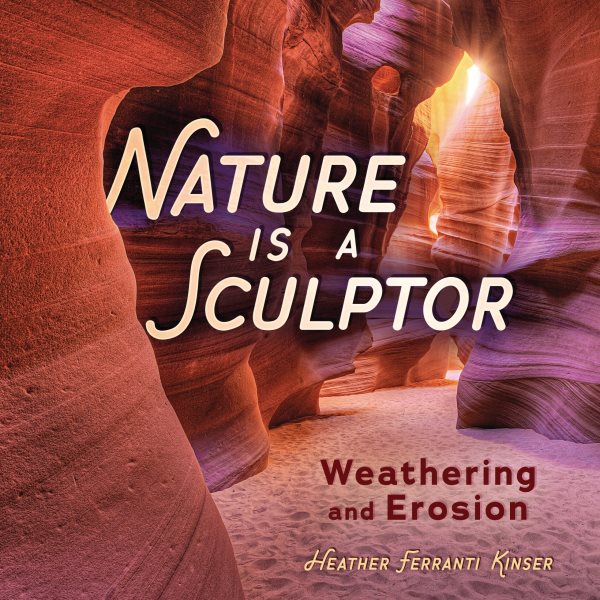
Nature Is a Sculptor: Weathering and Erosion by Heather Ferranti Kinser

Take a trip to national parks and landmarks to learn about all the different ways that nature designs some of the most beautiful landscapes. My sole objection to this book is that every time I see this title I start singing “Rhythm is a Dancer” for some reason. Not the book’s fault, I suppose. I’m a sucker for gorgeous photography and in spite of the fact that this is pretty much all Getty Images all the time, how can I possibly resist the shots they’ve included here? More to the point, Kinser has taken this mass of information about weathering and erosion and organized it into a comprehensible and understandable format. The rhymes are also accomplished (which is always a relief). “The ocean is a hammer / pounding shorelines into bits. / Ice – a chilly chisel – finds a crack, / expands, and splits.” Very cool.

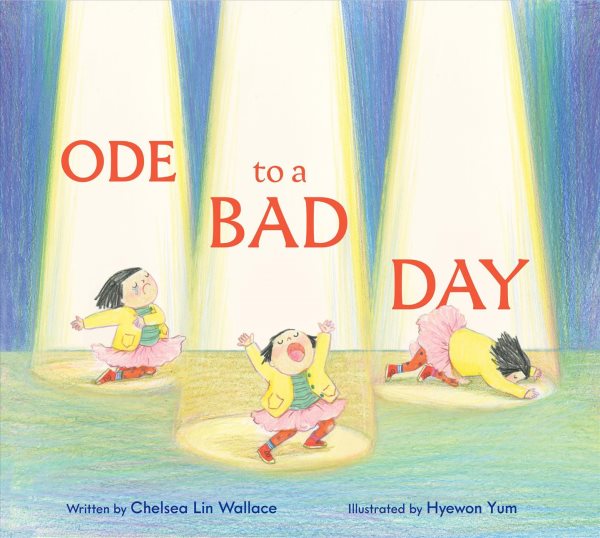
Ode to a Bad Day by Chelsea Lin Wallace, ill. Hyewon Yum

Alexander and the Terrible, Horrible, No Good, Very Bad Day with a 21st century update, eh? Hyewon Yum can do no wrong, so sayeth I. And pause, for just a moment, to appreciate the cover going on here. The next time you have a young child performing histrionics for your special benefit, I hope that the image here is what comes to mind, spotlight and all. A young child is having a textbook terrible day. We’re talking cereal with too much milk. We’re talking hiccups galore. The whole thing opens with “Oh Bad Morning, eyes are crusty, bones are rusty. Why do all my teeth feel dusty?” I hear ya, kid. Check out the endpapers where a stuffed pig and cow are giving the gal some serious side-eye. There’s some reassurance that even if today is terrible, tomorrow may seriously improve. All this is done with some dang good rhymes, that keep the cadences bouncy and fine. A splendid rendition of terrible times on the mend. 

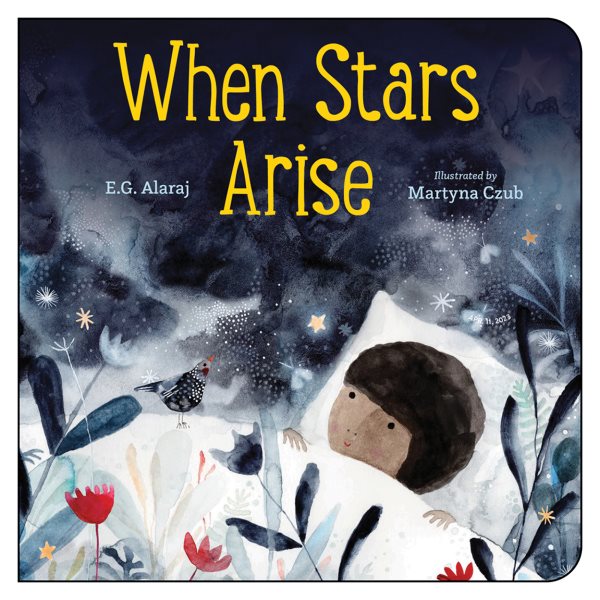
When Stars Arise by E.G. Alaraj, ill. Martyna Czub

Cozy board book fare! How pleasant. It’s the sign of a good board book when the adult doing the reading finds themself to be just as pleasantly lulled by the repeating rhyming text as the child. Some repetition can feel… well… repetitive. Here, Alaraj’s phrasing “Don’t close your eyes” serves as both a challenge and an impossible to obey command. The rhymes play fair from start to finish as well. Even the most nervous parent won’t have difficulty with these cadences. At first I found Martyna Czub’s art a bit muted and blotchy, but as the book proceeds it unfolds to become quite beautiful. A book I wasn’t so sure of at the start but that really won me over. 

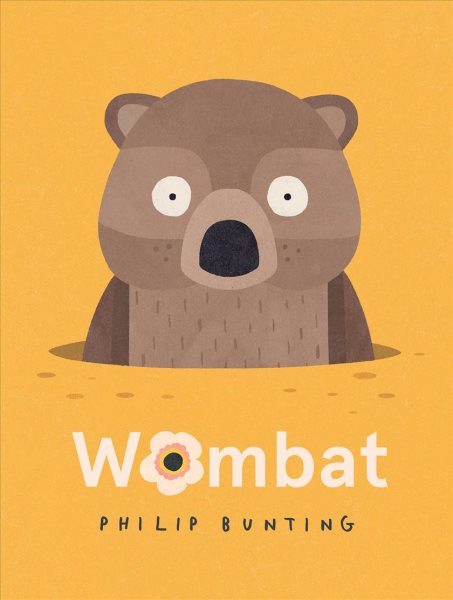
Wombat by Philip Bunting

So I first knew of the work of Philip Bunting because of his rather hilarious World’s Most Pointless Animals series for older nonfiction readers. An Australian, I guess he decided to jump on that big old wombat bus and see what he could do with an exceedingly simple (and exceedingly silly) wombat-centric bit of rhyming. Much in the same vein as Ramona Badescu’s Pomelo’s Opposites, this has an urbane, almost deadpan, take on all wombatphilia. There’s also a low-key drama happening in the sidelines between two wombats in love (distinguished by pink cheeks and coloration but not much else). Now I know what you want to ask: Does he or does he not manage to include square wombat poop? My friends, he does. And we are grateful for it. As for the rhymes, they reminded me of those easy reader books of yore, particularly One Fish, Two Fish, Red Fish, Blue Fish. “Squarebat. Roundbat. Longboat. Splatbat. / Happybat. Grumpybat. Doormat. Fruit bat.” All told, a sweet wombatian bit of flair for those of you in love with those weird little mammals. 

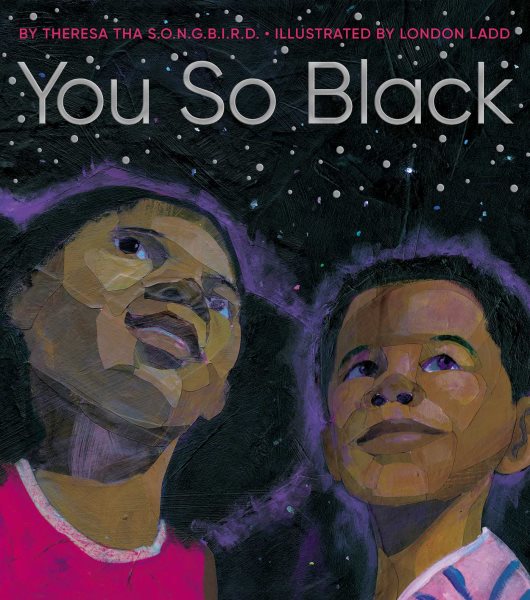
You So Black by Theresa tha S.O.N.G.B.I.R.D., ill. London Ladd

“You so Black, when you smile, the stars come out. / You so Black, when you’re born, the god come out.” A beautiful, viral spoken word poem is reinterpreted into a picture book celebrating the richness, the nuance, and the joy of Blackness.I think this one really stands out thanks in large part to the text. That line, “You so Black, when you smile, the stars come out. / You so Black, when you’re born, the god come out,” manages to be both incredibly simple and empowering. I can also recognize that while London Ladd’s style isn’t the kind I naturally gravitate towards, he’s really put himself on the page here. From the gorgeous endpapers, to mixes of thick paints and patterns, this hits a lot of the same bases as other books out there, but rises above them thanks to those singular little touches you won’t find anywhere else.

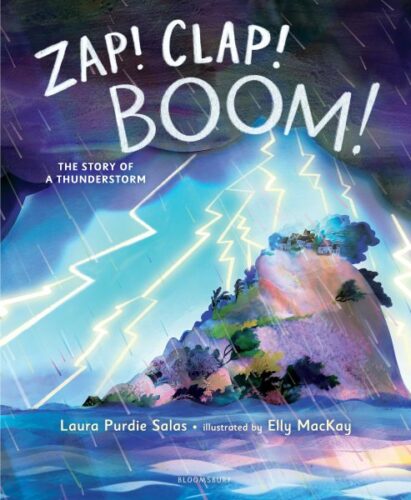
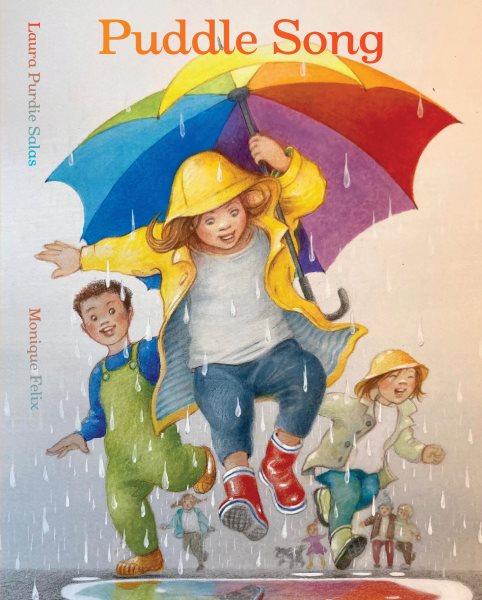
Zap! Clap! Boom! The Story of a Thunderstorm by Laura Purdie Salas, ill., Elly MacKay

“Flicker, flitter, skitter, flash! / Pounding sounding distant crash!” A clear day turns stormy in this marvelous natural readaloud told with a gently rhyming text and simply gorgeous art. Oh! What a delightful surprise! Somehow, I came close to missing this little book, so I’m so glad you all pointed it out to me. I actually do get asked for rhyming nonfiction from time to time, and as anyone who has ever had to page through a dull Seussian attempt will tell you, that can go real wrong, real fast. But Salas, I am happy to report, is a true pro and best of all she’s been paired with Elly MacKay! I’ve been waiting years for MacKay to be given the right project and here, at least, we have it! This is a really good readaloud, with all kinds of interactive elements to enjoy. I can see a librarian getting a whole room of kids to repeat “Zap! Clap! Boom!” together. Add in the almost marbled, iridescent art with its vague hints of three-dimensionality and you’ve got yourself a hit.


Hope you enjoyed these! Here are the lists you can expect for the rest of this month:

December 1 – Great Board Books

December 2 – Picture Book Readaloud

December 3 – Simple Picture Book Texts

December 4 – Transcendent Holiday Picture Books

December 5 – Rhyming Picture Books

December 6 – Funny Picture Books

December 7 – CaldeNotts

December 8 – Picture Book Reprints

December 9 – Math Books for Kids

December 10 – Gross Books

December 11 – Books with a Message

December 12 – Fabulous Photography

December 13 – Translated Picture Books

December 14 – Fairy Tales / Folktales / Religious Tales

December 15 – Wordless Picture Books

December 16 – Poetry Books

December 17 – Unconventional Children’s Books

December 18 – Easy Books & Early Chapter Books

December 19 – Older Funny Books

December 20 – Science Fiction Books

December 21 – Fantasy Books

December 22 – Comics & Graphic Novels

December 23 – Informational Fiction

December 24 – American History

December 25 – Science & Nature Books

December 26 – Unique Biographies

December 27 – Nonfiction Picture Books

December 28 – Nonfiction Books for Older Readers

December 29 – Audiobooks for Kids

December 30 – Middle Grade Novels

December 31 – Picture Books

Filed Under: 31 Days 31 Lists, Best Books, Best Books of 2023 Tagged With: 2023 rhyming picture books, 31 days 31 lists, picture books, rhyming picture books

31 Days, 31 Lists: 2023 Transcendent Holiday Picture Books

December 4, 2023 by Betsy Bird

Initially this was a list that would appear later in the month, but last year someone appealed to me and asked if I could do it a bit earlier. The thinking, I believe, was that if people would like to purchase some of the holidays that are appearing this month, it would behoove me to produce this list sooner rather than later. I couldn’t help but agree! Of course, this list goes far beyond Christmas and Hanukkah this year. Looking at it I can see Three Kings Day, Ramadan, Halloween, Yom Kippur, Dia De Los Muertos, and even Christmas Eve. Sorry, Easter fans. Y’all are gonna have to step up your game next year.

For a PDF of this list, please look here.

Would you like to see previous years’ lists of holiday titles? Try these on for size:

  • 2022
  • 2021
  • 2020
  • 2019 (Great Santa Stakeout alert!)
  • 2018
  • 2017
  • 2016

2023 Transcendent Holiday Picture Books

The Baddies by Julia Donaldson, ill. Axel Scheffler

Hey, The Gruffalo isn’t a worldwide sensation for nothin’, after all. It was the shock of my lifetime to travel to the Bologna Book Fair this past March and discover that Axel Scheffler is, in fact, German. Now is this book up to Gruffalo standards? Since I’m not a #1 Gruffalo fan, my answer would most certainly be yes. This actually would a rather nice Halloween storytime title, if you were so inclined to include it. A witch, a ghost, and a troll compete between themselves to be the scariest (a plot not wholly different from another 2023 title, Benita and the Night Creatures by Mariana Llanos). When a mouse challenges the baddies to get the handkerchief of a young woman who’s just moved into the proverbial neighborhood, the race is on! Trouble is, this is a Donaldson/Scheffler heroine of a particularly calm and collected disposition. And yes, you guessed it, the one who gets the handkerchief is most definitely the mouse (but not, to my surprise, by scaring her). Ideal for the kid who wants something scary/not scary for the season.

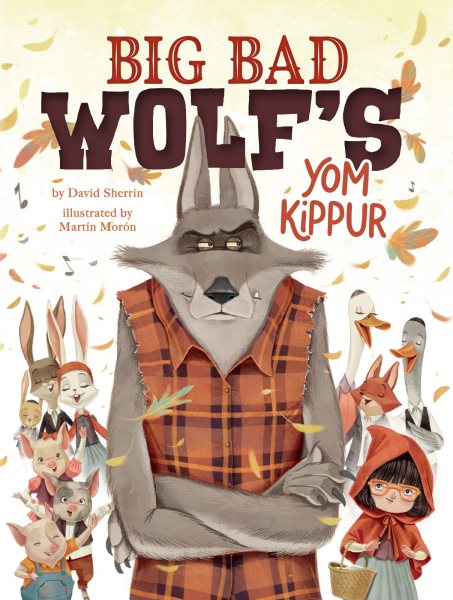
Big Bad Wolf’s Yom Kippur by David Sherrin, ill. Martín Morón

In the pantheon of great Yom Kippur picture books, few feature wolves in sleeveless plaid. Quite frankly, I think that’s a shame. Now as I was traversing the halls of the Annual American Library Association Conference this past June I made a point to sniff out all the smaller publishers of children’s books to see what goodies they might have to display. And Apples & Honey Press did not disappoint. I actually spotted this cover across a distance of at least ten feet and was instantly drawn in. And for good reason too! The story focuses on a Big Bad Wolf, not too dissimilar from the one you’ve seen in the book series/movie Bad Guys. The book centers on a Big Bad who follows the Jewish tradition of t’shuvah, returning to his best self on Yom Kippur. And while I thoroughly enjoyed the storyline and the art (which is top notch!) I really enjoyed the fact that having given up free meals throughout the book, the wolf gets to feast and feast at the story’s end. Probably, and I mean this truly, the best Yom Kippur picture book I’ve ever seen.

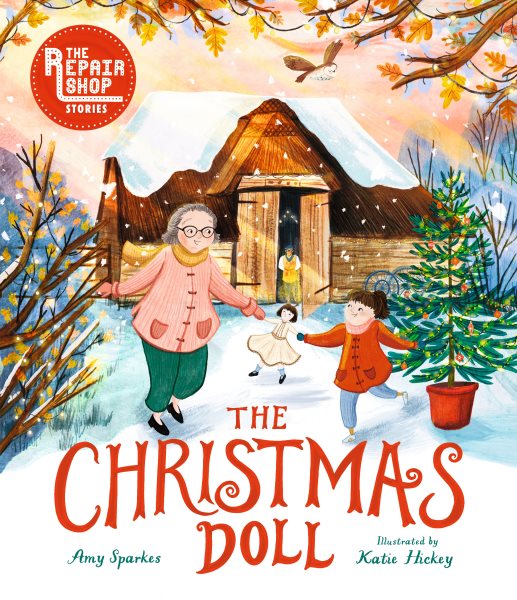
The Christmas Doll by Amy Sparkes, ill. Katie Hickey

Now I’m not familiar with this “Repair Shop” television series that this book is apparently based on. Sounds like it’s a kind of cozy, sweet reality show, described as where “Britain’s most skilled restoration experts repair broken or damaged family heirlooms brought to their shop by members of the public.” I do have to give them credit for figuring out that this would make for a good picture book as well. In this story a girl is evacuated from London during WWII and gifted by her new host family in the country with a doll. Today, that woman and her great-granddaughter take the doll in for repair. We get the story of its origins alongside an oddly satisfying restoration sequence, and (naturally) the bestowing of the doll on a new generation. A good Christmas book is supposed to tug on your heartstrings in some way. I was surprised to find that this one did, and then some.

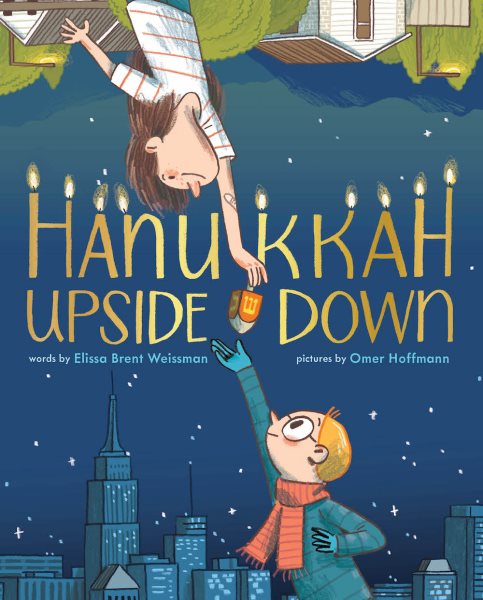
Hanukkah Upside Down by Elissa Brent Weissman, ill. Omer Hoffmann

With apologies to all the other Hanukkah books out this year, behold my absolute favorite!! It is rare for me to put a holiday book on both my Holidays list and my Best Picture Books list of the year, but that’s just how good this little book by Weissman and Hoffmann is. My sole regret is that I encountered it as late in the year as I did. In this story you have cousins Nora, living in New Zealand, and Noah, living in New York. They talk on the phone all the time but they also find one another’s Hanukkah experiences to be utterly backwards. To settle things once and for all, they have a competition: Who can have the world’s best Hanukkah? Weissman then proceeds to do this clever little pairing of each activity that Nora or Noah does that’s different on each of the eight days, but in the end they both always end up doing the same thing. Example: “Noah threw snowballs. Nora did cannonballs. But on the fourth night of Hanukkah, they both gave tzedakah to help repair the world.” The end result is that you learn a lot about each night of Hanukkah, but not in a way that feels teachy. Omer Hoffmann, meanwhile, is utilizing this kind of Quentin Blake/Matthew Cordell-esque style that perfectly captures all the fun that each kid is having on a given day. Love the mirroring of each character, and I also love that we live in an era where these kids are talking to one another on the phone and posting their experiences into a shared online album, rather than relying on something archaic like handmade letters. The whole book feels fresh and fun and utterly original.

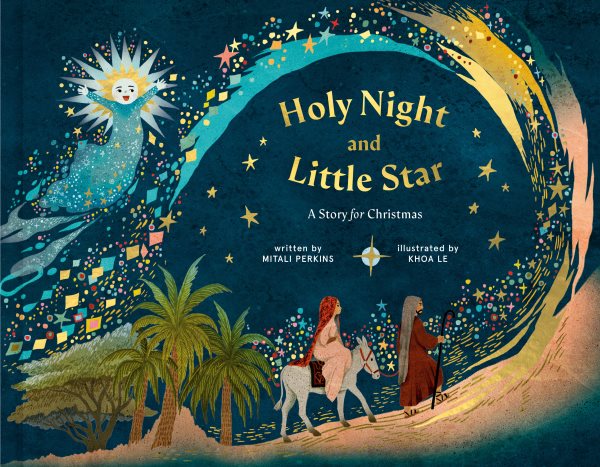
Holy Night and Little Star: A Story for Christmas by Mitali Perkins, ill. Khoa Le

Okay, quick question for folks out there. Who was the smartie who figured out that it was a good idea to pair Mitali Perkins and Khoa Le? I mean, it’s not a new pairing. Last year the two worked on another Christian book called Bare Tree and Little Wind. And since this imprint is a bit on the small side (Waterbrook, an imprint of Penguin Random House, anyone?) I missed them the first time around. This time, however, I was prepared. Now I’d be the first to admit that I tend to miss a large swath of children’s books published every year because they are created by Christian publishers and have their own little market, far away from the stuff I usually see. Those that I do see vary wildly in quality. So it seems to me that this particular Christmas story is heads and tales better written and prettier than a lot of the other Baby Jesus stuff that comes out in a given year. I’ve seen picture books about the Nativity done from the point of view of drummer boys, donkeys, angels, shepherd boys, you name it. This time, it’s a little star who’s the … um… star of the book. That could go real twee real fast, but somehow Perkins and Le make the whole thing work. This is also a religious story. I mean, sure, obviously because of the subject matter, but this one’s a bit more forthright about the whole thing. My sole objection is that for some reason Mary and Joseph end up holing up in a small cave rather than a manger (not entirely certain what’s going on there) but aside from that, this is certainly a pretty book. For those of you unafraid of a little beauty on your shelves.

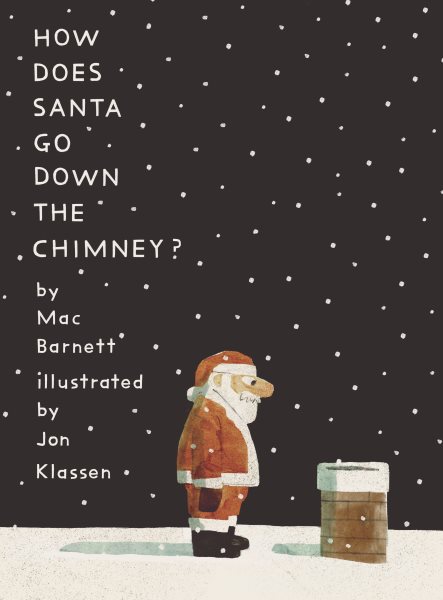
How Does Santa Go Down the Chimney? by Mac Barnett, ill. Jon Klassen

First and foremost, Jon Klassen dedicates this book “To Santa” which is the best use of a holiday book dedication I’ve seen to date, and I think it deserves some praise. But let’s just get down to the nitty gritty. When picture book creators hit a certain level, a lot of them will try their hand at a holiday picture book. Heck, just this year we’re seeing Don’t Let the Pigeon Drive the Sleigh (it goes pretty much the way you’d expect it to). Even the great Dan Santat illustrated a Christmassy picture book (and if you’re asking if I’m shamelessly pandering, I am and I have zero regrets). But when Mac Barnett and Jon Klassen make a Santa book together, it doesn’t feel like they’re hooking their train car up to a larger trend. Instead, it feels like a personal challenge. Just last year the two of them tried their hand at recreating a classic fairytale (The Three Billy Goats Gruff, if you’re curious). Now they tackle the big man in red, but in their own inimitable style. Mac looks at the problem and comes up with an essential question that many children ask. Mainly, how the heck does Santa get down that chimney? And what if you don’t even have a chimney? What then? Respecting the intelligence of his readers from page one onward, Barnett tackles each problem and possibility, approaching his subject matter the same way a scientist might. This works because his art is coming to us via Jon Klassen, a man capable of presenting a reindeer holding a cup of coffee better than any reindeer has ever held a cup of coffee before. His Santa isn’t befuddled. More, he’s a man approaching life’s challenges as they are presented to him. There’s a moment when Santa looks down at a plate, not of cookies, but of carrots that feels more poignant than any of the previous escapades involving chimneys or doggies or night vision goggles. This is, and I mean this sincerely, my favorite Christmas book of the year. I think it balances neatly between amusing kids and amusing adults equally in turns. In other words, the Barnett/Klassen sweet spot.

I Will Read to You by Gideon Sterer, ill. Charles Santoso

I was having a talk with a fellow picture book author the other day and we were lamenting the fact that when you write any kind of a book for kids that is holiday-adjacent, it’s a double edged sword. On the one hand, you have the guarantee that long after you’ve forgotten that you even wrote the book, it’s going to pop up in library’s holiday displays, long after you have left this great, green earth. On the other hand, its very connection to a holiday, even if it isn’t overtly stated, means that the likelihood that it ends up on Best of the Year lists is vastly decreased. For whatever reason, folks don’t like to put holiday fare on Best Of lists. Seems unfair. On the other hand, my own Best Of lists are 31 days long and if I want to blooming put a book like, say, I Will Read to You on TWO lists (Rhyming & Holiday) then I’m darn well going to do so. Ironically, the first time I ever noticed the books of Gideon Sterer, it was for his wordless book The Midnight Fair. Kind of a pity because the man can write! Evidence Proffered: This book. Here we have the story of a boy who’s got some serious Max from Where the Wild Things Are vibes going on. His mom says she’ll read to him (the repeated phrase “I will read to you” has a remarkable effect on the listener) but he’s more interested in reading on his own . . . to the monsters outside! They have no one to read to them! As he calls them together, he names each type of monster but always ends with the promise “I will read to you.” The cadences just stick in your brain and work wonders on the listener. Love how it’s creepy but never too creepy. Don’t just pull this one out at Halloween. This is a bedtime book that deserves year round attention.

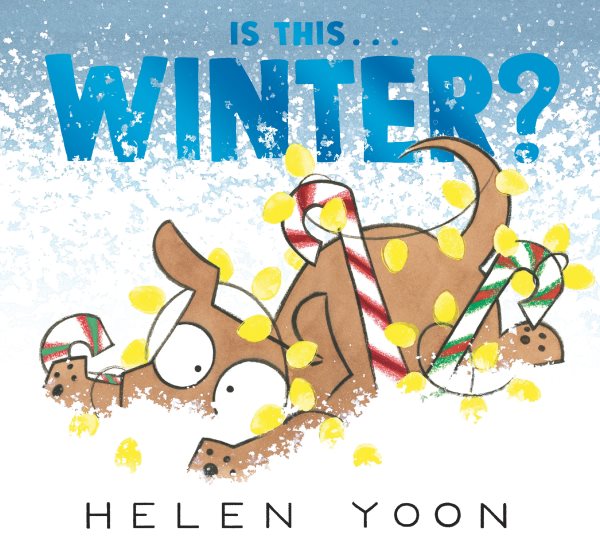
Is This … Winter? by Helen Yoon

Folks, we gotta do something. Something about the fact that Helen Yoon isn’t getting the levels of attention she so richly deserves. First off, I adore her angular style which manages to convey movement with a clever application of odd lines here and there. In this book a pup is totally out of its friggin’ gourd excited about winter. It’s high fiving mailboxes and freaking out squirrels and birds, but when it crashes into a snowman reducing it to rubble (is that the right term or should a busted up snowman be called something else?) things take a turn. Suddenly the pup notices some reindeer decorations and things start to get weird. For any child that has ever encountered holiday blow-up dolls that crossed a little too far into the uncanny valley, this book is for them. And, of course, Yoon’s art is a joy each and every time.

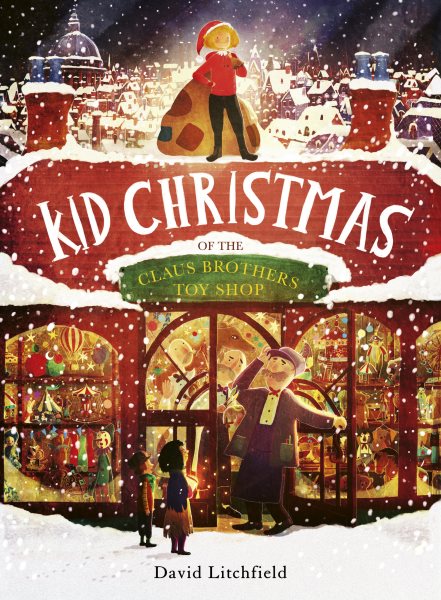
Kid Christmas of the Claus Brothers Toy Store by David Litchfield

Litchfield, as it happens, is the creator of The Bear and the Piano (not to be confused with this year’s fellow bear/piano mash-up, Bear Is Never Alone by Marc Veerkamp) which first utilized his ambitious and highly illustrated style. He cites as one of his influences Raymond Briggs, but you’ll find little of The Snowman in this highly holidazed title. Now I will confess to you that, for whatever reason, I’ve a particular fondness for Santa Claus origin stories. No idea why. I blame books like When Santa Was a Baby, which I enjoyed thoroughly when it was released, and which gave me a taste for more. I’ve finally gotten the perfect companion picture book this year with Kid Christmas. Honestly, its timing could not be better since it also feels like a picture book companion to this year’s Wonka movie. The central conceit is that our hero is Nicky Claus. He works with his three uncles at the Claus Brothers Toy Store where toys are made with just a touch of magic. Nicky is under the impression that he lives in an equitable society, but when he finds himself face to face with toyless poverty he devises a plan to make sure that every kid gets a toy of their dreams on one magical night. And yes, this is most definitely a Santa origin tale, as the end of the book makes clear. Heck, you even find out who Mrs. Claus is later, which is something that often gets overlooked in these tellings. Extra points for the throwaway joke at the end involving Krampus (who I did NOT think was going to put in a cameo). This one’s a hoot.

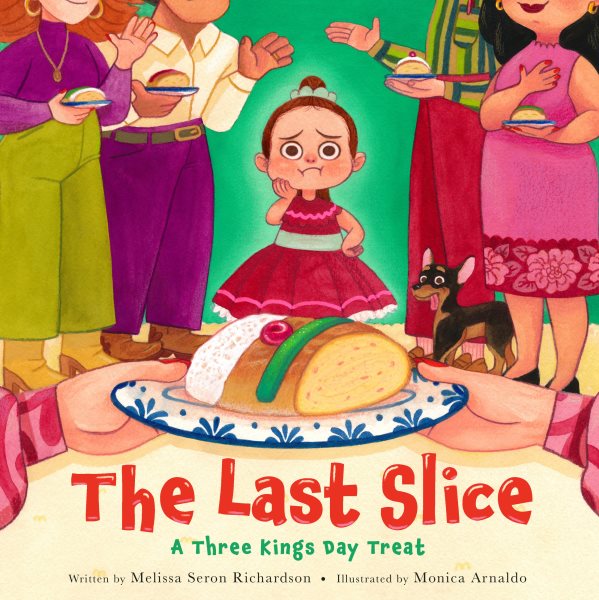
The Last Slice: A Three Kings Day Treat by Melissa Seron Richardson, ill. Monica Arnaldo

I identify real hard with Marta in this book. I did not grow up with la Rosca de Reyes a.k.a. king cake, but if I had then my fears would mirror hers to a tee. Richardson and Arnaldo are both having a delightful time with this book. The premise is fairly simple. Marta, for the very first time, is now old enough to get her own slice of the Three Kings Day dessert. But with great responsibility comes great fear. She’s basically convinced herself that she is definitely, and without a double, gonna eat the baby Jesus. You know the little baby figurine hidden in the cake? And illustrator Monica Arnaldo just LEANS into that fear. There are multiple views of what she imagines baby Jesus would look like in her tummy (with his sunglasses on, he’s basically having the time of his life in there). The conclusion is triumphant and, yes, a tad silly. There’s also some backmatter summing up what Three Kings Day is, the details on la Rosca de Reyes, and both a surprisingly extensive Author’s Note and Illustrator’s Note as well. I’m just gonna come out and say it: This is the best Three Kings Day picture book I’ve ever seen. The endpapers alone sell it.

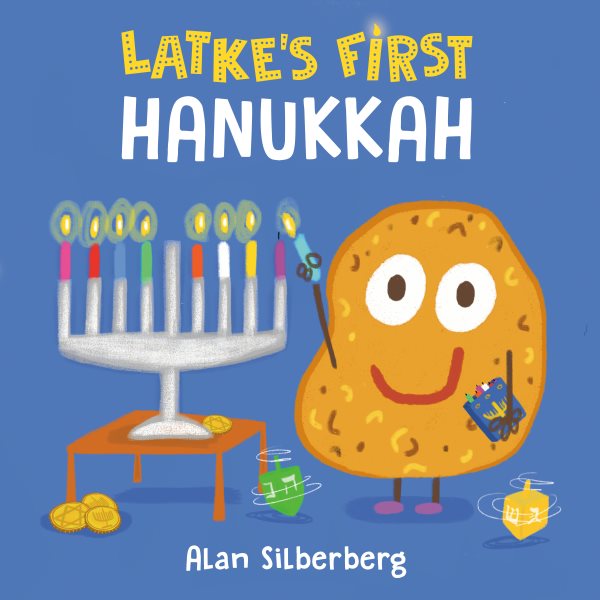
Latke’s First Hanukkah by Alan Silberberg

I doubt that when he was a small child Alan Silberberg looked in the mirror one day and vowed to himself that he would crush the competition in the Jewish Holiday picture book/board book market, but maybe? I mean, he’s kind of the first person I turn to when I want something on anthropomorphized holiday munchies. It’s possible that Alan’s done board books before and I just missed them, but I’m not so sure. Whatever the case, in an era of 5 bagazillion (a rough estimate) Christmas board books of varying quality, it’s just awfully nice to encounter a Hanukkah board book that’s just this fun. It’s a counting book that works its way through all the different aspects of the season, and (yes) it stops at eight. Even the gelt gets to do something. Consider this a precursor to The Latke Who Couldn’t Stop Screaming (you can save that one for when the kids are older).

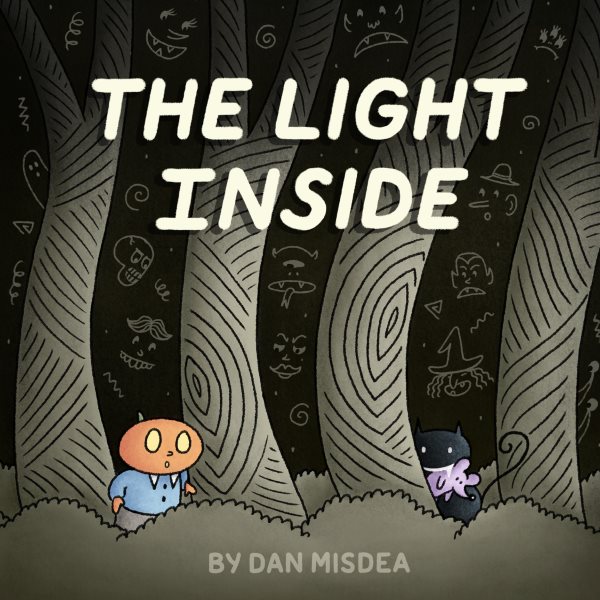
The Light Inside by Dan Misdea

I worry about this book. On a practical librarian level, I mean. It’s just so small. Clocking in at a petite 5.75 inches up and across, I know that a lot of libraries will catalog is as part of their Holiday collections. This makes sense since it’s full of Halloween-appropriate characters. What chaps my hide is that after it had its initial day in the sun they’ll take it to the part of the library where all the holiday books go and it will disappear. I mean, it’s not that much bigger than a Beatrix Potter book and I think we all know how those tiny titles have a tendency to snuggle deep into the stacks, never to be found again. Still, for those children who do find it, the story is just so lovely. Wordlessly, it tells the tale of a pumpkin headed child (I love how just the tip of mom’s green stem sticks out of her hair) who is initially afraid of the creatures that dwell in the dark but, finds it must confront them when its prized mouse stuffie is stolen by a black cat. Looking at Misdea’s art, I was reminded of the work of Liniers. I thought maybe Misdea might have an underground comix background, but turns out he’s a New Yorker cartoonist that we’ve undoubtedly seen before. He is also the nephew of none other than fellow children’s book creator, and syndicated cartoonist, Patrick McDonnell. Misdea has his own small, spare style distinctly his own, but very much in keeping with his uncle’s tone. I see big things for his little books in the future.

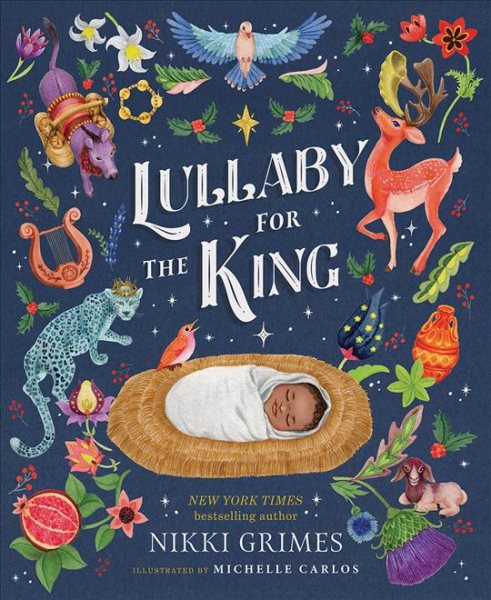
Lullaby for the King by Nikki Grimes, ill. Michelle Carlos

What criteria do I use when considering holiday books? In essence, it’s quite simple. If I can read a book out of season and still feel a frisson of feeling and remembrance of the holiday being celebrated, that is a worthy holiday book. In the case of Lullaby for the King, I read this book at the beginning of May, when the world was warming and spring was coming into its own. And yes, reading this book I felt a wave of familiarity for hymns and Christmas feelings. No surprise to anyone who sees the cover that this is a straight up baby Jesus book. But Grimes, who has a poetry pedigree few could match, is up to the challenge of doing something original here. Her story is about a plethora of different animals and the different gifts they are bringing to the babe. Some are as personal as an ostrich’s own egg, some are instruments, some are jewelry, some just something small and beautiful. And it was a smart cookie who pegged Michelle Carlos to provide the illustrations. She’s forever changing the colors of the animals featured into shades and hues you wouldn’t necessarily find in nature. My favorite of these? The red peacock. Everything is still incredibly stunning, not least the way in which the angels are depicted. Not that I’m giving it away. You’ll just have to give them a glance yourself!

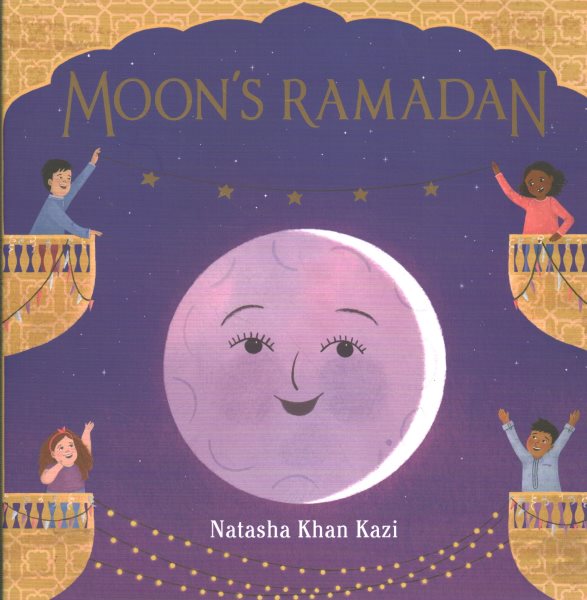
Moon’s Ramadan by Natasha Khan Kazi

This year I started doing a little freelance work for an educational organization that likes to find science books for a range of ages that also show a range of experiences. And let me tell you, if they ever ask me to recommend books for younger ages that discuss the moon’s cycles alongside holiday celebrations, I know precisely what book to bring up. In this story the moon watches as her cycle influences worldwide celebrations of the month of Ramadan. As she waxes and wanes, we learn a little more about how people celebrate in a wide range of different countries. It all ends with Chaand Raat and the beginning of Eid. Copious backmatter includes an Author’s Note, info on the Lunar Cycle (WITH a small Bibliography, thank you very much), and then a Glossary of Ramadan terms. It’s just an exceedingly clever way to talk about the holiday with a little bit of science mixed in there. A friend of mine saw this book and asked if there was any book that talked about how important the moon is to so many different holiday celebrations around the world. Not yet, but I’d say this book is a pretty good start.

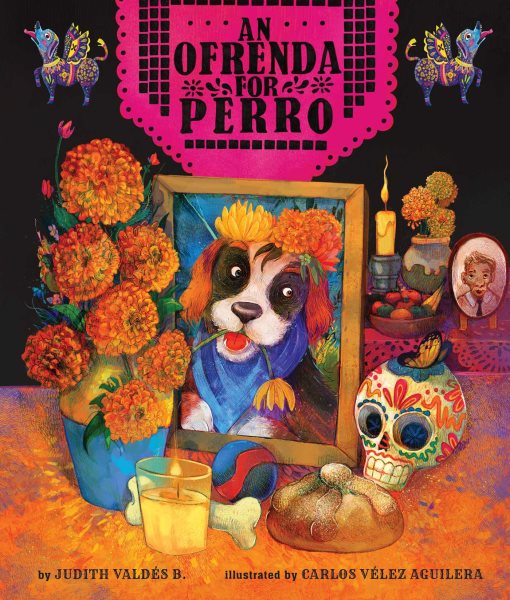
An Ofrenda for Perro by Judith Valdés B., ill. Carlos Vélez Aguilera

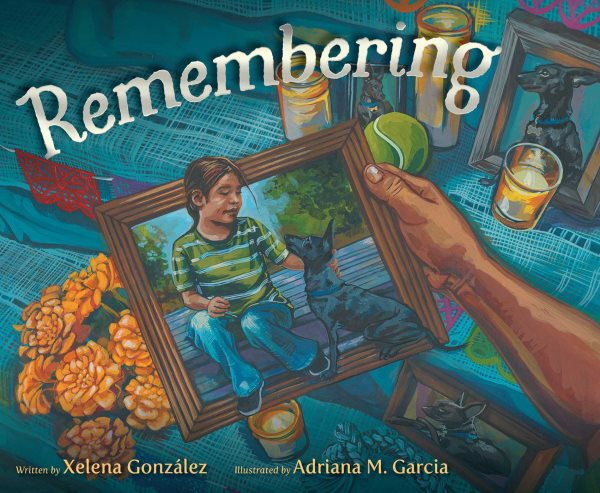
Remembering by Xelena González, ill. Adriana M. Garcia

A twofer! As strange as it may sound, we had TWO books this year released about Dia De Los Muertos and dead dogs. By the way, were you aware the the #1 trend in 2023 children’s books was dead dogs? This isn’t the last time you hear me mention this fact. I saw more ex-fidos this year than I’d ever care to see again. I didn’t mind it so much with these two books, though. Eye-popping? You don’t know the half of it. It’s a little strange to me that while I’ve seen so many fun Day of the Dead picture books over the years, surprisingly few are tied into grief and the experience of grieving someone you loved. In An Ofrenda for Perro, Benito is desperately missing his old dog Perro, who died shortly before the holiday in question. By helping his family to remember Perro on their ofrenda, he’s able to come a little bit more to terms with his own loss. Meanwhile, in Remembering, the family dog is named Simon and a child gathers the pup’s favorite items in a way of never forgetting. The stories is good but the lure here are the amazing colors that artists Aguilera and Garcia both bring to life. Gorgeous offerings and two new (though not to each other) spins on the loss of a pet storyline.

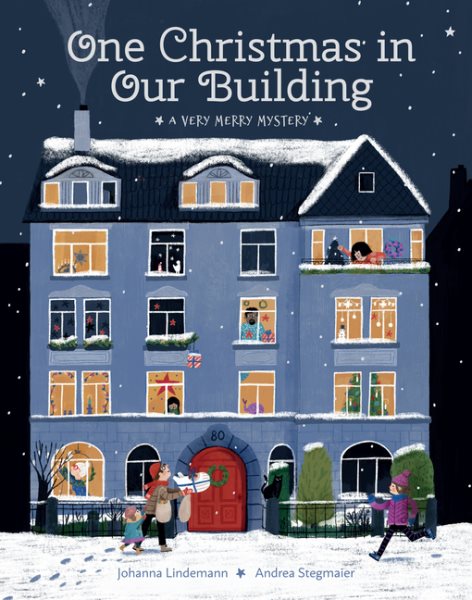
One Christmas In Our Building: A Very Merry Mystery by Johanna Lindemann, ill. Andrea Stegmaier

Only Murders in the Building – picture book style! I think it’s fair to say that until this year I had not yet encountered a holiday picture book mystery before. What a gap in the marketplace! Kids love mysteries. Adults love holiday picture books. Put the two together and you have gold! Mind you, there’s a trick to writing a truly great holiday picture book, regardless of religion. If we’re talking about the American publishing industry then there will be an unspoken requirement to be heartwarming. Trust me. I wrote one. I know. But in this particular case Lindemann and Stegmaier have the situation well in hand. The storyline follows Emma, Dad, and Susan (presumably the stepmom or dad’s girlfriend) who decide to put their Christmas turkey in the hallway overnight (since it didn’t fit in the fridge or freezer). Cut to the next morning and the turkey? It’s gone! Someone in the apartment complex had to have seen what happened, so the family goes from apartment to apartment inquiring. In the course of things they inadvertently make it clear that their Christmas dinner has been pilfered and so almost all their neighbors (save one) make the effort, no matter what religion, to make that dinner the best on record. It’s incredibly satisfying. The solution to the mystery? Less so, but at least there IS a solution. Come for the mystery. Stay for the good feels.

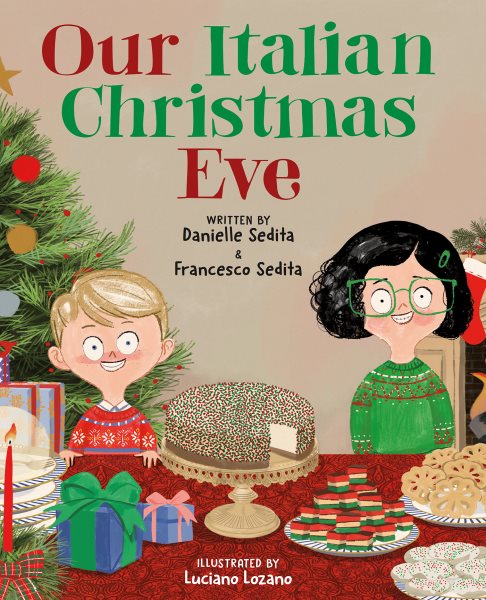
Our Italian Christmas Eve by Danielle Sedita and Francesco Sedita, ill. Luciano Lozano

I am growing increasingly fond of stories where huge hoards of relatives show up somewhere for a celebration and things get a bit wackadoodle. And as strange as it may sound, I don’t remember ever encountering an Italian Christmas Eve celebration picture book before. This would actually be a marvelous pairing with previously mentioned The Last Slice: A Three Kings Day Treat by Melissa Seron Richardson, ill. Monica Arnaldo, since both books really dive deep into raucous family celebrations around the holidays. I’m a little embarrassed to confess that I had no idea that Christmas Eve was such a big deal with Italians. Raised Episcopalian myself, I’m familiar with doing Midnight Mass and everything, but how the heck would you be able to stay awake after all this delicious food? And I am talking DELICIOUS. This book is like my food happy place. Absolutely adore these relatives (Aunt Babe may actually be my favorite person here). The kids in this book are the heroes of the day and it doesn’t feel like a stretch in the slightest. Delicious, funny, wacky, and wild. A winner!

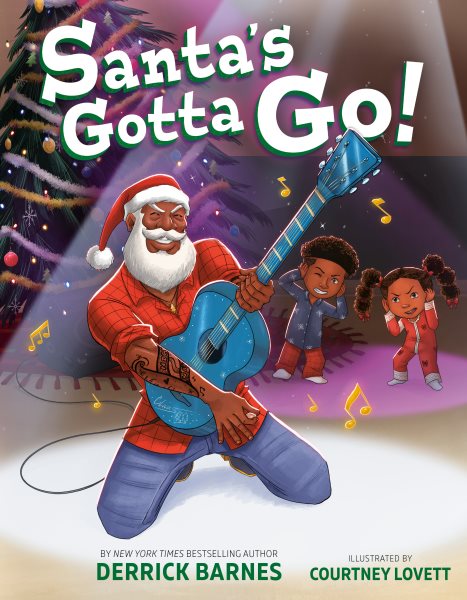
Santa’s Gotta Go! by Derrick Barnes, ill. Courtney Lovett

Relax. In spite of its title this isn’t a book about Santa needing to use the toilet (which, quite frankly, I’m a little surprised doesn’t exist yet). Now I’m no pushover for Santa-related stories, but the combination of seeing a Black Santa sporting a sleeve of tats and the author of this book being Derrick Barnes? Yeah. I was hooked fairly early on. The whole premise is that a nice family invites Santa to stay with them after his flying sleigh busts one of its parts and he’s grounded while he waits for a replacement to arrive. Extra points to Barnes for realizing that Santa would definitely use the term “Figgy Pudding!” as an expletive if he could. At first the kids think Santa staying is awesome, but the man quickly wears out his welcome. He keeps them up all night rocking out with some local guys (the keyboardist alone is worth looking at in this book). He makes a mess. He busts tablets through yoga. Then you get Barnes nailing the ending of the book with a twist and let me just say, this artist Courtney Lovett is doing something REALLY interesting with her cute twink Valentine’s Day mascot. Like, check this guy out sometime. I want a book all about HIM now!  

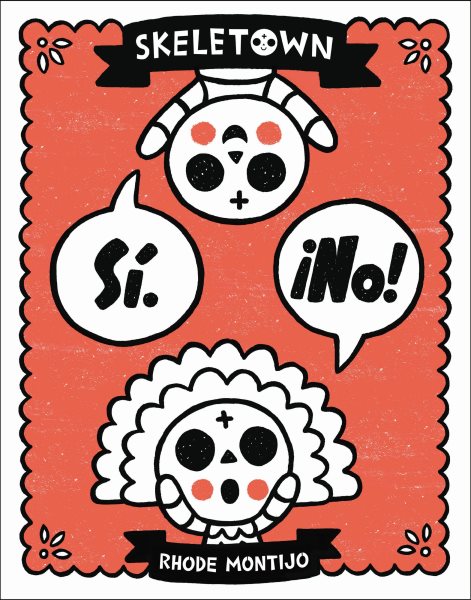
Skeletown: Sí. No! by Rhode Montijo

Ahh. I’ve been waiting for this. Not literally, of course. I had no idea that Rhode Montijo was working on a new picture book series. But ever since I saw Montijo’s last picture book The Halloween Kid about 13 years ago (oh, I have a long memory) I knew another holiday offering had to be in the future. I just didn’t know it would turn out to be a series. Or, for that matter, colored in a fluorescent orange you could see a mile away (consider pairing this with Day-Glo Brothers by Chris Barton if you ever want to make a fluorescent picture book display). It’s not explicitly a Day of the Dead book but with a town wholly inhabited by skeleton folks, you can bet that people will be pulling this out for displays by the dozens. This falls squarely into the category of “simple books” since the text is almost entirely two words: si and no. It reminds me a bit of Unfortunately by Remy Charlip with its continual set up and payoff structure. Eventually a plot does begin to settle in, with the naughty skeleton getting his just desserts, then making up with the clever skeleton with the hair. Montijo has even managed to work in a surprise twist at the end, so kudos there. Kooky, silly, and fun enough that I hope we see more in this vein in the future. Previously Seen On: The Simple Picture Books List.

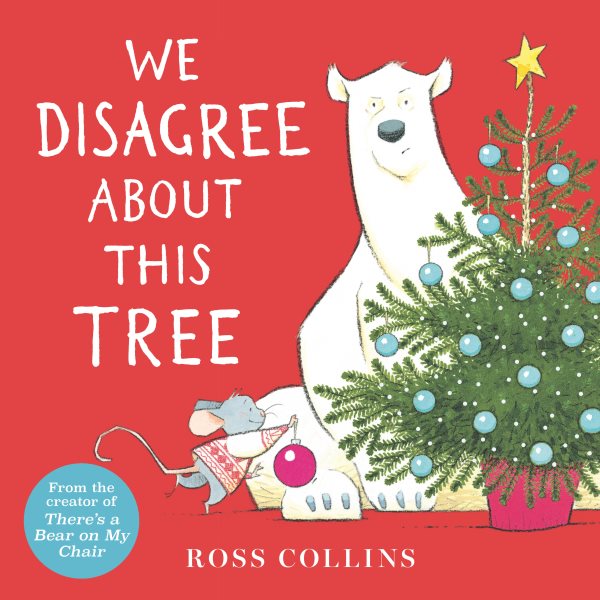
We Disagree About This Tree by Ross Collins

It is difficult for me to emphasize enough how fantastic this title is. Let us all stop for a moment, sit, and admire it together. Note the gentle rhyme, its sweetness unhinged oh-so-slightly by the essential snarkiness of the statement. We disagree indeed. And we’ve seen these two characters together before. Bear and Mouse already appeared in such delightful hits as There’s a Bear on My Chair and There’s a Mouse in My House. Collins specializes in sweet absurdity and mild annoyance. That’s certainly the case here, where each of the two friends takes his own turn trying out outdo the other animal’s tree trimming expertise. Either Mouse is placing baubles that are far too large on the branches or Bear is lighting the tree up like he’s trying to signal deep space. The text consistently rhymes, and every possible method of decorating a tree comes to the fore. Tinsel, candles, and then the whole thing escalates into sheer madness. By the end, the tree is in pieces but the gifts Bear and Mouse have gotten one another hold true. Now I called out this book earlier this year for Mouse’s incorrect knitting needle placement, and I would stand by that statement even now. But beyond its blatant disregard for crafts, you cannot contest how much fun Collins is having with this text, and how much fun families are going to have, reading it together. We may disagree about this tree, but few will disagree about this book.


Hope you enjoyed these! Here are the lists you can expect for the rest of this month:

December 1 – Great Board Books

December 2 – Picture Book Readaloud

December 3 – Simple Picture Book Texts

December 4 – Transcendent Holiday Picture Books

December 5 – Rhyming Picture Books

December 6 – Funny Picture Books

December 7 – CaldeNotts

December 8 – Picture Book Reprints

December 9 – Math Books for Kids

December 10 – Gross Books

December 11 – Books with a Message

December 12 – Fabulous Photography

December 13 – Translated Picture Books

December 14 – Fairy Tales / Folktales / Religious Tales

December 15 – Wordless Picture Books

December 16 – Poetry Books

December 17 – Unconventional Children’s Books

December 18 – Easy Books & Early Chapter Books

December 19 – Older Funny Books

December 20 – Science Fiction Books

December 21 – Fantasy Books

December 22 – Comics & Graphic Novels

December 23 – Informational Fiction

December 24 – American History

December 25 – Science & Nature Books

December 26 – Unique Biographies

December 27 – Nonfiction Picture Books

December 28 – Nonfiction Books for Older Readers

December 29 – Audiobooks for Kids

December 30 – Middle Grade Novels

December 31 – Picture Books

Filed Under: 31 Days 31 Lists, Best Books, Best Books of 2023 Tagged With: 2023 picture books, 31 days 31 lists, holiday books, picture books

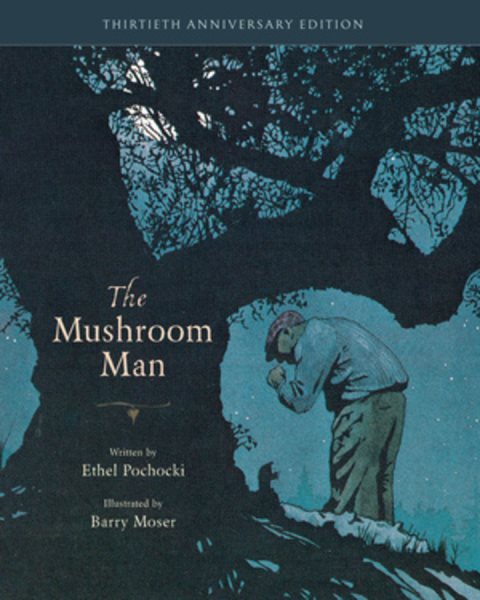
Fuse 8 n’ Kate: The Mushroom Man by Ethel Pochocki, ill. Barry Moser

December 4, 2023 by Betsy Bird

Do you know the mushroom man, the mushroom man, the mushroom man? Well you’re about to! Here’s a question for you: Is a piece of cultural entertainment a “Christmas” title if the holiday only makes a brief cameo appearance? Is the film Meet Me In St. Louis a Christmas film just because it includes the song “Have Yourself a Merry Little Christmas”? Likewise, is The Mushroom Man, now being re-released by Tilbury House on this, its thirtieth anniversary, a Christmas book? Maybe yes. Maybe no. What is important is that we all discover it together. This is our very first Barry Moser book, and what a title! If you are looking for a completely charming book about two lonely souls finding one another and forming a lasting friendship, this is the book for you!!

Listen to the whole show here on Soundcloud or download it through iTunes, Stitcher, Spotify, Google Play, PlayerFM, or your preferred method of podcast selection.

Show Notes:

If you’ve $5K burning a hole in your pocket, why not buy this painting from the original book here? A bit strapped for cash? For $2.5K you can have this one instead. And now you know what you can get me for Christmas.

Interestingly, Kate’s thought upon seeing this first two-page spread in the book was to associate it with Blueberries for Sal. Something about the simplicity and the color scheme.

Meet the meanest children of all time. Where’s a Willy Wonka to straighten these little monsters out?

I knew Moser’s realism would be a real draw for Kate. She’s does love a realistic picture book illustration, and can you do any better in that department than this slightly cross-eyed cat and this mole?

Something that Kate noticed was the product placement in this book. Not that we truly believe that Friskies, Crisco, or Dole paid to be included in this book. But it’s so rare to see real products in a picture book.

And here, lo and behold, is our justification for including this as our Christmas book. It’s brief but by gum it’s there! Kate thinks he looks like an Elton John lookalike with those red sunglasses.

Filed Under: Fuse 8 n' Kate Tagged With: Fuse 8 n' Kate, The Mushroom Man

31 Days, 31 Lists: 2023 Simple Picture Book Texts

December 3, 2023 by Betsy Bird

This is only my second year working this particular list into the mix. Initially I added it because I noticed on my library 101 Great Books for Kids committee that we adults had an interesting tendency to favor the more complicated picture books. This makes sense. We are adults. We like picture books that utilize clever wordplay or will be fun for US to read out loud. That’s why I am pleased to announce that today’s list is for the simplest of picture books. Not books for kids first learning to read necessarily (though I suppose you could use some of these to that end) but that know how to put a minimal number of words on a page. They are, perhaps, the most difficult picture books to write.

You get the full PDF of the list here.

If you’re interested in seeing other lists of simple picture book texts, as I said I only started this category just last year. Here’s what we’ve done so far:

  • 2022

2023 Simple Picture Book Texts

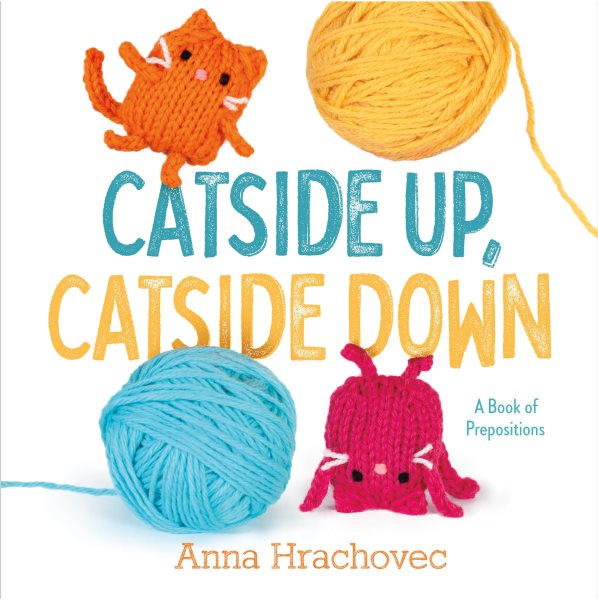
Catside Up, Catside Down: A Book of Prepositions by Anna Hrachovec

Cozy kitties in kooky situations are up, down, on, and around. Simple and hilarious, these gentle rhymes are a sure-fire hit. I am on board with this book because it is weird. It is a weird book about prepositions. And strange and that may sound, that’s in my wheelhouse. I mean, about the point where I realized that someone in this world (that someone being Chicago resident, and therefore neighbor, Anna Hrachovec) had taken literal minutes of her wild and precious life and used them to knit a tiny toilet with a cat in it (accompanied by a tiny knitted plunger) I threw in the towel. How am I supposed to resist this? It’s a simple book for kids (which we always need) and the prepositions aren’t just the usual suspects. Love the words “configure”, “astride”, and “astraddle”, to name but a few. Gotta give it up for the wackadoodle knitted kitty book.

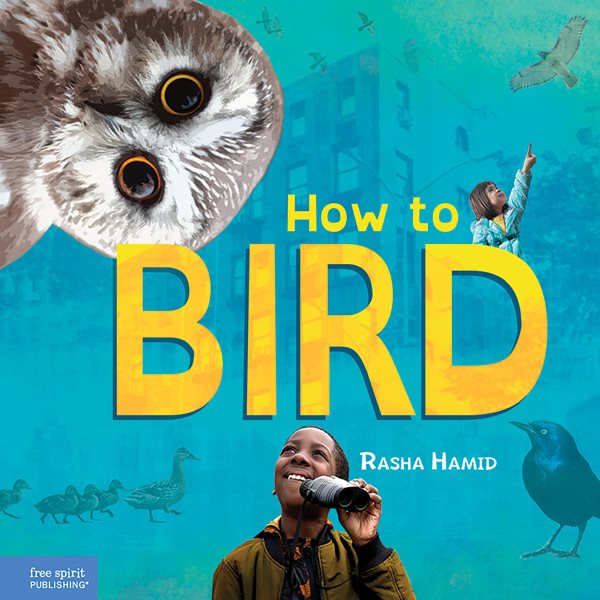
How to Bird by Rasha Hamid

“Are you a birder?” Good news. Anyone can bird! Let this joyful little book be your guide with vibrant photographs and a heaping helping of enthusiasm! Folks, I just seem to keep finding great books. This latest is no exception. Here we have a book that makes it clear that any kid, anywhere (but particularly if you’re in the city) can be a birder. The birds that they show are indeed of the city (though I might take issue with the fact that they call the sparrows in the book “house sparrows” which are an entirely different breed). The photographs are a ton of fun, a mix of photos takes by Ms. Hamid and some other folks and iStock photos. But really I just love the energy of this book. If any book is going to make you want to run out the door to spot a birdie, this is the one.

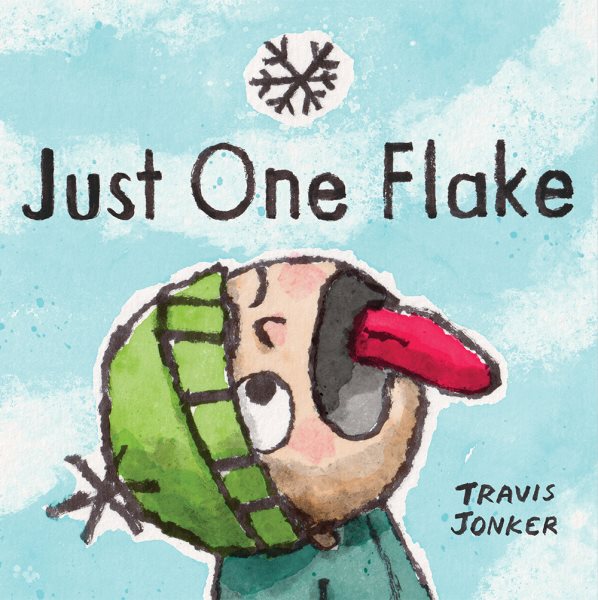
Just One Flake by Travis Jonker

Let’s wrack our brains a little. I know you can help me with this. If you would be so good, please remind me of all the children’s librarians in the world who didn’t just transition to writing picture books for children, but also went so far as to illustrate those books themselves to boot. I’m thinking of multi-Caldecott winner Marcia Brown, of course, but anyone else? How about Travis Jonker? Here’s a fellow who for years was sending his friends tiny illustrated pamphlet picture books in the mail (much as Mo Willems used to do at the beginning of his career). He’d done some lovely picture books with illustrators (be sure to check out his future title with Caldecott Award winner Matthew Cordell!!), but now he’s created a picture book of his own WITH his own illustrations and it’s his best yet. The story is that universal desire to catch a snowflake on your tongue. Trouble is (and I think we can all attest to this) it’s not as easy as it looks. Like Charlie Brown trying to kick that football, our hero is repeatedly thwarted in his attempts until the denouement at the end. Jonker finishes strong with the silent gag on the last page, and then, of course, there’s the case of the book. If you remove the cover you’ll see an array of pretty snowflakes created by everyone from Cece Bell to Minh Lê. Full disclosure: I’m in there too. The book reads aloud brilliantly and best of all has a simple text that the younger kids will get behind. A winner! 

Song That Gets Caught In My Head When I Read That Title: Just One Night.

Skeletown: Sí. No! by Rhode Montijo

Ahh. I’ve been waiting for this. Not literally, of course. I had no idea that Rhode Montijo was working on a new picture book series. But ever since I saw Montijo’s last picture book The Halloween Kid about 13 years ago (oh, I have a long memory) I knew another holiday offering had to be in the future. I just didn’t know it would turn out to be a series. Or, for that matter, colored in a fluorescent orange you could see a mile away (consider pairing this with Day-Glo Brothers by Chris Barton if you ever want to make a fluorescent picture book display). It’s not explicitly a Day of the Dead book but with a town wholly inhabited by skeleton folks, you can bet that people will be pulling this out for displays by the dozens. This falls squarely into the category of “simple books” since the text is almost entirely two words: si and no. It reminds me a bit of Unfortunately by Remy Charlip with its continual set up and payoff structure. Eventually a plot does begin to settle in, with the naughty skeleton getting his just desserts, then making up with the clever skeleton with the hair. Montijo has even managed to work in a surprise twist at the end, so kudos there. Kooky, silly, and fun enough that I hope we see more in this vein in the future. 

Slowly Slowly by Toni Yuly

Simplicity incarnate! A  beautiful, very succinct book about slowing down and watching a persimmon tree produce fruit.  Perfect for early preschool, this is the kind of book where we could all take in lessons from this one: “When you slow down, you see wonders all around.” Indeed. Personally, I thought this quiet book was a lovely and clear way to look at the world.  Additionally, it can be so incredibly difficult to find books that are this simple. Yuly’s been doing this kind of a book for years, but it would be nice if she got a little more credit for them.

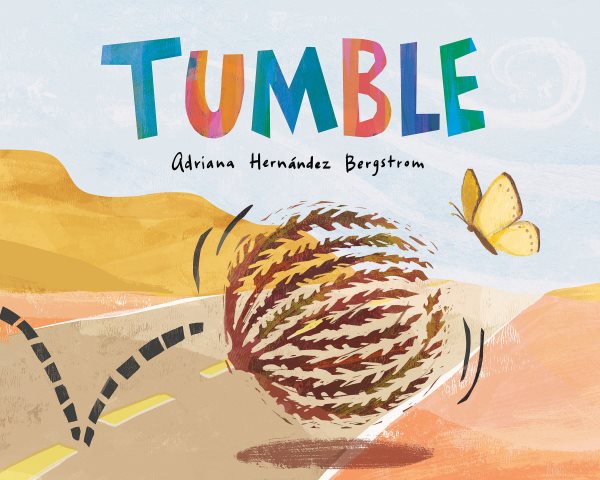
Tumble by Adriana Hernandez Bergstrom

This is a pretty good example of a book that I dismissed out of hand the first time I read it, then did a complete 180 on later. Credit my co-worker Martha Meyer with that little turnaround. First off, this is one of those incredibly rare simple picture books. I often find that such books are incredibly difficult to find. So it has some real readaloud potential, but then there’s the science behind the story. How much do you actually know about tumbleweeds? As a Midwesterner, I’d never encountered one in real life, but watching their eerie life cycle is really eye-opening. I had a co-worker say that they particularly enjoyed it as someone who has tried to move a tumbleweed in the past. Science and simplicity all in one.

The World and Everything In It by Kevin Henkes

Some future researcher is just going to have a ball with the oeuvre of Kevin Henkes. Particularly if you look at how his work has changed over the decades. If we were to give each of his eras a different name, I’d suggest calling his current era the Era of Simplicity. This is when he’s paring everything down to its most essential form. Simple words. Clear cut art with clear cut strokes of the brush. Beautiful, most certainly. And the Kevin Henkes lovers out there (which are legion) love everything that he does. I wouldn’t label him as a risky creator, but there’s something so comforting in his reliability. The words here are simple and clear. He indulges in sentences like, “The big things are big,” and “Everything is in the world” which he repeats twice at the end like a mantra. We read a lot of books about how to engage in mindfulness with kids. Skip those. Just give them this book. It’s practically mindfulness incarnate on the page.


Hope you enjoyed these! Here are the lists you can expect for the rest of this month:

December 1 – Great Board Books

December 2 – Picture Book Readaloud

December 3 – Simple Picture Book Texts

December 4 – Transcendent Holiday Picture Books

December 5 – Rhyming Picture Books

December 6 – Funny Picture Books

December 7 – CaldeNotts

December 8 – Picture Book Reprints

December 9 – Math Books for Kids

December 10 – Gross Books

December 11 – Books with a Message

December 12 – Fabulous Photography

December 13 – Translated Picture Books

December 14 – Fairy Tales / Folktales / Religious Tales

December 15 – Wordless Picture Books

December 16 – Poetry Books

December 17 – Unconventional Children’s Books

December 18 – Easy Books & Early Chapter Books

December 19 – Older Funny Books

December 20 – Science Fiction Books

December 21 – Fantasy Books

December 22 – Comics & Graphic Novels

December 23 – Informational Fiction

December 24 – American History

December 25 – Science & Nature Books

December 26 – Unique Biographies

December 27 – Nonfiction Picture Books

December 28 – Nonfiction Books for Older Readers

December 29 – Audiobooks for Kids

December 30 – Middle Grade Novels

December 31 – Picture Books

Filed Under: 31 Days 31 Lists, Best Books, Best Books of 2023 Tagged With: 2023 picture books, 31 days 31 lists, Best Books of 2023, simple picture books

31 Days, 31 Lists: 2023 Picture Book Readalouds

December 2, 2023 by Betsy Bird

It was fairly early into my creation of these 31 lists that I realized that it would behoove me to honor those picture books capable of entrancing large groups of children. Anyone who has ever read a picture book that bored kids to tears will understand what I mean when I say that not every picture book is a “readaloud” picture book. In this world there are lapsit books and there are readaloud books. The lapsit book is for a one-on-one experience. The readaloud can work just as well for 400 kids as it can for one. It just has to have something about it that engages and interacts with its audience.

Aside from the E.B. White Read Aloud Award handed out by the American Booksellers Association (and I’m not entirely certain it’s still being handed out), there are shockingly few awards that cover this territory. That ends today! Behold! A most glorious list of picture books (and one board book) published in 2023 that will delight and inspire your storytime attendees.

Here’s the PDF of this year’s Picture Book Readaloud List. Interested in other readaloud lists I’ve compiled? Then check out the previous years:

  • 2022
  • 2021
  • 2020
  • 2019
  • 2018
  • 2017
  • 2016

2023 Great Picture Book Readalouds

A-Train Allen by Lesley Younge, ill. Lonnie Ollivierre

A-Train Allen runs, bolts, scurries, dashes, and speeds his way down a bustling city street. Where is he going? A joyful read-aloud that zips faster than any train. As one of my colleagues said of it, “this is one of the best read-alouds of the year: vibrant language (look at all those verbs), colorful dynamic digital art, and plenty of chances to get kids interacting with the story.” The story itself is centered on a boy rushing through a bustling city street, trying to outrun a train so he can meet his Grandmother at her stop. My colleague cleverly gets the kids in his audience to move their feet when he asks them to pretend to be A-Train running. But, you ask, is there something kids can yell too? You bet there is! Check out the refrain towards the end as he approaches his goal: “Got Somewhere to Be, Got Somewhere to Be.”I didn’t realize it at the time, but this is an ideal storytime tale and a great way to kick off our list today.


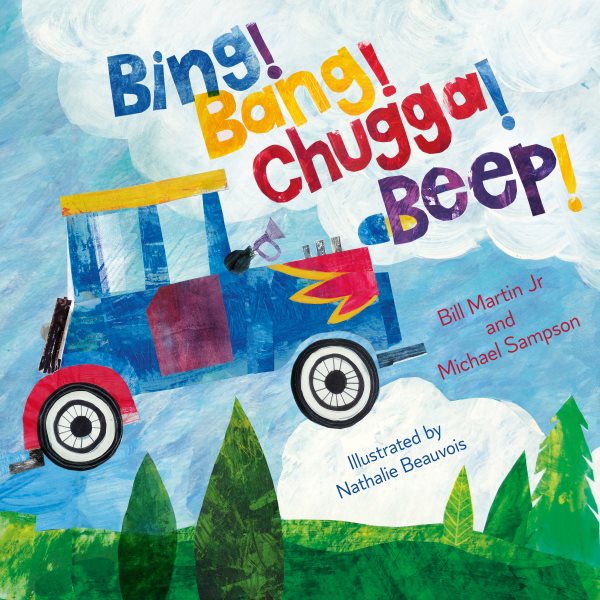
Bing! Bang! Chugga! Beep! by Bill Martin Jr. and Michael Sampson, ill. Nathalie Beauvois

Sing along as a multi-colored car bings, bangs, chuggas and beeps down the road, in the clouds, and through the mud. Now I’m going to level with you. I think I was three pages in before I realized that the ideal way to go through this book is to sing it to the tune of “This Old Man”. The minute I started doing that, the old car just burst off of the page! Now correct me if I’m wrong here, but have we ever had a truly good picture book to this tune before? I’m 99% certain that we have not. If you are a storytime storyteller who enjoys singing, you are in luck. Could you read this without singing? I suspect that you could, actually, so for you non-singers, there is hope. As for seeing these images across a crowded room, Nathalie Beauvois’s art is a perfect accompaniment. An amazing storytime selection! 


Cool Off and Ride! A Trolley Trip to Beat the Heat by Claudia Friddell, ill. Jenn Harney

Here’s the situation: It’s summer. You’re a children’s librarian or bookseller. You want to do a summer-themed storytime. You also want to include some new books in the mix, but since you’ve been doing storytimes for a while you know that not all books adapt to being read aloud to large groups all that well. Plus, you’d really like something that’s a bit inclusive. Then, lo and behold, you discover this title. It’s hot. It’s fun. It has a rhythmic bouncy rhythm that’s hard to beat. It friggin’ rhymes (and well)! Plus you can almost see the waves of heat just emanating off of the page. So much so that maybe I’m proposing this to you all backwards. Maybe the best time to read this isn’t in summer, when we’re all melting into our respective sidewalks, but rather in the dead of winter. February even! A summertime readaloud to invoke those days when all you want is to find a cool trolley car to relax in. So in this story a trolley car is riding around and a whole host of people are desperate to get in it and out of the sun. The magnificent backmatter makes it clear that this was inspired by the trolleys of Baltimore. There really was a Cool Off and Ride program in 1938 and Friddell dives deep not only into the program but their integration and even “What Do Streetcars and Roller Coasters Have in Common?” It’s a neat neat book, most recently seen on my knitting needles post for its correct placement.


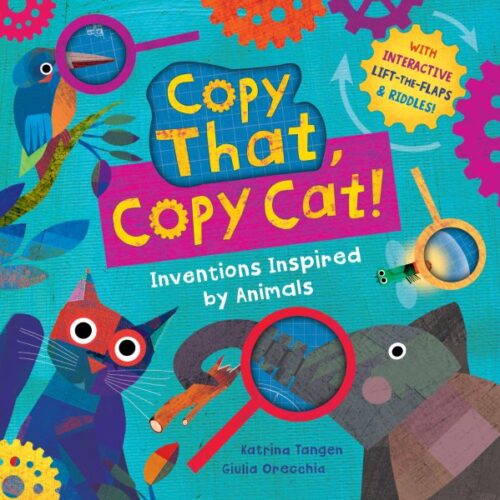
Copy That, Copy Cat! Inventions Inspired by Animals by Katrina Tangen, ill. Giulia Orecchia

Okay, once more we dive into what can only really be considered a nonfiction board book. Sometimes these feel more like unholy unions than anything else. In this particular case the creators have cleverly managed to fulfill both the desires of their young readers (by having them guess what each technological innovation is) and that of their STEM-loving parents. The book kind of reminded me of the old Mac Barnett book Guess Again! in that it has fun fooling the reader into guessing the wrong rhymes with each invention. I suspect this would actually make for a fun readaloud for preschoolers. You do lift flaps, but be prepared for some pretty in-depth and sometimes complex explanations of scientific principles when you do (bet you weren’t expecting to hear the sentence, “The faster air has lower pressure, so the higher pressure underneath pushes up and lifts the wing,” in a board book, were you?). Ambitious but also really fun.  


Have You Seen My Invisible Dinosaur? by Helen Yoon

Did you know that I have a secret bucket list of all the illustrators out there that I’d love to do a book with someday? I think a lot of picture book authors carry one of these in their back pockets. One of the names on my own personal list? Helen Yoon. Trouble is, she’s a one-woman show. When she makes a picture book she is both author and illustrator together. I guess that’s why they’re as good as they are, actually. Off-Limits was my own personal favorite, but I’ve nothing but nice things to say about I’m a Unicorn and Sheepish as well. I confess that when I picked up Have You Seen My Invisible Dinosaur? I didn’t really take note of the creator’s name until after I’d finished my first read. I got to the end and thought, “Wow! This artist really knows how to make characters personable” and also “This would be a great readaloud!” Helen Yoon, up-and-coming Queen of Storytime, is having a lot of fun with negative space in this book. Voice too, for that matter. Are you an incipient picture book creator and you’d like some clear cut examples of great “voice” in picture books? This book should be ideal for reference. Love the concept (a kid is looking for its dinosaur after a bath but doggone it, can’t find the darn thing) and the solution. It’s a cutie!


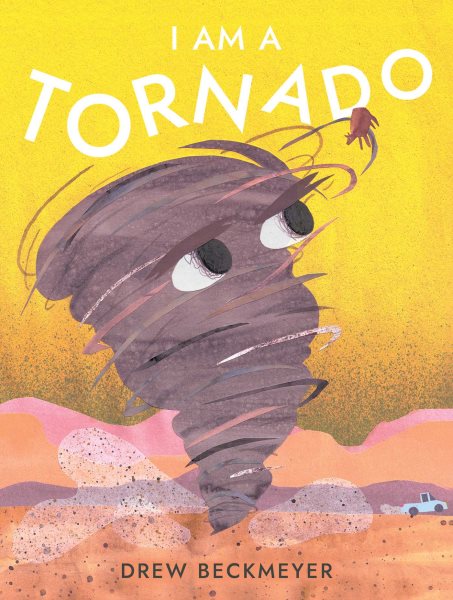
I Am a Tornado by Drew Beckmeyer

Often I read a picture book and instantly know what category to slot it into. Then, once in a great while, I meet a book that sort of defies my expectations and understandings. I thought, going into this book, that it was going to be funny. And it was! And I thought it might have a bit of a message, and there’s some of that too. So, a job well done, right? I’ll just put this book on the Funny list and the Message list. But then I actually read the whole thing cover to cover and found that it becomes downright poignant at the end. Beckmeyer makes this seemingly silly story of a tornado wrecking havoc into a gentler tale of why people with power cling to it so tightly, and how it’s their own loneliness that can be their real fear. That final shot of the winds blowing through the windmills really got to me. Then there’s also the fact that Beckmeyer has sneakily worked in all kinds of science information here discussing the formation of tornadoes and where they come from. By the end, I realized that while there are humorous parts to this book, what it really is is a fantastic readaloud for kids. A strange, wonderful one. Like a picture book version of the Neko Case song “This Tornado Loves You”. Never thought I’d write that in a picture book summary before.


Mister Kitty is Lost! by Greg Pizzoli

I submit to you that though the shape of this book is picture book square, the simplicity of the text makes it an excellent candidate for the Geisel Award (given yearly to books for beginning readers). With die-cuts galore, a little white girl goes about trying to locate her lost kitty. Look closely at her drawing of her missing pet, by the way. It doesn’t give away the twist but, upon closer inspection, it does hint at it. A counting book as well, everything leads up to a big reveal. I suspect that this would also make an excellent readaloud for a large group of Kindergarten or 1st graders. Particularly with that surprise “ROAR!”. It really comes outta nowhere. Go, kitty, go!


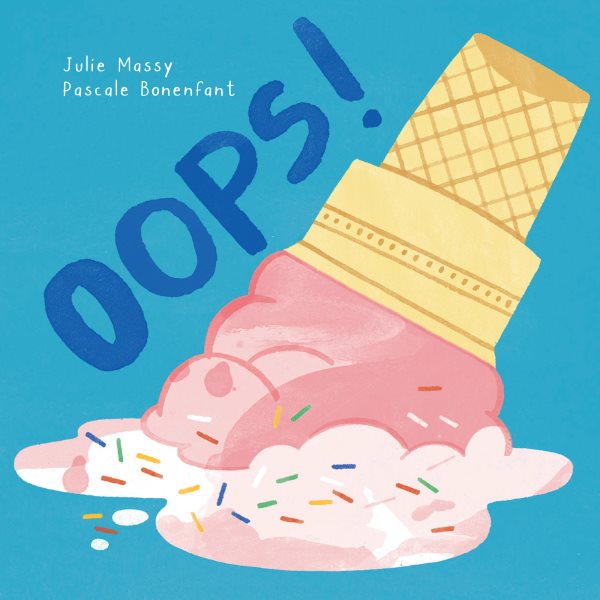
Oops by Julie Massy & Pascale Bonenfant, translated by Charles Simard

An interactive picture book revels in luring its readers into breaking with convention. From the very start, this narration plays devil’s advocate with its young readership. Opening upon a page featuring a single egg it reads, “Eggs are very breakable. Why don’t you try knocking on this egg?” Turn the page and the child’s knocking has revealed a bright yellow chick and the word, “Oops!” Lest you mistake that “Oops!” for an apology, the next page shows a dozen more eggs, prompting the reader to “Give them a whack!” Doing so, however, yields a sea of yolks and the pointed “Oops!” yet again. As the book continues, gentle chaos reigns. The titular “oops” is complicit in its own reoccurrences as the narrator urges readers to transgress by squashing toothpaste tubes, dropping mugs, flipping full bowls of noodles, and more. Within the safety of the page, kids are allowed to indulge in a cathartic release of naughty inclinations. The simple, colorful pages leave reader in little doubt of the results of their “actions”. Certainly, children that flinch from deviating from the rules will find this book more perturbing than inspiring but for others it may prove a joyful release. Interactive books work very well in storytimes too, I can attest. Remember the heyday of Press Here? This has the same energy. With just a hint of Uncle Shelby’s ABZs (1961) this book gives anarchic impulses a good name.


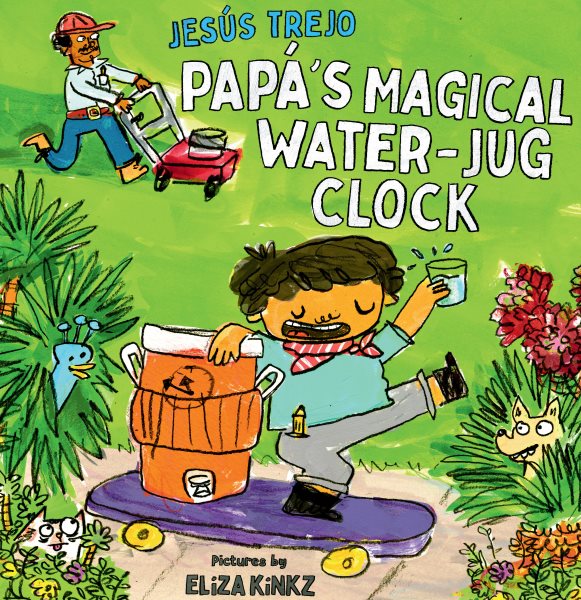
Papá’s Magical Water-Jug Clock by Jesús Trejo, ill. Eliza Kinkz

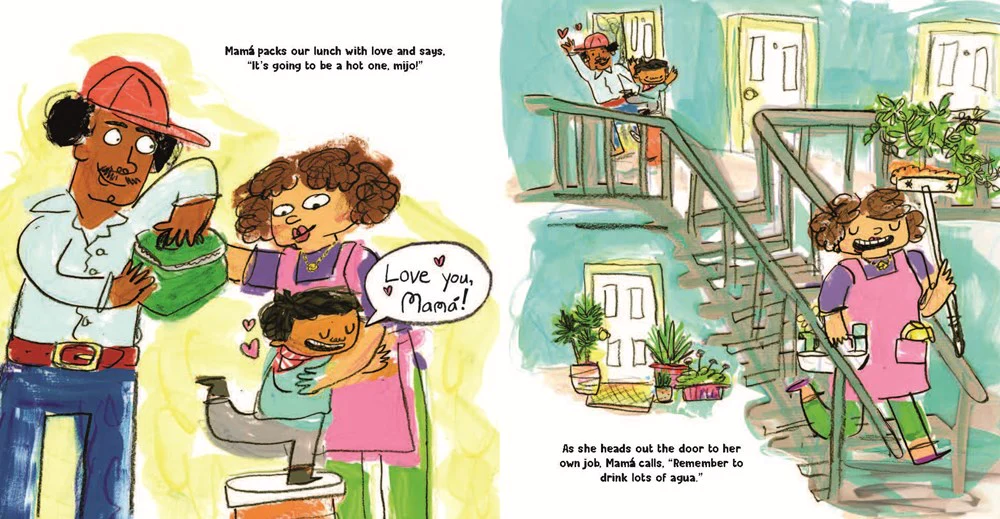
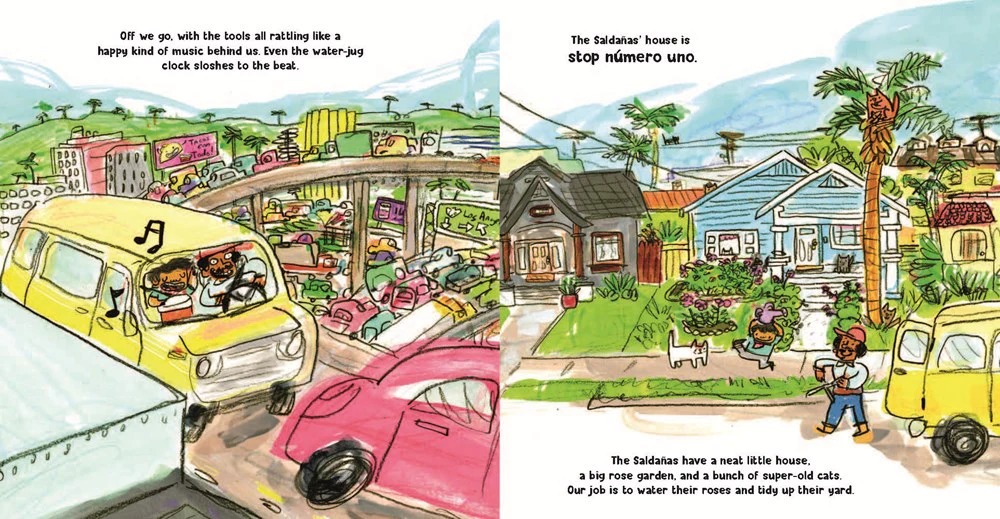
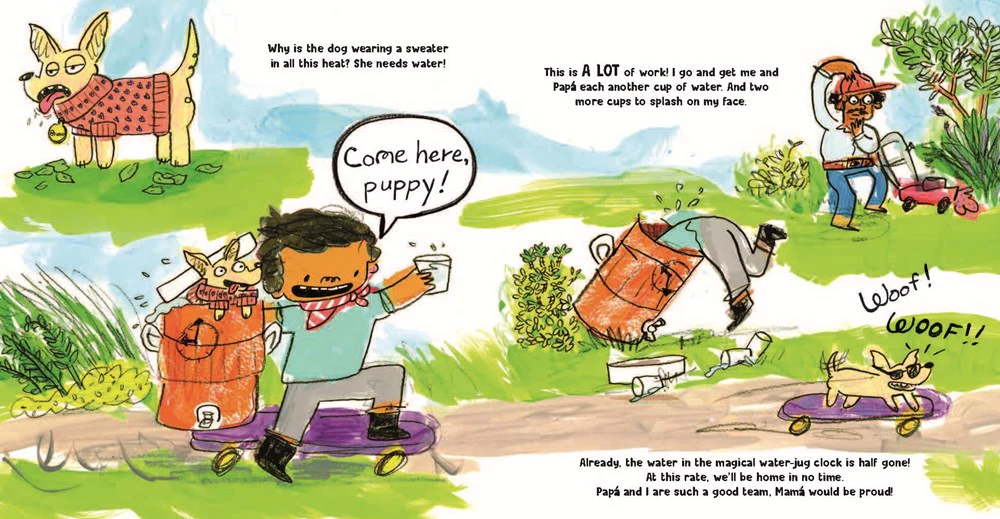
It’s Saturday so Jesús gets to go with Papá on his landscaping jobs. Papá says when their water-jug is empty it’s time to go home. So what’s so wrong about giving the jug a little help? Hilarity (and copious water consumption) ensues. I just love this one. Eliza Kinkz is rapidly becoming one of my favorite new illustrators. Last year we saw a nice, touching story from John Parra called Growing an Artist that talked about his dad as a landscaper. This book is in the same subject area but takes this fun, wild, goofy attitude. It also is a great example of kid-logic. I mean, if you tell a kid that when the jug is empty you get to go home, the kid is going to do whatever they can to speed that process along. The readaloud potential is fantastic (particularly the moment when the kid has a breakdown). Kinkz, meanwhile, may illustrate the best elderly cats I’ve seen in a book in years. Funny and kind of touching and contains a great scream of frustration as well. And is it available in Spanish? It IS available in Spanish!


Roll, Roll, Little Pea by Cecile Bergame, ill. Magali Attiogbe, translated by Angus Yuen-Killick

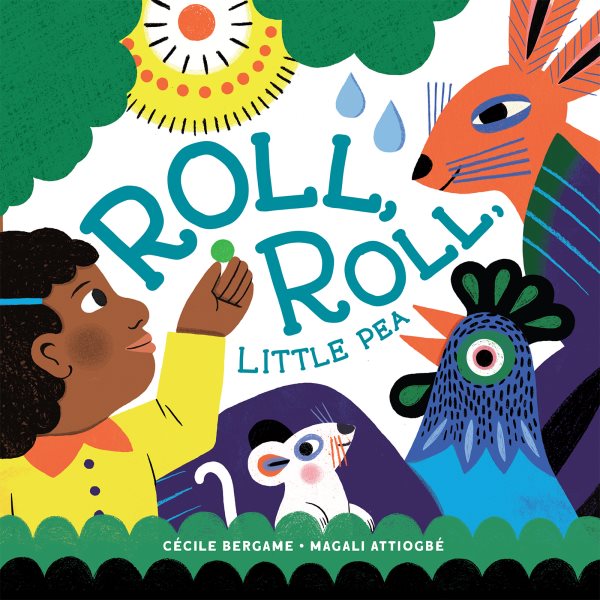
Did anyone else grow up listening to the cassette tape of “Wee Sing Silly Songs”? That whole chunk of my childhood takes up residence in large portions of my brain to this very day. In any case, I ask this mostly because there was a song on that tape mighty familiar to many kids that have ever done summer camp: “On Top of Spaghetti”. The song is about a wayward meatball that escapes being devoured. This is very in keeping with the plot of this particular book as well, though instead of it being about a wayward meat product on the run it’s about a small pea. I will tell you all right here and right now that since this book is a translation I approached it with trepidation. Not all translations are created equal and I was concerned that perhaps this book wouldn’t read aloud particularly well. Turns out, my fears were completely unfounded. Filled with incredible, vibrant colors and hues, the words on these pages are delightful. Once the pea has made its escape the text reads something like, “Roll Roll, Little Pea, along the floor and under the stairs”, (always changing where it heads) and on the opposite page is some kind of critter who would like to crunch or nibble or peck or even “Devour” the pea. With pictures you can make out across a room and that steady diet of repetition, the end result is a great readaloud and stellar translation. Two thumbs up!


Tap! Tap! Tap! Dance! Dance! Dance! by Hervé Tullet

He’s baaaaaack! Though, truth be told, he never really left us. Still, it’s been about a decade since Tullet climbed the picture book bestseller lists with his incredible Press Here (and I look forward to the papers of children’s literary scholars in the latter half of the 21st century as they strive to explain why a tactile book gained such traction in the early era of apps and interactive books). This book is obviously of a similar ilk, but the sheer size of it is fascinating in and of itself. Clocking in at an impressive 12.50″ H x 10.75″ W (so apologies to those of you who find you can’t fit it on your picture book shelves), I would argue that this book may be Tullet’s best book since Press Here itself. Why? Because it does manage to recapture that feel of interacting on a larger scale. And because it IS so big, it’ll have no trouble playing across a crowded room. I suppose that was always a bit of a problem with Press Here. It worked wonderfully with groups but was relatively small so that you had to really move it around a lot so that everyone could see it. Not so here! The large size plays well, though it could also be a great laptime read for one-on-one time. A return to form.


We Are Here by Tami Charles, ill. Bryan Collier

Boy, there’s really nothing to beat the moment that happens when an author and illustrator present their book together, right? For me, that moment happened this year when Tami Charles and Bryan Collier appears at the Andersen’s Breakfast in Illinois (hosted by Anderson’s Bookstore). It’s an annual tradition, where educators come to watch great children’s book creators speak, and then a whole slew of local authors and illustrators are available to sign their own books afterwards (including me, ho ho!). This year I watched as Tami and Bryan systematically went through this book and, in the process, made me completely fall in love with it. But it wasn’t until they read it aloud, start to finish, that I realized what a magnificent readaloud it truly is. The lines, cadences, and structure. And look at that art! Collier works in shotgun houses everywhere, and that (plus a balloon AND the pots from Dave the Potter as well) make this the kind of book where the reader can draw in the audiences by having them spot these different elements. You’re just going to have to try it out on your own. I was amazed.


Zap! Clap! Boom! The Story of a Thunderstorm by Laura Purdie Salas, ill., Elly MacKay

“Flicker, flitter, skitter, flash! / Pounding sounding distant crash!” A clear day turns stormy in this marvelous natural readaloud told with a gently rhyming text and simply gorgeous art. Oh! What a delightful surprise! Somehow, I came close to missing this little book, so I’m so glad you all pointed it out to me. I actually do get asked for rhyming nonfiction from time to time, and as anyone who has ever had to page through a dull Seussian attempt will tell you, that can go real wrong, real fast. But Salas, I am happy to report, is a true pro and best of all she’s been paired with Elly MacKay! I’ve been waiting years for MacKay to be given the right project and here, at least, we have it! This is a really good readaloud, with all kinds of interactive elements to enjoy. I can see a librarian getting a whole room of kids to repeat “Zap! Clap! Boom!” together. Add in the almost marbled, iridescent art with its vague hints of three-dimensionality and you’ve got yourself a hit.


Hope you enjoyed these! Here are the lists you can expect for the rest of this month:

December 1 – Great Board Books

December 2 – Picture Book Readaloud

December 3 – Simple Picture Book Texts

December 4 – Transcendent Holiday Picture Books

December 5 – Rhyming Picture Books

December 6 – Funny Picture Books

December 7 – CaldeNotts

December 8 – Picture Book Reprints

December 9 – Math Books for Kids

December 10 – Gross Books

December 11 – Books with a Message

December 12 – Fabulous Photography

December 13 – Translated Picture Books

December 14 – Fairy Tales / Folktales / Religious Tales

December 15 – Wordless Picture Books

December 16 – Poetry Books

December 17 – Unconventional Children’s Books

December 18 – Easy Books & Early Chapter Books

December 19 – Older Funny Books

December 20 – Science Fiction Books

December 21 – Fantasy Books

December 22 – Comics & Graphic Novels

December 23 – Informational Fiction

December 24 – American History

December 25 – Science & Nature Books

December 26 – Unique Biographies

December 27 – Nonfiction Picture Books

December 28 – Nonfiction Books for Older Readers

December 29 – Audiobooks for Kids

December 30 – Middle Grade Novels

December 31 – Picture Books

Filed Under: 31 Days 31 Lists, Best Books, Best Books of 2023 Tagged With: 2023 picture book readalouds, 31 days 31 lists, picture book readalouds, readalouds

31 Days, 31 Lists: 2023 Great Board Books

December 1, 2023 by Betsy Bird

I know you may not believe it, but it is SUCH a relief whenever I finally begin my 31 Days, 31 Lists process. I prepare books all year long, and the lists just build and build and build, waiting until I can finally release them. And now, at last! I’m able to share with you a slew of great (I will never say “best” because aside from these being subjective, I can’t read everything) books published in the current year.

As with every year, I tend to split my Board Books list into parts. In the first part, you’ll find the (much shorter) list of board books appropriate for babies. As strange as it may seem, a large chunk of board books produced are better suited for toddlers and preschoolers. I’ll provide a list for them as well, but I like to separate them out from the babies list. And then, this year, I found enough interesting board book reprints/adapted picture books (trust me, making good ones is an art) to make a third section for the very first time. They’re all below. Dip and in and out as you prefer. And if there’s a book you particularly enjoyed this year and you don’t see it on the list, let me know in the comments! I love additional suggestions on all of these lists.

Here’s the PDF of this year’s Board Book List, if you’re interested in downloading it in a nice and easy format.

Additionally, in case you need more suggestions, be sure to check out my previous years’ board book lists:

  • 2022
  • 2021
  • 2020
  • 2019
  • 2018
  • 2017
  • 2016

2023 Board Books for Babies

The Babies and Bunnies Book by John Schindel and Molly Woodward

To be perfectly frank, I admire the shamelessness of this series. Already John & Molly figured out an essential secret to board books: Fill ‘em with photos of babies and cute fuzzy animals. I mean, it sounds obvious when I say it aloud but nobody else has ever really just gotten down to the bare essentials the same way that these folks have. They already produced The Babies and Doggies Book to say nothing of The Babies and Kitties Book as well. Now they go all bunny, which is smart on a couple levels. Unlike doggies and kitties, bunny board books sell particularly well around Easter time, even if they’ve nothing to do with the holiday directly. Of the aforementioned three titles, I suspect that this one will sell far longer to far more people. As for the book itself, the babies and bunnies are just amazing. Even if they’re not in the same shot or frame, they’re paired in such a way where they look like they could potentially be in the same general area. What the baby does, the bunny does, and vice versa. Just try to resist, you jaded suckers. It won’t work. Babies & Bunnies 4-Evah. 

DJ Baby by D.J. Burton, ill. Andy J. Pizza

While some may say that babies do not need to learn how to do a record scratch, I for one disagree heartily! These are important skills and, happily, we finally have an interactive board book to go along with this need. Now if I were handing out awards for the most creatively constructed board books of the year, DJ Baby hands down would be the winner. Two records poke through the entire book so that even on the cover you have the ability to spin them either clockwise or counter-clockwise. The text, meanwhile, is bouncy and rhyming. “Hey, DJ Baby! Pump up the jammies! Spin those records! Jump up, little lambies!” Animals fill the dance floor as the reader spins those records. So entranced was I with the records that I completely missed some of the other interactive elements, like the lights you can raise and lower. A more blatant pitch to Gen X / Millennial parents I’ve yet to see, and I couldn’t care less. I would have loved to have been a fly on the wall when they pitched this to the Simon & Schuster sales team. Utterly original. And if you want to watch my TikTok on it, you can do so here.

Eyes, Ears, Nose, and Toes by Sophie Aggett

Yeah, I admit it. I’m pretty easy. You slap some big old baby faces in a board book and then add an element like soft felt flaps? Instant inclusion on this list! What’s funny is that so few board book creators have ever thought to do this. There are only so many different elements you can include in books for the youngest of young readers, and “faces” and “felt flaps” come up all the time. Yet for the first time that I’ve ever seen, here they are together at last. The photographs are entirely black and white, which is an interesting choice. I don’t know enough about baby eyeballs to know if that counts as “high contrast” enough for them, but certainly the lovely flaps are an excellent touch. Plus, someone appears to have worked hard to make sure that the cutouts on the felt reveal the obligatory body parts you’re looking for. Consider this for toddlers too then! 

Global Baby Grandparents by Maya Ajmera

I’m sorry, but do I even have to make a write-up for this book? If you know any of the “Global Baby” books in the series then you know they pretty much sells themselves. The only mystery surrounding this particular title comes in wondering how they held off from doing a grandparents book before now. As per usual you get these truly gorgeous faces of babies from all around the world, only this time with their grandparents. Earlier this year an article about Jon Klassen’s The Skull bemoaned how many picture books are about grandparents in a given year (since it feels like an easy grab for sentimental grandparent cash). I would have you remember, though, that no matter the subject matter, there are always a few truly amazing books in the bunch, well worth discovering. And with its brightly colored, clear-as-crystal, beautiful photographs, this is one of the few. 

Good Night, Baby by Staphani Stilwell

Okay, I’m gonna let you in on my sneaky, underhanded little plan involving these board books. Are you ready? See, I figure that if I feature enough of them with this great big beautiful photographs of baby faces, and give them enough attention on these lists, then more and more publishers will create them and soon the market will be flooded with titles that babies actually enjoy! MUAHA-HA-HA-HA-HA!!! Mind you, I’m no evil genius, and these books are probably doing as well as they are right now due to their inherent and obvious charms rather than anything on my part. This particular title is a companion to a book on this list coming next called Hello, Baby. Like that book they’ve found fifteen adorable babies and they say good night to them (in this case) in fifteen different languages. I was very gratified to see not simply a range of races and skin tones but also at least one Down syndrome baby as well. A pronunciation guide exists at the end along with visuals for the sign language. Perfect for baby and intensely interested and engaged parent alike. 

Hello, Baby by Stephanie Stilwell

This is the book I was just talking about. With the directive to “Say hello in 15 languages” this is a book chock full of baby faces from a wide range of skin tones and ethnicities. Nice too that as you say hello to each baby in a different language, they’ve a wide range of names as well. Languages include English, Chinese (which is listed as “Simplified” though I’m not certain what that means), French, Korean, Spanish, Swahili, Arabic, Russian, German, Hindi, Navajo, American Sign Language, Portuguese, Japanese, and Italian. Extra points to ending with a baby with glasses because, as we all know, babies with glasses are the cutest babies of them all. 

Hello Baby Penguin! by Beverly Rose

Hello Baby Sloth! by Beverly Rose

Oh yeah. I see how it is. You think that just because you’ve filled a board book with delightful, squishable, cute-as-a-button baby animals, I’m just gonna roll over and talk that book up?

You would be correct then.

Of course, not all board books featuring photographs are created equal. This uses the usual Shutterstock images we’ve seen so many times before but I gotta give a shout out to the design team. A pity the designer isn’t credited on the back of the books yet, honestly. They should get some credit for how the images, text, and colors work so well together, page to page to page. Each book ends with a small child at the very end, and that’s just so darned adorable I can hardly stand it. So yes. I may not be hard to please when it comes to baby sloths or penguins, but it helps when the quality of the materials is so good. 

Friend by Gavin Bishop

Look: A Tummy Time Book by Gavin Bishop

YUSSS!!! Oh lord, people, why is something like this so rare? All I want is for accomplished picture book illustrators to hone their talents to the board book format and THEN be paired with those books that will be most useful to children. I’m talking accordion books/high contrast/lift-the-flaps/you name it. Gavin Bishop is of Maori descent (Ngāti Pukeko, Ngāti Awa, Ngāti Mahuta, Tainui) and is a friggin’ New Zealand national treasure. He’s also been making books for kids for decades upon decades. LOOK is a particular delight with faces on one side of the accordion pull-out pages, and objects on the other. Meanwhile FRIEND goes through a range of different emotions with a little dog as your avatar. More of this please!

Look, It’s Hoot Hoot Owl by Camilla Reid, ill. Clare Youngs

Look, It’s Moo Moo Cow by Camilla Reid, ill. Clare Youngs

Look, It’s Roar Roar Lion by Camilla Reid, ill. Clare Youngs

Look, It’s Woof Woof Dog by Camilla Reid, ill. Clare Youngs

It’s not as though I’ve never seen foil used on a board book before. Of course I have! But until now I don’t think I’d seen it used as beautifully and artistically as it has by Clare Youngs. By all immediate appearances these aren’t all that different from your average Nosy Crow lift-the-flap/touch-and-feel board books. But once you get inside, you’ll find these enormously engaging shiny patterns on the animals. I think it’s the use of foil in patterns (and delicate ones at that) that really blew me away. It just sort of elevates everything a bit. Sort of makes the books just a bit more interesting, even as they walk the usual paces. So for primo use of foil (and some thoroughly charming animals to boot) this is the series to watch. 


Look Touch Learn: Sea by Charlotte Archer

Look Touch Learn: Sky by Charlotte Archer

Now that’s more like it, people! When I say I want more tummy time accordion books, I don’t just want the occasional one here and there. I want a whole friggin’ series of the dang things. The publisher Child’s Play knows this. They went so far as to collaborate with The Sussex Baby Lab to create these books that are able to work both as regular books read on a lap and also as accordion books you’d set up around your child during tummy time (though, to be honest, in those early days when they don’t move much I also would put them on the edges of the crib). Some of the elements will actually fare better in the books’ accordion state, like the hanging moon or the wiggly slippery fish. There are tactile elements and lots of good contrasting colors. Some elements are shiny and some are bumpy and both titles are excellent additions to any child’s accordion collection. 

My First Baby Signs: Over 40 Fundamental Signs for You and Baby by Lee Ann Steyns, ill. Julia Seal

I’m placing this in the board book category in spite of the fact that technically the pages are not those thick cardboard-like surfaces we’ve grown so accustomed to over the years. Even so, the pages are very sturdy and the cover of a nice chewy, cushiony quality. When my kids were babies I found that though I wanted to find books on doing signs with them, the pickings were few and far between. The books I ended up relying on the most were, in fact, board books! Often these would contain photographs of real babies performing the signs. What sets this Steyns/Seal collaboration apart is not simply the ample additional information for parents at the start, but also tips on how to begin signing with your baby. The book is even separated into Top 10 Starter Signs, for when you’re first teaching, and the more complete listing of Daily Signs. There is even (and this is heavenly) a friggin’ Index of Signs at the back so that you can find the ones you need more quickly. The fact that it’s illustrated rather than contains photographs is no fluke. Often illustrations can be much clearer in showing parents how to perform one sign or another. I gotta say, this may be the strongest baby sign language board book I’ve ever encountered.


Reading Time by Mama Makes Books

Man. Just my luck. I don’t have any babies anymore and then here come publishers like Red Comet Press producing these high-contrast fold-out books with patterns and mirrors and everything! I remember all too well using these accordion books with my own babies when they were young. I loved encircling them with the bright, easy-to-see images. I’ve already waxed eloquent in the past over Tummy Time (which is by the same folks and came out back in 2022). Now they’re doubling down with Reading Time and I am here for it! It’s really not all that different from the last book, but who cares? When you’ve hit on the magic formula then the only thing left to do is repeat, repeat, repeat. Besides, you can never have enough accordion books in your life. Extra points to this one for finding a clever way to fold up (and stay closed!) on its own. 


2023 Board Books for Toddlers and Preschoolers

Alma and Her Family / Alma y Su Familia by Juana Martinez-Neal

Alma Head to Toe / Alma de Pies a  Cabeza by Juana Martinez-Neal +(BB)

The world always needs a little more Alma. The Caldecott Honor winning character (from Alma and How She Got Her Name) returns in this new bilingual board book series. And considering how desperate the public is for bilingual books for younger readers, finding not just something bilingual in a board book form AND as high quality as Juana’s art and text, that’s pretty remarkable. Each book covers some fairly basic information. The one about her family goes through her family members one by one (including the world’s most patient abuelo). Extra points to Juana for also depicting the knitting her great-aunt does with great accuracy (no upside down knitting needles here!). Head to Toe, meanwhile, goes through bodyparts and senses. Dang these are cute. You may wish to stock up. 


AlphaBot by Vicky Fang

Fine. I’m a sucker for the mix and match books. So sue. This is actually a STEM board book/mix and match title, which puts it in the company of . . . no other books out there. So it’s definitely on the older side, but these robotic terms aren’t pushy at all. They just gently suggest themselves. As you flip through your robot’s head, middle, and lower extremities, on the right hand side is what they look like and on the left hand side are little vocabulary terms like “Android”, “LED”, or “Neural Network” (which I kind of love because in that case you’ve just given your robot some freaky deaky brain legs). As you flip through with your kid you can just say the terms and hope that in some small corner of their brains the terms will lodge there. It’s science done gentle and fun, and isn’t that what we’re all hoping for with these books? 


Baby Stegosaurus by Julie Abery, ill. Gavin Scott

Baby T.Rex by Julie Abery, ill. Gavin Scott
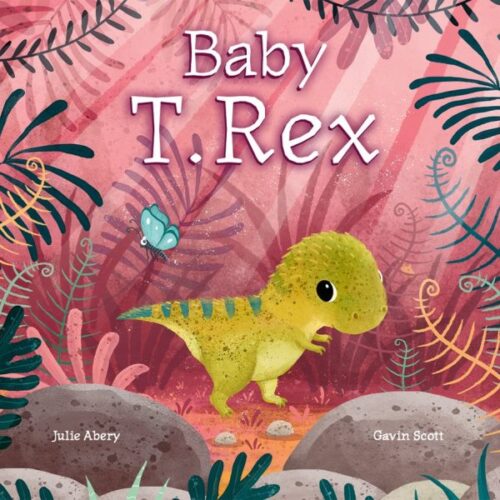
You might think that blatant plays for dino-loving toddlers is a cheap move on the part of board book creators. You might be right. But as someone who spent the better part of 2023 reading through egregious, and I’m talking EGREGIOUS, dino-related board books, please believe me when I identify a couple that are actually worth your time and money. Both of these little board books have the distinction of packing in a serious story in their scant 18 pages. Baby Stegosaurus focuses on an exploding volcano and a baby stego’s break for survival. Baby T.Rex, in contrast, is about saving a hitherto unknown sibling’s egg from destruction. Fairly heady topics for board books, are they not? And here’s the kicker: they rhyme. I kid you not! They rhyme! And they rhyme well at that! “Baby loves leaves / Rip, chew, and gulp! / Crunch a few pebbles. / Pummel the pulp.” If you thought you’d ever see the phrase “Pummel the pulp” in a board book before then I commend you, but generally speaking this is a rare rhyme for a rare series. Rethink your dino prejudices. Come to this delightful series from Amicus Ink. 


Balloon Art ABC by Masayoshi Matsumoto

Is this book a gimmick? Maybe. Do I care even one jot? I. Do. Not. There is balloon art in this world and then there is Balloon Art with a capital “B” and a capital “A”. Masayoshi Matsumoto, we are told, is a “Master Balloon Artist” and I actually looked him up after I read this book because what he’s managing to accomplish here is so incredible. You can get a sense of that from his Instagram page. Don’t be surprised if you’re unable to click away. In this book, it plays by the usual ABC rules, but impressively it never cheats. You’ll note that the title isn’t promising animal balloons all the way through, so Matsumoto just makes something for every letter. This is the book you hand the parent who needs a little support on reading the same book over and over again. With this title, you could read it 30 times and still find it a pleasure to the eye. 


A Beautiful House for Birds by Grace Lin

A math board book sounds, on the outset, impossible. Or, at the very least, improbable. That is, until you realize that math has roots in some of the fundamental activities kids play with all the time. It’s always pleased me inordinately that Grace Lin gets this fact. Over the years she’s been contributing to Charlesbridge’s “Story-Telling Math” board book series, highlighting a variety of different concepts. I like some more than others, and I happen to like this one very much. The concept being highlighted here is “Patterns”. I love how such a simple storyline about painting pink and green lines in succession on a birdhouse roof, interrupted by an unexpected blue line, leads the young heroine to realize that this mistake can actually become a part of the pattern too. Exceedingly clever how Lin has figured out how to make something this smart for such a young audience. The words are never too complicated, and it makes a great point not simply about pattern recognition but also extending already existing patterns into something new. 


Bruno Builder Bakes Bread by Nelleke Verhoeff

Subversive. Definition: seeking or intended to subvert an established system or institution.

Can a board book be subversive? I don’t see why not. Certainly Verhoeff’s been that way before with 2021’s Red Hat, Pink Books. Now she’s created a book that acts as a perfect complement to that one. On the top half of this mix-and-match book you are presented with the people. On the bottom half, their activities. But that said, gender expectations are completely upended time and again, as you match masculine, feminine, and other genders, ethnicities, and races together in different ways. And by god, if Farah the flight attendant wants to fight a fire (which is one of the examples in this book), I say we let her! A book that feeds into a child’s creativity as much as it provides a bit of fun. 


By Myself by Sumana Seeboruth, ill. Maribel Castells

We’ve been there, kid. We’ve all been there. Only a reader with a heart of stone would remain unmoved by this child’s conundrum. Independent little two-year-olds want to do everything themselves but while the will is there, the flesh is lacking in experience (or, for that matter, reliable hand-eye coordination). In this story a toddler is starting the day with her big sister (who casually sports a cochlear implant). When the big (incredibly patient) sister tries to help her little sib, she is met with an indignant “No no, no! I can do it. Go, go, go!” Things . . . do not go well. There’s humor here for the older readers and some serious identification for the younger. In the end, each girl helps the other in some way, which gives the book a feeling of fairness that I didn’t really expect from a title this young. With delightful art from Castells (I may have to rate my favorite covers of the year at some point) this is one title parents won’t mind reading a couple hundred times or more. 


Copy That, Copy Cat! Inventions Inspired by Animals by Katrina Tangen, ill. Giulia Orecchia

Okay, once more we dive into what can only really be considered a nonfiction board book. Sometimes these feel more like unholy unions than anything else. In this particular case the creators have cleverly managed to fulfill both the desires of their young readers (by having them guess what each technological innovation is) and that of their STEM-loving parents. The book kind of reminded me of the old Mac Barnett book Guess Again! in that it has fun fooling the reader into guessing the wrong rhymes with each invention. I suspect this would actually make for a fun readaloud for preschoolers. You do lift flaps, but be prepared for some pretty in-depth and sometimes complex explanations of scientific principles when you do (bet you weren’t expecting to hear the sentence, “The faster air has lower pressure, so the higher pressure underneath pushes up and lifts the wing,” in a board book, were you?). Ambitious but also really fun.  


Don’t Mix Up My Farm! by Rosamund Lloyd, ill. Spencer Wilson

Don’t Mix Up My Ocean! by Rosamund Lloyd, ill. Spencer Wilson

You do realize, of course, that these reviews that I write have everything to do with the mood I happen to be in on the given day that I encounter them. For example, I can only assume that I was in a particularly bleak, dismissive mood when I first encountered the Lloyd/Wilson board books Don’t Mix Up My Dinosaur! and Don’t Mix Up My Puppy! Perfectly nice books but I wasn’t feeling ‘em that day. Fast forward a couple months and you find Don’t Mix Up My Farm! and Don’t Mix Up My Ocean! have hit the market and suddenly I’m quite entranced by them. It’s not that the art and text are particularly unique. Rather, it suddenly occurred to me that I’d never really encountered a board book that combined touch-and-feel aspects with the spinning gear that lets the reader switch around a character’s body parts before. Or, as the books describe themselves, “mix-and-match” and “touch-and-feel” together at last. The end result is actually quite clever. Here I am, a 45-year-old woman sitting at the lunch table of her library workplace, systematically trying to match up the correct tails on the correct animals. It’s not hard, but I think parents will appreciate the work that goes into it. 


Flora and Friends ABC by Molly Idle

Molly Idle has GOT to stop being as good at her job as she is. Seriously, this is beginning to become a problem. To the best of my knowledge, there are only three Caldecott Honorees that regularly pour their hearts and souls into their original board book creations. One you’ve already seen in Juana Martinez-Neal and her little Alma books. The second is Aaron Becker, who didn’t have a board book out this year, but utterly decimates the competition when he does produce. And the third, as you can clearly see, is Molly Idle. Because when this woman decides that she wants to create an ABC board book, she doesn’t go halfsies on it. Oh no. Her full avian abecedarian tendencies are on FULL display with this magnificent production. Flora and the Flamingo may have won a Caldecott but all that inventiveness is replicated in full in this book. And there are so many different kinds of birds on these pages! I loved finally getting to see her do an ostrich (they’re kinda my thing) as well as a slew of other beautifully rounded babies. I only keep the occasional board book that comes my way, but this one? This is one of the few that I’m hanging onto. The best!


Frog by Maggie Li

STEM board books sometimes give me mild headaches. I don’t object to them in theory, it’s just that most of the time they’re so clearly aimed at adult parents rather than children. Still, I like giving them all an equal shot. Who knows? Maybe one of them will be brilliant. Well, my persistence has paid off. Frog is one of four books in the “Little Life Cycles” series (accompanying Seed, Drip, and Bug) but it’s my favorite of the bunch. Maybe because author/artist Maggie Li is able to cleverly turn the big bulbous eyes of the titular frog into eggs AND tadpoles AND (in time) a frog again. It’s a cut-out technique accompanied by a text that trends just a tiny bit older than the ankle biter set. This is the kind of book that’s ideal for the preschool crowd, I’d say. With its tactile circular cut-outs and clever rendition of the life cycle, this isn’t just one of the better STEM board books I’ve seen, it’s one of the better life cycle of the frog books I’ve encountered for young readers ever!


How Are You? by Édouard Manceau, translated by Wendeline A. Hardenberg

It wasn’t all that long ago that every other quality board book I saw originated in France. Then, as time has gone on, American publishers have stepped up to the plate a little more often. It’s refreshing to see! Still, my heart does skip an extra little beat when I see something as simple and lovely (and FRENCH!) as what Manceau has created here. I love a book about feelings that zeroes in on what a person needs to know. The focus of this book never wavers from a single face, taking up a full page. When the face is asked how it feels, it responds, “Oh, it depends on the day.” There is, I should note, no mouth at this point. Then, as each separate emotion is introduced, the mouth, eyes, nose, and even the color of the face show a wide variety of feelings. Sometimes the mouth will even disappear entirely, leaving everything up to the eyes. I particularly like the ending where the emotions have turned a bit sad and dark and then the character takes a nap and feels much better. A lovely addition to any library.


Illusions in Art: Animals by Chiêu Anh Urban

I love clever board books. I particularly love clever board books that would actually be of interest to their intended populations! Ms. Urban’s been creating such books for a while now, but this is her first foray (and certainly one of the first I’ve seen) combining optical illusions and contrasting silhouettes. This may be one of those board books that you could use with a baby and then, years later, keep using with a preschooler. The baby will appreciate the high contrasting colors and the simple identification of the most obvious animals. The preschooler will appreciate finding the second animal hiding within the outlines of the first (find the mouse in the elephant’s trunk on the cover of this book, if you want to see what I mean). This may be the rare board book that can age up as the child ages up. Prepare to blow some burgeoning minds. Be sure to also check out Illusions in Art: Food which came out this past fall.


Ketchup On My Sundae by Nelleke Verhoeff

A companion to Verhoeff’s other board books, like this year’s Bruno Builder Bakes Bread (see above). It’s a mix-and-match book (if that is the technical term – I still don’t really know) intended for the preschooler crowd. Why do I say that? Because a kid needs to have at least a basic working knowledge of some of these foods for it to hit home properly. Otherwise you might create a sour cream waffle cone and not incur the proper “ewwwwwww!!”s. The top half of the book includes, well, toppings. “Zesty radish” or “salty feta”. The bottom half is what you’re putting those toppings on. “Pizza” or “Hot Chocolate”. I was pleased with the inclusion of foods beyond the usual, like paella and couscous. There’s some real gross-em-out splendor on display!


Kind Crocodile by Leo Timmers, translated by the élami agency

This one’s definitely more on the upper end of the whole board book spectrum, I have to say, straddling both picture books and board books in its wake. Leo Timmers, of course, is the Dutch vunderkind who can do no wrong on the page. The book pretty much establishes right there with this title that this crocodile is of the sweeter variety. Indeed, when the story opens, a plethora of animals come running to him for help, as they escape their natural predators. The crocodile scares each hungry baddy off with an appropriate “GRRRR” even as the animals he saves start to create a kind of stack ala The Bremen Town Musicians on his back. Timmers utilizes a limited number of words and his usual palette that looks both two and three-dimensional at the same time. Not sure how he does this art, but by gum I hope he never stops. 


Look Up High! Things That Fly by Victoria Allenby

I’ve never gotten a conclusive yea or nay on whether or not I can count the books in this “Big, Little Concept Books” series as board books or not. While technically their pages do appear to be indestructible on some level (they’re those impossible-to-rip thick plastic ones) and the cover is poofy, is it a “board book” per se? Who cares! What matters is the content inside. In this case, this book is following in the footsteps of some of my absolute favorite books from years past, including Shape Up, Construction Trucks! (which is one of the best shape/construction titles out there, FYI). In this book, prepositions are the name of the game. Now, the #1 preposition book of 2023 is Catside Up, Catside Down by Anna Hrachovec, but as luck would have it, now we have TWO great preposition titles out this year!! The photography?  Stellar.  Happily, the last image in the book is of a daddy giving his daughter an “airplane” ride of her own. Love those photographs, and those gentle rhymes as well.  


Make Tracks: Building Site by Johnny Dyrander

Make Tracks: Cars by Johnny Dyrander

Long ago the great librarian Anne Carroll Moore was confronted with an early edition of Pat the Bunny. She did not approve. To her mind, books for children, even the youngest of children, that incorporated toy-like elements were the bottom of the barrel. “Truck!” she declared (which was an insult). And so books of its sort (interactive books) didn’t appear in libraries for quite a while. It’s a different world today, of course, and as I paged through Make Tracks: Cars and Make Tracks: Building Site I was reminded of Moore’s opinion of such books. I don’t share her opinion, but I do think that the relationship between books and toys is an interesting one. At what point does one morph completely into the other? In this book there are four pages of tracks. In the car book, a round token with a car on it (a regular old boring car, a race car, a sports car, and a taxi) are embedded in this track. A dexterous child can then put their finger on the car and move it around the track, sometimes taking instructions from the book on where to go and what to do. As for the building book, same deal but this time with concrete mixers, dump trucks, and more. There are also helpful diagrams of all the different parts of each car. I admit it. I had a lot of fun with this, and I can imagine that a small child would too. I wonder how long it’ll be until some of these tokens are dug out by persistent kids, but it does help that there are four of them in total. All told, an inventive use of a board book format and not one I’ve ever really seen before. 


The Making of Butterflies by Zora Neale Hurston, adapted by Ibram X. Kendi, ill. Kah Yangni

The highlights of this particular list is the wholly original and hitherto unseen, wouldn’t you agree? And wouldn’t you further agree that any board book adapted from a Zora Neale Hurston story fits the bill? Before I say anything else I want to mention how grateful I am to both Mr. Kendi and the good people of Amistad Books for Young Readers for taking the time to include some backmatter in this book. One could be forgiven for wondering, once you’ve finished, where this story originated. Kendi explains that in Mules and Men, Hurston explained that she found this story when she visited a lumber camp in Polk County, Florida. The men there would tell folktales as they worked and sometimes just make them up on the spot. This one arose when a man named Floyd Thomas said that sometimes the Creator isn’t satisfied with what’s created and makes changes. This story is an explanation of that. Yangni’s art is utterly gorgeous, and I adore the sneaker wearing, butterflied Creator on the cover. Kendi has made the choice to retain Hurston’s dialect, so that the first line is, “The Creator wuz all finished and thru makin’ de world,” and it goes on from there. Parents will decide amongst themselves if they feel comfortable reading the book in this matter or if they feel like they should change it as they go. 


My First lift-the-flap Nursery Rhymes by Ingela P. Arrhenius

If you know me then you know I love love love nursery rhyme collections. I also notice how rare they are in a given year. For example, in 2023 this is the only collection I saw. Like, at all, at all. It seems a little strange to me that I haven’t seen that many nursery rhyme lift-the-flap books before. I mean, these rhymes are in the public domain already, and with their bouncy rhythms they’re absolutely perfect for very small children. Certainly Child’s Play’s been turning them into individual board books for years. However it happened, we finally have a nice collection of them for young children here in this rather oversized (11.25″ H x 9.25″ W) board book. Big thick pages. Inviting, colorful art by old-hand Arrenhenius (who’s been doing this for years). Admittedly, my favorite kinds of nursery rhyme collections tend to have at least one out-of-left-field inclusion, but this book is all the standards. That’s good for parents who may need to learn some of these songs and rhythms for themselves, of course. If you want the standard rhymes in an appealing format, it’s hard to beat. Extra Bonus: It gives you a QR code you can scan to hear the songs, in case you’re not already familiar with them. 


My Hair Is Like the Sun by St. Clair Detrick-Jules, ill. Tabitha Brown

I ask you, one and all, to take a good, long, hard look at this cover. This, my friends, is my perpetual frustration. This cover is not overly complicated and yet it is, in essence, incredibly well made. It’s beautiful, the colors are fantastic, and look at how well the photo itself was exposed in terms of contrast! How is it that we don’t have reams and reams of board books that look like this one? In lieu of that fact, we must be content with what we have, and what we have is a thoroughly charming creation. It’s a celebration of Black hair that compares a variety of styles to natural forces. So St. Clair Detrick-Jules not only wrote the text but took these photos as well and I want to honor the skill that went into this collection. This isn’t some haphazard smattering of children. It’s thought out, skillful, and a beautiful range of hair and skin tones. I’ve seen a lot of children’s books celebrating Black hair, but few board books, and what few I’ve seen tend to be illustrated. There’s something so enormously satisfying about seeing real hair on the page. A magnificent book, I don’t really understand why more publishers haven’t jumped on this bandwagon yet. In any case, this is one of my top board books of the year. Don’t miss out on it! Simply fantastic.


One by Ruth Forman, ill. Katura Gaines

More hair, and in a pretty clever package. So this is a book that’s supposedly just about counting, but has all these little visual clues in the art to get kids interacting and interested throughout the read. First we start out with one girl, her hair in a puff on her head. “… but now we are two.” A second girl comes, and at this point you might notice that she’s gathered her hair into two ponytails. As they’re joined by more and more friends, each subsequent girl has her hair styled in such a way where you can count that number on her head. There might be six braids with the sixth girl, or ten gathered braids into individual buns. We’ve seen a lot of different books about pride in Black hair (see above), but this one’s a bit subtler than the rest. It’s kind of interesting to see this as a board book, since you’re building towards a girl’s soccer team at the end (hence the clincher of an ending, “…we know we are one”) and that’s a bit old for a preschooler. Then again, they do have preschooler soccer “leagues” for three-year-olds these days, so maybe I’m not thinking this one through. Whatever the case, this book is a lot of fun, and a clever counting book concept with a great take on positive self-image. Not bad for a board book!


123 Who Comes Next? by Amy Matsushita-Beal

To my mind, the best children’s literature often comes with a little thread of weirdness running through it. Why else should Maurice Sendak be so popular (though, in his case, it was less a “thread” and more a “river” of weirdness). We don’t get a lot of oddities in the board book world and why is that? A sheer lack of guts. No guts no glory, so it is with incredible pleasure that I introduce you to one of my favorites of my year. It’s just a simple counting book. Simple, that is, until it becomes so much more. Mind you it starts off so incredibly naturally. “1 One” is just a boy on the right hand page waving at you. And “2 Two” is an additional girl, also waving. Everything proceeds pretty normally until you get to “5 Five”. That’s when a pig in an olive polo shirt shows up (waving, naturally) and the humans are a bit taken aback. Of course, by the time we get to “10 Ten” they’ll be desperate for the innocence of that first pig, believe me. Strange, delightful, and with art that just pops off the page against that white background, do NOT miss this title! And if you like, you can also get bilingual editions in Spanish and Haitian Creole. 


Opposites Are Natural by Kate Riggs, ill. Maria Cristina Pritelli

Imagine you’re a frazzled parent of a very young child (it’s easy if you try). You are, today, at your wit’s end. Things have just been one disaster after another. Now it’s time to read to your little one and you want, no NEED, a book that’s going to soothe every jangled nerve in your cerebellum. By all appearances, this book by Riggs and Pritelli is simply an opposites book, but open that first cover and you are awash in this soothing, green, two-page spread of a spring forest suffused in an early morning mist. Even the words are calming, “In a quiet forest, young trees grow old.” Can’t you just feel yourself start to unclench? Each page is like that. A warm bath of opposites that also, somehow, seem to be saying something much bigger than what’s on the page. “Thin branches thicken.” “Bright fruits darken.” By the time you’re done your heartbeat has slowed a little and maybe some of that calm has even, impossibly, been passed on to your little one. A meditative, in the best sense of the term, book.


Our Underwater World: A First Dive Into Oceans, Lakes, and Rivers by Sue Lowell Gallion, ill. Lisk Feng

I’d be the first to tell you that I’m not a fan of board books that contain large swaths of text. It always seems to me that the authors really wanted to write a picture book but were coerced somewhere along the way into stuffing their titles into a board book format. Inventiveness, however, can go a long way towards alleviating such worries. This Phaidon creation at first appears to be more of the same, but there is method to its madness. First of all, you’ll note the odd shape of the book. If you were to open it up full and allow the front cover to touch the back, you’d find that there’s a small magnet in the book that allows it to stand open and upright perfectly. All well and good, it’s clearly a neat trick, but how about the text and art? The text, as it happens, is for the most part completely appropriate for a preschooler. In these pages it shows what it looks like under the water of rivers ponds, streams, coves, and more. On the left-hand side of the page is the younger kid-friendly text. On the right hand side is a longer text if you’ve a kid particularly interested in the topic (or if an older sibling or cousin is reading it to them and gets swept up themselves). Books of this sort give readers the freedom to determine how best to read the books for themselves. The fact that it also looks utterly original is really just the icing on the cake. 


Puddle Song by Laura Purdie Salas, ill. Monique Felix

Had a co-worker of mine not read this book aloud to me, I don’t know that I would have loved it as much as I now do. Salas really is a poet and that skill has been brought to the fore in this title. Listen to this:

“Bring me your leaves, you wind-rattled trees.”

It just gives me the shivers (in a good way!”. Ditto this next one:

“in my silver skin rippling light in the breeze.”

Dang. Preschoolers never had it so good.


When Stars Arise by E.G. Alaraj, ill. Martyna Czub
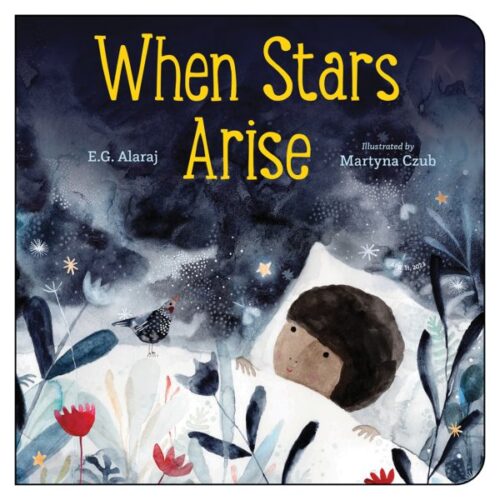
Cozy board book fare! How pleasant. It’s the sign of a good board book when the adult doing the reading finds themself to be just as pleasantly lulled by the repeating text as the child. Some repetition can feel… well… repetitive. Here, Alaraj’s phrasing “Don’t close your eyes” serves as both a challenge and an impossible to obey command. The rhymes play fair from start to finish as well. Even the most nervous parent won’t have difficulty with these cadences. At first I found Martyna Czub’s art a bit muted and blotchy, but as the book proceeds it unfolds to become quite beautiful. A book I wasn’t so sure of at the start but that really won me over. 


Where’s Randolph? by Marianna Coppo

First off, 100 points for this cover. Look at it and tell me that you are not at least just a bit charmed. I am charmed. Are you charmed? The entire premise is about a little bear who is rather terrible at hide-and-seek. The reader is encouraged to give it a go and try to find Randolph (“bear with him”). The lift-the-flap element comes in as you see bits and parts of Randolph sticking out from behind curtains, plants (like the one on the cover), lamps, etc. One twist that I particularly liked comes at the end when the reader is encouraged to hide because now Randolph is going to look for YOU! A reader could then actually hide and the parent reading the book could find them with the page of Randolph saying, “I found you!” so that it really feels like he’s playing along. A clever twist on the lift-the-flap format with excellent interactive possibilities. 


Whose Prints? by Kari Allen, ill. Kim Smith

There are lots of tracks in the freshly fallen snow, but who made those tracks? See if you can identify them in this bouncy, rhythmic, tactile and early introduction for the youngest of readers. I see a lot of science-y board books in a given year and they always seem to make the same mistakes. Either the text is too wordy or there aren’t any interactive elements or the facts are a bit squidgey. And I sympathize, because it must be very difficult making informational books for our youngest of readers. What I like so very much about Whose Prints?, though, is that it manages to maintain that simple text and simple concept (identifying different animal tracks in the snow) while also giving little kids a tactile, physical thing to do (the tracks are all die-cuts in the page). It’s fun, simple, and allows the parent to make fun sounds like, “Slink, slink, slink,” or “Hop, Hop, Bounce, Burrow,” as well. A winner!


2023 Board Book Reprints

Bee-Bim Bop! by Linda Sue Park, ill. Ho Baek Lee

How is it even possible that Linda Sue Park’s contemporary classic hasn’t been turned into a board book before now? It’s a scandal! An outrage! A great wrong righted, though. Few food books (say that ten times fast) are as bouncy, rhythmic, and downright fun as this title. Librarians know. We’ve been performing it in our baby storytimes for years anyway. Now, at least, we have something we can send home with the parents and not have to worry too much that overeager little hands will rend it asunder. This isn’t just a great board book adaptation. It’s one that’s been a long time coming. Ah, to have a baby again . . .


Big Sister, Little Sister by LeUyen Pham

Okay, it took me a little while to perfectly define the best possible way to use this board book, but I think I’ve nailed it. It’s a tiny bit wordy for the board book format, but it is also LeUyen Pham and who wouldn’t want to see this 2005 title come to the attention of the public again? Not all picture book to board book transitions go smoothly and at first I was uncertain. But then (and there is where the brilliance came in) I realized that this is the book that an older sister could read to their little sister. So it’s perfect! Get a canny second grader with a baby sis and have them read it to them. Then you’ve got bonding going on AND Pham’s ridiculously adorable art to top it all off. Oh, it could work. 


Ducks! by Deborah Underwood, ill. T.L. McBeth

I’ve an odd affection for picture books that manage to make the transition to board book formats with as great an ease as this little number. The story has such a small number of words, but they do a great job in conveying a big plot. One little duck has been separated from his family. As he searches for them, he encounters misleading sounds and sights, all vaguely ducklike, none of them his family. The book was originally released as a picture book back in 2020 (not the grandest year of publishing on record) but seems to have found a better home in this, its newest format. Here, the simplicity of the lines and the simplicity of the text make it feel like it was always meant to be a board book from day one. Plus, it includes at least one instance of a very Daffy Duck-esque facial expression on a duck as he stares at the reader in a kind of can-you-believe-what-I-have-to-deal-with sort of way. Ducky!


Marta! Big & Small by Jen Arena, ill. Angela Dominguez

I remember when Marta first hit the picture book scene. It was a nice book, if a bit slight. Then again, we librarians are constantly on the hunt for picture books for our just-out-of-board-book readers. And with its gentle opposites and Spanish terms, this certainly fit the bill. Even so, I commend the folks at Roaring Brook Press for understanding that maybe in her next life Marta was destined to join the board book contingent. With its pure white backgrounds, the book feels like it was meant for this format from the beginning. I would love to someday sit down with a designer and figure out how one decides the best way to scrunch a picture book into such a little package. Here, you do get a bit of a sense of animals getting cut off a little on the edges of the page, but it’s not intrusive or even particularly noticeable. A successful adaptation all round!


Welcome to Chinatown by William Low

You know, for me William Low was the illustrator who taught me what digital illustration was capable of, long before the current glorious Renaissance we find ourselves in today. He was the one who could create the earliest Impressionist takes on cityscapes and city scenes. This book originally came out all the way back in 1997 but has it aged in the intervening 26 years? I tell you one and all that it has not. Now a good picture book to board book transition is going to have to rely heavily on having a relatively simple text, and simple text this had. I don’t have the original in front of me to say if it’s the same as the picture book (I suspect it was pared down a bit) but that is a-okay with me. It’s great. It’s bilingual. It’s worth checking out. 


While You Sleep by Jennifer Maruno, ill. Miki Sato

Gotta give Pajama Press some credit on this one. Not only did they turn a picture book with cool cut art into a board book, seemingly effortlessly, but they added a touch of glitter on the cover (the kind that won’t come off when a kid rubs it a couple hundred times), and on the back cover is a little “Parental Guide”. What kind of “Parental Guide”, you ask? Well, they have identified four distinct things to know about the book. It’s a bedtime book, it has some science and nature (sooooorta), it has rhyme and rhythm, and it’s for family reading between the ages of 1-3. Smart little inclusion, that. Get parents addicted to such guides and they’ll end up looking for your publisher’s books over and over again. In the meantime, it’s a nice book Maruno wrote here. Definitely a sleepytime/getting kids ready for bed book, but it’s Sato’s art that’s the star of the show. The depth she can get with cut paper, and the sheer range of different kinds of materials on show is just kinda cool. It’s dreamlike and silly and ultimately very comforting. 


You Are New by Lucy Knisley

Truth be told I’ll pretty much eat up whatever it is that Lucy Knisley’s dishing out. Back in 2019 she produced this title as a picture book, and it was pretty good but the mere fact that it was a picture book and not a board book from the start made it seem as if it were better suited for adults at baby showers rather than actual honest-to-goodness babies. Now that’s been corrected with this board book adaptation and with the ample white space and nice big fonts, the transition appears to be seamless. Sometimes you read a board book adaptation and immediately notice the parts that just didn’t make the crossover correctly. Not so here! And in a board book edition I noticed details that I’d missed before, like a cameo from Lucy’s old cat Linney. A pretty good book for some pretty young readers. 


Hope you enjoyed these! Here are the lists you can expect for the rest of this month:

December 1 – Great Board Books

December 2 – Picture Book Readaloud

December 3 – Simple Picture Book Texts

December 4 – Transcendent Holiday Picture Books

December 5 – Rhyming Picture Books

December 6 – Funny Picture Books

December 7 – CaldeNotts

December 8 – Picture Book Reprints

December 9 – Math Books for Kids

December 10 – Gross Books

December 11 – Books with a Message

December 12 – Fabulous Photography

December 13 – Translated Picture Books

December 14 – Fairy Tales / Folktales / Religious Tales

December 15 – Wordless Picture Books

December 16 – Poetry Books

December 17 – Unconventional Children’s Books

December 18 – Easy Books & Early Chapter Books

December 19 – Older Funny Books

December 20 – Science Fiction Books

December 21 – Fantasy Books

December 22 – Comics & Graphic Novels

December 23 – Informational Fiction

December 24 – American History

December 25 – Science & Nature Books

December 26 – Unique Biographies

December 27 – Nonfiction Picture Books

December 28 – Nonfiction Books for Older Readers

December 29 – Audiobooks for Kids

December 30 – Middle Grade Novels

December 31 – Picture Books
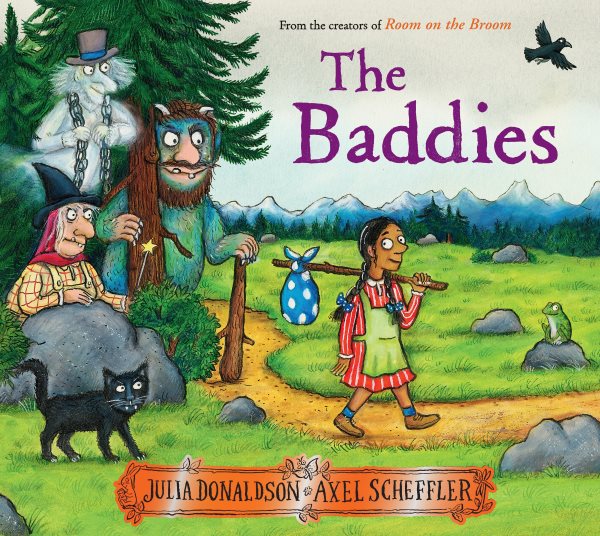
Filed Under: 31 Days 31 Lists, Best Books, Best Books of 2023 Tagged With: 2023 board books, 31 days 31 lists, board books
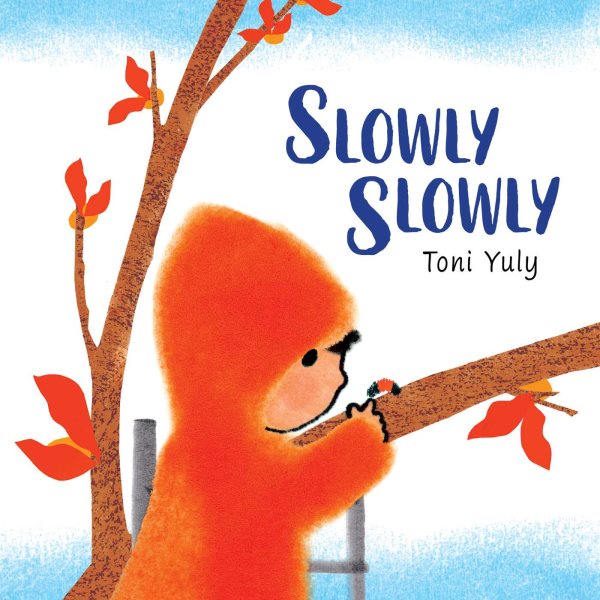
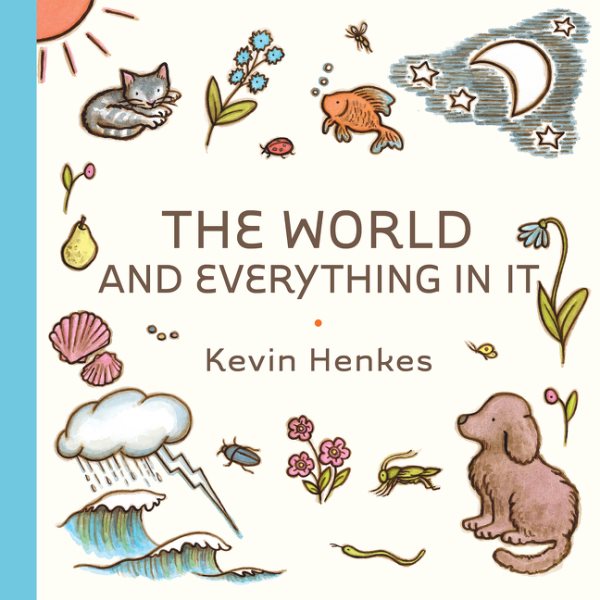
  • « Go to Previous Page
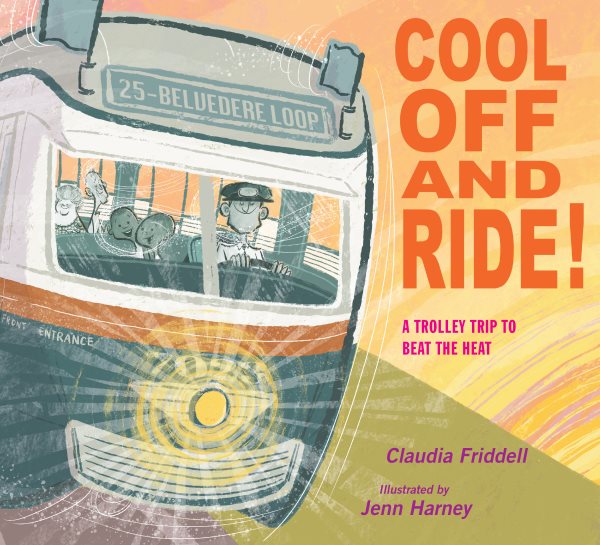
  • Page 1
  • Interim pages omitted …
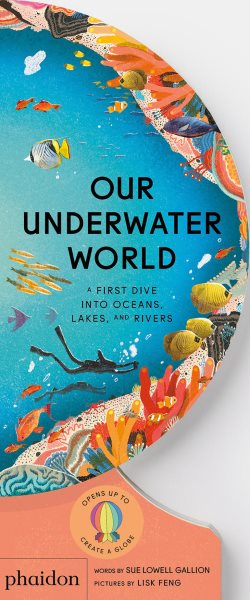
  • Page 106
  • Page 107
  • Page 108
  • Page 109
  • Page 110
  • Interim pages omitted …
  • Page 1047
  • Go to Next Page »

Primary Sidebar