• Skip to primary navigation
  • Skip to main content
  • Skip to primary sidebar
  • About/Contact
  • Fusenews
  • Reviews
  • Librarian Previews
  • Best Books
    • Top 100
    • Best Books of 2022
    • Best Books of 2021
    • Best Books of 2020
    • Best Books of 2019
    • Best Books of 2018
    • Best Books of 2017
    • Best Books of 2016
    • Best Books of 2015
    • Best Books of 2014
    • Best Books of 2013
  • Fuse 8 n’ Kate
  • Videos
  • Press Release Fun

31 Days, 31 Lists: 2024 Rhyming Picture Books

31 Days, 31 Lists: 2024 Rhyming Picture Books

December 5, 2024 by Betsy Bird

Rhymes are dangerous things. Many is the picture book that has done them poorly. They are also remarkably difficult to pull off. Anyone who has ever read aloud a picture book that didn’t scan juuuuuuuust right knows what I mean. And anyone who has ever tried to write a book in rhyme? You also know what I mean. It takes a certain level of talent to get away with it.

Today we celebrate the successful rhymers! And, spoiler alert, not every book on this list is a picture book. There is at least one easy book/graphic novel and one collection of short rhyming stories. Keep an eye peeled for them! They’re all worth discovering.

The pdf of today’s list can be found here.

Oh, and are you interested in previous years’ rhyming picture book lists? Of course you are! Feast your eyes, then, on these:

  • 2023
  • 2022
  • 2021
  • 2020
  • 2019
  • 2018
  • 2017
  • 2016

2024 Rhyming Picture Books

Bros by Carole Boston Weatherford, ill. Reggie Brown

Bros shows up on its second list of this month (the first being the Simple Books list). Something about this book reminds me of the poem “We Real Cool” by Gwendolyn Brooks. It’s not just the fact that it rhymes. Weatherford just eases into this natural feel you get when a group of boys bond together. I love the kids in this book. Illustrator Reggie Brown gives each one of them their own personalities, likes and dislikes. The more you read the book the more you recognize them from one page to another. Plus this is just a fun book to read out loud. “We stride. / We ride.” and “Bros fly / and cry.” It’s simple, smart, and the kind of book that has a purpose without bashing you over the head with didacticism. A title children will actually enjoy hearing. “Bros rise. / RECOGNIZE!”

The Den That Octopus Built by Randi Sonenshine, ill. Anne Hunter

Gentle, cumulative rhymes follows the life of an octopus. Filled with fascinating facts, but with a text that’s appropriate for younger readers, come explore the world of one of our most fascinating creatures. The folks that brought you The Nest That Wren Built and The Lodge That Beaver Built get even soggier with this deep dive (I’m allowed to use puns because I am a professional) into the world of the octopus. Okay, here’s a little secret about writing an informational picture book. You want it to get more attention? Include facts that the grown-ups reading the book won’t even know. Like the fact that the octopus has nine brains, for example. I mean, I guess I heard that once, but it’s just the kind of thing that can’t be stressed enough. Sonenshine is pulling out her rhyming dictionary again, and her talents are soothing to the ear. I never have to worry with her that a line or meter won’t scan correctly. What’s more, she’s taken what I truly believe to be one of the more difficult forms of writing (the cumulative rhyme) and repeatedly made it work for her picture books. You’ll appreciate Hunter’s art (love it when they don’t cheat on those goat-like horizontal irises the octopuses sport) and the writing as well. Great younger nonfiction fare for budding octopus enthusiasts. And I hope you’re a fan of them, because you’re going to see a second octopus title show up on today’s list soon.

The Goat and the Stoat and the Boat by Em Lynas, ill. Matt Hunt

Stoats don’t get enough page time in picture books, that’s my hot take of the day. And how odd that they don’t when you consider how perfectly their little name rhymes with other items, like boats, or animals like goats. So this is a British import coming to us via an author/illustrator duo previously known for The Cat and the Rat and the Hat. I liked that book just fine, but I certainly prefer this one, if only because it really reads aloud nicely. This is a Nosy Crow publication, and to drill home how perfectly its rhymes scan, the publisher has included a QR code to a free audio reading of this book. A good idea, though I would remind everyone that you must always be careful about putting websites and QR codes on children’s books. You don’t want to have a Monster Needs His Sleep situation on your hands or anything. I do like the idea of modeling picture book readalouds for parents, though. This particular book is a load of fun to read one-on-one to someone too. Makes me yearn for some smaller fry of my own to read it to. I have the perfect cadence to put on a sentence like, “I want to float in your boat, Stoat!” I do!

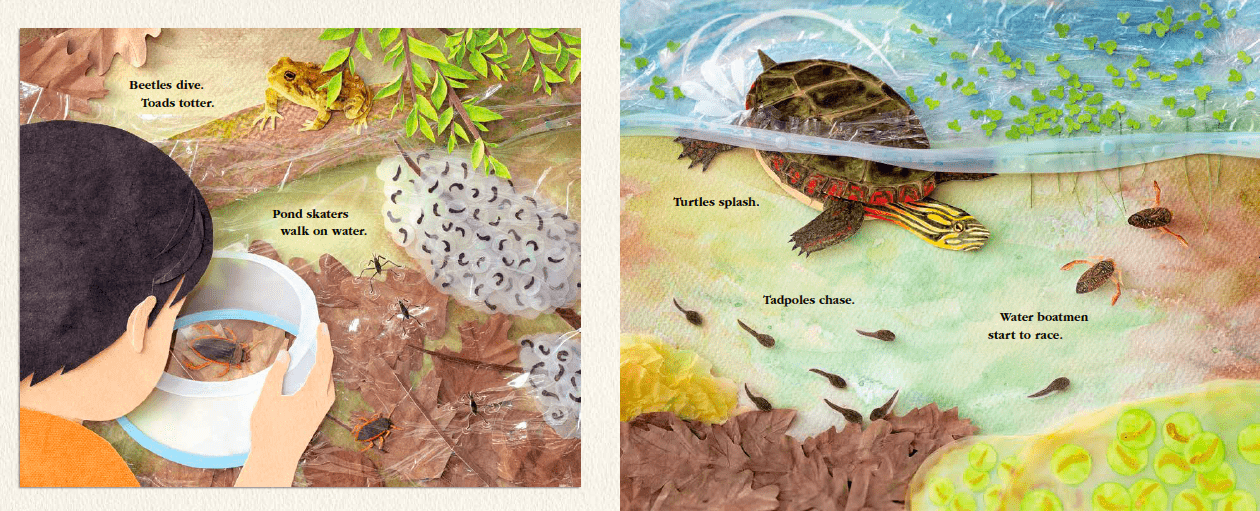
The Noisy Puddle: A Vernal Pool Through the Seasons by Linda Booth Sweeney, ill. Miki Sato

“LOOK! LOOK! Look over there… / a noisy puddle, cold and clear.” Gentle rhyming text talks about a vernal pool and all the critters that rely upon it. Very cool. A great example of how the best books of a given year have wonderful writing paired with stellar art. Sweeney takes the idea of a vernal pool (which we’ve seen done in picture books before) and really expands it and makes it knowable. She answers all the questions a kid might have about it, and has a keen writing style that would work particularly well in a readaloud. I also just adored how artist Miki Sato used clear plastic wrap to look like water. It gives the cut paper art this 3-D quality that you wouldn’t be able to get any other way (how come more books don’t do this?). So cool. 

Octopus Acrobatics by Sue Fliess illustrated by Gareth Lukas

I wasn’t kidding when I said you’d see more octopuses today. Behold the incredible octopus! Think you’ve heard everything there is to know about these creatures? You’re bound to learn something new thanks to the gentle rhyming text. The rhymes themselves (which are difficult to write in the first place) are very well done. Best of all, this not only covering all the octopus facts I wanted to see (brains in arms, moms die protecting babies, etc.) it included a couple I’d never heard of before (how have I never heard of octopuses riding jellyfish before?!?). I mean, this is great stuff. 

One Sweet Song by Jyoti Rajan Gopal, ill. Sonia Sánchez

I have detected a trend. Maybe. You all know how long it takes to put together a picture book. Well, my current working theory is that even in 2024, we’re still seeing the residual effects of a post-shutdown world. All that time when we were all so desperate for community, it had to have led to the current influx of picture books in which people make music together, right? After all, this is the year when we’re seeing books like Jam, Too? by JaNay Brown-Wood and, of course, this title, One Sweet Song. I’m putting these two books on two different lists, though. While Jam, Too? is more of an interactive readaloud, it’s the rhymes of One Sweet Song that stand out the most to me. “One note trills… floating in the air. / A little girl listens, perched on a chair.” No straining rhymes or forced cadences. Just a gentle, lilting story of a neighborhood of people in their homes (hence me thinking about the shutdown) hanging out their windows to play music together. Of course Gopal lucked out when some clever editor paired her with Sonia Sánchez. Ms. Sánchez can elevate stories above and beyond the text to something warm, winning, and often quite beautiful. A title that might even make you a bit envious of city living. “One sweet song for heart and soul. / One sweet song to make us whole.” 

Peach and Plum: Double Trouble by Tim McCanna

I guess if I’m going to be honest, this was my first “Peach and Plum” read, and I liked it! It’s an excellent example of a series being three things at once: easy book, graphic novel, and rhyme title. The rhymes work too. It can be exceedingly difficult to stick to an all-rhyme-all-the-time format like the one you find here, but McCanna clearly has a knack for it. Even more impressive to me, though, was the fact that he’s capable of creating these little short stories so adeptly on the page. Personally, my favorite story in here was about three fruits starting a band in their garage since it literally has nothing to do with Peach and Plum and their various adventures. It also contains the line, “Oh wow. So dark,” about the hardcore music they play. Rhyming is a natural pair with easy books that help you to read, so color me a fan. 

Rocket Ship, Solo Trip by Chiara Colombi, ill. Scott Magoon

Previously seen on the Picture Book Readaloud list. I’m a softy. There are just some images I encounter in picture books that win me over, simply because they manage to strike the dual winning combo of my never having seen them before AND they melt my cold cold heart with a sweet original image. Take this sweet rhyming tale about a little rocket making its first solo voyage to the stars. Colombi works in a lot of really clever science in what, with another author, could have been half-assed and entirely fictional. She is joined by the ever clever Scott Magoon, who isn’t afraid to put a little accuracy into his seemingly simple images as well. But the thing that delighted me so much? The rocket isn’t just held by its Ground Control building but hugged as well, which is SO SWEET! Now the book rhymes on top of all of this, and that’s a difficult business. It can be exceedingly difficult to rhyme a science-related title, but by gum Colombi manages it. Then, along the way, you learn about the rockets that drop satellites into space, space stations, the Northern lights, boosters, and then a little you-gotta-believe-in-yourself-when-you-try-new-things chutzpah to round it all out. It’s one of those books you’d discount without a thought if you didn’t pick it up. Don’t be that person. Pick it up and incorporate it into your preschooler STEM/space storytime.

Round and Round the Year We Go by Carter Higgins

I dunno, man. If you had never read a lot of picture books and you said to yourself, “I’m going to write an original book that goes through the months of the year AND I’m going to make it rhyme” it would be a difficult move. But if you HAD read a lot of picture books, wouldn’t the experience of trying to write this one be completely nerve wracking? I mean, first and foremost, month books are incredibly difficult. They’re necessary, since all kinds have to learn the months and months are hard to memorize, but concept books without storylines are tricky in and of themselves. The fact that Higgins decided to make the book rhyme as well, though, just floors me. Now her solution to the general lack-of-plot problem is to break the months into seasons. She’ll go about three months at a time then break it all up with one season or another. On a personal note, I was grateful to the August section. My sister has her birthday then and this year I sent her a photo of the August pages. “All the days feel like the longest icky sticky awful hottest / nothing left to do in August / … it’s your birthday? / oops, i’m wrongest.” Not a lot of elementary school librarians are also Emmy winners for their visual effects and motion graphics, but that’s no guarantee of good rhymes. Happily, she apparently has that talent under her belt as well. Seems a bit unfair to be quite so gifted, but whatchagonnado?  

Tales from Muggleswick Wood by Vicky Cowie, ill. Charlie Mackesy

A show of hands, Yanks. Any of y’all familiar with Muggleswick Wood? This was an entirely new series to my old eyes, but had you given it to me blind and told me it had originally come out 100 years ago, I almost would have believed you. Almost. See, this is the book you hand to those grandparents that come into your library/bookstore and ask for something that feels like (forgive me) “a modern day classic”. I mean, you know what they’re talking about. Basically they want the 100 acre woods without the loquaciousness. This series (described by the publisher as “five gorgeous stories to read at bedtime” is that. But see, here’s the deal. These stories? They are legitimately good. Charming? Yeah, of course. And they rhyme, so be prepared for that as you decide whether or not to read a child down with them. They are rather tailor-made for bedtime reading, you know. The five stories are sort of A.A. Milne by way of Roald Dahl if you replaced the mean spiritedness of the Dahl with a bit of Milne’s earned sweetness (not the cutesy stuff). My personal favorite of the tales is “The Secret of Snittington Hall” which is very much a story of a man being told what not to do, doing it, and getting adequately (but not overly) punished for his hubris. Hubris beware! The book is full-color. There’s a little place for a child to put their name. It’s just a class act all around. A modern day classic actually deserving of the outdated term. 

A Treasure of Measures by Mike Downs, ill. Joy Hwang Ruiz
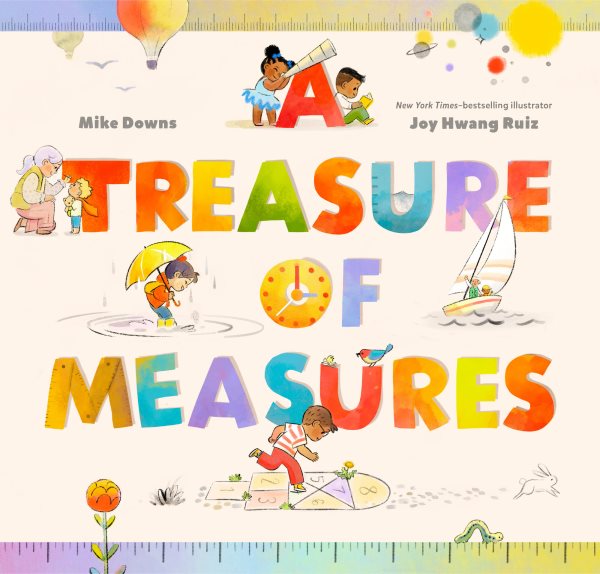
I’m so grateful to my time when I served on the Mathical Book Prize committee. I came into that work with a good knowledge of what made a successful picture book, and came away from it with a much more expansive understanding of what can be called a “math book”. It’s not just enough to show counting or shapes. A good math book takes into consideration the best ways to instill a love of math. Take units of measurement, for example. Mike Downs, in his uniquely playful way, considers all the different things that one CAN measure, and then considers the other ways in which those same measurements can be calculated. For example, you can measure rain in decibels (lots of nice definitions of terms appear at the back of the book) but also by counting the drops, or measuring the puddles “with skips and with hops”. Oh, and he’s also rhyming this entire time, which sort of feels like he was setting himself up for extra homework. Whatever the reason, the book works, and is a wonderful introduction to math concepts at a really basic level. 


That’s it for today! Be sure to stay tuned for more lists on 2024 titles. The full roster is here:

December 1 – Great Board Books

December 2 – Picture Book Readalouds

December 3 – Simple Picture Book Texts

December 4 – Transcendent Holiday Picture Books

December 5 – Rhyming Picture Books

December 6 – Funny Picture Books

December 7 – CaldeNotts

December 8 – Picture Book Reprints

December 9 – Bilingual Books for Kids

December 10 – Math Books for Kids

December 11 – Books with a Message / Social Emotional Learning

December 12 – Fabulous Photography

December 13 – Translated Picture Books

December 14 – Fairy Tales / Folktales / Religious Tales

December 15 – Wordless Picture Books

December 16 – Poetry Books

December 17 – Unconventional Children’s Books

December 18 – Easy Books & Early Chapter Books

December 19 – Comics & Graphic Novels

December 20 – Older Funny Books

December 21 – Science Fiction Books

December 22 – Fantasy Books

December 23 – Informational Fiction

December 24 – Gross Books

December 25 – Science & Nature Books

December 26 – Unique Biographies

December 27 – Blueberry Award Contenders (Celebrating the Environment)

December 28 – Nonfiction Picture Books

December 29 – Nonfiction Books for Older Readers

December 30 – Middle Grade Novels

December 31 – Picture Books

Filed Under: 31 Days 31 Lists, Best Books, Best Books of 2024 Tagged With: 31 days 31 lists, Best Books of 2024, rhyming picture books

31 Days, 31 Lists: 2024 Transcendent Holiday Picture Books

December 4, 2024 by Betsy Bird

Time was, the holiday section of a children’s library would consist of three, maybe four, different holidays, max. You’d have your Christmas, Easter, Thanksgiving, and Halloween. Maybe 4th of July too, if your library was feeling up to it. But times have changed and I’m sure a lot of libraries around the country have taken a more open attitude towards a slew of other holidays. Today on this list you’re going to see titles about Eid, Mexican Independence Day, Día de Muertos, Passover, and more. A LOT of holiday picture books come out in a given year, but I only like a small sampling of them. These books? The cream of the very crop. See for yourself!

For a PDF of this list, please look right here.

Would you like to see previous years’ lists of holiday titles? Try these on for size:

  • 2023
  • 2022
  • 2021
  • 2020
  • 2019 (Great Santa Stakeout alert!)
  • 2018
  • 2017
  • 2016

2024 Transcendent Holiday Picture Books

Abuelita’s Gift: A Día de Muertos Story by Mariana Ríos Ramírez, ill. Sara Palacios

Holiday – Día de Muertos

I mean, first and foremost, Sara Palacios is just the kind of illustrator I naturally gravitate towards, no matter the topic or author. We’ve seen a wide variety of Día de Muertos picture books in the last few years (last year contained two with dead dogs!) but there’s something particularly nice about the story that Ramírez has conjured up here. It tackles a problem that I’ve certainly witnessed in families before: What happens when a grandparent dies and all the photos of them are super serious and non-smiling? Julieta’s abuelita died not all that long ago and she’s determined to put the perfect gift, to honor the woman, on the altar. Trouble is, what’s the perfect gift? I mean, abuelita’s whole thing with Julieta was dancing! I like picture books where the solution to the problem is believable (in that a kid could both come up with it and pull it off) and this book certainly fits the bill. Plus, along the way it’s just a really nice celebration of grandparents who have passed. This one’s a keeper. 

Afikoman, Where’d You Go? by Rebecca Gardyn Levinton, ill. Noa Kelner

Holiday – Passover

I want to tip my hat to the marketing genius that was selling this book as, “a rambunctious Passover hide-and-seek story for fans of Where’s Waldo? and The Gingerbread Man.” That’s not an exaggeration either. Kelner isn’t fooling around, with a sneaky little afikoman (the traditional piece of matzoh that kids try to find at a Passover seder). Anyone who has ever tried to find one will know how tricky they can be to locate (not sure how fair it is when adults hide them between books on shelves). Well, in this book Noa Kelner (who has a kind of Lisa Brown style to her art) really took the whole Where’s Waldo? thing to heart. The very first two-page spread, showing all the rooms of the house, does indeed contain the afikoman but it is HARD to spot! I can attest that after searching like crazy on each and every page (I feel like Richard Scarry’s Goldbug trained me for this moment) the book does indeed play fair. It can be difficult, but keep an eye out for the afikoman’s little eyes and spindly limbs. That’ll be your best bet when trying to suss it out. Far more fun than any Passover picture book has any right to be. 

An Anishinaabe Christmas by Wab Kinew, ill. Erin Hill

Holiday – Christmas

I like a book about a specific thing that has universal appeal. I’m not going to tell you that this is the first picture book to address the concern of what precisely happens when a kid goes to another city for Christmas and worries that Santa won’t be able to find them, but it’s certainly the one that stands out the most to me. The child in this book is referred to as “Baby” and Baby has some concerns. Their family is going “home to the Rez” to have an Anishinaabe Christmas and right off the bat Baby brings up the whole, how-will-Santa-find-us point of contention. It’s sort of blown off by mom, and fortunately Baby doesn’t really dwell on it. Instead, they talk with their parents about things like the time a bear came to the Rez and all the grown-ups made a circle that left one spot open so that the bear would leave that way and go back to its own family. The book sort of follows that fun kid-logic thing where one topic leads to another (do bears celebrate Christmas?) and then ties all that into the Anishinaabe concept of Miigiwe a.k.a. Giving things away. Christmas just naturally fits into that. The art of the story by Erin Hill is a particular treat. Hill includes all these casual little moments, like the dad working a straw into its tiny hole on a juice box, and beautiful shots of snow covered trees on mountains at night and the kind of light you get when houselights fall on the snow outside. All the while, the text gently returns everything back to the Anishinaabe culture in this natural flow, never coming off as preachy or didactic. It’s just the natural course of things in the day of a single family. Backmatter includes a brief author’s note and a Pronunciation Guide. Beautifully rendered and a great addition to your holiday collection. 

The House Without Lights by Reem Faruqi, ill. Nadia Alam

Holiday – Eid

So when I was a kid my family would sometimes drive through a part of our town where almost all the houses on Christmas Eve would put out glowing luminaries. Those houses that didn’t? We’d call them grinches for holding out. Now, of course, I’m a bit older and have realized that there is such a thing as other religions in this great big beautiful world. I had not, however, really seen a picture book tackle this phenomenon in any way. Faruqi’s choice in this book is to take the house’s p.o.v. It’s interesting because in a way the house is the outsider in this story. A new family has moved into it and Christmas is coming but the folks in the house don’t really do anything about it. In fact, on Christmas itself the parents are working because they’re filling in for their co-workers who have the day off. But when Eid arrives, all that changes. Now the house has lights. Now there’s food and family and feasting. “It was finally House’s turn to shine.” Aside from the text, the house isn’t really anthropomorphized visually or anything. And as Eid stories go, I thought that this one was a really nice one. I particularly liked the Note from the Author that mentions that, “In 2033, Eid al-Fitr is projected to fall on December 25, Christmas Day.” Very cool stuff.

I Got the Spooky Spirit by Connie Schofield-Morrison, ill. Frank Morrison

Holiday – Halloween

So the whole “I Got the [Blank] Spirit” series which technically began with I Got Rhythm is going strong in this more Halloween-centric tale. Now Frank Morrison had another book out this year that I was particularly fond of called My Block Looks Like by Janelle Harper, but in terms of holiday fare, this is a favorite in a different way. We’ve never really seen Frank lean into his spooky side much before, and I like to think that this is a nice opening salvo. After all, the page opposite the publication page is this wonderful shot of a curved window looking out on the city, all odd yellow sky and long black shadows. As with all his books, when people move they don’t just move. They stretch across the page, jump, leap, and dance to where they’re going. Also, can I say how much I appreciate seeing at least one kid in this book putting a puffy jacket on over a costume? Sorry, but if you’re trick-or-treating in NYC then you better have something either over or under that costume to keep you warm, kids. By the way, when a dance party happens late in the book, I would love it if someone could tell me what the dad’s costume is with the screws coming out of his back. This one’s a hoot. 

Is This… Easter? by Helen Yoon

Holiday – Easter

Every year I make a point to read each holiday-related picture book I see. I still miss large swaths of them, but at least I make an effort. In doing so, I notice that some holidays get a lot more attention than others. Christmas and Halloween dominate, with Hanukkah, Valentine’s Day, and St. Patrick’s Day coming in the rear. Then you have the holidays that don’t really make as much of an effort. The fourth of July is a good example of this. Easter? Well that’s a tricky one. Like Christmas, you could go the liturgical route or just look at the less religious aspects. Yoon opts for the latter here, but I just have to give her credit for tackling Easter at all. It’s HARD to make an original Easter book! Amazingly, she manages to not only do so, but to make it rather delightful and funny as well. In this book you have an Easter…. Is that a bear? Sure looks like one, albeit a bear sporting bunny ears and a fluffy white tail. In any case, when it leaves a pink egg on the lawn, two different groups of dogs find it and try to determine what to do with it. The gray dogs know that eggs are food and want to eat it. The white dogs know that it’s supposed to be decorated. And the Easter Bear (which is what I’m calling it from now on) returns and shows that both suggestions can be done at the same time. The back of this book describes it as written, “with bumbling affection, good humor, and slack-jawed wonder.” It kind of bums me out when a publisher is so much better at describing their own book than I am, but in this case I won’t hold it against them. My favorite Easter book of 2024, no contest. 

The Littlest Grito by Nicholas Solis, ill. Teresa Martinez

Holiday – Mexican Independence Day

You know, considering how HUGE Mexican Independence Day is in the Chicago area (just try driving around on September 16th and see what I mean) it seems downright nutty to me that I haven’t seen more picture books celebrating that particular holiday. Surely SURELY there are others out there, right? Yet this is the first that I’ve personally seen. This book was instantly interesting to me thanks to the art of Teresa Martinez. She has a feel to her art that brings to mind animation to a certain extent. In this tale, a young girl is looking forward to her Papa shouting the traditional grito (which, the press materials describe as “an emotional shout”, which amuses me for some reason) on Independence Day. Trouble is, he wakes up feeling crummy. Now it’s up to her to give the shout herself, but can she do it? I only am familiar with the grito because of its prominence in last year’s Newbery Honor winning graphic novel Mexikid by Pedro Martín. However, you should consider pairing this book with this year’s fellow picture book Adela’s Mariachi Band / Los Mariachis de Adela by Denise Vega, ill. Erika Rodriguez Medina. In both cases, a grito is there to save the day. This book is also fun because a brave storyteller could try to get the kids in the audience to do gritos of their own when hearing it. Now, if only someone could write a Mexican Independence Day picture book set in Chicago…

Mixed Up Mooncakes by Christina Matula and Erica Lyons, ill. Tracy Subisak

Holiday – The Mid-Autumn Festival and Sukkot

I always appreciate when a book looks like a lot of the others out there but offers something entirely new of its own accord. The creators of this book include a Taiwanese and Hungarian author, a Hong Kong-based author who is raising her children as Jewish and Chinese, and a Polish and Taiwanese illustrator. In the story itself, you learn about the Mid-Autumn Festival and Sukkot, and the story does this interesting encapsulation of two myths. The first is of the archer Hou Yi and how his wife was sent to the moon by the Jade Emperor (a story I kinda sorta knew from the movie Over the Moon). The second is the story of Sukkot. All this is combined with an overall story of young Ruby creating Jewish mooncakes (which are just cool looking). There’s something about the balance of contemporary story and myth AND cooking (yes, there’s a Jewish mooncake recipe in the back) which really works well. Extra points for the copious and lovely backmatter.

On Top of Linguine: An Eye-Popping Parody by Brian Biggs

Holiday – Halloween

So you may note that I didn’t actually include this goofball title in my board book round-up earlier this month. This, I assure you, was no accident. While I feel that this book is a true delight (and if you were a particularly rich individual, I might suggest popping one into every preschooler’s trick-or-treat bag alongside a candy or two) it works far better as a holiday book than an every-day-of-the-year book. Brian Biggs just pulls out all the stops. It’s a gimmick of course (as you turn the pages, the same shudderingly realistic eyeball appears through a die-cut in a different situation), but also a book you can sing. Warm up your vocal chords and flash back to camp, parents and teachers. The “On Top of Spaghetti” song gets a new life when a skeleton’s eyeball (they have eyeballs?) pops out of his head whilst eating linguine. Biggs doesn’t usually go in for gross, but as this book is quick to prove, he’s been denying us all these years. Here’s hoping that this isn’t a one-off and that we get to see a slew of other ugh-inducing books in the future.

One Foggy Christmas Eve by Kerilynn Wilson

Holiday – Christmas Eve

Since I don’t really truck with YA I came to this book utterly unaware of its creator’s work on the YA graphic novel The Faint of Heart (though now I definitely wouldn’t mind taking a crack at it). Wilson has a delicate pen and ink style that lends itself nicely to tiny details and luscious swirls of fog. The book concerns a young girl who is used to spending Christmas at her grandparents’ house. When a terrible fog descends on her town, she is determined to get there one way or another. Solo jaunts don’t do so well (and also freak her parents out) so the three of them, dog in tow, attempt the trip with lots of lights. Briefly she is separated but rescued by what appear to be a herd of brightly lit reindeer. The girl herself, when bundled in her coat and wearing her red peaked hat, looks like a little walking star in and of herself. Wilson’s art calls to mind the work of artists like Victo Ngai. I liked the originality of the story, finding this family the kind of cozy unit you just want to sink into. A nicely original take on Christmas.

Rabia’s Eid by Rukhsana Khan, ill. Debby Rahmalia

Holiday – Eid

I love it when great authors write easy books. It may, indeed, be one of my favorite things. And Rukhsana Khan pretty much set herself up for the greatest challenge of all. Not simply to write an easy book but a HOLIDAY easy book! Oh, rarest of rare titles. Writing a good one is so difficult, I’d almost say it couldn’t be done, and yet LOOK! Feast your eyes on Ms. Khan’s accomplishments! Here’s we’ve a simple story of Rabia really wanting to fast like her sister and parents for Ramadan. Her parents tell her she can give half a day a shot if she likes, which feels like a smart parental compromise. Sure as shooting, it starts out just fine but by the time lunchtime comes around, that girl is huuuungry. Now I’m sure you’ve also seen the easy books that say they’re for early readers but definitely cheat on the vocab complexity. Khan keeps everything super simple, managing to explain an entire cultural situation while also making the family members feel three-dimensional as well. Seriously, this book should be the litmus test against which all other holiday easy books are based. I ain’t kidding. 

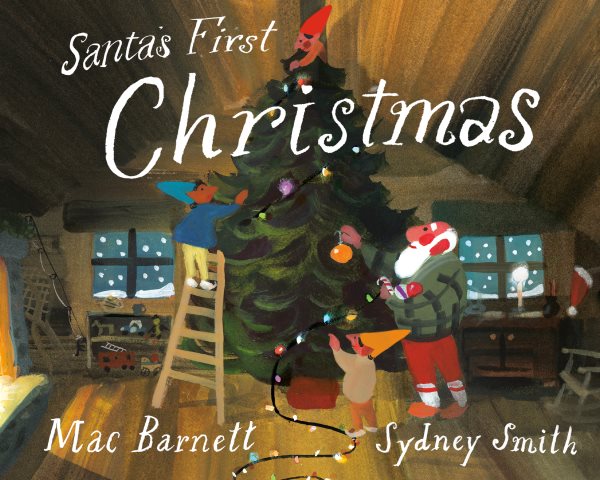
Santa’s First Christmas by Mac Barnett, ill. Sydney Smith

Holiday – Christmas

While we can speculate as to why Barnett has made a second Christmas picture book so close on the heels of his first (How Does Santa Get Down the Chimney?) I’m sure we all have our pet theories. Mine? Well, I loved his previous collaboration with Jon Klassen, of course I did. But that book was primarily a funny book. It tapped into that visual and verbal humor we’ve come to expect from that duo. Sydney Smith is an entirely different vibe. If you’re going to do a book with Smith then you better gird your loins and get yourself some serious emotional content. Nothing too heavy, of course, but you wouldn’t hand Smith the same manuscript that you’d hand a Klassen. The end result is that Barnett is getting a chance to stretch his emotional range with this title. It’s a surprisingly simple affair for Smith, who keeps his paints simple and his shapes relatively undetailed. That said, look at what he’s doing with lighting. Whether it’s the flicker of a fire in a fireplace or morning sun through the window, this book would be worth the read alone for just a chance to look at its art. Fortunately, the story more than holds up. I’ll just say it. It’s my favorite Christmas book of 2024, bar none. It’s not even close, honestly. Hand this to someone practicing the Christmas tradition and expect it to come out every year like clockwork as a result. Bound to be beloved.

A Stickler Christmas by Lane Smith

Holiday – Christmas

Stickler returns! Again! You have to admire Lane Smith’s affection for his spiky, stick-loving little creation. We’ve seen plenty of picture books capable of balancing humor and heart. Buckle up now for a book that balances heart with the deeply weird. Stickler, in case you missed him before, doesn’t really slot neatly into our preconceived notions of nature’s forest denizens. Nature spirits, to be perfectly frank, don’t tend to have half the energy that Stickler exhibits. He is a creature that loves and loves deeply. So much so that when Christmas rolls around he throws a red sack across his back, pops a red cap on his head, and barebacks about, giving away precious sticks to everyone he cares about. When he encounters Doug-the-Fir, he discovers the pine is distraught. Doug’s a shy guy and the local mice have trimmed him to the nines. The last thing he wants is attention, so in an act of holiday compassion, Stickler finds a very unique solution. This is the kind of book that includes what is undoubtedly my favorite Christmas book sentence (possibly ever): “It was a weird Christmas.” That it is. Hand this one to anyone who wants to elevate their holiday picture book collection with something both emotionally resonant and downright goofypants. 

Tis the Season by Richard Jones

Holiday – Christmas

Okay okay okay okay okay. I am VERY excited to tell you about this book. And I do so out of a place where I was 100% not on board with its premise. I mean, really? A “lift-the-flap Advent Calendar full of Christmas poems”? Sounds like spinach for dinner, folks. Plus how effective would this really be? How many times could you use it? And what about the poems themselves? Are they gonna be a bunch of awful ones by a bunch of dead white people? Sorry, I’ve been burned before, and that is why the magnificence that is this book truly took me unawares. Let’s tackle those concerns I had one-by-one, shall we? First up, the design. A lovely red ribbons allows you to tie the book closed for those times of year when you no longer need it. Open it up and it’s an accordion book that can open up to stand by itself on a mantle or table or what have you. The pages are thick, like you’d find in a board book. Each day has a poem and each poem has a flap that reveals something that applies to the poem. The poems themselves? You’ve got your classics (“The north wind doth blow” and all that). You’ve got your humor (Ogden Nash!). You’ve got your variety (Saijo Yao WITH a credited translator, the late great Nikki Giovanni, etc.). And then on top of all of that you’ve the art of Richard Jones who not only illustrated everything above and under those dang flaps BUT on the opposite side of the accordion pages are these huge, beautiful wintertime images. Boy oh boy, if you ever wanted something Adventy in your home, find this and grab it now before it’s gone. This is a keeper. 

The Wild Ones / Los Bravos by Megan Lacera, ill. Jorge Lacera

Holiday – Halloween

Not content to rest upon their zombie laurels (this duo was previously best known for their title Zombies Don’t Eat Veggies) the Laceras return with a tale published simultaneously in both English and Spanish that sets up an epic storyline. Honestly, reading through this, I was half convinced that I was reading a middle grade graphic novel and not just a picture book. Four kids, who all live in the same small apartment complex, are obsessed with the nearby Steelburg forest. Surely some kind of monster is lurking in one of its caves, but which monster could it be? Everyone has their favorites, whether it’s La Tunda, Loogaroo, Banshee, or Vetal, and no one can agree on who their resident cryptid might be. When their apartment is threatened with eviction thanks to evil developers, the kids figure that locating the monster and enlisting its help is the only solution, so it’s off to the woods on Halloween night. Will it work? Jorge uses a comic book style to tell the story, getting creative with the art so that when the kids discuss their monsters the page is riddled in the Ben-Day dots you associate with old comics (or Roy Lichtenstein prints). There’s a good surprise ending and plenty of colorful clues, plus who doesn’t love evil developers? They make for darn good villains, they do. Fun and exciting and just a little bit creepy. A perfect mix, no matter what language it comes in. 

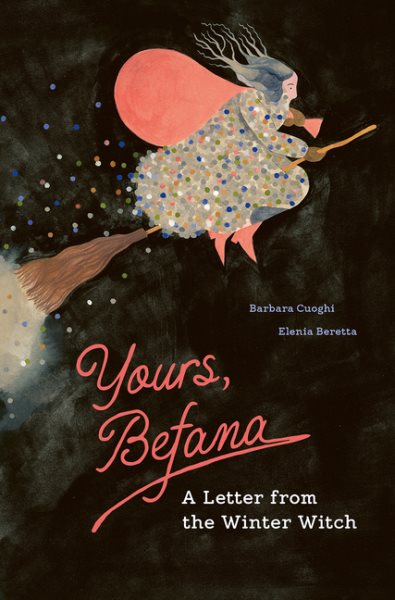
Yours, Befana: A Letter from the Winter Witch by Barbara Cuoghi, ill. Elenia Beretta, translated by Genni Gunn

Holiday – Christmas

Spice up your holiday purchases around the Christmas season with something a little bit on the odd side of things. So what we have here is nice little Italian import focusing on Befana, a character from Italian folklore, who does her thing on the sixth of January. The book is written as a letter to kids from Befana herself explaining how she goes about doing things. She has a fun tone, explaining, for example, that she takes a potion of invisibility before she arrives. “You are not allowed to look at me; it’s the price of my extraordinary visit.” And, later, “And don’t be fooled by the drawings of me as an old witch. I am all-powerful and unstoppable.” There’s even backmatter (which I always adore) showing “A Few Secrets About Me”. Along the way she even has time to throw some shade on Santa, a fellow she will not name and just calls, “that clumsy oaf dressed in red.” It helps that the accompanying art is just so blooming gorgeous as well. You can’t help but respect this gal. If you didn’t believe in witches before this book, you certainly will now. 


That’s it for today! Be sure to stay tuned for more lists on 2024 titles. The full roster is here:

December 1 – Great Board Books

December 2 – Picture Book Readalouds

December 3 – Simple Picture Book Texts

December 4 – Transcendent Holiday Picture Books

December 5 – Rhyming Picture Books

December 6 – Funny Picture Books

December 7 – CaldeNotts

December 8 – Picture Book Reprints

December 9 – Bilingual Books for Kids

December 10 – Math Books for Kids

December 11 – Books with a Message / Social Emotional Learning

December 12 – Fabulous Photography

December 13 – Translated Picture Books

December 14 – Fairy Tales / Folktales / Religious Tales

December 15 – Wordless Picture Books

December 16 – Poetry Books

December 17 – Unconventional Children’s Books

December 18 – Easy Books & Early Chapter Books

December 19 – Comics & Graphic Novels

December 20 – Older Funny Books

December 21 – Science Fiction Books

December 22 – Fantasy Books

December 23 – Informational Fiction

December 24 – Gross Books

December 25 – Science & Nature Books

December 26 – Unique Biographies

December 27 – Blueberry Award Contenders (Celebrating the Environment)

December 28 – Nonfiction Picture Books

December 29 – Nonfiction Books for Older Readers

December 30 – Middle Grade Novels

December 31 – Picture Books

Filed Under: 31 Days 31 Lists, Best Books, Best Books of 2024 Tagged With: 31 days 31 lists, Best Books of 2024, holiday books

31 Days, 31 Lists: 2024 Simple Picture Books

December 3, 2024 by Betsy Bird

It’s always a good idea to contrast the more extended lists I produce (board books, for example) alongside shorter ones like today’s. But first, let’s define our terms. To my mind, a simple picture book is a picture book for younger readers. Preschoolers, for example. Adults (particularly adult reviewers) are rather enamored of providing children with thoughtful, complex picture books. I include myself in that statement. It can be difficult to understand how truly praiseworthy simple picture books and their basic texts are, and how much good they do for the youngest of readers. Today, we celebrate those rarities.

You can get the full PDF of the list here.

If you’re interested in seeing other lists of simple picture book texts, I only started this category just two years ago. Here’s what we’ve done so far:

  • 2023
  • 2022

2024 Simple Picture Books

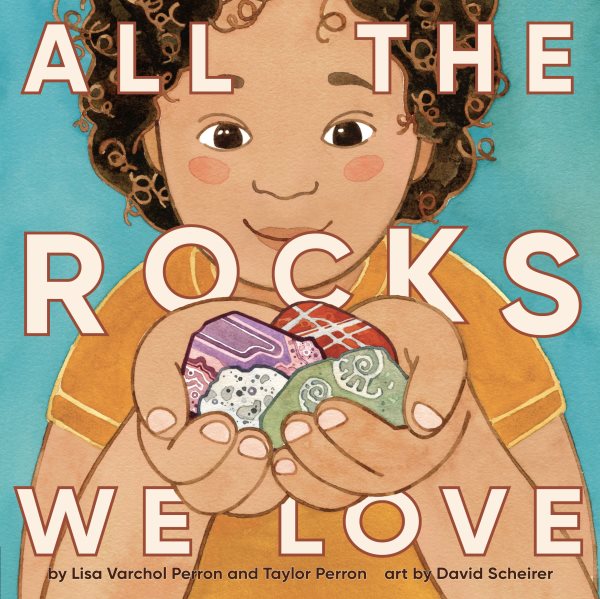
All the Rocks We Love by Lisa Varchol Perron and Taylor Perron, ill. David Scheirer

What can you do with a rock? And what kinds of rocks are out there? Join in the fun in this celebration of all things rocky. I love how the cover of this book pairs so well with the cover of All That Grows by Jack Wong. We search endlessly for simple picture books that can instill a love of nature at a very young age. I am pleased to announce that I’ve found a new one. This book focuses squarely on something near and dear to every small child’s heart: rocks. In simple language it describes each kind and then there’s just a little word at the bottom identifying what kind of rock it is. It rhymes, but not in an annoying way. I think this could be an ideal readaloud for anyone doing a rock unit with younger kids. Go, rocks, go!

Aqua Boy by Ken Wilson-Max

Aaron just wants to be like his big sister Angel and be able to put his head under the water. When his family rescues an octopus while cleaning the beach, will he finally have the courage? Oh yes! Yes indeed, this is a great book. Sublime! Delightful! And who doesn’t adore the art of Ken Wilson-Max? There’s plenty of story outside of the ecological message, but look how neatly Wilson-Max works a love of nature into this book. Best of all? It’s for younger kids! Ken Wilson-Max is one of our top simple picture book creators. The man is clearly good at what he does. I’m just pleased that he’s started to create books with more environmental themes (Eco Girl, being his last one).

Are You Big? by Mo Willems

Are You Small? by Mo Willems

Are you big or are you small? To a cloud, our moon, the sun, or even a galaxy cluster you might be small, but as a little bug at the end reminds us, to an insect you’re big! A book on relative size brought by the man who created The Pigeon, Elephant & Piggie, and more. Mo Willems is trying his hand at nonfiction for our younger readers these days. Feels like that should be a bigger story (a lot bigger than the Pigeon getting a book about graduating anyway). I kind of had to calculate what the moment was where I was on board with these books. For me, I think it was when I was reading Are You Big? and Australia walked on, bold as brass, grinning widely. I’ve a natural affection for books that go to extremes, and any title for younger readers where a galaxy cluster gets to gather on a page like showgirls in a Vegas stage is going to have my attention. Part of what I like so much about these books is that they put impossible measurements into a child’s head and then explain how everything in this life is relative. You may be tiny but to some creatures you’re enormous. You may be large but there’s a galaxy out there that’s bigger. It’s kind of what Jason Chin’s been doing in some of his recent titles, but in a method that a Kindergartner might grasp. Whatever his reason for making these books, I like it!

Boy Here, Boy There by Chuck Groenink

You know, I have a “Science Fiction” list and a “Fantasy” list that often incorporates picture books, but I don’t really have a “Pleistocene” category and maybe I should think about it. Recently we’ve seen this incredible array, including everything from Afterwards Everything Was Different to Finding Fire. Of course, those books were both wordless. This book isn’t wordless. It isn’t even about homo sapiens. It is actually about a small band of Neanderthals, and since that’s a topic that is of perpetual interest to me, I was somewhat hooked from the get-go. For whatever reason I always thought that all Neanderthals were red-headed. In this book, however, they have many of the other traits. The Author’s Note at the end makes mention of this, and it’s a book that keeps rather closely to the facts as we currently know them, which is great. The story follows a boy with simple language. “Here is a family. Mama, papa, brothers, sisters and boy.” The family makes a home and the boy goes off to explore the wilderness. He runs into a baby woolly mammoth and then something much much stranger: another boy. Across a small river stands a human of our own making. As an adult my first instinct was to scream, “RUN, NEANDERTHAL BOY, RUN!!” But as this is a picture book, we’re not getting any violence here today. Instead you just get that strange moment of seeing someone like you and not like you. The backgrounds of the book are gorgeous, the storytelling so nicely simple, and the book itself lovely. I dare say this is Groenink’s finest title to date. A class act through and through and unlike any other title on the subject. 

Bros by Carole Boston Weatherford, ill. Reggie Brown

Something about this book reminds me of the poem “We Real Cool” by Gwendolyn Brooks. It’s not just the fact that it rhymes. Weatherford just eases into this natural feel you get when a group of boys bond together. I love the kids in this book. Illustrator Reggie Brown gives each one of them their own personalities, likes and dislikes. The more you read the book the more you recognize them from one page to another. Plus this is just a fun book to read out loud. “We stride. / We ride.” and “Bros fly / and cry.” It’s simple, smart, and the kind of book that has a purpose without bashing you over the head with didacticism. A title children will actually enjoy hearing. “Bros rise. / RECOGNIZE!” 

Chooch Helped by Andrea L. Rogers, ill. Rebecca Lee Kunz

Lot to love in this one. Written and illustrated by a Cherokee author and artist, respectively, I hope we see more from them in the future. This is an exceedingly simple text, but one that packs a big punch. Sissy has had it up to HERE with her little “baby” brother (she would be quick to inform you that he’s actually two-years-old) Chooch. As far as she’s concerned, the kid gets away with murder. She then recounts all the times that Chooch has “helped” their various relatively, never effectively. When Chooch attempts to “help” Sissy as she makes a bowl, she explodes at him. This leads to a rather clever part of the book where it reads, “My parents yelled, ‘Shouting is no help!'” This is one of those under-the-radar titles that may well win things come award season. The art is an incredible mix of Cherokee iconography and traditional motifs and symbols, all worked seamlessly into the story. Part of the reason this book works as well as it does is that everything about Cherokee life is built into both the text and the art without having to tell rather than show. It’s an elegant book when you get right down to it.

The Pelican Can! by Toni Yuly

Young nonfiction? Easy book but with a picture book size? Straight up picture book, no questions asked? It’s always a bit tricky to figure out the best possible place to put a new Toni Yuly title. In the case of this book, it really does do a very nice early job of showing kids precisely what it is that pelicans are and what they do. I can envision this as a beautiful storytime for preschoolers, giving them their first taste of nonfiction. Not that any library’s gonna stick it in the 500s (where the bird books go) or anything. For that matter, there isn’t even any backmatter. But even so, it’s just a really nice title, introducing those younger folks to an animal that they may or may not have seen with their very own eyes before. Note: Just try to read the title without singing “The Candyman Can” to yourself.


That’s it for today! Be sure to stay tuned for more lists on 2024 titles. The full roster is here:

December 1 – Great Board Books

December 2 – Picture Book Readalouds

December 3 – Simple Picture Book Texts

December 4 – Transcendent Holiday Picture Books

December 5 – Rhyming Picture Books

December 6 – Funny Picture Books

December 7 – CaldeNotts

December 8 – Picture Book Reprints

December 9 – Bilingual Books for Kids

December 10 – Math Books for Kids

December 11 – Books with a Message / Social Emotional Learning

December 12 – Fabulous Photography

December 13 – Translated Picture Books

December 14 – Fairy Tales / Folktales / Religious Tales

December 15 – Wordless Picture Books

December 16 – Poetry Books

December 17 – Unconventional Children’s Books

December 18 – Easy Books & Early Chapter Books

December 19 – Comics & Graphic Novels

December 20 – Older Funny Books

December 21 – Science Fiction Books

December 22 – Fantasy Books

December 23 – Informational Fiction

December 24 – Gross Books

December 25 – Science & Nature Books

December 26 – Unique Biographies

December 27 – Blueberry Award Contenders (Celebrating the Environment)

December 28 – Nonfiction Picture Books

December 29 – Nonfiction Books for Older Readers

December 30 – Middle Grade Novels

December 31 – Picture Books

Filed Under: 31 Days 31 Lists, Best Books, Best Books of 2024 Tagged With: 31 days 31 lists, Best Books of 2024, simple picture books

31 Days, 31 Lists: 2024 Picture Book Readalouds

December 2, 2024 by Betsy Bird

It isn’t enough to write a good picture book. If you want to command a room and capture the attention of your young listeners, you need to write the kind of picture book that excels as a readaloud. The truth? Not every picture book does that. Heck, a lot of them don’t even come close.

Today, we celebrate the few that do. The books that you can stand in front of a room of twitchy children and enrapture in mere moments thanks to the power of words and images (and your own vocal chords) alone.

Here’s the PDF of this year’s Picture Book Readaloud List. Interested in other readaloud lists I’ve compiled? Then check out the previous years:

  • 2023
  • 2022
  • 2021
  • 2020
  • 2019
  • 2018
  • 2017
  • 2016

2024 Picture Book Readalouds

Big Bear and Little Bear Go Fishing by Amy Hest, ill. Erin E. Stead

“ONE DAY Big Bear says to Little Bear, I’m just in the mood for fishing.” Between getting ready to fish and waiting for the fish to show, two bears have a lovely day in this quiet book sporting a classic feel. This is kind of a funny book to kick off a readaloud list with, since it is definitely a read-aloud-in-hushed-tones kind of book. There is a place in this world for such books. Titles that exude coziness without dripping sentimentality. As it turns out, Amy Hest plus Erin E. Stead is an inspired pairing (and since this is a Neal Porter title, this is my surprised face). It’s real gentle, but not cloying. And consider its amazing readaloud potential! Like this line: “Big Bear and Little Bear pull on baggy blue pants for fishing. And boots. They stuff their feet into tall black boots. Their coats are yellow with pockets and hoods.” As a picture book author myself, this kind of thing makes me just want to hang up my hat entirely (or, god forbid, get better). As for Stead, she works in these little moments of affection between the two bears that ring true. Really authentically charming stuff.

Dog Vs. Strawberry by Nelly Buchet, ill. Andrea Zuill

I keep this running list in my head of funny illustrators I’d love to work with someday. K-Fai Steele. Helen Yoon. Eliza Kinkz, and I think it may now be time for me to add Andrea Zuill to the list as well. There’s just something universally appealing about her characters and situations, all perfectly brought to life in her latest pairing with Buchet. Anyone who has ever watched a pet have an extended relationship with an inanimate object will feel for this competition between the dog and the strawberry. Buchet’s greatest move, however, is to tell this in the voice of an announcer. This means that as a readaloud you’ll need to polish up your vocal chords. The true gift, though, is that you’ll be able to read this one to large groups and have a LOT of fun too. Be sure to put an extra emphasis on the final, “DOOOOOOOOG WINS!” and make your small listeners do big cheers when you do. By the way, if you’ve a copy where you can remove the case cover, do so. Zuill went the extra mile with the images there.

Five Little Ghosts by Lily Murray, ill. Holly Surplice

You know I’m always on the lookout for new holiday books to do during storytimes, right? And each and every year we see a slew of them coming out to varying degrees of helpfulness. Now Lily Murray went the route of taking a classic storytime song (Five Little Ducks) and applying it to ghosts that disappear one by one. Has it been done before? Probably. Are they the ghosts of the ducks from the original song? Sadly, no. But what it does consist of is a lightly spooky song with nice thick pages so that you can read it to little hands, as well as bright, well delineated images that you could see across a room during that aforementioned storytime. The endpapers are an orange so bright it’ll leave a ring on your corona for second afterwards. Are there flaps? You bet there are flaps! Do you need to do the flaps during your readaloud? You do not. The flaps are entirely your call. Regardless, this is fun, and even has a count-to-ten aspect to it at the end. 

The Good Little Mermaid’s Guide to Bedtime by Eija Sumner, ill. Nici Gregory

QUAIL! QUAIL, I say, before the fearsome magnificence of this most terrifying mermaid! This is an interesting deviation from the usual mermaid genre. Sort of a fourth-wall buster, in that the mermaid in question seems to have been given an insipid book called “The Good Little Mermaid’s Guide to Bedtime” and she is reacting with appropriate venom. With each namby pamby page of the book, saying things like, “The good little mermaid opens her home and invites fresh water into her room. A filtered room will create a restful atmosphere,” our mermaid heroine responds with, “The only thing I invite into my home is dinner. The only atmosphere I know is the atmosphere of FEAR that follows me wherever I go.” This is accompanied by an image of her preparing to devour a string of innocent fishies. With the aid of Nici Gregory, there are lots of nice Jaws references and this delicate walk between truly scary and what is clearly a mermaid playing at being truly scary. I imagine the reading aloud of this book would be a sheer delight. I can already hear my bad little mermaid voice (ya gotta make it scary but not too scary). This is good stuff. 

Hank Goes Honk by Maurie Powell-Tuck, ill. Duncan Beedie

Look at that cover. Look at that sneaky goosie side-eye. Duncan Beedie, I salute you. That’s some good book jacket work right there. And it occurs to me that when you sit right down and think about it, there should be a lot more irate geese in our picture book literature. Think Untitled Goose Game: Picture Book Edition (IYKYK). In this story we have Hank. Hank is a minor menace, not on the same scale as, say, Saracen from Fly By Night, but even a minor menace is still a menace. The readaloud possibilities with this one are pretty good. On one page you can hear how Hank interrupts with a “HONK”, which will give the person reading this book ample opportunities to say the word loudly. The repeated use of the word “obnoxious”? Par excellent. The text? Funny. The goose? Funny. The art? Worthy of your love, time, and attention. This is one to enjoy. 

Jam, Too? by JaNay Brown-Wood, ill. Jacqueline Alcántara

When I used to do storytimes, I too often was a bad librarian. I had the five or six books that I knew by heart and that would KILL in an average storytime, and incorporating anything new into my routine was unnecessarily challenging. Still, at the same time I was completely aware that a storytime based on the same-old, same-old isn’t just unfortunate. It can be potentially inequitable, particularly when we have SO many great books coming out each and every month. Finding the best readalouds can be a challenge, though, so allow me to be your guide. Are you looking for a book that has interactive potential (you can get the kids to imitate different instrument sounds), a good rhyme scheme, and the potential to get kids up and dancing? In this story a kid (could be any gender) watches as one-by-one different musicians add their own particular instruments to the beat started by a single man with a conga. The setting is sun-drenched and happy, and with its easygoing invite for everyone to join, it reminds me a bit of fellow 2024 title Uno Más, One More by Silva López. Consider pairing the two together!

Kadooboo! A Silly South Indian Folktale by Shruthi Rao, ill. Darshika Varma

Leaving his friend Anya’s house with a delicious bag of kadooboo, Kabir just can’t remember its name. Is it book-oo-doo or dub-oo-koo or duck-oo-boo? A fun and silly readaloud with a surprise ending. Aw. This is super fun. Rao explains in the back of the book how she adapted the original tale into this fun, silly kid-friendly version. Personally, I think it works really well. I was expecting, with the whole taking-sweets aspect, for the book to veer into a Little Red Riding Hood kind of story, but it’s not that at all. Plus the ending actually made me snort quite loudly in my work lunchroom, which I consider the highest of praises (wasn’t expecting to actually laugh with this book). I warn you, though, that you’ll be quite hungry for kadooboo before the tale is through.

The Last Day Julian Was My Best Friend by Jody Jensen Shaffer, ill. Joanne Lew-Vriethoff

Version 1.0.0

Foof! I don’t usually expect such an emotional wallop when reading through your average picture books, but I gotta give Shaffer credit for both the title of this book and the concept. This ratchets up the tension all the way through, and I have to assume that if you were to read this aloud to a group you’d have every kid listening on the edge of their seats. Anthony and Julian are definitely friends and Shaffer is going to give you every play by play of “that day”. When Anthony commits a crime against his best friend, it could go wholly unnoticed, but this is essentially the picture book version of “The Tell-Tale Heart”. The sheer guilt of the sin (Anthony took Julian’s best marble and pretended it was missing) causes Anthony to confess during a sleepover. You can debate the ending and whether or not the book is playing fair with its title or not, but I think that just means that it gives you good fodder for discussion with a group of kids. Let THEM hash it out! A surprisingly tense read. 

Miss MacDonald Has a Farm by Kalee Gwarjanski, ill. Elizabet Vuković

Now you can’t just take a famous song and set it in a picture book and not expect me to want to sing it out loud in a storytime, can you? Thing is, and this strikes me as funny every time, I sometimes suspect that the creators of such books don’t actually try out their books on kids before they publish them. I mean, if the cadences are all wrong, you’re going to notice the first time you try it aloud. Particularly when there are eyes upon you. This book? The cadences work just fine. What’s more, it’s an ideal book to do if you’re a librarian performing at your local Farmer’s Market (I know you’re out there). Get those buskers to join you in a rousing song. Just make sure you rehearse a little bit first.

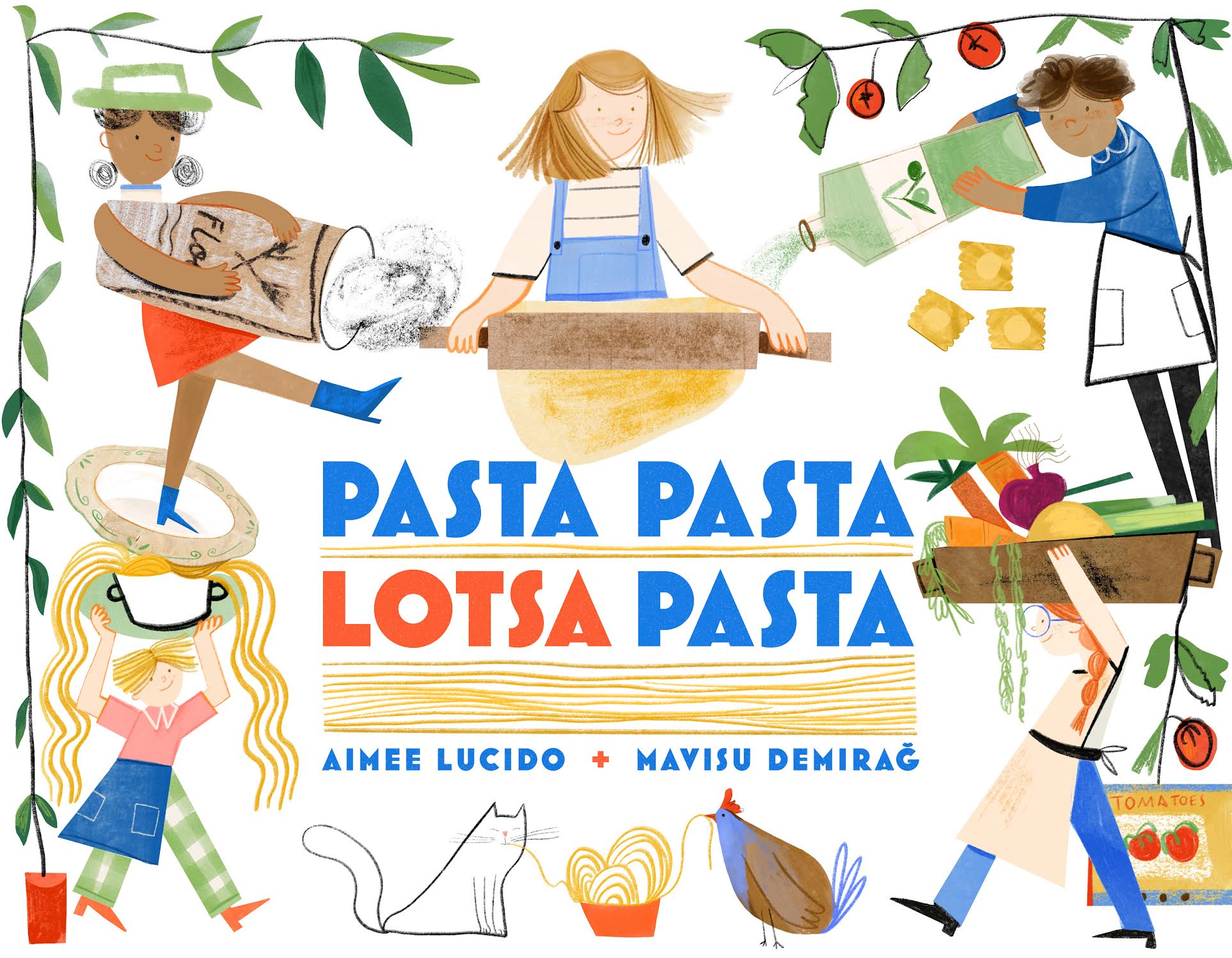
Pasta Pasta Lotsa Pasta by Aimee Lucido, ill. Mavisu Demirag

Incredible bouncy cooking energy infuses this delightful tale of a girl and her pasta loving family. Guaranteed to make you hungry! Surely SURELY this cannot be the first pasta-related picture book to realize the rhyming potential of Italian foodstuffs. And yet, I say that I can’t come up with anything to compare to this. It has all the rhythm and bouncy energy of Bee Bim Bop (and that’s the highest compliment I can bestow). We always need books that would work well in a storytime. This book earns your respect. I think we just found a readaloud winner! 

The Rattlin’ Bog by Jessica Law, ill. Brian Fitzgerald, sung by the Speks

There are songs turned into picture books, and then there are picture books made out of songs. What sort of sets this little number apart from the pack is the fact that my fellow environmental children’s librarians found its focus on bogs in its backmatter to be particularly toothsome. Now sadly there’s no QR code included that will allow you to link to the Speks’ version of this song, but honestly Spotify alone probably has ten different variations that’ll give you the tune (and the notes are printed in the back). The back of the book literally discusses bogs, their wildlife, how they help us, and what’s beneath them (“even very old butter!). There are even sections on how an egg becomes a bird and a seed becomes a tree. All this is accompanied by beautiful and peppy art by Brian Fitzgerald. It’ll pop across a room, no question. If you’re doing a nature-related or Earth Day storytime, this little number has your back. Singing optional (but highly recommended). 

Rocket Ship, Solo Trip by Chiara Colombi, ill. Scott Magoon

I’m a softy. There are just some images I encounter in picture books that win me over, simply because they manage to strike the dual winning combo of my never having seen them before AND they melt my cold cold heart with a sweet original image. Take this sweet rhyming tale about a little rocket making its first solo voyage to the stars. Colombi works in a lot of really clever science in what, with another author, could have been half-assed and entirely fictional. She is joined by the ever clever Scott Magoon, who isn’t afraid to put a little accuracy into his seemingly simple images as well. But the thing that delighted me so much? The rocket isn’t just held by its Ground Control building but hugged as well, which is SO SWEET! Now the book rhymes on top of all of this, and that’s a difficult business. It can be exceedingly difficult to rhyme a science-related title, but by gum Colombi manages it. Then, along the way, you learn about the rockets that drop satellites into space, space stations, the Northern lights, boosters, and then a little you-gotta-believe-in-yourself-when-you-try-new-things chutzpah to round it all out. It’s one of those books you’d discount without a thought if you didn’t pick it up. Don’t be that person. Pick it up and incorporate it into your preschooler STEM/space storytime.

Starlight Symphony by Buffy Silverman

Silverman’s books with Lerner always tend to contain a fair amount of stock photography, but whatta gorgeous collection of it there is. This book takes the reader to the moment when the sun sets and the sounds of nighttime nature come into their own. Each animal has its own particular sound, which is fun to say. Things like “Eee-oh-lay!” for the wood thrush or my personal favorite, the bittern. “Oong-KA-chunk!”. You can hear the readaloud potential here already, can’t you? Imagine a nature-based storytime where you get all the kids to make the sounds with you. Oo! It could be a jammie time in the evening! Or an outdoors evening storytime in the woods! Lots of possibilities here. The text is nice and simple but introduces a whole slew of different animals. And the photography is interesting because it has to confer the idea of taking place at night. I did read this wondering if there was some work done on the edges of some of these photographs. If so, it’s well done. No one would be able to tell. The end result is a fairly consistent visual feel for nighttime critters and their sounds. 

There Are No Ants in This Book by Rosemary Mosco, ill. Anna Pirolli

Good news! There are absolutely ZERO ants in this book. Except that one… and that one… and that one. Watch as our reluctant picnic-er discovers just how cool these tiny creatures can be. This one really won me over. I started out skeptical since we see a LOT of fourth-wall busting picture books these days (you know – the ones where the narrator is talking directly to the audience). But Mosco really just packs this book full of ant facts in such a fun and natural way. I learned something (the turtle ant’s big flat head was completely new to me) and I thought it did a rather expert job of combining a readaloud text with facts in an elegant, subtle manner. There’s some pretty great backmatter here, but the story itself is nicely fictionalized, making this an ideal candidate for my Informational Fiction category later this month. Meanwhile, it’s the very rare readaloud that includes a slew of nonfiction elements. Absolutely fun, whether you’re reading it to one kid or to a group. Bonus: Ants! The hot critter in picture books of 2024.

This Is Not My Lunch Box! by Jennifer Dupuis, ill. Carol Schwartz

A series of lunchboxes reveal some pretty peculiar contents. Explore each one and try to guess the animal that eats what’s inside. Fun, interactive, and just a little bit gross! This is really neat. It’s a nice mix of introducing kids to the different kinds of foods that animals eat alongside a good old-fashioned gross-out factor. The illustrations beautifully render every grub, maggot, and mealworm to its best angle. It reminds me of books like Hi, Pizza Man, with its keen readaloud factor as well. I particularly liked that in the backmatter it quizzes the kids on which animals are herbivores, carnivores, and omnivores too. There are a lot of programming possibilities with a book of this sort.

This Is the Way in Dogtown by Ya-Ling Huang, edited by Katie Cotton, designed by Zoë Tucker

I am NOT the only person who thinks of The Mandalorian when I read this title, so feel free to put this book on display on May the 4th this next year (IYKYK). However, aside from that title there isn’t really anything remotely Star Warsy about this book. Not unless Star Wars is totally into dogs these days (it ain’t). This book is one of those utterly charming books filled to brimming with tiny characters living their tiny lives on a bunch of big pages. The title, for the record, is a reference to the song of the same name. Can’t recall it? Here’s the first page: “This is the way we brush our teeth, / brush our teeth, brush our teeth. / This is the way we brush our teeth, / early in the morning. / Brush, brush, brush!” Oh. You storytime presenters can already feel how good this book would be in a storytime, right? I mean, it has BIG pages that read well across the room and you can totally sing the whole thing. Some (but not all) of the pages lend themselves to hand motions, and if you wanted to you could paperclip the pages together so that you’re only doing certain spreads (we’ve all been there) for the shorter attention spans in your audience. You’re essentially following a classroom of kids throughout the day (though it’s the kind of classroom that takes swimming lessons as part of a school day, which has ME jealous certainly). As you go through the book multiple times you start getting fond of different individual characters and their lives. I also appreciated the WIDE range of emotions on the page. It’s not all sunshine and roses since kids are laughing and crying in equal measures on many of the pages. It’s just a freakin’ realistic little book, I tell you. This one? It’s a keeper. 


That’s it for today! Be sure to stay tuned for more lists on 2024 titles. The full roster is here:

December 1 – Great Board Books

December 2 – Picture Book Readalouds

December 3 – Simple Picture Book Texts

December 4 – Transcendent Holiday Picture Books

December 5 – Rhyming Picture Books

December 6 – Funny Picture Books

December 7 – CaldeNotts

December 8 – Picture Book Reprints

December 9 – Bilingual Books for Kids

December 10 – Math Books for Kids

December 11 – Books with a Message / Social Emotional Learning

December 12 – Fabulous Photography

December 13 – Translated Picture Books

December 14 – Fairy Tales / Folktales / Religious Tales

December 15 – Wordless Picture Books

December 16 – Poetry Books

December 17 – Unconventional Children’s Books

December 18 – Easy Books & Early Chapter Books

December 19 – Comics & Graphic Novels

December 20 – Older Funny Books

December 21 – Science Fiction Books

December 22 – Fantasy Books

December 23 – Informational Fiction

December 24 – Gross Books

December 25 – Science & Nature Books

December 26 – Unique Biographies

December 27 – Blueberry Award Contenders (Celebrating the Environment)

December 28 – Nonfiction Picture Books

December 29 – Nonfiction Books for Older Readers

December 30 – Middle Grade Novels

December 31 – Picture Books

Filed Under: 31 Days 31 Lists, Best Books, Best Books of 2024 Tagged With: 2024 readaloud picture books, 31 days 31 lists, readalouds

31 Days, 31 Lists: Best Board Books of 2024

December 1, 2024 by Betsy Bird

I always like to kick off the month of lists with board books. To my mind, they’re the least respected types of books in the whole of children’s literature. Though vital to young growing minds, many is the new parent I’ve met who has told me, “I don’t think I’ll start reading to my kids until they’re a year old or so.” Never mind the evidence that reading to your children at the youngest of ages instills an early understanding that reading equates cuddling, family time, and general happiness. Not to mention the brain development benefits!

But if you’re going to read to babies, toddlers, and preschoolers, why not read them the absolute best of the best of the best books out there? The board book list I’ve produced here is one of the largest I do and for good reason. Loads of board books are released every year. The question is, which ones are worthy of your kids?

Here’s the PDF of this year’s Board Book List, if you’re interested in downloading it in a nice and easy format.

Additionally, in case you need more suggestions, be sure to check out my previous years’ board book lists:

  • 2023
  • 2022
  • 2021
  • 2020
  • 2019
  • 2018
  • 2017
  • 2016

2024 Board Books for Babies

Adventure Babies by Rosamund Lloyd, ill. Chris Dickason

Let the record show that I am not an easy mark. You can’t just slap a bunch of parachuting babies on a board book cover and expect that I’m going to instantly fall in love with the book. I have standards, people! And yes, that’s a killer cover. I mean, when my own babies did tummy time we use to say that they were skydiving because they’d lift all their limbs at once, very much like the babes on this cover. But what makes this kooky little title work as well as it does (aside from the ridiculous situations in which these babies find themselves) is that it includes great photography, some fun counting, rhymes, and bright vibrant colors. The babies are a nice range of skin tones and ethnicities, as is right. There’s the almost requisite mirror at the end of the book, of course. And then, as an extra added bonus, there’s a section of different animals, insects, flowers, and objects that allow you to count from 1 to 10 as well. I hate to say it, but I feel like the combo of counting and faces (which babies do adore) makes this a cut above the rest of a lot of the board books out there. Skydiving babies and all. 

Bunny Loves Beans by Jane Whittingham

Ah. The most shameless series is back. No doubt if you saw Whittingham’s previous book Bear Has a Belly then you know that there is no cuteness level she won’t strive to crest. These books are part of Pajama Press’s “Toddler Tough” series, meaning they have kind of poofy covers with thin but highly laminated/strong pages on the inside. There’s a helpful “Parental Guide” at the back, which mostly just gives a variety of different justifications for why the books are good above and beyond the fact that there’s an adorable bunny on the cover. Inside, of course, the book pairs beautiful photographs of cute animals with healthy, colorful foods AND kids eating those foods. So you’ve got colors, animals, healthy foods, and a diverse array of kids’ faces. The photos are mostly Shutterstock images, which is perfectly fine. It’s hard to complain when you’re practically able to count the nose hairs on a squirrel. The fact of the matter is that this is a legitimately beautiful book that small kids will enjoy AND that will hold up to a beating. The fact that adults will enjoy it as well is a very nice plus. 

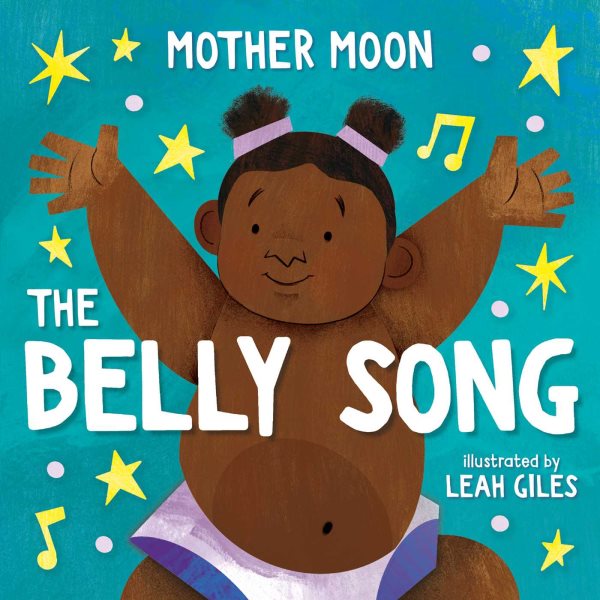
The Belly Song by Mother Moon, ill. Leah Giles

Body positivity can appear in a number of ways in children’s books but it can often be difficult finding the right tonal mix. You want to be upbeat but not pandering. Informative but super simple (particularly if you’re working on a board book of some sort). And inclusivity? That’s a must. Belly Song is one of those rare beasties that straddles such a mix well. The whole focus is on bellies. Big. Little. Round. Flat. The book never makes one sound any better than any other, and while you’re looking at baby bellies, you’re also looking at the bellies of their caregivers as well. The key is in the variety. One additional cool element comes at the end when the final baby yells, “Again!” and then you get the text of the book (which rhymes) on a single page at the very end. It’s a pretty cool sight in a pretty cool book.

Colors / Los Colores by Ekaterina Trukhan, designed by Meagan Bennett

Just a word of warning to wise librarians; the flips in this book? They ain’t flaps. They’re little cards that pop right out. You might point out that it will take only a single, solitary circulation for all the little cards to disappear, but the beauty of the book is that, honestly? You don’t need them. Take, for example, the first two-page spread. On the left-hand page is strawberry/la fresca. On the right-hand page is a vibrant red background with the word “red”. The other side of the card says “rojo” (so that if you prefer one word or another to be face forward, the choice is yours). Then both words appear underneath, so that even if you loose the card, the words remain. You could easily just pop out all the cards and use them to quiz kids for fun, if you wanted to. The pages are sturdy, the illustrations simple but keen, and the whole thing a class act. A great, grand, gorgeous bilingual basic boos.

Hello, Bedtime by Jannie Ho

High-contrast comes to the fore with a series of books illustrated by Jannie Ho. They’re part of duopress labs’ “High-Contrast Book” series, six of them released in 2024 alone. Their tagline: “Visual Nourishment for Babies’ Brains”. Catchy! Of the six released, I confess that this particular book is my favorite. It’s one of those board books that serves a purpose above and beyond the creators’ original intentions. A very young baby who digs the high-contrast isn’t necessarily going to understand about bedtime yet, but as they age and the book is put into continual use, that concept will begin to make its mark. Definitely the kind of book we need to see more of on our shelves. 

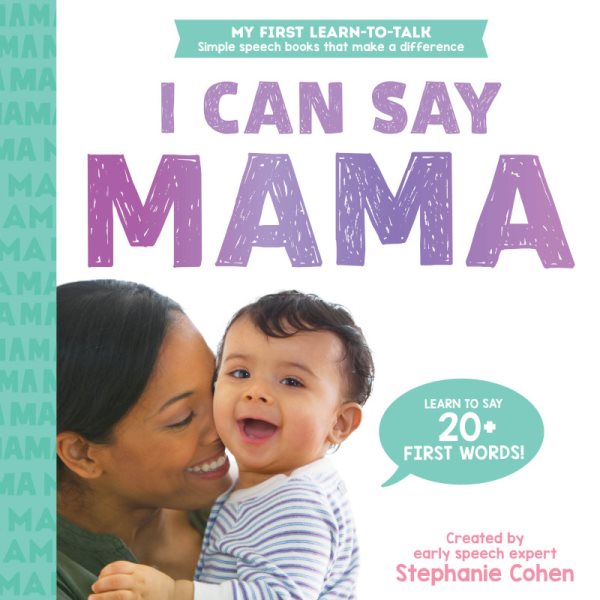
The I Can Say Dada Book by Stephanie Cohen

The I Can Say Mama Book by Stephanie Cohen

Let us be clear. Just because you’re an early speech expert, that’s no guarantee that your board book that aims to use, “a proven approach to help babies and toddlers” learn to say either Mama or Dada is going to (a) work and (b) be any good as an actual book. What I like so much about this series is that Sourcebooks knew how to balance the parental aspects alongside something a baby might actually like to engage with. So, on the baby side of the equation, the book is filled with bright and colorful photographs of a babies with their parents, hailing from a range of skin tones. Each two-page spread tends to rhyme, (“Book, DADA!” / “Cook, DADA”) and the babies themselves are cute enough that a reader probably won’t mind going over it again and again and again with their soon-to-be verbal offspring. On the parental side of things there’s a large “How To Use This Book” section at the back that offers tips and tricks to getting kids to connect the words on the page with what they mean. One piece of advice is to “Put Yourself In the Book” by pasting in a photograph. Probably not useful for the library copies, but could make a lot of sense for those folks who own the books. All told, this is pretty cool. And if you want to see these tips at work, apparently you can follow Stephanie @learntotalkwithme on TikTok, Instagram, and YouTube. 

Let’s Go, Baby! by Flowerpot Press

Often I’m quite fond of the Flowerpot Press titles, and so I’ll include them on this list. That said, I’m not overly fond of Flowerpot’s disinclination to credit its authors or where, precisely, they get the photographs for their books. I’m not used to publishers being quite this tight-lipped, so I’m including three Flowerpot books today but with the caveat that you may never know their true creators. Odd. In this book you’ve an array of beautiful photographs (my board book weakness) coupled with a text on what getting ready and going consists of for a small child. From dressing, to visits to grandparents, to snacks and baths, the images do a good job of showing a wide range of types of people. Babies love faces and there are faces galore on these little pages. A book to grab and go with.

Little Lamb, Where Are You? by Ekaterina Trukhan

Little Lion, Where Are You? by Ekaterina Trukhan

Little Owl, Where Are You? by Ekaterina Trukhan

Little Tiger, Where Are You? by Ekaterina Trukhan

Shoot. Why settle for just one mirror in the back of a book when you can indulge in FIVE big, beautiful mirrors, all hidden under flap, instead? A word of warning to the wise. Pay attention to how often you see the name Ekaterina Trukhan in my inclusions today. Somehow she became the go to person when you need a board book illustrator. You’ll see! In this case, gentle rhymes ask each little animal things like, “Little pig, Little pig, where are you?” to be responded with “Here I am! Here I am! Where are you?” You then pull down the face of the animal in question (which sounds more dire than it actually is) and voila! A mirror! I can’t pretend to understand the rudimentary price points of including mirrors in board books, but if it’s cheap then I don’t know why this hasn’t really been done before. Give us faces! Faces galore!

Miro I Look by Gavin Bishop

The name “Gavin Bishop” is no stranger to my lists, but this book is an interesting deviation from his regular stuff. Bishop, a New Zealand author/illustrator of Tainui and Ngāti Awa heritage, presents us with a book that pairs his usual faces alongside objects like keys, teddy bears, dogs, etc. The book has thick board book-esque pages, but the size is a little larger (around 8.75” x 8.75”) and you get your money’s worth with a slew of more pages than you’d usually find. Now just add in the fact that it’s also bilingual (Spanish/English) and you’ve got yourself an incredible book! Come for the faces. Stay for ALL the other stuff!

Playtime! A Tummy Time Play Book for Babies by Red Comet Press LLC

Ah ha! This would be the third in the Red Comet Press board book Tummy Time Books series, and I am here for it! Accordion books (the kinds you can open and and place around a baby from an early age) are some of my favorites. I loved placing them around my own babies when they were growing up long long ago. Combine that with high contrast images, and the fact that this newest book has little holes that you can wiggle your fingers through (something I used to do with a lot of Herve Tullet’s board books, back in the day), and you’ve got yourself an all around winner. The sole thing I do not like about these books is the fact that the author/illustrator is just credited to the company itself. Love you, Red Comet, but I’d love to know some of the names that actually put this book together!

What Is Baby Wearing? by Flowerpot Press

Flowerpot Press returns. You cans see my previous statement about crediting and creators (or lack thereof) Written for the youngest of readers, this has LOTS of faces for babies to stare at and enjoy. There’s a nice mix of different kinds of people and photos, photos, photos. What’s not to love?

Yeah, Baby! by Flowerpot Press

Check out that cover. Seriously, what genius took that shot? That is just one of those once-in-a-lifetime images you probably WISH was in your own family album. This book is a celebration of all those small baby wins. “You smiled at mom. Yeah, baby!” Now can you imagine how much fun this is to read aloud? I mean, I love any board book that allows the adult to have as much fun as the kid and that repeated refrain of “Yeah, baby!” just aches to be said with the right oomph and panache. Until that final, “You fell asleep. Yeah, baby!” Then you better be whispering it. The kind of board book that begs to be performed. 


2024 Board Books for Toddlers and Preschoolers

Baby Diplodocus by Julie Abery, ill. Gavin Scott

Baby Triceratops by Julie Abery, ill. Gavin Scott

It is a truth universally acknowledged that a dinosaur board book is never “good”. I don’t mean that they’re ever offensive or anything. They’re just never particularly memorable. An unfortunate fact, considering how many toddlers and preschoolers naturally gravitate to them. The sole exception to this rule that I have ever been able to find over the years are these “Baby” books by Abery & Scott. I think it was last year that I encountered Baby Stegosaurus and Baby T.Rex and found myself charmed by them. Now we add a Diplodocus and Triceratops to the mix. The more dramatic of the two is Triceratops. Somehow, in its scant pages, there’s room for family, danger, near escapes, separation, the whole 9 yards. I very much liked that when the Triceratops were chased it wasn’t necessarily by a T.rex or anything. Just a general toothy meat eater. Those who claim that you can’t pack in plot with simple wordplay have never met this series. A tip of my hat and a bow for this creative team. They know not what they hath wrought. 

Below the Ice by Michaël Escoffier, ill. Ella Charbon

I’m not above enjoying a little misdirection with my board books. This is definitely one that should be for the slightly older readers, if only because they’ll be the only ones to “get” it. Initially I was a tad put off by the text. The first line is, “Nouka is independent. She doesn’t need anyone.” Not everyday you read the word “independent” in a board book. But as the story goes on you see a girl fishing above and, below, a small fish. The two begin a tug of war on a line. As they struggle each one is joined by friends to help in the fight. As more and more friends join on either side, finally the line can’t take it and it breaks. The big reveal at the end? Nouka isn’t the child. She’s the fish. This is also notable for being one of the very few vertically designed board books I’ve ever seen. Smart and funny, I bet it’s a book an older child could read to a younger and then explain to them. Smarter than your average fish.  

Big and Little: A Book of Animal Opposites by Harriet Evans, ill. Linda Tordoff

When making an original board book with flaps on a concept like opposites, there are a couple things the creators need to bear in mind. First off, how sturdy are those flaps exactly? They don’t need to have the thickness of an orange rind, necessarily, but ideally they should be nice and big and easy to grab and not come off with the slightest tap or tug. Next, you need to do something to make the concept original. You could probably fill a library with the number of opposite books that have come out in the past. In this particular case, the secret weapon here is the art of Linda Tordoff and whatever art designer (sadly unnamed) worked with her to make these flaps make sense. The neat part of the book is that each animal featured flips with a flap to show its own opposite. So for “Day and night” you have a rooster crowing towards a sun, but flip it open and it’s an owl beneath the moon. A big whale flips up and you seen all the little fish underneath. It’s that perfect combination of clever and beautiful that I strive to find in my board books all the time. The kind I wish we saw more of in the future, that’s for sure. 

Finn’s Fun Trucks: Firefighters by Finn Coyle, ill. Srimalie Bassani

So I’m not always on board with the “Finn’s Fun Trucks” series, but once in a while I really like what it puts together. Case in point, this lovely addition to every firefighter loving kid’s bookshelf. If you are a parent who finds themselves with a kid who can’t get enough of firefighting (and who patiently explains to their parents the difference between a fire truck and a fire engine), Finn’s book is for them. First off, it has the wherewithal to understand these differences and then add to them. How many children’s books can you name that feature a mobile command center? I also, and this is going to sound silly, really appreciated that there was actual fire being fought in this book. Some of it, wholly new. I mean, I’ve never seen a passenger plane on fire in a board book before, have you? With flaps that allow you to see each truck in action, this is a pretty cool addition to a well-worn genre. 

Five Speckled Frogs by Yu-hsuan Huang

Yu-hsuan Huang is an old hand at the board book game and has been doing them for probably a decade now. Now I wasn’t actually familiar with this particular song, so I cannot gauge how well it replicates the original. What I can tell you is that the interactive elements, so familiar with Nosy Crow board books, are just as good as ever. This book contains one particular feature that to this day I’ve never quite worked out. It’s a wheel that you can turn, in this case of four frogs on a log, but after they pass behind some shrubbery and emerge, there are not only three frogs on the log but they’re facing the reader. This fun little element is found in a lot of Nosy Crow board books and short of ripping the fool books apart, I suppose I’ll have to let it remain a mystery. 

Flora and Friends: Colors by Molly Idle

A word of advice for picture book illustrators who are compelled by their publishers to produce board books based on their popular characters: Should you wish for a kind of literary success above and beyond the monetary kind (which is always nice too) I will direct your attention to one Molly Idle. Last year I had the delight of presenting her Flora and Friends: ABC to a large group of librarians and you should have heard the audible gasps when I lifted a flap to reveal a murder of crows in flight. You’ll find that same satisfaction on the pages of this book as well. Following in the footsteps of the Caldecott Honor winning (and much deserved) Flora and the Flamingo, this concept book uses her customary bird-centric storytelling to introduce color mixing. Red and yellow make orange. Yellow and blue make green. That sort of thing. I’ve always liked Flora as a character. Aside from her natural grace and beauty, how awesome is it not to have some skinny waif prancing about a book’s pages for once? Flora’s always been so body positive, and no one really talks about it. Even so, this book’s just as delightful as its predecessors. Worth discovering if you haven’t seen them before. 

Good Night Belly Button by Lucie Brunellière

Sometimes simplicity makes for the best board books of all. This clever little French import does something I’ve not really ever seen done before. At the start, you have to turn the book vertically. At the top of the page, a white, red-headed toddler is lying in pjs, stuffie in hand, head on a pillow. Below is a flap that reads, “Good night, little feet!” Raise the flap and now a coverlet is covering the feet, revealing another flap that reads, “Good night, little calves!”. That flap covers up the lower legs next, and so on. Part of what’s so neat about this is that a child could tuck the book’s child in, even as their grown-up tucks them in at the same time. But really, it’s cleverness of the construction that I love. A great idea wrought small. 

Hello Hello Colors by Brendan Wenzel

Hello Hello Shapes by Brendan Wenzel

Join a plethora of animals from all over the world as they display their glorious colors and poise themselves into a wide array of fun shapes. Concept books are rarely this gorgeous. I mean, let’s just admit that if Brendan Wenzel wrote a board book called Hello Hello Phallocentric Patriarchy I’d probably still be a big time fan. Unbiased observer, I am not. The man has such a distinctive style, and he already created a board book a couple years ago that was just called Hello Hello. It makes sense that he’d continue the theme with his favorite subject matter: animals from the natural world. These books are perfect for the youngest of young readers, since they’re covering very simple concepts with very simple shapes and colors and texts. But the reason I’m particularly entranced is the backmatter. Not only does the man identify each animal, he also notes if they are near threatened, vulnerable, endangered, or critically endangered. He’s not making a big show out of that information or anything, but it’s useful to see it mentioned just the same. A marvelous way of hooking ankle biters into caring for our natural world through other concepts.

Hide and Seek in Nature: Guess What It Is by Helena Haraštová, ill. Serafima Kosikava

Look through these pictures. What do you see? Don’t let the cut-outs fool you. Nature is a lot trickier than you might expect! This is one of any number of titles in this series, but I’m rather fond of this particular one since I love that it doesn’t entirely play fair. The cutouts deliberately lead you astray, and there’s something in that set up of expectations and then complete disarray after that amuses me deeply. Definitely meant for some of the preschoolers out there rather than the toddlers, though honestly I think a toddler might even get a kick out of some of this. Besides, who can resist a good lift-the-flap book when it has such nice cutouts as well?

Hit the Piñata by Jeffrey Burton, ill. Neil Clark

Okay, I am not 100% certain that this book works as well as its creators intended, but I’m giving it some extra points for trying to do something original, by gum. In fact, what this book wants to do proved so unexpected to me that I had to try to figure out precisely how to get it to work for a while. One thing I can say is that once you’ve broken a copy of Hit the Piñata in, it works more smoothly with successive attempts. So the whole idea, essentially, is that you, the reader, are shaking each piñata on each page. Sounds simple, right? But here’s the rub: You have to hold the book just right and shake it just right (preferably a little to the side) to get the candy to fall out. Now I know what you’re thinking. “Betsy, why do you shake the piñata? Isn’t the book called Hit the Piñata? Why don’t you hit it instead?” Good question. Particularly when the instructions inside specifically tell kids to “hit”. That means that their grown-ups are going to have to be the ones to figure out that shaking is required (the cover does say “shake me for sliding surprises” but I think we all know how hard it is for some folks to notice small details like this. When you do shake successfully, a long stream of candies comes out of the side. There’s no tab, so you can’t pull them out on your own. The shaking is 100% required instead. This has both the disadvantage of being a difficult maneuver to get right sometimes (some piñatas are stickier than others) and the advantage of making your grown-up look like a shaky fool. I think this probably needed a little more design work, but it’s so doggone weird and original that I’m giving it a pass today. Lord knows original board books are rare beasts.  

I Like Your Chutzpah: And Other Yiddish Words You’ll Like by Suzy Ultman

By all rights this should have been one of those books where inanimate objects say uplifting things that I do not generally like. But this book? It’s smarter than that. It’s funky. It’s legitimately funny. And the selection of Yiddish words inside? Sublime! The first page reads, “I like your punim (sweet face)” and then Ultman has drawn a dark-skinned kid giving a bit of side-eye and a smile. That’s how the rest of the book goes, with bold colors, fun images, and definitions along the way. There are the old standards that a lot of us know (schmutz, schtick, schpiel, oy vey, etc.) and a couple that were new to me (mishpocha, seykhel). This book is friggin’ charming. I tried to resist it. I failed. Find yourself a copy and stat!

Just Like You by Anne Wynter, ill. Letícia Moreno

This is one of two titles by the illustrious Wynter/Moreno team, and while it may look like a million, billion board books already out there, this one has style, panache, and an undercurrent that may well amuse adult caregivers as much as small children. A toddler attempts to be “just like” each member of their family. However, this being a toddler and all, each attempt falls flat, sometimes spectacularly. Whether they’re squeezing lemons, picking tomatoes, or tossing a salad (dad’s expression on this one: timeless), nothing quite goes right. Then, and this is amazing, the book ends on a high note when at a picnic each family member messes something up all at the same time and the toddler realizes that they’re all “just like me!”. I mean, talk about sticking the landing. That’s a legitimate plot with minimal words and a storyline a preschooler could more than understand. Wow. I’m just wowed. 

Knock Knock Who’s There by Rob Hodgson

This one’s definitely on the upper end of our spectrum, age-wise. It may also be the most successful knock knock joke book for kids I’ve seen to date. Those great big googly eyes (as seen on the cover) peer through the mail slot of a house at the unimpressed cat inside. Each time someone knocks they engage in a knock knock joke that explains who they are. “Knock, knock!” “Who’s there?” “Cows go…” “Cows go who?” “Cows don’t go WHO, they go… MOO!” For me, the whole book hinges on the final knock knock joke which is, legitimately, very funny. Sort of a transitional reader that teaches kids how to tell a good joke, and actually contains darn decent ones inside. Plus, y’know. Googly eyes. Who can resist?

Let’s Go Home, Baby Shark by Carolina Búzio

Let’s Go Home, Baby Tiger by Carolina Búzio 

Ace predators guide their babies through pernicious landscapes. Can you get baby tiger or baby shark home? You can, while learning about different landscapes, terrains, plants, and animals along the way. We’ve seen this particular style of board book before in the past. They’re the kinds where you’ve a little round cardboard circle that you guide through grooves on the page. The fact of the matter is that these kinds of board books really stand up to repeated use better than lift-the-flap titles or anything else with easily rippable parts. You want to get the baby tiger or shark out of this book? Good luck with ALL that! Best of all, these books are particular perfect at inspiring a love of nature since clever Ms. Búzio made sure to put labeled plants and animals the left-hand side for kids to learn about and find on the right-hand side. So basically you have a seek-and-find, tactile, interactive, nature-loving board book that’s pretty to look at to boot. A winner all around!

Let’s Make Music by Alexandra Penfold, ill. Suzanne Kaufman

This is one of several books in Penfold and Kaufman’s “All Are Welcome” board book series (not to be confused with the picture books as well). It can be difficult to find board books that are appropriate as readalouds but that aren’t just adaptations of nursery rhymes and songs. This particular book is ideal storytime fodder. It includes instructions to the listening kids on what to do. “Let’s make music! Hear that beat. / Clap your hands. Tap your feet.” Better still, when the book asks the listeners to “Feel your feet go tap tap tap,” you don’t need to worry that kids unable to use their feet will be left out since on the next page it says “Now your hands go clap clap clap” and one of the kids is in a wheelchair. It’s nicely inclusive, but also has clever little lines like, “Take a turn on the kalimba. / Grab the mallets. Play marimba.” That’s probably my favorite rhyme in a board book this year. Too fun to be ignored.

Lionel Is Just Like Dad by Éric Veillé, translated by Daniel Hahn

Lionel! He’s back! Veillé is just one of those book creators who knows how to create particularly charming characters with a mere flick of his wrist. Lionel had already appeared in such previous delights as Lionel Eats All By Himself and Lionel Poops. Defecation is wholly absent from his latest, as the little guy attempts to emulate his father in every possible way. Putting aside the fact that Lionel is a child lion with a full grown mane (we’re going for charm, not scientific accuracy, people), it’s hard not to be utterly delighted by the tone of these books. Throughout the book you see what Dad does, and inevitably it’s followed up with “And so does Lionel”. Even when Dad has some unexpected reactions. Loving and odd, the best possible combination. 

Little Simon Says: Left Hand, Right Hand by Dori Elys, ill. Ekaterina Trukhan

Confession time. My kids are 13 and 10 and they still are super unclear on the whole left/right concept. That’s on me. Somehow I didn’t drill that idea into their skulls early on, and it can be a bit of a problem when we’re biking and I want everyone to turn in a particular direction. Interestingly, there aren’t a ton of books out there to help with the concept. But why wait until a kid is into picture books? Let’s get ‘em early with a board book instead! I can’t help but love what Elys and Trukhan (she’s baaaaack) have done with this one too. First off, the cover is keen. You’ve a carpet-like lavender swatch on the left, and pink fur on the right. Then inside you’ve lots of things to touch and feel, and each time you can have the child do it with either hand, drilling home which one is doing what as you read. This is great!

My Busy Noisy Day by Sophie Aggett, ill. Malgorzata Detner

This is one of the few board books on this list you will encounter that has an on and off switch of its very own. Let the record show that not all on/off switch books for young children are created equal (I’m looking at you, Very Quiet Cricket by Eric Carle). What sets this particular book apart from the pack are the play elements built in. This book is written entirely in the second person. “You” are up to a lot of things today and so the perspective is all from “your” point of view. You brush your teeth right from the get-go, and then on the second page you get a phone call. As such, you’re very much pretending to be a grown-up. Then you have to get a UPS package from the front door (okay, it doesn’t say it’s UPS but “Pronto Packages” but we all know what it’s trying to say). After that you lock the door with your keys, you drive your car, pay for parking (that one made me laugh), use your charge card at the grocery store (thorough, right?), then get back home to do the laundry, vacuum, and bake a pie. These are all things a young child might see their grown-ups doing in the course of a given day, but I’ve never seen a book really lean into each section. There are 26 sounds in total that you can make happen by pressing certain small circles on each page, from a blender to a fire truck’s alarm. I think we have a hit on our hands here. 

My Hair Is Like Yours by St. Clair Detrick-Jules, ill. Tabitha Brown

Gorgeous gorgeousness abounds in this title. And how could it not? This is a creation from the same team that brought us that glorious board book My Hair Is Like the Sun last year (and yes, I most certainly did include it on the 2023 Board Book List). The true standout here isn’t just the photography, which is amazing. I mean, I don’t know who these people are, but Tabitha Brown (who is confusingly credited as an “illustrator” rather than a “photographer”, oddly) has presented an array of families and hairstyles that defy description. Meanwhile, St. Clair Detrick-Jules writes a simple but fabulous text that describes how each child resembles their relative. “My hair is like my friend’s, picked out into a fro. / My hair is like my twin’s, tied in a bun just so.” Oh. Did I mention it also rhymes? Because apparently this wasn’t a difficult enough assignment already. This book is incredible. One of the best.

No More Sleeping In by Anne Wynter, ill. Letícia Moreno

The second book out this year by the Wynter/Moreno team (the other being Just Like You) and it’s a doozy. I’m afraid this title will be ideal for a baby shower gift since it is essentially a parent’s life for months at a time. A toddler sets out to wake up each member of the family, declaring that no one is sleeping in today (check out mom and dad’s expressions when they turn on some music and start clapping). Everyone gamely gets up but it’s still friggin’ dark outside (been there) so they just fall asleep on the couch. And our hero? Falls asleep right alongside them until the sun comes up. Actually, this one may hit a little TOO close to home. 

Number Train by Jonathan Emmett, ill Ingela P. Arrhenius

While I am a staunch defender of the great historic librarian Anne Carroll Moore, there is one point upon which the two of us most certainly diverge. ACM had a distinct dislike of any book that fell too far over the line into what might be considered a “toy”. Even board books (such as they were at the time) were not exempt from her disdain. One can only imagine how she would react to seeing something as downright enjoyable and playable as Number Train.  It’s kind of a jack-of-all-trades board book. First, it has wheels. Beautiful wheels that allow you to, when closed, make it ride all around (presumably while making choo-choo noises). Second, it is a “giant lift-the-flap concertina book” (something it declares proudly on its own cover). That means you can open it up and display it that way. It is ALSO a counting book! Those flaps you lift lead to alliterative descriptions of different animals partaking of various activities on the train on one side. On the other side all those same animals have gotten mixed up, and you have the choice of trying to find and count each one through the various train cars. Sometimes when a book says it can provide hours of fun it’s stretching the truth a little. This book doesn’t make that claim, but I think it could do so with impunity. 

On Powwow Day by Traci Sorell, ill. Madelyn Goodnight

Oh shoot, this is amazing! Man, I don’t usually fall quite so hard for counting board books, but this book is incredible! It’s a powwow day encapsulated with colors, sounds, and counting, but done so simply that it would work with even the youngest of readers. For example, on the first page you get “1. One car drives to the powwow. VROOM! VROOM! Do you see the blue car?” So you also have interactive elements where kids get to find the things being pointed out in the text. This book has strong The Very Hungry Caterpillar energy. What I mean by that is that it’s capable of being several different kinds of concept books all at the same time without overwhelming the reader or becoming too much. Add in the fantastic art by Madelyn Goodnight, and you have yourself one of the best dang board books of 2024. Find this one! Read it!!

Time for Bed by Kathryn Jewitt, ill. Danielle Mudd, book design by Heather Kelly

Board book technology upgrades aren’t something you see every day. I sometimes like to paint myself as the jaded old librarian who seen all the board books you can name. Nothing can surprise me! But this “little softies” series coming out of Abrams has promise. The pages are thin die-cuts glued down onto soft but sturdy colored felt pages. No doubt enterprising tiny fingers would be able to rip some of these die-cuts asunder, but I gave it a whirl myself and it would take repeated pickings to make any progress against them. They’re strong! The book tells a variety of different farmyard animals that it’s time to bed down, and all the while you have the tactile felt to touch along the way. This is a book that gives you a lot more to feel than your average board book, so well done there! Worth a gander. 

Trains by Johnny Dyrander

Okay, I’m getting nitpicky now. Why include this year’s “Make Tracks” title by Johnny Dyrander Trains and not Trucks? I can’t believe I have to say this out loud since it’s so obvious, but come on people! The choo choo sound! Look, I know the truck makes a very nice “Rrrr Rrrr” sound, and I don’t want to disparage that. But is there even any competition out there to the “chugga chugga” and “choo choo” sound of a train? Let me tell you, when my kids were littles I killed, killed I say, with my chugga chugga rendition of Freight Train by Donald Crews, thank you very much. And now here we have a train that a kid can actually move within a book on a little track? You’re gonna tell me there’s not gonna be some SERIOUS chugga chugga action going on there? And yes, pedants, I know that the freight train in this book doesn’t actually say chugga chugga. Who the heck cares? I’m making the freight train, the steam train, the subway train, AND the high speed train all say it! Who’s gonna stop me? No one, that’s who. So for true chugga chugga action, this is the book to get. Nuff said. 

Welcome to the Cactus Hotel by Brenda Z. Guiberson, ill. Megan Lloyd

What’s the most hopping spot in all the desert? Welcome to the cactus hotel! Watch as birds, beasts, and insects all rely on a single cactus and everything it provides. Board book alert! You folks don’t know how many board books I reject on a regular basis for this list. But this one sort of proves to me that deserts are the hot new landscape (gah, I’m corny) of 2024. Now my #1 problem with nonfiction board books is often that there are too many words per page. Guiberson clearly knows what she is doing, however, because she keeps everything really nice and simple. It wouldn’t hand this to a baby, but a preschooler could really get something out of it. Plus, I just love how efficiently it shows a wide range of animals and insects living off of a single plant species. The economical use of words here is to be commended! All other nonfiction board books should take note of this one and follow suit.

Who’s the Boss? by Émile Jadoul

Am I a little kooky for loving board books with twist endings? Very well then, I am kooky. A giraffe, elephant, crocodile, and tiger all compete to be “the boss” (a cute little crown passing between them as they debate). I’m sure you’ve heard stories similar to this one in the past. It’s a classic folktale set-up. The giraffe proclaims itself the tallest, the elephant boasts that it’s the strongest, and so on. So what’s the twist? I mean, I’m hesitant to give it away, but why not? All at once the four animals hear a bellowing, “STOP!” Who is the true boss? Pull back and you can see that they’re just little finger puppets and the small child wielding them is the bossiest boss of them all. I love the little tiny detail that the kid has drawn a smiley face on its thumb to represent itself (the kid has about as much hair as its thumb too, come to think of it). In the end, the kid declares that as the official boss it’s going to put everyone to bed. Love that little detail and love this book. Bossy in all the right ways. 

Winter Light by Aaron Becker

Aaron Becker is the kind of board book creator that makes a person consider why it is that board books are not, generally speaking, tapped more often for artistic expression. I think a lot of us have encountered the literary world’s inherent rejection of the juvenile, and that goes for the art world as well. Even so, every once in a while a children’s book illustrator will try their hand at the form. Some board books come out looking derivative. Others are neat to adults, and dull to children. To strike the right chord and the right balance takes a particular vein of artistic creativity that, to be perfectly frank, the majority of us lack. But not Becker. This isn’t his first rodeo, of course. You Are Light, One Sky, and My Favorite Color all explore this interplay between text and light in a board book format. Of the three, One Sky is undeniably my own favorite. It was probably just a matter of time before he created a non-denominational wintertime book that looks as beautiful in a window as on a board book shelf. He even does this clever little thing where he references both Hanukkah and Christmas elements without naming either or getting all that specific about it. I mean, from a branding point of view, this is a helluva thing. Put this in a home with lights behind some of its pages and just watch the tiny hands play with the die-cut diamonds and coo at the pretty greens and reds. Strange, languid, lovely, and smart.


2024 Reprinted Board Books

Black and White in Color by Tana Hoban

Okay. This is more of an update than a reprint but it is also, and I mean this sincerely, my favorite board book of 2024. I am so amazed that I almost missed it. Black and White by Tana Hoban was always the quintessential accordion, high-contrast book for babies. It was simple. It was to the point. It does not age. So the idea of updating it (I think we can all agree that this title is relatively ridiculous) is nutso. And yet, and yet, and yet… this works beautifully. It isn’t just that they paired full-color baby faces with each of the original images. They also have the black and white image’s object with the baby in real life. Now suddenly there’s a connection between reality and illustration in a way we’ve just never seen before. Mind? BLOWN!

Happy by Mies Van Hout

Insofar as I can tell, this is actually the THIRD time this particular book has shown up on a 31 Days, 31 Lists list. How is that possible? Well, time #1 this book showed up on the translated picture books list. Then, many years later, the publisher reprinted it, so last year it showed up on the Reprinted Picture Books list. Now that same clever publisher (Pajama Press) has put this same dang book out as a board book and consarn it, it works even better this way! The book was always distinctly simple to begin with so it just makes sense to be published for the youngest young. Gotta love its brightly colored fishies splayed across the page against deep black backgrounds. Then you get single descriptions like “shy” or “brave” on individual pages. The fishies get black backgrounds. The words get colors. The whole things works like a charm. 

Let’s Play! by Hervé Tullet

Tullet has slowly but surely been turning his interactive picture books into interactive board books over the last decade or so. He adapted his best-known book (here in America anyway) Press Here quite a while ago. Then came Mix It Up! Now we’ve the third in the triumvirate, Let’s Play! which, like its predecessors, adapts so adeptly that you may find yourself wondering why on earth it wasn’t released as a board book in the first place. I suppose the reality of the situation is that few people remain for weeks on the New York Times bestseller lists with board books. After all, Tullet had lots of board books out in the States about 10 years ago, which I used to read to my kids all the time, but they hardly made the splash that they deserved. With this book, a parent and preschooler can sit together and move the little colored dots all over the the place, following the directions of the beneficent narrator. In its original form Booklist called this, “Interactive, inventive and intuitive.” Perfectly put. 

We All Play / kimêtawânaw by Julie Flett

This is why I’m not an editor. I never quite understand when I see a picture book how much potential it may or may not have as a board book. Now sometimes you see a board book created from a picture book and you think to yourself, “That was a terrible idea.” And sometimes you see a board book created from a picture book and you think to yourself, “Well, duh.” This falls into the latter category, most certainly. If you didn’t see it the first time around, the book shows the various things that animals do, paired alongside the Cree words for each. There’s even a little “List of Animals” at the end that doesn’t just provide the words we’ve seen before but talks about what you’d say if there was more than one of a given animal and what the “Younger, Smaller, Cuter” versions are called. Flett’s a general genius anyway, so the art is keen, and the whole product a class act. If you want to give someone a board book that looks good but that’s also beautiful and fun to read, I’d call this a top pick.


That’s it for today! Be sure to stay tuned for more lists on 2024 titles. The full roster is here:

December 1 – Great Board Books

December 2 – Picture Book Readalouds

December 3 – Simple Picture Book Texts

December 4 – Transcendent Holiday Picture Books

December 5 – Rhyming Picture Books

December 6 – Funny Picture Books

December 7 – CaldeNotts

December 8 – Picture Book Reprints

December 9 – Bilingual Books for Kids

December 10 – Math Books for Kids

December 11 – Books with a Message / Social Emotional Learning

December 12 – Fabulous Photography

December 13 – Translated Picture Books

December 14 – Fairy Tales / Folktales / Religious Tales

December 15 – Wordless Picture Books

December 16 – Poetry Books

December 17 – Unconventional Children’s Books

December 18 – Easy Books & Early Chapter Books

December 19 – Comics & Graphic Novels

December 20 – Older Funny Books

December 21 – Science Fiction Books

December 22 – Fantasy Books

December 23 – Informational Fiction

December 24 – Gross Books

December 25 – Science & Nature Books

December 26 – Unique Biographies

December 27 – Blueberry Award Contenders (Celebrating the Environment)

December 28 – Nonfiction Picture Books

December 29 – Nonfiction Books for Older Readers

December 30 – Middle Grade Novels

December 31 – Picture Books

Filed Under: 31 Days 31 Lists, Best Books, Best Books of 2024 Tagged With: 31 days 31 lists, Best Books of 2024, board books

It’s Here! 31 Days, 31 Lists 2024!

November 30, 2024 by Betsy Bird

So exciting, so exciting!! Each year I dedicate the 31 days of December to a different list of children’s books released in America in the current publishing year. What that means is that all year long I’ve been tracking the books I’ve been reading (and enjoying), and slotting them into different categories so that once December rolls around I can put them all together and show you what the  year looked like.

Now these lists are entirely personal and subjective. They’re what I liked. My advantage is that I keep a running tally (and commentary) but it’s also a guarantee that some of the books you love, I didn’t, and some of the books I loved, you weren’t a fan of. That’s okay.

So with all that in mind, here are the lists for 2024:

December 1 – Great Board Books

December 2 – Picture Book Readalouds

December 3 – Simple Picture Book Texts

December 4 – Transcendent Holiday Picture Books

December 5 – Rhyming Picture Books

December 6 – Funny Picture Books

December 7 – CaldeNotts

December 8 – Picture Book Reprints

December 9 – Bilingual Books for Kids

December 10 – Math Books for Kids

December 11 – Books with a Message / Social Emotional Learning

December 12 – Fabulous Photography

December 13 – Translated Picture Books

December 14 – Fairy Tales / Folktales / Religious Tales

December 15 – Wordless Picture Books

December 16 – Poetry Books

December 17 – Unconventional Children’s Books

December 18 – Easy Books & Early Chapter Books

December 19 – Comics & Graphic Novels

December 20 – Older Funny Books

December 21 – Science Fiction Books

December 22 – Fantasy Books

December 23 – Informational Fiction

December 24 – Gross Books

December 25 – Science & Nature Books

December 26 – Unique Biographies

December 27 – Blueberry Award Contenders (Celebrating the Environment)

December 28 – Nonfiction Picture Books

December 29 – Nonfiction Books for Older Readers

December 30 – Middle Grade Novels

December 31 – Picture Books

Filed Under: 31 Days 31 Lists, Best Books, Best Books of 2024 Tagged With: 31 days 31 lists, Best Books of 2024

  • « Go to Previous Page
  • Page 1
  • Interim pages omitted …
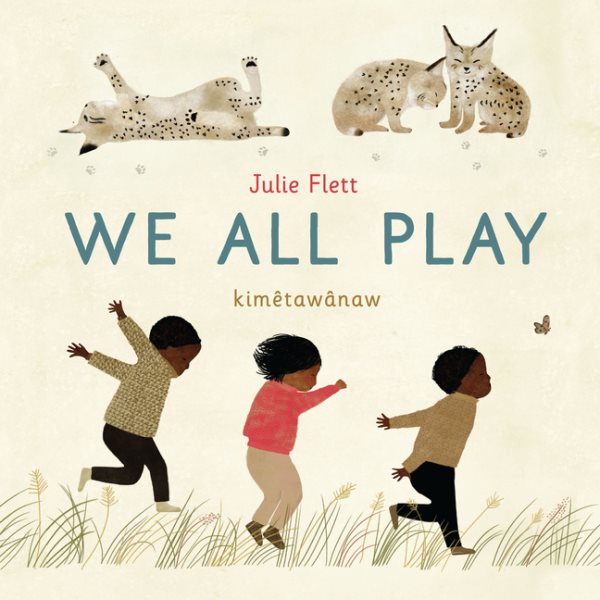
  • Page 65
  • Page 66
  • Page 67
  • Page 68
  • Page 69
  • Interim pages omitted …
  • Page 1048
  • Go to Next Page »

Primary Sidebar