• Skip to primary navigation
  • Skip to main content
  • Skip to primary sidebar
  • About/Contact
  • Fusenews
  • Reviews
  • Librarian Previews
  • Best Books
    • Top 100
    • Best Books of 2022
    • Best Books of 2021
    • Best Books of 2020
    • Best Books of 2019
    • Best Books of 2018
    • Best Books of 2017
    • Best Books of 2016
    • Best Books of 2015
    • Best Books of 2014
    • Best Books of 2013
  • Fuse 8 n’ Kate
  • Videos
  • Press Release Fun

Putting the Big Bang In Its Place: Guest Post by Marissa Moss

Putting the Big Bang In Its Place: Guest Post by Marissa Moss

February 11, 2020 by Betsy Bird

The other day publisher and author Marissa Moss of Creston Books sent me an interesting query. We all know that the bar has risen for nonfiction authors and even, to a certain extent, illustrators of children’s books. But what is the role of the publisher in all this? Particularly when we’re talking about a small independent publisher and not one of the big guys? That was the subject of the story Marissa told me and I was just so darned interested in what she had to say that I asked her write a guest post for my blog. It’s a different perspective on the role of accuracy and how the author and editor come into it all.

Enjoy!


As nonfiction picture books are used more and more by teachers and librarians instead of or alongside of textbooks, writers – and publishers – need to follow a high bar for accuracy. No more invented dialog, no more conjecture. Instead picture book authors are careful to use actual quotes (cited and sourced in the backmatter).

In my own non-fiction writing, I’m careful to keep track of sources so that I can quickly refer to them later. I keep a running list of quotes that might work, again all scrupulously referenced. I bring the same rigor to books I edit for Creston Books. When manuscripts are submitted, I’ll do some initial fact-checking to make sure the writer has done their homework, then look for an expert to vet a particular subject.

That’s what happened when Carly Allen-Fletcher sent me her latest story. Carly has done two non-fiction picture books with us, both with science as a subject. The first, Animal Antipodes, presents the idea of places that lie opposite each other on the globe (antipodes) and the animals that live there. That meant checking that Carly got the places right, as well as accurate descriptions of the creatures living there. For her second book, Beastly Biomes, we made sure that her definitions of biomes and the wide range of life each supports were all scientifically true. In both books there were minor corrections, but the basic manuscripts were sound.

When Carly sent me her third manuscript about the Big Bang and the beginnings of life on earth, it raised some worries for me, so I passed the text on to a young astrophysicist I know to vet it for factual problems. Asa Stahl, the astrophysicist, wrote back a page of detailed comments, some problems big, others small. Clearly the story needed major rethinking.  Asa started by saying, “It commits all the most common errors of popular science writing,” then went on to detail where the science was off.

Carly, to her credit, realized she was in over her head. She responded by asking if Asa would write the story himself and she could illustrate it. Asa at first objected, saying he didn’t know anything about writing a picture book, he wasn’t sure where to even begin. I told him he was the perfect person to write the book. After all, his mother was a children’s book author and illustrator and he’d grown up editing and critiquing her work and that of her writer friends. In fact, as an undergrad, he’d been torn between going into editing professionally or plunging deeper into the world of physics. In the end, science won out.

Asa thought about it and agreed, drawing on his deep familiarity with the picture book format. The Big Bang Book is the result. The book opens, “This is the story of the universe. And it begins: Once upon a time, we don’t know.”

The story works beautifully for the younger reader, with poetic imagery and encouragement for kids to ask the big questions (Why is the sky blue? Why are we here?). Kids, after all, are natural scientists, always wondering how things work, why things are the way they are.

I’m very proud of the book, both as an editor and as a mother. Asa, the young astrophysicist is my son. He’s been a brilliant editor for my own writing for many years. It’s wonderful to be able to be his editor and see the merging of his love for science and story. 


Many thanks to Marissa for sharing her experience. The Big Bang Book by Asa Stahl and Carly Allen-Fletcher is on shelves April 7, 2020 from Creston Books.
Filed Under: Guest Posts Tagged With: guest posts

Fuse 8 n’ Kate: Hand, Hand, Fingers, Thumb

February 10, 2020 by Betsy Bird

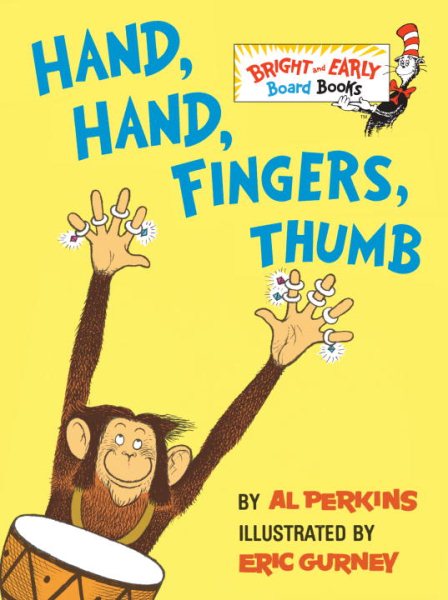
With the full and present knowledge that monkeys in children’s literature are problematic to the extreme, Kate and I tackle a book that involves a kind of animal that is professed to be a monkey but is, in fact, an ape, much like the problematic-in-his-own-way Curious George (seen on a previous podcast). When I was a new mom, I used today’s book endlessly with my kids. Yet it was only recently that I realized that I knew next to nothing about either Mr. Perkins or Mr. Gurney. Kate gets to do her Beatnik imitation again (you’d be amazed how often it comes up on this show) and later brings up Silent Bob. I wrestle with the book’s legacy in the 21st century.

Listen to the whole show here on Soundcloud or download it through iTunes, Stitcher, Google Play, PlayerFM, or your preferred method of podcast selection.

Show Notes:

The site Dadwagon screetched to a halt in 2015, but if you’re curious about Al Perkins, check out the comments on this post. It’ll clear a lot of information for you.

Kate: “I dig the muttonchops.”

Toe discrepancies. So Kate noticed that the monkey picking the apple has four toes on each of his feet, but the same cannot be said of the monkey plucking the plum. Why the difference?

This photo was about where Kate started to wonder, where do the monkeys get these drums?

I didn’t quite understand Kate’s telling me that this one particular monkey looked like Silent Bob, but then she sent me this image and thanks to her, now I can’t unsee it.

If the rise of the Planet of the Apes comes as it did in the movies, the drums are going to be terrifying.

Finally, as I mention on the show, The Rabbit Hole in North Kansas City should be opening some time this year. Check ’em out!

Filed Under: Fuse 8 n' Kate Tagged With: Al Perkins, Eric Gurney, Fuse 8 n' Kate, Hand Hand Fingers Thumb

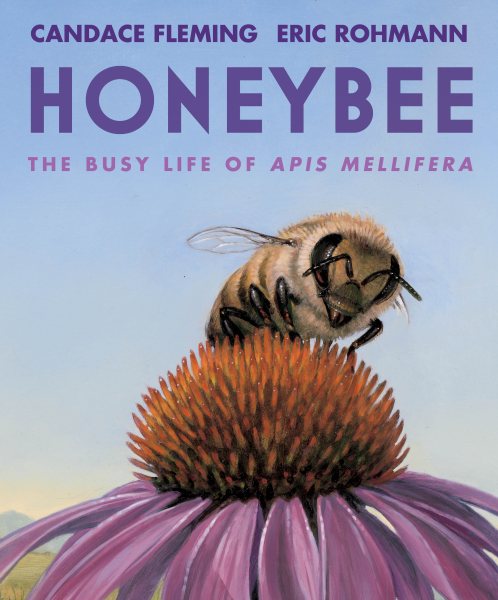
Review of the Day: Honeybee by Candace Fleming and Eric Rohmann

February 7, 2020 by Betsy Bird

Honeybee: The Busy Life of Apis Mellifera
By Candace Fleming
Illustrated by Eric Rohmann
Neal Porter Books (an imprint of Holiday House)
$18.99
ISBN: 978-0-8234-4285-0
Ages 3-7
On shelves now.

I don’t teach classes on how to write children’s books. I imagine that doing such a thing would be enormously challenging and rewarding, depending on the people involved. Still, that doesn’t stop me from sometimes coming up with a list of writing rules for my class of imaginary students. And as I found myself reading Honeybee: The Busy Life of Apis Mellifera I found myself coming up with an entirely new rule I’d never thought of before: No subject has ever truly been done to death. I mean it. Honeybees, after all, are basically the Abraham Lincoln bios of science and nature informational picture books. They’re ubiquitous. So much so that a person could be fooled into thinking that we’ve seen everything a book of bees could offer. That’s why great writing for kids, when you encounter it, reminds you that there is always a new way to look at this old, familiar world of ours. If you buy only one bee book for the rest of your life, make it this one.

A bee emerges. Pulls itself out of a cell for one into “a teeming, trembling flurry.” Since her scientific name is Apis mellifera we’ll call her Apis, but that is where the anthropomorphization ends. Apis eats, dries, then sets to work. She has wings, but does she fly? No, first she must tend to the larvae, tend to the queen, build combs, process food, and guard the hive. And then? Then? Then will she fly? She will. And she’ll work continually until, on the thirty-fifth day she will lie still at last. And exactly at that precise moment, a new bee pushes out of her cell to start the cycle all over again. Backmatter includes a two-page diagram of the different parts of a honeybee, additional information, a definition of terms, online resources, and a Bibliography of kid-friendly bee books.

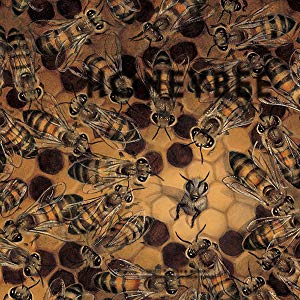
Why, you might ask, is this bee books heads and tails the best you’ll ever see? What does it do that no other book of its kind has accomplished before? Well, to be frank, most bee books are interested in the individual bee and its role in producing honey. These books essentially are saying, “Okay, bee. What’s in it for me? What are you doing to improve MY life?” Honeybee has a slightly different take. We do follow one bee, from birth to death and everything in between, but even with our focus centered so tightly on this one individual, it’s quite clear from the get-go that this is not a place where individuality flourishes. The colony is as much a character as dear Apis here. Moreover, while I knew that different bees had different jobs, I never realized that one bee could switch between many different jobs in the course of its short life. Nor did I really have a clear sense of what each of her jobs might entail. Add in the hyperrealistic beauty of Eric Rohmann’s art, and you have a bee book that stands apart from the pack not merely because it’s full of top-notch writing but because its illustrations just drink in the subject matter.

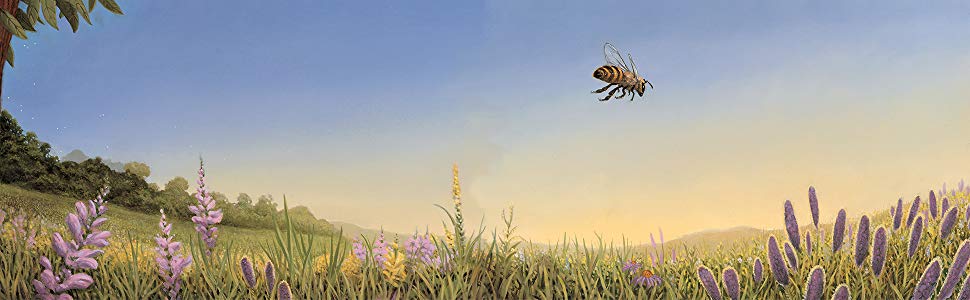
It took me a little while to realize it, but Candace Fleming plays by the rules. By this I mean she is capable of writing an informational picture book without filling it to the brim with fictional elements. I’m actually a lot more lenient towards fiction-like insertions in my nonfiction picture books when the topic is science rather than history. If you want to put in speech bubbles and googly eyes and nutty concepts where planets are talking on the phone or cells have individual personalities, go for it. In the case of Honeybee, Fleming does utilize one tool from her fiction toolbox: An engaging narrative. To set the scene, the author follows one average bee, giving her the name of her species, but what really caught my attention was how Fleming actually manages to make a book of facts privy to rising tension. The book is constant badgering you. Peppering you with little hints that maybe after accomplishing this new job, THIS time “Apis” will fly. By the time flying really does take place, you are rewarded with a grandiose gatefold that somehow manages to feel cathartic and awe-inspiring all at once. Yet nothing about that image would hit home as hard as it does had Ms. Fleming’s words not done their duty. She provides the set-up. Eric Rohmann gives you the payoff.

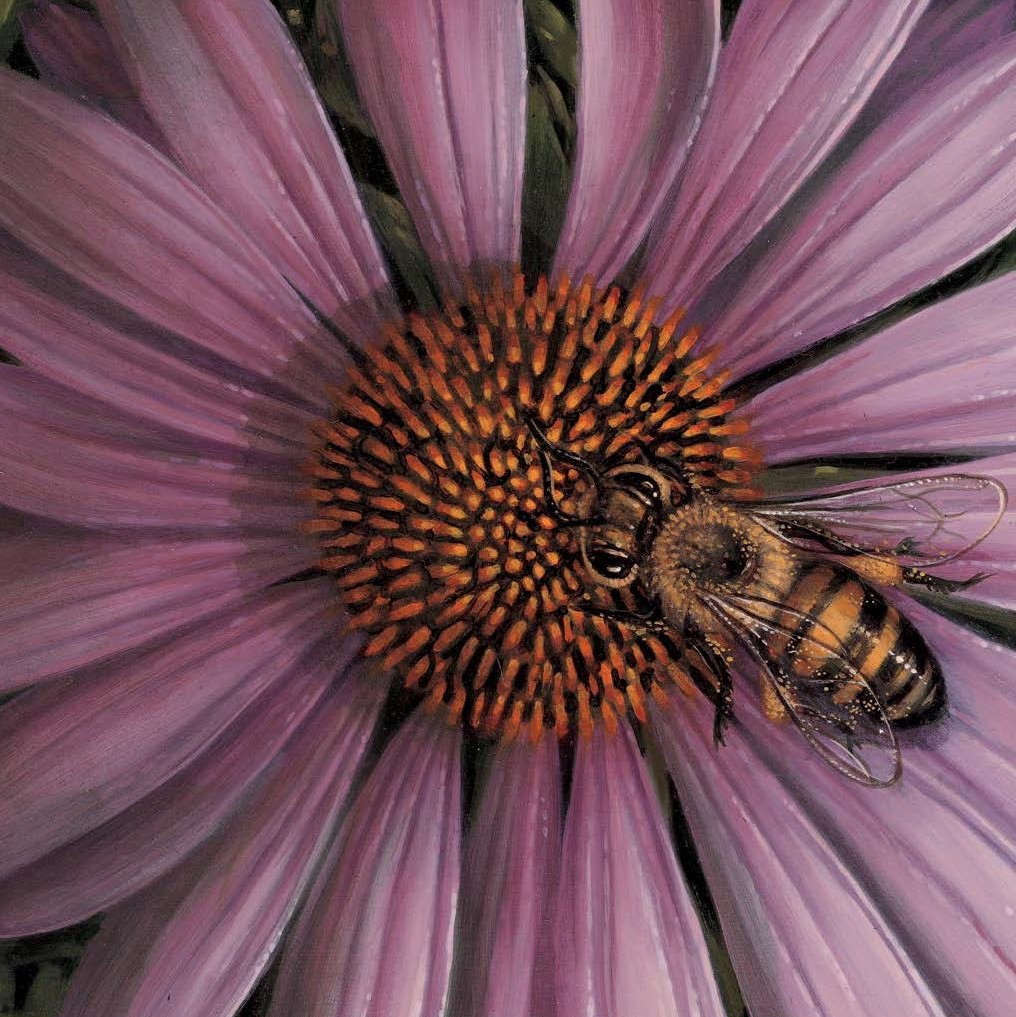
Speaking of Eric Rohmann, how ‘bout that guy, eh? Last time I saw him on the picture book circuit he was bringing giant squids to life. From these enormous creatures he’s scaled way way down. Not that you’d necessarily know it. These lush oil paints (scrupulously fact-checked by bee and pollination expert Dr. Mark L. Winston) appear on pages that clock in at 11.75 inches tall by 10 inches wide. The distance at which you would usually find a bee no longer exists. You feel almost unsafe, coming into this close a contact with these Apis melliferas. In one picture the head takes up the better part of two full pages, Rohmann carefully centering the gutter of the book right between the insect’s antennae. I imagine using this book with a group of kids, encouraging them to “pet” the bee as it works. The artist also takes care to change directions and perspectives throughout the story. There’s the aforementioned gatefold of the bee flying for the first time, and not long thereafter an overhead shot of the bee on top of an enormous purple coneflower, stretching out like a particularly lovely landing pad. Rohmann imbues his painting with what honestly feels like care and love. I imagine some child just poring over these huge images, feeling like they could dive into one scene or another. Dive in and maybe stay there. Could you blame them?

When I was a child I remember watching an episode of 3-2-1 Contact where a sedate bee sips sugar water while someone gently strokes its back. I have always had an inordinate fear of bees, but there was something so gentle and comforting in that image. The bee couldn’t have cared less about the human, but seeing it not object either was calming to me. I think around that age a book like Honeybee: The Busy Life of Apis Mellifera would have been very welcome to me. I just combed through the professional reviews of this book to see if anyone’s already used the word “lush” in conjunction with it. No one? Then let it be me. Lush and luscious even, this art’s a showstopper and Fleming’s text, let me remind you, reminds you that no topic is ever truly overdone. Not when you have masters of the form bringing it to life in an entirely new, and yet wholly accurate, way. This is the bee book we’ve all been waiting for. We just hadn’t met it yet.

On shelves now.

Source: Final copy sent from publisher for review.

Misc: Be sure to stop by Seven Impossible Things Before Breakfast for an interview with Eric Rohmann, sketches, and interior spreads galore!

Filed Under: Best Books, Best Books of 2020, Reviews, Reviews 2020 Tagged With: 2020 nonfiction, 2020 nonfiction picture books, 2021 Caldecott contender, 2021 Caldecott contenders, Best Books of 2020, Candace Fleming, Eric Rohmann, nonfiction, nonfiction picture books, science and nature, science books

2020 Graphic Novels: An Accounting of Some Standouts

February 5, 2020 by Betsy Bird

I’m a little embarrassed to confess this to you, but I have been planning this post for a long time. Since October, pretty much. Of all the booklists that I like to produce, this one might be my favorite. And why not? With a newly minted Newbery Award going to a COMIC for the very first time, librarians are knocking down the last barriers between these lovely amalgamations of text and image and young readers. World domination is imminent. Breathe it in. It’s a new day.

This particular list consists of all the 2020 comics I’ve seen so far that made me inordinately happy. The best news is that it’s only February and we have so many more months of comics to come! Please note that a lot of these aren’t out quite yet. Consider them something to look forward to then.

2020 Comics for Kids

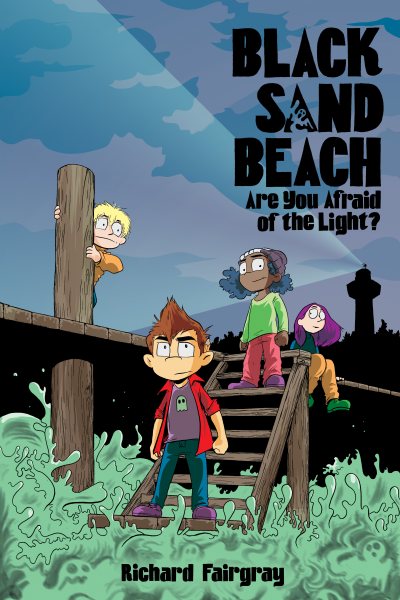
Black Sand Beach: Are You Afraid of the Light? by Richard Fairgray

The Twilight Zone meets Twin Peaks . . . for kids! When Dash and his friend Lily set out to spend the summer at Black Sand Beach, they have no idea how many ghosts, changelings, and malevolent forces they’ll have to encounter. I have a bad habit of reading books to my 5-year-old and 8-year-old before I’ve read them myself. Most of the time this isn’t a problem, but once in a while I come across something that’s particularly creepy. That’s what happened with this book. You want a bad psychedelic trip in your middle grade? I’m taking horse people with giant toothy mouths on their bellies? Got your number. Of course both my kids ADORED the book, and the only reason they’re upset with it is that they won’t be able to read the sequel until the summer of 2021. I loved the humor and weirdness of it. This is sort Twin Peaks-y, as I mentioned before, but the characters are so confident in this world that you take comfort in how they saunter through it. Oh, and my favorite character is Andy. You’ll soon see why.

City of Secrets by Victoria Ying

Before his father died, Ever Barnes was entrusted with a secret so dangerous, it’s worth killing for. When Hannah befriends him they are pulled into a web of deceit and cunning. The Invention of Hugo Cabret meets City of Ember but with a heaping helpful of Steampunk for spice. This book has its fair share of secret assassin societies, underground mysteries, maps, orphans, and gears gears gears! I’d like to see the final copy since the sketches are a bit sketchy and it can be difficult to figure out how everything moves around (quite literally). Worth keeping an eye on. 

Cub by Cynthia L. Copeland, ill. By Ronda Pattison

If you look at the cover, the print on the dress (with that magnificent white collar) and old-school camera are a clear indication that we’re in graphic novel memoir territory. Copeland reflects back on the 70s, at a time when, as a kid, she got to follow a female news reporter about town. With the Nixon hearings in the background, young Cynthia is also navigating shifting friendships, her first boyfriend, and mean girls. It’s the kind of low-level conflict I’m completely okay with. Nothing overly cruel. Lots of smart stuff to say about how friends change and finding your voice. I particularly loved how Cynthia’s relationship with her father changed over time. Good strong stuff, though a friend of mine pointed out rightly that this book could have benefitted HUGELY from some backmatter. You could easily walk away from it thinking the ERA had been ratified, after all…

The Deep & Dark Blue by Niki Smith

If you’re going to take a swing, swing big. And if you’re going to create an entirely new world, make sure your world building is sharp and to the point. Smith doesn’t tenderly dip a toe into her world, she dives in, head first, leaving the reader to catch up. Is there magic? A bit. But at its heart this is a story about identity, military coups, and kids taking the initiative. Are you tired of passive protagonists? Then meet Hawke and Grayce. Their cousin has murdered their family in her attempt to gain power, and only they know the truth. Hiding out within a women’s group called The Communion of Blue, disguised, they must come to terms with what they want and who they really are. Action and acceptance by turns. And yes, mom. That’s a drop spindle on the cover. Smith really does get the technique and the physicality of spinning on a drop spindle correct. I was very impressed with the research she must have done.

Diana: Princess of the Amazons by Shannon and Dean Hale, ill. Victoria Ying

There was a time when I was reading my kids about five different Wonder Woman origin story picture books at any given time. Therefore, they were well and truly prepped for this foray into a series about young Diana, the only kid on her island. I’m wracking my brain, trying to figure out if Shannon and Dean have done any comic collaborations since Rapunzel’s Revenge and Calamity Jack (both of which are fantastic, and illustrated by Nathan Hale of Hazardous Tales fame, if you’re curious). In any case, they’re back in rare form. It’s short and sweet. My sole objection is that Circe isn’t wearing her killer green and yellow outfit with the cool little black rectangles on it. I love that thing. Otherwise, no beef. OH! And does the name “Victoria Ying” sound at all familiar to you? Go up and take a look at who did City of Secrets. It looks like she’s having a busy year.

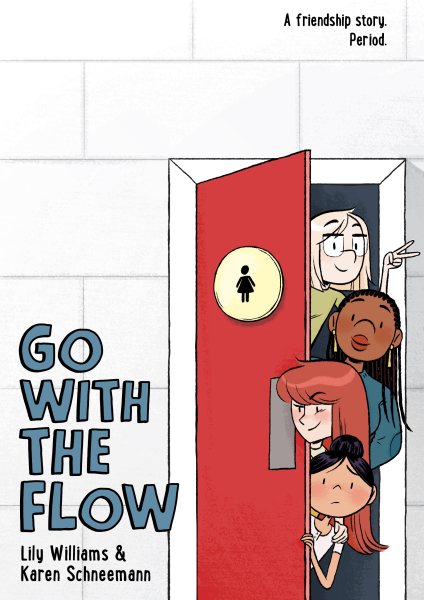
Go With the Flow by Lily Williams, ill. Karen Schneemann

How do you battle injustice when you’re young? When Abby discovers that the tampon/tampax machines in her school are always empty, she and her friends band together to fight for what’s right. Period Equity: The Book! Are you ready for a story that’s all about menstruation? The final taboo topic of children’s literature is breached in every possible way. From the economic inequity of schools never stocking their tampon/tampax machines, to the pain some girls suffer from their periods, to just the casual embarrassment of wearing white on the wrong day, it’s an issue book, sure, but the friendships and character development stand out. So too does the art. Some may suggest that it’s too old for kids, but girls get their periods as young as 9 these days and they desperately need this information. These characters are in high school but I think there is a definite reason they’re marketing this title younger.

Green Lantern: Legacy by Minh Lê

Let me tell you how much I trust the pen of Minh Lê. This book is a product of DC Kids, a kind of imprint of DC Comics, that is attempting to jump into libraries by any means necessary. And last year they produced one of the worst superhero comics I have ever had the misfortune to see. Ridley Pearson’s Super Sons was disjointed, poor executed, and lacking in any and all care. In sharp contrast is Green Lantern: Legacy. The fact that I even picked this up is due to its author, and I was not disappointed. No doubt Minh was given a word and page limit, so he has to keep his storytelling short, sweet, and to the point. Even so, you have this clear cut sense of the history of the Vietnamese in America, a message about embracing immigrants, top notch art and coloring, characters you care about, jokes that land, the whole enchilada. This book plays fair and if DC Comics is smart they’ll see to it that we get many more sequels to this in the future.

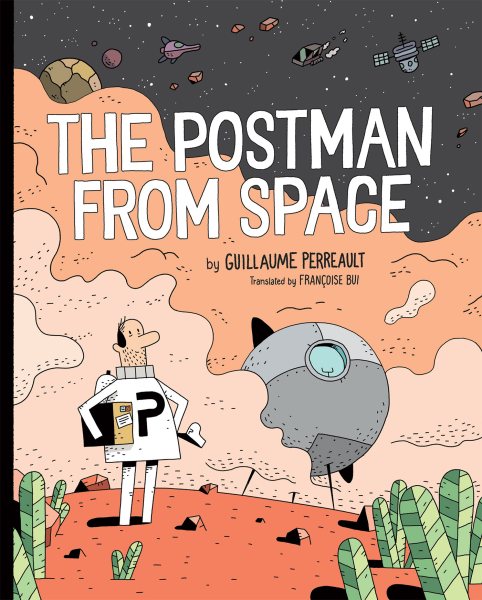
The Postman From Space by Guillaume Perreault, translated by Françoise Bui

Bob’s a simple space postman who loves his regular routine. So what’s he supposed to do when the Boss gives him a wacky new route with strange planets and kooky inhabitants? This is a younger comic with a gentle lesson of trying something new. It’s easy to forget about comics for those younger readers sometimes. This book may clock in at 142 pages or so, but it’s essentially a short story for kids. It all boils down to getting out of your comfort zone and how that often isn’t a fun experience at first, but can grow on you. It’s gentle, this one. A lovely tone to it, fun peppy art, and how can you not love a book that makes fun of Antoine de Saint-Exupéry’s Little Prince? I loved the tiny hidden fox on the planet and the fact that the Prince (called Mr. Small here) is kind of a jerk. 

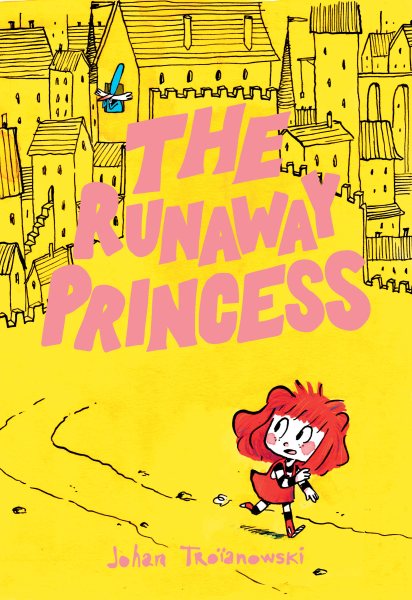
The Runaway Princess by Johan Troïanowski, translated by Anne Collins Smith and Owen M. Smith

Princess Robin just can’t stay put! In three lushly illustrated stories the wayward royal helps new friends find their way, outwits a witch, and defeats a crew of nasty pirates. Originally these were three little books about a princess and her friend, but here in the States they’ve been collected into one book and translated for American audiences. Like the previously mentioned Postman, this is also a comic that’s on the younger end of the spectrum, which is something we definitely need. I love verbal sophistication and wit, but there’s a lot to be said for dreamlike imagery and simple storytelling. Troïanowski definitely belongs to the same camp as your Johann Sfars or Lewis Trondheims, but it’s the colors that really set him apart. He manages to be detailed and packed with images without being overwhelming. The book has lots of little interactive elements where the fourth wall falls to pieces and readers are invited to help the characters. I appreciated that the book sometimes says to put a piece of paper down to trace, rather than drawing on the pages. Nice touch.

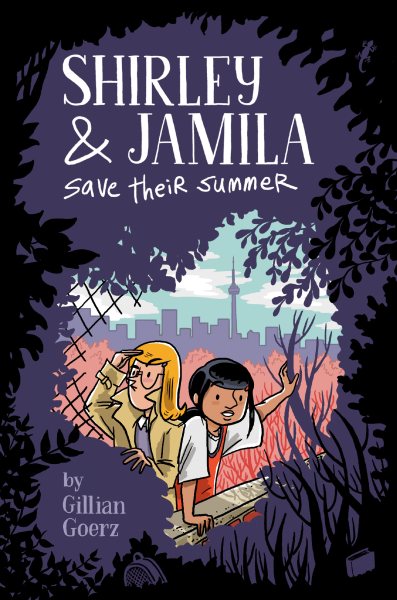
Shirley & Jamila Save Their Summer by Gillian Goerz

Basketball loving Jamila and super sleuth Shirley team up to escape unwanted summer camps and attempt to solve a mystery involving a pool and a missing gecko. I should probably spare myself the embarrassment of confessing how long it took for me to realize that Shirley Bones is Sherlock Holmes. Sherlock fans will get a kick out of her, right down to the violin playing and lack of knowledge about the cosmos. Most Sherlock riffs tend to just replicate A Study in Scarlet, but Goerz has opted to create a new, and very fun, type of mystery. We don’t actually see that many great mystery books in a given year. I’m delighted, then, to introduce you to this one. Deserving of an Edgar Award someday.

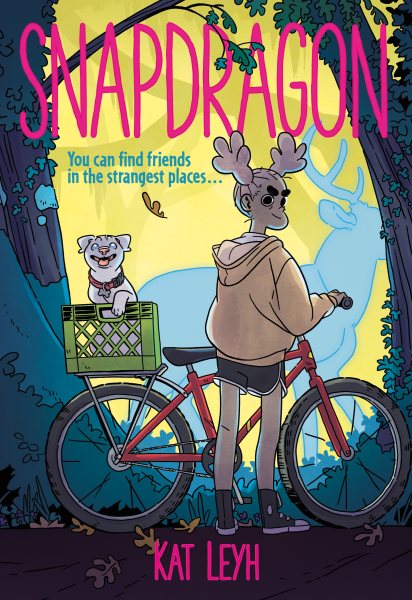
Snapdragon by Kat Leyh

I get why they renamed it from its original title, Roadkill Witch, but I still think that was the better title. When she stumbles on the local witch in the woods, Snapdragon discovers a whole wide world where being the odd one is a blessing, not a curse.  Personally, I liked this a lot. It has a creepy opening to rival Black Sand Beach‘s changelings, but if you read a little further in then you see how it really hides how sweet a book this is. A second readthrough and you discover how so many of the book’s themes are hidden early on (did you notice the quick glimpse of violets at the start when Jacks realizes who Snapdragon is?). The art is so incredibly stylized that I don’t know how it’s going to be received widely, but it’s dead on in its GLBTQ themes. I like it but I’m interested in hearing what other people think about it. 

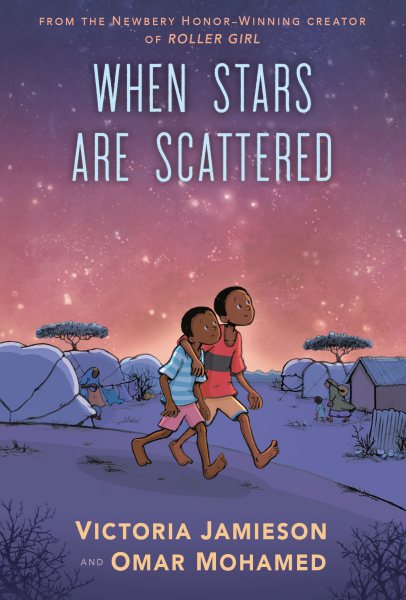
When Stars Are Scattered by Victoria Jamieson and Omar Mohamed, color by Iman Geddy

Though it will end up in the Fiction part of your graphic novel collection, this is the true story of Omar Mohamed and his life as a Somalian refugee, from the ages of 4 to 15. Written closely with Omar, together he and Ms. Jamieson have worked as hard as possible to tell his story truthfully. It’s never easy to turn a real life into a comprehensive story, but this does an admirable job. One librarian I know said that the book does feel Americanized, to a certain degree, for young audiences and I don’t think that’s wrong. That said, it’s pretty darn accessible too. Pairs well with the far darker Eoin Colfer book Illegal from 2017. 

Yorick and Bones by Jeremy Tankard and Hermione Tankard

I could swear I never saw so many books written in collaboration between parents and children as I have in the last year or so. Subtitled “The last graphic novel by William Shakespeare”, this strange little creation is charm incarnate. Yorick the skeleton, lately dug up by a friendly pup, speaks in iambic pentameter and seeks a friend. Trouble is, skeletons are not wont to make others feel at ease, and Yorick will need to look a little closer to home if he wants the companionship he so desperately desires. With its bright colors, thick black lines (a Tankard specialty), and small size, I tried the book out with my kids. The 8-year-old enjoyed it, but then she saw her first Shakespeare (A Midsummer Night’s Dream) this past summer. The 5-year-old found it a bit on the wordy side, and it is. Yorkick is essentially a book-length monologue, but I’ll guarantee you haven’t seen a comic book skeleton as charming as this since Human Body Theater by Maris Wicks. Oh! And look how beautifully the cover pairs with Deep & Dark Blue!

Filed Under: Best Books, Best Books of 2020, Booklists Tagged With: Best Books of 2020, comics, graphic novels

Coming, Fall 2022 . . . the Highly Anticipated . ..

February 4, 2020 by Betsy Bird

I have a scoop.

Not just any old scoop. A scoop that I think will highly please the many folks that thoroughly enjoyed the Dylan Meconis graphic novel Queen of the Sea.

Folks, were you left wondering about the future adventures of Eleanor, Francis, and Margaret at the end of the last book? Have you been hankering for more to the story? Then have I got good news for you! Today, I’ll be speaking with Dylan about upcoming sequel, Prince of the City AND I’ll share a bit of art from the book. What more could you ask for?

Enjoy!


Betsy Bird: I think I speak for large swaths of people when I say that the existence of a sequel to QUEEN OF THE SEA fills me with unmitigated joy. Yet one of the things I loved about QUEEN was the fact that it could, in theory, stand on its own. Did you always envision it to be part of a larger series or was this a late decision?

Dylan Meconis: When you’re the person who writes the story and the person who has to draw the entire story, you are always very excited to have an idea that fits into one book! 

Preferably a short book. Extra credit if it takes place in an empty white void and the characters wear the same outfits all the way through.

The original story crumb for Queen of the Sea was “a new person arrives at a peaceful, isolated convent and ruins absolutely everything,” which is a great one-book idea. (Also: the nuns wear the same outfits all the way through!)

But it pretty quickly developed into “a deposed queen is exiled to a peaceful, isolated convent and ruins absolutely everything for a little girl who lives there, who may secretly be her half-sister and possibly a competing heir to the throne,” which is not a tidy one-book idea.

I was much more excited to make that version of the book, though. I also set myself up to really enjoy drawing it – sections of illustrated prose, different art styles, diagrams, and lots of funny farm animals to draw, not just page after page of paneled layouts.

As both a reader and writer, I really enjoy endings that leave you wondering what everybody does next (I realize I’m in the minority there!). This story had a natural inflection point where the “ending” would feel ambiguous but not random, and I knew I would be okay with it if I didn’t get to continue it any further. 

So I hedged my bets and pitched Queen of the Sea as a “standalone book with series potential.” (Feel free to steal that catchphrase, fellow authors.)

BB: Can you give us a rough approximation of the plot?

DM: Our three intrepid escapees from the Island – Eleanor, Francis, and Margaret – travel to the Continent aboard the Regina Maris. Their enemies think they’re dead, so they have to adopt some unusual disguises, and rely on odd jobs and the charity of Elysian convents to get by. 

Their mission is to convince the rulers of other kingdoms to join in fighting Queen Catherine…before she realizes that Eleanor is still alive and starts hunting her down. 

The first stop is the bustling but severe new Republic of Batavia, where Margaret finds herself delivering shipments of rare pigments to the workshop of the most popular (and mysterious) royal portrait painter on the Continent. 

With the help of a charismatic explorer, the group books passages on a ship bound for their next stop – the tiny but powerful City of the Gate, a walled kingdom at the far Southern end of the Continent. It’s been ruled for hundreds of years by two different royal lines, each representing one of the city’s two major religions. 

Just as they arrive, an awful calamity throws that alliance into question, and Eleanor, Margaret and Francis are caught up in the aftermath. Margaret suddenly has to learn three new languages, navigate two different palace kitchens, keep up with a terrifyingly powerful scullery maid, solve a murder mystery, win the trust of a reluctant prince, and save three to four kingdoms. 

You know, all in a day’s work.

BB: The first book was a fictionalized rendition of a time in the life of Queen Elizabeth prior to taking the throne. And while there are lots of fictional elements, the realistic ones prove equally fascinating. How closely does PRINCE OF THE CITY keep to historical events?

DM: It goes a bit further afield, although it still borrows from broad stroke events and cultural geography. English-language readers are taught more about English history than that of other places (even though so many of us live thousands of miles away, on colonized land with hundreds of thousands of years of its own human history). 

Along with that shared education, we’re encouraged treat English history as our cultural heritage, so doing impertinent things like fictionalizing Henry VIII by changing his name and killing him off early doesn’t carry a very big potential for misrepresentation to the point of harm. 

That level of playfulness is less appropriate when you want to share ideas inspired by personalities or events from other cultures. No kid should have to read yet another England Is Very Important book and feel like their culture’s history has been raided for cheap entertainment. But I also remember how exciting it is as a kid to read a book and unexpectedly get to see parts of your heritage or identity represented in a way that’s very cool.

So, outside of a couple more characters from Albion, the story doesn’t mess with (or shorten…) as many actual historical figures’ lives. I did change the outcomes and timelines of some major events, which allowed certain settings to exist when in real history they were already gone or hadn’t yet come into existence, but I tried to always alter them in favor of the exiled or subjugated parties.

We’ve got enough “what if…even more things had gone wrong?” scary revisionist historical fiction out there already. Kids and adults need help to build our muscles for imagining positive and empowering alternate realities, so we can help make those things happen in this reality.

…I think you can tell that I was raised in a Star Trek family.

BB: If I might ask, what are some of the kid reactions you’ve seen to QUEEN OF THE SEA? Have they had suggestions for you in terms of a sequel?

Oh my gosh, they’re the best. I’ve gotten reports of several kids learning to play chess, some amazing fan art, reports of a few museum visits being a lot more fun than initially expected, and a bunch of e-mails from parents along the lines of “please tell me there will be a sequel so my children will know peace once more.” 

I haven’t gotten a ton of specific story suggestions, but kid readers are all very concerned about whether Eleanor will get the crown back, and if Margaret’s going to be okay. (At least I’ve been able to to reassure everybody who asks that, yes, the three of them safely make it to the Regina Maris in that last scene!)

BB: Okay. Here’s a tricky question. A kid reads QUEEN OF THE SEA. A kid reads PRINCE OF THE CITY. Now the kid wants to know as much as humanly possible about the real Queen Elizabeth. What do you recommend that they do?

DM: If there’s one where you live, you should go to the library! (Your school library counts, too.) The nice thing about Elizabeth is that she was a really big deal and she lived and ruled for a really long time and it wasn’t even that long ago (trust me, the 16th century is basically “last Wednesday,” historywise.) 

There are a ton of books about Elizabeth written for kids, but I think some of the ones written for adults will actually be more interesting for Queen of the Sea readers. (One of the great secrets about adult history books is that a lot of them have a big section of photographs and paintings in the middle.)

I always ask a librarian for help finding the youth titles and adult books, and if nothing captures my interest, I ask for help looking up other titles that may be checked out or at another location. A lot of libraries also have apps that let you watch movies and documentaries and listen to audiobooks for free! 

For readers who like listening to stuff on boring family car rides, almost every British history podcast has an episode about Elizabeth, or sometimes about Elizabeth and her favorite playwright, Shakespeare. (Librarians also tend to like podcasts and have good recommendations, FYI.) 

BB: And finally, big question: What percentage of this book contains any nuns whatsoever? I suspect I may miss my nuns.

DM: It is definitely a lot less nuncentric, but the sisters of the Elysian order are still pretty important to the story – if you’re on an international adventure, it’s pretty useful to have connections with the nuns who have a convent in every city with a port! We get to meet some other kinds of nuns, too. 

Margaret learns that some aspects of convent life that she thought were universal are actually just Island things. It’s that strange moment you get when you find out that other families make their macaroni and cheese differently.

At any rate: there will be nuns.

BB: Hooray! New nuns!


Enormous thanks to Dylan Meconis, Jamie Tan, and the good folks at Candlewick for this reveal, interview, and these lovely interior images. Can it be 2022 now, please?

PRINCE OF THE CITY. Copyright © 2022 by Dylan Meconis. Reproduced by permission of the publisher, Candlewick Press, Somerville, MA.

Filed Under: Interviews Tagged With: Dylan Meconis, interviews

Fuse 8 n’ Kate: A Chair for My Mother by Vera B. Williams

February 3, 2020 by Betsy Bird

Having successfully predicted one of the Caldecott Honors in our last episode, Kate is quick to pop my puffed up ego right from the start of this week’s recording. And good thing too, since the book I bring is none other than that Reading Rainbow classic A Chair for My Mother. I talk about some of the good narrative choices made by this book, while Kate talks about some of the very strange illustration choices.

Listen to the whole show here on Soundcloud or download it through iTunes, Stitcher, Google Play, PlayerFM, or your preferred method of podcast selection.


Show Notes:

As I mention at the start, Caldecott Honor winner (for Three Jovial Huntsman) Susan Jeffers passed away recently. You may read more about her life here.

Kate notices, and it’s rather fascinating, that when they remade this interior image for the cover, they removed the bird perched on the upper left-hand side of the image. My working theory is that with the new title the bird would have been placed too close to the border, but I’d love it if anyone knew the real story.

Mama’s arms occasionally go AWOL. First one, then another.

To properly appreciate this book, it helps to look to the borders. Williams has mentioned that she may have been influenced by children’s books int the past that sported pretty borders. The tulip sequence is more than just pretty, though. First, you see red and yellow tulips on a day when everything seems happy. Next, the border appears a series of burnt, blackened tulips. Finally, as the neighbors help out, new tulip growth appears.

A young Jimmy Olson or the Aunt? Kate says she looks a little too happy, but I point out that if you want to convey to someone desperate, maybe a reassuring grin is a good thing.

Why isn’t this father stopping his kid from eating the pizza he’s donating to our heroine? Tacky, dude.

Eat your heart out Steve Jenkins. This is a heck of an Actual Size dime. Kate measured it against a real dime. It’s perfect.

Awfully kind of the cat to hold the door open like that. I don’t know about your felines but mine don’t usually feel that chivalrous.

Kate was baffled by this next picture, and I can’t say as I blame her. Ending with the shot of the family in the chair seems natural. So why would also include this mildly off-putting image of the two making goofy faces? It’s a cute idea but I’d argue that the actual presentation looks more odd that touching.

Read the obituary for Ms. Williams in The New York Times which reads Vera B. Williams, 88, Dies; Brought Working Class to Children’s Books.

How lucky we are that Horn Book makes their Horn Book-Boston Globe Book Award speeches available for free on their site. Please read Vera B. Williams’ discussion about the origins of this book here.

The podcast I love is Marlon and Jake Read Dead People. Just give a listen to the first episode. So very good.

Finally, it appears that The Rabbit Hole, that upcoming magnificent explorastorium in North Kansas City, MS, has an upcoming exhibit involving A Chair for My Mother. Ever wanted to sit in the chair yourself? Now you’ll be able to!

Filed Under: Fuse 8 n' Kate Tagged With: A Chair For My Mother, Fuse 8 n' Kate, Vera B. Williams

  • « Go to Previous Page
  • Page 1
  • Interim pages omitted …
  • Page 271
  • Page 272
  • Page 273
  • Page 274
  • Page 275
  • Interim pages omitted …
  • Page 1050
  • Go to Next Page »

Primary Sidebar