• Skip to primary navigation
  • Skip to main content
  • Skip to primary sidebar
  • About/Contact
  • Fusenews
  • Reviews
  • Librarian Previews
  • Best Books
    • Top 100
    • Best Books of 2022
    • Best Books of 2021
    • Best Books of 2020
    • Best Books of 2019
    • Best Books of 2018
    • Best Books of 2017
    • Best Books of 2016
    • Best Books of 2015
    • Best Books of 2014
    • Best Books of 2013
  • Fuse 8 n’ Kate
  • Videos
  • Press Release Fun

A Most Beautiful Reveal of The Most Beautiful Thing: Cover Reveal and Interview with Kao Kalia Yang

A Most Beautiful Reveal of The Most Beautiful Thing: Cover Reveal and Interview with Kao Kalia Yang

February 18, 2020 by Betsy Bird

One of the nicer perks of writing a book is that on occasion your publisher might send you somewhere. It might be a conference. It might be a bookstore. It might be a book festival in Minnesota in mid-October in the middle of an inexplicable snowstorm. I mean. For example.
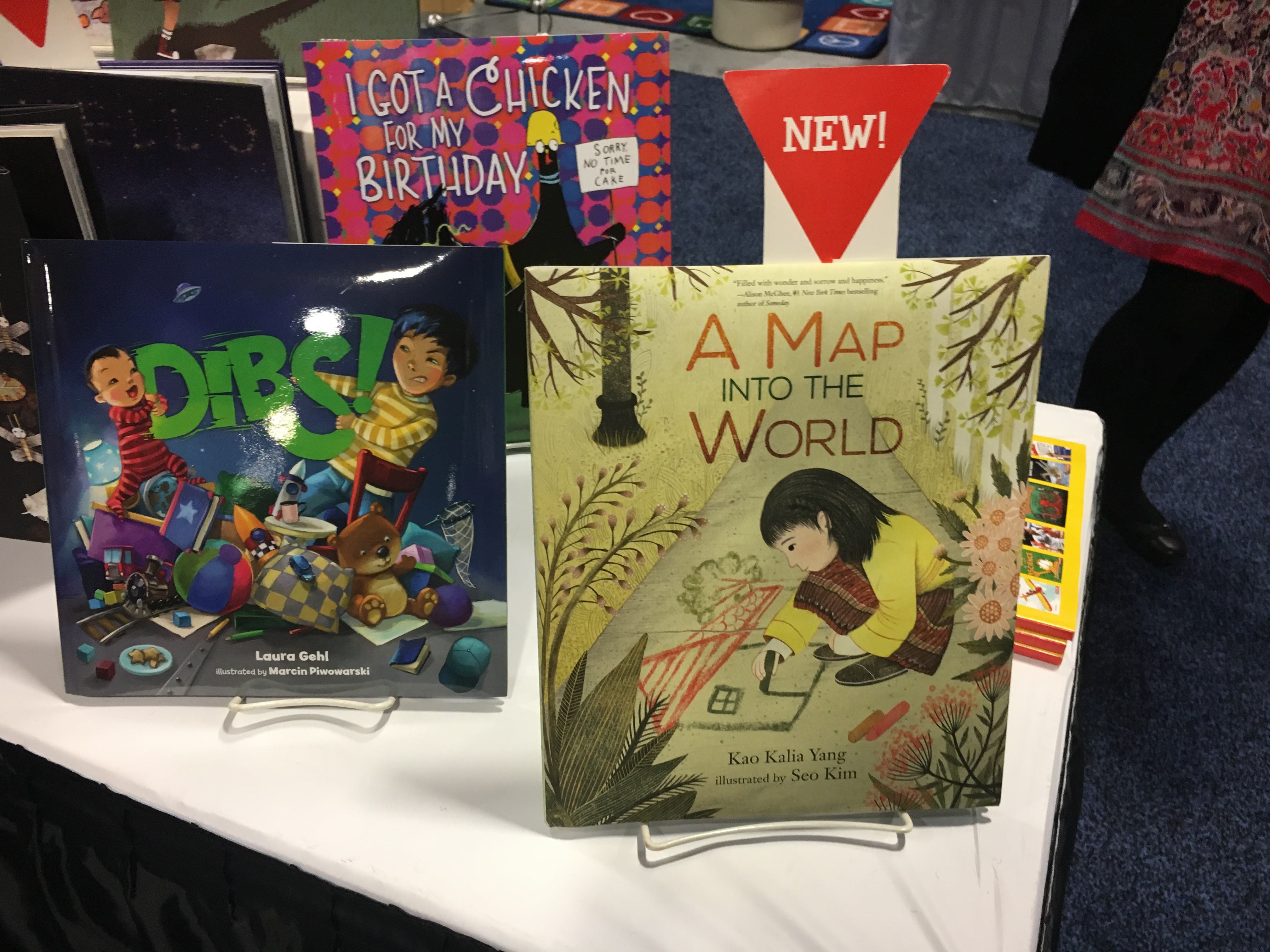
This past October I found myself using my Santa hat for warmth rather than as a mere accessory as I participated in the Twin Cities Book Festival’s featured youth programs. A whole host of authors and illustrators were presenting their books. There were folks like John Coy, Marlena Myles, Bao Phi, Kayla Harren, Michael Hall, Mike Wohnoutka, and a singular young woman named Kao Kalia Yang. If the name rings a bell you might have heard of her picture book A Map Into the World, released last fall, which ended up a Charlotte Zoltow Honor Book as well as a newly minted ALA Notable. And that was her debut!

In A Map Into the World, we follow a Hmong family as the daughter observes her elderly neighbors and discovers how you can reach out to someone when they’re going through a private grief. This year, I am pleased to announce, Ms. Yang has another picture book coming out in October of 2020 and, once more, it returns to her Hmong roots. Kalia, you see, was born in a refugee camp in Thailand and came to the United States at the age of 6. She is among the very first Hmong American children’s authors working in the States today.

I am asked to do cover reveals from time to time, and I’ve found that the ones that work best are the ones where the book has a hook that intrigues me in some way. Here is the description I was handed for Kalia’s latest:

“The Most Beautiful Thing is a nonfiction picture book that speaks directly to the experience of being poor. Weaving together Kalia’s story with that of her beloved grandmother, the book moves from the jungles of Laos to the family’s early years in the United States. Kalia asks for things she cannot have and as time passes, she becomes dissatisfied with making do with the little that her family has. When she decides she wants braces to improve her smile, it is her grandmother—a woman who has just one tooth in her mouth—who helps her see that true beauty is found with those we love most.”

Intriguing. But before we could go much further, I had some questions for the author in question. And happily, she was willing to answer them:

Betsy Bird: Thank you for joining me here today, Kalia. So sometimes a person can just tell from reading a book that its story is based on real occurrences and real people from the past. The Most Beautiful Thing is steeped in Hmong history and culture, primarily through the grandmother of the tale. Can you tell me a little about the impetus to write this story?

Kao Kalia Yang: The Most Beautiful Thing is very much the story of my family’s life in America with my beloved grandmother. Grandma was a splendid storyteller and really the only grandparent I knew (my grandfathers died when my parents were just children; my mother’s mother was in Laos so I never had the chance to meet her). Grandma was my point of connection to a history I could not locate in the history books in the American schools. Through her stories, the little girl she was, the life she lived, peeked out at me from a past I knew existed. 

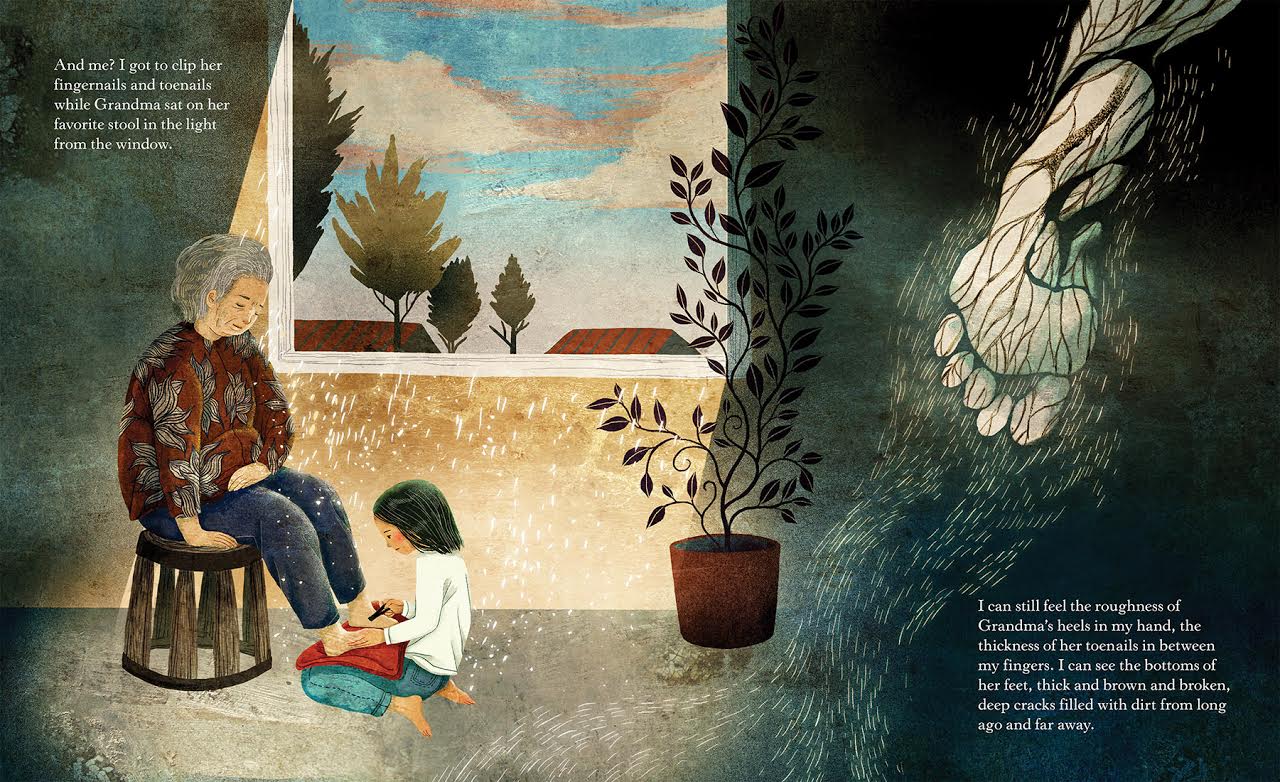
At my grandmother’s feet, cutting her toenails, I learned the stories of her past. They were the foundations of my history. I recognized that the stories we were living together would be the ones I would pass to the future. The Most Beautiful Thing was born from this understanding, this feeling like I was not alone because she had lived, that I would be fine in this life, because she’d journeyed far to get here and be with me.

BB: In the story it’s clear early on that each child that tends to their grandmother feels that it’s a special honor to aid her in some way. Was that something you experienced with your own grandmother growing up? And did your feelings about the task change as you grew older, as they do in the book?

KKY: My grandmother had many grandkids. For most of us, she was our only grandparent–grandparents were in short supply. Beyond that, we belonged to a culture and a people that held elders in high esteem. It was an honor to care for our grandmother, to be so close to history, to the spirit of survival and strength that she embodied. As I grew older, I grew more distracted in our moments together, more pulled toward the growing list of responsibilities that I was taking on as the numbers of siblings and my range of abilities grew. Her ability to tell stories, to remember the facts, slowed with her age. We were both changing so fast, so cognizant of the changes inside ourselves and the world outside that the bridge of our meeting, our being together, in body and spirit, grew thin with the passage of the years. Yes, what happens in the book by that window is so true to the life we shared.
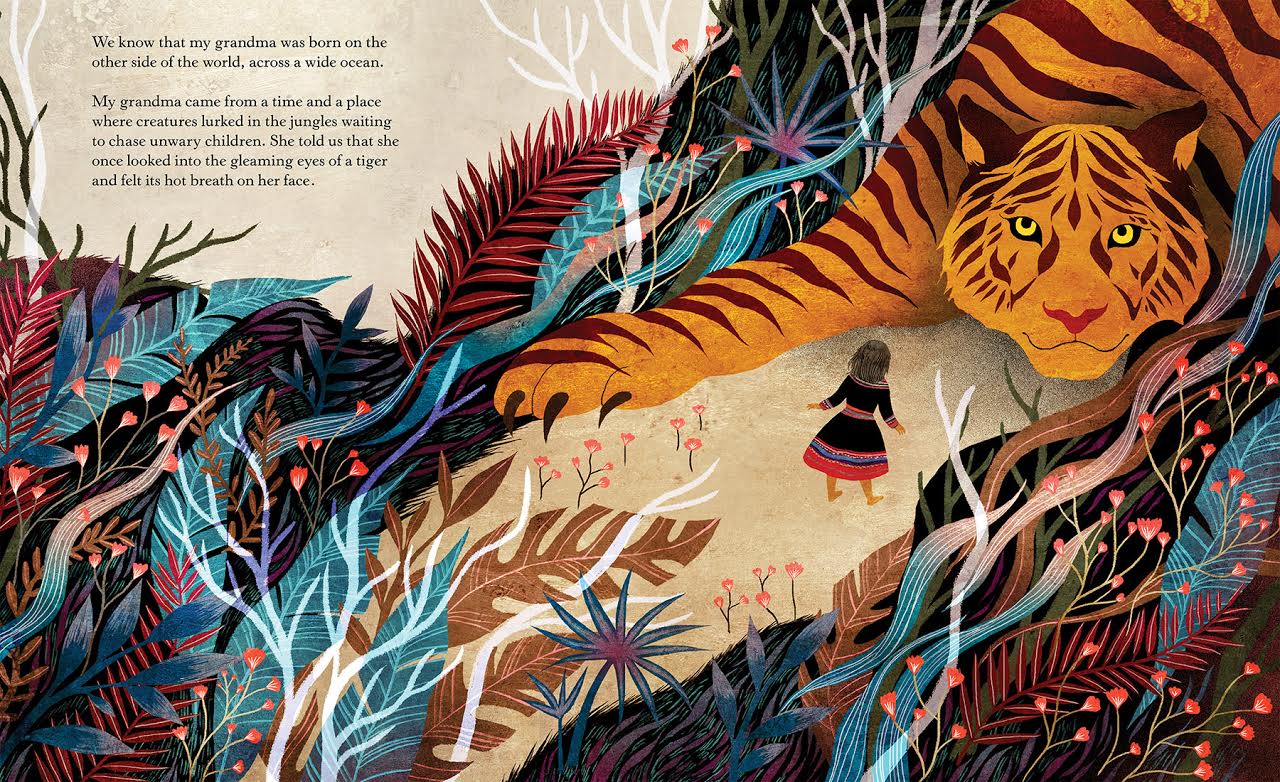
BB: There are so many palpable images and feelings in this story but the most powerful by far is the grandmother’s feet. Cracked and filled with dirt from decades before, she tells a story of walking barefoot as a child and running from a tiger as her bare feet broke open, “blood and dirt mixing into clay with each step.” How much of this story is original to you and how much do you recall from being a child?

KKY: My grandmother really did run away from a tiger in the jungles of Laos. Her torn earlobe was the only evidence I’ve ever needed as confirmation of the fact. She told many times of her bleeding feet on the flight toward safety. Grandma spoke only in Hmong. The writing of the story, in English, had to be my own…translated from memory.

BB: Few picture books for kids feel comfortable discussing the working class and everyday poverty. Yours handles the subject expertly. What is the benefit, to your mind, of including this aspect to the story?

KKY: I grew up poor. I know poverty well. My father used to be adamant that we were not poor children because our hearts were not poor places. There has been in my life many a moment when I’ve challenged his words out loud and to myself. Poverty is nothing new, but it remains underrepresented and oftentimes misrepresented in children’s picture books. It’s hard to do it well. By circumstance, I think I can do it well.

We talk often of the importance of representation in literature and other forms of art. YES, it is important for all of us to see ourselves represented. But beyond just that, diversity matters because it allows for certain knowledges and cultural norms to be centered–and for those who are not part of mainstream society to live openly and teach fearlessly from our truths. This is the beauty of having a writer like me enter into such a thing as the children’s picture book world.

The intersectional elements of my identity all come to play when I play on the page. Across genres and audiences, I was a first generation Hmong refugee woman and now I’m a new American Hmong mother. I was poor and now I’m less poor. I grew up the granddaughter of a great shaman and now most of the great shamans of my childhood are dead, but I still remain deeply entrenched in the cosmology of my people while living in a Judeo-Christian society. There are so many layers at play, named and unnamed, in the book.

The world is big and rich and beautiful. Every child should be able to experience that breadth and depth. Literature is my chosen field. I often remind my own children, “You have the most to learn from the perspectives that are hardest to find in the world.” I believe this completely.

BB: An author often cannot select their illustrator, and it can feel like the luck of the draw on how well they pair with your text. Khoa Le lives in Vietnam and appears to have created the most perfect art for each page. Was this how you envisioned the book?

KKY: Khoa Le brought to visual life the beauty, the lushness, the magic, the poetic metaphors and possibilities of the story with exquisite grace, color, and skill. I’m so moved by her illustrations. I am only sorry that she won’t have a chance to be recognized by awards such as the Caldecott. 

Early on, I decided that one definition of artistry is that it must be able to inspire another’s art. I can see that the book has really connected and spoken to Khoa and allowed her to do her magic on the page. 

Whatever I envisioned for this book pales in comparison to the vision that the book has become in the hands of Khoa Le. Holding this book feels very much to me like I’m holding a most precious, beautiful gift.

BB: And finally, what are you working on next?

KKY: Next year, 2021, I’ll have at least two more children’s books coming out. A picture book in the spring from the University of Minnesota Press called Yang Warriors and then in the fall, another book I’ve been working on with Carolrhoda Books called From the Tops of the Trees. Meanwhile, I’m writing a middle-grade work for Dutton and picture book with Kokila, and these are just some of the projects on my table at the moment. There will be many more things coming from me. 


Thank you, Kalia, for that wonderful interview.

And now, the moment you’ve all been waiting for . . . .
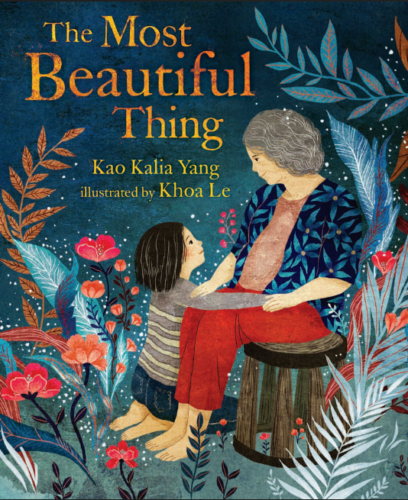
The Most Beautiful Thing will publish October 6, 2020. Many thanks to Carol Hinz for the reveal and to Kao Kalia Yang for the interview. Cover and interior design by Emily Harris.

Filed Under: Best Books, Best Books of 2020, Cover Reveal, Interviews Tagged With: author interviews, Calde-nots, cover reveal, Hmong, Kao Kalia Yang, Khoa Le, picture book author interviews

Cover Reveal: The Campaign by Leila Sales

February 17, 2020 by Betsy Bird

Happy, President’s Day! Seems to me today is a holiday filled with mixed emotions. And since this is an election year at that, I think the best possible plan of action is to swerve our attention away from national politics and towards (what else?) middle grade novels.

If the name “Leila Sales” rings any bells, it may be because this clever author started her career as an editor at Viking. In fact, she was one of my editors on my funny female middle grade anthology Funny Girl, even submitting a piece for the book. Now she’s coming out with a timely tale, and I’m the lucky son of a gun that gets to do the book jacket reveal. In a nutshell, here’s the plot:

A hilarious and timely political comedy—like Veep for tweens—about a twelve year old who runs her babysitter’s campaign for mayor

If you ask Maddie Polansky, the only good part of middle school is art class. It’s definitely not the other kids, who think she’s weird, or the teachers, who think she’s a troublemaker. And though she’s never paid much attention to politics, when she learns that the front-runner for city mayor plans to cut funding for the arts, she knows she has to do something to stop Lucinda Burghart, art-hating bad guy! She can’t run for mayor herself—she’s just a kid. But she can get her babysitter, Janet, to run against Lucinda. 

Soon, Maddie is thrust into the role of Janet’s campaign manager, leading not only to humor and hijinks but to an inspiring story about activism and what it takes to become an engaged citizen. As she leads the campaign from rallies to debates to Election Day, Maddie discovers that she has more of a community than she’d ever imagined—and that sometimes a “troublemaker” is exactly what this world needs.

The book will be out this coming August, just in time for Election Season.

And now, for one and all, the book jacket as illustrated by Kim Balacuit:

Thanks to Leila, Kim, and my agent Stephen Barbara for the cover reveal.

Filed Under: Cover Reveal

Fuse 8 n’ Kate: The Day the Babies Crawled Away With Special Guest Star Aaron Reynolds!!

February 17, 2020 by Betsy Bird

Generally speaking Kate and I prefer dead people. Dead authors. Dead illustrators. But boy howdy do we like it when we have them come on as guests, so put a hash mark in the “Live” column. Back on October 30, 2017 I made Kate read Creepy Carrots by Aaron Reynolds. With this episode, Aaron comes on the show, marking this as the first time a creator of a book we’ve covered has made a guest appearance. We asked him what book he’d like to do with us and he suggested this Peggy Rathmann classic. Best of all, Aaron brings up stuff that I myself had never noticed, like the fact that each animal the babies encounter travels with the babies, to a certain point. Makes me want to take a closer look at that ubiquitous butterfly as well. And as I say in the episode, a book that isn’t afraid to be a little weird is a book I can truly respect.

Kate would like me to state, for the record, that the Penguinologist was out of town, which is why the sound is a little funky. Also, because this book is done entirely in silhouettes, I discovered that my shots of the interior images have to deal with a glare problem from my overhead lights that I usually don’t have to think about. The black of the pages is just so shiny!

Listen to the whole show here on Soundcloud or download it through iTunes, Stitcher, Google Play, PlayerFM, or your preferred method of podcast selection.


Show Notes:

  • The cookies Kate made, just for Aaron. Carrot cookies with eyes and the occasional brows.
  • Here are Aaron’s three books out in 2020.

The Incredibly Dead Pets of Rex Dexter

Rescuing Mrs. Birdley

Fart Quest

[Cover Not Available]

  • And here is Aaron performing Ms. Spears at TLA. Best dang thing you’ll see all day. My life goal is to compete in this competition some time in the future. I already have my moves planned.
  • You can find Peggy Rathmann’s website here. Like I say, pretty bare bones. As far as I can tell it hasn’t been updated since 2004. Impressive, actually.
  • “What is in the water that everybody got pregnant at the same time?” Kate makes a fair point. Dunno, but it’s clearly set in San Francisco with that hill.
  • It’s so funny that Kate saw this as Gloria doing cat’s cradle. Since she didn’t know Office Buckle and Gloria (we haven’t done it yet) she didn’t know that that dog is actually signing an autograph.
  • I know the babies are in peril most of the time but this isn’t Agatha Christie’s And Then There Were None. Nor is it Ghastlycrumb Tinies.
  • “If you are referencing a baby with frog legs coming out of its mouth there is only one place to go with that.” So sayeth I to Kate.
  • “I now deem this Nightmare Baby. Because the eyes are glowing! What baby has glowing eyes?”
  • “Let us be clear. We are WELL into the evening now. Are you telling me they haven’t done anything in their diapers until now?”
  • This is such an interesting shot that I had to show it to you here. The action is going from the right page to the left, which I have heard is rare. Generally speaking publishers don’t want you to have the action go against the page turns rather than from left to right.
  • I say vampires. Kate says aliens. And Aaron says that they’re clearly doing Yoga.
  • Brave Potatoes by Toby Speed and Barry Root – The book of rhyme that Aaron highly recommends. Now, horribly, egregiously out-of-print.

Filed Under: Fuse 8 n' Kate Tagged With: Aaron Reynolds, Fuse 8 n' Kate, Peggy Rathmann, The Day the Babies Crawled Away

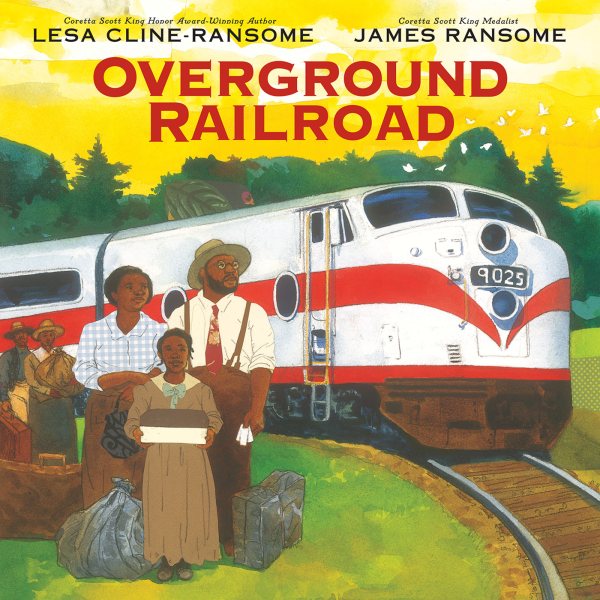
Review of the Day: Overground Railroad by Lesa Cline-Ransome and James Ransome

February 14, 2020 by Betsy Bird

Overground Railroad
By Lesa Cline-Ransome
Illustrated by James Ransome
Holiday House
$18.99
ISBN: 978-0-8234-3873-0
Ages 4-7
On shelves now

The standard joke amongst children’s librarians is that we learn most of our American history through children’s books. But of course the unspoken suggestion there is that this is history we never learned in school. Now I don’t care how amazing your education was in the 1980s. Pretty much I can guarantee that unless you were part of the slightest sliver of students, odds are back in the day you had never heard of the Overground Railroad or The Great Migration. Heck, I only got the most superfluous smattering of information about the Underground Railroad, and most of that was due to Virginia Hamilton’s The House of Dies Drear, but I digress. Now that I have children of my own to whom I can read books like Overground Railroad by Lesa Cline-Ransome and James Ransome, it is taking all my restraint not to punctuate every other page of this book with little asides like, “Do you kids know how lucky you are to even have books like this right now?” and “Are you fully appreciating how much better your sense of history is going to be than mine ever was?” I am good. I don’t do that. I don’t do it even though I am simultaneously seething with jealousy over all the opportunities for a fuller education they’re getting while, at the same time, feeling so pleased that books like this one are being published. No series of rote facts, Overground Railroad puts you in the shoes of the ordinary people that had to leave everything and everyone they knew in search of a better life. Historical events like The Great Migration are vague. This book hands young readers not just specifics. It hands them people they can get to know and care about.

It’s early in the morning when they leave. Ruth Ellen, Mama, and Daddy. “We left in secret before Daddy’s boss knew.” Just the three of them with just a couple of bags, leaving everyone and everything they’ve ever known. Joining throngs of other people on the trains, going North. On the train they get some seats for a journey that’s going to be long. In the South they have to sit up front. In the North they move to seats farther back in the train. All the while they eat the food packed for them, listen to Ruth Ellen read from her book Narrative of the Life of Frederick Douglass, and dream of the future. Dream until they arrive in New York City, “bright lights tall buildings shimmering against a sky bright as a hundred North Stars.”

Something happened to Lesa Cline-Ransome and James Ransome. These guys have been making children’s books for years and years and years. They’re not newbies by any stretch of the imagination. Twenty years ago they were doing a picture book biography of Satchel Paige and they haven’t stopped since. But at some point in the last three years their collective career just took off like a shot. For my part, I’d always liked their books but Before She Was Harriet was the game changer. With that book, Cline-Ransome tipped the whole notion of a biography on its head. She told Harriet Tubman’s story all right, but she told it backwards in the context of each job that hero had ever held. It was unique, interesting, riveting, and deserving of more awards than it received. Overground Railroad doesn’t muck with timelines the same way Harriet did, but there’s something mesmerizing in the way it uses each stop on the train line as a method of marking the journey. Even if a kid doesn’t know the difference between Rocky Mount and Washington D.C., they pick up on the pertinent details. It also allows for all kinds of different discussions With this book I was able to explain to my kids the difference between making black people sit at the back of a bus verses making them sit at the front of a train and why, in both cases, it was awful.

I took my time examining precisely how James Ransome put together this art, and the stylistic choices he made to support the narrative. According to the publication page this book consists of paper, graphite, paste pencils, and watercolors all working together. Of course, the very first thing about this book that you see, aside from its cover, are the front endpapers. Split into four quadrants, Ransome shows the different methods black people had to take to go North, including walking, the bus, the train, and by car. You might miss on an initial glance the fact that overshadowing all these scenes, laid over them, is a cotton plant. It sticks out, touching every possible aspect of these four pictures, giving the impression that what these people are escaping is how that cotton has wormed its way into every aspect of their lives. The cotton is rendered very simply. It is present, but it is easy to miss if you’re not looking for it. There’s even a cotton plant featured on the book’s dedication page before the story starts and a field of them in the foreground of the page featuring the Author’s Note and a train escaping out of sight. For the rest of the book, Ransome keeps his images realistic. I loved the peachy pink of the early morning skies and when the artist chose to make something a bold block of color, patterned fabrics, or fine details. There is also a shot of Ruth Ellen and her family walking through a dining car past white people that I can’t stop staring at. The white people are made of a different shade of paper, often crudely cut out. They almost all stare, and there is a side-eye Ruth Ellen’s mama gives them that makes it clear that she is perfectly aware of the situation and is monitoring it.

By complete coincidence this is not the only book out in 2020 with this title. Coming out at pretty much the exact same time is the adult work of history Overground Railroad: The Green Book and the Roots of Black Travel in America by Candacy Taylor. All of this dovetails with what I’m seeing my own kids learn in elementary school these days. The Great Migration has gone from footnote in a child’s history book (if you’re lucky) to its own expanded unit. And children’s literature has done what it could to provide additional books and resources on this topic. Overground Railroad pairs beautifully with Jacqueline Woodson’s, This Is the Rope or Eloise Greenfield’s, The Great Migration. One detail I would have loved Ms. Cline-Ransome to include, though, is dates. The Author’s Note at the end spells out clearly how the owners that operated tenant farms exploited the sharecropping system. What it does not say is when in history The Great Migration took place. If I’m a kid and I see this book then I could be forgiven for believing it takes place right after the Civil War, and we know this is not the case. It didn’t have to be an extensive timeline or anything, but just a quiet mention of dates could save a bit of confusion on the part of the child readers (and, let’s face it, plenty of adults as well). As it stands, the sole indication is a newspaper someone reads during the story that declares the date to be May 15, 1939.

You don’t have to look very far to find contemporary stories of people fleeing oppression, heading North to look for a better life. The dates have changed but the reasons remain the same. The creators of this book draw no direct line between migrant stories and Great Migration tales, but there is one little sentence at the end of the Author’s Note that gives the reader a chance to think. She writes, “Overground Railroad is inspired by just one of the many stories of people who were running from and running to at the same time…” We teach our children history so that they can understand current events better. So that they will develop a sense of empathy and compassion and understanding for the ones who came before. So many of these stories have been lost to us, so I find great comfort in the storytellers that imbue them with new life. If you don’t read Overground Railroad you’ll continue your merry way, not knowing what you’ve missed. But of course, if you’ve read this far into the review, you do know. Now you can’t claim ignorance. And, all things being equal, neither will any of the children that are fortunate enough to get a chance to read this book. Unavoidable, necessary history.

On shelves now.

Source: Final copy sent from publisher for review.

Filed Under: Best Books, Best Books of 2020, Reviews, Reviews 2020 Tagged With: 2020 reviews, Best Books of 2020, historical picture books, Holiday House, James Ransome, Lesa Cline-Ransome, picture books

Feminism and Representation in Fables: An Interview and Cover Reveal with Natalie Portman

February 12, 2020 by Betsy Bird

It’s just the darndest thing.

Say, do you happen to remember when I published a book with Jules Danielson and Peter Sieruta a couple years ago called Wild Things: Acts of Mischief in Children’s Literature? Do you recall that in that book we spent an entire chapter dedicated to celebrity picture books? I think our primary concern at the time was that publishers were spending inordinate amounts of money to promote books that were, to be frank, ill-planned, poorly written, and given about as much love and consideration as you’d expect from any book dashed off in 15 minutes or less. But since the release of Wild Things I’ve detected a shift, as it were. Celebrities are still writing picture books, but they seem to . . . how shall I put this . . . care? B.J. Novak, for example, knocked it out of the house with The Book With No Pictures. Lupita Nyong’o’s book, meanwhile, recently won a Coretta Scott King Award for the art of Sulwe.

Which brings us to Natalie Portman.

I need to set the scene for this. Imagine you are me. You’re sitting at the Reader’s Advisory Desk on a typical Friday (after all, it’s healthy for a Collection Development Manager to do a little desk work from time to time). You receive an email. It asks you if you’d like to interview Natalie Portman. She has a children’s book coming out and it sounds … really quite interesting. Consider too that Ms. Portman, aside from being an Oscar Award winning actress, has a degree in psychology from Harvard University and, according to the email, is interested in doing a deep dive into issues of representation and feminism in fables and fairytales in this, the 21st century.

Well, I’m not made of stone after all.

Welcome, everyone, Ms. Natalie Portman to the blog.


Betsy Bird: Just to get it out in the open from the start, you are an enormously famous actress and you are writing a book for children. Now normally when that sort of thing happens the usual thing that occurs is that you would come up with either a silly story (ala Jimmy Fallon or Nathan Lane) or one that has some kind of tie-in to your already existing brand (Nick Cannon, Jerry Seinfeld, etc.). But there’s a new trend that I find very heartening these days, and it’s books by women addressing issues in a unique way. Your Chelsea Clinton or Lupita Nyong’o books, for example. And yours has a very interesting origin story. As I understand it, when you had your daughter after your son, you noticed a distinct difference between the books you’d been given with your first child versus your second. Can you talk a bit about what you noticed?

Natalie Portman: Yes, exactly.  My desire to write a book sprang out of discontent with the books I was reading to my daughter.  I realized how many of the classics I had been reading to my kids had male protagonists, even in animal stories– where there were rarely more than one female character, if even that.  I received a lot of feminist baby books when my daughter was born– but that didn’t feel right either. She’s too young to actually be introduced the challenges women have faced and overcome, and also, it felt strange doing that for her and not my son.  I wanted to read just a good, classic story, but one that accurately reflected the world. 

BB: I’m a parent myself and I’ve a fair number of fellow parents in my circle that tell me how they change the pronouns in the books that they read their kids when they find them a bit testosterone-laden. One parent I know actually managed to tell the entire story of The Hobbit with Bilbo Baggins as this kickass female hobbit. We do it all the time. This is, as I understand it, something you thought to do yourself, but can you talk a little bit about why you thought it was necessary?

Natalie Portman: I also change the pronouns in existing books, but I thought– why do we have to do that? Also, in picture books, the corresponding pictures often betray the changed pronouns.  I thought it would be great to just create a beautiful book where these aspects exist. Also, when kids can read for themselves, the pronouns are no longer in our control.

BB: There’s a lot of talk in the library and publishing community about what “boys” will and will not read. In some places it’s considered acceptable to say that girls will read stories about boys and girls, but boys will only read stories about boys. You have a son. What, to your mind, is the best method for combating that particular type of thinking?

Natalie Portman: I think there is some truth to that claim, and also a great deal of ability to overcome that challenge.  I’ve seen that with great stories, both of my children will get out of their “gendered” reading. My son is happy to read about Ramona, and my daughter loves Cars and Trucks and Things That Go (which actually, is one of the few books that has wonderful gender representation throughout but is typically characterized as a boy book because it’s about cars).  But often, the princesses and unicorns win over my girl, and the dogmen and big nates win over my boy. A large part of my desire to write this, was to write for both of them– that they should both be able to enjoy these books and laugh at them and learn from them in the same way.  That we can draw upon these classic fables– which have survived so long for a reason– they are wonderful stories with great morals– but that they can both find themselves in the book, while also being challenged to consider what life is like from someone else’s eyes.

I do think that part of this problem persists into adulthood, when women are expected to, and have honed the skill of reading men’s minds and anticipating their needs, desires and feelings.  Whereas men have not had the same practice of imagining the female mind– largely because it has been conspicuously absent from the center of books, movies, tv– the art practices that allow audiences to practice: “I wonder what that person is feeling right now?” and going on the emotional journey with them for the duration of the piece.  

And of course, there is currently barely any representation of non-binary and trans people in most art forms. These individuals who have so expanded our understanding of gender as a spectrum rather than a binary description, and deserve more opportunities for recognition.

BB: Two of your stories in your collection (The Tortoise and the Hare and Country Mouse and the City Mouse) are Aesop Fables. The third story (The Three Little Pigs) is a fairytale. I’d be interested in hearing why you gravitated towards fables and fairytales, but particularly the fables. 

Natalie Portman: I wanted to use stories with animals, because another aspect of the empathy I’m interested in encouraging in my kids is empathy for animals.  I believe a large part of my lifelong animal activism came from growing up with cartoons and books in which animals had feelings, thoughts and felt pain and joy.  I never questioned whether animals felt things. I could imagine them talking to one another and having personalities. Also, it seems indisputable that in the animal kingdom there is representation of all genders– you can go back to Noah’s Ark– so it immediately strikes people as strange if all the fish in the ocean are male, or that wolves are always male, etc.  Also, children who look different to one another all have the same access to relating to these characters. Because when we’re talking about representation, we’re also talking about the vast other categories we are assigned to. If it’s a human character, one child might be able to identify more strongly than another because of the way they look. If the character is an animal, all kids might equally access the feeling that they are like the character.

BB: Okay. Final, very difficult question: What are you reading to your kids these days?

Natalie Portman: My son is a fantastic reader and reads on his own.  He’s recently become obsessed with the I Survived series, which is a bit dark for my taste, but he’s into it.  He also loves Big Nate series and Dog Man. Those books seem to skew more towards boys. But I love that he’s reading so much, so I don’t intervene, though I do critique the books to him. 

My daughter loves all things Mo Willems– we do a lot of Piggie and Gerald and the Knuffle Bunny series.  She loves Richard Scarry, especially Cars and Trucks and Things that Go. And she also loves the Rosie Revere/ Sofia Valdez/ Ada Twist/ Iggy Peck world.   Also Curious George, Eloise, and she has the Sendak Nutshell Library memorized! And Dragons Love Tacos, of course.

BB: Of course. Thanks so much, Natalie. This was cool.


And now, for those of who are curious, I present to you the cover of Ms. Portman’s book with art by illustrator Janna Mattia:

Title: Natalie Portman’s Fables
Author: Natalie Portman
Illustrator: Janna Mattia
Publisher: Feiwel and Friends
On-Sale Date: 10/20/20
Age Range: 4 to 6
Website: http://natalieportmansfables.com

Filed Under: Interviews Tagged With: author interviews, celebrity picture books, interviews, Natalie Portman

Sydney Taylor Blog Tour: Talking With Andrew Maraniss About Games of Deception

February 12, 2020 by Betsy Bird

If you tuned in to the ALA Youth Media Awards this year you probably noticed that there were a LOT of different prizes on display. New ones, old ones, famous ones, and obscure. One, the Sydney Taylor Book Award, dates back to 1968 and is given out each year “to outstanding books for children and teens that authentically portray the Jewish experience.” Yet unlike the award awards out there, the Sydney Taylor committee created a new feature of this award, one that they use to alert the world to the winners. Each year, the winners of the Sydney Taylor are “sent”, as it were, on blog tours. Each book is paired with a different site, and it’s quite the showing. You can see the full schedule here at any time.

Today, I am pleased beyond measure to be speaking with Andrew Maraniss, winner of the Sydney Taylor Honor for Middle Grade, for his book Games of Deception: The True Story of the First US Olympic Basketball Team at the 1936 Olympics in Hitler’s Germany. Kirkus called it, “An insightful, gripping account of basketball and bias.” Fellow author Susan Campbell Bartoletti said it was, “a fascinating, fast-paced, well-reasoned, and well-written account of the hidden-in-plain-sight horrors and atrocities that underpinned sports, politics, and propaganda in the United States and Germany.” And Steve Sheinkin, our newly minted Edwards Award winner, said, “Maraniss does a great job of blending basketball action with the horror of Hitler’s Berlin to bring this fascinating, frightening, you-can’t-make-this-stuff-up moment in history to life.”

Andrew, welcome to the blog!


Betsy Bird: Hi, Andrew. Thanks so much for speaking with me today. My first question for you, I guess, is a pretty basic one. First off, how many people know that the debut of basketball happened in Nazi Germany’s 1936 Berlin Olympics? Not many, I’d wager. So what drew you to this particular story and project?

Andrew Maraniss: In my experience researching this book and speaking about it at schools, libraries and bookstores, it doesn’t seem that many people are aware that basketball’s Olympic debut took place in Nazi Germany in 1936.

I didn’t know it myself until I visited the University of Kansas a few years ago to speak about my previous book, STRONG INSIDE. While I was in Lawrence, I took a tour of Allen Fieldhouse, home of the Kansas Jayhawks. They have James Naismith’s original rules of basketball there, along with a photo of Naismith standing with some Japanese basketball players from the 1930s. The person showing me around asked if I knew that Naismith, the inventor of basketball, was able to see his sport make its Olympic debut. I had no idea. When I asked which Olympics that was, and he responded that it was the ’36 Games in Berlin, I knew I had the subject for my next book. I saw it as an opportunity to tell a fairly unknown story about the origins of such an extremely popular sport within the context of an important moment in history. My goal with my books is to write sports-related narrative non-fiction with a social message, and this topic certainly fit the bill.

BB: And how did you go about deciding what to include and what to cut out? Your book covers this story to the war’s end, but there must have been pages and pages of information you left on the cutting room floor. Was there anything you were particularly sad to cut out?

AM: As your question implies, research is an essential part of writing narrative non-fiction. With my first book, STRONG INSIDE, I spent four years doing research and interviews before I wrote a single word. With GAMES OF DECEPTION, I had a much shorter window, just a year, to research and write the book. I visited numerous archives all over the U.S. and Canada and interviewed descendants of the 1936 Olympic basketball team. With every book, I do end up with a lot more material than I’m able to use. That’s what makes organizing my notes so important — and creating a good outline. I’m happy to say that my editors at Philomel are wonderful, and I didn’t have to make any painful cuts to the book. Yes, the book does briefly deal with the aftermath of World War II, but the story is more tightly focused on the years before the war, which I think is a less examined but equally important period for young people to learn about. As I write in the book, the road to the Holocaust was paved with bullying, lies, propaganda and a cynically calculated encouragement of intolerance.

BB: Your book was published in 2019. In 2020 we’re seeing another YA book that looks at the history of basketball in Gene Luen Yang’s DRAGON HOOPS. The books cover some slightly similar ground in terms of the history of basketball, but for the most part they have very different focuses. Traditionally, I’ve always thought baseball was the best sport to read about. Basketball may yet change my mind. What is it about the sport that you find lends itself to a written narrative?

AM: There’s an old saying that the smaller the ball, the better the sports book, referring to the fact that many people consider books about golf and baseball to be better than books about football and basketball. I disagree, because I think the sport itself is irrelevant. It’s the human-interest stories and the window to social issues that matter most, regardless of which sport takes you there. But on the other hand, there is something unique about basketball. From the very beginning, when a Canadian immigrant invented the sport in America at an international training school with students from all over the world, basketball has been a global game. It’s considered both a city game, with kids playing on a New York playground blacktop, and a country game, with hoops nailed to the sides of barns in Kentucky and Indiana. In the U.S., it has been a popular sport with immigrants, women and African-Americans, lending an inescapable political backdrop. The games themselves are fast-paced, acrobatic and dramatic. I love baseball, it’s probably my favorite sport, but there is a tendency for it to be over-romanticized in some literature. I don’t think that has happened so much with basketball.  

BB: One aspect to the story that I find particularly interesting is how Hitler chose to portray Berlin as this kind of idyllic city while the Olympics were going on. Since that wouldn’t be last time that ever happened, what did he do in particular?

AM: Germany had been awarded the Olympics in 1932, before Hitler took control of the country. Initially he was opposed to the idea of the Games taking place in Nazi Germany, but he was quickly convinced that hosting the Olympics would be an invaluable propaganda opportunity – both to fool the world into believing everything was just fine in Nazi Germany, but also to show his own people that his regime had the support of the world. For the period of the Olympics, all public signs of antisemitism were removed, jazz returned to Berlin night clubs, streets were cleaned, and empty storefronts were filled with temporary tenants. At the Olympic Village, helpful staff members at the information desk were actually Nazi spies intercepting the athletes’ mail. It was all a façade, a type of movie set meant to distract from the terrible things already happening behind the scenes. Most international visitors fell for it – they came away with positive memories of their time in Berlin and the hospitality they received. A few of the American athletes were taken aback by the militarism they encountered, but even the one Jewish member of the American basketball team recalled the ’36 Olympics as the highlight of his life, until his dying day decades later.

BB: Well, that’s not chilling at all. Brr. Just one final question for you: What are you working on next?

AM: I’m writing a Young Adult biography of Glenn Burke, the first openly gay Major League baseball player. SINGLED OUT will come out in Spring 2021. I’m really excited about this book and the chance to tell another relatively unknown story at the intersection of sports, history and social justice.  


I’d like to thank Andrew, the Association of Jewish Libraries, and the Sydney Taylor Book Award committee for conjuring up and organizing this brilliant blog tour in the first place. Again, if you’d like to see the full blog tour schedule yourself, simply visit https://jewishlibraries.org/blog/id/436.

Filed Under: Interviews Tagged With: Andrew Maraniss, author interviews, blog tour, interviews, Sydney Taylor Book Award

  • « Go to Previous Page
  • Page 1
  • Interim pages omitted …
  • Page 270
  • Page 271
  • Page 272
  • Page 273
  • Page 274
  • Interim pages omitted …
  • Page 1050
  • Go to Next Page »

Primary Sidebar