• Skip to primary navigation
  • Skip to main content
  • Skip to primary sidebar
  • About/Contact
  • Fusenews
  • Reviews
  • Librarian Previews
  • Best Books
    • Top 100
    • Best Books of 2022
    • Best Books of 2021
    • Best Books of 2020
    • Best Books of 2019
    • Best Books of 2018
    • Best Books of 2017
    • Best Books of 2016
    • Best Books of 2015
    • Best Books of 2014
    • Best Books of 2013
  • Fuse 8 n’ Kate
  • Videos
  • Press Release Fun

Unexpected Jolts of Children’s Literature

Unexpected Jolts of Children’s Literature

November 1, 2022 by Betsy Bird

It’s been a minute or two since I contributed something to this series! As you know, the world of children’s literature and the world of literature for adults is mighty different. Yet on occasion you might witness a bit of crossover. When adult books reference books for kids, it tends to say a lot about how the wider world views the written word for younger humans.

Today, let’s look at some recent and upcoming publications. Each one has something to say about kidlit (so to speak). Each and every last one has a point of view. But which are the good ones? We shall see . . .

Drawing for Illustration by Martin Salisbury
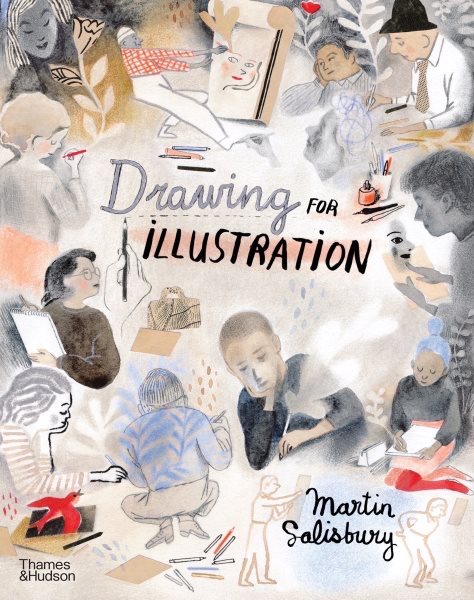
I live in a rather small house. It manages to pack three bedrooms in here, but for the most part there’s just not a huge amount of space. That’s fine. There are only four people and two cats and we make do. But the one thing that bugs me is the fact that there really isn’t enough space for bookshelves. As such, we’ve had to improvise. And one of those improvisations involves putting a floor to ceiling bookcase in the downstairs bathroom. That’s where I put all my professional materials including Martin Salisbury’s various editions of Children’s Picturebooks (2012 and 2020 respectively). I’m a fan. That book saved my skin (alongside Junko Yokota) years ago when, in a moment of hubris, I agreed to write a chapter on “picturebooks” (no space) for a Rutgers title. Now Salisbury has a new book out and I couldn’t be more excited. It just came out with Thames and Hudson and here’s their description:

“This beautiful, in-depth reference book by illustration professor Martin Salisbury explores drawing for illustration. Salisbury places a special emphasis on drawing, treating it as a fundamental skill that every illustrator should engage with. Assisting students through exercises and case studies, this guide explores the often-unseen world of draftsmanship that underpins finished illustration work.From book illustration to graphic novels and caricatures to commercial design, this attractive volume draws on sketchbooks, projects, and historical examples to show how they started as drawings from observation and drawings from imagination.Salisbury starts out by explaining the fundamentals of this exciting discipline before outlining the basic principles of line, tone, composition, and color through inspired examples. Different approaches to drawing, including anecdotal, sequential, and reportage, are examined to help students acquire their own personal visual language. Interviews with illustrators also provide valuable insights into the creative process, as they discuss the challenges, rewards, and what drawing personally means for them.”

Harry Potter and the Other: Race, Justice, and Difference in the Wizarding World by Sarah Park Dahlen and Ebony Elizabeth Thomas
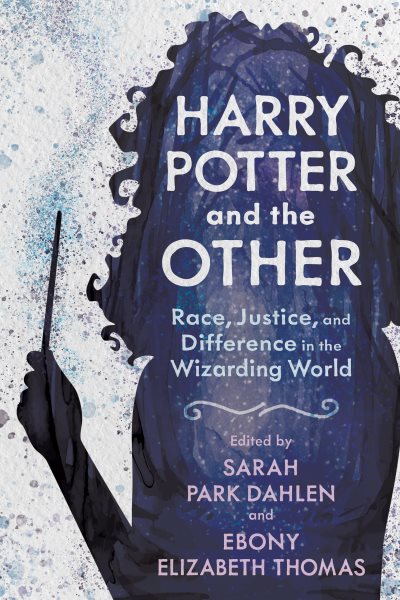
Published by the University Press of Mississippi, I was a bit dismayed to find how difficult it is to find reviews of this title out there. Fortunately the publisher provides a great deal of information on their landing page. I was a fan of Ebony Elizabeth’s The Dark Fantastic: Race and Imagination from Harry Potter to The Hunger Games and this looks to be much in the same vein. Contributors include Christina M. Chica, Kathryn Coto, Sarah Park Dahlen, Preethi Gorecki, Tolonda Henderson, Marcia Hernandez, Jackie C. Horne, Susan E. Howard, Peter C. Kunze, Florence Maätita, Sridevi Rao, Kallie Schell, Jennifer Patrice Sims, Paul Spickard, Lily Anne Welty Tamai, Ebony Elizabeth Thomas, Jasmine Wade, Karin E. Westman, and Charles D. Wilson. Here’s how the publisher describes it:

Race matters in the fictional Wizarding World of the Harry Potter series as much as it does in the real world. As J. K. Rowling continues to reveal details about the world she created, a growing number of fans, scholars, readers, and publics are conflicted and concerned about how the original Wizarding World—quintessentially white and British—depicts diverse and multicultural identities, social subjectivities, and communities. Harry Potter and the Other: Race, Justice, and Difference in the Wizarding World is a timely anthology that examines, interrogates, and critiques representations of race and difference across various Harry Potter media, including books, films, and official websites, as well as online forums and the classroom.

As the contributors to this volume demonstrate, a deeper reading of the series reveals multiple ruptures in popular understandings of the liberatory potential of the Potter series. Young people who are progressive, liberal, and empowered to question authority may have believed they were reading something radical as children and young teens, but increasingly they have raised alarms about the series’ depiction of peoples of color, cultural appropriation in worldbuilding, and the author’s antitrans statements in the media. Included essays examine the failed wizarding justice system, the counterproductive portrayal of Nagini as an Asian woman, the liberation of Dobby the elf, and more, adding meaningful contributions to existing scholarship on the Harry Potter series. As we approach the twenty-fifth anniversary of the publication of Harry Potter and the Philosopher’s Stone, Harry Potter and the Other provides a smorgasbord of insights into the way that race and difference have shaped this story, its world, its author, and the generations who have come of age during the era of the Wizarding World.

Twas the Night: The Art and History of the Classic Christmas Poem by Pamela McColl
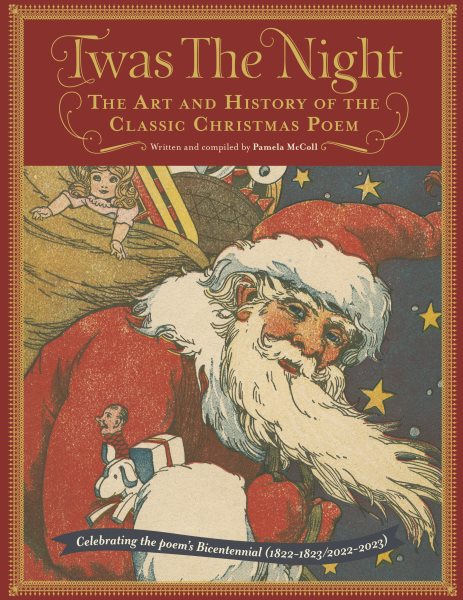
This year will see the republication of the Matt Tavares version of Twas the Night Before Christmas or Account of a Visit from St. Nicholas by Clement C. Moore.  One of the things I like about that reprint is that Tavares spends a great deal of time delving in an Illustrator’s Note on the origins of this strange little poem. Of course, to get a fuller feel for it, I highly recommend that you listen to the podcast Stuff You Missed in History Class and their Christmas Triple-Feature (seen here):

But the story behind the poem has so many features that I wasn’t at all surprised to learn that the publisher Grafton & Scratch had a book on the subject coming out. Indeed Kirkus was quite fond of the book, calling it, “A delightful and informative exploration of ‘A Visit From St. Nicholas’ for the holiday season.” Here is how the publisher describes it:

“Twas The Night – The Art and History of the Classic Christmas Poem is the first cultural history to be published of the highly-celebrated poem A Visit from St. Nicholas, also known as Twas The Night Before Christmas.

The artwork and literary references presented in this publication were selected to demonstrate the way in which “The Poet of Christmas Eve” drew upon two centuries of winter cultural traditions and customs, as well as elements from the spiritual and secular sectors, in the creation of the work. Dozens of vintage illustrations were carefully chosen for this publication from the thousands of editions published over years, along with examples of works by both commercial illustrators and fine artist who were drawn to the poem’s enchanting imagery.

Over two hundred images are presented in the book including artwork by Jessie Willcox Smith, N.C. Wyeth, Norman Rockwell, Andy Warhol, N.C. Wyeth, F.O.C. Darley, and the incomparable Thomas Nast. In 2022 and 2023 the poem marks two bi-centennial milestones; first read aloud by Clement Clarke Moore of New York on Christmas Eve 1822, with its print debut appearing in the Troy Sentinel newspapers of Troy, New York for December 23, 1823.

The poem has been referred to as: “ a little masterpiece of juvenile fiction” “one of the best poems for children ever written,” “the most-published, most-read, most-memorized, and most-collected book in all of Christmas literature.” This book is a celebration of the poem’s brilliance and its phenomenon and enduring popularity.”

Shy: The Alarmingly Outspoken Memoirs of Mary Rodgers by Mary Rodgers and Jesse Green

In the midst of all her accomplishments one might be forgiven for forgetting that Mary Rodgers was the lady behind (amongst other things) Freaky Friday. Her memoir, newly released, has proven to be shockingly popular in my own library (probably thanks in large part to NPR). Here’s the official description:

“What am I, bologna?” Mary Rodgers (1931–2014) often said. She was referring to being stuck in the middle of a talent sandwich: the daughter of one composer and the mother of another. And not just any composers. Her father was Richard Rodgers, perhaps the greatest American melodist; her son, Adam Guettel, a worthy successor. What that leaves out is Mary herself, also a composer, whose musical Once Upon a Mattress remains one of the rare revivable Broadway hits written by a woman.

Shy is the story of how it all happened: how Mary grew from an angry child, constrained by privilege and a parent’s overwhelming gift, to become not just a theater figure in her own right but also a renowned author of books for young readers (including the classic Freaky Friday) and, in a final grand turn, a doyenne of philanthropy and the chairman of the Juilliard School.

But in telling these stories—with copious annotations, contradictions, and interruptions from Jesse Green, the chief theater critic of The New York Times—Shy also tells another, about a woman liberating herself from disapproving parents and pervasive sexism to find art and romance on her own terms. Whether writing for Judy Holliday or Rin Tin Tin, dating Hal Prince or falling for Stephen Sondheim over a game of chess at thirteen, Rodgers grabbed every chance possible—and then some.

Both an eyewitness report from the golden age of American musical theater and a tale of a woman striving for a meaningful life, Shy is, above all, a chance to sit at the feet of the kind of woman they don’t make anymore—and never did. They make themselves.

Purple Crayons: The Art of Drawing a Life by Ross Ellenhorn

A self-help book based on, you guessed it, Crockett Johnson’s Harold and the Purple Crayon. Now here’s the kicker: According to Library Journal, it’s pretty good. They did give it a star, after all. Or, as they put it, “Sociologist and psychotherapist Ellenhorn (How We Change) gently and tenderly challenges readers to view creative tendencies as art in order to feel alive inside, ultimately coming home to one’s own self.” Put it like that and I suppose this book was only a matter of time. Here’s the description from the publisher, Harperwave:

In 1955, Crockett Johnson introduced one of the world’s most beloved and enduring young adventurers, Harold and his purple crayon. Today, we need Harold and his penchant for creative solutions more than ever. In Purple Crayons, Ross Ellenhorn looks to Johnson’s classic for insights and answers that can help us understand our current condition and point the way towards solutions for healing. Purple Crayons tells a story about America then and now, about living one’s life as art; about the powers that block us from doing so, about the pull and perils of conformity; about serious play and too much seriousness, about what it means to feel alive inside and what deadens our existence. It’s also about 1955 in America, all that lay before and—presciently—all that lay ahead, as each of us struggles to draw meaningful and resilient existences on the blank pages—the future yet unlived—of our lives.

This delightful, provocative adventure is a gift of kindness and love that encourages us and gives us hope. As he traces Harold’s journey, Ellenhorn offers insights into our “sacred originality”—the idea that each of our unique inner lives are worth nurturing and protecting, and the perseverance, courage, connection, and community necessary to sustain them. Engaging, thoughtful, wise—and illustrated throughout with drawings from the original Harold—Purple Crayons transcends the current divides separating us, reminding us that our fulfillment rests on tapping into what is original about ourselves, finding ways to express our originality, and understanding that doing so is rooted in who we are as Americans.

Life in Every Breath: Ester Blenda; Reporter, Adventurer, Pioneer by Fatima Bremmer, translated by Gloria Nneoma Onwuneme

This one’s a bit sneakier than some of the others you’ll find on today’s list. After all, the subtitle says it all. Ester Blenda, born in Stockholm in 1891, was a lot of things. None of them was children’s author or illustrator. Instead (as the publisher puts it), “Under an assumed identity, she toiled as a Swedish milkmaid on a farm, lived for six months with the Indigenous Scandinavian Sami people, and journeyed to America alongside poor emigrants aspiring to a better life. She saved villages from starvation during the Finnish Civil War and joined an expedition to study volcanoes in Siberia.”

Whence the connection? I received this note from its PR person:

“It seems that every day we are rediscovering a woman of history who had pioneered in her field and then become forgotten to time or overshadowed by the men who worked alongside her. Such is the case for one of the first undercover and investigative journalists in Sweden, Ester Blenda Nordström: up until recently, she was overlooked in the history books, but her legacy lived on in the most unlikely of places, hiding in plain sight: she was the inspiration for Astrid Lindgren’s beloved children’s character, Pippi Longstocking.” 

And to conclude, a quickie round-up of all the books that are odes to singular artists:

Jean Jullien by Jean Jullien

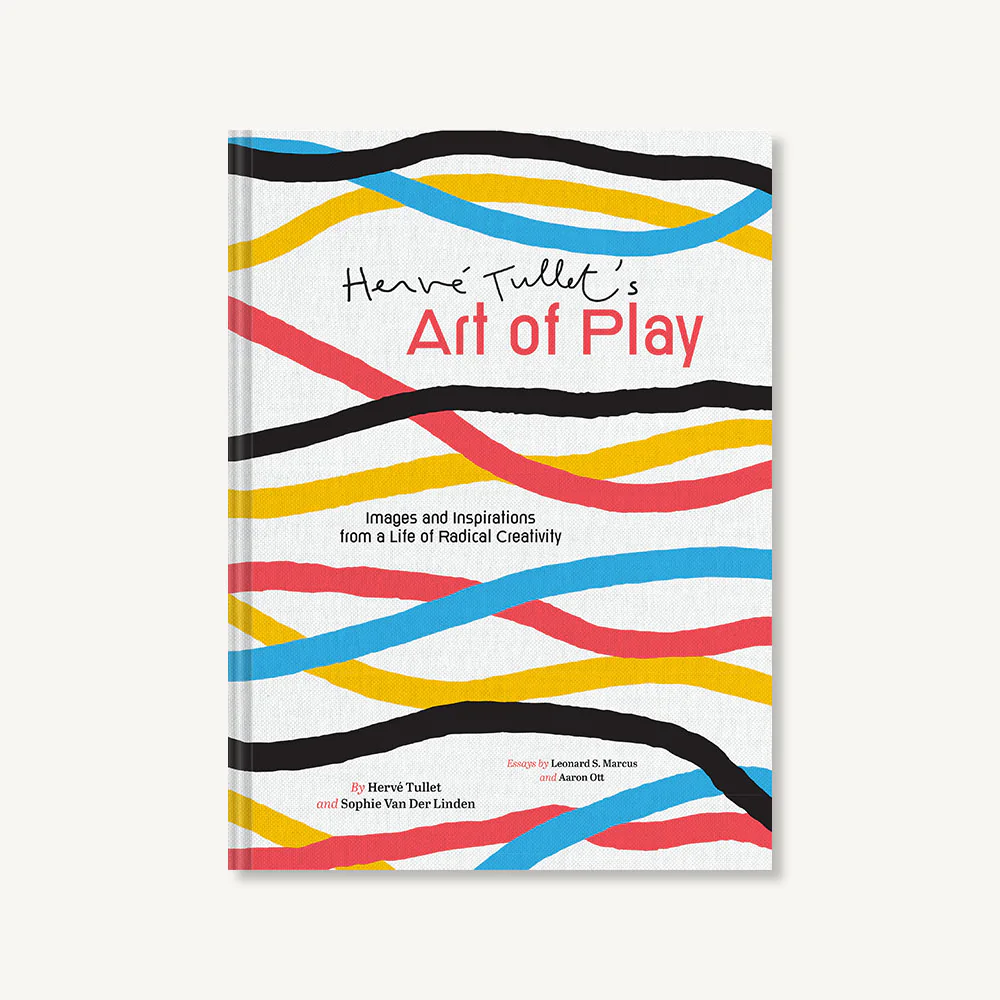
Herve Tullet’s Art of Play: Images and Inspirations from a Life of Radical Creativity
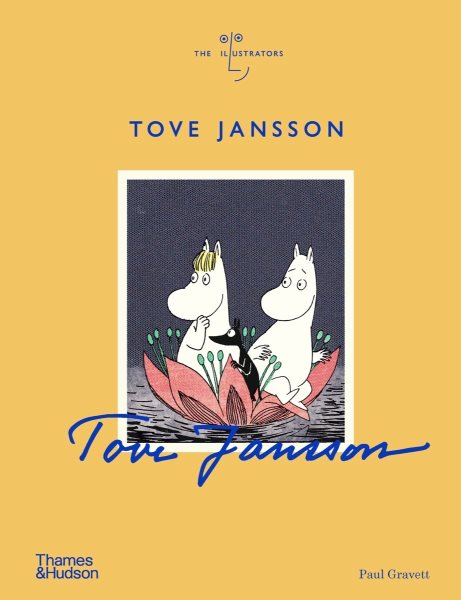
Tove Jansson by Paul Gravett
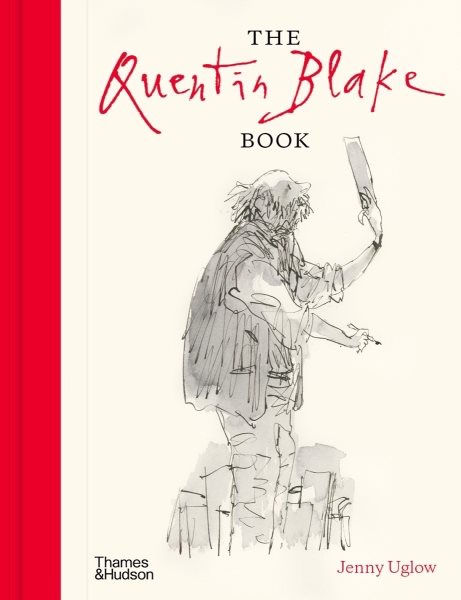
The Quentin Blake Book by Jenny Uglow
Filed Under: Unexpected Jolts of Children's Literature Tagged With: Crockett Johnson, Ebony Elizabeth Thomas, Harold and the Purple Crayon, Harry Potter, Herve Tullet, Jean Jullien, Martin Salisbury, Mary Rodgers, Pippi Longstocking, Quentin Blake, Sarah Park Dahlen, Tove Jansson, Unexpected Jolts

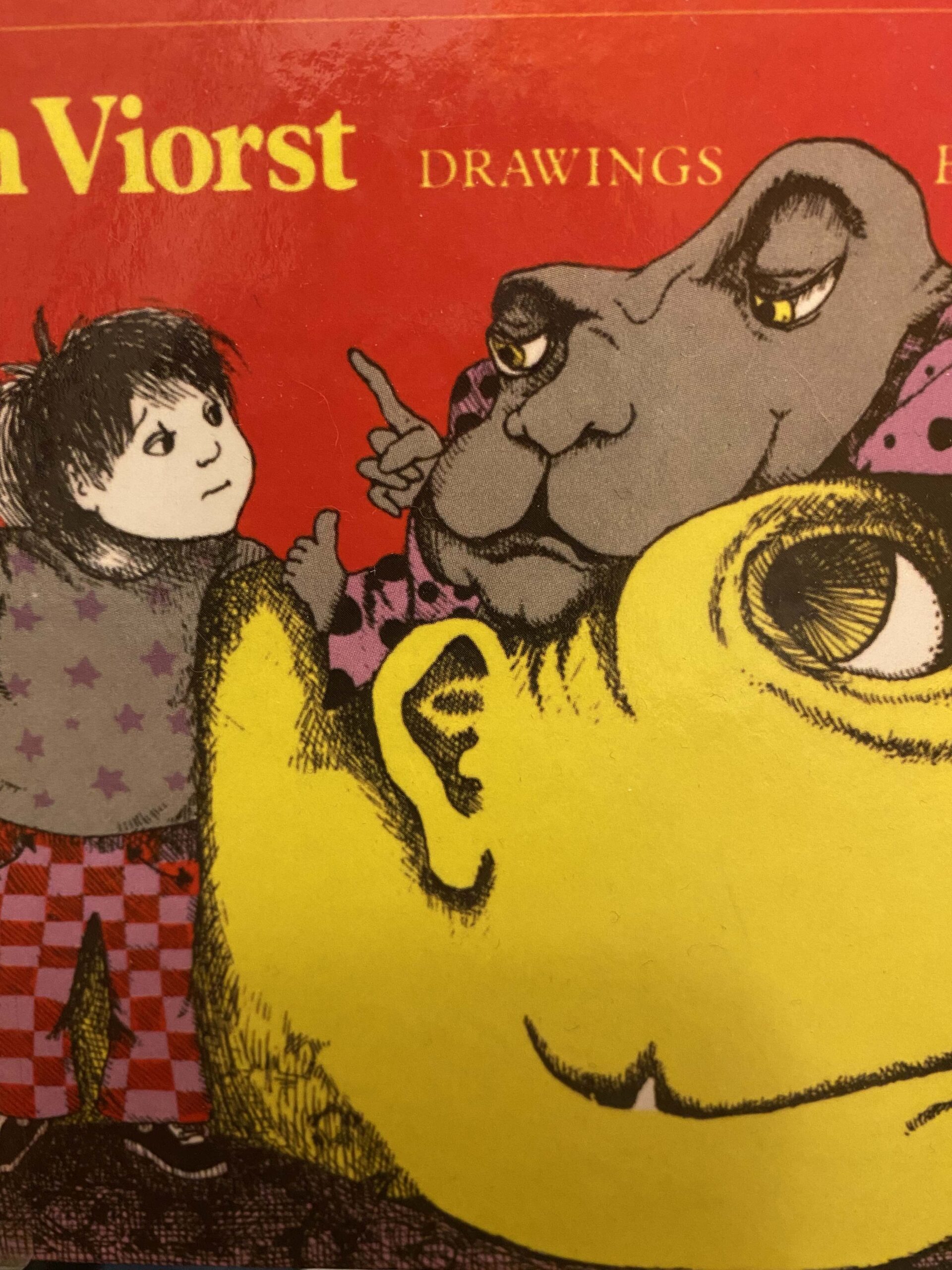
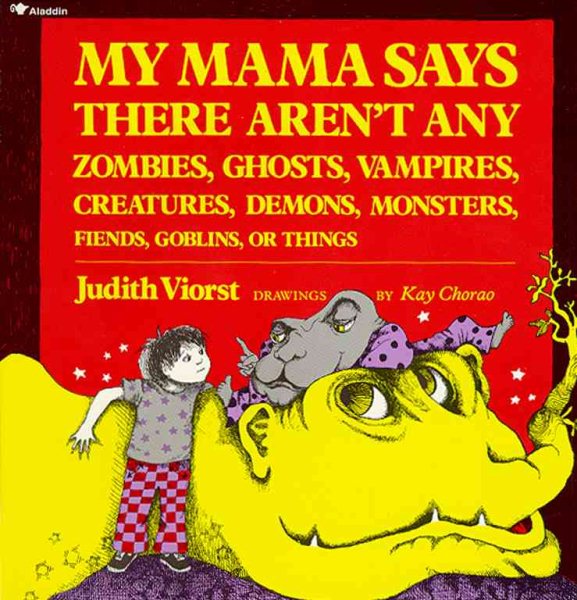
Review of the Day: May Mama Says There Aren’t Any Zombies, Ghost, Vampires, Creatures, Demons, Monsters, Fiends, Goblins, or Things by Judith Viorst, ill. Kay Chorao

October 31, 2022 by Betsy Bird

Happy Halloween!

It’s the last day of October and that means a final spooky scary picture book is up for discussion. Hat tip to Stephanie Lucianovic for suggesting today’s title. Kate and I learn that apparently Judith Viorst is a big time fan of extra long titles (something that was hinted at when she created Alexander and the Terrible, Horrible, No Good, Very Bad Day). In today’s book we see some seriously fashion forward footwear and hats, the true horror of cream cheese sandwiches, and why this book should actually be called MY MOM IS GASLIGHTING ME.

Listen to the whole show here on Soundcloud or download it through iTunes, Stitcher, Spotify, Google Play, PlayerFM, or your preferred method of podcast selection.


While this book purports to show how freaked out the kid is by these monsters, he just looks fairly bemused on the cover.

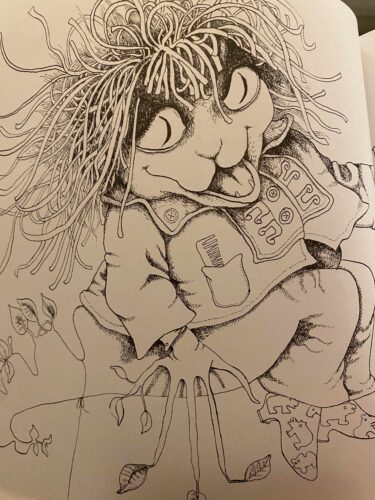
Very Struwwelpeter fingernails and hair going on in this first monster, but it’s the Sgt. Pepper’s Lonely Hearts Club Band outfit that’s particularly fascinating. And the comb in the pocket? *chef’s kiss*

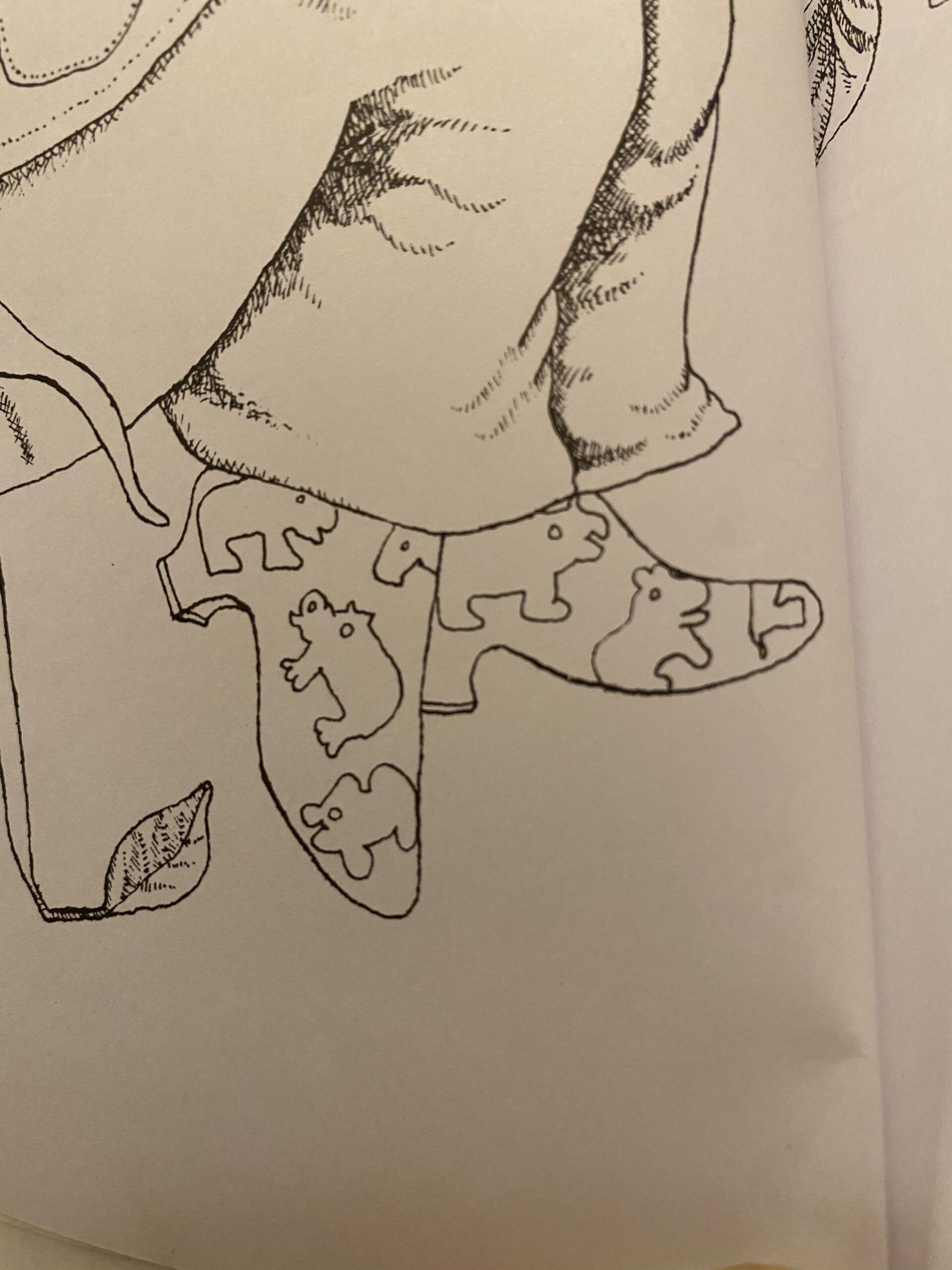
By the way, you may have noticed that monster #1 is sporting some truly magnificent boots. Are those hippos on them? WHERE CAN I GET THESE!?!?

Here then is a summary of some of the fashion forward styling choices Kay Chorao placed upon these pages. There are, as I mentioned, the boots:

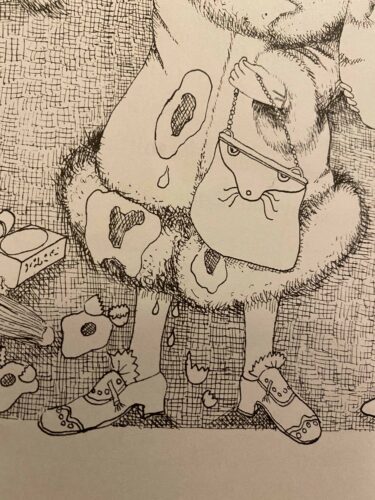
There’s also the testy lady that gets eggs spilled on her by our hero, but her shoes! Her mouse headed purse! “This is just an entire book of Shoes Betsy Wishes She Could Own.”

The Fiend in this book is now wearing a hat that is, in Kate’s words, “It’s giving me fierce! It’s giving me fabulous! It’s giving me funky! This book is giving me fah-shun!”

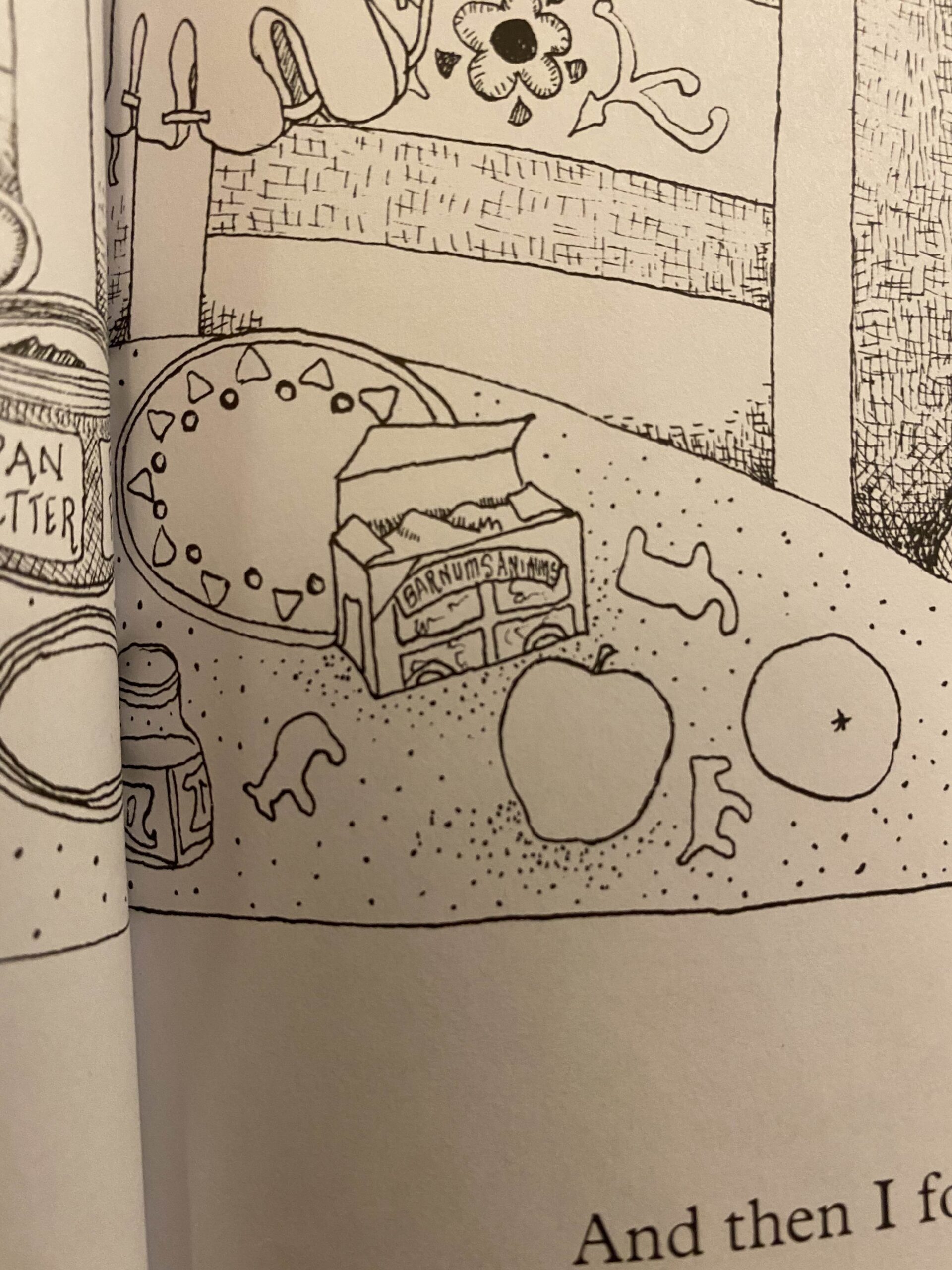
Here’s a stumper. How the heck did Barnum’s Animal Crackers get into this book? Like I say on the podcast, one of these day I am legitimately going to do a blog post on all the different moments of random product placement you can find in children’s picture books over the decades.

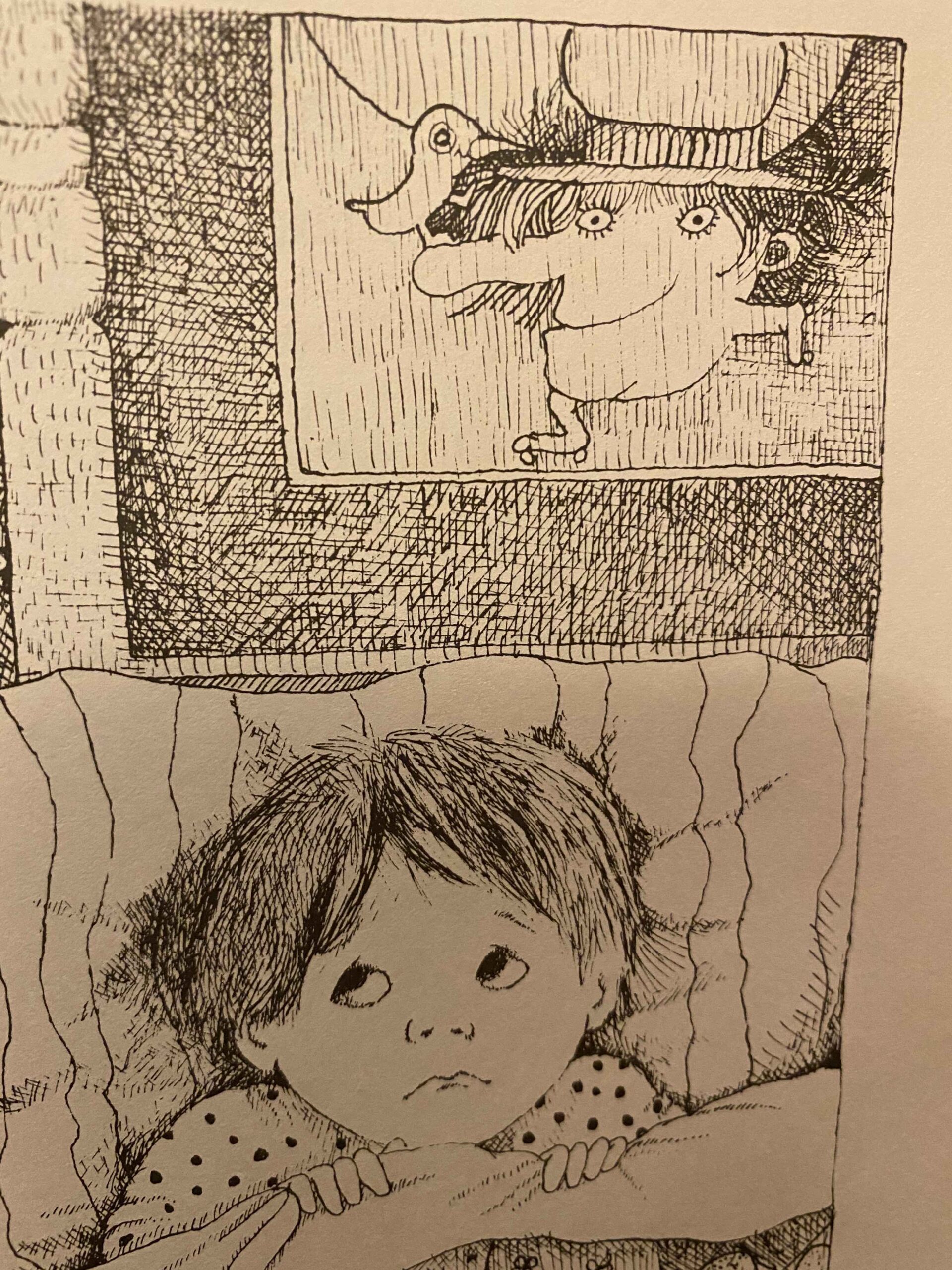
As in The Shrinking of Treehorn or Bea and Mr. Jones, the illustrator had a lot of fun with the wall art in this story. I mean . . . what is going on here?

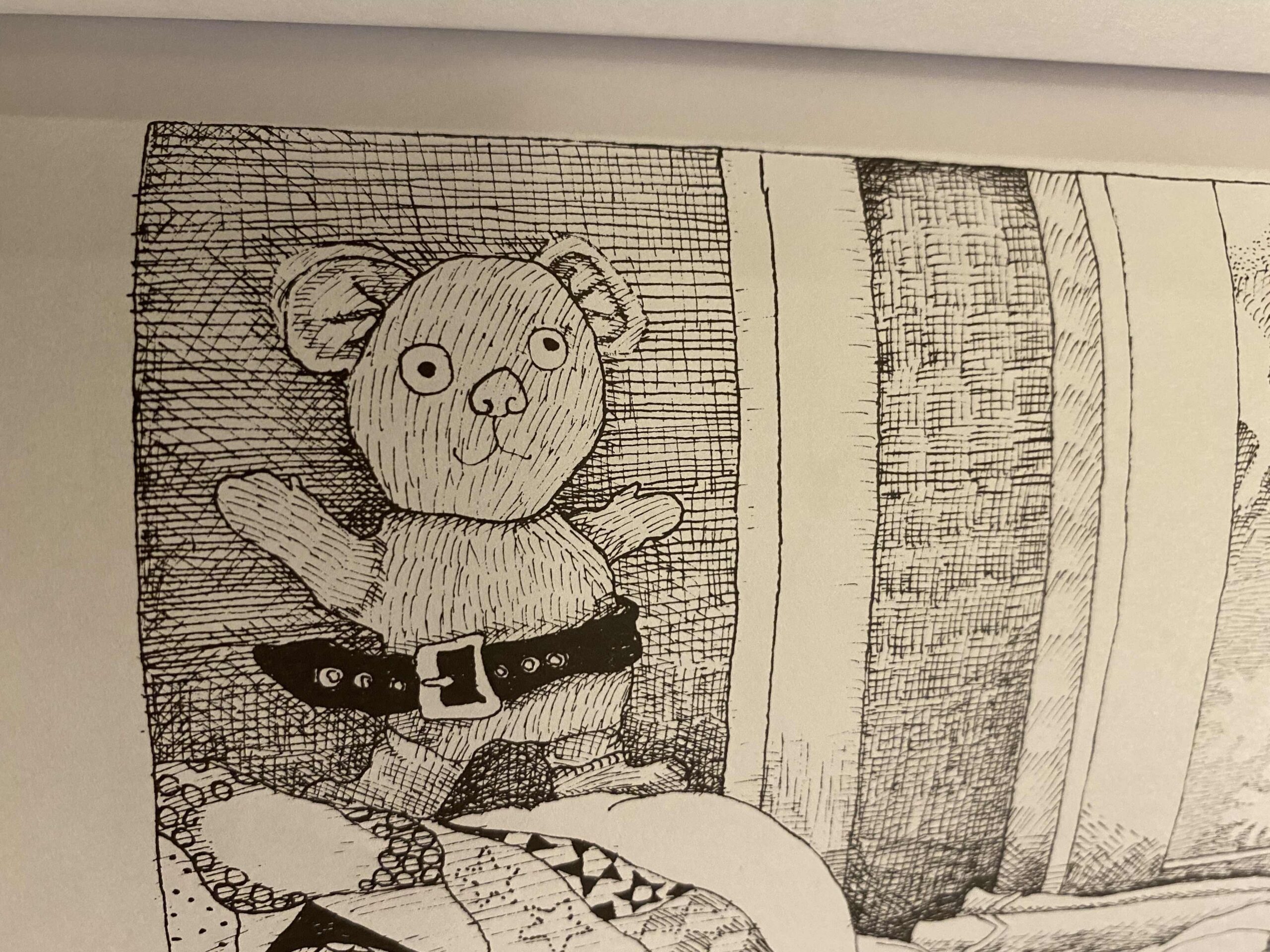
The true mystery of the entire story, however, is this: Who would belt a bear?

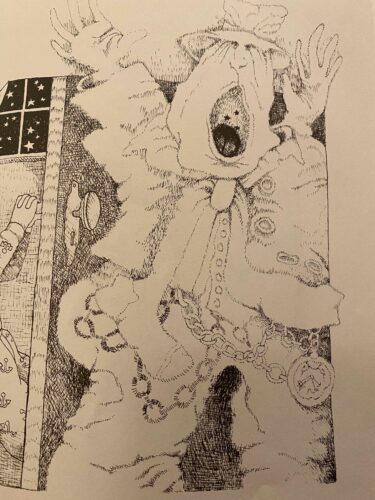
Is it strange that when Kate and I saw this image of the ghost and saw the chains we both used the term “Marley vibes”?

Kate Recommends: Halloween Deviled Eggs, seen here.

Betsy Recommends: Everything Everywhere All At Once which, in turn, has inspired my favorite Halloween costume of the year: Raccacoonie (note the bagel with everything purse).

Filed Under: Fuse 8 n' Kate Tagged With: Fuse 8 n' Kate, Judith Viorst, Kay Chorao, My Mama Says There Aren't Any Zombies Ghosts Vampires Creatures Demons Monsters Fiends Goblins or Things

Review of the Day: Hot Dog by Doug Salati

October 28, 2022 by Betsy Bird

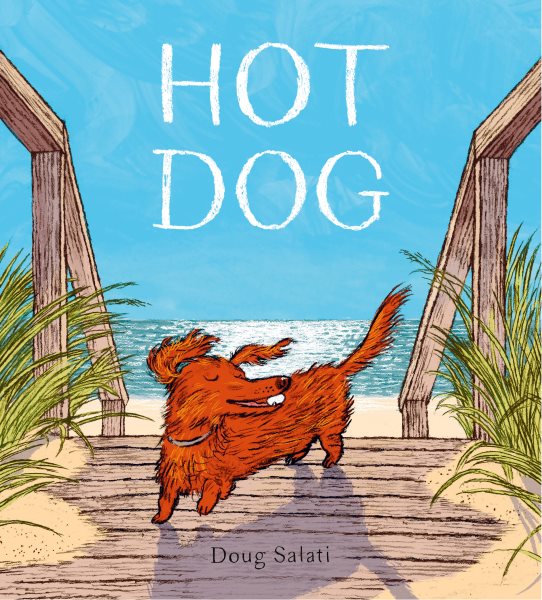
Hot Dog
By Doug Salati
Alfred A. Knopf (an imprint of Penguin Random House)
$17.99
ISBN: 9780593308431
On shelves now

I feel like I owe you the truth, right at the start of this review. So let’s get down to brass tacks. Me? Not a dog person myself. Like ‘em fine. My sister owns one and I’m more than happy to visit when I come over, but own one? No interest. Likewise, when I encounter a picture book that contains a dog I am not an immediate fan. I don’t dislike such books, but if a book is leaning too heavily on a reader’s already existing love of canines rather its own writing/art, I want no part of it. Basically, I’m just trying to make it clear that dogs are great but they don’t automatically make a picture book good. In fact, because I work with so many people in my workplace (which happens to be a library) that automatically love any book containing a dog or dogs, I’m naturally wary. My bar is set fairly high. And cresting that bar this year is none other than Doug Salati. A former Sendak Fellow, Salati has several picture books under his belt already, but I think it fair to say that in many ways his latest, Hot Dog is perhaps the best example he’s provided thus far of how he can exemplify his myriad talents. Practically a wordless book, the storyline delves deep into the mindset of an average dog, an average owner, and the cool seaside breezes that can pivot a day from miserable to marvelous.

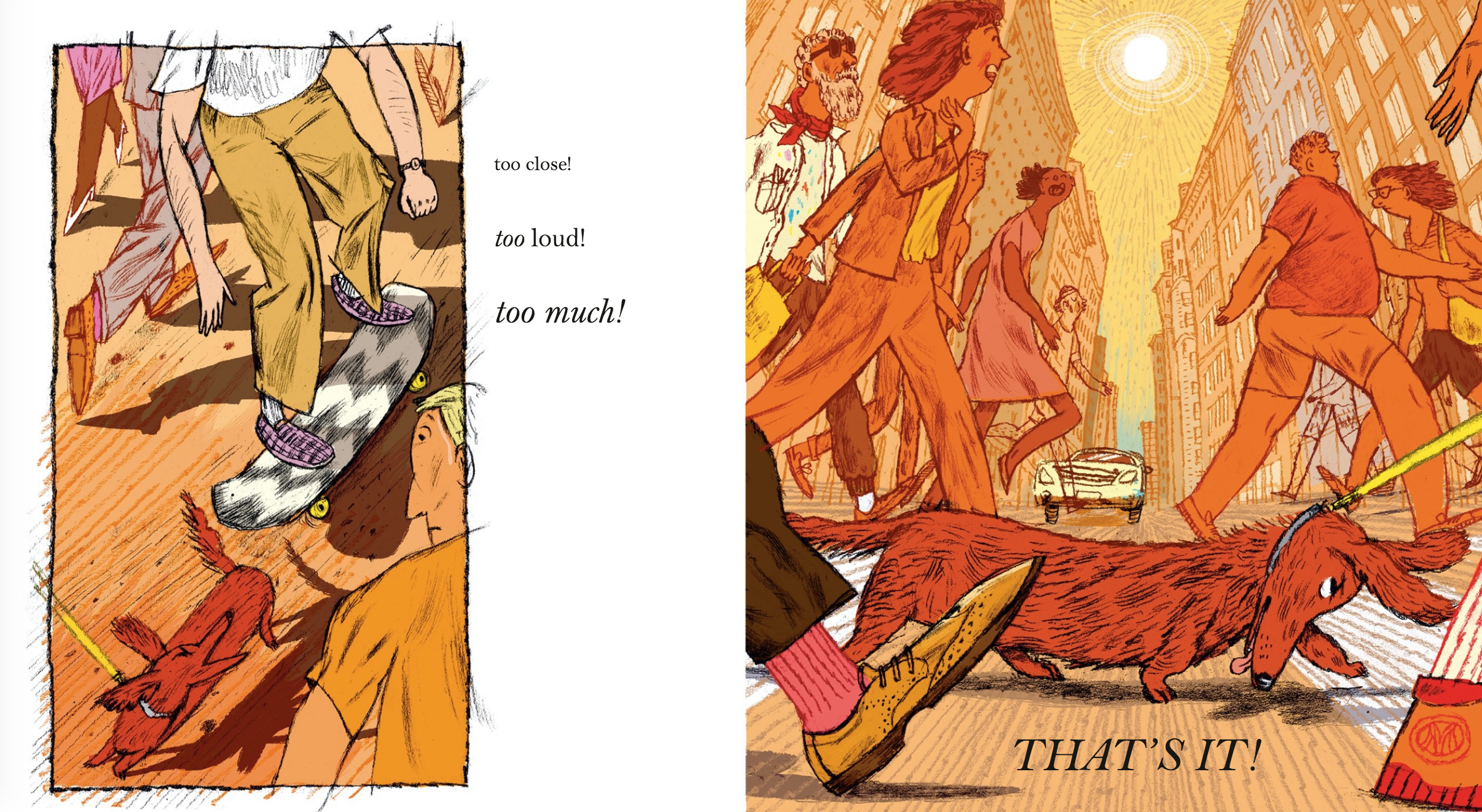
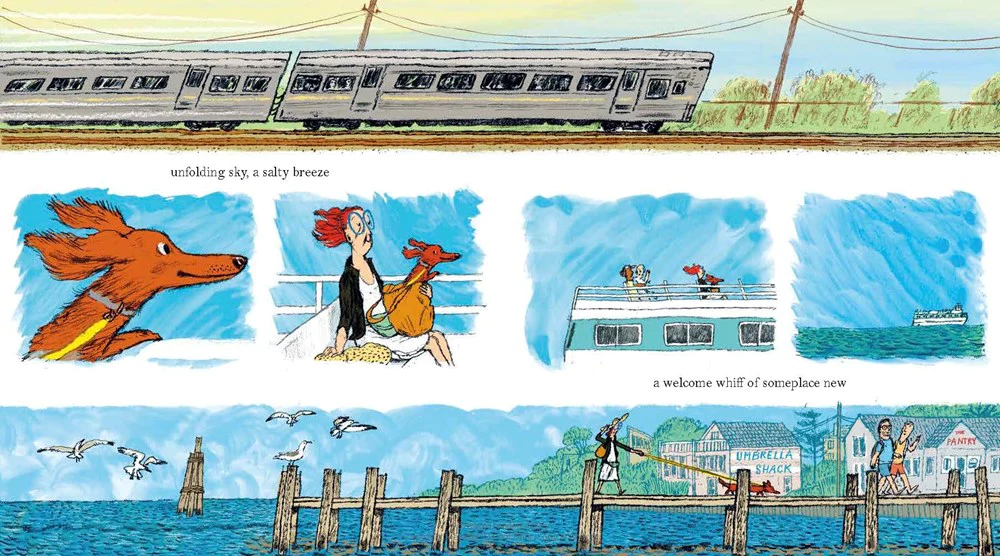
“City summer / steamy sidewalks / concrete crumbles / sirens screech.” A small wiener dog and its owner trudge down those streets. As she runs indoors to get chores done, the dog is exposed to the loud sounds, smells, and sheer waves of heat emanating off the pavement. Finally as the crowds close in on them both it just can’t take it. “… too close! too loud! too much! THAT’S IT!” And right then and there it stages a sit-in in the center of a crosswalk. Fortunately, its owner recognizes what is happening here. Without another thought they leap from taxi to train to ferry. They walk boardwalks on an island “wild and long and low” and the little dog is allowed to run as much as it likes in the sand by the shore. Finally the two return home to a city that has cooled off after the long day, and back in their apartment they fall asleep and dream of seals and sea.

One could argue that all books are uniquely designed to give their readers special insight into the thoughts and feelings of folks unlike themselves. But it’s picture books that do this especially, particularly well. It isn’t just the fact that they are built to appeal to the youngest of readers. Much of the credit has to be given over to the fact that when combined correctly, the mix of image and text is uniquely capable of producing empathetic reactions in readers, young OR old. In the case of Hot Dog you can almost feel your own internal temperature rising. At the beginning of the book Salati illustrates his pages with bright sunlight and a combination of summertime reds, oranges, yellows, and browns. The panels on the pages are packed tight with other people or loud raucous sounds. It just builds and builds until you come to the magnificent image of a hot sun blazing on a city street between two rows of buildings. Everything at this point is a bleached orange, and one little dog in the middle of the street has had Enough with a capital “E”. This dog has been pushed past the limits of canine endurance and by refusing to budge it almost single-handedly cools the very colors of the pages down a notch. I felt everything this dog felt, and much of that was due to the images. It is notable, then, that when the scenery starts to change to the seaside, I started paying more attention to the cooling affect of the words. Sure the picture were now awash in blues and greens but listen to this text: “unfolding sky, a salty breeze / a welcome whiff of someplace new / an island … wild and long and low.” You don’t even have to see the pictures to understand that things are different here. And that reliance on words continues when the duo return to the city, so that by the time you reach the text that says, “everyone cools down” you truly believe it.

But there’s another aspect of this book that I want to highlight and it has nothing to do with invoking nature’s breezes. At no point does Salati ever identify the city that the woman and her dog live in. I suppose it could be anywhere since it doesn’t feature any grandiose landmarks. Even so, I lived in Manhattan for eleven years and it wasn’t hard for me to figure out that what we had here was a NYC landscape, pure and simple. I can’t really explain why I felt this way. It was something about how Salati rendered his town. To live in NYC is to take all its problems and blessings at once. Only a resident could understand that a crowded subway ride home after a long day can feel uniquely wonderful. Or that a stroll through a park at night is beautiful in and of itself. The woman who owns the dog doesn’t even have an elevator, as far as I can tell. But when she walks up the steps and has her supper in her tiny apartment, every part of that place from the design of the range to the style of the radiator felt 100% authentic.

For my part, the thing that struck me about the book right from the get go was the way in which you empathize with this little dog. You feel the heat that it’s experiencing. The loud sounds. The crowded streets. Is it possible to convey sensory overload through the printed page? If so, Salati has mastered it. By the time the dog has had enough and has checked out, you are 100% on board with it. All you want is to be picked up and taken somewhere cool with fresh air and very few people. This may explain why I actually had the physical sensation of feeling the temperature drop as I continued on with the story. If Salati can make you feel the overwhelming heat of steaming city streets, he’s just as clever at invoking seaside calm and that cool that can only come from wind that has traveled a far distance over miles and miles of sea. On top of all that, however, this book acts as an elegant paean to animal care. No one can read this and not wish to do everything in their power to help this little dog. Which may explain some of the reactions my co-workers had to it.

If you’ll recall, I mentioned earlier that there are a fair number of dog lovers at my workplace. Well, some of them saw Hot Dog firsthand and to my surprise their reactions were not that of love and adoration. Whyever not? Well, much of it has to do with the earliest parts of this book. There is a moment on page four when the dog’s owner ties it up outside a post office so that she can drop off her mail and, later, on page six she does the same thing while dropping off her dry cleaning. Now, I would point out that the entire reason Salati has done this is (a) realism (people really and truly do tie their dogs up outside of shops, especially in busy cities where you might not have someone at home to watch your pup while you’re out) and (b) to build up the stress and heat in the poor pooch that will, inevitably, lead to its nervous collapse and need for cool winds and dipping temperatures. Even so, I sympathize with dog owners who find these kinds of scenes painful. There is this idea that to depict something in a picture book is to promote it. I’d argue that this book is a brilliant example of arguing the opposite. What the owner in this book does is wrong, and it takes the rest of the title to show how one might go about making things right. I’ll finally also note that another objection I’ve heard to the title is that it features characters that are uniquely privileged. Once the owner realizes that her doggie is hot, she takes at least three different modes of travel to get out of the city and to a distant island. Lovely, but not something we can all do when we want to treat someone we love. And so, I acknowledge here and now that while the book has lovely aspects, it does see the world through a very specific kind of lens.

I’m not a dog person. But I don’t have to be to enjoy this book. All I have to be is the kind of person who is capable of feeling for another living creature when the world is hard. The joy of Hot Dog is that at its heart it’s a story about listening to the voiceless when they’re trying to tell you something. We all need an escape sometimes. Some of us are lucky enough to acquire one and, when we do, that becomes worthy of telling in a story. Call it aspirational or just plain decent. Whatever you call it, Hot Dog is its spokesperson. A tale of making things right with the small furry ones you love.

On shelves now.

Source: Copy borrowed from library for review.

Video:

Listen to Doug Salati himself describe the book:

Filed Under: Best Books, Best Books of 2022, Reviews, Reviews 2022 Tagged With: 2022 reviews, Alfred A. Knopf, Best Books of 2022, dog books, Doug Salati, Penguin Random House, picture books, Random House

Guest Post: Sara Greenwood’s Brother Is Away

October 26, 2022 by Betsy Bird

Each December I post a list of great children’s books produced during the previous year every day as part of my 31 Days, 31 Lists series. This lists run the gamut from poetry to unconventional picture books to biographical nonfiction. One list in particular covers those books that don’t slot neatly into any other categories. I call them my Books With a Message titles. After all, children’s literature in America was founded on the presumption that books for the young would provide some kind of moral guidance. It isn’t that much farther a jump to look to books for kids that touch on messages and reassurances about a wide swath of issues facing children and adults today.

Sara Greenwood’s new book My Brother Is Away, illustrated by Luisa Uribe, would certainly fit this definition. And while it is not the first picture book I’ve seen about a loved one who is incarcerated, it strikes a very specific note. A note that I’ve not seen often. As the publisher describes the book:

“With her older brother in prison, a young girl copes with the confusing feelings his absence creates. At times she remembers the way her brother would carry her on his shoulders or how he would make up stories to tell her at bedtime. Other times she feels angry and wants to fly so far away that she can forget what happened.

When her Mama and Daddy take her on the 500-mile journey to visit him, a trip she knows not all families are able to make, the girl is excited but also nervous. But the nerves turn to joy when she sees him—everything is different, but everything is the same too. Her brother is not home, but his love hasn’t changed.

With words that are spare, gentle, and reassuring, this picture book will help young readers with similar stories feel less alone and give other readers a window into the struggles some children face.”

This story is one that is near and dear to Ms. Greenwood’s heart. Today, she joins us to give a glimpse to the story behind the story, and why she chose to write My Brother Is Away in the first place. Take it away, Sara:


In first grade I sat in a car with girls from my Brownie troop. We were coming back from a meeting or going to an event — the specifics aren’t clear anymore. But what has stayed in my mind for forty plus years, what I can still feel viscerally to this day, is a comment one of my troop members made:

“I saw your brother on TV. He did something bad.”

A few weeks before, my brother, who was a senior in high school, had been arrested. The story made the paper and the evening news. I was a mix of emotions, a jumble of feelings that were new and scary and didn’t make sense, and now the whole mess was out in the open for a carful of Brownies to hear.

I didn’t know what to say, so I didn’t say anything.

As far as I could tell, there weren’t other families like mine. How could there be? I’d never heard about a classmate or neighbor with a relative who’d gone to jail. So I lied when someone asked about my brother. He’d moved away, I’d tell them (which was kind of true), or I said he was really busy. Mostly, I stayed silent. For years, that silence was my shield.

According to the National Institute of Corrections, over five million American kids have or have had an incarcerated parent. When extended to other family members, that number grows exponentially. In 2018, a groundbreaking study led by FWD.us and Cornell University found that by adulthood, half of the population will have had a family member who’s spent time in jail or prison. Let that sink in. Half of the population.

Statistically, there’s a child in your class or on your soccer team, in your neighborhood or Brownie troop, in your temple, church, or mosque who has been affected by incarceration. Their lives have been turned upside down. They carry shame and embarrassment, anger and sadness, loneliness and confusion, and mostly they bear it all privately.

I wrote My Brother is Away for each of them. I want children to know they are not alone, that others have lived through the very same thing. I wrote it for the children who’ve been spared this particular hardship, hoping they’ll better see the struggles their peers might be facing. And I wrote it for the adults who work with children as a reminder that we don’t always know the whole story.

I hope the book brings a measure of comfort. I hope it feels like a friend.


A big thank you to Sara for sharing her story here today. My Brother Is Away is on bookstores and library shelves now, so give it a peek. Thanks too to Sarah Lawrenson and the folks at Random House Children’s Books for suggesting today’s guest post.

Filed Under: Guest Posts Tagged With: message books, Sara Greenwood

Shapes and Lines and Light: A Katie Yamasaki Interview

October 25, 2022 by Betsy Bird

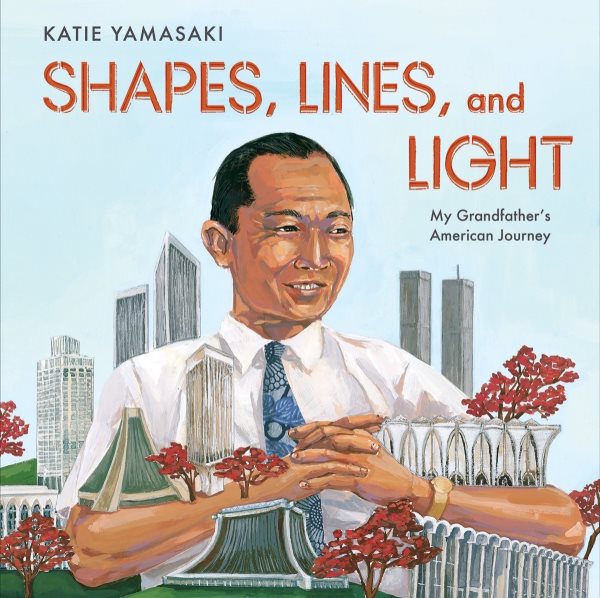
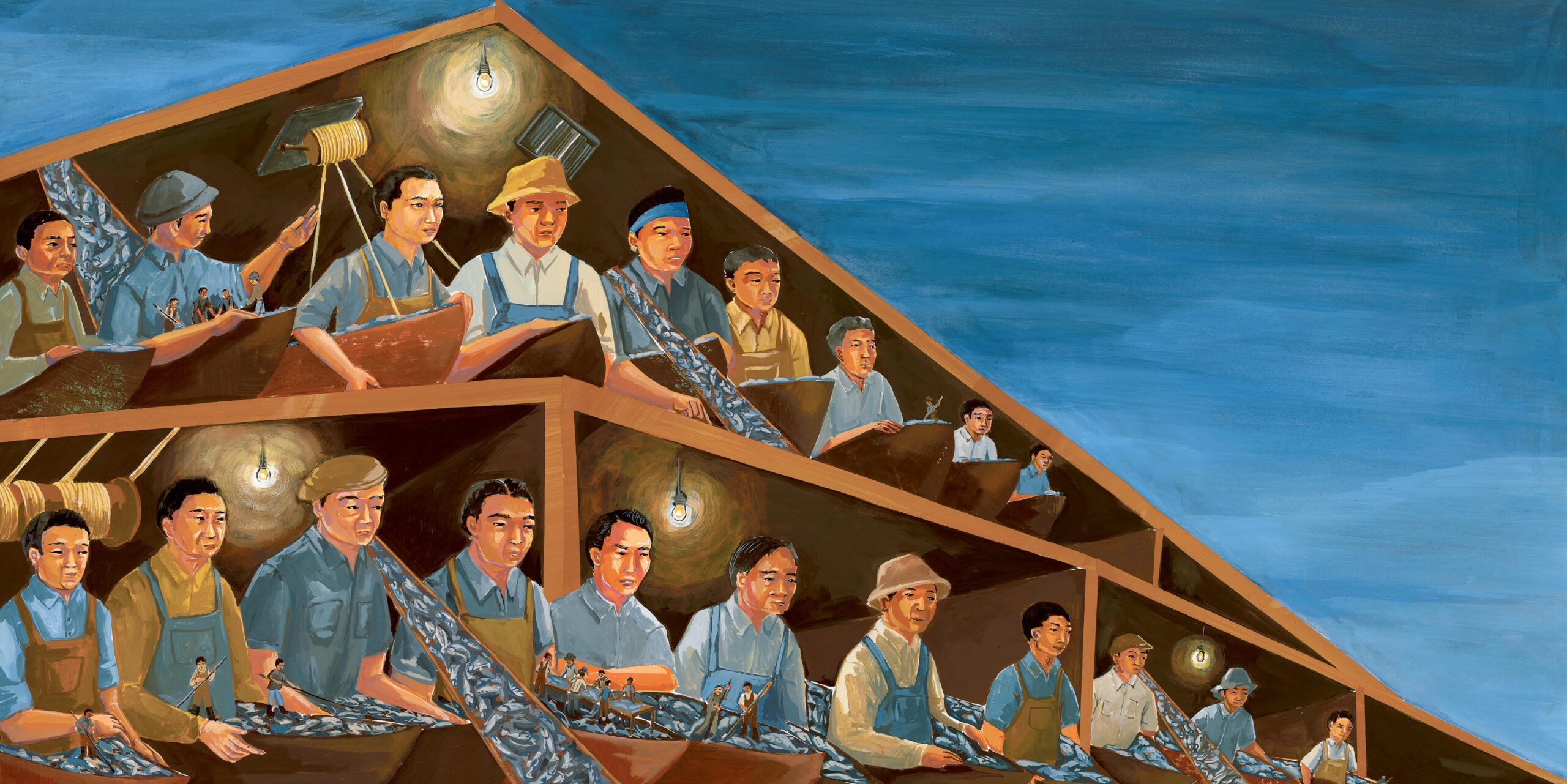
As I might have mentioned the other day, the Evanston Public Library recently selected the 101 books for kids published in 2022 that now grace the 101 Great Books for Kids list. It is mighty difficult to cut down hundreds and hundreds and hundreds of legitimately fun books for children down to a measly 101 titles. And you know what book managed to make it onto the list? None other than Katie Yamasaki’s remarkable picture book biography of her own grandfather, Shapes, Lines and Light. Not long ago I had the pleasure to recommend it on TikTok alongside another fabulous picture book about fellow great architect, Paul R. Wiliams. This book focuses squarely on Minoru Yamasaki and I had the pleasure of getting to talk to Katie Yamasaki about her latest title.


Betsy Bird: Katie! I’m so grateful to talk to you today. SHAPES, LINES, AND LIGHT is one of my favorite books of 2022. I’ve seen autobiographical picture books before but I’ve rarely seen cases where the book creator’s ancestor was celebrated in such an affecting manner. When did you first get the idea for the book? 

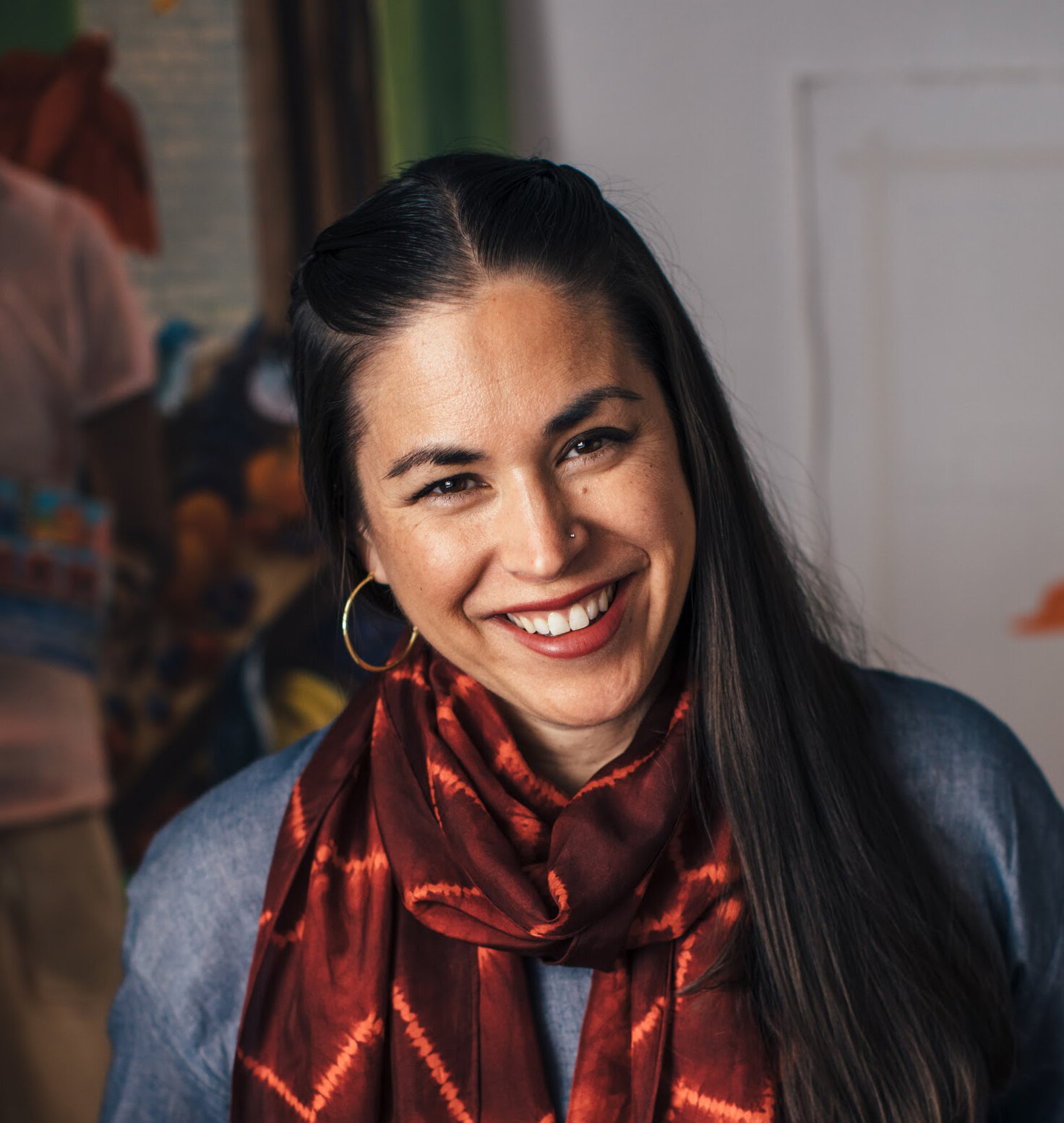
Katie Yamasaki

Katie Yamasaki: Hi Betsy, thank you so much. That means so much to me! I honestly have been trying to write this story for literal decades. I first did a bio of my grandfather when I was in 3rd grade. As a kid, I grew up very aware of his amazing accomplishments, but I didn’t really understand the context in which he was formed. I did know, however, that we lived in a very anti-Japanese part of the country (car country, Detroit area), but that he was also very famous in Detroit. Kids would ask me if my grandfather was a kamikaze pilot. Other kids knew he designed the WTC. My childhood was filled with a combined fascination/confusion about who he was and what that meant in the context of the anti-Japanese climate of our area.

I was in my first week of grad school (MFA Illustration at the School of Visual Arts) on 9/11 and all of a sudden, people started saying gross things to me like, “you could get published if you do your grandpa’s bio now.” By that time, I had come to understand much more of the complexity of his life story, but I wanted to distance his biography as much as possible from 9/11. It was powerful watching something he created become a piece of pro-war propaganda, for a war none of us believed in, and I wanted to get as much distance from it as possible . . . So, the long answer is that I’ve had this story on my mind for as long as I can remember. I don’t think I was ready to tell it until now and I also wanted to make sure that there was space for him to be known for the true spirit of his work and his story. For so long, he’s been most known for work that actually least defines who he was as a human and as an artist. But with all these years since 9/11, and a different societal openness for listening to AAPI history, it’s a good time for his story to reach young readers.

BB: In researching the book, how much was done in-house with family members and how much required you to look at outside sources? 

KY: This was a tricky challenge. As you can imagine, our grandfather had a big life and everyone in the family had their own complex experiences with him, stories that evolve and deepen with age and wisdom. We have a big, closely knit family and I really wanted to make sure that this picture I was painting of him felt true across the family. So, I spoke, at length, with the extended family and my main goal was to get at the essence of him and his work as an artist, an architect. My father, the youngest of his three children, also worked with him at his architectural firm, and he was an amazing resource of old stories both from the family side and from the work side. I think that better than anyone else, my father understood my grandfather’s intentions when it came to his work and his life, which I always find so helpful when trying to understand an artist. I also connected with authors of adult/architectural books about him- Dale Gyure and Justin Beal in particular, who were a wealth of unbiased historical information. Their books were incredible resources, as were a few other books. I also relied heavily on Densho.com, an incredible online archive of Japanese American history, based in Seattle, my grandfather’s hometown. My favorite resource, however, is my grandfather’s own book, “A Life in Architecture.” He wrote at length both about his personal journey and his philosophy of architecture and design. It was wonderful to have words directly from him. In his writing and in the best of his architecture, he was guided by humanism and was a very emotive creator and that helped guide the spirit of the book.

BB: Your book FISH FOR JIMMY was inspired by a true story, and the biography HONDA: THE BOY WHO DREAMED OF CARS was a picture book bio that you illustrated. Even so, this is the first book that you’ve both written and illustrated yourself that’s nonfiction AND it’s such a personal story. What was your process in putting it together?

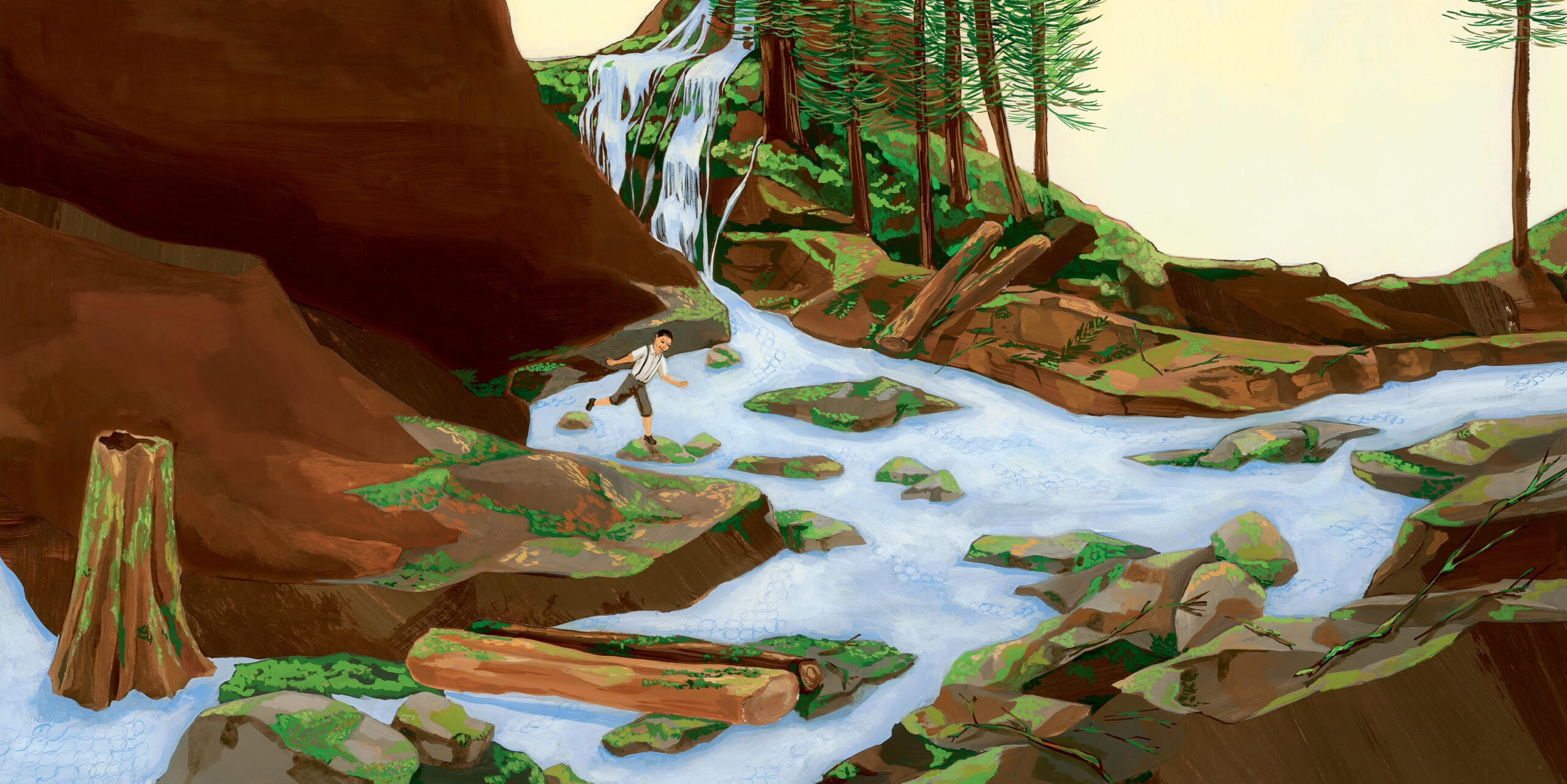
KY: I am a very long-term thinker. When I look back, I think I have been gathering these stories and this understanding of our grandfather for most of my life. In recent years, I’ve been trying to figure out ways that our art could live on the page together, as we are really different kinds of artists. I didn’t feel in a rush to get this book out to the world, but once it was actually time for this book to be made, it was a really intense process. By far, the hardest book I’ve ever made. It’s a big picture book, with a lot of art and a lot of information, but also presented in a kind of spacious way, which means more spreads. More time, and I was working on it in the thick of the pandemic, while parenting a young child and dealing with all the disruptions from Covid school closures, etc. When I was in the thick of making the art, our country was experiencing a new wave of anti-Asian violence. I had been listening to the audio version of Paula Yoo’s breathtaking book about Vincent Chin. My aunt, my grandfather’s oldest daughter, passed away. It was all in the midst of working on this book. It was a lot. The grief of that time was abundant and acute and the story of my grandfather was evocative for me and for others in our family. My studio was wallpapered with images of his buildings, his life, old family photos. My mind was full of his story. And it felt like the awful parts of Asian American history were just playing on repeat on the news every day. It was really hard. But I have this little altar in my studio where I have photos of beloved people who have passed on. So every morning, when I would get to the studio, I would sit there for a couple of minutes and ask them to join me. All my grandparents. My aunt. My infant son who we lost in 2016. And somehow that helped. Because this story certainly isn’t just my story. It’s my whole family’s story. In many ways, this story also belongs to the Japanese American community and the Asian American community. So I would ask for help in working on it and I felt supported. I hope that the book feels uplifting. He went through so much to be seen, to create these spaces where people could feel fully human. He knew what it was to be made to feel invisible and I think the hardship of his life story was painful to retell because I can see, from my vantage point in the family, how these things are passed through generations. But I hope that in the retelling, in the art, the reader will be able to see themselves and their own stories made visible.

BB: One of the struggles that comes with any picture biography is the balance between showing the person in the best possible light and showing the flaws that made them human. You do a particularly excellent job of at least touching on your grandfather’s triumphs as well as the things he was criticized for. How do you walk that line?

KY: When I was figuring out the approach for this story, this was one of my biggest challenges. Certainly, if this was a book for adults, it would be very different. There are details about his personal life that I chose to leave out. Ultimately, I decided that the facts of his life that would make it into the book were the details that helped the reader best understand the work he was trying to make. The hard and the glorious personal details of his history that led him to design these humanistic, aspirational spaces. He had a textured personal life, that I know was largely influenced by poverty, racism, and growing with a need to be seen and prove his humanity. While trying to figure out what to leave in and exclude, my guiding thought was, what will best help the reader understand the essence of who our grandfather was and what his work was intended to do. It’s impossible for me to separate his personal flaws and challenges from his life, from the context that he was raised in. From this notion that as a poor, Asian man, his life had no value. That is how he was made to feel. So, when I am taking this book around, what I am focused on is talking to young readers about the inherent value of their own lives. That they don’t have to build the biggest, run the fastest, score the highest for their lives to have value. Their lives have inherent value for the simple fact of their existence. To, when thinking about your life and your future, to begin there. And then you will have your daily struggles of everyday life, but the burden of proving your humanity, as our grandfather did (often to his own detriment), will not be a part of that journey.

BB: I think it’s in the backmatter that you mention what a storied and celebrated family you come from. Have you ever felt a particular push to succeed in light of your relatives’ accomplishments, or has that not really ever been the case? 

KY: Definitely, there is some insane accomplishment in my family. But my family is huge on both sides and there are also very wonderful, very grounded teachers, nurses, social workers, postal workers, engineers, park rangers, musicians, and every other kind of worker in my family, so the high achieving artists weren’t the only model. I am actually a 4th generation teacher on my mom’s side. My parents are VERY different than my grandparents on my father’s side. They were back-to-the-land hippies and we were raised more in that kind of community than in a pressurized achievement-based way. My father really understood, from a first hand experience, the cost of that kind of drive. Our grandfather used to say to him, my aunt, and uncle, “Why be the best in the world when you could be the best in the history of the world.” Lucky for us, my father rebelled from that kind of thinking and our parents raised us to be focused more on doing work that had meaning, less on accomplishment. But for me, I just saw those achievements and thought, art is not for me. It was too much pressure to achieve in a certain way. And because of that, I had a relatively late start to art- I didn’t really learn how to draw until I was in my early 20s. I think by then, I had a good enough sense of myself, and some incredible teachers, who helped me find my own path that was really different from that of my grandparents. I also never felt that kind of invisibility that they grew up in, and so I never felt the drive to prove my worth. That would have been a burden that would have had terrible consequences on my work and lifestyle in general. I have a lot of drive, but for me the drive is to get stories out that feel like they are shining a light on the margins. I especially feel that way about books like Dad Bakes and my new book for 2023, Place Hand Here. These are books that focus on families who are impacted by incarceration and I have a feeling that the sooner people can see one another more clearly, the better for all of us. That’s where my drive comes from.

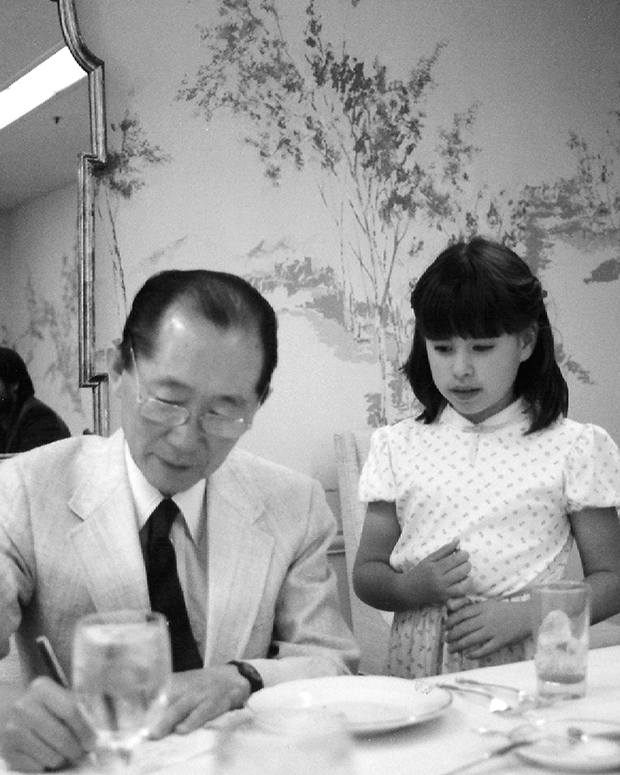
BB: Finally, I love the author photo of you in this book which shows you standing beside your grandfather, watching him write or draw. Was that an easy photo to find or did you have to dig through a couple albums first? 

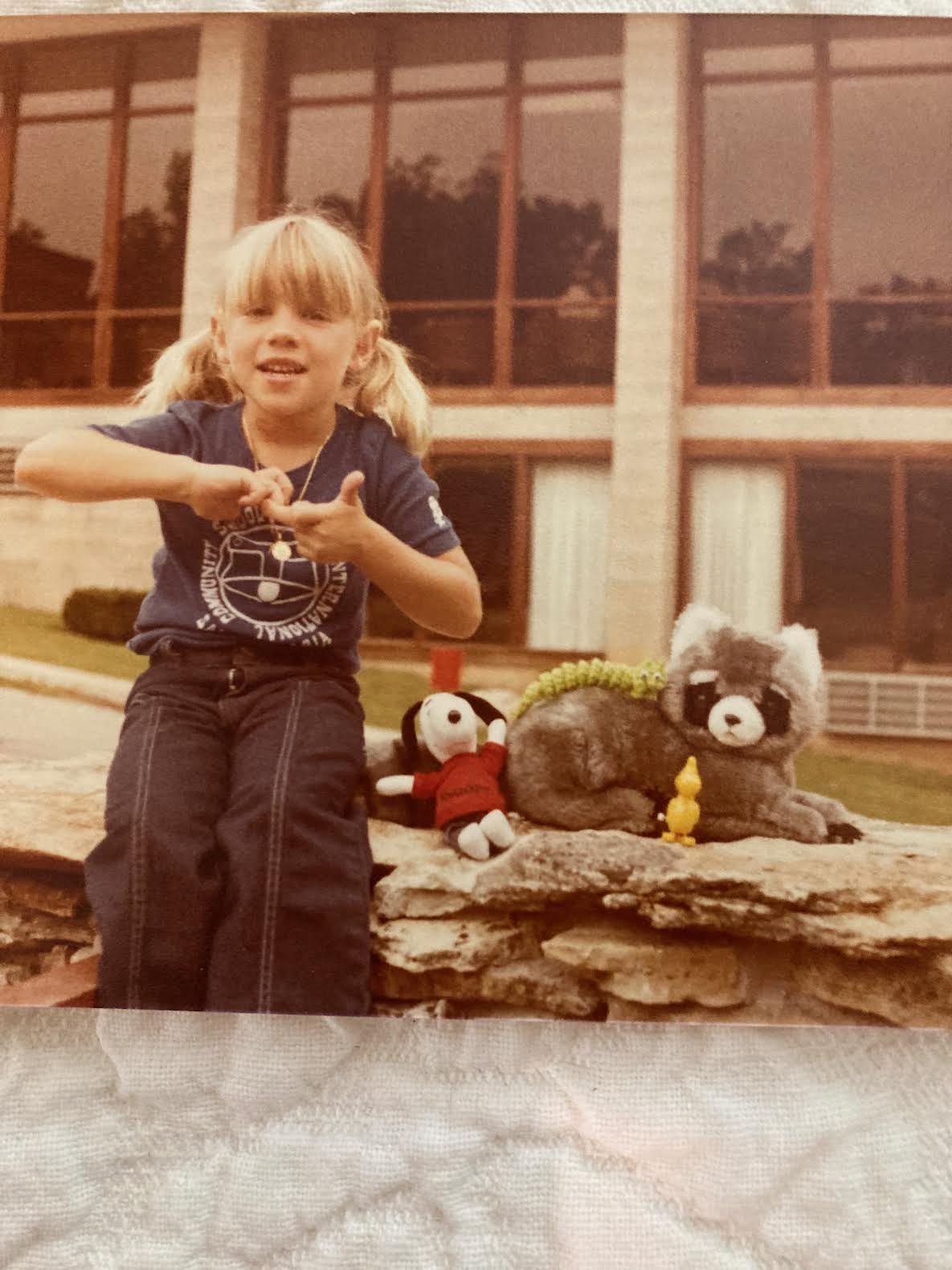
 KY: My aunt Carol was a glorious photographer. She passed away while I was working on this book, and after she passed, we all spent a lot of time looking through her photos. I found this in one of her albums, she had taken the photo and it felt like one more gift from her. I hope she would have liked the book if she had lived to see it. 


For fun, be sure to watch Katie discuss her book on video here as well:

Many thanks to Katie for taking the time to answer my questions.

Random Fact: After my TikTok video premiered my mother, who grew up in the Detroit area, wrote me the following note about Mr. Yamasaki:

“…. and I just check, and yep, his office was near us when I was a kid – AND two guys I went to high school with, assigned a humanities paper, walked into his office and asked to interview him and he let them!”

Thanks too to Caroline Sun from Sun Literary Arts for setting the interview up. Shapes, Lines and Light is on shelves everywhere now.

Filed Under: Interviews Tagged With: author interviews, illustrator interviews, Katie Yamasaki, picture book author interviews

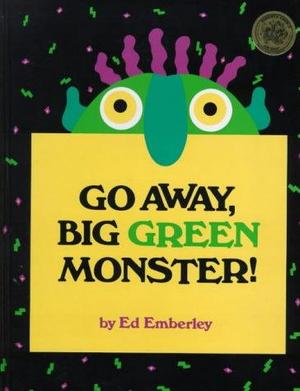
Fuse 8 n’ Kate: Go Away, Big Green Monster by Ed Emberley

October 24, 2022 by Betsy Bird

“It’s like Candyman if instead of saying his name three times you just called into existence each of his bodyparts.”

Man. Insult upon injury, today’s book. Does the reader really have to call Big Green Monster’s hair “scraggly”? That’s just wrong, dude. Today I introduce Kate to her very first Ed Emberley book. Sure, it’s not terribly Halloween-ish, but it’s not NOT Halloweenish, amiright? We consider the ways in which Emberley both invokes a scary monster without making it too scary along the way. So he’ll follow up sharp white teeth with “little squiggly ears”. It’s a fascinating duality. We also talk paper texture, hair shaming, and why the cartilage in monsters tends to be a different color than skin.

Listen to the whole show here on Soundcloud or download it through iTunes, Stitcher, Spotify, Google Play, PlayerFM, or your preferred method of podcast selection.

Show Notes:

Here‘s the Grinch horror movie Kate references. And we didn’t even DISCUSS the upcoming horror film Winnie-the-Pooh: Blood and Honey. See what happens when books enter the public domain?

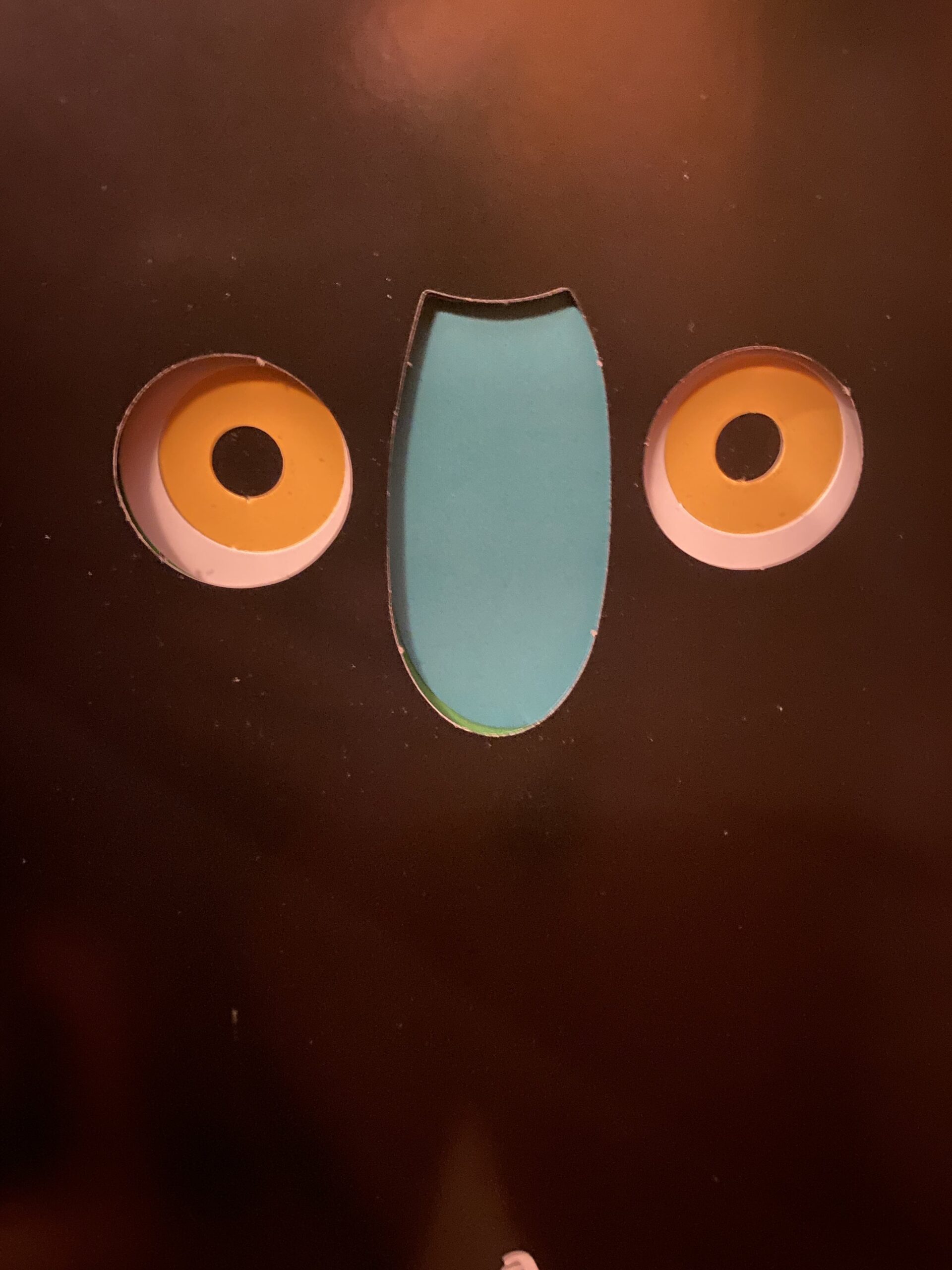
We wondered quite a bit about why there’s a bluish-greenish nose in addition to a big green scary face. Why have such similar colors? You can’t even clearly make out this nose from a distance, and this is a readaloud storytime book, for crying out loud! One theory is that the nose should, by color logic, be orange. What would be the problem with that? Well, look at this nose. This is clearly a Bert from Sesame Street shape situation here, people. My theory is that it was orange-ish and the color change was requested by an editor somewhere.

“A face going away can be frightening to a certain type of child.” This is the Sesame Street sequence that freaked me the heck out as a kid. This book? Really reminds me of this sequence, it does.

Now my working theory here is that this face, right here, is the most frightening in the entire book. “It’s just TEETH and EYES!” After all, you would think the face would be the last thing to go.

Kate Recommends: Will My Cat Eat My Eyeballs? by Caitlin Doughty. You can register to watch her speak on November 18th here.

Betsy Recommends: The podcast Sci Show Tangents

Filed Under: Fuse 8 n' Kate Tagged With: Ed Emberley, Fuse 8 n' Kate, Go Away Big Green Monster!

  • « Go to Previous Page
  • Page 1
  • Interim pages omitted …
  • Page 152
  • Page 153
  • Page 154
  • Page 155
  • Page 156
  • Interim pages omitted …
  • Page 1048
  • Go to Next Page »

Primary Sidebar