• Skip to primary navigation
  • Skip to main content
  • Skip to primary sidebar
  • About/Contact
  • Fusenews
  • Reviews
  • Librarian Previews
  • Best Books
    • Top 100
    • Best Books of 2022
    • Best Books of 2021
    • Best Books of 2020
    • Best Books of 2019
    • Best Books of 2018
    • Best Books of 2017
    • Best Books of 2016
    • Best Books of 2015
    • Best Books of 2014
    • Best Books of 2013
  • Fuse 8 n’ Kate
  • Videos
  • Press Release Fun

The Quadruple Collaboration: Nikki Grimes and Brian Pinkney Discuss Jerry Pinkney and A Walk in the Woods

The Quadruple Collaboration: Nikki Grimes and Brian Pinkney Discuss Jerry Pinkney and A Walk in the Woods

September 21, 2023 by Betsy Bird

Let’s start at the beginning. This is going to require a little bit of context.

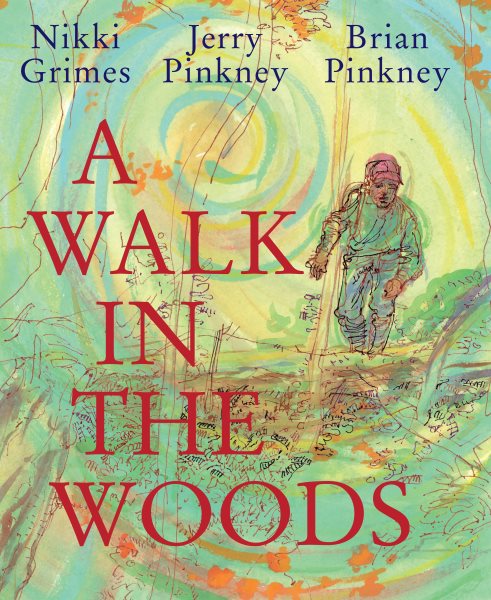
Step back in time to late 2019. It was at that time that after forty or so years of friendship, New York Times bestselling author Nikki Grimes and Caldecott Award-winning illustrator Jerry Pinkney decided that they should do a book together. They never had before, as strange as that sounds, and so they began to brainstorm some ideas for their first collaboration. This is how their publisher explained to me what happened next:

According to Nikki, having noticed the “rarity of children’s books that feature African American characters engaging with nature,” the two decided to focus their ideas on this theme. “Jerry mentioned his daily walks in the woods [and] my brain lit up like a starburst,” she shared. For the next few months, Jerry would go on daily walks and send Nikki picture of the things he’d see. The two would pass ideas back and forth, eventually bringing their story to life:

Confused and distraught after the death of his father, a boy opens an envelope his dad left behind and is surprised to find a map of the woods beyond their house, with one spot marked in bright red. The woods had been something they shared together. Why would his father want him to go alone? The treasure trove he finds reveals something more for them to share, and some peace amid the grief. His dad knew what he really needed was a walk in the woods.

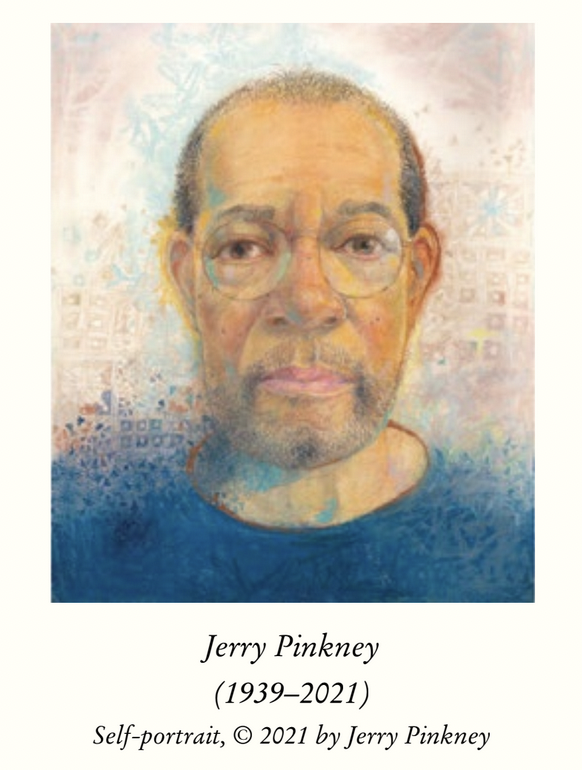
Upon receiving the news of Jerry’s sudden passing in 2021, Nikki began to mourn not only her friend but the special project they never got to finish. Nikki had completed her manuscript and knew Jerry been working on the art, but was not sure how far he’d gotten. Her answer would come in an unforgettable phone call with author Gloria Pinkney, Jerry’s wife. Not only had Jerry finished the tight pencil sketch, but Caldecott Honoree Brian Pinkney, would be completing his father’s work by adding his trademark radiant watercolors.

“The experience can only be described as mysterious and mystical,” explained Brian. Upon being invited to collaborate on A Walk in the Woods and reading Nikki’s finished manuscript, Brian could not help but notice the striking similarities between himself and the boy in her story. Still processing the loss of his father, Brian looked through Jerry’s finished linework of the very woods the two used to walk together. In what felt like a “visitation” from his father, Brian felt encouraged to use “bright, emotionally resonant swirls of color found in nature” to add his own touch to the book. With the help of Brian’s niece—illustrator Charnelle Pinkney Barlow—and digital tools, Jerry’s finished line drawings were merged with Brian’s paintings.

“I couldn’t have asked for a sweeter end to this story” shared Nikki. “I don’t imagine Jerry could, either!”

It’s an incredible story, but incredible stories are one thing, incredible books are another, and when the two actually manage to intersect, that’s when you know you’ve hit on something. I’m impressed by A Walk In the Woods, but I still had questions. Fortunately, Nikki and Brian were keen to provide me with a couple answers. And so it goes . . .


Betsy Bird: Nikki, I think that technically this story begins with you.  Though it feels like a story that would have been written specifically for Brian and Jerry, you wrote it long before his passing.  Could you tell us a little about how this was a collaboration with Jerry from the start?
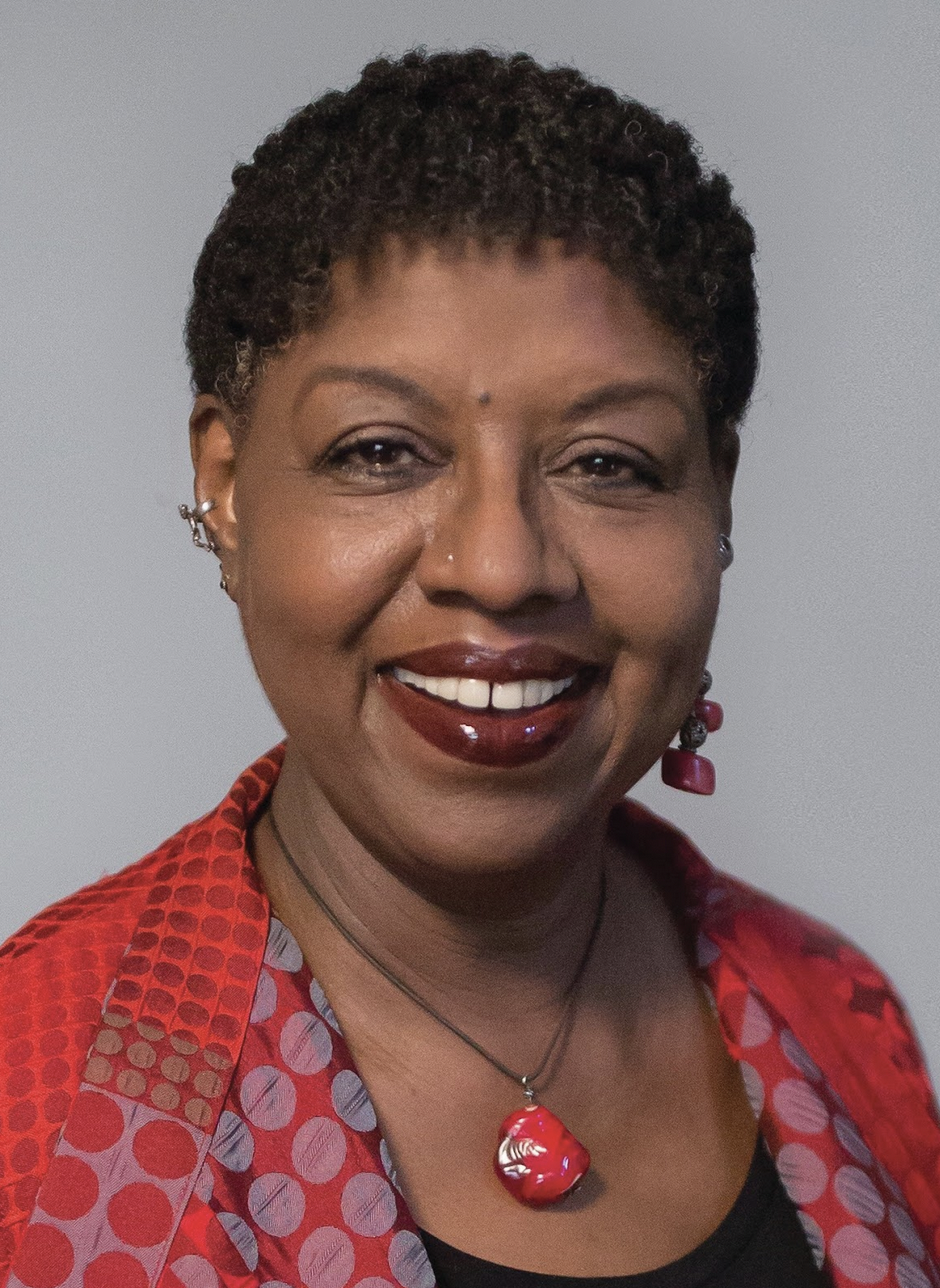
Nikki Grimes
Photo by Aaron Lemen

Nikki Grimes: Jerry and I first began playing with the idea for a collaboration during the Texas Book Festival in Austin, in 2019, thanks to some nudging by Gloria [Pinkney], who wondered aloud why we’d never done a book together before.  Neither of us had a good answer, so we immediately struck up a conversation about it—and the word “conversation” is key.  We both expressed an interest in creating more children’s books featuring Black characters in nature, and Jerry specifically said that he wanted the book to be a conversation between us, between an artist and a writer.  That’s where A Walk in the Woods really started.  Neither of us knew, at the time, what the story would be, or even if it would, in fact, be a story or merely a collection of poetry—we didn’t know.  We were both playing in the field of imagination to see where it might lead us.  So, there was a lot of going back and forth between us, through emails and telephone conversations.  We were in constant contact with one another, sharing experiences in nature, poetry, sketches, videos taken during Jerry’s walks, images I discovered doing research of the area, and so on.  We fed off of each other in the process of creating this work.

Betsy Bird: Brian, at what point in the process did you come into this? How did you first hear about the project and who was the first person to come up with the idea of continuing it through your own art?

Brian Pinkney: Just weeks after the passing of my father, I was invited to collaborate on the completion of the artwork by Neal Porter. At the time, I didn’t know how the collaboration between my father and Nikki Grimes had begun. When I read Nikki’s evocative story, I was immediately struck by the beauty and power. At the same time, the overwhelming irony of the story wasn’t lost on me – a boy, looking in the mirror soon after his father had died. This had been my exact experience the days leading up to the moment I read Nikki’s words for the first time. I took all of this as visitation from dad, who was encouraging me to finish the artwork he began, which consisted of tight sketches. Color had not been added. In my mind and heart, there was no doubt about whether I could, or would “carry the paintbrush forward”  to bring the book to readers. 

BB: The plot of the story has a preternatural quality to it.  It’s a perfect capper not simply Jerry’s life but the legacy he leaves us through his children and grandchildren, but he couldn’t have had any idea about that when he first worked on it, nor did you, Nikki, when you wrote it.  Did it go through any significant edits to the text after Jerry died?

NG: No. It was all already there.  I didn’t touch it.  Not one word was changed.  When something like this happens, I have one answer for it: this was a God thing.  This work was led, was blessed, was inspired.  I did the work and experienced the angst and all of that, but God was in charge of what this work became.  The story behind the story gives me the same goose bumps it gives everyone else who reads it.

BB: Brian, prior to this book, had you ever worked on a project where your artistic style had to merge with someone else’s? What was the process like for you? 
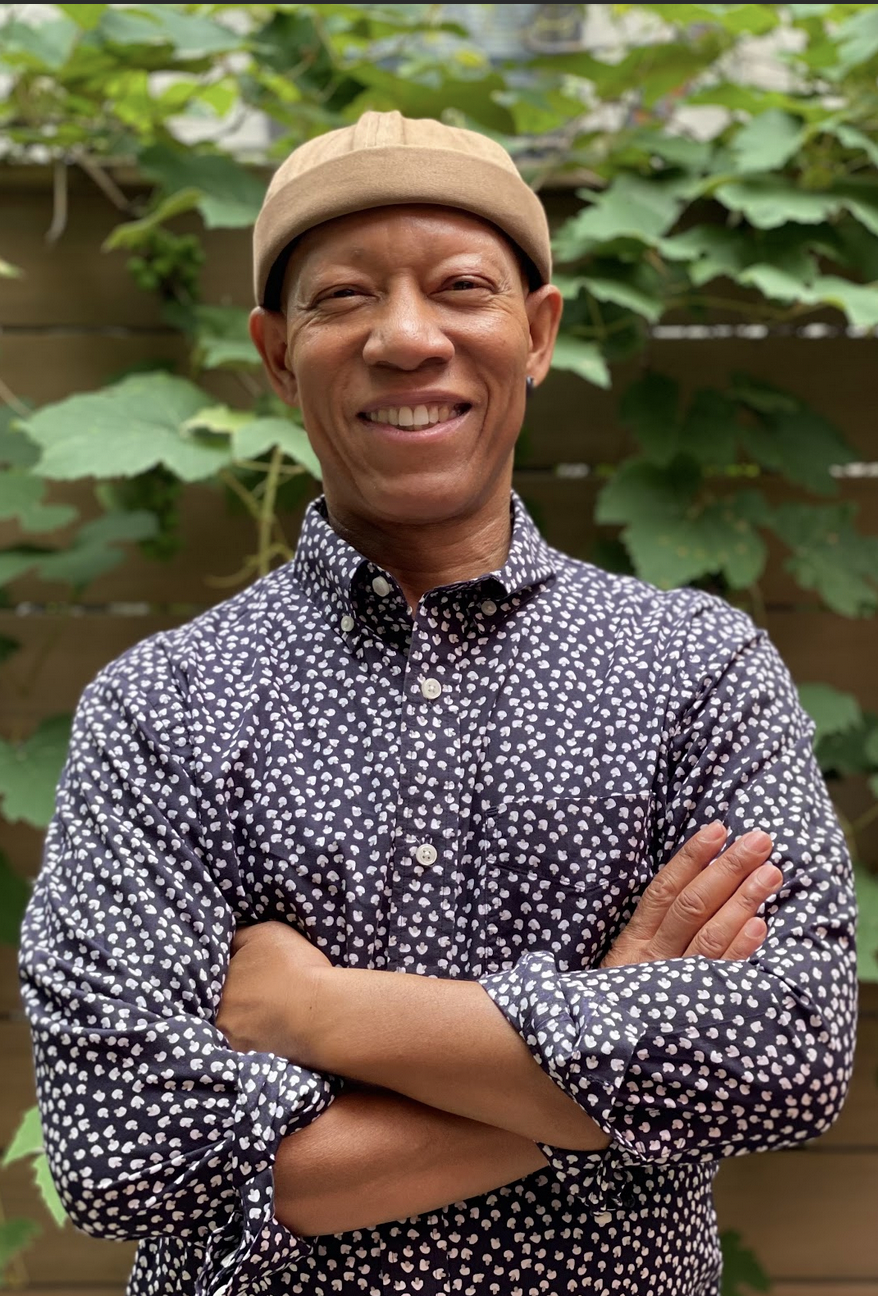
Brian Pinkney
Photo by Chloe Pinkney

BP: This was the first time I had to merge my artistic style with someone. it was a mysterious and mystical journey because I had to reach down into a place so deep, all the while asking my dad what to do, how to bring his intention to the world. I began with a process I’ve come to call “wandering and pondering,” taking time to explore the woods where this story is set, near the property of the home where I was raised in upstate, New York, and where my father’s studio still is today. While walking in those woods, I explored the colors, the textures, the smell of the air. This sensory exploration led me to how I would approach the artwork for A Walk in the Woods. Through this meditative process, I soon realized I had already started the book’s illustrations. Just months before my father passed away, I’d been working on earth-toned swooshes of color. I’d shown these to my dad, and said to him,

“I don’t know what these things are for.”

He told me how evocative the brush-work was, and encouraged me to keep at the visual exploration of it all.  These pieces turned out to be the inspiration for the watercolor washes that would go underneath his line drawings for the illustrations in A Walk in the Woods.  While working on the book’s paintings, I was flooded with memories of my dad, his “art-wisdom” and insight.  He often referred to watercolor washes as “happy accidents.” He encouraged me to let the watercolors flow wherever they needed to on the page. I remember watching him lay down his own watercolor washes, his careful hands embracing his favorite Winsor Newton watercolor paintbrush. My dad also loved Arches watercolor paper, which gave him just the right texture he needed to absorb the watercolor the way he liked.  As a gift to my father, I used his leftover watercolor paper for the artwork in this book.

BB: Nikki, one of the things I love best about this book is written in a poetic form throughout, but also manages to contain this sudden surprise of straight, pure poetry midway through the tale.  Could you tell us a bit about how poetry and storytelling are woven throughout this tale?
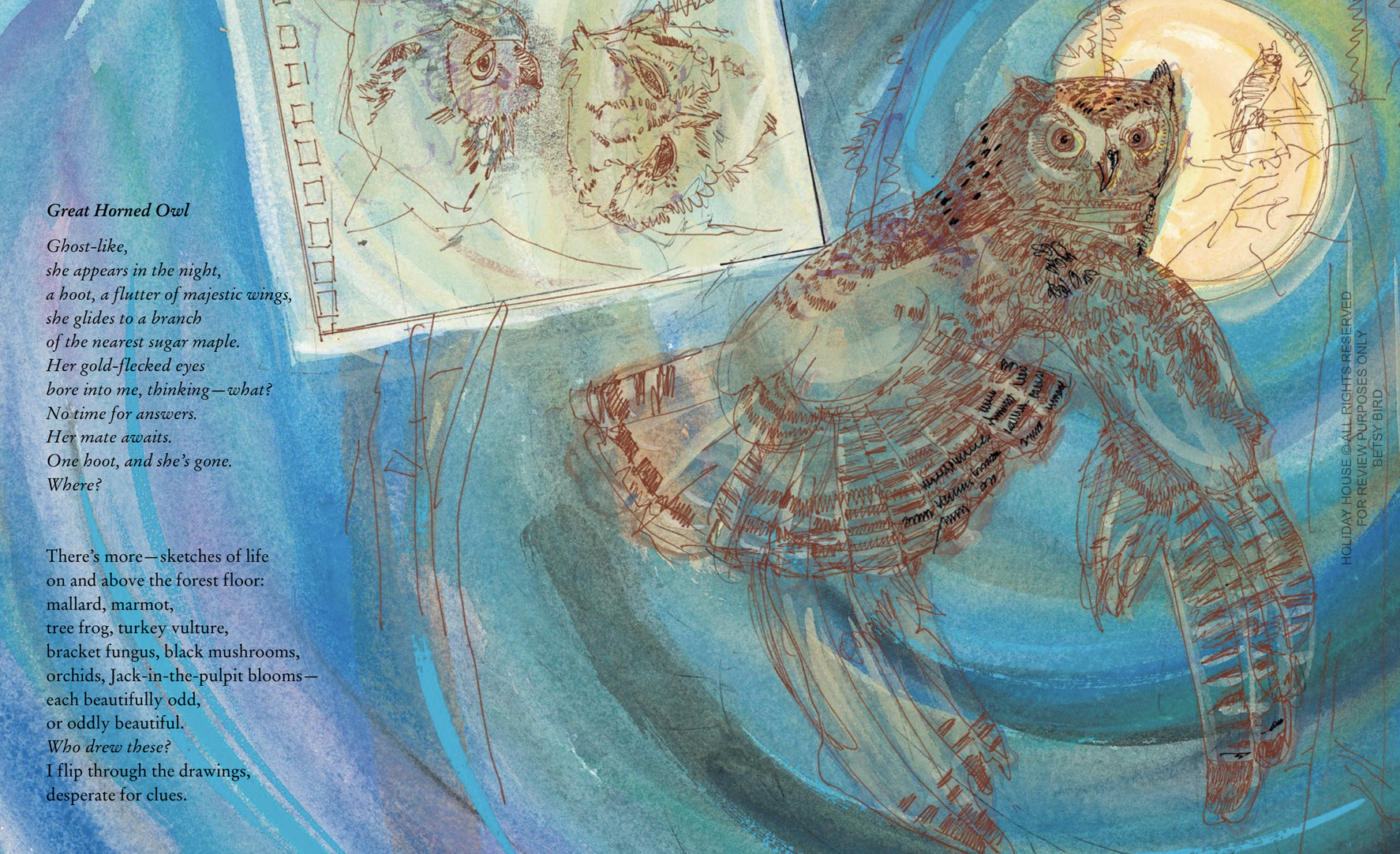
NG: Actually, this work began with the pure poetry you refer to.  Long before there was a tale to tell, Jerry and I were in conversation about nature in general, about his daily walks in the woods near his home, and during one of those conversations, I asked him to write down an anecdote he’d just told me, and send it to me.  He mentioned that he’d done some sketching related to that subject, and I invited him to send whatever sketches he had, as well.  When I received them, I created a poem in response.  Over the few next weeks, he shared additional anecdotes and sketches from his walks, and many of them inspired poems, so that’s really where it all started.  Of course, once I had a handful of these pieces, I realized I needed to nail down a skeletal story framework in which to fit each of these disparate pieces.  I found the inspiration for that story by revisiting The Mysteries of Harris Burdick, by Chris Van Allsburg.  From his classic, I came away with the idea of creating a mystery that would allow me to weave all of these disparate pieces together, and the mystery I came up with was a hunt for treasure, and the treasure itself would be those sketches and poems that started the ball rolling.

BB: Librarians are increasingly on the lookout for books that are beyond the usual white-kids-in-nature trope. Nikki, could you talk to us a little bit about how poetry and nature work together in books like this one?  Why is poetry so essential for readers of this age?

NG: As I alluded to earlier, one of the reasons this book exists is because both Jerry and I were passionate about creating more books featuring Black characters engaging in nature.  There’s so much in nature that sparks poetry, of course, so I feel there’s a natural correlation between the two.  As for poetry being essential for this audience, poetry helps to engender a love of language, and that’s critical when you’re talking about seeding and nurturing a love of story, and a taste for literature among emergent readers.
BB: I know that part of what’s so wonderful about the final product is that this collaboration between generations also includes the work of Charnelle Pinkney Barlow. Brian, could you talk about her contributions to the book and how she became involved? 

BP: My niece, Charnelle Pinkney Barlow, the granddaughter of Jerry Pinkney, became the perfect third collaborator. Charnelle, a talented artist, who has illustrated nearly a dozen children’s books of her own, has a working knowledge of rendering images using computer illustration. Charnelle‘s skill helped merge my dad‘s line drawings with the paintings I created.

BB: Was there anything that either of you initially wanted to include in the book and couldn’t for one reason or another?

NG: Not on my end, although I could have gone on and on about the back-story to this book, but there wasn’t room for that.  That desire is satisfied, though, through interviews like this one!

BB: Finally, what are the three of you, including Charnelle, working on next?

NG: I have two new picture books on the way: A Cup of Quiet (Bloomsbury) another nature-themed story; and Stronger Than (Heartdrum), a book featuring a Black Choctaw character, co-authored with Stacy Wells, a member of the Choctaw Nation.  In the meantime, I’m working on two adult poetry collections.  I like to mix things up!

BP: I’m finishing up on an original story, Brandon and the Baby, to be published by Greenwillow books for young readers. It’s about a baby brother and older brother and his magical blanket. I’m also working to complete the last project my dad had started and didn’t get to finish. Charnelle will help me merge my painting with Jerry’s line drawings for this as well.  

Charnelle has a few different projects going on all in various stages. Shes working on the manuscript for her next author/illustrated book. She feels like it’s still in its awkward teenage phase, so won’t say much about it just yet… stay tuned!! She recently turned in the final illustrations for the third book in the Keyana series written by Natasha Anastasia Tarpley which is super exciting. The second book Keyana Loves Her Friend publishes with Little Brown Books for Young Readers on December 12th, 2023.

I look forward to all of that. And I thank Nikki and Brian for taking the time to answer my questions today. The good news is that A Walk in the Woods is in stores and libraries now, so no need to wait. Run on out and grab yourself a copy today. There’s really nothing else quite like it out there today.
Filed Under: Best Books, Best Books of 2023, Interviews Tagged With: author interviews, Brian Pinkney, Charnelle Pinkney, illustrator interviews, Jerry Pinkney, Nikki Grimes, picture book author interviews

The Bridge: Featuring Eva Lindström and Jon Klassen in Conversation

September 20, 2023 by Betsy Bird

One of my favorite parts of this job is talking to picture book creators about their art. But you know what’s even better than that? Talking to picture book creators about other picture book creators. Particularly when they’re in conversation with someone that they particularly admire.

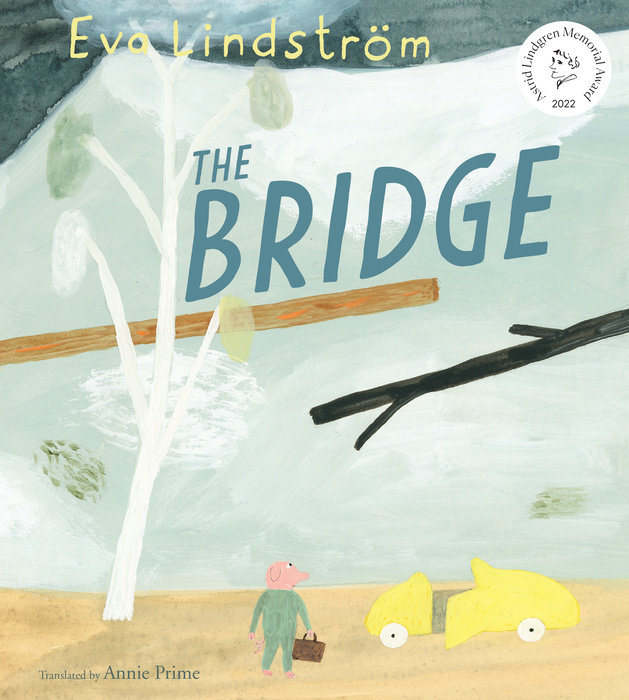
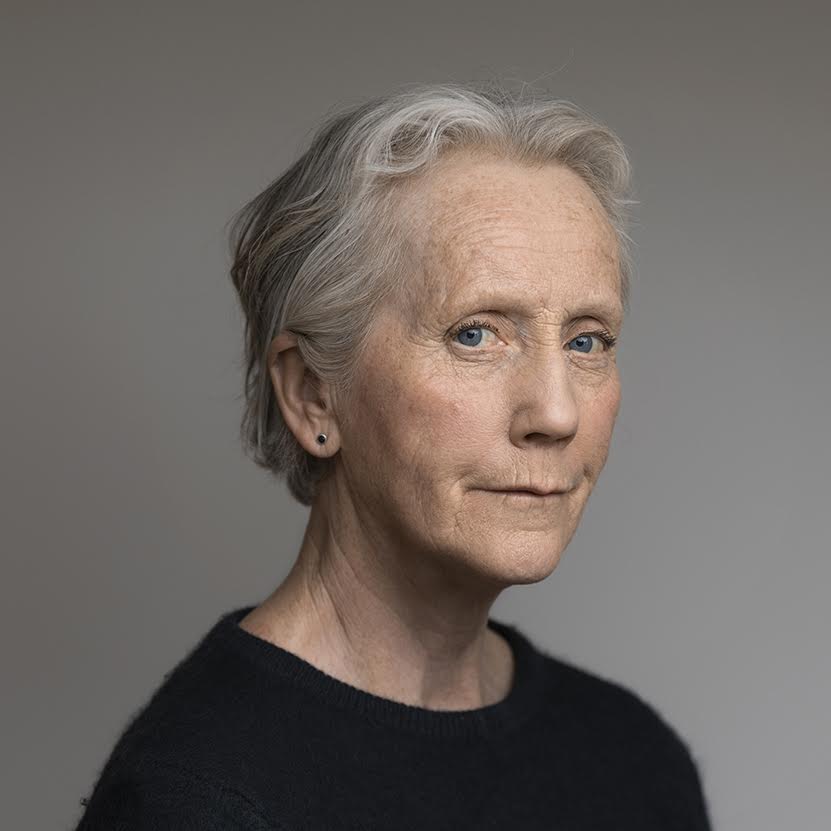
If Eva Lindström isn’t a household name in America then that is no fault of hers. After all, she was awarded the Astrid Lindgren Memorial Award in 2022, has been nominated once for the Hans Christian Andersen Award, and eleven times for the August award which she won in 2013. Add in the fact that she began her career as a comic artist and cartoonist, and has had a major influence on the new generation of comic book artists now emerging in Sweden, and you have yourself a particularly fascinating individual.

This year, Ms. Lindström is releasing the picture book The Bridge here in the States and it is like no other you’ll see this year.

Y’know, I don’t normally do this, but sometimes you have to grab a couple professional reviews to make a point. Here’s what they have had to say about the book:

“Translated from the original Swedish, with off-kilter and perspective-warped illustrations done in a pale wash of gouache and watercolor, this book is entirely original and unique. The text itself is straightforward and simple with an undercurrent of dry humor, but there are strategic and deliberate hints of violence painted ominously into the backgrounds…that give the story an unsettling feeling throughout. That, combined with the eerie, mic-drop ending, makes it feel somewhat like a Christopher Nolan film for kids in a 36-page picture-book format.”  —Booklist

“Lindström’s naïve gouache illustrations carry readers through a strange, mostly empty world seemingly fraught with danger…Enigmatic.”  —Kirkus Reviews

“Suspenseful…”  —Publishers Weekly 

Joining us today is Millie Von Platen, Editorial Assistant at Astra Books for Young Readers. She’ll be conducting this conversation between Eva and one of her most ardent fans, a fellow by the name of Jon Klassen. Sit in and enjoy the kind of discussion that only comes around once in a great while:


Millie Von Platen: Hi, Eva and Jon! I’m so delighted to be talking to you both. I’m from Sweden, so when my colleague Leonard Marcus first brought Eva’s books to our edit meeting, I was thrilled— Eva’s works has this tongue-in-cheek and darkly humorous style that I always loved as a kid. When I moved the US for college and started working in the children’s publishing industry, I remember reading Jon’s stories and appreciating the similarly offbeat and wry twists. I also find that both your books have huge crossover appeal to adults— The Bridge and The Skull both don’t shy away from a subtle type of spookiness that I think can be appreciated by all ages. When you’re working on your books, do you find that you write and illustrate for adult readers as much as you do young readers?

Eva Lindström

Eva Lindström: I write and illustrate things that I myself find interesting. I do not want to write for a particular age group; I want to create stories that amuse me and are fun to work on. It is hard to believe that many people read and enjoy my books—it’s a lot easier to imagine that perhaps someone I know makes up my audience. Someone like me, maybe. I am quite child-like but also grown-up. 

Jon Klassen: I agree very much with Eva. I think the primary thing is to keep yourself, as the author, interested. That’s not entirely selfish, either. An audience can sense if the author is, or was, engaged when they made something, and most of the time the audience responds appropriately. If there is a consideration of a specific audience, like children, for me, it has to do with basic comprehension – I enjoy getting the main idea clear enough that a very young reader would understand it. But even then, that has more to do with an interest in general distillation than in an intended age group. It’s just a fun challenge to boil it down. 

MVP: Jon, when I first reached out to you about writing a blurb for The Bridge, you mentioned you had admired Eva’s illustrations for a long time. Given that most of Eva’s titles are in Swedish, I believe The Bridge is one of the first stories of hers you’d actually read. What was it that drew you to Eva’s work initially? And now that you’ve read her writing, do you find that view her work in a new way? 

JK: I think any one of Eva’s pictures would have stopped me in my tracks, no matter which one I saw first. It’s everything about them. She has such amazing texture and movement to her work, always just the right amount to excite you without taking attention away from the overall compositions, which are always so brave and organic. There are some approaches to illustration and image-making that believe in leading the eye and telling you where to look right away, and Eva doesn’t do that. She lets you look around, so when you find what you’re meant to find in there, it belongs to you. Her characters are never quite where you think they’re going to be, which, to me, points to a spirit of our smallness in the world, how we as inhabitants are only part of a place, part something larger and unsaid, instead of at the center of it. There is an honesty and a truth to that.

Her writing, to me, seems to have as much interest in negative space as her images do, and it is gentle and fearsome and loud and quiet and blunt and soft all at the same time. That’s not to say you can predict the writing just by looking at the pictures, but when you see them both together, they confirm each other in a wonderful way. Her story structure and pacing is another thing altogether, and is somehow the thing that hits me hardest in the end. She’s unlike anyone else I can think of in that area. 

Jon Klassen

Eva, I was excited that we have slightly similar approaches to writing, where we both seem to enjoy writing either in first person or using only the voices of the characters, without narration. Is that something that took a while for you to discover, or did that way of writing come quickly (it took me a little while to figure it out)?

EL: I think I have almost always used I and We in my stories. It puts me right in the story and lets me experience it in a good way, I like to think. The Bridge is probably the first time I’ve let the characters do all the talking. There are a lot of “probably”s and “maybe”s in everything I say; partly because I am still unsure about my whole process and my memory is kind of lousy. In any case, the narration becomes a bit more unreliable in a good way if it is written entirely in dialogue. And it’s easier to have fun ideas with the story. However, it has taken a while for me to get to purely dialogue-driven stories.

MVP: Eva, this is the first time your books have been published by a US publisher for an American audience. As you know, each country’s children’s book marketplace has specific needs and interests. What has your experience been writing for a Swedish audience, and what do you hope American kids reading THE BRIDGE for the first time will take away from your story?  

EL: My books have received all kinds of feedback here in Sweden. Some find them too strange, while others appreciate them for precisely that quality. I hope, of course, that American children will find joy in the slightly odd atmosphere when the Pig and the Wolf [in The Bridge] are chatting over a cup of coffee. And now I wonder how you feel that your books, Jon, have been received in Sweden and abroad and if the reception has been any different than in the US where your books were originally published? 

JK: I wish I had more direct experience with the reception my books have gotten abroad, especially in Sweden. I have a little, though, and by and large it seems that people outside the US are more comfortable with ambiguity, in the story or even in the purpose (if any) of the book. There’s an impulse in the US to have their children be directly instructed somehow by what they’re reading or looking at, and if you don’t do that, they’re often a little suspicious of what you’re up to. Almost everywhere else I’ve gotten to go with the books, they don’t need that, and they are able to enjoy what’s there, and what isn’t there, and talk about that. It’s very encouraging. 

Millie Von Platen

MVP: Final questions! I am personally curious: if you weren’t children’s book author-illustrators what would you be? What were your favorite children’s books when you were young? And where do you draw inspiration from? 

EL: If I had a different career, I’d probably work in gardening, or perhaps something related to forests. And some of my favorite books when I was a child were Winnie the Pooh, Mio My Mio, The Little Prince, The Island Stallion, The Black Stallion, Anne of Green Gables, Pippi Longstocking, and Rasmus på Luffen. My inspiration comes from everything that happens in the world, everything that happens to people I spend time with, everything I read, all the movies I watch, trees, mountains, animals, clouds. 

JK: Whenever I had a summer job when I was in school I would try very hard to get one that got me outside, and I’d get very sad if I couldn’t find one. I like to read about physics even though my math talents are pretty nonexistent, but maybe if I hadn’t been so interested in drawing I would’ve tried harder at math and been more useful there. I admire tradespeople a lot – carpenters or plaster workers or car mechanics, that kind of thing. 

I feel the same way as Eva about inspiration, it can come from just about anywhere, though I don’t think I have many actual ideas until I start to consider the form I’d be working in. Whatever the limitations or strengths of a particular medium is usually what gets me started and then I begin to realize I actually do have thoughts on whatever is happening out in the world. 

When I was little I loved Hardy Boys books, Tolkien, Far Side and Calvin and Hobbes and Archie comics, P.D. Eastman, and Alfred Hitchcock’s collections of scary stories. 


I’d like to thank Kerry McManus and the team at Astra Books for Young Readers for organizing and putting together this conversation. Thanks to Millie for her insightful questions and to both Eva and Jon for taking the time to answer them so thoroughly.

The Bridge is available for purchase right now and as I mentioned before, it is like nothing else you may read here in America this year. Go find it!

Filed Under: Interviews Tagged With: author interviews, Eva Lindström, illustrator interviews, Jon Klassen, Millie Von Platen, picture book author interviews

Newbery/Caldecott 2024: Fall Prediction Edition

September 19, 2023 by Betsy Bird

Oh, we’re down to the wire now. By this point a lot of the review journals at least have received the last of the 2023 publications. I always feel particularly bad for books, specifically longer books, with October publication dates. Year end lists are pretty much submitting their selections right now, which means a lot of those delightful late-in-the-year releases won’t have even been read.

It also means that sites like Heavy Medals is roaring into gear. Be sure to check out their recent post First Impressions aren’t always right: or are they? Beginning of the year 2024 Mock Newbery Survey Results which will give you a clear as crystal sense of what titles people are discussing right now. You’ll see a lot of these books on there as well. Not all of them. But a goodly chunk, that’s for sure.

Meanwhile, I’ve been amending my spring and summer predictions to fit. Some books have been removed. Even more have been added. Here’s how it’s shaping up, in my mind, now:


2024 Caldecott Predictions

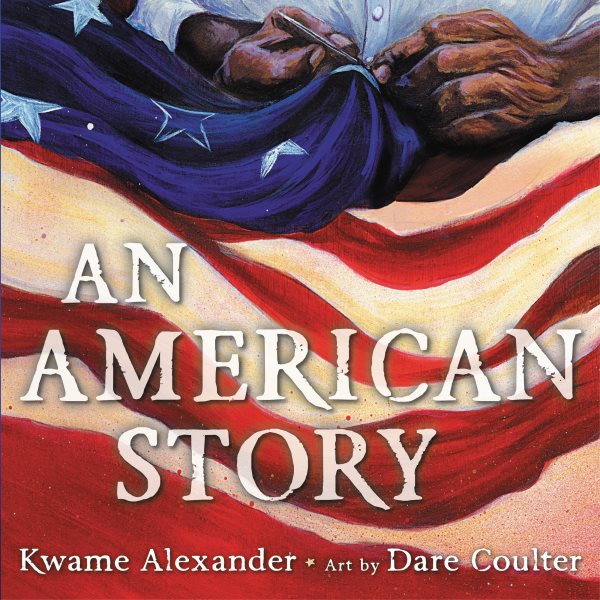
An American Story by Kwame Alexander, ill. Dare Coulter

Nope. Not budging. I said from the moment I saw this book that it was the one to beat in the Caldecott race and I won’t be swayed from that position. Of course, since I initially said that, I’ve discovered that Dare Coulter also illustrated the rather remarkable Zora, the Story Keeper by Ebony Joy Wilkins, which I kind of insist you take a look at. The art in that book is inventive. The art in this book is jaw-dropping. So here is where I’m pushing in all my chips. The only question we should be asking is whether or not the Newbery committee is also looking at it with any seriousness.


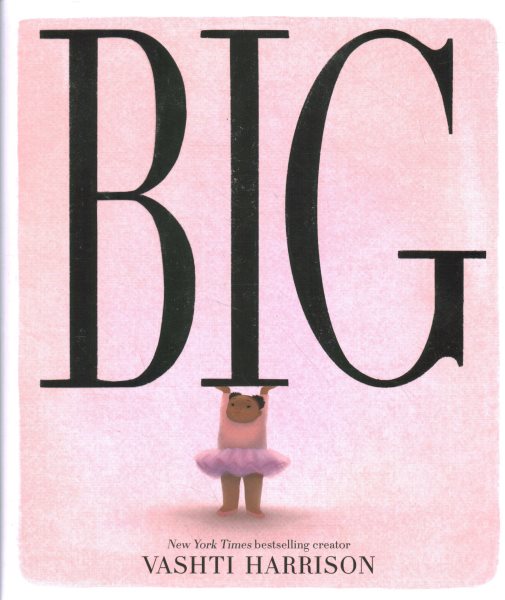
Big by Vashti Harrison

Credit the National Book Awards for bringing this particular picture book to my serious attention (a sentence I have never in my life even come close to writing before since I often think of the NBAs as the All YA All the Time Awards). Of course I’d read Big earlier in the year and liked it very much, but Caldecott? Then it all sort of fell into place. The inventiveness of allowing the very design of the book to reflect significant moments in the story is both unique but also reminds me of a past Caldecott Honoree, Flora and the Flamingo. Indeed, this book feels like a complementary title to Flora in a variety of ways. I’ve liked Ms. Harrison’s work in the past but never felt like she’d ever had the right text. With its spare language and powerful storytelling, combined with art that forwards the telling in all the right ways, that changes so keep a close eye on this one. It’s not a book to be ignored.


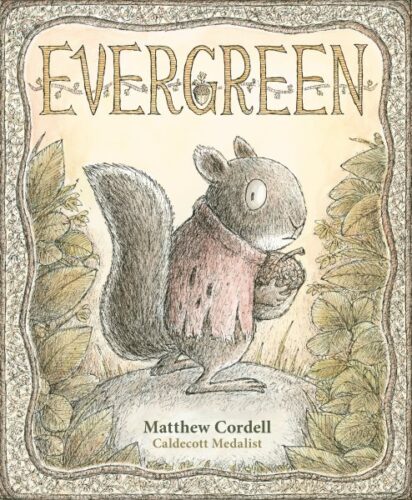
Evergreen by Matthew Cordell

And it only took me eight months to work up a worthy review of it too! I’m pretty sure I mentioned this before, but each Caldecott committee has a different tone and tenor, depending on who’s in its makeup. It would take a better librarian than I to look at who is serving this year to figure out the direction in which this particular committee will break. Are they keen on books with a “classic” feel? Will they find a balance and add this to the mix? Or will they feel that with Hot Dog‘s win last year (a book with a distinctive “classic-y” feel) that they want to go in a new direction for 2024? Only time will tell, but no one can deny that this is one of Cordell’s absolute best to date. It has everything! Beautiful art. A twist near the end. A friggin’ message. Plus it nails the ending. Perfect!


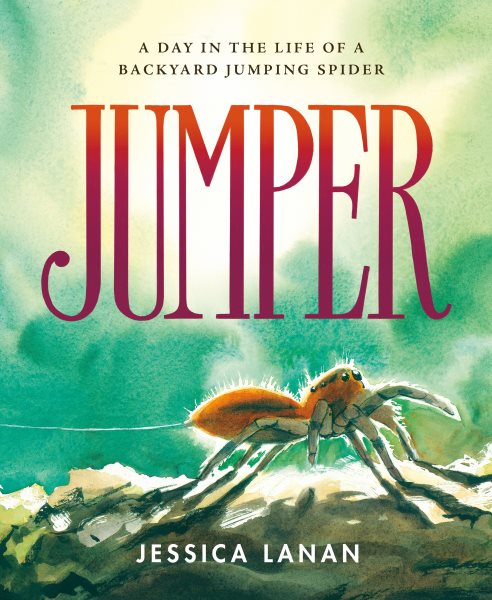
Jumper: A Day in the Life of a Backyard Jumping Spider by Jessica Lanan

Hrm. Apparently I still haven’t reviewed this one. Note to Self: Do that thing. Now I learned to my chagrin the other day that poor little Jumper here, for all that it’s one of the most stunning pieces of nonfiction picture book wizardry of 2023 (imagine if this AND Big win, both with their gatefold amazingness), it also has a serious handicap in this race. Mainly, some people don’t like spiders. Like, they are incredibly icked out by them. And if even ONE person on the Caldecott committee fears their furry little heads, that could be the end of old Jumper‘s chances at Caldecott glory. But it’s a smart committee this year. Even if someone has arachnophobia, how can they deny the cleverness and wizardry of Lanan’s work? One of the finest examples of science and nature nonfiction of the year, and a beaut to boot.


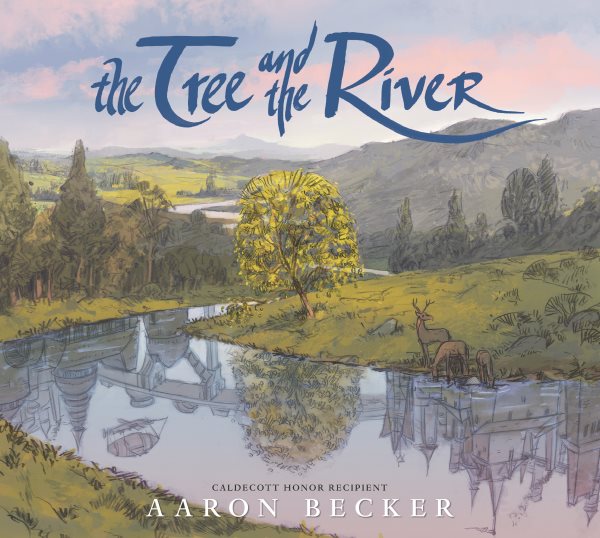
The Tree and the River by Aaron Becker

Do we ever give Caldecotts based on guts? No? Becker’s the guy who takes big swings when he creates a book for kids. I mean have you seen the man’s board books, for god’s sake? The fellow doesn’t know how to go small. He was ambitious when he created a massive three-part picture book visionary series with Journey, Quest, and Return. Now he’s gone all dystopian on us and the result is amazing. It can be hard writing wordless books, but this one gets it, while also referencing famous picture books of the past like, say, Anno’s Journey. Becker doesn’t appeal to everyone so, again, this will all depend on the makeup of the committee, but I’d say he has a strong chance, even this late in the year.


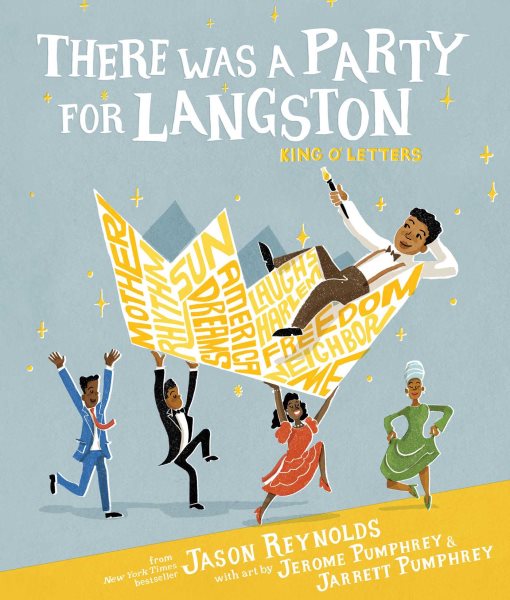
There Was a Party for Langston, King of Letters by Jason Reynolds, ill. Jerome and Jarrett Pumphrey

Yeah. No. The more I think about it, the more I begin to believe that this might actually be our winner. There are a lot of factors going into this that are key. First off, the Pumphreys are due. They’ve been putting in the work, and their style is so unique and innovative (that’s illustration made with friggin’ STAMPS, people!). Next, they’ve been paired with authorial royalty in the form of Jason Reynolds. We don’t really have an EGOT of children’s literature, but if we did, writing a Caldecott Award-winning picture book would be one of the letters (since he already has a Newbery and has served as National Ambassador of Young People’s Literature). Now look at the content. Nonfiction (extra points there for difficulty) but it plays fair and is based on a little known but awesome true story. It works in a lot of issues that are currently on everyone’s mind. And finally (this is so key) it’s overflowing in joy. Joy and dancing and fun, while also tipping its hat to difficult times, but not in a dismissive way. Mmm. Yeah. Might have to change my vote from An American Story to this for the gold. The time is right.


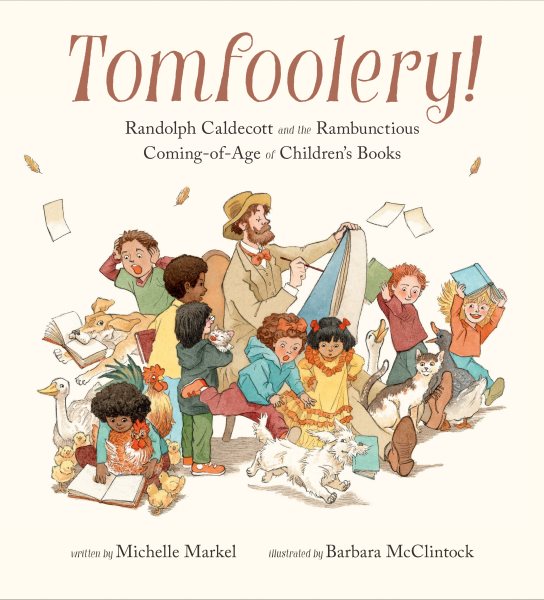
Tomfoolery: Randolph Caldecott and the Rambunctious Coming-of-Age of Children’s Books by Michelle Markel, ill. Barbara McClintock

Am I cheeky? Very well then. I am cheeky. A book about Caldecott winning a Caldecott. I mean, stranger things have happened. I know I just said that the Pumphreys are due, but if we want to say someone is DUE due, that would be Barbara McClintock. Without so much as an Honor to her name she has been so consistently passed over for Caldecotts over the years that you can only chalk it up to Capable Artist Syndrome (or CAS). This is what happens when you are really good at illustration but you’ve been in the business so long that people just take your inherent skills for granted (paging, Jan Brett). It’s what keeps hugely talented folks from ever winning. Even so, I just think her skills are on fire in this book. Markel’s laying down one of the best biographical texts of the year (I mean, seriously, how do you make Caldecott sound interesting?) and McClintock is doing all these clever things with incorporating Caldecott’s own art into the design. Of course that raises its own question: Does putting his art in the book disqualify the book? Because you’d have to be pretty dead to irony not to find it funny if Randolph Caldecott’s own art disqualified a book from winning a Caldecott.


2024 Newbery Predictions

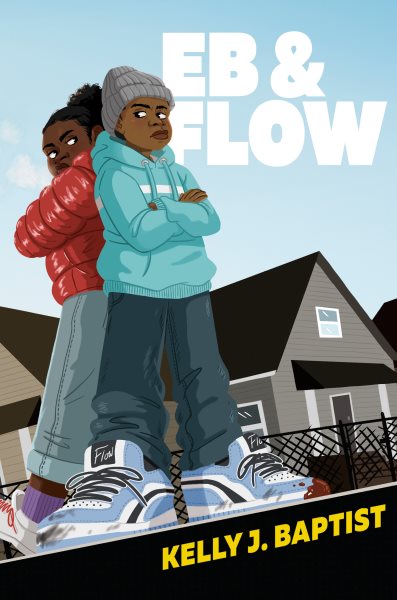
Eb & Flow by Kelly J. Baptist

I love coming to a book a little late in the year, only to discover how smart and clever it is. So there’s been a rash of middle grade novels out in 2023 where the story begins with a character (or, in this case, characters) getting suspended. In this case the point of view vacillates between the two kids who got in a fight: Eb and Flow. Eb (short for Ebony) has a lot going on in her life, but does NOT like Flow. Maybe that’s why she purposefully dumped barbecue sauce on his shoes. The shoes his dad left him before deploying. And Flow is no innocent here. He reacted violently and there is no end to the people in his life telling him that that was a dead wrong move. Baptist has to juggle about thirty balls in the air, making you sympathize with both, get mad at both, and just generally understand how hard it is to understand another person when everyone’s life is so danged complicated. Plus there’s a moment near the end that just took me on a roller coaster ride of emotions, so watch out for that.


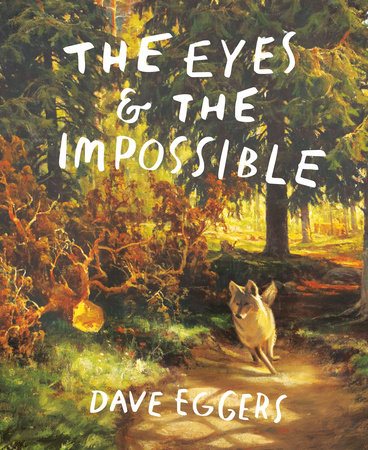
The Eyes and the Impossible by Dave Eggers, ill. Shawn Harris

All eyes on this sneaky pete. I think the marketing team of this book probably didn’t do themselves any favors when they kept touting it as a modern day classic. I’ve read too many publicity sheets in my day to fall for that old chestnut. Never mind that it’s true. I’ve probably also mentioned too many times the fact that I’ve a love/hate relationship with Eggers’ children’s books. I adore Her Right Foot. Everything else? I could take or leave it, but somehow, maybe through the input of his students at 826, this works. Again, it’s taking a big swing, but the end result is remarkable. If you happen to love it as much as I do, check out the solid wood cover that McSweeney’s made for it. A surprisingly strong contender.


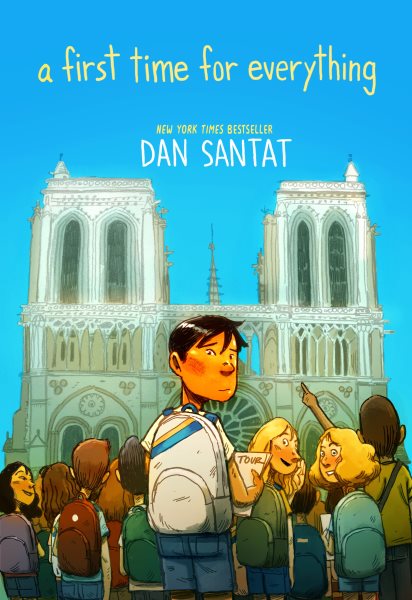
A First Time for Everything by Dan Santat

Boy, when a publisher decides to put their back into promoting a book it is really something to watch. Kind of a relief that Santat’s graphic memoir about visiting Europe as a middle schooler deserves the attention. Can you imagine how intolerable it would be if it didn’t? This one came out early in the year and swiped a good chunk of people’s attention from the get-go. It’s a marvelous combination of nostalgia and downright adventure (getting chased by punks on a bicycle should now be standard for all Newbery contenders). You know what I’d like to see? Dan’s Newbery acceptance speech. I bet it would be something to hear. Dibs on a good Newbery/Caldecott Banquet table to watch it!!


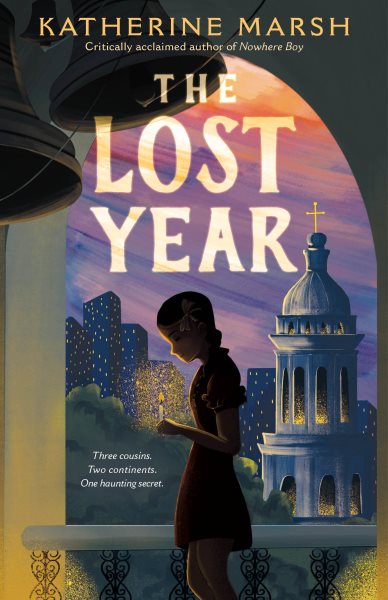
The Lost Year by Katherine Marsh

Well, hello there, book I read far too late in the year! You know, they sent me this way back in January but it wasn’t until a co-worker of mine recommended the audiobook that I decided to give it a shot. Honestly, it’s kind of amazing, but don’t just take my work for it. On Heavy Medals Steven Engelfried said of this book, “THE LOST YEAR should be an interesting discussion. Similar in some ways to last year’s MAIZY CHEN’S LAST CHANCE, which won a Newbery Honor. Both balance those two plot threads, with a modern child learning about their family’s past.” It’s that balance that makes the book as strong as it is. I guess that the early days of the pandemic are already historical fiction at this point, but what’s so interesting is that it’s a moment of history that the kids reading this book will actually be able to remember for themselves. Meanwhile you’ve two other historical storylines, one in Ukraine and one in Brooklyn, and a mystery threaded throughout. Somehow Marsh keeps everything afloat, culminating in a very satisfying ending. Glad I found out about this one before it was too late!


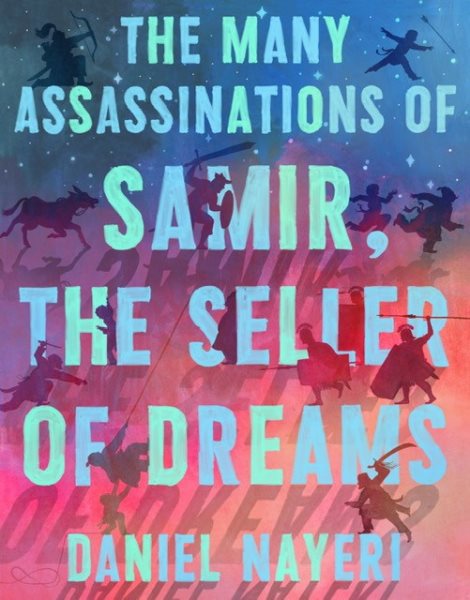
The Many Assassinations of Samir, the Seller of Dreams by Daniel Nayeri

Surprise!

I reviewed this book in February of this year, but this is the first time I’m putting it on this particular list. Why? Well m’dears, I’ve been listening to what other people are telling me. And what I’m hearing is that there are a bunch of books out in 2023 that are getting away with a LOT of stuff on their pages, because they can. In an era where the book banners are better organized than ever before, some authors appear to be responding by pushing the envelope as far as that envelope can stretch. This book has a fighting chance at the Newbery, because it takes serious risks on the page. Granted, there are some religious discussions on its pages that may have kids racing for their online dictionaries, but once the assassinations start happening then the plot really kicks into high gear! Of all the books you read this year, I can guarantee that this is the only one you’ll read and say, “I have NEVER read a book like that for kids before!” True story.


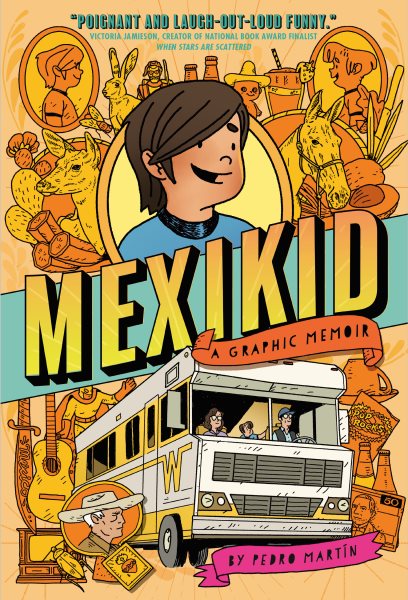
Mexikid by Pedro Martín

And here’s my other little rule breaker! You know, of all the books not to get a National Book Award nominee mention, this is the one I was most disappointed not to see. Pedro Martín appears to be this incredible content provider. He’s so prolific in his comics that only a handful of them made it into this book. Don’t believe me? Then check out his Instagram page sometime. There you’ll find Mexikid story after Mexikid story and all of them hilarious and gripping! I can only pray that this book becomes such a huge hit that it gains a large following and Pedro’s publisher begs him for more of the same. The New York Times review that recently came out could help. You know what else would? A Newbery!


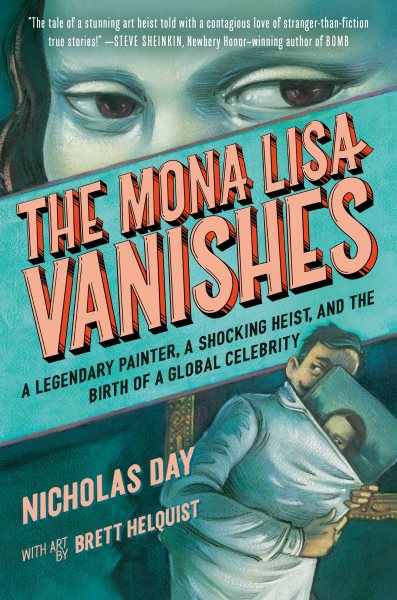
The Mona Lisa Vanishes: A Legendary Painter, a Shocking Heist, and the Birth of a Global Celebrity by Nicholas Day, ill. Brett Helquist

A September release of a book isn’t as bad as an October release award-wise, but lord it ain’t great. I’ve done whatever I can to get people to read this book, and I hope it’s working. You know, on the Heavy Medals post I alluded to earlier there was a graph showing what nonfiction people have liked the most this year. I’ll now confess to you that I’ve a personal dislike of YA titles winning Newberys. I just don’t care for it. Technically the Newbery goes to 14 but I’ve always felt that relates to early middle school books and not high school ones. Now the nonfiction that got the most votes was Steve Sheinkin, whom I adore, and his book Impossible Escape. Which is fine, except it’s YA. This book, on the other hands, is straight up middle grade (and got quite a few votes of its own, I’ll tell you). It’s absolutely hilarious but it’s the writing itself that impresses. Day is orchestrating the different elements of the story and also saying a lot about the times in which we live in terms of trusting facts over instincts. We desperately need more books like this one on our shelves.


My Head Has a Bellyache by Chris Harris, ill. Andrea Tsurumi

It’s been very gratifying seeing this book show up on the Heavy Medals blog as often as it has! I was desperately afraid that because it was a lot of hilarious poetry, maybe people wouldn’t take it seriously. But if anyone gives it even a cursory glance, I think it becomes clear early on that this is sophisticated literary wizardry the likes of which we’ve never seen before. Now when poetry wins Newberys it tends to be kind of meaningful. You know. Verse novels and poems for two voices types of stuff. Wrack your brain for a moment and please inform me of the last time a funny poetry book won a Newbery anything. No no, take your time. I’ll just sit over here in the corner.

. . . dum de dum . . .

. . . twiddle dee-dee…

. . . . ho-hum . . .

Did you figure it out? Did you realize it’s never happened? I’m not talking droll poetry but laugh-out-loud stuff. Because if they weren’t handing awards to Shel Silverstein then it wasn’t going to happen, but now NOW the Newbery committee has a chance to make hilarious history! Sure hope they’ve the inclination.


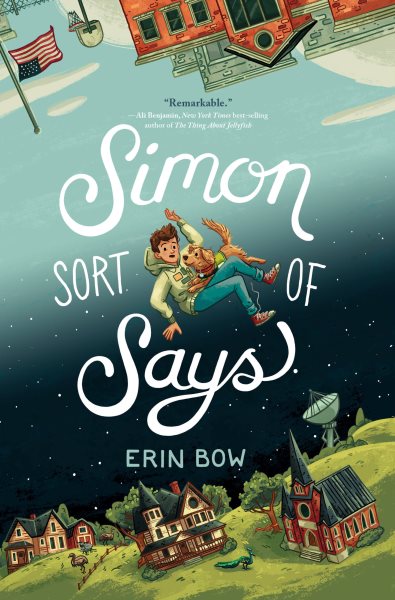
Simon Sort of Says by Erin Bow

Folks, I’ll level with you. Remember when I mentioned this book way back in March in my Spring Prediction Post? I need to confess something. I thought that this book was so perfectly calibrated to my own particular sense of humor that there was no way in the world that anyone else would agree with me that it had award winning potential. Now here we are in the third quarter of the year and not only has it been cropping up consistently as everyone’s #1 Newbery pick but it just got an National Book Award longlist nomination to boot. Apparently, in spite of the fact that this is clearly A Betsy Book, it is also, inexplicably, an Everybody Else Book too. Remarkable.


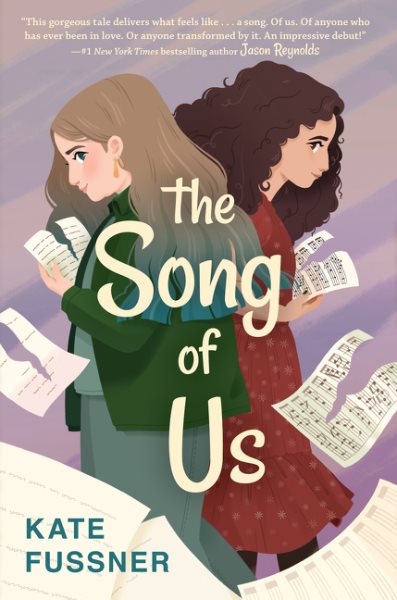
The Song of Us by Kate Fussner

Here’s the mystery behind this book: I’m not sure how I discovered it. Maybe because it was being mentioned on Heavy Medals. Maybe it was someone at work on my library’s 101 Great Books for Kids committee, who thought it delightful. Maybe I read a review. Honestly, I have no idea, but in the end this is a surprising inclusion for me. I’m not a huge fan of verse novels (Eb & Flow notwithstanding) and this is one of those books where two characters lock eyes and BOTH fall instantly in love with one another. Meh. Yet the verse is strong, the characters make sense, and the poetry within the book? Some of the best that I’ve read in a very very long time. Here, I’ve a job for you. Find this book and read one of the first poems that the character of Olivia writes at the beginning. Then decide if you want to read more. Honestly, this is shockingly great.


Committees, I do not envy you your job this year. And for those of you reading at home, what have I missed? What’s an egregious lack on this list? What would you like to see featured here? Where have I strayed? What did I get wrong? Would love to hear some alternative opinions. Thanks!

Filed Under: Best Books, Best Books of 2023, Newbery / Caldecott Predictions Tagged With: Caldecott 2024, Newbery 2024, Newbery/Caldecott predictions

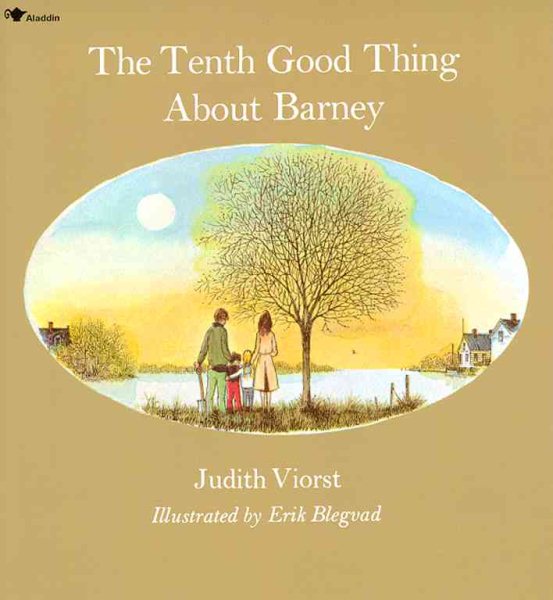
Fuse 8 n’ Kate: The Tenth Good Thing About Barney by Judith Viorst, ill. Erik Blegvad

September 18, 2023 by Betsy Bird

It seemed only fitting to me that since last week’s podcast episode dealt so directly with the beginnings of life, why not focus on the end this time around? I’ll tell you this much, though. If you’d informed me, prior to this recording, that a 1971 picture book would be one of the best books I ever encountered on death, I would not have believed you. But I probably should have realized something was up when I saw that The Tenth Good Thing About Barney was by Judith Viorst. Today we deep dive into how good a name “Barney” is for a cat, whether the mom is trying to subtly regift her yellow scarf as a dead cat wrap, and whether this family’s sodium intake is too high.

Listen to the whole show here on Soundcloud or download it through iTunes, Stitcher, Spotify, Google Play, PlayerFM, or your preferred method of podcast selection.

Show Notes:

Death books we’ve done on this podcast already include Duck, Death and the Tulip and The Dead Bird. Previous Judith Viorst books done on this podcast include I‘ll Fix Anthony, Alexander and the Terrible, Horrible, No Good, Very Bad Day, and My Mama Says There Aren’t Any Zombies, Ghosts, Vampires, Creatures, Demons, Monsters, Fiends, Goblins, or Things.

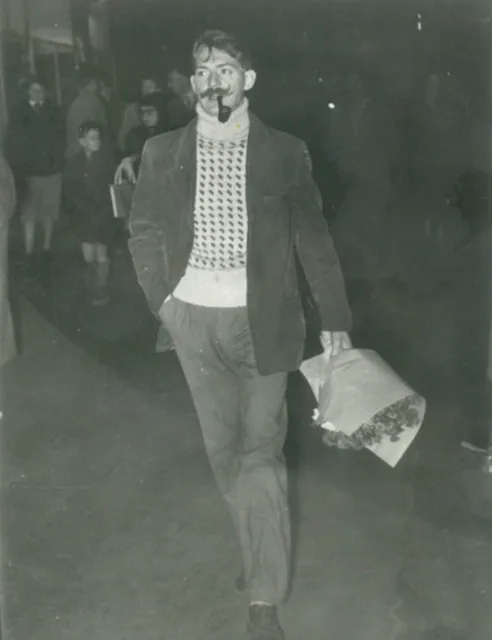
According to Print Magazine, this is Erik Blegvad circa 1953 on the Boulevard St. Michel, Paris. And a nattier image of a picture book illustrator I dare you to find.

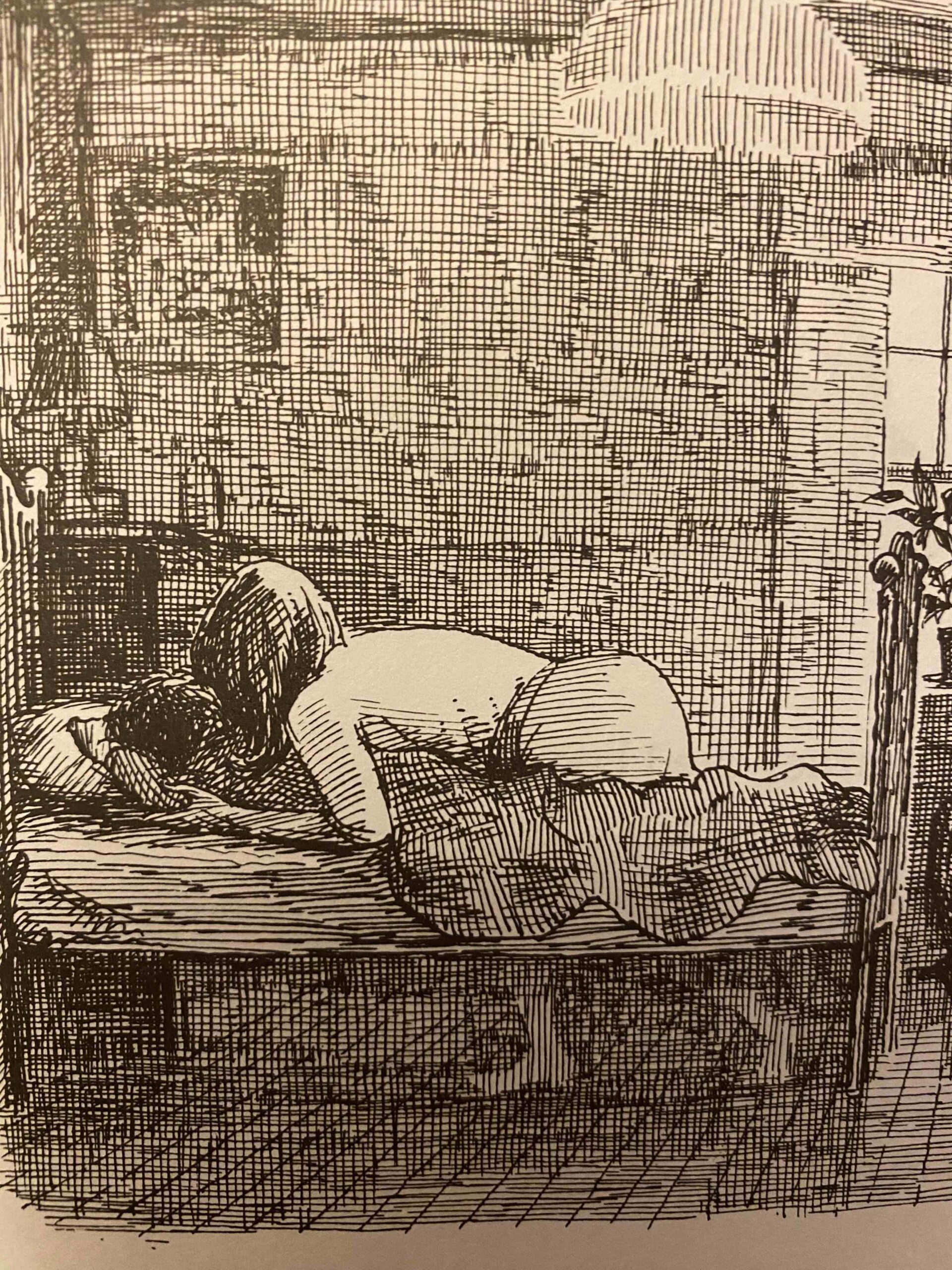
We don’t call it out, but this is one of those picture books where the space below a child’s bed is ridiculously clean. Freakily so.

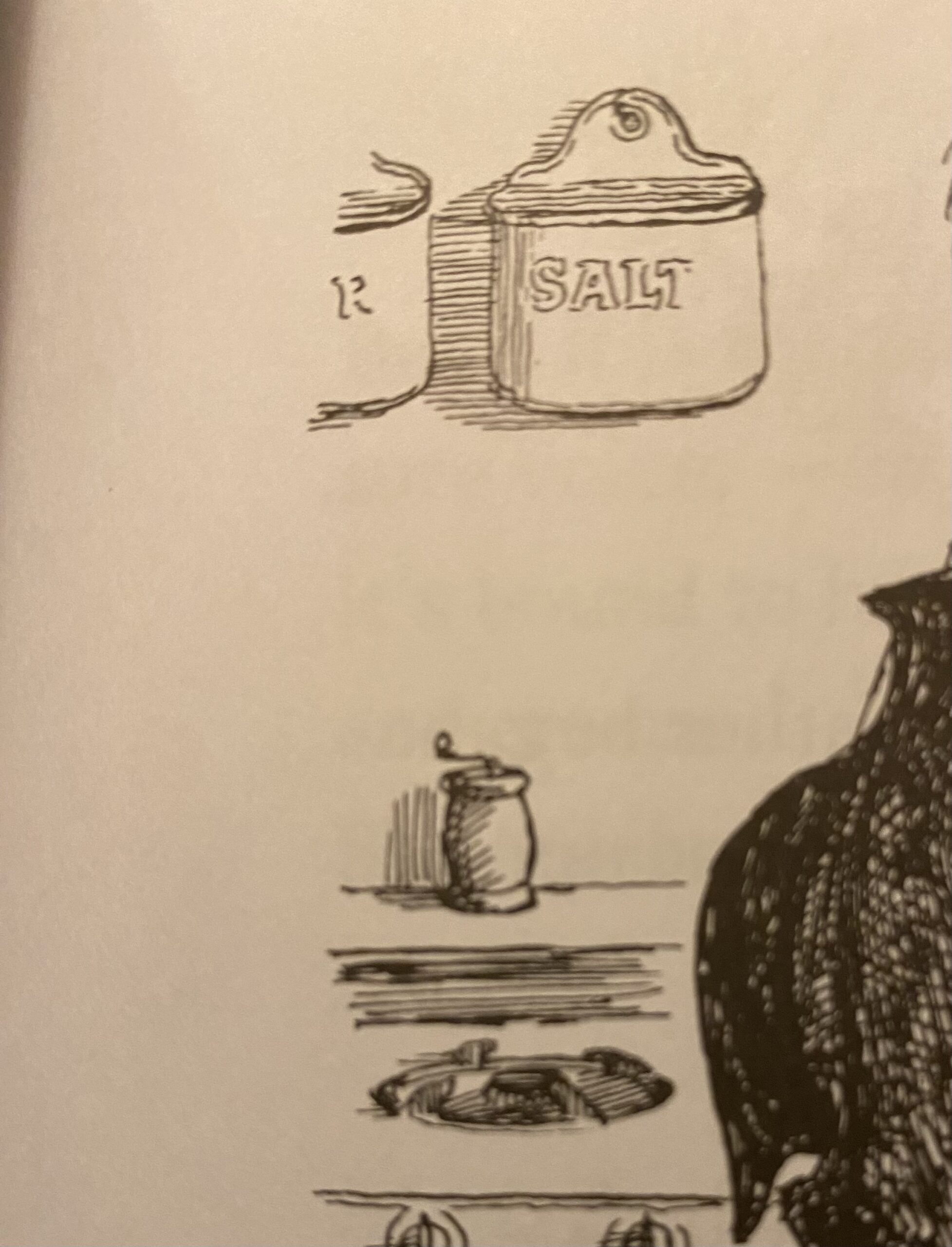
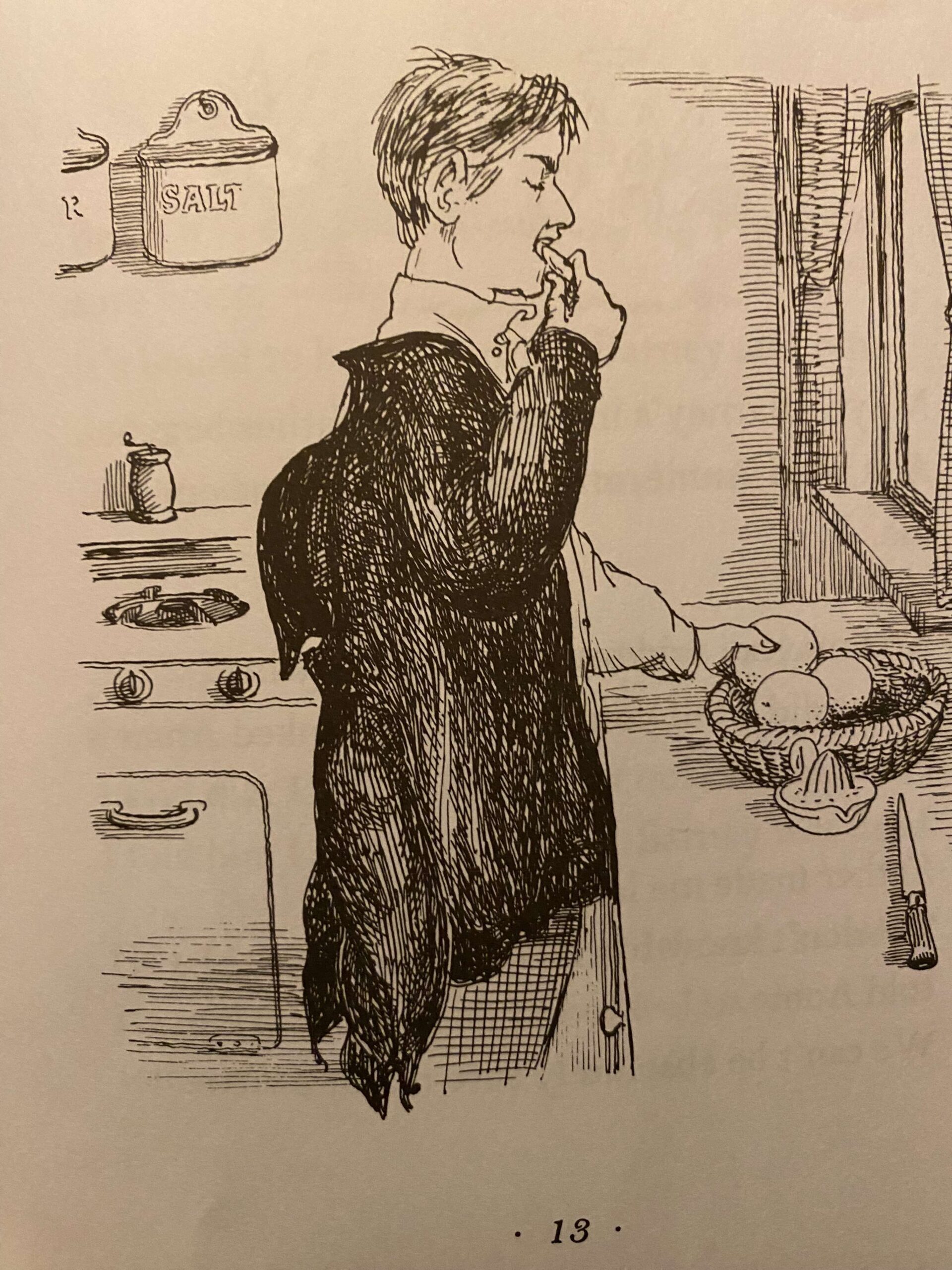
We’re a bit baffled by the sheer amount of salt hanging above the stove. Is it for grease fires? Does it contain the ashes of Aunt Salty? Who’s to say?

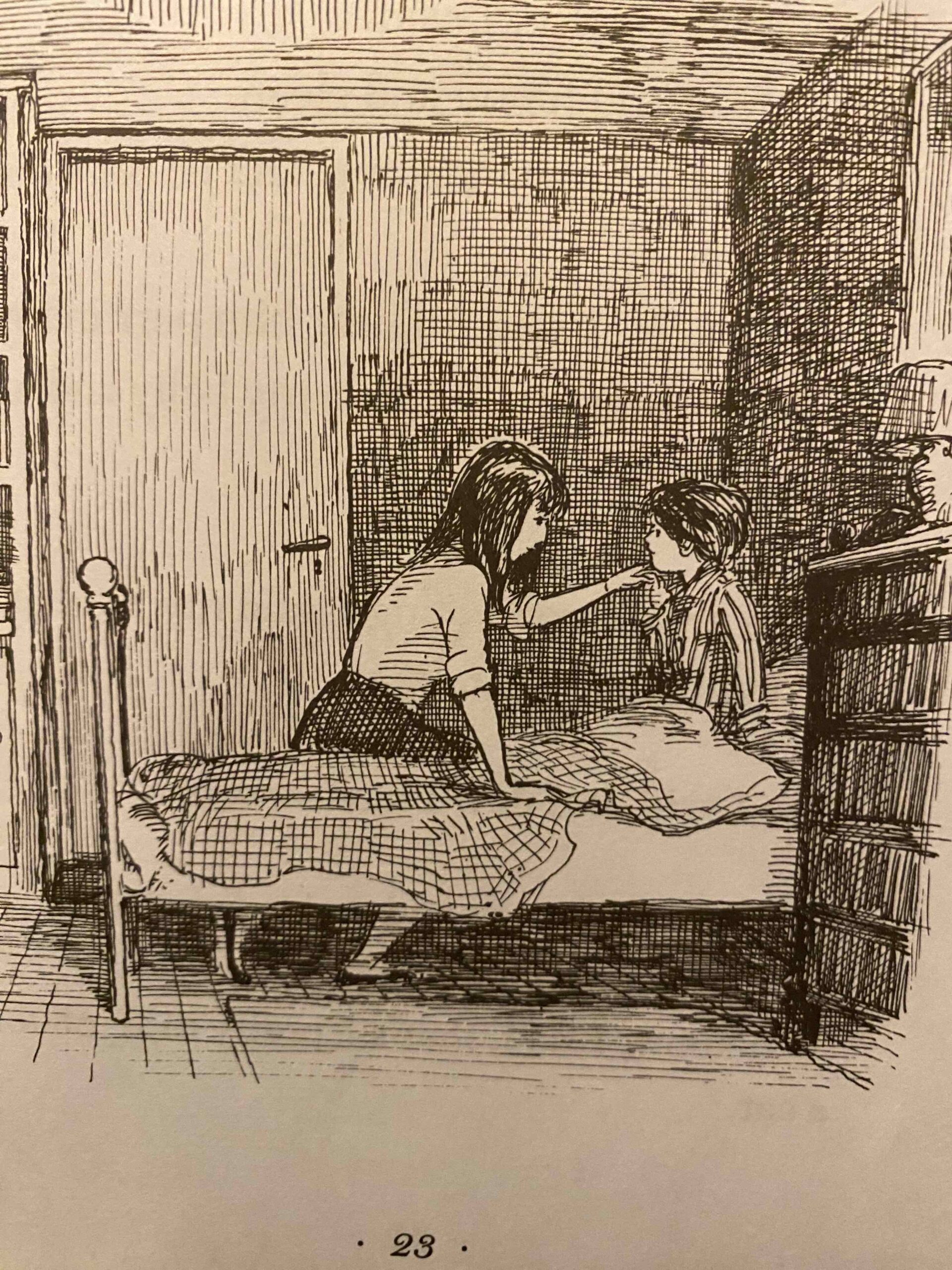
The dad goes through a marvelous transformation in this book. From this schlubby image…

To this ….

Kate Recommends: The September House by Carissa Orlando

Betsy Recommends: The Teenage Mutant Ninja Turtles: Mutant Mayhem book and score.

Filed Under: Fuse 8 n' Kate Tagged With: death, Erik Blegvad, Fuse 8 n' Kate, Judith Viorst, The Tenth Good Thing About Barney

Review of the Day: Big by Vashti Harrison

September 15, 2023 by Betsy Bird

Big
By Vashti Harrison
Little, Brown and Company
$19.99
ISBN: 978-0-316-35322-9
Ages 3-6
On shelves now

When I was a kid and there was a problem with something I watched or read, half the time I ignored it and the other half I probably didn’t even notice it. And when I look at kids today, one of the reasons I’m so delighted by this new generation is that they are unafraid to call out problematic content when they see it. Still, it is also interesting to see what does and does not get their attention in our books and movies. I was discussing Fantasia with my kids the other day, talking about the original version and the instances where content had been expunged. I explained that in the original Fantasia there had been some incredibly racist content in the centaur sequence. “What about the mushrooms?” my daughter was quick to ask. She meant the Asian-stereotyped mushrooms in the Nutcracker section and I realized that she was absolutely right. Somehow that racism had been deemed okay and remained intact, but the other racism wasn’t. I was grateful to her for noticing that, but later it occurred to me what none of us had also pointed out: the fat hippo sequence a little later. The weight of the large hippos is played entirely for laughs, the idea of them dancing in tutus seen as inherently amusing, particularly when they crush the crocodiles with their weight. My daughter, kid though she is, hadn’t remembered that sequence as also typifying certain people as a certain way and that says something to me. We’ve got kids going around with an increasing awareness on a lot of things, but when it comes to weight, that’s one issue that almost never comes up for them. They’ll sit through entire curriculums in school about the history of racism in America, but no one talks about anti-fat bias. Literally no one. And when it shows up in our children’s books, where does it end up? In the middle grade fiction for 9-12 year-olds, of course. Mind you, by that point they’ve been so inculcated in anti-fat bias that you might begin to wonder why we’ve never had a really excellent picture book address this issue before. There are plenty of paltry picture books filled to the brim with didacticism, sure, but until I read Big by Vashti Harrison I really had never seen one that tackled the issue head on with style, skill, and creativity. More of this please!

“Once there was a girl with a big laugh and a big heart and very big dreams.” She was happy with herself, but around second grade we see this begin to change. One day, she and the other kids are playing on the swings for younger children and she gets stuck. After suffering through all kinds of insults and getting yelled at by adults, things change. “She began to feel not herself, out of place, exposed, judged, yet invisible.” It all culminates in a sequence where she grows larger on the pages, filling them entirely. Eventually, she’s able to cry out the awful words and then separate the good from bad. The good, she keeps. The bad, she hands off. And when folks offer to help her change, she politely declines. “…she was just a girl. And she was good.”

Daunting. That’s the first word that comes to mind when I think about trying to deal with how fat people have typically been portrayed in the world of children’s picture books. I’m not even talking about the novels at this point (Roald Dahl and J.K. Rowling would earn themselves an entire thesis on the subject, after all). Let’s just stop a second and try to think about fat adults in picture books. Who comes immediately to mind? Anyone? And if you can think of anyone, are they nice or mean? Now think of the most positive fat character in the whole of children’s literature who’s a kid. If you’re struggling then you see the issue. Children’s books were created at the start as a way of inculcating morality in kids. For the most part, and for many of them, including this book, that hasn’t changed. The problem is that sometimes we don’t realize that on our way to teaching one lesson we’ve inadvertently taught a terrible one as well. A book of anti-racism or economic disparity can throw in a couple fat jokes or insults and few will blink. So imagine being one of the few books to face that head on. Like I say. Daunting.

Before I get any more into this, though, can we stop for a moment and take into account what Big doesn’t do? First off, it doesn’t make the insult of the main character the book’s title (you’d be amazed how often that happens in picture books). Second, it doesn’t start the main character off by feeling bad about herself. Many is the book where the protagonist begins the story by feeling awful from page one onward. Here, our heroine has had a loving and supportive family and feels great about herself until a veritable mosquito swarm of microaggressions start to bring her down. Finally, what else doesn’t it do? I call this the RRNR situation (Rudolph the Red-Nosed Reindeer). In a lot of picture books the main character is an outsider until the moment whatever it is that makes them different saves the day for the mean people. Then, out of some perverted sense of obligation (I guess?) they decide to accept that person. Here, there is a climactic moment but it’s internal and entirely for the main character herself.

I also appreciated how real the ending was on this book. As I’ve mentioned before, loads of picture books don’t deal realistically with how people act when someone is unlike them. Scads of them end with everyone having had their hearts and minds changed by the final page. It sort of sets up a false set of expectations for child readers. Here, our heroine stands up for herself and when she confronts the people who hurt her, a lot of them make excuses for their actions (“It’s just a joke,” “It’s not that serious,” “You’re too sensitive”) or offer some not-apology (“I didn’t mean to hurt you…”). But even more insidious is the person seen only has a hand who reaches out in a friendly way and says, “I can help you change if you want …?” Notice that Ms. Harrison has systematically made sure that only her hero is visible on that last two-page spread. At the moment, there’s no one else there. Hopefully someday someone will join her, but for now she needs that separation. It’s a little psychological break from the rest of the book, and indicative of a lot of how the author/artist uses visual design to back up her story.

When you think of a book character pressing against the confines of a space, what immediately comes to mind? If you’re like me, that would have to be Alice from Alice’s Adventures in Wonderland. At once point Alice bites into a mushroom and grows huge in the White Rabbit’s home. John Tenniel would depict Alice grumpy, propped on one elbow, pressed against the walls. Alice’s confines are uncomfortable and unpleasant, all the more so because they’re accidental and self-inflicted. When Vashti Harrison has her heroine grow and grow in this book, there are echoes of Alice, but for almost opposite reasons. Alice grew because of her own actions. Here, our heroine takes up several two-page spreads because of how others have made her feel. Harrison takes the chance of making several of these sequences wordless, which was a smart move on her part (and a smarter move on the part of her publisher, since too often publishing companies get nervous when words disappear in books for kids). The answer to her situation comes in the form of crying out the painful words that have earlier been imprinted on her, and again we get an echo of Alice, filling a room with her tears. But instead of drowning in her own misery ala Alice, this girl is able to look down at the words and make out good ones as well. Then she literally pushes the gatefolds of the book wide, turning the image into a four-page spread, which again I’ve never really seen a character in a picture book do before (and if you think publishers get nervous about wordless sequences, how do you think they feel about gatefolds?). Consistently this book’s design works in service to the story, rendering what could have been didactic instead expansive and creative.

So what does this book hope to do? Whenever you have a marginalized community, the earliest picture books that come out are usually going to be about the problems that they face, either in a contemporary setting or a historical one. Finding a main character who is fat in a picture book and the book isn’t about their size happens from time to time, but is still relatively rare. It’s possible that we need books like Big to come out first, and then pave the way for a more inclusive set of characters. In the meantime, the reader is very much placed in the main character’s shoes. That moment when she gets caught in the swings for little kids? That rang so true that it was painful. In her Author’s Note at the end, Vashti mentions that something similar happened to her when she was a kid. She also notes, and I thought that this was key, that because she was a larger child, adults thought that she was older than she was and treated her like a big kid that should know better. That happens a lot to our kids as well. Hopefully when read to kids, a book like Big can encourage a bit of empathy in its readers. It cannot exist in a vacuum, however, so we’re going to need more books with fat protagonists to help.

I’ve gotten this far into the review with no mention of race, so that’s not great. The main character of this book is Black, and historically anti-fat bias and anti-Blackness have been tightly interlinked. White people who would go out of their way to avoid discussing a child’s race often have no difficulty discussing the size of their bodies instead. In Big, our heroine faces white authority figures that continually puncture her self-image with small, needling little comments (Santa saying, “You’re a big girl, aren’t you?” really got to me). Also, the title of this book is “Big”. It is not “Fat”. That didn’t strike me as a problem. Like a lot of marginalized communities, there’s not always a consensus on terminology. So some people are very comfortable with the word “fat” while others shy away from it. Big is a picture book. It’s not here to end that discussion. It’s here to give kids a shot in the arm of empathy.

This isn’t a book where the world changes itself for our heroine. It’s not a book where everything is magically okay at the end. That’s not its point. It’s not pretending that she won’t be facing more of these problems in her future. All it can do is say that if she’s happy with herself and who she is, that’s going to go a long way. There’s an honesty here that I really admired. Now add in the fact that the art isn’t just lovely, but also evocative and creative (that gatefold is really a delight) and that the writing itself is great and you have yourself one of the best books of the year. Most excellent! One little book isn’t going to change everyone’s mind about something, but one little book is where you have to start. A superb idea, wrought large.

On shelves now.

Source: Galley sent from publisher for review.

Videos:

I don’t like to read reviews or watch videos before I write my reviews. As such, I didn’t watch this video with Vashti Harrison until just now. After doing so, I feel like she did a great job of addressing “adultification bias” in the book, since I picked up on that prior to watching this.

If you do nothing else today, watch this. Skip my review, and watch this.

Filed Under: Best Books, Best Books of 2023, Reviews, Reviews 2023 Tagged With: 2023 picture books, 2023 reviews, Best Books of 2023, body positivity, Little Brown and Company, picture books, Vashti Harrison

An Interview with the Newest National Book Award Nominee: Talking About More Than a Dream

September 14, 2023 by Betsy Bird

You might have noticed yesterday that the longlist of nominees for the National Book Awards for Young People’s Literature was released to the public. I’ll be honest with you. Normally when that list is released it’s just a slew of YA titles with two middle grade fiction books for spice. I can’t remember the last time I was actually impressed with the choices. This year’s list, however, is amazing. I’d read title after title, which is almost never the case, and I disagreed with none of the choices.

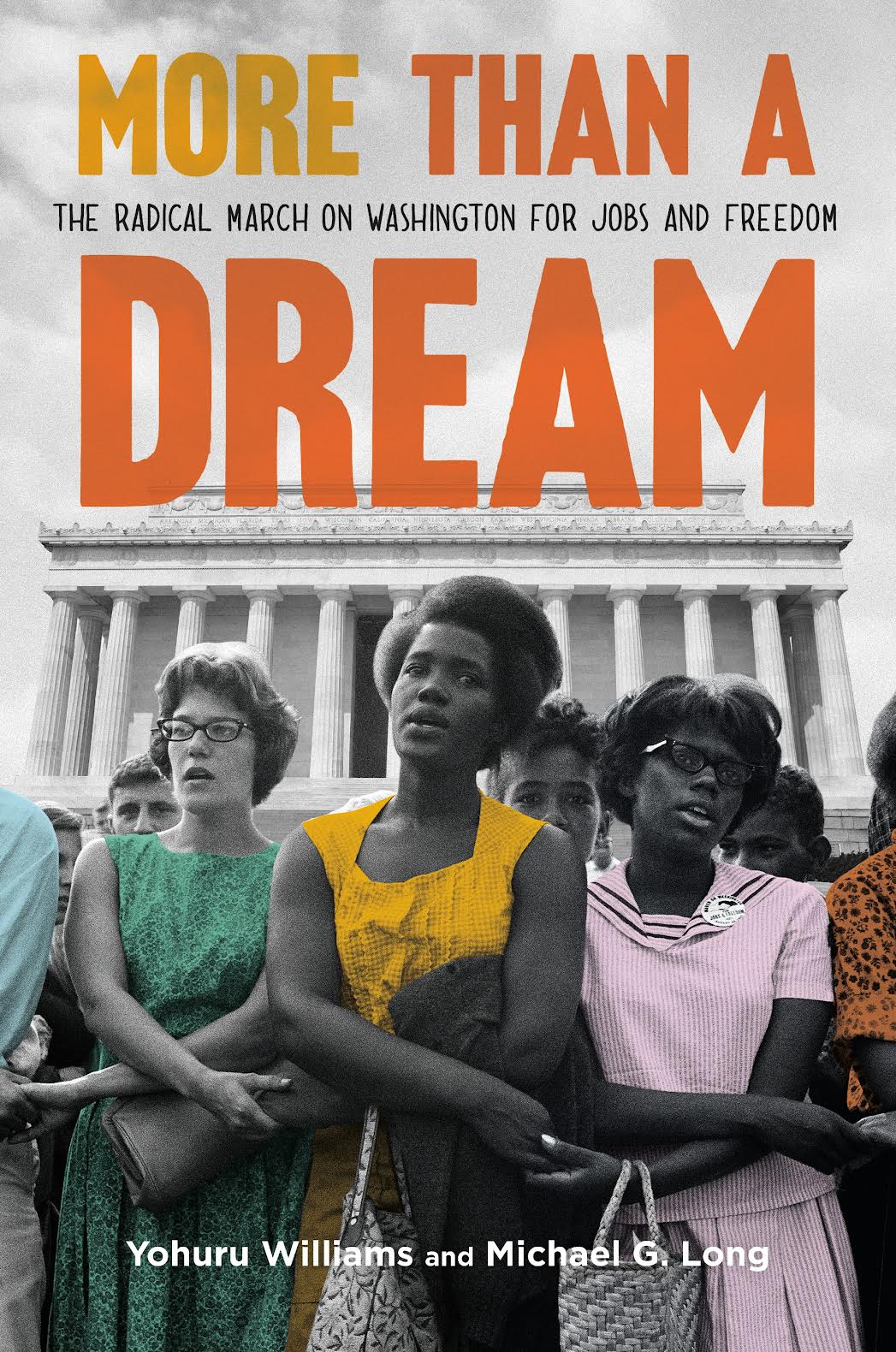
I was also particularly pleased to see that the book we’re honoring here today, More Than a Dream: The Radical March on Washington for Jobs and Freedom by Yohuru Williams and Michael C. Long, was included as well. You’d think I timed today’s interview with the creators of the book on purpose, but I swear to you that this is just an amazing coincidence.

Here’s a quick rundown of the book itself:

“Just in time for the 60th anniversary on August 28, the scholars behind Call Him Jack deliver another eye-opening nonfiction read this time focusing on the groundbreaking 1963 March on Washington for Jobs and Freedom, shifting the focus to the protest’s radical roots and the underappreciated role of Black women. 

Called “an essential reeducation” by Ibram X. Kendi, More Than a Dream looks at the march through a wider lens, using Black newspaper reports as a primary resource, recognizing the overlooked work of socialist organizers and Black women protesters, and repositioning this momentous day as radical in its roots, methods, demands, and results.”

And I can think of no better way to celebrate a 60th anniversary than with a National Book Award nomination.


Betsy Bird: Michael and Yohuru, thank you so much for joining us here today! At the risk of sounding like I’m speaking in superlatives, I don’t think it’s a stretch to say that informational books for young people today contain a level of nuance and understanding of historical complexities never before seen (and, to be frank, seen too little in some works for adults). Your book MORE THAN A DREAM takes The March on Washington and Dr. King’s work and pulls back to show kids that this work wasn’t just because of one guy at one time. What are the roots of this book? Where did it come from?

Michael C. Long,
credit: Elizabethtown College

Michael G. Long: It sprouted organically from our earlier work on Jackie Robinson (Call Him Jack), where we sought to show young readers that Robinson was more than the baseball player who broke the color barrier. After we finished that book, Yohuru and I continued chatting about civil rights projects, and he noted, brilliantly, I might add, that the March, like Robinson, is typically depicted in very narrow terms, and that it would be exciting for us to help young readers understand that the March was far more than Dr. King’s dream, that it was a demand for economic justice and desegregation. As soon as he mentioned that, I was marching right beside him.

Yohuru Williams: I would add that we were also deeply inspired by our contemporary moment. It is difficult to escape the parallels between 1963 and 2023, and we hope the book will help young readers make those connections. The March was conceived, in part, to commemorate the 100th anniversary of the Emancipation Proclamation and how much work remained to be done in achieving absolute equality for Black people. Sixty years on, unfortunately, that work continues.

BB: Well, let’s talk logistics then. When co-writing a book with one another, how do you parcel out the work? Do you have individual specialities that you fall back on? Does each person take on a specific chapter? What’s your process?

Mike: Yohuru and I aren’t just collaborators. We’re also friends who know each other’s interests and specialties really well.

Yohuru: Mike and I both love to research. One of our biggest challenges as collaborators, however, is my penchant for going down rabbit holes. I really enjoy the process of discovery, while Mike is very focused and organized. And that certainly helps keep us on track. The great thing about working with a co-author is that you can share ideas and research as the project is developing and that makes the whole process that much more rewarding.

Mike: So the division of labor was rather obvious for certain sections of the book. For example, because Yohuru has an expertise in Black militancy, it was clear that he would draft the chapter on John Lewis’s militant speech. And because I have a special interest in Bayard Rustin, we agreed that I would draft the chapter on choosing the main organizer of the March. After drafting our assigned chapters, we tossed them back and forth until we both agreed on style and content. It was a Big Bang of a process, and I’m so glad to report that we’re still friends.

BB: Good thing too! Now I am perpetually interested in nonfiction works for older kids and teens that do their own original research. With your specific focus on the role of Black women and socialist organizers, I want to know more about how you researched this. MORE THAN A DREAM, from what I can tell, isn’t one of those books that just produce a young reader’s version from an adult text. So how did you both decide to format the book and then, once you did, what was your research process like?

Mike: We wanted the book to be new, fresh, and groundbreaking. With this in mind, we decided to organize it in a way that would give sustained attention to the long-ignored theme of socialism and to the hidden voices of Black women and student activists.

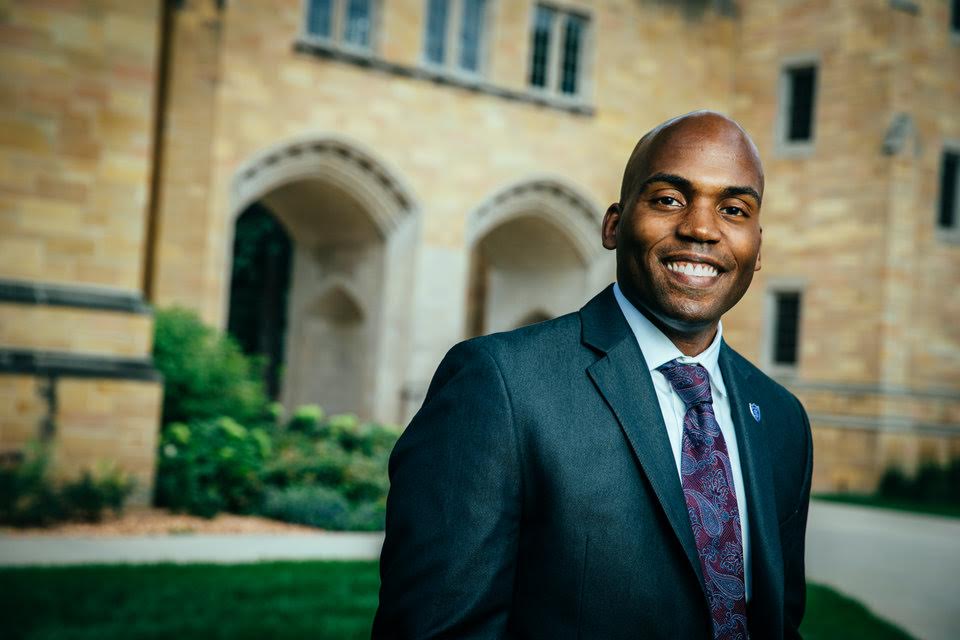
College of Arts and Sciences Dean Yohuru Williams outside The Arches, August 28, 2017.

Yohuru: Yes, it was very important for us to center Black voices, and those of marginalized persons like Pauli Murray and Bayard Rustin.

Mike: Then we researched these topics as if we were a Boston terrier digging up an old bone in the backyard. Our first stop was always a database with historical Black newspapers. They covered the roots, methods, and goals of the March in detail that we couldn’t find elsewhere. Plus, the Black newspapers really helped me, as a white researcher, grasp the uniquely Black perspectives of the March. Also, our goal was to use primary rather than secondary sources, not merely because young readers deserve original research, but because we wanted to give our readers a model for using accessible primary sources.

Yohuru: That is why we included so many primary resources in the book. We really wanted to expose young readers to the process of historical research.

BB: Beautiful. Did anything unexpected surprise either of you in the course of this research?

Mike: We were surprised at the concerted effort to tamp down the presence of young people at the march. The guidelines stated that people under 14 years old should not attend and that those over 14 should be accompanied by an adult or guardian. The organizers were reportedly concerned for the safety of young folks. But they also feared that young militants might provoke disorder at the March. This was surprising to us because we knew that Dr. King and other civil rights leaders strongly encouraged young people in Birmingham to protest on the streets and parks, even though they well understood that Birmingham’s leaders would not hesitate to use violence against the young activists. The students of Birmingham, as well as elsewhere in the civil rights movement, inspired thousands of people to attend the March, and it’s disappointing the organizers denied them the starring role they deserved.

Yohuru: It was great to be able to document this and present it as part of the story so that young readers in particular could appreciate the role that young people have played in history.

BB: And are there specific assumptions that kids and teens might have that you’re hoping this book might upend?

Mike: Young readers familiar with videos of the March may have the idea that it was like a big picnic, with lots of fun, laughter, and back-slapping. No doubt, the March was a joyful event on many levels. But our book seeks to upend the belief that the March was only that.

Yohuru: We show young readers that the March was also somber and serious, angry and militant, impatient and demanding, about life-and-death issues like police brutality, violence against Black people, unemployment, and poverty. 

BB: I have to ask. Was there anything specific that you wish you could have included in the book but that had to be cut for one reason or another?

Mike: Oh, my gosh, yes. The back of our book includes about forty fascinating facts that we don’t mention in the overall story of the March.

Yohuru: Yes, that was frustrating because there were so many interesting tidbits and stories that we uncovered that I wish we could have included.

Mike:  To be more specific, I wish we could have included more information about FBI director J. Edgar Hoover’s vicious, conniving, and wrongheaded efforts to undermine Bayard Rustin and the March. Maybe someday we’ll discover more FBI files that will fully reveal Hoover’s anti-American treatment of the March. They would probably be worth an entirely new book.

Yohuru: For me, it was the stories of local activists and their respective journeys to DC for the March. I became enamored with a group of demonstrators from my home city of Bridgeport, Connecticut, and really wanted to talk more about them, not only because they were from my hometown, but because it shows how far reaching the appeal of the March was and how it brought so many people together to fight for racial justice.

BB: Just to wrap this up, are you two working on another book and, if so, can you tell us anything about it?

Mike: Yes! We love working together, and we relish finding important parts of US history that deserve far better treatment than they’ve received. I don’t know if we’re allowed to talk about our next project, but suffice it to say that our young readers can expect that we will dig through primary resources, uncover old facts, and present new ways to celebrate and criticize our shared, wonderful, and troubling history.


I simply cannot thank Yohuru and Mike enough for the sheer amount of time they put into answering my questions here today. Thanks too to Morgan Rath at Macmillan Children’s Publishing Group for having the insight to suggest this. More Than a Dream: The Radical March on Washington for Jobs and Freedom is available in bookstores and on library shelves now. Be sure to check it out whenever you get a chance!
Filed Under: Best Books, Best Books of 2023, Interviews Tagged With: author interviews, Michael C. Long, National Book Award, Yohuru Williams

  • « Go to Previous Page
  • Page 1
  • Interim pages omitted …
  • Page 114
  • Page 115
  • Page 116
  • Page 117
  • Page 118
  • Interim pages omitted …
  • Page 1047
  • Go to Next Page »

Primary Sidebar