• Skip to primary navigation
  • Skip to main content
  • Skip to primary sidebar
  • About/Contact
  • Fusenews
  • Reviews
  • Librarian Previews
  • Best Books
    • Top 100
    • Best Books of 2022
    • Best Books of 2021
    • Best Books of 2020
    • Best Books of 2019
    • Best Books of 2018
    • Best Books of 2017
    • Best Books of 2016
    • Best Books of 2015
    • Best Books of 2014
    • Best Books of 2013
  • Fuse 8 n’ Kate
  • Videos
  • Press Release Fun

Review of the Day: Oh, Olive! by Lian Cho

Review of the Day: Oh, Olive! by Lian Cho

October 6, 2023 by Betsy Bird

Oh, Olive!
By Lian Cho
Katherine Tegan Books (an imprint of Harper Collins)
$19.99
ISBN: 9780063237490
Ages 3-6
On shelves now

I like so many things about picture books that it would be hard to pin down what precisely I like about them the most. Of course, there is one aspect of children’s literature that I forget and rediscover on a regular basis, and that always makes me inordinately happy when that re-discovery takes place. The simple fact of the matter is that children’s books, like much of storytelling in this world, often rehashes old tropes. There’s the I-thought-you-guys-forgot-my-birthday-but-you-were-planning-a-surprise-party trope and the I’m-a-baby-animal-separated-from-my-parents-so-I’ll-ask-a-bunch-of-animals-if-they’re-related-to-me trope. What’s interesting about these repeated beats is that quality rarely has to do with a plot’s originality. A great children’s author can take the familiar and write it into something that feels completely new. Take Lian Cho, for example. She’s making her authorial debut with Oh, Olive and if I were to describe the plot to you, you’d say it had been done before. You’d be right, but you’d also be wrong. Sure, the story in this book is the artistic-kid’s-parents-bemoan-artistic-kid trope, but it’s HOW Cho puts all her elements together that makes this book feel more than original. It feels special. Probably because it is.

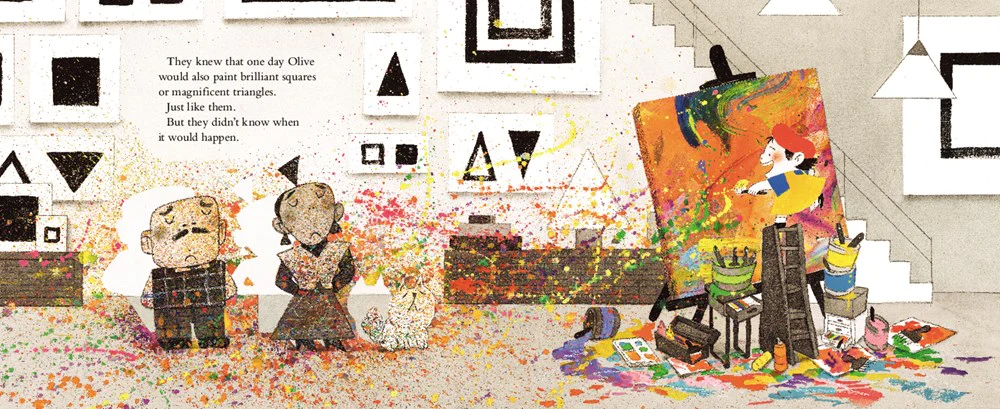
Olive’s parents despair. They are “serious artists”, you see. Her father specializes in painting squares and her mother rectangles. From day one they’ve attempted to teach their daughter shapes, but Olive’s art is very different from their own. While they find joy in the black and white purity of a single shape on a canvas, Olive delights in color concoctions. Her paintings look like what you’d get if Jackson Pollock occasionally fell onto this paintings and smeared the splatter. When she goes to school, her teacher tries to correct her and get her to do shapes too, but the other kids recognize Olive’s potential. And when they ask her to teach them, no one has any idea how far that teaching will go.
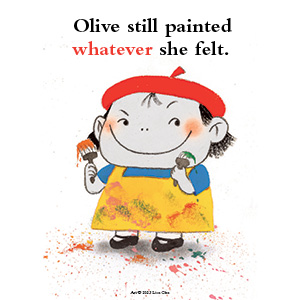
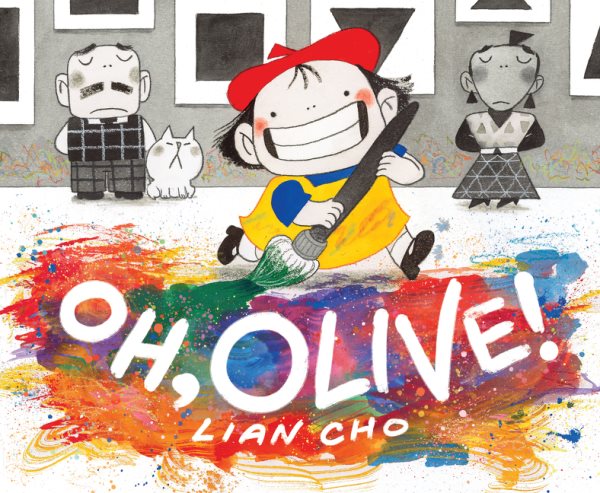
I started out by saying that one of my favorite types of picture books is the kind where the premise is familiar but the final product wholly new. Another type of picture book I like? Cheery agent of chaos books PARTICULARLY if the agent of chaos in question identifies as female. And just look at that grin on the cover. It just instantly makes you like Olive. Something about her little rectangular head and the degree to which that smile just FILLS her face right up. All throughout the book, she has a perpetual smile or grin sitting there. She’s unflappable, which is part of her charm, I think. Kids love a good unflappable protagonist. Someone who can just shrug off the well meant but utterly unhelpful advice of adults. This imperviousness to criticism could be called unrealistic, but I prefer to see it as aspirational. Haven’t we all wished, at some point in our lives, that we could just ignore the jabs and put downs of the people that don’t really “get” us? Looking at Olive, I kept trying to think of other perpetually upbeat chaotic characters. The Cat in the Hat gets a bit down in his first book, but stays pretty consistently high as a kite in his second. Olive also sort of reminded me of The Roadrunner in those old Looney Tunes cartoons, but she’s no trickster. She just has this self-confidence that radiates off of her, no matter the situation.

Now usually I’m not a fan of books where a kid is an instant prodigy and can’t learn anything from the adult world around them. It sort of goes against that age old advice to learn the rules so that you can break them. But in its way, I think that Oh, Olive actually adheres to that rule. The ending of this book (to spoil it for you) sticks the landing completely. Olive’s parents finally accept that while her style of art might not conform to their own, it’s still art. They present her with one of their paintings and ask her to do her magic on it. Of course what she does that shocks them (and you get this stellar image of their flabbergasted faces right before the reveal, which I appreciated) is create an absolutely perfect circle. In her own style, of course, but it’s still a shape. Up until that moment, they’ve assumed that their instructions went unheeded, but this is very much a children-will-listen moment. To be honest, I was rather touched by how these seemingly snooty parents spent a LOT of time introducing their toddler daughter to art. So while the book does seem to advise kids to ignore the teachings of their elders, the ending proves that Olive was learning all along. She just wanted to put her own spin on things. Which, when you think of it, is really the point of art itself, wouldn’t you say?
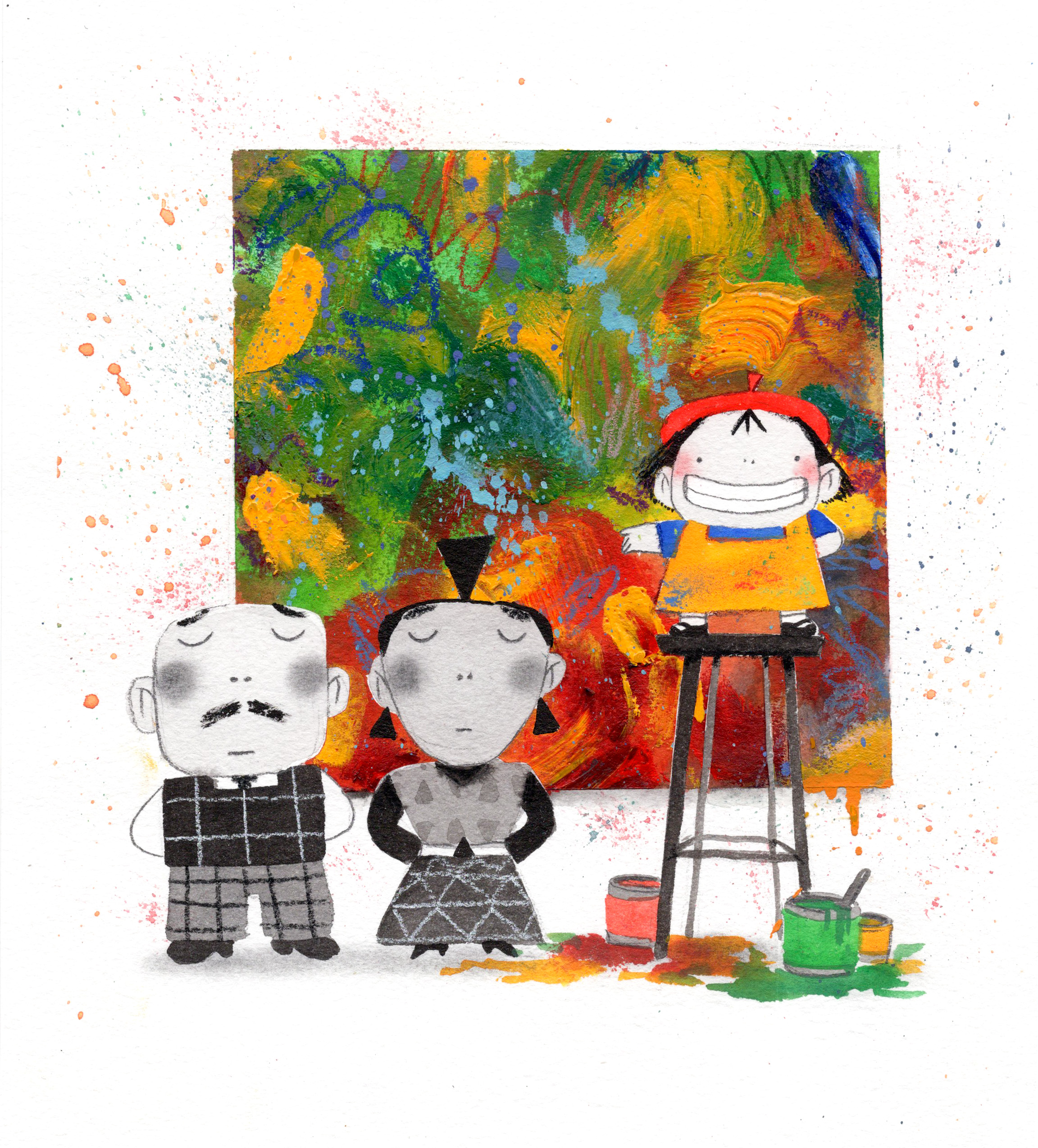
The part of this book that you could easily miss in the midst of all this fun storytelling is Olive’s art itself. I’m no art critic, but when I look at her creations, I’m struck by just how . . . well . . . inarguably GOOD they are. They literally make me happy when I see them. So, naturally, I turned to the publication page to figure out how they were done. There I found that Lian Cho used “sumi ink, graphite, gouache, acrylic, and colored pencils to create the illustrations for this book.” Not, to my surprise, Procreate or some other digital program. This was particularly astounding when I looked at the three-dimensional quality of Olive’s canvases. Lest you believe that my admiration for the book stops at the art its protagonist creates, there’s actually quite a lot that Lian Cho is doing here above and beyond the colors. Her black and white linework on the front endpapers and how she integrates shapes into the design is entrancing. The facial expressions (which I alluded to earlier) are sublime, most notably on our small heroine. It’s funny (any book where someone has to be told not to lick their own art is on the right track), and after several reads you begin to notice additional details. For example, when Olive and her classmates go into the community to paint everything, notice that together they make up a little running rainbow (albeit not in order). I just spent the better part of ten minutes just now flipping between the front and back endpapers so that I could see which characters are repeated. Also, keep an eye on the geese. They’re in there too and they have their own thing going on.

I dunno, man, this just sort of feels like what a new picture book for kids should be. Fun and funny, filled to the brim with beautiful art and with a bit of a message to boot. I was wishing for a moment there that there was more foreshadowing of Olive liking circles (a kind of rebellion against her parents in and of itself) but then I reread the book and found a moment when she’s secretly making one without her parents even noticing, early on. This is a difficult book to resist. It just overwhelms you with its good-natured love of the joy of artistic expression. From tip to toe it’s a book you want to read to a group of kids repeatedly, or just one kid in your lap whenever you get a chance. Amusing, sweet, and strange. A wondrous mix of the familiar with the utterly original.
On shelves now.

Source: Galley sent from publisher for review.
Filed Under: Best Books, Best Books of 2023, Reviews, Reviews 2023 Tagged With: 2023 funny picture books, 2023 picture books, 2023 reviews, Best Books of 2023, Caldecott 2024, funny picture books, Harper Collins, Katherine Tegan Books, Lian Cho, picture books

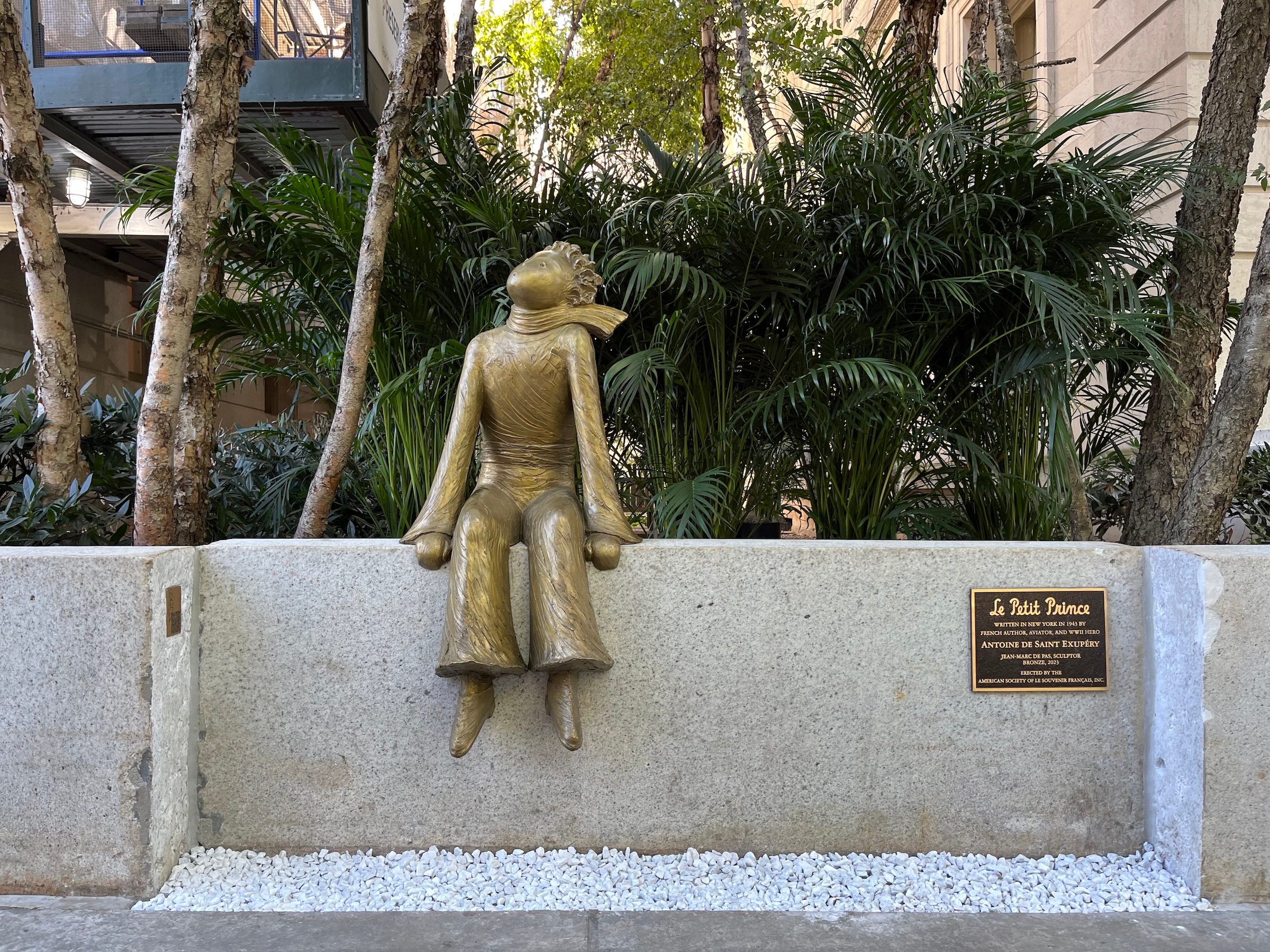
Complete Listing of All Public Children’s Literature Statues in the United States – A Call for New Submissions

October 5, 2023 by Betsy Bird

The other day I was reading through my Publisher’s Weekly Children’s Bookshelf newsletter and I came upon this little news item:

“On September 20, literature lovers attended the reveal of a new statue of The Little Prince on Villa Albertine’s garden wall in Manhattan in honor of the 80th anniversary of Antoine de Saint-Exupéry’s beloved book.”

Statue? Did they say statue? Thaaaaat’s right!

For long long longtime readers of this blog, you may already know that I cultivate an odd little list. I call it the Complete Listing of All Public Children’s Literature Statues in the United States. The first of these posts came out ten years ago in 2013 and was subsequently updated in 2017. A lot of time has passed since then, wouldn’t you say? Statues, as I have just shown, are going up all the time. And maybe you, gentle readers, have heard of some that I have not!

With that in mind, here are things to bear in mind:

  1. If you’d like to suggest a statue, just make sure that it isn’t already listed here. The statues are listed alphabetically by the book each character is from.
  2. The statues must be available in America. Maybe someday I’ll create a worldwide list, but for now we’re keeping our sights strictly on American statues.
  3. The statues must be available to the public without cost. I know that plenty abide in museums or amusement parks. Those don’t interest me. I want the statues that anyone could walk up and see if they wanted to.
  4. If you’ve a statue in mind, please email it to me at fusenumber8@gmail.com by October 31st. I’ll be sure to credit you if I use the statue in the new post.

That’s all there is to it! So tell me, folks. What statues am I missing these days?

Filed Under: Uncategorized Tagged With: children's literature statues

“The nature of healing is unpredictable.” An Andrew Knapp Interview About Find Momo

October 4, 2023 by Betsy Bird

At this time of year I just have to tell you that you’re going to see a significant increase in posts about 2024 releases. Today’s post? No exception.

For a number of years now I’ve been a big fan of a little board book series. If you know me then you know that every December I do a round-up of my favorite board books of the year. That was how I discovered the Find Momo series. The books were cute. The were funny. They involved photography (my favorite medium) and often involved locating a wayward pet. But then, last month, I learned the following:

“Andrew Knapp and his dog Momo traveled the world together, playing and exploring. Along the way, they gained over 620,000 Instagram followers and published the best-selling Find Momo book series, which has delighted families worldwide. But after Momo’s sad passing in 2021, Andrew found himself in a position that anyone who has owned a pet can understand: They’re part of your family, and their loss can be just as painful as grieving any other loved one.

Andrew has channeled his own experience with pet loss into an honest, age-appropriate picture book exploration of grief, Find Momo Everywhere. The book traces Andrew and Momo’s life together, from their hide-and-seek games and globetrotting adventures to their final goodbye. Told in rhyme and beautifully illustrated in a mixed-media style that combines Andrew’s gorgeous landscape photography with charmingly drawn depictions of Momo and the world around him, this inviting picture book shows that those we lose stay with us through our memories.”

I can’t say I’ve ever seen a book series that started as board books make the transition to picture books via grief before. With all this in mind, I spoke to Andrew about the book, about Momo, and about more:


Betsy Bird: Hi Andrew. Thanks so much for talking with me today. So you’re one of the rare Instagram board book sensations I’ve never had the chance to meet. Before we dive into your latest title, can you tell us a little bit about how the FIND MOMO book series started in the first place?

Andrew Knapp: The pleasure is all mine, Betsy, and I hope we get the chance to meet! Find Momo at its simplest is Where’s Waldo, but in the real world with a dog. People often ask how I thought of the idea of Find Momo, and I tend to give the same answer: it was Momo’s idea! He started running off into the woods and he’d watch patiently to see if I’d throw a stick for him. I decided to start capturing and sharing these moments. We shot hundreds of photos, ended up going viral, and we made picture books. These were ultimately really fun travel books with the added incentive that a dog was hiding in every photo. Eventually, we pursued children’s books and it turns out he was just as skilled at hiding in these ones.

BB: After Momo’s death in 2021 you’ve done books with other dogs but this feels like a more touching send-off to a beloved friend. When did you get the idea for this particular project? And how did you prepare to write a book on the topic of grief?

AK: My publisher and I were in conversation about how to honour Momo. We had a few ideas and this one felt right. Ultimately, I prepared through finding books that inspired me and taking care of myself. Mary Oliver and Natalie Goldberg both have books about writing that suggested that the creative process was an exercise of the moment. When you sit down to write, you’re pulling from whatever you’re feeling in that moment. That made it important that I was present – that I was taking care of myself so I can connect with whatever message I needed to share through this book. Especially because I hadn’t published any of my writing in this way. It’s a book with relatively few words, but that almost made it more daunting as each word was so important. To connect with myself, to connect to my feelings in the moment, and to navigate the arc of emotions that grief allows us to experience was the real task.

BB: I found it particularly interesting that while most of the MOMO books have been board books with younger audiences, FIND MOMO EVERYWHERE is a bit of an older title and so it’s graduated up to the picture book level. Did you ever consider making it a board book as well? What prompted the change in formats?

AK: It was intentional for the book to stand out from the rest of the series. The concept was a little weightier so we intended to speak to kids older than the board book age range. I had this story in my mind that some kids might ask why Momo isn’t in the newest board book Let’s Find Yaya and Boo At Home!, and perhaps this can be a perfect prompt for a conversation about life and death. The book’s format being different can offer an a really impactful tool for that conversation.

BB: Another new aspect to the book is that while the previous MOMO titles have been done with photographs, this one is illustrated. And even more interesting, you’re the one who did the art! I was flipping back and forth in this for a while trying to find the artist before I realized this fact. Do you have an arts background? Because the entire product feels remarkably professional.

AK: Wow, I really appreciate that. I’m grateful that my parents pushed me to practice art. I always loved it. I had asthma as a kid so outdoor things weren’t really for me. Instead, I made films on VHS with my best friend Mike and painted and doodled. I entered art contests and won a few times which ultimately gave me some confidence. I ended up pursuing graphic design and loved that too. It’s all in the same toolkit for me. I asked myself: what is the message I want to share, and what is the best way to share it? Then reaching into my toolkit I found a combination of illustration and photography worked. This project in particular made sense to illustrate on top of my photos. In a way, that’s what we do with our memories – we were truly at these places, and our brain has a way of cherry picking the good bits, adding colour, and of course we also forget details.

Laurie Anderson speaks about this in her film Heart Of a Dog. “You get your story and you hold on to it, and every time you tell it, you forget it more.” Like looking at a photo, the more we look at it, the more we believe that the photo is the whole story. Some of my best photos were of mundane moments, and some of my fondest memories could never be captured. Illustration opened that up a little bit, and allows me to connect to the more ethereal parts of the story.

BB: To your mind, how would you like kids to best come to this book? How would you like them to use it?

AK: The nature of healing is unpredictable. When creating this book I asked myself if the world needed another children’s book about grief. There are already so many incredible ones. The answer was a resounding yes. We can’t predict how or when we’ll come across a book or any other tool that’ll guide us through one of life’s most challenging journeys. If we add more stories (and more stories with heart) to that library, and when someone reaches in to what once was an empty shelf and finds your story, maybe it’ll be the story they needed to hear, then we can imagine that we’ve made a little difference. That’s what really matters.

BB: Finally, what’s next for you?

AK: I’m always being reminded about importance in sharing our stories. I definitely love making books and hope to continue making more, and continue to push myself more into storytelling with video, illustration, animation, and of course, dogs.

Thanks for your time, Betsy!


Thanks to Andrew for taking the time to answer my questions today. Thanks too to Ivy Weird and the folks at Quirk Books for putting this all together. Find Momo Everywhere is on shelves, well, everywhere February 6, 2024. Be sure to look for it then!

Filed Under: Interviews Tagged With: Andrew Knapp, author interviews, illustrator interviews

Interview Triumvirate: A Three-Way Rescues Interview with Tommy and Charlie Greenwald and Shiho Pate

October 3, 2023 by Betsy Bird

At my library we have a committee that works to create an annual list of 101 great books for kids. If you serve on that committee with me, though, there is a price to pay. Mainly, you have to listen to me holding a book over my head every few months or so saying, “Now I’m not a huge fan of dog books, but this one . . .” Apparently I feel obligated to mention my I-don’t-love-every-dog-book-bonifides on a regular basis. This is partly because there are some folks who love every canine-related cutie to cross their plate. Not me. But even I, in my battle-hardened state, have seen a marvelous proliferation of doggies in 2023. I mean have you seen Lita Judge’s Dogs: A History of Our Best Friends? Or George & Tao by Claude K. Dubois? They’re good, and so is the title I want to introduce you to today.

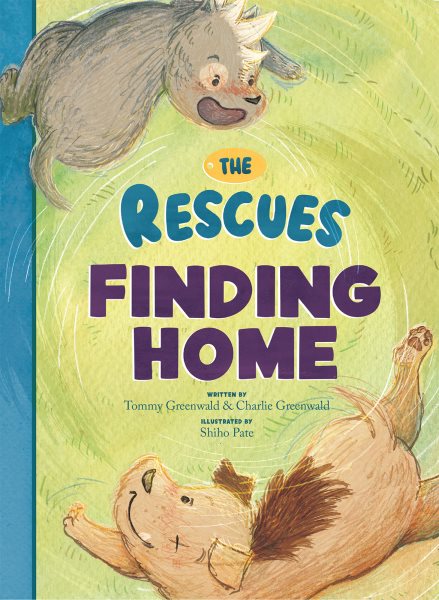
The Rescues: Finding Home is a rarity. It is one of those books that falls just outside of easy book but juuuuust before young readers. And best of all, it’s good. I mean really good. I mean surprisingly good in a field where simple texts too often mean all too simple storytelling. Here’s the plot:

“Two shelter dogs await adoption in this early reader series about friendship, family, and home. Moose and Bear are two scrappy shelter dogs patiently waiting for the right owner to adopt them. They meet, become friends, and one day a Cathy decides to take them both home. Despite their luck, they must face the challenges of settling into their new home. Along the way, they learn about each other, and their friendship deepens. Told with humor and heart, Finding Home is a tale that champions the importance of family and relays how it feels to belong and to have a place to call home.”

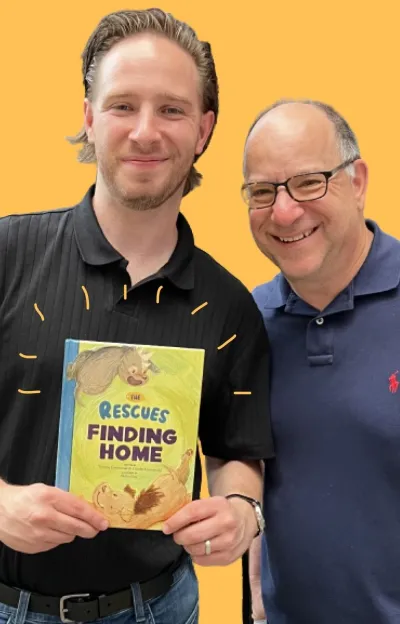
Today, I’m talking with not one, not two, but THREE creators behind this book! Say hello to Tommy Greenwald, his son Charlie Greenwald, and artist Shiho Pate!


Betsy Bird: Tommy! Let’s start with you. So here you are making books for older readers for years, and then all of a sudden you change gears a bit and create this honestly touching and adorable early reader series involving dogs. I need some explanation here. What is the origin story of THE RESCUES? And how did Charlie get involved?

Charlie and Tommy Greenwald

Tommy Greenwald: Hi Betsy, and thanks so much for your encouragement and support for this book! I guess I’ve done the complete circuit as far as age groups go. As you may remember, I started out writing middle-grade humor books – The CHARLIE JOE JACKSON and CRIMEBITERS! series, among others.  Then I pivoted to youth sports – serious books for older middle-grade and young adult readers, with GAME CHANGER and the Walthorne series, and chapter books with GOOD SPORTS LEAGUE. And there was one picture book in there, too – HOOKED. So, what was left? Early readers! With THE RESCUES: FINDING HOME, I had an idea kicking around in my head for a long time, involving two dogs named Moose and Bear with an identity crisis. Only when I started discussing the idea with Charlie did I realize that there was a real story here to be told.

Betsy Bird: Well, let’s get Charlie’s perspective on the matter. Charlie! Great to talk to you. So tell me in your own words how The Rescues came to be. What’s its origin story? For that matter, what’s your origin story when it comes to writing for kids?

Charlie Greenwald: My Dad – who has written many great children’s books about all sorts of things, from zombies to basketball and everything in between – initially came up with the concept: two dogs named Moose and Bear who meet and bond over their mutual confusion over the accuracy of their names. He always shares his book ideas with me and if I recall correctly, I told him I wanted to see the story evolve and expand. I think he liked my enthusiasm, and he brought me into the fold. We extended their journey together into an early reader.

Betsy Bird: Nice. But let’s not leave out Shiho. Shiho! Please tell me in your own words, how did you come to work on The Rescues? And what drew you to the project?

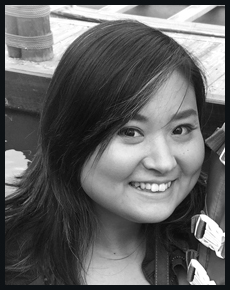
Shiho Pate

Shiho Pate: My agent Deborah at East West Literary introduced me to The Rescues! I was drawn because of the bond between Moose and Bear. And Tommy and Charlie’s manuscript beautifully captured how their relationship developed throughout the book.

Betsy Bird: Now Tommy, what’s the appeal of writing for a younger age range? I know that it can involve (in a sense) an entirely different set of muscles. How was the experience for you?

Tommy Greenwald: You’re not kidding about the different set of muscles, and I don’t mind saying those muscles are now quite sore! When you go from writing 40,000-word books to 1,000-word books, every word becomes – well, if my math is correct (and it’s probably not) – a thousand percent more important. Storytelling and description are paramount, but so is economy, clarity, brevity, and knowing when to slowly back out of the room and let Shiho’s amazing drawings do the work.

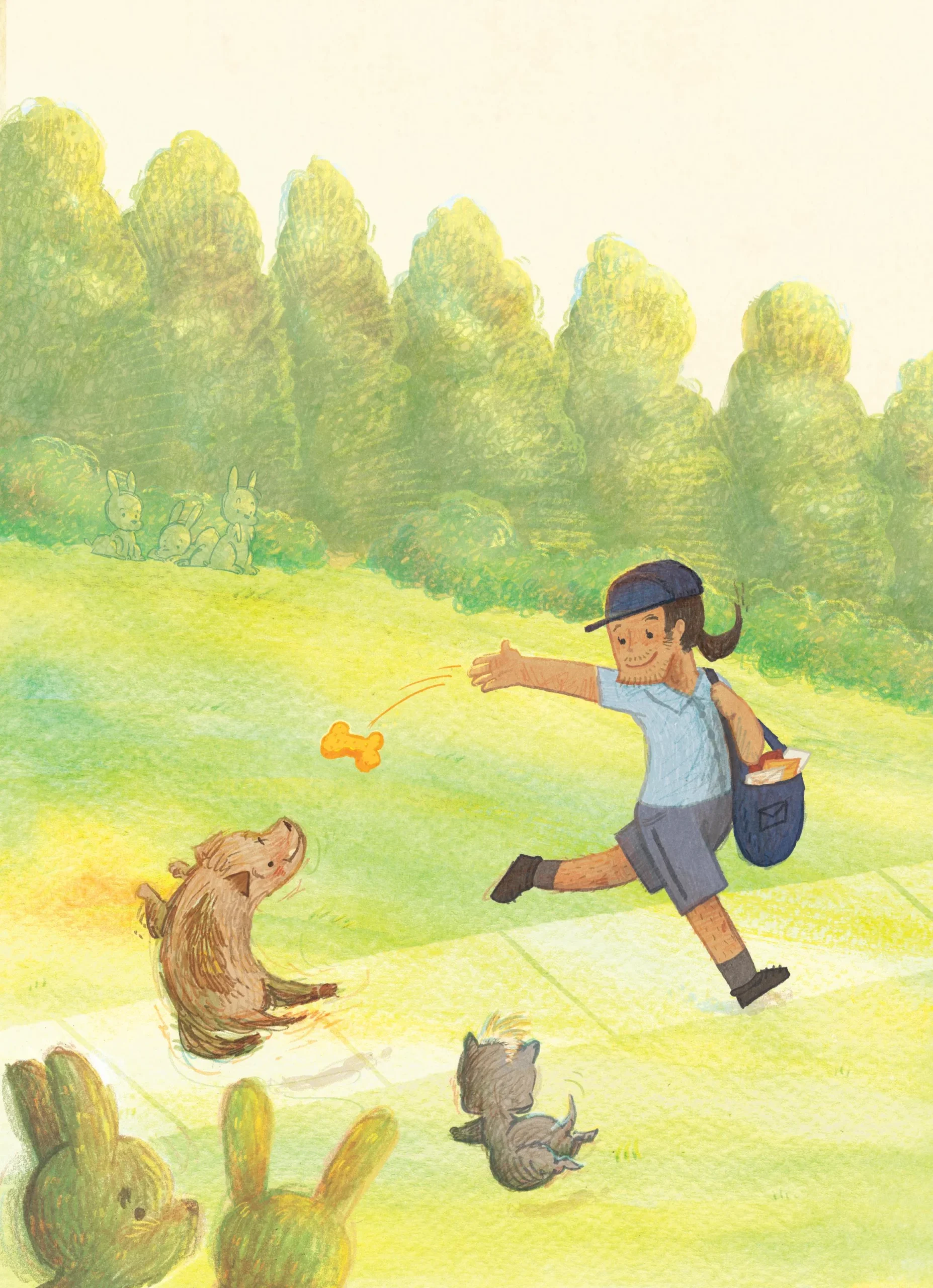
Betsy Bird: Oh yes! That reminds me. Shiho, I have to ask, but do you consider yourself a dog person? Do you own any dogs? Because I gotta say you make some mighty adorable pups in this book.

Shiho Pate: Yes! I am definitely a dog person. I do love cats too but I’m severely allergic to them . . . Russel was my fur baby. My husband (then my boyfriend) got him right before graduating college. And we all moved to New York. Russel was my ring bearer at our wedding and the best big brother to my daughter. I miss him so much.

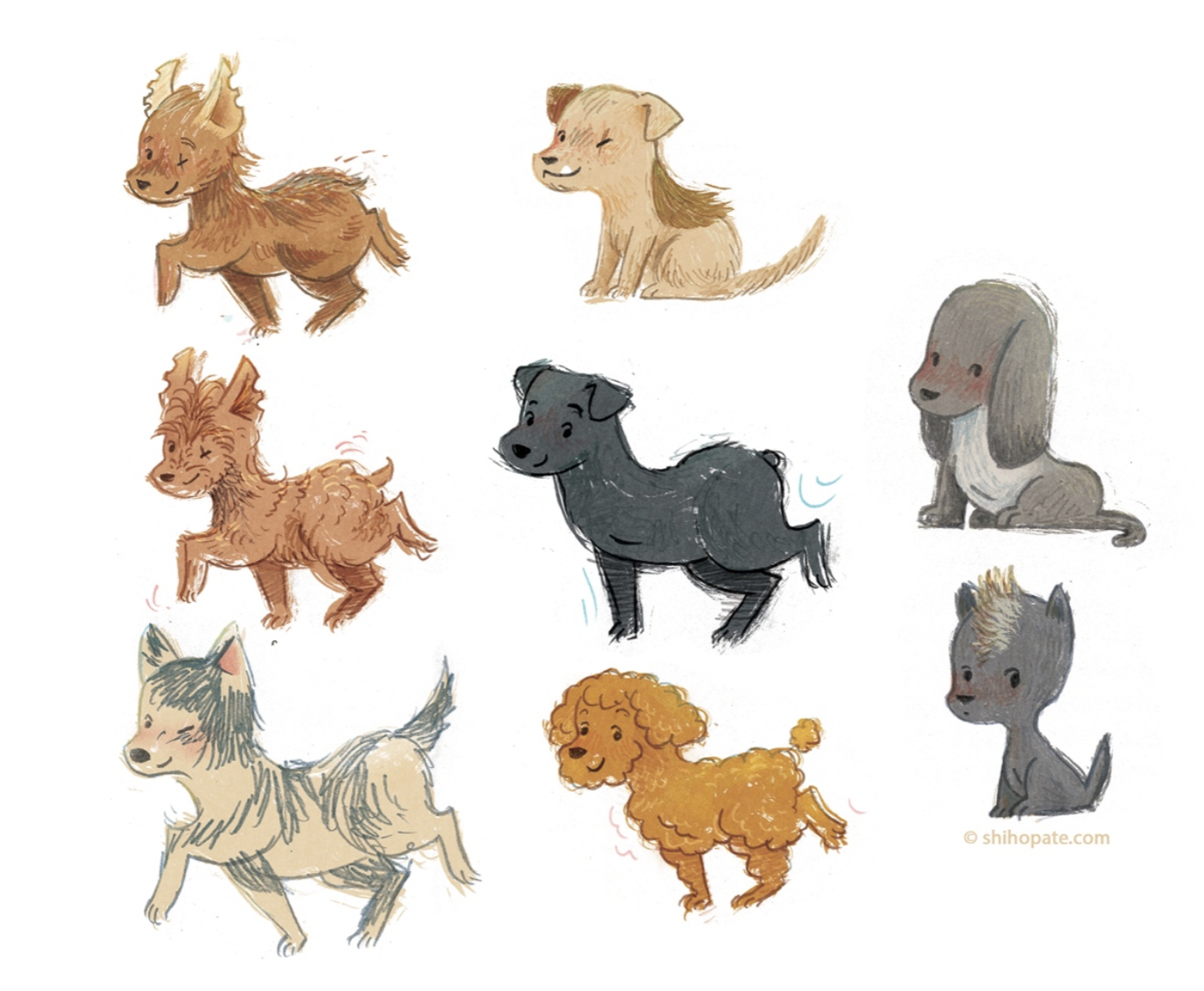
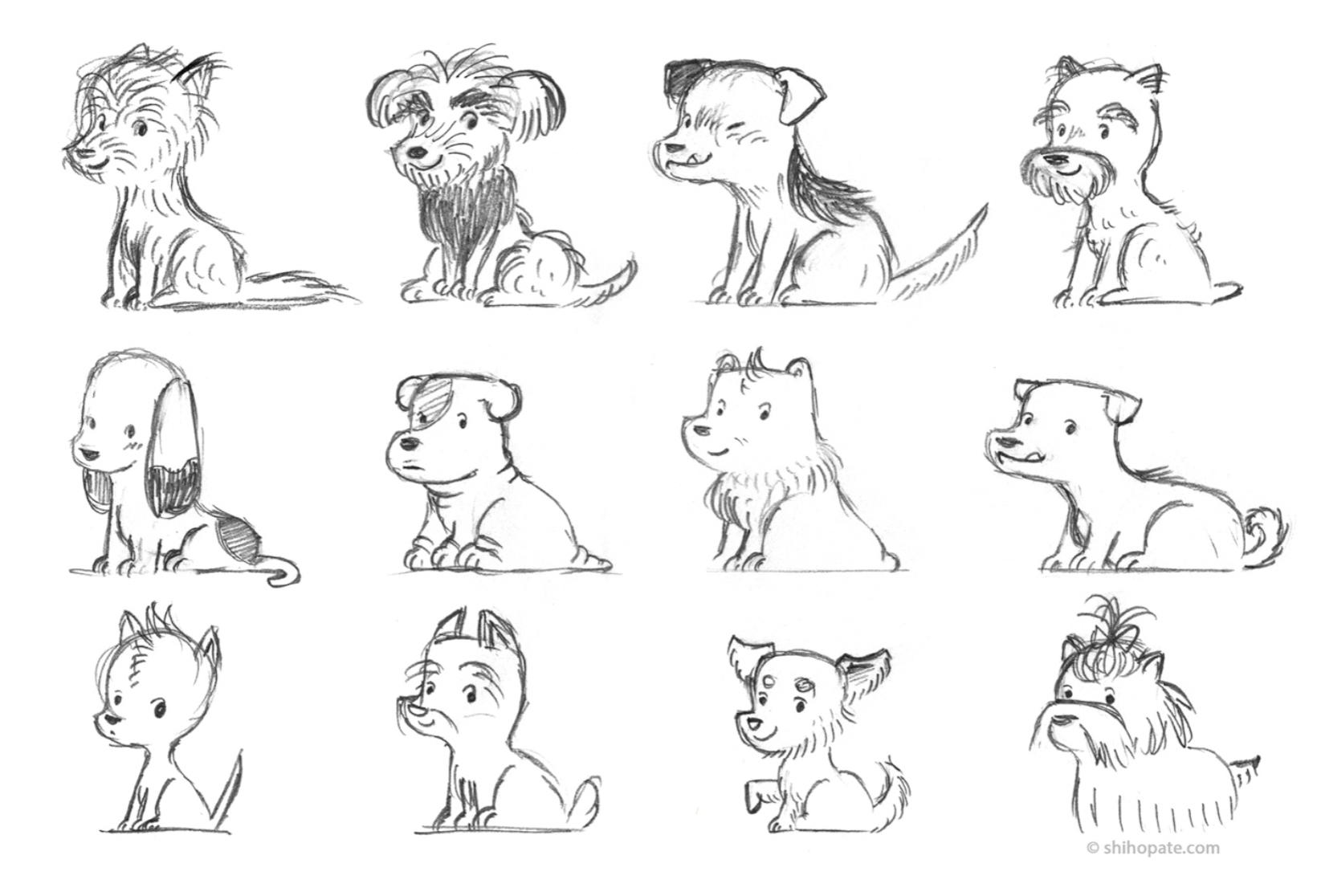
Betsy Bird: I noticed that one of the dogs in this book has a little bit of a mohawk. How did you settle on the eventual look of the characters? Did you experiment? Were there looks that you considered and then ultimately rejected?

Shiho Pate: My art director Mike and I did few rounds of experiments. Here’s a snippet of some of the ideas we had for Moose and Bear:

Betsy Bird: Aww. And Charlie, what did this collaboration with your dad really look like? What’s your writing process like?

Charlie Greenwald: Exponentially more successful than our collaboration on my cursed college essay! I kid, of course. . . Everything was very natural. We both love to write and create new characters; we both love dry humor and we both love shelter pets. We divided chapter duties, gave each other feedback, and kept to our deadlines on revisions. Something we both felt early on was that we wanted to stand out from the many other books about dogs; we agreed that our protagonists had to not only be shelter dogs but scrappy mixed breeds who kept getting overlooked. This would make them especially determined to get adopted and find a family together. We wanted them to be, well, underdogs (pardon the pun).

Betsy Bird: Pardoned (but barely). Going back to Tommy, I know you’ve collaborated with others on works over the years, but aside from your illustrators I’m having a hard time remembering a time when you ever had a co-writer. How was it working with Charlie?

Tommy Greenwald: Well, Charlie is the oldest of my three kids – the others being Joe and Jack – and one-third of the inspiration for the incorrigible wiseacre Charlie Joe Jackson. So, you can imagine my surprise when this non-reader turned out to not only be a lot more interested in books as he grew up, but also a delightful writer with a font of ideas. I did have a collaborator on the one musical I wrote, but this was a whole new thing. Working with your kid is like playing them in a sport. The minute they beat you, or write something better than you, you’re both a tiny bit irritated and very proud. But having a chance to work with family, on a book that at its core, is a story about family? Hard to top that.

Betsy Bird: Was there anything you particularly wanted to include in the final product that just didn’t make it?

Tommy Greenwald: LOL good question! In an earlier draft, we had a really fun storyline about how Moose and Bear dealt with their first thunder and lightning storm, and I was sad when we had to cut it for space – but then we realized we could put it in the second book, so all was well! #thestormlives

Betsy Bird: Nice. Charlie, are you envisioning this as a series or as a standalone book?

Charlie Greenwald: Luckily for us, The Rescues: Finding Home is the first book of what will eventually be two, and perhaps even more. Shiho is doing the illustrations for the sequel now. We can’t wait to see what she has cooked up. This second one features a bunch of action-packed scenes that definitely lend themselves well to imaginative drawings. We got very lucky with our illustrator.

Betsy Bird: Finally, what’s next for all three of you?

Tommy Greenwald: I have my second GOOD SPORTS LEAGUE story, called THE PERFECT PITCH, coming out in a few weeks – which also has a rescue dog storyline in it by the way, because, uh, I’m a little obsessed with rescue dogs, although it’s quite peripheral to that story – and I’m working on my next Walthorne book, tentatively titled THE RIGHT CALL, which deals with a young baseball player dealing with the fallout of his dad attacking and injuring an umpire. (There is no shortage of concerning things to write about when it comes to youth sports!) We’re also sooooooo excited to see Shiho’s drawings for THE RESCUES: THE BEST DAY EVER, which is the second book in what we hope will be the ongoing adventures of Moose, Bear, and Tiger!

Charlie Greenwald: I have a few other projects on deck outside of The Rescues series. One is a graphic novel about a hammerhead shark who works as a “handyfish” in the ocean and has to learn about self-care the hard way. The other is about Jack O’Lantern’s brother, Jeff, who has to figure out how to be spooky on Halloween. I’m hopeful that they both will get out there in the world very soon. Thank you for asking 🙂

Shiho Pate: I am currently working on The Rescues book no. 2! And some others I can’t talk about yet. For the latest news and my artist life please visit my website at shihopate.com or follow my instagram @shihopate


Huge thanks to Tommy Greenwald, Charlie Greenwald, and Shiho Pate for giving such lovely answers to my questions here today. The Rescues: Finding Home is on bookstore and library shelves everywhere right now. No need to hesitate. Give it a look pronto.

Filed Under: Best Books, Best Books of 2023, Interviews Tagged With: author interviews, Charlie Greenwald, illustrator interviews, Shiho Pate, Tommy Greenwald

Fuse 8 n’ Kate: The Philharmonic Gets Dressed by Karla Kuskin, ill. Marc Simont

October 2, 2023 by Betsy Bird

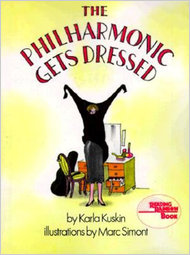
Having recently read the new book Ready, Set, Run! The Amazing New York City Marathon by Leslie Kimmelman, illustrated by Jessie Hartland, I was reminded of the old chestnut The Philharmonic Gets Dressed. Then, suddenly, it occurred to me that we’d never ever done this particular book on our podcast. Now I know that Kate expects me to bring her Halloween-related fare and ONLY Halloween-related fare in October, but with five weeks of Mondays in this month, I simply could not comply. But isn’t getting dressed part of . . . part of, um . . . part of Halloween? Okay, fine, it’s a stretch. Even so, it appears to be this podcast’s first Karla Kuskin and first Marc Simont on our show. And I’d say they’re worth diving into, wouldn’t you?

Listen to the whole show here on Soundcloud or download it through iTunes, Stitcher, Spotify, Google Play, PlayerFM, or your preferred method of podcast selection.

Show Notes:

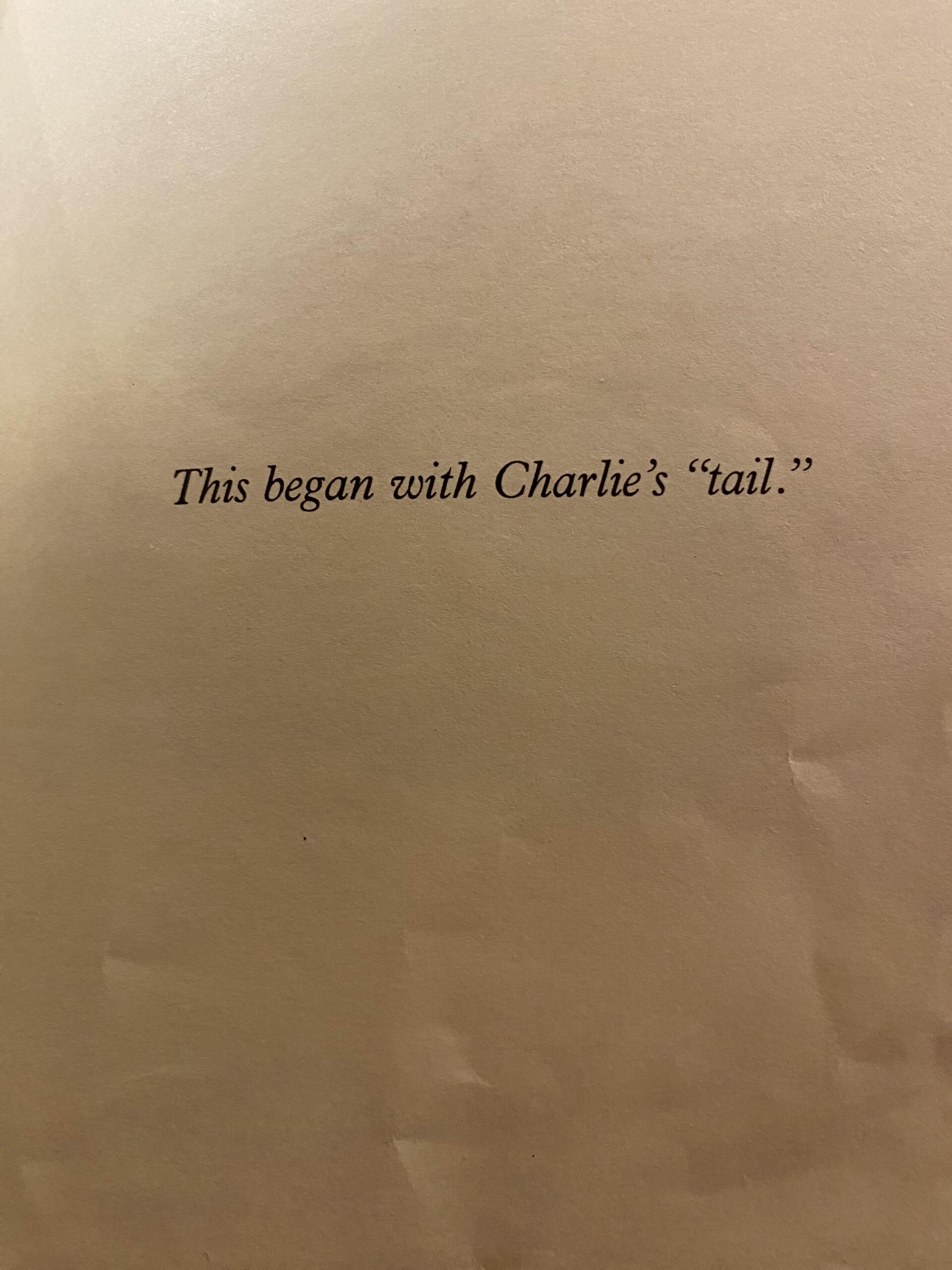
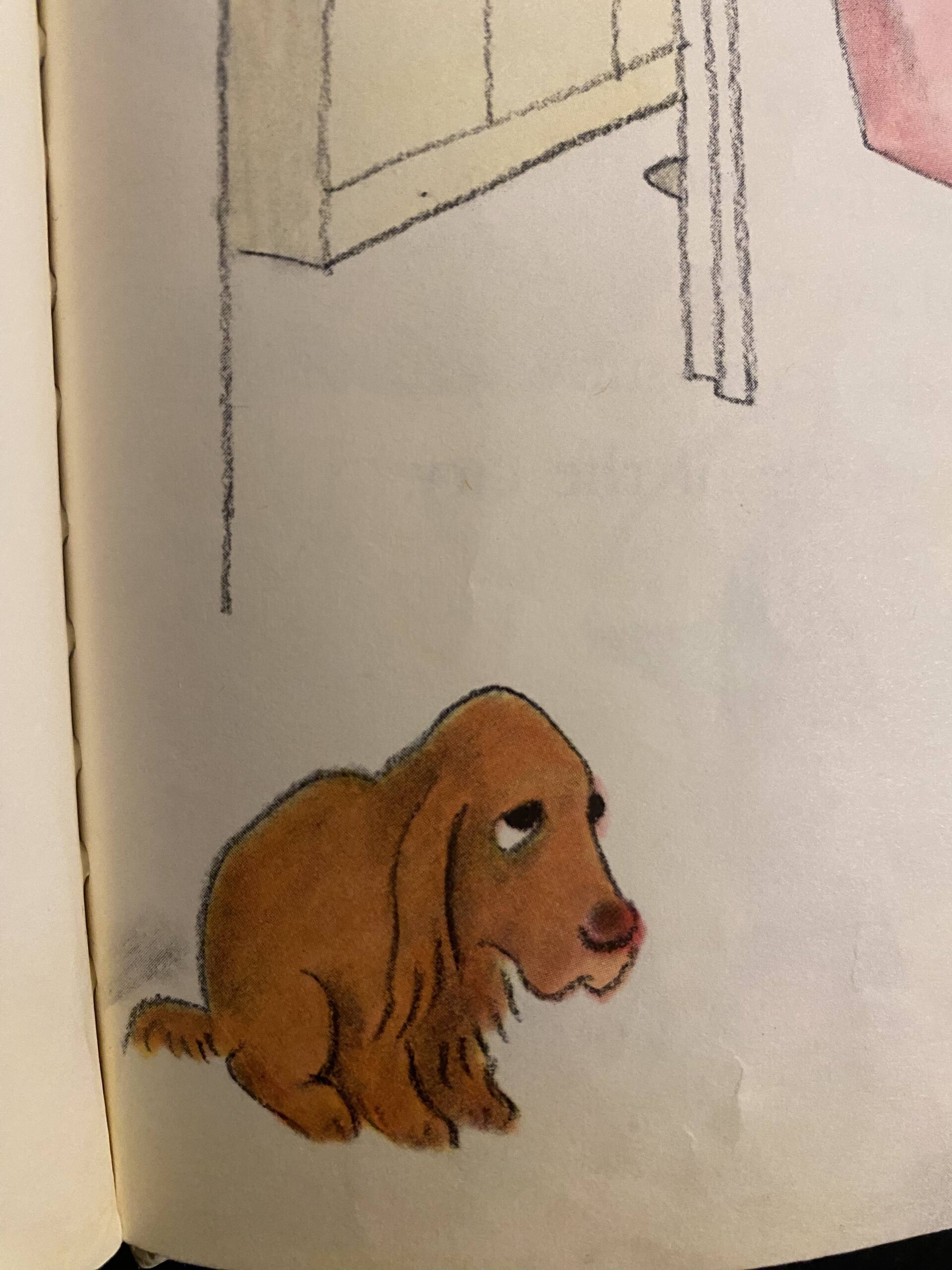
As dedications go, I’ve never seen this one before.

Kate’s theory is that THIS is Charlie.

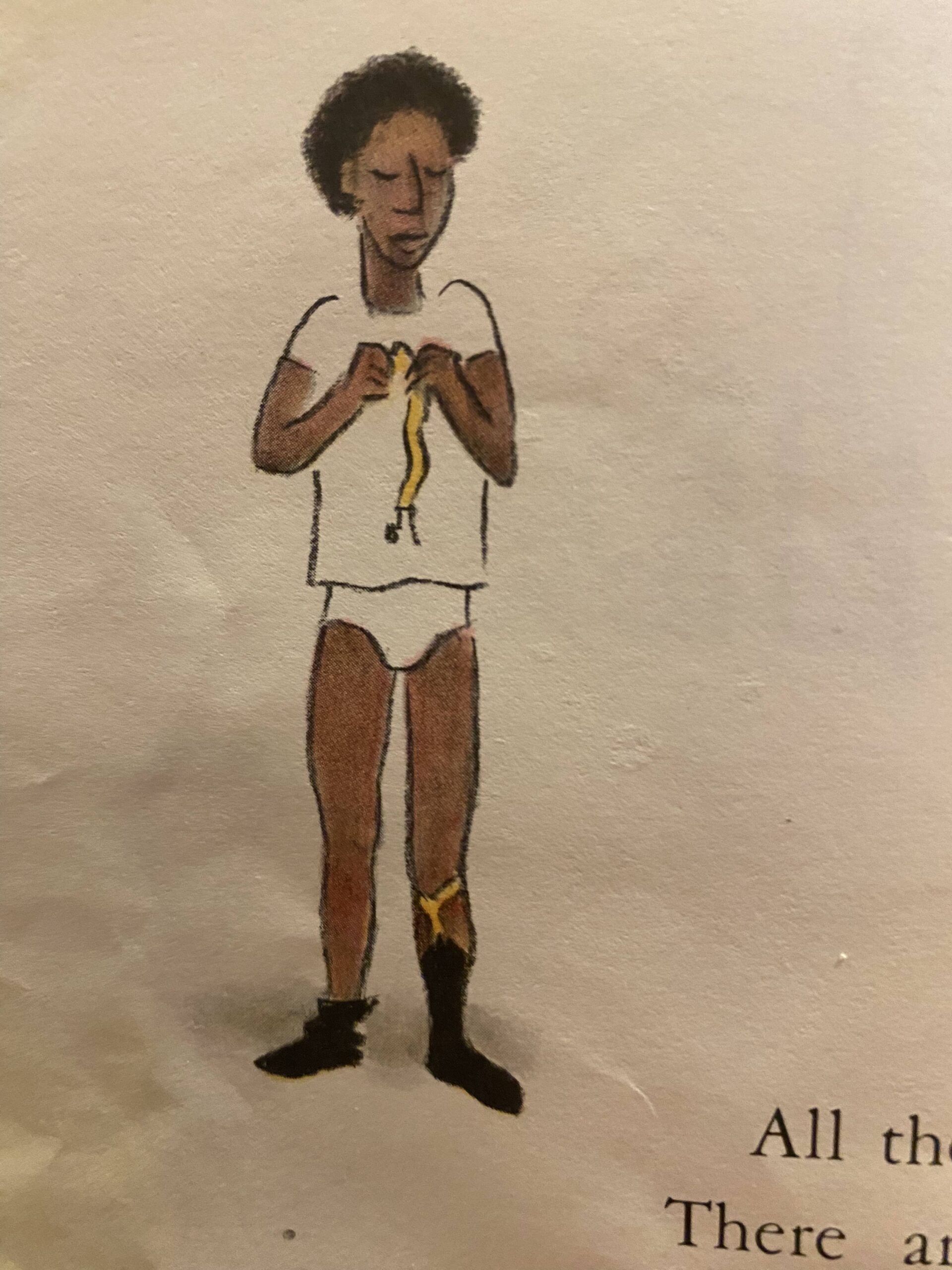
With its 1982 publication date, I’m fascinated to learn that sock garters were still a thing.

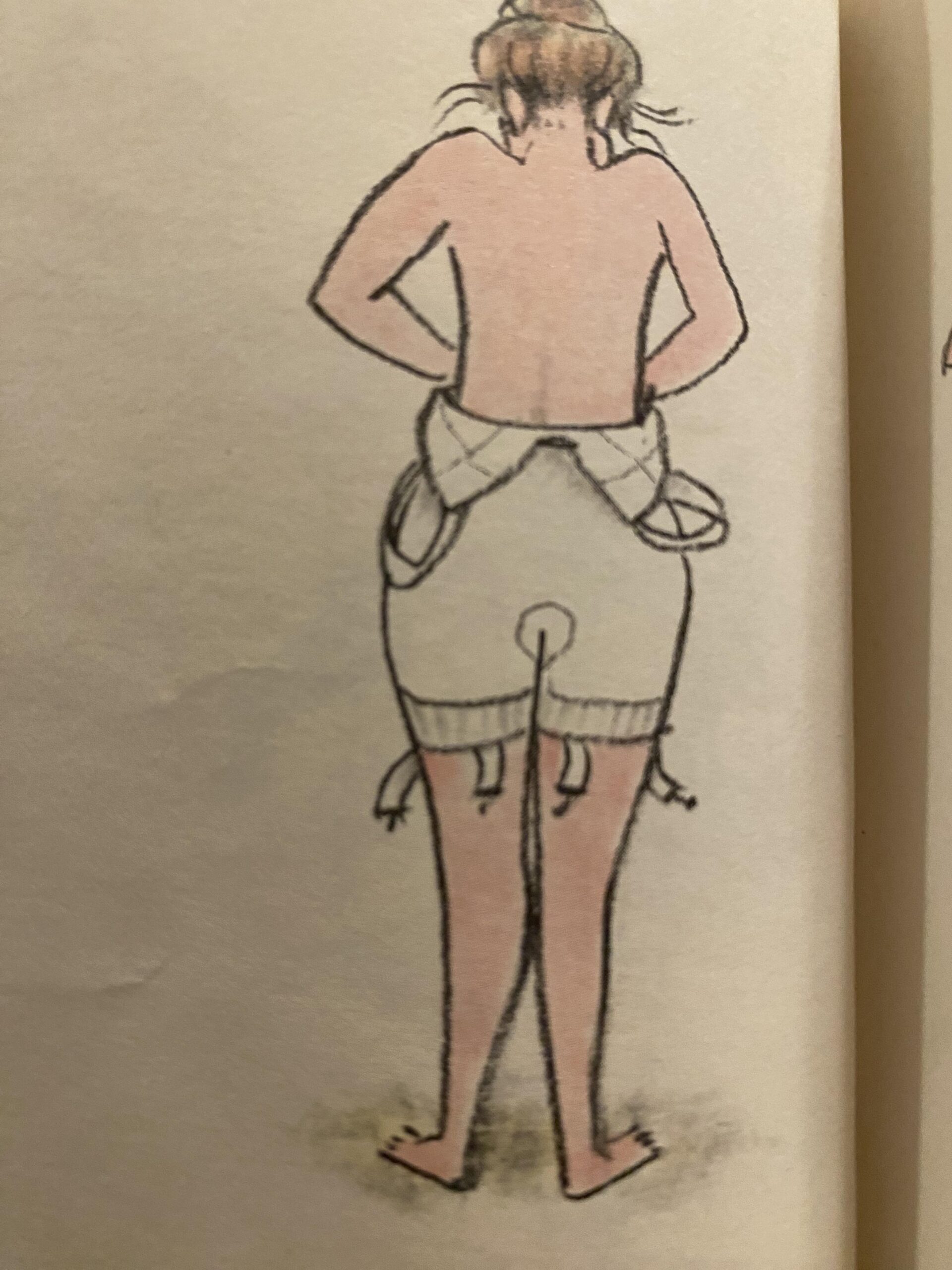
What is this? It appears to be a sort of spanx/garter belt combo.

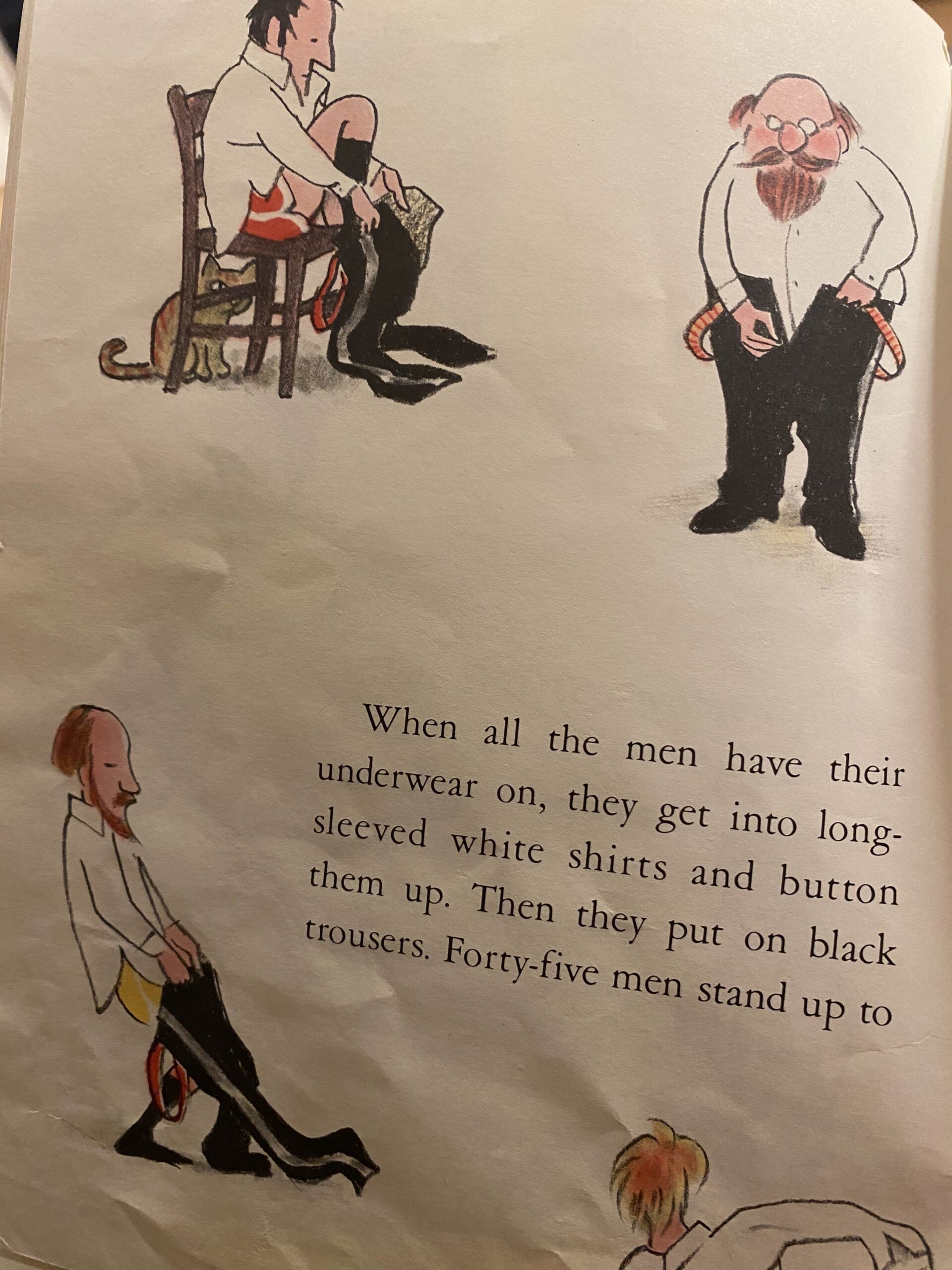
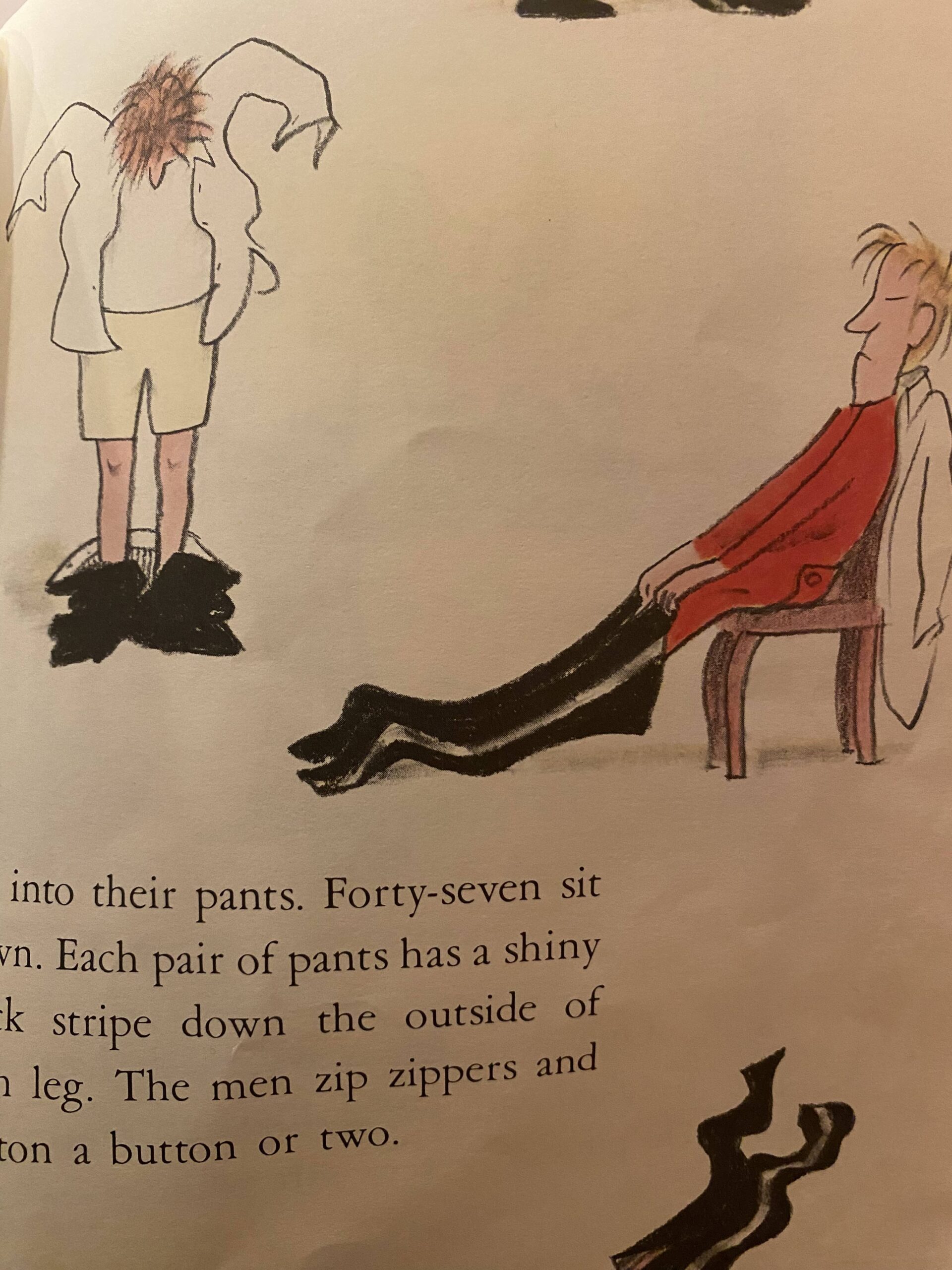
Kate’s putting out a poll for this section. The book says that 45 men stand up to get into their pants and that 47 men sit down to do it. Do these sound like reasonable numbers to you?

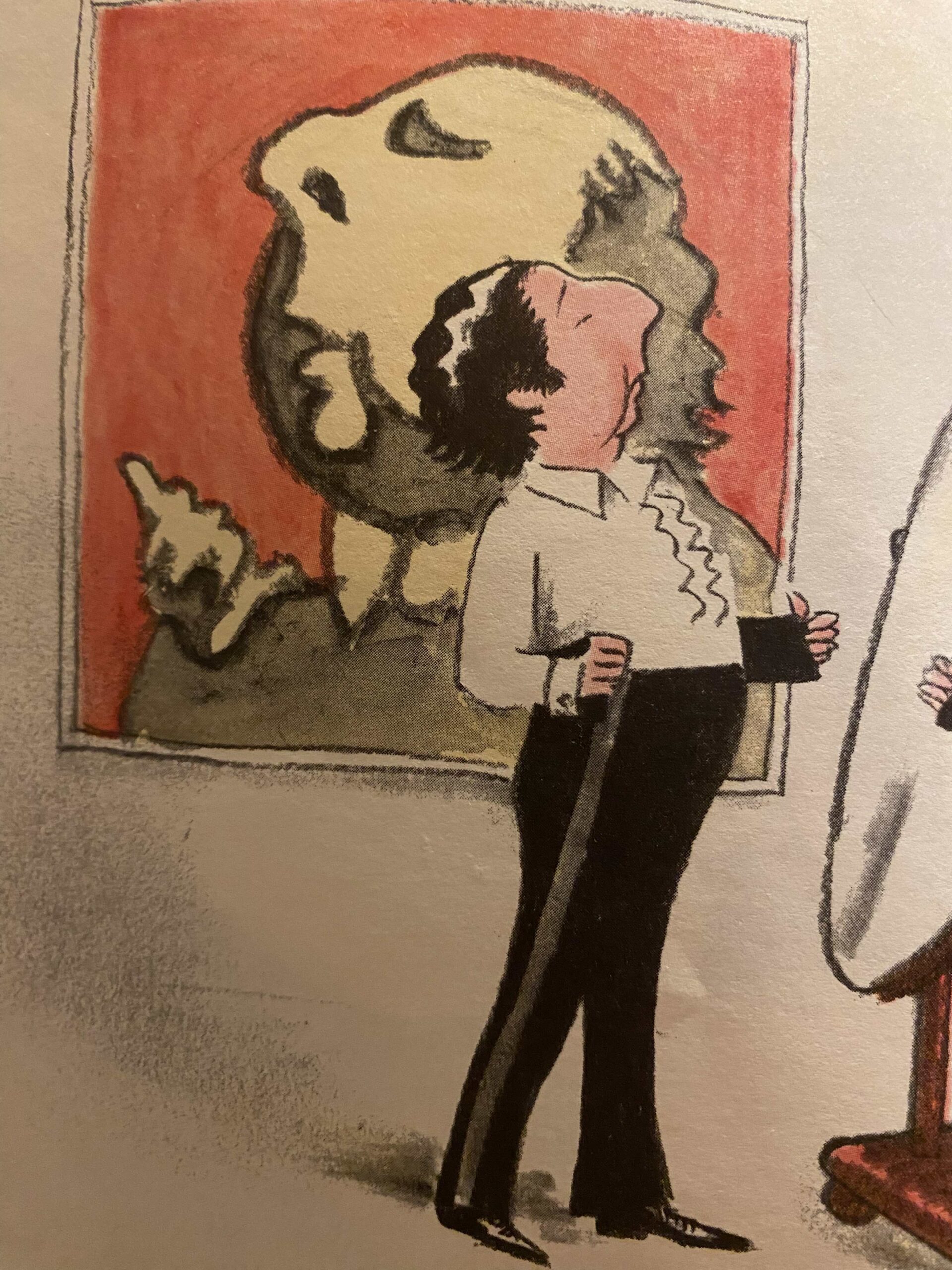
All the points, ALL the points, to the conductor for having a painting of himself in his own home.

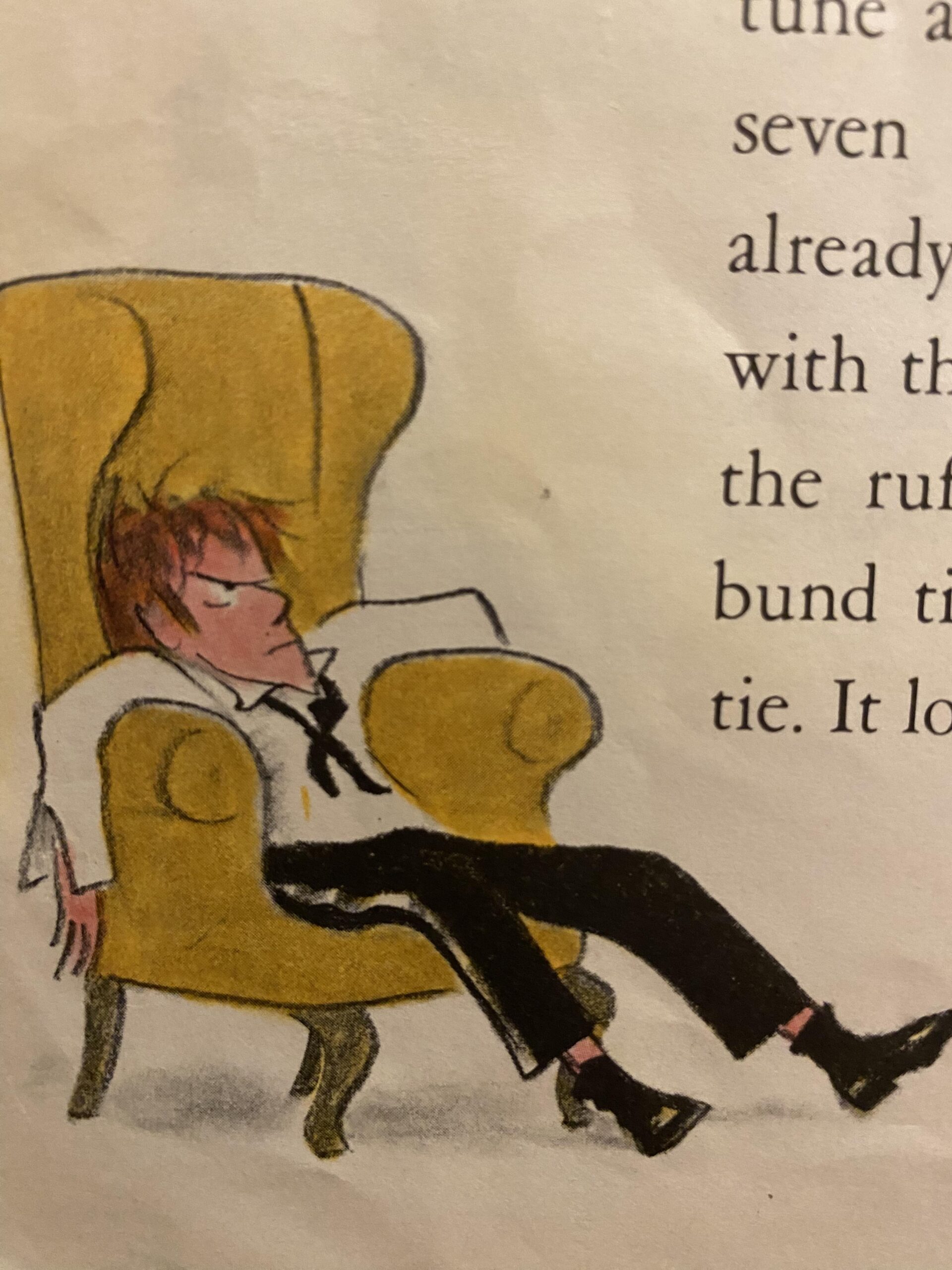
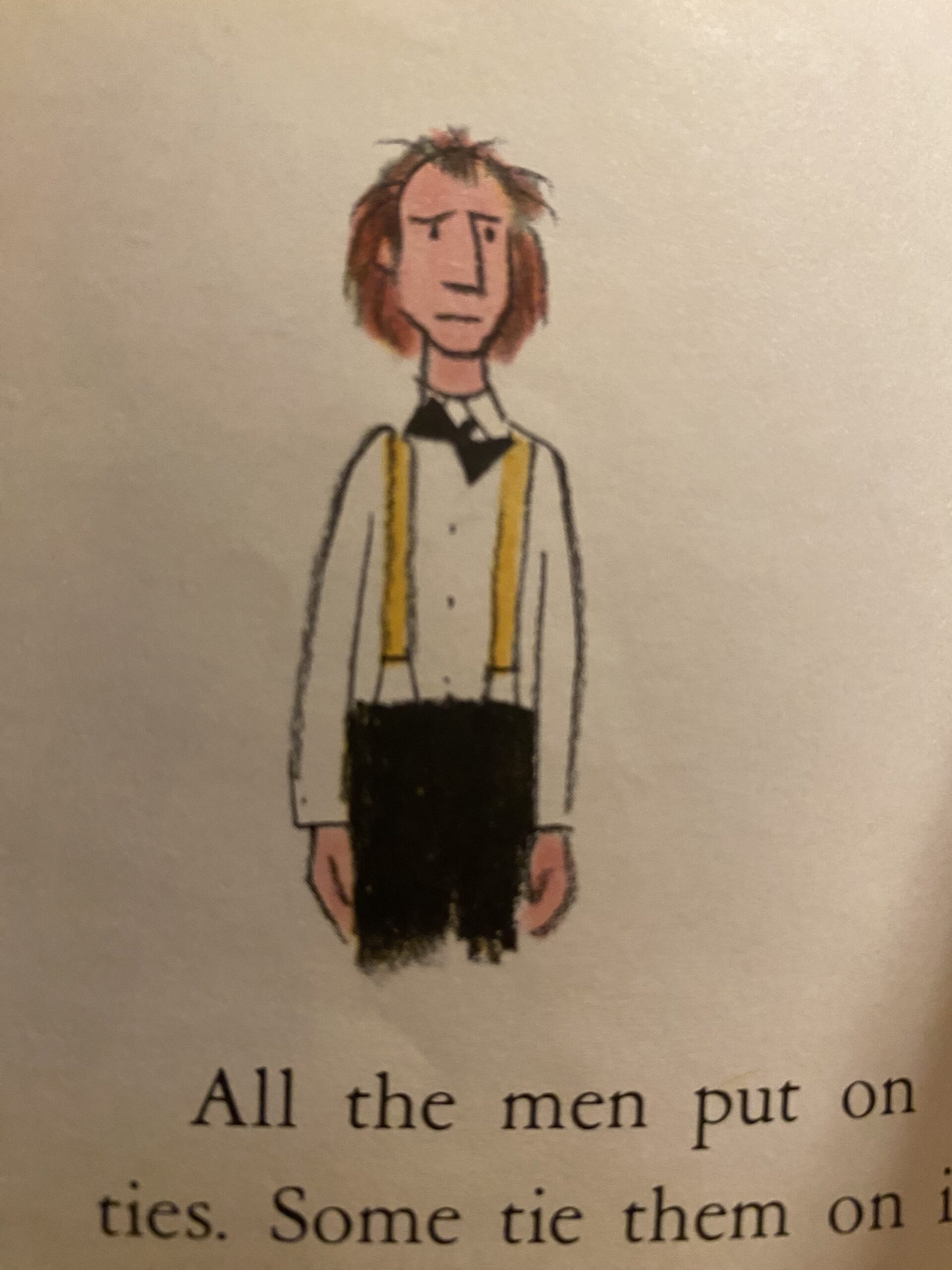
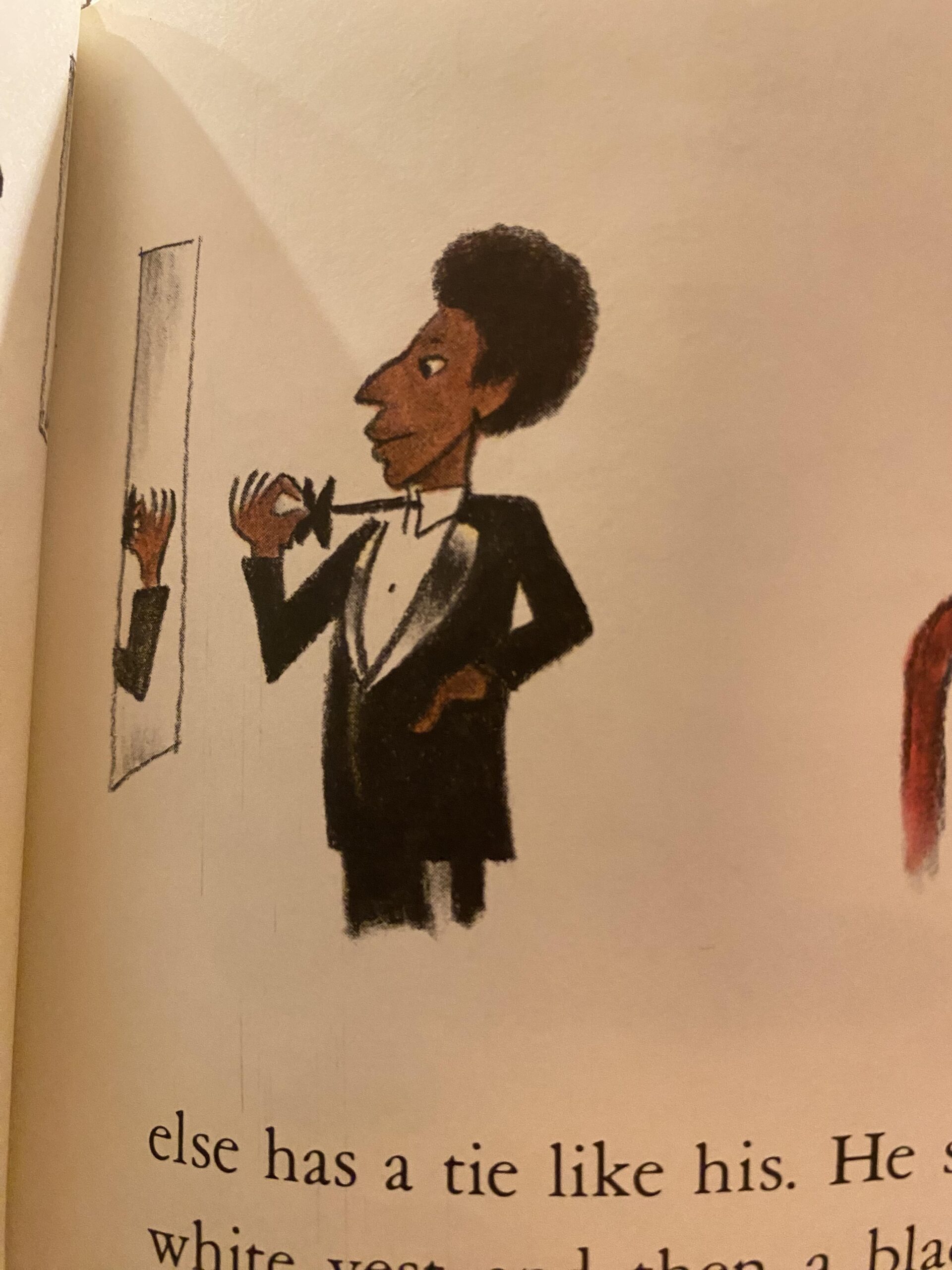
If you had to pick your favorite sequence in this book, it would HAVE to be the tie-tying section, don’t you think?

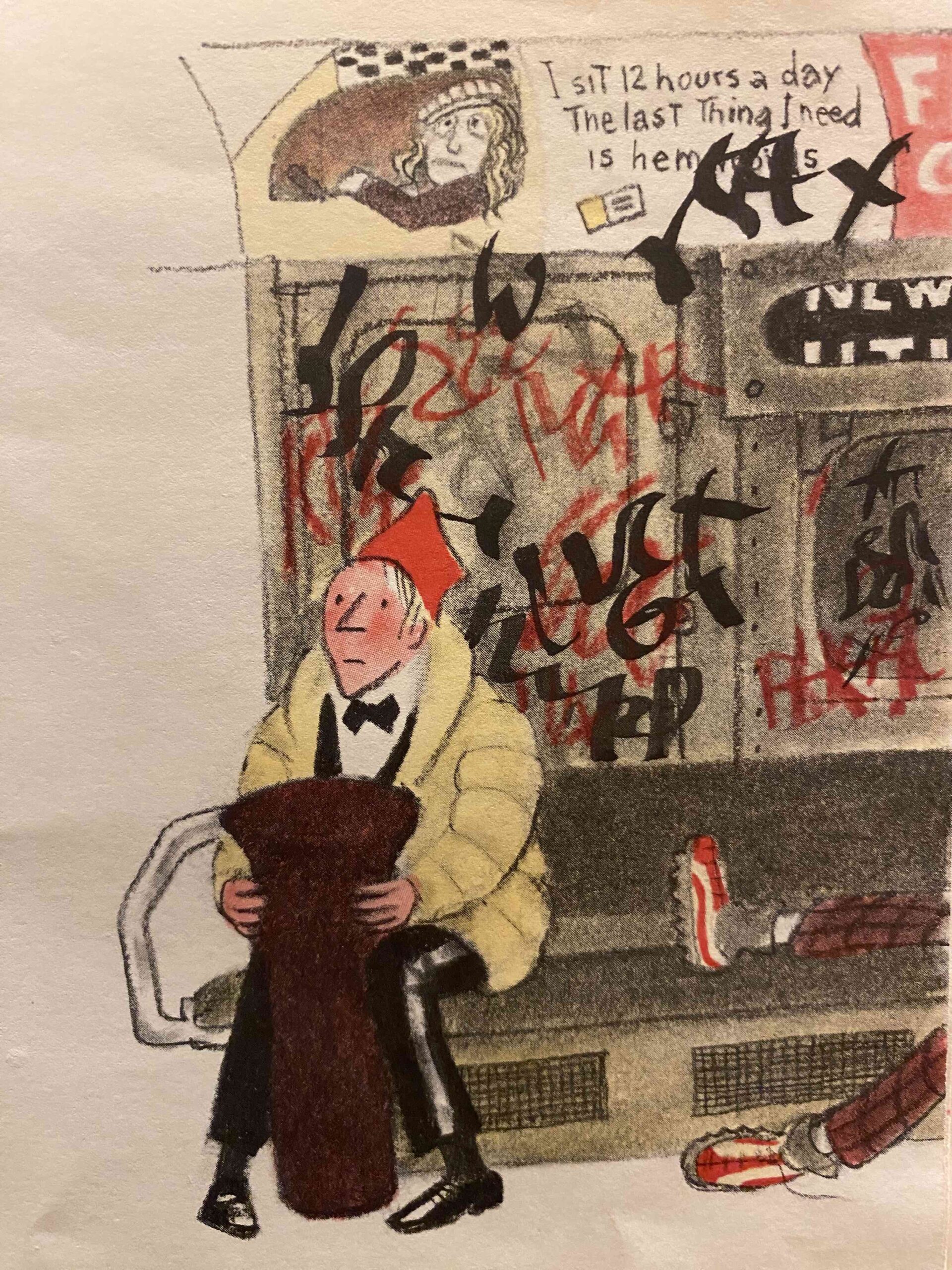
And if anyone ever asks you what picture book contains an ad for hemorrhoid cream, remember that it is THIS one! Additional Thought: This entire image is a New Yorker short story in and of itself.

Filed Under: Fuse 8 n' Kate Tagged With: Fuse 8 n' Kate, Karla Kuskin, Marc Simont, The Philharmonic Gets Dressed

Interview with Jorge Cham: Now With a Bonus Comic!

September 30, 2023 by Betsy Bird

You know what’s better than reading an author? Interviewing an author!

You know what’s better than interviewing an author? Having that same author (who happens to also be a comic book artist) draw part of the interview!

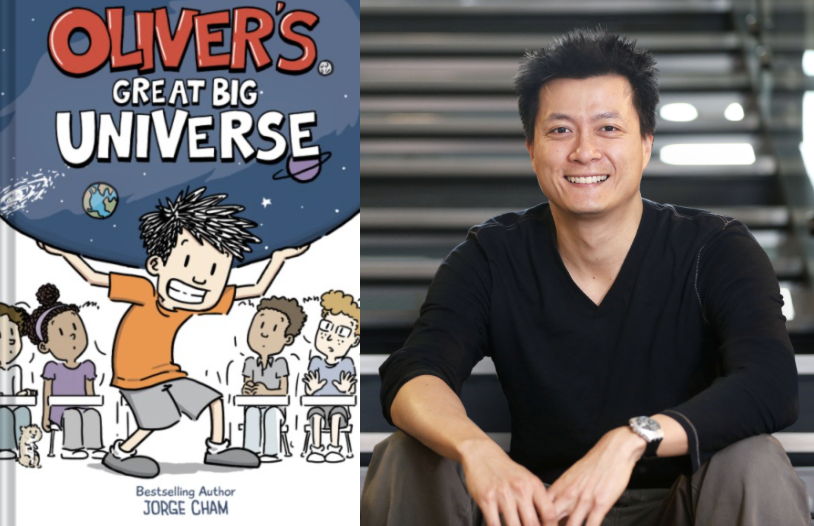
But FIRST! Please be so good as to mean Jorge Cham. You may know his name from a variety of different places. Was it from the SLJ Picture Book Palooza last summer when SLJ covered his adult book, We Have No Idea? Was it because he’s the co-host of the iHeart Radio show, Daniel and Jorge Explain the Universe. Maybe it’s because he’s also the creator of the Emmy-nominated PBS Kids show, Elinor Wonders Why (named after Jorge’s daughter Elinor!) and the popular comic strip, PHD Comics.  That’s right. He’s an engineer-turned-cartoonist.

For me, I knew him because I’m a Kirkus star nerd (collect them all!) and I saw that his new book Oliver’s Great Big Universe got itself one of those. So when they asked if I wanted to interview him AND get an original comic out of him as well, you know I said yes. You just know it.


Betsy Bird: Jorge! So great to get to talk to you! Particularly because you seem to specialize in combining two of my favorite things: science and comics. So if I get this right, you’ve a podcast, you’ve created a PBS show, and you’ve a regular webcomic. All of these, and on top you’ve created a new book for kids as well. So where did OLIVER’S GREAT BIG UNIVERSE come from? What’s its origin story?

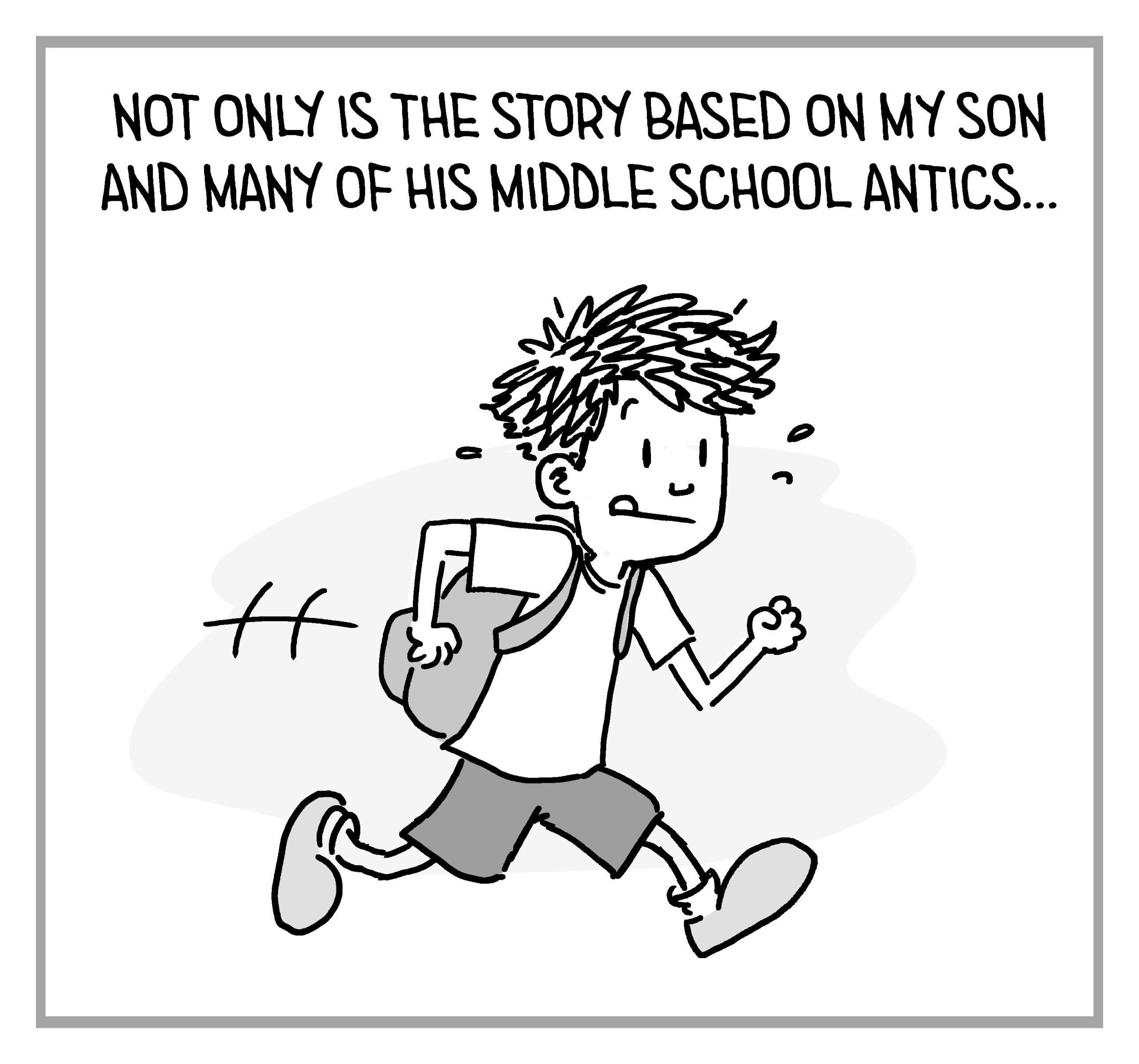
Jorge Cham: Great to talk to you too, Betsy! The origin of the book is that one day, my son who was in fifth grade came home and announced at the dinner table that he wanted to be an astrophysicist when he grew up. When we asked if he knew what that meant, his answer was, “Uh, not really.” That clicked something in my head because I had been trying to figure out how to communicate science to kids in the middle grade age range for a little while. The hard part is to do it in a way that is fun and engaging and appeals to what kids are into at that age. The incident made me think, “What if someone as funny as my son was explaining it to other kids?” What’s great about that is that it gives science a new perspective: it’s explained from the point of view of someone who is not a typical nerdy science-y kid, so he always brings it down to a relatable level.

BB: Just to get a little background information on you yourself, how’d you get into cartoons in the first place? Was it always something you did on the side or is there another story to it?

JC: I’ve been reading comics since I was very young. My parents both worked for the Panama Canal, and my father would sometimes stop at garage sales that American families would have in the Army bases there. Several times, he came home with large boxes of old American comics and comic collections. That’s pretty much how I learned English. It also got me into doodling and I would draw a lot as a kid on my notebooks at school and at home. Growing up in Panama, the idea of being a cartoonist for a living didn’t even occur to me. I like Engineering so I pursued that, and it wasn’t until grad school that I started to draw a regular comic strip that was published in the Stanford student newspaper. From there, it went online and the rest is history!

BB: You’ve a PhD in robotics from Stanford University and taught at Caltech but your creative jobs require that you make science comprehensible. Doing that for adults is one thing, and doing it for kids is another set of muscles entirely. So how do you gauge what one age range or another is able to understand? What’s your process for breaking down facts for us laymen?

JC: Great question!  At this point, I’ve spanned the range of pre-schoolers to adults in my work explaining science. I think for me, it’s all the same muscle. It’s about putting yourself in the mindset of the audience and figuring out what they’d be curious about and what they’d find fun and engaging. I think it helps that I’ve been writing fiction characters for over 20 years, so my brain is sort of primed to observe and absorb people and to have an intuition for what it would be like to be them.  At PBS Kids we work with educational consultants, which is super valuable, and then also it helps to have kids yourself which helps you know at what grade kids (and later teens and adults) learn certain concepts.

BB: In terms of your own kids, have they been a help to you on your books at all? Do they get any input on the process?

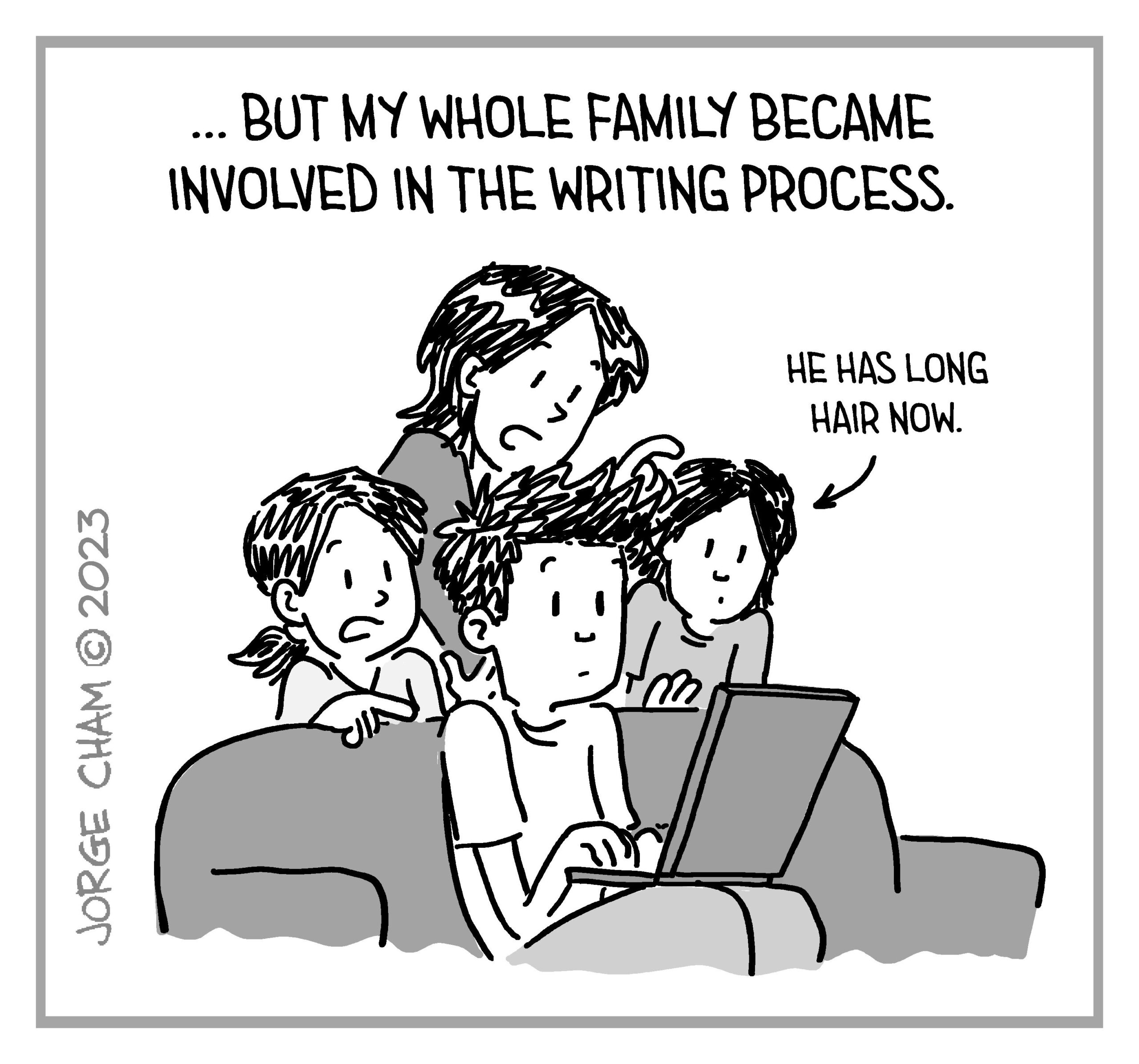
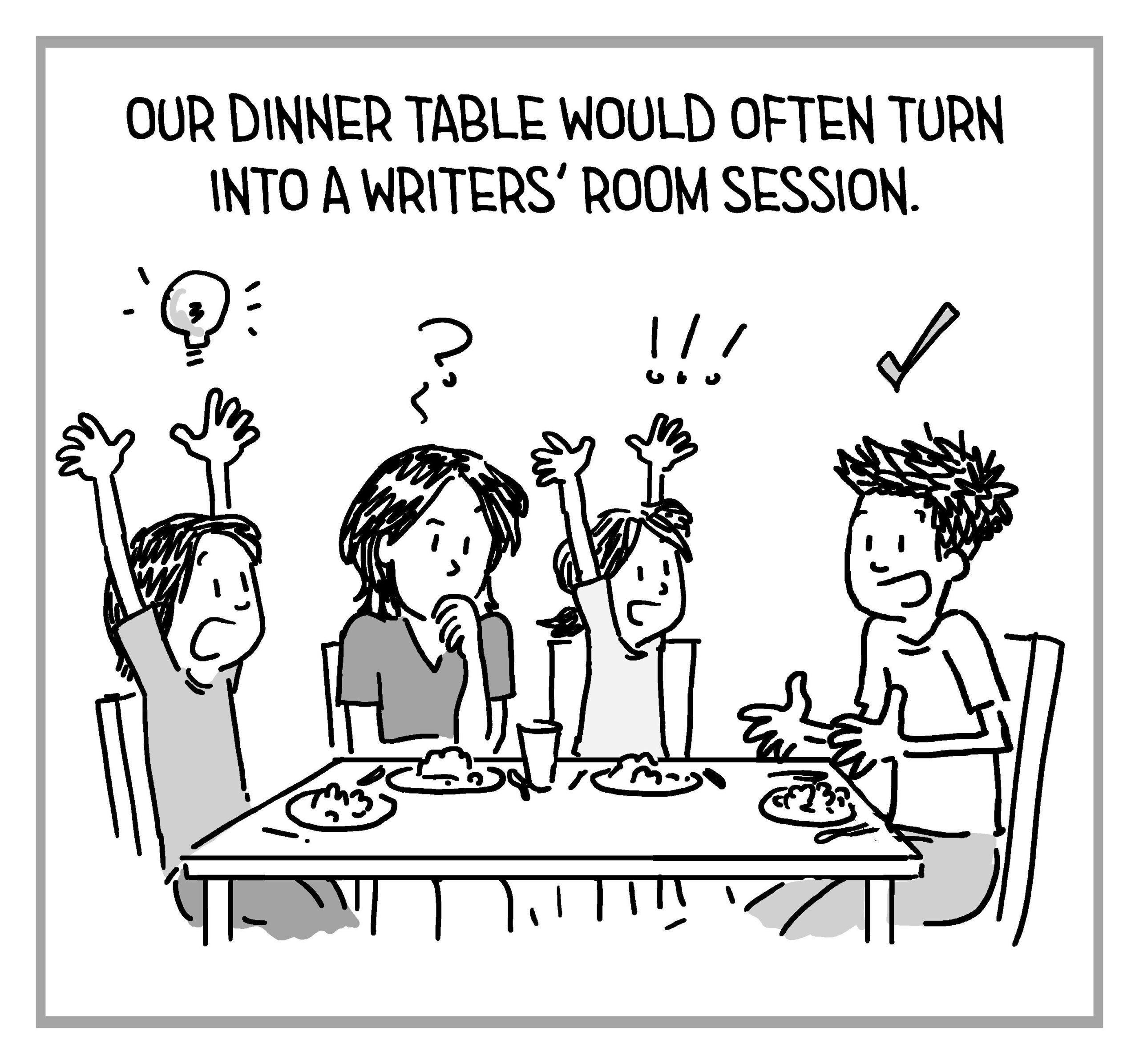
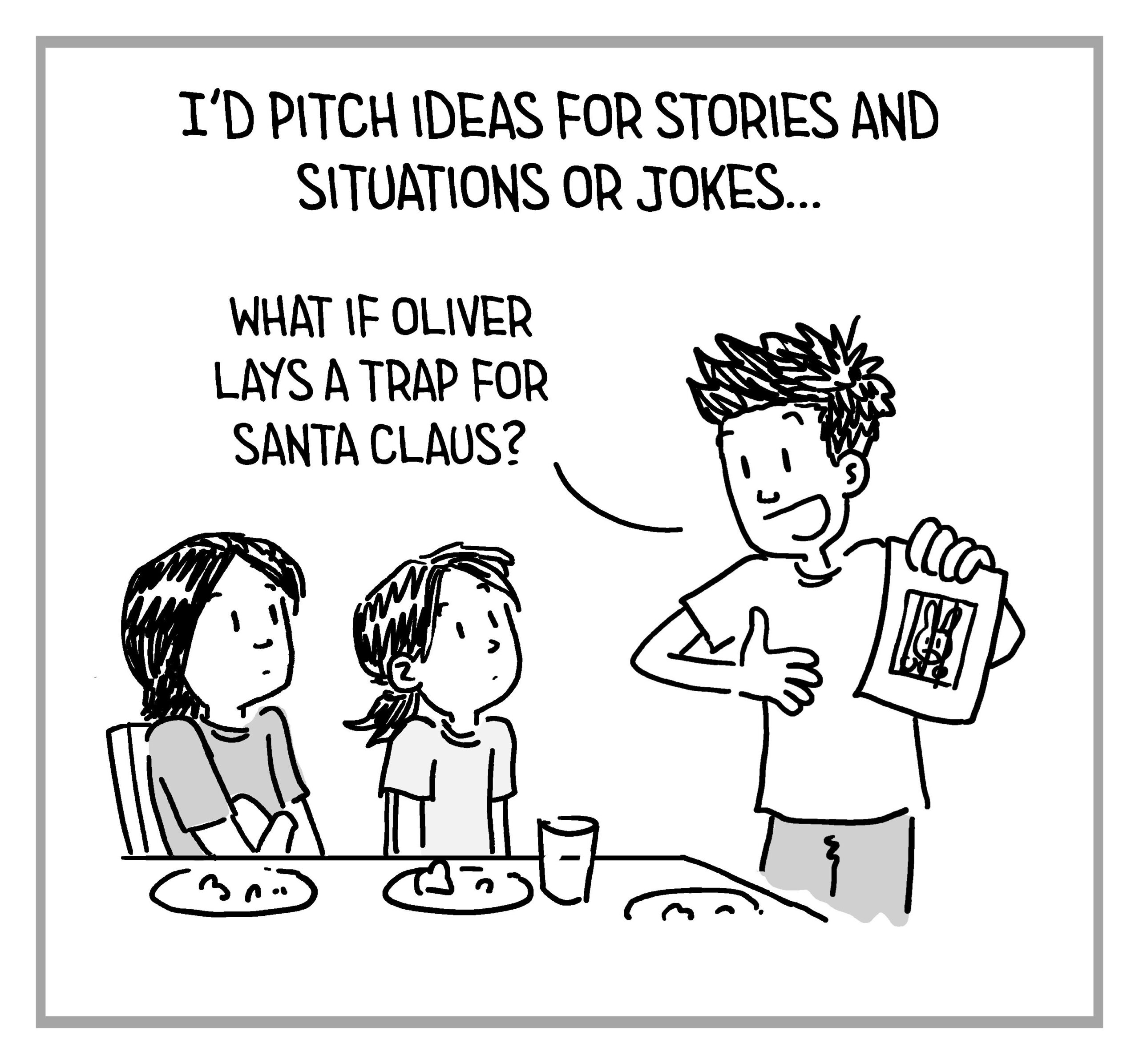
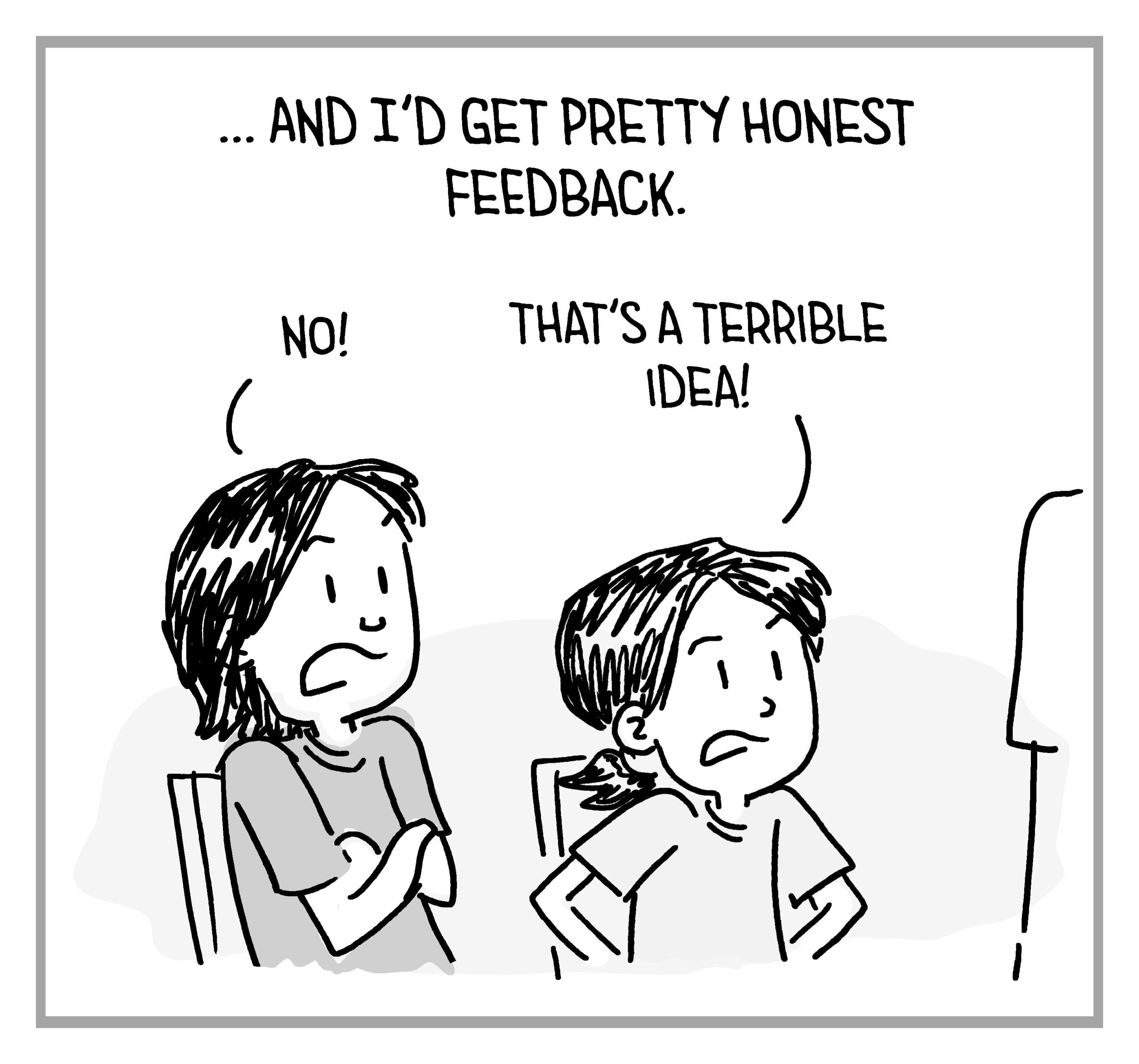
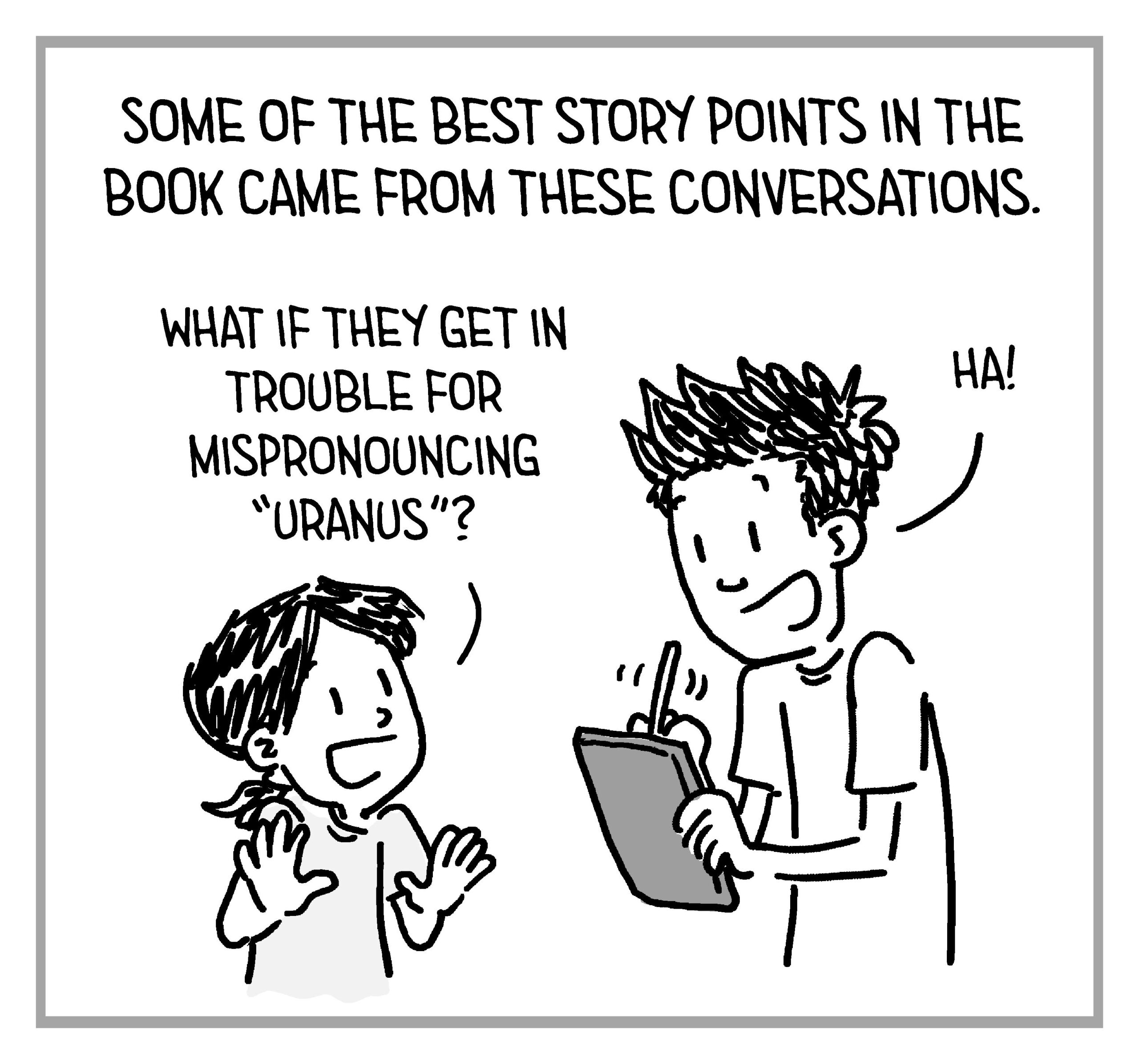
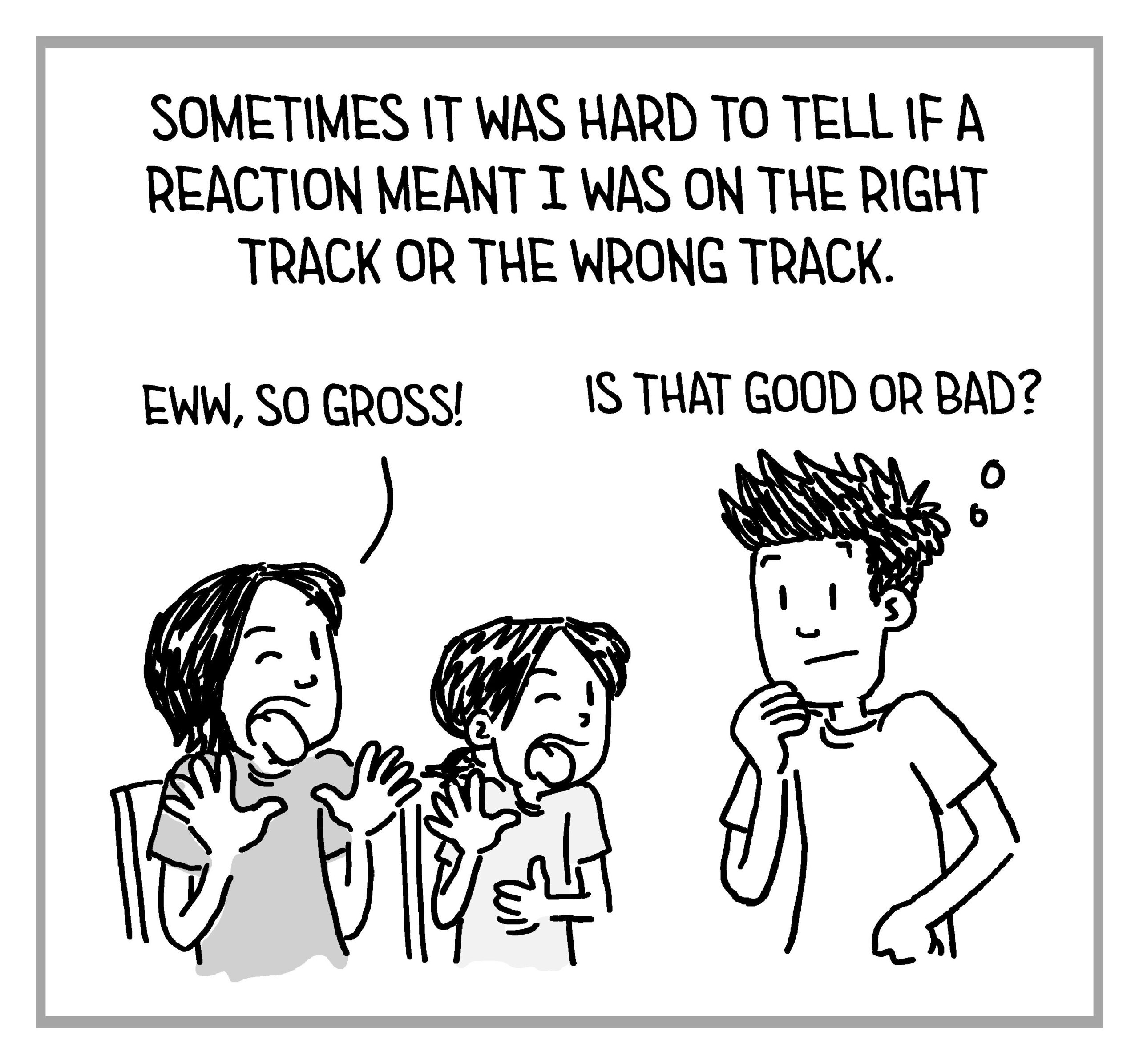
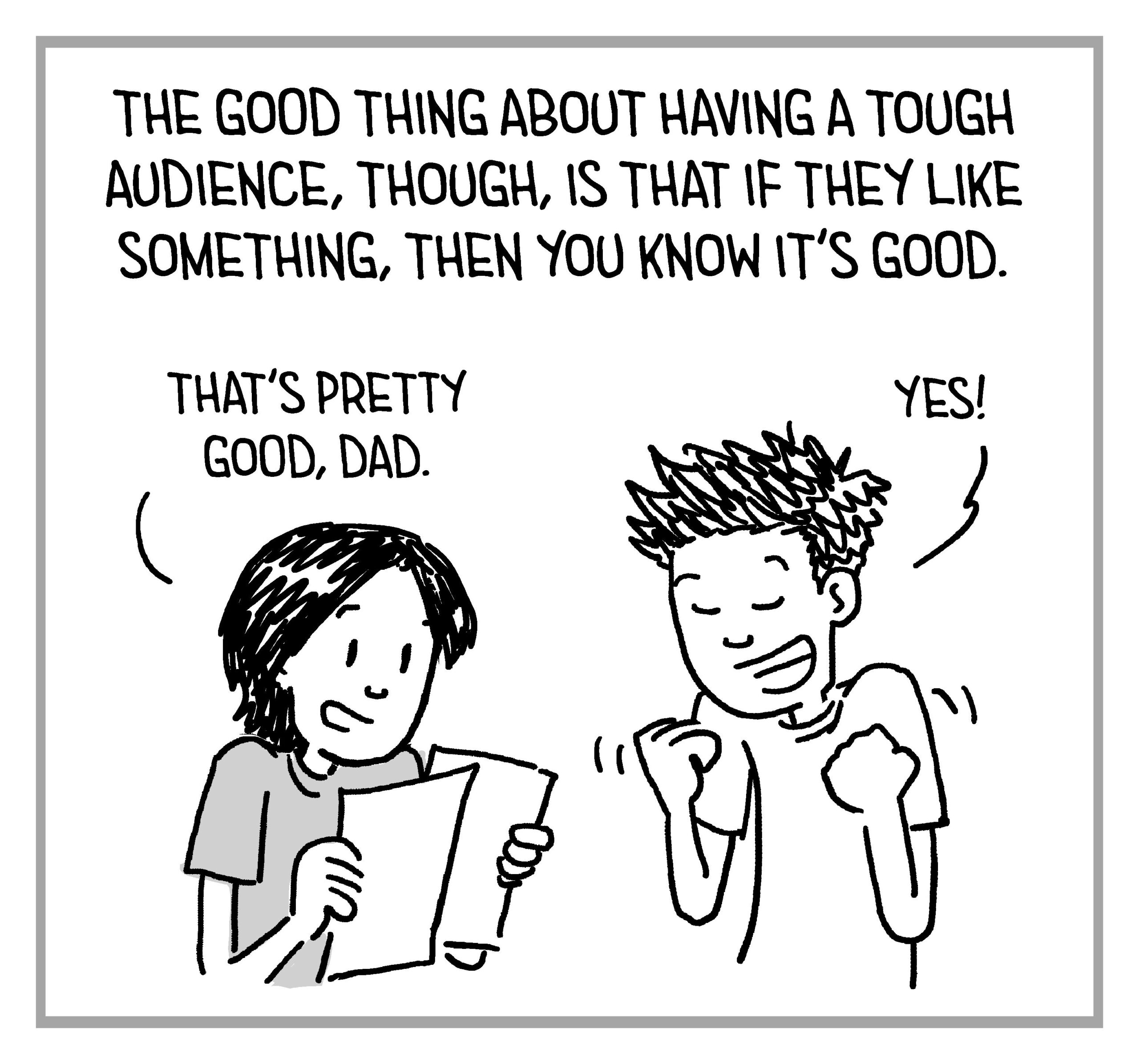
JC: Absolutely!  Especially with my son, who inspired the character of OLIVER, I run everything by him. And my daughter is in the target age range for the book, so she reads everything as well. Our dinner table sometimes became a writers’ room, with me pitching ideas to them and they jumping in with jokes or suggestions (or rejections!). It’s been a really fun process.

BB: We’ll get a sense of that with the comic at the end of this post. But first, let’s go back to OLIVER’S GREAT BIG UNIVERSE again. How did you decide on what to include? And was there anything you wanted to put in there that you just couldn’t work in or had to take out? 

JC: Each book in the series has a different topic. The first book is about basic space science (cosmology, astrophysics, planetary science), and the second book is about Earth science (volcanos, earthquakes, geology, etc.). I break it down into chapters, with each chapter tackling a different sub-topic. I start by making a list of the general 8-10 most important sub-topics, and that pretty much gives me my chapter list. I do some referencing to school standards as well. After that, within each chapter, I do a lot of reading and talking to experts and I make a list of the three or four most important points kids should know about, and that pretty much gives me the story beats for the chapter. Of course, the hard part is weaving it all into a fun and engaging story, but that’s also the most fun part.

The books already cover a surprising amount of science material, so I don’t typically feel like I left anything crucial out.

BB: Nice. So any chance that we’ll be seeing more of OLIVER in the future?

JC: Yes! As I mentioned, it’s a series. I just finished writing the second book, which I’m very excited about. I believe that one will come out next year.

BB: I’m already exhausted just reading everything you do, but what else do you have coming out in the future?

JC: Besides the second Oliver book, I also just finished co-writing a book about the brain called “Out of Your Mind” (Pantheon Books). It’s slated for early 2025 publication. It tackles the biggest questions we have about ourselves, like “Why do we love?” “Why do we hate?” “Will AI replace us?”  My co-author is a psychologist and neuroscientist. It’s been a fantastic experience, and I can’t wait for people to read it!


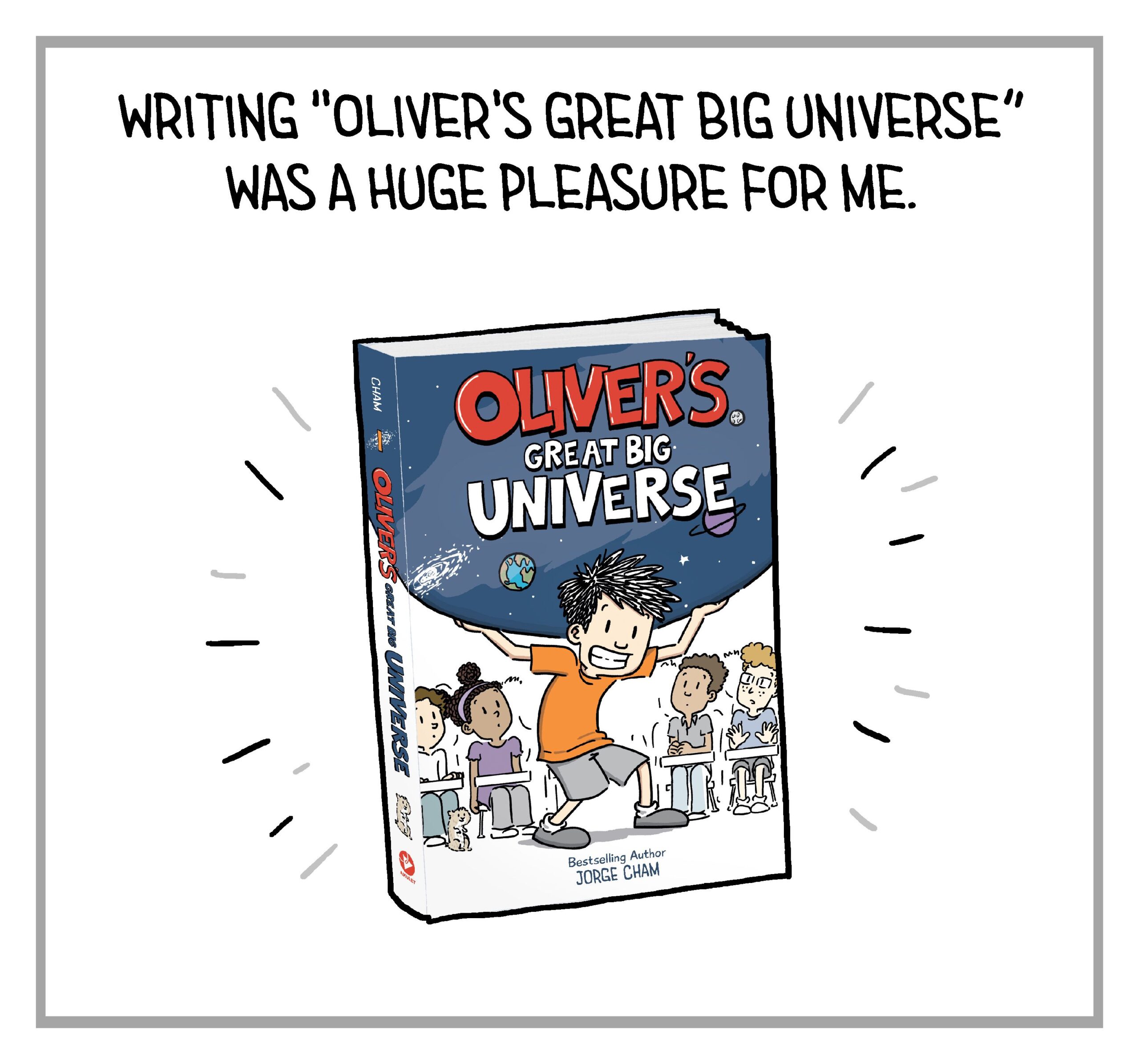
That’s good stuff. Even better?

BEHOLD!!

Big thanks to Jorge for taking the time to answer my questions today. Thanks also to Lauren Moye and the folks at Abrams for helping to put this together. Oliver’s Great Big Universe came out just this week, so feel free to scout about and read it today!

Filed Under: Interviews

  • « Go to Previous Page
  • Page 1
  • Interim pages omitted …
  • Page 112
  • Page 113
  • Page 114
  • Page 115
  • Page 116
  • Interim pages omitted …
  • Page 1047
  • Go to Next Page »

Primary Sidebar