• Skip to primary navigation
  • Skip to main content
  • Skip to primary sidebar
  • About/Contact
  • Fusenews
  • Reviews
  • Librarian Previews
  • Best Books
    • Top 100
    • Best Books of 2022
    • Best Books of 2021
    • Best Books of 2020
    • Best Books of 2019
    • Best Books of 2018
    • Best Books of 2017
    • Best Books of 2016
    • Best Books of 2015
    • Best Books of 2014
    • Best Books of 2013
  • Fuse 8 n’ Kate
  • Videos
  • Press Release Fun

Fuse 8 n’ Kate: Fox All Week by James Marshall

Fuse 8 n’ Kate: Fox All Week by James Marshall

January 20, 2025 by Betsy Bird

Sometimes everything comes together so beautifully. Kate had been asking for a while for me to come up with a fox-related picture book title in which the fox wasn’t evil. Meanwhile, Jerrold Connors has been creating a picture book biography of James Marshall called JIM! (which I interviewed him about this past week) in which Jim is portrayed as his famous fox character. The time just seemed right to put these two things together. The James Marshall Fox series had multiple volumes, so which one would be the best to do with Kate?

What’s that you say? The one where they all smoke cigars?

God. It’s like you know me.

Listen to the whole show here on Soundcloud or download it through iTunes, Stitcher, Spotify, Google Play, PlayerFM, Audible, Amazon Music, or your preferred method of podcast selection.

Show Notes:

Much as I mention in my behind-the-scenes, I want to pluck out this section from my interview with Jerrold Connors recently:

BB: And what draws people to James? Why has he lasted as long as he has and what’s his unique appeal?

Jerrold: I think it’s that Marshall’s works feel real in a way that Sendak’s or Lobel’s don’t. You know? Sendak offers beautiful lands of imagination, Lobel offers cozy worlds of fantasy, but Marshall’s stories have this real-world-relatable feeling about them. His Fox, for example, attends public school, and you have the feeling his mom might be a single parent.

Should anyone doubt Fox’s intelligence, this is the PERFECT way to get to stay home from school. Just say you feel sick but are willing to go anyway. No school for you!!

Kate describes this cat fellow as Old Deuteronomy from the musical Cats.

For a moment, let us remember how common characters smoking cigars used to be in media. You certainly can’t have them smoking in picture books these days. Even if they get sick? Even if they get sick. Also, Kate is now convinced that Carmen is a member of the mob now.

And that’s how Dexter died of emphysema.

Fuzzy slippers, awesome. Carpeted kitchen floor? Terrible plan!!!

Is there a Mod Furniture Design in Kidlit Instagram account out there somewhere? If so, can we add this chair? Amazing.

I have a son. I’m taking notes on how to tie a tie on my reluctant son. “Sit on that boy! Sit on him!”

As Kate says, this is the most honest ending a book could hope to give.

Betsy Likes: The Three-Body Problem by Liu Cixin

Kate Likes: These quilts. They are by graphic novelist Ursula Murray Husted (whose upcoming graphic novel Botticelli’s Apprentice is out this March and was discussed at length here) and they were created for Kate in honor of her pregnancy and first kid.

Filed Under: Fuse 8 n' Kate Tagged With: Fox All Week, Fuse 8 n' Kate, James Marshall

Press Release: Kidlit for Los Angeles

January 19, 2025 by Betsy Bird

The children’s publishing industry is uniting to support a fundraising initiative launched by four picture book authors in response to last week’s devastating wildfires in Los Angeles. Kidlit for Los Angeles—founded by Caroline L. Perry, Charlotte Offsay, Tara Luebbe, and Jocelyn Rish—has been flooded with donations from authors, illustrators, and industry professionals.

Top auction items include a complete set of signed Diary of a Wimpy Kid books with an original sketch from creator Jeff Kinney; a virtual school or book club visit from Wings of Fire author Tui T. Sutherland; virtual school visits from Kate DiCamillo, Alan Gratz, Lisa Moore Ramée, Bob Shea, Ben Clanton, Scott Magoon, Kelly DiPucchio, and Adam Wallace; signed books from Suzanne Collins, Donna Barba Higuera, Daniel Nayeri, and Eric Rosswood; original art from Vashti Harrison and Pete Oswald; and exceptional contributions from editors, agents, and other industry professionals.

“I reached out to Charlotte to see if we could channel our sadness into something productive,” says Perry, a Los Angeles-based author. “I have friends who lost their homes in the fires, and this tragedy has impacted so many.”  After putting out a call for donations, Perry says the team was “overwhelmed” by the support they received. Illustrator Sydney Hanson designed the Kidlit for Los Angeles logo while evacuated from her home. “We turned to our networks,” says author Offsay, who is also an Angeleno. “And everyone wanted to help.”

The online auction will run from January 20 to 26, raising funds for the California Community Foundation’s Wildfire Relief Fund, the Los Angeles Fire Department Foundation, the Los Angeles Regional Food Bank, and the Animal Wellness Foundation’s Wildfire Relief Fund. “We have so many incredible items,” Luebbe says, with Rish adding: “There’s something for everyone. Please come and bid!”


Where proceeds will go:

–       California Community Foundation: Wildfire Relief Fund: calfund.org

–       Los Angeles Regional Food Bank: lafoodbank.org

–       Los Angeles Fire Department Foundation: https://supportlafd.org/

–       Animal Wellness Foundation Fire Relief Fund: https://www.animalwellnessfoundation.org/


About Kidlit For Los Angeles

We are a group of kidlit creators who have been heartbroken by the apocalyptic scenes in Los Angeles. Many of us are proud Angelenos, with friends and loved ones who have suffered crushing losses. We are looking to help raise desperately-needed funds for wildfire relief efforts in the many communities that have been impacted. 

Fundraiser Organizers:

Caroline L. Perry: www.carolinelperry.com

Charlotte Offsay: www.charlotteoffsay.com

Tara Luebbe: www.beckytarabooks.com

 Logo design by Sydney Hanson: https://www.shannonassociates.com/sydneyhanson

Follow Kidlit for Los Angeles on Instagram (@kidlitforlosangeles) for updates.

Filed Under: Uncategorized Tagged With: auctions, press release

Newbery/Caldecott 2025: Final Prediction Edition

January 17, 2025 by Betsy Bird

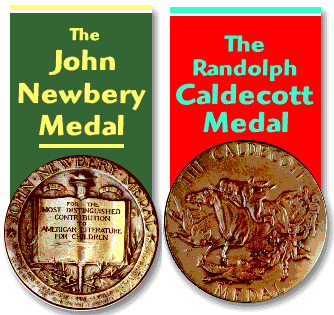
Kind of hard to believe it’s almost here. In the thick of 2025 we have a little time left to try and predict what it is that will win the most prestigious awards in American children’s literature. The tension is high. The books? They are strong. I tell you, the state of children’s books was fantastic in 2024. I have surprisingly few personal villains (a.k.a. books that I REALLY don’t want to see win anything so, naturally, they will). And there are just so many wonderful potential winners that hopefully no matter how it all shakes out, I’ll be happy with the results.

Predicting these awards is an impossible game. I mean, look at last year. I thought Big would Honor and There Was a Party for Langston would win, which was backwards. And on the Newbery side I only chose two of the correct Honors and predicted the actual winner would also Honor. So it’s all a crap shoot in the end… except not entirely. The cream often rises to the top and the committees can always surprise you.

This post is a little different from the three other prediction posts that preceded it this year. I’m not talking about what I want to win, necessarily, but what I think WILL win. So buckle up and enjoy this crazy ride . . .

2025 Caldecott Predictions

Caldecott Award Winner

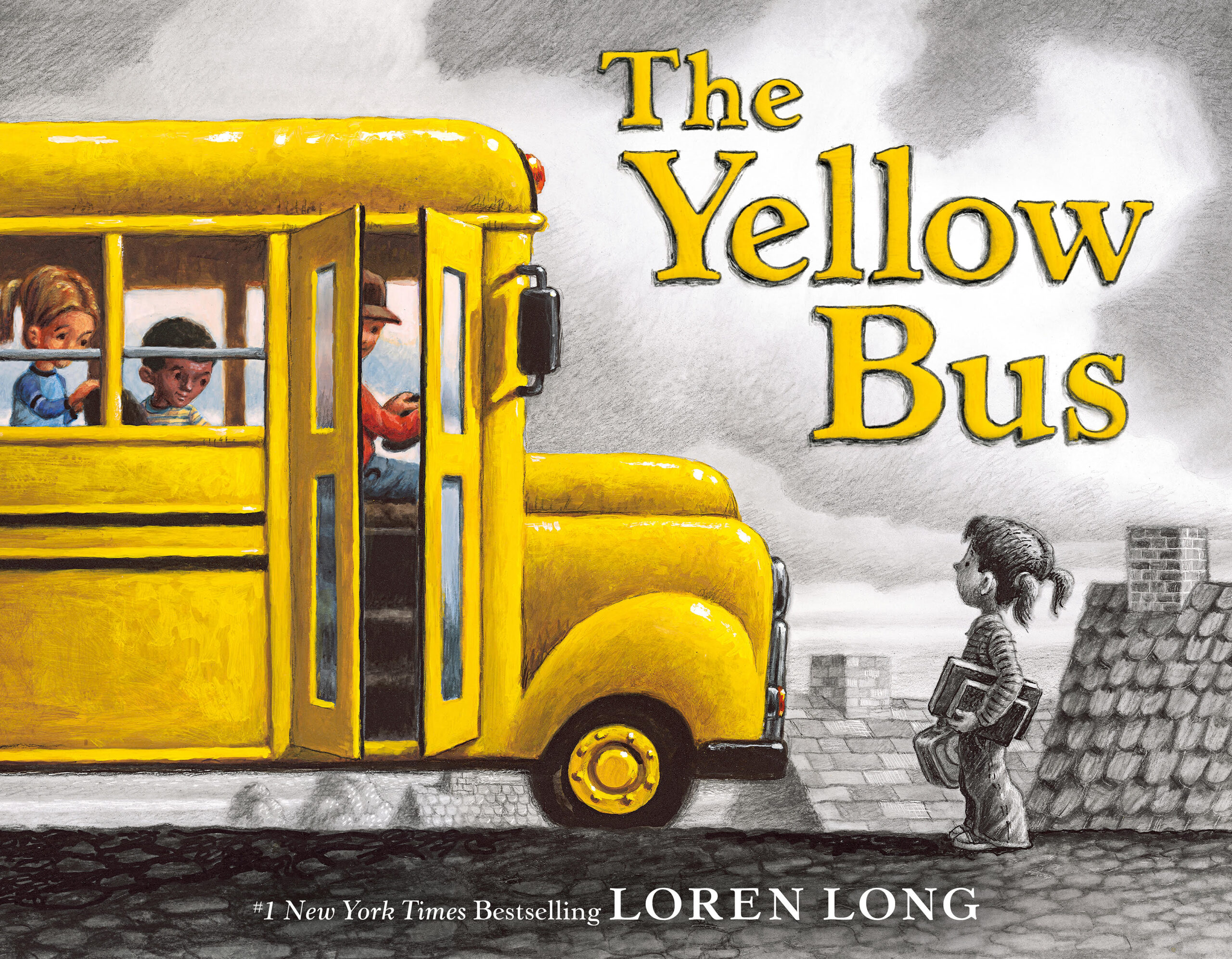
The Yellow Bus by Loren Long

Here’s a fun fact about Newbery and Caldecott committees: They don’t care bupkiss about what the rest of us think. So I might say stuff like, “Oh, Loren Long is due for a major award” and “It’s Loren’s year and we’re just living in it”, but they won’t care. All a Caldecott committee cares about is picking the best possible book as its winner. Now like I’ve said many times before, a true Caldecott winner is meant to combine stylistic aplomb with great storytelling AND heart. The heart part is the hard part. Long’s work on this book more than covers all three of those areas, and he looks like he’s having fun while doing it. I don’t know if he’ll be able to pull it off for the ultimate win, but I have a good feeling about this book. We shall see.

Caldecott Honor Winners

Home in a Lunchbox by Cherry Mo

Let me state for the record, that I consider this book neck and neck with The Yellow Bus for the Caldecott win. I’m giving Long the edge here, but maybe I should be considering Cherry Mo a little more seriously. This is a book that has been beloved across the board. The people who like classy picture books like it. The ones who like heartfelt books like it. The ones who like clever books like it. It has a message we can get behind, a clever art style, and the creator has never won before. What’s more, it’s fun. So I ultimately decided it would Honor but if it wins it all I will NOT be surprised even one jot! Not a speck! It has it all.

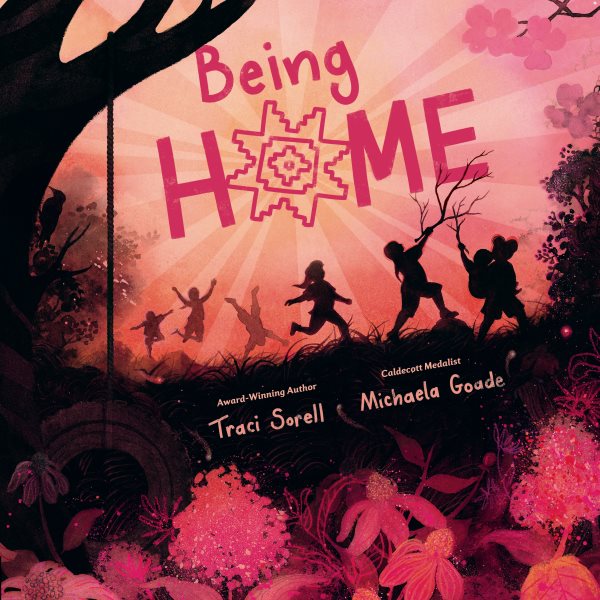
Being Home by Traci Sorrell, ill. Michaela Goade

I’m playing it safe. There’s a chance that the committee this year will be the kind that likes to hand awards out to just the folks who’ve won before. If that’s the case then Goade’s a shoo-in. It’s the joy man. As a whole, the year 2024 was crap. Just the utter worst. Whole swaths of us got dunked into a deep, dire depression. That’s why I think the Caldecott committee (at least) is going to counter that with genuine joy on the page. Look at the titles I’ve selected today. Each one talks about joy in some context. And taken as a whole, they make a powerful statement about where our joy should truly come from.

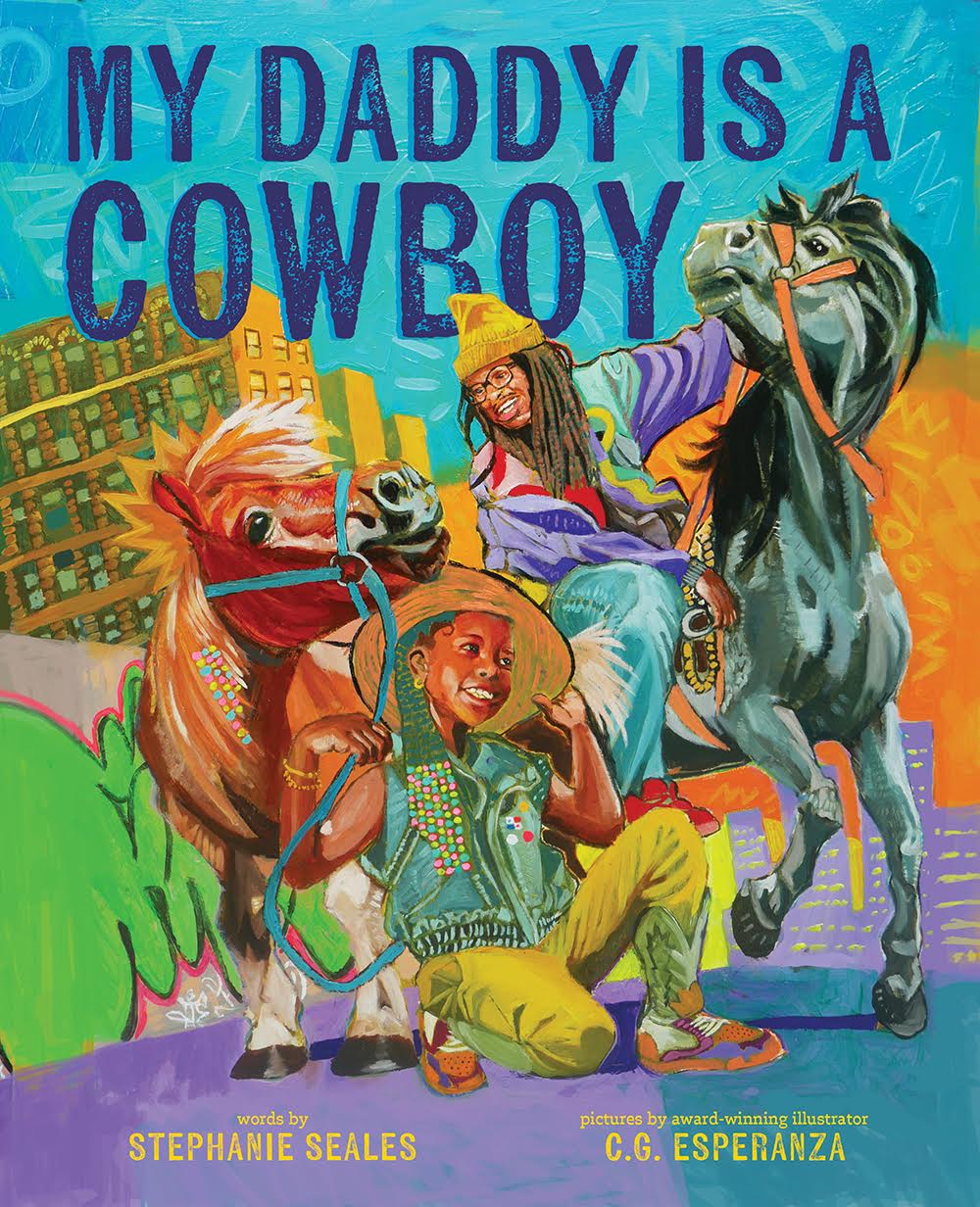
My Daddy Is a Cowboy by Stephanie Seales, ill. C.G. Esperanza

This one’s my long shot. Esperanza’s never won before and I have, admittedly, encountered some blowback to this title. I think it may have a good shot, though, depending on how open the committee is to the art style. Heart? It flows off the page. And look at how well the man paints a horse! Maybe I’m a dreamer, but I still say this is a contender.

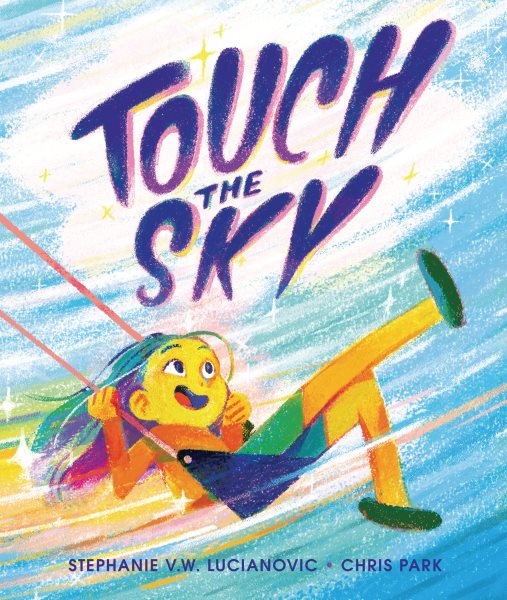
Touch the Sky by Stephanie V.W. Lucianovic, ill. Chris Park

If this book wins it’ll be as much for typography as anything else. Maybe. It’s such a successful book on every level, though. It’s not simply the art, which so cleverly moves the reader from page to page. You know what this reminded me of to some extent? Caldecott Honor winner Leave Me Alone!, that’s what. It has that same vibe, and is equally successful on the page.


2025 Newbery Predictions

Newbery Award Winner

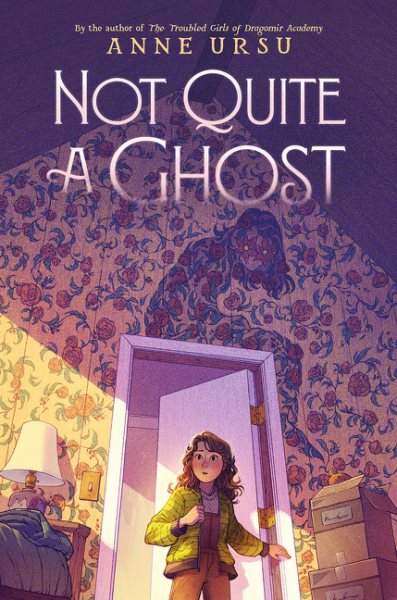
Not Quite a Ghost by Anne Ursu

Ursu gets passed over for this award year after year after year. So much so, that I’m sure she won’t be getting her hopes up when she reads posts like this one. Even so… read the first chapter of this book. I mean it, just read that chapter. Doesn’t it just sing? Doesn’t it work well? And the book as a whole… look how smart and compact and tight the writing is. We’ve had horror books win the Newbery time and again (Scary Stories for Young Foxes and Doll Bones come immediately to mind). This is so much in that vein, yet it’s such a successful amalgamation of the metaphor and the actual plot. And you want to talk literary? It’s based on The Yellow Wallpaper, for crying out loud. If the writing itself wasn’t so keen, that right there should tip it over. I hope.

Newbery Honor Winners

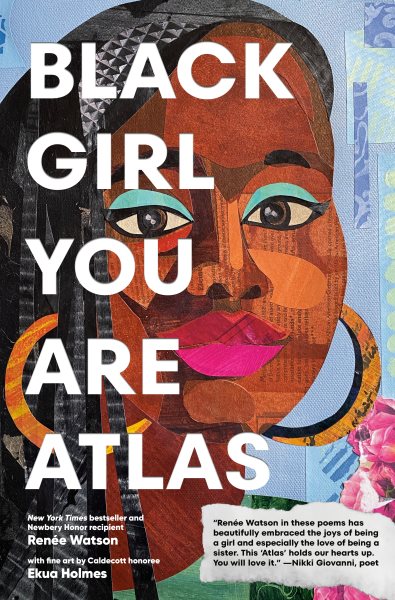
Black Girl You Are Atlas by Renée Watson, ill. Ekua Holmes

Because the Newbery for some inexplicable reason goes to 14 (an oversight that I pray is amended someday) YA always has a chance of getting on the list. Normally I groan, moan, and kvetch about this fact… but not with this book. I truly believe it can be read by all ages. There are poems for the older middle schoolers and poems for the younger set. And what poems! Brilliant ones! The Newbery has a lamentable track record when it comes to rewarding funny poetry (which is the sole reason I’m not including Beware the Dragon and the Nozzlewock on this prediction list) but it does a pretty good job with meaningful middle school poetry fare. I mean, if we’re rewarding language with our Newberys, we should reward THIS!

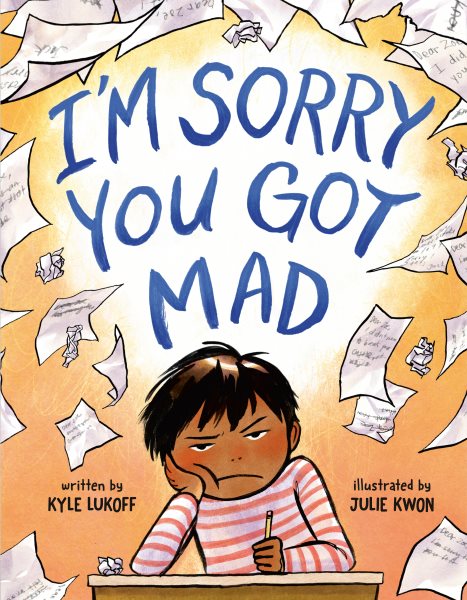
I’m Sorry You Got Mad by Kyle Lukoff, ill. Julie Kwon

My wild card. My darling book. Is this year’s Newbery committee the kind that wants to throw a random Honor at an unusual choice? Perhaps. There aren’t many graphic novels I’d consider in that way, and nonfiction is always far too unlikely (though maybe Enigma Girls has a fair shot). Picture books are also very hard, PARTICULARLY if they’re funny. But has the need for this book ever been stronger? Read this book enough times and you begin to understand why it’s as amazing as it is. There are a lot of balls in the air, and Lukoff doesn’t drop a single one of them. Consider!

Mid Air by Alicia D. Williams

About his point you may be noticing that aside from Anne Ursu and someone else I’m about to mention, my prediction list this year is filled with previous winners (unlike my Caldecott list). As I mentioned in my review of it, I never read Ms. Williams’s Honor winner Genesis Begins Again, but if the writing was anything to compare with the words in this book then I get why it won. I was unprepared for the lyricism of the writing. Trust me, I’ll never be unprepared again.

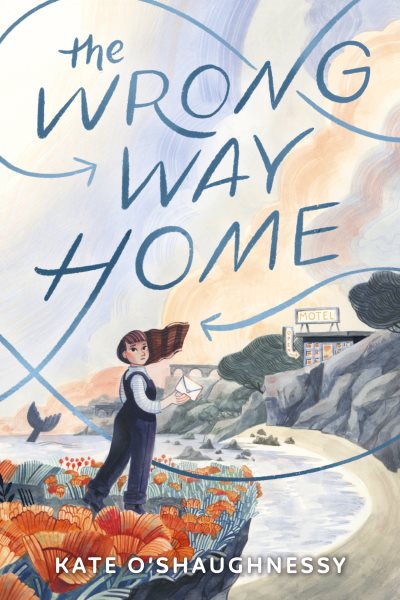
The Wrong Way Home by Kate O’Shaughnessy

This actually pairs rather well with a book I’m not including on this list, The Tenth Mistake of Hank Hooperman. In both cases you have two kids with very skewed views about which adults to trust in their lives (though the moms in the two books could not be more different). Of the two books, I think O’Shaughnessy may have the better shot. I mean, YOU name a Newbery winner that was about escaping a cult. It can’t be done! Oh. Except for maybe, like, The Giver or something. But the sheer reality of this book, and how adeptly O’Shaughnessy twists the main character’s unreliable narration? *chef’s kiss*


In case you’d like an alternate opinion, Travis Jonker had his own predictions up earlier this week as well. And if you want to watch the announcements live, the ALA Youth Media Awards will be visible on Monday, January 27th at 8 a.m. MT here. Should be a great time! Can’t wait!

Filed Under: Best Books, Best Books of 2024, Newbery / Caldecott Predictions Tagged With: Best Books of 2024, Newbery/Caldecott predictions

Exclusive spread for MIXED FEELINGS by Liana Finck

January 16, 2025 by Betsy Bird

Sometimes, you just want to do an exclusive spread from a book.

Who amongst you remembers the picture book You Broke It! by New Yorker cartoonist Liana Finck when it was released last year? Welp, Finck’s back with a whole new title, and I’ve got the fancy dancy spread to prove it.

Mixed Feelings by Liana Finck hits bookstore and library shelves on January 21st. The publisher chooses to describe it this way:

Presented in illustrated vignettes and beautifully articulate text, each spread portrays a different scenario involving a child and a phrase that reminds readers (young and old) that not all feelings can be summed up in a single word. The text “Mostly happy but a little sad” accompanies a child leaving for the beach but waving goodbye to his dog. “Like I’m trying hard to have fun” shows a child distancing herself from a towering clown.

But where did the book come from? Liana Finck answers that here:

————-

“I was a really shy kid who didn’t see her feelings reflected in other kids or any understanding from my teachers on what I was going through when I was young. My feelings always expressed themselves more in metaphor like “the feeling of wanting to be a dog”. In fact I actually got expelled from nursery school for pretending to be a dog! I wasn’t even trying to be mischievous, I wanted to hide, and I think also to entertain. I don’t know if the dog obsession was an age thing or a me thing, but I notice that I see similarly opaque expressions of feeling in my three-year-old son. And in myself, still, too. I’ve pretended I’ve become very self-aware in my feelings but there are so many layers there – I have so many conflicting feelings at the same time. I think we all do, no matter what age.”


And now, folks, the spread!

God, I love that little “AND CHAIR”.

Liana Finck is a cartoonist, illustrator and regular contributor to the New Yorker where she also authors the “Dear Pepper” advice-from-a-dog column. As the author of nine books, her work also frequently appears in The New York Times, The Atlantic, The Wall Street Journal, New YorkMagazine and more. She is the recipient of Fulbright, Guggenheim and New York Foundation for the Arts Fellowships. www.lianafinck.com

Many thanks to Karter Powell and the folks at Penguin for this excerpt. Mixed Feelings by Liana Finck hits bookstore and library shelves on January 21st.

Filed Under: Excerpts Tagged With: excerpt reveal, Liana Finck

Exclusive Spotlight: All Eyes on JIM! A Jerrold Connors Q&A on James Marshall

January 15, 2025 by Betsy Bird

We’re doing something a little different today. You may already be familiar with my colleague and fellow School Library Journal blogger Travis Jonker. Travis writes over at the wonderful 100 Scope Notes site. Usually we don’t collaborate on much, but today we are pleased to reveal two sides of the same book. JIM! by Jerrold Connors is the story of James Marshall. Over at 100 Scope Notes, you’ll get an exclusive reveal of the book’s case cover, never before seen on this good green earth. And here? On my site we’re talking with Jerrold about the book’s creation. After all, how do you write a picture book about a man who made picture books?

Coming out on May 20th, the book is probably best described by its publishers (Dial) in this way:

“A picture book biography of the late, great James Marshall—illustrator of Miss Nelson is Missing and the George and Martha series—and as clever, delightful, and daring as Jim himself

Author and illustrator James Marshall let kids in on the joke. He knew little kids were smart, and he didn’t talk down to them in his stories. He was right—kids loved his picture books. Decades after his death, the characters he illustrated—Miss Nelson, Viola Swamp, George and Martha, Goldilocks, Fox and His Friends—are still beloved. James Marshall should be at least as famous as his characters, and now he is, in his own picture book biography. Created in an irreverent style inspired by James Marshall’s own art and storytelling, this delightful biography, featuring James as a fox, celebrates in both form and content what made James—“Jim” to his friends—so talented, funny, and special, and what has made his tales last. This time, Jim is the main character.”

Jerrold was kind enough to answer some of my questions about the creation of the book.


Betsy Bird: Jerrold! Lord above it is good to talk to you about JIM! I saw a very early version years ago and haven’t stopped thinking (or jabbering about to other folks) since. But let’s get the true origin story from the horse’s mouth. Where did JIM! Originate?

Jerrold Connors: Hello, Betsy! It’s great to talk to you too. Jim! started immediately after my time at the University of Connecticut where I was the 2017 James Marshall Fellow. Before going, I had reached out to Julie Danielson (who was the previous Marshall Fellow) to ask if there were any “must-sees” in the archives. Julie responded and we began messaging back and forth a series of “omg did you see . . .” and “omg I just saw . . .” type texts. By the end of the week, I must have impressed her with my wide-eyed enthusiasm because she invited me to join her as co-author on her for-adults James Marshall biography. I accepted and we began writing a few sample chapters. It was great to work with Julie, who is, as you know, a terrific writer, but the project never quite found its footing. Julie suggested I try my hand at a picture book version of Jim’s life. I resisted, she insisted, and the rest, as they say, is history. 

The creator in repose

BB: Okay, let’s double back and talk about James Marshall. In many ways he was one of our greats, but since he never had a WHERE THE WILD THINGS ARE level hit, he has a tendency to get a little forgotten sometimes. First and foremost, how did you first learn about him?

Jerrold: You nailed it. Jim didn’t play as big a role in my school days as did Tomie dePaola, William Steig, or Jose Aruego. All the same, Jim’s work has always felt incredibly familiar to me (I sometimes wonder if Viola Swamp lives in the subconscious of most people my age). I really got into his stories when I was a bit older and would read the Miss Nelson books to my niece and nephew. I’d say that was when I first started thinking of him as my favorite author.

BB: And what draws people to James? Why has he lasted as long as he has and what’s his unique appeal?

Jerrold: I think it’s that Marshall’s works feel real in a way that Sendak’s or Lobel’s don’t. You know? Sendak offers beautiful lands of imagination, Lobel offers cozy worlds of fantasy, but Marshall’s stories have this real-world-relatable feeling about them. His Fox, for example, attends public school, and you have the feeling his mom might be a single parent.

BB: So, in making a picture book biography you had any number of directions you could have gone. You went: Let’s turn him into a fox! Better still, the book is very much inspired by his own style. Was that just a given from the minute you thought about making this book or did it come to you later?

Jerrold: The earliest concept of this biography (which existed only in my head) was to use Jim’s own stories as a springboard to talking about his life. The working title of the first chapter was going to be “Portrait of the Artist as a Young Alligator.” But once I put the idea to paper, the Fox appeared and I knew immediately it was the right choice. There was no thinking involved.

As for the art, I am . . . let’s say . . . adept at mimicry. I could have attempted the book in a bang-on, completely Marshall style, but I knew to give the story meaning, it had to come from a more personal place in me. The style is my own, done in brush, ink, and watercolor, but the framework (the chapters, the titles, the vignettes) are very Marshall. I received a wonderful compliment from Breanna Carzoo (author of Lou and Greenlight) after she saw this cover. She said “You captured his essence while still being YOU!” I think that was when I knew I did it right.

BB: One of the things I love about this book is how much it focuses on his friends in his life. Maurice Sendak and Arnold Lobel amongst them. When you were writing the initial manuscript were they always there or did you add them in later? What do they bring to the story of James’s life?

Jerrold: They came later, when I found it was impossible to talk about Jim without acknowledging the deep friendship he shared with Maurice. Part of this is how important it was to Jim’s development as an artist. He was twelve years younger than Maurice and looked up to his friend as the greatest working children’s book artist. Maurice, for his part, considered Jim the funniest and most honest. Arnold and Anita Lobel were close to him as well, several of their books are dedicated to each other. And that’s the other reason I wanted to include them: These creators weren’t just creating in a vacuum. They were real people with real relationships. I think that’s a fun thing to think about.

BB: Tell us a little bit about your research. Who did you speak to? Where did you go?

Jerrold: My research is, thanks largely to Julie Danielson, extensive and exhaustive and I do, at this point, consider myself one of this country’s top Marshall scholars! That said, I was always most concerned with the feeling of the book. There were two standout moments that helped me establish that feeling. The first was talking to Jim’s agent, Sheldon Fogelman, who said “Jim was one of the two kindest people I’ve ever met in publishing.” (I asked “Who was the other?” and he said “Jerry Pinkney.”) The other was meeting and spending an afternoon with Jim’s partner, Bill Gray, to whom Jim’s final book The Owl and the Pussycat is lovingly dedicated.

I saw the dummy for The Owl and the Pussycat during my time as the Marshall Fellow, actually. I had full access to UCONN’s James Marshall Papers and I saw so many incredible things: sketchbooks, manuscripts with editor feedback and revisions, even personal correspondences. But The Owl and the Pussycat dummy was something else entirely. You could feel the care and love Jim was putting into each and every stroke on each and every page. And the fact that he knew this would be his last book… phew. There are a lot (and I mean a LOT) of easter eggs in my book, but The Owl and the Pussycat gets special attention.

BB: A picture book biography is, by definition, a limited thing. It can be exceedingly hard to siphon down a life to 32 or 40 or 48 pages. What did you have to leave out that you would have loved to include?

Jerrold: I’m lucky in this respect. The book was bought at 64 pages, already a generously thick picture book, but midway through the project, Jess Garrison and Jenny Kelly, my editor and designer, proposed taking the book to 80. My initial reaction (and reply) was “I worry there’s such a thing as too much of a good thing,” but I took their suggestion, drafted 16 pages, and then ate my hat. Jess’s and Jenny’s suggestion—which was to show Jim at the height of his career—completes Jim’s story in a very satisfying way.

BB: James was gay, a fact that was not widely advertised at the time (with understandable reasons). Do you touch on it at all in this book?

Jerrold: It would have been impossible not to. While his being gay was, as you say, not advertised, he was never anything but open and honest to his friends and publishing colleagues. And if you look closely at his books, you’ll see he allows some of this honesty into his work—I consider It’s So Good to Have a Wolf Around the House to be a coming out story, for example. It’s these stories, the ones where his characters were the most open and vulnerable, I think, that prove Jim truly was one great artist.

BB: Finally, what are you working on next these days?

Jerrold: I have a book coming out in June from Boxer Books which is as different as different can be from Jim! It’s called Big Rhinoceros, Little Rhinoceros, and if Jim! is George and Martha, Big Rhinoceros, Little Rhinoceros is The Very Hungry Caterpillar. After that, comes a project I’m working on with Tracey Keevan over at Union Square Kids. I will tease it with a single word: COWS.


Cows! Could there be anything better?

I’d like to thank Jerrold and Garrett Bond at Penguin Young Readers for this discussion today. As I mentioned, JIM! I out everywhere on May 20th, and you’re just going to absolutely love it. A book worth of its subject, and then some.

Filed Under: Best Books, Best Books of 2025, Interviews Tagged With: author interviews, illustrator interviews, James Marshall, Jerrold Connors, picture book author interviews

She’s Here! Mafalda Arrives at Long Last! An Interview with Translator Frank Wynne, and Publisher Jill Schoolman

January 14, 2025 by Betsy Bird

About ten years ago a family friend went to South America and came back with presents. For my daughter, he presented a t-shirt that looked something like this:

I was instantly charmed. Even more so when he explained to me that in a lot of Spanish-speaking countries, Mafalda is huge. Think Peanuts but imbued with late 60s/early 70s Argentinian politics. Still, it seemed so odd that I’d never encountered her before. If she truly was so influential, where were the translations?

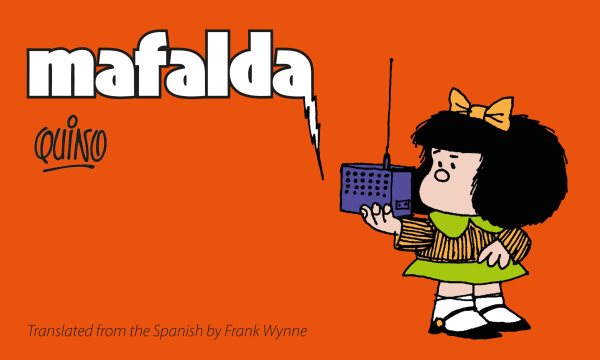
Years later, I finally have my answer. On May 13, 2025, the first Mafalda volume (of five) will be released by Elsewhere Editions. And here’s some info on the series itself, from the publisher, which may answer some of your questions:

“Quino published Mafalda between 1964 and 1973 in Argentina. Not only was the series about a group of kids pranking each other, playing chess, and having philosophical conversations, Mafalda also critiqued censorship and police brutality as dictatorships spread throughout Latin America.

At the heart of it all is Mafalda herself: six years old, smart as a whip, and ever attentive to the absurdities of human life on earth. Her undeniable moxie has endeared her to readers not just in Argentina but also in Poland, Greece, Italy, France, Taiwan, and beyond. Larger-than-life statues of Mafalda have popped up in public spaces in Spain, Mexico, and Argentina.”

I had a chance to read the new Mafalda book and to my infinite relief it was everything that I’d hoped for and more. I’ll put some of the strips at the bottom of the post that I particularly enjoyed, but before that, let’s talk to the translator, Frank Wynne, as well as publisher Jill Schoolman, who acquired Mafalda in the first place, and get some answers.


Betsy Bird: Frank, thank you so much for answering my questions today. You’ve translated a host of authors from the original Spanish over the years. How many of these were comics? And how familiar were you with Mafalda prior to this assignment? 

Frank Wynne: I began my career as a translator in comics… Having been variously a cinema projectionist and a radio announcer, I moved to Paris in 1984 and worked as a bookseller. It was there that I discovered bandes dessinées, or what we now call graphic novels, and it was there, too, that I first read Mafalda (in French, I would not learn Spanish for at least another decade). When I later moved to London, I became very involved in the British comic scene, working with Fleetway and Tundra on various titles, and later as editor of Deadline (whose contribution to world culture was Tank Girl by Jamie Hewlett and Alan Martin), During that period I translated a lot of comics for a variety of publishers, including artists like Bilal, Mattotti, Édika and Tardi. And while I was editor of Deadline, I even published a handful of early Mafalda strips which I translated and lettered myself.

Mafalda was always profoundly important to me. Argentina has always had a large inventive comics community – from the nightmarish visions of Alberto Breccia and the seminal work of Solano López, but Mafalda was particularly important. While it owes a small debt to Charles Schultz’s Peanuts, it was revolutionary  (or should I say counter-revolutionary) in that Mafalda’s funny, jaundiced, cynical child’s-eye view did not confine itself to childhood subjects, but tackled major political shifts, from the Vietnam war, to the rise of Peronism, the skewed world economy and the encroachments on press and personal freedoms in Argentina and elsewhere. Quino could do this because he presented the natural bewilderment of a preternaturally intelligent girl observing the world around her. His work was and is funny, penetrating, insightful and thought-provoking

BB: Agreed. Jill, for your part, I’d love to know a little bit more about how Elsewhere Editions was able to bring out what is, as far as I can tell, the first English language translation of Mafalda. First, how did you know about Quino’s work?

Jill Schoolman: In 2011, I took part in an editors’ fellowship program in Buenos Aires. I encountered Quino’s Mafalda there. I fell in love right away (of course). I was amazed to learn that although the series was a phenomenon around the world (particularly in the Spanish-speaking world), no one had yet published it in English. We made an offer upon my return but it took quite a while for us to secure the English-language rights. But here we are! 

BB: I’m so glad you did! Can you give us a bit of a sense as to why we haven’t seen Mafalda in the States before? 

Jill: It’s a mystery to me!

BB: Absolutely. But I wonder about some of the other problems with bringing it here. Frank, what were some of the challenges with this particular translation? 

Frank: There are always  problems. Chief of these is that, like many comic artists. Quino loves a pun – and puns cannot be translated, they have to be reinvented, which means finding another expression that suits the context, and has words which lend themselves to punning. There are a number of other challenges – the early Mafalda strips were drawn in the 1960s, so here and there I have glossed to provide a little  context for contemporary readers; equally important, they assume a certain familiarity with Argentinian politics and society, which also required a little contextual tweaking. I’ve even introduced a joke of two of my own.

BB: Well, some of the translations work so well that I was curious as to how they even came to be. For example, in one of my favorites Mafalda notices that there’s a skin on her milk. She stares at it, then asks her mother, “Or don’t you worry about skin heads?”  It’s SUCH a perfect joke, but how did you translate it?

Frank: Because that’s not the joke in the original, that’s the joke I had to come up with to. In the Spanish Mafalda complains  about cream (nata) on top of her milk, and asks her mother whether she’s opposed to  control de natalidad (control of creaminess but the phrase control de natalidad actually means birth control)

BB: Oh, dear god, that’s awesome! Not to worry, folks. There are plenty of other birth control jokes that did make it in. So Jill, much along those lines, what was it about Mafalda that you felt would speak to American readers today?

Jill: Mafalda’s clear-eyed humanity is needed more than ever today. All of the realities around her that she questions and protests against—war, consumerism, political corruption, sexism—are still very much with us. We need her innocence, outrage, and dead-serious commitment to change this unacceptable world. She and her entourage are as lovable and giggle-inducing now as they were when they first appeared.

BB: Humor is considered subjective even when two people are speaking the same language. Jokes don’t always translate over national lines either. Frank, were you responsible for selecting which strips in this book would translate best, or does Mafalda naturally lend herself to an international appreciation of her humor? And how difficult is it to translate something and make it funny?

Frank: The plan is to translate all of Mafalda, from her first appearance. As a short-form newspaper strip, it lends itself well to being translated, and deals mostly with preoccupations common to children who are discovering the world in all its incomprehensible complexities…  there are a few panels here and there where jokes had to be reframed because translating them more literally for a contemporary audience risks seeming  offensive (whereas at the time, drawn as they were during the civil rights movement, Quino was skewering precisely the prejudices of the period). As to making them funny – once you have a voice inside your head, everything is easier, and reading and re-reading Mafalda over a period of more than 30 years, I can hear her voice inside my head, I know the kinds of things she would say, and the kinds of jokes should make, and the natural outrage she feels at the sheer unfairness of the world (and of soup)

BB: Oh yes! Mafalda’s infamous loathing of soup. Frank, will you be translating any other comic works in the future?

Frank: I hope so – as I said, comics and graphic novels are where I began my career in translation. It is a little rarer now for me to be offered comics to translate, though I still take on those that are offered!

BB: And finally, Jill, will we be seeing any more of Mafalda after the publication of this book?

Jill: Yes! This is the first of five volumes. The plan is to publish one a year.

BB: That’s the best news I’ve heard all day.


I cannot give you all of Mafalda to sample, but if you click on the comics below, you can at least get a bit of a glimpse of what we’ve been talking about here.

Special thanks today to Frank and Jill for answering my questions and to Emma Raddatz and the folks at Elsewhere Editions for organizing all of this and sending me the interior spreads. And be sure to expect the first Mafalda volume on May 13th!

Filed Under: Best Books, Best Books of 2025, Interviews Tagged With: 2025 translated children's books, funny translations, interviews, Mafalda, translations

  • « Go to Previous Page
  • Page 1
  • Interim pages omitted …
  • Page 53
  • Page 54
  • Page 55
  • Page 56
  • Page 57
  • Interim pages omitted …
  • Page 1043
  • Go to Next Page »

Primary Sidebar