• Skip to primary navigation
  • Skip to main content
  • Skip to primary sidebar
  • About/Contact
  • Fusenews
  • Reviews
  • Librarian Previews
  • Best Books
    • Top 100
    • Best Books of 2022
    • Best Books of 2021
    • Best Books of 2020
    • Best Books of 2019
    • Best Books of 2018
    • Best Books of 2017
    • Best Books of 2016
    • Best Books of 2015
    • Best Books of 2014
    • Best Books of 2013
  • Fuse 8 n’ Kate
  • Videos
  • Press Release Fun

Fuse n’ Kate: The Story of Jumping Mouse by John Steptoe

Fuse n’ Kate: The Story of Jumping Mouse by John Steptoe

January 27, 2025 by Betsy Bird

We return to John Steptoe once again today, though with perhaps a more complicated title than many of his that we’ve done before. We discuss at length whether or not this book can legitimately call itself “A Native American legend” and what that does for a contemporary read. This book won itself a Caldecott Honor. Did it deserve it? We have a lot of other questions as well. Does the magic frog have an angle here? Where does the fat old mouse fit into it? Is the aforementioned Magic Frog just Glinda from The Wizard of Oz? And is this story a variation on Rainbow Fish or The Happy Prince?

Listen to the whole show here on Soundcloud or download it through iTunes, Stitcher, Spotify, Google Play, PlayerFM, Audible, Amazon Music, or your preferred method of podcast selection.

Show Notes:

Before you go anywhere else, the best place to begin when discussing this book is the American Indians in Children’s Literature piece Debbie–have you seen JUMPING MOUSE: A NATIVE AMERICAN LEGEND OF FRIENDSHIP AND SACRIFICE by Misty Schroe? While that piece was talking about a different variation on this story, she does talk about the Steptoe version and she says this: “What we have in Steptoe’s book is his retelling of a retelling from an unreliable source.” And she has a LOT of sources she’s drawing from as well.

How do you go about illustrating water reflecting a small mammal with graphite? Not a clue but somehow John Steptoe did it. “I don’t know how to even draw a mouse, let alone a wavy reflection in water”.

This almost makes the whole book worth it. This mouse. His face! He’s SO cranky! That mouth! We him, him us.

Kate was just really drawn to the cranky looking creatures found in this book. This owl? You know what he doesn’t give? It’s a hoot, folks. A hoot.

Kate Recommends: The game Ravine

Betsy Recommends: The Stuff You Should Know podcast (particularly the episode The Three Christs of Ypsilanti Experiment

Filed Under: Fuse 8 n' Kate Tagged With: Fuse 8 n' Kate, John Steptoe, The Story of Jumping Mouse

Cover Reveal: Daniel Nayeri’s The Teacher of Nomad Land WITH Alternative Book Jacket Designs!

January 25, 2025 by Betsy Bird

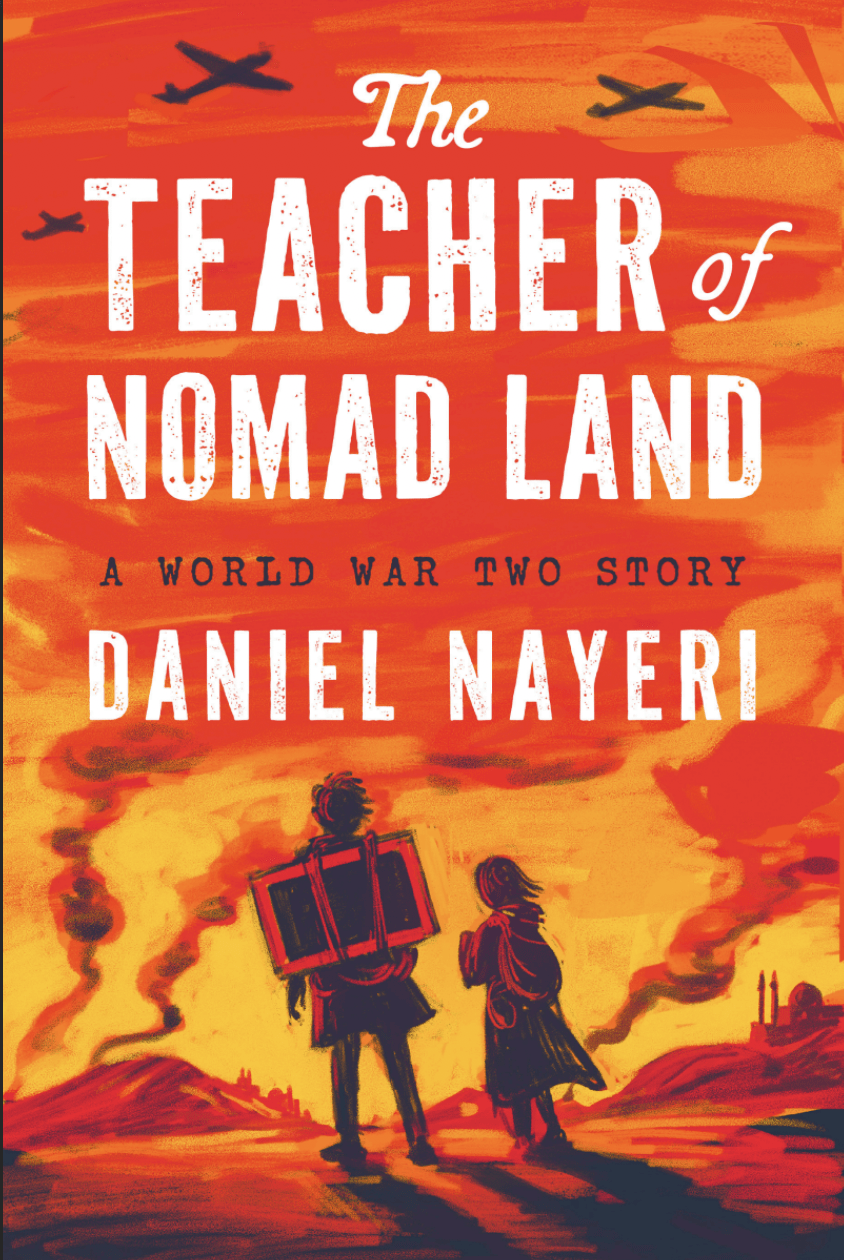
We have quite the treat for you today, folks. First and foremost, the important thing to know is that Daniel Nayeri, fresh off his Newbery Honor win for The Many Assassination of Samir the Seller of Dreams, has a brand new middle grade novel out this year! Called The Teacher of Nomad Land and out August 12th, the book focuses on Iran during WWII.

Usually at this point I’d include a publisher’s description, but you know what’s even better than that? Getting the facts straight form the author himself. I asked Daniel to give us a couple sentences about the book and he provided not a “couple” but a “slew” (which, let’s admit it, I think we all prefer). On the topic of the book he says:

I have always been fascinated by the history of Iran during World War 2. It’s complicated, of course, but whenever I’m telling friends about it, I begin by telling them that in 1941, as Hitler marched across Europe, British and Soviet forces conducted what is called The Anglo-Soviet Invasion of Iran. 

In short, the idea was that Iran had a railroad running from the Persian Gulf to the Caspian Sea called “The Persian Corridor,” which supplied a great deal of petroleum to the surrounding countries. So even though Iran had declared itself neutral in the war, the Allies felt that it was too important strategically to let it fall into the hands of the Axis Powers. 

The invasion turned Iran into an occupied territory, where Polish refugees, British and Soviet soldiers all crowded into the tea houses of Isfahan, and Nazi spies lurked in the shadows. 

On top of that, you have a group of Polish Jewish Orphans who were settled temporarily in Tehran called “the Tehran Children,” and you’ve got yourself a panoply of characters to work with. 

At the heart of the story are these two siblings who lose their father in the invasion, and who decide to take up his old job of being a teacher to the nomadic tribes of Iran. The older brother straps a chalkboard to his back and they go walking into the Zagros mountains. Along the way they meet a whole host of characters, and for me, the theme of the story comes forth, which is that all conflict, whatever the magnitude, begins at a point of miscommunication. 

The characters of this story almost all speak different languages, and one of the great challenges was to express that for young readers, the sheer difficulty of making yourself understood in a warzone. 

Today, you get a real treat. Not just the final book jacket itself, but also a plethora of jackets that were considered and ultimately rejected.

First, the cover itself. The jacket art is by artist Jim Tierney, who also designed the type and the entire book:

And here are the alternative covers. Which one is your favorite?

Great gobs of thanks to Daniel for telling us a bit more about the book today as well as Antonio Gonzalez Cerna and the team at Levin Querido for this peek into not simply the cover but the process as well. The Teacher of Nomad Land is, as I say, on shelves August 12th. Pre-order your copy today!

Filed Under: Uncategorized

Publisher Preview Spring/Summer 2025: Part One Featuring Cuento de Luz, Post Wave, Lantana, Little Island, and Marble Press

January 24, 2025 by Betsy Bird

Ha ha! It’s been a minute but I’m finally ready to show you a whole PLETHORA of cool books coming out this year from small publishers far and wide. Thanks to the machinations of Ellen Myrick and Publisher Spotlight I’ve all SORTS of books to show to you today. Enjoy the following!

The Vase with the Golden Cracks by Fran Nuña, illustrated by Zuzanna Celej

English ISBN: 9788419464958

Spanish ISBN: 9788419464934

Publication Date: May 6, 2025

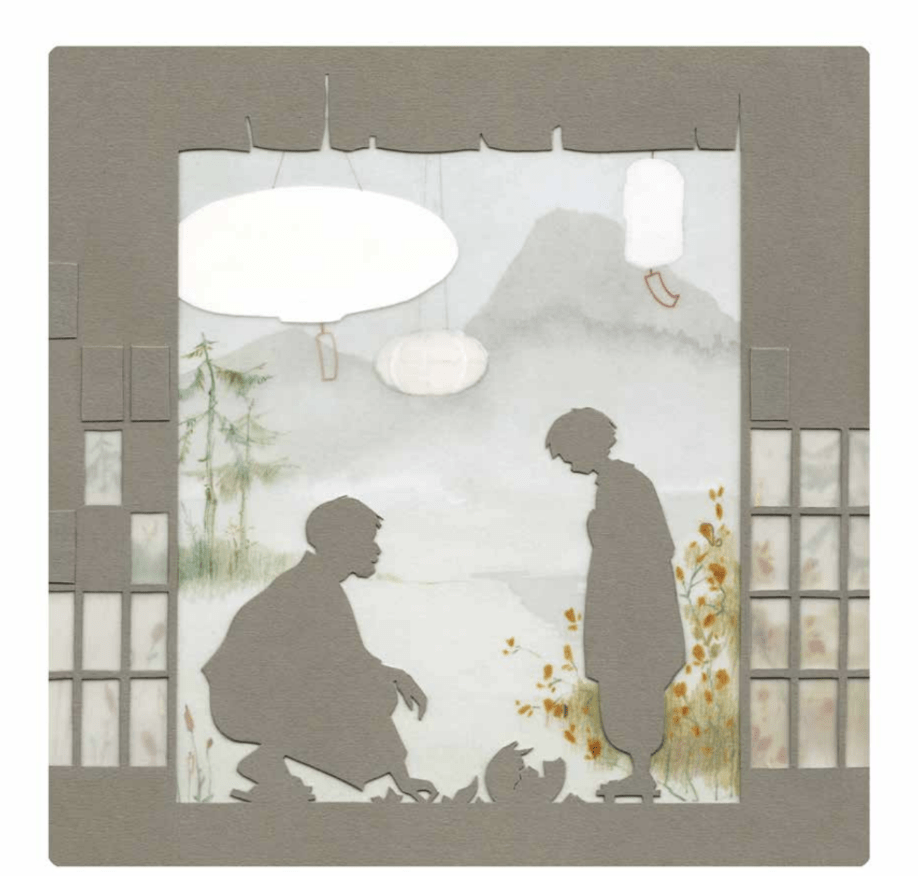
The art of Kintsugi is the star of the show in this particular picture book. Now we’ve seen Kintsugi picture books before, but what I particularly like about this book is that the plot diverges a bit from the norm. In this tale a boy’s father owns a large, beautiful vase. Into this vase the man places words. These are words that only exist in the Japanese language and don’t really have an equivalent elsewhere. Curious? There’s a whole list of them at the back of the book (my personal favorite is “Irusu” or “The act of keeping quiet and pretending no one is home when someone knocks on your door”). When the boy accidentally breaks the vase, rather than getting upset the father teaches him the art of Kintsugi, repairing the cracks with gold. Since this book originally comes from a Spanish publisher, it’ll be published simultaneously in English and Spanish, with a Japanese language glossary in the back.


A Little Sailing Lesson by Sara Stefanini

ISBN: 9798895090138

Publication Date: March 18, 2025

Now we change gears and take a look at a book from an Italian author/illustrator. This is a dreamier and less plot-forward picture book title. It’s the kind of book unafraid to muse on life a little. Meet Aldo. An experienced sailor, he and his young companion take lessons from what’s happening around them on and around the sea. I’m not going to go so far as to label this a graduation picture book (you all understand what I mean by that term) but it’s definitely along those lines. A title that makes it clear that the journey is far more important, sometimes, than the destination.


A Dog’s Tale: The Story of a Little Dog with a Big Imagination by Kiko

ISBN: 9798895090015

Publication Date: March 18, 2025

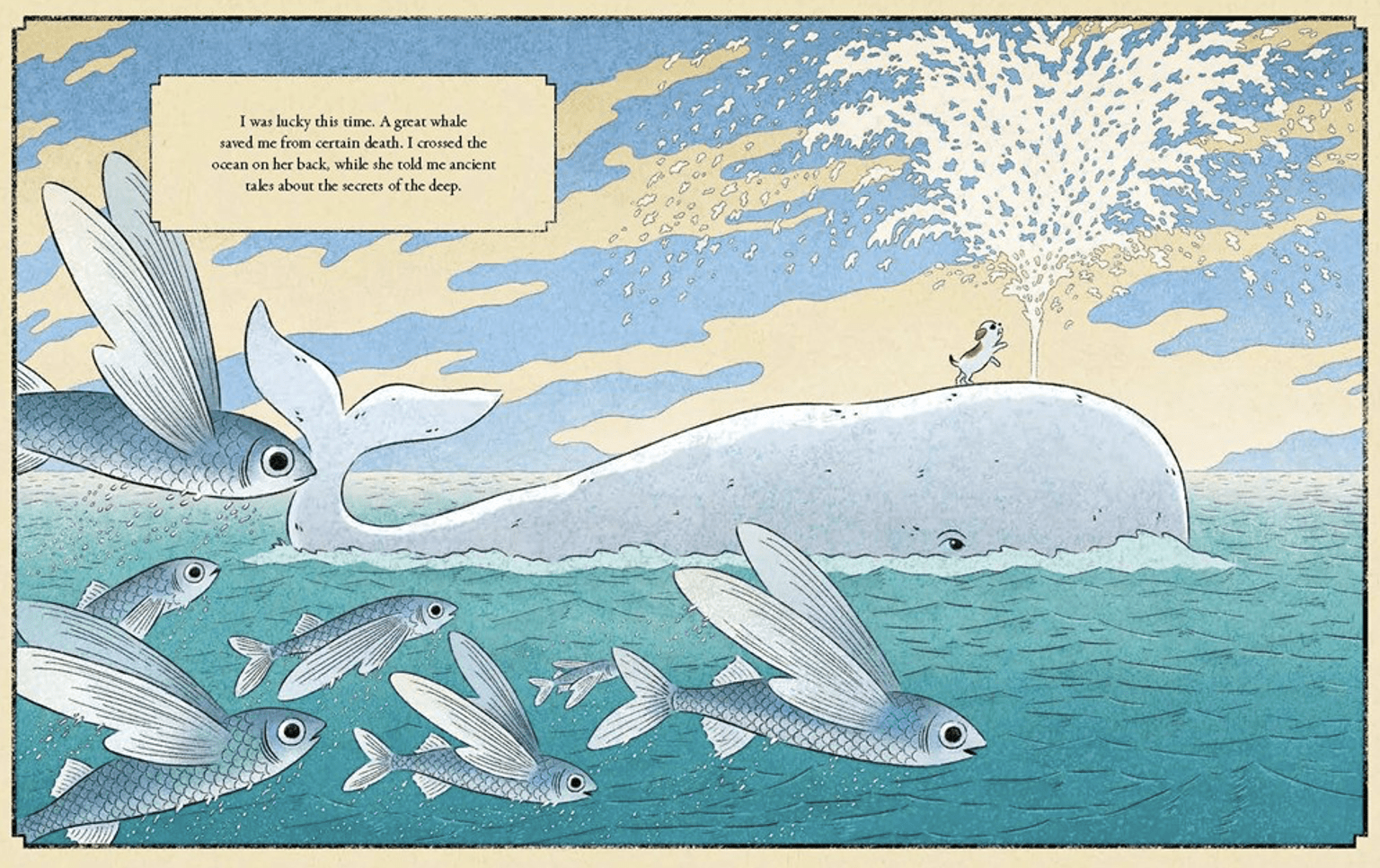
We’ve done Spanish. We’ve done Italian. I guess that means it’s time to do something a little French next, oui? Now I’ve more than one co-worker in my building that goes downright goofy for any picture book starring a pug. I don’t know what it is about pug owners, but they have an inability to resist seeing their little furry companions rendered in pen and inks on a page. This particular pug goes by the name of One-Eyed Jack (of course he does) and he’s unafraid to regale you with his tall tales. His adventures include everything from being rescued by a whale to finding an island and befriending the elephants there. Note the graphic novel style paneling used on the illustration pages. It’s an oddly beautiful piece for such a silly little premise.


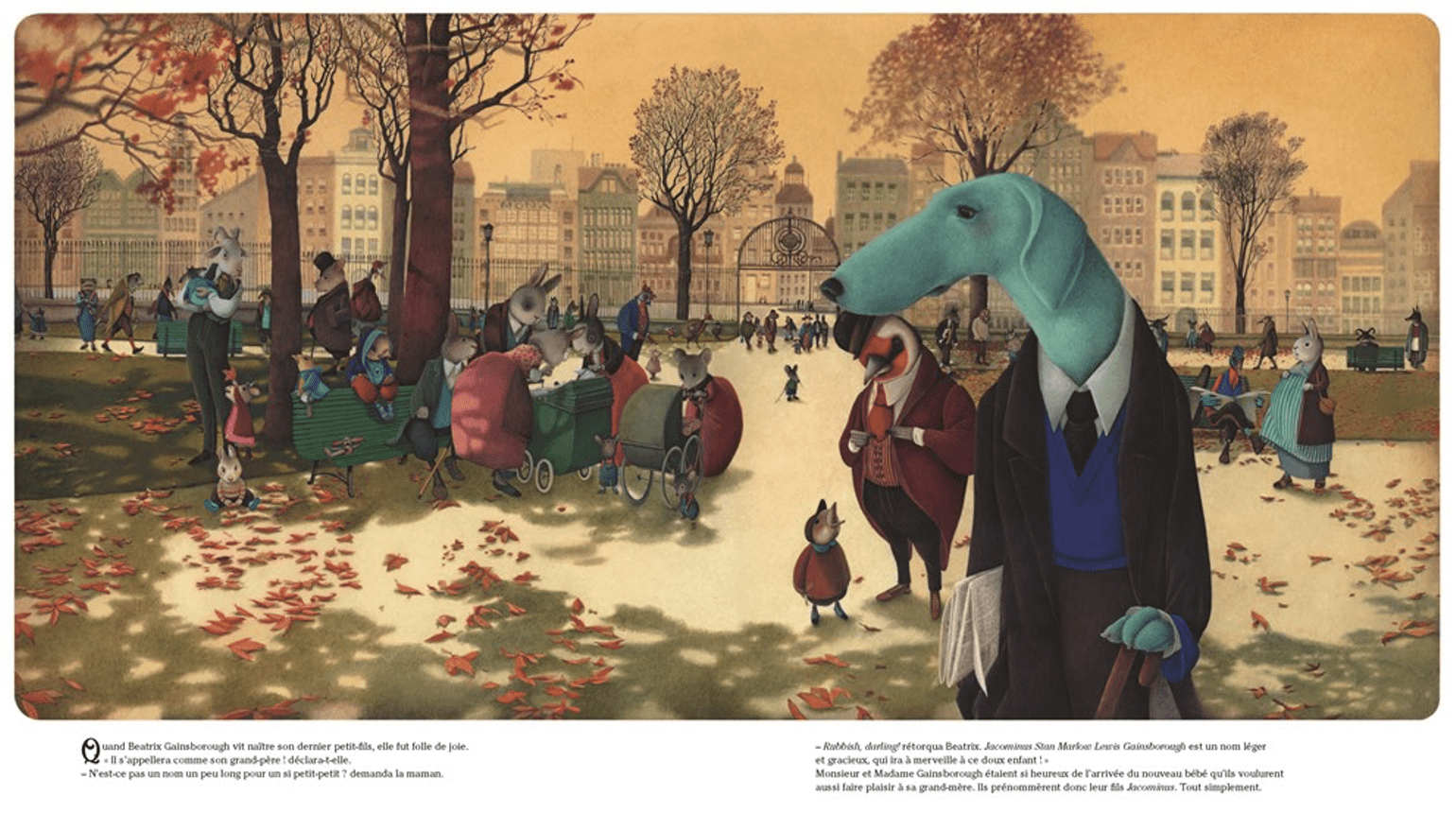
The Ordinary Life of Jacominus Gainsborough by By Rébecca Dautremer

ISBN: 9798895090107

Publication Date: May 27th

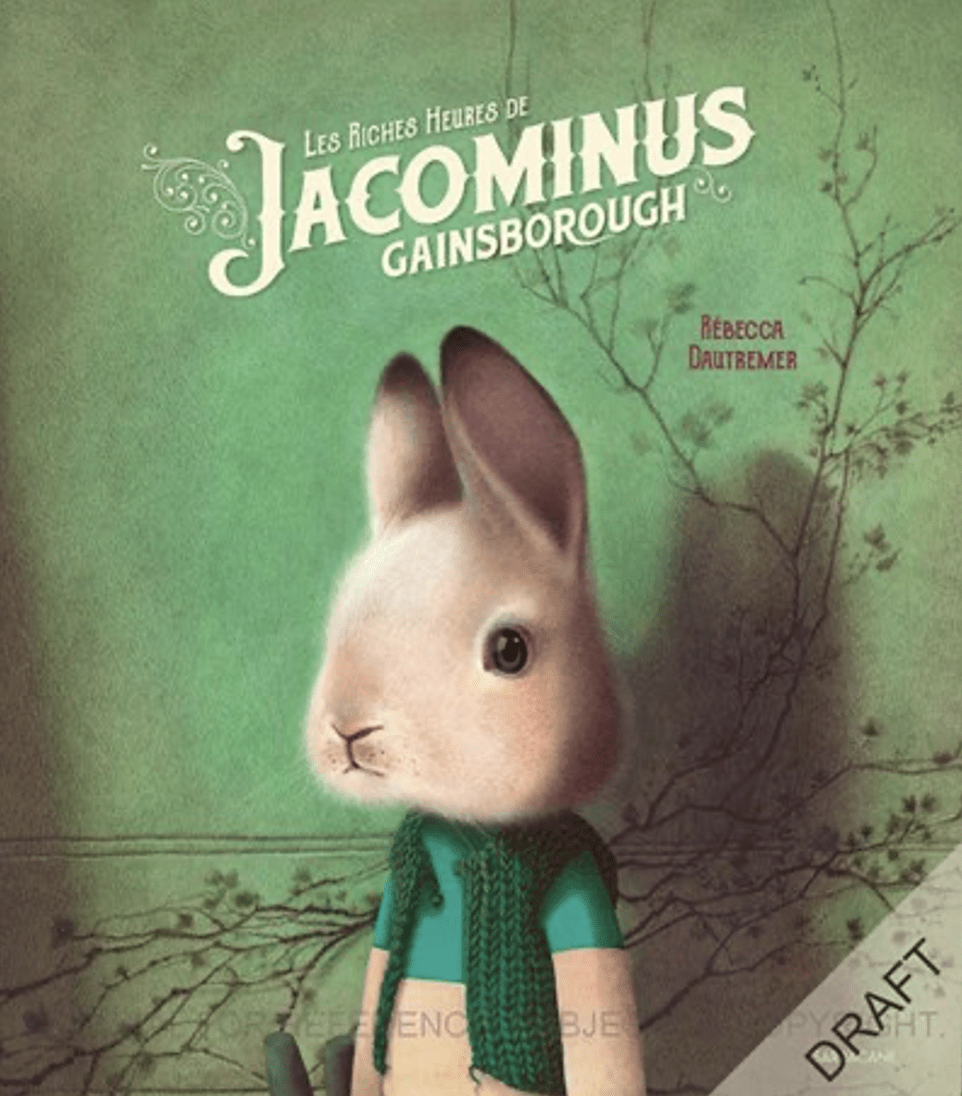
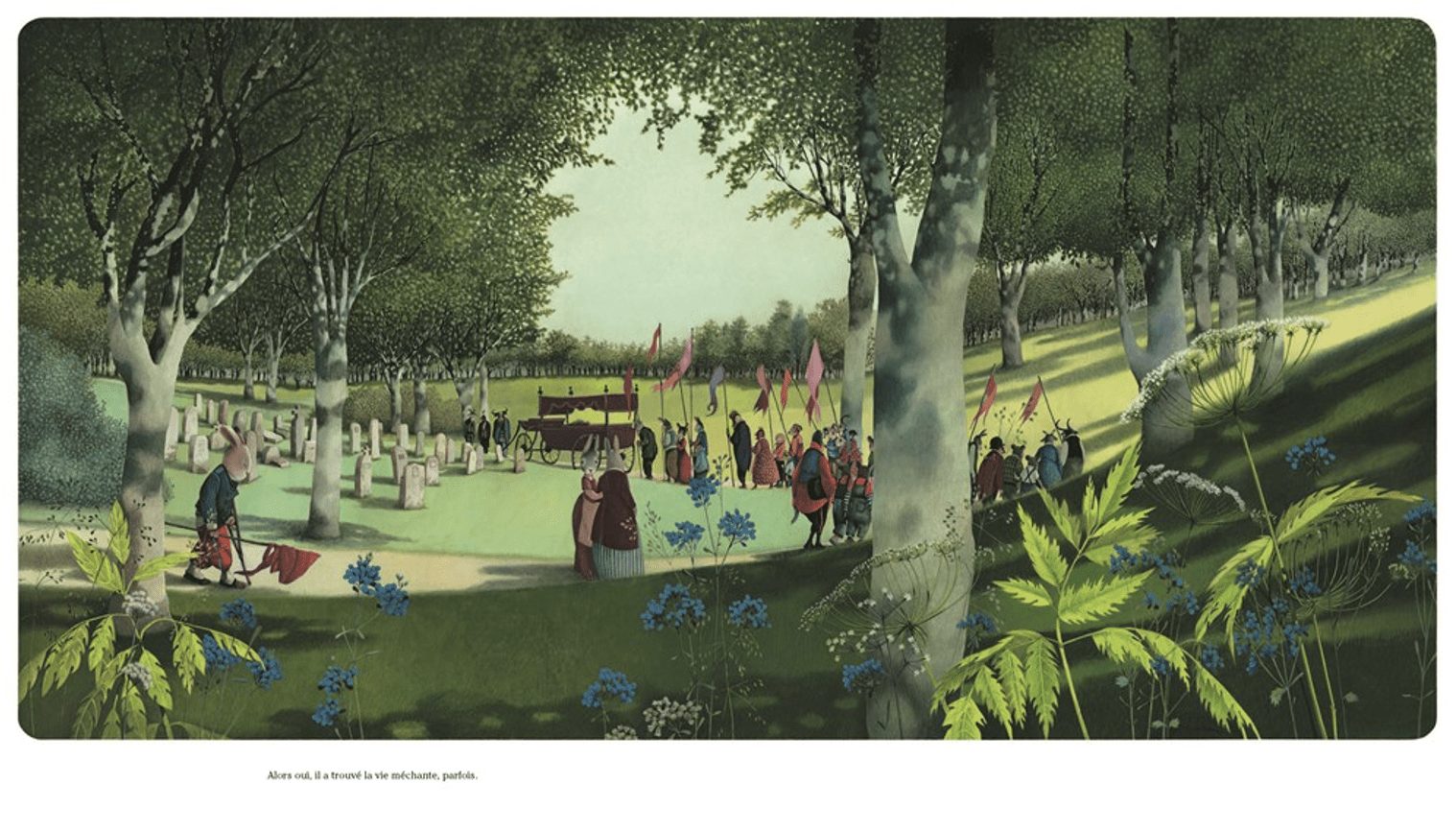
First off, 500 points for the titular rabbit’s name in this book: Jacominus Gainsborough. That’s just golden right there. The art in this story sort of strikes me as what would happen if you gave the picture book Animalia by Graeme Base a plot. In this tale, we are treated to twelve different scenes that take place in the various seasons. What’s more, Jacominus grows up over the course of the story. The end result is a celebration of a life. And those illustrated spreads? Every one of them is an homage to a great work of art. Little wonder that overseas the book has won the Grand Prix de L’illustration de Moulins, the Prix Franco-Allemand pour la Littérature de Jeunesse, and the Prix Chrétiens de Troyes.


The Playdate by Uje Brandelius, illustrated by Clara Dackenberg

ISBN: 9781836290148

Publication Date: April 8, 2025

It’s not every picture book that’s written by a former Swedish press secretary AND former frontman of pop band, Doktor Kosmos. Personally, I love that Uje Brandelius decided to add “Picture Book Creator” to his resume as well. Now this title deals with a topic that we don’t see enough of in our picture books: economic diversity. In this story a girl goes for a playdate and slowly the reader comes to realize that the mom is a housekeeper and that the playdate is with the child of the woman who owns the house. Then comes a dire moment. The girl is having a great time but then she takes a toy from the boy’s pile of them. Now the mom’s job could potentially be in peril. The book reminded me, in some ways, of both Penny and Her Marble by Kevin Henkes (the guilt!) as well as last year’s The Last Day Julian Was My Best Friend by Jody Jensen Shaffer. The difference? Neither of those books introduced this economic element. Fascinating stuff.


Meep by Máire Zepf, ill. Paddy Donnelly

ISBN: 9781915071668

Publication Date: June 24, 2025

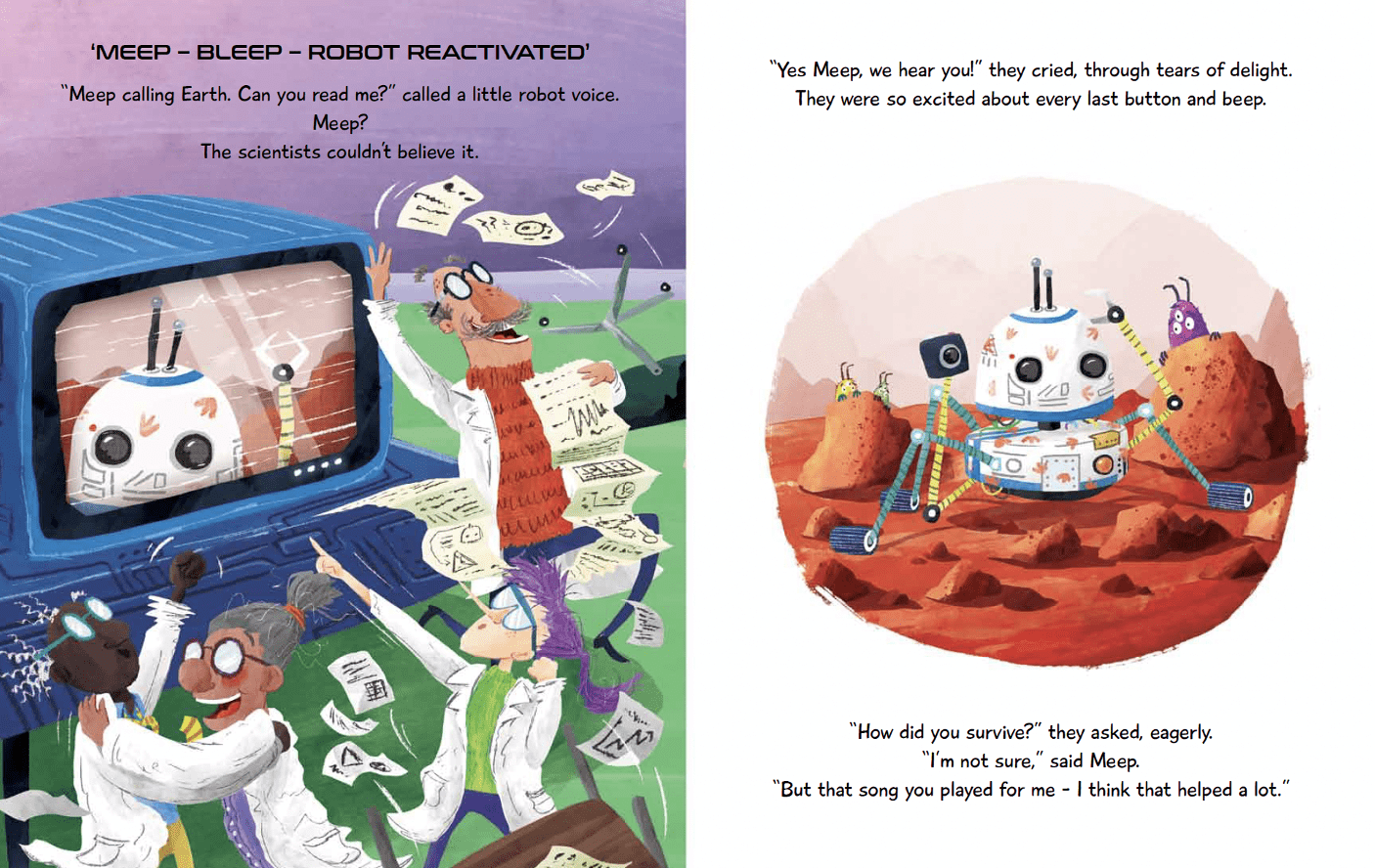
If you know me then you know that I go gaga for science fiction picture books. Science fiction anything, really, but picture books in particular. In this story our hero is the titular Meep, a little robot who is sent to Mars. While she is on the planet she searches for alien life and engages in all sorts of different adventures. One thing I liked about the book was that it made it clear that Meep was destined to return to Earth at the end. Consider this for those kids a bit too young to see The Wild Robot in theaters but very much into robots of every stripe. Me? I just love it whenever Mars shows up in a book.


Giant by Judith McQuoid

ISBN: 9781915071637

Publication Date: June 3, 2025

A quick show of hands: How many of you knew that C.S. Lewis was raised in East Belfast in his formative years? Granted, this was probably covered in John Hendrix’s extraordinary dual biography Myth Makers from 2024. In any case, this isn’t a work of nonfiction. It’s a fictionalized novel, that follows Jacks (his nickname) and his friendship with a working class boy. Based on a true story the two have adventures and fun together and it’s a neat way to give a little insight into what C.S. Lewis might have been like as a child. For fans of historical fiction, Narnia, and life in the past.


Giant Baby by Liz Rosenberg, illustrated by Eva Byrne

ISBN: 9781958325247

Publication Date: March 25, 2025

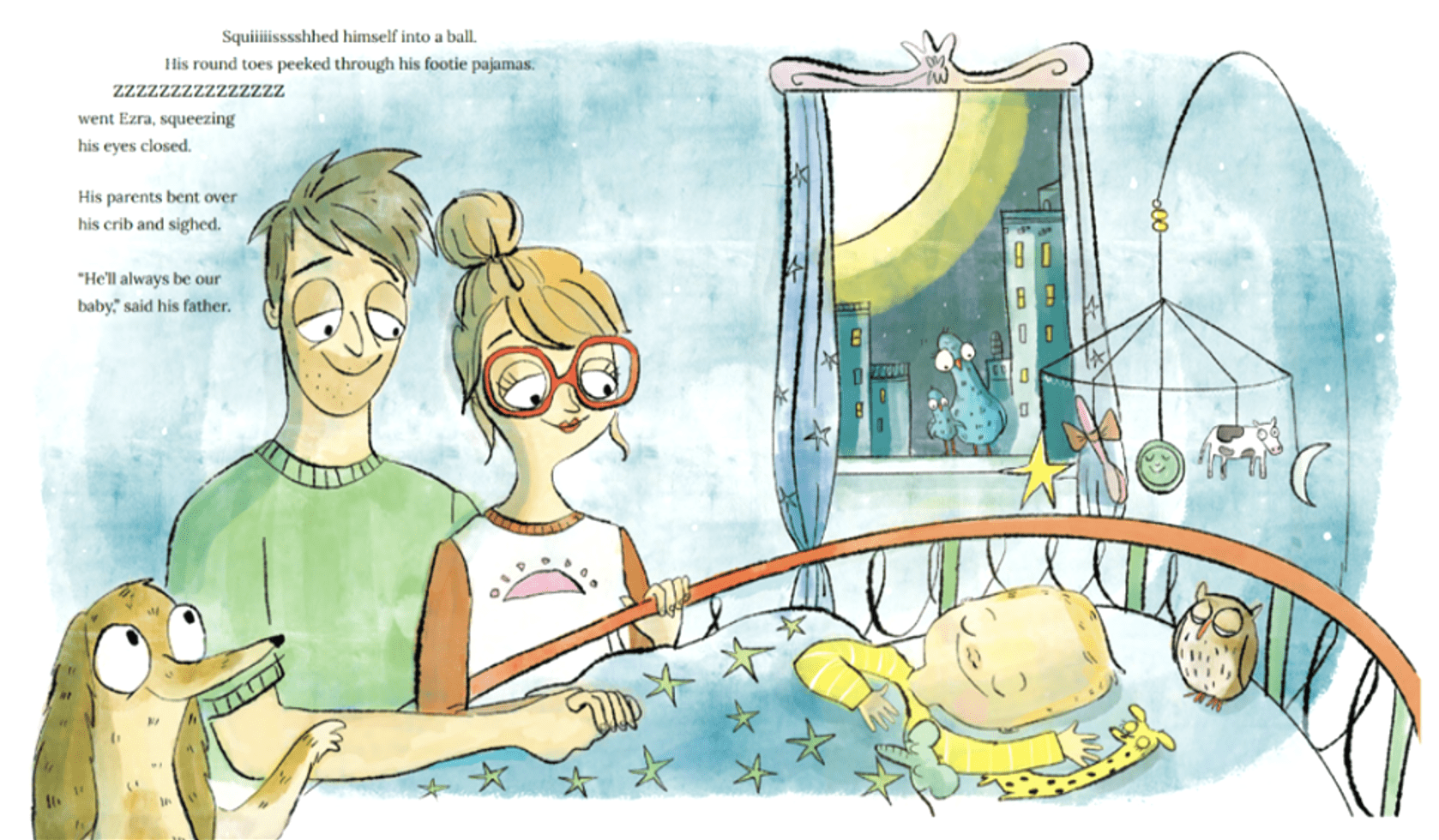
I mean, I thought I might end with that last book… and then I remembered the giant baby. Giant baby, you say? Sign us all up! All baby picture books are, to a certain extent metaphors. What I like so much about this one is just how blatant it is with its storytelling. In this story, Ezra seems all cute and small when you put him to sleep, but in the middle of the night he grows bigger and bigger. Then he goes out and has some fun on the town. The only trouble is, he absolutely has to get back to his bedroom before his parents come in to check on him. Goofy, silly, and did I mention that it involves a giant baby?


That’s all I have for you today, but stay tuned next month when I’ll show you even MORE fun and eclectic titles from the small publishers. Thanks yet again to Ellen Myrick and her team for taking the time to show me all these incredible titles.

Filed Under: Publisher Previews Tagged With: Ellen Myrick, Myrick Marketing, Publisher Spotlight

The Origins of The Giant Jam Sandwich (with full credit to Christina Hoover Moorehead)

January 23, 2025 by Betsy Bird

Okay, this is one of those rare moments when you learn something important and you want to let the whole dang world know about it. I’ve already discussed this discovery on my podcast Fuse 8 n’ Kate, but without the information being freely available (and searchable) online, I didn’t feel that I’d done my due diligence.

Activate diligence… NOW!

Not long ago, Fuse 8 n’ Kate discussed the picture book The Giant Jam Sandwich by John Vernon Lord and Janet Burroway. In the course of our discussion I kvetched a bit about the fact that when it comes to researching the origins of this book, there really is nothing out there to be found. It’s a British book to begin with, and one from 1972 at that. Though it has a bit of a cult following, it hasn’t enough of one for us to know why it even exists.

Enter Christina Hoover Moorehead.

Christina, as it happens, has been many things over the years, including a classroom teacher and the Program Director of the Center for Teaching Through Children’s Books. She also is very amusing on the TikTok.

I shall now, relate you to the entirety of the email she sent to me. This is partly to explain the circumstances and partly because Christina has so delightfully encapsulated her journey down this dark and twisting rabbit hole. She writes:


I have discovered an interesting fact  about my mental processes (which may lean toward being slightly alarming for you) when, on your podcast, Kate goes to read the book and Betsy goes into sharing book backstory—and might admit that she had trouble finding any backstory to tell.  My aforementioned mental processes  grab onto the unfindable mystery and begin gnawing on it, much like any one of my 3 rescue dogs trying to extract and consume a squeaker from a new toy. 

At first I just ponder.  Hmm.  Who was this creator who seems to be unfindable?  

Then I gnaw with a little more gusto.  Well, it won’t take me but a minute to google this author or illustrator, just to see what’s going on. 

Then the fluffy toy stuffing begins to peek out from the weakened, masticated toy seams—before I know it I’m scanning genealogy websites, newspapers.com.  I’m ordering copies of the book from Thriftbooks.  

I’m out of control.

The fluff flurries like snow around me, and before I know it I’m staring at my computer, chewing noisily on the squeaker.  Luckily my husband is usually at hand to yank the squeaker away before I choke myself on plastic bits.

So on the December 8th Episode, number 342, when Betsy confessed that while she did discover some of John Vernon Lord’s musings on the nature of illustrating, she could not find any backstory for the creation of THE GIANT JAM SANDWICH itself, well…I’m sure you know what I did.

That’s right.  Gnaw, Gnaw, Gnaw.  

My usual websites (from which I was, if you recall, able to find some tidbits about the authors of the now-infamous Episode 285 cut-paper classic HOW BABIES ARE MADE) turned out useless in the face of the John Vernon Lord challenge.  

But come on—someone with the name of John Vernon Lord surely has wisdom to impart.  If he was so keen on describing drawing technique how could he resist speaking at length about his books?

And then I remembered:  Betsy DID point out that John Vernon Lord is a professor emeritus at the University of Brighton.  I happen to be married to a professor of Sociology/Race Scholar, so I know that being a professor means lectures….And POOF.  I found a website called Fulltable.com, an offshoot of the website of one Chris Mullen, which he started in 1996.  And rambling within the slightly chewy navigation of Fulltable.com’s pages was this:

A collection of  John Vernon Lord’s lectures.  And within these many lectures by John Vernon Lord was this:

Yep, a lecture by John Vernon Lord all about THE GIANT JAM SANDWICH. 

While this isn’t the ideal finding—which would’ve been  a nice, long interview of BOTH of the authors of this tale–it’s pretty close.  And it gives a fascinating peek into John Vernon Lord’s writing inspirations and life.

I hope this fills in some of the missing John Vernon Lord GIANT JAM SANDWICH  details.  And I do apologize for writing out all of JOHN VERNON LORD’S name every time I mention him, but it couldn’t be helped.  The name demanded full disclosure at all times.  

As always, I send you both my fervent thanks for your tremendous podcast, and await the next chewy gauntlet.  


So there you have it, folks. If ever you wanted to know the reason this book exists, we have the answer for you here today.

For the record, there is a lot to love in Lord’s lecture on the subject, but I think this passage may be my favorite:

“When a story has been published as a book, ideally the young child will have the initial advantage of someone reading the text out loud whilst referring to the pictures. However, a book worth its salt also needs to sustain the child’s interest independently, without always having the intermediary agency of a lively narrator. Ideally a picture book for the very young child needs to fascinate the adult reader too, so that both parties can share the book with genuine conviction when they go through the book together.”

Thanks again to Christina for locating the source material and giving us a closer look into the goings on in Itching Down.

Filed Under: Uncategorized Tagged With: Christina Hoover Moorehead, John Vernon Lord, The Giant Jam Sandwich

Publisher Preview: Enchanted Lion (Spring 2025)

January 22, 2025 by Betsy Bird

What’s better than a publisher preview where you get to see all their books early? A publisher preview from a publishing company never before featured on this site, that’s what! Yes, I am here to announce proudly that this is the very first Enchanted Lion Publisher Preview to grace A Fuse #8 Production, and I couldn’t be more pleased. Thanks to the efforts of Claudia Zoe Bedrick, today I am going to show you a full range of their Spring 2025 season. Everything you could hope for, to perk up this gloomy 2025:


On All Fours by Gaëtan Dorémus, translated by Emilie Robert Wong

ISBN: 9781592703883

Publication Date: January 21, 2025

Claudia explained to me that when it comes to author/artist Gaëtan Dorémus, Enchanted Lion Books orked with him before on such books as Bear Despair and Coyote Run. Bear won a 2012 NYT Best Illustrated Award, by the way. Not too shabby. The bear in this book is a bit different, though. There’s no despair (not for very long, anyway). Just a cute little bear exploring the world. The simple text also contains lots of fun onomatopoeia words, making it ideal for a storytime. And it shows off some good bear fun, like going through the garden, or getting to play in the mud. Eventually, the little bear’s exploring takes him a bit too far and he has a moment of panic. Not to fear. It all ends with a nice hug with papa bear. Be sure to check out these beautiful bright colors. Ideal for someday being converted into a board book, wouldn’t you say?


I’m Like a Tree and a Tree’s Like Me by Sylvaine Jaoui, ill. Anne Crahay, translated from the French by Claudia Zoe Bedrick

ISBN: 9781592704248

Publication Date: April 15, 2025

We’re all molecules and we all participate together in the same fabric of reality. That’s how Claudia introduced me to this next book. Much like Bear, this is another simple book with a limited text. What sets this artistry apart, however, are the die cuts. Put simply, this book is all about establishing the parallels between a growing child and a growing seed/plant. And once you know that, you can see how the die cuts are so key to this (but don’t show up well in my examples of the art, below). The whole book has this peek-through element to it, which makes it a great way to show those parallels between plants and people. I’m particularly fond of how the last spread goes in a more global direction with kids hugging different trees around the world. Consider this particularly good for children who are going to have a new sibling and need someone to introduce the concept to them. Ideally, it would also be interesting to use this book in the context of any science unit about growing trees.

On the Move: Things in Motion On Earth and Beyond by Romana Romanyshyn & Andriy Lesiv, Translated from the Ukrainian by Oksana Lushchevska

ISBN: 9781592704149

Publication Date: May 20, 2025

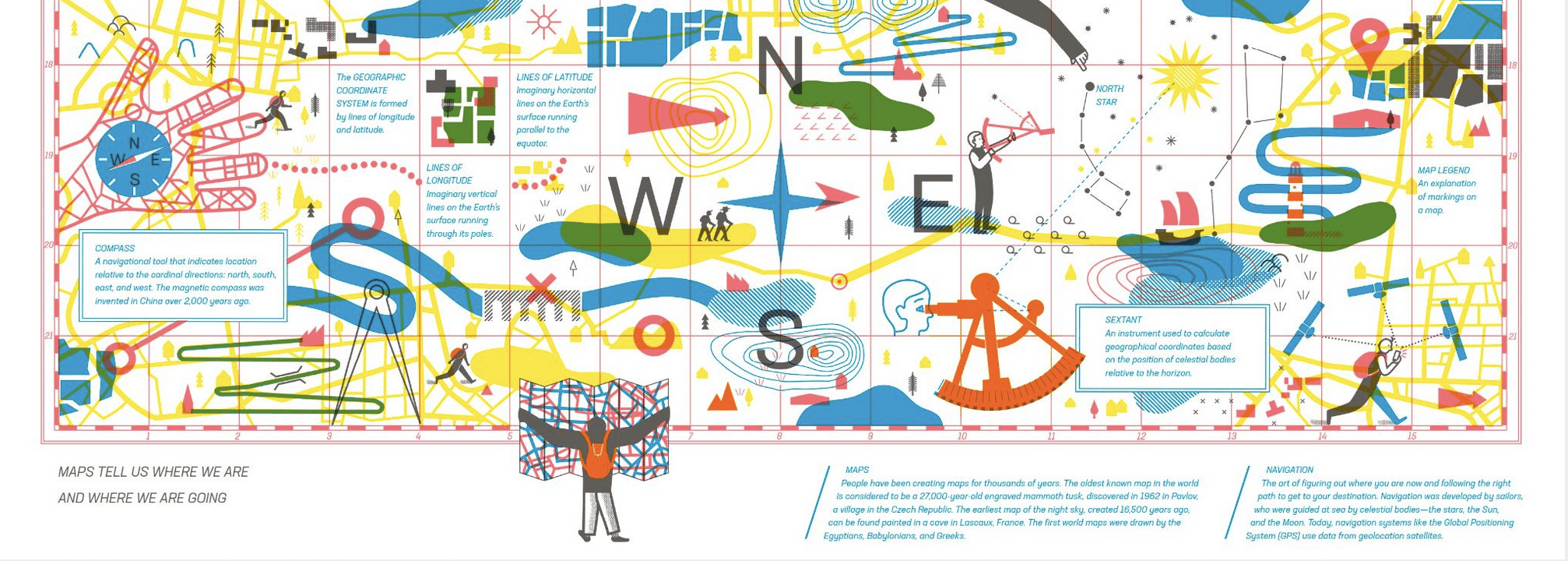
You may vaguely remember the young Ukrainian couple that created the picture book How War Changed Rondo a couple years ago (before the current war, certainly). When war did break out there, suddenly that book felt very relevant. This next title is altogether different. Essentially, it is all about motion and movement in all its forms. Consider it a delightful hodgepodge that has a little bit of everything. For example, how was the shoe invented? Now the art contains these glorious two-page spreads that don’t show up very well when I put them below. Nonetheless, I think you can see how they touch on topics like tourism, travel, migration movements in human history, space exploration, and space time relation and relativity. The enormously eye-catching art engages and informs with all these different concepts. There are sections on navigation, maps, compasses, etc. Heck, there’s even a section at the end on animal migration and wind and water movements. Good for whetting young appetites, highlighting different areas where kids can pursue and look more deeply in.

The Boy Who Became a Parrot: A Foolish Biography of Edward Lear Who Invented Nonsense by Wolverton Hill, ill. Laura Carlin

ISBN: 9781592704132

Publication Date: April 8, 2025

Very well researched and highly factual, this is the kind of informational fiction picture book biography that makes creativity the name of the game. In this book, the author has played with the character of Edward Lear, making him appear as fun and dynamic and weird and wonderful as he was in real life. There is some genuine whimsy in this work. So why use some fictional elements? Well, the explanation I received was that the guiding idea for this approach is this: What’s the best approach to World War II – Catch 22 or straight up nonfiction? We’re told that it is really very fortunate that artist Laura Carlin fell in love with this manuscript. She doesn’t make many books and she does absolutely incredible work. In the end, the book became a kind of passion project for both author and artist, bringing Lear to life. I was particularly intrigued by the mini-comic in the middle of the book. Author Hill uses these sections to talk about Lear when he’s at Nosely Hall, pinpointing when he invented nonsense. Of course, the thing I never knew about Lear was what an accomplished painter he was. Honestly, his paintings were not dissimilar to Audubon’s. Indeed, Lear was considered to be a naturalist in his day. Did you know that he was the first artist attached to the National Museum in London. Turns out his funny side came out at Nosely Hall when he was asked to document the Lord of the Hall’s specimens. And yes, he did illustrate his own works too!


The Wanting Monster by Martine Murray, ill. Anna Read

ISBN: 9781592704194

Publication Date: April 29, 2025

Here’s the pitch: Martine Murray? She’s Australia’s Kate DiCamillo. Now interestingly, this is a debut for the artist Anna Read. And since the story has a very folktale feel to it, Read decided that folkloric art was the way to go with the illustrations. Essentially, this is a fable about greed told through this monster who comes to a town and whispers into people’s ears to make them discontent and envious of what others have. The greed takes over to the point where they’re taking the very stars out of the sky. Finally at the end they hear this big racket and pay attention to this energy and noise that has come into the town. The writing is very poetic and deep. There’s a section at the end once the villagers realize what has happened where they weep and it’s this moment of lamentations. On Being talked about how as a culture we cannot do lamentations. Here, however, it’s a cathartic process. “What had been withheld was released…” They rebuild the town, and put the stars back. They’re not unscarred but they’re rebuilding. The ideas afoot in this book are great.


Lamberto, Lamberto, Lamberto by Gianni Rodari, ill. Roman Muradov, translated by Antony Shugaar

ISBN: 9781592704156

Publication Date: March 18, 2025

Shugaar with Rodari again! You remember Gianni Rodari, right? He did that lovely The Book of Whys, which was released just last year. Rodari, I should say, is the father of modern Italian children’s literature. What really stunned me about this book, though, was that it’s a novel containing just a single story. You see, Baron Lamberto lives on an island and one day he comes back from his travels to Egypt with his butler and moves six people into his house. They repeat his name constantly. Suddenly he becomes younger and younger. And that’s not the weirdest thing about this story! Add in as well a group of bandits coming along to kidnap Baron Lamberto for ransom. Lamberto also has a scheming nephew with a lot of lottery debts who tries to get his fortune. So essentially the book is both fanciful and grounded in reality. Just lots of themes with Rodari using humor to skewer the upper class. No doublt it’ll be enjoyed by kids and adults alike. As with all of Rodari’s books he’s coming at this as a socialist humanist.


Sato the Rabbit: Morning Light by Yuki Aninoya, translated from the Japanese by Michael Blaskowsky

ISBN: 9781592704392

Publication Date: July 15, 2025

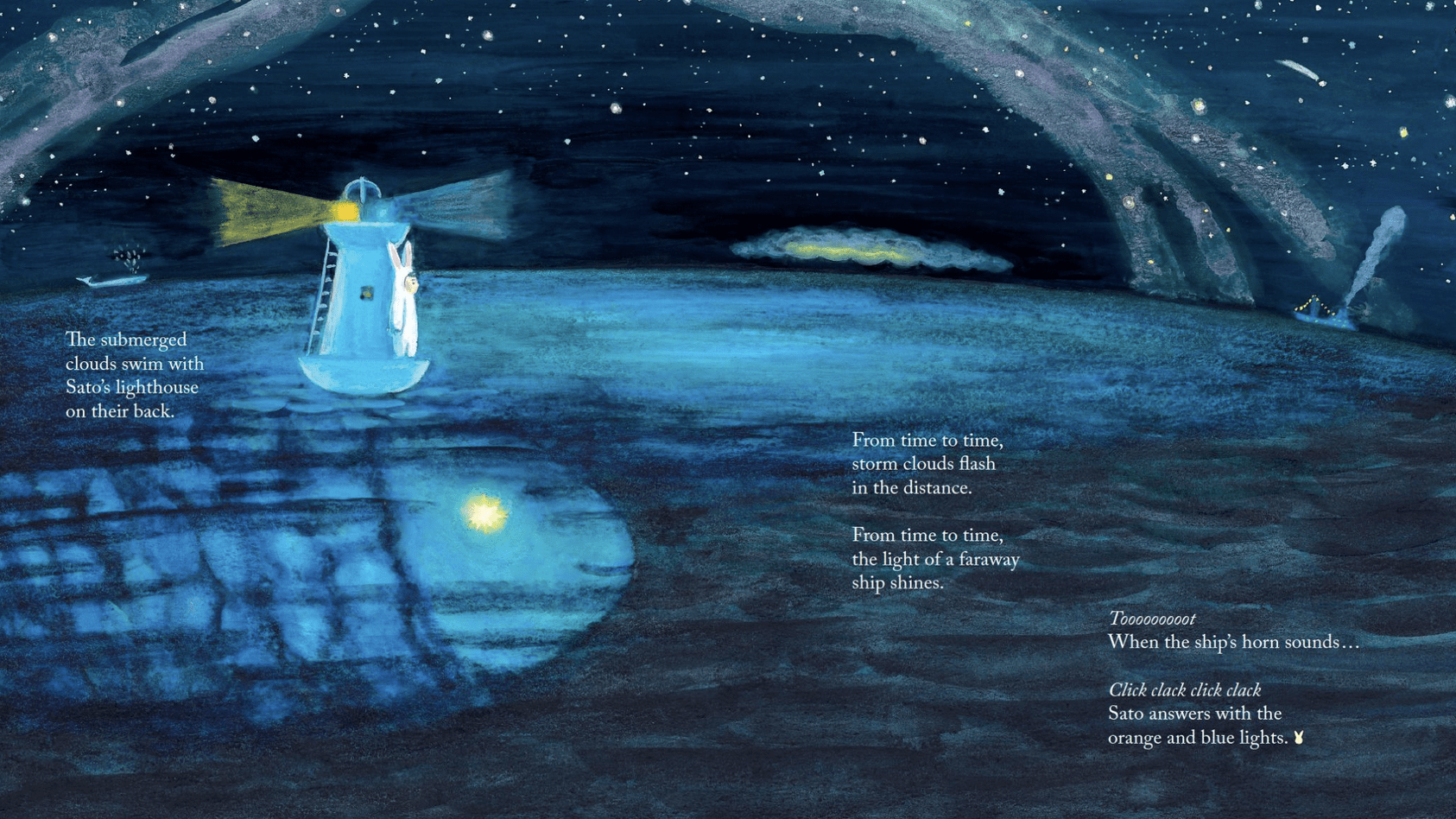
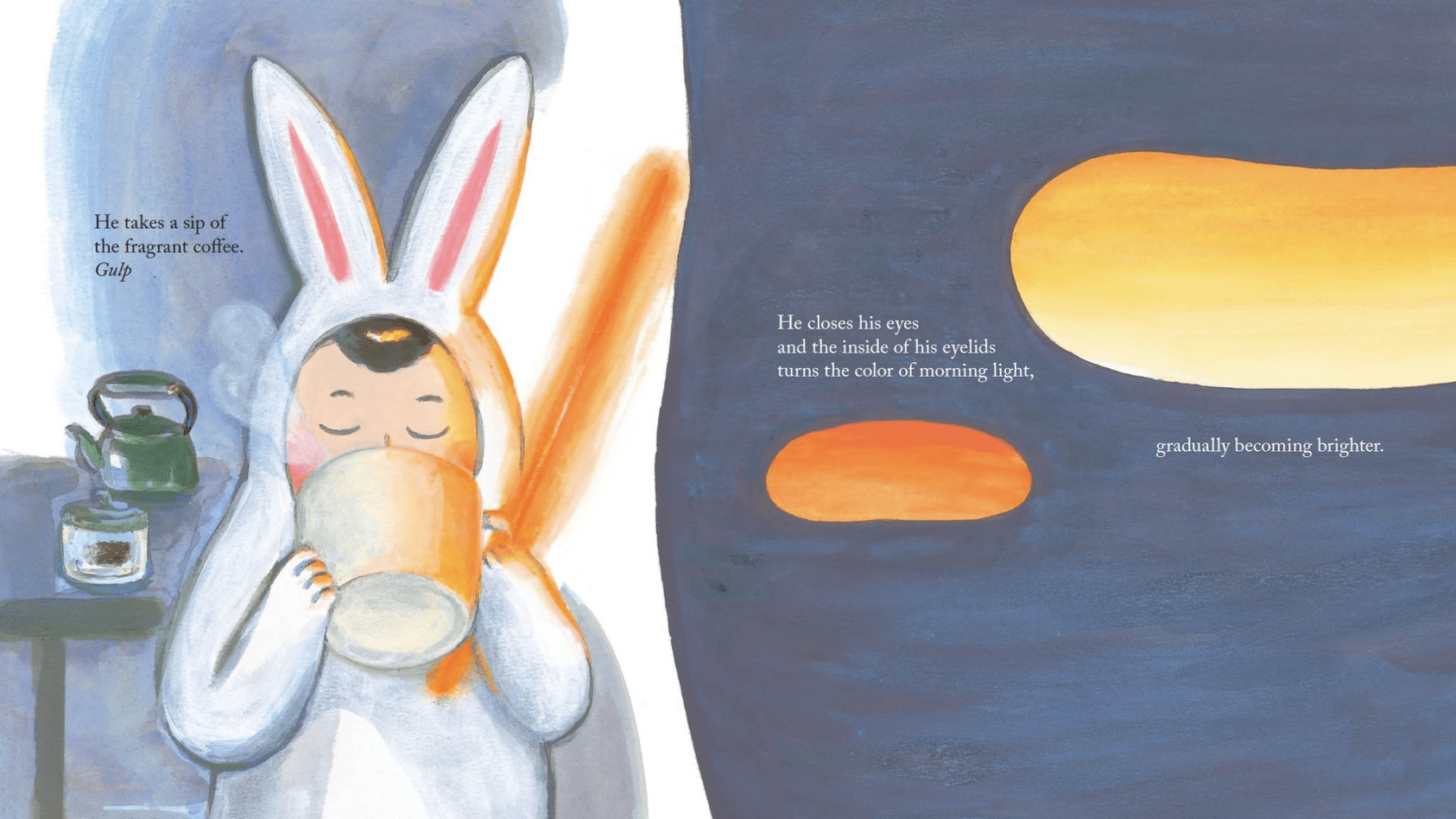
Have you encountered Sato the Rabbit before? If not, you’re in for a treat. Each book in this series is a series of vignettes. In this particular story it starts out in the normal world and goes into the extraordinary. Sato goes on two adventures in this book with light. First he sees the morning light through the curtains and grabs a bar of light from the curtains. From there he is transported to the natural world. In the second adventure he is transported into a lighthouse. When he creates a beacon, animal friends come to give him tasty treats. These books are originally published in Japan and are perfect if you seek something with very low stakes. It’s about the enchantment and the whimsy in a cozy and harmonious setting. And the art is lovely. Consider this a real appreciation of how thin the line is between fantasy and reality. That barrier in these books is just so thin. It’s a beautiful sense of childhood as this deep moment of life when you are categorically different from being an adult.


Unruly

Old as Stone, Hard as Rock: Of Humans and War by Alessandro Sanna

ISBN: 9781592704217

Publication Date: February 4, 2025

The Unruly part of Enchanted Lion Books, exists to create children’s books with an adult audience in mind. What does that mean? Well, we certainly hope you enjoy one example here called Old As Stone, Hard As Rock. Do you happen to remember that wordless title from a number of years ago called, The River? While Unruly was still getting its act together, The River was marketed as a children’s book. Later, Enchanted Lion would signed for this book in 2019. It’s a book in which the artist spent years thinking as an artist. His impulse was to understand the relationship between creation and destruction through his life as an artist and the making of things with his hands. His hands are no different from his brain and can even understand things that his brain can’t in the same way. In this book, the story tracks both creative and destructive impulses over the course of human history and the lens of getting to the point of war. And not everything is all black or white. Fire is creative and destructive. So are our hands. It’s a wordless account of these speculations taking us up to 9/11. Another way to look at this is to say that it’s a catalog of technological changes and how it changes our world. Finally, the intro is by Intro by Ammiel Alcalay, a writer and poet who has written a lot over the years to the Muslim world, though he himself is Jewish. His intro is not about his moment in time, but about Sanna’s broader themes of destruction and war.


Tales from Dreamland by Ed Valfre

ISBN: 9781592703777

Publication Date: May 6, 2025

As of this spring, Claudia assured me that this is their only Unruly book from an American. And look! It’s my favorite medium! Photography!! Think of it as street photography aiding and abetting a range of flash fiction stories. So why did they make it? the inspiration was to just awake wonder and openness to the everyday. They initially made the book for older people because the micro fiction has a lot more evolved ideas. There’s a kind of wryness to them. A sardonic sensibility better suited to teens and adults. Bonus for the blurb from Teller from Penn & Teller too!


The Grammar of Fantasy by Gianni Rodari, ill. Matthew Forsythe, translated from Italian by Jack Zipes

ISBN: 9781592703050

Publication Date: May 13, 2025

Rodari again, but very different. And lookie! Look! Though the book is translated from the Italian and sports new art from none other than Matthew Forsythe. We haven’t seen a Forsythe in years! In terms of the book itself, this is Rodari’s big pedagogical work. Back in the day Claudia read it in the 90s in a poorly edited version, but the ideas were so stimulating and incredible that she never forgot about it. In these essays, Rodari talks about ways to open up the imagination and imaginational (totally a word) faculty in ways that are incredibly exciting. He talks about his own work in the classroom, his own research, and how to create a liberating feel in classrooms that know how to not render children less imaginative. Rodari talks about the fantastic binomial – putting two incongruous things in relationship. It unleashes all kinds of wild imaginations. It’s great for teachers and the classroom but also any artist or people who are looking to be more creative. Honestly, it would even be great in the self-help category on how to unleash your own voice. It’s an adult book but with a real popular appeal.


Once again, I’d like to thank Claudia and the team at Enchanted Lion Books for taking the time to share these incredible upcoming books. Be sure to look for them all in the upcoming year!

Filed Under: Publisher Previews Tagged With: Enchanted Lion Books, publisher previews

Confidence, Language, and Awesome Abuelas: Julio Anta and Gabi Mendez Discuss the Upcoming Speak Up, Santiago!

January 21, 2025 by Betsy Bird

Considering the news, and the state of the country today, you can probably understand why, when asked whether or not I’d like the interview the creators of a graphic novel that explores the linguistic insecurity that so many American-born Hispanics who don’t speak Spanish face today, I didn’t just jump at the chance. I LEAPED at it! I HURDLED at it! I broke down walls, doors, and other sundry barriers to get to it!

Meet Eisner Award-nominated author Julio Anta and illustrator Gabi Mendez. They’ve a little book out on March 4th by the name of Speak Up, Santiago! (Random House Graphic| Ages: 8-12) that can be best described in this way:

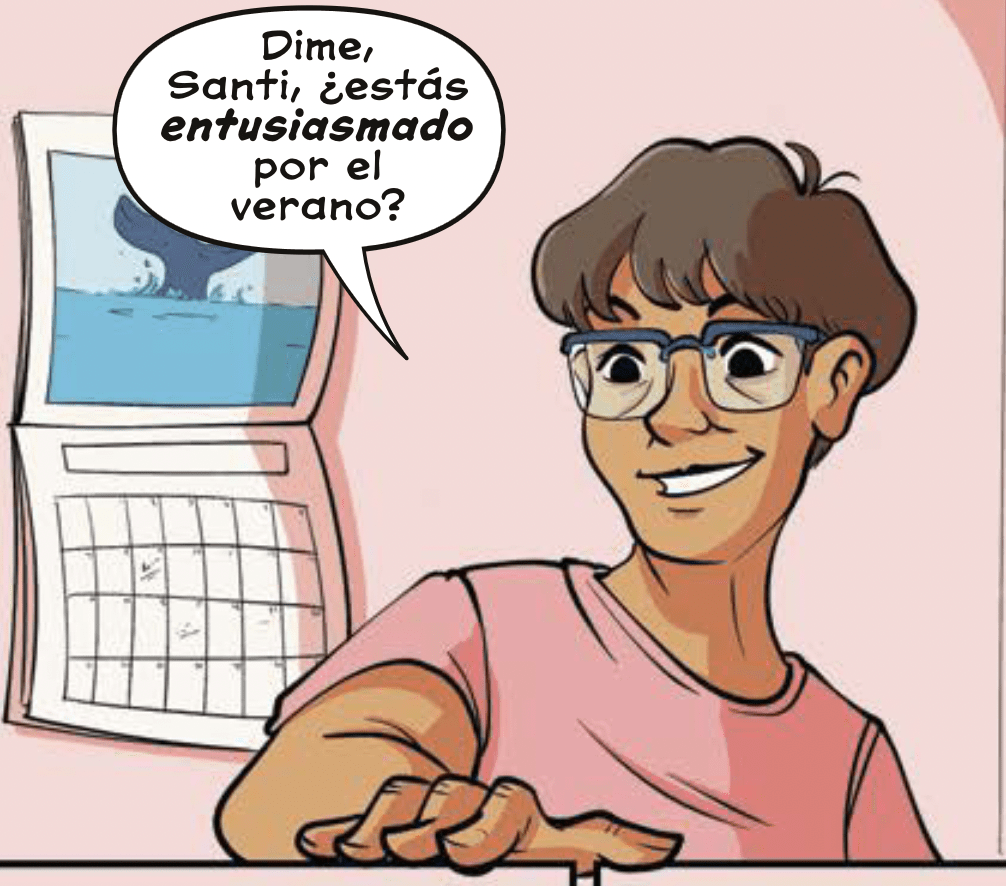
“Santi is excited to spend the summer in Hillside Valley, meeting the local kids, eating his Abuela’s delicious food, exploring! There’s just one problem—Santi doesn’t speak Spanish that well and it feels like everyone he meets in Hillside does. There’s Sol (she’s a soccer player who really loves books), Willie, (the artist), Alejandro (Santi’s unofficial tour guide!), and Nico (Alejandro’s brother and blue belt in karate). In between all of their adventures in Hillside, Santi can’t help but worry about his Spanish-what if he can’t keep up?! Does that mean he’s not Colombian enough? Will Santi find his confidence and his voice? Or will his worries cost him his new friendships…and the chance to play in Hilliside’s summer soccer tournament?!”

And the blurbs, man, the blurbs! We’ve got blurbs from Kat Fajardo, Kayla Miller, Raul the Third, you name it!

Did I have questions? I did.

Were they willing to answer those questions? They were.

Let’s do this thing:


Betsy Bird: Hi, Julio! I really appreciate you taking the time to talk to me about SPEAK UP, SANTIAGO. The book has a central premise that I can’t really remember seeing all that often in books for kids as a main plot, rather than a side plot. Could you tell us a bit about where the book came from?

Julio Anta

Julio Anta: Thank you so much for having me! The book came from a lot of different places – my insecurities with my Spanish speaking skills, a desire to write a book that featured my abuela Emma, the great day trips my family and I began taking to the Hudson Valley during the pandemic, and the incredible Latino enclaves I was discovering in a part of the state that historically did not have large Latin American populations. As we were going on these beautiful hikes and eating at amazing Latin American restaurants established by mostly new arrivals, I kept imagining a story set in these towns. At the same time, I was teaching my son Spanish and thinking about the intersections between my own insecurities and the ones I hoped he wouldn’t develop himself. That’s when I discovered the character of Santi – a 12-year-old modeled after my son who just wants to connect with a very specific part of his Latino identity – language. 

BB: That’s awesome. And Gabi! Thanks so much for answering my questions too! So, tell us a little bit about how you came to SPEAK UP, SANTIAGO. What appealed to you about the book?

Gabi Mendez

Gabi Mendez: Thank you for the opportunity! When this story was just an outline (though an impressively detailed one, Julio is so good at that), the two of us connected on Twitter, and then over a long phone call. It was in that call that Julio described what felt like my own story: one of a kid growing up feeling so insecure and disconnected from their culture through difficulties with language. I’d somewhat recently come out of grad school with a thesis project tackling those feelings in my own life, so when the opportunity came to bring strength and empathy to other kids going through that, it felt almost too good to be true. The funny thing is, through almost every step of production we’ve had folks reading and commenting, “I went through this too!” I think we must be doing something good.

BB: Sounds like an ideal match. Julio, with semi-fictionalized graphic memoirs, I’m always curious where the author lays down the line between what truly came from their own life vs. what they made up on their own. How much of your own true story is in this book, and what did you specifically choose to fictionalize?

Julio: Well, like most of my favorite books, there’s truth in every part of this story. Is it the whole truth? Sometimes! But often, it’s a combination of truth and fiction. Unlike Santi, Spanish is my first language. I grew up in Miami, not New York. But the truth is still there. As I started attending school and English became my dominant language, I began feeling incredible anxiety about speaking Spanish, insecurities over my accent, forgetting words, etc. It’s still something I struggle with now as an adult, but like Santi comes to realize by the end of our book, I’ve found peace in it.

BB: But age is such a huge component of that too. Gabi, this isn’t the first graphic novel you’ve done for kids. That said, you’ve done a range of audience ages over the years. When creating art for a middle grade audience, how do you adapt to that particular age range?

Gabi: I think my baseline style is luckily suited to the age range. Despite the target audience age in the past, I’ve had a lot of kid protagonists because I find them really compelling. They are very honest and strong in their convictions as they grow and learn about the world around them! So I tend to draw characters and worlds that have a youthful sensibility. When it comes to creating a specifically middle grade appeal though, I think it has to do with the energy of the illustrations. Kids feel things so strongly, I try to show it in their body language and how they emote to create a feeling that will be relatable for them. I also like to keep the framing and paneling itself dynamic to keep it visually interesting.

BB: Julio, let’s get your take on that. While you’ve done a fair number of graphic novels, this appears to be a book written for your youngest audience to date (9-12 year olds). Did you have a natural understanding of how to write for this age level or did it take some trial and error?

Julio: It was tough! Voice is so important when writing for middle grade. I have to give my editor Shana Corey a lot of credit for her wonderful guidance in helping me find that voice for my middle grade debut. It was a lot of trial and error, a lot of reading great middle grade books, writing, rewriting, and listening how my son and his friends speak to each other. But it was a challenge I’m so glad I took up because it made writing book 2 in our Hillside Valley series so much easier!

BB: And is Hillside Valley based on anywhere specific?

Julio: Earlier I mentioned the Hudson Valley, but more specifically, Hillside Valley is modeled after the towns of Cold Spring and Beacon in appearance, and the town of Sleepy Hollow, with its vibrant Latino community, in spirit.

BB: Awesome. Now let’s talk a bit about the art. Gabi, I just want to give you props for Abuela Emma’s look. You would not believe how many grandmothers come up to children’s librarians bemoaning the fact that in books for kids they’re always pictured and little white-haired geriatric ladies. Your Abuela is hearty, healthy, with a strong fine head of brown hair. Why did you decide on this particular look?

Gabi: I’m so glad Emma’s look was a success, she was always a joy to draw! This is particularly because she was very much inspired by my own grandmothers. Both are ladies who were very active during my childhood. We went camping, played hard, my Nana on my mother’s side even still works in her garden. My Grandma on my dad’s had dark brown hair until she was 101 years old! With Julio’s grandmother as another important reference to round out her personality and image, Abuela Emma’s whole vibe is built on some very spirited ladies. I hope other real grandmothers can see themselves in her too!

BB: And when you first create your characters for a book, how much trial and error is there? Did you find creating the characters for this book to be easy or difficult?

Gabi: For all of my collaborative work, character creation has been surprisingly easy. I think with the benefit of a partner, the process of taking their ideas, mixing in reference images, and infusing my own experience makes the process very enjoyable. Santi, his friends, and Abuela Emma were pretty set from the first concept images. I do think that it really helped having the majority of the characters from hispanic backgrounds. These people could be my cousins, my classmates, people from my hometown, I had so much to draw from. I also feel so lucky to have a partner like Julio for this project! He communicates his ideas so well and always has plenty of reference, which is such a boon for an illustrator.

BB: Well, Julio, keeping in mind its readership, you may well have cut things out of the book. What ended up on the cutting room floor? And how different is this final version from its first draft?

Julio: Again, I’m going to sing the praises of my editor… because there wasn’t much on the cutting room floor, but there were a lot of additions in subsequent drafts. Reading the book now, some of my favorite moments are places where Shana poked me and said, “I think there’s something more in this pocket of story. Wanna explore it a little more?”  

I think the best editors are those that help you tell the story you want to tell and encourage you to dig deeper into areas you may not have thought of before. So much of the work Shana and I did together is shaped by that ethos and helped me write a book that I’m incredibly proud of. 

BB: Beautifully put. Finally, what do you two have coming out next? And what are you working on?

Julio: We have Hillside Valley book 2 next! It is titled Sol Goes For Goal and focuses on Sol, one of the characters we introduce in Speak Up Santiago. All of our Hillside Valley kids are back for this story I co-developed with Gabi Mendez, the amazing illustrator of our series!

Gabi: I’m currently rounding the finish line for book 2 in the Hillside Valley series! We’ll be following Santi’s friend Sol in that one, so you can look forward to some big feelings and some very fun soccer action. Beyond that I’ll be making a foray into more of the YA range, armed with coffee puns and confused teenage transplants.


Fantastic stuff from two great collaborators. As I mentioned before, Speak Up, Santiago! comes out March 4th, so feel free to pre-order it now. Many thanks to both Julio and Gabi for answering my questions, and to Cynthia Lliguichuzhca and the team at Random House Children’s Books for helping to organize and put this interview together.

Filed Under: Interviews Tagged With: author interviews, Gabi Mendez, graphic novels, illustrator interviews, Julio Anta

  • « Go to Previous Page
  • Page 1
  • Interim pages omitted …
  • Page 52
  • Page 53
  • Page 54
  • Page 55
  • Page 56
  • Interim pages omitted …
  • Page 1043
  • Go to Next Page »

Primary Sidebar