• Skip to primary navigation
  • Skip to main content
  • Skip to primary sidebar
  • About/Contact
  • Fusenews
  • Reviews
  • Librarian Previews
  • Best Books
    • Top 100
    • Best Books of 2022
    • Best Books of 2021
    • Best Books of 2020
    • Best Books of 2019
    • Best Books of 2018
    • Best Books of 2017
    • Best Books of 2016
    • Best Books of 2015
    • Best Books of 2014
    • Best Books of 2013
  • Fuse 8 n’ Kate
  • Videos
  • Press Release Fun

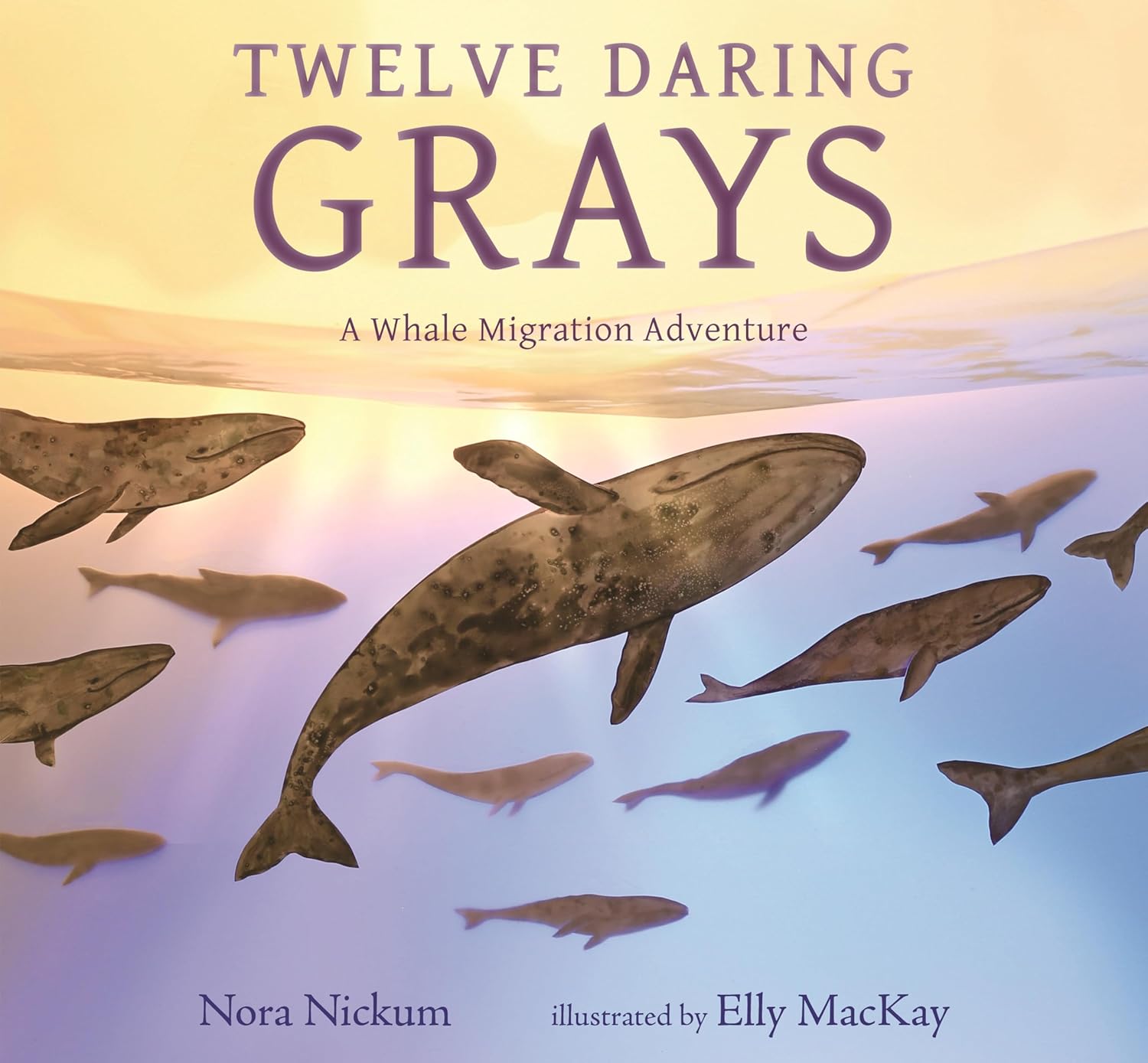
Review of the Day: Twelve Daring Grays by Nora Nickum, ill. Elly MacKay

Review of the Day: Twelve Daring Grays by Nora Nickum, ill. Elly MacKay

June 5, 2026 by Betsy Bird Leave a Comment

Twelve Daring Grays: A Whale Migration Adventure
By Nora Nickum
Illustrated by Elly MacKay
Candlewick Press
$18.99
ISBN: 9781536234701
Ages 5-9
On shelves now


I’ve had animal ingenuity very much on the brain recently. What animals are capable of learning. What they pass down. And I’ve been thinking too about the assumptions we humans make about them. We expect a lot from animals… but not too much, right? Like, we expect a dog to understand that when we point at something they should look that way, but we don’t expect them to problem solve or anything. It gets a little more complicated when we’re talking about large intelligent species that dwell in the oceans. Humans have a vague sense that whales are intelligent, but since we can’t talk to them yet (AI or no AI) our respect only goes so far. So what are we to make of it when a small group of whales finds a dangerous but potentially life-saving solution to a problem that has plagued them for years? And when that situation is placed in a picture book for kids, suddenly we adults are in the funny position of presenting our children with an example of intelligent problem solving that has nothing to do with us in any way, shape, or form. A humbling moment. A brilliant book.

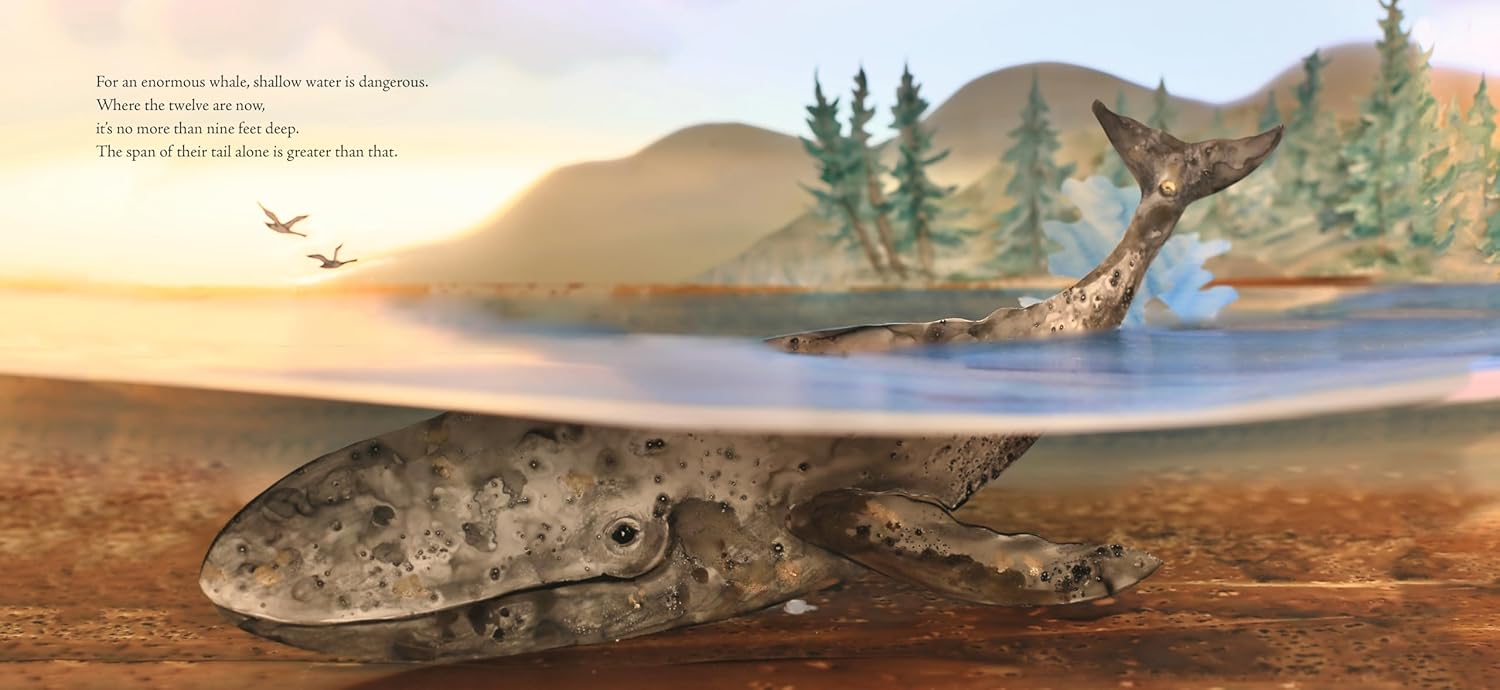
Here is the problem: Each year gray whales eat shrimp in the Arctic and then, when it gets cold, they migrate to Baja California in Mexico to birth their calves. That done, they return to the Arctic, but they’re not eating anything along the way. Sure, their blubber gives them energy, but sometimes it’s not enough. So what caused twelve of these gray whales to suddenly start to do everything differently? While other whales flirted with starvation, thirty years ago a couple of these whales figured out another way. They split off from the group and took a 170 mile detour to the Salish Sea. There, they found shallow waters that, when the tide is high, allow them to plow the ocean floor for a feast of millions of ghost shrimp. If they wait too long, the tide is out and they’re stranded. But if they time it right, day after day, they’ll be healthy, fit, and ready to head over to the Arctic as planned. Accompanied by artist Elly MacKay’s incredible cut paper artistry, Nickum’s text highlights the risk, the bravery, and the ingenuity of creatures facing a difficult world.

I feel like a broken record in my nonfiction reviews this year, but I just can’t stop thinking about what it means to write a nonfiction book for kids that appeals to adult gatekeepers vs. kids. And if I discover a really cool fact in a book that I’ve never encountered before, how much does that influence my final consideration of the book? It really all comes down to the writing, right? A book can be a true wonder to an adult, but if the writing can’t make a compelling story or set of facts (all depending on whether or not your book is narrative or expository) then even the most interesting subject in the world is going to land like a ton of bricks on the page. Author Nora Nickum, however, has an ace up her sleeve. A talent, if you will, that many would kill for. A truly great nonfiction picture book author, to my mind, is one that can pare a story down to its most essential parts without losing lyricism. Now listen to the opening lines of this book: “In February, gray whales begin a long, hard, necessary journey. Twenty thousand whales in all. Hidden among them are twelve with an extra dose of bravery and a daring plan.” Aside from being a cracking good starter, these three sentences are broken up on the page into seven lines. And that, my dears, in a nutshell is a lot of why this book works as well as it does.

Okay, but it’s still nonfiction, right? And it was originally published in America, yes? Well, if reading loads of nonfiction from other countries has taught me anything, it’s a deeper appreciation for authors and illustrators that can back up their storylines with facts and research. Now look at this book’s Bibliography, in addition to information on who was consulted (John Calambokidis, Cascadia’s senior research biologist), as well as even more information on the original grays. But does the book suffer from the problem of being more interesting in the backmatter than the frontmatter (a sadly common occurrence in this day and age)? It. Does. Not. As I mentioned before, Nickum has a natural propensity for a simplified but still highly informative text. Here’s a new quiz: Can you understand the book without the backmatter? If you read this to a child, would they still understand what was going on? Maybe they’d miss some of the nuances, but to my mind Nickum retains the danger, the risks, and the rewards. Plus the happy ending feels deserved. The twelve make it. Bellies are full. Babies are raised. Success all around, and it’s done in such a way that kids will entirely enjoy it on their own terms.
At this point in the review we’re five paragraphs in. Anyone who has read this far is an outlier, right? So I feel weirdly free at this point to say something that might rankle some. You know how there are authors and artists of children’s books out there who are really talented, but they have yet to find that perfect pairing that highlights their skills? Many is the future Caldecott winner who labored for years with mediocre texts, only to be paired with just the right wordsmith that could best highlight their skills. Welp… that’s how I always felt about artist Elly MacKay. It’s not that I haven’t enjoyed her past books. I have! I can think of one right off the top of my head that was a literal delight, both visibly and audibly (when read aloud). But at the same time, I’ve been waiting for some smart editor out there to pair MacKay with a text worthy of her skills. Something that would allow her to stretch a little, try new things, and yet also retain what it is that makes her so unique amongst illustrators. Hat tip to you then, Candlewick. Looks like someone there knew precisely what they were doing.

Because it’s not simply that MacKay knows how to use cut paper. Look, let’s take a trip to this book’s publication page for a moment, and I’ll show you what I mean. A lot (though certainly not all) publication pages will tell you how the illustrator did what they did. MacKay has cut paper, sure, but look at the cover of this book. How on earth does she manage to make it look as if light is filtering through water in luminous beams? Alas, the publication page here will offer you only perfunctory answers. “The illustrations are photographs of scenes created with paper, ink, wire, colored filters, and light.” Insufficient? You might say. Happily, we live in the era of the internet. On her website, MacKay writes, “Since I am dealing with 3 dimensional scenes, I’ve had to learn a lot about depth, lenses and scale. The nice part about working this way, is that if something isn’t quite working, I can adjust it, and rephotograph it. I can also play with the lighting, and find the right atmosphere for a scene.” Thus she creates little sets for her books. “With layers to create the setting, individual characters, lighting, filters, camera lenses and settings, there is lots of play that goes into getting my images and sometimes interesting surprises.” And when the book is deserving of this process, and its topic AND writing lend themselves to this kind of care and attention, the results can be truly magic.

The trouble with humans studying other species is that we see everything through a very human lens. That’s natural. I mean, it’s not like we’ve had the ability to look through anything else for quite a while. So when I started off by talking about whale ingenuity and how incredible it seems in this book… I mean, is it? I’m no whale expert. I don’t really know what they are and are not capable of. One thing the book doesn’t say directly (but is mentioned in the backmatter) is that part of the reason whales are starving on their route back to the Arctic is that the world is changing (thanks to humans) and they’re not getting the amount of food that they used to. Hence the need for some whales to (literally) change course and try something new. And if that feels human to us, it probably isn’t. That’s where this book becomes so useful. With a subtlety bred of great writing and jaw-dropping art, it’s teaching our kids that we’re not alone in this world when it comes to using our brains and having the guts to take a risk. And maybe if kids can understand that, they’ll understand why protecting other species (even the ones who aren’t capable of such massive intelligence) is the right thing to do. A tall order for a little book, sure, but me? I’d say it’s up to the challenge.

On shelves now.

Source: Galley sent from publisher for review.
Filed Under: Best Books, Best Books of 2026, Reviews, Reviews 2026 Tagged With: 2026 reviews, Best Books of 2026, Candlewick, Elly MacKay, nonfiction, Nora Nickum, picture book nonfiction, reviews

Publisher Preview: Eerdmans Books for Young Readers Preview (Fall 2026)

June 4, 2026 by Betsy Bird 2 Comments

Oo! It’s ANOTHER fine and fabulous publisher preview today. That’s two in one week! Why, if I didn’t know better I’d swear there was some kind of ALA Conference coming up at the end of the month or something.

And, y’know, it occurs to me that as nice as these previews are, it probably behooves me to tell you a little something about these little publishers that I highlight. Take Eerdmans, for example. I’ve always had a soft place in my heart for them since they’re Michigan-based and I’m a born and bred Michigander (Kalamazoo 4-life, baybeeee!). But what makes Eerdemans so very very interesting is that they’re one of the very few religious publishers to make the crossover into mainstream children’s book publishing. Sure they do some light religious stuff (you’ll see a touch of that today) but a lot of the children’s book imprint titles are secular. And remember back in 2009 when they won their first 2008 Caldecott Honor for A River of Words? When small publishers win huge awards, I get very happy.

I’m happy today too with the array of titles I’ve seen. Take a gander. You may see something you like:


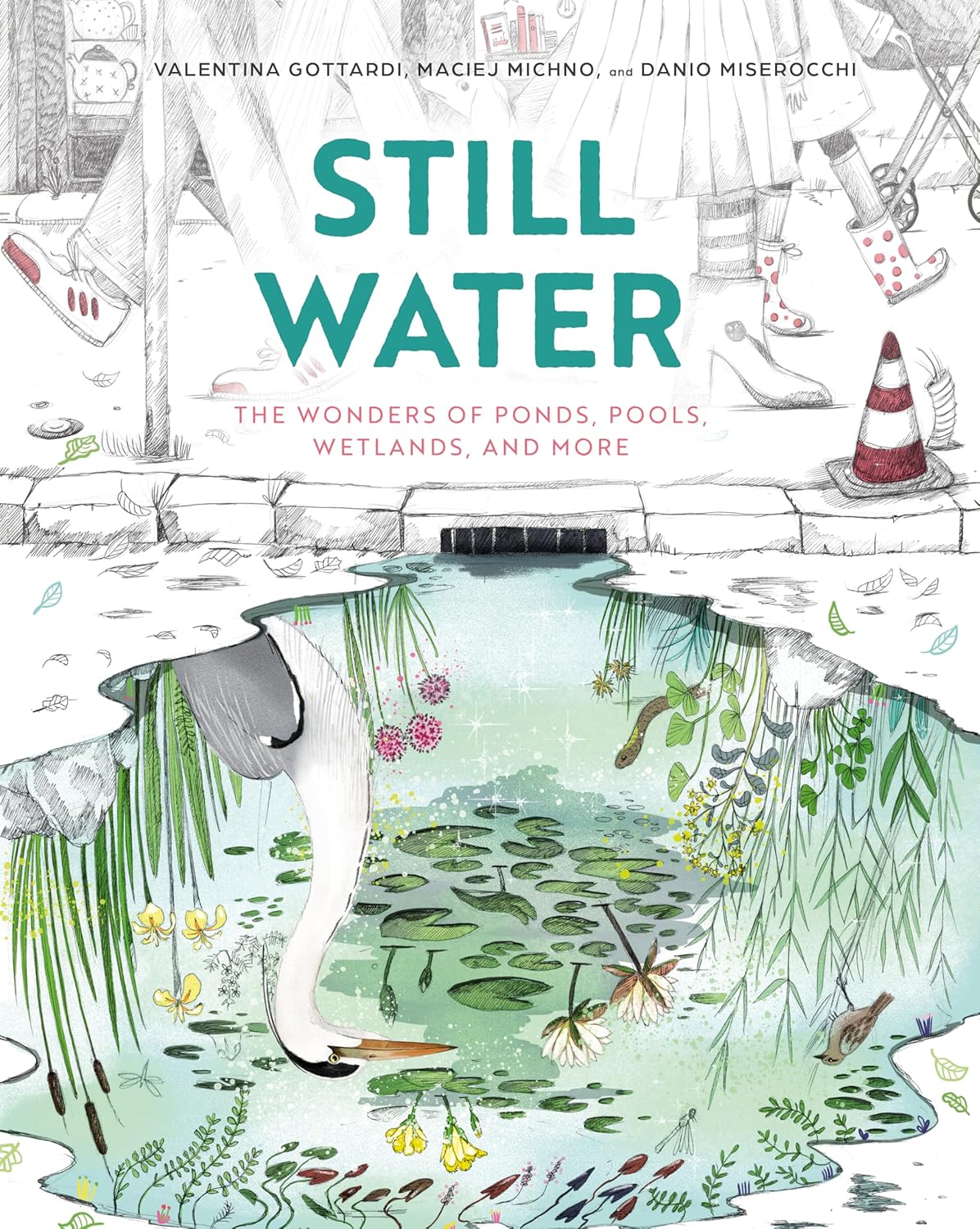
Still Water: The Wonders of Ponds, Pools, Wetlands, and More by Maciej Michno, Danio Miserocchi and Valentina Gottardi , illustrated by Valentina Gottardi

ISBN: 978-0802856593

Publication Date: August 18, 2026

Do you happen to remember the nonfiction picture book Who Hid the Stars? which covered light pollution in a kid-friendly way? Well, that same team has reunited once more to cover a topic that is both very misunderstood and very important. If you’re in the market for some niche nature topics, this will fit the bill perfectly. First off, it’s fairly accessible (I mean, every kid can understand the concepts because they’ve all seen puddles before). Plus there’s gorgeous artwork and lots of backmatter. Flip through the table of contents and you’ll see that it runs the gamut, covering everything from newts to leeches. There’s even information at the end that tells kids how they can act on some of the information they’ve just learned and make a difference themselves. As for the actual text itself, it’s a very broad topic, encompassing everything from puddles and small collections of water in the trunk of a tree, all the way up to those bigger wetland systems. Now originally this was a European book and it looked more at local plants and animals on that particular continent. Now it’s been adapted for North American readers. And sure, some of those European species are here… as invasive species.


Counting Winter (Board Book) by Nancy WhiteCarlstrom; illus. by Claudia McGehee

ISBN: 978-0802856623

Publication Date: September 8, 2026

Under normal circumstances, when I cover a publisher preview I have a tendency to avoid mentioning board book adaptations of already existing picture books. I don’t dislike them or anything, I just don’t find them quite as interesting. I will, on occasion, make exceptions to this, and today that exception comes in the form of the new board book version of this gorgeous Carlstrom/McGehee collaboration. If you recall, the original Counting Winter picture book was a rather clever counting and animal story. It will surprise no one, then, to hear that it has adapted very well to its new format! The art and beautiful spreads are still the same and they trimmed down trim size and the text to half the original words. Looking forward to seeing this one firsthand.


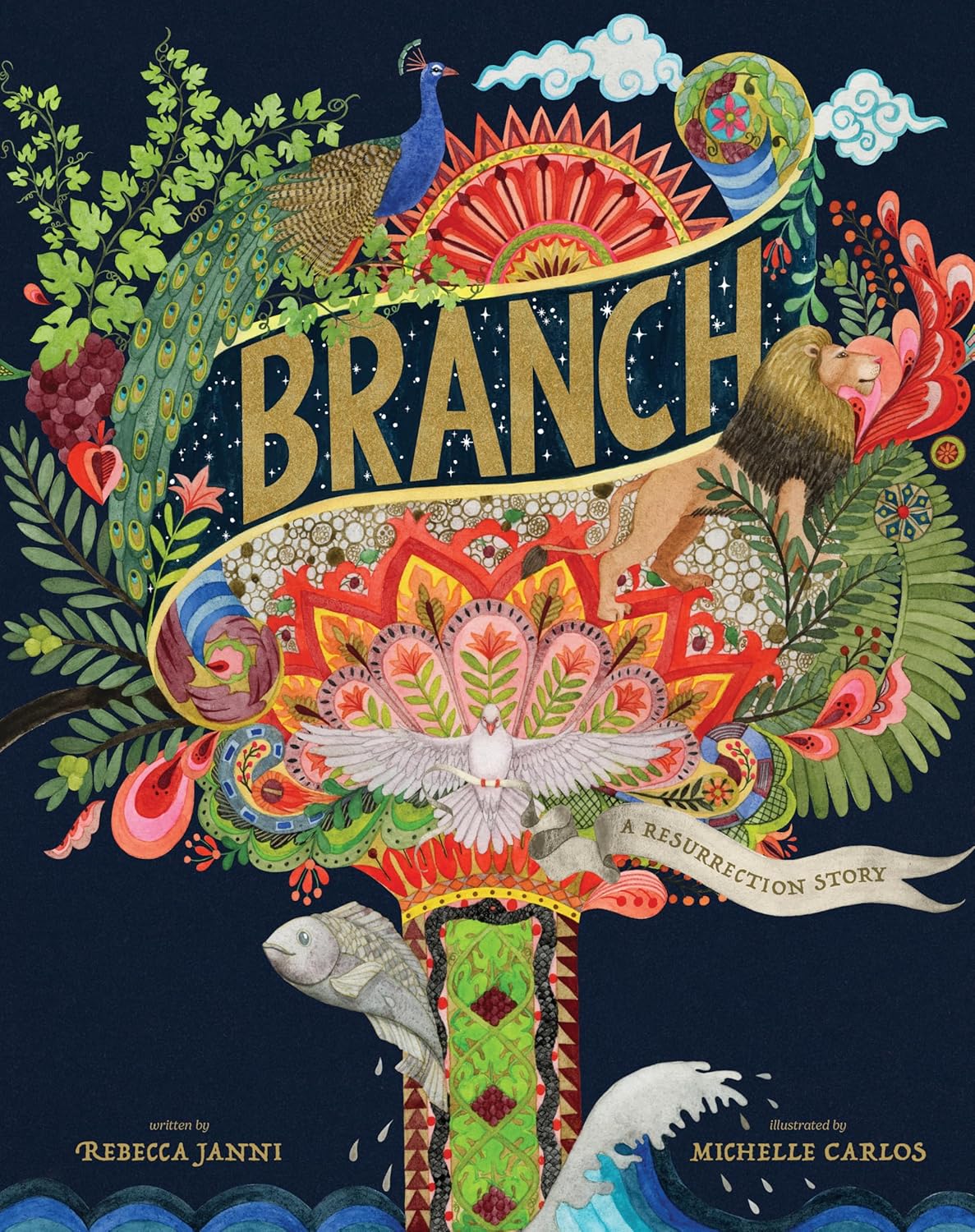
Branch: A Resurrection Story by Rebecca Janni, Illustrated by Michelle Carlos

ISBN: 978-0802856159

Publication Date: September 22, 2026

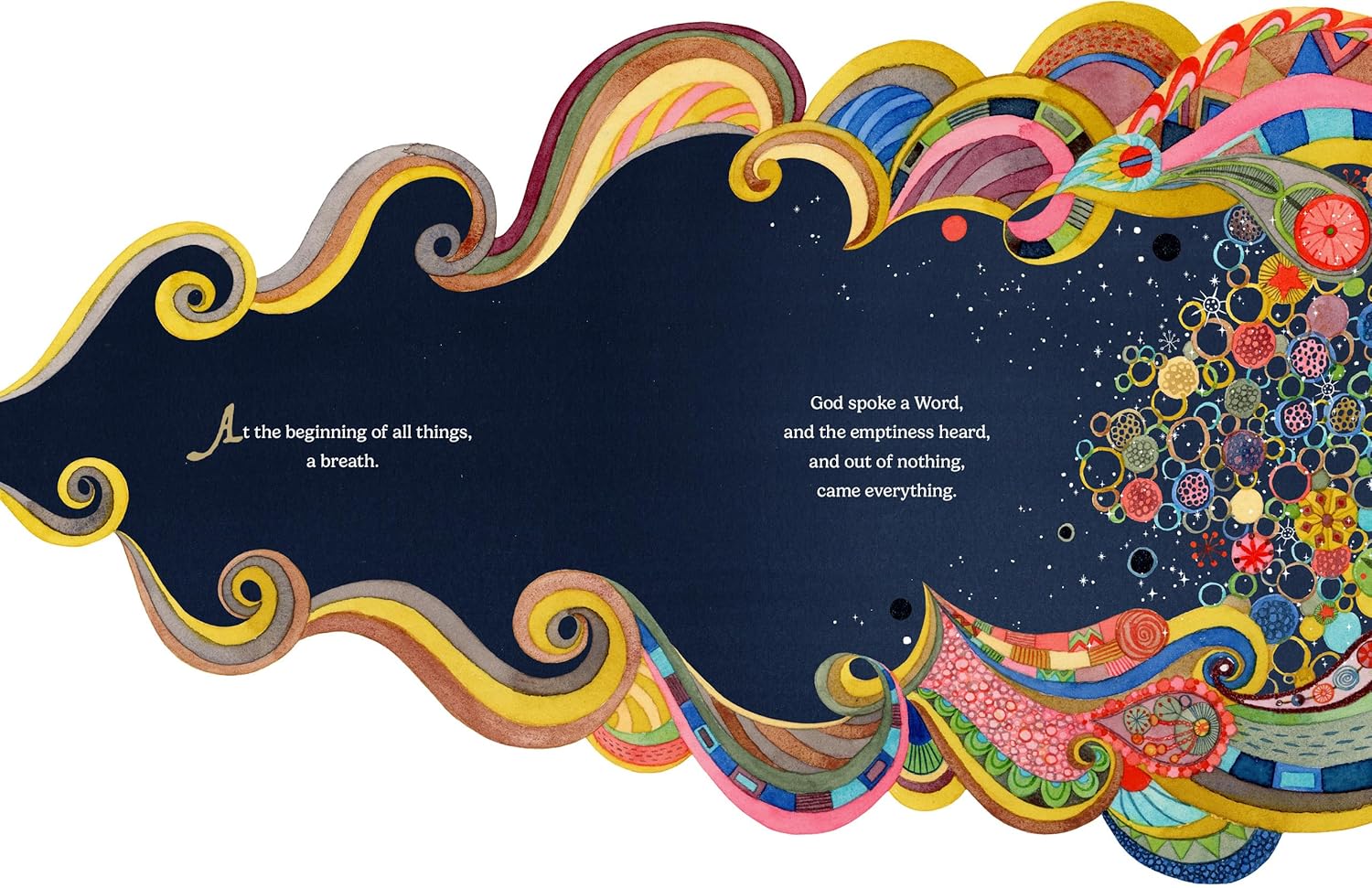
Remember when I mentioned that Eerdmans does the occasional religious title. This, ah, fits the bill. It’s also psychedelic (my favorite kind of delic) and utterly gorgeous. Essentially, what we’re looking at here is a retelling of the Bible story from Genesis to Revelation. It talks about family lines. It uses a lot of metaphors about how you are the branches. Then it uses trees, branches, vines, and gardens tell the Biblical story. It also moves through the birth of Jesus, the crucifixion, and resurrection (and you need to seriously check out that last image in the following sequence here). It was apparently really difficult to find an illustrator of this book since they needed someone capable of tackling both the literal and metaphorical in their art. Michelle Carlos came through in a big way, and there’s an illustrator note at the end of the book that discusses the depth of research she did to create this art. For example, she did a survey of 2,000 years of art before creating this. Absolutely beautiful results.


Puma Concolor: In Search of Patagonia’s Wild Pumas by René Araneda, illus. by Julio Antonio Blasco , trans. by Lawrence Schimel

ISBN: 978-0802856609

Publication Date: September 29, 2026

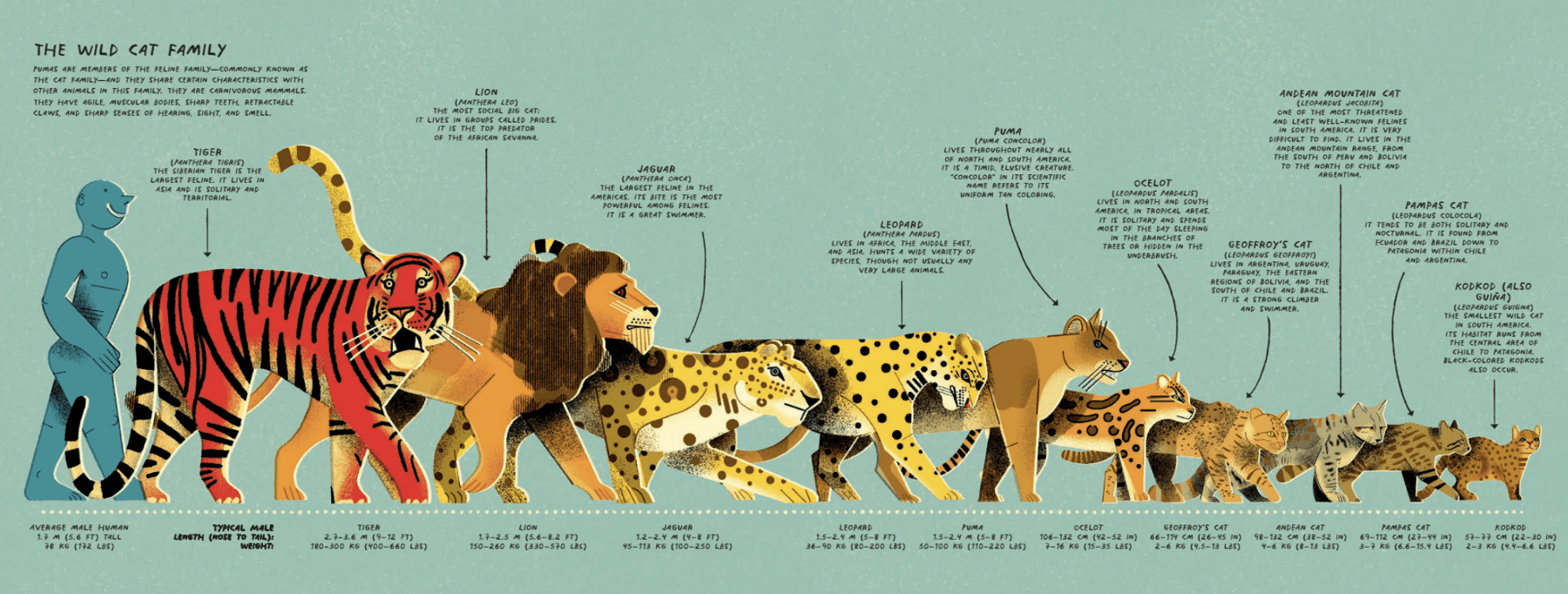
Translated from Spanish, this book comes to us from Chile. And yes, it’s definitely about pumas, but it’s also a beautiful way for young readers to see how a documentary crew works in the wild. The author is an Emmy-nominated documentarian and this book is based on a documentary of his (the documentary was narrated by David Attenborough too!). The whole story is told through the lens of this documentary crew that’s following a small family of pumas. There’s even a section in the backmatter at the end of the book where you get to meet the crew. As for the book itself, you also get these infographic-esque sections that talk about how pumas fit into the wider feline family. Alongside such facts is the story of this mother and her four cubs, as she raises them and helps them survive. The whole thing is set in Patagonia, a country which may be unfamiliar to a lot of American kid readers, and they get to learn about that area. That said, pumas are also located in North America too. Heck, there are even puma cubs in the U.P. in Michigan! Bonus points for the QR code in the book that let’s you hear the sounds that the pumas make as they’re recorded by the documentary crew.


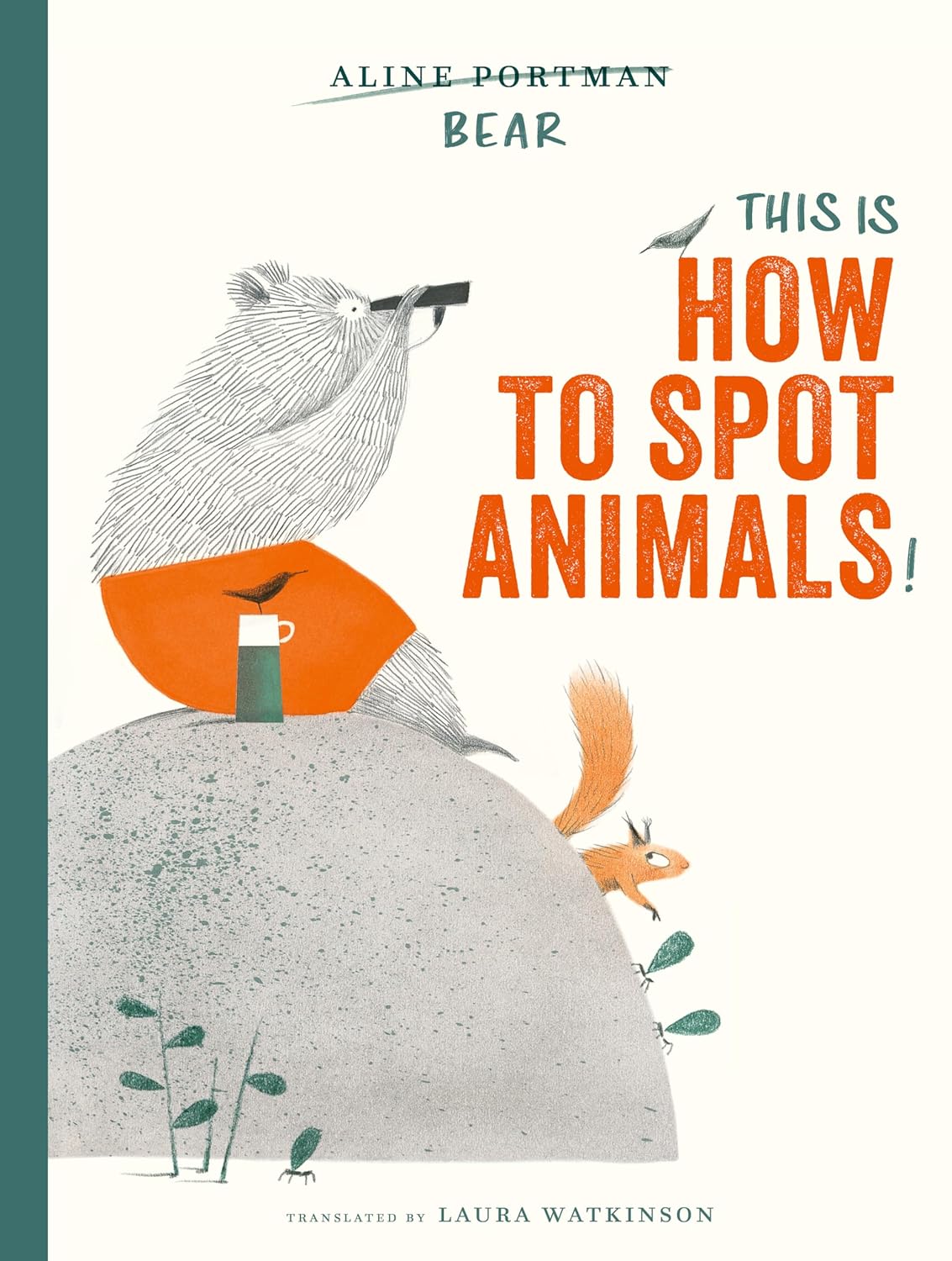
This Is How to Spot Animals by Aline Portman, trans. by Laura Watkinson
ISBN: 978-0802856616

Publication Date: October 6, 2026

A Belgian import! We don’t see as many Belgian titles in a given year as I would like. This little charmer also stands out thanks to its oblivious lead and its pitch perfect readaloud qualities. Are you a fan of dramatic irony in picture books? Then you are in luck. Our hero, the bear, is “spotting animals” today and he’s more than willing to give you, the reader, some tips. Unfortunately, for him, he seems to be missing all the action. The refrain that keeps coming up throughout the book is, “But today we’re out of luck. There’s nothing to see here.” Reminds me a bit of that old Ellen Raskin title Nothing Ever Happens on Our Block. The art, however, brings to mind the works of Sebastian Meschenmoser with its limited color palette. Best of all, this is Aline Portman’s English language debut. Let’s give her book a warm and hearty welcome so that we can see more of the same in the future, eh?


The Boy Behind the Wardrobe: How C.S. Lewis Grew Up to Create Narnia by Suzanne Poulter Harris; illus. by Mira Miroslavova

ISBN: 978-0802855169

Publication Date: October 20, 2026

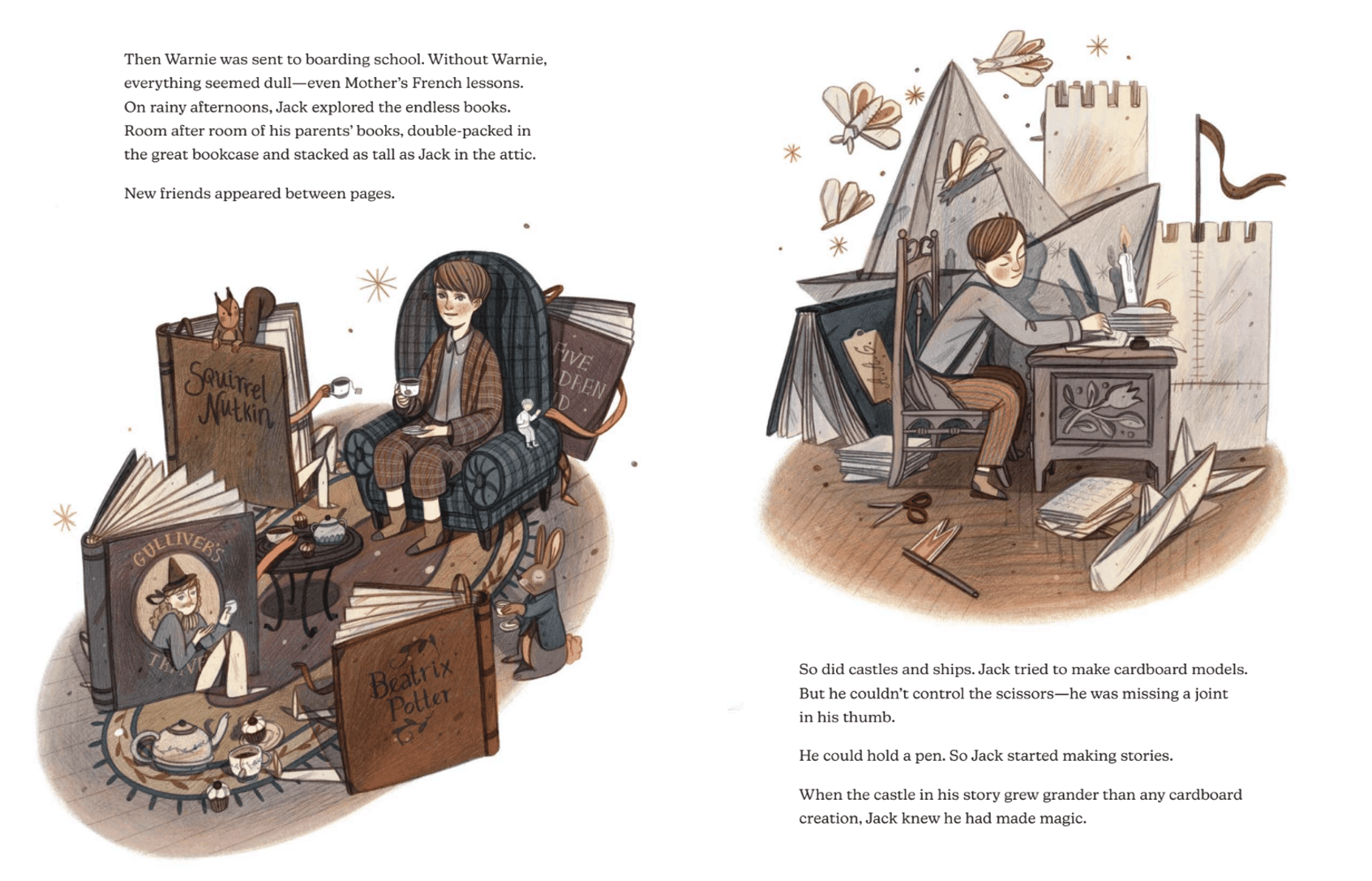
Not our first picture book bio of an Inkling, but usually Tolkien’s the star of the show. This is a secular biography poised to time well with the upcoming movie adaptation of The Magician’s Nephew (directed by Greta Gerwig). This particular biography focuses on Lewis’s emotional trajectory since childhood. It discusses how his parents fed his mind with poetry and has a special fondness for his relationship with his brother. The title takes care to mention the books he loved as a kid himself that helped to inform the stories that he would eventually share with the rest of the world. It even covers a bit of the Inklings and Tolkien as well. And importantly (to me) there is extensive backmatter! I’m talking Author’s Notes, Illustrator’s Notes, aTimeline, etc. Little wonder it’s good. The author is a teacher in D.C.


The Adventures of Odysseus: A Graphic Novel of The Odyssey by Nicolás Schuff, illus. by Mariana Ruiz Johnson, trans. by Lawrence Schimel

ISBN: 978-0802856630

Publication Date: October 27, 2026

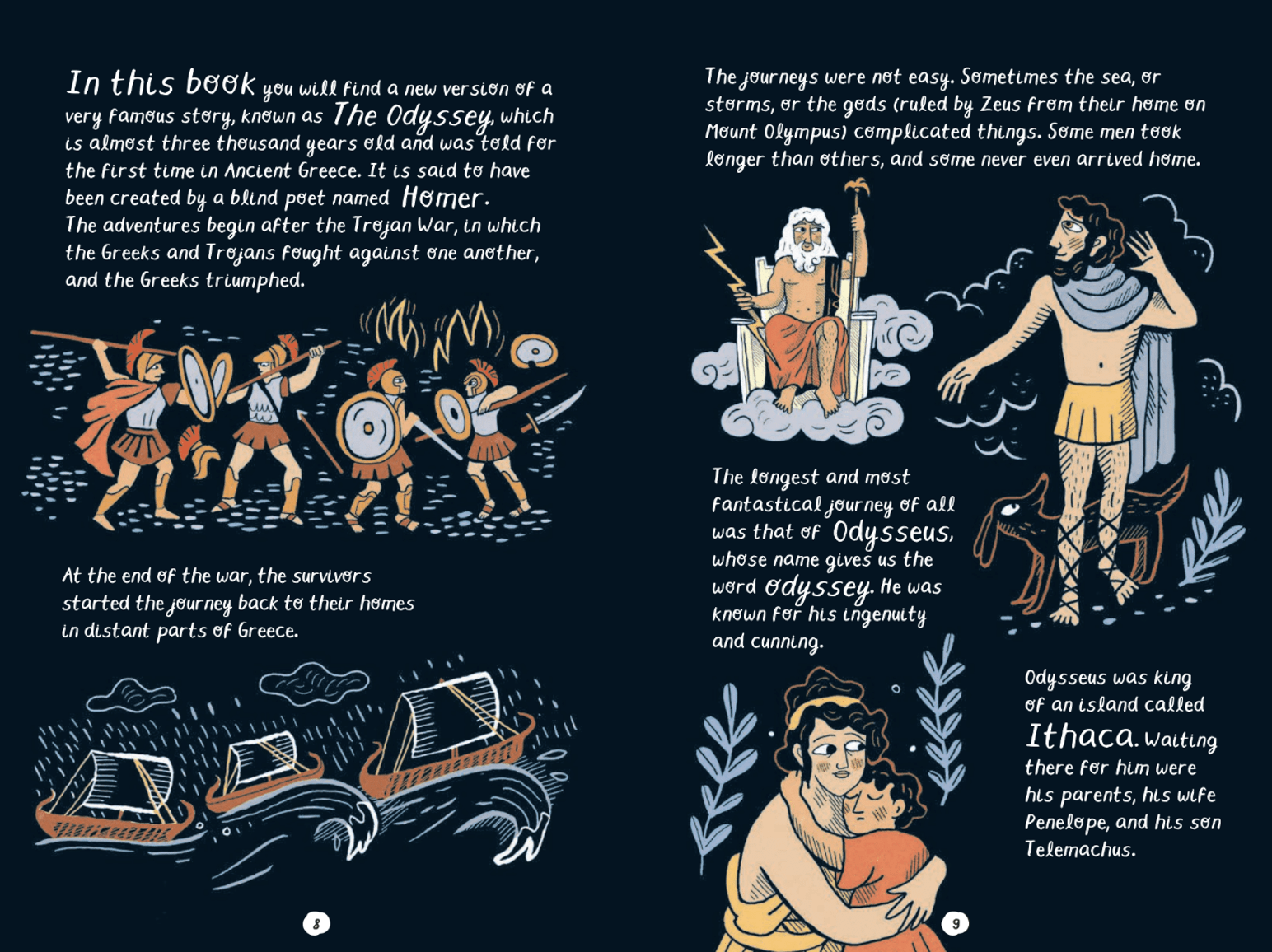
Next up, a kind of graphic novel-adjacent adaptation from Argentina. And, yet again, they’re getting this out in time for the upcoming movie (this time a couple months after it’s released). Aimed at the Percy Jackson set, I really appreciated the mention that this is for those kids not quite yet be ready for the Gareth Hinds adaptation of the same title (glad they mentioned him!). This is just the first in a small series that will cover the Trojan War later. In this fresh, fun, and playful take on the story you get all the highlights: The Sirens, Circe, the Cyclops, etc. The author has some background in classics as well, so a lot of research and care has been placed into this book. Put another way, it’s faithful where it needs to be. They’ll have ARCs of this at the upcoming ALA Converence, so look for them there!

Thanks again to the team at Eerdmans for giving us this sneak peek today. And happy reading!

Filed Under: Publisher Previews Tagged With: Eerdmans Books for Young Readers, publisher previews

Controlling How it Blooms and Bleeds: An Intensive Kyle Lukoff & Priscilla Tey Talk about The Vicious Cycle

June 3, 2026 by Betsy Bird 1 Comment

Two days ago, to kick off Pride Month, Evanston Public Library had the pleasure of hosting Kyle Lukoff, now author of at least twenty-one books. Y’all know Kyle. He’s the Newbery Honor winner of Too Bright to See, and the National Book Award Finalist for A World Worth Saving. Does a picture book called I’m Sorry You Got Mad sound familiar? Or When Aidan Became a Brother? In any case, I got to interview Kyle as part of the virtual talk and in the course of things the subject of his 2026 picture book came up.

Now The Vicious Cycle (out October 6th) may be one of the best named picture books of 2026. It’s a clever little thing, adeptly telling a story of a unicycle with issues, and something much smarter and deeper at the same time. Illustrated by Singapore-based artist Priscilla Tey, Henry Holt & Co. describe the book in this manner:

“This is the story of a unicycle.
A unicycle that goes around in a path of its own making.
A path that gets deeper and deeper as more time passes.
A path that becomes impossible to leave.
Until a new friend enters the circle, and little by little, introduces a new way out.

In this arresting allegorical story, Newbery Honor winner Kyle Lukoff tackles big ideas around trauma, emotion, and growth that everyone—no matter their age—can relate to. It is a profound book about the ruts we dig ourselves into, how trusted friends can show their support by helping us see outside ourselves, and how the choice to heal is ours alone.”

And apparently I just can’t stop talking to Kyle. We discuss the book with him and Priscilla together:


Betsy Bird: Kyle! You’ve told me about so many of your books over the years, but the one that you return to, time and again, and that seems to hold a particular place in your heart is THE VICIOUS CYCLE. There could be any number of reasons for that. Let’s start off with learning where this book came from in the first place. Where did it originate? 

Kyle Lukoff

Kyle Lukoff: Ha, I didn’t realize I had been doing that. Way to call me out.

This book has the simplest origin story imaginable. I remember telling a good friend of mine, “Wouldn’t it be funny if there was a picture book about an angry unicycle, and it was called ‘The Vicious Cycle’?” This was probably in 2020, before I had the confidence that I have now–that if I want someone to write a book about something, I can often be the one to do it. But for a couple years I didn’t have anything besides the title, and a vague visual sense of an angry unicycle. Then one night I was at a very boring function, extremely caffeinated (and had maaaybe had a cocktail or two), and I decided to go into my mind palace and write the thing out in my imagination. I typed it out the next morning, sent it to my agent, and it went from there.

BB: Honestly, I think that’s how it should work. And Priscilla! Thank you so much for also talking with us today about your work on this book. Tell us a little bit about why you agreed to take on this project. 

Priscilla Tey

Priscilla Tey: My pleasure! Thank YOU for taking an interest in our book! 🙂 

Well, when I first read the manuscript, it was an easy “yes” for me. The story instantly resonated, having been in both the positions of the unicycle and Emily. And I think that’s the case with many of us. We’ve been in ruts and been the ones helping others get out of ruts too. But aside from that, what hooked me into this project was how Kyle chose to capture that experience through this extended analogy. I was a high school teacher before I chose this freelance artist life, and I’ve learnt that when it comes to navigating intangible mental landscapes, visual analogies can do wonders. Rather than tell a person to think differently, sometimes presenting visual parallels to their situation can help them map out cognitive pathways for themselves. I liked that Kyle’s story did that. You could remove the ‘moral takeaways’ and any subtle messages and it still reads like a good story. This means that you could draw whatever lessons you want from it without feeling like they were prescribed to you. 

BB: Boy. That’s a deeply sightful encapsulation. And it gets me to thinking. Kyle, it’s not that your books aren’t usually personal but I get the sense that this one speaks to you in a way that many others have not. Can you talk for a moment about vicious cycles and the role that they’ve played in your own life in some way? 

Kyle: Oh man, how much time do you have? Well, suffice it to say that I was a disaster in my twenties. Bad mental health issues, relationship issues, “what do I want to be when I grow up” issues. Everything was really hard, I hurt all the time (and hurt other people), and I could barely imagine a future where that wasn’t true. But, I knew I didn’t want to be a disaster for the rest of my life, so I did the work. Went to therapy. Tried not to make the same mistakes over and over again (was only sometimes successful). Realized that I was the only person who could save me from myself.

I turn 42 this month and I could not have imagined how rewarding all that work could have been. There were times that I didn’t think it was going to be worth it, but I’m glad I trusted enough in future me to make it possible to get there.

BB: Just to dig in a little more, there’s been a lot of talk in the children’s literary world as of late about “didactic” picture books or picture books that have some kind of a message. This title certainly would fall into such a category (the subtitle is “A Story of Healing”, after all). Could I hear your take on picture books that have messages and their place in the pantheon of children’s literature? 

Kyle: This is going to be more of a series of connected anecdotes than a cohesive answer, I hope that’s okay.

I was tabling at a book festival once and an older woman picked up a copy of “When Aidan Became A Brother,” flipped through it, sneered, and said, “Message” before walking away. And, like, I have bad news for that lady about the written word! and the entire point of human communication styles!! it is that we want to tell each other things!!!

Meanwhile, last summer I was teaching my class on picture book writing at the Fine Arts Work Center in Provincetown, and told my students that writing a good picture book means understanding the emotional core of your story. That even the simplest stories have one. One of my students asked me what I thought was the emotional core of “The Book With No Pictures,” and after a split second of thinking, I said “It’s about power.” Because being read to has a power imbalance. Children and adults have a power imbalance. “The Book With No Pictures” makes kids feel like the powerful one.

Which is all to say, every story has a message. Every book is about something. But there’s a difference between a character or narrator spelling out, “And then the unicycle realized that it had been repeating old unhealthy patterns, and it decided to engage on a journey of healing so it wasn’t mean anymore.” The difference between didactic and non-didactic is the difference between telling and showing. Explaining vs exploring.

It’s also the difference between telling and asking. If someone (a kid or an adult) is upset, saying “You shouldn’t be upset!” isn’t going to work. But asking why they’re upset might help, because going into a problem with curiosity is more likely to yield interesting results than going in assuming you know everything about what’s going on. So in my opinion, the problem isn’t that the story is “about” something, or has a message, or a lesson. Everything is about something. Anything can be a message. Nothing isn’t a lesson. The question is, what are you doing with it, and how much are you trusting the reader to come to it with their whole self, and walk away with whatever resonates with them?

(also, the subtitle wasn’t my idea. that’s a whole different saga)

BB: Does any author come up with their own subtitles? Never mind, that’s a discussion for a different day. But let’s get into the art of a book too then. Priscilla, tell us a little bit about the medium you work in. I can see that in this book it’s watercolors, and you’ve certainly gone that route in other books as well. What is it about watercolors that particularly appealed to you for this title specifically?  

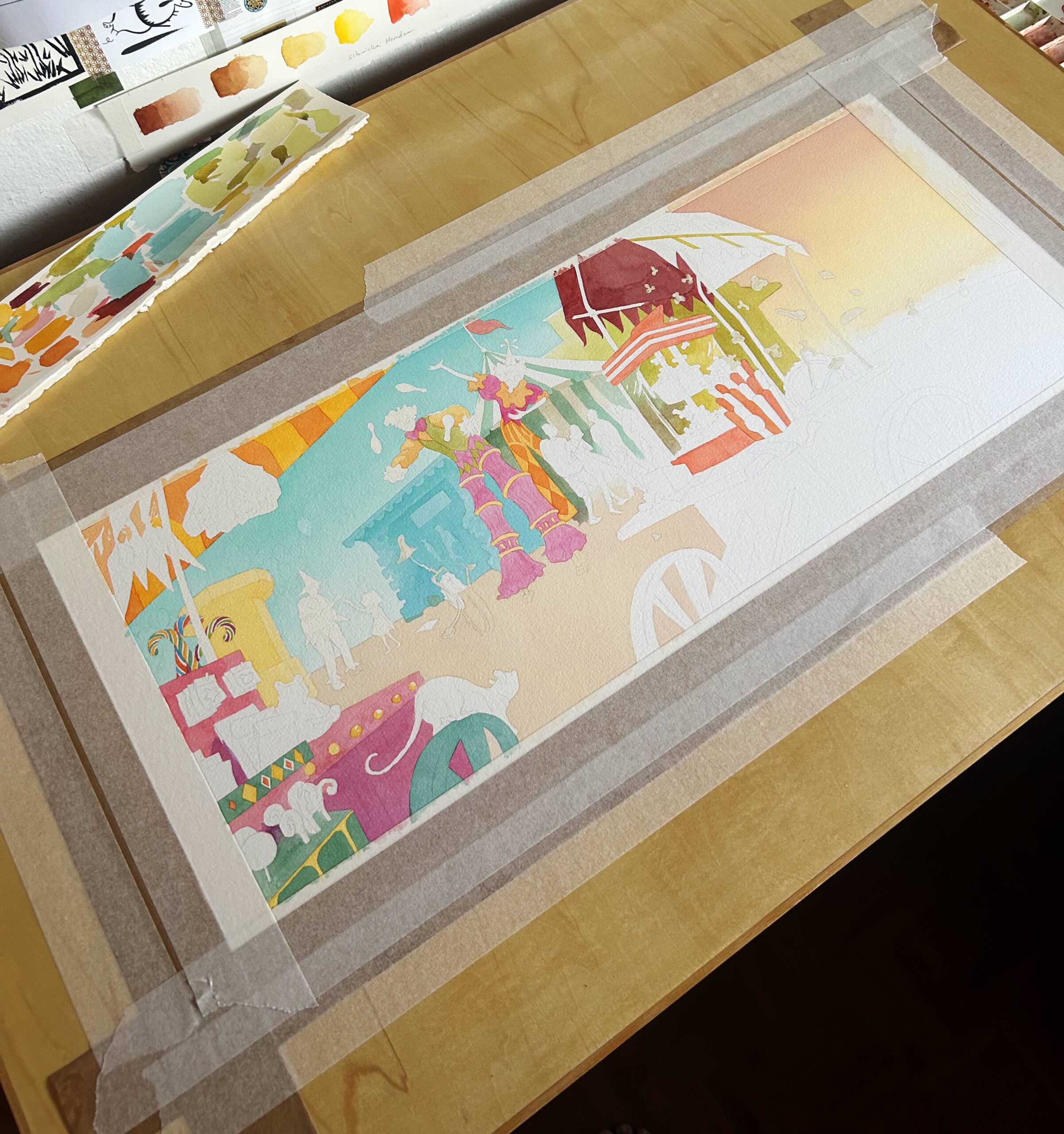
Priscilla: Well, alongside picture book work I also do commercial projects. (e.g. advertising campaigns, packaging design, installations and such) Because commercial projects tend to demand more digital illustration for its adaptability, I made a conscious decision to use traditional media as much as possible in my picture book work. The sheer length of a book also gives me that runway to really develop a mastery over my traditional technical skills. These past 2 years in particular, I really wanted to hone in my watercolour skills so I challenged myself to work exclusively in watercolour for this book. I also knew that the themes in this book were going to be a little heavier, so a softer medium like watercolour could help balance the visual tone. 

The narrative also takes place outdoors with the sky acting as an indicator of time and the grass as the story’s stage, a setting that is naturally suited to this medium. The fluidity of watercolour and how it creates unexpected textural bleeds also helped to ground the visuals in a physical tactility which I felt made the story feel intimate, concrete and atmospheric at the same time. And that’s the thing about watercolours that I love, you can use it in a way that’s highly controlled and clean, creating firm and well-defined spaces, but you can also take a looser approach with it and create softer, more expressive ‘suggestions’ of space and form. This was really fun to play with when I was painting large patches of grass against the urban structures. 

Early Colour Studies of light and time of day.
Process of one of the pages. The first layer of grass
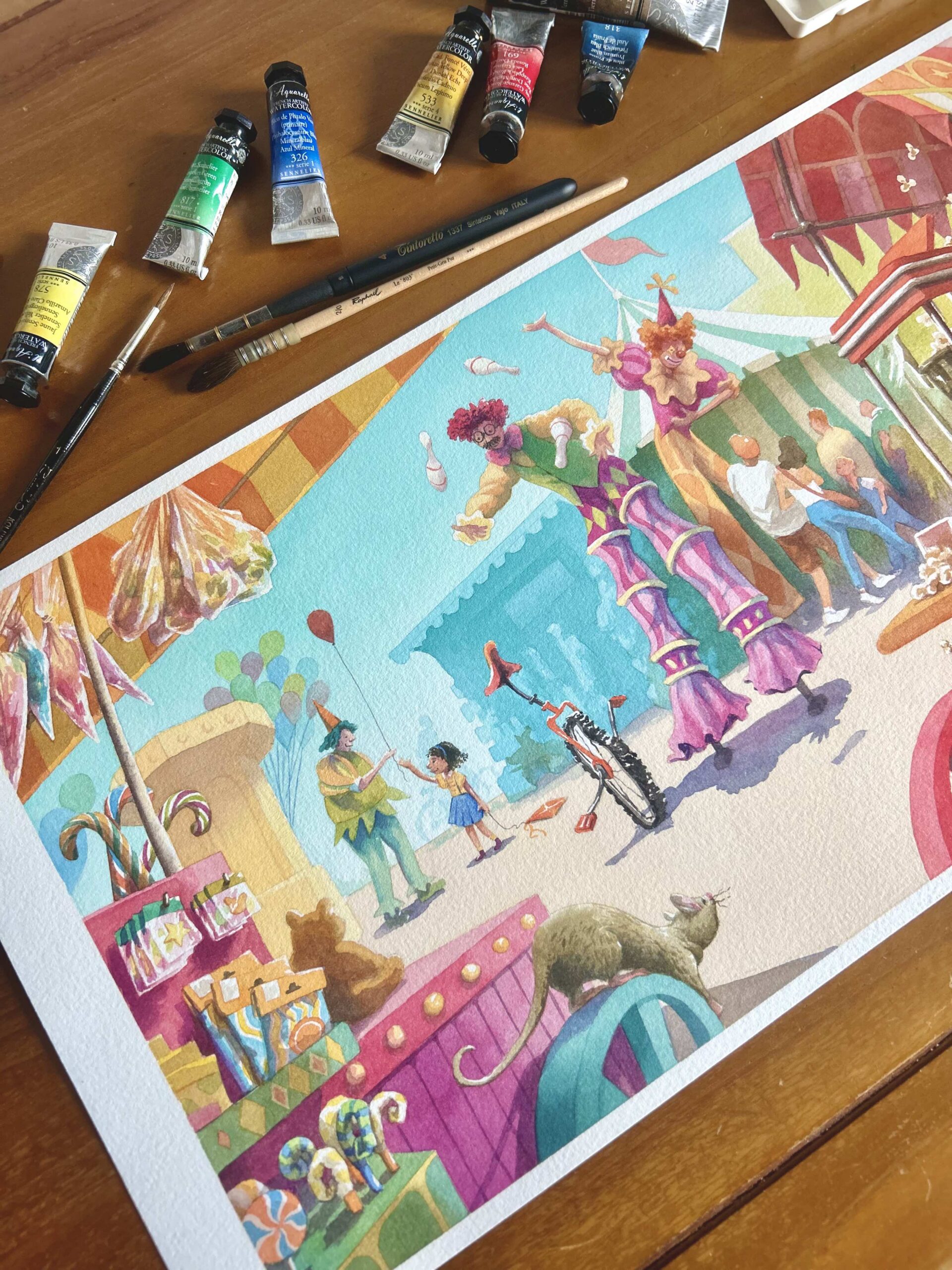
Painting Process of the Title Page, predominantly using Sennelier Watercolour paints. For some pigments, I substituted with other brands. Brushes used were mainly from Tintoretto and Raphael. 

Throughout the process of painting the book’s interiors, I particularly fell in love with Sennelier’s watercolour paints which use honey in their formula. It’s what allowed me to get those controlled washes in the sky because their paints are gloriously translucent. For scenes like the carnival page, the translucent nature of their watercolours also allowed me to gradually build up depth and form without my colours becoming muddy. It’s working in those opposing modes of being super technical with how I control the watercolour and then giving in to its inherent nature to do as it pleases (I can’t always control how it blooms and bleeds) that I find stimulating. It’s a bit like life I suppose; The art of learning how to grip and release. 

Painting grass – layering soft layers and playing with crisp brush work against soft blooms of watercolour. Tubes of paint are from Sennelier’s honey-based watercolours
Painting process, building watercolour layers to create depth in an urban scene.
Finished page using Sennelier honey-based watercolour paints which allowed me to build layers of colour without losing vibrancy. Brushes – Tintoretto and Raphael

BB: I love all of this. Of course, one of the many challenges of a book like THE VICIOUS CYCLE is that you’re making the metaphorical tangible and… I mean, how precisely do you do that? You had so many choices to make. The location and setting, the width of the rut, the look of the cycle, etc. Tell us a little bit about some of the trial and error you went through in getting the look of this story correct. 

Priscilla: It’s funny you mentioned the width of the rut because I’m pretty sure it varies slightly throughout the book. But I feel that’s where creative license is intentionally exercised to fit the scene and focus the visuals on delivering an emotional punch. (within reason of course) 

So typically when I receive a manuscript, the first thing I do is a breakdown of the locations, characters and key visual cues that have been explicitly written in. In this case, the location was simply “a rut” so it was the ultimate open-ended playground for me as an illustrator. 

I started by just drawing a generic circular ditch in the ground and imagining what it would be like to sit in that space. Very quickly you get a sense of claustrophobia and the views become very limited to small patches of sky. It’s akin to being in a personal prison. But then came the question: Where is this ditch located? 

It had to be in some sort of park (because of the size of the rut and the fact that it could be deepened through erosion). The park also had to allow people to come and go because of how the characters meet. In Singapore, which is where I was born and raised (and currently reside in), the coastal park is where most locals go to bike and engage in other leisure activities. It’s near where I live and where I go for runs occasionally. This quite naturally became the location of the rut that I envisioned. Scattered along my local coastal park are these bike rental shops which also became a reference point and helped me logicize why a unicycle would be in that place to begin with. It would’ve been too out of the ordinary to have a unicycle simply exist in the middle of a park for no reason. With an opening line like “Nobody rode the unicycle”, it also implied that there were other alternatives. So even though Kyle didn’t write anything about a bike rental shop, I sort of created that backstory on my own. 

The carnival and the seaside town however, were more of a reference to St Kilda in Melbourne Australia, which I had visited before. I needed the area outside of the rut to offer a contrast (something urban). It had to be a place that could amplify the secluded nature of the rut, and be overwhelming in both a good and a bad way. It couldn’t just be a dense city that was intimidating because we needed to root for the unicycle to get out of its rut. It had to have enough of an appeal that made it desirable, yet have qualities that could warrant the need to retreat to the rut occasionally. The carnival felt like an ideal setting for that. It was colourful and lively but inherently a very exaggerated setting. (Not to mention, there are clowns. Not my favourite). 

The bike rental at East Coast Park in Singapore
St. Kilda in Melbourne, Australia

Whilst I’m developing the visuals for the location, I would also develop the characters. With Emily, I decided to give her a shape that would complement the unicycle. The unicycle had a distinct silhouette, (bottom heavy and narrow top) which I couldn’t alter heavily. So I designed Emily to be top heavy, balancing on skinny legs, so that when she stood beside the unicycle, they would fit like a jigsaw. It wasn’t just poetic, it was more efficient from a compositional standpoint too. (The space in the rut was tight. Things needed to fit). Since the unicycle had a round base, I gave Emily a square frame too. That just helped with overall readability of the scene especially in wider shots. It’s a strategy often applied in film and animation. 

After this initial breakdown, I begin to analyse character relationships, arcs and themes present in the story. Are there visual symbols I can weave into the design of the space, characters or objects? In my opinion, this is one of the most crucial aspects of the partnership between words and images, often associated with picture books. My job as an illustrator isn’t to simply demonstrate the author’s words, but to add dimension or expand on its meaning. 

I did this by adding the red Kite and red Balloon. In Kyle’s manuscript, when Emily is introduced, it states “she liked to run”. The thought of drawing a girl running in full exercise gear didn’t seem to fit, so I needed to give her a reason to like running. I grew up flying kites at my local coastal park so that immediately became an option. The kite would also be useful for wide angle scenes where the characters were tiny as it would act as a position indicator of sorts, (kind of like the characters in the Sims computer game) so the reader could find Emily and the unicycle in the scene. 

But more importantly I also needed some sort of symbol that could represent that bond between the unicycle and Emily. When Emily was with the unicycle in the rut, it meant that she couldn’t run and her kite couldn’t fly. It was a sacrifice, but one that Emily was willing to make in order to keep the unicycle company. Likewise, given that the unicycle’s view was restricted to a small patch of sky once he was deep enough in the hole, kites and birds became the only exciting things to enter its view from time to time. It was an indicator of the outside world and an incentive to break out of that personal prison. 

Many of the kite shapes you see in this book were inspired by Wau Kites (traditional Malaysian kites from the state of Kelantan. It was the kite I remember flying with my family when I was a kid) 

“She (Emily) liked to run” 

At the point in the narrative where Emily has developed a routine of just being with the unicycle, it worries that she would one day leave. But as Kyle writes “she never did”. Initially I had the idea that Emily would remove one of the streamers on her kite and attach it to the unicycle as a visual representation of this promise. But it just didn’t work with the scene and I also felt that a similar moment should be reserved for after the unicycle had found its own courage. That’s where the balloon came in. It became a symbol of friendship and also the unicycle’s own courage to venture out of the rut for the first time. Again, none of this was in the manuscript. But I think it’s a testament to Kyle’s writing that I could so easily draw these themes and connections out from his story. His openness to let me interpret the text also allowed me to explore all these visual concepts freely.

Sketch of rejected idea – tying a kite streamer onto the unicycle
The Balloon as a symbol of friendship and courage

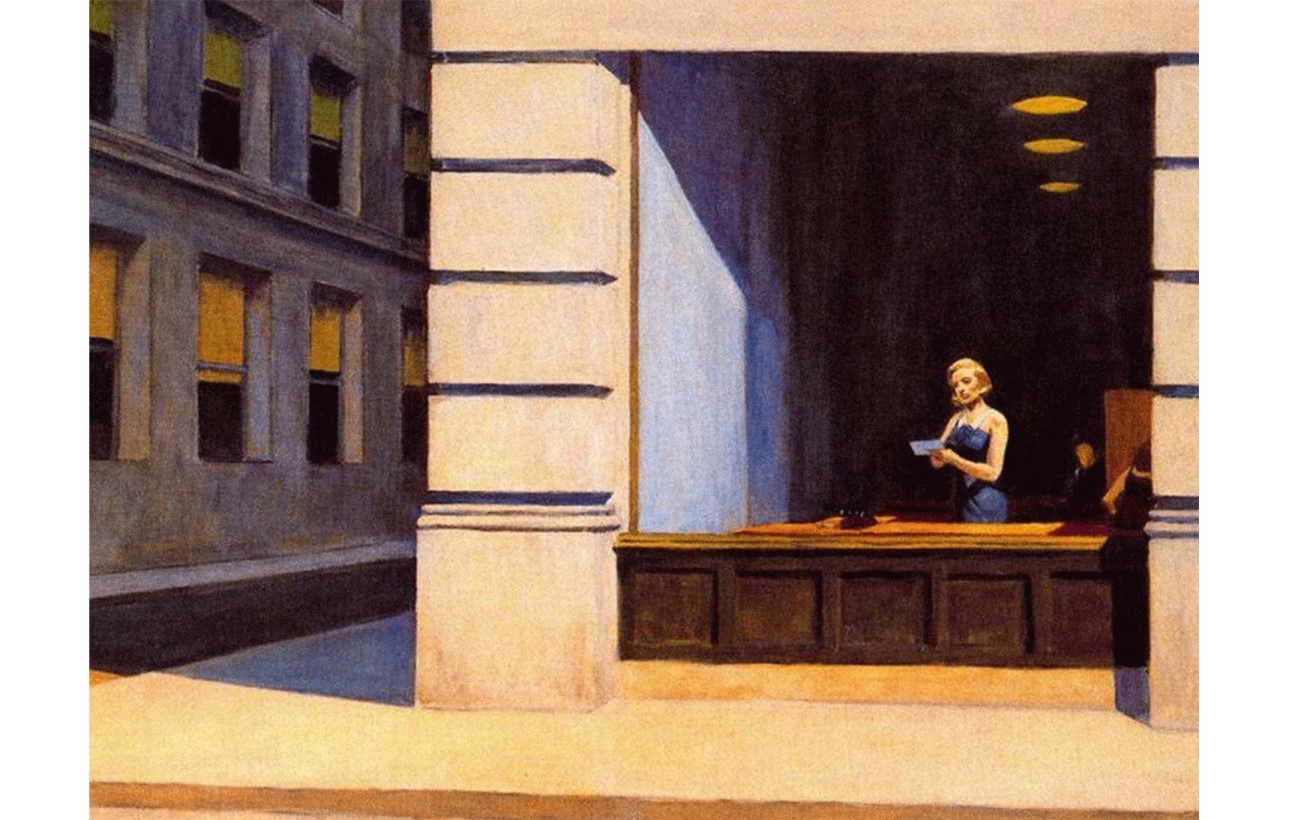
Lastly, when it came to storyboarding the book, I knew I wanted to leverage composition to drive in this notion of isolation and loneliness. I looked at a lot of Edward Hopper’s paintings depicting urban isolation and started to play with the idea of frames.

Edward Hopper’s Office in a Small City (1953)
Edward Hopper’s New York Office (1962)

The rut in itself was a sort of frame that boxed the unicycle into a confined mental space. So as the unicycle began to go deeper and deeper into the hole, the book transitioned from full spreads or page bleeds to the use of sequential panels. We exit the “panel mode” when we view aerial shots of both Emily and the unicycle or when the unicycle exits for the first time. Even at the second last page when the unicycle retreats back to its rut, the panel frame makes a brief return. These are decisions which ultimately amplify the mood of the scene and deliver the message without saying anything.

Early thumbnail sketches where I explore various viewpoints and panel shapes
The final thumbnails developed into clearer sketches. When we enter the rut with the unicycle, the panel frames the scene. However, characters like Emily can exit the frame. 

BB: For those of us who love process, this is absolutely captivating. I want to bring the conversation back over to Kyle for a moment, though. Kyle, one of the things I’ve always admired about you is the sheer range of your writing. Having done everything from a board book on up, one never really knows what you’ll get up to next. Even so, this book feels significantly different from your other titles, and I’d like you to delve a little into why that is.

Kyle: I get bored really easily. I think that’s the root of my creativity. And also I think it’s my contribution to that old saw about how great art comes from pain, unresolved issues, struggle, etc (is this true? argue about it in the comments!). Whether that’s true or not–or if the answer is “well sometimes but it’s complicated”–mine comes from boredom, which, according to one of my former therapists, probably stems from a deeper, rockier patch of internal ground. And this was me wanting to stretch in another way. I was a huge Shel Silverstein fan as a kid, especially “The Giving Tree” and his poems that were silly but also melancholy–because, oh man was that me as a kid, silly and melancholy. I wanted to write something in that vein, something that felt like those classics that so imprinted on me as a youth. And what better way to do that than with a very emotional unicycle, and a little girl with healthy boundaries?

BB: I’m also interested in how this manuscript changed over time. Working with your editor, or even just initially by yourself, what were the changes that were made to this story that made the final product so different from the initial draft? 

Kyle: I went back to look at the first drafts, and it didn’t change very much from first to last–it’s always nice when that happens. For some reason I had thought that it was initially about a unicycle and a bicycle (and so talked about that at the MacKids preview last week; I’m sorry for perjuring myself, it was an honest mistake). Originally Emily was riding a bicycle, but we decided to have her be on her feet to avoid the bigger questions of if the bicycle was also sentient and what that meant for the broader world. But in that one night when I wrote it all out in my head, the whole story was pretty much there. It just needed to be refined. Would that they were all so easy!

BB: Okay, in a bit of a twist this next question for Priscilla actually comes from Kyle

Kyle: I’d love to know how you thought about showing the unicycle’s emotions; it’s so clear what it’s feeling in every scene, despite not having a face or even eyes. I’m so curious about what decisions and thought processes went into that!

Priscilla: Haha that was a fun one to figure out! Actually, I am sometimes more comfortable with animating the inanimate than humans. Since I was a kid I’ve had this habit of assigning personalities to various non-living objects. Like a mug could look lonely to me or a piece of furniture would look eager in my eyes (I’d have to sit in it to satisfy it). So when I got the manuscript for the Vicious Cycle, the idea of a sentient unicycle didn’t really strike me as odd, in fact its anatomy lent itself to humanistic expression quite easily. It had a “head” (seat), “neck” and “shoulders” (the frame that attaches the seat to the wheel) and 2 potential “arms” (the pedals). Plenty to work with. 

The trick was to walk the fine line between the overly stylized and real. Visually, this book couldn’t be too cartoony. There was a seriousness and weight to the subject matter and story which needed to be paired with illustrations that held a degree of reality and sophistication. That meant absolutely no googly eyes or overly cartoony features. 

People often think that emotions are only expressed in the face. But actually, the posture and gesture of a character can say a lot more. If a person walks into a room, even if their face is hidden or I’m standing at a distance, I can sense their state of mind by the manner in which they walk. So even within those self-imposed design parameters, I could still take liberties with how stiff or flexible the unicycle’s material was, and ultimately say a lot with its posture. How clean, erratic or angular my brush lines were, could also affect the overall silhouette and gesture of the unicycle, so I also had that to work with. 

An angry unicycle with more angular features

BUT, I would say that’s only half of the equation. The other half of the unicycle’s emotions lies in how you construct everything else around it. Take for example this page: 

The text just read “It wasn’t very fun”. How do you show that a unicycle is not fun? You don’t just have it standing in isolation looking sulky. You do it by making everything else around it seem really fun so that in comparison it seems dull. It’s all about relative perception at the end of the day. And this doesn’t just apply to how we process visuals but even in our daily states of mind. Comparison is the thief of joy and sometimes it’s hard to reframe our own perceptions of reality and expectations. It’s what starts the vicious cycle which works in different ways. Even if we lived in a perpetual mental state of excitement, that would soon become a boring baseline and it would take something even more thrilling to bring back excitement to our lives. I employed this general philosophy throughout the whole book. 

BB: Looking at all of this, is there anything you tried in the book that didn’t work and that you’re sad that you had to lose? 

Priscilla: So somehow when I was storyboarding this book, I miscounted the number of pages I was allowed to work with and ended up with an additional spread. This was at the point where the unicycle ventures out of its rut for the first time and explores the town with Emily. I did an aerial view sketch of the town because I wanted kids to linger on that page, exploring the town much like the characters did in the story. Unfortunately, this page didn’t really fit visually either, but thankfully I found an alternative solution. It wasn’t a waste because the sketch ultimately helped me mentally understand this fictitious space better too. 

BB: Cool. And, okay, this one is just going to sound obvious, but I have to ask it. Kyle, was the cycle always a unicycle in your manuscript or did you originally envision it as a bicycle? What does a unicycle offer that a bike cannot? 

Kyle: What does a unicycle offer that a bike cannot??! Betsy. Have you seen a unicycle. They are so silly to look at! Imagine being dignified on a unicycle!! Bicycles could never.

Though, I also think that part of my vision of an emotional wheeled thing came from Calvin and Hobbes, and the angry bicycle therein.

BB: Ah. Most excellent answer indeed. All right, finally, what else are you two working on these days? What’s next for you? 

Kyle: Well, I can FINALLY tell the world that next year I have a book coming out with none other than Rick Riordan, the second in the new Camp Half-Blood series featuring Harper, trans son of Aphrodite. I’m also working on a picture book draft that’s your classic buddy comedy with a mismatched friendship pair–think Frog and Toad, Piggie and Gerald, but a little stranger. I’m also in the midst of my first adult project, the collected work of a now deceased trans woman writer, co-edited with the brilliant Morgan M Page, and once those two last things are turned in I’m going to keep plugging away at this draft of something which is in a new genre for me, new style, new everything because, again, I get bored real easy. So keep your fingers crossed for that one!

Priscilla: I have another book coming out next year (2027). It’s called When You Return a Book to the Library. It’s written by Megan Wagner Lloyd and published under Candlewick Press. This one was really really intense to paint but it’s an exciting ride. I am also working on 2 other picture books (I’m still in the sketching phase). Outside of publishing, I also have a few commercial projects lined up, so look out for those! I will usually share them on my social media page. 🙂


Whew!

Oh my goodness. Such thought, time, care, and attention went into the answers to these questions that I feel we all sat through a seminar on picture book creation. You get your money’s worth with these two, no question. All the more reason to mark on your calendars the date of October 6th when The Vicious Cycle will finally hit shelves. I literally cannot thank Kyle and Priscilla enough for everything they pored into this discussion. And as I’m sure you know, when the creators are this passionate about a project, the end produce is gangbusters.

Filed Under: Interviews Tagged With: author interviews, illustrator interviews, Kyle Lukoff, picture book author interviews, Priscilla Tey

Publisher Preview: North South (Fall 2026)

June 2, 2026 by Betsy Bird 1 Comment

I am happy to report that we are continuing our sneak peeks into the smaller publishers out there. This month (as well as last) we’re zeroing in on some of the Fall releases. In May we explored books from Transit Editions and a slew of little guys represented by Publishers Spotlight. Today we turn our attention to North South Books. They’re the English-language imprint of the Swiss-based NordSüd Verlag and they’ve been around for about 30 years now. Typically, they publish picture books from all over the world, and today’s selection is a marvelous example of precisely that:


The Fantastic Floating Mr. Finnegan
Written and illustrated by Rebecca Gugger and Simon Röthlisberger
Translated from German by Tammi Reichel

ISBN: 9780735846319
On sale: September 22, 2026

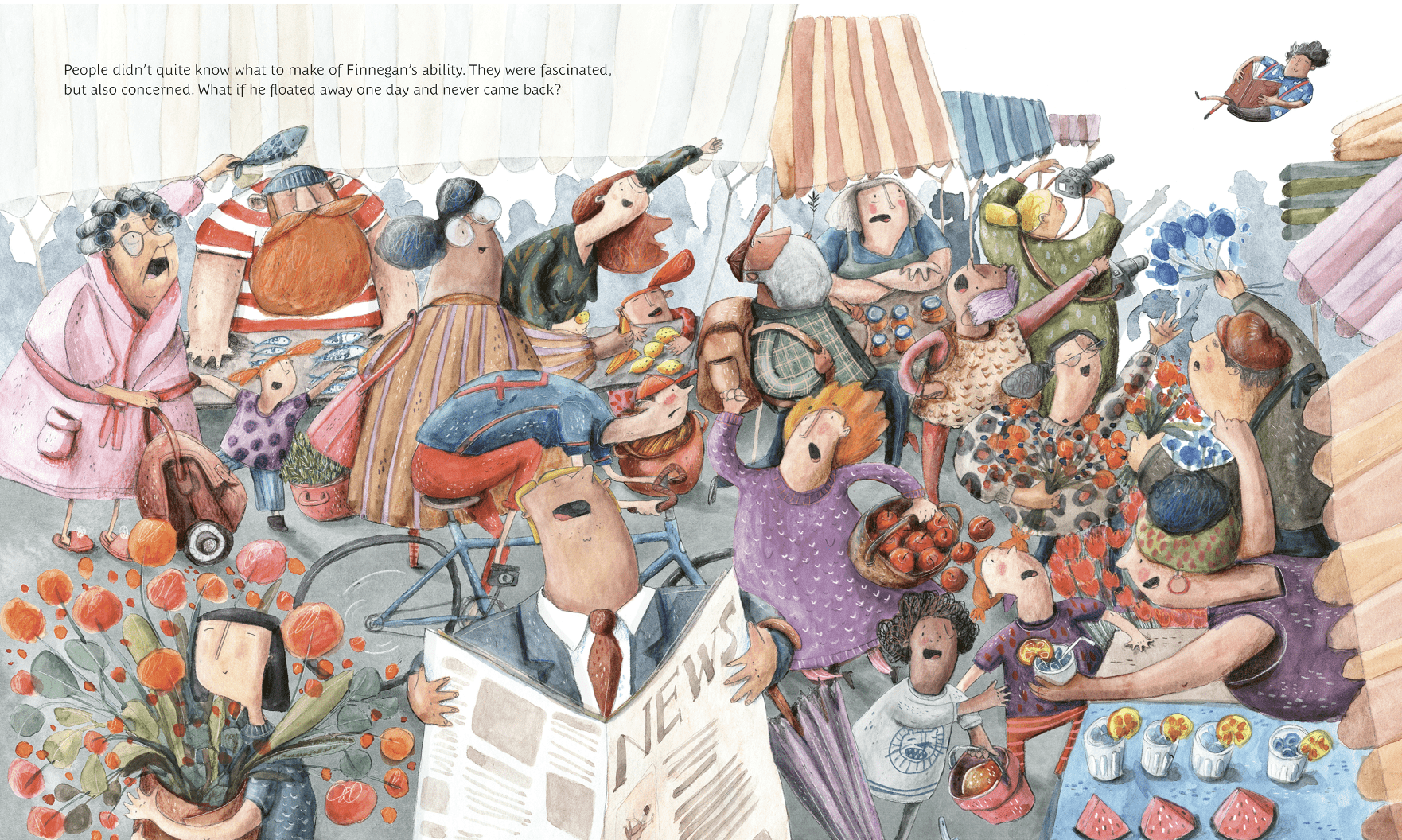
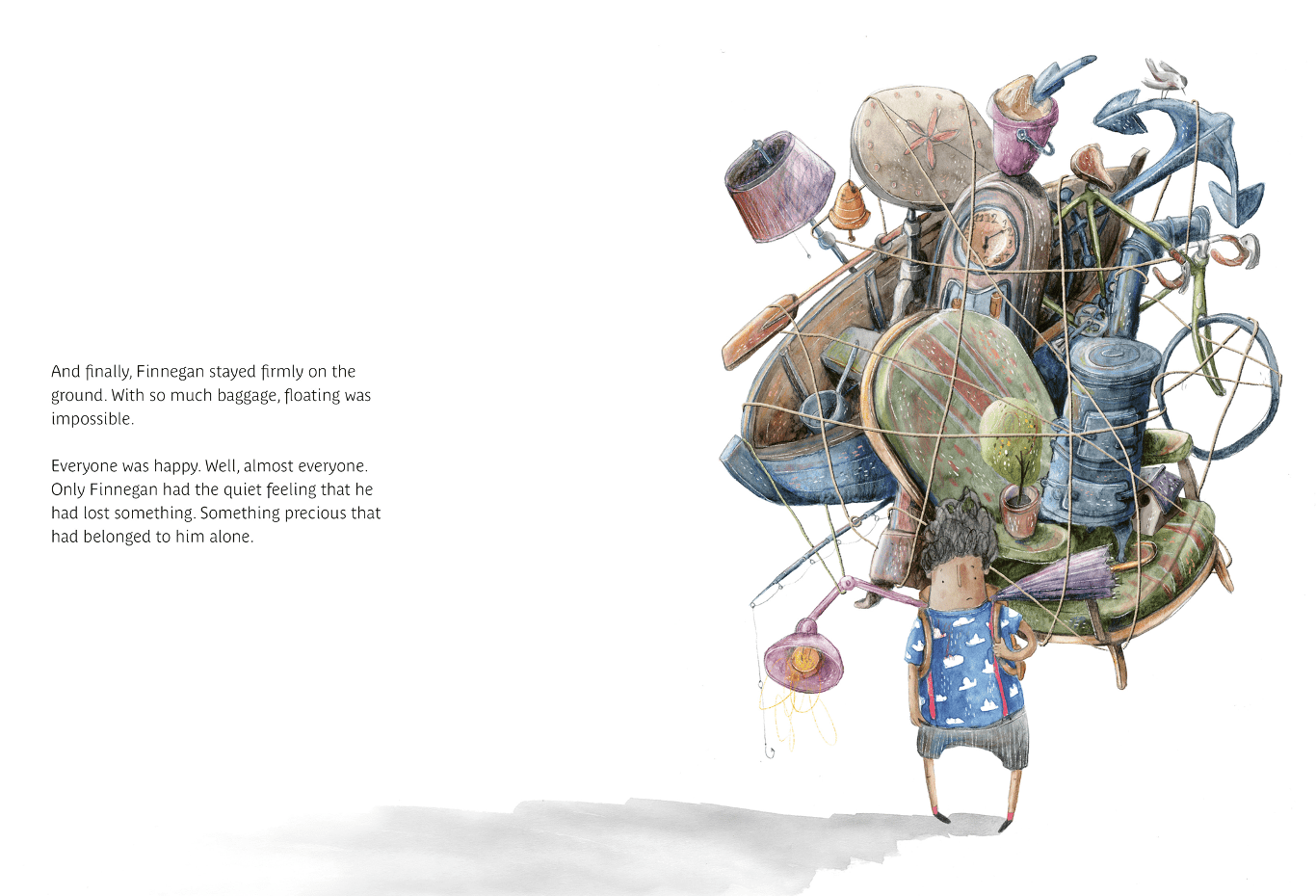
The duo behind this particular book may sound vaguely familiar to you. If so, you may be familiar with their previous book A Chest Full of Words. Our hero in this latest book is Finnegan, a kid who has a tendency to float through the air. And because his friends and family and neighbors are a bit worried about his floating off, they literally weigh him down. After some time, that ability to float just sort of goes away naturally. Then, one day, a little girl floats by and helps Finnegan unlock his memories. He rediscovers his talent in his old age. Clearly, the book is about the boundaries we set for ourselves (or are set upon us). I also happen to think it’s a rather nice gift to anyone who has just retired. We have graduation picture books, right? What about retirement picture books? An excellent companion to the movie Up!


Click! Snap! Picture That!
Written by Dieter Böge
Illustrated by Benjamin Gottwald
Translated from German by David Henry Wilson

ISBN: 9780735846388
On sale: September 8, 2026

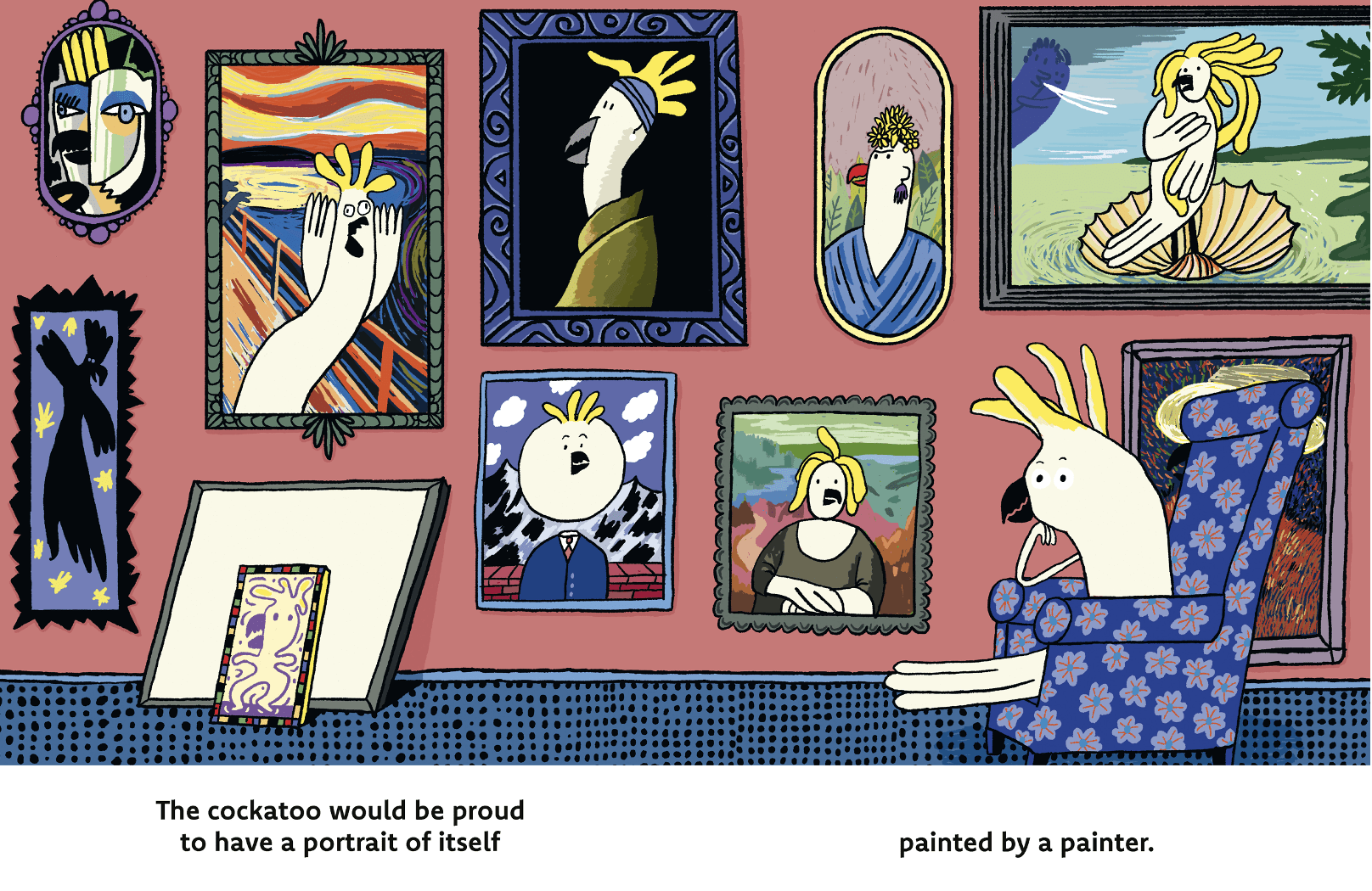
It’s not like kids in the past didn’t have parents that snapped photos of them all the time, but I think we can all agree that it was nothing like the clicking that happens today. As such, it makes sense to have a picture book speak to this, our uniquely hyperconnected era. Sure, we ask our kids to pose for pictures constantly, but how do our kids actually want themselves to be seen? Brought to you by the guy who illustrated Buzz Boom Bang! (remember that head scratcher of a unique book?) this explores the pictures we take of ourselves and others and what those pictures say about how we represent ourselves. If you had a Frida Kahlo cockatoo on your picture book bingo card for 2026, cross it off now. Even better? There will be activity pages online (this title won’t ask kids to draw in the book) and it simultaneously publishes in Spanish!!


My Animalitos
A Frida Kahlo Story

Written by Monica Brown
Illustrated by John Parra

ISBN:  9780735846401
On sale: September 1, 2026

And speaking of Frida Kahlo…

So last year I had the great opportunity to participate in a librarian and educator weekend at Milkwood. While there, I had the chance to listen to the people there discuss the creators and books that they use on the regular with their classes. On woman spoke at length about her love of the books of John Parra. To her mind, one can never have enough of his work. I hope she soon becomes aware of the upcoming release of this little book then. Think of it, not a sa straight biography, but more of a proto bio. My Animalitos is constructed for little ones who aren’t quite ready for a full picture book biography yet. Instead, it’s meant to immerse kids in her world early. And yes, in case you are wondering, there will most certainly be a bilingual Spanish edition simultaneously published as well.


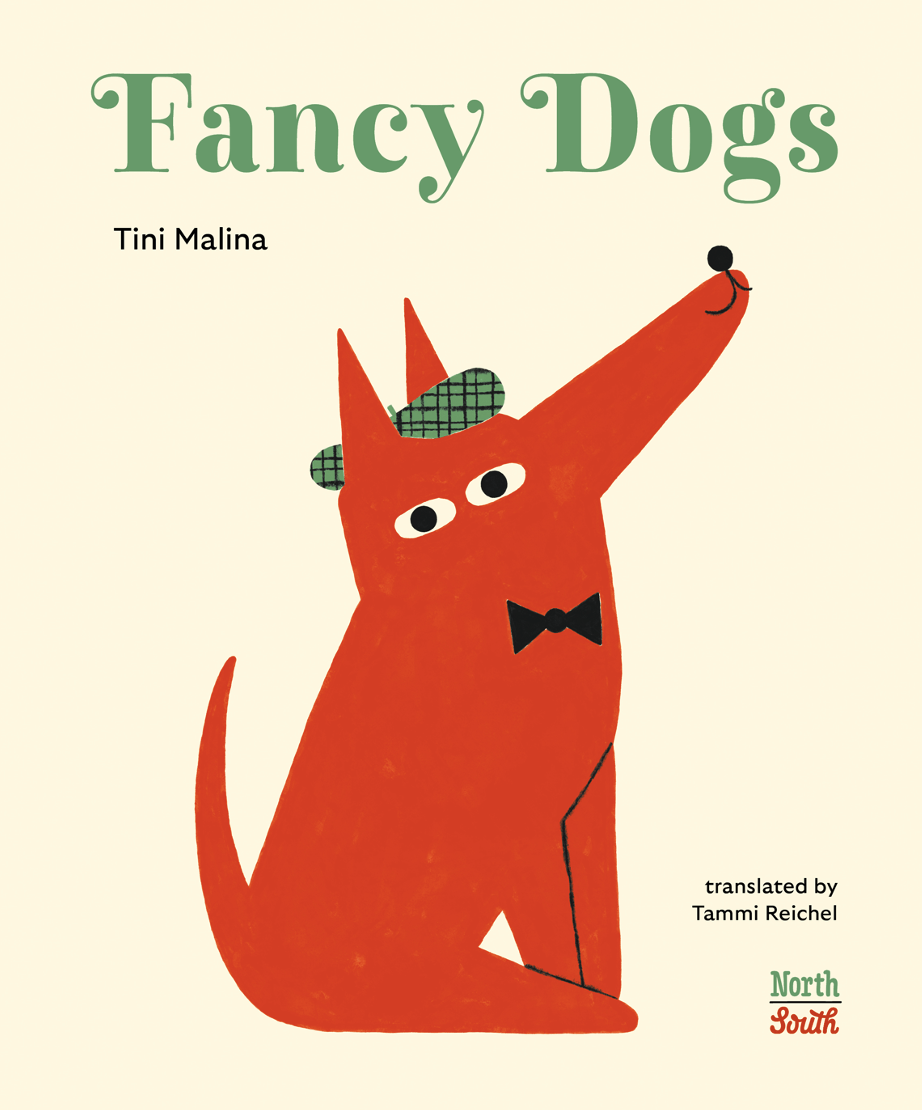
Fancy Dogs
Written and illustrated by Tini Malina
Translated from German by Tammi Reichel

ISBN: 9780735846272
On sale: October 6, 2026

Awww. Look at that l’il guy. That’s how you do a cover and title, folks. Now what, precisely, is it that makes a dog “fancy”? This book (one of the MANY German titles on the list today) covers dogs dressed up in everything from sequined threads (good translation) to fancy beds. That said, they’re still dogs and they’re still gonna do gross dog stuff. In a sense, the book examines how we imagine our dogs vs. how they really behave. Last year Tini Malina created a picture book called Selma about a spider that didn’t play by its everyone else’s artistic rules. This year she has this book and, in Fall of 2027, we’re gonna get a chance to see its companion book: Sassy Cats. Ah-yup! Need I even mention that this is to be simultaneously published in Spanish?


The Night
By Mariachiara Di Giorgio 

ISBN: 9780735846289
On sale: September 15, 2026

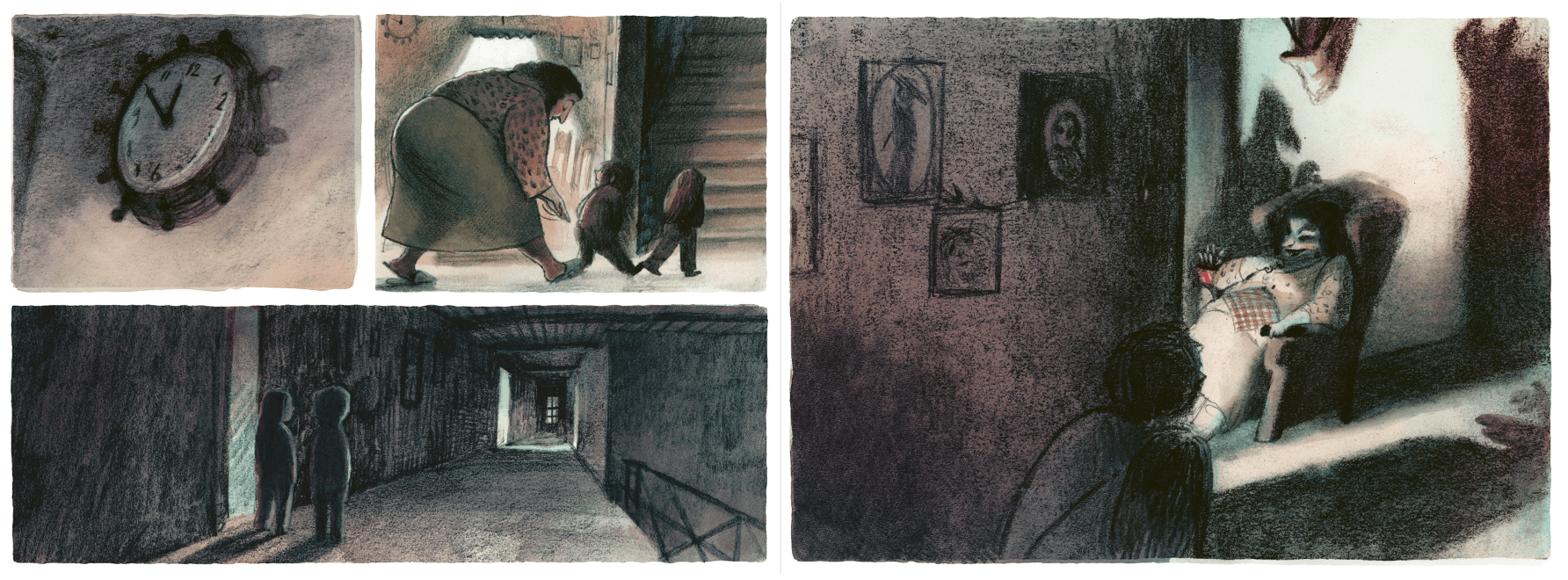
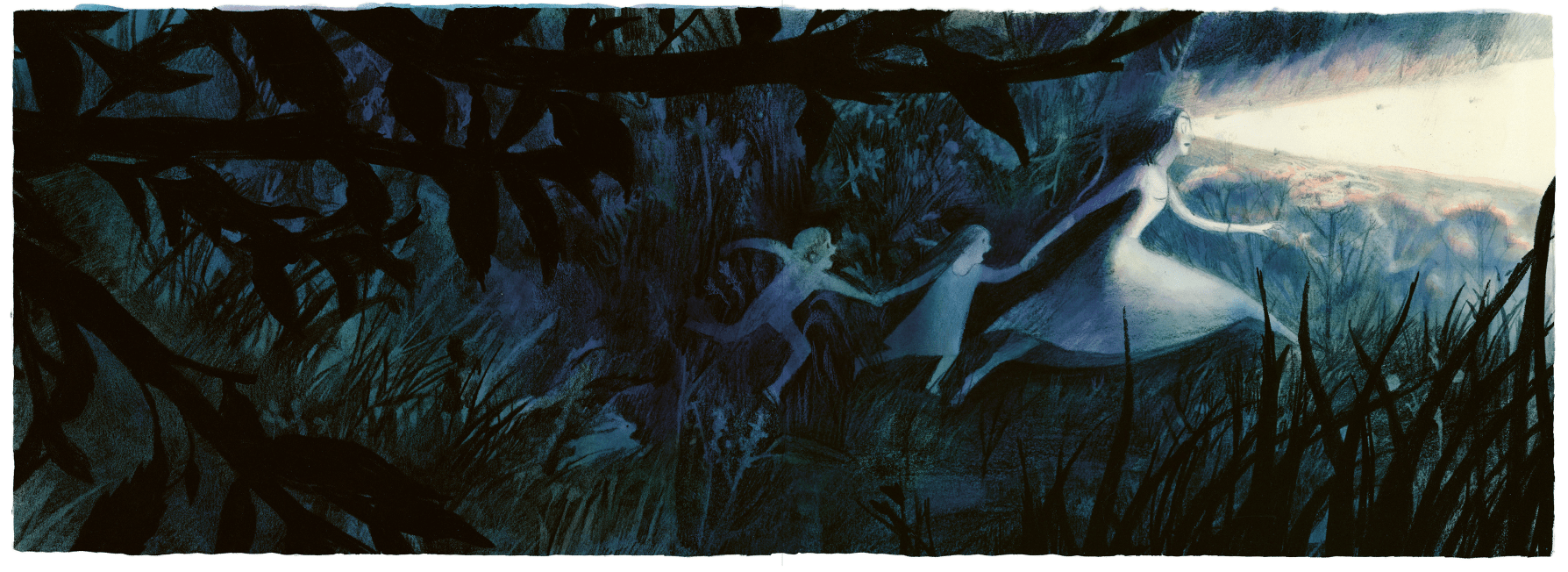
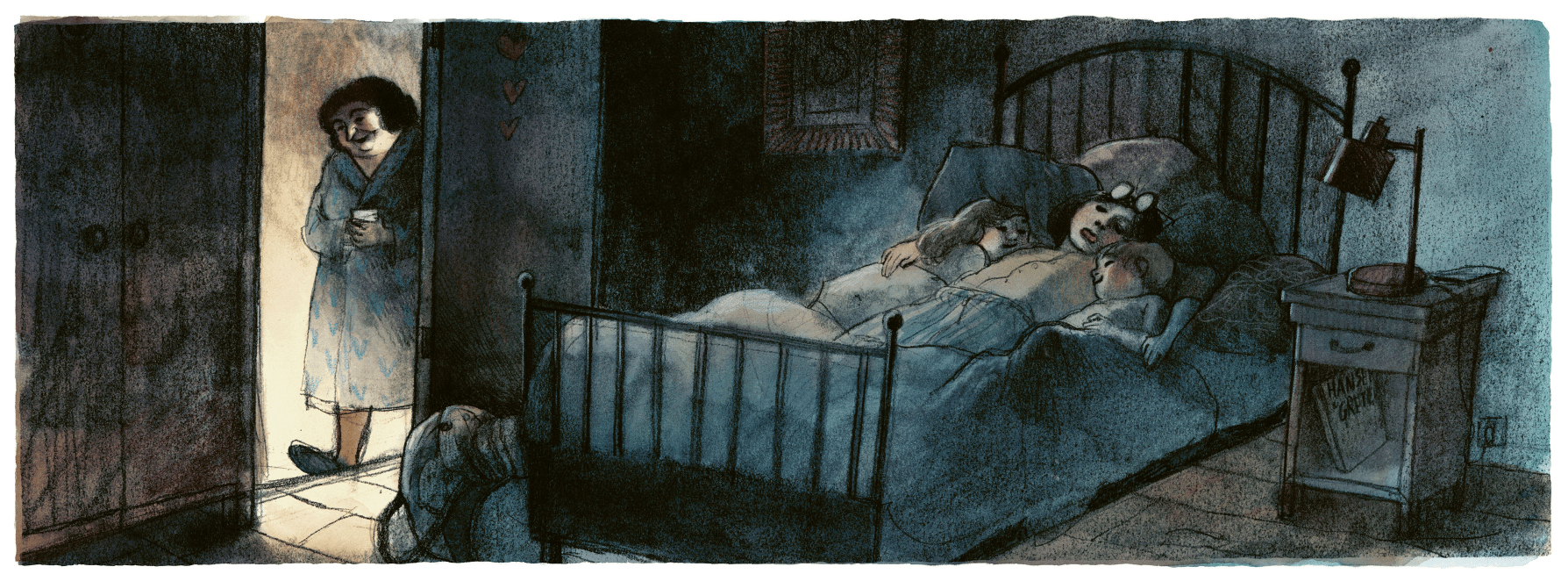
My “Folktale” radar was ah-quivering as I looked through this one, and for good reason. Now the last time I saw the art of Mariachiara Di Giorgio  she had illustrated Gideon Sterer’s rather fantastic picture book The Midnight Fair! Now she turns her sights on this wordless story. Two children excape their somewhat witchy babysitter and run into the woods. There they meet a mysterious woman who may or may not be magical. This is a tale about how a single night can change how you see things (and maybe that babysitter isn’t so scary after all).


A Trophy for the Jackal
Written and illustrated by Jule Wellerdiek
Translated from German by Elisabeth Lauffer

ISBN: 9780735846296
On sale: September 8, 2026

Looks like somebody’s giving coyotes everywhere a run for their money when it comes to trickster canines. Now I have a very serious question for you: If you could award yourself a trophy for anything, what would it be? In this book, Jackal really wants to win the best hairstyle competition. When he loses, he decides the best solution is to make himself an award for “Best Jackal”. Only thing is, soon everyone is awarding themselves, just like Jackal did, and he doesn’t feel special anymore. Sometimes it’s difficult to suffer a loss, but this contemporary fable takes a humorous take on sportsmanship and losing gracefully.


Come Out and Play!
Written and illustrated by Nina Wehrle
Translated from German by Alisha Niehaus Berger

ISBN: 9780735846371
On sale: October 6, 2026

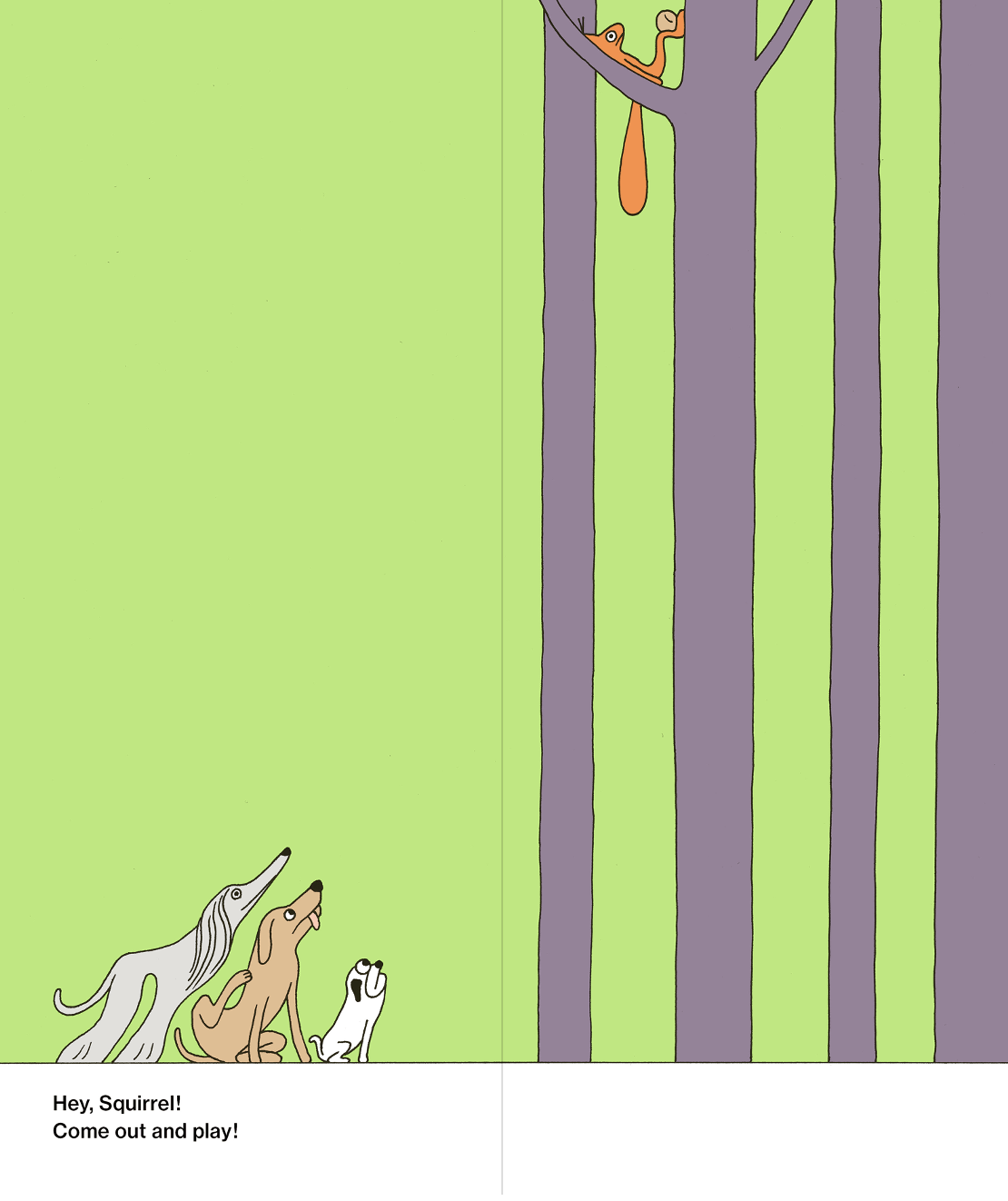
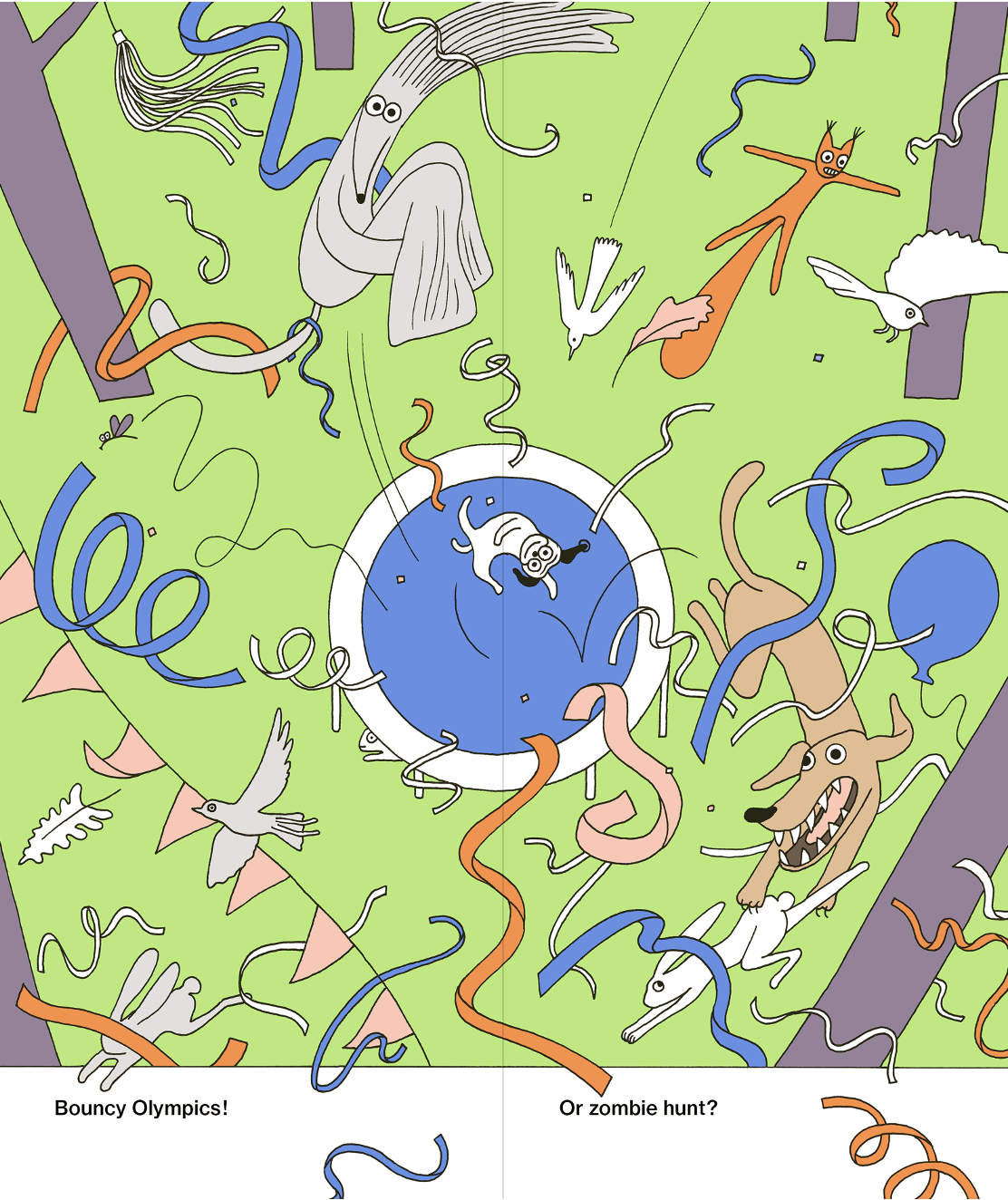
More doggos for the dog lovers out there! Three dogs find a squirrel in the forest. They urge it to come out and play… or else. Everything gets sillier with each page turn (gotta love any book that contains the term “Fart disco”). Wehrle is a debut talent in the U.S. and clearly one to watch. I mean check out that linework and how the book itself, physically, sports a really tall and skinny format to match the trees in the forest. It should display well on shelves, this one.


Same Time, Next Week?
Written and illustrated by Marlene Droop
Translated from German by Alisha Niehaus Berger

ISBN: 9780735846302
On sale: September 15, 2026

I was just speaking yesterday with a friend about how difficult it is to come up with a good title for a book you’ve written. Clearly this isn’t a problem for Marlene Droop. The original title of this book is Nächste Woche gleiche Zeit, and even I (with my limited German) can see that it’s a straight translation. For that matter, this book also turns out to be the 2025 Winner of the Bologna Children‘s Bookfair Illustrators Exhibition. No small potatoes, that. In this tale, four friends escape the city, determined to see the stars. Alligator, giraffe, sheep, and turtle set off with nature on their minds, but a lot of things delay their trip. Fortunately they make it just in time. Clearly, it’s the journey and not the destination that’s important in this tale.


Cinderella
Written by the Brothers Grimm
Illustrated by Bernadette Watts

ISBN:  9780735846432
On sale: September 22, 2026

A Watts take on a classic story. If you seek a Disney-esque Cinderella picture book for your children, I would tell you to eschew this particular title. Based on the original 1812 Grimm Brothers’ text, this story might be most familiar to kids obsessed with the Cinderella story they saw in Into the Woods. We’re talking gowns that come from a hazelnut tree and a good deal of foot hacking! Alas, no eyeballs get plucked out during the wedding (aw) but the title more than makes up for that with Watts’s beautiful art. This book was originally published in the 1970s and this edition was able to use all the original scans of the art for the reprint. Fascinating!

That’s all for today, but stay tuned for more previews to come. The Fall is full of surprises and this is just a taste.

Filed Under: Publisher Previews Tagged With: NorthSouth Books, publisher previews

Fuse 8 n’ Kate: Hairy Maclary from Donaldson’s Dairy by Lynley Dodd

June 1, 2026 by Betsy Bird 1 Comment

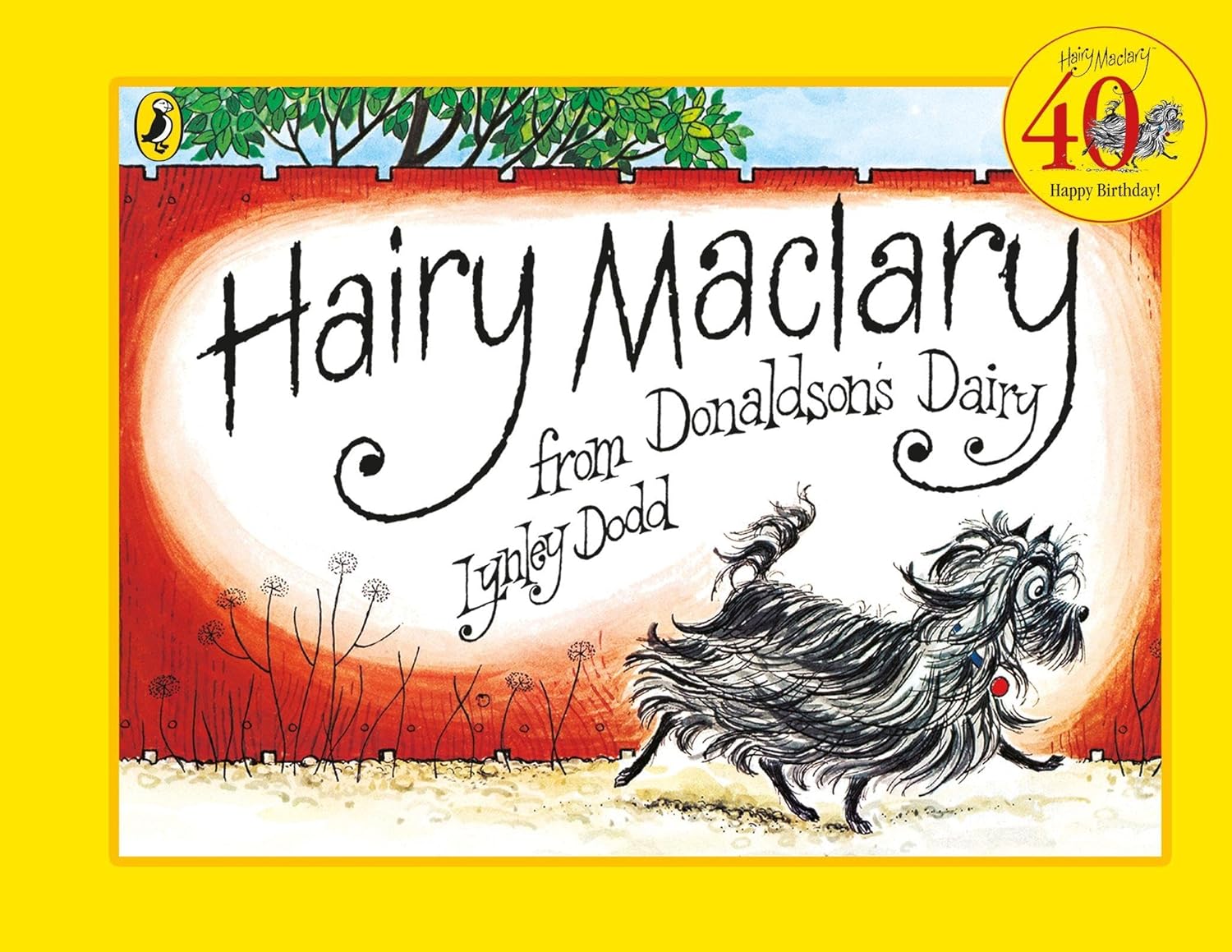
“I don’t hate these rhymes!” It’s a return to New Zealand today with a local classic that has long eluded our particular podcast. Will the little black terrier with the catchy name capture the hearts and minds of these Yankee sisters or will his charms elude them entirely? On this episode we discuss books that you have to practice reading aloud, why people give their dogs last names, and whether these specific doggy butts in this book were sanitized for American audiences.

Listen to the whole show here on Soundcloud or download it through iTunes, Stitcher, Spotify, Google Play, PlayerFM, Audible, Amazon Music, or your preferred method of podcast selection.

Show Notes:

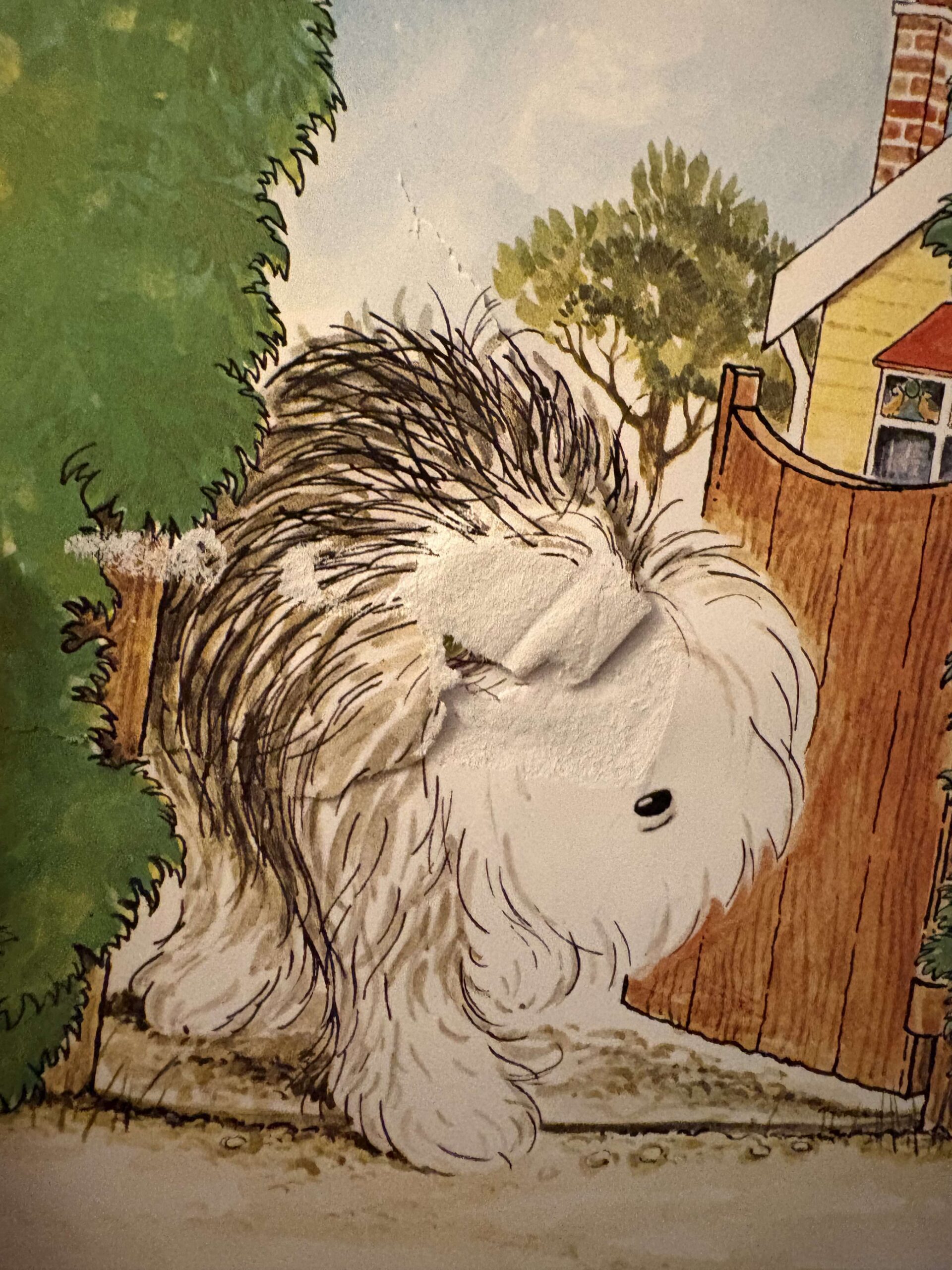
If you had to describe a dog that was best described as a “bundle of hay”, what dog would you think of? In this case, it appears to be an English sheepdog. We would argue that it should have been named, “Muffin McClure … all covered in fur.”

Behold the glory that is Schnitzel von Krumm! We have questions as to the origins of his family’s money, but not too many questions, of course…

Scarface Claw (who somehow got away with the name in spite of the fact that there are no scars on his face) is a dead ringer for Lucifer from Disney’s animated Cinderella film. Note too how the ears are made to look like little devil horn ears.

New Zealand we implore you! Is this how this image appears in your editions? Or were the anuses removed from the Americans? Confirmation one way or another, if you would be so good.

How big is this book in New Zealand? So big that someone made a mock version called (I kid you not) Zombie McCrombie from an Overturned Kombi.

And for the most in-depth analysis of this text, I refer you over to Slap Happy Larry’s post on the self-same topic.

Kate Recommends: The Ghost Women by Jennifer Murphy

Betsy Recommends: Dog Day Afternoon (1975)

Filed Under: Fuse 8 n' Kate Tagged With: Fuse 8 n' Kate, Hairy Maclary from Donaldson's Dairy, Lynley Dodd

Don’t Skip the Thought: A Rialto Discussion with Kate Milford

May 28, 2026 by Betsy Bird 1 Comment

*sigh*

Folks… I dunno. It can be disheartening being in this business sometimes. Folks disparaging the whole of children’s literature in the 21st century isn’t anything new, but can I be honest? When people say that the bulk of books for kids today aren’t great, they’re (a) wrong and (b) just talking about fictional picture books. Which is more than a little limiting. Let me tell you a story then.

In the year 2010 (so, a good sixteen years ago) I encountered a middle grade novel called The Boneshaker. It was a little confusing at the time because in that exact same year there was an adult fantasy novel by Cherie Priest by the same name (ya can’t copyright a name!). I read the book and at the tender age of 32 I was utterly and wholly charmed by it. To me, it seemed to glean the best elements of my favorite author of all time, Ray Bradbury. There was, in fact, more than a hint of Something Wicked This Way Comes to the entire affair. What I didn’t realize at the time was that its author, Kate Milford, was using that book to spread her wings. And spread them she did.

Now the year is 2026. There have been 10 books in the Roamers series, the latest of which is Rialto. Released last month, Rialto is one of those books that you could read completely on its own without any knowledge of the others in this series. But if I’m going to be honest, the kid that reads at least a couple of these books together is going to get SO much out of this latest. That said, check out this boss description:

“Ivy and Dahlia Vicar know this summer’s trip to visit friends in Rialto, Missouri, is going to be different from their usual family vacations.

Twelve-year-old Dahlia, an artist who lives with anxiety, is looking forward to something new. Rialto, after all, has its own abandoned theme park! But mystery-loving, fourteen-year-old Ivy is struggling with how to be the right kind of big sister to Dahlia, and longs for the way things—especially vacations—were when they were younger.

In Rialto, it quickly becomes clear that this vacation will also be different in totally unexpected ways. For one thing, the town stands in the middle of an improbable forest that, according to local legend, swallowed it overnight decades before. Then there are Dahlia’s even more improbable sightings of impossible creatures—a giraffe with antlers and a leopard with wings. And there’s their new friend Remy, whose family inherited the house they’re all staying in from an aunt who left bequests for local friends that Remy must personally distribute.

When he enlists Ivy and Dahlia to help deliver these gifts, they find themselves drawn into a mystery going back to the time when Rialto Park was still open. And it begins to seem that, if they are going to help Remy solve it, they will have to find a way to believe in magic.

Themes of friendship, family, mental health, and resilience are expertly woven through this magical, richly imagined story of two sisters and an enigmatic town that transforms everyone who visits it. “

It has cover art from Arch Apolar. It has interior illustrations by James Firnhaber. And it has me asking Kate Milford a whole slew of questions here today.


BB: Kate! Such a thrill to talk to you about RIALTO today! It’s been a day or two since we were last in this world. How did you come up with the idea of an abandoned theme park? What is RIALTO’S origin story?

Kate Milford

Kate Milford: So delightful to talk to you, too! And it has been a while, hasn’t it? It’s funny, actually, I went back and looked, and my earliest notes about this book were from like 2010, and they were about an entirely different potential story. About the only thing that remained in the final version of that original idea was a link to Venice, though even that link is different in the story that eventually became RIALTO. That early idea didn’t have the theme park angle, and that was so early in my career that I also hadn’t envisioned it as being connected to the other books (or book, really, because at that point the only thing I’d published was THE BONESHAKER). I am trying to remember now at what point I changed everything. When Clarion bought RIALTO, I was using a synopsis that reflected some of the earlier idea, but now it also had a sort of kitschy roadside attraction–not quite an amusement park, but like Rialto Park it was abandoned, and also, in its way, magical. (My love of oddball roadside attractions goes just about as deep as my love of amusement parks.)

The thing I love about theme parks in particular is (this will just shock you) the worldbuilding. A really well-made theme park makes you believe that the place you’re experiencing just might continue out of sight behind every door and window, even if intellectually you know some of them are just set dressing and the rest lead to break rooms and electrical closets and what-have-you. Ever since the days of family trips to Disneyworld when I was a kid, I was always as much in love with the detailed theming as I was with the actual rides, and the Haunted Mansion and Pirates of the Caribbean were formative bits of visual storytelling for me, from the entrances and queues all the way through the exits. They made me want to go home and write stories, and all these years later, I’m sure my early love of immersive, narrative places like theme parks contributed to how I wound up approaching my own invented worlds. And of course, abandoned–or just never finished–theme parks are out there to be found all over the world. When I was a kid in Maryland, we used to go to a very old, very handmade theme park called The Enchanted Forest that was maybe half an hour from my grandparents’ house in Catonsville. (Every time I smell the bromine that most parks use to treat their water, it takes me right back there.) It opened in the fifties and closed in the nineties, and for a long time it just sat abandoned off Route 40. Some of its structures have been relocated to a local petting zoo, and the rest of the grounds have been redeveloped, but in my heart it is still there, off of Route 40, hidden in the woods, waiting to be found and explored and still smelling of bromine. I wrote it into Nagspeake as the abandoned Fantasytowne all the way back in the days when Nagspeake was just the tourism website, and then I wrote it into THE THIEF KNOT, but I think The Enchanted Forest has been waiting in the back of my mind for a time to find its way into the Roaming World in a bigger way.

BB: One of these days you and I are going to hang out again and I’ll get to delve into your opinions on The House on the Rock. Meanwhile, I could be wrong, but I really feel that part of what makes RIALTO so satisfying is that while a kid may read it without seeing your previous books, it also offers explanations for Roamer-related mysteries that have come up in your other titles. Was that always the plan? Because I feel like this book, though it stands entirely on its own, clarifies your world building in new and exciting ways.  

Kate: It was definitely not always the plan. As I was typing up my answer to your previous question, I stopped and looked up the actual synopsis I sent my editor before she acquired RIALTO, and I can tell you that at the time the proposal sold, I still hadn’t planned to connect it to the Roaming World at all. But in the interim between selling it and actually sitting down to write it, I had started thinking about Rialto–both the park and the town–as a place with a deep connection to the Roamers. I had just finished THE RACONTEUR’S COMMONPLACE BOOK, and if I hadn’t written that one first, I don’t think RIALTO would have followed the trajectory it did. I have no idea what it would’ve been.

But then came the challenge of that standalone aspect you mentioned. My editor and I were in complete agreement that we really wanted new readers to be able to comfortably start their journey into the Roaming World here, but also to be able to put the book down after finishing it and feel completely satisfied even if it’s the only one they read. This is where the theme park aspect maybe does extra duty, because a theme park invites you to step temporarily into a potentially unfamiliar make-believe world, enter with a sense of wonder and play, and feel welcome in it even if you don’t know the underlying IP by heart. (For instance, I have somehow never watched even one of the Avatar movies, but I still think Pandora at Disneyworld is amazeballs.) And, of course, Ivy and Dahlia are complete outsiders when they arrive in Rialto. They step into the Roaming World the same way I entered the Enchanted Forest as a kid. 

And theme parks are amusement parks with unifying stories, so I started thinking about what stories a theme park built by Roamers would tell. What ‘lands’ would it contain? What kinds of rides and attractions and gift shops would it have? (Thought experiment: how would a Roamer with an extended lifespan design a land themed to the future?) And why would Roamers build a theme park at all? The hard thing was making choices about what to keep and what to leave out while also making sure the park had elements that didn’t come from the earlier books, hinting at an even larger world to explore. So threading that needle was…interesting. But endlessly fun. All of those questions kind of guided how I tried to tie it back to the wider Roaming World. 

BB: Adam Gidwitz said of the book that it was, “One of the most sensitive, realistic explorations of mental health I’ve yet seen in a middle grade novel.” He’s absolutely correct about that. You’ve managed to meld an incredible story of one sibling coming to terms with another sibling’s mental health issues and coping strategies WITH fantasy, seamlessly. Tell us a bit about why this aspect of the book was important for you to include.

Kate: I live with general anxiety and occasional depression and panic attacks and racing thoughts and social anxiety and all the things Dahlia lives with, though I didn’t really start to get help for it until well into adulthood. I think sometimes with mental health stories, there is a focus on a moment of realization or crisis and getting through that–and those stories are very important–but for most of those of us who deal with spicy brain chemistry, there’s a lifetime of maintenance afterward, which comes with its own constant adjustments and challenges. I wanted to show that after part, including the family dynamic, which for Ivy and Dahlia is complicated by the more mundane changes they’re experiencing as they become teenagers. I’m also the oldest of four, living in a different state from my younger siblings and their families, so I have had the experience over and over of trying to figure out how to be the big sister they need at any given time–including, I am sure, at plenty of times when they did not actually need me to big-sister them in any way. Each of them was part of the writing of this book, whether for emotional support, memory-dredging, or general ranting as I tried to get to the final version. 

BB: Along these same lines, in terms of mental health, what experts did you talk to? What research did you do? And how did you approach writing about it?

Kate: Oh boy, I had to totally change my approach midway through, at the point where I handed my first draft to my primary expert reader. Originally, I had put poor Dahlia through a slightly more traumatic mental-health crisis, and the events of the book took place about a year afterward. But my goal was always to show a family that was (at the time of the story) in a relatively healthy maintenance state, so I could focus on the girls’ struggles to find equilibrium and a more comfortable relationship with each other not only because of mental health stuff, but also because relationships between siblings change organically all the time. And let me tell you, that draft was messy in about five distinct ways, but I did think I had the mental health aspects kind of sorted out. And then I handed it to an old-school psychiatrist for a read. (I say old school because Dr. Pressman does both prescribing and talk therapy/counseling, which is relatively uncommon these days.) He called me when he’d finished and very gently asked, “Tell me what your intent with this book is.” And my stomach just sank down to my toes, because I understood that whatever I thought I’d done, I’d gotten something very wrong. He listened to my explanation of what I wanted the book to be, then said, “Okay, but this family that you’ve written is not actually handling things well.” Thus began my first major rewrite, which focused on changing Dahlia’s mental health challenges so that they align more closely with what I experience, and giving both Dahlia and her family better tools for managing them than I had been using myself. Those better tools include breathing techniques and progressive muscle relaxation, but Dr. Pressman also reiterated something that I gave to Dahlia and her dad as a kind of mantra: Don’t skip the thought. I am not a doctor and I’m paraphrasing, but the idea is that when we anxiety-havers have big or out-of-control feelings, there’s often a thought that sparked the emotion. It’s easy to focus on the feeling and try to will it away, but that doesn’t work as well as trying to identify the actual thought behind the emotion and (if possible) deciding if it’s a rational worry that needs to be addressed or not. For instance, in THE THIEF KNOT, Marzana uses a tactic of relying on a trusted friend to tell her whether she did okay in a social situation and then trying to just let go of the worry. I wrote that because it’s what I did myself for a long time, but what would work better would be for Marzana (and me) to figure out what we’re really worried will happen in those situations. Are we worried we might commit a faux pas of some kind? Are we afraid people generally don’t like us and wish we weren’t there at all? Are we just anxious because it takes us more energy to be social, in which case maybe it’s okay to take some time out? So Dahlia tries to remember not to skip the thought when she feels her anxiety climbing (and so do I). Dr. Pressman read every revision after that, and we worked pretty closely at every stage on all of the mental health elements, which include not just Dahlia’s experiences and tools but those of her father, who also experiences anxiety, and those of the family at large, even if Ivy is sometimes a reluctant participant. 

BB: Lord, I love every part of that. Okay. Back to the plotting of the book itself, though, one thing that legitimately shocked me about this title was the fact that the parents are massively involved in the overarching mystery. Generally speaking, usually in a book like this, the kids would ditch the parents, tell them nothing, be exposed to the magic, and that would be that. Here, our heroes come in ignorant and as they learn, their parents (albeit a little later) learn too. This goes against a LOT of children’s fantasy novels. Why did you opt to go in that direction?

Kate: That’s a good question. For one thing, I like to write families, and writing this family took a lot of care and attention. There would’ve been a bit of a cognitive dissonance if the Vicars, who work so hard to be supportive of both daughters and their changing relationship and to foster such open communication, could not be trusted with the truth about the adventure their kids are having, and did not come around to believing in what the girls are experiencing. Also, I didn’t want there to be any question of disbelief that might bleed over into the mental health conversations–at the very beginning, when she spots the antlered giraffe, Dahlia worries momentarily that her family will think she’s seeing things as a result of her brain chemistry, and her dad shuts that concern down right away. Plus, while obviously there’s room in fantasy for all sorts, in general I like the challenge of figuring out how to let the kids have their adventures without having to do it in spite of the adults. And really, what would be my excuse for shunting the parents off or having them be obstructive in this book? Given the actual events of the story, the parents almost have to be on board from the moment they agree to let the kids deliver the departed Jess’s bequests. 

Something I thought about while trying to thread the needle of parents being involved in the adventure was: How would I behave as an adult if I discovered that an actual, real and necessary thing could only be done by a kid of my acquaintance? In a real-world setting I find that idea very upsetting, but if it happened that I truly didn’t have the ability to take the burden or prevent the necessity of doing the thing, I might at least have the ability to provide an assist. That’s how I tried to approach most of the adults in RIALTO. And then, of course, in fantasy specifically, there’s also the problem of bringing the adults around to believing in magic if you let them in on the secrets, and that was harder in this book than it was in, say, GREENGLASS HOUSE. You can have them believe because something undeniable happens to convince them, or you can try to get to a point where they believe in the kids who believe. I tried to go the latter route with RIALTO. 

BB: Plus you manage to include so many incredible and cool details in the book. That’s much of its allure. At the same time, I suspect that there was even more you wish you could have included. What was some element or description or place that either didn’t make the final version or that you wish you could have talked more about on the page?

Kate: Oof. So many options! At one point there was a pair of grave markers that frequently disappeared from the cemetery island and turned up in random places around town because the tricksters whose stones they were liked to prank the groundskeeper. I’ll probably save those for something down the line. That draft also leaned harder into the idea that ‘home’ is a complicated concept that changes over time, sometimes uncomfortably so, and that many Roamers have a complicated relationship with the idea of home in general, because they are so often inclined to…well, roam. I had a bit of dialogue where the speaker contrasts the founders of Rialto with another character who wanders through the Roaming World looking for a place to create his particular (and much less friendly) idea of home. (“He could’ve taken that coal and built a hearth around it, but instead…”) 

BB: I suspect I may know who that is. Finally, can we expect to return to the Roamer world again in the future? What else are you working on these days? What’s next?

Kate: Next is actually three entirely unrelated projects, before we return to the Roaming World! I have the first installment of SEACRITTERS, my pirate capybara graphic novel series with Lucy Bellwood, coming out in early 2027; then there’s the first installment of THE BELIEVERS, a WW2 magic series inspired by Disney’s Bedknobs and Broomsticks movie adaptation (I think also 2027); there’s GRAVELLE MANOR, a haunted house book that I hope will be the beginning of another extended universe. And then at last we return to the Roaming World, though we’re still deciding on the specific project (because of course I have seven or eight potential stories I’d like to tell next). I’d love to know what part of that world readers would most love to return to. (And thank you for having me, Betsy!)  


Kate Milford, folks! Ain’t she a peach? The book Rialto is a heckuva ride as well. Certainly worth your time. It’s on shelves now, so be sure to grab yourself a copy when when you have a chance. Special thanks to Kate for taking SO much time to answer these questions (I owe you one, buddy) and to John Sellers and the team behind Harper Collins Children’s Books for helping to put this all together.

Filed Under: Best Books, Best Books of 2026, Interviews Tagged With: author interviews, Best Books of 2026, interviews, Kate Milford

  • Page 1
  • Page 2
  • Page 3
  • Interim pages omitted …
  • Page 1050
  • Go to Next Page »

Primary Sidebar