• Skip to primary navigation
  • Skip to main content
  • Skip to primary sidebar
  • About/Contact
  • Fusenews
  • Reviews
  • Librarian Previews
  • Best Books
    • Top 100
    • Best Books of 2022
    • Best Books of 2021
    • Best Books of 2020
    • Best Books of 2019
    • Best Books of 2018
    • Best Books of 2017
    • Best Books of 2016
    • Best Books of 2015
    • Best Books of 2014
    • Best Books of 2013
  • Fuse 8 n’ Kate
  • Videos
  • Press Release Fun

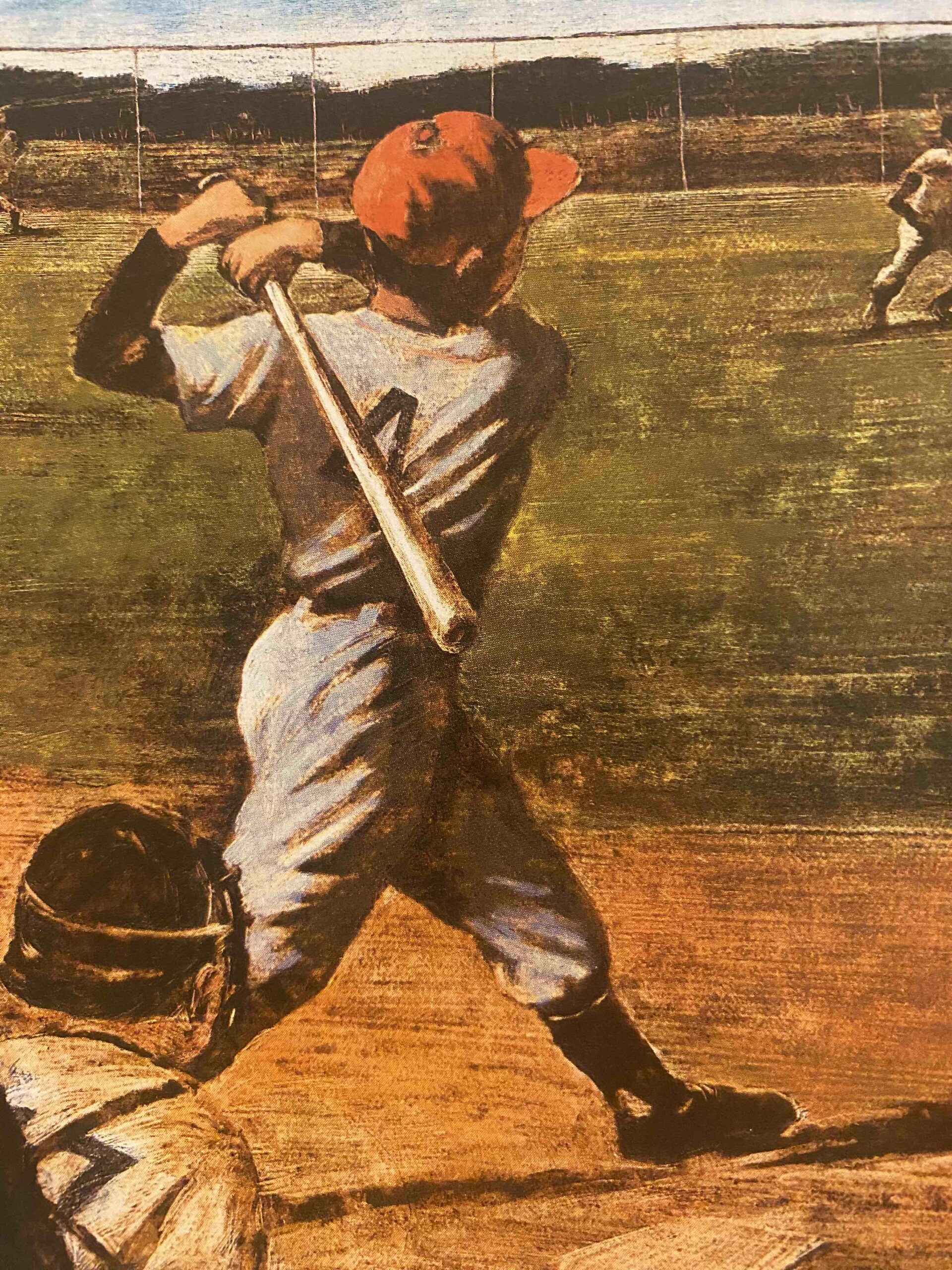
Fuse 8 n’ Kate: Baseball Saved Us by Ken Mochizuki, ill. Dom Lee

Fuse 8 n’ Kate: Baseball Saved Us by Ken Mochizuki, ill. Dom Lee

May 12, 2025 by Betsy Bird

It’s baseball season! And baby season! Kate just had a baby (her first!!) almost a month early, and now that she has her brain back in order, we’re finally tackling a baseball picture book for the spring. Now to my mind, this book is significant because as a work of historical fiction, it was one of the first picture book titles for kids to address a moment in American history that we, as a nation, are not proud of. I apologize for not grabbing the 25th anniversary edition of this book for Kate (supposedly it has more notes included) but this one worked out just fine. It’s definitely our first Lee & Low book, and spurred on many other books for kids to come. Stay tuned for copious recommendations for readalikes to this title.

Listen to the whole show here on Soundcloud or download it through iTunes, Stitcher, Spotify, Google Play, PlayerFM, Audible, Amazon Music, or your preferred method of podcast selection.

Show Notes:

The nonfiction book for kids that I allude to about photographers who shot images of the Japanese internment camps was Seen and Unseen by Betsy Partridge

My Lost Freedom by George Takai truly is my favorite Japanese Internment Camp picture book for kids, as I say.

Be sure to check out the book Barbed Wire Baseball by Marissa Moss, for a nonfiction version of this book.

And also please find Take Me Out to the Yakyu, if you want to compare and contrast American and Japanese baseball games today.

Honestly, I’m very pleased that the awful man with the glasses and the gun in the guardhouse, though the text says he gives our hero the thumbs up when he wins the championship game, is never depicted doing so. Instead you see this:

I love how the illustrator references the image of the man in the guardhouse with this boy with the glasses on the mound just with these images.

Please Note: Kate would like more baseball socks in books, please.
Kate Recommends: Special K Brownie Batter Protein Bars

Betsy Recommends: The film Hitchcock

Filed Under: Fuse 8 n' Kate Tagged With: Baseball Saved Us, Dom Lee, Fuse 8 n' Kate, Ken Mochizuki

Review of the Day: Fireworks by Matthew Burgess, ill. Cátia Chien

May 9, 2025 by Betsy Bird

Fireworks
By Matthew Burgess
Illustrated by Cátia Chien
Clarion (an imprint of Harper Collins)
$19.99
ISBN: 9780063216723
Ages 3-6
On shelves May 13th

Think for a moment of the great picture books about summer. The ones that capture it perfectly. It’s such a subjective thing to ask. For me, the ideal summer picture books are the ones I read as a kid. Books like Ultra-Violet Catastrophe by Margaret Mahy or even A Time to Keep by Tasha Tudor. You probably have your own favorites to draw upon. Of course, summer picture books set in the city are another animal entirely. And summer picture books set specifically in New York City? That makes me think of wonderful titles like Water in the Park by Emily Jenkins or Heatwave by Lauren Redniss. We don’t really have a universal summer city picture book to call upon though, do we? Well, as it just so happens, I have a candidate in mind. It KNOWS summer. It KNOWS New York City. And best of all, it knows how to be interesting to large groups as well as individual readers all at once. Kaboom.

“In the summer, the sun rises between buildings on our block to greet us at breakfast.” Two kids (siblings perhaps?) document what the day looks like for them. It’s summertime, and that means “steamy city sidewalks,” fire hydrant sprays, “bubble cheeks blowing brassy blasts that make us onlookers dance,” watermelon slices, salsa, and so much more. But the best is yet to come. Tonight is a special summer night. The two kids climb to the roof of their building and wait. And soon enough… fire erupts in the sky! Fireworks (though never named) begin their incredible show. By the time it’s all done, the two return to their room and their bed, “between cool sheets… to be tucked in with summer on our skin.” Kaboom.

Is it a Fourth of July book? Not specifically, but you just KNOW that’s when it’s going to get pulled out by librarians and booksellers nationwide every year for displays. And for good reason too. In general, Fourth of July picture books just… don’t exist. Mosey on over to your local library sometime and peruse the Holiday Book section of the children’s room. You’ll see loads of different Holiday-related titles there, but I guarantee you that you’ll find at least twice as many more Groundhog Day books than July 4th. That’s because it’s a hard topic to tackle. None of this is to say that such books don’t exist. I consider Janet Wong’s Apple Pie 4th of July a pioneer in the field. But books about the fireworks display that accompanies such celebrations… it’s weird, right? By all rights we should have loads of them! They’re kid-centric (for those kids who aren’t susceptible to loud noises), beautiful to see, and the kind of thing a family can attend together. So where are the books celebrating them? A quick Google search displays some… but none can compare to this. Burgess and Chien? They’ve hit on something.

And it’s not just the fact that they’ve discovered a subject too little lauded in the picture book sphere in the past. You know how people ship characters in stories or TV shows or movies? I ship authors and illustrators. Not romantically (ew) but professionally. It’s one of the few times I envy editors. Imagine having the power of combining any author/illustrator combo you want. Kadir Nelson and Christian Robinson. Laura Amy Schlitz and Sophie Blackall. Pedro Martin and Yuyi Morales. The POWER…. the power…. And I could use it to such great effect. I could take illustrators that have never received the texts they deserve and pair them with the authors who have penned the BEST texts… and that’s what we have here. At last. Not that I ever would have come up with this pairing myself. But Matthew Burgess and Cátia Chien? By the magic that imbues only the best of picture books, these two work exceedingly well together. Burgess brings the literary poetry. Chen, the level of creativity and sheer chutzpah a book like this one warrants. Together, they are unstoppable.

Let’s look at Burgess’s language. First off, Burgess makes this book UNAPOLOGETICALLY NYC. It never names the city, but come on. All the clues are there. The fire hydrants that let loose on summer days. Bodegas. Musicians playing the saxophone in the park. The Brooklyn Bridge (that one’s a biggie). And, best of all, creaky fire escapes leading to the roof. Burgess sets the scene, but then he brings another level of introspection to the proceedings. The whole book is written in the present tense, so why is there this prevailing sense of nostalgia on every page? I couldn’t say. What I do know is that I love reading the words of this book. Listen: “On this special summer night, we climb the rickety ladder up up up to the silver tar rooftop, still soft from the day’s sun…” The whole book is like that. Trembling on the cusp of the exciting sky show that will only happen near the story’s end. Burgess’s true talent lies in the fact that he can name his book Fireworks and somehow manage to make you forget all about the premise until the moment of truth appears.

Of course, the best picture book authors leave space for their illustrators to fill in their gaps. Just as Burgess never specifies New York as the location, he doesn’t say much about the characters themselves. We know, from the text, that a grandmother is involved in some way, but that’s it. It’s Chien who brings that second level of pathos to the title. She’s the one who gives these kids a home run entirely by their grandmother and no other adult. It’s Chien who, along with the unnamed genius Art Director of the book, makes the endpapers that vibrant eye-popping fluorescent pink (echoed throughout the book in the art). The two children in the book, who traipse through New York City like it’s their own private playground, are genderless, nameless, and we’re with them every step of the way. Chien has a style that can often be described as “dreamy”, but that’s not the word I’d use to describe this book. Engrossing, maybe. Enchanting, definitely. Using (according to the publication page) “mixed media, including pastels, pencils, paint and scratch board,” it’s fascinating to watch each spread do something completely different from the one that comes before and after it. You might see the kids leaping in the spray of the fire hydrant’s water one moment, then receive a bird’s eye view of a park in the next, followed by an extreme close-up of the two kids eating watermelon in the third. You literally never know where Chien is going to go next when you turn the page, and that’s half the fun!

It all builds to the fireworks themselves, and it’s here that I learned a thing or two recently. Let’s say you’re a children’s book author or illustrator and you wanted to put a gatefold into your book. A gatefold is a spread of pages that physically open up outside of the confines of the book’s dimensions in some manner. Historically, librarians have not been huge fans of gatefolds because they have a tendency to rip over time. What makes the gatefold in “Fireworks” so extraordinary is that it’s vertical rather than horizontal. It also tucks so perfectly into the book that it might take an adult reader a couple seconds before they realize it’s even there. Only the thickness of the paper gives away its presence. Now here’s the kicker: Did you know that a gatefold can only appear in a book at just the right moment? Because of the physical nature of how books are made (the folding of the pages together) gatefolds can only come at certain moments. So part of what’s so amazing about this book is that its gatefold comes at precisely the right moment, both physically and from a literary perspective. It’s a marvel of simultaneous engineering and storytelling.

There are so many other aspects of the book that one could discuss. For example, this book straddles a line that can be incredibly difficult for a number of picture books to manage: It is both a lapsit book AND a readaloud for large groups. The fireworks themselves DEMAND to be read out loud. It’s also an ideal summertime read. I mentioned it earlier, but the book that this bears the closest resemblance to, to my mind, has to be Heatwave by Lauren Redniss. I encourage people to read both of them on the coldest of snowy days. You can practically feel the heat emanating from their pages. And can we talk about the book’s ending? Cátia Chien doesn’t just stick the landing. She leaves the readers with a final visual image that’s part Jackson Pollock, part Yayoi Kusama. For me, though, the whole book distills down to that moment when the fireworks have finished and the world is this strange smoky evening land. Or, as Matthew Burgess puts it, “in the air, the sharp charcoal sniff of a thousand matches extinguished.” When you read enough picture books you shouldn’t allow yourself to have favorites. Still, I state loud and clear for the record, that this is without a doubt my favorite firework-related summertime picture book ever. Beautiful, weirdly touching, and utterly original. “Swish Zing Tizzle-ting POOF!”

On shelves March 13th

Filed Under: Best Books, Best Books of 2025, Review 2025, Reviews Tagged With: 2025 picture books, 2025 reviews, 2026 Caldecott contender, Best Books of 2025, Cátia Chien, Clarion Books, gatefolds, Harper Collins, Matthew Burgess, picture books

Publisher Preview: Transit Editions (Winter 2025/26)

May 8, 2025 by Betsy Bird

Aw, Transit Editions. We’d never forget about you. Though your list each season is small (there are just three books in this preview today!) your books are mighty. Transit specializes in small books that you wouldn’t notice at all, were it not for their concentrated efforts.

Here then are the titles for the Winter 25/Spring 26 season:


Look Up by Azul López

Publication Date: September 9, 2025

ISBN: 9798893380286

Lest you fall under the misunderstanding that America is the only country with a thriving scene of trans children’s book authors, there are trans authors for kids in other places around the world as well. For example, Azul López! She transitioned after her book Giant on the Shore was released last year. If you saw that book then you may remember that it’s narrated by a child to a giant who is just offshore, seemingly afraid to get any closer. You never see the giant itself, just the footprints and holes where it has been. This book about someone just out of sight hits a little differently in light of López’s transition. She herself is Mexican and her latest book, Look Up, is translated by Shook (who is non-binary).

As it happens, I know this book… sorta. When last I was in Bologna in 2023, there was a large exhibit featuring Azul’s work and this book was highlighted. The pages were blown up to enormous proportions. The folks from Transit Editions were also there, and they told me that Azul actually read the book to them storyteller-style at Bologna that year.

As for the book itself, this is a dreamy retelling of a Mexican legend rendered in fantastic illustrations about a man who is always looking up at the sky in wonderment. He does it so much and so often that the people around him say that if you look in his eyes he’ll have scars in his pupils. His earthbound cohorts don’t understand why he’s always looking at the sky. They tell him he should be more concerned what’s happening down here on earth where they’re building scaffolds and structures. Eventually their derision eats away at him and his gaze gradually falls so far from the sky that he ends up staring at the ground. He starts walking in the woods and soon enough he comes upon this hole in the ground. Just as he’s staring down into it, he’s greeted by this thrumming and rush of colors, wind, and feathers as a huge flock of swallows lifts out of the hole and into the air. The swallows rush across the sky and then all the people who criticized this man find that their gazes are finally drawn upward too.

As Transit Editions puts it, it’s a story about the courage required to look your own way and be curious about your own things. And maybe also not to pay as much attention to people who say it’s not worthwhile.


The Very Fine Clock by Muriel Spark, ill. Edward Gorey

Publication Date: September 30, 2025

ISBN: 9798893380262

In the mood for a rediscovered classic? This book’s a true find. I certainly had never heard of it! A picture book written by none other than Muriel Spark herself? Could such a thing be? Indeed, as it turns out, Ms. Spark wrote three kids books in her day (but I was assured that this is the best one). And yes, you read correctly, it was illustrated by none other than Edward Gorey. By completely coincidence, Transit Edition is releasing this on the 100-year anniversary of Gorey’s birth. But how did they know about this book? Turns out they heard about it from an editor friend, and then while they were in Bologna for the Book Fair they came across the Italian edition. Now they’re revisiting it in its original English glory. The story is not necessarily one that would bring to mind either Spark or Gorey, though. It focuses on the friendship between a clock named Ticky and his owner. Ticky is the clock that a professor uses to set all the other clocks. Every Thursday evening the professor’s friends come over and while they have their stimulating conversations they also come to consider Ticky an admirable clock and want to call him a professor. While honored, Ticky declines, worried he’ll lose his connection to the other clocks. Turns out, this book will be launched in October at the Society of Illustrators in New York City. Why there? Because the Society will be doing an exhibit on Gorey at that time. They’ll also be doing something with Daniel Handler and Lisa Brown then in the Bay area (which is absolutely perfect). FYI!


Mousse’s Treasures by Claire Lebourg

Publication Date: February 3, 2026

ISBN: 9798893380293

You know, I’ve grown quite fond of the Mousse books these past few years. As you might recall, the first book in the Mousse series (A Day With Mousse) was declared a Best Children’s Book of the Year by The New York Times. The second book is my personal favorite, but now we’ve a third title to add to the series. In this latest installment, everyone’s favorite little misanthropic creature becomes a caretaker. One day, Mousse’s sister drops off his niece Pistachio. For her sake he goes to the boulangerie and carefully arranges his books and art supplies. It’s all for naught, though, since all his niece wants to do is to play in the water. Honestly, Pistachio wants almost nothing to do with Mousse, until the day when she finds a wet flyer for a yard sale. At first Mousse brushes it off but then his best friend Barnacle writes him and mentions the yard sale and asks him to take part. So they try to find things for the yard sale in the attic but everything there is too precious to Mousse. Barnacle, in contrast, has a lot of stuff to sell and does some gangbuster sales. Barnacle offers to buy the three objects Mousse was selling and with those things prepares a feast for Mousse and their family. This is the deepest of the Mousse books to date, thought it retains his customary dry humor and charm. Best of all, Transit editions can confirm that this series will be a quintet and not merely a quartet in the end.

Thanks to Adam, Ashley, and Jarrod for this fabulous preview. Look for these books in the future, folks! They’re coming!

Filed Under: Publisher Previews Tagged With: publisher previews, Transit Children's Editions

Unexpected Jolts of Children’s Literature

May 7, 2025 by Betsy Bird

It’s back!

So the way this works is simple: In my day job I purchase materials for adults for my library system. As a result, I see a lot of titles ostensibly for adults that have distinct ties to the world of children’s literature. I collect them over time and then, in a post like this one, present them to you, the readers.

Join me now as we explore a whole new plethora of Unexpected Jolts of Children’s Literature gracing our grown-ups’ shelves:


Vanishing Treasures: A Beastiary of Extraordinary Endangered Creatures by Katherine Rundell

Last year Ms. Rundell was universally beloved. The bee’s knees. Thanks to the extraordinary success of her middle grade fantasy novel Impossible Creatures she was the veritable toast of the town. Yet there are layers to our Ms. Rundell. Apparently she has a penchant for writing adult nonfiction on the sly (did you know she wrote a biography of John Donne?!). In this book she uses literature, folklore, history, and science to write about twenty-two endangered species. A strong contender for the Alex Award, Kirkus said of this that, “Young and old will savor Rundell’s infectious enthusiasm for these remarkable and infinitely varied creatures.” I can personally attest to the popularity of this book in my library. I can’t keep this on the shelves! There are also illustrations in the book by artist Talya Baldwin.


One Week In January: New Paintings for an Old Diary by Carson Ellis

I’m not certain how I feel about reading book write-ups that call the year 2001 a “bygone era”. Here, you read the description of this book and you decide how it feels:

“In 2001, the young artist Carson Ellis moved into a warehouse in Portland, Oregon, with a group of fellow artists. For the first week she lived there, she kept a detailed diary full of dry observations, mordant wit, hijinks with friends and turn-of-the-millennium cultural touchstones. Now, Ellis has richly illustrated this two-decade-old journal in the signature style that has made her an award-winning picture book author today. This beautiful volume offers a snapshot of a bygone era; a meticulous re-creation of quotidian frustrations and small, meaningful moments; and a meditation on what it means both to start your journey as an artist and to look back at that beginning many years later.”

You see? I feel like I should be nice and dead before any of the eras I lived through as an adult get called “bygone”, but maybe that’s just me. In any case, it’s the rare Caldecott Honoree that can publish their own journal with new art, but Ellis (who created Du Iz Tak?) isn’t like other artists. PW loved this book too, saying that, “This snapshot of a struggling artist will captivate restless creatives of all stripes.”


The Magician of Tiger Castle by Louis Sachar

This one was a bit of a shocker. The first two books I included in this post today are both nonfiction titles for adults, and that feels oddly natural in a way. But Louis Sachar is writing for adults now? The man behind Holes and Sideways Stories from Wayside School?!? I could hardly believe it myself, but it’s true. Still, even when he’s writing for adults, there’s something kid-centric in his plotting. Here’s the description:

Long ago and far away (and somewhere south of France) lies the kingdom of Esquaveta. There, Princess Tullia is in nearly as much peril as her struggling kingdom. Esquaveta desperately needs to forge an alliance, and to that end, Tullia’s father has arranged a marriage between her and an odious prince. However, one month before the “wedding of the century,” Tullia falls in love with a lowly apprentice scribe.

The king turns to Anatole, his much-maligned magician. Seventeen years earlier, when Anatole first came to the castle, he was regarded as something of a prodigy. But after a long series of failures—the latest being an attempt to transform sand into gold—he has become the object of contempt and ridicule. The only one who still believes in him is the princess.

When the king orders Anatole to brew a potion that will ensure Tullia agrees to the wedding, Anatole is faced with an impossible choice. With one chance to save the marriage, the kingdom, and, of most importance to him, his reputation, will he betray the princess—or risk ruin?


Fantasy by Bruno Munari

Bruno Munari! World famous everywhere but America! If ever you go to the Bologna Book Fair, Munari’s name is whispered there like a prayer. Though most of his biographies focus on his work in Futurism, Modernism, and various fields of the visual arts, his creative picture books are (to my mind) the real lure. Munari used textured, tactile surfaces, cut-outs, semi-see through papers, and all kinds of creative techniques. The Circus in the Mist is my own personal favorite.

Here is a description of this book. 50 points to it for the use of the word “microinterventions”:

Never before translated into English, Bruno Munari’s Fantasy, originally published in Italian in 1977, invites the reader to explore their own imagination, creativity and fantasy through a journey into Munari’s mind and work. His theory of creativity, developed in conversation with the Reggio Emilia Approach (a self-guided approach to education) and the work of Jean Piaget (a Swiss developmental psychologist who proffered a theory termed “genetic epistemology”) foregrounds the book’s journey through Munari’s design processes, both working for clients and teaching design principles to children. By turning both life and work into a classroom, Munari unlocks a path through imagination in order to access his, and in turn the reader’s, deepest sense of play.

The facsimile reprint is accompanied by new contextual annotations by Munari scholar and design historian Jeffrey Schnapp. These microinterventions highlight the innovations that make this work as relevant today as when originally published.


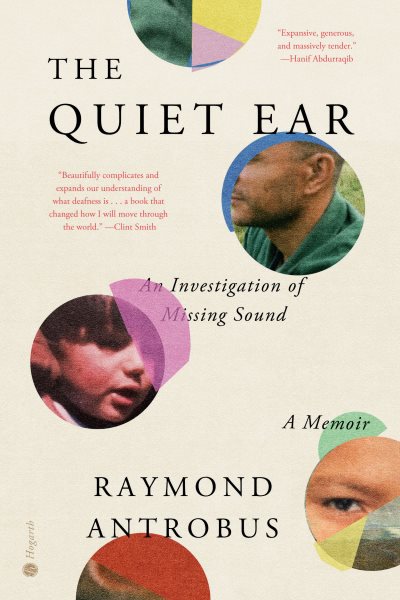
The Quiet Ear: An Investigation of Missing Sound: A Memoir by Raymond Antrobus

Last year the son of a friend of mine, a Kindergartner, was outfitted with hearing aids. She asked me for some picture book recommendations that might normalize the aids to the kid’s classmates. I obliged and then went on to turn the list into the post Book Recommendations: Reduced Hearing Picture Book Titles (Featuring Hearing Aids). Of course Raymond Antrobus was the author I thought of first when coming up with titles. Apart from Can Bears Ski? he wrote that incredible book last year Terrible Horses, which I loved so dearly.

Now Raymond has written is own memoir. This is the description:

Raymond Antrobus was first diagnosed as deaf at the age of six. He discovered he had missing sounds—bird calls, whistles, kettles, alarms. Teachers thought he was slow and disruptive, some didn’t believe he was deaf at all.

The Quiet Ear tells the story of Antrobus’s upbringing at the intersection of race and disability. Growing up in East London to an English mother and Jamaican father, educated in both mainstream and deaf schooling systems, Antrobus explores the shame of miscommunication, the joy of finding community, and shines a light on deaf education.

Throughout, Antrobus sets his story alongside those of other D/deaf cultural figures—from painters to silent film stars, poets to performers—the inspiring models of D/deaf creativity he did not have growing up. A singular, remarkable work, The Quiet Ear is a much-needed examination of deafness in the world.


Yard Show by Janice N. Harrington

In the pantheon of my favorite picture books, one of the titles I think about again and again is The Chicken-Chasing Queen of Lamar County by Janice N. Harrington. I just loved that book. Back when I was a children’s librarian, when racist white patrons would tell me they wanted picture books that weren’t so “urban”, it was immediately the book I’d pull out and hand to them (can’t get much more “rural” than this!). I’d not tracked Harrington’s work in the poetry sphere, but clearly she’s been busy. In their starred review, PW described the book this way:

“The erudite latest from Harrington (Primitive) celebrates the yard show—a personalized, and personally significant, display of objects in one’s yard—as a microcosm for Black American expressions of place and belonging. Harrington’s poems draw on a variety of sources—from roadside signs to the words of Martin Luther King Jr.—to create a delightful poetic mélange that showcases the ingenuity of Black Americans making space for themselves.”


Making the Best of What’s Left: When We’re Too Old to Get the Chairs Reupholstered by Judith Viorst

This one’s less of a surprise. Viorst has probably been writing books for adults longer than most of us have been alive. The fact that she is still doing even today it is a testament to sheer will. You’ll know Viorst, of course, from books like Alexander and the Terrible, Horrible, No Good, Very Bad Day n’ such, but at 94 she’s been writing these kinds of adult books for decades upon decades. Here’s the plot description:

“In a career that has spanned more than fifty years, Judith Viorst has captivated readers with her bestselling children’s books and collections of poetry reflecting on each decade of life. Now in her nineties, Viorst writes about life’s “Final Fifth,” those who are eighty to one hundred years old. Her signature blend of humor and vulnerability infuses personal anecdotes and observations, drawing you into her world of memories and candid conversations.

She confesses, “I never ever send a text while driving, and not just because I don’t know how to text.” She discusses the afterlife (She doesn’t believe in it, but if it exists, she hopes her sister-in-law isn’t there). She complains to her dead husband (“I need you fixing our damn circuit breakers. I need you! Could you please stop being dead?”). And she explores the late-life meanings of wisdom and happiness and second chances and home.

With a wit that defies age, Viorst navigates the terrain of loss. It’s a poignant dance between grief and levity that will resonate with those in their Final Fifth as well as anyone who has parents, relatives, or friends in their eighties and beyond. This is Judith Viorst at her best.”


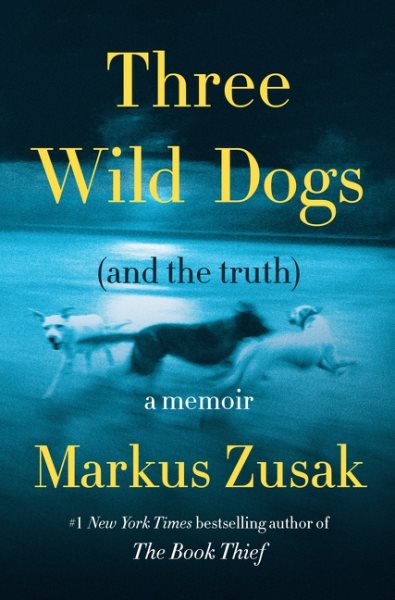
Three Wild Dogs (and the Truth): A Memoir by Markus Zusak

Yup. The author of The Book Thief wrote himself a memoir replete with dogs.

Normally my patrons aren’t all that keen on dog memoirs, but I’ve noticed that they’ve been picking up Zusak’s latest. This would be his first nonfiction title for adults, and it’s been getting stellar reviews. The plot description is:

“What happens when the Zusak family opens their home to three big, wild, street-hardened dogs—Reuben, more wolf than hound; Archer, blond, beautiful, destructive; and the rancorously smiling Frosty, who walks like a rolling thunderstorm?

The answer can only be chaos: There are street fights, park fights, public shamings, property damages, injuries, hospital visits, wellness checks, pure comedy, shocking tragedy, and carnage that must be read to be believed.”


The Story She Left Behind by Patti Callahan Henry

I’m ending with this one because it amuses me so much that a work of fiction can be about a fictional Caldecott Award winner. All the advertising says it’s based on “a true literary mystery”. If anyone wants to find me a copy of the book to tell me what that mystery is, I’d be grateful.

Here’s the plot:

“In 1927, eight-year-old Clara Harrington’s magical childhood shatters when her mother, renowned author, Bronwyn Newcastle Fordham, disappears off the coast of South Carolina. Bronwyn stunned the world with a book written in an invented language that became a national sensation when she was just twelve years old. Her departure leaves behind not only a devoted husband and heartbroken daughter, but also the hope of ever translating the sequel to her landmark work. As the headlines focus on the missing author, Clara yearns for something far deeper and more insatiable: her beautiful mother.

By 1952, Clara is an illustrator raising her own daughter, Wynnie. When a stranger named Charlie Jameson contacts her from London claiming to have discovered a handwritten dictionary of her mother’s lost language. Clara is skeptical. Compelled by the tragedy of her mother’s vanishing, she crosses the Atlantic with Wynnie only to arrive during one of London’s most deadly natural disasters—the Great Smog. With asthmatic Wynnie in peril, they escape the city with Charlie and find refuge in the Jameson’s family retreat nestled in the Lake District. It is there that Clara must find the courage to uncover the truth about her mother and the story she left behind.”

“

“

Filed Under: Unexpected Jolts of Children's Literature Tagged With: Bruno Munari, Carson Ellis, Janice N. Harrington, Judith Viorst, Katherine Rundell, Louis Sachar, Markus Zusak, Raymond Antrobus, unexpected jolts of children's literature

Here Is an Interview: A Talk with Elisha Cooper About Here Is a Book

May 6, 2025 by Betsy Bird

Sometimes when I look back at the eleven years I lived in New York City I think about how the town was so good at randomly throwing me in the general vicinity of the authors and illustrators I admired, in kooky ways. Take Elisha Cooper. By the time I became a children’s librarian he’d already established himself with a number of picture books. From the start, his style was distinctive. Nobody’s books looked like his books. Then, I was invited to a celebration of his picture book Farm, held in his apartment, where I came away with the realization that children’s literature scholar Leonard Marcus is a #1 source for good information on where to get decent bread in Manhattan. I also ended up with a print from the book that hangs over my bed to this day. I like it that much.

As a Greenwich Village resident for a while, Cooper and I connected over the Jefferson Market Branch of NYPL. As I was leaving to work in the Schwarzman, he created massive murals of animals to hang on the walls. Then I left the city and came to Evanston. Even here, Elisha has been extraordinarily generous, creating wooden signs for my library’s children’s room.

But today, I want to talk, not about the largesse of Cooper himself necessarily, but his latest title. Here Is a Book is, to my mind, a book we’ve needed for a number of years. Speaking simultaneously to the philosophical, the artistic, and the technical process of creating picture books is a lot to ask of any title, let alone one as succinct and tight as Here Is a Book. Here’s my short write-up of it:

How does an idea get turned into the book in your hands? A supremely lovely delve into both the process and the heart of bookmaking.  I am of the generation that grew up watching Reading Rainbow. One episode that sticks out particularly prominently in my head is the one about how books are made. I remember the book they focused on was Aliki’s How a Book Is Made (a kind of early proto-nonfiction picture book). That book was lovely but it’s been outdated for quite some time now. In comes Elisha Cooper to fill the void. Not that there aren’t other similar titles out there, but Cooper has an artistic style and a kind of inner calm (dosed with humor) that makes all his works distinctive.

Better still? Let’s talk to the creator himself:


Betsy Bird: Elisha! Such a delight to talk to you about your latest. It’s a bit different from many of your recent animal-related titles. In some ways, it almost feels more akin to some of your earlier work, since it delves into not just some technical aspects of bookmaking but industry as well. Before I get into any of that, though, where did the idea of the book come from?

Elisha Cooper

Elisha Cooper: And a delight to talk books with you, Betsy!

I think the idea came from school visits, those times in a classroom when a child asks, “How do you make your books?” and ten minutes later I’m still answering, and the students are asking more questions, and the class flies off into the whole messy process of bookmaking.

Then a few years ago I was reading Zadie Smith’s essay Something to Do. It’s a wonderful essay — I recommend it to all your readers — in which she considers the creative process. The banal, the beautiful. She has one line, “Here is this banana bread, made with love.” When I read that line, while sitting alongside the Hudson River, I instantly saw the arc of my book. And its foundation, the building blocks. Like, here’s a thing, add ____, then something happens. The cumulative quality to art. So it really started with words: structure, color, rhythm, love.

I’ve always been drawn to books about how stuff get made. This one begins with an artist by the ocean. She’s reading, early morning, a garden, she gets her idea, and we’re off. Painting, creating, printing, delivering. The book ends up in the hands of a child, and — wait for it — it’s also the one you are holding in your hands! (so, very meta). Can you tell that I loved making this book?

Now, to answer your pencil/ink question. Black ink made sense for Big Cat, Little Cat (simple story, life and death). I thought pencil fit better for a book about process. It’s quick, more fluid. I wanted the art to move. When I sketch out in the field, my pencil has a roughness I like. I’m trying to hold onto that feeling in the finished paintings.

Paintings in their first-blue wash phase

BB: That sense holds steady throughout, but I want to get back to the process again. This is certainly not the first book to talk about the process of making books (Aliki’s HOW A BOOK IS MADE comes to mind) but your book is rare since it speaks to 2025. Also, part of what’s so nice is the balance you find between the creative side of bookmaking and the realistic production steps. How much of the technical aspects did you want to show at the start of making this book? Did you change much between the initial rough draft of HERE IS A BOOK and the end? 

Elisha: Okay, you’re onto something here. I was very aware that I didn’t have the technical ability of illustrators like David Macaulay or Brian Floca (also, I have no patience!). I wanted to show enough so we can see what’s happening, but not so much as to slow down the narrative. That’s the sweet spot. So, if I’m painting a printing press, I hope readers will think, “Wow, I had no idea a printing press was so big and wild!” but I didn’t want to paint each widget. I’m trying to get the vibe (hmm, can’t believe I wrote “vibe.” I’ve been watching too much Love Island).

Not much changed with the arc of the book since that day on the Hudson. That said, there were sooo many drafts and edits and little smoothings. I did remove a spread where the book was shipped across an ocean, because that would have interrupted the narrative. Other changes, at first I just called it Book (I have a thing for single-word titles, like Farm, Train, River). I’m glad my editor convinced me to round it out to Here is a Book, which gets at that book-within-a-book idea. Now I’ve been using the phrase “Here is…” in everything I write. Like, Here is an Email. Here is an Interview with Betsy Bird. I’m going to keep pounding this darn joke until my friends tell me to stop.

BB: *glances up at what she named this post… then regrets nothing and moves on*

Getting back to the creative act of making a book, your little author/illustrator avatar lives in a windswept cottage where she can bicycle to a larger city and meet personally with her editor. Is she the idealized vision of a picture book creator or based on someone you know directly?

Elisha: One of my grandmothers was a writer. The other was an artist; she painted great landscapes with cloud-filled skies. Her hair was a white nimbus of curls. That’s her in the book. The writer grandmother had a writing studio behind her house. I put that in the book. Then I asked Barbara McClintock to let me sketch her in her studio. And, she has curly white hair! While she was working, her cat jumped on her desk and I put that in the book. So the artist is a mashup of artists. I’ve heard some wise folks say she could be Kate DiCamillo.

I wanted as many people as possible to relate to this artist (I was careful to paint her skin a balanced shade of burnt umber and burnt sienna). So she could be someone’s Nanna or Abuela. That’s my hope. If I failed in that, that’s on me. What felt most important was showing this person at work. That studio spread is one of my favorites, with its packed, pregnant messiness. Things are happening here. And not. Sometimes she putters around. Creativity is famously difficult to depict (think of films of writers tapping away at typewriters). I wanted to challenge that. Here are paintbrushes and wastebaskets and thought.

Lastly, of course, she is me. On my bike, racing down Broadway to my publishers, in the same way the artist cycles down her hill to deliver art to her publisher. I love biking around the city — thinking up ideas, avoiding buses and pedestrians — before meeting my editors at Macmillan or Abrams. I always show up a bit disheveled.

BB: Honestly, I think Chris Raschka is the same way. Now was there anything you wanted to include in the book and it simply didn’t fit in some way and had to be excised?

Elisha: Nope. And….. mic drop.

I’ve always wanted to answer a question with one word! But that would be rude. Also — and this may sound cocky — the book turned out just how I wanted it to be. Better, even. That’s because it benefited from the care of a lot of people. Conversations with friends, and other children’s book authors, shifted the book in ways I hadn’t considered (sometimes a work gets too close to us; it takes someone else’s eyes to make us see, right?). Then hours upon hours with my editor and designer. Finding rhythm. Making each word land right. So, I had help.

Another thing: there are two mistakes in the book. One on the cover, one on the back. The designer and I were just discussing how to correct them in future editions. Which opened up the idea of whether we should actually leave them in. I mean, here’s a book about how books are made, and what could be more honest than acknowledging that mistakes happen? We really deliberated. In the end, we fixed them (which will make the first edition cool, in a way).

BB: Let the record show that I am being VERY GOOD and continuing this interview, even when I want to rush and check my edition to see if I can find anything.

So while the book could have gotten distinctly technical in a kind of David Macaulay kind of way, you made the strategic decision to keep it younger and lighter. Perhaps inspiring young readers to dream of creating books of their own someday. Is that how you see it as well?

Elisha: I’m glad that you saw that! While this may be giving away the ending, the point when we finish the book is inspiration. How one person’s art can change another. Always connect, right? That’s why the artist’s studio bookends with the children’s room. And why there are pencil sketches swirling around the artist, then around the young artist on the final page. Speaking of inspiration, I admire David Macaulay so much. In the second-to-last spread, the one with all the book covers, I painted the cover of Castle. That was a such a foundational book for me as a kid.

And if we return to those school visits I mentioned, where students were asking me about bookmaking, my hope has always been that one of those students will dream of their own book. Make that seem attainable. Then extrapolate that onward to dance, math, science, the world. Like, here’s what one artist made, here’s what I made, now open your own mind and…. go!

BB: That’s so cool. Finally, what’s next for you? What are you working on next?

Elisha: Birds! I just finished a children’s book about a cat who thinks he’s a bird (and a dolphin and an elephant). It’s called The Rare Bird, out next year. I’m also playing with some board book ideas. Mostly, though, I want to celebrate my daughters. One has a dance performance next week, the other is graduating from college later in the spring.

But, work? I guess I just want to be open to love (mmm, more Love Island). I find that when I am curious about a subject, and fall in love with it, good things happen. Speaking of — I’m looking across the street from the café where I’m writing and there are these guys washing the windows. They’re high up, hanging from ropes, squeegeeing the windows. They look like rock climbers, or vertical ballet dancers. I could draw these guys all day. So, yes, I’m waiting to fall in love with an idea.


There are times, you know, when I feel like I should take pointers from some of my interviewees if ever I myself am interviewed somewhere. The man knows how to answer a question.

Thanks to Elisha Cooper for answering my questions and Elisha Coopering the heck out of them. Thanks as well to Annaliese Merz and the team at Abrams for helping to put this all together. Here Is a Book is, I am happy to report, out right now. Go on and get yourself a copy. Or three.

Or four.

Or ten.

Filed Under: Best Books, Best Books of 2025, Interviews Tagged With: author interviews, Best Books of 2025, Elisha Cooper, illustrator interviews, picture book author interviews

Review of the Day: The Black Mambas by Kelly Crull

May 4, 2025 by Betsy Bird

By Kelly Crull
Millbrook (an imprint of Lerner)
$19.99
ISBN: 979-8-7656-2725-9
Ages 4-9
On shelves now

There comes a point in every child’s life when they realize that not only do their parents/guardians not know everything, they not even be all that cool. I mean, parents are inherently uncool, but we get a bit of a grace period before our offspring figure it out for themselves. Now this realization can hit at a variety of different ages. I’ve known kids as young as six come to grips with this information and deal with it accordingly. Other kids are well into their teen when the cruel truth emerges. To my fellow parents, I have… not a solution exactly but a Band-aid to slap over the situation. You’re not cool to your kids anymore? Why not introduce them to someone who is? You might not be able to siphon of any of their residual awesomeness, but it never hurts to try. That’s why I propose that parents in every English-speaking country find the nearest copy of The Black Mambas by Kelly Crull and have it in hand for that inevitable day when their coolness quotient drops below zero. Because the fact of the matter is that the women in this book aren’t just cool. They’re friggin’ real life superheroes, with names like “Lerato”, “Loveness”, “Qolile” and “Goodness”, and “Remember”. Trust me, you’ve never been cooler than when you’ve read this book to a kid.

“We are the Black Mambas! We are the first women park rangers in South African and the first women-led anti-poaching unit in the world.” So begins a book that explains every possible aspect of these women who work the Olifants West Nature Reserve near their homes. As Supervisor Leitah points out, “I grew up in a village near the reserve, and I had never seen an elephant, only the picture of one printed on our money.” In their current job they teach students about the animals they protect. Poachers? They’re just men trying to support their families, but if they’re successful then those animals disappear from the world. As such, we follow the women as they perform their workouts, recite their Code of Honor, practice survival skills, use maps, and patrol for signs of poachers. The holes in the fences, litter, and footprints are covered, as well as different kinds of animal tracks, and a photograph in which four snares are hidden (good luck finding them yourself). Upbeat, fun, and remarkably designed, watch out. Your kids may come away from this book yearning to be anti-poachers themselves.

Books written for kids have to, by design, simplify complex situations. As such, I felt enormously relieved when I came to a portion of the book discussing the poachers and why they do what they do. The official text explains what the poachers do (“They take parts of the animals with them to sell or eat”) while also noting their justifications (“They believe poaching is the best way to provide for their families”). This is corroborated by the Mambas as well. Vongani, for example, is quoted as saying, “Poachers are people like you and me. They are trying to feed their families. Most of them do not understand that if they kill all the animals, they will be gone forever.” That doesn’t mean you don’t also get to see cool images, like what the Mambas found a bushmeat kitchen, or information on how they find tracks and snares. Two things can be true at the same time.

I could probably wax eloquent on any number of aspects of this book and its success, but I want to zero in on three in particular: The succinct writing, the photography, and the design. First off, the writing. I was impressed when I saw how the text was surprisingly restrained considering what, I am sure, must have been a veritable tidal wave of information. Kelly Crull mentions that creating this book took a good five years, yet he was somehow able to reduce everything on these pages to their most essential parts. And, most important of all, he brings to bear this incredible balance of factual accuracy and kid-interest. THAT, my friends, is the sweet spot of children’s informational texts. Only the best nonfiction authors of books for children can both understand this and utilize it. It means that you know, deep in your heart, that the truth of a story is far more interesting than anything you could make up. As such, this book doesn’t have any fake dialogue or probing sections into the “thoughts” of the Mambas. It relies on facts, and comes out stronger as a result. It is, in short, a template for other nonfiction books to follow.

Additionally, the photography is a HUGE reason why this book works as well as it does. First off, someone (could have been Kelly or it could have been someone on his Millbrook team) had the incredibly good idea to put individual photographs of twenty of the rangers on the front endpapers of this story, so that even before you start reading the book you’re seeing these women in camo, clearly enjoying their jobs, with their names neatly printed below their photos. It’s so smart! Like meeting the cast, before plunging into their heroic deeds. After that, photographs dot every single page. Sometimes there are multiple photographs on a page all together. Who is this intrepid photographer on the scene at every juncture? Yeah. That would be Kelly Crull. So, to sum up, he’s writing this book with the right focus in mind (it’s Mamba focused, babies) AND his photography centers them every step of the way. Glorious.

And can I give a shout out to the design of this book as well? I read a lot of nonfiction picture books for kids, let me tell you, and design is a critical component of the process. It does not take a lot to make even the most fascinating subject look dull as dishwater on the page if you don’t have someone taking the design of the book in hand. As I mentioned before, the text isn’t overwhelming, but that’s just part of it. The book is constantly moving the text around the pages, changing the font color to match the pages. Small quotes from various Mambas appear in their own little colorful splotches, while text inserts break up the flow. Add in the photography and the fact that there are constant inserts, photographs of kids, text boxes, queries, labeled pages, and selections where’s there’s almost nothing but the black of the night and the text on the page… and you have yourself a WELL designed book.

Is that all I have to say in favor of this book? Of course not. Heck, I didn’t even dip more than a toe into its backmatter. I could probably write a 2,000 word essay on the Author’s Note alone, if called upon to do so (name your price). But part of reviewing books is knowing when you’ve made your point, and I think I’ve been fairly clear from the get-go. This book? It’s a wonder. A joy. A small pinpoint of light in the darkness that is 2025. If you are in need of something that takes your faith in humanity and gives it a jolt to the gills, that would be this title. Kids these days? They literally have no idea how lucky they are to have books this good.

On shelves now.

Source: Final copy sent from publisher for review.

Filed Under: Best Books, Best Books of 2025, Review 2025, Reviews Tagged With: 2025 nonfiction, 2025 nonfiction picture books, 2025 reviews, Best Books of 2025, Kelly Crull, Lerner Publishing Group, Millbrook Press, nonfiction, nonfiction picture books

  • « Go to Previous Page
  • Page 1
  • Interim pages omitted …
  • Page 48
  • Page 49
  • Page 50
  • Page 51
  • Page 52
  • Interim pages omitted …
  • Page 1052
  • Go to Next Page »

Primary Sidebar