• Skip to primary navigation
  • Skip to main content
  • Skip to primary sidebar
  • About/Contact
  • Fusenews
  • Reviews
  • Librarian Previews
  • Best Books
    • Top 100
    • Best Books of 2022
    • Best Books of 2021
    • Best Books of 2020
    • Best Books of 2019
    • Best Books of 2018
    • Best Books of 2017
    • Best Books of 2016
    • Best Books of 2015
    • Best Books of 2014
    • Best Books of 2013
  • Fuse 8 n’ Kate
  • Videos
  • Press Release Fun

31 Days, 31 Lists: 2020 Translated Picture Books

31 Days, 31 Lists: 2020 Translated Picture Books

December 13, 2020 by Betsy Bird

NOT to be confused with the previously seen Caldenott list (though there is some crossover on a title here and a title there). Today we celebrate the books from other countries that struck me as particularly interesting in 2020. Lest you be put off by the number of book mentioned here, I will tell you that I’m extraordinarily picky when it comes to translated titles. Just because something comes from another country, that does not mean it’ll work particularly well for the American market. These books, however, figured out how to appeal. Whether they sport an original idea, a great translation, or scintillating art, there’s something to enjoy in each and every last one of these books.


2020 Translated Picture Books

The Christmas Feast by Nathalie Dargent, ill. Magali Le Huche

[Translation – French]

My Lucky Day by Keiko Kasza but jacked up to 11. When a fox (who lives in a pretty interesting living situation with a wolf and a weasel) steals a turkey for a Christmas dinner he has NO idea what he’s getting himself into. Not only does the turkey immediately take charge, but she’s one smart cookie. She whips those three villains into shape, having them cook and clean and pretty much reassess their sad, sorry lives. And when, at last, it’s time for them to prepare her for Christmas dinner a couple weeks later (“I would like to be flambéed… But the recipe is quite difficult. Will you be able to manage it?”) they don’t want to. Christmas books, I know ALL too well, are supposed to be hopeful and heartening. Here in America the snark gets ironed right out. Leave it to the French to make something satiric with a bit more bite. I’m still chewing over how I felt about that last shot of the turkey reading a book called “The Best Recipes for Stuffed Wolves, Foxes, and Weasels”. Like I say. Snark city.

Doctor Mouse by Christa Kempter, ill. Amelie Jackowski, translated by David Henry Wilson

[Translation – Switzerland]

Ah ha! Jolly good. Doctor DeSoto this isn’t. Doctor Mouse is not your usual MD. Every morning he opens his barn doors, hangs up his sign (“Consultations from sunrise to sunset”) and waits. The rules are simple. There are six chairs and Doctor Mouse will not begin consultations until all six chairs are filled. It’s a bit peculiar, but as you come to see, most animals aren’t coming to the Doctor for physical ailments but for personal ones. Ms. Chicken is convinced that a ghost is moaning under her bed, and Mr. Dog is bored and in need of friends. Ipso facto, Mr. Dog will help out Ms. Chicken and she, in turn, will help out Mr. Dog. It continues in this manner, with each animal helping another that has arrived and vice versa. It’s a funny, strange, sweet book and I’m sure there’s some lesson to be derived from everything but what that lesson might be, I’d be the last to know.

Every Color of Light by Hiroshi Osada, ill. Ryōji Arai, translated by David Boyd

[Translation – Japanese]

What is the purpose of the bedtime book? To lull the children to sleep is part of it, certainly, but what are you putting into those small brains in the process? On occasion, it might behoove us all to read to our children books that seep into minds. The evocative is not wasted on the young, no matter how often they yawn. To give yourself a sense of what I’m talking about, I recommend that you seek out this hypnotic Japanese import. Artist Ryōji Arai pretty much entranced me by the first page. Osada writes a simple, “Look, it’s raining” and on the bottom third of the page is a pond, surrounded by greenery, the thinnest of yellow pencil lines indicating the falling droplets. Arai has been in this game since 1990, by the way. In fact, in 2005 he won the Astrid Lindgren Memorial Award. I’m just grateful we get a chance to see his work now. Taking his cues from Osada, he is perfectly capable of bringing sentences like, “Wetter and wetter, the blues darken. So do the greens,” to life. I shiver deliciously every time I read this book (I particularly like it when I’m cozy inside and outside it’s raining). After the storm passes, the world revives, but the night has fallen. One could get so wrapped up in Arai’s exquisite writing that they miss Osada’s own gifts. With the aid of the talented David Boyd, the end of the book translates to a beautiful, “We’re all falling falling sound soundly asleep asleep . . .” I aspire to someday write a single sentence as succinct and perfect as this. 

Everybody Counts: A Counting Story From 0 to 7.5 Billion by Kristin Roskifte, translated by Siân Mackie

[Translation – Norwegian]

A seek-and-find book for the 21st century. Every person has a story. Can you figure out what they are in this eclectic book that’s part puzzle part ode to humanity?  Is it a counting book? A Norwegian counting book at that? Wasn’t too sure about this one at first and then I started playing along. It appears to be like a seek-and-find book at first. Pretty rote. That is, until you start to pay attention to what they’re asking you to seek. “Five people in a family. Three of them love reading. One of them is secretly in love.” Wait, what? The further in you get the more you start to get to know the characters that keep repeating. There’s a grand romance that begins in a library. There’s a crook somewhere in there. There are innocent people in jail! By using the counting book format, you begin to understand that every person you see in this great big wonderful world has a story that you’re not privy to. Why does the book go to 7.5 billion? So that you understand that this is the case for everyone. Looks simple. Ain’t.

From My Window by Otávio Júnior, ill. Vanina Starkoff, translated by Beatriz C. Dias

[Translation – Portugese (Brazilian)]

I wrack my brain trying to find the right words to describe this book. Busy? Not quite. Colorful, certainly. Alive? Maybe that’s the one I wanted. Júnior’s book is a paean to the favela in Rio de Janeiro (specifically Complexo do Alemão) and you’d think a book restricted to a view out a window would be limited. Yet Dias is just packing this book with so much life and color and sheer joy. In the “What Is a Favela?” Júnior acknowledges that there can be violence but this is a book about loving your home.

Garden Jungle by Hélène Druvert

[Translation – French]

I wonder. In the event that any American artist within the last decade did seriously commit to a book filled, as this one is, with the world’s most delicate and intricate paper cuttings, would it have a chance at the Caldecott? I suppose it would depend upon the quality of the writing and the storyline. Druvert, to her credit, does have a scarecrow of a plot on hand, for those who need such things. Young Tom is terribly bored, so when his mom tells him to play outdoors he doesn’t harbor much hope. Yet upon further inspection his yard becomes a jungle, his kitty a leopard, and a butterfly leads him deeper and deeper into his imagination. Druvert layers the images here, so that you truly feel that you too are pushing deeper into the trees and vegetation as you go. I also cannot stress enough the intricacy of the papercuts here. From the most delicate of fronds to the spaces between the leaves where light peeps in, this book feels like something ancient and precious all at once. And woe betide the child that is the first to rip it.

Goldilocks and the Three Bears by Gerda Muller

[Translation – French]

Anyone who knows me is perfectly aware that I’ve an inordinate fondness for fairy tales and retellings. This Goldilocks is done straight, but Muller’s art is just a wonder. First off, I liked very much that Goldilocks’ parents are roadies for a circus. Never seen that one before. The bears’ house is so meticulously laid out. In addition to the three bowls, chairs, and beds, if you look around you’ll also see three umbrellas, barrels, brooms, etc. and each one color coordinated. Goldilocks is less a hellion in this one, and doesn’t even break the baby bear’s chair. But I did appreciate that she has to grab her shoes when she leaps out of the bears’ home upon discovery. Also, I liked the bears yelling their disapproval as she ran off. She’s a more sympathetic Goldilocks than we usually encounter. This is one of those picture books that people are going to hold on to for years.

I Always Wanted One by Olivier Tallec

[Translation – French]

Not too too different from David Ezra Stein’s I’m My Own Dog, if I’m being honest. You may have seen this idea before, where the dog is (seemingly) the owner of the boy and not the other way around. One of the first interesting things about Tallec’s version is that it opens vertically rather than horizontally. I’ve always loved his art, and here he gives himself over to languid lovely spreads. The story is the right combination of silly and slightly wistful. Of course it deviates from Stein’s book most significantly in that you get to see the kid when they’re grown. Pretty cute.

I Can Be Anything by Shinsuke Yoshitake

[Translation -Japanese]

Hmm? What’s that? You don’t think it’s fair that I’m putting two Yoshitake books on the same list? Well, due to the fact that I am now his greatest fan, I think it’s more than fair. The thing about Yoshitake is that several things are usually true. The adults in his book look exhausted, and the kids are these perpetual sources of energy and animation. But best of all are his books’ senses of humor. Because it is a WEIRD sense of humor, and one that I dig very much. In this book, a little girl keeps asking her mom to guess what she is, but instead of always being something relatively easy like a teapot or a baby, sometimes she’s shellfish in miso soup or Mount Fuji or her mom peeling the skin off of her foot. The mom, who is a patient but rapidly deteriorating soul, eventually finds her daughter asleep mid-game, then is left wondering what her daughter was pretending to be. If I could, I would give you all multiple Yoshitake books and you would understand my passion. He is the utter and complete best.

I Dream of a Journey by Akiko Miyakoshi

[Translation – Japanese]

A furry hotel proprietor dreams of someday visiting far of lands and distant friends. Dreamlike imagery accompanies glorious light-filled scenes of laughter, friends, and travel. I think we can all relate. In this book Miyakoshi is back to high form. Nobody shows contemporary life with fuzzy woodland creatures as well as she does. I wish I knew what medium this was published in because the art is the best she’s ever done. I love how it starts out black and white and then slowly the colors just bloom on the page. This may be the greatest tribute to solitude and travel for kids I’ve ever seen. And just look at what she’s doing with light! I could read this 100 times and never get tired of it. Don’t forget to look at the back cover when you get a chance.

Lemon Butterfly by Cao Wenxuan, ill. Roger Mello

[Translation – Chinese]

Around the world, these two are superstars. Here in America? We’re not great on international children’s book creators if they don’t fall into mighty specific parameters. This book is pure Wenxuan, though, right down to the lingering melancholy. A “lemon butterfly” (Papilio demoleus, perhaps?) seeks a field of flowers. It ventures through valley, desert, city, and more. At last, it smells flowers in the hoofprints of a horse, and follows them backwards. Alas, the field it seeks has been submerged in a sudden lake. The solution? It rests and becomes a “lemon butterfly fish” (or millet butterflyfish). Mello gets to stretch his muscles a little with this. He matches the wistfulness of the words perfectly, and gets to experiment with different patterns, styles, angles, and sometimes fonts. It’s a very cool gesture. Whether you believe the butterfly actually became a fish  . . . well, I’ll leave that to you . . .

Little Bear’s Treasures by Stella Dreis, translated by Laura Szejnmann

[Translation: German]

This little Austrian import was a heck of a nice surprise when I saw it. The story itself is quite cute, of course. I think the human hand is unlimited when it comes to the ways in which bears can be illustrated in children’s books. The story is of a little bear that sees treasures in ephemera wherever it goes. No one shares its enthusiasm until it meets a bird with a similar p.o.v. And the art is exceedingly appealing the way that it is drawn. Still, it wasn’t until I got to that final image of the bear and the bird from behind that I found my breath truly taken away. The bear and the bird in the book are quite young and there’s this cute shot from behind of the two of them. The last image is a dream they have, ostensibly of themselves, and once again they are seen from behind but something is different. The bear is noticeably taller, drooping slightly with age. The bird, larger and perhaps those are grey feathers on its back. It’s a blink-and-you’ll-miss-it moment, but absolutely unforgettable.

Little Fox by Edward Van de Vendel, ill. Marije Tolman, translated by David Colmer

[Translation – Dutch]

A little fox dreams its entire life, the good, the scary, and the wonderful in this deeply charming Dutch import. I can’t tell… is it more gorgeous than charming or more charming than gorgeous? Whatever the case, it’s one of my favorites of the year. How can it not be? The book is this marvelous combination of illustration and photography. A little fox’s entire life passes before its eyes, going through the day-to-day living of what it’s like to be a fox in the wild. From its limited color palette to the clever ways in which backgrounds repeat strategically, it’s hard not to fall in love with this book. Extra points for those stunning orange endpapers of trees.

Sandcastle by Einat Tsarfarti, translated by the S.B. Rights Agency

[Translation – Israel]

One day a girl built a sandcastle. So begins a ludicrously told, meticulously illustrated story of spoiled royalty, incredible opulence, and the way sand has a way of getting into EVERYTHING! Okay, I’ll admit right here and now that I wasn’t giving this book a fair shake when I first glanced at it. I think I’d convinced myself that I’d already read it or something. A quick read was enough to convince me otherwise. This is amazing! I completely missed the detail of the hamster, but the scene of everyone dancing has my eternal love. This is a bonafide winner.

The Shadow Elephant by Nadine Robert, ill. Valerio Vidali, translated by Sarah Klinger

[Translation – French]

Do you, by any chance, happen to remember the book The Rabbit Listened by Cori Doerrfeld? I’m not exaggerating when I say that I think about that book at least once a week. It is, for me, a guide for grief. Few books can match it but this fascinating French/Canadian import (L’éléphant de l’ombre) presents a similar situation. In it, an elephant is beset by sadness. It would just like to stay in the shadows, but a host of other animals are insistent on drawing it out. Everything from a monkey to high-heel wearing ostriches (which, I’m not going to lie, I found awesome) to a food-bearing crocodile. The elephant, who has these bags under its tiny eyes that speak volumes, is not happy with any of this. Finally, a mouse comes. It doesn’t want to try to cheer the elephant up. It just wants to rest. And so, in time, it tells the elephant its story and the pachyderm, in turn, sobs. “Drained of tears and feeling much better,” the elephant resolves to help the mouse with its problem. It’s not quite as clean as Doerrfeld’s book, but I liked very much the similar idea that sometimes we just need someone patient and nearby when we’re low. A good book to have around.

The Sorcerer’s Apprentice by Gerda Miller +(BB)

[Translation – French]

Another Gerda! According to this book, the famous German writer Johann Wolfgang von Goethe wrote the original poem of “The Sorcerer’s Apprentice” in 1791, “inspired by a story told to him by his maid.” One ponders how this came up in the first place. I, for one, want to know more about that maid. In lieu of that, I’ll have to be content with this meticulously rendered edition of the old tale. If you’ve watched your Fantasia then you may have seen Mickey Mouse try to get out of his chores by enchanting a broom. That’s fairly faithful to the original tale, but rather than set the story in a castle, Miller puts the boy and a low-key sorcerer named Alfred in a homely little house in a village. When the water really gets going there’s a kind of Strega Nona vibe to the calamity. All ends well, and the sorcerer forgives the apprentice. I just love the last sentence in the book: “After many years of listening and learning, Oliver became the village sorcerer. And he was almost as wise as Alfred.” Certainly the best version of this tale I’ve seen to date. Accessible and enjoyable.

The Stone Giant by Anna Höglund, translated by Julia Marshall

[Translation – Swedish]

Sounds like an old video game. You need to defeat a giant. You have only an umbrella, a knife, and a mirror. Go. It is exceedingly difficult for a contemporary author/illustrator to tap into the classic feel of old fairytales. In this original one, Höglund does just that. Using a limited color palette of grays and red (the art is made with copper plate etchings and watercolors) she tells the story of a girl that lives on an island with her father, a knight. One day the knight goes off to defeat a giant that is turning everyone to stone. When he doesn’t return, his daughter sets off to rescue him. There are so many small, wonderful aspects to this story. I loved that the girl figured out how to defeat the giant early on, and then when she meets a friendly old woman on her path she is told how to do it. “That’s what I thought… thank you very much.” So polite! Extra points for making the giant female without making a whole big deal about it. Sometimes you just like the feel of a book. That’s the case with this one. Just the best.

A Sweet Meeting on Mimouna Night by Allison Ofanansky, ill. Rotem Teplow

[Translation – Hebrew]

Mimouna, the Moroccan Jewish holiday, is the star of this beautiful little book. I’d not heard of Mimouna before, but Ofanansky does a great job of explaining it bit by bit, piece by piece. On the last afternoon of Passover, Miriam’s family is getting ready to bake all kinds of Mimouna treats, like moufletot. The trouble? When the sun goes down, where can you find flour? Like many Jewish families in Morocco, Miriam and her mother go to a Muslim neighbor’s home, where a flour pick-up has already been arranged. There Miriam meets Jasmine, and later she and her family arrive in Miriam’s home for the celebration. But by the time Jasmine’s able to invite Miriam to Ramadan, she’s moved to Israel. A year later Mimouna comes around and Miriam, wistful, thinks of Jasmine and whether or not she’ll be waiting for her that night. Waiting, but never going to see her again. It’s bittersweet ending to a book that does an excellent job of showing the interconnectedness of kind neighbors to one another. An explanation of Mimouna and a recipe for Moufletot appear at the end. Extra points to Rotem Teplow, whose art lends the piece precisely the right feel. You won’t even know you’re reading a translation with this book. It feels just that natural.

Thank You, Miyuki by Roxane Marie Galliez, ill. Seng Soun Ratanavanh, edited by Amy Novesky and Parker Menzimer

[Translation – French]

Probably the best mindfulness picture book I’ll ever have the pleasure to meet. This is by no means the first Miyuki book to come out in America. I’d already read Time for Bed, Miyuki and Patience, Miyuki but while their art enthralled me, the storylines were just a nice kind of okay. Nothing to necessarily write home about. In this latest title, Miyuki begs her Grandpa to show her how to meditate. She then proceeds to act EXACTLY like a small child would, never staying still, flitting about like a butterfly while her grandfather takes everything in slowly. And yet, by the end of the book, it turns out that Miyuki, in her own way, has been paying attention to the world around her. A book that beautifully brings to life Miyuki’s observation, “doesn’t it feel good to be here right now?”

There Must Be More Than That! by Shinsuke Yoshitake, translated by HAKUSENSHA, Inc.

[Translation – Japanese]

Yeah, all right. That’s it. Someone go and convince Yoshitake to come live here in America. Surely you’ve run into one of his books at some point, whether it was The Boring Book or Still Stuck. He just has this quirky, skewed, weird little look at life that no one else can replicate. In this particular book an older brother tells his younger sister that in the future we’re going to run out of food due to overpopulation, there will be plagues and wars, and aliens will invade. Freaked out, the girl runs to her grandmother who reassures her that people have a terrible track record when it comes to predicting the future. She assures the girl that she can try to think up her own futures, and this leads to an extraordinary, kooky array of possibilities, all ending with a nice boiled egg. Tried this one out on my 6-year-old and yes indeed. Laughs ah-plenty. This is one sense of humor that translates with infinite ease.

This Is My Daddy by Mies Van Hout

[Translation – Dutch]

Mies Van Hout may be right up there with Herve Tullet as one of the international uncontested winners when it comes to board books for the young. Her style is unparalleled and, to be frank, downright gorgeous. The conceit is kind of cute too. First you meet a baby animal and then you have to pick between four possibilities as to who the father might be. It’s not as easy as you might think, particularly when you’re dealing with a baby rhino looking at a daddy hippo as option. The key, sometimes, is to get the little littles noticing the similarities in their bodies and coloring. I love how interactive the book is. One quick note: the spine does have a tendency to rip a little since the cover is made of that poofy material you sometimes find with board books. May not be great for libraries, but for gifts there are few to match it. Beautiful.

Wake Up, Let’s Play! By Marit Törnqvist

[Translation – Dutch]

Sometimes folks will make excuses for European children’s books and their significant lack of faces that aren’t white by saying that everyone over there IS white. Not hardly. This Dutch import puts that lie to the test with this incredibly sweet playtime between two young friends. It’s one of those little worlds where there are no grown-ups to interfere and plenty of birthday parties, sandcastles, blocks, stuffed animals, snowmen and more. I just love the thick colors and imagination at work in this marvelous little world built for two. People call books “dreamlike” far too often. This is the kind of book that will mysteriously crop up in children’s dreams years and years after they read it. If that appeals, grab it for yourself.

The World’s Poorest President Speaks Out, edited by Yoshimi Kusaba, ill. Gaku Nakagawa, translated by Andrew Wong

[Translation – Japanese]

So you wanna write a picture book about how we should consume less? Well good luck in finding a hook, my friend. Honestly, where would you even begin? A smart way might be to look for a real world example of someone who lived an ascetic but appealing life. What about a president? What about the President of Uruguay? This book chronicles an actual speech given by President José Mujica at the 2012 United Nations Conference on Sustainable Development. Now don’t go slapping this into your Nonfiction section of the library, necessarily. Though the sentiments of this book are true, the words have been rewritten to fit a picture book audience. Part of what’s so fascinating about this particular book is that it is a translation from the Japanese original. Apparently Mujica is a huge deal in Japan and that accounts for this book’s origins. The message of simply wanting less and appreciating more is admirable, and the art is gorgeous. It’s a book with a clear message, absolutely, and the package and telling so nice that you might think twice about wanting that new doodad you had your eye on the other day.

Your House, My House by Marianne Dubuc, translated by Yvette Ghione

[Translation – French]

You’ll find Quebec translations having quite a moment in picture books this year. You have perhaps crossed paths with a Dubuc title in the past. This book is a bit of a departure for her. It’s as if she thought to herself, “What would happen if you crossed Richard Scarry with Allan Ahlberg?” and then decided to give it a go. This book (originally called “Chez toi, chez moi”, which is fairly adorable) features one apartment building and all the animals that live in it. This includes animals that are moving in, animals that are rushing to the hospital, animals that are hosting parties, sick animals, naughty animals, and more. This is one of those books where the layout of the apartment building never changes. As a result, you spend a countless amount of time poring over every little room. I like these books personally because I never feel more like a five-year-old, overconfident in her own abilities, than when I can spot something the creator has hidden in the background. In this case, the run of fairytale characters that cameo behind the action was fun to find. This isn’t one of those books that keeps pointing out the elements you have to locate. As a result, they feel like little treasures when you discover them. Expect this one to be read over and over again.


Want to see other lists? Check out what happened this month!

December 1 – Great Board Books

December 2 – Board Book Reprints & Adaptations

December 3 – Transcendent Holiday Picture Books

December 4 – Picture Book Readalouds

December 5 – Rhyming Picture Books

December 6 – Funny Picture Books

December 7 – CaldeNotts

December 8 – Picture Book Reprints

December 9 – Math Books for Kids

December 10 – Bilingual Books

December 11 – Books with a Message

December 12 – Fabulous Photography

December 13 – Translated Picture Books

December 14 – Fairy Tales / Folktales / Religious Tales

December 15 – Wordless Picture Books

December 16 – Poetry Books

December 17 – Unconventional Children’s Books

December 18 – Easy Books & Early Chapter Books

December 19 – Comics & Graphic Novels

December 20 – Older Funny Books

December 21 – Science Fiction Books

December 22 – Fantasy Books

December 23 – Informational Fiction

December 24 – American History

December 25 – Science & Nature Books

December 26 – Unique Biographies

December 27 – Nonfiction Picture Books

December 28 – Nonfiction Books for Older Readers

December 29 – Best Audiobooks for Kids

December 30 – Middle Grade Novels

December 31 – Picture Books

Enjoy!

Filed Under: 31 Days 31 Lists, Best Books, Best Books of 2020 Tagged With: 31 days 31 lists, children's literature in translation, translated picture books, translations

31 Days, 31 Lists: 2020 Fabulous Photography Books

December 12, 2020 by Betsy Bird

I have a very broad interpretation when it comes to the kind of book that can appear on today’s list. As far as I’m concerned, all forms of photography have their place here. That means that if the art in the book mixes traditional media and photos or it’s a nonfiction work or uses photographed models, they all belong. I yearn for the day a true work of photographic illustration is honored with a Caldecott (aside from the Knuffle Bunny books, of course). Until then, I present you to today’s list:

——–

2020 Fabulous Photography Books

Almond by Allen Say

Charcoal, pastels, and photographs aren’t mixed and matched together all that often in picture books. One gets the feeling that the artists keen on pastels keep a far distance from photography while the photographers might dabble in other mediums but never, ever pastels. For this book to work, Say has to tell the story of a girl who sees her classmate as a kind of genius, otherworldly thing. By using pastels and charcoal on the characters of the girls, and photographs for the backgrounds and other children, it isolates and connects them. They are the only two of their kind in the world. It’s a clever technique. Even the mother is a photograph rather than a pastel person. Here’s hoping for more experimentation with photos in the future.

Being Frog by April Pulley Sayre

Remember Nic Bishop? Where on earth did that guy go? I only ask since this cover reminds me of good old Red-Eyed Tree Frog. It’s a good thing we’ve other talented photographers to fill in the gaps. And I hope you like April Pulley Sayre, because she has THREE (count ’em) books on today’s list. Kinda making the rest of us look bad, isn’t she? Now her photography is without parallel, no question, but I’d like to also give some credit to Sayre’s text. My favorite line in this particular book is, “This log. Its daily job? Support the frog.” If writing simply is the most difficult thing to do, Sayre is a master. 

Cityscape: Where Science and Art Meet by April Pulley Sayre

Sayre appearance #2! Expert photography presents a gorgeous celebration of those big city elements that combine science, technology, engineering, math, and art for the youngest of readers. If ever you needed proof that 2020 was a very good year for photography, this is all the evidence you’d require. I’ve always loved Sayre’s work with nature, but it turns out she’s just as adept at urban atmospheres as well. Love the backmatter, like the “Questions to Ponder As You Wander” around a city, particularly the question, “Who is going to plan how a city will work in the future?” Who indeed.

Dads by John Coy, photographs by Wing Young Huie

Probably the most realistic, truthful, honest, fantastic collection of dad photos I’ve ever seen produced for kids . . . um . . . ever. You’ve got Mennonites on one page and Hmong on the other. You’ve got young dads and old dads and rich dads and poor dads. Huie writes that he just went through his own archives to find these images, and what that means is that this isn’t just some random accumulation of stock photographs. Heck no! These are art. Each one, art. All brought together under the auspices of Coy’s text.

Feel the Fog by April Pulley Sayre

Sayre Sayre Sayre. Here’s number three! Fog is a great subject for a nonfiction picture book. Get far enough away and you’ll get these grand sweeping shots of it rolling in, over the trees. Get in close and you can  only make out the barest of outlines. Reading this book I was reminded by Bruno Munari’s Circus in the Mist, which recreated the feel of fog so beautifully. Fog photography must be a particularly difficult thing to wrangle, it occurs to me. As the fog backmatter explains, how our eyes react to the light bouncing off of the water droplets and ice crystals in the fog affects how we see. Surely cameras have similar problems. However she pulled it off, it’s a beautiful product at the end.

Little Fox by Edward Van de Vendel, ill. Marije Tolman, translated by David Colmer

A little fox dreams its entire life, the good, the scary, and the wonderful in this deeply charming Dutch import. I can’t tell. Is it more gorgeous than charming or more charming than gorgeous? The book is also this marvelous combination of illustration and photography. A little fox’s entire life passes before its eyes, going through the day-to-day living of what it’s like to be a fox in the wild. From its limited color palette to the clever ways in which backgrounds repeat strategically, there is thought and care put into each shot. Extra points to those stunning orange endpapers of trees.

On a Snow-Melting Day: Seeking Signs of Spring by Buffy Silverman

Are you ready to take a deep dive into a drip-droppy, slip-sloppy, hawk-squawking, woods-walking, crocus-poking, mitten-soaking, snow-melting day? Nature photography celebrates the arrival of spring. The minute this was released a lot of my children’s librarians were enamored. There’s a photograph in this book of a chickadee simultaneously flying and sipping from an icicle. You pretty much could have just shown me that chickadee image and I would have been sold. I know we always need books for the younger kids, especially in the Nonfiction picture book section. This fits right into that category.

Shape Up, Construction Trucks! by Victoria Allenby

Yeah, this is pretty much the third time this book has appeared on my 31 Days, 31 Lists. How often do you find a rhyming math book with copious photography, though? Allenby’s book is almost too good for its very simple premise. Essentially, you’re just looking at some (remarkably detailed, high-resolution) photos of construction equipment and finding the natural shapes in them. And just to up the ante, it rhymes. As the Kirkus review pointed out, you could do a whole storytime and sing this book to the “Twinkle Twinkle Little Star” song (which I always did with Brown Bear, Brown Bear, What Do You See?) and make a whole construction production out of it!

Sootypaws: A Cinderella Story by Maggie Rudy

I’m a sucker for models. They’re ridiculously hard to pull off, to say nothing of all the lighting techniques and photography that goes into making them look halfway decent. Still, there is this steadfast cadre of author/illustrators out there that have mastered the form. Maggie Rudy is one of these and I found it oddly gratifying to see that a big publisher had picked up her latest. I know we’ve had more Cinderella stories than we can shake a fist at, but there’s something so charming about Rudy’s latest. The writing actually manages to be both romantic and 21st century (Cinderella and her prince decide to kick off their shoes and see the world together rather than wed right away). As for the art, the rose petal gown that Sootypaws wears to the ball truly looks like it fell from a flower. A treat for both eye and ear.

A World of Opposites by Gray Malin

I mean, it’s hard to resist a cover full o’ llamas. Malin is probably better known in the adult book world with titles like Beaches and Escape. No doubt some of the images in this book were plucked from those, but who cares? They work well in this context and don’t feel shoehorned in. They’re also so good that I had to keep checking to see whether or not he truly was the guy who had taken all these images (he had). You may have seen his book Be Our Guest! a couple years ago. This one’s better. And yes, we could go back and forth all day over whether or not “Feathers” is truly the opposite of “Fur”, but for the most part these opposites are pretty uncontroversial. Plus how do you resist the image of dyed multi-colored sheep (there’s a story there, I bet) running en masse beneath a rainbow?

You’re Invited to a Moth Ball: A Nighttime Insect Celebration by Loree Griffin Burns, photographs by Ellen Harasimowicz

I greatly appreciated the fact that Harasimowicz was given a chance to include a lengthy Photographer’s Note in the back of this book. She really gets into the apertures, f-stops, and shutter speeds when discussing the amount of work and attention it takes to make a book of this sort. As she says, “Light played a very significant role in this book, just as much as the moths and the people who came to see them.” I appreciate the distinction. Plus, who wouldn’t be awed by those graceful luna moths sitting on top of a woman’s hands?


Want to see other lists? Check out what happened this month!

December 1 – Great Board Books

December 2 – Board Book Reprints & Adaptations

December 3 – Transcendent Holiday Picture Books

December 4 – Picture Book Readalouds

December 5 – Rhyming Picture Books

December 6 – Funny Picture Books

December 7 – CaldeNotts

December 8 – Picture Book Reprints

December 9 – Math Books for Kids

December 10 – Bilingual Books

December 11 – Books with a Message

December 12 – Fabulous Photography

December 13 – Translated Picture Books

December 14 – Fairy Tales / Folktales / Religious Tales

December 15 – Wordless Picture Books

December 16 – Poetry Books

December 17 – Unconventional Children’s Books

December 18 – Easy Books & Early Chapter Books

December 19 – Comics & Graphic Novels

December 20 – Older Funny Books

December 21 – Science Fiction Books

December 22 – Fantasy Books

December 23 – Informational Fiction

December 24 – American History

December 25 – Science & Nature Books

December 26 – Unique Biographies

December 27 – Nonfiction Picture Books

December 28 – Nonfiction Books for Older Readers

December 29 – Best Audiobooks for Kids

December 30 – Middle Grade Novels

December 31 – Picture Books

Enjoy!

Filed Under: 31 Days 31 Lists, Best Books, Best Books of 2020 Tagged With: 31 days 31 lists, photo fun, photography, picture book photography

31 Days, 31 Lists: 2020 Books With a Message

December 11, 2020 by Betsy Bird

Oh yeah. Today’s topic is a hard one. I’m not gonna lie to you, but this is the kind of book that a lot of adults think they can write and must write and, let us be honest, shouldn’t write. Children’s books in America essentially began as instructional tomes dedicated to the betterment of pliable young souls. Sometimes, reading through tons of picture books in a given year, very little feels as though it has changed. That’s why I like to celebrate those books, with some kind of “message” to impart, that do so with minimal didacticism. These books do a great job of teaching without forcing. I salute their worthy efforts and the folks who brought them to life.


2020 Books With a Message

Addy’s Cup of Sugar: Based on a Buddhist Story of Healing by Jon J. Muth

Right from the start the book tells you that this story is based on the Buddhist tale “The Mustard Seed.” My brain immediately latched on the Christian “Parable of the Mustard Seed” and, let me tell you, it isn’t anything like the Buddhist story. In this book, a girl named Addy absolutely adores her kitten, Trumpet. The two are inseparable, but, being that this is 2020, I wasn’t too terribly surprised to read that “one day, shortly after they moved into their new neighborhood, it happened. Trumpet was hit by a car.” The book doesn’t show this, of course. It just shows Addy staring into the distance alongside a long road while the sun sits low in the sky. Sad, she asks Stillwater, the Panda that has appeared in numerous Muth books, to bring her cat back. He promises nothing except to make medicine that Addy needs. To do this, she must bring him a cup of sugar “from a home where death is a stranger.” And what she finds is that everywhere she goes, someone has lost someone. It’s a good book for death in general, but particularly good for those kids that have lost pets.

All Because You Matter by Tami Charles, ill. Bryan Collier

You know, I didn’t originally have this book on this list, but somehow it just fits. From the matter of the universe to Black Lives Matter, this lushly illustrated book pulls together the very cosmos to make it clear that this book’s young readers are special beyond belief. Of all the picture books I’ve seen so far in 2020, this was the first one that actually addressed police brutality and Black Lives Matter in its text. All the more remarkable when you consider that the book doesn’t feel rushed at all. Collier’s art varies from book to book and he’s on point here, absolutely. Drawing inspiration from his own grandmother’s quilt-making, Collier’s work reminded me of what Hudson Talbott did for Jacqueline Woodson’s Show Way, all those years ago. An important message in a beautiful package.

Arlo the Lion Who Couldn’t Sleep by Catherine Rayner

Rayner is the kind of author/illustrator that really captures a person’s attention. Years ago she created the board book One Happy Tiger and it was just about the sweetest little thing I’d seen in a while. Ever since, I’ve watched her work with interest. It’s hard to describe her style. Like scribbles overlaid with watercolors, acrylic inks, screen prints, and pencil markings. It’s messy beauty. In this case, it’s a really practical message at work. It probably doesn’t hurt any that I’ve two kids for whom falling asleep can be a bit tricky, what with their constantly running brains and all. This book offers good, practical advice. On beyond counting sheep!

The Boy and the Gorilla by Jackie Azúa Kramer, ill. Cindy Derby

First and foremost, I know that including any kind of monkey or ape in a picture book at this time can be viewed as a racist trope. This is particularly true when the creature is made to act like a human in some way. What’s interesting about Kramer’s story is that the gorilla here is not a stand-in for a human or even, for that matter, a stand-in for a gorilla. It is a comfort in a time of grief. Not a representation of the grief itself, necessarily. But the thing that goes with you as you try to live your life. The book isn’t quite as elegant a metaphor as last year’s Maybe Tomorrow by Charlotte Agell, but it has a definite leg up thanks to the watercolors of Cindy Derby. Just look at the gorilla’s eyes for a spell. At first you almost don’t see them. When you do, you can hardly look at anything else.

Danbi Leads the School Parade by Anna Kim

Charming illustrations tell the tale of a young Korean immigrant child’s first day of school, from tragedy to triumph. On the bookflap, Kim talks about how she herself immigrated to the States from South Korea when she was a small kid. I find the art in this book utterly fascinating. Specifically, I like very much how Kim does children. She’s got a hook on facial expressions that’s enticing. And what kid reading this book wouldn’t identify with Danbi when she thinks, with utter misery, “But nobody would play with me”? That kind of stuff just rips the heart out of my chest. Did I already say it was charming? I did, but it bears repeating. Charming, charming, charming.

Don’t Worry, Little Crab by Chris Haughton

Going to the ocean seemed like a good idea to Little Crab, but that was before he saw how vast and scary it was. Will he overcome his fear or scuttle back to his safe tide pool at home? This isn’t my first encounter with Haughton’s art. Honestly, all his books look kind of like this one, and I was totally prepared to write this one off when I picked it up. But darned if the guy doesn’t do a really good crab. How does he get so much pathos out of those big yellow eyes? It’s not an overly complex book, but the way in which he delivers its message is keen.

I’m Not a Girl by Maddox Lyons and Jessica Verdi, ill. Dana Simpson

I wonder what the current number of transgender illustrators existing in America today is. Because honestly, Dana Simpson is always the first person who jumps to my mind, thanks in large part, to her Phoebe and Her Unicorn series of comics. As such, I instantly recognized her style on the cover of this book. There are lots of thoughtful picture books about transgender kids on the market with terrible terrible art. Simpson’s style, on the other hand, is cartoony but not too much so. It’s just engaging. The note from Maddox’s mom (Maddox is a twelve-year-old transgender boy) is clearly aimed at informing parents, and then you get this truly killer list of transgender heroes. Looking at it, I’d love to see more picture bios of some of these folks. There’s also a lengthy section of Resources We Recommend, including books for kids, books for adults, media for the family, and organizations. A lot of work went into this book and it shows.

A Last Goodbye by Elin Kelsey, ill. Soyeon Kim

As I mentioned earlier in the year in my post Trendwatch 2020: Death Death Death Death Death, this was a year where a surprising number of picture books confronted the mortality of all living things for young readers. Kelsey’s book is a Nonfiction offering on the same subject, presenting the topic through the death of animals and how they handle it in nature. My personal favorite has a lot to do with a Radiolab episode I listened to years ago about what happens to a whale’s body when it dies. I don’t know if Kelsey heard the same episode but when she writes, “Will new undersea communities flourish on the nutrients found in your skeleton?” I thought it a wonderful way of celebrating how bodies feed other organisms as they decompose. This book is infinitely gentle. And I think of all the death books of 2020, it might be my favorite.

Love Your Body by Jessica Sanders, ill. Carol Rossetti

Body positivity gets a shot in the arm with this high powered title. Note, if you will, the Note to the Reader and the Author’s Note, which specify that “This book has been written for girls and those who identify as a girl. However, the language I have used is not gendered and the overarching message is universal.” It goes on to explain about the body positive movement, the preferred reading ages, and how younger kids can read this with support. “The illustrations send a strong, clear message, and it is important that young girls be exposed to this message as early as possible.” And we’re off! The sheer amount of resources here are stunning. I liked the “My Self-Care List” of ten things you can be kind to yourself. Turns out, if I really liked it I could take the cover off of this book because on the inside is a poster with that same message. The art is great (Rossetti is Brazilian) and check out those Resources in the back! Hotlines and websites and all kinds of support locations for people. Great good stuff.

Mom’s Sweater by Jayde Perkin

Remember, 2020 saw a surprising number of picture books about death. That’s not unusual in middle grade fiction, but the sheer uptick in picture books was a surprise. Mom’s Sweater reminded me of nothing so much as last year’s Maybe Tomorrow? by Charlotte Agell (which I seem to keep bringing up today). In it, a child deals with the death of her mother. Grief is the real issue at work, and I liked its attitude. “Some people say that grief gets smaller over time. But Dad says it’s a little more complicated than that. Dad says the grief is like Mom’s sweater. The sweater stays the same size, but I will eventually grow into it.” Originally called Mum’s Jumper, this British import has just the right attitude. Grief isn’t something you leap out of, but grow with so that it becomes a part of you. One of the better books on the topic this year.

No Voice Too Small: Fourteen Young Americans Making History, edited by Lindsay H. Metcalf, Keila V. Dawson, and Jeanette Bradley, ill. Jeanette Bradley

You know what’s great? Books that show kids in active roles (Kid Blink only gets you so far) but often the books that talk about them are so dull. I like a book that dares to try to bit literary as well as informative. Is that so wrong? In this collection of poems about young heroes, fourteen different poets write sixteen poems in total. Some of the subjects you know well (Marley Diaz, Jazz Jennings, etc.) and some are complete surprises. In terms of inclusion, I was impressed by the presence of Judy Adams, the Down syndrome activist, and at least two Indigenous kids. My sole objection, honestly, is that Bradley’s beautiful art has been drawn on sepia toned paper. And sepia, as as kid will tell you, means “boring” to them. Otherwise, it’s hard to find anything cooler than that image of Viridiana Sanchez Santos in her quinceañera gown, fist raised high. Shoulda made the cover.

The Suitcase by Chris Naylor-Ballesteros

This book. This book is why I like books. If I sat you down and said that I’d found a picture book about animals that explains the refugee experience in a way even the youngest kids could understand, you might assume the worst. You might think the book would be preachy or well-intentioned without being any good. The thing about The Suitcase, though, is that it’s utterly sublime. An animal arrives with a suitcase and immediately meets three different animals with three different attitudes. The bird questions, the bunny accepts, and the fox rejects. When the creature tells them that there’s a table, chair, and wooden cabin in its suitcase they don’t know what to think. After it succumbs to exhaustion, they break into the suitcase and find a broken teacup and a photograph of the table, chair, and cabin. When the creature awakens it finds the teacup has been fixed, and the creatures have created a cabin for it, complete with chair and table. I don’t know why but this always makes me tear up a little bit. Nothing about this book panders to the reader. It’s just a straightforward story of a mistake based on mistrust, and how people can do better.

Thank You, Miyuki by Roxane Marie Galliez, ill. Seng Soun Ratanavanh, edited by Amy Novesky and Parker Menzimer

Probably the best mindfulness picture book I’ll ever have the pleasure to meet in 2020. This is by no means the first Miyuki book to come out in America. I’d already read Time for Bed, Miyuki and Patience, Miyuki but while their art enthralled me the storylines were just a nice kind of okay. Nothing to necessarily write home about. In this latest title, Miyuki begs her Grandpa to show her how to meditate. She then proceeds to act EXACTLY like a small child would, never staying still, flitting about like a butterfly while her grandfather takes everything in slowly. And yet, by the end of the book, it turns out that Miyuki, in her own way, has been paying attention to the world around her all along. A book that beautifully brings to life Miyuki’s observation, “doesn’t it feel good to be here right now?”

A Thousand No’s by DJ Corchin, ill. Dan Dougherty

Yeah, okay, I do like this. Admittedly, the title is awfully similar to that old 1000 Times No by Mr. Warburton, but the plot couldn’t be more different. The concept of being told “no” when you have a dream is a familiar theme in picture books. And it is almost never ever seen as a good thing. Kids are told that if they have a vision, they need to pursue it and ignore all the naysayers. But . . . what if the naysayers are on to something? What if they aren’t wholly wrong? Trying to work THAT into a picture book is a daunting prospect, but Corchin and Dougherty take an interesting angle. A girl thinks she has a great idea, but then the NOs start to hit her. They hurt and are heavy but she carries them alongside her idea. Now the key here is that she doesn’t abandon the idea, because of the Nos. But, in an interesting twist, the Nos start to change the idea. And some of the Nos are good and some are bad, but ultimately what they make at the end is so much better than the original idea. And THAT is an idea I can get behind. Consider pairing alongside the Ashley Spires book The Most Magnificent Thing.

The World’s Poorest President Speaks Out, edited by Yoshimi Kusaba, ill. Gaku Nakagawa, translated by Andrew Wong

So you wanna write a picture book about how we should consume less? Well good luck in finding a hook, my friend. Honestly, where would you even begin? A smart way might be to look for a real world example of someone who lived an ascetic but appealing life. What about a president? What about the President of Uruguay? This book chronicles an actual speech given by President José Mujica at the 2012 United Nations Conference on Sustainable Development. Now don’t go slapping this into your Nonfiction section of the library, necessarily. Though the sentiments of this book are true, the words have been rewritten to fit a picture book audience. Part of what’s so fascinating about this particular book is that it is a translation from the Japanese original. Apparently Mujica is a huge deal in Japan and that accounts for this book’s origins. The message of simply wanting less and appreciating more is admirable, and the art is gorgeous. It’s a book with a clear message, absolutely, and the package and telling so nice that you might think twice about wanting that new doodad you had your eye on the other day.

Wreck This Picture Book: How to Make a Book Come to Life by Keri Smith

Okay, truth? I’m putting this book into the “Message” category because I really wanted to include it on a list but had a devil of a time figuring out where to put it. This is an interesting title too because, technically, it’s designed to make librarians cry. Seriously! That title isn’t just for effect. It really, truly, and honestly wants you to abuse this book in the most loving way possible. The tactile nature of physical books is something we reviewers spoke of longingly through the worst of the pandemic. Review journals and publishers made everyone look at e-galleys and we no longer could feel the pages beneath our fingers as we considered a book’s worth. Smith’s title celebrates the sheer physicality of literature and encourages children to abuse these paper friends with love. Smell, touch, taste, see, and listen to this title. Silly, sweet, and lovely.


Want to see other lists? Check out what happened this month!

December 1 – Great Board Books

December 2 – Board Book Reprints & Adaptations

December 3 – Transcendent Holiday Picture Books

December 4 – Picture Book Readalouds

December 5 – Rhyming Picture Books

December 6 – Funny Picture Books

December 7 – CaldeNotts

December 8 – Picture Book Reprints

December 9 – Math Books for Kids

December 10 – Bilingual Books

December 11 – Books with a Message

December 12 – Fabulous Photography

December 13 – Translated Picture Books

December 14 – Fairy Tales / Folktales / Religious Tales

December 15 – Wordless Picture Books

December 16 – Poetry Books

December 17 – Unconventional Children’s Books

December 18 – Easy Books & Early Chapter Books

December 19 – Comics & Graphic Novels

December 20 – Older Funny Books

December 21 – Science Fiction Books

December 22 – Fantasy Books

December 23 – Informational Fiction

December 24 – American History

December 25 – Science & Nature Books

December 26 – Unique Biographies

December 27 – Nonfiction Picture Books

December 28 – Nonfiction Books for Older Readers

December 29 – Best Audiobooks for Kids

December 30 – Middle Grade Novels

December 31 – Picture Books

Enjoy!

Filed Under: 31 Days 31 Lists, Best Books, Best Books of 2020 Tagged With: 31 days 31 lists, message books

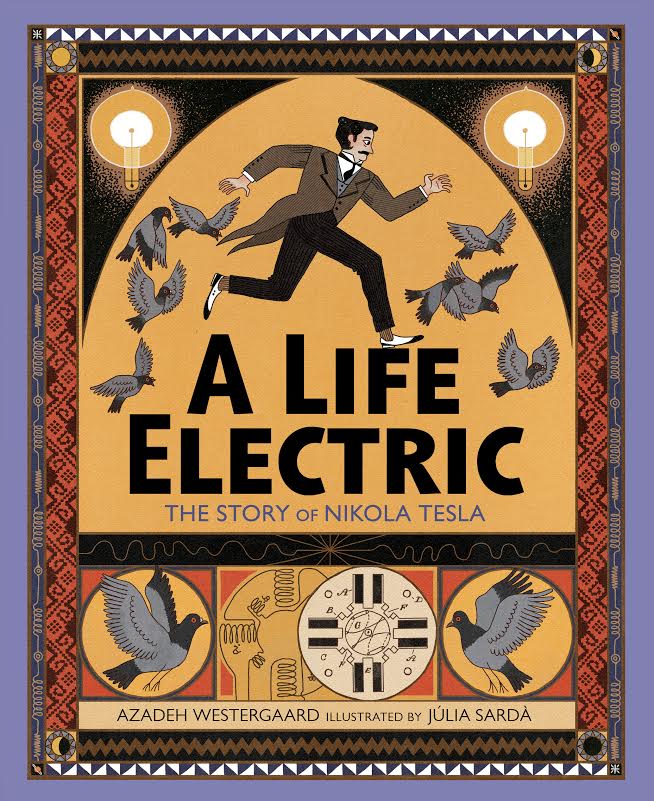
Cover Reveal and Interview with Azadeh Westergaard – The Life Electric: The Story of Nikola Tesla

December 10, 2020 by Betsy Bird

Tesla. It ain’t just a car.

I’m always in the market for a new picture book biography. Sometimes the subject matter doesn’t even have to be special. As long as the writing is good and the art splendid, I tend to be on board. But to hear that there’s a new Nikola Tesla bio on the horizon?

Now I field a fair number of requests for interviews, and quite frankly I don’t have the ability to do them all. But when Azadeh Westergaard wrote me about her upcoming book (The Life Electronc: The Story of Nikola Tesla, on shelves July 27th and illustrated by Júlia Sardà) she knew JUST how to pique my interest:

“When you worked at the New York Public Library, you may have noticed that the corner of 6th Avenue and West 40th Street is also named Nikola Tesla Corner. This sign commemorates three important markers in Tesla’s life: the location of his last laboratory at 8 West 40th Street, the Engineers Club at 32 West 40th Street which awarded Tesla the prestigious Edison Medal in 1916, and most significantly, this is where Tesla showed up every day with a bag of bird seed in hand to feed his beloved pigeons. My narrative weaves Tesla’s two lifelong loves — animals and inventions — in a truth is stranger than fiction biographical account of this truly remarkable, yet often overlooked genius.”

Well. I’m not made of stone.


Betsy Bird: I’m so freakin’ excited to read your book. It’s not that we haven’t seen other Tesla picture book biographies out there, but I’ve always been quite convinced that the world was in need of a wider variety. What inspired this particular book and your particular take?

Azadeh Westergaard: Thank you, Betsy! I found Tesla in a roundabout way. I was working on a middle grade novel and felt compelled to name my protagonist, Nikola. The only historical figure I knew with that name was Nikola Tesla, but I didn’t know much about him. When I eventually stumbled upon a copy of Tesla’s My Inventions, his delightful collection of autobiographical essays, I was so taken by his unique voice that I decided to model my fictional Nikola with some of Nikola Tesla’s character attributes.

Then in my first semester at the Vermont College of Fine Arts (VCFA), Writing for Children and Young Adults MFA program, I had the good fortune to work with the gifted author and teacher, Mary Quattlebaum, who asked if I had any picture book biography ideas, something animal-themed perhaps? I immediately thought of Tesla, googled “Nikola Tesla + animals” and stumbled upon his passion for pigeons. Needless to say, the more I learned about Tesla’s life story, the more intrigued I became.

That said, I’ve always been more of a humanities person so tackling the life story a scientific genius like Tesla felt a bit daunting. I also wondered if the whole pigeon angle was too far-fetched. Well, my doubts were laid to rest on my way home from work that night. As I waited for the bus debating whether I should embark on this project or not, a pigeon dropping landed on my shoe. Now I’ve lived in New York for a long time and thankfully that had not happened to me before, so I took it as a sign that I should go ahead with the project.

Then to move things along, during my second semester at VCFA, I lucked upon another gifted author and teacher, Martha Brockenbrough, whose enthusiasm and sage editorial insight emboldened me to push my way through the research and get to the heart of Nikola Tesla’s life story as succinctly as possible.

BB: So Tesla actually liked pigeons? Really? Tell me more. That’s sort of a forbidden love in NYC these days.

AW: Tesla didn’t just like pigeons, he was head over heels in love with them! He religiously fed the pigeons behind the main branch of the New York Public Library and in front of St. Patrick’s Cathedral with bird feed that he personally developed for maximum nutrition. In fact, he was so devoted to the city’s pigeons that if he ever had to miss a day, he hired messenger boys to feed his flock on his behalf. He was always on the lookout for injured or ill pigeons, which if he couldn’t nurse back to health himself, he’d send to the care of Dr. Raymond Garbutt, the chief veterinarian of the American Society for the Prevention of Cruelty to Animals in New York City.

As you can imagine, Tesla’s love of pigeons didn’t make life easy for him and brought him much professional ridicule in his later years. My intention for this book is to introduce young readers to Tesla’s formidable scientific legacy and to show them that his interest in pigeons (nature’s original wireless messengers!) came out of a life-long love for all living creatures — a devotion that began from his earliest years growing up on his family’s farm.

BB: Kids today certainly may have a better grasp on Tesla than I did when I was a child. To what do we owe this sudden surge in his 21st century popularity do you think?

AW: Unfortunately, Tesla ended his life in obscurity and poverty. After a meteoric rise early in his career with the breakthrough of his alternating current (AC) induction motor and countless other innovations, his name eventually fell through the cracks of history and it’s taken the world some time to properly recognize and acknowledge his enormous contributions to the generation and distribution of electricity and to our everyday lives. In part I think this is because he was so far ahead of his time, with concepts like “wireless communication” which were simply unimaginable at the time and for which he was mocked. And now that technology has caught up with Tesla’s visionary ideas and inventions, there has been a surge of interest in him as the many documentaries, biographies, and Hollywood films that celebrate his life can attest to. The ubiquity of Elon Musk’s Tesla, Inc., the electric car brand, certainly doesn’t hurt either!

BB: I mean, I have to ask it. Does Mr. Edison make a cameo in this book at all? And, if so, how does he come across?

Edison makes a brief cameo in the narrative and his relationship with Tesla and George Westinghouse is discussed in further detail in my Author’s Note. The three men clearly had a pretty complex relationship and I do write about the Current Wars and Edison’s shenanigans which definitely doesn’t cast him in the most flattering light.

BB: I am okay with that. You know, sometimes I believe that those amongst us born under lucky stars will get our picture book manuscripts paired up with people like, for example, the remarkable Júlia Sardà. And you managed it! Well done! had you been familiar with her work before? And how are you liking her interiors?

AW: Thank you — believe me, I know how lucky I am! My truly lovely editor, Tamar Brazis, was incredibly inclusive through the whole bookmaking process and we both agreed that Júlia’s illustration style would be an amazing fit for the manuscript. I first saw her work in One Fun Day with Lewis Carroll: A Celebration of Wordplay and a Girl Named Alice, written by Kathleen Krull and was so taken by her art, I purchased all of her books for my picture book collection. I also love what she did in The Liszts, written by Kyo Maclear and Mary Who Wrote Frankenstein, written by Linda Bailey… and don’t get me started on her incredible book covers and interiors for Sweep, written by Louise Greig and Duckworth, The Difficult Child, written by Michael Sussman.

Júlia has the singular gift of appealing both to the adult and child aesthetic sensibility, which for picture books is a truly winning combination. And she definitely dazzles with the interior spreads in this book, thanks also in no small part to the artistry of the book’s designer, Opal Roengchai.There is humor, pathos, and all sorts of brilliant details for a child to get lost in, including an earthy color palette and Tesla-centric themes and patterns that run throughout. I truly couldn’t be happier with how the book turned out.

BB: Are there any other picture book biographies out there that you particularly enjoy and recommend to others?

AW: One of my absolute favorites, and one I consider the gold standard for picture book biographies is Cloth Lullaby: The Woven Life of Louise Bourgeois by Amy Novesky and illustrated by Isabelle Arsenault. It’s reads like a love letter to Louise Bourgeois’ mother and the tremendous influence she had on her as an artist. The lyricism of the text paired with the gorgeous illustrations literally makes me swoon. It is just perfection inside and out.

I am also a huge fan of Jen Bryant and Melissa Sweet’s collaborations and my favorite is The Right Word: Roget and His Thesaurus. Jen Bryant introduces us to Peter Mark Roget as a list making child and masterfully follows the threads of this obsession into adulthood. Meanwhile, Melissa Sweet uses Roget’s habit of categorizing and collecting synonyms as an illustrative device on every spread, adding both depth and detail to the narrative. It’s a terrific example of art and text carrying equal weight on the page to make a picture book truly come to life.

BB: You are a woman of discerning taste, I can see. Finally, are you planning to do any further biographies for kids in the future? If so, would any have a science-y bent?

AW: Yes, definitely! The research process gives me enormous pleasure and I have a running list of potential subject contenders, both in the humanities and sciences.

Coming up, I will be working on an unannounced picture book biography with my editor, Tamar Brazis at Viking. For this one, I am going back to my cultural roots and writing about an Iranian artist, thanks to an astute suggestion made by my wonderful agent, Alyssa Eisner Henkin, which sent my imagination running.


Many many thanks to Azadeh for answering my many questions. Did you see how she fielded that one about other picture book biographies? I’ve never tried that one someone before, and I just loved her recommendation.

And now . . . as promised . . . . the cover in question:

Editor: Tamar Brazis

Illustrator: Júlia Sardà

Book Designer: Opal Roengchai

Publisher: Viking Books for Young Readers/Penguin Random House

Release Date: July 27, 2021

Preorder: https://www.penguinrandomhouse.com/books/611006/a-life-electric-by-azadeh-westergaard-illustrated-by-julia-sarda/

Find Azadeh Westergaard online @ahwestergaard and ahwestergaard.com

Find Júlia Sardà online at juliasarda.com.

And many thanks to Azadeh for today’s interview and reveal.

Filed Under: Cover Reveal, Interviews Tagged With: author interviews, Azadeh Westergaard, cover reveal, picture book biographies

31 Days, 31 Lists: 2020 Bilingual Children’s Books

December 10, 2020 by Betsy Bird

Did you happen to see Chicago Public Library and New York Public Library‘s recent lists of the best children’s books of 2020? Did you notice how both lists contained large numbers of Spanish language children’s titles? Not only is that a great idea, but one gets the impression that the systems came up with the idea independent of one another.

I’m no gargantuan system. I’m just one person. A person who doesn’t speak another language particularly well. Even so, I can still celebrate those books originally published in English and now released in another language, as well as books released simultaneously in both another language and English.

Today, let’s celebrate books unafraid to express themselves as widely as possible.


2020 Bilingual Children’s Books

La casa de algún día / The One Day House (La casa de algún día / The One Day House)

In 2017 Charlesbridge produced this Ezra Jack Keats Award winning picture book. In this book, a kid named Wilson dreams of all the ways he can help improve his friend Gigi’s house so that she’ll be warm, comfortable, and happy. Since moving to the Chicago area I’ve had a radar installed in my cranium that allows me to detect any and all children’s books with a possible local connection. So imagine my delight when lo and behold this book plops in my lap. Julia Durango is a resident of Ottawa, IL and this book was inspired by various Illinois organizations. It looks good, it reads great, and it has a connection to my adopted home state. What’s not to love?

Cuando Levantas la Mirada / When You Look Up by Decur, translated by Chloe Garcia Roberts

Behind a secret door in an old desk, Lorenzo finds a notebook filled with strange and fantastical stories. This book is best described as a story of a life, and the joy of being found. Okay, I gotta warn you guys that I am just goofy over this Argentinian import. You know how some imported books have their own internal logic and can be a bit difficult for American audiences to parse? Not this. Punctuated by dreamlike imagery I found the whole story incredibly moving. I loved how the art styles change between the real world and the one in the notebook. I loved the lesson about being found. I loved how all the elements in the book, even the broken light in the chandelier, appear at the end and have their own significance. This may be one of the loveliest comics I’ve read in a long long time. Expect to see it on other lists this month.

Princess Jill Never Sits Still / La Princesa Sara No Para by Margarita del Mazo, ill. José Fragoso

There’s something I just find so enticing about unapologetically crazed characters. Princess Jill isn’t one for sitting still (something that more than one child and more than one adult will relate to). She’s not a bad kid, she just has an excess of energy. Swinging on chandeliers is the norm here, not the exception. Her distraught parents seek to cure her until, by the end, a fellow pair of royals with a similar kiddo point out how that energy can be used. The ending falls a tiny bit flat (it ends with a hard slam on a gag, rather than wrapping things up gently afterwards) but you’ll hardly care after all the chaos that came before. Buy an English edition or a Spanish edition, as you please. 

Put Yourself in My Shoes / Ponte en mi lugar by Susanna Iser, ill. Mylène Rigaudie

Personal responsibility is an exceedingly difficult concept to teach to adults, let alone 5-year-olds. However, I remember with concrete clarity an old Sesame Street short from when I was a kid that showed what the Earth would look like if everyone littered. Iser’s book isn’t about environmental responsibility directly, but it’s all part and parcel when you’re talking about what we owe one another. In this story a Cricket sees the misfortune of others and, because these don’t affect him directly, just sort of goes his merry way. You can see where that leads. Come to think of it, maybe this is a COVID book! Social responsibility is, after all, the name of the game in 2020. Isern grew up in the Spanish Pyrenees and Rigaudie appears to be French. The book, naturally, works for everyone, and it’s nice to see that there’s an English edition and a Spanish edition out there. 

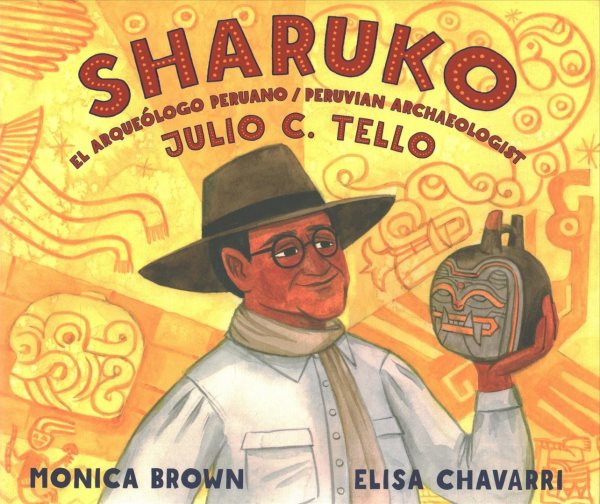
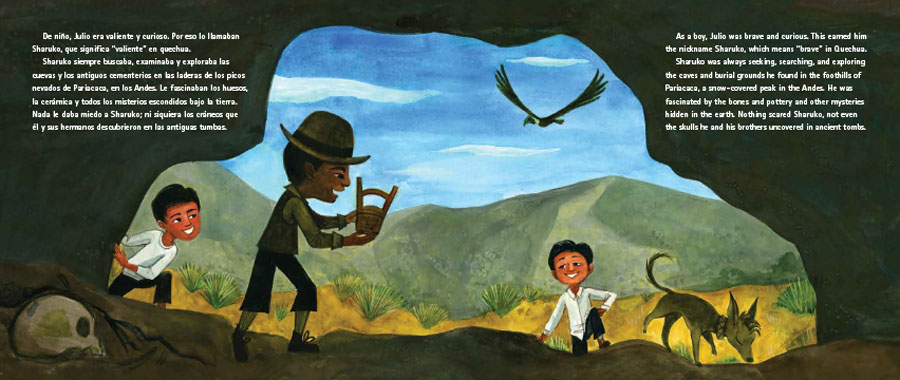
Sharuko El Arqueólogo Peruano / Peruvian Archaeologist Julio C. Tello by Monica Brown, ill. Elisa Chavarri

I was listening tonight to a bit of comedian Sam Jay’s special on visiting a huge museum in Europe for the first time, and her dawning realization that a good chunk of the stuff in there was stolen from all over the world. It’s the kind of thinking that isn’t exactly new, but in our current era feels more important than ever to examine. We’re so used to stories of archaeologists going into other people’s countries, digging up cool stuff, and then taking it back with them. So do we just forswear archaeology as a whole? Monica Brown comes up with a solution. Why not celebrate the archaeologists with specialized knowledge, who study the areas where they lived, make great discoveries, and keep them local? As Brown says, “As an Indigenous Peruvian and Quechua speaker, he told the story of Peru’s past from a Native perspective.” Peruvian illustrator Elisa Chavarri not only brings his story to life with great sweeping colors and details but because the book is entirely bilingual, she has to make space for a great deal of text. That she manages so well is a testament to the Art Direction and her own skill. Be sure you check out my interview with editor Louise May of Lee & Low about the logistics of creating bilingual books like this for kids.

Te Amo, Bebé / Love You, Baby by Stephan Lomp

The “Indestructibles” are back! When I had babies I was impressed by the degree to which your average Indestructible title could take a licking and keep on ticking. They’re as light as paperbacks, but even when they’re horribly abused they still get the job done. Board books are, as a rule, gross. These books aren’t. As for the content, Lomp’s big-eyed cartoonish pairings of children and caregivers in different animal forms is mesmerizing. Go, babies, go!

Voy a Portarme Muy Bien by Chris Haughton

Awww! Does it get any cuter than a book translated to “I’m Going to Behave Very Well”? If Haughton isn’t already a hit in other nations, he’s bound to be now. 

Who Ate My Fruit? / Quién se comió mi fruta? by Canizales

Though quite similar to Who Ate My Cakes? / Quién se comió mi pastel?, I vastly prefer this particular fruit-based lift-the-flap board book in the end. And why not? One of the nice things about it is that when you lift the flap of the partially eaten fruit, you get a wildly colored and unexpected animal munching away. Then there’s the fact that I always feel a little disconcerted when other characters in a book merrily steal the main character’s lunch. Maybe it comes from having little siblings, but it rankles. Fortunately, in this book the creatures turn the fruits they took into a lovely fruit salad made of all the things you saw before. As clever as it is delicious. 

Witchy Things / Cosas de Bruja by Mariasole Brusa, ill. Marta Sevilla

I gotta say, I like a book where a boy’s love of hairdressing isn’t the entire focus of the book, but remains just a neat detail that aids in the plot. In this book a witch with blue hair is mortified by her looks. It takes a clever kid with talent in his fingertips to make her look exactly the way SHE wants to. 

Yo Quiero Mi Sombrero by Jon Klassen

Honestly, I’m a little ashamed that it never occurred to me before to check and see if this was in Spanish. Apparently this is the first time it’s been translated! Better news still, all the “hat” books will be translated. If not now then soon. How’s that for a picker-upper?


Want to see other lists? Check out what happened this month!

December 1 – Great Board Books

December 2 – Board Book Reprints & Adaptations

December 3 – Transcendent Holiday Picture Books

December 4 – Picture Book Readalouds

December 5 – Rhyming Picture Books

December 6 – Funny Picture Books

December 7 – CaldeNotts

December 8 – Picture Book Reprints

December 9 – Math Books for Kids

December 10 – Bilingual Books

December 11 – Books with a Message

December 12 – Fabulous Photography

December 13 – Translated Picture Books

December 14 – Fairy Tales / Folktales / Religious Tales

December 15 – Wordless Picture Books

December 16 – Poetry Books

December 17 – Unconventional Children’s Books

December 18 – Easy Books & Early Chapter Books

December 19 – Comics & Graphic Novels

December 20 – Older Funny Books

December 21 – Science Fiction Books

December 22 – Fantasy Books

December 23 – Informational Fiction

December 24 – American History

December 25 – Science & Nature Books

December 26 – Unique Biographies

December 27 – Nonfiction Picture Books

December 28 – Nonfiction Books for Older Readers

December 29 – Best Audiobooks for Kids

December 30 – Middle Grade Novels

December 31 – Picture Books

Enjoy!

Filed Under: 31 Days 31 Lists, Best Books of 2020 Tagged With: 2020 bilingual picture books, 31 days 31 lists, Bilingual picture books, Spanish language children's books, Spanish picture books

31 Days, 31 Lists: 2020 Math Books for Kids

December 9, 2020 by Betsy Bird

Honestly, I don’t know how it happened, but by this point I’ve been serving on the Mathical Book Prize committee for something like five or six years now. And you know what? I love it! Everybody loves an underdog and there’s no genre of children’s book more underdoggy than those that engage with math. Indeed, I’ve grown to really appreciate books that can combine the expository nature of math with literature in some way. Having done this for a while, I’m noticing a small but sure uptick in math books each and every year. They’ll never be mainstream, but these beauties shine in their own way.


2020 Math Books for Kids

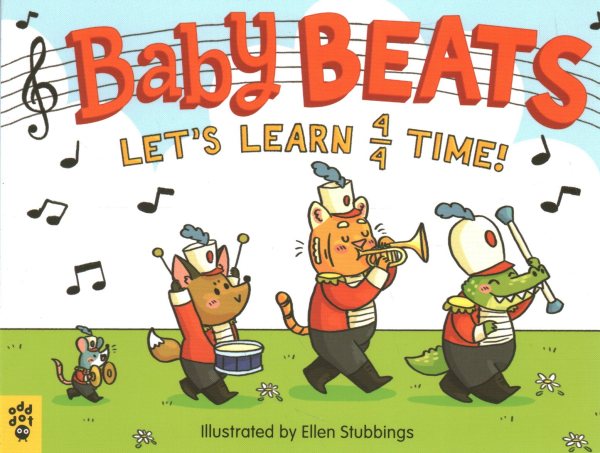
Baby Beats: Let’s Learn 4/4 Time by Ellen Stubbings

Baby Beats: Let’s Learn ¾ Time by Ellen Stubbings

Baby Beats: Let’s Learn 2/4 Time by Ellen Stubbings

Ingenious. Let’s begin with some board books, shall we? The Baby Beats books advertise themselves as providing, “a child’s first music lesson, enhancing his or her ability to recognize notes, beats, measures, and songs.” To do this, the book equates counting beats with the syllables of animals, and finally pairs everything together into a familiar song. For example, at the end of 4/4 Time a band performs Mary Had a Little Lamb, making it very clear how some notes are longer because they take up more syllables. It’s rather clever and darned if there isn’t math at work in here in the counting as well. A book that equates counting and music in a practical way that young learners can actually understand. Not easy to do, I don’t need to tell you.

The Blunders: A Counting Catastrophe! by Christina Soontornvat, ill. Colin Jack

Before they leave the house, the ten Blunder kids are told by their mom to not leave anyone behind. So what happens when they only count nine? Oo! This combines two of my favorite things! Classic folktales updated and math. This is a good old-fashioned fool tale, and illustrating it with the art of Colin Jack (who is never not good) was a clever way to go about things. Not only do the kids foolishly count forwards in the normal way, but they count backwards, and by twos and by threes. Beautifully laid out, funny, and kids will get to feel smarter than the characters, which is always a nice plus.

Dirt Cheap by Mark Hoffmann

I consider myself a big time fan of the kooky premise. This book delivers. Birdie wants a fancy soccer ball but it costs quite a bit of cash. When the narrator suggests that Birdie sell something, the obvious thing to buy is dirt. Initially the price is $25 a bag, which is a tad high. When that price is lowered to $0.25, the bags start flying. In one shot you get a magnificent accounting of the many different combinations of coins that can total twenty-five cents. Soccer ball finally in hand, there’s just one problem. Where do you play when all the dirt came out of your own yard? While the books plays loose and fast with precisely how long it takes for grass seed to take root, on the whole I love this madcap consideration of supply and demand. The Gift of the Magi ending also gives it a little kick. Consider handing this to the math teacher that’s covering coins and how much they can be worth in different combinations.

Dozens of Doughnuts by Carrie Finison, ill. Brianne Farley

Okay, so I need to write a small justification for this one. Essentially, I like the counting in this book just fine, but what I really love is that it shows a whole bunch of critters being extra greedy and then (wait for it) actually feeling bad about that fact!!! One of my pet peeves is the picture book character that lets other characters walk all over them. Not because I find the situations unrealistic but because I find them TOO realistic. I want justice! I want revenge! I want to not identify quite so closely with the doormat character. Well, in this book a perfectly nice bear named LouAnn (I mean, right there, good name) keeps making these shockingly deliciously illustrated doughnuts as her voracious “friends” keep inviting themselves over to eat ‘em up. At the end she gets rightfully pissed off and they come back to make it up to her by essentially drowning her in fresh doughnuts. I like the writing, the story, the art, the doughnuts, the counting, the whole kerschmozzle. Extra Bonus: This book shows how twelve doughnuts can be split evenly between 1, 2, 3, 4, and 6 characters.

Emmy Noether, the Most Important Mathematician You’ve Never Heard Of by Helaine Becker, ill. Kari Rust

Oh, my goodness gracious me! I came THIS close to missing this book this year. Slot this one into the good math-related picture book biography section. This book doesn’t disappoint. First of all, it eschews the usual pitfalls such books fall into far too often. No fake dialogue, no fictionalized scenes for dramatic effect, NONE of that! Instead, it’s a fun recounting of the facts surrounding Emmy’s life. At the beginning you get a checklist of the qualities girls were supposed to embody in the late 19th century. That list is paralleled on the opposite page by all the things Emmy couldn’t do (the usual “feminine” talents) and what she could (puzzles and math). She managed to sit in on the local university’s classes, and attend when it changed its rules and let women in. When Einstein’s theory of relativity had a hole in it, Emmy was able to use the field of algebra called “invariance” to solve it. And when the Nazis rode to power, Einstein helped set her up in America. Oh, and did we mention that she invented Noether’s theorem, and worked on “ideal theory” which has helped underlie computer science today? The art and writing together in this book are great, and I was very impressed by the mathematical explanations. I wouldn’t say a kid would understand everything, but it at least may make some want to learn more so that they CAN understand it. 2020 has seen a plethora of biographies for kids of individuals that weren’t attention hogs, so this book would pair nicely with The Only Woman in the Room. Or Nothing Stopped Sophie for that matter. So much fun.

The Language of the Universe: A Visual Exploration of Mathematics by Colin Stuart, ill. Ximo Abadía

Homeric. The world does not lack for oversized colorful children’s books filled with knowledge on a wide variety of subjects. Yet most of those books contain pretty rote subject matter. History. Science. La de dah. This book goes in a slightly different direction. It’s Mission: To show kids how math is infused into every possible aspect of the world around them. To convey this succinctly, mathematical concepts must be simplified. And generally speaking, Stewart does a top notch job. I might have liked some ideas in here to be from women or people of color, but generally speaking he’s capable of making comprehensible the complicated. Abadía faces the equally awkward challenge of taking this information and making it all fit on a page AND look nice in the process. In the end, kids will not be bored paging through this book. They may latch on to parts they already know (Newton’s Law or binary digits) and then explore from there. This is a book that it would be easy to dip in and out of. Infinitely (ha!) helpful.

Numbers in Motion: Sophie Kowalevski, Queen of Mathematics by Laurie Wallmark, ill. Yevgenia Nayberg

It is hard, it is hard, it is oh so hard to write picture book biographies of mathematicians. Part of what I appreciated about this one is the fact that it takes care to (A) Not use fake dialogue and (B) apply Sophie’s discoveries directly to their contemporary uses (WiFi, astronomy, etc.). There’s a nice Author’s Note, Timeline, and Bibliography at the back of the book, but the part that made my heart go pitter-pat the most was the selection on “Sophie Kowalevski’s Name and the Cyrillic Alphabet.” No kid is going to get a kick out of it, but I for one appreciated the mention and clarification. I trust the book that much more, seeing how the author came to one decision or another. Who knew that 2020 would turn out to be such a strong year for picture book biographies of female mathematicians?

Seven Golden Rings: A Tale of Music and Math by Rajani LaRocca, ill. Archana Sreenivasan

Faced with a conundrum of how to pay his way at an inn, a clever boy uses binary numbers in an eclectic manner to win the day. I’m just charmed by this book. It’s a folktale that teaches binary in an exceedingly clever way. It could well be that the book is almost too clever for its own good, but honestly it reminded me a lot of that classic One Grain of Rice by Demi. Rajani LaRocca is probably best known for her middle grade fiction, like Midsummer Madness. When I interviewed her on this blog recently alongside a cover reveal of her latest (math-related) middle grade novel, she offered this stirring defense of writing mathy books. “I’ve loved math—its elegance, its concreteness, and its objectivity—from when I was a kid. I love how math is found everywhere, but particularly in the natural world. And I particularly love math puzzles, which invite us to discover tricks to solve them. I’ve always been a fan of stories with kids using their smarts to solve puzzles or riddles, so it’s not a surprise that now I’m writing them myself.” Good writing, fun art, and a slick incorporation of math into fiction.

Shape Up, Construction Trucks! by Victoria Allenby

Hey, shape books are math books too. And if you’re gonna go all out, why not just throw a couple construction vehicles into the mix? Allenby’s book is almost too good for its very simple premise. Essentially, you’re just looking at some (remarkably detailed, high-resolution) photos of construction equipment and finding the natural shapes in them. And just to up the ante, it rhymes. As the Kirkus review pointed out, you could do a whole storytime and sing this book to the “Twinkle Twinkle Little Star” song (which I always did with Brown Bear, Brown Bear, What Do You See?) and make a whole construction production out of it!

Two Dogs on a Trike by Gabi Snyder, ill. Robin Rosenthal

Some serious side-eye going on in this book. With gentle, rhyming text the reader joins a sneaky cat and a cadre of canines as they increase one-by-one. Midway through the book, the cat reveals itself, the dogs retreat (counting steadily downward) until only the cat remains. Then it starts counting up again (but check out who’s stalking them). Maybe it’s not the most complicated way to show counting both up and down, but it’s as efficient as it is amusing. I found myself growing increasingly fond of both the art and the writing as the story continued. Finding good math books for the youngest of readers can be difficult in a given year, but this does a stand up and bark job.


Want to see other lists? Check out what happened this month!

December 1 – Great Board Books

December 2 – Board Book Reprints & Adaptations

December 3 – Transcendent Holiday Picture Books

December 4 – Picture Book Readalouds

December 5 – Rhyming Picture Books

December 6 – Funny Picture Books

December 7 – CaldeNotts

December 8 – Picture Book Reprints

December 9 – Math Books for Kids

December 10 – Bilingual Books

December 11 – Books with a Message

December 12 – Fabulous Photography

December 13 – Translated Picture Books

December 14 – Fairy Tales / Folktales / Religious Tales

December 15 – Wordless Picture Books

December 16 – Poetry Books

December 17 – Unconventional Children’s Books

December 18 – Easy Books & Early Chapter Books

December 19 – Comics & Graphic Novels

December 20 – Older Funny Books

December 21 – Science Fiction Books

December 22 – Fantasy Books

December 23 – Informational Fiction

December 24 – American History

December 25 – Science & Nature Books

December 26 – Unique Biographies

December 27 – Nonfiction Picture Books

December 28 – Nonfiction Books for Older Readers

December 29 – Best Audiobooks for Kids

December 30 – Middle Grade Novels

December 31 – Picture Books

Enjoy!

Filed Under: 31 Days 31 Lists, Best Books, Best Books of 2020 Tagged With: 31 days 31 lists, math, math and science books, math picture books

  • « Go to Previous Page
  • Page 1
  • Interim pages omitted …
  • Page 237
  • Page 238
  • Page 239
  • Page 240
  • Page 241
  • Interim pages omitted …
  • Page 1051
  • Go to Next Page »

Primary Sidebar