• Skip to primary navigation
  • Skip to main content
  • Skip to primary sidebar
  • About/Contact
  • Fusenews
  • Reviews
  • Librarian Previews
  • Best Books
    • Top 100
    • Best Books of 2022
    • Best Books of 2021
    • Best Books of 2020
    • Best Books of 2019
    • Best Books of 2018
    • Best Books of 2017
    • Best Books of 2016
    • Best Books of 2015
    • Best Books of 2014
    • Best Books of 2013
  • Fuse 8 n’ Kate
  • Videos
  • Press Release Fun

31 Days, 31 Lists: 2022 Gross Books for Kids

31 Days, 31 Lists: 2022 Gross Books for Kids

December 10, 2022 by Betsy Bird

We’re making a slight deviation away from our regularly scheduled picture books today to bring you some truly and thoroughly disgusting titles.

You know, until this year I’d never thought to track the gross books that I come across. Then I met a little title on today’s list by the name of Packing for Mars for Kids and my life was never the same again. At my workplace (Evanston Public Library) we got into a long debate during the last day of our 101 Great Books for Kids meeting surrounding that title. You see, we were trying to cut all the books we knew and loved of 2022 down to a mere 101. That means killing your babies, and no one likes to do that. Someone had suggested cutting Packing for Mars, and many of us had a kneejerk reaction to that suggestion. Yet as time went on, we came to realize that there are plenty of perfectly good gross books out there. We couldn’t get obsessed with just one! As long as there was at least one gut-churning book of disgust on our list, we should be grateful. And so, I am, today, celebrating titles unafraid of bodily functions, blood, and other seriously icky elements.

Trouble is, most of the good gross stuff in 2022 was written with older kids in mind. There are picture books and early chapter books listed, but they’re few and far between. As such, I apologize to the small spry looking for a good disgusting title. Don’t worry. With any luck you’ll be able to sneak a glance at some of the stuff in these books. And it won’t be pretty…


2022 Gross Books for Kids

American Murderer: The Parasite That Haunted the South by Gail Jarrow
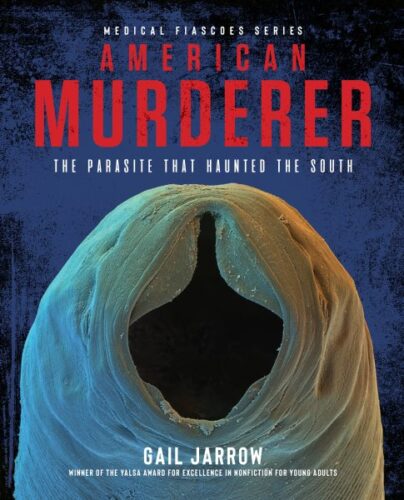
A face only a mother could love?
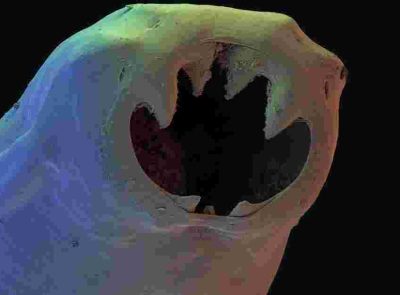
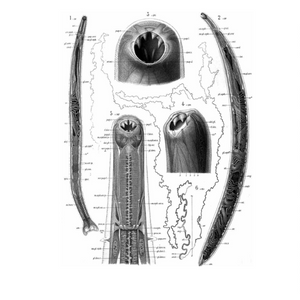
Hoo boy! I’ll be seeing this one in my dreams tonight! And the crazy thing is, I didn’t even post the grossest picture here (read the book and see if you can figure out which pic I mean).

Remember when I mentioned that my library has an unofficial rule that when we create our annual 101 Great Books for Kids list there should be at least one seriously gross book on the list in some way? Gross isn’t for everyone but when you find a good one, you hold it close (metaphorically). Now we were considering both this book, American Murderer, and Packing for Mars for Kids, each gross in their own unique ways (and both for kids between the ages of 9-12). Ultimately, this was the book that stole our hearts. Why? Because, and I mean this truly my friends, it is terrifying. Imagine me running around the home, thrusting this book into the face of my 3rd grader to show him the terrifyingly toothy hookworm photos inside. I am the best mom! And this is the best book. It really explains perfectly how the American South was effectively crushed for generations by a hookworm named, and this is true, the American Murderer. This is part of the Calkins Creek “Medical Fiascoes” series, and is the first I’ve had a chance to read myself, though I’ve always been a big Jarrow fan. Full of disgusting and fascinating photos and images, a certain strand of kid is going to find this enthralling. Worms worms worms!

Bee and Flea and the Compost Caper by Anna Humphrey, illus by Mike Deas
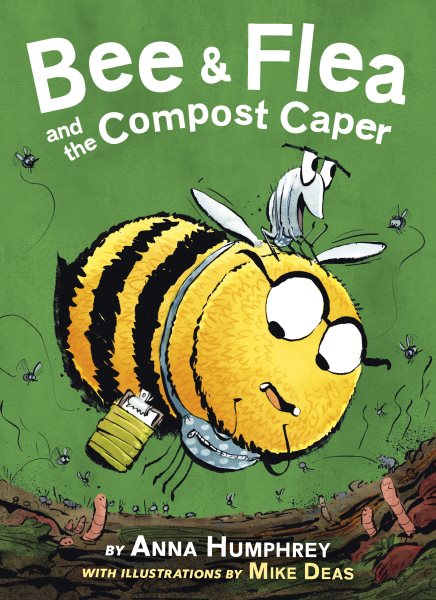
Now we leap from older nonfiction books to early chapter fiction titles. Bee is bored. She wants to do more than just collect pollen all day, so when Flea hires her to join her investigation into the local compost heap, she’s on board. A magnificent deep dive (literally) into the ecosystem of compost and soil. I like it! I like how weird it is, and how beautifully it really works in the natural ecosystem of a typical compost heap works. I suppose it’s not technically to scale, but who cares? The science is interwoven seamlessly into the storyline, and while there’s probably a lot more poop in there than I’d personally prefer (which makes it ideal for today’s list), you can’t say it isn’t necessary. Love that Flea and Bee have such strong personalities right from the start too.

Buzzkill: A Wild Wander Through the Weird and Threatened World of Bugs by Brenna Maloney, ill. Dave Mottram
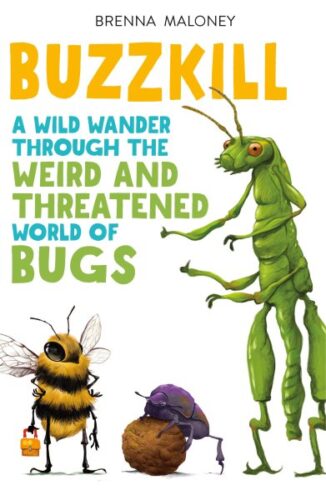
I came this close to missing this book. It was only through the intervention of a friend (and well-respected author) that it even came to my attention. Without revealing this friend’s identity, this person is a much better writer than I will ever be and so I put to you a small portion of the recommendation that convinced me to pick this up:

“She’s [Maloney] not only a very funny writer, doing a kind of stand-up about insects (she’s a big researcher) but she’s an incredibly elegant one with metaphors. For example, she talks about the noise cicadas make and she describes the process as being very like the way you make noise expanding and contracting a bendy straw. What kid hasn’t made that bendy-straw noise? When she talks about molting, she explains that the new exoskeleton has to be bigger than the old one, so it’s like having a heavy winter coat underneath a thin, sweat-soaked tee shirt—you have to peel off that tee-shirt very carefully, and lots of times a leg gets torn off in the process. Everything is explained with the utmost clarity, as if she were standing by your elbow.”

The book itself is a whopper, clocking in at a whopping 378 pages. Your kids will read every word. So it is gross? And how! Whether Brenna Maloney is eating mealworms (not crickets, though), talking about eyelash mites, discussing the loudest animal in the world (the water boatman bug that makes the sound by hitting its penis against its abdomen), or what have you, disgusting details abound and are so funny and so smart. I freakin’ love this book. Bugs, man. Who knew?

Northwind by Gary Paulsen
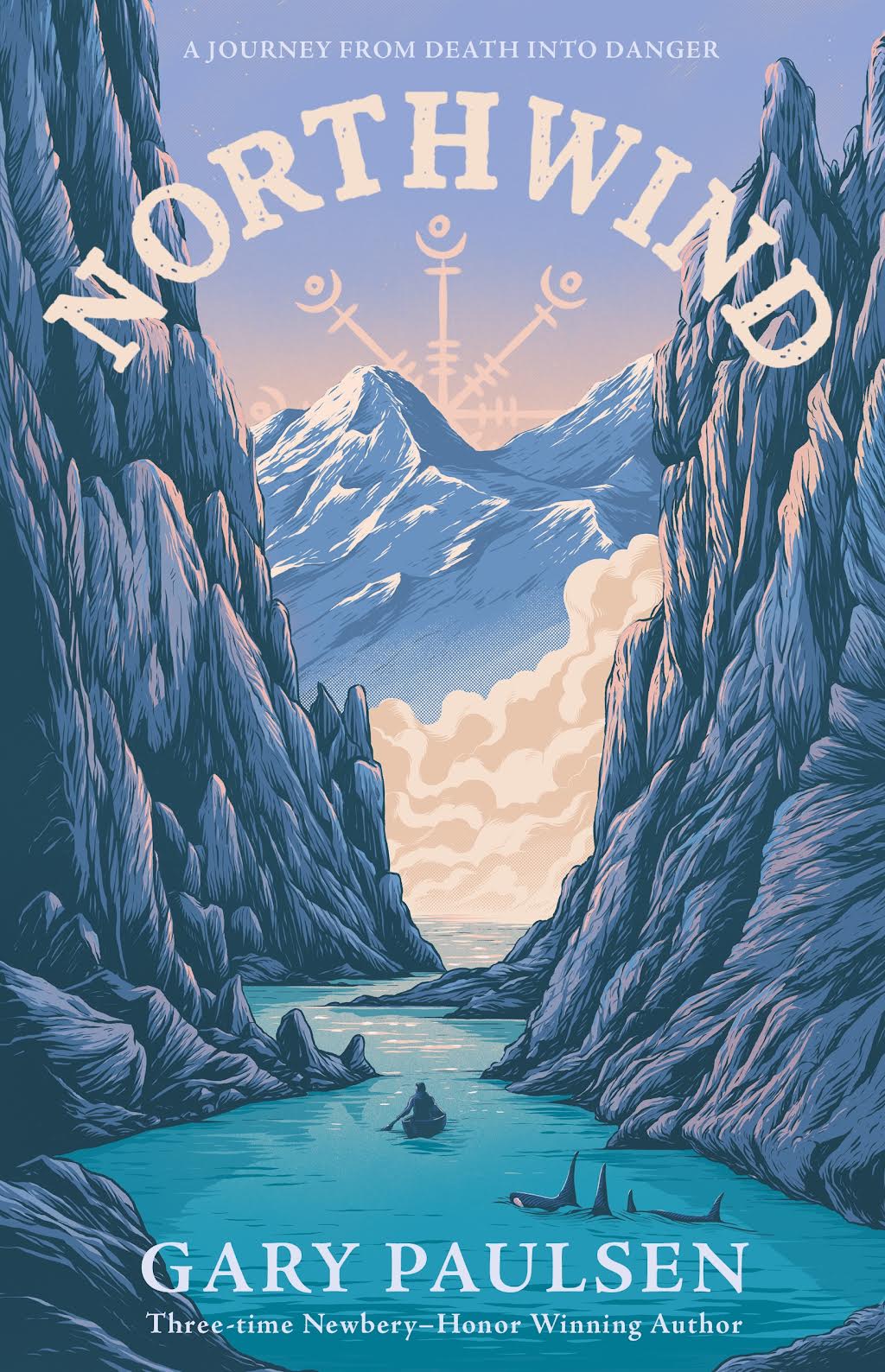
During a great plague in the distant past, a boy must escape The Sick by paddling up the coast and heading North. He encounters many obstacles along the way in this thrilling (and at times incredibly gross) survival story from the late Hatchet author. If 2022 is remembered for anything, apparently it’ll be for some of the grossest books for kids you’ve seen in a long time. This one definitely starts out with a serious “ew” factor, and for that I commend it! Nothing gets a young reader’s attention faster than puke and poop, after all. Paulsen really had writing down to a science, right up until the end. This has all the thrill of Hatchet but with some really remarkable introspective passages about the meaning of a life. I deem this book Maslow’s Hierarchy of Needs: For Kids. Excellent.

Packing for Mars for Kids by Mary Roach
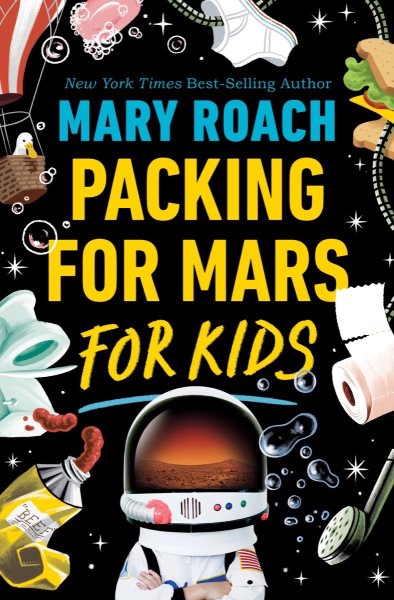
Did you know that a human body never feels like it has to pee in zero gravity? Did you know that showers don’t work in space? Or that after a couple weeks your nose stops noticing bad body odors? Join Mary Roach for the grossest trip to the stars you will ever EVER encounter. Folks, I don’t want to overhype this, but I think this may well be the grossest nonfiction book for kids I have ever read in my life. You know all those books on poop and snot and what have you? None of them can hold a candle to this. Now generally I dislike Young Reader’s Editions of any adult titles, but Roach’s original book (Packing for Mars: The Curious Science of Life in the Void) came out in 2010. I’d say 12 years is about the right amount of time to get a younger version right. I do desperately wish they’d renamed it, though. Though the book is about life in space, there’s almost no mention of Mars itself until then end, so Mars-hungry kids are going to be pretty disappointed. Also, this book takes about three chapters to really get going. The first two are fine, but I did think about stopping more than once. Then we started talking toilets and everything got really crazy, really fast. I learned so much that I can never unlearn. Let’s just say the section on fecal bags may have scarred me for life. A winner!

The Secrets of Cricket Karlsson by Kristina Sigunsdotter, ill. Ester Eriksson, translated by Julia Marshall

Cricket’s out of school with chicken pox for just two weeks and when she gets back her best friend has abandoned her. Hilarious hijinks, truly gross moments, and some smart takes on adult foibles accompany this Swedish chapter book import. I am definitely picking up on what this wackadoodle little book is putting down. I often think that books for kids never really get into how gross girls really get with one another. Like that whole pretending to have gotten your period part and the part where they smear chocolate brownie all over their faces and come out claiming to have eaten poop. THAT rang so true for me! Some reviewer called Cricket “the Emo Pippi Longstocking” but Cricket’s energy reminded me a lot more of David Shannon’s David books, just more grown up. I thought the family’s attitude towards the aunt’s mental illness was believable, heartbreaking, and (thankfully) clearly wrong-headed. Truth be told there’s a small moment mentioning Tourette’s Syndrome that is NOT good and should have been excised. Aside from that, it’s a title that’s honest about childhood, friendships, and gross stuff.

The World’s Most Ridiculous Animals by Philip Bunting
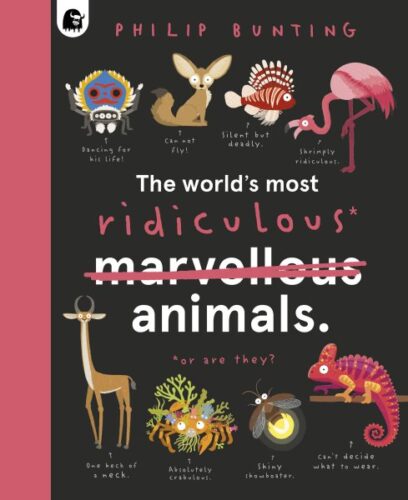
It’s as if Philip Bunting said to himself, “To please Betsy this year, I shall include an entry into my World’s Most series that contains not one but TWO Simpsons references on the same page!” I’m not even kidding. Check out the entry on tardigrades if you don’t believe. Now I included a Philip Bunting book on a previous year’s list as well (in that case it was The World’s Most Pointless Animals) and I was gratified to see that that book must have sold pretty well since Happy Yak tapped the man to write another in the same vein. Here the only impetus is for these creatures to be interesting. As such you’ll get gross critters like the zombie snail and strangely pretty ones like the ribbon eel. Guaranteed you’ll learn something from this, plus the joke density is fairly high. Even if you don’t know The Simpsons (in which case, how are we even friends?) you’ll find a lot to laugh at here.

You Can’t Kill Snow White by Beatrice Alemagna, translated by Karin Snelson and Emilie Robert Wong
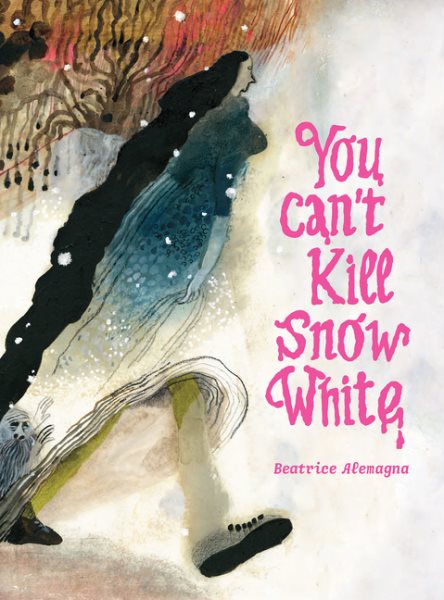
The original Grimm Brothers fairy tale comes to life in this dark retelling for older readers. From eating raw hearts to dancing to death in hot shoes (hence its inclusion on today’s list), lurid fever-dreamesque art sucks into the story you thought you knew so well. You know, I never thought of Snow White as the Rasputin of fairy tale characters (in terms of invulnerability) but this title sort of makes me think of her that way. So this book is weird. Purposefully so, to a certain extent, but also by strategic design. Apparently this is published under Enchanted Lion’s new “Unruly” imprint (good name), which creates picture books for adult readers. Reading that, I figured that this would be an adult Snow White. You know, something along the lines of that Donald Barthelme book I had to read in college. Instead, it’s pretty straightforward. It may find more pleasure in showing the evil queen eating the pig heart from a variety of different moments in time, which is … unusual, but this is a Grimm brothers story. Gross is part of the text. Kids don’t care, it’s the adults that get squeamish.

Yuck, You Suck! Poems About Animals That Sip, Slurp, Suck by Jane Yolen and Heidi E.Y. Stemple, ill. Eugenia Nobati
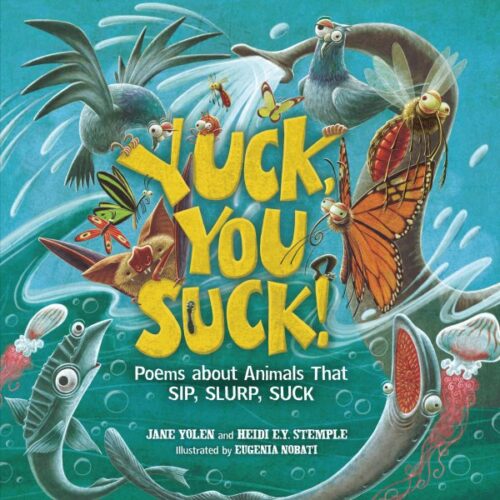
I want you to understand that deranged eyeballs on a poetry picture book will, many times, be sufficient to get me interested in the contents therein. Add in the fact that this book is technically a STEM title, but with a delightfully gross twist, and the poetry itself just becomes a helpful bonus. You want poetry with bite? You got it, babe. Mother/daughter team Yolen/Stemple have conjured up 15 different poems on creatures with sucking abilities. You’ll know some of them already, like mosquitoes or vampire bats. But did you know that pigeons have a beak that works like a straw (unlike many other birds)? Or that remoras don’t (actually) suck? There’s plenty of gross qualities to enjoy (I got one word for you: lampreys) and a wide variety of poetic styles ranging from haikus to concrete poems. Add in the great backmatter (“Anatomical Terms for Parts That Suck”, “Animals Suck for a Reason”, “Other Books to Sink Your Proboscis Into”) which also includes additional info on each sucker AND a glossary and you have yourself one heckuva disgusting class act.


Want to see other lists? Stay tuned for the rest this month!

December 1 – Great Board Books

December 2 – Picture Book Readalouds

December 3 – Simple Picture Book Texts

December 4 – Transcendent Holiday Picture Books

December 5 – Rhyming Picture Books

December 6 – Funny Picture Books

December 7 – CaldeNotts

December 8 – Picture Book Reprints

December 9 – Math Books for Kids

December 10 – Gross Books

December 11 – Books with a Message

December 12 – Fabulous Photography

December 13 – Translated Picture Books

December 14 – Fairy Tales / Folktales / Religious Tales

December 15 – Wordless Picture Books

December 16 – Poetry Books

December 17 – Unconventional Children’s Books

December 18 – Easy Books & Early Chapter Books

December 19 – Comics & Graphic Novels

December 20 – Older Funny Books

December 21 – Science Fiction Books

December 22 – Fantasy Books

December 23 – Informational Fiction

December 24 – American History

December 25 – Science & Nature Books

December 26 – Unique Biographies

December 27 – Nonfiction Picture Books

December 28 – Nonfiction Books for Older Readers

December 29 – Best Audiobooks for Kids

December 30 – Middle Grade Novels

December 31 – Picture Books
Filed Under: 31 Days 31 Lists, Best Books of 2022 Tagged With: 31 days 31 lists, Best Books of 2022, gross books

31 Days, 31 Lists: 2022 Math Books for Kids

December 9, 2022 by Betsy Bird

Math!

Math math math!

Whodathunk that I, Betsy Bird, former perfectly-average-math-kid, would be so fond of numbers and equations in my children’s books today? Not me from 30 years ago, that’s for sure. And yet, due to the sheer number of fabulous titles out in a given year, math now abounds and we are all better for it. Who can resist it?

Now this was the last year that I served on the Mathical Book Prize committee, and I leave them with sadness. Of course I can still submit the titles I like best to them every year, and thanks to the plethora of submissions out there, I shall! I won’t be able to see quite as many titles as I did before, but them’s the breaks. At least I have a couple true charmers on this list today.

Can’t get enough of those numbers and numerals? Then check out my previous years lists!

  • 2020
  • 2019
  • 2018
  • 2017
  • 2016

2022 Math Books for Kids

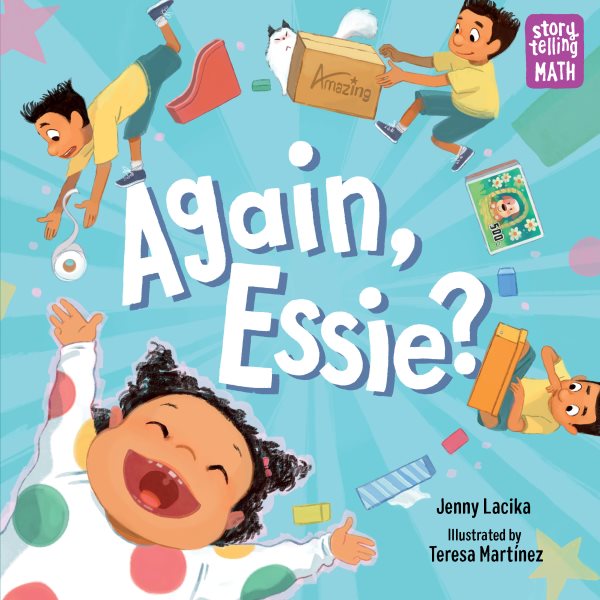
Again, Essie? by Jenny Lacika, ill. Teresa Martínez

The “Storytelling Math” picture book series strikes again. To be frank, I got nothing but respect for the folks that put these titles out. They take such extra care to include a wide variety of levels in math, representative backgrounds, and just fun stories. Now sometimes I put a hold on a book in my library and it comes in and I forget why I reserved it in the first place. When I received this one I sort of missed the big “Storytelling Math” square on the cover. The result was that I read this just like any other story. The whole premise is that older brother Rafael is trying desperately to keep his little sister Essie from bothering him. While she naps he finds every kind of box he can and then sets upon building a wall out of the boxes. The logistics behind getting the right shapes in the right places was deeply satisfying to me and I found myself thinking, “Hey! This is good book on spacial reasoning! I should put this in my Math list at the end of the year” before I got to the end and saw all the useful mathy backmatter. In addition to an “Exploring the Math” portion with explanations and then suggestions for doing similar fun things with your own kids, there’s a Glossary for the Spanish terms in the book, and a note about borders and walls that’s a touch more serious than you’d usually find in a light-hearted story of toddler destruction. Good all around.

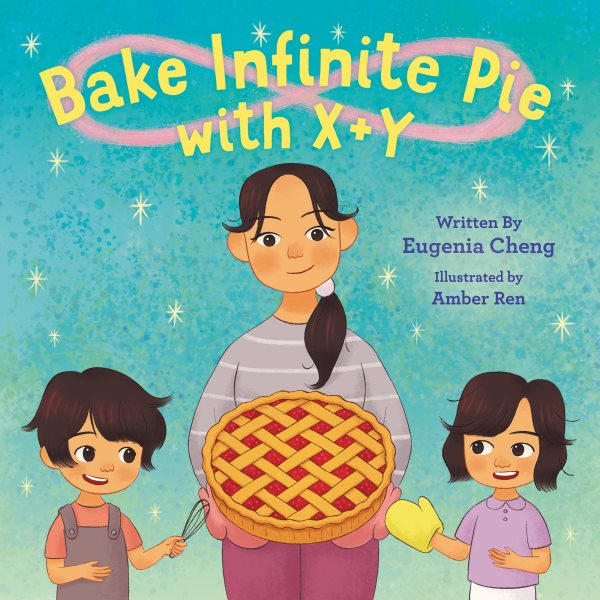
Bake Infinite Pie with X + Y by Eugenia Cheng, ill. Amber Ren

Infinity is one of those concepts that picture book creators, even the ones that can’t stand math, are unable to resist placing with the covers of 32-page books. Eugenia Cheng, however, is actually a mathematician herself and she is NOT afraid of big math ideas. That’s a bit of an understatement, actually, since this book isn’t just talking about infinity. It’s discussing exponentials and fractals and x and y-axes. Zeno’s Paradox even makes an appearance and you know how much I love it when Zeno shows up. Fun math done right. Even if kids don’t get every idea on these pages, it at least has the ability of opening their eyes and stirring up new notions in those little percolating brains of theirs.

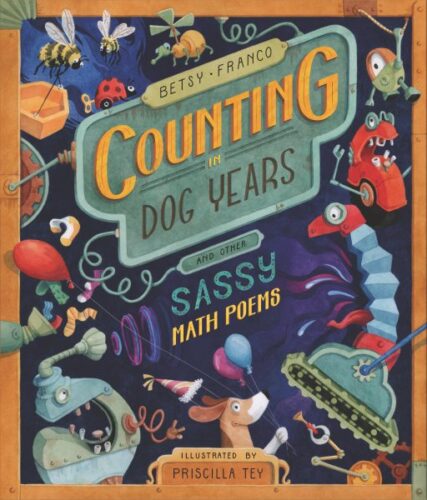
Counting in Dog Years and Other Sassy Math Poems by Betsy Franco, ill. Priscilla Tey

Am I on board with sassy math poems? Yes, I am on board with sassy math poems. The question is how sassy are we talking here? On a scale of one to ten, with ten being the most sassy and one being only mildly sassy, where would this particular book fall? Squarely at five. We’re talking medium level sass. In terms of the poetry and the math itself, though, much higher! While on the Mathical Book Prize committee I’ve always been astounded by math books for children that are afraid of their own math. Franco doesn’t give me that impression. Poems like “How Old Am I?”, for example, go through fractions as they relate to age and birthdays, which I found pretty darn impressive. Meanwhile you’ve these exceedingly delightful gouache pieces of art from Priscilla Tey that can take that poem about fractions and turn it into this rather beautifully rendered side-view of a person’s head as house (trust me, it makes sense when you’re looking at it). The math is strong with this one. The poetry? Strong too!

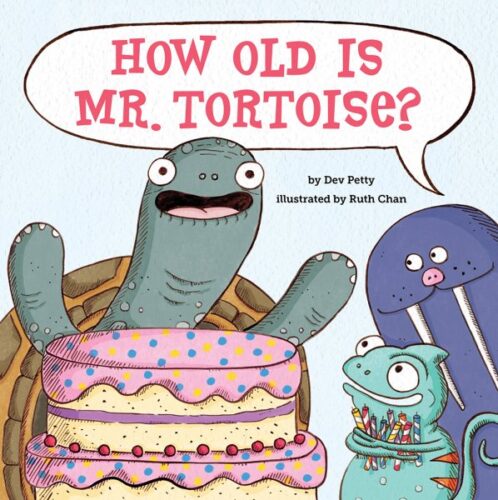
How Old Is Mr. Tortoise? by Dev Petty, ill. Ruth Chan

Math. You never know when it’s gonna getcha. In spite of its title, this one surprised me. I like Dev Petty and Ruth Chan and usually think of them as the types of picture book creators that bring the funny. That’s true here, but they’re also unafraid to bring the mathy, and for that I salute them. In this story Mr. Tortoise is having a birthday and he is VERY excited about the whole eating cake part of the process. However, when asked his age he’s a bit uncertain. What follows is a rather clever bit of detective work. As more and more clues are brought into the story. The final solution involves counting a number of succulents, adding them to the age Mr. Tortoise was when he moved into his new enclosure, and then adding an additional number he’s eaten (five). This makes for a surprisingly satisfying ending. This is everyday math in its finest flower and I, for one, salute it!

How to Hear the Universe: Gaby González and the Search for Einstein’s Ripples in Space-Time by Patricia Valdez, ill. Sara Palacios

How many Argentinian female physicist picture biographies would you say you have sitting on your shelves right now? What’s that? You don’t have any? How wrong you are. You have at least one, because after you read this recap you’re going to go out and buy a copy of this book and pronto. One of the things I like most about science and math is people’s ability to collaborate on ideas and projects, even when separated by time. And being separated by time is a particularly apt thing to say when you’re talking about Albert Einstein. It seems he once had a theory about ripples in space-time, but was never able to adequately prove it in his lifetime. Enter Gaby González. Valdez does a particularly keen job of highlighting her life, in the context of trying to figure out whether or not Einstein was right. What’s also nice is how this book doesn’t make it look like she went it alone, always showing her working in a group with other scientists. It never cheats with fake dialogue and you want Backmatter? You got it, baby! Check out these fantastic options. Timeline, Glossary, Selected Sources, Videos, Websites, and two pages of written text that give even more context. In a word: beautiful.

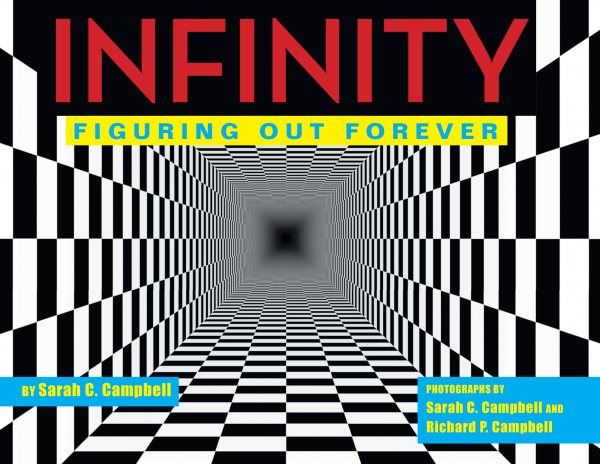
Infinity: Figuring Out Forever by Sarah C. Campbell, photos by Sarah C. Campbell and Richard P. Campbell

Folks, I’ve been round this here sun once or twice and I can tell you for a fact that the concept of infinity is so powerful that it has been known to melt the minds of children’s book creators. How else to explain why the majority of picture books and nonfiction titles for kids on the topic start out strong and then slip irrevocably into the esoteric? If I’m going to have a kid at my reference desk asking me for a book on infinity, by gum I want a friggin’ book on the mathematical concept itself! Except, y’know, kid-friendly. After an inordinate amount of time, I think I’ve found my match. Sarah C. Campbell does a grand job of not only saying what infinity is, but also makes it clear what infinity is not (mirrors that reflect into the distance don’t count). I love that the book shows how infinity aided in things like landing on the moon (it’s vague on the particulars but then it would have to be, right?). The important thing is that it establishes infinity’s importance for the younger readers and it does so admirably. A necessary purchase for libraries!

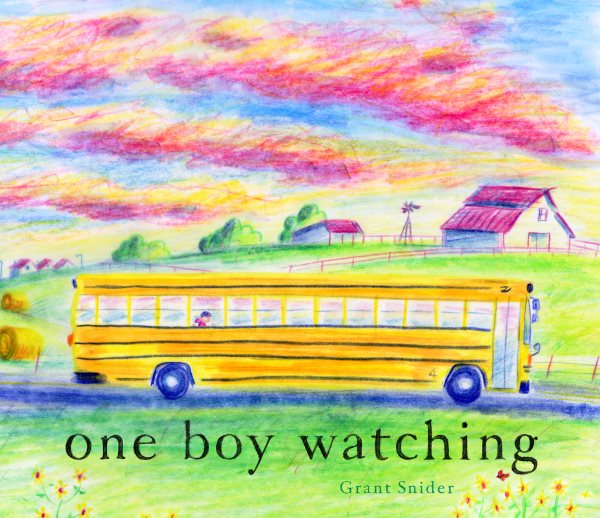
One Boy Watching by Grant Snider

Is it math? Or are numbers merely a means to an end? I don’t know, but looking at this book I was instantly reminded of Shawn Harris’s Caldecott Honor winning Have You Ever Seen a Flower? No coincidence, this book is also published by Chronicle (motto: Chronicle – For all your colored pencil needs). This book is particularly interesting to me, though, because it highlights something I’ve never really noticed mentioned in children’s books before. Mainly, that for a lot of kids (including my own) a bus ride provides a large chunk of time for contemplation that they really don’t get anytime else. Here, a boy is the first one on his route, and he counts the things he sees on the familiar travels. He even counts the kids that come onto the bus. And I am happy to report that when the book says that there are “Forty-eight kids in all,” I sat down and counted and there ARE forty-eight kids on the pages! You’d be amazed how often books cheat when they list numbers like this. You know some kid, somewhere, is going to count as well. May as well not disappoint them. Lovely, languid, colorful, thoughtful, and full of numbers. What more could you want?

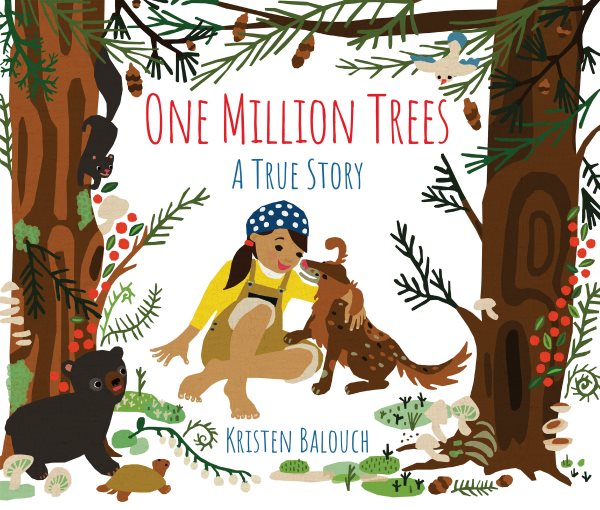
One Million Trees: A True Story by Kristen Balouch 

What would you do if your parents pulled you out of school so that you could join them in planting one million trees? This turns out to be a fun picture book memoir of an amazing feat. And I just gotta say that this is a real real nice book. You know what it really reminded me of? A more environmentally conscious Three Days on a River in a Red Canoe. Once you get over the whole pulling the kids out of school thing (the parent in me just had this instant knee-jerk reaction to that) the story is utterly fascinating. Love how French words were so naturally worked into the text, and the ending is really lovely. It was smart to leave the info that this new forest would also eventually be cut down to the backmatter, I think. Plus there’s some really cool math worked into the margins! A clever clogs of a title.

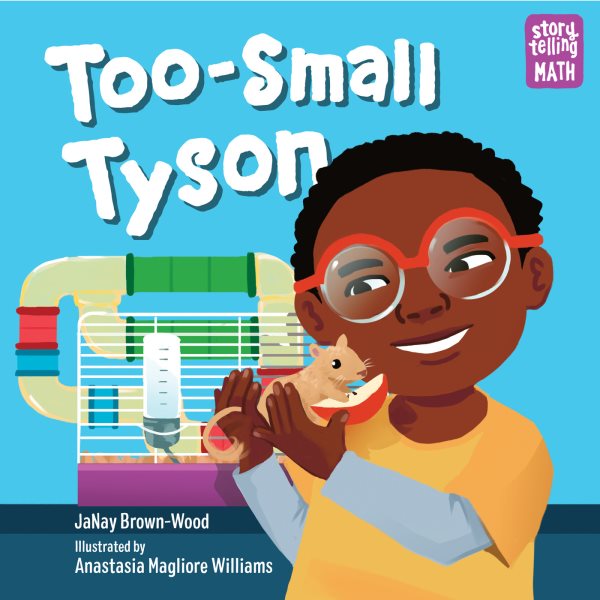
Too-Small Tyson by JaNay Brown-Wood, ill. Anastasia Magloire Williams

Once more, you know you’re dealing with a good math book when you don’t notice that it’s part of the “Storytelling Math” series, start reading it, and think to yourself, “Hey! The way that this book deals with sizes and substitutions is the kind of concept I usually find in really good math books.” And, indeed, that is part of the purpose. But Storytelling Math titles work because they really do equalize the math components with the storytelling. In this particular case, Tyson is the youngest of five brothers, which is kind of cool and kind of awful. They call him L’il Man (definitely not his favorite name) and often try to take care of things for him rather than letting him try himself. But when family gerbil Swish goes missing, it takes Tyson and a bit of problem solving with some small, medium, and large tubes to save the day. There’s a lot to love about the storyline, the writing, and the sweet sweet backmatter.

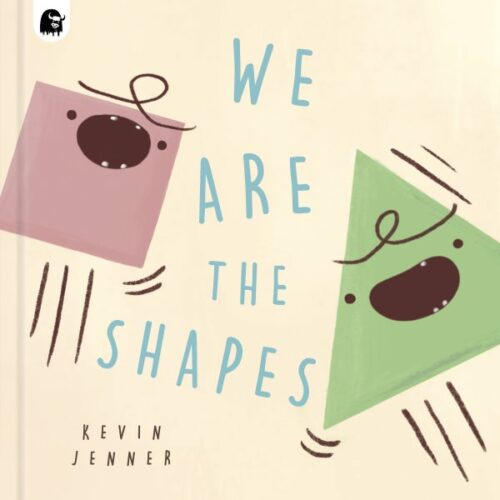
We Are the Shapes by Kevin Jenner

As I mentioned at the beginning of this piece, 2022 marked the last year that I (sniff) am serving on the Mathical Book Prize committee as their librarian rep. It’s sad to let it go, but even if I’m not helping to select the best math-related titles in a given year, I can at least choose my own favorites. In We Are the Shapes, Kevin Jenner is calling upon his own inner Oliver Jeffers to bring us the story of warring squares and rectangles. Filled with an abundance of shape puns (the circle can’t pick a side in this squabble because, as you know, circles don’t have sides) you learn some pretty decent shape facts in the midst of all the silliness. There are cute asides and visual gags and who doesn’t love a book in which enemies finally work together . . . and things go poorly as a result? Love the tone and the color schemes and the sense of humor. Shapes up quite nicely (did you see what I did there?).


Want to see other lists? Stay tuned for the rest this month!

December 1 – Great Board Books

December 2 – Picture Book Readalouds

December 3 – Simple Picture Book Texts

December 4 – Transcendent Holiday Picture Books

December 5 – Rhyming Picture Books

December 6 – Funny Picture Books

December 7 – CaldeNotts

December 8 – Picture Book Reprints

December 9 – Math Books for Kids

December 10 – Gross Books

December 11 – Books with a Message

December 12 – Fabulous Photography

December 13 – Translated Picture Books

December 14 – Fairy Tales / Folktales / Religious Tales

December 15 – Wordless Picture Books

December 16 – Poetry Books

December 17 – Unconventional Children’s Books

December 18 – Easy Books & Early Chapter Books

December 19 – Comics & Graphic Novels

December 20 – Older Funny Books

December 21 – Science Fiction Books

December 22 – Fantasy Books

December 23 – Informational Fiction

December 24 – American History

December 25 – Science & Nature Books

December 26 – Unique Biographies

December 27 – Nonfiction Picture Books

December 28 – Nonfiction Books for Older Readers

December 29 – Best Audiobooks for Kids

December 30 – Middle Grade Novels

December 31 – Picture Books
Filed Under: 31 Days 31 Lists, Best Books, Best Books of 2022 Tagged With: 31 days 31 lists, math, math picture books

31 Days, 31 Lists: 2022 Picture Book Reprints

December 8, 2022 by Betsy Bird

It’s not as flashy as a CaldeNott list. Less poetic than the poetry. It’s old. Maybe a little dusty. But doggone it, if you’ve ever worked as a children’s librarian, or a bookstore employee even, then you’ve seen that look that comes into people’s eyes when they recount some of the more obscure picture books of their youth. The fact of the matter is that while most of the books on the 31 Days, 31 Lists round-up are from the current year, what about the backlist?

In answer to that call, I’ve long since decided that it makes sense to celebrate reprints. These are the picture books that saw the light of day again because there was something about them that just stood up to scrutiny. And now you too can celebrate them with some kids.

Books so nice they published them twice.

Care to see the previous years’ lists? Then check these out:

  • 2021
  • 2020
  • 2019
  • 2018
  • 2017
  • 2016

2022 Picture Book Reprints

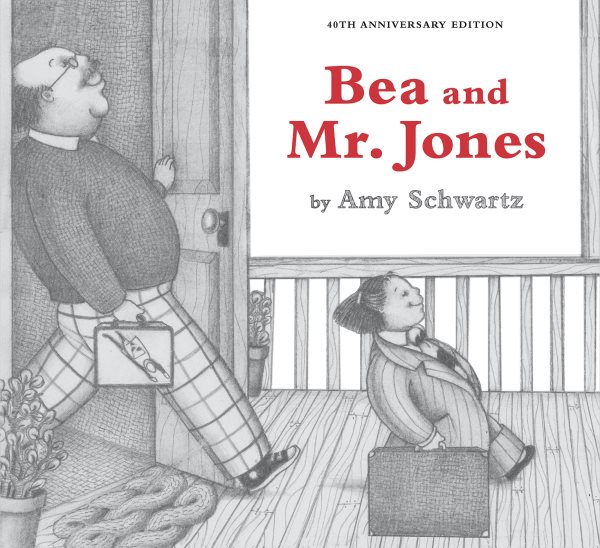
Bea and Mr. Jones by Amy Schwartz

I discussed this book with my sister on our podcast Fuse 8 n’ Kate recently in part because I knew that this reprint was on the calendar. I didn’t have it in hand at the time of our recording, so I wasn’t able to compare the newer to the older edition then. Now I have the 40th anniversary edition in my hot little hand and I can see if any significant changes have been made. For the most part, not really. Bea’s still strutting in her power suit (and though the book remains black and white, I like to imagine that her tie is garishly colored). Mr. Jones is still happy as a clam, superhero lunchbox in hand. Now the book is a bit larger than the original but I believe it’s safe to say that none of the images have been cut off or trimmed at all, which was a relief. Of course, some changes have taken place. The conspicuous closet full of alcohol is no longer present in Bea’s boardroom and the word “BAMBI” has been stricken from a move poster near the end of the book. Beyond that, it’s faithful enough that if you enjoyed the original you’ll find plenty to love here as well.

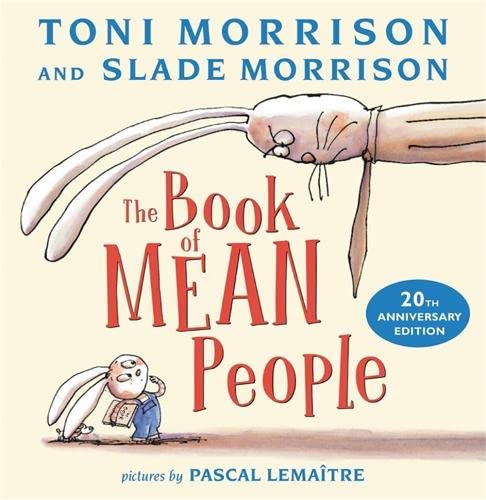
The Book of Mean People by Toni Morrison and Slade Morrison, ill. Pascal Lemaître

How did I miss this the first time around? I was already familiar with Toni and Slade Morrison’s other picture books for kids. Surely you guys also remember when they started redoing some of Aesop’s fables in weird, original ways, in the Who’s Got Game? Series. Those books started coming out in 2003, and much like this book, were sort of overlooked, in spite of their heavyweight champion of an author. But even before that series came out (and I pray it’s due for a rerelease in 2023 too) The Book of Mean People was released in 2002. This book is interesting for a wide range of reasons. For one thing, there’s this rather fascinating Afterword at the back by Jewell Parker Rhodes. In it she ponders why this book didn’t get a lot of the accolades it deserved. She writes, “possibly it’s because subversive texts didn’t play as well in 2002 as they do today.” I suspect that subversive texts may play slightly better today but have a harder time getting to our shelves than they did in 2002. Whatever the case, this book is a friggin’ trip. It feels like a natural companion to the works of Tomi Ungerer and Judith Viorst. The story is unafraid to be straight with kids. It doesn’t sugarcoat a child’s feelings, allowing them to state that other people are “mean”. I know that my own kids have called me mean for some of the things I’ve demanded of them, as listed in this book. It’s kind of rare to see books these days that let kids say these things. Pair it alongside I Hate Everyone by Naomi Danis for a thorough deep dive into kids being themselves (as much as grown-ups would rather that they not). 

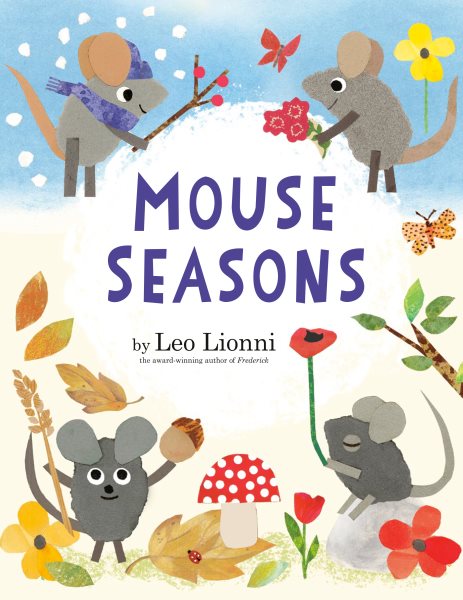
Mouse Seasons by Leo Lionni

I mean, who can resist a Leo Lionni book in general? Not that they’re all created equal, but I found that this one in particular really leans into its own charm. At the beginning it’s just asking a range of different questions. “Who grows the four-leaf clovers in June?” “Who melts the ice?” The answer? Mice, baby! There’s a Springmouse, a Summermouse, a Fallmouse (“Fallmouse”, by the way, would be an excellent character name), and a Wintermouse who do all of that stuff. There is a gaping void, eternally hungry for seasons-related picture books, out there. This book falls into it neatly and will please many a child and adult alike. 

The Tale of the Tiny Man by Barbro Lindgren, ill. Eva Eriksson, translated by Julia Marshall

Hey, that’s a nice heart you’ve got there. Mind if I rip it out of your chest? You don’t mind? Well, I’m feeling a little sleepy so why don’t I just let this book do it for me instead? By all accounts this is a 1979 classic work of Swedish children’s literature. It was re-illustrated by the highly talented Eva Eriksson in 2010, and now at long last we get to see it here in the States in 2022. Mind you, this book truly does deserve its “classic” status, since there’s not a thing about it that has aged. I compare it to a picture book version of It’s a Wonderful Life, not because there are any suicide attempts or angels at work (though the tiny man does bear a bit of a resemblance to Clarence) but because the first half of this book is SO sad, and is then redeemed entirely by the second. Our hero is a lonely, tiny man. Other men trip him on purpose and set their mean dogs to bark at him. At night he cries to himself and wonders, “Why doesn’t anyone like me? I’m a kind person.” Into his life comes a dog. Over time, the two not only bond but the tiny man adopts it. All is well until a neighbor girl comes by and the dog likes her too. This book taps so perfectly into that feeling kids get when they have to share their friends. And let me tell you, NOBODY draws a smug man smiling at making another man miserable quite as well as Eriksson. You can import more of her books into this country anytime, folks.

‘Twas the Night Before Christmas or Account of a Visit from St. Nicholas by Clement C. Moore, ill. Matt Tavares

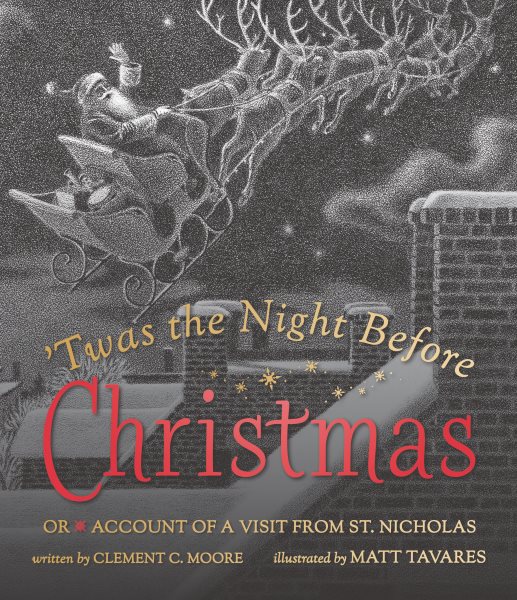
Like “Mary Had a Little Lamb” the controversy surrounding the “real” author of “Account of a Visit from St. Nicholas” is shrouded in a bit of mystery. And yet this book is the only picture book edition of that particular poem I’ve seen to acknowledge that fact. Fascinating! I admit that I didn’t realize that this was a reprint when I first saw it. Full disclosure, I actually glanced at the cover and thought, “I didn’t know Chris Van Allsburg adapted Moore’s poem!” Whoops! Originally this book came out in 2002 and I can’t help but wonder if they’re reprinting it now because of the massive success of Tavares’ picture book Dasher (to say nothing of his work on Red and Lulu) would just make good clean sense. It’s a lovely edition, all black and white, and I love the original text inside. Such a cool addition to our shelves. Of all the picture book authors/illustrators working today, I think Matt Tavares can officially be deemed The Official Holiday Creator.

The Velveteen Rabbit by Margery Williams, ill. Erin Stead

And the 2022 Award for Most Inevitable Pairing goes to . . . Margery Williams and Erin Stead!! But seriously, I want to clap on the back whosoever thought to ask Ms. Stead to illustrate the 100th Anniversary Edition here. Isn’t she just the ideal person to do it? The book has always occupied this odd space where it’s just a little too long to be a picture book but is published at too large a format to be an early chapter book. The best way to describe it? It’s a bedtime book. Stead’s natural affection for the run down and floppity stands her in good stead here (no pun intended). She’s just hitting this one out of the park. Tonally, no one could have been a better mix, and I mean that truly. Now let’s play the game where we think up other classic books for her to handle. Hmmm…

Where Is Everybody? by Remy Charlip

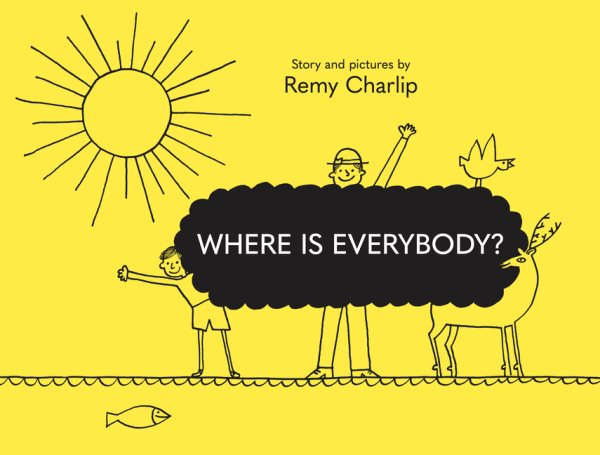
I mean, kind of a no-brainer. I’m not familiar with the entire oeuvre of Charlip but if I had to guess, I’d suspect that the man had relatively few duds. Of course, even when I read this book, I start thinking about those parents that would set out to read this to their kids. There is a kind of specifically artsy/hipster parent out there that thinks it cool to have a bunch of beautifully produced reprinted picture books in the home. This Charlip title in particular doesn’t indulge in much in the way of colors or busy designs. What it does do is present this neat sequential dive into building stories in the simplest way possible. It was originally published in 1957, and you could have a lot of fun examining where the page colors change from white to gray, the green endpapers, the yellow of the sun, and then there are the questions the reader is being asked throughout. Pay attention! It looks simple, but there’s a lot going on here. 


Want to see other lists? Stay tuned for the rest this month!

December 1 – Great Board Books

December 2 – Picture Book Readalouds

December 3 – Simple Picture Book Texts

December 4 – Transcendent Holiday Picture Books

December 5 – Rhyming Picture Books

December 6 – Funny Picture Books

December 7 – CaldeNotts

December 8 – Picture Book Reprints

December 9 – Math Books for Kids

December 10 – Gross Books

December 11 – Books with a Message

December 12 – Fabulous Photography

December 13 – Translated Picture Books

December 14 – Fairy Tales / Folktales / Religious Tales

December 15 – Wordless Picture Books

December 16 – Poetry Books

December 17 – Unconventional Children’s Books

December 18 – Easy Books & Early Chapter Books

December 19 – Comics & Graphic Novels

December 20 – Older Funny Books

December 21 – Science Fiction Books

December 22 – Fantasy Books

December 23 – Informational Fiction

December 24 – American History

December 25 – Science & Nature Books

December 26 – Unique Biographies

December 27 – Nonfiction Picture Books

December 28 – Nonfiction Books for Older Readers

December 29 – Best Audiobooks for Kids

December 30 – Middle Grade Novels

December 31 – Picture Books
Filed Under: 31 Days 31 Lists, Best Books of 2022 Tagged With: 31 days 31 lists, Best Books of 2022, picture book reprints

31 Days, 31 Lists: 2022 CaldeNott Titles

December 7, 2022 by Betsy Bird

Okay! For those of you playing at home, you know the rules! Remember, a book that has a chance at winning a Caldecott must be created originally here in the States by an American illustrator. Now they can have been born here and have moved away, or they can have American citizenship later in life. Them’s the rules. Problem is, we just have a slew of marvelous books out there that are disqualified because their creators are inconveniently not from around these here parts. Today, we salute them! Not Caldecotts but CaldeNOTTS.

Here then are the books I think could win it all, if only they could.

Oh, and if you’re interested in previous years and their CaldeNotts take a gander at these:

  • 2021
  • 2020
  • 2019
  • 2018
  • 2017
  • 2016

2022 Caldenott Contendres

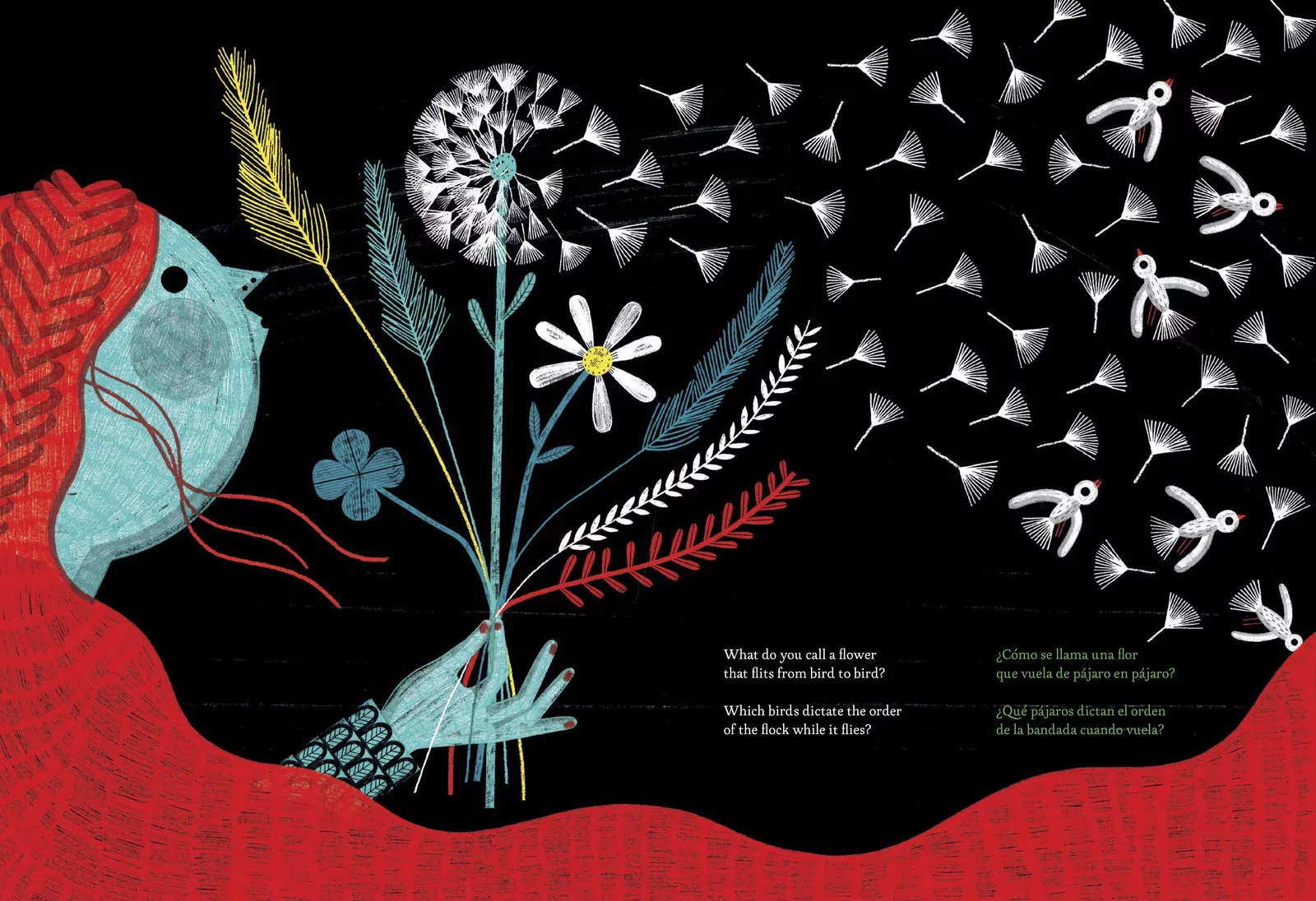
Book of Questions / Libro de Las Preguntas by Pablo Neruda, ill. Paloma Valdivia, translated by Sara Lissa Paulson

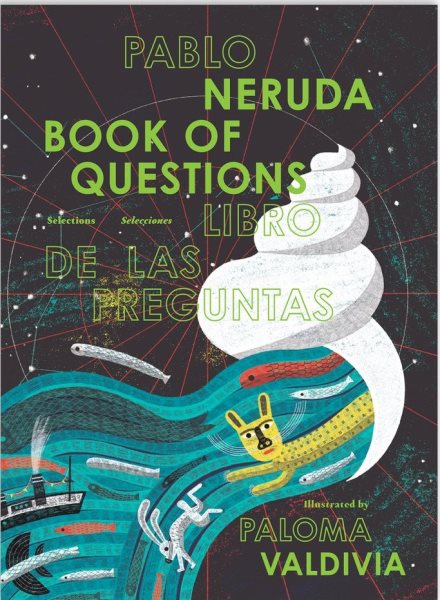
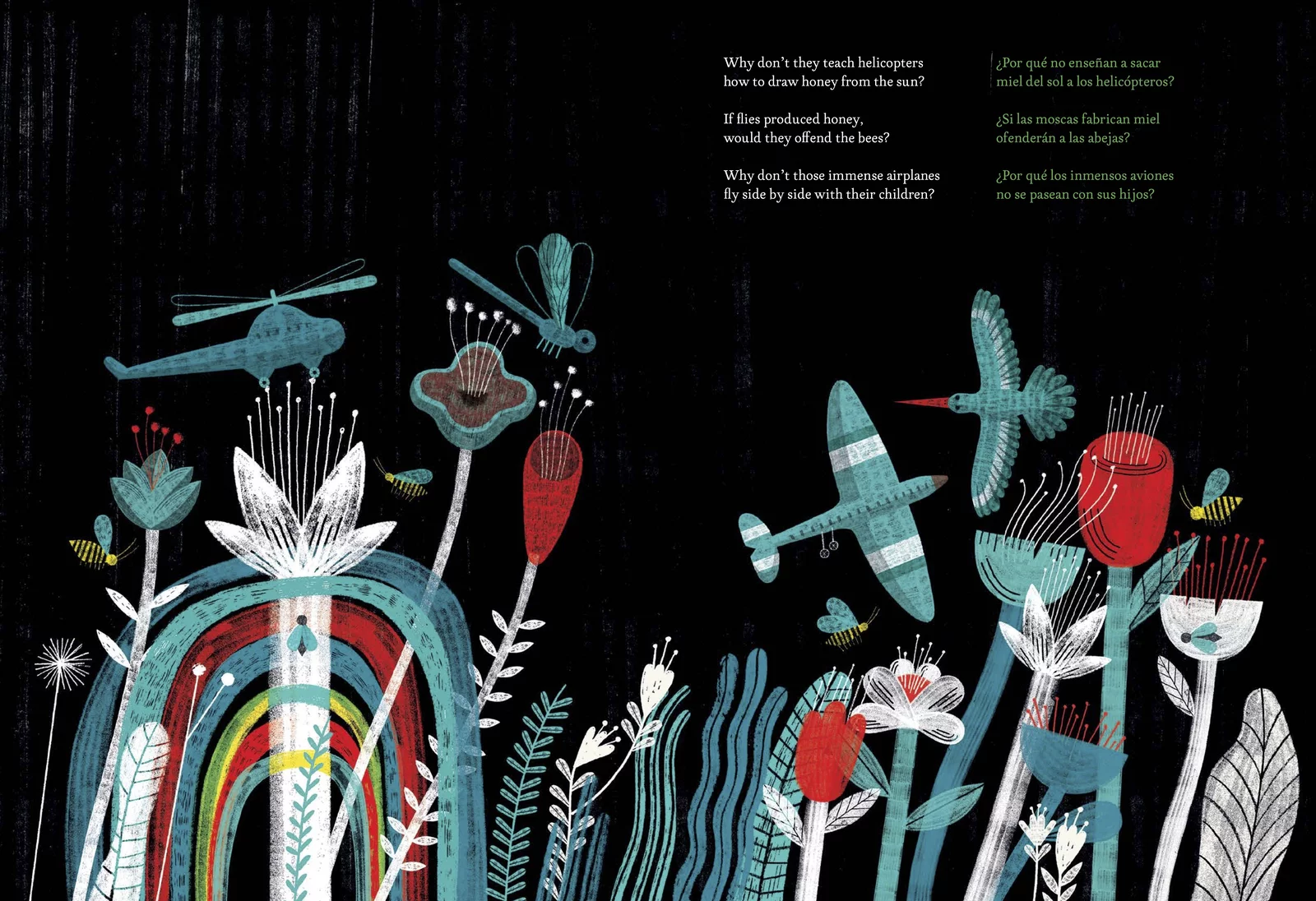
Neruda’s last great work of poetry is reimagined for kids in this sumptuous collection. 70 questions of the original 320 are presented thematically to kids, and the results are ridiculous thoughtful, and often unanswerable. Oo. Considering how much time and effort and work it often takes to find decent children’s poetry in a year, I was just blown away when I was sent this book at the beginning of the year. It’s so clever in its construction. Neurda’s Book of Questions is taken and the questions are selected, split up, and placed together thematically. It’s a smart way of presenting them, and the result really is more poetic than anything else. Some are philosophical, some practical, and all will make kids think. Meanwhile, it’s on today’s list because artist Paloma Valdivia, who is Chilean like Neruda was, just goes to town with the art. My particular favorite image came when Valdivia interpreted rice like teeth. Be careful not to miss any of the marvelous gatefolds, which are almost hidden throughout the book. I often had to go back and make certain that I wasn’t missing anything. Extra points for the fact that the book is bilingual too. This is a beauty, truly.

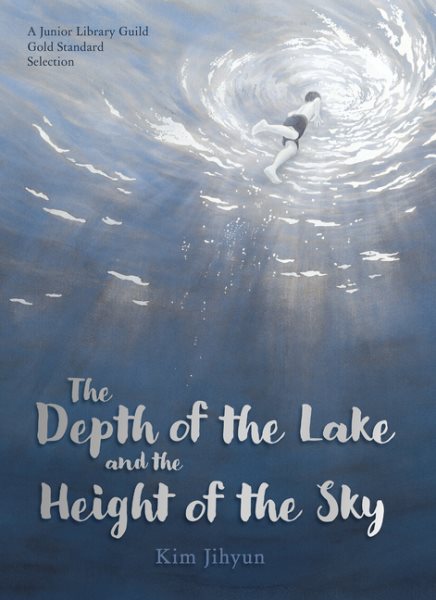
The Depth of the Lake and the Height of the Sky by Kim Jihyun

A wordless South Korean import celebrates nature, wilderness, and traipsing about on your own. Using a technique of writing ink and a “slow-dry blending medium”, it’s funny to think that when you get right down to it, this is a black and white picture book. Such things are rare on the market when they’re homegrown, so I wasn’t surprised to hear that this came from overseas. When Jules Danielson featured this book on Seven Impossible Things Before Breakfast she mentioned that its original title in Korean was merely “Last Summer”. So somewhere along the lines, someone at Floris Books had the wherewithal to give this book this luscious, loving title. As someone who, as a kid, loved bumming around woods by myself, this book tapped into that feeling beautifully. My favorite moment comes after the kid has been swimming and he simply lies on his back, on a dock, on a sunny day. You get this two page spread of what it looks like when the sun is directly ahead that is this remarkable example of how human hands can paint ink to look like light. It’s marvelous. If I could frame any sequence from this book, it would be that one. A gentle, wonderful example of accomplished wordless storytelling.

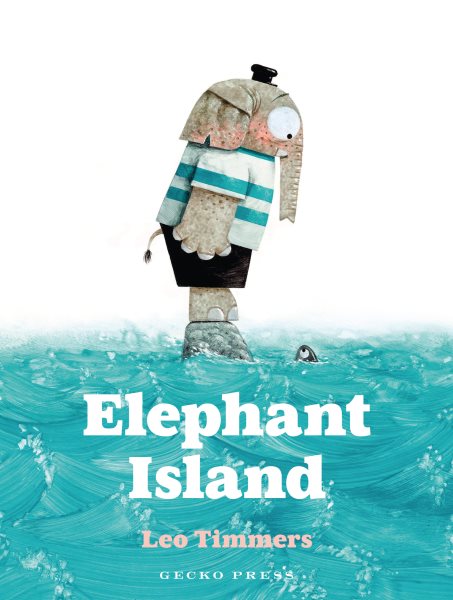
Elephant Island by Leo Timmers, English text by James Brown

Belgian author/illustrator Leo Timmers has this way about him. His art, which is distinctive and unmistakable, always looks to my eye like it’s just the teeniest, tiniest bit three dimensional. I don’t know how else to describe it. Let’s take Elephant Island as an example. It’s something about how shiny he makes this elephant’s skin (look at that cover and admire all the ways he makes the sun shine off of the trunk, the folds of the flaps of the ears, the toenails, etc.). Or maybe it’s that contrast between the enormous, almost cartoonish eyes and the layered body. In this book, Timmers taps into something I’ve always enjoyed in picture books: the idea of creating a space for you and your friends to hang out together. Stories like this always make me happy. A lonely kid can derive a great deal of pleasure from this story of an elephant that finds himself stranded on the world’s smallest “island” (it’s just a rock, barely wide enough for him to stand on) and then consequently engineers his way into the construction of an entire edifice on that single point. Budding Frank Lloyd Wrights will marvel at the different ways in which crashed boats (anyone who attempts to rescue the elephant inevitably finds their own boat flotsamed and jetsamed) can become floors, walls, and more. The sheer inventiveness of the entire endeavor is to be commended. Come for the elephant. Stay for his island.

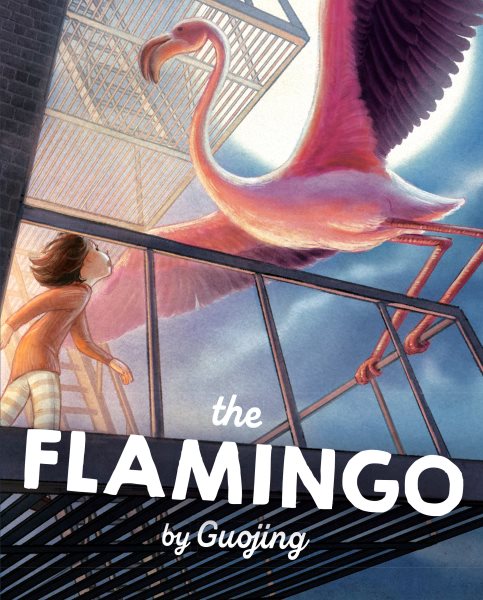
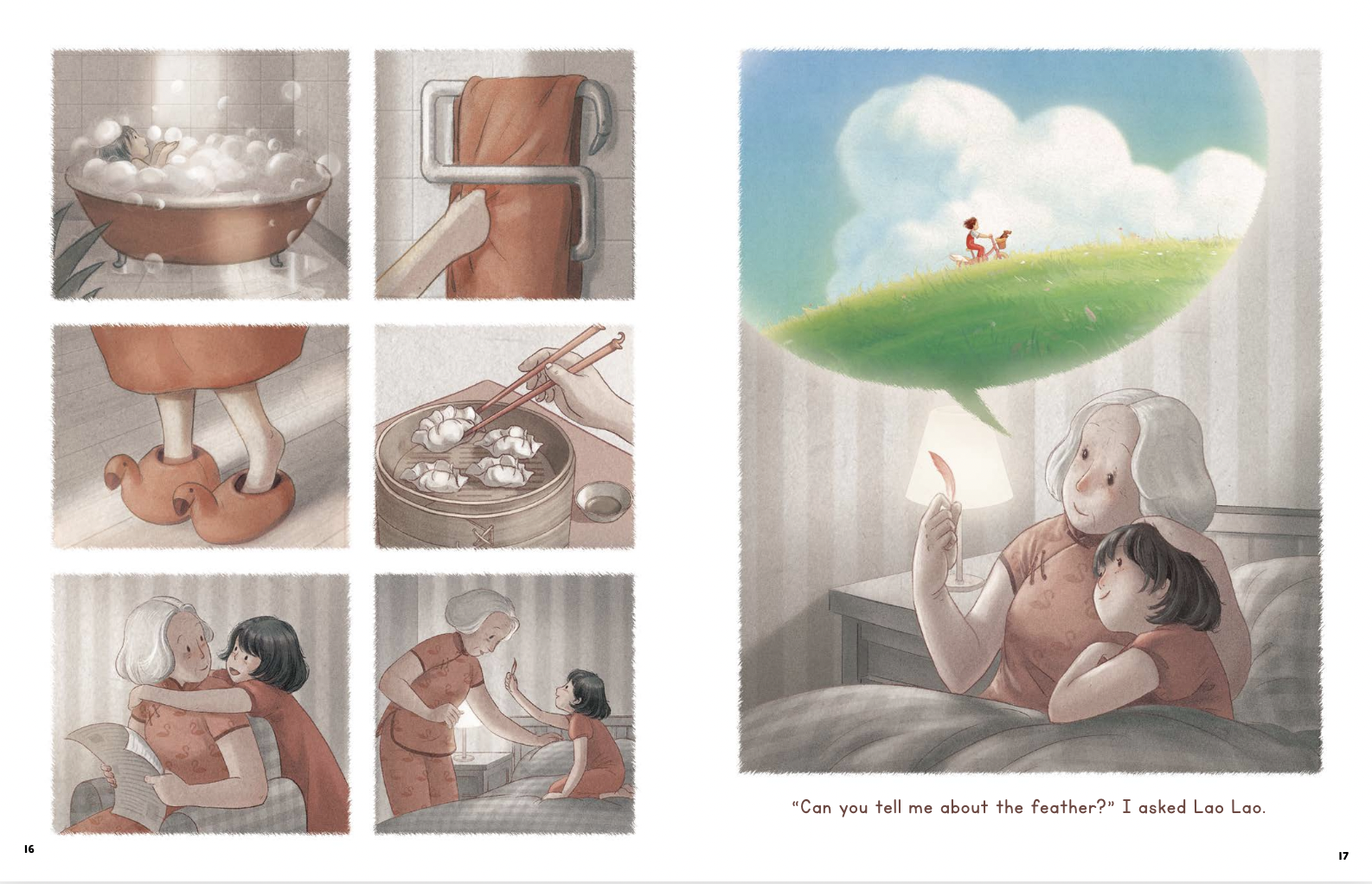
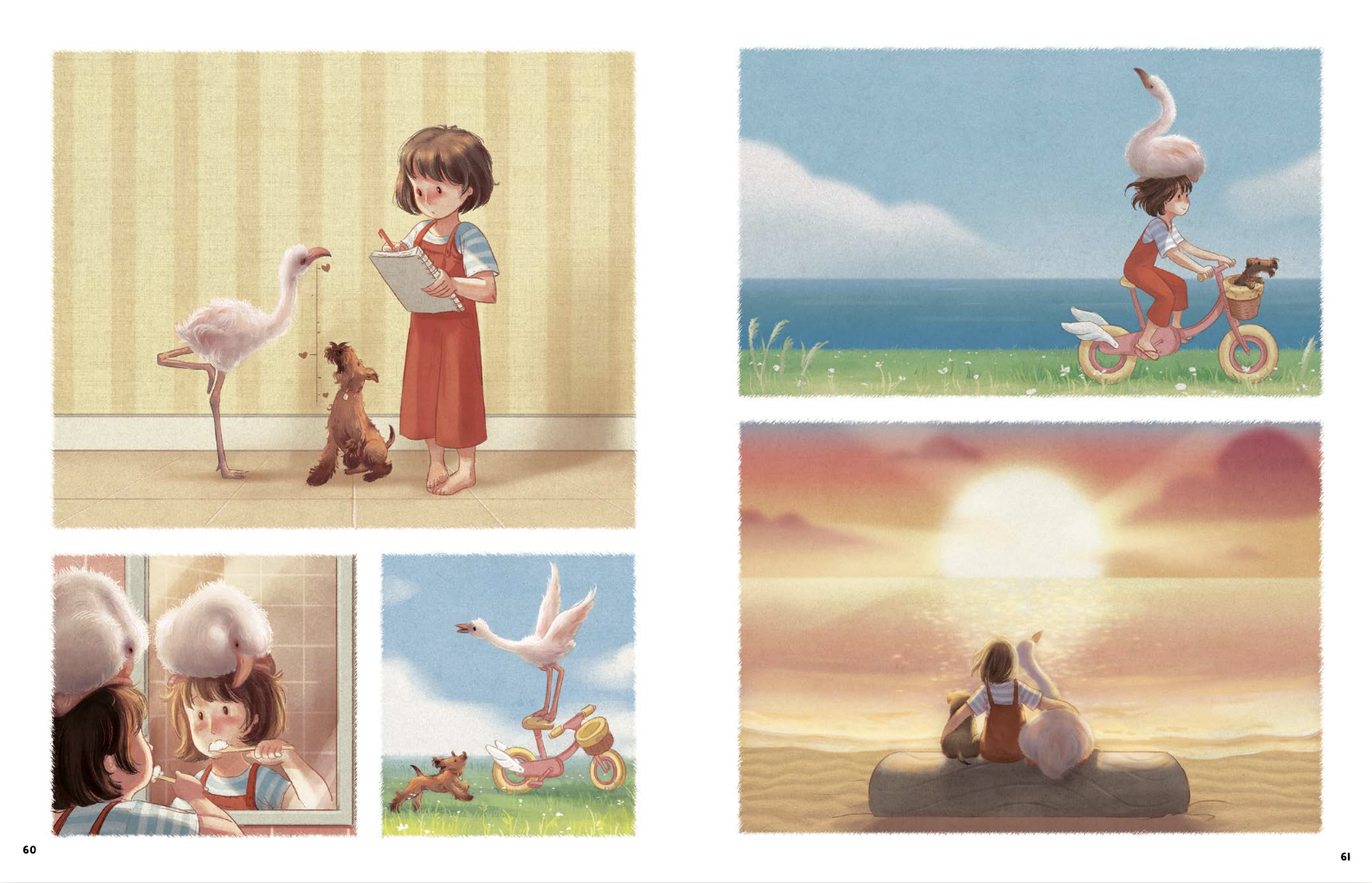
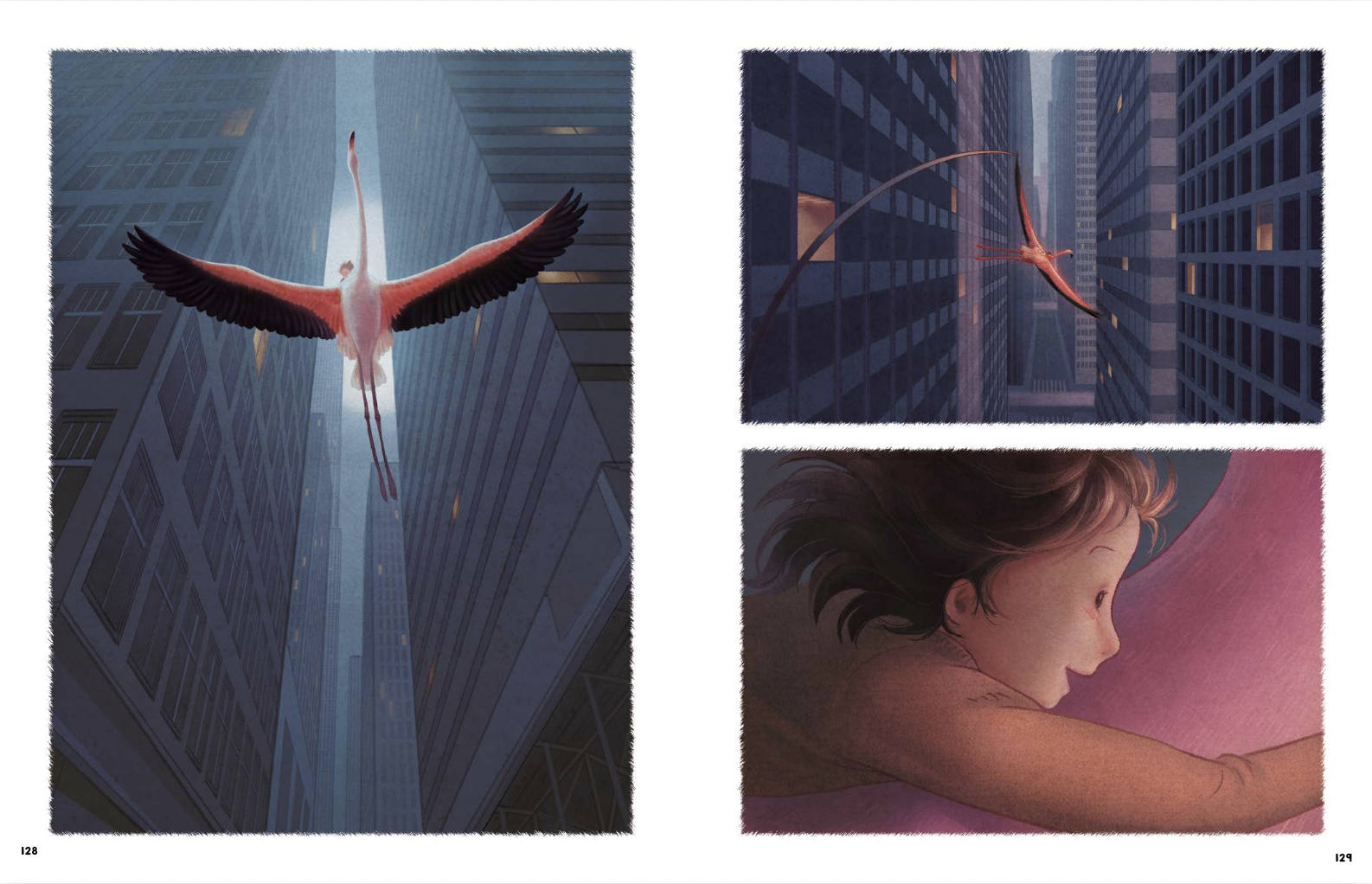
The Flamingo by Guojing

While visiting her grandmother, a child hears story after story about a girl long ago that raised a flamingo chick from an egg. An artful, nearly wordless tale with the feel of a Miyazaki film. Utter gorgeous gorgeousness. Guojing’s the same creator that brought us The Only Child years ago. That story was just soaked in sadness. This one is far happier. I was surprised to see that the book had any text at all. Most of it is wordless, and since Guojing is a master at the sequential wordless sequence, it made sense to assume that the whole book would be like that. Oh, but I loved the storyline. Those sunsets. And though I believe a newly hatched flamingo chick could never, not in a million years, be quite as cute as this one, I loved watching it grow up. This is complete and utter wish fulfillment and I am here for it!

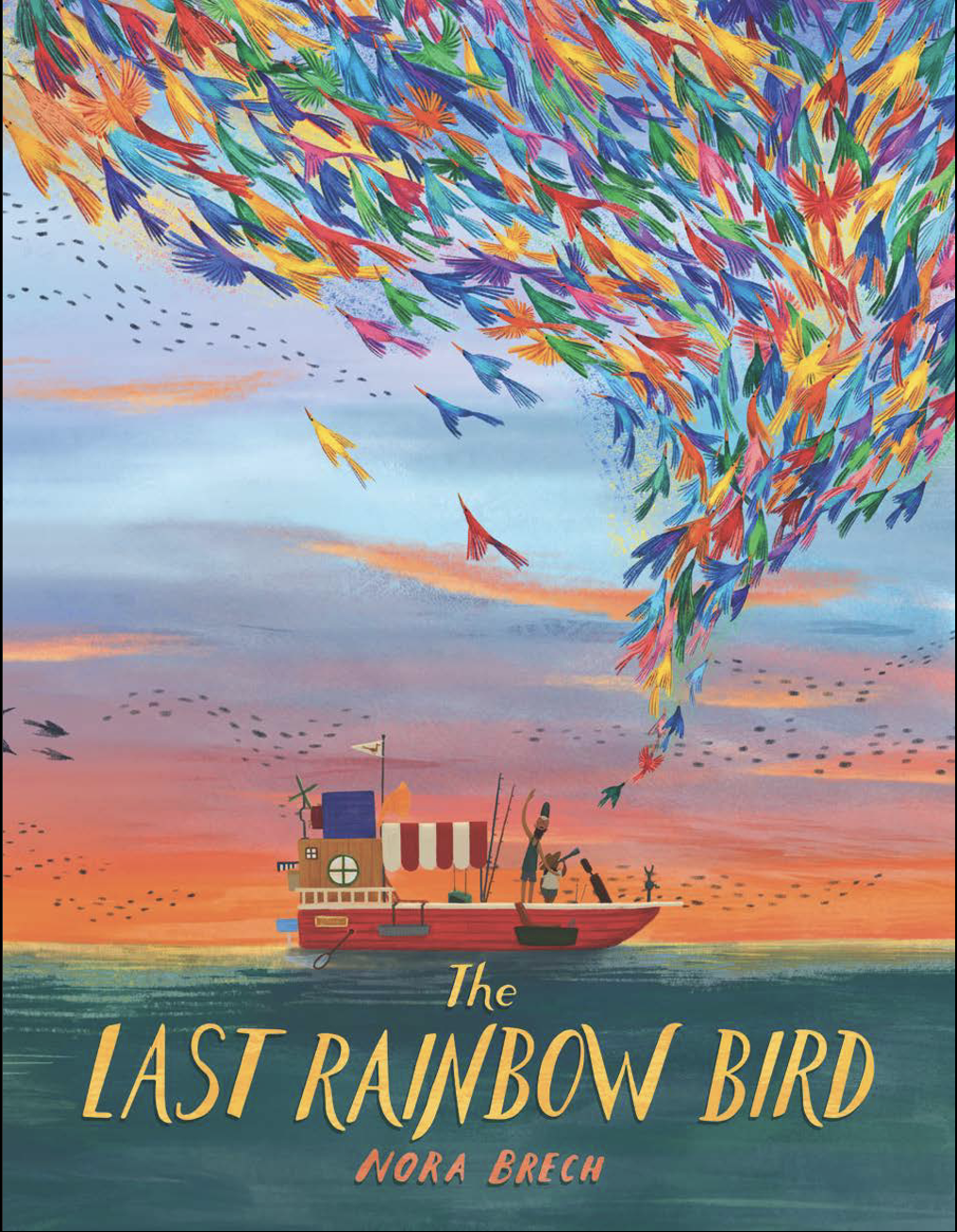
The Last Rainbow Bird by Nora Brech, translated by Floris Books

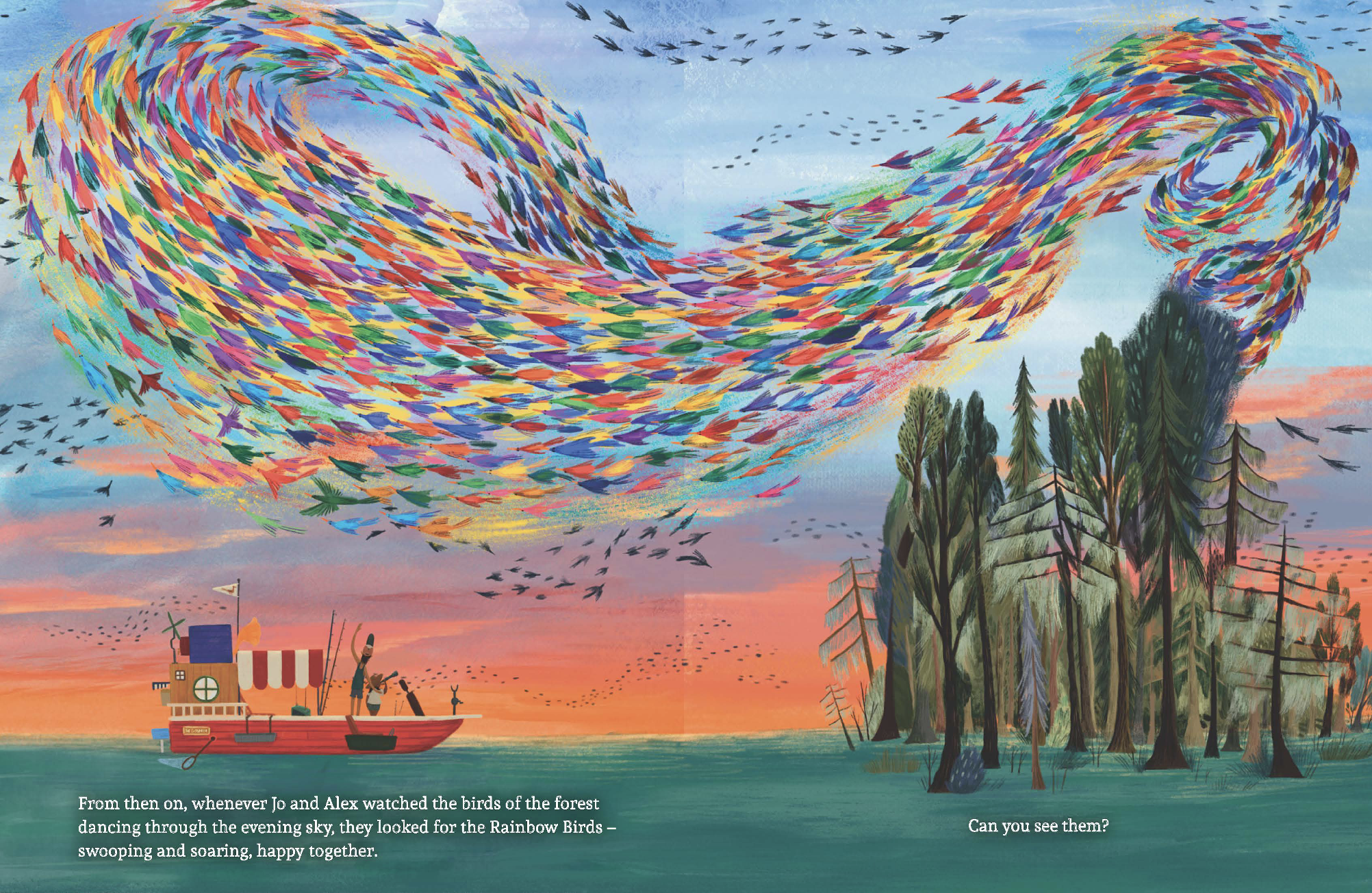
What a pleasure. In March of 2022 I found myself at the Bologna Book Fair, wading through thousand upon thousands of picture books from all over the world. In the course of my travels I wrote a blog post called This One’s for the Publishers: Books You Should Bring to America. The piece happens to mention this charming Norwegian publication called Den store fuglejakten. I had no idea, based on just flipping through the images, what it was about (my Norwegian ain’t what it could be) but it was plain to see that the art was stellar. Strange and ridiculous and marvelously colored throughout. You can imagine my joy when I found the book published here in the states in September! Utterly lovely from start to finish, the plot turns out to be about two girls who set off on a quest to aid their friend Professor Feather. He’s saving all the rare birds, you see, but one little rainbow bird (who looks oh so forlorn and plain) doesn’t have a mate. Thus, the girls go to find another rainbow bird, wherever it might be. The lovely susurrations of colorful birds are worth the price of admission alone. A wonderful import.

Night Lunch by Eric Fan, ill. Dena Seiferling

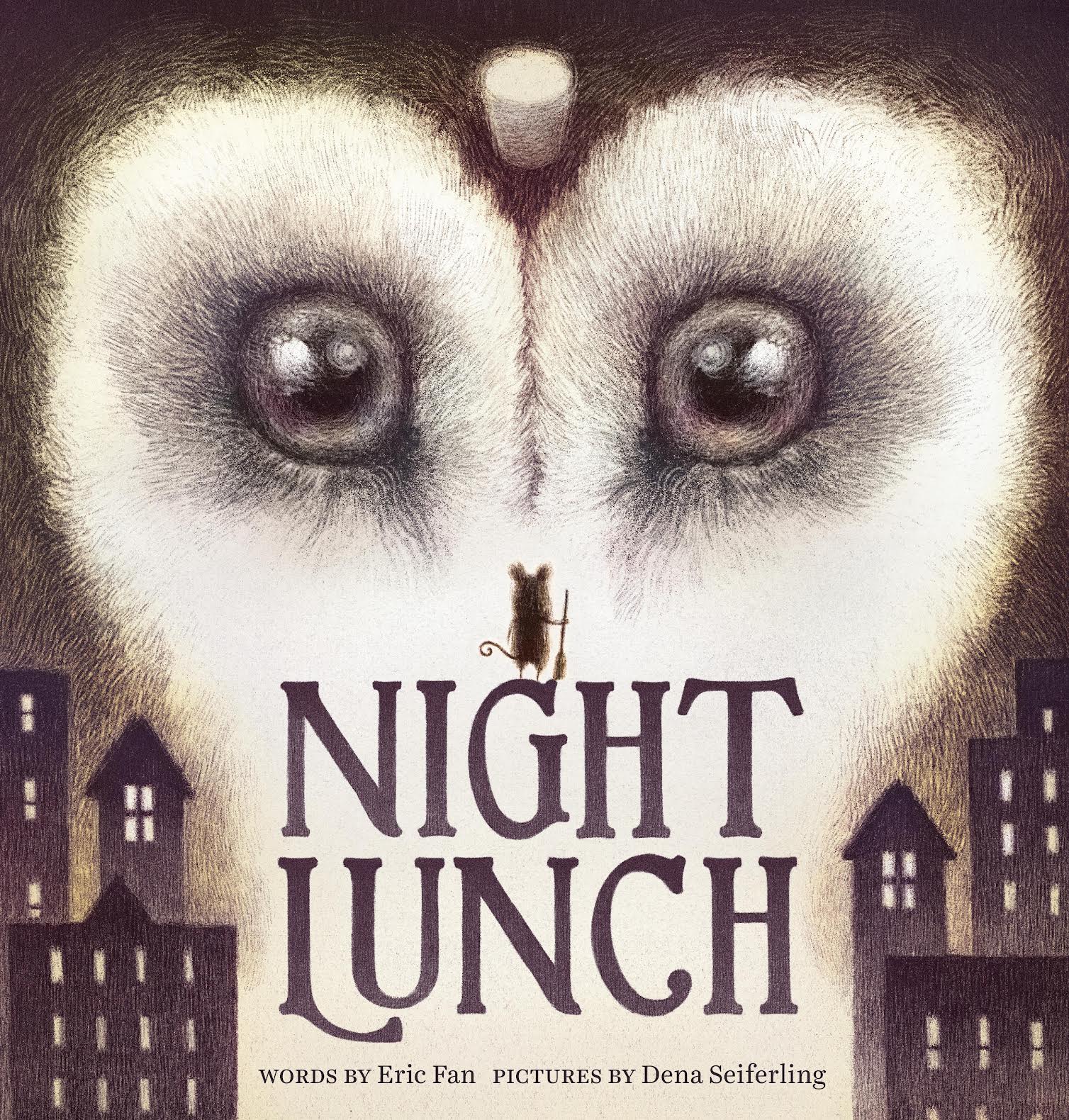
“Clip clop, a midnight moon / The night lunch cart rolls in.” Gently rhythmic wordplay accompanies the story of a kindly owl, the animals that feast at its lunch cart, and the hungry little mouse it befriends. Lovely and memorable. Under normal circumstances I’m no fan of picture books in which predators befriend their prey (Miss Spider always kind of irked me) but I may have to give a pass to this particular beauty. How could I resist? I’ve always liked Seiferling (a resident of Canada) and her style, but apparently if you set her books at night they get this extra added kick. It’s funny. There’s a rhythm to it, but it doesn’t rhyme. I love what the art does with light here. It’s also a great book for any child who has a parent that’s a night worker, it occurs to me. A fortuitous pairing results in a strangely comforting little book.

Paradise Sands by Levi Penfold

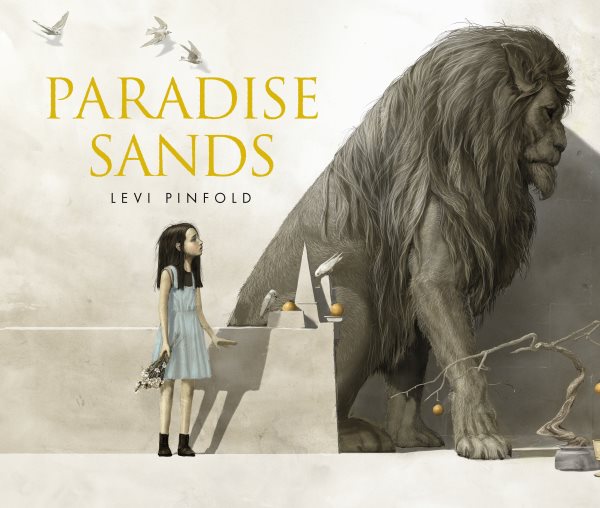
As God is my witness, I didn’t know how to categorize this book so I think I’ll have to slot it under “folktales” even though it’s clearly an original creation. But the tone, man, the tone! We just don’t see a lot of truly haunting picture books in a given year. This one has all the hallmarks of a book that someone will buy for a child, the child will read and reread for years, and it’ll embed itself in the deepest folds and crevices of that child’s brain. Now I’m no fan of sepia, but that’s only because folks don’t know how to use it. Penfold here, an Australian, knows what he’s doing. I’m assuming this is taking place in the outback, but on a first read I figured it was somewhere in the more barren parts of the west. The people featured in this book look scoured. Like the wind and the sand and the dirt have worn them down in small ways. The story is fairly classic, though contemporary. A girl and her three brothers are driving to visit their mother in the hospital. Along the way they sing an old folksong that turns out to be terribly prophetic. The brothers are quickly enchanted and transformed and the daughter must obey the rules of the Teller and neither eat nor drink nor take any food or water for three days to save them. The Teller is represented as a lion that looks as if he were dipped in a strange, deep sadness. The ending is bittersweet as the girl both succeeds and fails. Penfold invokes all the best elements of classic fairytale literature, and the words are told just perfectly. If you need something beautiful and odd to give to a child, you could hardly do better than this.

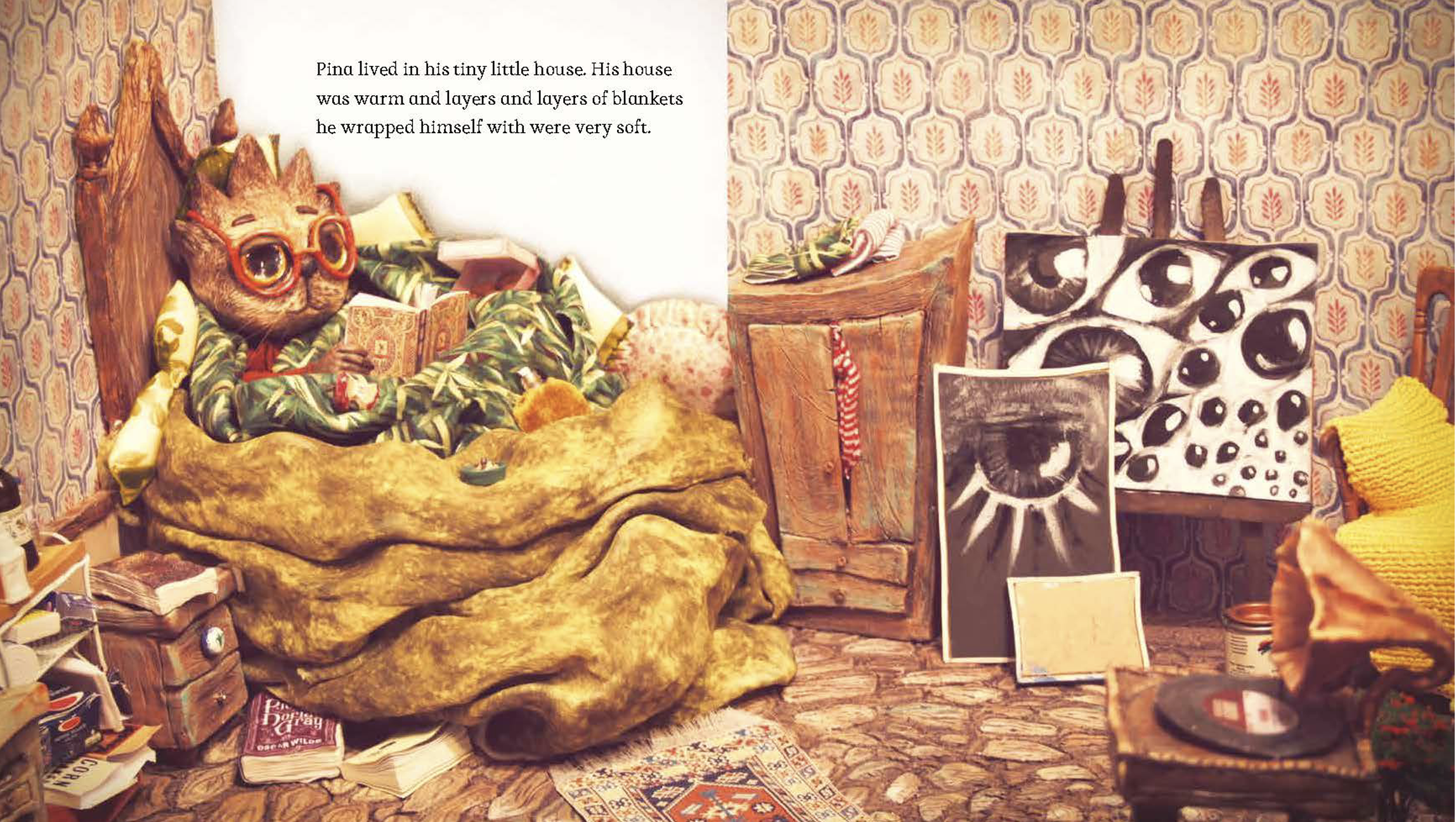
Pina by Elif Yemenici, translated by Sydney Wade

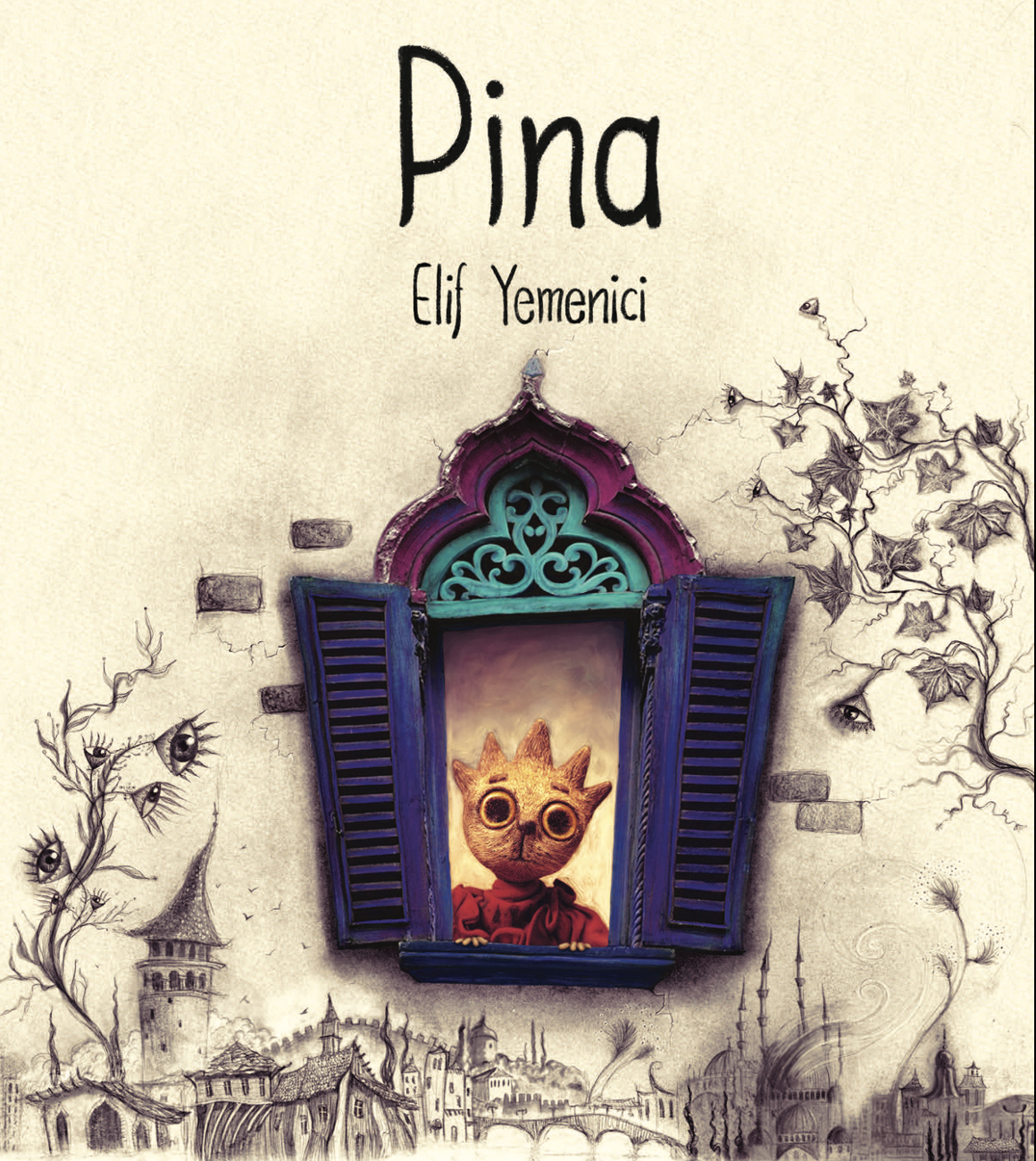
Pina lives in a tiny, warm house that contains everything he could ever need. But when he realizes he’s out of cheese, shopping turns into a walk into the unknown. Label this one a delightful Turkish import about trying new things. It is remarkably difficult for me to resist models. I don’t know why this is. Maybe it was all those Bagpuss shorts I watched as a kid on Nickelodeon. Whatever the case, when a picture book uses models ala Red Nose Studio I’m enthralled. It’s not merely the logistics of the enterprise (though those are fascinating) but rather how perfectly you can create a little world within the covers. Pina proves to be an excellent example of this! At the beginning you have to understand why Pina, a big-eyed little cat-like person, would prefer staying inside in his cozy little home, rather than venturing out into the big scary world. So Yemenici fills the rooms with delightful clutter. When I think how long it must have taken to construct each and every last one of those little leather-covered books, or the tiny paintings on the wall, or the miniscule Velvet Goldmine records on the floor (I’m not kidding about that) the mind boggles. Even the light is this soft, cozy, endearing glow. The outside world, in contrast, comes across as black and white, harsh and scary. And part of what I find so amazing about this is that even when Pina becomes more comfortable with talking to new people and seeing new things, that doesn’t mean everything black and white has changed. It just means that at the end, sitting on a bench next to the sea, watching the sunset, there’s a bit more color out there than there was before. This is a masterful bit of work and it fills the Baek Hee-na shaped hole in my heart where a new book of hers should be. I wouldn’t miss it, if I were you. 

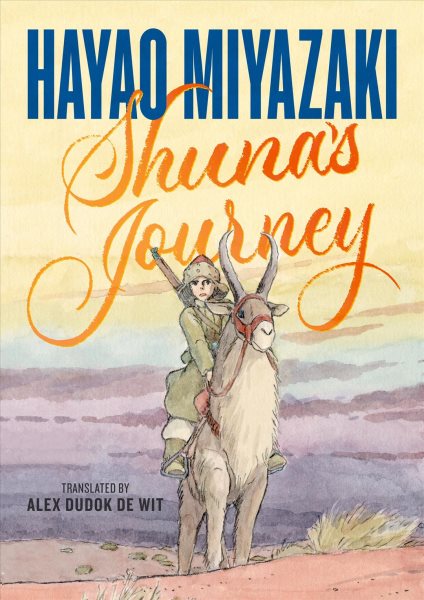
Shuna’s Journey by Hayao Miyazaki, translated by Alex Dudok de Wit

It’s absolutely baffling to me that we received, this year, a fantastic Miyazaki (yes, THAT Miyazaki) graphic novel with all the hallmarks of one of his films and yet the publicity? Almost nil. The story behind this book is nearly as fascinating as the book itself. Apparently this title dates back to 1983 (though it feels fresh and new when you first encounter it). It was published a full two years before Studio Ghibli was established. The story, according to Miyazaki himself in the Afterword, is based on an old Tibetan folktale called “The Prince Who Turned Into a Dog”. In this version, a young man named Shuna is the prince of a poor land. Determined to find a mysterious grain that could feed his people, he sets off on a quest to find this miraculous food. Along the way he runs into slavers, slaves, and an economy based on humans for grain. It actually reminded me of this year’s film Nope a little bit at times, as well as a lot of other Miyazaki films. The book takes an unexpected turn halfway through when its focus shifts from Shuna’s point of view to the formerly enslaved Thea. But the reason I’m placing it on today’s list is that it’s a shocking beautiful book through and through, thanks in large part to the incredible watercolors inside. Apparently this has been popular in Japan since the early 80s, and the translator, Alex Dudok de Wit, speculates that its been ignored by scholars because it had never been translated before. Well, problem solved! One of the more amazing comics of the year. Don’t let it pass you by. 

The Tale of the Tiny Man by Barbro Lindgren, ill. Eva Eriksson, translated by Julia Marshall

Hey, that’s a nice heart you’ve got there. Mind if I rip it out of your chest? You don’t mind? Well, I’m feeling a little sleepy so why don’t I just let this book do it for me instead? By all accounts this is a 1979 classic work of Swedish children’s literature. It was re-illustrated by the highly talented Eva Eriksson in 2010, and now at long last we get to see it here in the States in 2022. Mind you, this book truly does deserve its “classic” status, since there’s not a thing about it that has aged. I compare it to a picture book version of It’s a Wonderful Life, not because there are any suicide attempts or angels at work (though the tiny man does bear a bit of a resemblance to Clarence) but because the first half of this book is SO sad, and is then redeemed entirely by the second. Our hero is a lonely, tiny man. Other men trip him on purpose and set their mean dogs to bark at him. At night he cries to himself and wonders, “Why doesn’t anyone like me? I’m a kind person.” Into his life comes a dog. Over time, the two not only bond but the tiny man adopts it. All is well until a neighbor girl comes by and the dog likes her too. This book taps so perfectly into that feeling kids get when they have to share their friends. And let me tell you, NOBODY draws a smug man smiling at making another man miserable quite as well as Eriksson. You can import more of her books into this country anytime, folks.


Eager to read other lists this month? Then be sure to check out the following:

December 1 – Great Board Books

December 2 – Picture Book Readalouds

December 3 – Simple Picture Book Texts

December 4 – Transcendent Holiday Picture Books

December 5 – Rhyming Picture Books

December 6 – Funny Picture Books

December 7 – CaldeNotts

December 8 – Picture Book Reprints

December 9 – Math Books for Kids

December 10 – Gross Books

December 11 – Books with a Message

December 12 – Fabulous Photography

December 13 – Translated Picture Books

December 14 – Fairy Tales / Folktales / Religious Tales

December 15 – Wordless Picture Books

December 16 – Poetry Books

December 17 – Unconventional Children’s Books

December 18 – Easy Books & Early Chapter Books

December 19 – Comics & Graphic Novels

December 20 – Older Funny Books

December 21 – Science Fiction Books

December 22 – Fantasy Books

December 23 – Informational Fiction

December 24 – American History

December 25 – Science & Nature Books

December 26 – Unique Biographies

December 27 – Nonfiction Picture Books

December 28 – Nonfiction Books for Older Readers

December 29 – Best Audiobooks for Kids

December 30 – Middle Grade Novels

December 31 – Picture Books
Filed Under: 31 Days 31 Lists, Best Books of 2022 Tagged With: 31 days 31 lists, Best Books of 2022, Calde-nots

31 Days, 31 Lists: 2022 Funny Picture Books

December 6, 2022 by Betsy Bird

Hilarity ensues.

Humor, as often said, is subjective. And to have an adult selecting picture books that she deems funny for this list, well it does seem a bit anti-intuitive. Shouldn’t a panel of five-year-olds be the true judges of today’s youth literature? Maybe so, but bereft of a resident cluster of small people, I’ll have to rely on my own person sense of humor. Happily, that humor is fairly immature and may prove a fairly reliable litmus test of books that satisfy children’s hopes for hilarity. You may not agree with all the choices here today, but I think it’s fair to say that you’re likely to find at least a couple books that cause kids to guffaw outright.

Previous lists of funny picture books are well worth seeking out too. They include:

  • 2021
  • 2020
  • 2019
  • 2018
  • 2017
  • 2016

2022 Funny Picture Books

Boobies by Nancy Vo

Remember that board book from a couple years ago What Does Baby Want? by Tupera Tupera? If you ever want to restore your faith in humanity, check out the reviews on Amazon which, as of this writing, are almost universally positive. That book dared to break the taboo of women’s breast in children’s literature, possibly because it showed them as practical tools for feeding infants. Boobies by Nancy Vo is for an older crowd and has a good strong sense of humor. After all, if you cannot find the funny in a blue-footed booby wearing a snazzy summer hat and a bikini top, we may have to rethink our friendship here. It’s a Canadian creation this book, which probably explains a lot. Chock full of fascinating breast-related facts, this is part of the ever growing trend of helping kids (and, quite frankly, adults) be comfortable with all the different kinds of bodies out there. One stop shopping for all things booby related.

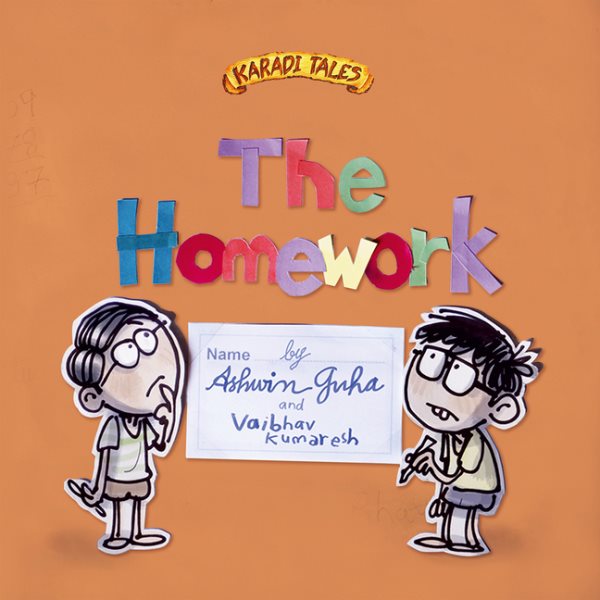
The Homework by Ashwin Guha, ill. Vaibhay Kumaresh

This Indian import was originally supposed to come to the states a year or even two ago, but I suspect COVID put a bit of a delay on its release. It tells the universal tale of two boys trying desperately to do their homework without doing any actual research at all. Their assignment? To “write an illustrated essay about a big mammal”. What to do? Ask big sister Meena, of course! Without even looking up from her book Meena advises the two to do something on a rhinoceros. She describes everything they would possibly want to know, and they write it all down dutifully. A horn on its nose. Armor-like skin. On the day of their presentation they read out her words and things seem to be going well . . . until they show their picture of a rhino and you get to see the results on the bulletin board. The art is hugely engaging and who can’t relate to the laziness of trying to get your siblings to do your work for you? I love finding funny from overseas. This fits the bill.

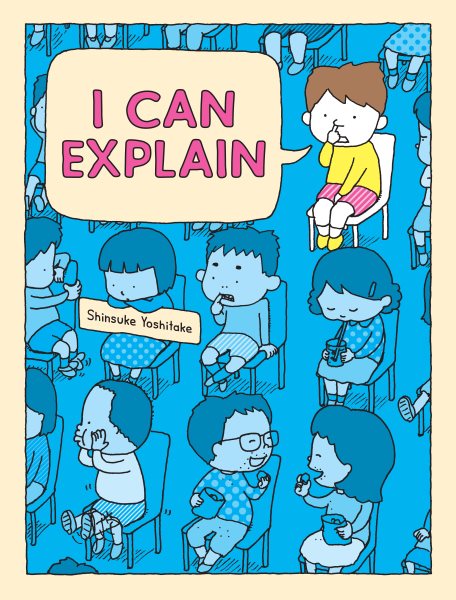
I Can Explain by Shinsuke Yoshitake

It’s a banner year when two Shinsuke Yoshitake books hit the American market in a single year. How did we get so lucky? Dunno but let’s not worry about it. While my heart perhaps adores I Won’t Give Up My Rubber Band a hair more, it’s hard to resist the self-justifications abundant in this catalog of terrible habits. Heck, even the cover display an amazing array of impolite actions. The story’s even better. Our hero is caught picking his nose right at the start. Instead of apologizing, though, he launches into a complex explanation of how he has a button in the back of the nose that, when pressed, makes the people around him happy. You get this incredible page then of the mom, eyes clearly not buying any of this, saying with exceeding evenness, “In that case, I’m already happy enough, so would you please stop releasing any more of your cheerful beams?” This sets the stage for more bad habits (chewing your nails, shaking legs under the desk, spilling food, not sitting still, etc). And each one comes with an increasingly ridiculous explanation. All this comes to a head when the son actually catches his mom in an act of pulling on her own hair and she creates the perfect explanation of her own. Even better than this, though, are the endpapers that show all the mom’s bad habits (including, last but not least, picking her nose). There’s a bit of nudity in the book, with our hero justifying not putting clothes on immediately after a bath saying he does this to train to fight clothes-stealing aliens, that will make the squeamish… uh… squeamish. Otherwise, it’s more than a bit hilarious, and just makes you desperate to see what the next Shinsuke Yoshitake book coming down the pike might be.

I Can’t Draw by Stephen W. Martin, ill. Brian Biggs

Interestingly this is not the only picture book about a kid worried that drawing isn’t a natural ability for some out there in 2022. However, it may well be the funniest. In this story you meet Max, who pretty much tells you on page one that he can’t draw. This feeling is confirmed not by his drawing (which, quite frankly, are pretty good) but by the fact that his friend Eugene’s art is so much better. So, like this year’s Bad Drawer by Seth Fishman and Wally the World’s Greatest Piano-Playing Wombat, the book makes it clear that no matter your skill, there will always be someone out there who’s better. At first Max asks Eugene to share tips and tricks for becoming a better artist. Then they discover tracing and all is well… until Max realizes that his stories are a lot more fun when he does them himself. The jokes in this one land and they land hard. For example, it has something in this book that I’ve been waiting for for years but am only just seeing now. You know those step-by-step drawing instructions they have in certain art books for kids? In this book there’s a “How to Draw a Dinosaur” section that actually made me laugh out loud. That and the line, “That’s what a robot from the future would say” (which works in context). This feels a bit like Battle Bunny, but with a legit message about what “good” actually means when it comes to art.

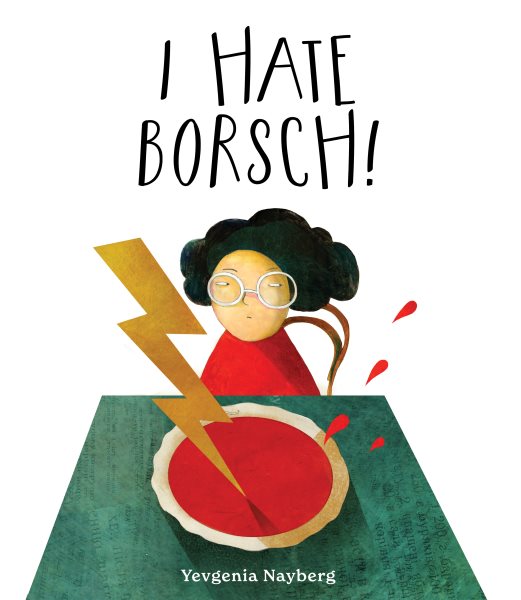
I Hate Borsch! by Yevgenia Nayberg

I know we’re categorizing this one as fiction, but there is a LOT of reality in this funny tale of this “red, thick, disgusting soup”. I don’t think there’s a kid alive that, if they’re unfamiliar with borsch, won’t identify with its heroine. I imagine reading this one aloud, saying the ingredients with infinite disgust. “The beets… The cabbage … The carrots… And, above all, the slippery, slimy tomato!” It’s infused with Ukrainian jokes, mentions, allusions, and art. I love it. I thought the art was a hoot and as a picky eater myself who, like the heroine in this book, came to love certain foods in her age, this book speaks to me at every age level. Even the recipe in the back is funny (“If this does not sound like the borsch your grandma makes, I apologize. I am sure she is a wonderful lady and a great cook.”)

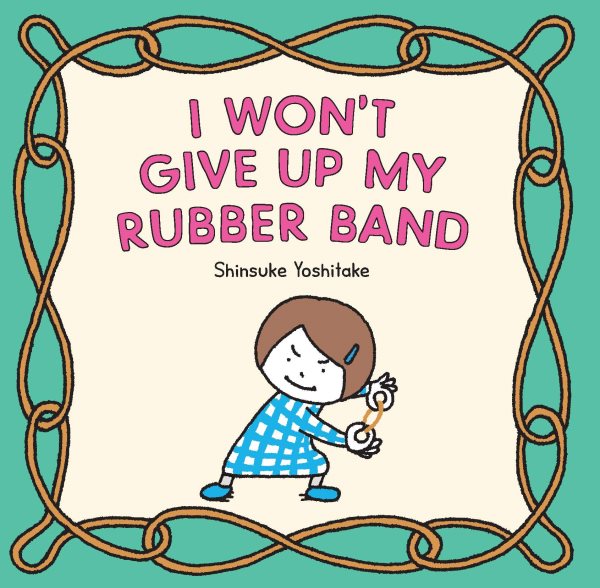
I Won’t Give Up My Rubber Band by Shinsuke Yoshitake, translated by PHP Institute, Inc.

This rubber band? It’s mine. No one else’s. And if you want the world’s greatest (and funniest)  listing of what you can do with a single rubber band, you’ve come to the right place. It is a fact universally acknowledged that should a new Shinsuke Yoshitake book come out, I will probably like it very much. That said, if this were the very first Shinsuke Yoshitake book I’d ever seen, there is no doubt in my mind that I would be just as rabidly enthusiastic about it as I am now. He just really knows how to tap into a kid’s way of looking at the world. I love the moment at the beginning of this book when our heroine goes through all the things she encounters regularly that are NOT just for her. The expression on her face as she shares? Priceless. Extra points for the little after-the-credits image on the back cover of her asking for a ribbon as well.

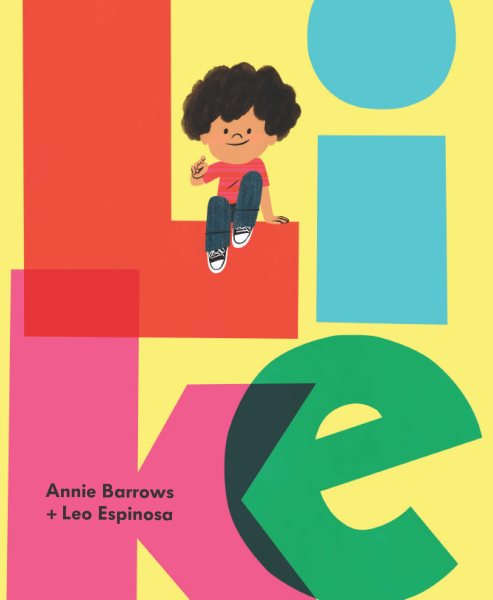
Like by Annie Barrows, ill. Leo Espinosa

I know that I’m slipping this into the “Funny” category, but I am also THIS close to also putting this in the Science/Nature category as well. Why? Because Annie Barrows has penned a remarkably clever book that systematically, and in a remarkably simple way, shows how human differ from other objects and creatures on this good green Earth. The book is full of some pretty slam dunk but subtle zingers. An early favorite of mine was, “We are not at all like tin cans. We are not shaped like tin cans. We cannot hold tomato sauce like tin cans. If you open up our lids, nothing good happens.” I just love the sheer subtlety of a line like that. All told, I could see a preschool teacher introduce a science unit on what makes human beings the same start with this book. Meanwhile, Leo Espinosa is doing double duty this year in the realm of picture books. His style here is far more subdued than what he accomplished in Jackie Woodson’s The World Belonged to Us, though I did notice one significant similarity. Look close and you’ll realize that for whatever reason, Espinosa tends to draw working guys the same. They all look like the Little Caesars logo. In this book it’s a delivery guy and in the Woodson book it’s a shaved ice guy. Sorry, I’m getting off topic. The point is that this is a deeply funny book, but also one that has a lot of different potential applications inside and outside of the classroom. A hard one not to (forgive me) “Like”.

Meet the Super Duper Seven by Tim Hamilton

The Super Duper Seven are here to save the day! Wait, scratch that. Hungry Kitty just ate four members. How can the team stick together when members keep, ah, disappearing? Welp, color me a convert. Have I mentioned enough times how hard it is to write easy books for kids? Let me rephrase that. How hard it is to write GOOD easy books for kids. After all, any joe schmoe can write a book. I swear I’ve seen Tim Hamilton books before but the man has really hit his stride with this title. Part of my love is probably based in how funny I find it when one character eats another. And the moment the team members yell at Hungry Kitty for eating the birds and they say, “You ate them? But they’re on the cover of our book!” I was in love. The repetition is used beautifully here and I legit found it funny. It does beautiful things with the rule of threes. Add in a satisfying ending AND simple words all the way through and you’ve got yourself a new easy reading winner.

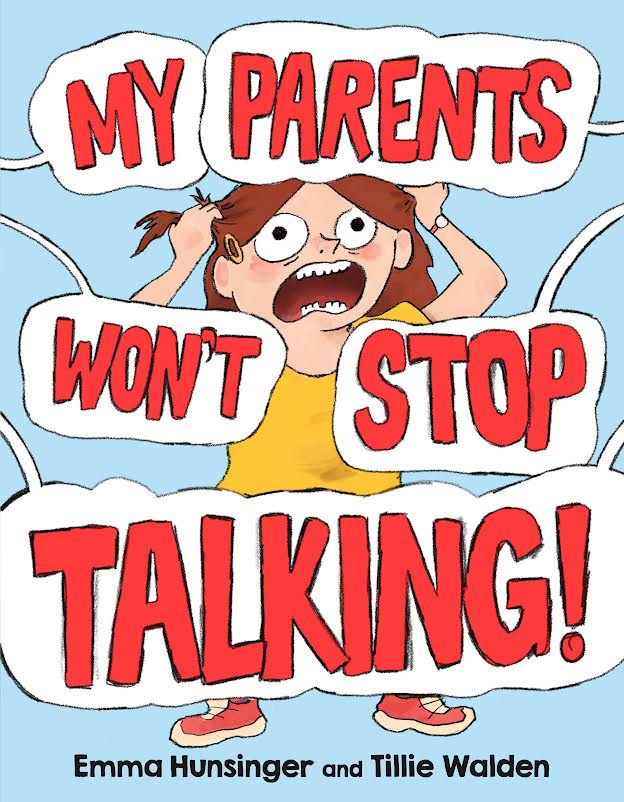
My Parents Won’t Stop Talking by Tillie Walden and Emma Hunsinger

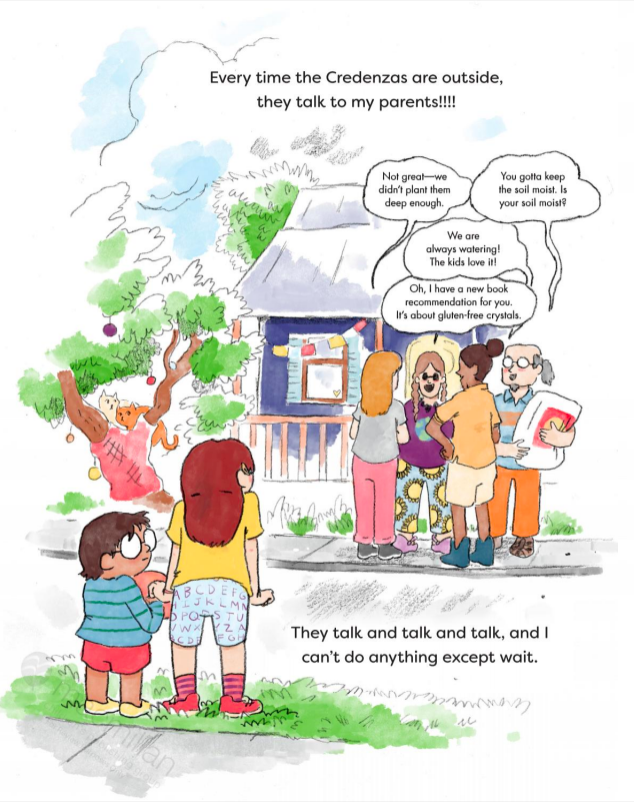
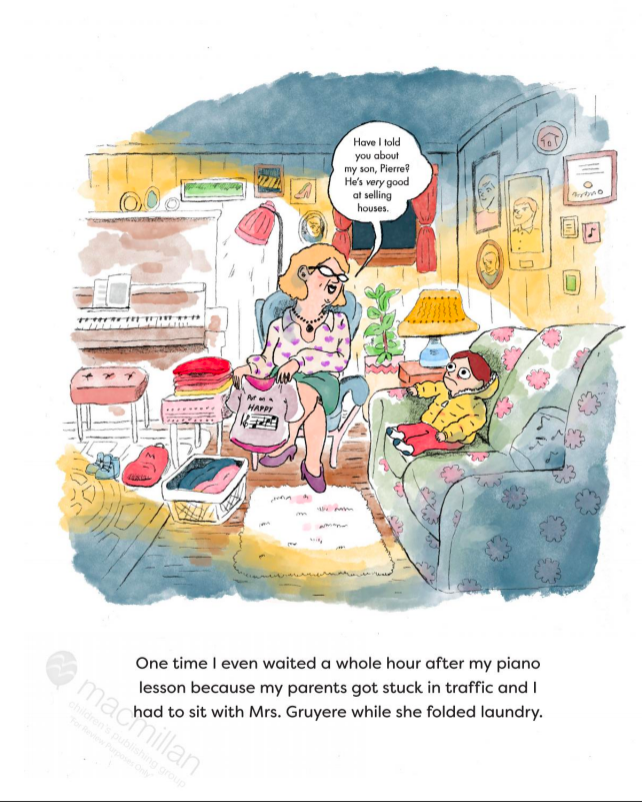
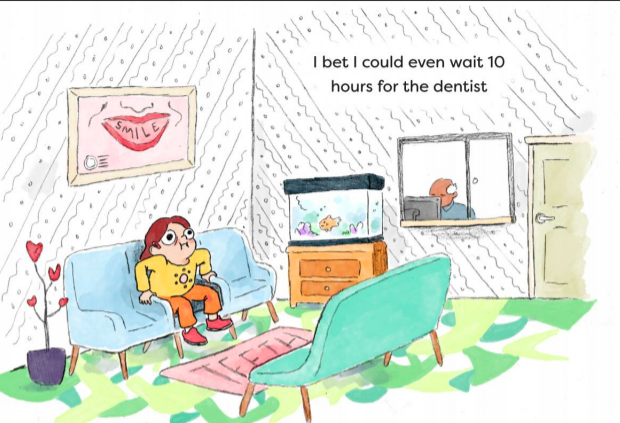
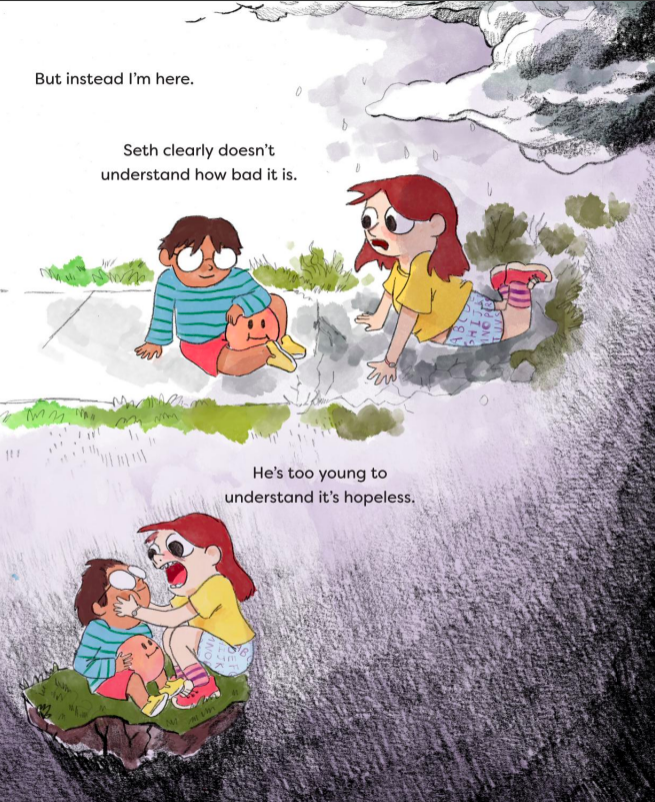
Molly is so stoked to go to the park with her family . . . until they start talking to their neighbors, The Credenzas. WILL the parents ever stop talking? WILL Molly be able to go to the park? WHY is her brother so calm about all this? A hilarious and universal childhood moment. My favorite book of the year. I’ll repeat that for you. FAVORITE. BOOK. OF. YEAR. And yes, I originally wrote that statement in January of 2022 but that attitude never really changed. This is every childhood frustration rolled into one big, beautiful book. And talk about relatable! The art is fantastic (reminds me a lot of Jules Feiffer) the text hilarious, and I just love how it works itself into a worst case scenario so seamlessly. You want funny? You want this book.

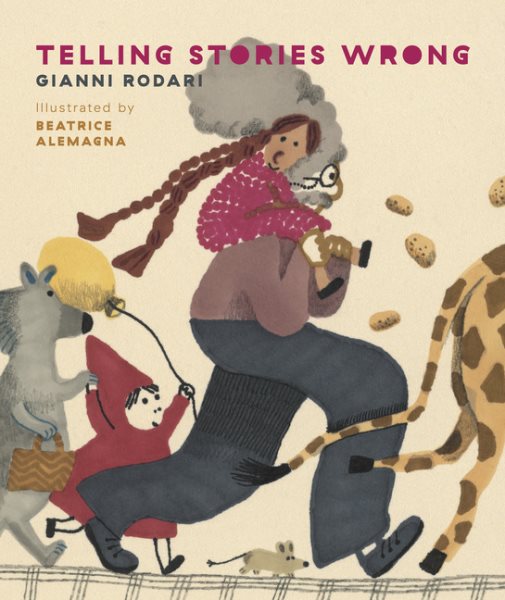
Telling Stories Wrong by Gianni Rodari, ill. Beatrice Alemagna, translated by Antony Shugaar

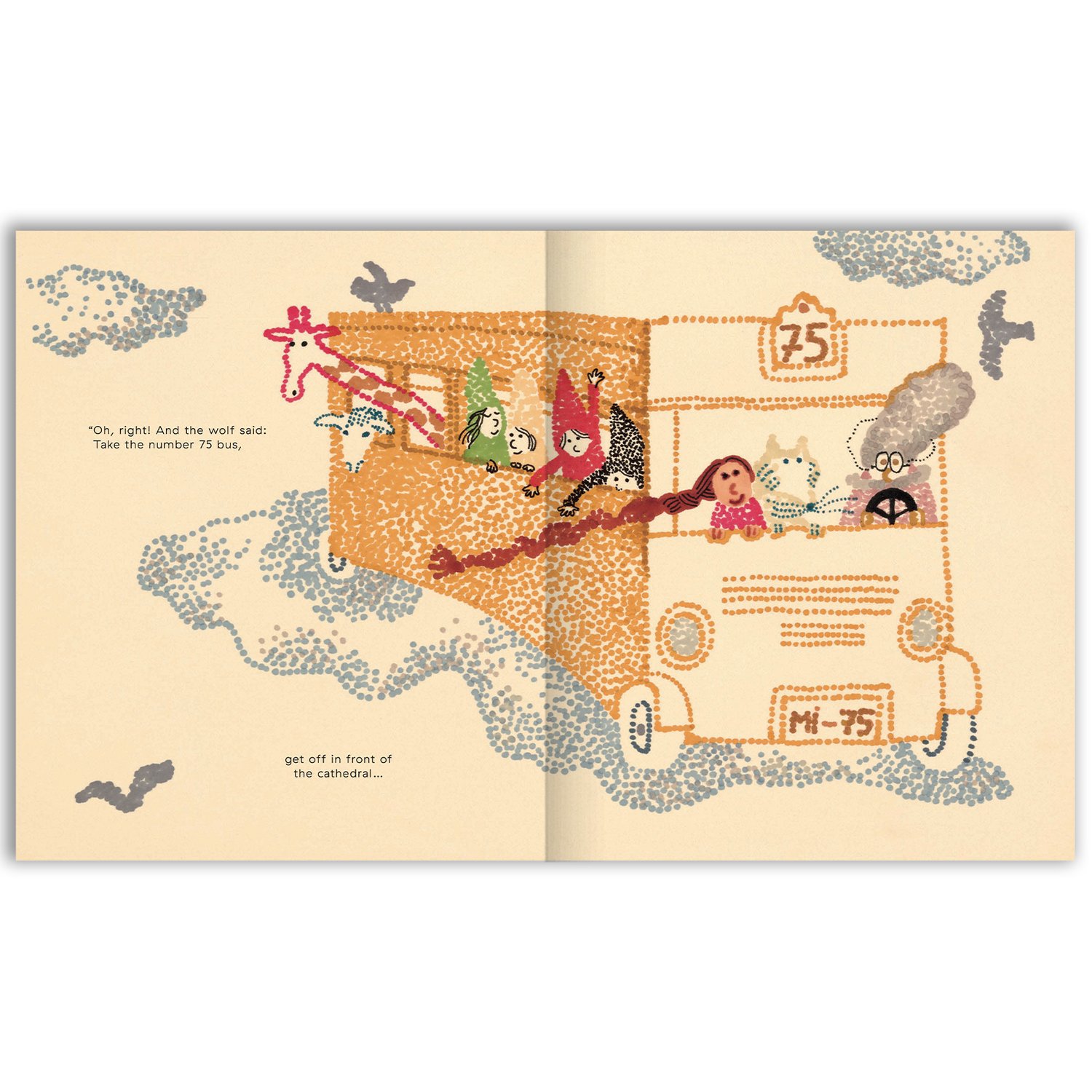
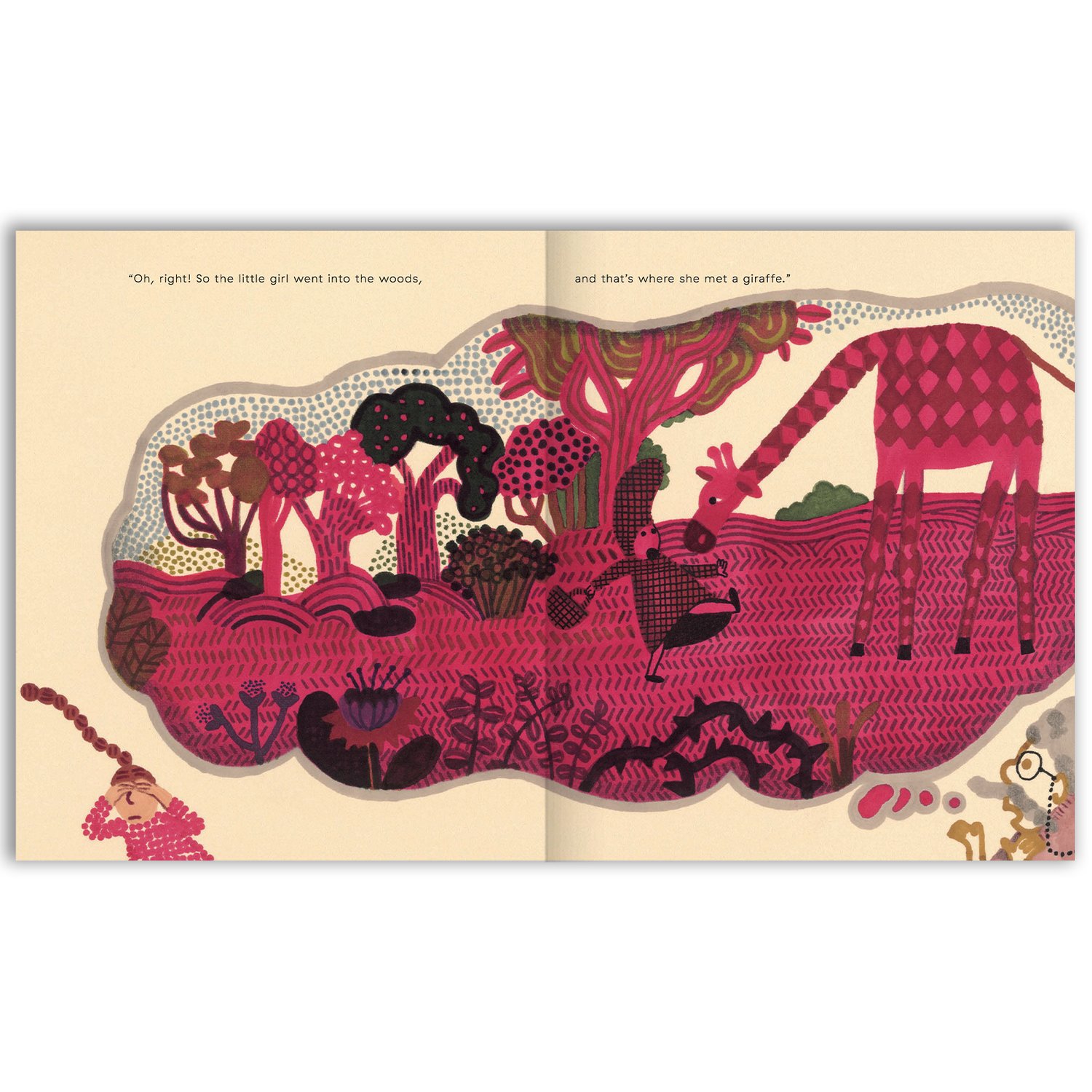
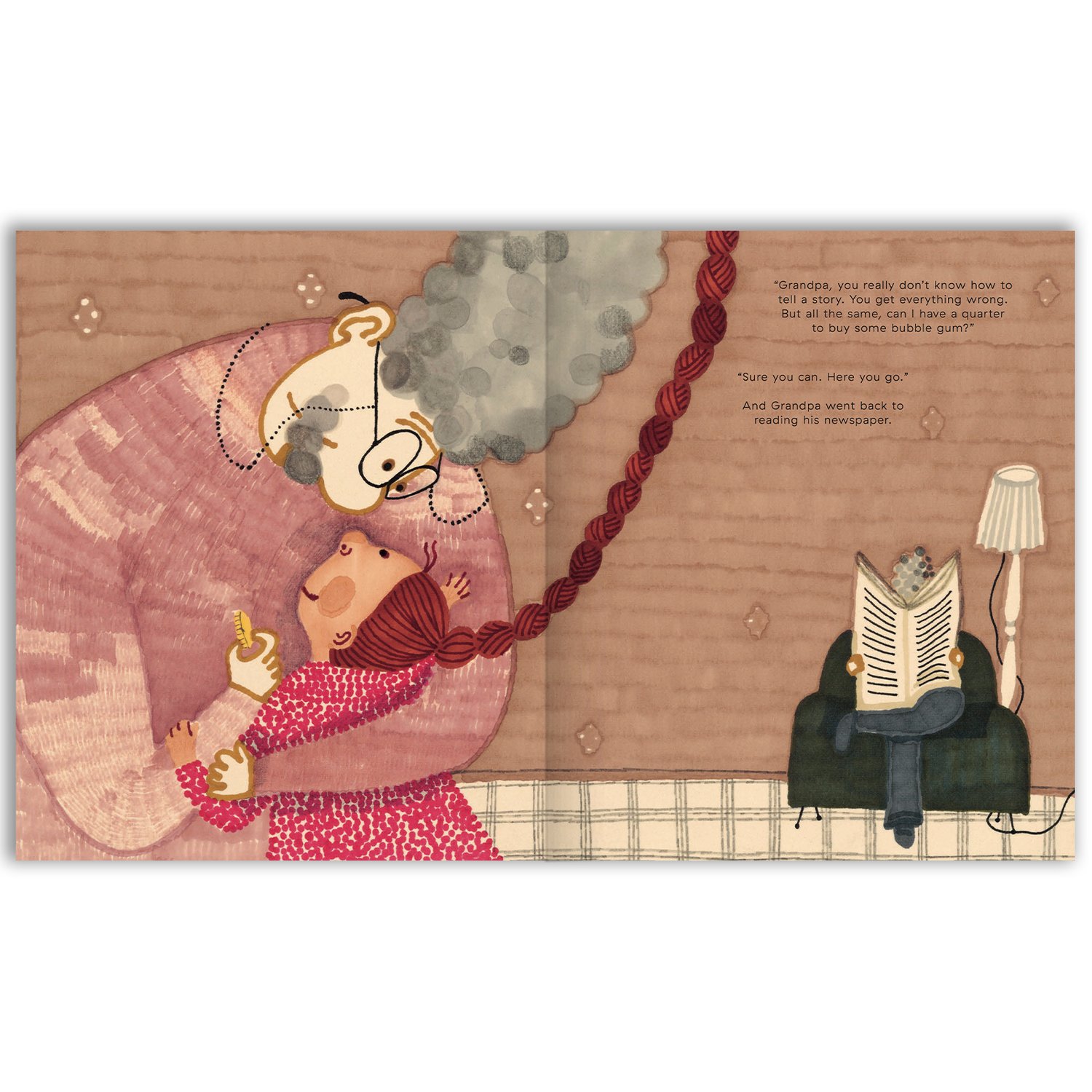
Boy, Grandpa just cannot get the story of Little Red Riding Hood right. First he says it’s Little Yellow Riding Hood and then he says she has to take a potato peel to grandma’s. Fortunately his granddaughter is ready to correct him at every turn. A funny take on getting things “right”. I actually get a fair number of European translations sent to me in a given year, but only a handful feel particularly extraordinary to me. This is one of the few, but that may have a lot to do with the fact that the art is by Beatrice Alemagna and I ADORE Beatrice Alemagna. I just love the premise too. I’m sure I’ve seen it before, but here it’s just done so exceedingly well. I’m sorry but I just found the idea of Little Red having to take a potato peel to her grandmother’s the height of funny. It’s a sly take on something a lot of us grown-ups do to our literal-minded children. A hoot.

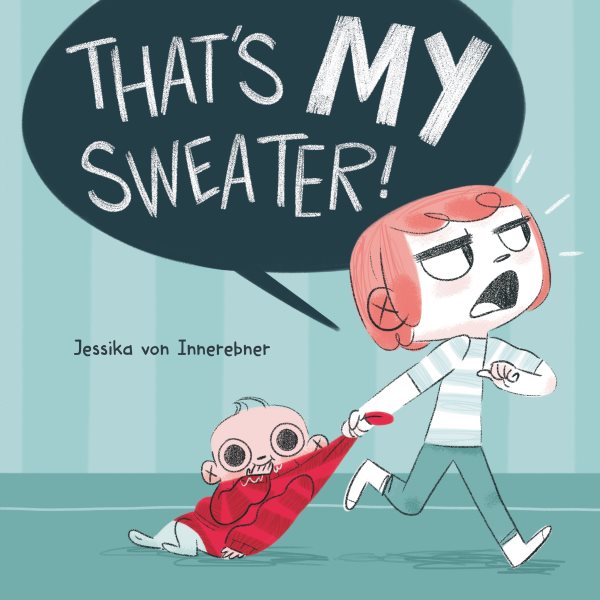
That’s MY Sweater! by Jessika von Innerebner

Okay! You know, until now Jessika von Innerebner has been toiling away on unicorn books that she didn’t even write. A book by her has been long overdue, and this little delight shows us what she’s truly capable of. I’d say this book shares some kinship, tonally anyway, with titles like Leave Me, Alone! and the aforementioned My Parents Won’t Stop Talking! In this particular tale a girl discovers, to her infinite horror, that her much beloved sweater is now the property of the droolly, smelly, resident baby. Incensed, she wages a low-key war on the baby (I mean, it doesn’t even fit him!) until she comes to the shocking realization that she too was not the sweater’s first owner. Now the art’s hilarious, the writing top-notch, but what really pushed this book over the scales for me was the simple fact that it sticks the landing. This book has an ending that works so very, incredibly well. And for that alone, I would sing its praises to the hills. Funny AND a bit of clever writing to boot!

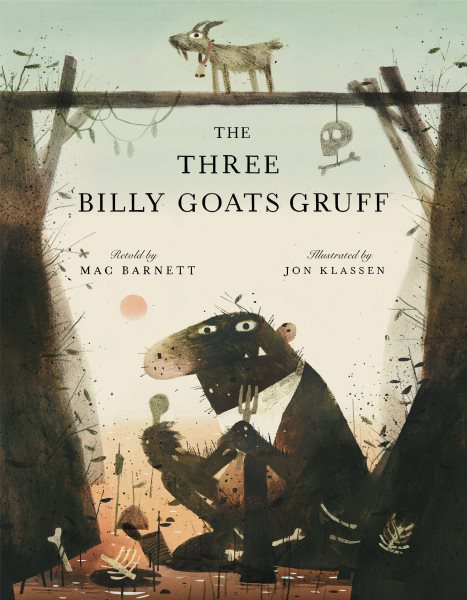
The Three Billy Goats Gruff retold by Mac Barnett, ill. Jon Klassen

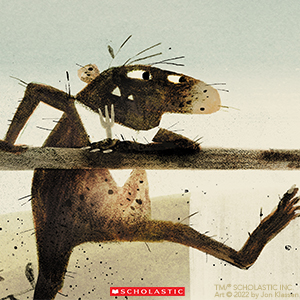
The classic tale of three hungry goats and an even hungrier troll is told with flair and humor. Get ready to laugh out loud with this hilarious new interpretation. Barnett and Klassen tell it straight! That’s a bit of a surprise. When I’d heard that they were tackling that old tale of goats and a hungry troll I just assumed they’d wacky it up in some way. And sure, it has their signature style to it, no question. There’s actually this visual gag where you see the biggest billy goat that literally had me laugh out loud. Still and all, this is pretty much precisely what you’ll expect when you read the story. I was a bit sad that Asbjørnsen and Moe weren’t credited but that’s just the Norwegian in me. It’s not like every edition of Little Red Riding Hood mentions the Grimm brothers, after all. Altogether, this is an absolute hoot to read aloud. The troll’s rhymes about how he’ll prepare the goats are pitch perfect. Favorite line: “A goat flambé with candied yams. / A goat clambake, with goat, not clams!” I envy the lucky suckers that get to read this aloud to large groups of kids.

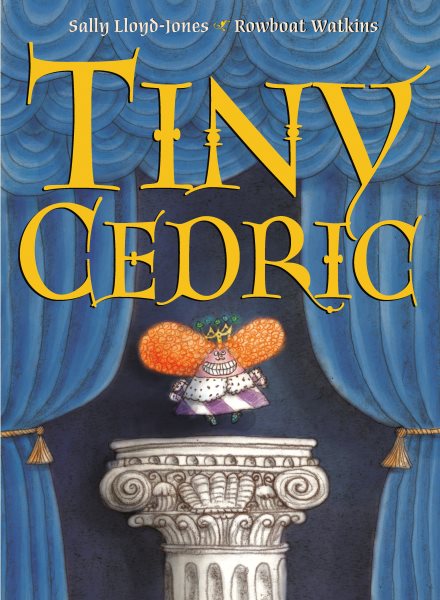
Tiny Cedric by Sally Lloyd-Jones, ill. Rowboat Watkins

What do you do when you’re a grumpy monarch of particularly tiny size? You throw out everyone who’s taller, of course! But what happens if all the people left are babies? Wackiness. So, Rowboat Watkins doesn’t do your usual run-of-the-mill picture books. I absolutely adored his Rude Cakes book from a couple years ago, but then he sort of got distracted by marshmallows and my attention wandered. Now he’s illustrating a book by picture book longstanding, reliable author Sally Lloyd-Jones and I wholly approve. Because frankly, this is a book that takes its ridiculousness to its logical extreme. I absolutely loved the weirdness of the whole endeavor. Now, I will confess that originally I was worried that the book was making fun of shorter people, and that’s not cool. But Cedric’s story isn’t realistic in the least, and I think it’s pretty clear that Cedric’s true flaw is how he pumps his ego up in unhealthy ways. A great BIG thumbs up from me.

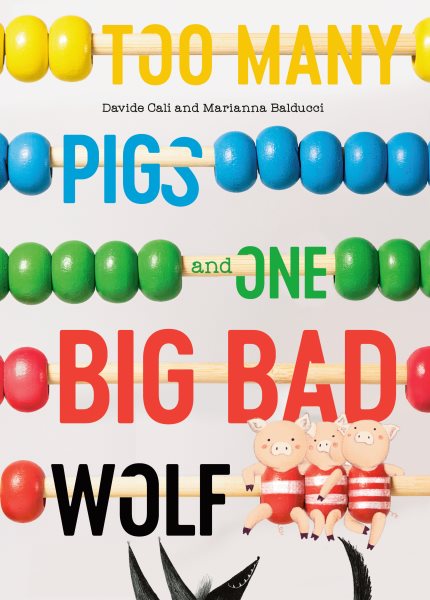
Too Many Pigs and One Big Bad Wolf by Davide Cali, ill. Marianna Balducci

Oof! This book came dangerously close to being missed on my radar this year, and that would have been a crying shame. Now it is a well-established fact that I have an inherent fondness for picture books in which the protagonist gets eaten. I suspect this has a lot to do with being raised on The Muppet Show in my youth. Whatever the case, I feel it taps into some deep, psychological understanding about the wider world, presented in a child-friendly way. This book is very much in the same vein as Jon Scieszka’s The True Story of the Three Little Pigs in that it involves a very wolf p.o.v. But this also has a lot of similarities to this year’s Telling Stories Wrong by Gianni Rodari, ill. Beatrice Alemagna, in that it involves an adult of some sort telling a story “wrong” in some way. In the case of this book, someone is telling a story about a wolf and some pigs and in every single solitary story (save one) the pigs are eaten. Initially the narrator (that you could assume was a wolf) is telling very short stories about pig eating. As the child stand-in complains, the stories get “longer” but usually in some pretty funny passive-aggressive ways. My favorite is the one where the story needs to get longer so the narrator just gives all the pigs names. Prior to being eaten. The timing on this text, by the way, is magnificent. Whole picture book writing schools should study it. This all sounds so dark but artist Marianna Balducci has done some infinitely clever things with the brightly colored art. You only see the pigs themselves, and never the wolf eating them. Often they are portrayed as beads on an abacus, with illustrations making them pig-like. None of them look particularly perturbed. And then there’s this killer ending where the wood on the abacus is broken at the end. I could literally read this a hundred times and find something new with each read. Funny and clever all at once. Don’t miss this like I almost did.

The Very True Legend of the Mongolian Death Worms by Sandra Fay

You know, Mongolian Death Worms are a shockingly overlooked cryptid in our children’s literature. It really feels like, with this book, Sandra Fay is making up for lost time. The ample backmatter at the end will tell you all the things you need to know about the worms, where they live, where they’ve been spotted, etc. They’re essentially the bigfoots of the Gobi Desert. Now this cover has some serious The Very Persistent Gappers of Frip energy going on, which I appreciated. And Faye does a good job of treading that line between horror and harmless. There’s just something about seeing a Mongolian Death Worm sporting a nametag that says “Hi! I’m Bev” that really works for me. Deeply silly and deeply weird, which is precisely what you want in a book. Drool-worthy.

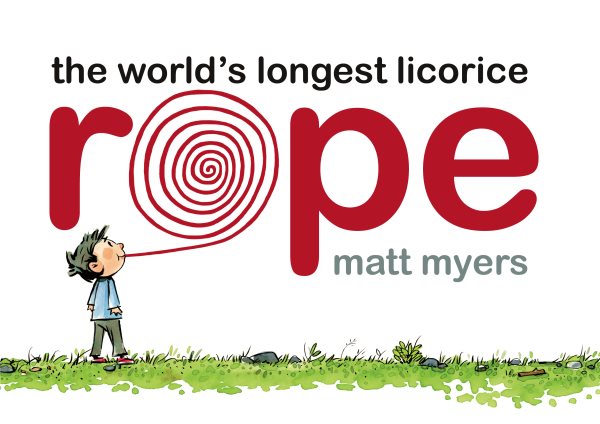
The World’s Longest Licorice Rope by Matt Myers

With a bagful of nickels in his hand Ben decides to pay one to eat the world’s longest licorice rope. But has he bitten of more than he can chew? Hilarity ensues in this delicious tale. Okay. I know I really liked Children of the Forest (the other Matt Myers picture book of 2022) and I do. But I really really REALLY like The World’s Longest Licorice Rope. Even more, actually.  For some reason it reminded me of old Peanuts strips, the way the girl in the book is able to bilk so many nickels out of our main character. And then that ending! I’m sorry, but as too many picture books this year have proven, it is so hard to nail a good ending on a funny picture book. This one really does a great job. Funny is often hard, and I thought this book was unexpected, hilarious, and weirdly touching all at once. Plus, I love any book that goes to logical extremes.


Eager to read other lists this month? Then be sure to stay tuned for the following:

December 1 – Great Board Books

December 2 – Picture Book Readalouds

December 3 – Simple Picture Book Texts

December 4 – Transcendent Holiday Picture Books

December 5 – Rhyming Picture Books

December 6 – Funny Picture Books

December 7 – CaldeNotts

December 8 – Picture Book Reprints

December 9 – Math Books for Kids

December 10 – Gross Books

December 11 – Books with a Message

December 12 – Fabulous Photography

December 13 – Translated Picture Books

December 14 – Fairy Tales / Folktales / Religious Tales

December 15 – Wordless Picture Books

December 16 – Poetry Books

December 17 – Unconventional Children’s Books

December 18 – Easy Books & Early Chapter Books

December 19 – Comics & Graphic Novels

December 20 – Older Funny Books

December 21 – Science Fiction Books

December 22 – Fantasy Books

December 23 – Informational Fiction

December 24 – American History

December 25 – Science & Nature Books

December 26 – Unique Biographies

December 27 – Nonfiction Picture Books

December 28 – Nonfiction Books for Older Readers

December 29 – Best Audiobooks for Kids

December 30 – Middle Grade Novels

December 31 – Picture Books
Filed Under: 31 Days 31 Lists, Best Books of 2022 Tagged With: 31 days 31 lists, Best Books of 2022, funny picture books

31 Days, 31 Lists: 2022 Rhyming Picture Books

December 5, 2022 by Betsy Bird

There is no sound finer to the human ear than well-coined rhymes on a page. And there is no sound more painful that strained rhymes in a poor picture book. They abound, I’m afraid, but we aren’t going to let them win. No sir! Today, I introduce to you the finest rhyming picture books of 2022. Each one a joy in scansion. Each one equipped to turn YOUR children into book lovers based on sheer rhyme alone. Don’t believe me? Better check the books out for yourself then.

Oh, and are you interested in previous years’ rhyming picture book lists? Of course you are! Feast your eyes, then, on these:

  • 2020
  • 2019
  • 2018
  • 2017
  • 2016

2022 Rhyming Picture Books

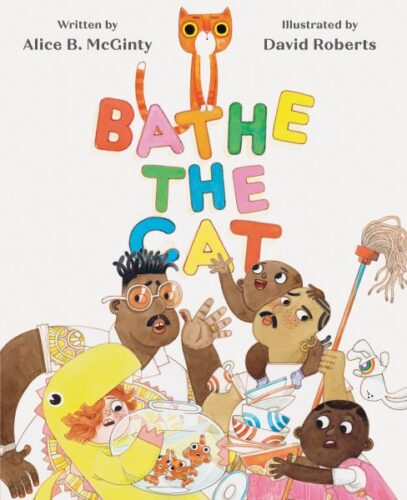
Bathe the Cat by Alice B. McGinty, ill. David Roberts

Grandma’s on the way to visit so everyone needs to clean up! “Sarah, feed the floor. I’ll sweep the dishes. Bobby, rock the rug. Dad will scrub the fishes.” Wait, what? A mischievous cat mucks with a family’s housework to hilarious effect. Okay. If there is an argument to be had that we simply do not have enough regular families with gay parents represented in our picture books, then I think I have at least one solution right here. This book is a sheer delight. Visually it’s such an eye-popper. I adore this family, and the mischievous cat in particular. Plus, it’s such an original idea for a storyline! Would love many many more reads on this.

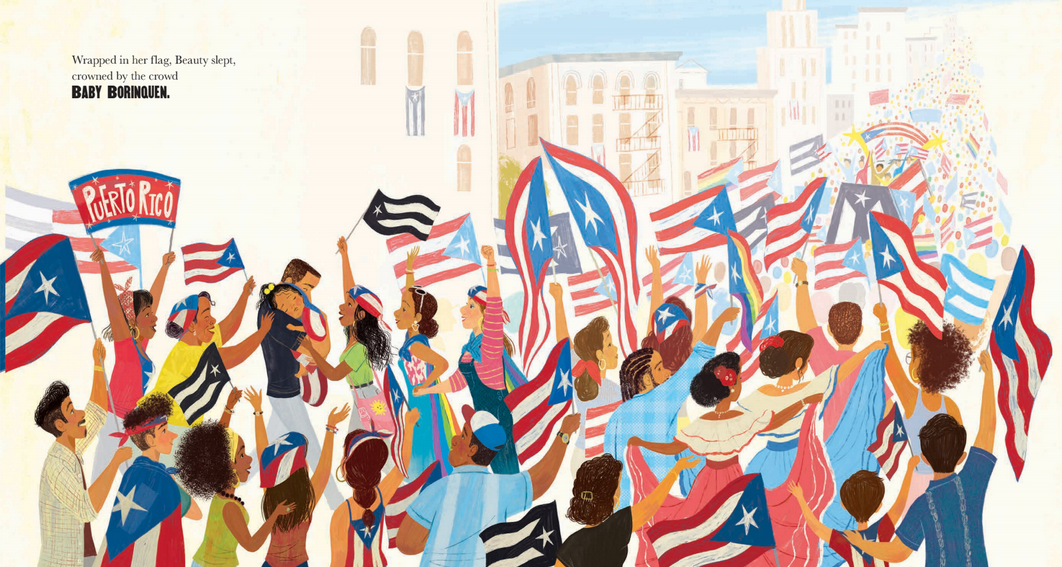
Beauty Woke by NoNieqa Ramos, ill. Paola Escobar

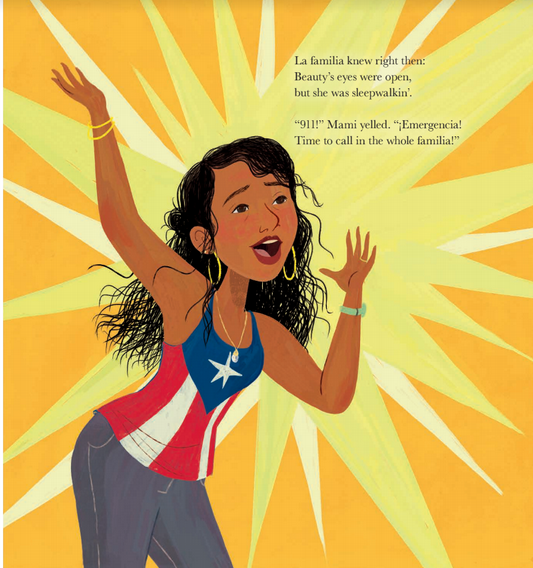
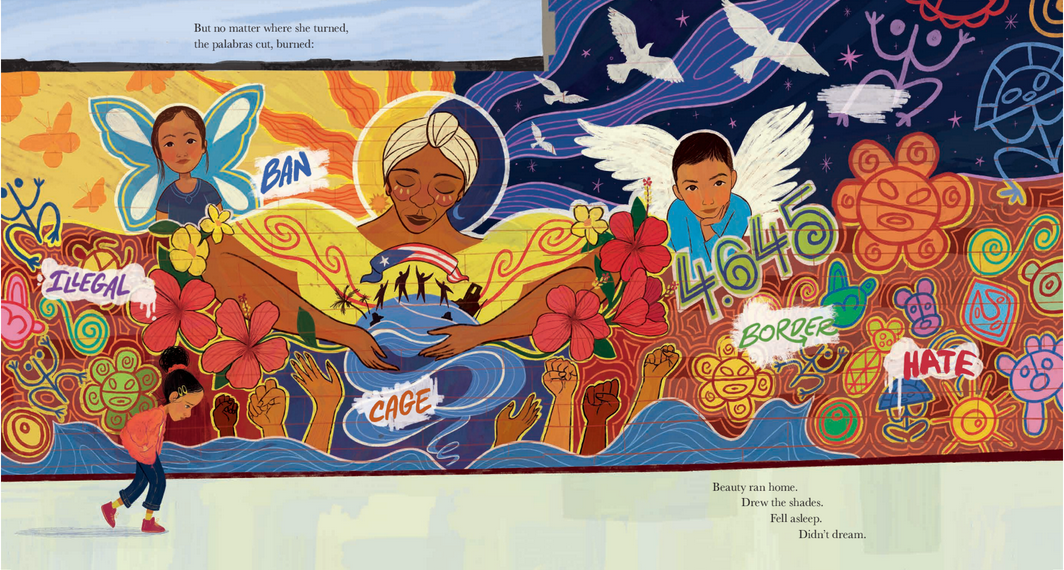
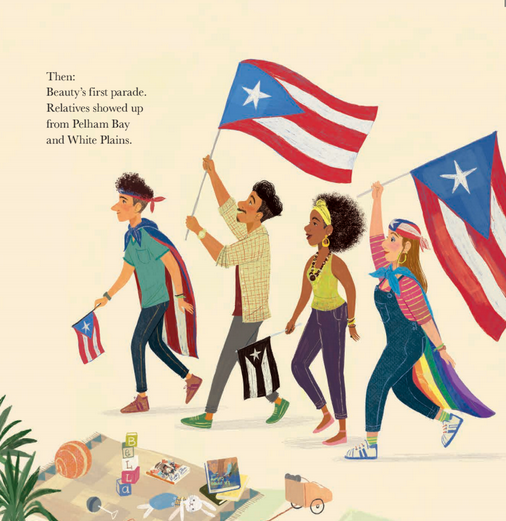
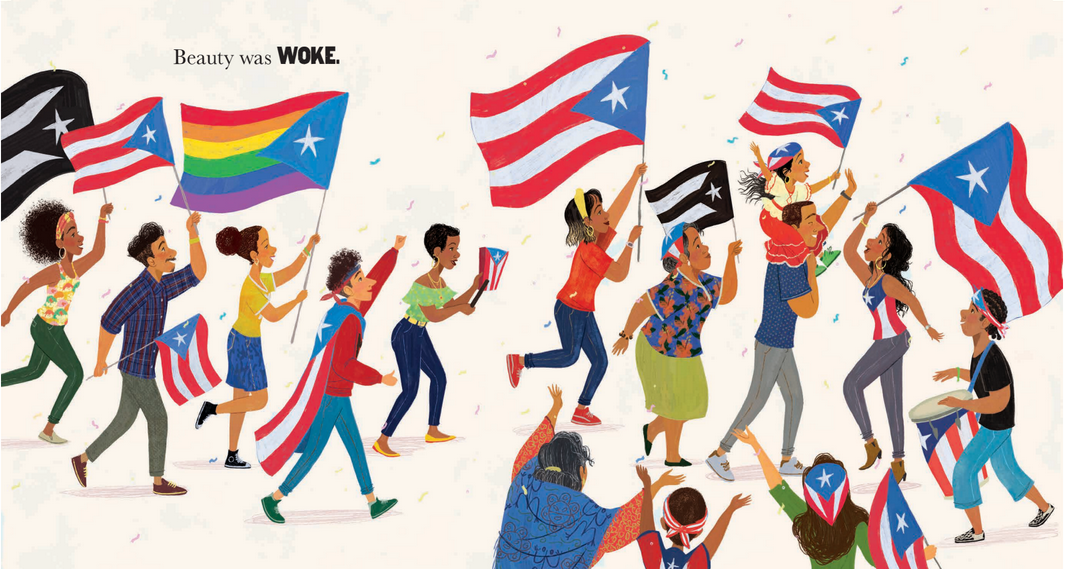
Thanks to her loving Puerto Rican family, Beauty learns to wake up and find the beauty within herself and in her heritage. Bursting with colorful illustrations, an inspirational story from the author of Your Mama. Yeah, see, this is how you do it. There are books that say you’re special but they don’t show it. This book means it. It burns with it. Plus who can resist taking the Sleeping Beauty myth and turning it on its head like this? Ramos’s decision to make it rhyme too was gutsy since rhyme can go so wrong. Extra points to whatever editor tapped Paola Escobar to do the art. This title should serve as an example for others. No halfsies. This book is all in.

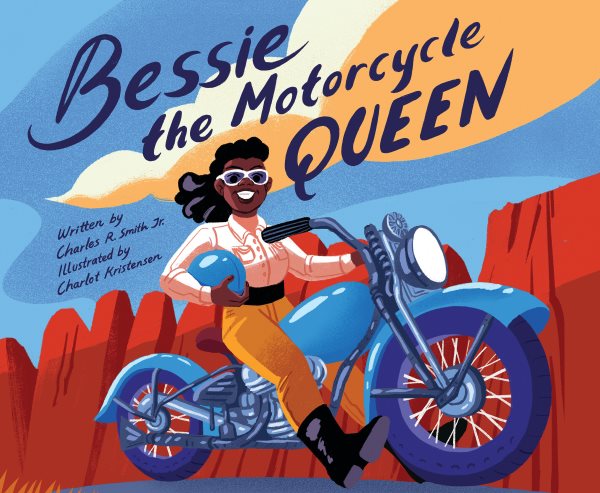
Bessie the Motorcycle Queen by Charles R. Smith Jr., ill. Charlot Kristensen

I kind of love that we live in an era where we can hear a cool story on a podcast or run across a social media video about some hitherto unsung hero of the past and then just turn that person’s life into a picture book bio. Of course Smith is doing one better by also making the ding dang thing rhyme. Now you might not think it but from time to time I get requests for rhyming nonfiction. I do! One advantage of the rhyming verse of this book is that it allows Mr. Smith the chance to tell a story without relying on false quotes (my greatest dislike) and gets the point across when, truth be told, there’s not a lot of information to go off of. As he himself says in an author’s note at the end, finding info on Bessie was tricky partly because she made up stuff and partly because there just wasn’t a lot of info to be found. I think he made the right choices with this story. Certainly she did have some badass adventures as a dispatch rider in WWII, the only woman in an all-Black unit. Still, the sheer amount of freedom you feel reading this is fantastic. Reminds me of a similar picture book bio about a woman and her motorcycle from a year or two ago called Girl On a Motorcycle by Amy Novesky and Julie Morstad about Anne-France Dautheville. Could be a cool pairing, particularly if you add in My Papi Has a Motorcycle.

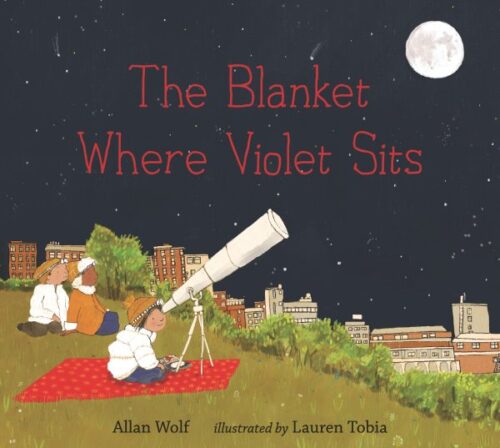
The Blanket Where Violet Sits by Allan Wolf, ill. Lauren Tobia

Sometimes I have a little internal debate over where precisely to categorize one picture book or another. Should, for example, the book The Blanket Where Violet Sits go onto the Informational Fiction list since it provides a nice encapsulation of our place in the wider universe, or should I put it on the Rhyme list since it’s built atop that old “This Is the House That Jack Built” (a.k.a. cumulative) formula? Rhyming won out in the end and I think I made the right choice. Any book illustrated by Lauren Tobia gets this immediate leg up in the world anyway, but what’s nice about this title is how cozy it all is. It can feel intimidating to look into the sky and understand just how very small you are in the grand scheme of things. Wolf and Tobia conspire here to both acknowledge that point and counter it with the comfort of having your family around you. It’s also neat to see a cold weather nighttime picnic in a book (something I don’t recall seeing before). Great for science storytimes or just general STEM rhyming in general.

Chester Van Chime Who Forgot How to Rhyme by Avery Monsen, ill. Abby Hanlon

As far as I’m concerned we should just hire Abby Hanlon to illustrate all the things. All. The. Things. A little Hanlon makes any good book just that much better. Take Chester here. I open the book and immediately you see all these cute little rhyming things. A slug on a rug, for example. Or a fish in a dish. And little did I know that reading this book you see just a whole SLEW of rhymes in the art. Chester is, himself, completely incapable of rhyming and the book has a lot of fun with his near misses. Hanlon, meanwhile, has this whole little sideplot involving a naughty fox that kids are going to enjoy thoroughly. This book is giving off a real Richard Scarry vibe, I gotta tell you. Don’t be surprised when kids start asking for it again and again and again and again . . .

Firefighter Flo! by Andrea Zimmerman, ill. Dan Yaccarino

Move over, Mr. Gilly! There’s a new community worker in town and she goes by the name of Flo. When my son was just a little bit of a thing I became, and I don’t like to brag, a connoisseur of the finest firefighting picture books out there. Seriously, I managed to grab hold of every single thing published and available in several library systems for a couple of years there. Had Firefighter Flo (part of the Big Jobs, Bold Women series from Holiday House) been available, you know I would have snapped it up right quick. Female firefighter picture books aren’t unheard of. As I recall the Susan Middleton Elya/Dan Santat title Fire!  Fuego! Brave Bomberos! title did a great job with female representation. And then there was Send a Girl and Molly, By Golly. But both of those have nonfiction feels and read quite a bit older. The nice thing about Firefighter Flo! is that she feels custom-made for a storytime with the little littles. There are some gentle rhymes but I loved seeing Yaccarino back in the saddle, he and Zimmerman reliving their Trashy Town days. Fond of a firefighter trope? This book’s got everything from the poles to the dalmatian.

Good Night, Little Bookstore by Amy Cherrix, ill. E.B. Goodale

Are you one of those people that instantly roll your eyeballs skyward when you encounter a book for children that praises librarians or booksellers like they’re some kind of gods? I mean, I do. Fer sure. It just feels like the most basic form of pandering, right? Never mind that I work in a library where any book that features the word “book” in the title flies off the shelves. But what may set Good Night, Little Bookstore apart from the pack is the sheer level of intimacy and, let’s face it, creativity at work here. First off, you have E.B. Goodale doing the art, so that’s a plus right there. Goodale could have phoned this one in too. Could have just grabbed that check and dashed off some pretty basic books-on-shelves images. Instead, she decided to have a bit of fun. There is a two-page spread in this story in which the titles on the books are just a little teeny tiny bit off. So “Brave Irene” by William Steig becomes “Courageous Eileen”. “Nate the Great” becomes “Wes the Best”. And once you start noticing you simply cannot stop. She’s even worked in her own book “Below the Lilacs” into “Above the [something]” (the last word is cut off). Then you get the gentle rhymes of the text itself. Rhymes that really and truly work, with that bedtime cadence you want in a nighttime book. Gentle. Lulling. There’s just something infinitely comforting about people shutting down a beloved space at the end of the night. Seriously, if Cherrix and Goodale want to follow this up with “Good Night, Little Library” I won’t even peep. The best possible version of this kind of story.

Granny and Bean by Karen Hesse, ill. Charlotte Voake

A Hesse/Voake power combo? Don’t mind if I do!! Sometimes you hear folks (grandmother type folks) complain about the ways in which grannies are portrayed in a lot of picture books. You know the type. Doddering. Usually in the kitchen. White fluffy hair around their head. Generally decrepit. Where are the action grandmas? Folks, in that vein I present to you a contender. The Granny in this book isn’t just keeping up with her toddler grandchild. She is more than willing to traipse about in the wild wind and storm and cold and wet just so that they can play outdoors a bit. I remember having a toddler in New York City and finding playgrounds, even on the coldest of days, to be a refuge. If I’d had a sea, I would have taken my own Beans there. Now Hesse had the choice of merely writing lyrical text or attempting the far more difficult and risky move of making it all rhyme in some fashion. And that bouncy, enjoyable wordplay is a perfect complement to the story itself. Listen: “They sang as they went / They crouched to greet dogs / They skirted a fence / They leapt over logs.” It’s a beautiful ode to grandmothers and their grandkids on not-so beautiful days. By gum, if you know a granny with a penchant for amusing her grandchildren in great the outdoors, I cannot think of a better book to hand to her.

I’ll Always Come Back to You by Carmen Tafolla, ill. Grace Zong

I suppose I could just as easily slip this one onto the “Messaging” list, but I always feel like there are plenty of books out there trying to teach about different issues, while rhymes, good ones, can be difficult to find sometimes. The concept of a parent leaving and coming back is evergreen. We probably need new books on the subject every year, to be honest. You can never have enough. This book moves beyond the message, however, to rhyme and storytell at the same time. So you get sentences along the lines of “I might have to travel sunup to sundown, on a humpity camel crew! / But I’ll always, always, ALWAYS come back to you.” Zong’s having fun with the art, Tafolla’s having fun with the rhymes, and it’s all a great big message wrapped in silly, but very clear, packaging. A treat.

Lift, Mix, Fling! Machines Can Do Anything by Lola M. Schaefer, ill. James Yang

A little rhyme with your simple machine text, perhaps? They don’t get much younger than this lovely look at everything from pulleys to wedges. James Yang offers his customary simple, colorful, easily identifiable style to the work, but in this particular case I’m admiring Schaefer’s ability to both convey some fairly complex ideas about simple and compound machines in rhyme. “An inclined plane helps push or roll / These wheels and axles go for a stroll.” I’ll bet you even grown-up readers learn something from this particular book when they come across it. A great use for rhyme in a STEM title.

The Lodge that Beaver Built by Randy Sonenshine, illus by Anne Hunter

“This is the crunch in the darkening wood / of teeth against bark where the willow once stood.” Gentle rhymes and accurate facts tell the tale of one beaver family building homes near and far. I mean, I love beavers. Straight up love them, so I am not the most ideal person to judge this book. Once you’ve read the Superpowered Field Guide to Beavers by Rachel Poliquin, you come away thinking that you’re an expert. Even so, I loved that this book included information that I haven’t heard before (muskrats sometimes pop up in beaver lodges in the winter?). The gentle rhyming structure scans and informs at the same time. And there’s a nice section at the end of beaver facts, that I liked a lot. Makes me want to take an early morning walk over to Northwestern to see if their beavers are still there!

Mardi Gras Almost Didn’t Come This Year by Kathy Z. Price, ill. Carl Joe Williams

Better practice this one a couple times before you give it a go in your Mardi Gras-themed storytime. If you got it down and got it down right, it would just blow away listeners, but the rhymes aren’t cat/bat/sat or anything quite so simple. Now usually when a horrible historical event has happened in our country we’ll get books about it right away. Then a decade or so will pass and people will process what happened and start to come up with thoughtful, nuanced stories. This one is actually about recovering from the trauma of Katrina. It shows how kids bounce back while their grown-ups are still just trying to get through a day.I was impressed with how the story swells and changes and grows so that you have this triumphant return to Mardi Gras at the end for everyone. Williams is doing some creative things with the art as well. And while the whole book doesn’t constantly rhyme, there are enough rhymes in the book with enough rhythm to keep you going. Interestingly, Price made the choice to make the book rhyme only when things are getting better and Mardi Gras is back. Rhymes as joy. A neat idea.

The Most Haunted House in America by Jarrett Dapier, ill. Lee Gatlin

I mean, what would you do if you were invited to drum at the White House in a skeleton outfit by the Obamas? You’d do it, obviously. But if you were Jarrett Dapier you’d also go so far as to write the whole thing up as a picture book later. It’s been a long time since I’ve seen an Obama cameo in a picture book, so this was a kind of neat book to discover. Rhyming all the way through, it fills itself not just with a fun bouncy storyline about little skeletons asked to drum for a White House Halloween party, but also a lot of factual information about the ghosts that reportedly haunt this structure. A neat amalgamation of ideas, and who can resist that killer Lee Gatlin art? No one, that’s who.

My Fade Is Fresh by Shauntay Grant, ill. Kitt Thomas

Considering the sheer number of picture books telling Black kids to be proud of their hair, I was caught completely unaware by the plot and structure of Grant’s latest title. From the cover, I just assumed we’d something along the lines of Crown by Derrick Barnes. And certainly there’s a little of that book in this one’s bones (he even has a blurb on the cover), but plotwise I couldn’t have been more wrong. A young girl walks into a barbershop seeking “the freshest fade up on the block!” She is not shy about this request and she knows PRECISELY what it would entail. But the adults around the girl just cannot deal with this. They literally suggest every other possible iteration of traditionally female hairstyles in the hopes of distracting the young customer from her goal. Through all of this she stays strong, which I greatly admired. It’s one thing to show kids a book about standing up to your enemies, but standing up to your friends and family? That takes an extra layer of toughness. The stylist keeps just cutting a little and then asking if she should stop, which is such a uniquely frustrating thing for any kid to deal with. The final result is HARD won, I have to say. It’s so nice that the rhymes scan as beautifully as they do, but that final show of the girl in her skirt with her new hair is worth the price of admission alone. An excellent title on showing how to stand up to a world full of other people’s opinions about how you look.

‘Twas the Night Before Pride by Joanna McClintick, ill. Juana Medina

I was real uncertain about this one since there’s that whole “Twas the Night Before…” series out there that ticks off each and every holiday. Obviously this isn’t part of that series (more fool the series) and it’s illustrated by the keen Juana Medina who has created THE coolest endpapers of the year. See if you can spot all the children’s book creators (I was particularly thrilled when I figured out Ann M. Martin). As for the rhymes themselves, they’re quite nice. Scan well. It doesn’t match the original “Night Before Christmas” poem phrase for phrase, and that’s just fine. I also liked the quick dive into the history of Stonewall too. Have a Drag Queen Storytime coming up? I think I’ve found the book for you.

Twelve Dinging Doorbells: An Every-Holiday Carol by Tameka Fryer Brown, ill. Ebony Glenn

You know when a holiday picture book is so good you just want to make it an instant classic and a standard immediately? Yup. That’s this book. And before we even get into it, I want to acknowledge the sheer brilliance of saying right there in the subtitle that it’s “an every-holiday carol”. Because really what this is is a story of a family getting together with a big meal and games and dancing and all kinds of stuff. So that could be Thanksgiving or Easter or Christmas or, heck, the Superbowl. In other words, this is the readaloud storytime holiday picture book of every librarian’s DREAMS! Next, you get to the format, which is your standard Twelve Days of Christmas deal. And like all Twelve Days of Christmas books, it has to jump the usual hurdles. Illustrator Ebony Glenn had to decide pretty early on whether or not she wanted to show every single person after they were introduced onto the page. So when you hear about the “two selfie queens” (mildly brilliant, right there) are they in EVERY picture? Pretty much yes! We had a different Twelve Days of Christmas book out this year involving cats that was not nearly so good at this. Then there’s the fact that there is, thanks to Tameka Fryer Brown, an actual plot! Our heroine, a small girl, wants “a sweet potato pie just for me”. And as you might expect, tragedy happens near the end, only to be rescued on the very last page. You can sing this. Perform it (have the kids do the repping with the seven brothers). The whole thing’s just a joy. SO glad to have discovered this!

What’s Up, Pup? How Our Furry Friends Communicate and What They Are Saying by Kersten Hamilton, ill. Lili Chin

As ever, it can be hard to find books for younger readers sometimes. In spite of its longish subtitle, this clever little title does a marvelous job of breaking down different types of doggie body language in your day-to-day interactions. It also rhymes, which was a nice plus, and wholly unexpected. It makes me think that this book could actually be used in STEM-related storytimes as well. Some of these movements you’ll already know, like showing a belly or peeing on things. But others were new to me. The tongue flick to the nose potentially meaning that they’re nervous. Sniffing the ground to say that they need space. It’s all explained in the excellent backmatter at the end, alongside an Author’s Note  and a Select Bibliography. Fun!


Eager to read other lists this month? Then be sure to stay tuned for the following:

December 1 – Great Board Books

December 2 – Picture Book Readalouds

December 3 – Simple Picture Book Texts

December 4 – Transcendent Holiday Picture Books

December 5 – Rhyming Picture Books

December 6 – Funny Picture Books

December 7 – CaldeNotts

December 8 – Picture Book Reprints

December 9 – Math Books for Kids

December 10 – Gross Books

December 11 – Books with a Message

December 12 – Fabulous Photography

December 13 – Translated Picture Books

December 14 – Fairy Tales / Folktales / Religious Tales

December 15 – Wordless Picture Books

December 16 – Poetry Books

December 17 – Unconventional Children’s Books

December 18 – Easy Books & Early Chapter Books

December 19 – Comics & Graphic Novels

December 20 – Older Funny Books

December 21 – Science Fiction Books

December 22 – Fantasy Books

December 23 – Informational Fiction

December 24 – American History

December 25 – Science & Nature Books

December 26 – Unique Biographies

December 27 – Nonfiction Picture Books

December 28 – Nonfiction Books for Older Readers

December 29 – Best Audiobooks for Kids

December 30 – Middle Grade Novels

December 31 – Picture Books
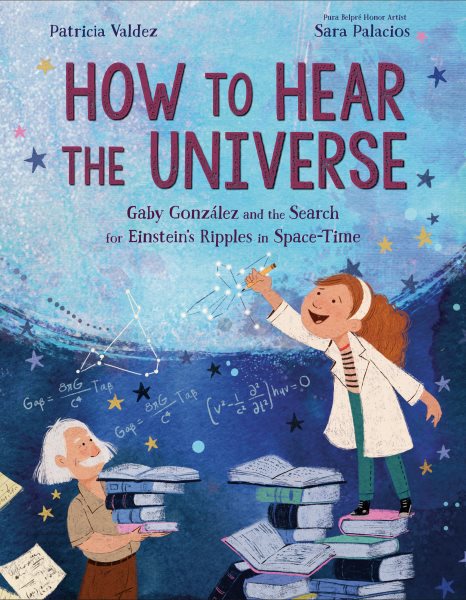
Filed Under: 31 Days 31 Lists, Best Books of 2022 Tagged With: 31 days 31 lists, Best Books of 2022, rhyming picture books
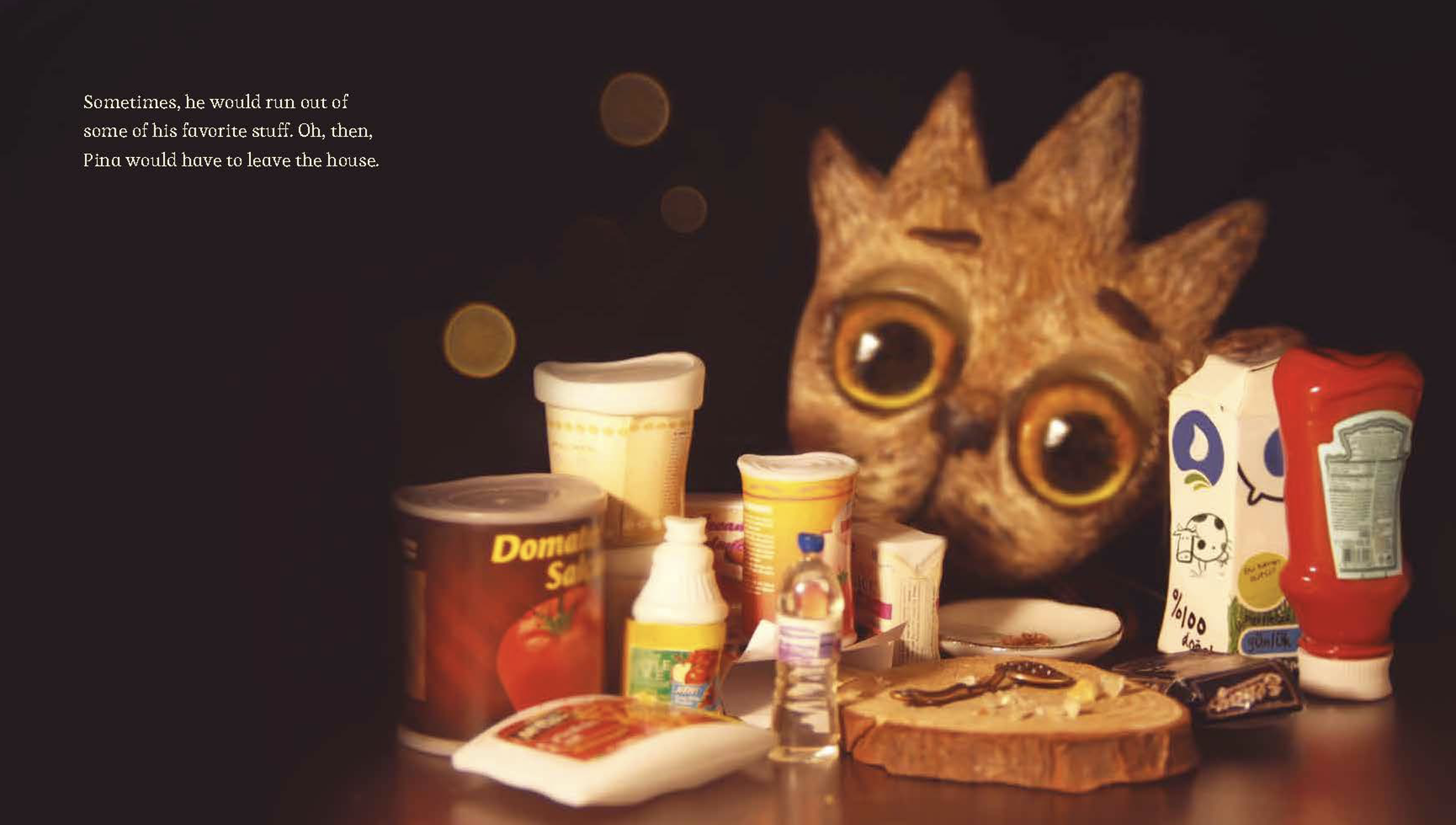
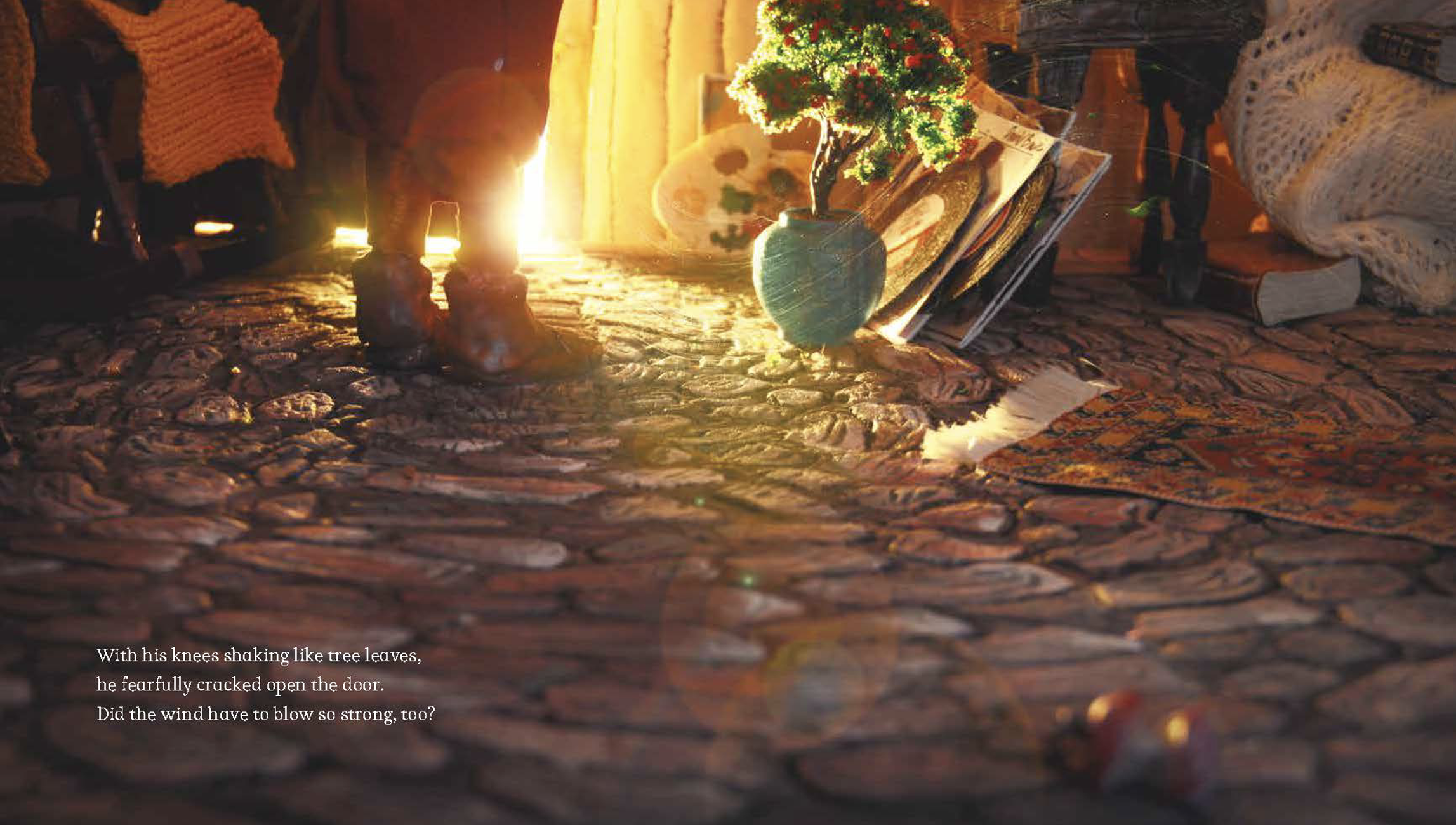
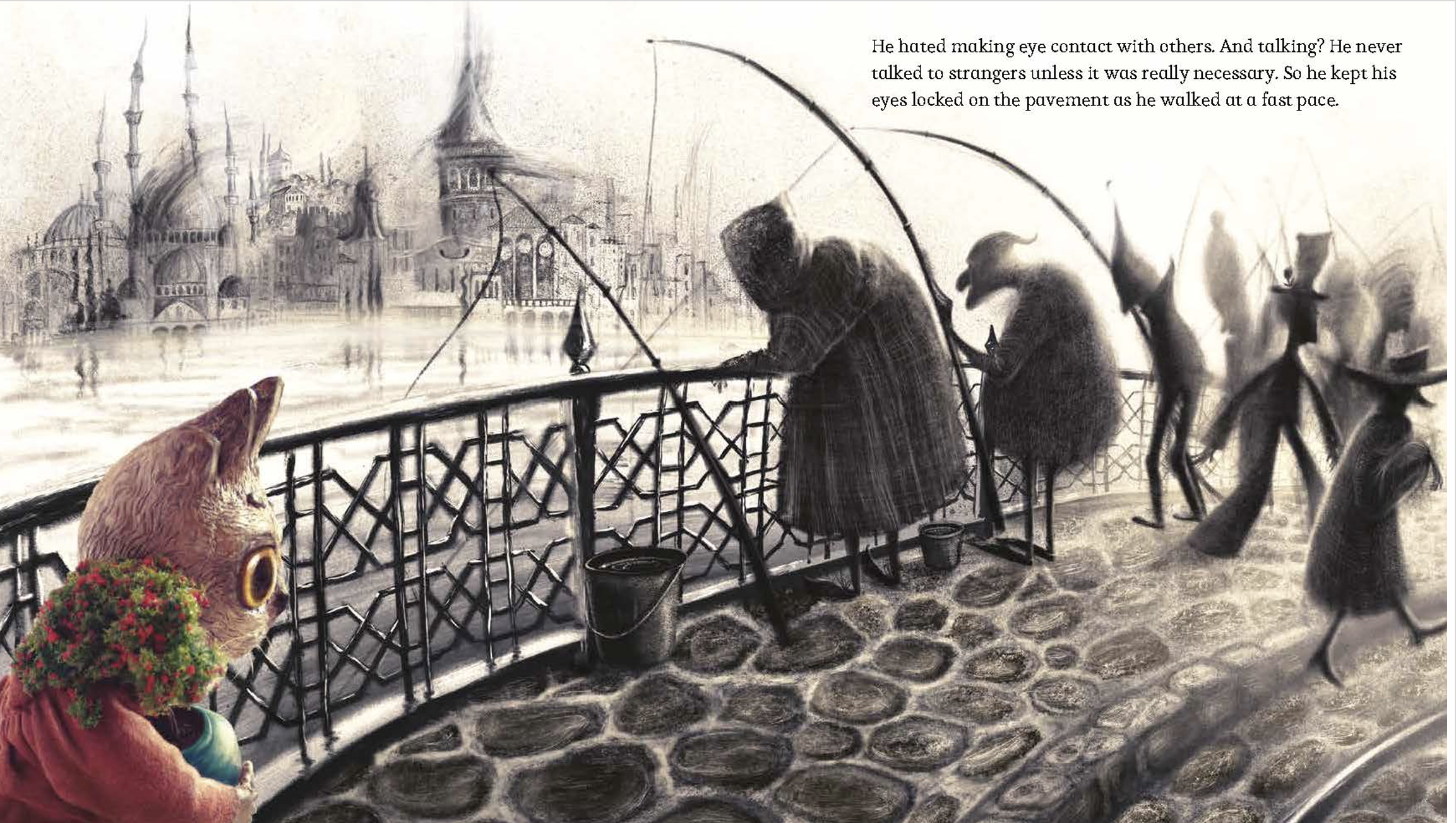
  • « Go to Previous Page
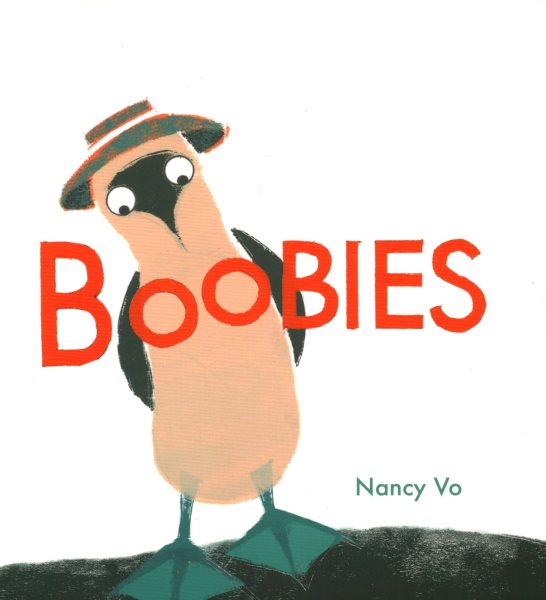
  • Page 1
  • Interim pages omitted …
  • Page 147
  • Page 148
  • Page 149
  • Page 150
  • Page 151
  • Interim pages omitted …
  • Page 1048
  • Go to Next Page »

Primary Sidebar