Check this out:

That would be my press pass for this year’s 2012 ALA Conference held in beautiful (though strangely stormy and cold as of Thursday) Anaheim, California. Having hopped a plane from my native New York I now find myself on the opposite coast, a full country-sized swath away from my young. Fortunately there are things to distract me.
This press pass, for example. Though I am now hold the Youth Materials Specialist position with NYPL I like that I can put my hoits and my toits on hold as I canvass the conference floor. This press pass allows me to do so. Note the “Plain City, OH” location. I didn’t do that myself, it just sort of happened in the course of some of the registration craziness and I couldn’t be more pleased. Now I can be my own secret self, tiptoeing about like a sneaky pete. And nooooobody will ever know the difference (unless they read this blog post, of course, but I mean, c’mon, what are the chances of that?).
Now I know that we’re still in the midst of the Top 100 Books countdowns and I have every intention of keeping those up but I will ALSO be reporting while I am here when I am able. I would have done #4 yesterday, I swear, but I met up with my sister and then in the course of things I saw this sign overlooking a parking lot.

A veritable sign of a sign. Soon thereafter I ended up in a bathroom that looked like this (forgive me my sideways images):

Yes. It is a room covered in scary clown images. It is an apartment filled with scary clowns and a pot-bellied pig. I’m not kidding about the pig. This is my sister’s apartment and when we walked in Thursday night it was under an enormous beanbag. I walk in and this big black beanbag starts snorting and walking towards me. Worth the price of admission to Anaheim alone, right there. So anyway, walking snorting beanbags sort of drove blogging from my mind for a while.
As for the conference itself, as of Friday it hadn’t burst into full swing. That will come this morning (which will be spent by me running like a chicken with my head cut off for the first four hours then eating eating eating for the remainder of the day). There were some low-key celebrations, though. Word on the street has it that Daniel Handler successfully shocked the socks off a large number of librarians at a Booklist-related Guys Read event. That’s the most interesting thing to happen, short of Rocco Staino losing his iPad on a plane, Mr. Schu wearing the world’s greatest fake mustache, and the fact that the Newbery/Caldecott Banquet tickets are all already sold out on account of the upcoming and highly anticipated Jack Gantos speech.
Now I relax in my hotel room shared with Roxanne Feldman (Fairrosa Cyber Library of Children’s Literature) and Monica Edinger (Educating Alice) where we prepare for our full assault.
By the way, I only brought my contacts and not my glasses so if you see me widening my eyes at you, rest assured that I’m sure it’s just because the ones I’m wearing are drying out in the pure unfiltered conference center air.
More as I hear of it.
Just Call Me Guy Incognito: ALA Annual Conference 2012 (Day One)
Top 100 Children's Novels #4: The Giver by Lois Lowry
 #4 The Giver by Lois Lowry (1993)
260 points
The original dystopian. – Jennifer Padgett
My 7th grade teacher, Mrs. Morgan, read this aloud to us. My best friend and I checked a copy out of the library and finished it on a sleepover, sharing a single copy until we finished it because we could not wait. – Jessalynn Gale
It’s likely that Lois Lowry’s 1994 Newbery Medal winner has introduced more readers to dystopian fiction than any other book. Covering themes of mortality and religion, it’s also a regular on the most challenged list. One thing is for sure – you’ll never forgot it. – Travis Jonker
One of the cooler things about getting old is when you meet adults younger than you who, for instance, may have read an amazing book you first read when you were 18 but THEY read at that perfect book age, when they were 10 or 11, and it is for them what YOUR #1 is for you, and it’s like, WHOA. Awesome. I loved it enough when I was 18. – Amy M. Weir
I think I might have an little bit of a Lois Lowry addiction. I had such a strong need to read The Giver while I was abroad in the Middle East that I wept with joy when I happened to find a copy of it in a used bookstore in Damascus. – Dana Chidiac
Blew my little mind. – Miriam Newman
The plot description from the publisher reads, “December is the time of the annual Ceremony at which each twelve-year-old receives a life assignment determined by the Elders. Jonas watches his friend Fiona named Caretaker of the Old and his cheerful pal Asher labeled the Assistant Director of Recreation. But Jonas has been chosen for something special. When his selection leads him to an unnamed man-the man called only the Giver-he begins to sense the dark secrets that underlie the fragile perfection of his world.”
As per usual we turn to good old 100 Best Books for Children by Anita Silvey for the skinny on the creation of this title. It was her twenty-first novel, you know. No newbie to the children’s literature biz (as the fans of Anastasia Krupnik will all attest) the book was inspired by both the old and the young. On the one hand, Lowry was visiting her parents in the nursing home. Her mother had retained her memory but lost her sight. Her father could see but was losing her memory. This became coupled with a comment from Lowry’s grandson while on a Swan Boat ride in the Boston Public Garden. “He said to her ‘Have you ever noticed that when people think they are manipulating ducks, actually ducks are manipulating people?’ ” Mrs. Mallard from Make Way for Ducklings would have something to say about that, I think. Whatever the case, these seemingly disparate thoughts combined in Lowry’s brain giving us the book we have today.
It was a big time hit from the start. Maybe this was partly due to the fact that it was the first middle grade dystopian novel to get any attention since the early 1980s. For a while there, folks were convinced that the ending of the book was ambiguous. Does Jonas live? Does he die? In her Newbery speech Ms. Lowry said, “Those of you who hoped that I would stand here tonight and reveal the ‘true’ ending, the ‘right’ interpretation of the ending, will be disappointed. There isn’t one. There’s a right one for each of us, and it depends on our own beliefs, our own hopes.” Ambiguity sort of went out the window, though, when the sequels Gathering Blue, Messenger and Son (out this fall) came out and Jonas was wandering about.
It gets challenged in libraries and schools on a regular basis, unfortunately. Indeed I was a little shocked when I read the USA Today headline Suicide book challenged in schools. Excuse me, whaaa? Then they go on to misspell the word “Newbery” as “Newberry”. Real crack journalism there. Apparently folks are under the impression that the book is “dangerous because of its portrayal of suicide, euthanasia and infanticide in a neutral to positive light.” Which is to say, they haven’t read the book.
I love the story about the original cover, by the way. According to Silvey, “A photographer as well as a writer, Lowry had worked on an article about the painter Carl Nelson, who had a wonderful sense of color but became blind in later years. For this piece she shot a mesmerizing portrait of him. She kept the photograph in her studio and realized when hunting for a jacket image that it would be perfect for The Giver.”
It won itself a shiny little Newbery Award in 1994. Honor books in that particular year included Crazy Lady by Jane Leslie Conly, Dragon’s Gate by Laurence Yep, and Eleanor Roosevelt: A Life of Discovery by Russell Freedman. It would be Lowry’s second Newbery Award.
A year ago the announcement went out that Jeff Bridges was hell-bent on bringing this book to the screen. IMDB says it’s slated for 2013. We shall see what we shall see.
Best first sentence: “It was almost December, and Jonas was beginning to be frightened.”
Publishers Weekly gave it a star saying, “Lowry is once again in top form… unwinding a tale fit for the most adventurous readers.”
School Library Journal said, “The author makes real abstract concepts, such as the meaning of a life in which there are virtually no choices to be made and no experiences with deep feelings. This tightly plotted story and its believable characters will stay with readers for a long time.”
There are fewer covers out there than most books on this Top Ten, but more than I had expected.


Top 100 Picture Books #4: Goodnight Moon by Margaret Wise Brown, illustrated by Clement Hurd
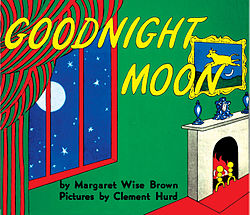 #4 Goodnight Moon by Margaret Wise Brown, illustrated by Clement Hurd (1947)
167 points
Well, it’s a classic for a reason. – Joanne Rousseau
This one I can still recite even though I last read at least 10 or more years ago. Again a classic that will endure and delight for a long time to come. – Christine Kelly
My daughter had this book read to her every night from the womb until she was almost 3. When I think of perfect bedtime stories, this is at the top of the list. – DeAnn Okamura
Time and again my readers would tell me that they loved this book because of what it did to their children. In March 1953, this book was spotlighted in Child Behavior, a syndicated parental-advice column with what I consider the sentence that defines this book. “It captures the two-year-old so completely that it seems almost unlawful that you can hypnotize a child off to sleep as easily as you can by reading this small classic.” And millions of parents walk around feeling guilt free.
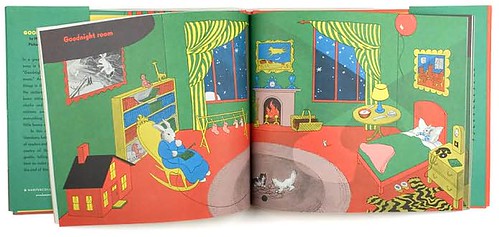
A description of the plot (such as it is) courtesy of The Christian Science Monitor: “A little rabbit bids goodnight to each familiar thing in his moonlit room. Rhythmic, gently lulling words combined with warm and equally lulling pictures make this beloved classic an ideal bedtime book.”
The reference book I should really have on hand for this (and don’t) is Awakened by the Moon by Leonard Marcus, the definitive Margaret Wise Brown biography. I do not own it as I was never a Goodnight Moon fan (oh yeah, I said it!). In lieu of that, we shall have to look at other books instead for our info. 100 Best Books for Children makes note of the fact that when Clement Hurd first illustrated this book he made the boy and the grandmother human. This was changed into bunnies at a later date. And at editor Ursula Nordstrom’s suggestion the udders on the cow also became less anatomically correct (which is strange considering that Nordstrom would later defend the very human anatomical parts found in In the Night Kitchen).
Nothing popular is without controversy. Even something as sweet and innocent as Goodnight Moon. In the case of this book we have two controversial topics to refer to. #1 involves illegitimate children and an unworthy heir. #2 is the case of a missing cigarette.
Let’s look at #1 first. I’d consider the pedigree of this story sketchy, were it not so bloody well written. Apparently the article Runaway Money: A Children’s Classic, A 9-Year-Old-Boy And a Fateful Bequest appeared in The Wall Street Journal, though the sole copy I can find online appears on the reporter’s website. The long and the short of it is that Margaret Wise Brown willed a neighbor’s child as the benefactor of some of her books. Amongst them, Goodnight Moon. And for this particular kid, there couldn’t possibly have been a worse gift to give. It’s fascinating. Particularly when you get to his dubious claims regarding Ms. Brown’s relationship to himself.
Controversy #2 – Clement Hurd and his penchant for the smokes. Cast your minds back to 2005. An innocent time. A time when Harper Collins decided that maybe it would be a good idea to remove the cigarette from illustrator Clement Hurd’s photograph. CNET News said of the image, “Now, it looks like Hurd is trying to get someone to repay him 20 bucks.” Even Clement Hurd, Thatcher’s son who gave permission for the removal, said of the picture that it, “looks slightly absurd to me.” The New York Times did a piece on the change and capped it off well. “And the publisher may have inadvertently created a collector’s item: The next editions of ‘Goodnight Moon’ will likely feature a different photograph of Mr. Hurd, without a cigarette in hand.”
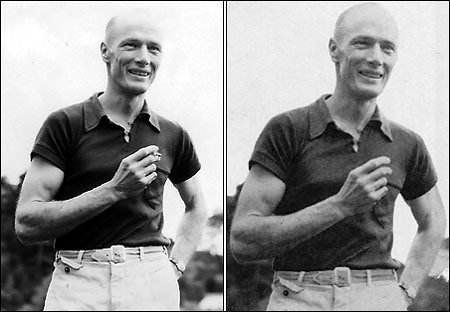
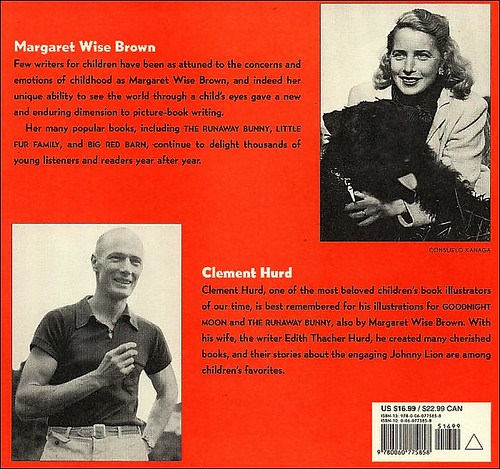
Karen Karbo wrote an amusing riff on the other dangerous elements in this book as well (ex: “Balloons cause more choking deaths among 3- to 6-year-olds than any other toy. Suggested change: Digitally remove.”)
Recent children’s books have found themselves unable to resist poking a bit of fun in this old classic. I refer of course to Michael Rex’s wonderful Goodnight Goon, which came out in 2008 to wild laughter around the country. And the delightful book of poetry Food Hates You Too and Other Poems by Robert Weinstock contains the poem “Mom” displays the usual Goodnight Moon set-up, albeit with hungry insects rather than bunnies. I shall take the liberty of writing out the poem in its entirety here: “I ate your father. Yes it’s true. / That’s what we praying mantids do. / His last words to me were ‘Adieu. / If only I could eat you, too’.” Love it.
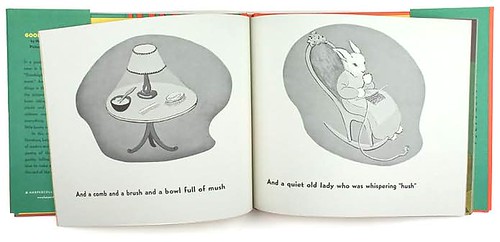
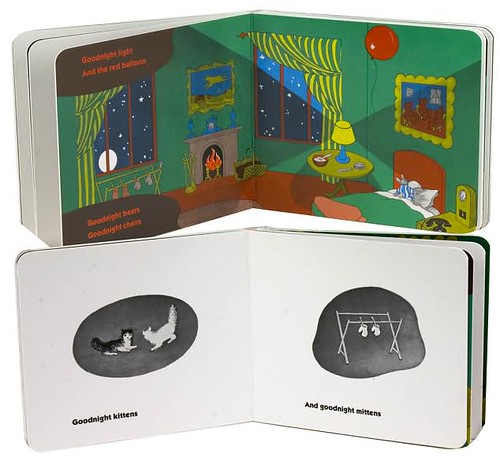
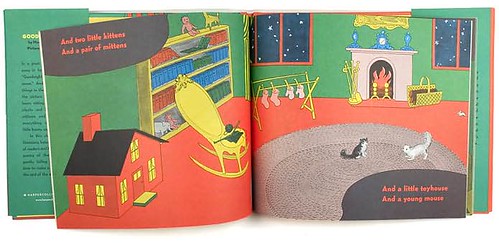
Read the full book here.
The New Yorker called it a “hypnotic bedtime litany.”
Top 100 Children's Novels #5: The Lion, the Witch and the Wardrobe by C.S. Lewis
 #5 The Lion, the Witch and the Wardrobe by C.S. Lewis (1950)
204 points
The book that made me a reader, by a writer whose pure enthusiasm for life and story carries you on a lion’s back through the best of adventures. – Susan Van Metre
I remember at my vast old age in 7th grade sadly concluding that I was too old for the Narnia books now. (I had already read them many times.) Then I took them up again in college and found new riches. I know I will never “outgrow” them again. No kid who reads this book will ever look at a closet door the same way again. – Sondra Eklund
The first series I read to myself, starting halfway through when I switched from listening to my mom read them aloud, to sneaking them off to my room to read ahead. I was convinced that someday I would meet the Pevensies and tell them that I knew about Narnia, too. Sadly, Turkish Delight did not live up to my expectations. – Jessalynn Gale
I still remember the day I finished this book, laying on my parent’s family room couch on a bright, sunny summer day. I would have been playing outside in the sprinkler had I been able to put it down. Instead I was SOBBING on the couch as Aslan died. I finished it and read it again. And again. I don’t always think the oldest, most classic version of a tale is the one that kids should keep rending. If someone else comes along and does the tale better, by all means, let’s read that one… but has anyone done this better? – Nicole Johnston Wroblewski
I remember a sense of magic while reading the Chronicles of Narnia as a child. And I’m not referring to the magic contained in the storylines. But rather the giddy awe of falling into the story. It was thrilling. It’s a very specific emotion, one I don’t think we have a word for, one I don’t think I’ve ever felt as an adult — but it’s an emotion that I remember perfectly. The characters and worlds seemed so alive. I think it’s one of the few times I really felt transported to another place through the pages of a book. And being the Chronicles of Narnia, that’s rather fitting. – Aaron Zenz
The synopsis from the publisher reads, “When Peter, Susan, Edmund and Lucy are sent to stay with a kind professor who lives in the country, they can hardly imagine the extraordinary adventure that awaits them. It all begins one rainy summer day when the children explore the Professor’s rambling old house. When they come across a room with an old wardrobe in the corner, Lucy immediately opens the door and gets inside. To her amazement, she suddenly finds herself standing in the clearing of a wood on a winter afternoon, with snowflakes falling through the air. Lucy has found Narnia, a magical land of Fauns and Centaurs, Nymphs and Talking Animals — and the beautiful but evil White Witch, who has held the country in eternal winter for a hundred years.”
According to 100 Best Books for Children by Anita Silvey (do you own your copy yet?) when Lewis was sixteen he envisioned a faun carrying an umbrella in a wood full of snow. “Then nine years later, a lion leapt into a story, and Lewis began working on a book entitled ‘The Lion’.” I was unaware that he was only twenty-five when he began the tale. He’d be fifty-two by the time it published, though. That’s what we call in the business a gestation period. He did show an early manuscript to one Roger Lancelyn Green, though, and Green helped him get his manuscript up to snuff. The book was originally meant to stand alone, which is part of the reason it bugs me when publishers release the books in the order of what happens in the series rather than the order of when the books were written.
Of course, he was buds with J.R.R. Tolkien (though perhaps “buds” is not the term they might choose to describe their friendship). Tolkien wasn’t a fan of the series though. Considering he was a fellow who spent ages constructing a history and a bloody language for his fantastical world, he found the whole Narnia thing a bit slapdash.
Now if you walk into the book as a kid and aren’t aware that you’re facing a great big gigantic Christian allegory, you probably won’t notice it anyway. For adults, it’s incredibly obvious. Still, as Anita Silvey says, “The books have endured not because of their philosophy, but because they bring to life a magical world that readers want to enter again and again.”
Philip Pullman? Not a fan. In an interview with surefish.com, for example, he says, “Narnia has always seemed to me to be marked by a hatred of the physical world. When I bring this up, people say, oh no, what nonsense! He loved his beer, loved laughter and smoking a pipe, and the companionship of his friends and so on. And so he might have done. But that didn’t prevent perhaps his unconscious mind from saying something quite different in the form of a story.”
I can’t even wade through the thousands of scholarly articles on this book, or even the BOOKS based on it. I will highlight one, though. In 2008 Little, Brown published Salon co-founder Laura Miller’s title The Magician’s Book: A Skeptic’s Adventures in Narnia. In it she records how, “My relationship to Narnia would turn out to be as rocky as any love affair, a story of enchantment, betrayal, estrangement, and reunion.” In fact Miller allowed a section from the Introduction of the book to be included in Anita Silvey’s Everything I Need to Know I Learned from a Children’s Book. She writes, “In one of the most vivid memories from my childhood, nothing happens. On a clear, sunny day, I’m standing near a curb in the quiet suburban California neighborhood where my family lives, and I’m wishing, with every bit of myself, for two things. First, I want a place I’ve read about in a book to really exist, and, second, I want to be able to go there. I want this so badly I’m pretty sure the misery of not getting it will kill me. For the rest of my life, I will never want anything quite so badly again.”
I’ve yet to find any statues of the characters from the book, but there is a statue of the wardrobe out there. In East Belfast, Northern Ireland you can see this figure of what some folks are calling Digory Kirke a.k.a. The Professor moving into the wardrobe.

Whether Digory was Lewis’s alter ego is up for contention.
Big names have a tendency to illustrate these covers. Chris Van Allsburg. David Wiesner. Folks you wouldn’t necessarily associate with jackets as a job. And in a surprising move the publisher released the book recently in its original jacket. This is a trend I approve of, though it only works for the true classics. Which is to say, most of the books on this list. Here are some covers:


Growing up, my personal favorite was the Michael Hague edition. Partly because it was fully illustrated in color.

And partly because he was seriously influenced by the greats:

In terms of film, as crummy as this looks I was rather fond of this old Wonderworks version of the story back in the day. I think I blocked out the poorly animated portions, though. Guh.
The most recent (and best) version. Some folks complained at the time that the movie was trying to be the next Lord of the Rings. I figure the only reason they even made it was because Lord of the Rings had proved you could make money off such a film.
http://www.youtube.com/watch?v=ntDg19AeK20&feature=embed
Before the first Narnia movie produced by Walden Media came out they had a special screening for some of the kids at the Jefferson Market Branch of NYPL. They showed a long trailer for the kids that is now, I see, on YouTube. I present it to you now.
http://www.youtube.com/watch?v=CZOCZtQafn4&feature=embed
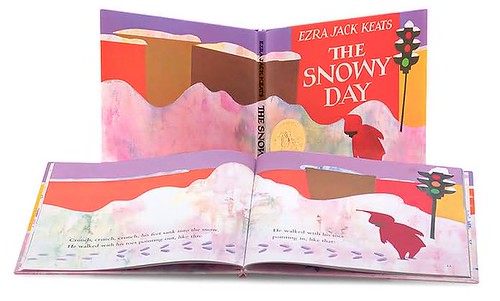
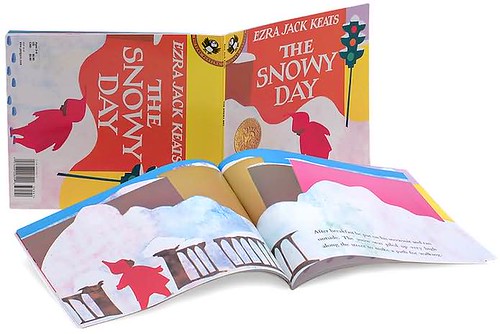
Top 100 Picture Books #5: The Snowy Day by Ezra Jack Keats
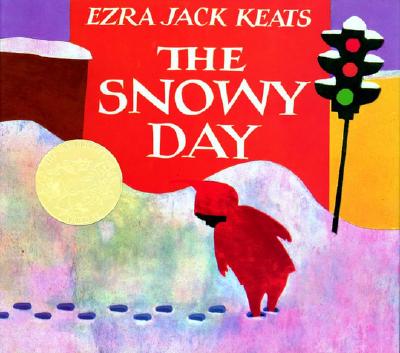 #5 The Snowy Day by Ezra Jack Keats (1962)
166 points
The first book I would run to on my trips to the library. Just wonderful. – Hotspur Closser
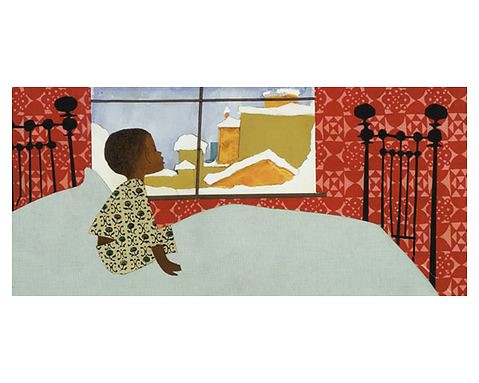
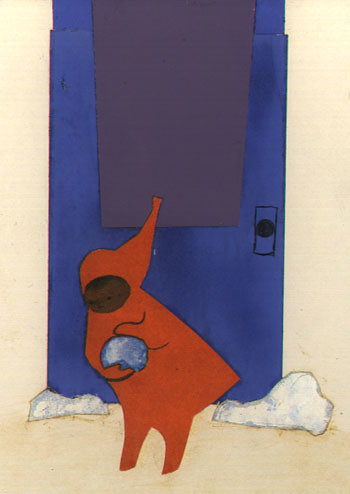
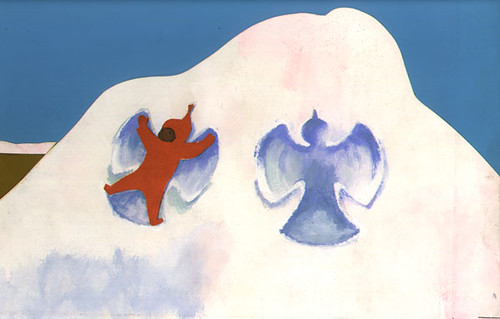
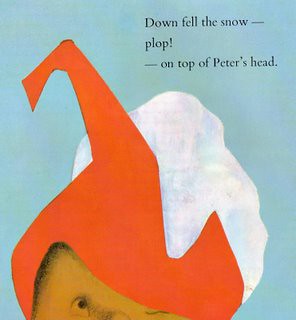
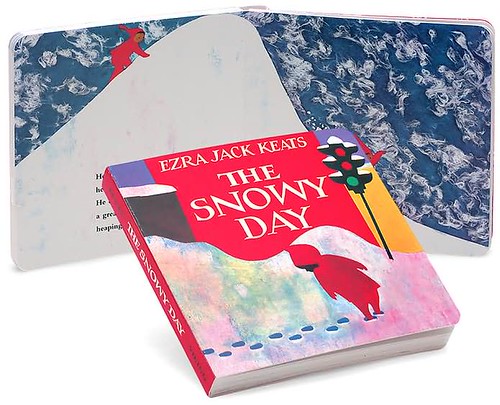
What is it like to be a small child in the snow? Ezra Jack Keats gave us the answer with this timeless story of Peter’s gentle adventures on a day of snow. The pictures are so striking that I had to check to remember that there are, in fact, words. They describe the way Peter walks in the snow with his toes pointing out and then in, the way he drags his feet and finds a stick to drag, too. The stick is “just right for smacking a snow-covered tree.” Such fine, detailed observations! Peter wants to join the big boys’ snowball fight, but knows he’s too little. Instead he makes a snowman and a snow angel. The snowball he takes home in his pocket is the final, funny detail that brings the book to a kindly close. Because even though it melts, there is more snow for tomorrow—and a friend to play with. – Kate Coombs
For the triangle of little boy back peeping through pajamas on the first page, and for the hope Peter packed into his pocket. – DaNae Leu
According to Keats, “The purpose of the book and the subject matter of the book was so strong that my style changed completely. I had never painted that way before. It turned out to be the beginning of a whole new style to me because I was so deeply involved.” Classic. And how.
The description from my review: “In this book, Peter wakes up to discover that snow has covered the city in the night. Delighted, he pulls on his bright red (and now world-known) snowsuit and plunges into a day of exploring and playing. He makes fun tracks, and hits snow off the branches of trees. He constructs a smiling snowman and slides down steep mountains of white powder. At the end of the day his mother gets him out of his wet clothes and gives him a nice hot bath. The next morning the snow is still there, and an ecstatic Peter calls up a friend to do the whole day over again.”
100 Best Books for Children gives some additional background information on the book. “Today it is hard to believe that critics virulently attacked Ezra Jack Keats and that The Snowy Day was one of the most controversial children’s books of the 1960s . . . During the late 1960s and 1970s Keats . . . was accused of everything from stereotyped characters to having no right, as a white man, to feature black children in his books.” Some confusion continues to exist today over Keats’ race. When I complained that my last Top 100 Picture Books Poll was lacking in diversity (a fact that, sad to say, has only been correctly modestly this second time around), one commenter said, “Wasn’t Whistle for Willy in there? For a multicultural author?” And since Willy is, in effect, Snowy Day’s sequel, you can see where the confusion lies (Peter, for the record, would go on to also appear in Peter’s Chair, A Letter to Amy, Goggles, Hi Cat!, and Pet Show).
Leonard Marcus addresses this assumption in Minders of Make-Believe. “Many readers at the time assumed that the artist, too, must be black, but Keats (born Jacob Ezra Katz on March 11, 1916) was in fact the first-generation American son of eastern European Jewish immigrants who had settled in Brooklyn during the late 1800s.” It goes on to talk about how the year The Snowy Day won the Caldecott, A Wrinkle in Time won the Newbery. I was particularly impressed with the Selznick/Schlitz combination of Newbery/Caldecott acceptance speeches, but if I could see any other ceremony, a Keats/L’Engle wouldn’t be too shabby. However, if I don’t miss my guess, the ceremonies were separate at that time (1963). A pity.
Consulting my Dear Genius I see that Harper editor Ursula Nordstrom did in fact publish Ezra Jack Keats, but only after the publication of Snowy Day and Whistle for Willie with Viking. Her May 2, 1966 letter to him begins, “Dear Ezra: Damn it, here it is bright and early Monday a.m. and I can’t get you on the ‘phone. I suppose you are out helling around with another children’s book editor – and I hate her.” Is “helling around” an actual phrase? And if it is, may I adopt it?
Generally I have found that The Norton Anthology of Children’s Literature has, in the course of this poll, been insufficient to my needs. Granted, it is trying to look at the wide scope of children’s literature, not limiting it to a single country or time. That said, it seems odd that The Snowy Day would garner only a single page in a 2471+ page tome. Of this book it says, “Keats’s technique of collage strikingly depicts the urban scene, which presents a grim contrast with his characters’ constant delight and interest in the world. This Caldecott Medal-winner was one of the first picture books to confront the invisibility of black people in children’s books, as it provided a black central character – although some critics complained that Keats did not escape stereotypes.” What stereotypes might those be? Writing in the Saturday Review, a Nancy Larrick said of the book that it was flawed “for omitting the word [Negro] in the text” as well as making the mom “a huge figure in a gaudy yellow plaid dress, albeit without a red bandana.” Larrick could not have predicted that the inclusion of the word “negro” in the book would actually make the book more dated and offensive in the future, rather than less. As for the mother character, I don’t think anyone reading the book today would think of her as Larrick has suggested. Sometimes a yellow dress is just a yellow dress.
Eric Carle might have his own museum, but Mr. Keats inspired a veritable foundation. According to their website, “Ezra Jack Keats created the foundation in 1964 as a vehicle for his personal giving. Author of many classic books for children, including the Caldecott-winning book The Snowy Day, Keats determined that his foundation would be dedicated to fostering the talent of the generations of children, artists, and authors who would follow him. When he died in 1983, his will directed that the royalties from his books be used by the Foundation for the support of programs helpful to humanity. The Ezra Jack Keats Foundation is now known for its pioneering support of bookmaking and storytelling programs, art and scholarly fellowships, portrait projects, book festivals, public libraries and schools, mural projects throughout all of the United States, as well as emerging authors and illustrators of children’s books.” Better still, there’s an Ezra Jack Keats Award given yearly to “recognize and encourage talented new children’s book authors and illustrators, who, in the spirit of Ezra Jack Keats, create vividly written and illustrated books for children (age 9 and under) that offer fresh and positive views of the multicultural world inhabited by children today.” The full list of award winners is viewable here.
The de Grummond Collection at The University of Southern Mississippi is the sole repository for the Ezra Jack Keats Archive and on their website I found the Ezra Jack Keats Virtual Exhibit. Amongst its useful images is a copy of the photograph from Life magazine (circa May 13, 1940) that served as the original inspiration for Peter.
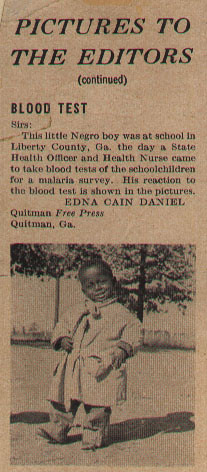
They also have this photograph from the Caldecott Banquet. That’s Mr. Keats is on the left. Tiny moustache-sporter he was not. Madeleine L’Engle is second from the right.

From the site, they’ve also this bit of information about Mr. Keats, involving the Caldecott Banquet speech. “When Benjamin Katz [Ezra’s father] died on January 1935, Keats, on the day before his high school graduation, had to identify his father’s body. For the first time he learned that his father had been proud of his work. In his Caldecott Medal speech in 1963, Keats shared the experience. ‘I found myself staring deep into his secret feelings. There in his wallet were worn and tattered newspaper clippings of the notices of the awards I had won. My silent admirer and supplier, he had been torn between his dread of my leading a life of hardship and his real pride in my work’.”
Related Sidenote: Cutest. Picture. Ever.
Peter, for the record, has a statue of his own, though you won’t often hear of it. Yet located in Prospect Park in Brooklyn, New York there is a little area called Imagination Playground. There you will find Peter and Willie.
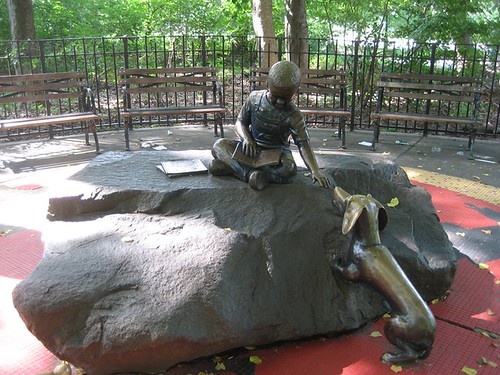
They were sculpted by artist Otto Neals and were unveiled in 1997. One of these days I’ll make a pilgrimage to see them for myself. I’m in that park all the time but have never run into them. Crazy!
- Hear some famous folks talk seriously about Keats. John Hodgman, Al Roker, Mario Bitali, and Ben Stiller all take a turn.
Top 100 Children's Novels #6: Holes by Louis Sachar
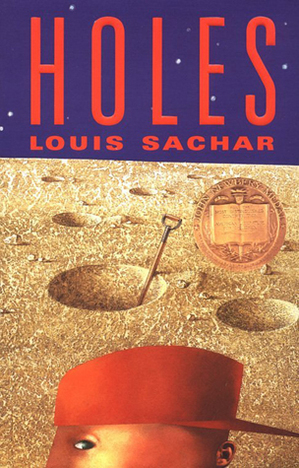 #6 Holes by Louis Sachar (1998)
200 points
This book is possibly the most brilliant book ever written. I have tried to read it in hope of learning some tricks about plotting, but instead I just despair that crafting something so brilliant could never, ever be done. It’s just PERFECT. – Amy M. Weir
I read and loved many a Sachar book as a child, and was surprised to learn that he was still writing when this came out. What I found was something that I never would have expected from the writer of A Boy in the Girl’s Bathroom. A book that pays so much respect to its reader’s by allowing for multiple levels of complexity, thematically and formally, that I was tempted to believe that it was too tough for younger reader’s, until I saw the response it got from kids. Just a masterful book on every level. – Mark Flowers
We’re all friends here, so I won’t mince words – Louis Sachar’s 1999 Newbery winner is the closest thing to a perfect book as I’ve ever read. A cast of intriguing characters tied together by an enticing mystery, this is children’s literature at its finest. – Travis Jonker
One of the few books the Newbery Committee actually got right. EVERYONE loves this book (and the movie was well-done, too.) – Jerry Jarrell
Came to it too old to love it completely, but it is an almost perfect book. – Susan Van Metre
Perfect in every way. – Aaron Zenz
Read through each one of these comments and one word comes up over and over again. “Perfect”. Perfectly crafted, perfectly combines literary excellence and popularity, perfect perfect perfect. I cannot help but agree. Heck, my husband cannot help but agree. We’re Holes fans through and through. It’s also the book that makes me hungry for onions. I know that’s weird, but I get a real craving for them after reading Holes.
The synopsis from the publisher reads, “As further evidence of his family’s bad fortune, which they attribute to a curse on a distant relative, Stanley Yelnats is sent to a hellish boys’ juvenile detention center in the Texas desert. As punishment, the boys here must each dig a hole every day, five feet deep and five feet across. Ultimately, Stanley ‘digs up the truth’ — and through his experience, finds his first real friend, a treasure, and a new sense of himself. Winner of the 1998 National Book Award for young people’s literature, here is a wildly inventive, darkly humorous tale of crime and punishment — and redemption.”
Part of the inspiration for the book is explained to Leonard Marcus in Funny Business: Conversations with Writers of Comedy. Said former Fuller Brush man Sachar, “when I start a book, I don’t make a plan. I don’t know where I’m going with it. It just try to find something that intrigues me enough to write about it for at least a week. With Holes I began with the camp. That came out of the fact that I had recently moved from San Francisco to Texas, where it’s so hot in summer and summer lasts forever. I was writing about the heat. Lake Travis is not too far from Austin, and I imagined it being so hot that Lake Travis dried up . . . I got the idea for a juvenile correction camp before I had any characters. And I had Stanley’s great-great-grandfather before I ever got to Stanley.” Misery breeds creativity. Love it. He then rewrote it five times before giving it to his editor Frances Foster.
On his website, Sachar answers some questions about the book. I particularly like his answer to a question about what was the most difficult thing in Holes to write. “People often ask me how I managed to tie everything together at the end, but that wasn’t the hard part. I knew how everything was going to fit together. The hard part was laying out the strands throughout the story, telling the story of Kate Barlow and of Elya Yelnats and Elya’s son, without it getting in the way of Stanley’s story. The other problem I had occurred when Stanley was digging his hole for the first time. I wanted the reader to feel what a long, miserable experience this is, digging those 5′ by 5′ holes. But how many times can you say, ‘He dug his shovel back into the dirt and lifted out another shovelful?’ My solution was to interweave two stories, bringing more variety to the tale. Stanley’s anxious first days at Camp Green Lake are set off against the story of his ancestor, Elya Yelnats, whose broken promise to a gypsy results indirectly in young Stanley’s bad luck.”
The original title of the book was going to be Wrong Time, Wrong Place, Wrong Kid. Holes sounded more serious, however, so that’s what they went with. Good call. Also Kissing Kate Barlow is, understandably, his favorite character. For my own part, I’m a particular fan of the lizard/pit/warden standoff at the end of the book. I love the movie to pieces, but if I’d been in charge of the music I would’ve put in the standoff theme from The Good, the Bad, and the Ugly there.
The combination of kid-friendly storytelling that children go gaga for and writing so good that it makes adult critics practically pant is rare. So rare that Holes became one of the very few titles out there to win a Newbery and a National Book Award for Young Person’s Literature at the same time. Anita Silvey goes farther and calls the book “a rare winner of the triple crown in children’s literature (National Book Award, Boston Globe-Horn Book Award, and Newbery Medal).” This almost never happens and when it does it must be for a pretty remarkable book. There was only one Newbery Honor the year Holes came out and that was A Long Way from Chicago.
There was a sequel called Small Steps that followed the character of Armpit. It was a perfectly serviceable book, but any title that had to follow Holes was going to have a pretty hard row to hoe. Slate Magazine talked a bit about it, within the context of Sachar’s other books, here. There was also a kind of strange sequel in its own right called Stanley Yelnats’ Survival Guide to Camp Green Lake. SLJ summed it up this way: “At the end of Holes (Farrar, 1998), Camp Green Lake seemed destined to become a Girl Scout camp. However, as Stanley explains, the award-winning book caught the attention of get-tough politicians who liked the notion of hard work and discipline. So, they reopened the infamous juvenile-detention center, rehired the malicious staff, and, of course, reinstituted the hole-digging regimen. As a camp survivor, Stanley tries to provide new inmates with the vital information they will need to endure their sentences-including a discussion of how the system works, hole-construction techniques, and desert wildlife dangers. He enhances his account with anecdotes about his former campmates, elaborating on incidents and characters from Holes. The book is written in pop survival-manual style and even includes sample situations and survival questions, although the answers are often quite unexpected. Familiarity with the original book is essential to appreciating this highly unusual sequel, which both explains and extends the adventure.”
- I love these images from a theatrical production of the book at the University of Texas at Austin.
- You can also read my own interview with Mr. Sachar about the book here.
Booklist gave an amusingly critical review saying, “the ending, in which realism gives way to fable, while undeniably) clever, seems to belong in another book entirely, dulling the impact of all that has gone before. These mismatched parts don’t add up to a coherent whole, but they do deliver a fair share of entertaining and sometimes compelling moments.”
In contrast, Roger Sutton personally reviewed the book in Horn Book and said, “We haven’t seen a book with this much plot, so suspensefully and expertly deployed, in too long a time. And the ending will make you cheer–for the happiness the Yelnats family finally finds–and cry, for the knowledge of how they lost so much for so long, all in the words of a lullaby. Louis Sachar has long been a great and deserved favorite among children, despite the benign neglect of critics. But Holes is witness to its own theme: what goes around, comes around. Eventually.”
School Library Journal was slightly more subdued, saying, “A multitude of colorful characters coupled with the skillful braiding of ethnic folklore, American legend, and contemporary issues is a brilliant achievement. There is no question, kids will love Holes. ”
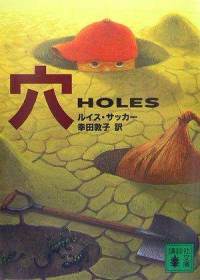
I’m fond of fan covers like this from James BW Lewis or this one. Not a lot of real ones out there but enough to keep things interesting.


Now the film is quite good. Better than most book to screen adaptations. Part of this may have to do with the fact that Mr. Sachar had a lot of input. The choice of actors is also brilliant (Eartha Kitt = awesome). The sole flaw is that Stanley is not the chubby dude described in the book. Instead they cast Shia LeBeouf, which was fine since he could act (at the time). Little did the world know that this wasn’t to be the last we heard of his shaggy little head.
Zero could stand to be a little less cute too. But who’s counting?
Here’s a good book talk for the title as well.
Zero could stand to be a little less cute too. But who’s counting?
Here’s a good book talk for the title as well.