• Skip to primary navigation
  • Skip to main content
  • Skip to primary sidebar
  • About/Contact
  • Fusenews
  • Reviews
  • Librarian Previews
  • Best Books
    • Top 100
    • Best Books of 2022
    • Best Books of 2021
    • Best Books of 2020
    • Best Books of 2019
    • Best Books of 2018
    • Best Books of 2017
    • Best Books of 2016
    • Best Books of 2015
    • Best Books of 2014
    • Best Books of 2013
  • Fuse 8 n’ Kate
  • Videos
  • Press Release Fun

Fuse 8 n’ Kate: 2021 Caldecott Contenders

Fuse 8 n’ Kate: 2021 Caldecott Contenders

January 11, 2021 by Betsy Bird

I wish I could tell you that it took me a long time to figure out what the three books we’d be discussing for the Caldecott Contender episode of our podcast would be this year, but honestly it wasn’t difficult at all. I love all three of these books down to the cold cockles of my shriveled little heart. I seriously believe that each one of these books has a very good chance at some kind of Caldecott love in 2021. Our track record on this show hasn’t been too shabby either. In 2020 we identified Going Down Home With Daddy (just don’t ask how we did in 2019). In the course of this recording I discover that the most amusing way to talk about the information at the end of a book is to say “backmatterbackmatterbackmatterbackmatter”. Kate meanwhile falls hard for one of the contenders. Let’s see if you can guess which book made her cry, “In the beginning I didn’t want to see it and now I don’t WANNA LET IT GO!!!”

Listen to the whole show here on Soundcloud or download it through iTunes, Stitcher, Spotify, Google Play, PlayerFM, or your preferred method of podcast selection.

Show Notes:

The ALA Youth Media Awards will stream live on Monday, Jan. 25, 2021, at 8 a.m. CT right here.

Remember! Anytime you need to know how to pronounce someone’s name and they work with children’s books, go to TeachingBooks.net. The pronunciations of everything from Scieszka and Krosozka to Goade and Bird are there.

Here is the link to my interview with Carole Lindstrom and Michaela Goade. WELL worth your time. Those women are amazing.

Here is the piece How Children’s Books Grapple with the Native American Experience on NPR.

This was the page that Kate said she could see tattooed on a woman’s back. It’s where Kate lost her heart.

Just when I didn’t think I could love this book any more . . . THERE’S A BEAVER!!!

I say this grasshopper’s antennae is just flat on its head. Who’s with me?!?

“It is a little bit of a temptation to rip the pages out of this book and frame them on your wall.”

Kate was really happy that, because we did Jingle Dancer by Cynthia Leitich Smith, she could recognize the jingle dancers in the crowd of this scene.

Was this pledge in the galley? We’ve never seen anything like this in a picture book from a major publisher before.

By the way there was a Caldecott Honoree who was Indigenous. It was Velino Herrera, a Pueblo artist who won a Caldecott Honor in 1942. According to K.T. Horning:

“Velino Herrera was also the first BIPOC artist honored by the Caldecott Committee. I wrote a bit about him in Horn Book article called “Arrow to the Sun and Critical Controversies.”
https://www.hbook.com/?detailStory=arrow-to-the-sun-and-critical-controversies

I went down the Velino Herrera rabbit hole at the time I was researching the HB article. It’s a fascinating journey. He was a controversial figure among the Zia Pueblo because he gave the Zia’s sacred sun symbol to the New Mexican government. You can still see it on the New Mexico license plate, and there’s been a long-time lawsuit about it between the Zia Pueblo and New Mexico.

He was one of many talented Native artists who illustrated picture books written by non-Native authors working with Native children. Many of these books were written by Ann Nolan Clark. There’s whole fascinating book about this called “Native American Picture Books of Change : The Art of Historic Children’s Editions” by Rebecca Benes. Velino Herrera is one of the artists profiled. I found this book to be the best source of info about him. (And it’s a great book overall. I highly recommend it.)”

Here be some seriously unimpressed ducks.

I did like that Kate pointed out that technically, if you look at the word coming out of her mouth, she’s really saying, “OOOOOOOOOOOOOOOOB”.

Kate said a big old, “NOPE!!!” when she saw this image. I confessed that when I first showed this book to some people on my library’s children’s book committee, more than a couple physically recoiled when they saw the baby bee so big. But as you will hear, Kate more than comes around to this bee.

This book is so big that the bees in this book are pretty much, “the size of your cat”. I should have put my own pet alongside this image for comparison.

Hey! Are those lupins? Someone identify this sucker for me, please!

As per our listener, school librarian Jen Kuhn sent us all sorts of information about Barbara Cooney and the Lawrence Library featured in Miss Rumphius. Here’s a look at the library itself:

Jen writes:

“The interior shot was from the  Lawrence Library general information page: http://www.lawrencelibrary.org/generalinfo/generalinfo.htm And the photo of the outside of the library came from a wiki commons photo:https://commons.wikimedia.org/wiki/File:Lawrence_Library_Pepperell_(6236995141).jpg It really is a lovely old library.  An old interior photo can be found here from a postcard at the Boston Public Library.  https://www.digitalcommonwealth.org/search/commonwealth:2r36v875r“

Thanks, Jen!
Filed Under: Best Books, Best Books of 2020, Fuse 8 n' Kate Tagged With: 2021 Caldecott contenders, Fuse 8 n' Kate, Newbery/Caldecott predictions

Review of the Day: The Rock From the Sky by Jon Klassen

January 8, 2021 by Betsy Bird

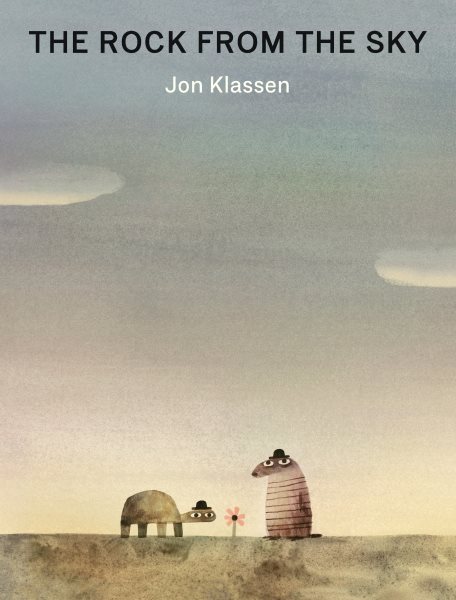
The Rock From the Sky
By Jon Klassen
Candlewick Press
$18.99
ISBN: 978-1-5362-1562-5
Ages 4 and up
On shelves April 13th

I do not think I would want to be Jon Klassen. Not because he isn’t a nice guy or anything. He’s nice as they come. But when he broke, he broke hard. I Want My Hat Back was a sensation above and beyond the predictable. One minute it’s just a cute book about a bear and his missing hat, and the next you’re seeing Dr. Who memes referencing it on Buzzfeed. Klassen’s style also became replicated far and wide. I well remember an illustrator of my acquaintance grumbling that everyone was trying to make their books look like Jon Klassen now. Klassen wrote three picture books about animals and their hats and has since spent the rest of his time illustrating books by a variety of cool authors. So I think it would be hard to be Mr. Klassen. If you’re him people probably think they know what you’re going to do next. Perhaps that’s why I was so excited to see his art for Amy Timberlake’s Skunk and Badger, which (amongst other things) showed animals SMILING for crying out loud. In light of that sea change, The Rock From the Sky might feel like a step back into familiar territory. Here we have animals and hats and mysterious goings on. But read it cover to cover and you’re just swept up in a book that cultivates a singular sense of comic timing and tone policing that never falters or strays. It is, in fact, his best book to date. Period.

Five chapters illustrate the small adventures of three behatted creatures: A turtle, an armadillo, and a silent snake. In the first story, the turtle is very fond of a spot, but the armadillo has a bad feeling about it. In the second story, turtle has fallen but refuses to concede that it may need help. In the third story, the armadillo and turtle imagine what the future might be like, but this goes in an unexpected direction. In the fourth, the armadillo and snake are enjoying the sunset . . . until they aren’t. Finally, in the last story, turtle is peeved that there’s no space to sleep beside the rock and decides to make its friends feel bad about that fact. On their surface, they don’t sound like much. Taken together, they’re sublime.

Every Jon Klassen book is a play. Or, more precisely, a play on plays. The mistake comes in trying to identify what kinds of stage productions they are, which is precisely what I’m going to do here. I Want My Hat Back? A school play, with characters breaking the fourth wall in precisely the same way a child would break the fourth wall if they saw their parents sitting in the darkened audience, watching. This Is Not My Hat? Shadow puppet theater. We Found a Hat? Not sure. A movie musical with a balletic dream sequence? I’m still deciding. But The Rock From the Sky? Pure Ionesco mixed with Beckett (I was half waiting for the words “they do not move” to show up at some point), only it makes sense and has time travel and aliens stomping around. Some day, mark my words, a director will take each one of these books that Klassen has both authored and illustrated, and either turn them into a series of animated short films utilizing a wide variety of styles and tones, or a stage a play that encompasses all these different styles as different scenes. And why not? If picture books have been breaking down the fourth wall for years, why not break out the experimental theatrical performances?

But see, that’s the thing about Klassen and the fourth wall. It’s commonplace for book characters to talk to their child readers these days. Thanks to Grover, The Pigeon, Press Here, and more, children are told precisely what to do with each one of those books. Touch this! Press that! Klassen never tells you what to do. He never tells you what to think. His characters look right at you but you’re not being encouraged to react directly to them. Instead, those eyes are encouraging you to do the exact opposite: to watch them react as a series of ridiculous events are (or are not) thrust upon them. Even when you know that tragedy is imminent, you don’t feel inclined to call out and warn anyone. Does anyone warn the coyote when his plan to catch the roadrunner is about to result in a bad physical end? So you read this book luxuriating in how it puts you, the reader, into this place of uncertainty. Something terrible could happen at any moment. Isn’t it delicious?

Which brings us to the meticulous utilization of dread in children’s literature. Or, since this is kids we’re talking about, anticipation. Anyone who has ever read the book Fortunately by Remy Charlip to a large group of children knows perfectly well that half the fun of that book is the possibility that you are about to see your hero impaled on a pitchfork or torn to shreds by sharks or flattened by a fall. Klassen is working off of much the same feeling. In the first story you know that a rock is falling. It’s in the title. You really can’t get any clearer than that. So the question is less IF the rock is going to hit than WHEN it’s going to hit. Or, for that matter, who. And by some miracle, if a rock falls it feels surprising. And you laugh both out of relief (on behalf of the characters) and when you see their expressions. Such as they are.

In a little press packet that came with my copy of this book (which stole the phrase “deadpan gem” away from me, so that I cannot use it in this review, curse the marketing team’s eloquent hide) Klassen talks a little about why he gave his animals hats (“The characters wear little bowler hats (though the snake has a beret for reasons I’ve not explained to myself)”) and how he has spent some time giving them a nice big sky. What he doesn’t talk about is the facial expressions. I don’t think you’d go out of your way to say that Klassen was the most emotive illustrator out there. You’re not going to get some Chuck Jones-esque on-camera mugging from these characters. In a way, Klassen is the Buster Keaton of the picture book world. But that said, I found these to be MUCH more expressive figures than Klassen had ever tried before. How so? Their eyes. With just the deftest touch, Klassen will widen or narrow the eyes on his characters and the gesture will tell whole novels. I’m thinking of anytime a rock falls or, my personal favorite, when the turtle refuses help in turning over and says to the sleeping armadillo “I am never tired.” Its expression, as it glares into the distance with equal parts stubbornness and determination, is worth the price of the book alone.

It is also, as it just so happens, a book that may be impossible to encapsulate well in a review. Let me put it this way then: Would you like to read a book that will make you laugh and your kids laugh, and all of you are laughing for real, no one faking it, and enjoying this book for the exact same reasons? Because what we have here is a bit of a unicorn. It’s a book that is amusing to children and adults in precisely the same way. It straddles ages and even, I’d suggest, different kinds of senses of humor. Add in the fact that it’s beautiful to look at (yes, kudos on those skies, Jon), a tiny bit poignant, and contains funny hats and I’d say it’s a winner to its core. The kind of book that comes out of the blue and just hits you with its charm.

On shelves April 13th.

Filed Under: Best Books, Best Books of 2021, Reviews, Reviews 2021 Tagged With: 2021 picture books, 2021 reviews, Best Books of 2021, Candlewick, Jon Klassen, picture books

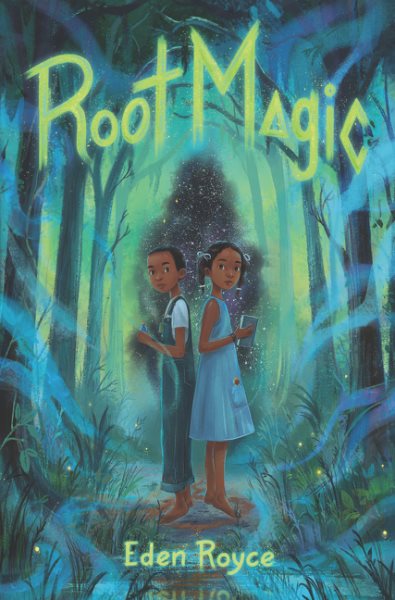
Root Magic Interview with Eden Royce

January 7, 2021 by Betsy Bird

Last year I just didn’t read enough fantasy novels to my liking. This year? I’m making up for lost time. And what better way to kick everything off than with a debut that really gets you thinking?

Check out this description:

Debut author Eden Royce arrives with a wondrous story of love, bravery, friendship, and family, filled to the brim with magic great and small. It’s 1963, and things are changing for Jezebel Turner. Her beloved grandmother has just passed away. The local police deputy won’t stop harassing her family. With school integration arriving in South Carolina, Jez and her twin brother, Jay, are about to begin the school year with a bunch of new kids. But the biggest change comes when Jez and Jay turn eleven— and their uncle, Doc, tells them he’s going to train them in rootwork. Jez and Jay have always been fascinated by the African American folk magic that has been the legacy of their family for generations—especially the curious potions and powders Doc and Gran would make for the people on their island. But Jez soon finds out that her family’s true power goes far beyond small charms and elixirs…and not a moment too soon. Because when evil both natural and supernatural comes to show itself in town, it’s going to take every bit of the magic she has inside her to see her through.

This story is inspired by rootwork, which author Eden Royce grew up learning. Rootwork is a type of African American folk magic based on West African spiritual traditions; and also includes the folklore and traditions of the Geechee people and the Gullah language, a vibrant mix of English and several African languages formed when the first slaves were brought to the United States, which is still spoken today in parts of the Carolinas.

Can you blame me that I wanted to know more? Most of the interviews on this blog come when I’m approached by publishers. In this case, I approached the publisher myself. There was a lot I needed to know:


Betsy Bird: I really appreciate your speaking with me today. To begin, how are you and your family faring right now with the COVID pandemic?

Eden Royce: Thank you for asking. We’re managing; I hope you are as well.

BB: So tell me more about rootwork. What’s your personal connection to it, and how did it inspire the creation of this book?

ER: Rootwork, sometimes called hoodoo or a host of other names, is a spiritual and magical practice using what the earth provides to protect and heal. It was created when enslaved Africans were brought to the U.S. With their beliefs and knowledge, paired with the knowledge and help of local Indian tribes, these people were able to preserve those beliefs, allowing them to morph and change because plants and animals and soil were different than what they were used to.

Eden Royce

My great-aunt was a rootworker and I know many rootworkers now. It is still a living, growing folk magic. Root Magic was born because I had never seen rootwork or any Southern Conjure magic portrayed in a book I’d read or a film I’d watched as a kid that presented it as a positive practice. So many people who incorporate conjure magic in their work choose to show it as an evil rite with destruction as its only purpose. I wanted to add my voice and my personal experience with rootwork as a nourishing, nurturing, protective practice.

BB: Though you now live in Kent, England, you grew up in South Carolina. I’ve been noticing an ever-so-slight uptick in the number of middle grade novels set in the South recently. Would you characterize this book as being a part of the Southern Gothic tradition or something entirely separate?

ER: I’m a writer of Southern Gothic, but I’m also a writer of speculative fiction. Some might say those two things are diametrically opposed, but they are the core of my writing and they blend seamlessly. Historically, Southern Gothic has always been considered literary writing as opposed to genre, such as sci-fi or fantasy, or horror. Also historically, Black writers have been excluded from the genre. You don’t see many of us listed when you search online for “Southern Gothic writers”.

An MFA student I spoke with told me one of her professors said Southern Gothic as a genre was dead. I couldn’t disagree more. But it has changed. It has morphed into including the fantastic and the speculative and the surreal alongside the usual literary tenets of the genre. All of that to say, ROOT MAGIC is a Modern Southern Gothic novel. 

BB: What books did you read when you were a kid? And what books would you pair alongside ROOT MAGIC?

ER: I read everything I could get my hands on as a kid. I read lots of Newbery winners like Roll of Thunder, Hear My Cry by Mildred D. Taylor and M.C. Higgins the Great by Virginia Hamilton as well as books my mother still had in the attic from when she went to college like The Picture of Dorian Gray by Oscar Wilde and Jane Eyre by Charlotte Bronte.

Alongside ROOT MAGIC, I’d pair Hoodoo by Ronald L. Smith and The Jumbies by Tracey Baptiste.

BB: Excellent choices! Now was there anything you wanted to include in this book but had to leave on the cutting room floor (so to speak)?

ER: ROOT MAGIC is the first full-length novel I’d ever written, and I had a lot of ideas in the original draft. During revision it became clear there might have been a few elements too many with all of the other challenges in the book. So several characters and storylines got the chop.

BB: Is this a standalone novel or is there always a chance of a sequel?

ER: Root Magic was written to stand on its own and there are currently no plans for a sequel, but if I were to revisit Jez and Jay and the Turner family, then those ideas I had to cut might be a great place to start!

BB: And finally, what are you working on next?

My next book is another Southern Gothic middle grade novel that’s set in present day.


Many thanks to Ms. Royce for taking the time to answer my questions today. Thanks too to Mitch Thorpe and the folks at Harper Collins for helping me direct my questions to her.

Root Magic is on shelves now.

Filed Under: Interviews Tagged With: author interviews, Eden Royce

Cover Reveal of Ann Clare LeZotte’s Sequel to Show Me a Sign: Set Me Free

January 6, 2021 by Betsy Bird

I don’t think I’m surprising anyone when I say that one of the great middle grade hits of 2020 has been Ann Clare LeZotte’s Show Me a Sign. If you’ve somehow missed the book, do not worry. Here’s a quick encapsulation of the plot:

“If you are reading this, I suppose you want to know more about the terrible events of last year – which I almost didn’t survive – and the community where I live.” So begins Mary Lambert’s story. Deaf from birth, she lives on Martha’s Vineyard (land “sold” by the Wampanoag who reside there still) in 1805 in the village of Chilmark. In this isolated community many people are deaf. In Mary’s own family her mother and brother, recently deceased, could hear and her father cannot. Mary’s mother still grieves her dead son desperately, but distraction comes in the form of a young scientist that visits the island. Drawn to the mystery of why so many inhabitants are born without hearing, the man is determined to find the cause. Yet there is something deeply wrong with the man’s attitude, and as Mary investigates further she is pulled into a terrible discovery and grotesque new status as a “live specimen” of her people.

Of course, if you read the book, you probably realized that this couldn’t possibly be the whole story. What happens to Mary afterwards? Her island? Her family?

At long last, we have an answer. Today, I am pleased to reveal not just the cover of the sequel to LeZotte’s story, but also an interview with the author herself.

First up, here’s a quick encapsulation of Set Me Free:

Three years after being kidnapped and rendered a “live specimen” in a cruel experiment to determine the cause of her deafness, fourteen year old Mary Lambert is summoned from her home in Martha’s Vineyard to the mainland to teach a younger deaf girl to communicate with sign language. She can’t help but wonder, Can a child of eight with no prior language be taught? Still, weary of domestic life and struggling to write as she used to, Mary pours all her passion into the pursuit of freeing this child from the prison of her isolation. But when she arrives at the manor, Mary discovers that there is much more to the girl’s story — and the circumstances of her confinement — than she ever could have imagined. Freeing her suddenly takes on a much greater meaning — and risk.

Stunning and heartrending, fast-paced and fiercely feminist, this searing exposé of ableism and racism is a spellbinding follow-up to the groundbreaking

Adults and children of all ages, Ms. Ann Clare LeZotte:


Betsy Bird: First and foremost, how are you and your family doing these days?

Ann Clare LeZotte: I’m typing from my comfy bed which has become my desk and all manner of things. Perkins the dog is tucked under the covers—he’s a burrower. If you know someone born with a notable disability (like deafness), they likely have another. Mine is pulmonary. I was hit hard and fast by disease in summer. Went back to work at the library till I could put my affairs in order and retire early. I’m ridiculously fortunate. I still have something I love to do that involves working with and for children! My adult dependent sister lives with me. She’s teaching me all about video games.

BB: So I have to admit I was completely surprised when I heard that there was a sequel to SHOW ME A SIGN on the horizon. Did you always envision that the first book would have a companion? And if it became a series, what would you name it?

ACL: Imagine my surprise! I wrote SHOW ME A SIGN over many years. I like to note that it was an un-agented submission, but Brian Selznick introduced me to our mutual editor, Tracy Mack. We thought it was a standalone and have talked other projects. But I still had Mary’s voice in my head—or hands, however that works for me. Working from home in March, I tutored Deaf kids whose caregivers tracked me down on Facebook! I was immersed in the students’ lives—quarantined behind digital screens and masks, without captions, interpreters and services mandated by IEPs; the only ASL fluent member of their families. It’s no accident that SET ME FREE centers a crucial relationship between an older and younger deaf girl, beautifully conveyed by Julie’s cover art. Once I started writing—it was all done this year—the cumulative impact of expanding Mary’s story into a duology felt nearly overwhelming and completely necessary. If this were to become a series, I like the idea of using or harkening to the title SHOW ME A SIGN. I hope both books stand strong on their own.

BB: Mary is three years older in this sequel. Why the time gap? Does it have any connection to expectations of children at age 11 vs. 14?

ACL: Oh, absolutely! Now there are expectations on Mary to act as a proper young lady. She is stubbornly, comically ill-suited for the role. While traumatized by her kidnapping and captivity in SHOW ME A SIGN and cowed by the knowledge of how the Deaf are treated off-island, the vast horizon beckons to her creative and inquisitive senses. An invitation to help one such as herself only more isolated and hurt is something she can’t refuse. It also serves as a variant way forward from the familiar path expected of a girl of her age.

BB: I know you did loads of research for the first book, but it seems like there’s so much more to explore with the idea of a child in that area born deaf and not taught for eight years. Did you have to do additional research for this book as well?

ACL: I’m a Deaf history buff. I think some of us keep repeating what we know as a kind of litany—because a lot has been lost, we hold on to what we’ve experienced and learned. It’s not so unusual for a child born deaf to come to language late. I was seriously delayed in literacy. At the library, I worked with a deaf girl adopted from overseas at age eight who had no language. Or maybe that’s incorrect. Under-stimulated deaf children become ingenious in creating “voices” that others may not recognize. Artist James Castle is a fascinating example. The young girl in SET ME FREE is full of mystery. Mary keeps perilously trying to unravel her history. I worked with authenticity reader Penny Gamble-Williams again. She’s a Chappaquiddick Wampanoag leader and artist. She tasked me with the biggest research challenge: being more specific about the Afro-Indigenous characters.

BB: What were you the most excited to return to in writing this book?

ACL: To see what the characters are doing three years on. Nancy is living with her uncle in Boston and studying to be a concert pianist. She’s also a dedicated bluestocking! Ezra Brewer is still kicking around. He supports Mary but their relationship has become more antagonistic. And the new characters at the manor where Mary resides as a tutor were fun to meet and develop. There are two I especially like—Ben and Ellie. And the girl. Like Helen Keller—I reread Anne Sullivan’s letters and Gibson’s THE MIRACLE WORKER—she’s far more than a feral child.

BB: Finally, what are you working on next?

ACL: I have oodles of projects in mind! The next book takes place on my native Long Island. The protagonist is deaf in a different way–she’s a non-signing “oral success.”  It takes place in the late 1980s. Maybe another Deaf history buff can figure out what major civil rights event affects her thinking about the world.

Thank you for your time and interest!

BB: Thank YOU!


And now, the moment you’ve all been waiting for . . . the new cover!!

JACKET ILLUSTRATION © 2021 by Julie Morstad

JACKET DESIGN Marijka Kostiw

Ann Clare LeZotte is the author of the highly acclaimed novel Show Me a Sign, which was named a best book of the year by NPR, Kirkus Reviews, School Library Journal, the New York Public Library, the Chicago Public Library and American Indians in Children’s Literature, and was a finalist for the New England Independent Booksellers Association Award and the Jane Addams Children’s Book Award. A passionate advocate for the Deaf and Hard of Hearing, as well as underserved youth from marginalized communities, Ann worked for many years as a youth librarian in Gainesville, Florida. Ann says, “During the pandemic, I’ve kept in touch with Deaf library youth at home with families who don’t sign. The isolation is real—there will be a long-lasting gap. It’s getting harder to tell them all their dreams can come true. But continuing Mary Lambert’s story, the darkness and the light, shows them that they’re still counted in.” In her free time, Ann enjoys yoga and walking her dog Perkins.


Thank you to Ann, for taking the time to answer my questions, and for Elisabeth Ferrari and Scholastic for setting this up.

Set Me Free is on shelves everywhere September 21, 2021.

Filed Under: Interviews Tagged With: author interviews, cover reveal

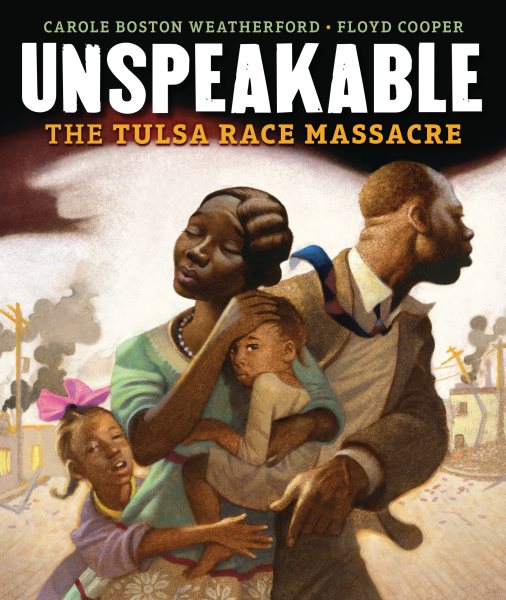
An Unspeakable Interview: Talking with Carole Boston Weatherford & Floyd Cooper About the Tulsa Race Massacre

January 5, 2021 by Betsy Bird

When I tell you that there is an informational picture book out this year on the topic of the Tulsa Race Massacre, how do you react? Are you incredulous or do you nod slowly? Are you curious or do you try to guess how it could be done? Carole Boston Weatherford has been writing for children for years and years and years. Her books have an incredible tendency to win major awards (Freedom in Congo Square, Voice of Freedom: Fannie Lou Hamer, Becoming Billie Holiday, etc.), to tell stories of people that have never appeared on the pages of picture books before (Schomburg, The Roots of Rap, Racing Against the Odds: The Story of Wendell Scott, etc.), and, on occasion, to dip into fictional territory too. It is impossible to overstate the influence she has had on the field of children’s literature to date. Who better to discuss the impossible with children?

Floyd Cooper, meanwhile, may give Carole a run for her money, should we try to keep track of who has been making children’s books the longest. His books have given equal weight to fact and fiction, truth and imagination. When it comes to illustrations, his leave indelible images.

I was given the chance to ask Carole and Floyd about their latest title Unspeakable. I took the opportunity I was given:


Betsy Bird: Carole, we’re talking about the Tulsa Race Massacre, a.k.a. the worst racial attack in history, with this book. One that a lot of people were unaware of prior to 2020. I know that there are people saying that this would be an impossible topic to cover in a book for children. Yet you and Floyd must have been working on this book long before Tulsa became national news. How did you come to this story and the decision to make it accessible to kids?

Carole Boston Weatherford: So African American history has been lost, omitted, or twisted. State and local officials deliberately covered up the Tulsa Race Massacre. Until recently, it wasn’t even studied in Oklahoma schools. I heard about the massacre decades ago, and I decided a few years ago to tackle the subject. If children of the past were—and still are—victimized by racial hatred, then today’s children can learn about it. I do not think that young readers are too tender for tough topics.

BB: Floyd, you have a personal family connection to this story. When you were tapped to work on this book was that known to Carole or your publisher? Can you tell us a bit about your grandfather?

Floyd Cooper: I do not think Carole Boston Weatherford or Lerner knew before they initially considered this project just how personal the narrative is to me. I believe I informed Carole somewhat early on when we began our discussions of possibly working together on it. (She approached me about illustrating even before submitting the manuscript to a publisher.) I am not certain when Carol Hinz, our editor at Lerner, became aware. I must say that it was a sweet coincidence at best that the stories my grandpa told to my cousins and me would someday become a picture book the likes of Unspeakable and published by Lerner!

My grandpa C.D. Williams gave us so much in the way of what came before us and before him and on and on. For one thing, he loved to talk—but then, we loved to listen!

I remember being sooo fascinated with the stories of his youth. I was one of those kids with a big imagination, and his stories played out in my head like an IMAX movie. One of his stories was about the burning of Black Wall Street, Greenwood Avenue, Tulsa, Oklahoma, in 1921. And he was there, a live witness to it all.

BB: Carole, the sheer amount of research you must have conducted for this book is evident on every page. The text is at times a catalog of the Black businesses and doctors and shops and stores in Tulsa. What kinds of sources did you consider? How did you even go about beginning to research this? As you mention at the end of the book, so much of this history was deliberately covered up. How did you get around that?

CBW: Thanks to data research by the Oklahoma Commission to Study the Tulsa Race Riot of 1921, the Oklahoma and Tulsa historical societies and the Greenwood Cultural Association, I was able to reconstruct the landscape and events of 1921. The Commission, which was authorized by the Oklahoma state legislature in 1997, made a concerted effort to document the massacre and to fill the void created by the cover up. One outcome of the commission’s study was semantic. The incident, at first termed a “riot,” is now more aptly called a “massacre.”

BB: If I could draw a clear cut line in the sand between the books that came out when I was a kid and the books coming out today, one of the biggest (and perhaps least remarked upon) differences may be how we frame history for our kids. When I was young, history was taught as a slow, steady walk towards progress with no backtracking. It was as if adults didn’t dare show kids that things could get better then worse again. Do you feel like there’s a shift in how we teach our children history these days? Can you speak to why this is changing?

FC: I certainly would hope so. I believe if we step back and examine where we are now compared to where we once were, we would see the growth of America. On many levels we can bear witness to the fact that our nation is not static, is not locked into a single perspective when it comes to anything really—and that includes our understanding of history and the passing on of that history. I personally link the pervasive assault on truth that we see in our politics and media directly to historical truths that exist and have existed and are now being brought to light. A good thing for America. And of course there will be many who are and were just fine with leaving truth under the rug where it is had been swept for far too long.

Eventually, truth will always out. That is different from what it once was. With such a change comes resistance to that change, an unwillingness to accept the change, to accept the truth. That can lead to uncomfortable times. But there is a better day on the other side of change. After the wounds have healed, a much better day awaits! Our young will live in better times together in acceptance of the way things really are if we give them the truth. But we must teach them truth in ways they can comprehend. There is no greater gift than truth.

BB: Carole, there are a fair number of terms in this book that exist on the page without definition. At one point thirty Black men rush to the jail to save a man from being “lynched”. This brings to mind the audience. Do you see the readership of this book younger kids that will have these terms defined for them, older kids that may know them, or a mix?

CBW: I do not think that young readers are too tender for tough topics. Even before “anti-racist” was a term, my books highlighted social justice issues and engaged students in critical literacy. I document past atrocities like the Tulsa Race Massacre and the bombing of Sixteenth Street Baptist Church (in my book Birmingham, 1963) to introduce these injustices to young readers. I hope that children and adults will read and discuss Unspeakable together. Our response to such atrocities must never be silence.

BB: Floyd, I want to talk a bit about what you’re doing with the art in this book. There’s this shot early on when the book is discussing the community of Greenwood Avenue and how it was made up of people fleeing the segregated South. There are two little girls looking dead straight at the reader and they are not smiling. In fact the older sister has her arm protectively around the younger child and there are full-length novels you could read in her expression. And there are other moments in the book too where the page’s characters are looking right at you, and they’re considering you with great seriousness. I don’t think I’ve ever seen you do anything like this in a book before. What was the impetus?  

FC: I appreciate your sensitive observation. The art in this book came from my heart. I painted each scene from a personal point of reference. How I remember the setting and details like the brick streets and buildings that still remained a part of Tulsa in my childhood. How I remember reacting when my elders told me these stories. And I guess some of that came out in my art.

BB: Carole, one of the things I love about how you’ve written the text is how you tie it into our current movements. You write about Tulsa’s Reconciliation Park, “the park is not just a bronze monument to the past. It is a place to recognize the responsibility we all have to reject hatred and violence and to instead choose hope.” What do you hope for with this book?

CBW: I hope that this book will connect the events of the past to persistent problems like racial profiling and police brutality. As a mother and grandmother, I want to help raise children who are anti-racist.

BB: Floyd, how you handle violence in this book can serve as a guide for other illustrators tackling tough subjects. In a moment when thirty Black men faced off against two thousand white men, you have a two-page spread of a Black man on the left-hand page raising his hand in a stop gesture as two white men on the right-hand page exist behind it. Later the mob violence shows the Black citizens running. Not what they’re running from. This, in many ways, may be what so many people wouldn’t know how to illustrate. When you have a massacre to depict, how do you tackle it? What are you thinking when you come up with these images?

FC: I think that there has been so much depicted in movies and the media that the illustrator really doesn’t have to graphically render as much of this in the visual narrative. Instead, I allow the “filling in of the blanks” as the story moves forward. One could argue that doing this would be somewhat like censoring history, not showing certain acts or scenes. But I would push back on that. We must use a little common sense when telling the truth to the young.

BB: And finally, what are you working on next?

CBW: I have picture book biographies forthcoming about Speaker of the House Nancy Pelosi and the late congressman Elijah Cummings. Both lawmakers were born and raised in my hometown of Baltimore.

FC: I am currently finishing up a companion picture book to Where’s Rodney?, my collaboration with the amazing Carmen Bogan about a little boy of color who finds that where he thrives best is outdoors immersed in nature. Critical affirmation of Where’s Rodney? was in the fact that it was surprisingly rare to see a picture book about a child of color in the outdoors. The new book is titled Tasha’s Voice, and it’s about a girl named Tasha who finds her voice outside in a park. The publisher is the Yosemite Conservancy.


But why rely on mere writing? Hear the creators in their own words!

Hear Carole discuss this book in this video on its creation:

Check out this look at the interiors with additional thoughts at Seven Impossible Things Before Breakfast.

Read an additional Q&A with Carole at the Lerner site.

Take a look at an amazing discussion guide available for Unspeakable. The guide was written by Dr. Sonja Cherry-Paul who also created the educator’s guide for Stamped: Racism, Antiracism, and You.


Thank you to Carole and Floyd for taking the time to answer my questions, and thank you too to Lindsay Matvick and Carol Hinz for setting it all up.

This book will be on shelves everywhere February 2nd.

Filed Under: Interviews Tagged With: author interviews, author videos, Carole Boston Weatherford, Floyd Cooper, illustrator interviews, Lerner Publishing Group

A Look Back: The Swag of 2020

January 4, 2021 by Betsy Bird

This is one of the weirder posts I do anyway, with or without a pandemic in the mix. As a reviewer I will sometimes receive the swag that would normally be designated for bookstores, professional review journals, morning talk shows, etc. Swag has one very important job: To grab the attention of those folks that would otherwise just toss the galley they’re sent into the massive To Be Read pile behind their desk (or is that just me?). Swag can be edible or practical. It can be attention grabbing or funny.

When COVID-19 hit, many publishers scrapped not just their plans for innovative swag, but also plans for physical galleys themselves. As such, this list of 2020 swag is a bit shorter than usual. You can also tell how long it must take publishers to get swag orders ready since I have yet to see any mask swag as of yet. Even so, check out the ways in which publishers have attempted to grab attention during, what turned out to be, a very odd little year:

Edibles and Potables

The Candy Mafia by Lavie Tidhar

Sometimes the best approach is the most direct approach. And there are few things more direct than a small pile of decent candy sent with a book. At this point I have a small drawer filled with candy in my office. Should candy lovers come by, I have plenty to offer.

The Couch Potato by Jory John, ill. Pete Oswald

Reader, I did not eat the potato. Though I was amused to discover it, considering the fact that this is the second piece of potato-in-the-mail swag I’ve ever received (the first honor goes to Potato Pants by Laurie Keller). Spuds, man. Born for mailing.

The Hanukkah Magic of Nate Gadol by Arthur A. Levine, ill. Kevin Hawkes

Every time a large package arrives by my desk there is a moment in time when I ask myself, “Can I eat this?” Often the answer is no. Then, once in a very great while, the answer is yes. And sometimes, if the planets are in alignment, the answer is Hot-Diggety-Dog-Yes! There is a tenuous connection between Lindt Lindsor Truffles and this book, but I’ll grasp that thread and hold on for dear life. The cover of the book already glowed gold. The truffles just help that gold to shine a little brighter.

Practical Purchases

Frog and Toad Are Friends by Arnold Lobel

Ah yes! Commemorative swag. It can vary considerably. For example, for the ten-year anniversary of Esperanza Rising a very lovely copy of the book with the original cover and a poster were sent out. That’s a perfectly nice way of bringing attention to a title. I guess since Frog & Toad have been around longer, the publisher felt they had to up their game. Tote bags are, to librarians, a form of bibliocentric currency. To send one with unambiguously beloved characters is a true win.

Jefferson Market Branch – New York Public Library

I’m going to be a bit broad in what I deem “swag” here, but I consider totes created for New York Public Library (my previous employer) to certainly count. The Jefferson Market Branch is, to my mind, the finest of all the NYPL locations, and this bag by children’s illustrator Elisha Cooper (who’s art graces the inside of the building as well) is a stunner. Alas, I cannot find this bag for sale in NYPL’s online shop but it must be out there somewhere. Such a beauty.

Judy Moody by Megan McDonald

To be perfectly blunt, I hadn’t even heard of S’well water bottles until I received this one. I’m still sort of scratching my head over the connection between Judy’s moods and water bottles. Any ideas? Not that I’m objecting. It’s a nice bottle. Just . . . huh.

Kevin Henkes

I’ve a co-worker who is a particular Kevin Henkes fan so I left these socks in his cubby. He later confessed to me that when he first saw them he immediately assumed that they were of RBG. Who, to be fair, is visible on the logo at the top, but even so…

Socks are rapidly becoming the go-to swag these days. At the last ALA Annual I remember receiving socks in the course of things. Terrible socks, granted, but free ones! Because even bad socks are better than no socks at all. They’re clever marketing.

Wayside School Beneath the Cloud of Doom by Louis Sachar

From the very start it was clear that all the stops would be pulled out for the latest Louis Sachar Wayside book. And this handsome lunchbox makes a fitting companion to the title, no question. I admired the elegance of its construction (and the fact that it was made out of nice sturdy metal). One of the finer swag offerings of 2020, I’d say.

The Yawns Are Coming by Christopher Eliopoulos

A sleep mask and temporary tattoo? Kinda neat. Eliopoulos broke off with a picture book entirely of his own making this year and to celebrate, this little mask was included. Had it been a face mask instead, it would have been downright prescient.

Arts & Crafts

Best Friend in the Whole World by Sandra Salsbury

This little book isn’t out until March of this year, but I received this swag back in December. Inside this bag you’ll find a pinecone, a brown pipe cleaner, and two googly eyes. I am reminded, quite a bit, of Sporky from Toy Story 4.

The Swag Box

The Case of the Bad Apples by Robin Newman, ill. Deborah Zemke

Swag boxes are complicated collections of a variety of items pertaining to the book they are promoting. These are labors of true love on the part of the publishers. In the case of Newman’s Bad Apples, Creston Books gave their swag boxes a particularly personal touch, right down to the evidence bags. An excellent example of how a small publisher can sometimes trump a large one in terms of the care and publicity of their authors.

The Mouse Watch by J.J. Gilbert

Let me let you in on a little swag secret. Sometimes the most memorable thing in your swag box is also the most unobtrusive. See that pad of yellow paper? I am here to tell you that of all the things in this box, that pad of paper has not only lasted the longest, but every time I use it I remember this book. I once received a HUGE pad of Babymouse paper and I swear it lasted me for a good decade or more. Paper, friends. It makes for great swag.

And, finally, apologies to Rob Harrell’s Wink. The swag of a guitar pick on a chain was sent very early on, and I failed to take a picture of it. Believe me, it’s nice. Incredibly incredibly specific, but nice.

Filed Under: Reviews Tagged With: swag

  • « Go to Previous Page
  • Page 1
  • Interim pages omitted …
  • Page 231
  • Page 232
  • Page 233
  • Page 234
  • Page 235
  • Interim pages omitted …
  • Page 1050
  • Go to Next Page »

Primary Sidebar