
A Tomi Ungerer Symposium is Nigh: Aria Ungerer Discusses Her Father and His Work

Such chances as these do not show up every day.
Imagine visiting The Rabbit hOle in Kansas City. Maybe you’ve been telling yourself you’d visit the immersive museum of children’s picture books one of these years, or when the time was right. Now imagine not only seeing the museum itself, but attending a symposium dedicated to a man whose books and art have had a profound effect on not simply the history of children’s literature, but also the state of picture books in America today.
On November 14th and 15th, you have a chance to attend Blunderbuss, a celebration of the life and work of Tomi Ungerer. So not only do you now have an excuse to visit The Rabbit hOle at long last, you’ll do so with a once-in-a-lifetime celebration as well.
ADVERTISEMENT
ADVERTISEMENT
Today, as a bit of a lead up, I’m in conversation with Tomi Ungerer’s daughter and manager of his estate about her late father and his legacy. This is, for the record, the second interview I’ve conducted with Aria. I’d almost forgotten but in 2023 I interviewed her about a Tomi Ungerer coloring book, of all things. Today, we delve a little deeper into the heart of the man himself.
BB: Aria, I’m so pleased to be speaking with you today. The upcoming Blunderbuss literary symposium promises to delve deep into your father’s, “fearless pursuit of the unexpected and the absurd.” It’s a bit unfair to ask you this first question, considering how close you are to the material, but what is it about Tomi Ungerer’s books and art that have stood the test of time over the decades?

Aria Ungerer: I am really excited about the forthcoming symposium – there are some great speakers attending and I am very much looking forward to hearing them answer this question.
I think that Tomi’s work remains fresh for many reasons, one of which is that sadly many of the subjects that he tackled with his art remain problematic; for example racism, environmental disaster and misogyny to name just a couple. I also think he was able to tap into something fundamental about the human condition and that is timeless – he used his art to poke fun at different kinds of power structures and highlight the absurdity of human behaviour. I think that as long as those dynamics remain his work will make sense to us in the present.
BB: This is by no means the first appreciation of your father’s work that you’ve participated in. Could you tell us a bit about some of the other tributes you’ve seen in past years? Which are your favorites?
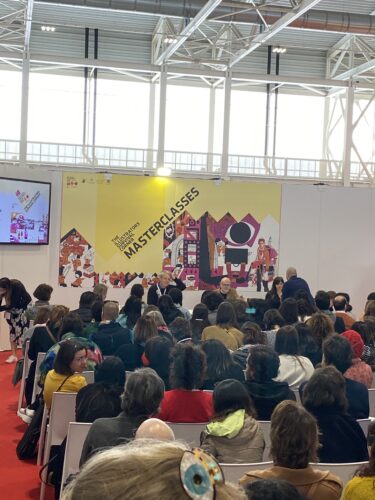
Aria: We’ve put together numerous exhibitions, events and tributes in the six and a half years since Tomi died – my favourites are probably the two events at the Bologna Bookfair in 2023 which included a large [Tomi] wall on which people were able to draw and write in homage to Tomi. Over several days it took on this incredible life of its own which I knew that Tomi would have loved. We also put together a panel interviewing Axel Scheffler and Beatrice Alemagna speaking about the importance of Tomi’s work and its influence on them. It was incredibly moving to hear how much his work means to them and to so many other artists as well. The other thing, important to me on a professional level, is the exhibition of some of Tomi’s work which took place as part of Art Basel in 2023. I think it was the first time that an artist who is considered an illustrator was exhibited at the art fair!
BB: I’ve seen videos where you interview contemporary illustrators of picture books and discuss Tomi’s influence and legacy with them. What do creatives tend to take away from his children’s book creations as a whole?
Aria: A theme that emerges all the time is Tomi’s embrace of the absurd and all the crazy little, subversive details he manages to sneak onto the page. His uncompromising approach to making art, his refusal to back away from his principles and political engagement is something that is mentioned often. And also the versatility of his artmaking itself – he never limited himself to a single method or style or medium and a lot of creatives find that very inspiring.
BB: Tomi, in many ways, embodied an artist’s ability to be both a creator of books for young children while also having a very adult professional life at the same time. This duality didn’t sit well with some people. Now we’re having this symposium at a time when book banning in America is cresting at an all-time high. I wonder if you might tell us a bit about Tomi’s own relationship to censorship and what it can tell us about the times in which we live now.
BB: Tomi was an ardent believer in freedom of speech and 100% against censorship. Don’t forget that he grew up in Alsace under Nazi annexation. He had to attend Hitler youth and underwent extensive Nazi brainwashing at school. He spent his whole life trying to get that out of his system. You could be arrested for speaking out against the regime and children were constantly being encouraged, even bribed, to inform on their parents. Those years growing under a totalitarian regime I would say influenced all of his work – he always knew what humans are capable of doing to each other. Therefore he was determined to use his talents as best he could to fight against any kind of injustice or hypocrisy that he came across. If anything, this is one of the most important aspects of Tomi’s legacy and I hope that young artists fully embrace his example in this.
BB: In some interviews you discuss how Tomi loved to poke fun at social norms or question social norms. How did those instincts show up in his works for kids?
ADVERTISEMENT
ADVERTISEMENT
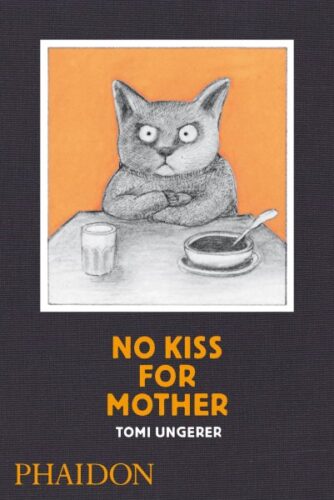
Aria: Social norms aren’t really a natural fit for children and Tomi himself remained a kind of child himself so they didn’t really fit him either. His books for children show how he was on the same wavelength as them and didn’t speak down to them in any way. As a child my favourite book of Tomi’s was No Kiss For Mother which is totally politically incorrect – young Piper Paw smokes at school, pretends to brush his teeth by scraping his toothbrush against the sink while reading a comic he has stashed in the bathroom, hates being kissed by his mother and lives for naughty-ness. This is a great example of a book which is definitely not for parents – it’s like an inside joke between Tomi and the child reader.
BB: Finally, what is your hope with the Blunderbuss symposium? What would you like it to accomplish?
Aria: I’m very much looking forward to seeing the Rabbit Hole exhibit and space and to hearing the other speakers. I worked with Tomi for the last ten years of his life and have been running his artistic estate since he passed away and sometimes, he almost becomes abstract. Coming together with people who knew him, either in person or through the impact of his work, brings him closer and I relish those moments.
I hope and believe that there will be much robust conversation and lively debate at the symposium and in today’s climate this is the most important thing – to find a ‘field’ where we can meet and bond over one thing so that we can also disagree with each other and learn from each other. I think that Tomi’s work will provide a good catalyst for this.


A big thank you to Aria for answering all my questions today. Blunderbuss: Exploring the Legacy of Tomi Ungerer runs from November 14th-15th. Come by and hear Susan Hirschman, Steve Heller, Lisa Brown, Gary Groth, Jon Agee, Kate Feiffer, Brad Bernstein, Maria Russo, Philip Nel, and K-Fai Steele all talking about the man and his work. Oh, and me too! I’ll be there! Come and hang out with me. We’ll have a blast!
Filed under: Interviews

About Betsy Bird
Betsy Bird is currently the Collection Development Manager of the Evanston Public Library system and a former Materials Specialist for New York Public Library. She has served on Newbery, written for Kirkus, and has done other lovely little things that she'd love to tell you about but that she's sure you'd find more interesting to hear of in person. Her opinions are her own and do not reflect those of EPL, SLJ, or any of the other acronyms you might be able to name. Follow her on BlueSky at: @fuse8.bsky.social
ADVERTISEMENT
ADVERTISEMENT
SLJ Blog Network
Notes on April 2026
Papercutz to Publish ‘Midnight Island’ | News and Preview
From Policy Ask to Public Voice: Five Layers of Writing to Advance School Library Policy
ADVERTISEMENT
Wonderful interview! Tomi had such an incredible respect for children. It truly comes out in his books. Wish I could attend Blunderbuss.
Fascinating interview. I didn’t know that he grew up under Nazi annexation and that explains a lot! Now I need to revisit his work. Thx for sharing this.