• Skip to primary navigation
  • Skip to main content
  • Skip to primary sidebar
  • About/Contact
  • Fusenews
  • Reviews
  • Librarian Previews
  • Best Books
    • Top 100
    • Best Books of 2022
    • Best Books of 2021
    • Best Books of 2020
    • Best Books of 2019
    • Best Books of 2018
    • Best Books of 2017
    • Best Books of 2016
    • Best Books of 2015
    • Best Books of 2014
    • Best Books of 2013
  • Fuse 8 n’ Kate
  • Videos
  • Press Release Fun

31 Days, 31 Lists: 2024 Older Funny Books for Kids

31 Days, 31 Lists: 2024 Older Funny Books for Kids

December 20, 2024 by Betsy Bird

Humor is subjective, so I have zero doubt that one of your favorite books for kids that had them rolling in the aisles will be missing from today’s list. For example, where’s the Dog Man? Where the Diary of a Wimpy Kid? While admittedly hilarious in their consistency, my goal here today is to highlight those funny books that aren’t already on everybody’s radars. It’s a wild mix of nonfiction, poetry, comics, novels, and more. And because I’ve such a penchant for humor, you’ll find that a lot of these books show up on other lists as well. So sit back and enjoy the array!

If you’d like like to have a PDF of today’s list, you can find that here.

Need more older funny titles besides today’s books? Then be sure not to miss these previous titles:

  • 2023
  • 2022
  • 2021
  • 2020
  • 2019
  • 2018
  • 2017

2024 Funny Books for Older Readers

Beware the Dragon and the Nozzlewock by Vikram Madan

Looking for funny poetry? You’ve come to the right place! From nozzlewocks to squishosaurs and everything in-between (whatever that means) you’ll be rolling in the aisles with this hilarious collection. Read through all 128 pages of this delightful collection and then look me in the eye and tell me that this isn’t some of the smartest, most inventive children’s poetry you’ve seen in a long time. It is SO easy to do boring poetry for kids and SO hard to write poetry half as funny as what Madan has come up with here. Funny and fabulously written, this is the poetry I wish we saw more often on our shelves. Previously seen on the Poetry List.

Bunnybirds by Natalie Linn

Why are all the bunnybirds missing? Princess Aster seems to be the only one who cares, and finding the rest of her people will mean pairing with exiled thief Carlin and the many footed dog, Feet. Adventure await! I’ll confess that I didn’t expect such a silly looking book to pack as big a punch as this does. The entire plot essentially focuses on what happens when an entire group decides to push down their trauma and, instead of dealing with it, cling to being happy happy happy all the time. Winged bunnies as a concept just sort of sell themselves, but a lot of time and thought and effort went into this title. Legitimately funny (there are some sight gags that had me hooting out loud) and delightfully written. This is a treat! Previously seen on the Graphic Novels List.

Butt or Face? Revenge of the Butts by Kari Lavelle

More funny nonfiction! More, I say! Now normally I don’t tend to put a lot of sequels on my lists, but you know what helps me override that unofficial rule? Googly eyes. Remember the old Saturday Night Live routine with Christopher Walken saying the word “googly” over and over? Or, to make a more recent reference, the use of googly eyes in Everything Everywhere All at Once? Well, the cover of this latest edition of the “Butt or Face” series (a series that has proved to be WAY more popular than I anticipated) takes full advantage of that fact. But don’t worry. Inside the book there’s ne’er a googly eye to be seen. There doesn’t have to be! As before, the book will show you a section of an animal, and then ask in no uncertain terms “Is it a BUTT or FACE?” This book would probably be an amazing readlaoud to a group of older kids, honestly. Of course, one of its great charms is that once the posterior or kisser is established, Lavelle loads you down with a couple fascinating facts about the critter. My personal favorite? The spicebush swallowtail caterpillar, of course. It looks like a Muppet and seriously makes me wonder how exactly evolution works when it can make such amazing faux peepers.

A Call to Cthulhu by Norm Knoyu, ill. Phoebe Hedges
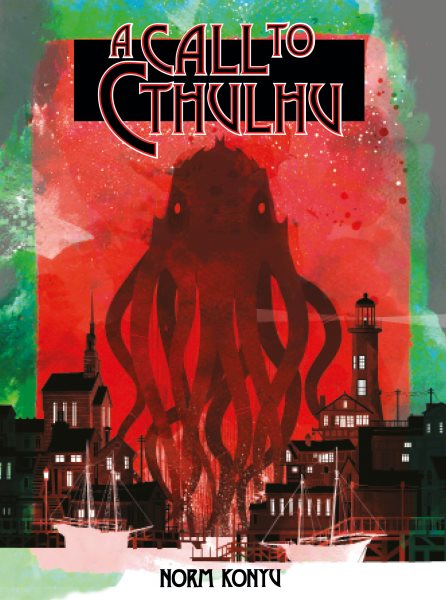
Man. I’ve needed this book for years and years. Now obviously a picture book called “A Call to Cthulhu” isn’t going to be all sunshine and puppydogs, which is why most libraries are shelving this one in the graphic novels section or middle grade fiction sections of their libraries. But what makes this book so great is that if you, like myself, have only ever had the vaguest possible understanding of the world of H.P. Lovecraft, this book will clear everything up for you. The premise is that Cthulhu is at home, just minding his own business, when he gets a call from some guy explaining (in rhyme no less) PRECISELY why he doesn’t like this particular Great Old One. The crank caller then proceeds to outline a series of plots from fifteen different Lovecraft stories. Don’t worry, there’s a list of these stories in the back of the book giving additional plot rundowns of each. There is also, it must be noted, a very good “Who Was H.P. Lovecraft?” that does not shy away AT ALL from the man’s racism, antisemitism, and love o’ Hitler. It makes reference too to shows and books like “Lovecraft Country” and discusses how contemporary creators tackle this fact. Definitely useful if a kid is like myself and knows next to nothing about these books.

Gnome and Rat: First Snow! by Lauren Stohler

Gnome and Rat: Time to Party by Lauren Stohler

Okay, I just have a weird weakness for this series. So yes, I admit that I have a problem. But apparently, if you create a book and one of the two stars is a little garden gnome-looking-fellow in love with his own hat, how have I any hope of resisting that? These books continue the Gnome and Rat series and, like that book, they are split up into six small stories. In Time to Party, all the stories are party-based, while in First Snow it’s an epic quest to get to a party on time. However, the important thing is how good Stohler is at humor. She kills at it, honestly. I love that she’s doing more and more Gnome and Rat books, but my secret wish is that someday she branches out and does a slew of new picture books as well. I mean, I love her pug stuff, but if she’s this good at creating a jacked up vole then surely there’s more we can see her do. Until then, definitely enjoy these books. They are one-of-a-kind true delights. Previously seen on the Graphic Novel List.

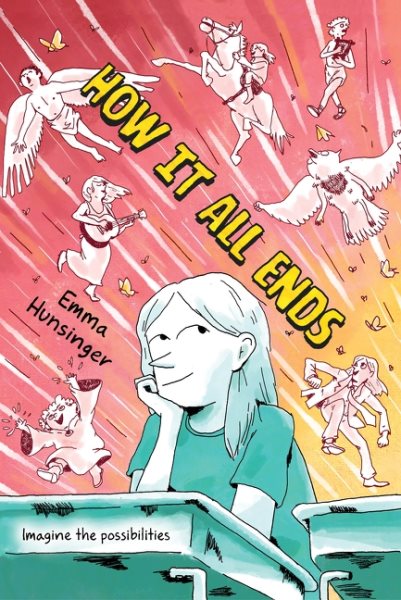
How It All Ends by Emma Hunsinger

What’s worse than starting 8th grade? Starting 9th grade instead! When Tara finds herself a sudden high schooler she’ll have to figure out friendship, crushes, family, and who she is to survive in this thoroughly hilarious tale. I’m just going to declare right now the fact that this book is literally as funny as Mexikid. There is no higher praise that I can laud upon it. Now, is it a book about a middle schooler forced to go to high school early? Yes. Does that mean that this book is YA? Not even slightly. Our heroine Tara is squarely a younger kid at heart who would rather play with her toddler little brother than watch gross mature TV shows. She gets a crush, yes, but it’s the tamest thing you ever saw. Plus there are elements to this book I’ve never seen before. The finger game chopsticks (which my own kids play constantly) actually makes it to the page. Honestly it’s the humor that’ll sell it. The English class boys are now officially my favorite fictional characters of 2024. Oh, you gotta read this. Previously seen on the Graphic Novel List.

Kwame Crashes the Underworld by Craig Kofi Farmer

After a tricky little aboatia steals something precious from him, Kwame takes a dive into the underworld to get it back. Soon he meets figures from Ghanian mythology, and one with diabolical plans. Can Kwame save us all? Funny, fast-paced, but with lots of heart. So how is this the first book Farmer has written? I tell you, writing a book of this sort is an art and Farmer is already a master. Right from the start he does this incredible job of pulling you in and introducing all the emotions and pertinent details as quickly and efficiently as possible. The fantasy world is complex but not overwhelming and doesn’t require 500 pages of exposition. But most importantly is what it’s doing with the character of Kwame. His grief and emotional journey just click. Plus it has one of those prophecies that actually work on the page rather than just annoying you. This is a fascinating pairing with another Ghanian middle grade novel Flying Through Water. The two books couldn’t be more different but they complement one another nicely.

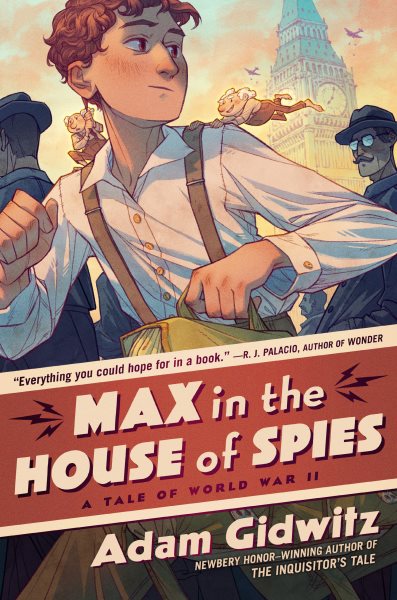
Max in the House of Spies: A Tale of World War II by Adam Gidwitz

Sent off to Britain to escape the Nazis, Max Bretzfeld finds himself hosting two immortal creatures on his shoulders. And when he discovers his new hosts have connections to Britain’s spy ring, he’ll do anything to take part. A rip-roaring adventure! A World War II thriller where a kid has to learn how to spy on Nazis? Yes and please! The fact that Adam Gidwitz is the author is just icing on the cake. Now is this book fast-paced? You bet. Does it involve my favorite trope in literature (clever people being clever)? It does! My one quibble is the magical realism element which I found them a bit superfluous. But you know what’s nice about the guys on Max’s shoulders? Jokes! They have them ah-plenty! Oh, and this book is DEFINITELY the first in a series, so watch out for that. You’ll learn spycraft, you betcha, just don’t expect to use it too much.

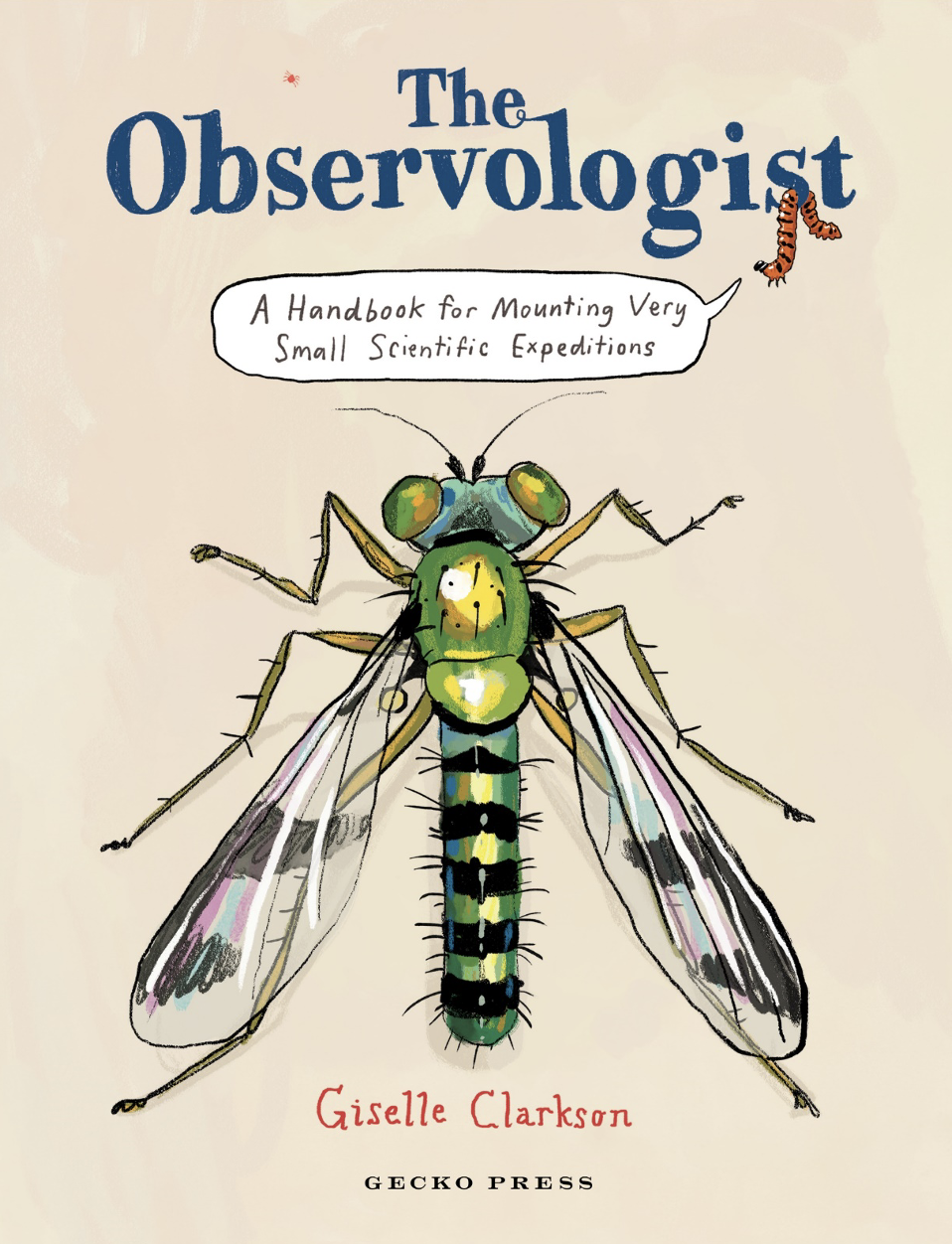
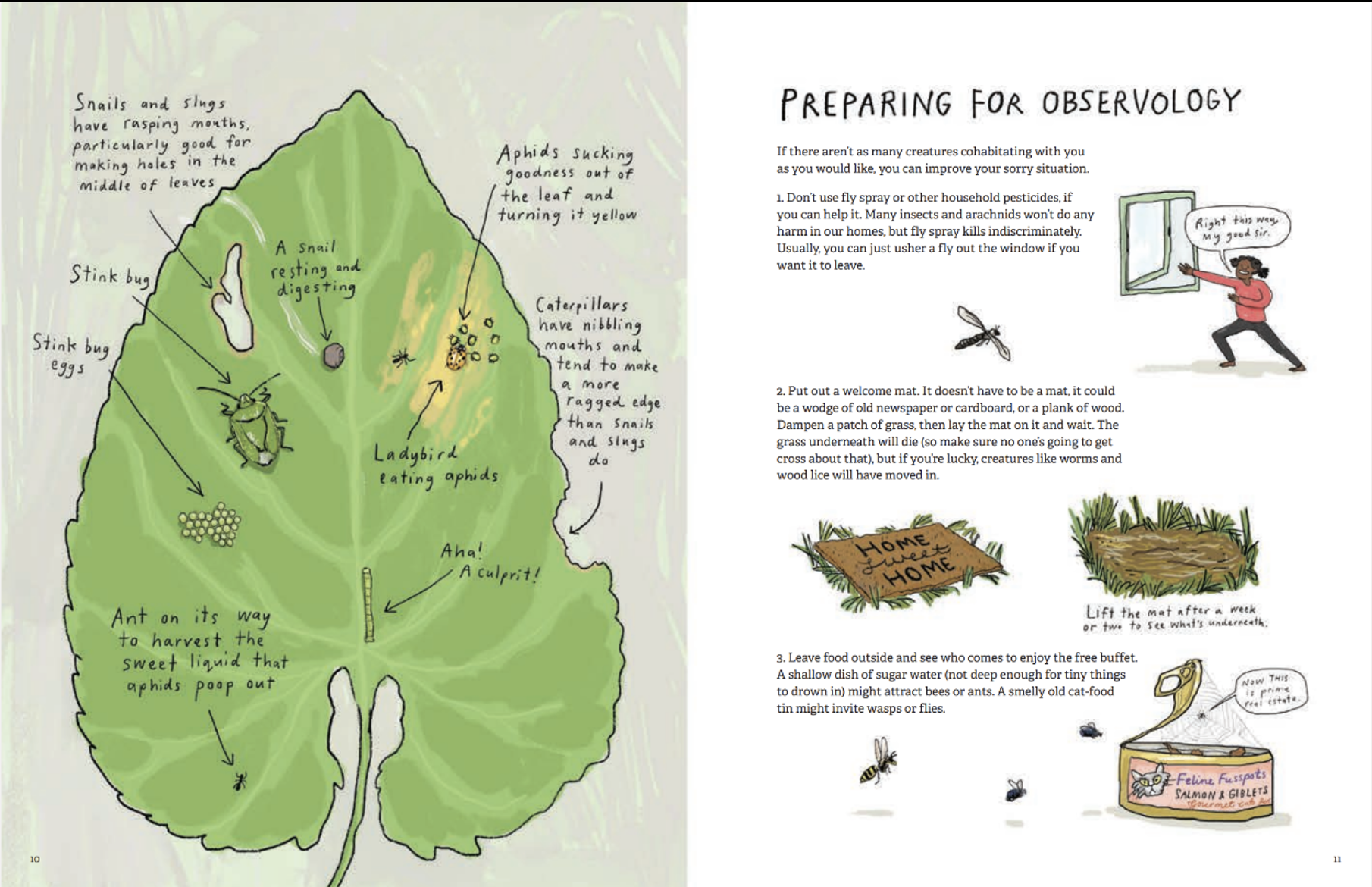
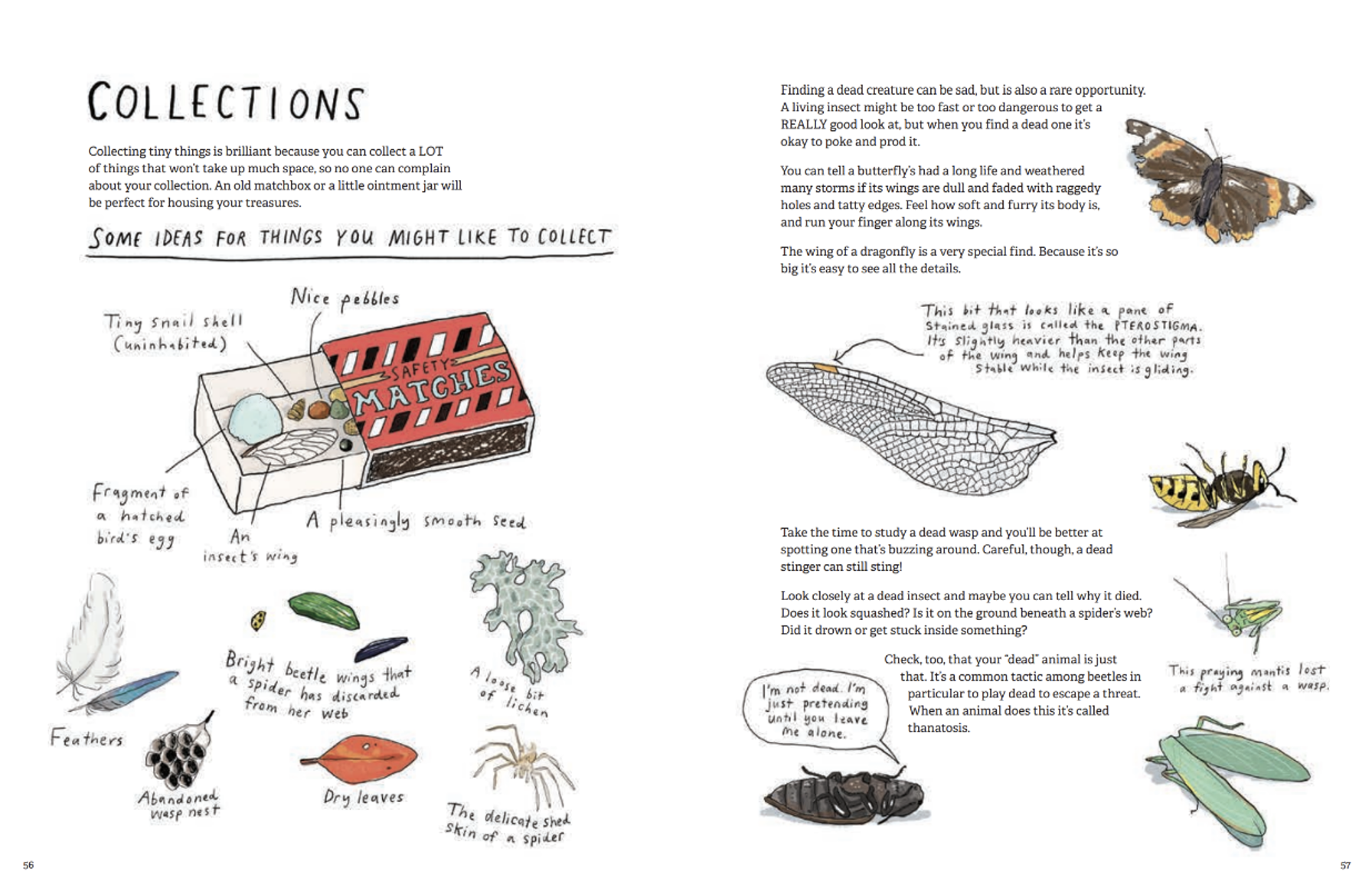
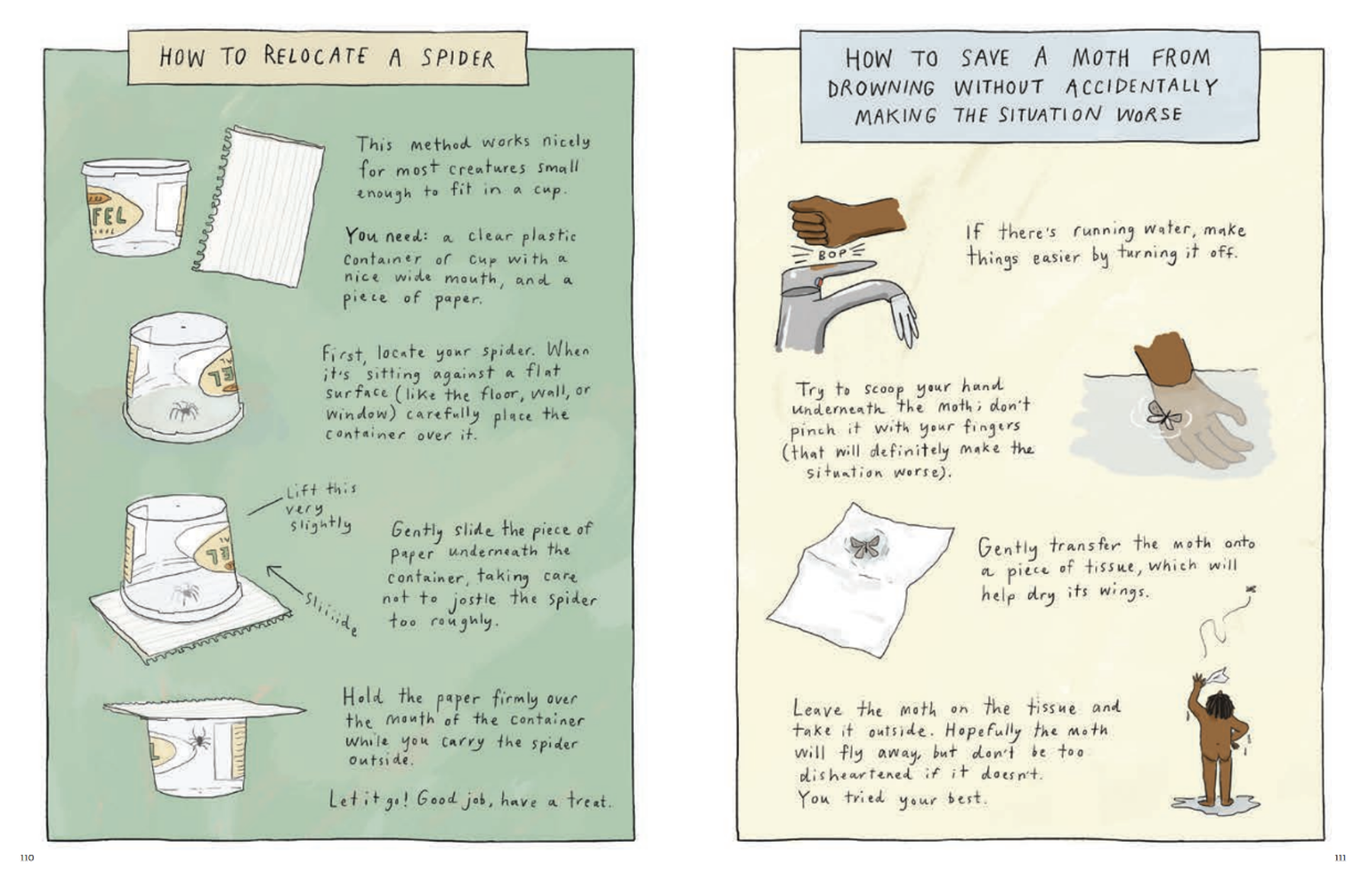
The Observologist by Giselle Clarkson

You don’t have to be an adult scientist to explore the world. Become an observologist and use this highly hilarious and factually accurate book to explore nature in your own backyard. It seemed fitting for me to read this after reading the aforementioned How It All Ends by Emma Hunsiger since the two books have a very similar sense of humor. You’d expect that in a comic, but not necessarily in a nonfiction book of this sort. I’m so delighted this got a Kirkus star, since it would have been an easy one to miss. In spite of the fact that this is a New Zealand import, they’ve managed to make this book applicable in a lot of ways to American kids. Granted, they may wonder why “pillbug” isn’t one of the many names given to rollie pollies, and they might notice the sheer number of weirdo New Zealand bugs held up as examples, but there are enough familiar faces here. Let’s just all ignore the fact that being an observologist in New Zealand definitely gives kids of that country an advantage over our own children. This one is a huge hoot. 

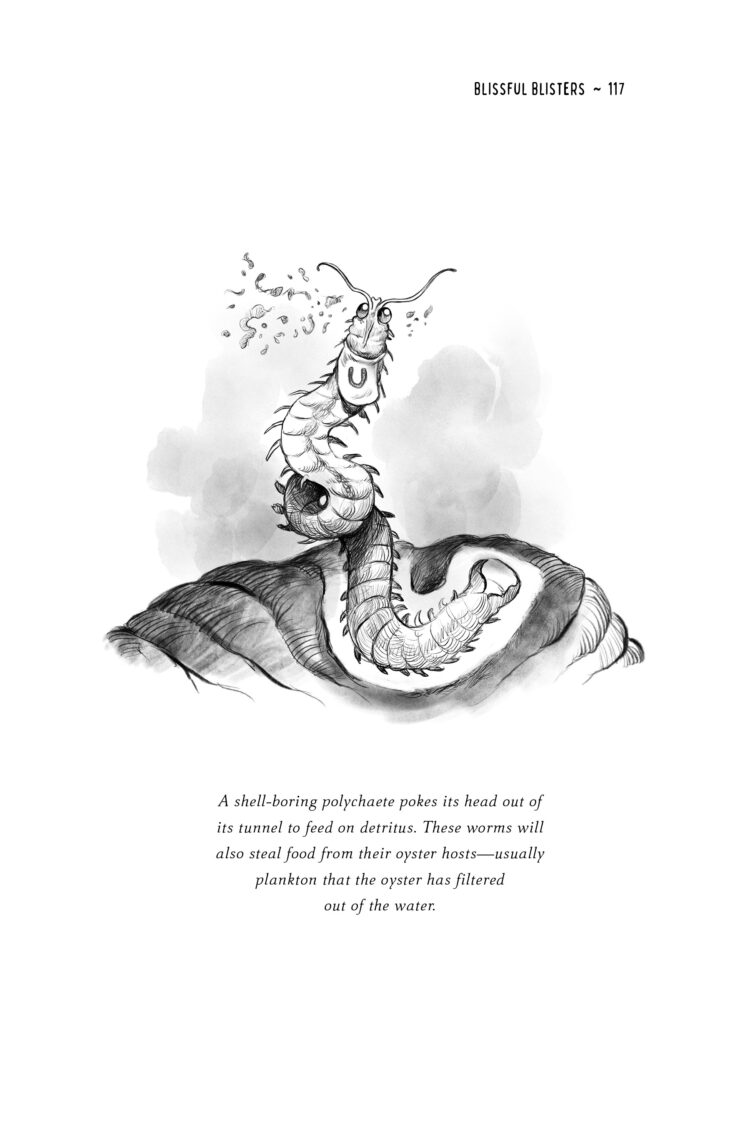
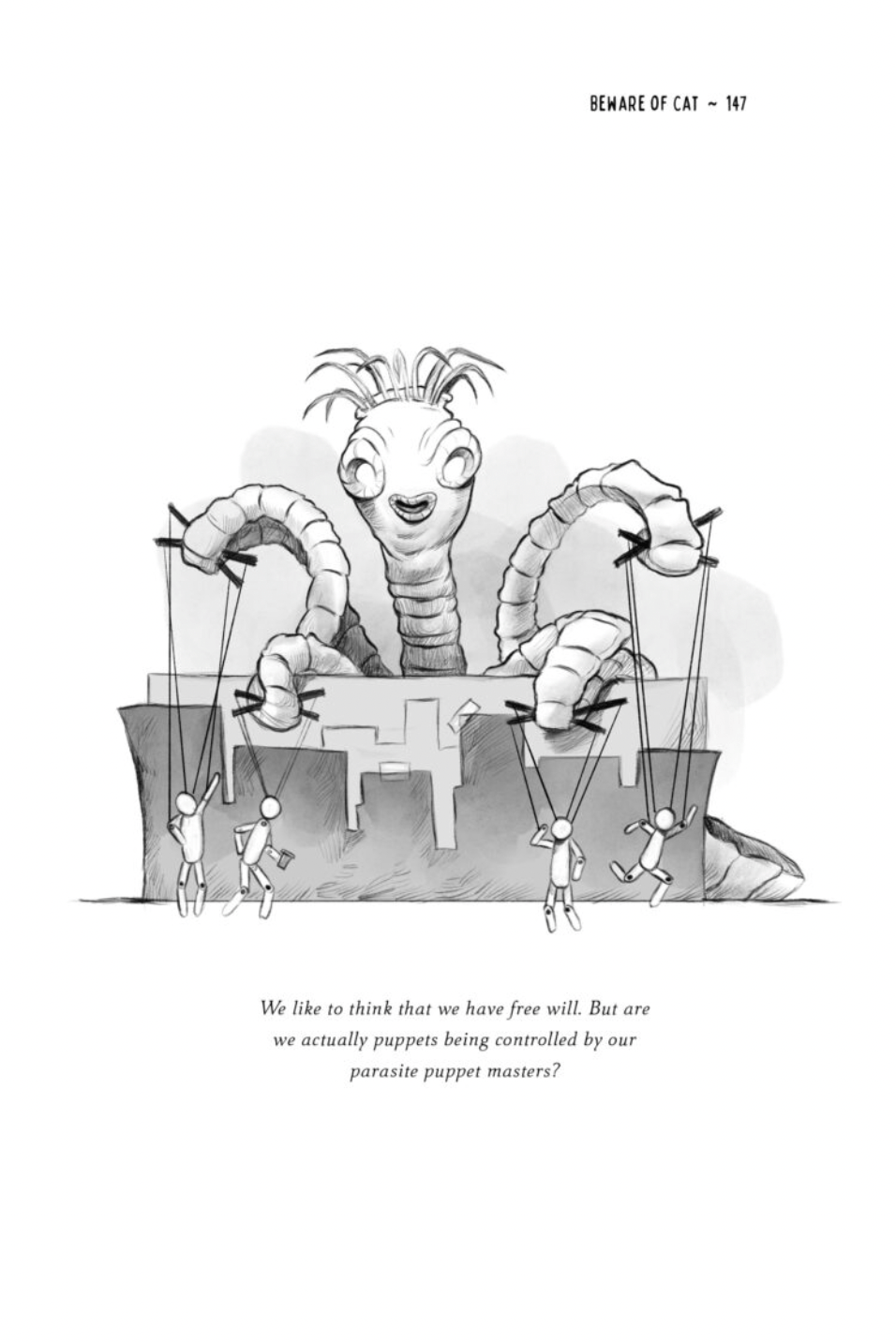
Power to the Parasites by Chelsea L. Wood

From the moment I first laid eyes on this book, I knew it was the one for me. Now for whatever reason, publishers like to release their grossest fare at the end of the publishing year. Maybe because they make good Christmas presents? Power to the Parasites most certainly would. Chelsea L. Wood may be a professional parasitologist but if that gig ever goes south then I would like to personally propose that she consider stand-up comedy. And you probably need a dose of humor to deal with these particular creepy crawlies. I was so pleased to discover a mix of facts I already knew and a whole slew I didn’t when I read this. For example, I remembered hearing years ago that there might be a connection between having parasites in your system and our responses to autoimmune diseases but wasn’t certain what it was. Questions answered! This book will either inspire young readers to follow in Ms. Wood’s footsteps and go into this realm of study or it will cause them to swear off the natural world for good. I’d say it’s worth the risk!

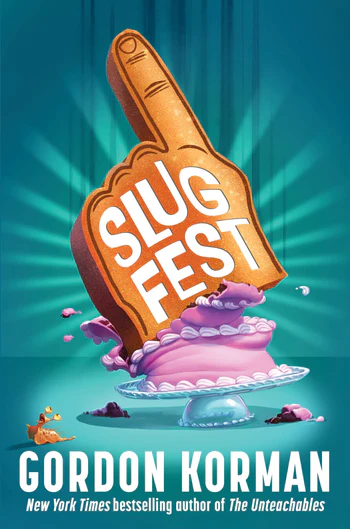
Slugfest by Gordan Korman

The Bad News Bears meets the Great British Bakeoff… sorta. Can a group of kids that all failed physical education not only make up for it but go on to win a football seven-on-seven championship? A hilarious tale of slugs, stars, and sumptuous baked goods. I love it! We’re always on the lookout for strong sports-related titles, but boy howdy are they (a) hard to find and (b) not something (quite frankly) that some librarians are crazy about reading. Now have I ever read a Gordon Korman book before? Odds are good that I must have at some point in the past, but darned if I could remember what it was. This book, in contrast, will live in my memory a nice long time. Korman’s clearly a pro at writing a middle grade novel, but he’s also just fun to listen to. You get very invested in these characters. One note? Not sure why he failed to give Fiona her own p.o.v., but aside from that I’m a big time fan. Just don’t read it while hungry.

Survival Scout: Tsunami by Maxwell Eaton III +(BB)

Remember when Ed Young illustrated the picture book Tsunami! by Kimiko Kajikawa. For sheer bone-grinding terror, I’d say that little book would be hard to beat… until now. The Survival Scout series by Eaton has become my go-to place to send kids that are anxious about the natural world and want practical hands-on explanations of how to survive one desperate situation or another. In her last book, Scout survived in the wilderness Hatchet-style (only with better instructions). In this one, she has to survive a tsunami. But long long before we even get to the disaster itself, we have to learn all about the Ring of Fire, earthquakes, plate tectonics, the works. It’s pretty great. Particularly if you live far inland like myself and have zero fear of such disasters. Previously seen on the Graphic Novel List.

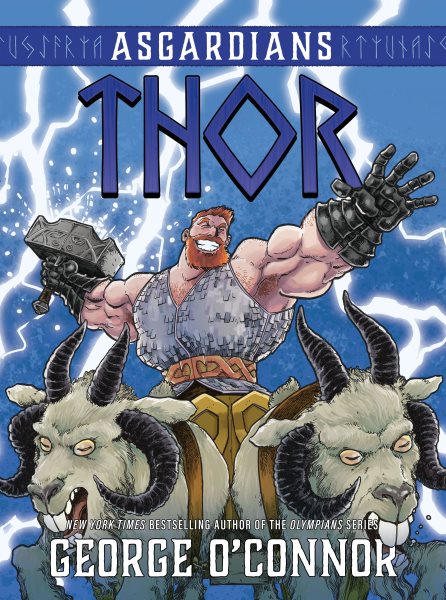
Thor: Asgardians by George O’Connor

Thor!! Okay, so like I say, maybe start a kid with this book and not Odin. Odin’s great, don’t get me wrong! It’s just incredibly incredibly weird. So weird that I worry it’s going to turn some kids off right at the start. Why not ease them into the series with some humor instead? Where the first book in this new Asgardians series is relatively serious (there are jokes but it ain’t a yukfest) Thor is just naturally funny. That’s partly how George O’Connor renders him, and partly the nature of his stories. There’s also the fact that though Loki has a cameo in Odin, in Thor he really and truly comes into his own. Now an interesting direction that O’Connor took with this particular book, and much more so than anything he did in his Olympians series (except possibly in Hermes), is Looney Tunes-esque visual gags. There are a couple here and I was HERE for them! Sight gags, bulging eyes, etc. My personal favorite joke in the whole book is when Loki has stolen the hair of Thor’s wife and you get this shot of him, eyes wide, holding the scissors with a pile of blonde hair in front of him. I can’t stress enough how much I love this image of him caught in the act. As with his Olympians series, there’s a load of amusing backmatter to pore through. Previously seen on the Fairy Tales, Folk Tales, and Religious Tales List.

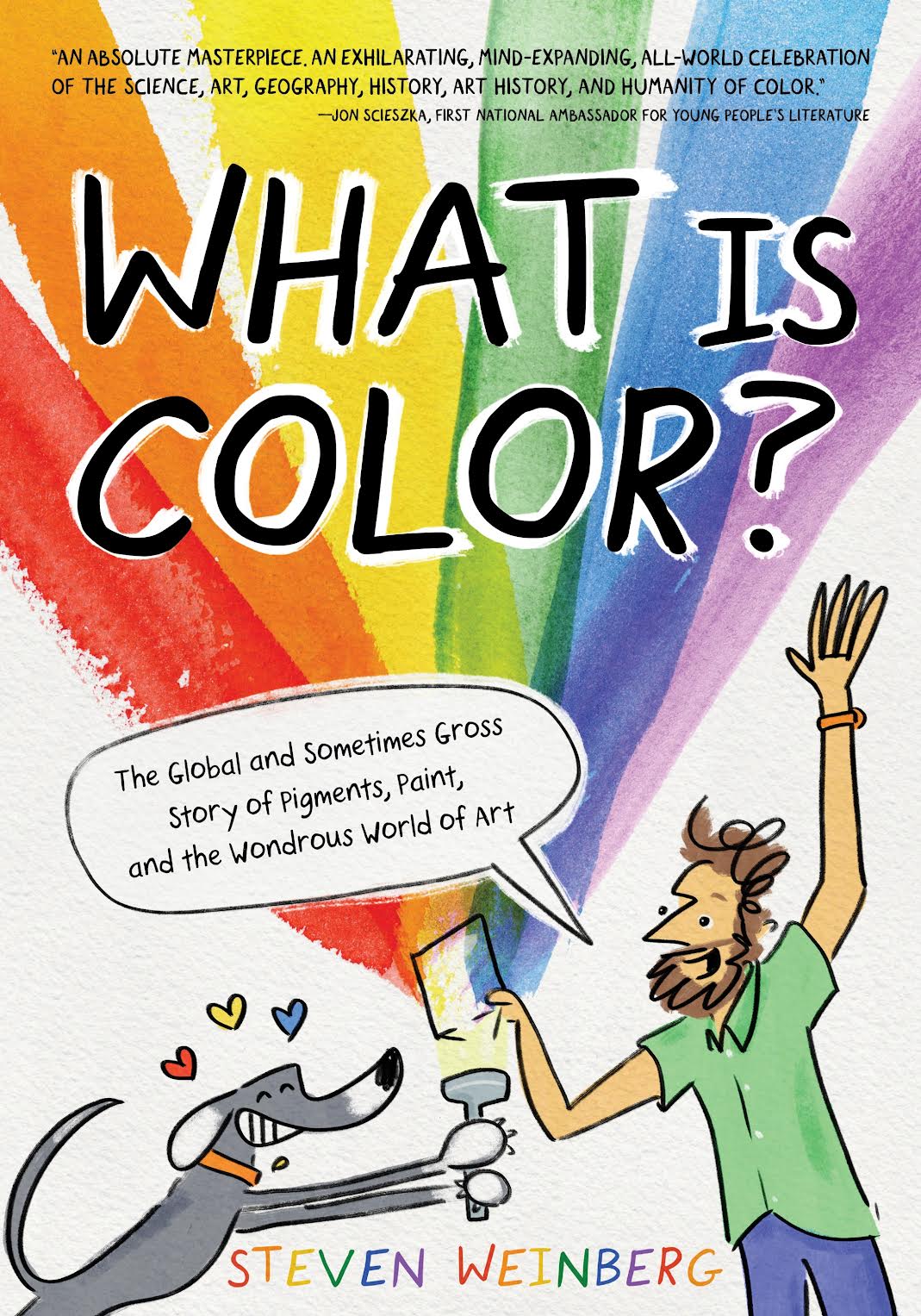
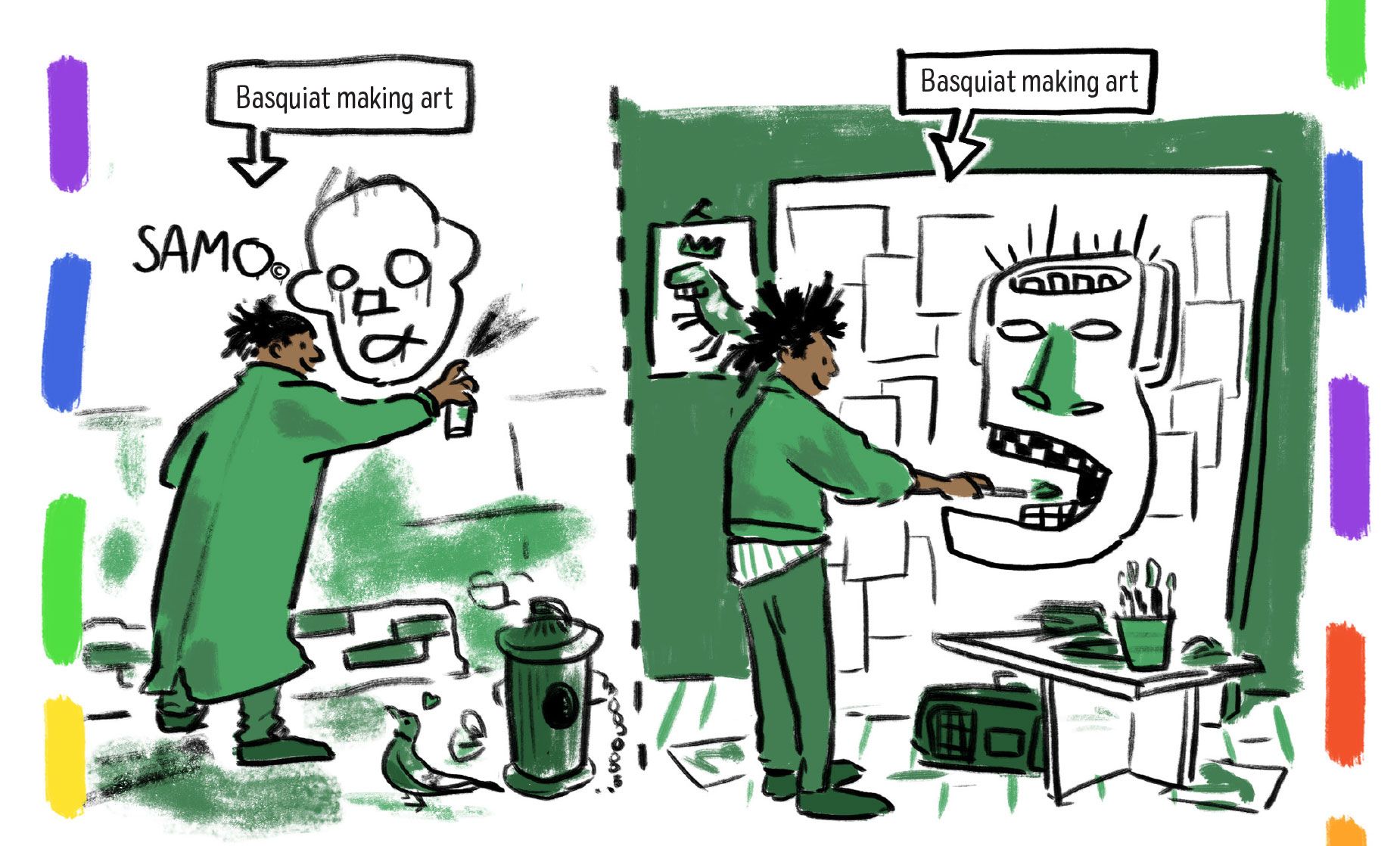
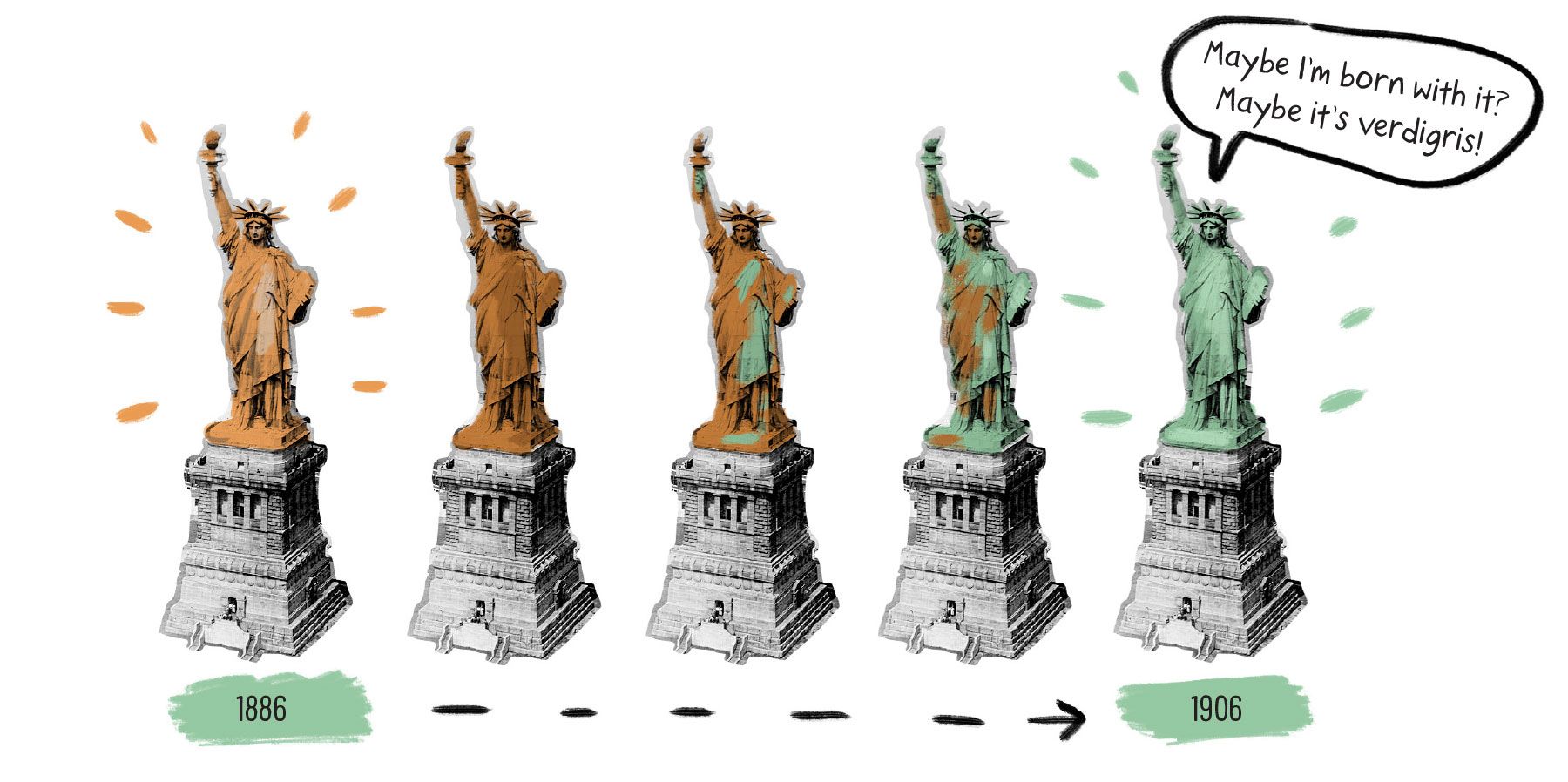
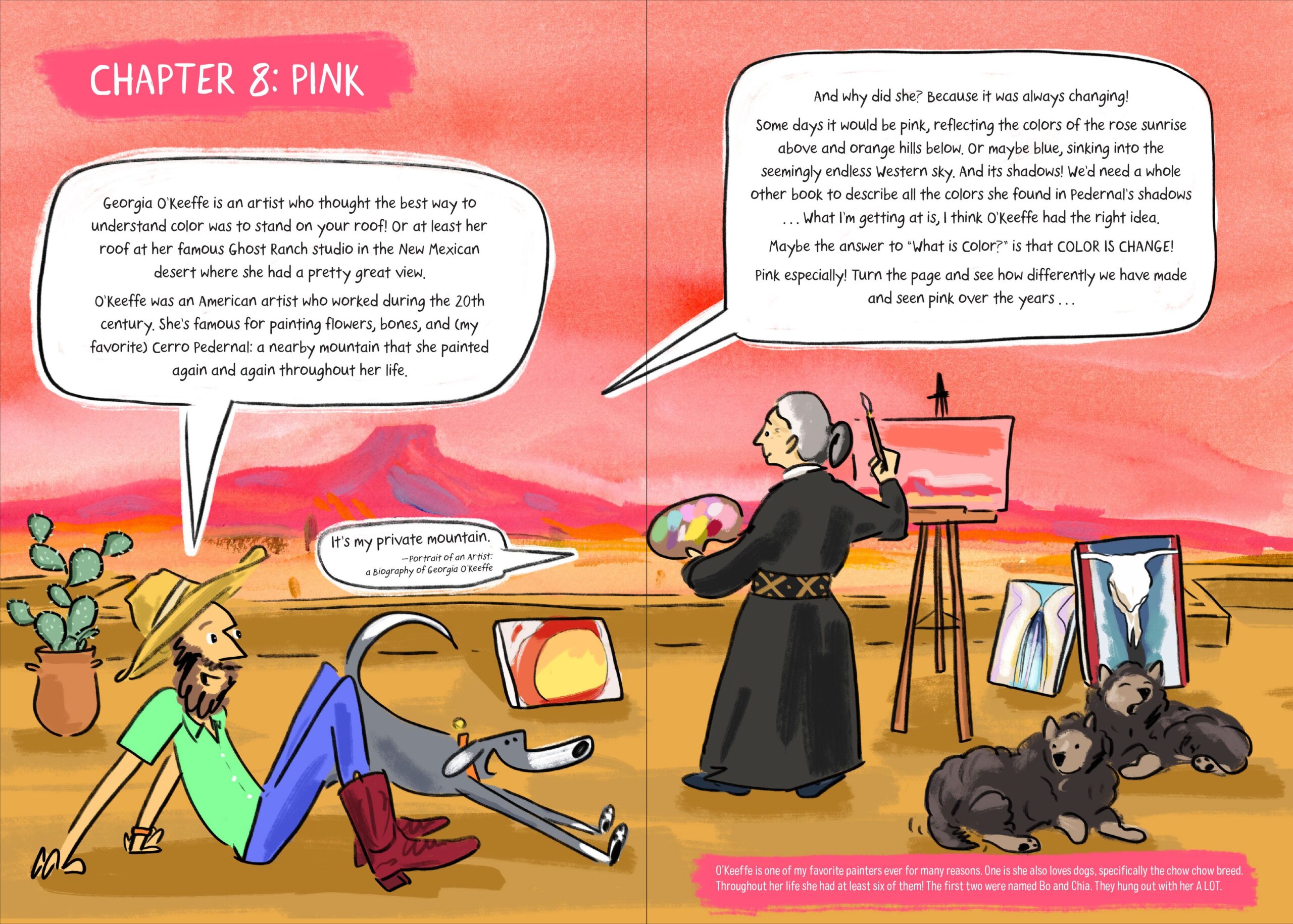
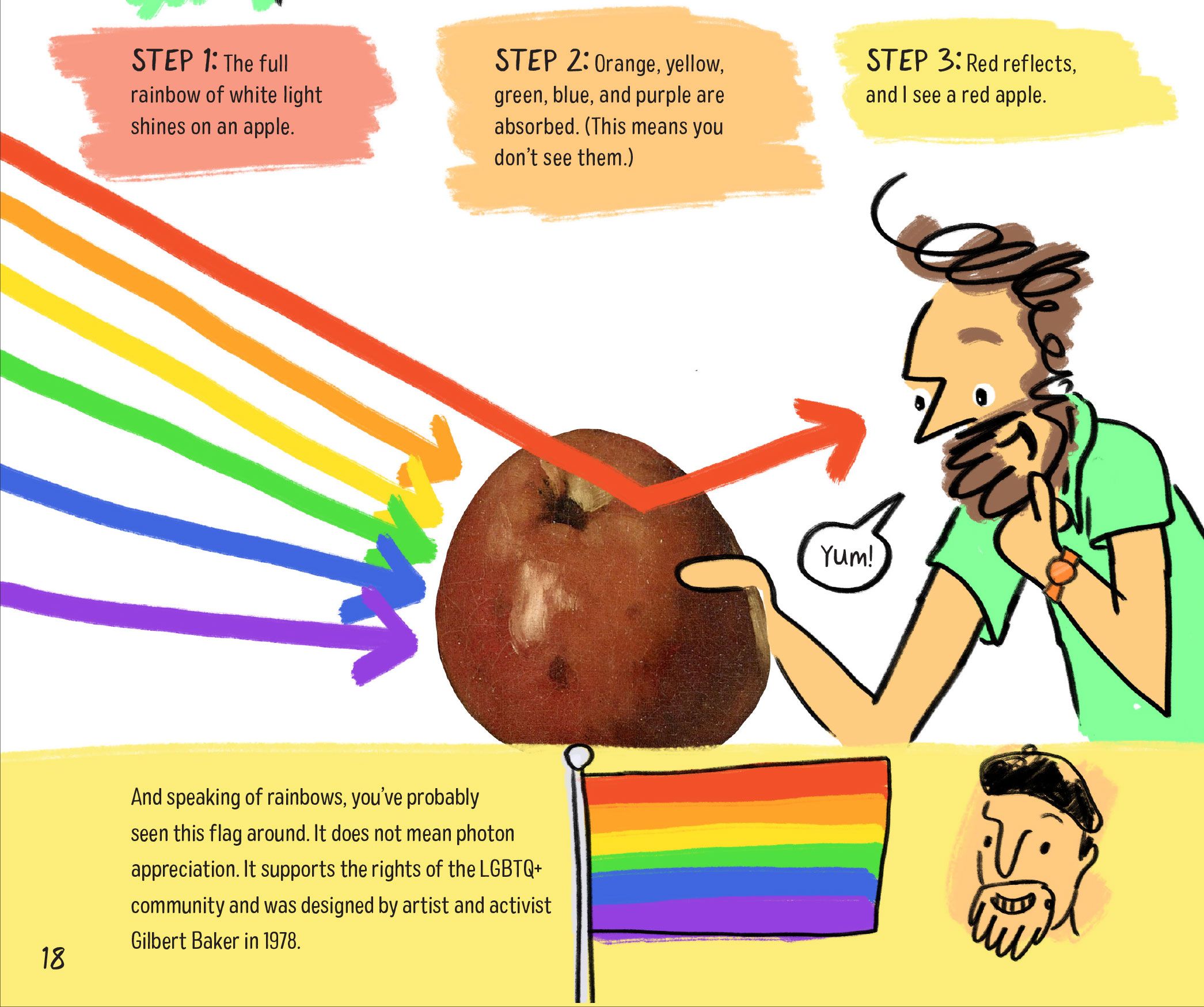
What Is Color? The Global and Sometimes Gross Story of Pigments, Paint, and the Wondrous World of Art by Steven Weinberg

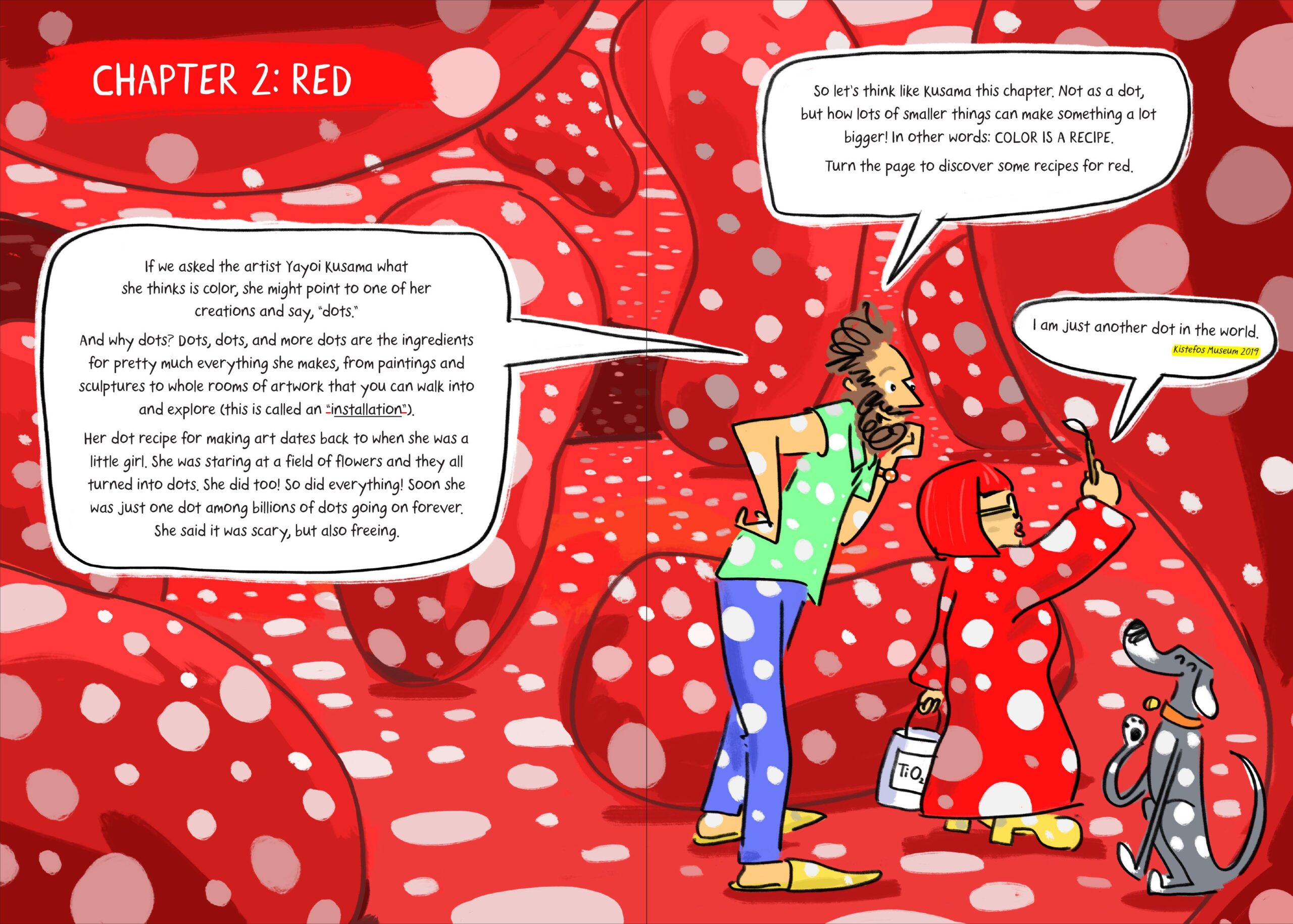
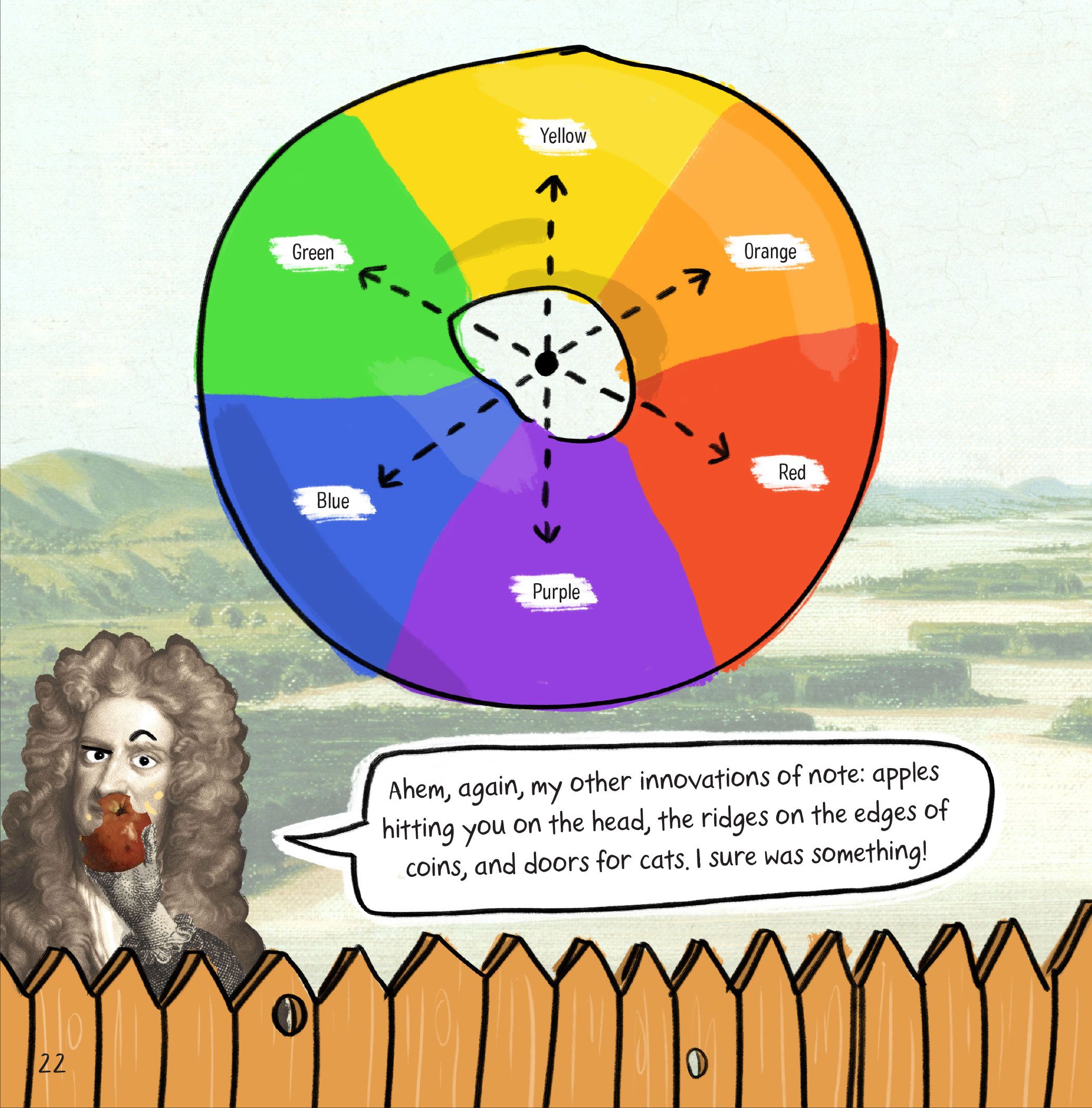
We use colors all the time but what are they exactly? Join this wacky deep dive into all your favorites and their murky, dangerous, and often gross beginnings. This is color like you’ve never seen it before! Oh boy, oh boy, this is just loads of fun! I’ve seen plenty of books try to explain where colors come from individually, but rarely do I see a book try to tackle the whole spectrum in one fell swoop. Turns out, Steven Weinberg is just precisely the right guy to do it, though. Honestly, this reads like an advanced version of Jeff Mack’s Time to Make Art (and the two would pair beautifully in a presentation or display hint hint). The book is definitely aimed at older readers, but that’s part of what makes it so much fun. It’s like an inclusive Monty Python running through everything from the LGBTQIA+ flag to cow pee. Lots and lots of cow pee. To my mind it’s all worth it for the sequence on green fashion laden with arsenic and the arms reaching out saying zombie-like, “Must… wear… cool… clothes”. This is a hoot! 


So with all that in mind, here are the other lists for 2024:

December 1 – Great Board Books

December 2 – Picture Book Readalouds

December 3 – Simple Picture Book Texts

December 4 – Transcendent Holiday Picture Books

December 5 – Rhyming Picture Books

December 6 – Funny Picture Books

December 7 – CaldeNotts

December 8 – Picture Book Reprints

December 9 – Bilingual Books for Kids

December 10 – Math Books for Kids

December 11 – Books with a Message / Social Emotional Learning

December 12 – Fabulous Photography

December 13 – Translated Picture Books

December 14 – Fairy Tales / Folktales / Religious Tales

December 15 – Wordless Picture Books

December 16 – Poetry Books

December 17 – Unconventional Children’s Books

December 18 – Easy Books & Early Chapter Books

December 19 – Comics & Graphic Novels

December 20 – Older Funny Books

December 21 – Science Fiction Books

December 22 – Fantasy Books

December 23 – Informational Fiction

December 24 – Gross Books

December 25 – Science & Nature Books

December 26 – Unique Biographies

December 27 – Blueberry Award Contenders (Celebrating the Environment)

December 28 – Nonfiction Picture Books

December 29 – Nonfiction Books for Older Readers

December 30 – Middle Grade Novels

December 31 – Picture Books

Filed Under: 31 Days 31 Lists, Best Books, Best Books of 2024 Tagged With: 2024 funny books, 31 days 31 lists, Best Books of 2024, funny, funny books

31 Days, 31 Lists: 2024 Comics and Graphic Novels for Kids

December 19, 2024 by Betsy Bird

Ah, this is a big one. There are only a couple topics including in the 31 Days, 31 Lists series that take significantly more time and energy than the others. With today’s list we start tackling books for older readers this month. Comics just make for a natural starting place. You’ll note that I use the terms “comics” and “graphic novels” interchangeably since much of the stigma surrounding the former term has dissipated (though certainly not disappeared entirely).

Make no mistake that there were a LOT of comics out in 2024. This is but a sampling, but what a lovely sampling it is! I truly did feel that these were some of the best out there this year.

If you’d like a PDF of today’s list, you can find one here.

Still can’t get enough comics? I can’t blame ya. Here are the round-ups I’ve done in previous years:

  • 2023
  • 2022
  • 2021
  • 2020
  • 2019
  • 2018
  • 2017
  • 2016


2024 Comics and Graphic Novels for Kids

Adventuregame Comics: Samurai vs. Ninja by Jason Shiga

Y’all are aware that Jason Shiga gets away with murder and no one is noticing, right? I’m also beginning to think that he lives to toy with my brain. I can’t blame him. My brain is fun to toy with, clearly, or he wouldn’t do it. Still, I have a beef to pick with his Adventuregame Comics series. Look, I adore this series but Shiga is too smart for me. Together, my son and I managed to successfully complete the first book in the series, Leviathan. That was fun. But then he made The Beyond, and while I was able to figure out that you were supposed to add a number to the actual spine of the book in your own hand itself, we still weren’t able to solve the whole thing. Now with Samurai vs. Ninja (which is kind of a misnomer since they’re the same guy) what you do in one version and what you do in the other could, potentially affect one another. Indeed, we were able to find the page that is the one ultimate ending, but try as we could we couldn’t figure out precisely the right path that would take us there. I suspect you probably have to cross over from the samurai storyline to the ninja one or vice versa. Seems to me that if these books are meant to replicate video games (and pick your path types of books) then there should be a website somewhere to offer you hints when you bog down. Right now my son and I are 1 for 3 when it comes to solving these books. Help us out, Mr. Shiga! Please!

Alterations by Ray Xu

“Sometimes you have to take risks … and DEAL with the consequences!” When Kevin Lee brings a century egg to lunch, he has no idea the chaos he’s about to unleash (or the nickname he’s about to acquire). A hilarious tale of owning who you are.  I read this to my son and was surprised how much he enjoyed the book, in spite of the fact that there are only a few space invader sequences. Those parts read a lot like the Spaceman Spiff parts of Calvin and Hobbes, actually, which I really enjoyed. And both of us liked flipping to Ray Xu’s photo at the back of the book, where he looks completely badass, comparing him to the illustrated nerdy version of himself as a kid. We’re seeing a lot of nice memoirs these days and this one’s a bit more fictionalized than most. As a roller coaster enthusiast, my son was in no way buying that a kid would be able to sneak onto a roller coaster on his own, but that didn’t mean he didn’t enjoy the thrill ride anyway. With some similarities to other books we’ve seen, I think this story has a nice relatable weirdness at its core.

Ant Story by Jay Hosler

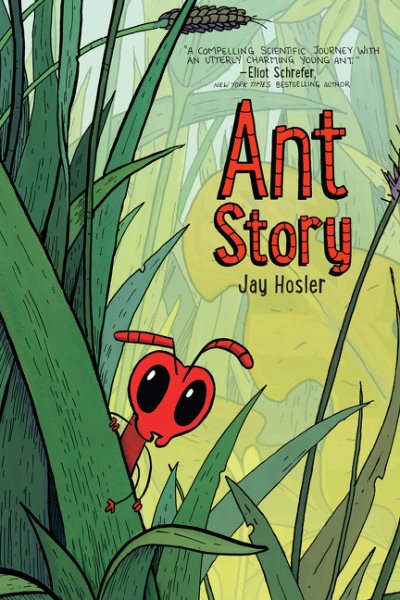
Rubi’s always been a lonely little ant in a colony of leafcutters, but that’s before she meets Miranda. Now the question is, can your greatest enemy also be your greatest friend? Whatta delight! I think I like this even more than Hosler’s previous title, The Way of the Hive. I liked it so much that immediately after I finished it I proceeded to read it to my son and HE liked it too! It’s a great story in and of itself, but I really appreciated the fact that the message at the heart of it is that in nature there really aren’t any good guys or bad guys. Just everyone trying to survive in their own particular way, that’s all. The cartoon characters vs. realistic characters made for a nice take, and I loved the twist on who Miranda really was (it took me a while to catch on and Hosler basically had to spell it out for me). This is great! 

Blood City Rollers by V.P. Anderson, ill. Tatiana Hill

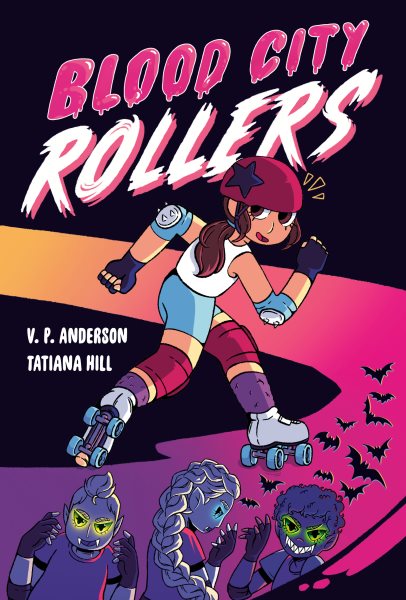
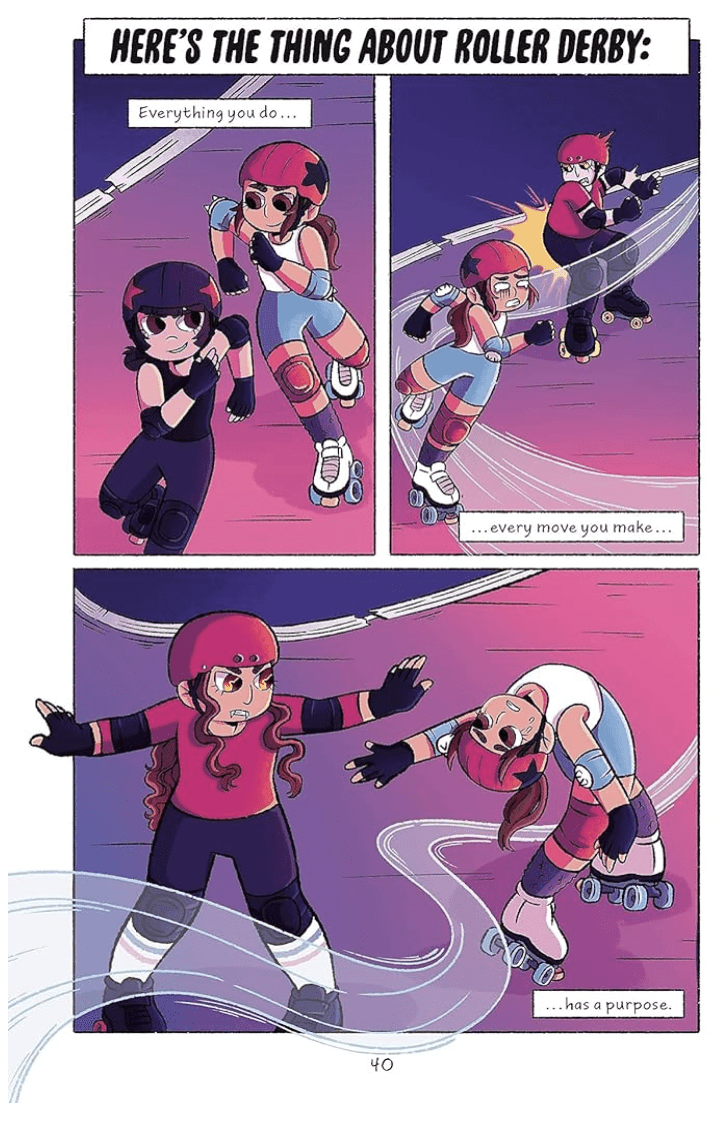
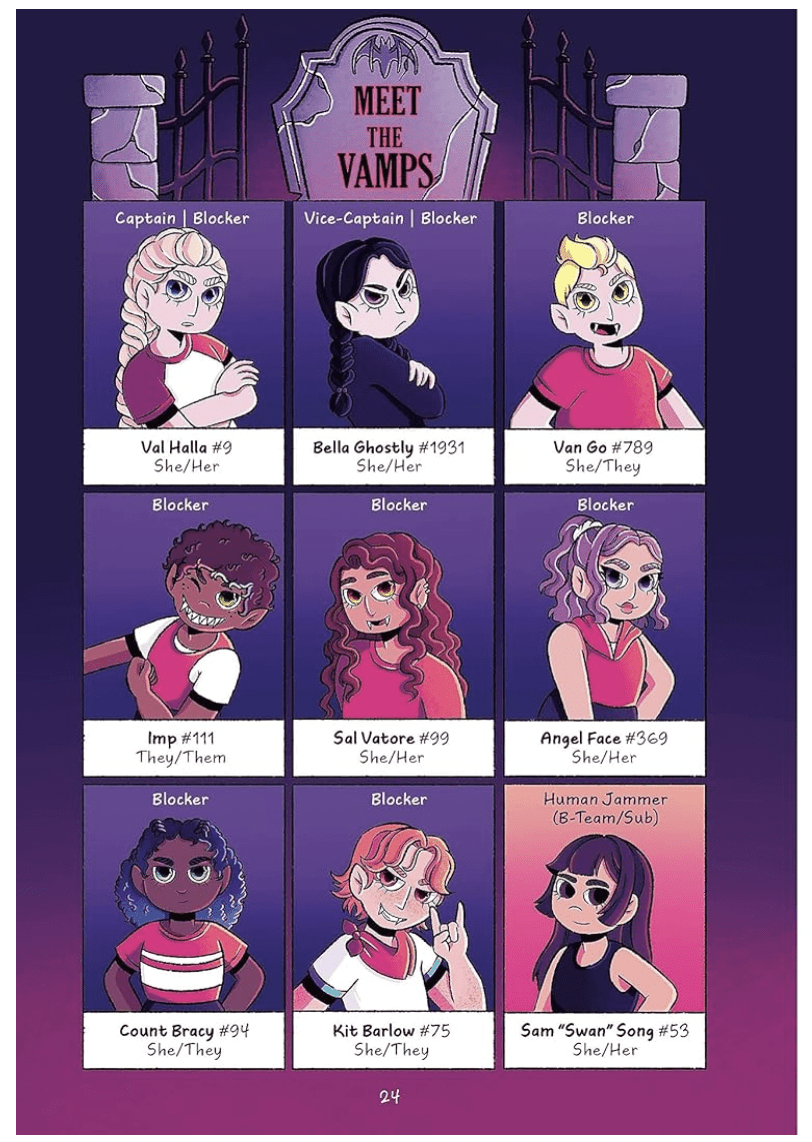
After wiping out in an ice skating competition, Mina finds herself kidnapped by a band of roller derby playing vampires in desperate need of a human player to complete their team. Brings a whole new meaning to the term “found family”. What is it about roller derby and graphic novels? Years ago we saw ROLLER GIRL by Victoria Jamieson win an actual Newbery Honor, and that was a nice book. Thing is, it was more about the characters’ relationships than it was the sport itself. You could come away from that one still not quite understanding the rules. This vampire-infused book, in contrast, really drills down on what the technical aspects of rollerderby entail. I don’t know if I understood every part of it, but I definitely got the gist. Best of all, I really enjoyed the contrast between ice skating as a single endeavor (or, at most, pairs) and roller derby as a group activity. There will definitely be a sequel but I felt it wrapped up nicely and didn’t leave all that many threads hanging. Fun and super sporty!

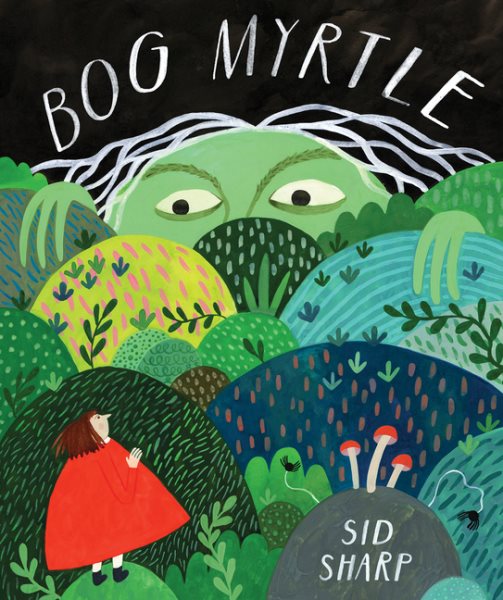
Bog Myrtle by Sid Sharp

Don’t go into the woods or Bog Myrtle will turn you into a fly and eat you! But what happens when instead Bog Myrtle gives you a gift? A tale of respecting nature (or else!!). Well, this was a helluva thing. I suppose I should have realized what I was getting into when I saw that the creator was good old Sid Sharp a.k.a. the wild Canadian. This has all the trappings of a folktale, right down to the baddie getting their just desserts, but really this reads like a kind of variation on The Lorax more than anything else. Only, it’s The Lorax if all the animals formed a union rather than leaving. I am happy to report that under normal circumstances, I get very techy when folks don’t illustrate knitting needles correctly, but Sharp knows what they are doing.

Bunnybirds by Natalie Linn

Why are all the bunnybirds missing? Princess Aster seems to be the only one who cares, and finding the rest of her people will mean pairing with exiled thief Carlin and the many footed dog, Feet. Adventure await!  I’ll confess that I didn’t expect such a silly looking book to pack as big a punch as this does. The entire plot essentially focuses on what happens when an entire group decides to push down their trauma and, instead of dealing with it, cling to being happy happy happy all the time. Winged bunnies as a concept just sort of sell themselves, but a lot of time and thought and effort went into this title. Legitimately funny (there are some sight gags that had me hooting out loud) and delightfully written. This is a treat! 

Continental Drifter by Kathy Macleod

Kathy may live in Thailand but her heart is filled with a love of America. When her family, including her Thai mom and American dad, visit Maine for the summer, will it live up to her expectations? You know, sometimes I pick up these books with an eye for elimination, but this was surprisingly honest and adept. After reading tons of camp-is-awesome-in-the-end stories, this one struck me as a lot more true to life. I’ve never really encountered a book where someone had a really old dad, and I loved the reveal with the sister at the end. This is hugely accomplished.

Detective Beans & the Case of the Missing Hat by Li Chen

Oh heavens. I came so close to missing this incredible book and it’s only thanks to its inclusion on some other Best of the Year lists that I even discovered it. Do you know how hard it is to find detective/mystery graphic novels for kids? This is definitely more along the lines of Sam Spade than Sherlock Holmes, but who cares? Li Chen, who the heck are you? Apparently she’s a Beijing-born comic artist and illustrator based in Tāmaki Makaurau Auckland. Why we’re only getting her books now, I dunno, but I am HERE for them! In this book Beans loses his hat and must engage with characters of all kinds in his quest to retrieve it. The jokes come fast and land beautifully time and time again. It’s a deeply satisfying read, always keeping you guessing. And look at that art! Honestly, this felt a little like what Kate Beaton would do if she ever wanted to deal solely in felines (and if you know me then you know that that’s the highest praise I can offer). This. Is. The. Best. 

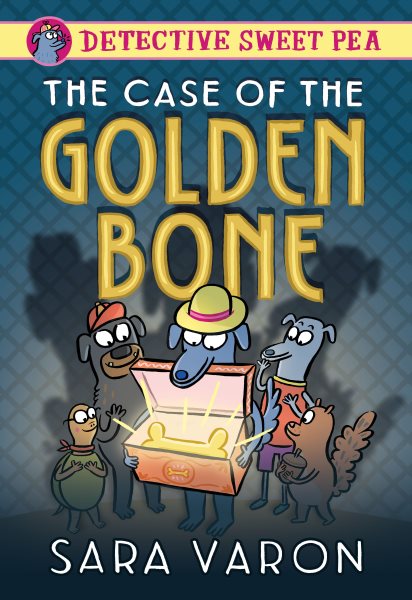
Detective Sweet Pea: The Case of the Golden Bone by Sara Varon

Parkville’s a sleepy little town where nothing bad really happens, until the day the Golden Chew Bone is stolen from the Art Museum. Now it’s up to Sweet Pea, her fabulous nose and detective skills in tow, to solve the crime and catch the thief. Initially I thought this was very nice but I wasn’t certain that it was different enough for this list. But then I thought long and hard about it. Varon is remarkably good at walking a very particular line between age ranges. Her books are appropriate for younger kids with their animals, but older kids don’t mind reading them at all. Good thing too because the real selling point of this title is that it is a legitimately good mystery and mystery titles are HARD to write for kids fairly. I thought Varon gave all the clues and when the culprit is revealed it made a lot of sense. Definitely looking forward to more in this series. This satisfies our mystery itch!

Fake Chinese Sounds by Jing Jing Tsong

Whether she’s killing it on the soccer field, taking her requisite Chinese lessons, or connecting with her visiting grandmother, things are going pretty well for Měi Yīng. That is, until the new kid in school starts barraging her with racist jokes. But what’s the best way to deal with it? So this is interesting. The plot, as you might read on the back and as is hinted at on the cover, really doesn’t kick into high gear until more than halfway in. Even so, I thought this was a smart way of laying out the story. Měi Yīng’s relationship with her grandmother vs. her relationship with her mother, is so key that by the time you get to the actual bullying in the book, it feels like kind of an afterthought. I thought the ramping up of the bullying comments was extremely well done, though the resolution with the bully in question felt a little pat and easy, all things considered. Otherwise, I think this book takes a number of smart passes at this particular Taiwanese-American experience. Extra bonus for having a heroine with glasses who’s also sporty. 

The Firelight Apprentice by Bree Paulsen

Trust the woman who came up with the Garlic and the Vampire series to keep thinking up bizarre fantasy worlds entirely of her own making. This book is definitely a little bit less upbeat than good old Garlic, but I wouldn’t call it a downer. In many ways it resembles the film version of Howl’s Moving Castle. Like that movie you’ve a world where wizards are conscripted to work for the rulers in a war. Unlike the movie, you have to deal with the fact that sometimes when wizards are about to die, they instead turn themselves into nasty creatures called lichs and set about sucking up the magic of living wizards. Enter Ada and Safi. The war is over, but their mother died in the conflict and their father is ailing. Safi has developing powers, but without an apprenticeship her magic could potentially hurt her. When some kindly traveling magicians come to town, Ada thinks this may be the answer to their prayers. What she doesn’t realize is that old adage: Nice is different than good. Good strong world building in a succinct package is what Paulsen does best. You believe utterly in this land that she’s conjured up, with all its complexities and politics. Plus there’s a funny old lady who says inappropriate stuff, and haven’t we all known that lady ourselves? 

The Girl Who Sang: A Holocaust Memoir of Hope and Survival by Estelle Nadel with Bethany Strout, ill. Sammy Savos

The gripping true-life story of Enia/Estelle and her family’s struggles. It’s 1939 Poland and when the Nazia invade, it means that she and her loved ones must go into hiding for several years.A harrowing and ultimately triumphant tale. As memoirs of the Holocaust go, finding age-appropriate ones for younger children can be tricky. Estelle’s telling pairs well with her collaborators, and it’s certainly nice to have a story about a young Jewish girl that isn’t about Anne Frank and Anne Frank alone. Certainly right now we’re seeing a disturbing rise in Nazism in the country. This serves as a solid reminder of what we fight against.

Gnome and Rat: Time to Party by Lauren Stohler

Gnome and Rat: First Snow! by Lauren Stohler

Okay, I just have a weird weakness for this series. So yes, I admit that I have a problem. But apparently, if you create a book and one of the two stars is a little garden gnome-looking-fellow in love with his own hat, how have I any hope of resisting that? These books continue the Gnome and Rat series and, like that book, they are split up into six small stories. In Time to Party, all the stories are party-based, while in First Snow it’s an epic quest to get to a party on time. However, the important thing is how good Stohler is at humor. She kills at it, honestly. I love that she’s doing more and more Gnome and Rat books, but my secret wish is that someday she branches out and does a slew of new picture books as well. I mean, I love her pug stuff, but if she’s this good at creating a jacked up vole then surely there’s more we can see her do. Until then, definitely enjoy these books. They are one-of-a-kind true delights. 

How It All Ends by Emma Hunsinger

What’s worse than starting 8th grade? Starting 9th grade instead! When Tara finds herself a sudden high schooler she’ll have to figure out friendship, crushes, family, and who she is to survive in this thoroughly hilarious tale. I’m just going to declare right now the fact that this book is literally as funny as Mexikid. There is no higher praise that I can laud upon it. Now, is it a book about a middle schooler forced to go to high school early? Yes. Does that mean that this book is YA? Not even slightly. Our heroine Tara is squarely a younger kid at heart who would rather play with her toddler little brother than watch gross mature TV shows. She gets a crush, yes, but it’s the tamest thing you ever saw. Plus there are elements to this book I’ve never seen before. The finger game chopsticks (which my own kids play constantly) actually makes it to the page. Honestly it’s the humor that’ll sell it. The English class boys are now officially my favorite fictional characters of 2024. Oh, you gotta read this. 

The Inscrutable Doctor Baer and the Case of the Two-Faced Statue by Jerzy Drozd

Ever read a graphic novel for kids and ended up wondering just precisely how long the dang thing took the poor creator to put together? Drozd is an ambitious graphic novelist, no question, and this book is a trip. The whole premise is that a circumspect and relatively expressionless Doctor Baer (who resembles nothing so much as an animated teddy bear in a neat suit) takes in cursed objects and allows the newly tamed spirits inside them to reside with him. When two adventurers arrive and accidentally allow Doctor Baer’s archenemy to steal (and then immediately lose) a stone that controls the spirits, the disjointed crew bands together to get it back. There is just SO much packing these pages and the colors are incredible. I became quite fond of the adventurer pig Pickles who has an over-inflated sense of cheer, and her grumpy turtle companion Taft. Here’s hoping the series yields more stories in the future, if only so we get to see those two more.

K Is In Trouble by Gary Clement

It doesn’t really matter how nice and polite K is, because he is always getting into trouble. Is it his fault? No! Three stories follow his adventures in a world that never makes sense but is always interesting. I don’t think I’ve been giving Little, Brown & Co. enough credit recently. We all know that graphic novels and comics sell like hotcakes, but that doesn’t mean that the big publishers are all that eager to start publishing weird ones. Thanks to Raina Telgemeier, large chunks of them tend to be personal memoirs, while the remainder are either fantasies or space adventures. Where, then, does K fit in? The only thing that I can figure is that some higher-up in the company fell in love with this bizarre, downbeat little book, chock full of life’s inequalities, and fell in love. As someone said of this title recently, “Nobody is nice to K in this book,” and they’re right. Nobody except perhaps the cockroach at the start, and even it doesn’t stick around. And yet, for all that, there’s something oddly cathartic about it. With a landscape that is based on Prague and a tone that will explain why Lemony Snicket blurbed it, this is a strange but ultimately endearing series of small stories.

Lunar Boy by Jes and Cin Wibowo

Indu was a kid found on the moon, and after living with his mom in space for a while it’s time to make a life on Earth. But just living in this world can be painful, and Indu has to figure out how to sort it out before the moon decides it wants him back. You know how much I love science fiction, and science fiction graphic novels are the absolute best. This one has a distinct Indonesian take that I think is particularly interesting. You know a book is good when the fact that its hero was found wandering on the moon is the least interesting thing about it. There’s a lot of talk in this book about pain and whether or not it’s worth it to live in this world, particularly if you’re queer and still trying to figure things out. The Little Prince is directly referenced at least once (and probably more than once), which sort of makes me start to rethink that book as well. Hm. Beautifully illustrated and the text really sings. This one’s a standout.

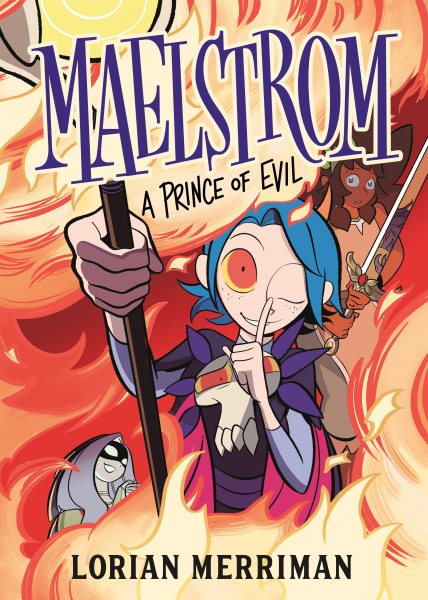
Maelstrom: A Prince of Evil by Lorian Merriman

What’s worse than being the evil prince of a necromancer queen? Being a bored evil prince, that’s what. So when Maelstrom, the half-demon, sees a chance to have a little fun with the Hero of Virtue, who is sworn to defeat him, he ends up in an adventure he never expected. This is a pretty clear cut case of a publisher labeling something YA for no particular reason. There’s not even romance! As far as I can tell, maybe it has something more to do with the fact that the hero of this story is a demon spawn, but we don’t even really get the nitty gritty details on that anyway. Instead, it’s a Bildungsroman from the p.o.v. of a snarky demon kid. This is very much for those kids out there who watched the Avenger movies and decided that Loki was their favorite character. It’s witty, fun, full of strong female characters, and it has some great art and action sequences. What’s not to love?

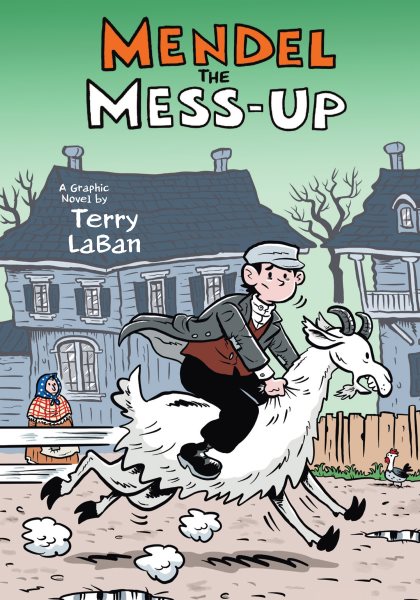
Mendel the Mess-Up by Terry LaBan

Cursed by the evil eye, Mendel can do absolutely nothing right. So when Cossacks attack his small Jewish village, can he turn a curse into a superpower? We find ourselves in a unique position with this book. Its terrible publication date dooms it to 2025 book ordering and not 2024. What to do? Personally, I found this a complete an utter hoot. It really clarified for me what a Cossack was, for one thing. It’s also an interesting take on Judaism. LeBan seems a bit reluctant to mention that the Cossacks really zeroed in on Jewish villages to terrorize, which I found odd considering that the entire book, in a sense, hinges on Mendel’s faith. By the way, I completely fell for kvatch, a drink made out of goat sweat. LaBan pranked me but good. 

The New Girl by Cassandra Calin

Leaving everything she’s ever known behind, Lia and her family move to Montreal from Romania. Now she needs to learn French and fit in in a place where everything is completely different. I’ll confess, I was completely and utterly unaware of the existence of this book until it started showing up on all the bestseller lists. And while that is no inherent indicator of quality, as it turns out, this is great! A hoot! And gorgeously illustrated as well. In many ways it’s straight up middle school fiction, but there are lots of little elements to it that I enjoyed. For one thing, it’s not a story I’ve ever encountered before (Estonian girl starts school in Montreal isn’t exactly a genre). And then there’s the focus on menstruation, which I found really nicely incorporated into the rest of the book. All around good stuff!

Next Stop by Debbie Fong

Pia wasn’t supposed to go all by herself on a massive roadtrip to a mysterious underground lake, but getting away from her family’s grief is important. Now she has a chance to make a new friend, even as the past threatens to swallow her whole. Looking at it, I thought that this might be similar to that book that came out last year about the girl and her father taking a road trip to Area 51 (the name escapes me, so that’s never a good sign). This book was heads and tails better. I liked the ingenuity of the storytelling, going forward in time one way and slowly backwards through Pia’s story the other. It’s sort of a slow building of grief when you go backwards like that. I’m actually very fond of this, but maybe that’s also because I adore bizarre roadside stops. House on the Rock 4-Evah! 

The Night Librarian by Christopher Lincoln

As someone who worked for New York Public Library for more than a decade, I got to know the ins and outs of the Schwarzman Building pretty darn well. So you can imagine what a treat it was to pick up Mr. Lincoln’s book and discover a level of architectural accuracy on its pages that I haven’t seen in a long long time. Boy, he’s packed everything in here! From the ceiling of the Rose Reading Room to the former Children’s Center at 42nd Street (which has sadly moved across the street in recent years) to even the microfiche room (which I used on more than one occasion back in the day). The story involves two kids that are regular attendees of this particular library (never directly named, though Patience and Fortitude are). In this premise, the more books you put together in one place, the more magic they produce. So much so that eventually their characters will try to escape. It’s up to trained Night Librarians to put everyone back where they belong, but recently there have been budget cuts and there’s only a single librarian left. Enter our two heroes, Turner and Paige, who stumble on this world when their dad’s copy of Dracula releases the vampire himself. Getting back to the NYPL accuracy, there are a couple fictional changes to the place, put in there for fun. For example, the book sorting machine is located in Queens at BookOps, not in the Schwarzman. There are no bookmobiles in the main location (it’s a reference library only). And the secret elevator into the forbidden level accessible to only night librarians is less a cage and more a gilded box. Details are everything, after all. 

The Other Side of Tomorrow by Tina Cho, ill. Deb JJ Lee

Foof! Didn’t quite know what to expect when I picked this puppy up. Turns out, it’s an almost contemporary story of two kids escaping from North Korea to America. I’ve been wracking my brain trying to come up with any other graphic novels set in North Korea for kids, and I think that this may be the only game in town. Essentially, it’s about what the author calls the “Asian Underground Railroad” that exists between Korea, Laos, and some other countries. A map would have been a great inclusion, but is sadly lacking at this time. Now Tina Cho takes this from a distinctly Christian perspective, which is kind of rare in books from publishers like Harper Collins. Just FYI that it’s there. Really, though, it’s the art by Deb JJ Lee that makes this a true standout. I cannot imagine how long it took them to illustrate this. Lee, for the record, also gets extra points for a bio that ends, “Their cat, Marlie, has three teeth.” It would actually pair rather well with aforementioned The Girl Who Sang by Estelle Nadel with Bethany Strout. In both cases you’ve a level of gripping realism you don’t always see in our graphic novels for kids. Hand this one to kids looking for reality and harder stories. 

Plain Jane and the Mermaid by Vera Brosgol 

In danger of being homeless upon the death of her parents, Jane proposes to good-looking Peter a marriage of convenience for both of them. But when Peter is kidnapped by an amorous (and hungry) mermaid, it’s up to Jane to step up and rescue him. 2024 is clearly the year of losing your little brother to the sea. We saw it in Next Stop by Debbie Fong and now we’re seeing it in Vera Brosgol’s latest. I am relieved to announce that this book is also delightful. You may feel like that’s a given with Vera Brosgol, but remember that we haven’t seen a comic from her since Be Prepared. This book, as she states in her Author’s Note at the end, is her attempt to upset those Disney princess stories once more. Our heroine is plain. Our villain is beautiful. Our love interest(s) are hot. Oh, and our bad guys sometimes involve Eastern European water demons in bad toupees, which is always a good thing. Definitely fun and one of the strongest of the season.

Puzzled by Pan Cooke

When the intrusive thoughts first appeared in Pan’s mind when he was ten, he had no idea what they were. Now they’re taking over his entire life. A smartly rendered memoir on the puzzle that is OCD. Pretty darn good. We’ve a lot of GNs to look through this year, but this one really breaks down OCD in a way that felt far more real to me than some of the other OCD comics I’ve encountered in the past. Some of it really hit home too, since I had a best friend who went through this at the same ages as Pan in this book. I was particularly impressed by thinking of OCD as a puzzle that absolutely has to be completed.

Save Our Forest! by Nora Dasnes, translated from Norwegian by Lise Laerdal Bryn

What do you do when you’re just a kid and the adults around you aren’t serious about ecological sustainability? When her school’s backwoods is slated for demolition to build a parking lot, Bao and her friends band together to make good trouble. Boy, this book doesn’t pull its punches, does it? There’s a heady realism to this storytelling that I really enjoyed. It feels like a book that truly respects its child audience. Bao’s drive is both admirable and infuriating, which is a wonderful kind of protagonist to follow. Moreover, I loved how the adults tend to pay lip-service to change and the participation of children, but when money is involved they aren’t going to entertain sustainability any further. I thought the solution (getting Bao’s mom to read the legal documents and find the flaw is SO much more realistic than having a kid do it) was great and I loved the casual Norwegianess of it all. All told, this is supremely well done.

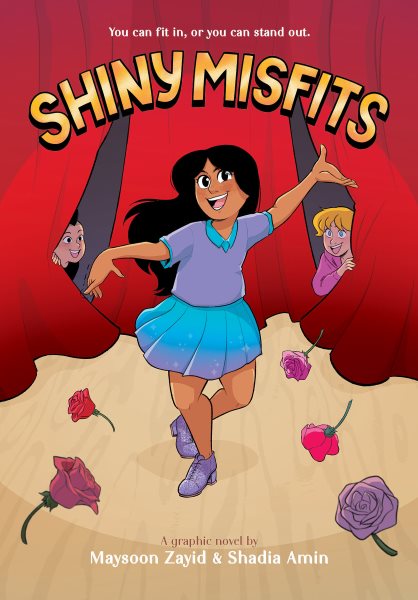
Shiny Misfits by Maysoon Zayid and Shadia Amin

Bay Ann is a star. But when her show stopping tap routine is overshadowed by a classmate’s viral video “helping her” because of her cerebral palsy, she’ll do anything to get the video clicks she feels she deserves. I experienced a bit of a rollercoaster ride with this one. I’ll tell you right now that in the first three or so pages I was NOT on board. It takes a little while to get used to the cadences and rhythms of Zayid’s writing. But once I understood it, I was locked in. The jokes run fast and furious, like you’re watching a sitcom on triple speed. Is there a cat that talks in rhyme? There is. Did I somehow still like it? I did. Zayid skillfully makes it clear that while Bay Ann’s cerebral palsy is a part of who she is, the focus of the story is on her debilitating desire for internet fame more than anything else. And if you can think of another vegetarian Muslim heroine in a MG comic, I’d like to hear it. I thought it worked enough in the end (and having a crush on your enemy felt a bit real as well). I’m very interested in what folks will think of this one.

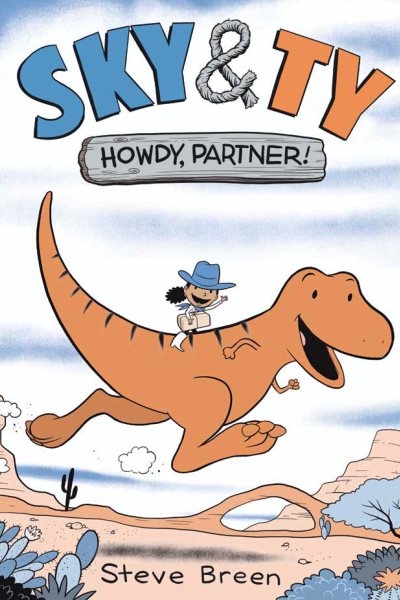
Sky and Ty: Howdy, Partner! by Steve Breen

Sky needs a worthy steed and Ty, the T.rex, wouldn’t mind helping her out. However, this dynamic duo is going to have to learn how to work together if they’re going to be the best delivery service in the west. Sometimes it feels like you just have to wait around a little bit until an author/illustrator finds the genre of children’s book that suits them best. Breen’s done a number of picture books before, but I think this early early chapter book/graphic novel genre is where his particular brand of weirdness suits him best. This is a book with a strong internal logic (dinos + cowboys = a happy place). Love the comic book format and the limited (but still lovely) color palette. It’s a younger comic book, which of course we’re always searching for. Worth it for Sky’s mental image of what riding a T.rex would consist of, alone. 

Sunny Makes Her Case by Jennifer L. Holm and Matthew Holm

I’ll confess right here and now that I mostly picked up this book to see if it would make sense without having to read the other Sunny books first. I think I read the initial Sunny title back in the day when it was released, and from what I can remember there was a whole discussion of whether or not it was best for elementary, middle school, or high school due to the content. This book is squarely all three. There’s romance if you want it, but also just a really fun explanation of what debate teams do. The Holms deep dive into the late 70s nostalgia and I am HERE for it! Plus, any graphic novel that features a girl in a power suit on the cover (mercifully before the advent of the 80s shoulder pads) has my vote. Oh, and to answer my own question, you absolutely can read this without having read any of the other Sunny books. Yes, there are allusions to the older brother and his travails, but it’s almost off-handed at this point. Plus I ADORE the image of Jenni at the end with her actual debate team! 

Survival Scout: Tsunami by Maxwell Eaton III

Remember when Ed Young illustrated the picture book Tsunami! by Kimiko Kajikawa. For sheer bone-grinding terror, I’d say that little book would be hard to beat… until now. The Survival Scout series by Eaton has become my go-to place to send kids that are anxious about the natural world and want practical hands-on explanations of how to survive one desperate situation or another. In her last book, Scout survived in the wilderness Hatchet-style (only with better instructions). In this one, she has to survive a tsunami. But long long before we even get to the disaster itself, we have to learn all about the Ring of Fire, earthquakes, plate tectonics, the works. It’s pretty great. Particularly if you live far inland like myself and have zero fear of such disasters. 

Table Titans Club by Scott Kurtz

And it was at this moment that I began to become aware that the number of graphic novels about playing Dungeons and Dragons had FAR outstripped the middle grade novels on the topic. And why not? The advantage of a comic is that what you imagine becomes a reality on the page. Now please don’t ask me to tell you how many D&D related (or D&D adjacent, honestly, since “Dungeons and Dragons” is a proprietary term) comics came out this year. I am but a single woman and there are a LOT of comics I missed in 2024, god help my soul. But this particular book intrigued me. I dunno. I guess it kind of reminded me of the kids on Stranger Things or something. Plus I liked the plot and the tone. Valeria Winters has a tendency to get into fights at her schools. Now she’s trying a new one and almost immediately she’s intrigued by the role playing club called the Table Titans. They need new members (in spite of what some of them might think) and Valeria is willing to learn. Trouble is, the teacher sponsoring them is about to leave and they need a replacement. And the only guy willing to do it? The P.E. coach. And he’s only willing to do it if one of the Titans joins his wrestling team. Now here’s where the book takes a turn that I really and truly enjoyed. Valeria not only joins that team, she DOMINATES on it. And maybe I just have a weak spot for books where girls slam big guys into mats on a regular basis, but I was HERE for it!! The writing is fun, the art great, and storytelling engrossing. Extra Bonus: Girls pile driving huge opponents. 

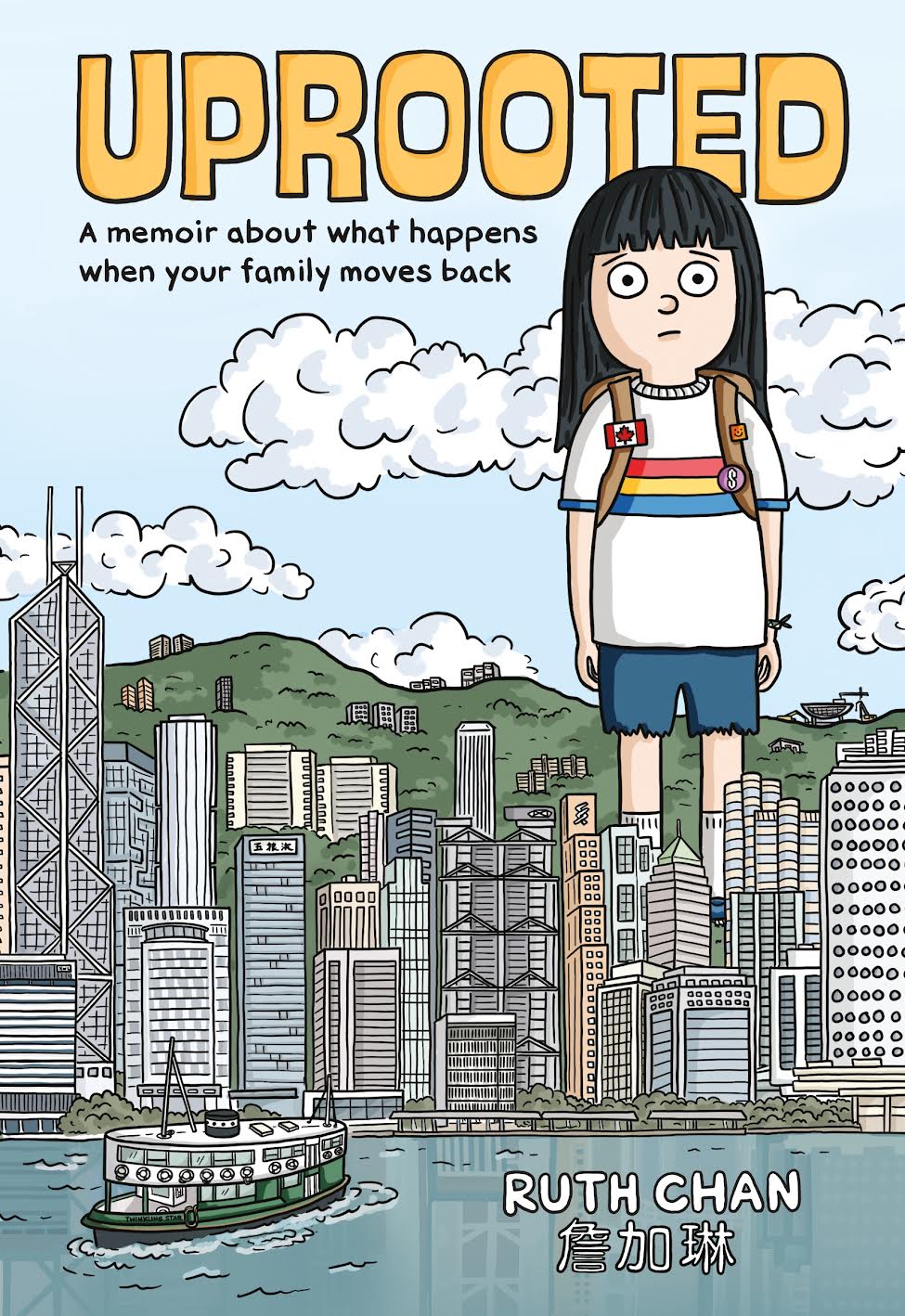
Uprooted: A Novel About What Happens When Your Family Moves Back by Ruth Chan

You’re thirteen and you’ve just been informed that your family is moving to Hong Kong for a while. What do you do? A fun fictionalized memoir of utter and complete culture shock. This works exceedingly well, a great deal because Chan’s style (which I’d only ever really seen in picture books before) adapts well towards balancing out the lightness of her 90s experience and her ancestors’ experiences on the run during the second Sino-Japanese War. That kind of serious content shouldn’t gel with this style, but Chan makes it work. I thought she did a great job of putting yourself into her shoes. Definitely one deserving of more reads.

Upstaged by Robin Easter

Drama’s perfect for the stage, but this summer Ash is dealing with it off as well. At their favorite theater camp they can’t wait to spend time with their crush Ivy. But when the summer goes in another direction, will they still have a good time? There are just so many camp-related graphic novels out in a given year, and sometimes they blend together. This one, however, I remembered distinctly. I thought the storytelling, emotions, and stakes were incredibly realistic. I really liked the integration of a non-binary character into a book where that was NOT considered a huge deal (or really mentioned much at all). My co-worker said that this is Heartstopper for kids, and I think he was right. Good stuff.  

Weirdo by Tony Weaver, Jr., ill. Jes & Cin Wibowo

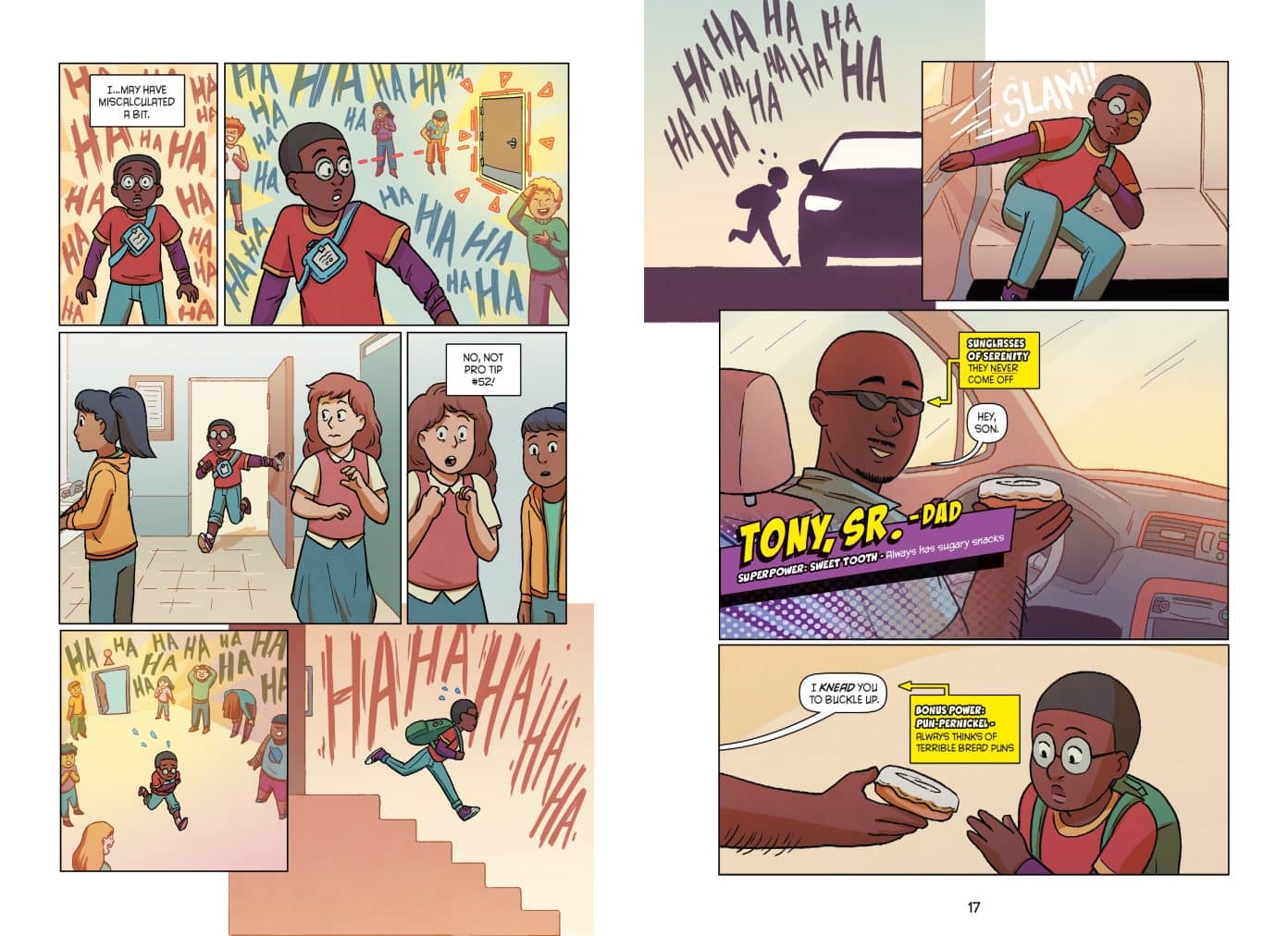
After dealing with some truly horrifying bullying, Tony shuts down and refuses to let the world know who he is. But a new school, new friends, and counseling, help him to understand when it’s important to be yourself. The comparisons to Timid are going to be inevitable since both books involve nerdy Black boys with glasses dealing with new schools and bullying. This book gets a little extreme early on, though, when our hero Tony is literally choked by a fellow student. Tony has fictionalized his memoir, but that part is all too real, he says, and you feel it. Loved the art in this book (that was primarily my problem with Timid) and though I did find some of it to be a little didactic at times, I thought that overall it handled its messaging well. It’s also a bit of a thrill to learn how much of this story is actually true. I think you need to check this one out.

Wildful by Kengo Kurimoto

When Poppy discovers a hidden forest connected to her neighborhood she has no idea what she might find. A gentle story of remembering, grief, and the amazing power of nature to heal and help. I mistook this book for the first 20 pages or so for a wordless graphic novel. As it happens, it has words, but they’re telling a complicated story about family depression and the healing power of nature. There’s an inner calm to this story, and I’m just in awe of Kurimoto’s art. It feels like it would have had to have taken years to draw each and every one of the panels on these pages. It sticks the landing. Warning: Don’t read this if you’re already yearning for spring. It may feel like torture to wait any longer after reading this.


So with all that in mind, here are the other lists for 2024:

December 1 – Great Board Books

December 2 – Picture Book Readalouds

December 3 – Simple Picture Book Texts

December 4 – Transcendent Holiday Picture Books

December 5 – Rhyming Picture Books

December 6 – Funny Picture Books

December 7 – CaldeNotts

December 8 – Picture Book Reprints

December 9 – Bilingual Books for Kids

December 10 – Math Books for Kids

December 11 – Books with a Message / Social Emotional Learning

December 12 – Fabulous Photography

December 13 – Translated Picture Books

December 14 – Fairy Tales / Folktales / Religious Tales

December 15 – Wordless Picture Books

December 16 – Poetry Books

December 17 – Unconventional Children’s Books

December 18 – Easy Books & Early Chapter Books

December 19 – Comics & Graphic Novels

December 20 – Older Funny Books

December 21 – Science Fiction Books

December 22 – Fantasy Books

December 23 – Informational Fiction

December 24 – Gross Books

December 25 – Science & Nature Books

December 26 – Unique Biographies

December 27 – Blueberry Award Contenders (Celebrating the Environment)

December 28 – Nonfiction Picture Books

December 29 – Nonfiction Books for Older Readers

December 30 – Middle Grade Novels

December 31 – Picture Books

Filed Under: 31 Days 31 Lists, Best Books, Best Books of 2024 Tagged With: 2024 comics, 2024 graphic novels, 31 days 31 lists, Best Books of 2024, comics, graphic novels

31 Days, 31 Lists: 2024 Easy and Early Chapter Books

December 18, 2024 by Betsy Bird

There are a million different names for the books I’m discussing with you today. Beginning books. Easy readers. Transitional readers. Whatever you might call them, these are the books that transition children into first reading on their own, and then into reading on their own for fun! They are books for the first readers, and books for the kids not ready for full novels quite yet. Theis nebulous area of writing scholarship often flounders on our shelves, not quite here nor there. Yet without these specific titles, whole swaths of kids might never learn to love to read. With that in mind, we pay homage to easy and early chapter books, each with its own little list, and all the pleasures that come from reading them.

For the full PDF of this list, you can find it here.

Interested in previous years? Then check out the following.

  • 2023
  • 2022
  • 2021
  • 2020
  • 2019 & 2019
  • 2018 & 2018
  • 2017 & 2017
  • 2016 & 2016

2024 Easy Books

All About May: May’s Big Messy Family by A.T. Woehling, ill. Felicia Whaley

Take a deep dive into May’s great big, totally messy, utterly chaotic, and really fun family! Though it might mean having to get Justin Timberlake’s voice out of your head every time you read the title of this book (IYKYK), this is a pretty good case of a title that I thought was going to be nice and straightforward and was, instead, surprisingly interesting. There are a lot of peculiar elements in this early reader. For some kids, it’s gonna be the ultimate fantasy: Tons of siblings. Artist Felicia Whaley never shows the faces of mom and dad, and you get the feeling that this is a blended family of some sort, though May is not at all interested in exploring that element. It’s raucous and chaotic and a heck of a lot of fun. Woohoo!

Arfy Has a Ball by Troy Cummings

All Arfy wants in this world is a ball of his own. There are lots of balls out there, but which one’s the right one for him? It can be exceedingly tricky to find easy books that are particularly good. Some of us may recall Troy Cummings from his picture book Can I Be Your Dog? from a couple of years ago. Apparently the lesson he took away from that book was that dogs are a-okay. This one’s nicely simple, but manages to work in a legitimate storyline. Unlike some easy books, I feel like it plays fair with the words, never throwing in anything overcomplicated. Definitely worth a couple eyeballs. 

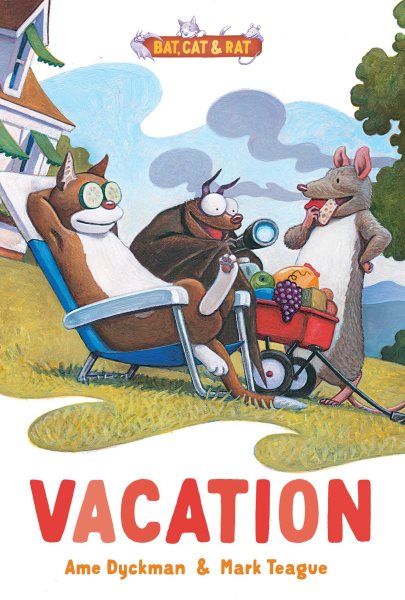
Bat, Cat & Rat: The Cozy Home / Vacation by Ame Dyckman and Mark Teague

Bat, Cat & Rat all decide to move into a cozy house together. But can three such different animals get along? Funny stories of jokes, jobs, and vacations. Yes, these books both contain equal charm and talent, making it difficult to say which one was “better”. I love that with such few words, you get such a clear cut sense of each one of these animals’ personalities right from the start. Cat is Oscar, Rat is Felix, and Bat is Pinky from Pinky and the Brain. Each short story builds so nicely on the one that came before it. Has Amy Dyckman never done easy books before? Because she’s a natural at it. Plus it’s nice to see a lot more Mark Teague these days. His choice not to give the bat eyelids? Inspired! It’s like watching a Muppet. Big time fan over here. 

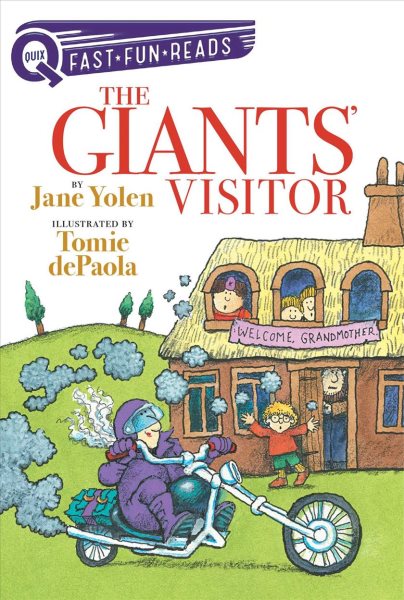
The Giants’ Visitor by Jane Yolen, ill. Tomie dePaola

When the five giants, Grizzle, Dazzle, Grab, Grub, and Dab, learn that their grandma Draggle is coming to visit, they prepare for an old, weak woman. What they get instead is a motorcycle riding grandmother with a fantastic appetite! I spent an inordinate amount of time trying to figure out whether or not this was a reprint of an older easy book, but found to my utter amazement that this is an original. Of course, Tomie’s been dead for a number of years and meanwhile this is one of the best Jane Yolen books I’ve read in a very long while! Jane’s just on fire with this book! I love the illogical logic of the entire premise. A group of giant siblings welcome the grandmother they never knew they had and the woman just barrels over them like some kind of raucous biker queen. What’s not to love? Strange, funny, and to the point. I think this is one of my favorites of the year.

Lone Wolf Goes to School by Kiah Thomas, ill. K-Fai Steele

Chronically grumpy Wolf would rather go to the movies, beach, or mountains by himself but doggone humans ALWAYS want to be friends with him? The solution? It’s not what you think. I think whoever wrote the copy for this book hit the nail on the head when they wrote, “For readers who have had enough of the buddy duos.” I’m getting STRONG Rotten Ralph vibes from this wolfie. I dunno, but there’s something about a good antisocial character in a book that really strikes me as delightful but only IF the author and artist get the tone right. I’d argue that Thomas and Steele are successful with this book. There are days when you just FEEL what Lone Wolf is going through here. I’m so happy too to see a book that makes such great use of Steele’s unique humor on the page. And if you like this, be sure to also check out its companion book Lone Wolf Gets a Pet. Previously seen on the Funny Picture Book List.

Makeda Makes a Home for Subway by Olugbemisola Rhuday-Perkovich, ill. Lydia Mba

There was an episode of Fraggle Rock that I watched long ago and that I think about more often than a 46-year-old woman should probably admit. In this particular episode, one of the Fraggles decides that they’re going to “help” the Doozers. They do this without consulting the Doozers on what they actually want, which I feel was a message I’ve carried far into adulthood. I haven’t seen that many children’s picture and easy books that cover the same topic, but it may well be that Makeda Makes a Home for Subway falls very much along those lines. This is an easy book but definitely one on the upper end of the linguistic complexity scale. Makeda volunteers to take home the class hamster, certain that Subway (the hamster in question) is bored and in need of more interesting stuff in his cage. She sets about constructing a series of fun things for him to do (so there’s that STEM tie-in, people). Alas, Subway is NOT on board with this plan, so when Makeda is told to figure out what he actually wants, she listens. Though simple, Rhuday-Perkovich is able to give some personality and zing to the characters. I was particularly amused by Makeda’s grandpa’s reaction when the teacher informs him that Makeda will be taking the hamster home. Funny and smart as well. 

Market Day by Miranda Harmon

After helping Mom out at her stand, kittens Ginger, Cinnamon, and Nutmeg want to find her the perfect magical present at the farmer’s market. But what will Mom like best? I’m going to dock half a point for incorrect knitting needle placement but beyond that I thought this book was a rather clever way of combining magic and farmer’s markets. I mean, I can’t be the only one who desperately wants to go to this market. Colorful, fun, friendly, and I feel like the easy words play fair throughout. Also, it doesn’t feel like the thousands of other easy books out there. This one’s one-of-a-kind.

A New Car for Pickle by Sylvie Kantorivitz

Oh no! Pickle was just about to go to Clover Farm to get some delicious strawberries and cream when his car broke down. Will he find the perfect replacement? Lest we forget just how hard these easy books are to write, it takes a hand like Kantorivitz’s to remind us. Like a lot of easy readers these days it has a kind of graphic novel format, but I really admired how it managed to pack a whole story into its pages. I think it plays pretty fair with the words (though “strawberries” is a bit complex). Also, if you have any kind of a kid who’s interested in the inner workings of a car, this is THE #1 book to hand them, no question at all. I’m rather charmed. 

Peach and Plum: Double Trouble by Tim McCanna

I guess if I’m going to be honest, this was my first “Peach and Plum” read, and I liked it! It’s an excellent example of a series being three things at once: easy book, graphic novel, and rhyme title. The rhymes work too. It can be exceedingly difficult to stick to an all-rhyme-all-the-time format like the one you find here, but McCanna clearly has a knack for it. Even more impressive to me, though, was the fact that he’s capable of creating these little short stories so adeptly on the page. Personally, my favorite story in here was about three fruits starting a band in their garage since it literally has nothing to do with Peach and Plum and their various adventures. It also contains the line, “Oh wow. So dark,” about the hardcore music they play. Rhyming is a natural pair with easy books that help you to read, so color me a fan. Previously seen on the Rhyming List.

Rabia’s Eid by Rukhsana Khan, ill. Debby Rahmalia

I love it when great authors write easy books. It may, indeed, be one of my favorite things. And Rukhsana Khan pretty much set herself up for the greatest challenge of all. Not simply to write an easy book but a HOLIDAY easy book! Oh, rarest of rare titles. Writing a good one is so difficult, I’d almost say it couldn’t be done, and yet LOOK! Feast your eyes on Ms. Khan’s accomplishments! Here’s we’ve a simple story of Rabia really wanting to fast like her sister and parents for Ramadan. Her parents tell her she can give half a day a shot if she likes, which feels like a smart parental compromise. Sure as shooting, it starts out just fine but by the time lunchtime comes around, that girl is huuuungry. Now I’m sure you’ve also seen the easy books that say they’re for early readers but definitely cheat on the vocab complexity. Khan keeps everything super simple, managing to explain an entire cultural situation while also making the family members feel three-dimensional as well. Seriously, this book should be the litmus test against which all other holiday easy books are based. I ain’t kidding. Previously seen on the Holiday List.

2024 Early Chapter Books

Ava Lin, Best Friend! by Vicky Fang

It’s the first day of first grade and Ava Lin is determined to get herself a best friend for the very first time. Small stories about a girl with a big personality in a very funny package. Consider me pretty darn charmed. I like an early chapter book where not everything is all sunshine and roses. Ava Lin fits the bill there. There’s definitely a bit of Ramona running through her, particularly when she uses her ear as a makeshift pocket. Fang’s got a great voice for Ava here and while I wouldn’t call it a great big flashy start to an early chapter book series, it’s definitely relatable. Plus, I like any book where making a friend is as slow and arduous a process as it is in real life. 

Bunny and Clyde by Megan McDonald, ill. Scott Nash

When Bunny and Clyde determine to shed their goody goody status and become outright criminals and bad guys, little do they suspect how each of their “evil” antics will go awry. A hoot and a half! I like watching characters try to figure out the logistics behind misbehavior. And, like any incipient villains, they do a great deal of research to make sure they’re doing it right. I appreciated that the books they read weren’t all Beatrix Potter (there’s a really nice Bad Kitty shout out in here). McDonald’s an old hand at this level of reading, so I probably shouldn’t have been surprised that I couldn’t actually predict some of the ways in the which Bunny and Clyde accidentally help people. I can’t think of many books that tap into the frustration of never making anyone mad, at least not for this reading level. With fantastic Scott Nash art, this is definitely bound to be one of the year’s favorites. Wanted dead or alive indeed. 

Cornbread & Poppy for the Win by Matthew Cordell

This year Poppy is determined to win the Small Rodents Competitive Cycling Championship Classic with her best friend Cornbread by her side. But is Poppy too focused on winning? Doggone it I do, I DO, like the Cornbread and Poppy books by Cordell. I mean, the man really knows how to tap into distinctive personalities. Take Poppy in this book. Anyone who has ever had a super competitive friend will recognize that crazed look in her eye. And any book that contains the phrase, “Tight pants for the win!” probably has my heart. I also kind of appreciate that the lesson at the end is basically, “Losing as fine as long as Gerald also loses”. 

Croc & Gator: Swamp Ranger School by Lisa Katzenberger, ill. Mike Ciccotello

Gator is just a bundle of excitement and energy! Gator is a calm, cool, collected individual fond of rules. Can these two very different reptiles ever be friends? They can if Gator has anything to say about it! I feel like the cover is completely misleading on this book. Had I believed what it was conveying, I would have thought that this was a book about a supercool crocodile and an overexcited gator. The overexcited gator part is dead on, but I really enjoyed the fact that Croc is the introvert’s introvert, and that’s okay. This is in the vein of The Odd Couple, except that it’s all from Gator’s p.o.v. and throughout the book he’s learning and growing since he really, truly, and honestly wants to be Croc’s friend. I found it very sweet without being cloying, and it truly is chock full of good environmental information about wetlands. Plus, talk about a clever conveyance system of croc and gator facts. Definitely one of the stronger early chapter titles of 2024.

The Gray City by Torben Kuhlmann, translated by David Henry Wilson

Moving to a new city is hard, but it’s even worse when everything is gray. As Robin learns more about her new home, she realizes that there may be something sinister behind the sameness.  I love the work of Torben Kiblmann, but in general I’ve always particularly enjoyed his early chapter book-like picture books because they featured cute mousies. Now, at long last, his heroes are of the human variety and it’s kinda throwing me for a loop. The story is, in our current book banning/you must conform era, a bit on the nose, and I like that. The book has this marvelous dreamlike quality to it, while still somehow invoking both 1984 and Camazotz from A Wrinkle in Time. It’s pretty fun, no matter how you slice it, and definitely worth a read. Previously seen on the Translation List.

Henry and the Something New by Jenn Bailey, ill. Mika Song

Jenn Bailey has a talent. She knows precisely how to write a neurodivergent kid character in such a way that the reader FEELS what he feels. We are all Henry. Now the previous Henry book (A Friend for Henry) was such a delight that when it won the Schneider Family Book Award Honor, I was vastly relieved. The next Henry book has now come out and I’d say it rivals the first in sheer literary goodness. In this story, Henry’s class is going to the museum, which is something he is not really all that sure about. A class trip means a lot of new things, but it also means dinosaurs and he does love dinosaurs. Personally, one of the reasons I love this series so much is because of Henry’s relationship to fellow classmate Samuel. Samuel seems to have some kind of attention deficit issues of his own, and so Henry keeps a close eye on that kid. Other times when Henry wants to see the dinosaurs at the museum, but doesn’t want to say it out loud, oh man did I feel that. A delightful companion with a happy ending. 

The Kids in Mrs. Z’s Class: Emma McKenna, Full Out by Kate Messner

Filled with uncertainty about standing out, Emma’s determined to have the best third grade year ever. But when her former best friend appears in the same class, will this be the worst year instead? This ambitious little series intends to have an early chapter book written by a different children’s author for each kid in Mrs. Z’s class. Of course its future is a bit up in the air at the moment, so we may not get the full classroom in the end. That said, it’s a nice kickoff that wraps up a lot of loose ends without entirely solving all its problems. Emma still has some unfinished business with Lucy (I predict she’ll be done by Linda Urban). I like that, actually. It’s a good way to lead a kid from one book to another. You get a hint of each kid’s personality, without the whole deal. Certainly worth looking at closely.

Kwame’s Magic Quest: Rise of the Green Flame by Bernard Mensah, ill. Natasha Nayo

Blooming heck, I was THIS close to missing this series this year! Like a bullet past the ear, this is. Fortunately, both the New York Public Library and the Chicago Public Library took care to place this book on their Best of the Year lists, so I knew something had to be up. And it’s great! Set in Ghana (Ghana is incredibly hot in 2024 with books like Flying Through Water by Mamle Wolo and Kwame Crashes the Underworld by Craig Kofi Farmer) this is about a boy going to a magic school. Once you attend you are immediately placed in one of four magic tracks. This is decided by the calabash you receive from the Nkonyaa Tree. Trouble is, when Kwame gets his calabash it doesn’t neatly fall into any of the four magics (earth breaker, sun wielder, time bender, or weather handler). Saddened by the mystery, he befriends a boy named Fifi who right from the start gets picked on by the other kids. And then things start getting weird. The book ends on a cliffhanger, though it does determine what precisely is going on with Kwame’s magic. It’s amazing how much story Mensah and Nayo are able to pack into this thing. Look, this many librarians can’t be wrong. This is a great strong start to a fun and action packed new series. Don’t miss it!

Loose Threads by Isol, translated by Lawrence Schimel

When Leilah decides to sew up the holes in her world single-handedly, she has no idea the consequences of such acts. A beautifully illustrated combination of needlework and hand-drawn characters. Because honestly, we need a little more international flavor in our early chapter books, and this fascinating little fable fits the bill. It’s probably one of the most inventive little titles you’ll see this year, too. The art is this eclectic mix of embroidery and illustration, all based on a scarf Isol received from the Palestinian women she visited at the Tamer Institute in Palestine. It’s also a great little tale of a girl trying to solve problems that don’t need solving. Makes for a nice complement to other stories about letting a few gaps and mistakes exist in our world, and the problems of striving for perfectionism. Or maybe it’s about something else entirely. I’m not sure! All I know is that I love this book. Previously seen on the Caldenott List.

Miss Cat: The Case of the Curious Canary by Jean-Luc Fromental & Joëlle Jolivet, translated by Jill Phythian

Miss Cat is desperate for her next case, so when a sad man comes in looking for his kidnapped canary, she’s willing to look into it. But is there more to this feathered fiend than meets the eye? As a fellow librarian told me, this book falls squarely into that sweet spot where the reader wants a chapter book but still needs a load of pictures alongside the slightly more elevated text. When I was a kid I was very keen on detective stories, and this would most certainly have been exactly what I would have enjoyed. Sort of Encyclopedia Brown with magic, if you will. I like the hard-boiled kid detective. I like the octopus tending bar (a milkshake bar, but still). I like that the client isn’t all that they seem. Heck, I like the ending. Very strange. Very French. Previously seen on the Translation List.

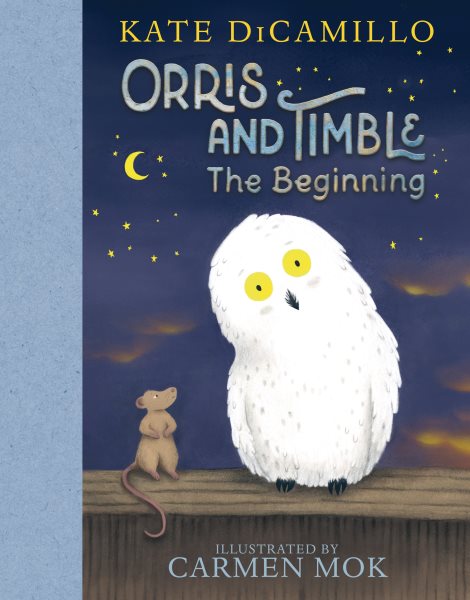
Orris and Timble by Kate DiCamillo, ill. Carmen Mok

Owls eat rats. This, Orris the rat knows. But when a little owl named Timble gets caught in a trap, what is the good and noble thing to do? A story of unlikely friends. The thing that intrigues the most about any given Kate DiCamillo book (except, I suppose, the Mercy Watson ones) is that balance of darkness and light she has on the page. Getting that balance right means the book’s a success, and when it tips too far one way or another I get all squidgey about it. This book is a lovely example of walking that balance perfectly. I confess that I was a good 10 pages in before I realized that the illustrator wasn’t Sophie Blackall, so well done there. It also contains the most excellent line, “Do one good and noble deed and pay for it the rest of your life,” which sounds about right. The tone is perfect, the balance is there, and the art is sublime. A good book.

Stella and Marigold by Annie Barrows, ill. Sophie Blackall

There may be three years between Stella and Marigold, but that doesn’t stop them from being the best sisters ever to one another. Seven short stories, definitely in the vein of Ramona and Beezus. Man. 2024’s the year when ALL the early chapter book heavy hitters are coming out. You’ve got books from folks like Megan McDonald on the one hand, and others from folks like Annie Barrows on the other. And Annie is bringing her ace game to this kickoff of a new series. She’s paired (once more) with Sophie Blackall and the two are just hitting the ground running. The sheer love that these two sisters feel for one another is palpable. Love truly is eating a food that makes you throw up so that you can join your sick sister in bed. And Marigold may be the most realistic preschooler I’ve seen in a very long time. I’ve issues with dad (dude needs to work on his not-laughing-at-your-kids game) but beyond that, this one charmed me wholly and entirely. 

Tales from Muggleswick Wood by Vicky Cowie, ill. Charlie Mackesy

A show of hands, Yanks. Any of y’all familiar with Muggleswick Wood? This was an entirely new series to my old eyes, but had you given it to me blind and told me it had originally come out 100 years ago, I almost would have believed you. Almost. See, this is the book you hand to those grandparents that come into your library/bookstore and ask for something that feels like (forgive me) “a modern day classic”. I mean, you know what they’re talking about. Basically they want the 100 acre woods without the loquaciousness. This series (described by the publisher as “five gorgeous stories to read at bedtime” is that. But see, here’s the deal. These stories? They are legitimately good. Charming? Yeah, of course. And they rhyme, so be prepared for that as you decide whether or not to read a child down with them. They are rather tailor-made for bedtime reading, you know. The five stories are sort of A.A. Milne by way of Roald Dahl if you replaced the mean spiritedness of the Dahl with a bit of Milne’s earned sweetness (not the cutesy stuff). My personal favorite of the tales is “The Secret of Snittington Hall” which is very much a story of a man being told what not to do, doing it, and getting adequately (but not overly) punished for his hubris. Hubris beware! The book is full-color. There’s a little place for a child to put their name. It’s just a class act all around. A modern day classic actually deserving of the outdated term. Previously seen on the Rhyming List.


So with all that in mind, here are the other lists for 2024:

December 1 – Great Board Books

December 2 – Picture Book Readalouds

December 3 – Simple Picture Book Texts

December 4 – Transcendent Holiday Picture Books

December 5 – Rhyming Picture Books

December 6 – Funny Picture Books

December 7 – CaldeNotts

December 8 – Picture Book Reprints

December 9 – Bilingual Books for Kids

December 10 – Math Books for Kids

December 11 – Books with a Message / Social Emotional Learning

December 12 – Fabulous Photography

December 13 – Translated Picture Books

December 14 – Fairy Tales / Folktales / Religious Tales

December 15 – Wordless Picture Books

December 16 – Poetry Books

December 17 – Unconventional Children’s Books

December 18 – Easy Books & Early Chapter Books

December 19 – Comics & Graphic Novels

December 20 – Older Funny Books

December 21 – Science Fiction Books

December 22 – Fantasy Books

December 23 – Informational Fiction

December 24 – Gross Books

December 25 – Science & Nature Books

December 26 – Unique Biographies

December 27 – Blueberry Award Contenders (Celebrating the Environment)

December 28 – Nonfiction Picture Books

December 29 – Nonfiction Books for Older Readers

December 30 – Middle Grade Novels

December 31 – Picture Books
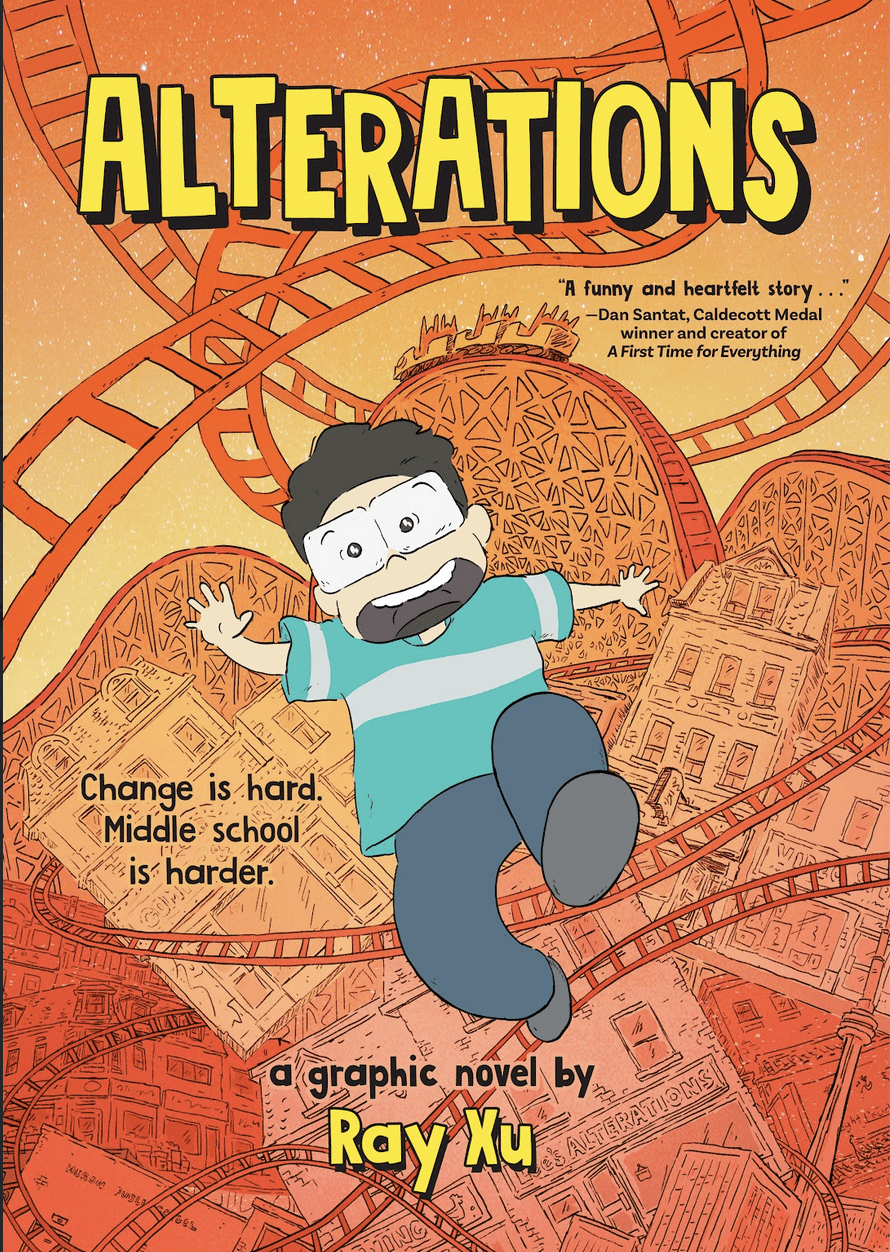
Filed Under: 31 Days 31 Lists, Best Books, Best Books of 2024 Tagged With: 31 days 31 lists, beginning readers, Best Books of 2024, early chapter books, easy books

31 Days, 31 Lists: 2024 Unconventional Children’s Books

December 17, 2024 by Betsy Bird

Before I begin, I should note that this list owes its existence to the annual Most Astonishingly Unconventional Children’s Books list put out by Travis Jonker at 100 Scope Notes. Though I’ve always done a version of this, I must credit him with coming up with the term “unconventional” which is a brilliant and non-judgey way of discussing these books. Of course, Travis and I differ on which books fit such lists. He has made his. Now see which ones made mine. There’s overlap but they are certainly not carbon copies of one another.

On today’s list you’re definitely going to see some books that could easily be called “weird” but you’re also going to see a number of titles that upset our conceptions of what a children’s book published in America can even be. That might mean the subject matter, the narrative style, the art, or some other aspect is “unconventional”. Leave your judgements at the door and follow me down this interesting path.

You can find a full PDF of today’s choices here.

Curious about other unconventional titles? Then check out these previous lists:

  • 2023
  • 2022
  • 2021
  • 2020
  • 2019
  • 2018
  • 2017
  • 2016

2024 Unconventional Children’s Books

Alfie Explores A to Z: A Seek & Find Adventure by Jeff Drew

You know the Sgt. Pepper’s Lonely Hearts Club Band album cover? Take that and then just smoosh it together with Animalia by Graeme Base. Just really pulverize those two things together until you get a nice sticky paste that I like to call Alfie Explores A to Z. Jeff Drew is a filmmaker by trade but apparently he had a little time on his hands because he decided to make an alphabet book very much in the same vein as Base, but done with computer art instead. Thing is, I’ll forgive a lot if it’s clear that a book’s creator cares deeply about their project. In his dedication Drew writes, “And for my friends who have asked over the last ten years, ‘How’s your book coming?’.” Therefore, this book qualifies as a legitimate labor of love. The story, such as it is, is that Alfi, a caterpillar with a penchant for knit cable sweaters, has lost his pet dust bunny Betty. I know this mostly because it is explained less in the text and more on the front bookflap of the title. He pursues her through different books, each one a different world, each one typified by a different letter. And the man doesn’t go halfsies on these worlds either. “A” is a pretty darn good example of this. On this page there are apparently things that begin with that letter (including an anglerfish, for which Mr. Drew automatically gets 20 points). I know that there are 116 things because, unlike Graeme Base, Drew includes a key at the back for finding and identifying everything there. He also will indicate where Betty is and where Alfie is. Did I inspect the X page closely? I did. Does he play fair? Yes, though in the backmatter he almost has an alternative image where words that end with X are featured in a different way. If you’ve a kid who thinks the Where’s Waldo books could use a little more confusion and chaos, this is the book for them. Even more extra points for the “Zooming zobines zipline over New Zealand” image. It is seared into my brain, never to be removed. 

Amazing Grapes by Jules Feiffer

…

Uh…

Whoa.

All right… um… all right.

So when I started collecting “unconventional” books for kids, I just sort of made the assumption that the Europeans were better at unconventionality than the Americans. Like, that’s what I literally thought. This assumption, often proved correct, sometimes flounders when it meets a book like Amazing Grapes.

Let me put this another way. You know that short story “Mimsy Were the Borogroves”, by Lewis Padgett, where a toy from the future accidentally gets sent to the past and the two children who find and play with it find that it reroutes how their minds work? I’m half-serious when I say that this book is that toy. This book is clearly from the future. It is working on some kind of logical level that adults are simply not capable of comprehending. I did attempt to read it to my 10-year-old because, y’know, I love me my Jules Feiffer, but what we found together was that this is not a group read book. This is a one-on-one book. It is also the purest child version of those adult graphic novels that Feiffer used to make back in the day. Stuff like Tantrum (which lives rent-free in my head, no matter how often I try to oust it). It is a testament to the man’s legacy that this madness got published in the first place. In a world of samey samey samey graphic novels, this puppy doesn’t just stand out. It devours the competition. 

Don’t say you weren’t warned. 

Barnaby Unboxed by Terry, Eric, and Devin Fan

Genetic manipulation is definitely a science fiction trope, but rarely one that finds an audience with the younger elementary school set. Yet that’s precisely what you had when the Fan brothers created the picture book The Barnabus Project back in 2020. If you’ll recall, the hero of that book was a little elephant/mouse combo, capable of inspiring a cacophony of chaos. This book stars a pink version of Barnabus called Barnaby (the pink comes from flamingo DNA, naturally). As a designer pet, Barnaby is thrilled when he’s adopted by a little girl. She teaches him tricks, takes him on walks, dresses him in cute costumes, and more. Then, one day, she learns that there’s a version of Barnaby out there with stripes. It’s one of those familiar tales where a pet or toy fears being replaced (which, I suppose, is just a metaphor for kids who fear the same thing when a new sibling comes along). Barnaby accidentally/intentionally runs away, then finds that he can’t get back. Befriended by squirrels, he makes an entirely new life for himself. Then spring comes and the little girl finds him again. Will he go back? The book has all the feelings of an epic adventure, and indeed it’s packed full of pages. Even so, there’s also a coziness to it. Kids will have fun spotting the lost pet posters that appear high above Barnaby, so that he never knows they’re there until a climactic moment. Unique but filled with familiar elements, this one’s a keeper. 

Bird Is Dead by Tiny Fisscher, ill. Herma Starreveld, translated by Laura Watkinson

Occasionally I’m tempted to add another list to this 31 Days, 31 Lists roster: Death Books. It’s a bit morbid, though. Not sure how many people in the midst of December are all that into picture books and chapter books that remind us of our own mortality. Part of what I like about this book is that it reminds me that there are as many different ways to write a picture book about death as there are stars in the sky. In this particular case, Fischer opted for “weird” and I am here for it. Maybe “weird” is unfair, though. Part of what I like so much about Bird Is Dead is that the other birds, upon discovering Bird’s death, act a LOT like people you may know yourself. When Bird is discovered at the start of the book, everyone’s reaction varies. One bird keeps trying to keep the peace by reminding everyone of the death. Others admit they found him a pest, (“He thought you were a pest too!”). Still others claim he was their best friend. But the overall feeling you get from this book is that no one really knows what to do when something like this happens. There’s no clear leader here, so everyone just does the best that they can, whether that’s figuring out where to bury him, or how to say the eulogy. It doesn’t go out of its way to comfort, but even amongst these occasionally squabbling friends there’s an odd kind of peace at the finale. The book is Dutch in its origins, and certainly won’t be for everyone, but I love the art by a therapist-turned-illustrator, which is a kind of colorful mixed media. It gives the whole thing a fairly lovely feel throughout. 

Boy Here, Boy There by Chuck Groenink

You know, I have a “Science Fiction” list and a “Fantasy” list that often incorporates picture books, but I don’t really have a “Pleistocene” category and maybe I should think about it. Recently we’ve seen this incredible array, including everything from Afterwards Everything Was Different to Finding Fire. Of course, those books were both wordless. This book isn’t wordless. It isn’t even about homo sapiens. It is actually about a small band of Neanderthals, and since that’s a topic that is of perpetual interest to me, I was somewhat hooked from the get-go. For whatever reason I always thought that all Neanderthals were red-headed. In this book, however, they have many of the other traits. The Author’s Note at the end makes mention of this, and it’s a book that keeps rather closely to the facts as we currently know them, which is great. The story follows a boy with simple language. “Here is a family. Mama, papa, brothers, sisters and boy.” The family makes a home and the boy goes off to explore the wilderness. He runs into a baby woolly mammoth and then something much much stranger: another boy. Across a small river stands a human of our own making. As an adult my first instinct was to scream, “RUN, NEANDERTHAL BOY, RUN!!” But as this is a picture book, we’re not getting any violence here today. Instead you just get that strange moment of seeing someone like you and not like you. The backgrounds of the book are gorgeous, the storytelling so nicely simple, and the book itself lovely. I dare say this is Groenink’s finest title to date. A class act through and through and unlike any other title on the subject.  Previously seen on the Simple Books List.

Garbage Gulls by Dorson Plourde, ill. Isabella Fassler

Ah, brilliant. A book that truly personifies what it is we mean when we call a book “unconventional”. I truly do feel that seagulls have never truly gotten their picture book due. I mean, what other animal actively and regularly steals from/terrorizes small children? Besides geese, I mean. This book is a bit different because it involves two kids who know “The Sea” (which is to say, The Sea Motel) like the back of their hands, but they’ve never been to the beach. They spend the hot days of summer blowing bubble gum bubbles and sitting on broken down cars, “Let’s stick to the seats, clicked into the heat, we are microwave molten goo.” Plourde is pulling out all the stops with this narrative. For fun, the kids surround themselves with french fries. So many that the garbage gulls (who indicate that the sea cannot possibly be all that far) are summoned. The fantasy that follows takes the kids to the sea in the midst of some incredible poetic lines. My favorite parts, though, involve the seagulls themselves. “A few crunched bags summon squawks from Heavenly Mattress, a squall perched on what’s left of the M and between the Es. The squawks mock, mock mock.” I’ve always been fond of stories about broken down city locations, and this book slots into that category like a hand in a glove. Art by the Canadian Isabella Fassler is wild and raw and full of pencil crayons and graphite. I guarantee, you won’t forget this one soon. 

Griso the One and Only by Roger Mello, translated by Daniel Hahn

If ever there were a book this year for whom the term “unconventional” was perfectly coined, it would be this one. Roger Mello is just one of those folks who doesn’t like to do the same book twice. Or, in this case, like anyone else in the world. The idea behind this book sounds simple. You have a unicorn and that unicorn is searching the world for another like himself. He runs through surreal landscapes as Mello tries out a whole slew of different artistic styles. One minute Griso is recreating a Tang Dynasty mural and the next a Persian bas-relief. He might go through scenes based on Bamana ancient sculptures from Mali or woodcuts based on Brazilian chapbook literature. There’s not precisely what one would call a strictly “happy” ending to the book, but there is a satisfying ending, as Griso meets a winged horse, also the only one of its kind. As strange as this may sound, this may be one of Mello’s more accessible books for American kids. The style may change but the storyline is consistent, comprehensible, and I rather love the way it nails the ending. One could also have fun staring engrossed at the endpapers. They’re a yellow and black checkerboard pattern and they virtually vibrate off the page. Previously seen on the Caldenott List.

Heatwave by Lauren Redniss

Can a book burn you? Can you actually feel waves of heat emanating off the pages? Here’s my advice to you on how best to read Redniss’s Heatwave. Find yourself the chilliest, coldest, nastiest day in winter. Maybe one of those days where the damp and the dank just seep into your bones from the moment you wake up. Next, take this book. I’ve rarely seen a title this adept at really showing you how it feels to be infused with summer heat. The red in this book is inescapable. So much so that when those clouds start rolling in you’re cheering them on like a fan in the stands. Then you get that one blue raindrop on the page, its incredible liquid blue almost vibrating against the sea of red. By the time everything cools down the world is infused in blue, but it’s not a cold blue. It’s just that warm blue you get on a hot night. This book feels like a European import, but is 100% American to its core. I expect it’s going to do VERY well overseas, just the same. A cool story that I’m so pleased we get to experience. 

The Island Before No by Christina Uss, ill. Hudson Christie

Well, that’s a helluva thing. So this is a kind of a fascinating picture book. Wholly original. Great text. But it’s the images that are the star of the show. I like the illogical logic of the whole thing too. It’s set on an island where you’ve a bunch of pretty darn peaceful walruses who have managed to co-exist for quite some time without ever being able to tell one another “No”. These are yes walruses, through and through. As such, they are wholly unprepared when this kid appears on their island and just starts taking advantage of them wholecloth. He takes donuts without paying for them, won’t share, and generally just railroads the whole island into doing what he wants. Our hero walrus (unnamed) finally manages to convince his fellows to say the word “No” once in a while, though it’s a struggle to learn. I know many a nice kid who has a hard time with this word as well, so the metaphor is shiny and clear as day as far as I can tell. It has a satisfying ending, but the art, man, the art! Illustrator-animator Hudson Christie is described in his little bio as having grown up watching shows like Pingu and Gumby. You can see a lot of that one the page, but the sheer movement he’s able to capture is jaw-dropping. The kids look like escapees from Playmobile and the walruses are sympathetic, one and all. Maybe it’s messagey but it’s far more funny and incredible to look at. You ain’t seen NOTHING like this! Previously seen on the Funny Picture Books List.

John the Skeleton by Triinu Laan, ill. Marja-Lissa Plats, translated by Adam Cullen

Meet my favorite Estonian picture book of all time. The last time I fell for something from Estonia it was The Ear by Piet Raud, and I stand by my love of that title, but this is something special. First and foremost, I’d like to state for the record that I think the cover is just a touch misleading. I’m not sure why illustrator Marja-Liisa Plats chose to cover John in snails. I think if he was just waving nicely then he’d be fine without them. It sort of gives the impression that the book is going to be creepier than it is. It is not, for the record, creepy at all, but rather a very sweet testament to growing old, friendship, comfort, and routines. John is a skeleton in a school, but over the years he’s lost some of his digits and bones. He ends up in the possession of Gramps who lives in a cottage with his wife, deep in the woods. They both become very fond of John, and as he acclimates to his life as a “retired skeleton” with them, he becomes close not simply with them but with their grandchildren as well. The book is just broken up into all kinds of little interstitial stories, and as we watch, Grams dies and Gramps has to adjust to life without her. It’s sweet, moving, and touching, and there’s this wonderful little moment in the backmatter about the real John where it says, “An ordinary Estonian’s dream is to live in a house where their closest neighbors are at least half a kilometer away. When John got the chance to retire and live on a farm in Vörumaa, which is one of the farthest corners of the country, his dream came true.” Strangely comforting in an all new way. 

The Legend of Tiger and Tail-Flower by Lee Gee Eun, translated by Aerin Park

When a supremely grumpy tiger finds a talking dandelion permanently attached to his tail, he has no idea how close the two will become. An unconventional “tail” of friendship. The bookflap of this title talks about how Lee Gee Eun is “the most beloved picture book artist working in Korea today” which is QUITE the praise. I’ve heard mixed things about whether or not this is based on a folktale or not. It is, I should say, an odd little work. I was a bit put off at the beginning but warmed up to it as it continued. Bonus: Eyebrows. Who can resist eyebrows? BOTH on the tiger and the dandelion! You really do have to get into the tone of this book as it goes, but once you’re in the groove, it’s pretty darn cute. 

Meeselphe by Claude Ponti, translated by Alyson Waters and Margot Kerlidou

I have long since given up on trying to explain what precisely it is that Claude Ponti does on a page. I’m always attracted to books for young people that completely subsume a person into the mind and thoughts of the author/artist. The kinds of books that literally could not be made by anyone else. Can you imagine AI ever coming up with the kind of stuff that Ponti profligates? I think not. Meeselphe, his latest here in the States, just sort of proves my point on every page. Ostensibly, it’s a quest tale. Picture book quest stories are often so interesting. Think of I Had Trouble Getting to Solla Sollew or pretty much anything Aaron Becker makes. Here, our heroine is a treehouse denizen named Meeselphe. One day she wonders what it’s like on the ground, so she just jumps down, sight unseen. There are a lot of books out in 2024 about people or animals taking leaps into the unknown (have you seen The Bunnybirds?), making me wonder if there’s something bigger going on. Meeselphe herself is an excellent companion in her travels. She loves solving puzzles and riddles, and she’s never in the least bit disturbed by the monsters she encounters. There’s also a nice meta moment where the monsters continually tell her that everything will come to a head on pages 38 and 39. Goofball storytelling with surprising heart and grit.

Pepper and Me by Beatrice Alemagna

When a little girl gets a scab on her knee it is NOT beautiful. Even so, she names it Pepper and she and her scab learn to live with one another, for a time. An oddly touching tale. I like ‘em weird, sure, but I also like ‘em to have an honest connection to what it’s like to be a kid. And a talking scab? Tell me more! I don’t think I’ve had a significant scab since I was a kid, but I had them ALL the time back then. A child really does have a whole relationship to their scabs too. When I first heard about this book I worried that it would have a whole friendship aspect right from the start, but instead this is much more interesting and talks about the love/hate relationship kids have with their wounds. Fun Fact: In the French edition I believe the scab’s name is “Bertha”. Utterly original. Utterly bizarre. 

Pretty Ugly by David Sedaris, ill. Ian Falconer

You know that old saying not to make faces or one might stick that way? Anna Van Ogre finds it out the hard way, but fortunately comes up with a truly disgusting solution, in this twisted take on finding beauty within. This is a weird one and no question. You probably know Ian Falconer best as the guy behind the Olivia books. He died last year in 2023 and it makes me kind of sad to read this book. In it, he goes so completely off the rails that I can only imagine what other fun and wackadoodle books he probably had in his future. This book actually elicits gasps from its readers, it is so beautifully twisted. I imagine it’s going to become quite the cult hit. If you read it, don’t say I didn’t warn you…

The Remarkables: The Most Incredible Children I’ve Met – So Far! By Clotilde Perrin, translated by Daniel Hahn

Trust Clotilde Perrin to be weird. In a good way, naturally! If you enter a children’s room of a library and notice that some of the picture books are not fitting on the shelves, odds are those are Clotilde Perrin books. Alongside Gecko Press, she and her publisher raise a middle finger to typical picture book dimensions. Now this latest title may actually fit the shelves a little better than some of its fellows, but what she lacks in the usual height she makes up for in girth. Which is to say, in text and illustrations. Clocking in at a massive 66 pages, the book lists a slew of remarkable children. And not just because they’re a little different from their fellows either. They are a LOT different. There’s the prickly child, covered in spikes, and the diamond child (where translator Daniel Hahn chose to keep the original “Très ostentatious” on the page to describe). There’s the Grassy Child and the Cloud Child and the Giant Child as well. All told there are 38 children in total and their lives are strange and lovely and odd and fun. I particularly liked the sections that discussed how they interact with one another. The most disturbing? Definitely the Cupcake Child. Not because the kid is particularly weird, but because his parents are continually trying to eat him. It’s a miracle the child is still alive (once you read it, you’ll understand why the child doesn’t, “like hearing my parents talk about me” and why, “I’d like some peace and quiet, even if it meant becoming an orphan”). Ah, translated children’s books. You’re always my favorites. Previously seen on the Translated Children’s Books List.

Thank You, Everything by Icinori, translated by Emilie Robert Wong

Years ago, when my children were young, I used to read them a marvelous picture book called Issun Bôshi: The One-Inch Boy. It was everything I love about folktales. Gross, weird, with art that was supremely beautiful. Artist couple Mayumi Otero and Raphael Urwiller publish together under the name “Icinori”, but I hadn’t really seen anything else they’d done in years. That all changed this year with Thank You, Everything. Don’t let the title fool you. While this may sound like one of those standard gratitude books that are particularly popular in library displays around Thanksgiving time, this book is much much weirder. It starts off fairly normally though. “Thank you, yellow. Thank you, red.” Let it be known that the “red” in this book is debatable. Personally, I think it looks orange, but one could argue that it was more an orangey red. The book thanks different objects, from pocket knives to trains. But then a plot starts to emerge out of the ephemera. About the time our hero and their doppleganger are escaping from an exploding volcano, you know you’re not in Kansas anymore. Supremely lovely, this is the kind of book a kid could pore over for long periods of time, immersed in this beautiful world. How else could I possible conclude this write-up, except to say, thank you, Icinori! Previously Seen on the Caldenott List.

Tumblebaby by Adam Rex, ill. Audrey Helen Weber

I dunno. The more I think about it, the more and more respect I have for picture books that work outside the norms. As I like to tell people, the publishing system is set up to essentially iron out inconsistencies and weirdnesses from books for kids. At least, that’s usually the case, but once in a while a weirdo slips through and you just have to admire that weirdo’s panache. Such is the case with this Rex/Weber co-creation. I like a book that takes its premise to its logical extreme. Rex is doing me one better and taking his idea to its illogical extreme. The whole premise is that on the first night “Baby” was to be put to bed, Daddy put up an objection to the crib. Quoth he, “I don’t like fences”. Which, insofar as I’m concerned, means that Daddy pretty much deserves what he gets in this book. Baby, always depicted with a perpetual smiling face and closed eyes within purple pjs, is incapable of stillness and eventually manages to tumble out the door (which Momma is apparently a-okay with since she refuses to close the door saying, “No – everybody’s got to make their own way in life,” so Daddy and Momma basically deserve one another). What follows are a series of small adventures as Tumblebaby encounters scoundrels (Rex gets 100 points for the use of this word), coyotes, and more. Rex occasionally stops everything to directly speak to the reader, as when he begins a gatefold of a mountain with a text reading, “Let’s go walking for a bit. We’ll walk because it’s a nice day for walking, and I want to show you something. Look.” The whole thing feels simultaneously like a love letter Rex is writing to his home state of Arizona as well as an ode to European picture books. In truth, this enterprise feels like it had to have originated in Estonia or something (I’m very into Estonian picture books this year thanks to the aforementioned John the Skeleton). How Rex and Weber got this to come out, I do not know. I’m just pleased as punch and proud of them that they did. 

Wanjikũ, Child of Mine by Ciikũ Ndũng’ũ-Case, ill. Karen Vermeulen

It’s always important to stress that when I say that the books in this list are “unconventional” that’s just a way of saying that they don’t slot neatly into pre-existing categories. No better example of this could be found than this Kenyan-set picture book about a young Gikũyũ and Mũmbi girl. The story doesn’t follow the set, prescribed format that so many books of this type do, and that threw me a little as I read it. The three girls on the cover? They’re all the same girl, and going into this book knowing that is important because Ndũng’ũ-Case isn’t particularly interested in catching you up when time bounces forward and her heroine is living in a new location. The story follows Wanjikũ, later to take the name Catherine. As a little girl she lives with her grandmother in the country, letting out the goats, living in an eden-like place full of delicious fruit trees, coffee plants, and sugarcane. When she’s a small child, the story begins with the words “As the Sun Rises.” Later, she’s older, in a uniform, and in school. She now lives in Nairobi with her parents and maid, and must navigate the busy city streets. By the time the book says, “When the Sun Sets” there has been another change. Now she’s older still and attending a boarding school, far from all family. During the day she speaks English but at night she seeks out the other Gikũyũ , “just to hear my mother tongue.” It reads, “The Kamba seek the Kamba and the Meru, the Meru. But I am the daughter of Mũmbi  and I seek the other daughters of Mũmbi.” So when I tell you that there is no other book on our shelves today that even comes close to this one, I’m certain you know what I mean. A contemporary picture book set in Kenya that shows what it’s like to move from place to place? I’ve never seen such a thing before, and am grateful to have this in hand. More like this, please.  

We Go to the Park by Sara Stridsberg, ill. Beatrice Alemagna, translated by B.J. Woodstein

I like it when I flip a book so that I can read the publisher on the spine and the name that I read there is “Unruly”. If you’re unfamiliar with it, the Unruly imprint of Enchanted Lion Books specializes in adult picture books. Why include it? Technically, the Caldecott goes to illustrated books for children, but has no problem handing out Honors to YA graphic novels. This book, originally written in Swedish, is actually intended for a teen and adult audience, which makes a certain amount of sense. Of course, usually when publishers talk about picture books for teens they mean those treacly “graduation books” that come out like clockwork every spring. This? This is not that. I mean, if you really wanted it to be that you could probably justify it, and it would truly be a MUCH more interesting choice than, say, Oh, the Places You’ll Go. With a thick cardboard cover and marvelous endpapers that somehow manage to be both colorful and murky all at once, the book opens with two blank pages on which are printed the following words: 

“Some say we come from the stars, 

that we’re made of stardust, 

that we once swirled into the world

from nowhere.

We don’t know.

So we go to the park.”

And ostensibly it’s just a story about that. Going to the park. But there’s not much of a story at this park. If anything, this is a story that taps into the nostalgia that teens and adults feel when they look back at a time when going to the park was all that they wanted to do, as kids. This is punctuated by wordless spreads on a regular basis. Alemagna has eschewed her usual love of fluorescent colors, but again I wouldn’t call this subdued painting drab. It’s beautiful and a little muted, but never boring. The same could be said for the text. It feels translated but, at the same time, isn’t stilted in any way. “We don’t know much about what will happen next… just that the swings here launch us straight into the sky.” Lovely and odd. Previously seen on the Caldenott List.

What Happened On Thursday: A Nigerian Civil War Story by Ayo Oyeku, ill. Lyida Mba

As I’ve mentioned before, “Unconventional” doesn’t mean “Weird”. It means that this is a book that isn’t like any other on your shelves. Now maybe I’m wrong. Maybe your shelves are just thronging with stories about the Nigerian Civil War. Somehow, I doubt it. Oyeku is only interested in writing a picture book for younger readers, so forget getting an introduction into anything but a child’s p.o.v. with this title. The book begins with two kids and their parents having a pretty normal suburban life. Then the war breaks out and, in as child appropriate a way as possible, all hell breaks loose. The family has to flee, first by car, and then on foot. There are flames and smoke, but the family is always together and there’s a comfort in that. We’re building empathy and with the end of the war you even get a complicated happy ending. And informative section at the end discusses the war that lasted from July of 1967 to January of 1970. Personally, I’d love to use this book with slightly older classes studying the American Civil War, so that they can see that civil wars happen all the time, even today, and this is what they can look like. Discussion questions and the author’s own experiences (more than fifteen years after the war) appear at the back. Consider pairing this with Kende! Kende! Kende! by Kirsten Cappy and Yaya Gentille, illustrated by Rahana Dariah, found on the Bilingual Books List.


So with all that in mind, here are the other lists for 2024:

December 1 – Great Board Books

December 2 – Picture Book Readalouds

December 3 – Simple Picture Book Texts

December 4 – Transcendent Holiday Picture Books

December 5 – Rhyming Picture Books

December 6 – Funny Picture Books

December 7 – CaldeNotts

December 8 – Picture Book Reprints

December 9 – Bilingual Books for Kids

December 10 – Math Books for Kids

December 11 – Books with a Message / Social Emotional Learning

December 12 – Fabulous Photography

December 13 – Translated Picture Books

December 14 – Fairy Tales / Folktales / Religious Tales

December 15 – Wordless Picture Books

December 16 – Poetry Books

December 17 – Unconventional Children’s Books

December 18 – Easy Books & Early Chapter Books

December 19 – Comics & Graphic Novels

December 20 – Older Funny Books

December 21 – Science Fiction Books

December 22 – Fantasy Books

December 23 – Informational Fiction

December 24 – Gross Books

December 25 – Science & Nature Books

December 26 – Unique Biographies

December 27 – Blueberry Award Contenders (Celebrating the Environment)

December 28 – Nonfiction Picture Books

December 29 – Nonfiction Books for Older Readers

December 30 – Middle Grade Novels

December 31 – Picture Books

Filed Under: 31 Days 31 Lists, Best Books, Best Books of 2024 Tagged With: 31 days 31 lists, Best Books of 2024, unconventional, unconventional children's books

31 Days, 31 Lists: 2024 Poetry for Kids

December 16, 2024 by Betsy Bird

Poetry. It ain’t just for April anymore.

In my experience poetry comes in waves. Some years the selections for kids are paltry. Other years, and I would count 2024 in this category, we are overwhelmed with a plethora of it. This year, I had my pick of the poetry and it allowed me to be a bit choosy. As a result, I’m delighted to show you some of the really top notch titles we got to see this year.

If you’d like today’s list in the form of a PDF, you may download it here.

Interested in previous years’ poetry? Then check out these beauties:

  • 2023
  • 2022
  • 2021
  • 2020
  • 2019
  • 2018
  • 2017
  • 2016

2024 Poetry for Kids

Animal Albums from A to Z by Cece Bell

Kick back and enjoy an ABC book like you’ve never heard it before. 26 albums by 26 different kinds of animals abound, so enjoy the silliness and sing along! This is something we’ve sort of seen before (and usually from Sandra Boynton) but I think it works better here than other places. Cece Bell has taken her immeasurable talents and her clear cut love of album covers and combined them into a heady mix of faux songs/poems. She kicks the whole thing off with an Introduction that gives a quickie history of albums created by animal musicians as background, and then we plunge into an abecedarian selection of 26 different types of music. Each album not only comes with a song (naturally the first one is “My Aromatic Armpit is Astonishing to All”) but also a beautifully illustrated album cover and a whole selection of other songs you’d be able to hear if you only had the album yourself (alas that we’ll never be able to hear “Accordion to My Abacus (The Answer Is Amor)”). There is, of course, a QR code to listen to actual musicians playing some of these songs, so you’ve that interactive element as well (or, if you prefer, you can just visit her YouTube channel). And as,with any collection, some of the songs/poems are stronger than others, but they’re all pretty darn fun to read out loud. I think my personal favorite is “Rhapsody for a Rogue Rodent” which contains the lines:

“She says, ‘No, no, no, no, no,

I gotta buck the status quo

I got to go, go, go, go, go

Back to my Twain and my public domain.”

Beware the Dragon and the Nozzlewock by Vikram Madan

Looking for funny poetry? You’ve come to the right place! From nozzlewocks to squishosaurs and everything in-between (whatever that means) you’ll be rolling in the aisles with this hilarious collection. Read through all 128 pages of this delightful collection and then look me in the eye and tell me that this isn’t some of the smartest, most inventive children’s poetry you’ve seen in a long time. It is SO easy to do boring poetry for kids and SO hard to write poetry half as funny as what Madan has come up with here. Funny and fabulously written, this is the poetry I wish we saw more often on our shelves. 

Black Girl You Are Atlas by Renée Watson, ill. Ekua Holmes

A robust, wonderful, incredible poetry collection for older readers recounting both Renée Watson’s own life and the lives of other Black girls and women everywhere. I don’t usually read works of poetry and get hit by the “Newbery contender” stick very often, but I guess today’s the day. This book is incredible. It carries more than a smattering of For Colored Girls Who Have Considered Suicide/ When the Rainbow Is Enuf vibes. I particularly appreciated that there’s humor mixed in with the pretty serious subject matter. This isn’t just an empty rah-rah book. It’s packed full of brilliant pieces. Clearly, Ms. Watson needs to be churning out more poetry in the future. Extra Bonus: Love how short it is! We don’t need a tome to be touched. 

The Book of Whys by Gianna Rodari, ill. JooHee Yoon, translated by Antony Shugaar

Lest we get too far ahead of ourselves, I would like to say that though I have placed this book ostensibly in the “Poetry” section, you could probably justify putting it on any list from middle grade fiction to nonfiction and get away with it equally well. It’s one of those books that crosses genres so frequently that you’re in dire danger of getting a headache. Rodari is a big name in the Italian children’s book scene, but here in the States his moniker will mostly be met with blank stares. This particular book is a series of questions from kids that he would answer in his newspaper column (reminding me of another newspaper serial the Italians love – Pinocchio). But the true star of this show is Antony Shugaar who has the impossible task of having to not only translate into rhyme for many of these poems, but to make the jokes work (even the puns!) too. He can only do so much with the questions that are SO Italian they squeak (example: “Why do people say: ‘It’s like shampooing a donkey’s head’?”) but given what he has to work with the man has gone to Herculean lengths. Well done, sir!! Previously seen on the Translation List.

Climbing the Volcano: A Journey in Haiku by Curtis Manley, ill. Jennifer K. Mann

“how do you / climb a mountain? / one step at a time.” Told entirely in haiku, a boy and his family climb Oregon’s South sister volcano and experience nature along the way. You know a book’s good when you frantically flip to the author’s bookflap bio and try to suss out precisely what it is that they’ve written before. Or is that just me? Whatever the case, Manley’s the same guy who brought us THE RESCUER OF TINY CREATURES as well as JUST RIGHT: SEARCHING FOR THE GOLDILOCKS PLANET. He seems to alternate between fiction and nonfiction, and this book seems like the culmination of those two styles. Sometimes when an author uses haiku it can feel arbitrary, but I think using it in a book where an appreciation of nature just exudes from every page is clever. The change in temperature in this book really struck me as both realistic and interesting, and some of these poems are honestly lovely. “pumice desert- / crunching footsteps / drown out my thoughts.” Fantastic backmatter at the end too with info on the geology of the Cascade Mountain Range, what to bring to climb a mountain, info on the South Sister volcano, info on haiku, and even a list of the living things mentioned in the haiku. Oh, AND a beautiful Bibliography of both books and websites. This book has everything!

Goodnight, Starry Night by Joseph Coelho with Consultant Art Psychotherapist Mary Rose Brady, ill. Allison Colpoys

You gotta hand it to Coelho. When that man inundates America with his poetry he INUNDATES America with his poetry! I swear I’ve seen more Coelho titles this year than ever before, but out of all of them Goodnight, Starry Night has got to be my favorite. As he explains on the Table of Contents, “The works of art I have chosen in this book each made me feel relaxed, and inspired poems! May these poems help you sleep and dream…” What follows is a series of pieces of art with poems Joseph has created to accompany them. The poems are pretty nice, but it’s the pairing where the magic happens. I was much taken with the art selections, which sometimes are the same old, same old (the titular Starry Night, for example) while others were new to my eyes (like Space Walk, 2002, Yinka Shonibare CBE RA). There’s an interesting little section at the end by Mary Rose Brady on “The Science of Sleep” which tells you that, “this beautiful book has been carefully designed to facilitate the attuned, musical interaction between parent or caregiver and child.” Sure. Me, I just think they’re neat poems with neat art. There’s space enough for both, that’s for sure. 

Haiku, Ew!: Celebrating the Disgusting Side of Nature by Lynn Brunelle, ill. Julia Patton

Prepare yourself. In this book you’ll find a world filled with fish farts, bee barf, hagfish, lobster pee and more. Hilarious and fact-filled, don’t say I didn’t warn you. There’s nothing like a good gross book for kids. Each year I try to find my favorites amongst the disgusting titles and this year I think the honor falls upon this little amalgamation of nonfiction facts and poetry. Haiku in 2024 are hot, and, again, they all seem to understand that an appreciation of nature is vital. Of course, in this particular case, that would be an “appreciation” of the fact that flamingos poop on their own legs to cool them down. Brunelle appears to be having the time of her life, and Patton’s art manages to be gross but not too too gross. I mean, you don’t want readers actually retching or anything. We always need more funny poetry, and with its factual basis, what could be funnier than this?

Home by Isabelle Simler, translated by Vineet Lal

From lofty aeries, to straw apartment complexes, to a grassy lodge just big enough for a mouse, dive into these sumptuous images and fun poetry about all the different homes created by the architects of the natural world. Simler likes to mix her poetry with her factual information, and this time her focus is on animal homes. Her art has always been her greatest lure, looking as it does like scratchboard art when it’s actually digital. The difference with this book is that I don’t know if it’s the translation, but I feel like the poetry itself is particularly strong this time around. Like with the bowerbird poem that reads, “At the blue hour, I shall make my entrance / to steal the heart of my beloved.” Of course my sole objection to the book (and it’s not alone in this) is including the bowerbird’s nest in a book called Home, since technically bowerbirds don’t live in the nests that they decorate (thank you, last year’s You and the Bowerbird, for that fact). Previously seen on the Caldenott List.

The Mighty Pollinators by Helen Frost, ill. Rick Lieder

“Here come the pollinators, / small and mighty, / holding the world together.” Get up close and personal with the tiny critters that pollinate our world. Breathtaking photography coupled with beautiful verse. I mean, should we just reserve a permanent slot on our annual lists that says something like [Enter Helen Frost Poetry/Photography Book Here] or something along those lines? Who can compete with her when she pairs with Rick Lieder? No one, that’s who! As visual deep dives into pollination go, I dare say this has no equal. Lieder took the time to make sure that every bug in this book isn’t just showing its good side to the camera, but has copious specks of pollen on its body as well. And, bonus, the poetry itself is pretty darn good (no small thing). Nature at its most beautiful.  Previously seen on the Photography List.

The Mistakes That Made Us: Confessions from Twenty Poets selected by Irene Latham and Charles Waters, ill. Mercè López

Think of your most embarrassing moment or the mistake that seemed terrible at the time and turned out okay. Twenty poets relive their childhoods in a stellar collection of highs and lows. Oh, this is fun! And such a good idea, actually. Twenty points to Latham and Waters for breaking the poems up into categories. You have four of them: Oopsie-Daisy!, Stuff Happens, Blessings in Disguise, and What Have I Done? I was intrigued by the fact that you get a completely unrepentant skipping school poem in there, and really, with only one or two exceptions, this is a shockingly strong collection. Check out Linda Sue Park’s if you can read only one. Some of these are going to stick with me for a long time, like “Dare” by George Ella Lyon, “Silent” by Kim Rogers, and my personal favorite “Tough Loss” by Charles Waters. That one’s gonna hit you where it hurts. Absolutely love this collection. 

Natura by María José Ferrada, ill. Mariana Alcántara, translated by Kit Maude

Get out your flashlight and try to spot the plants, animals, insects, and birds hiding on these pages. Beautiful art mixes with a love of nature alongside bilingual verses. Oo! This one is fascinating. To really get the gist of it, you have to take a flashlight (or, more likely these days, a flashlight app) and hold it behind the pages to reveal the animals there. The poetry is nice, it’s bilingual (how many poetry books can claim that?), and there’s an almost seek-and-find aspect to finding the insects and other creatures hidden on these pages. I find it lovely and also intriguing and fun for kids (a bonus!)

Poetry Comics by Grant Snider

What is a poetry comic? “words and pictures / drawn in panels / where time passes / and feelings happen.” Let this all-new way of discovering poetry be the bridge for your comic-loving kids. As some of you may recall, 2023 was a lamentable poetry year. When 2024 began, I knew we were in a better poetry position when this book kidcked everything off with this marvelous combination of poetry and comics. There’s so much potential with a book like this one! If kids love comics and they have to read poetry, why not at least give them poetry in a format they already enjoy? Plus I rather like these poems themselves. They’re sweet, sometimes clever, and often inventive with the form. A grand introduction to poetry presented in a visual manner. And, with its comic format, pair it with the aforementioned Beware the Dragon and the Nozzlewock.

‘Tis the Season by Richard Jones

Okay okay okay okay okay. I am VERY excited to tell you about this book. And I do so out of a place where I was 100% not on board with its premise. I mean, really? A “lift-the-flap Advent Calendar full of Christmas poems”? Sounds like spinach for dinner, folks. Plus how effective would this really be? How many times could you use it? And what about the poems themselves? Are they gonna be a bunch of awful ones by a bunch of dead white people? Sorry, I’ve been burned before, and that is why the magnificence that is this book truly took me unawares. Let’s tackle those concerns I had one-by-one, shall we? First up, the design. A lovely red ribbons allows you to tie the book closed for those times of year when you no longer need it. Open it up and it’s an accordion book that can open up to stand by itself on a mantle or table or what have you. The pages are thick, like you’d find in a board book. Each day has a poem and each poem has a flap that reveals something that applies to the poem. The poems themselves? You’ve got your classics (“The north wind doth blow” and all that). You’ve got your humor (Ogden Nash!). You’ve got your variety (Saijo Yao WITH a credited translator, the late great Nikki Giovanni, etc.). And then on top of all of that you’ve the art of Richard Jones who not only illustrated everything above and under those dang flaps BUT on the opposite side of the accordion pages are these huge, beautiful wintertime images. Boy oh boy, if you ever wanted something Adventy in your home, find this and grab it now before it’s gone. This is a keeper. 

Windsongs: Poems About Weather by Douglas Florian

Whether it’s twisty tornadoes, arid deserts, flooded homes, or rainy days, there’s a poem somewhere in here for everyone everywhere. Catch wind of it!  Well, I’ll be darned if this book isn’t pretty darn great! The science is good. The poems scan perfectly. There were even ideas in here that made perfect sense but that I’d never seen before (like when “Weather Instruments” rhymes thermometer, barometer, hygrometer, and anemometer). I’m a fan!


So with all that in mind, here are the other lists for 2024:

December 1 – Great Board Books

December 2 – Picture Book Readalouds

December 3 – Simple Picture Book Texts

December 4 – Transcendent Holiday Picture Books

December 5 – Rhyming Picture Books

December 6 – Funny Picture Books

December 7 – CaldeNotts

December 8 – Picture Book Reprints

December 9 – Bilingual Books for Kids

December 10 – Math Books for Kids

December 11 – Books with a Message / Social Emotional Learning

December 12 – Fabulous Photography

December 13 – Translated Picture Books

December 14 – Fairy Tales / Folktales / Religious Tales

December 15 – Wordless Picture Books

December 16 – Poetry Books

December 17 – Unconventional Children’s Books

December 18 – Easy Books & Early Chapter Books

December 19 – Comics & Graphic Novels

December 20 – Older Funny Books

December 21 – Science Fiction Books

December 22 – Fantasy Books

December 23 – Informational Fiction

December 24 – Gross Books

December 25 – Science & Nature Books

December 26 – Unique Biographies

December 27 – Blueberry Award Contenders (Celebrating the Environment)

December 28 – Nonfiction Picture Books

December 29 – Nonfiction Books for Older Readers

December 30 – Middle Grade Novels

December 31 – Picture Books

Filed Under: 31 Days 31 Lists, Best Books, Best Books of 2024 Tagged With: 2024 poetry, 31 days 31 lists, Best Books of 2024, poetry

Fuse 8 n’ Kate – Moishe’s Miracle: A Hanukkah Story by Laura Krauss Melmed, ill. David Slonim
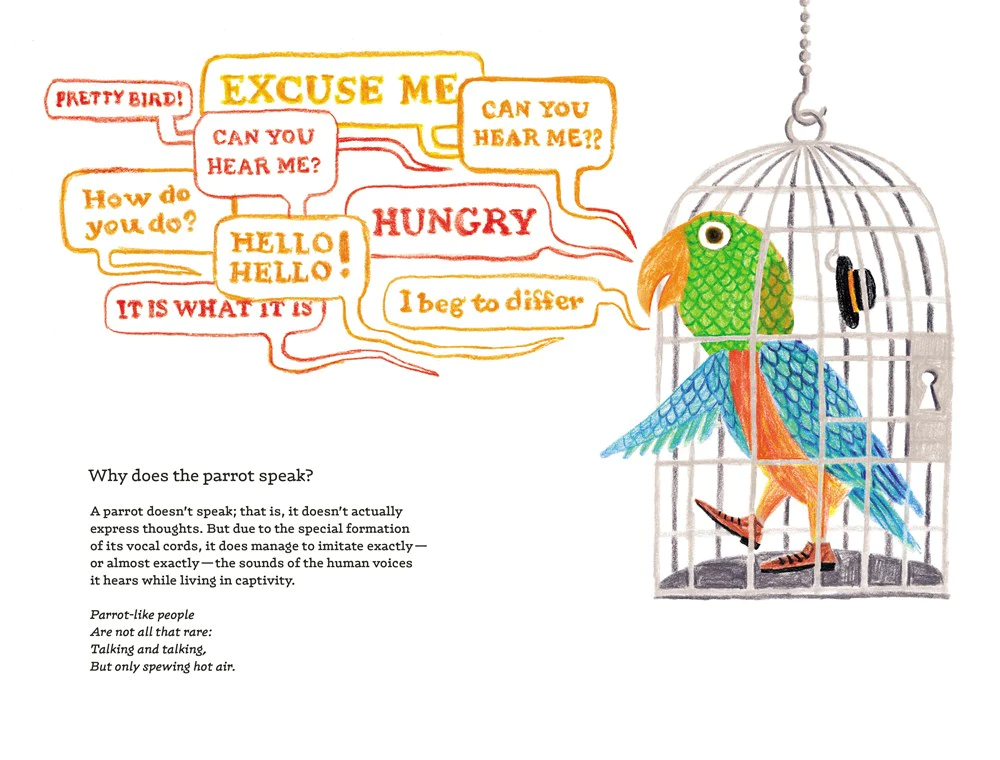
December 16, 2024 by Betsy Bird

Since Christmas and Hanukkah fall on the same day this year, Kate and I had a difficult decision ahead of us: Do we do a Christmas first book or a Hanukkah book. And, if a Hanukkah book, which one? The answer came to us when I discovered the incredible and incredibly weird and wonderful Moishe’s Miracle. Unfamiliar with it? Maybe it deserves classic status as an undiscovered gem. Today we discuss Gremlins, tiny demons, and so much more.

Listen to the whole show here on Soundcloud or download it through iTunes, Stitcher, Spotify, Google Play, PlayerFM, Audible, Amazon Music, or your preferred method of podcast selection.

Show Notes:

Dude. At least Tevye had a horse to pull his plow. This milkman? Nuthin’.

Baila’s expressions could be an entire book in and of themselves. She’s awful but her expressions are incredible. Been there, Baila. Been there.

It’s the little details that make all the difference. This little mouse boldly stealing an onion in the corners of the book is fantastic. “One less onion for the woman!!”

For a Hanukkah book, the fact that the menorah is consistently blocked is such an interesting artistic choice.

Filed Under: Fuse 8 n' Kate Tagged With: David Slonim, Fuse 8 n' Kate, Laura Krauss Melmed, Moishe's Miracle

  • « Go to Previous Page
  • Page 1
  • Interim pages omitted …
  • Page 61
  • Page 62
  • Page 63
  • Page 64
  • Page 65
  • Interim pages omitted …
  • Page 1046
  • Go to Next Page »

Primary Sidebar