
“To pay attention is our endless and proper work.” Melissa Sweet Talks Goldfinches and Mary Oliver

If you saw my Newbery/Caldecott 2027 Spring Prediction post earlier this month then my 2026 preferences are well-known to you already. In that post, I mentioned a number of potential Caldecott contenders, and one of them was a relatively small book. Clocking in at a mere 9.28″ long by 7.86″ wide, Goldfinches by Mary Oliver, with art by Melissa Sweet (out now), is the little package that packs a big punch. To pair a Pulitzer Prize winner with a Caldecott Honoree doesn’t guarantee magic. Indeed, I had some early skepticism when I realized that Sweet had adapted an Oliver poem to the picture book page. I’ve seen poems and songs turned into picture books and the results are too often muddled. But upon reading Goldfinches, it quickly became clear that this book is the exception to the rule. The book is, to put it frankly, a wonder. The publisher describes it in this way:
“Have you heard them singing in the wind, above the final fields?
Have you ever been so happy in your life?Mary Oliver, winner of the National Book Award and the Pulitzer Prize, is one of America’s most beloved poets. Introducing her unforgettable words to children for the very first time, her poem “Goldfinches” joyfully observes the power of the natural world as only Mary Oliver can.
Illuminated by the exquisite mixed-media artwork of Caldecott Honoree Melissa Sweet, Goldfinches fills the reader with wonder for the beauty around them and gratitude for the ability to bear witness to it.”
I cannot interview Mary Oliver about the book (Oliver died in 2019) but I can do the next best thing and talk to Melissa Sweet. And guess what? She brought sketches…
ADVERTISEMENT
ADVERTISEMENT
Betsy Bird: Melissa! It is a thrill and an honor to talk to you about GOLDFINCHES today. It’s always so nice to pick up a book and get completely and wholly wowed by it from the first read onward. What I don’t know is how this book came to be. Did the idea to adapt this poem to the page originate with you or with someone else? What, in short, is this book’s origin story?
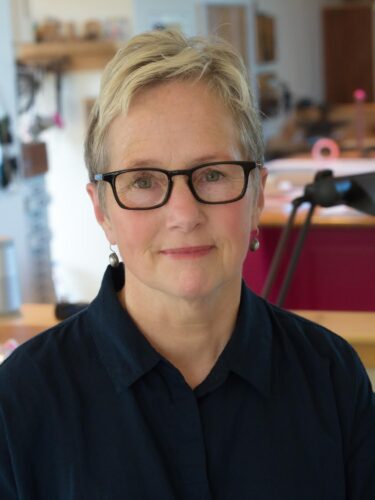
Melissa Sweet: Thank you, Betsy. That’s wonderful to hear.
The idea for illustrating Mary Oliver’s writings goes back a long way, but I thought about it in earnest after I finished Some Writer!, a biography of E. B. White. I’ve always resonated with Oliver and her poems, and thought writing about her and illustrating her work would make a great next project. I proposed the idea to both Mary Oliver and her agent, but the timing wasn’t right. However, a few years later (by now Mary Oliver had passed away), I received an offer to illustrate three of her poems for three books, and I leapt at the chance.
This poem, “Goldfinches,”was my first choice. By then I was an avid birder, and I sensed the poem would make an exuberant book for young readers and Mary Oliver aficionados alike.
It goes without saying I was given precious material to work with.

BB: Indeed you were. Tell us a bit about your own relationship to the poetry of Mary Oliver. You make mention in your Author’s Note of a quote of hers that you discovered before the poetry itself. How did you come to discover her fully and how did you come across the poem that inspired this book?
Melissa: That quote, “To pay attention is our endless and proper work,” (from the poem “Yes! No!”) is still on my wall. It gave me permission to wander, explore, take time to go to museums, read, and do anything that would influence my art and life. I admired Oliver’s conviction to spend every day walking outside with notebook and pencil in hand, observing and taking notes to then craft her poems. When I read her work, it’s as if I’m taking a walk right alongside her. Oliver’s sense of wonder is infectious. From there, I began buying her books, and rarely a week goes by that I don’t read or hear a quote or reference to her.
BB: This isn’t the first poem to be converted into a picture book, but it might be the most successful. Too often, poems can feel a bit shoehorned into the strict 32/40/48 page format. Oliver’s poem, in contrast, feels as if it was supposed to be a picture book all along. Did you find any difficulty in parceling out the words onto the pages? Or adapting it in any other way?
Melissa: I didn’t find designing this book difficult since the space felt generous, but there’s always challenges.


At the beginning of making a book, the pacing, page turns, page count and trim size are all crucial to going forward.

The early part of the process is fun because it gives me time to get in touch with the story, playing with ideas and materials for how the art might look. I’m looking to find something unexpected.

In a way, it comes down to how seamlessly the design intertwines with the words and images. The book needs to click into place like a jigsaw puzzle.

BB: You make mention in your Author’s Note of the fact that part of the allure of the poem is the mutually beneficial relationship between the goldfinches and the thistles. It’s that science connection and biological element that helps to make this book that rarest of rare gems – both a work of art and a glimpse into a natural concept. You pepper the edges and corners of the book with facts and notations. The science is literally in the details. Was that the plan from the start or did the form of the book come to you as you worked on it?
Melissa: Though it was not the plan from the start, I was jotting down science and natural history information into the early design of the book. At first, I was hesitant to add any words into the art because I didn’t want to risk those words being confused with the poem. But when a few artist friends came to the studio and saw my work underway, they urged me to try embracing the nature journaling aesthetic as a way of enhancing the story. It worked so long as words were visually quiet and subtle, like a whisper.
In addition to working with this exquisite poem, another thing that thrilled me was that Oliver’s subject matter is a scientific phenomenon. When I discovered that, it dawned on me just how acutely Mary Oliver was interacting with the natural world. Noticing these close details means being attentive to watching or listening, and it can mean staying still and being patient, letting what’s happening unfold.
Oliver shares her awe. We can all find this for ourselves; it may take patience, but there’s nothing more worth doing.
BB: Can you tell us a bit about your own process when crafting a book like this? Has it been any different for GOLDFINCHES vs. other books you’ve done?
Melissa: It was similar to making other books in that I’m looking for clues in the writing that pique my curiosity and help me decide on a direction and what materials to try. For instance, with this poem I made a list of every time a color is mentioned in the poem (which can be seen on the front endpapers). Oliver describes Goldfinches as “a buttery gold” and the purpley-red thistle is “a coin of reddish fire.” In a color wheel, yellow and purple are opposite, or complementary colors. The variations of these colors inspired my art throughout the book.
BB: Near the end of the book you reprint the poem in full. On the opposite page is a listing of 40 birds from 1991. Is that Mary’s own journal? What kind of physical research did you have to conduct for this title?
Melissa: This is Mary Oliver’s bird list. I found it online in her papers at the Library of Congress. What caught my eye was that the 26th bird listed is “Goldfinches,” and I thought: Here is evidence! Oliver recorded Goldfinches. This list was a fitting visual for the back matter. In addition, I read and listened to interviews and had lots of bird references nearby.
ADVERTISEMENT
ADVERTISEMENT
(An aside, I had put out Goldfinch feeders for years without seeing any at all. But then the summer I was working on this book, a pair of Goldfinches began coming to my feeder. Then there were four of them, probably their offspring. I was over the moon. A good omen, to be sure.)

BB: Certainly! Finally, with its mix of poetry, science, and art, the book is utterly unique. I can’t help but wonder if you’d enjoy doing other projects along the same lines, though. Do you have similar ideas for titles? If not, what else are you working on these days?
Melissa: Yes, I would work like this again in a heartbeat. It’s been a dream come true.
Happily, I’m working on the next poem by Oliver which will be published in 2027, and then a third book the following year. Meanwhile, I’ll be paying attention to the warblers arriving soon after this long winter, and looking forward to a sublime springtime!

An overwhelmingly huge amount of thanks to Melissa Sweet for taking such time and care and attention with her answers to me today. Goldfinches is, as I may have mentioned already, out now so there will be no waiting if you wish to see it firsthand for yourself. Thanks too to Abby Synes and the team at Penguin Young Readers for helping to put this talk together.
Filed under: Interviews
About Betsy Bird
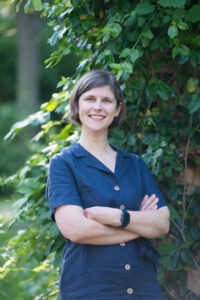
Betsy Bird is currently the Collection Development Manager of the Evanston Public Library system and a former Materials Specialist for New York Public Library. She has served on Newbery, written for Kirkus, and has done other lovely little things that she'd love to tell you about but that she's sure you'd find more interesting to hear of in person. Her opinions are her own and do not reflect those of EPL, SLJ, or any of the other acronyms you might be able to name. Follow her on BlueSky at: @fuse8.bsky.social
ADVERTISEMENT
ADVERTISEMENT
SLJ Blog Network
Now on The Yarn: Philip Stead
The Definitive Yokai Field Guide | Review
From Policy Ask to Public Voice: Five Layers of Writing to Advance School Library Policy
Fast Five Interview: Malia Maunakea
ADVERTISEMENT
I love Melissa Sweet’s always incredible artwork and Mary Oliver’s amazing poetry–what a combination!! Many years ago I had the pleasure of hearing Mary Oliver read her poetry here in Los Angeles. I have her quote “Tell me, what is it you plan to do with your one wild and precious life?” posted on my filing cabinet. Maybe her line “what I want in my life is to be willing to be dazzled–” inspired me to write my science/poetry/art book AWESOME EARTH, which I’m thrilled was a SLJ Best Book of the Year 2025. Thank you, Betsy, for this wonderful, thoughtful conversation!