
Using Nursery Rhymes with Today’s Kids: A Talk with Mary Lanni
I had to weed the Nursery Rhyme section of my library the other day.
No, not in the children’s room. In the adult section. And let me tell you, one of my primary objections to scholarly works on nursery rhymes is how few there are out there. While flashy fairy tales garner all the love and adoration from budding Bruno Bettelheims, nursery rhymes are rarely delved into with any seriousness. With that in mind, you might wonder why I weeded the section at all. Well… these were the books:
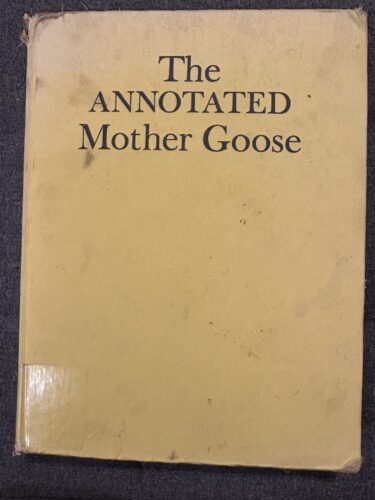
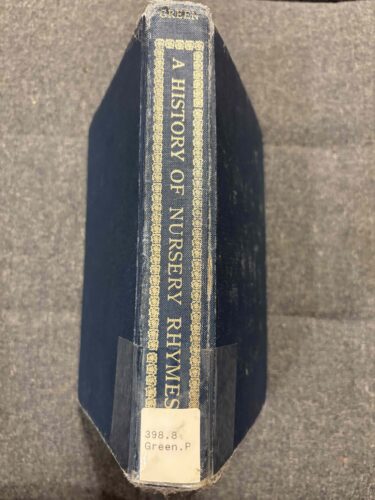
A certain kind of nerd might think, “I dunno. Those look pretty cool.”
Yeah. Until you open them up. A History of Nursery Rhymes, for example, is so egregiously racist that I found my jaw dislocating from my skull as I read through it. About the time it started talking about how ancient humans had “only the limited intelligence of the modern Australian native,” I was kicking myself over the fact that it had somehow remained on our library shelves for as long as it had. But what do we have coming out today that can fill this void?
ADVERTISEMENT
ADVERTISEMENT
Behold the answer:

That’s better. Much much better. Published with Bloomsbury and out May 14th, Using Nursery Rhymes with Today’s Kids promises a contemporary peek behind the curtain of those rhymes we love so well. The publisher describes it this way:
“Nursery rhymes are easy to remember, recite, and pass on to future generations, but are these transmitters of popular culture still relevant and appropriate?
In an increasingly multicultural world, it’s critical to examine the lessons children are learning-both directly and indirectly-to ensure a positive collective future for everyone.
Readers are introduced to nursery rhymes from a historical and international perspective, where common themes and original intents are explored. The book highlights the importance of oral storytelling in cultures around the world and details the ways in which nursery rhymes provide young children with the tools to become strong readers. This guide also explores how popular modern children’s songs borrow from older tunes to be accessible to a contemporary audience.
An examination of the more nuanced elements of nursery rhymes highlights cultural changes that can affect the meaning of these older songs, questioning whether using the tune of a song with a problematic history is appropriate and whether altering only the offending words/phrases is sufficient to justify continued use. On-the-ground examples illustrate the ways in which songs can affect participants in different ways. Finally, the book helps readers make educated choices about how best to use nursery rhymes to support diversity, equity, inclusion, and accessibility.”
I love everything about this. But I had plenty more questions to ask:
Betsy Bird: Mary! Thank you so much for taking the time to answer some of my questions today! Nursery rhymes are, for a variety of reasons, very near and dear to my heart. As such, your book, USING NURSERY RHYMES WITH TODAY’S KIDS is a topic of great interest to me. Tell us a little bit about where you got the idea for the subject and what drew you to it.
Mary Lanni: Hi Betsy – thank you so much for including me! This book actually came about really organically. A couple of years ago, one of my colleagues asked me to put on a presentation for storytellers within my library system about nursery rhymes since the topic had become increasingly popular in library circles. So, I figured I could find the expert book on the subject, synthesize it, and present it to my team.
However, I quickly realized there was no such book and that I had a huge task of sifting through what information did exist in order to create a cohesive narrative.
Early literacy and community inclusion are of great importance to me, and so the limited awareness of nursery rhymes in general began to nag at me. After doing the research for this presentation, I figured that I might as well try writing the book I was looking for in the first place.
BB: Could you tell us a little bit about why you feel nursery rhymes have importance for children of the 21st century? Why do kids today need to know them?

Mary: Great question. Nursery rhymes, particularly those in the English language canon, have existed for hundreds of years in many cases. As a result, these songs and rhymes have been passed down and shared across generations of grandparents, parents, and children, creating a sort of community vernacular that you see echoed across popular culture in books, movies, and more. In order to really understand a lot of the elements that connect us culturally, then, children need to have an intrinsic knowledge of these songs and stories.
Songs in general are pivotal to early learning, and nursery rhymes help to build skills like phonological awareness, vocabulary, and narrative skills. When kids are sung to, whether in Storytime or at home, their neural pathways are developing more deeply, and they will be better equipped to understand language and speak it when they’re older.
BB: Part of what puzzles me so much about nursery rhyme scholarship is how little of it there is. You can’t walk through a 398.2 section of a library without tripping over dozens of scholarly musings on fairy tales, but nursery rhymes often strike me as the forgotten art. Why do you believe that they haven’t had the same level of scrutiny over the years?
Mary: I love that you asked this question because I thought the exact same thing as I was looking for material for my presentation (and later, my book). You’d think there would be more information since these songs have existed for so long! I’m not sure I have the perfect answer, but this is what I have been able to determine so far.
First, nursery rhymes are a sort of folk tradition that have been handed down informally for generations. Since many of these songs were created at a time in which a high percentage of people could not read or write, a lot of their original intent is lost to time. On the contrary, fairy tales include more text, deeper messages, and opportunities for literary criticism, so they become a little more intriguing to discuss at length.
Second, the brevity of nursery rhymes make them perfect for enhancing small moments in a child’s day, and when a song has essentially existed in the cultural zeitgeist of sound and music, people tend not to reflect much on the meaning behind it. This can also be controversial, as you know.
BB: Absolutely, and well get into that. But first, tell us a little bit about the scholarship you did for your book. Did finding sources strike you as challenging? How did you conduct your research?
Mary: Yes! Finding sources was incredibly challenging. Because not much has been written about these songs, uncovering primary sources of any kind was difficult to say the least. I ended up having to rely a lot on what people have said over the years about these songs and rhymes, leaning on the loose interpretation of folk tradition that can change over time.
In a way, though, this approach appropriately reflects the folk nature of nursery rhymes in that people are going to find meaning where they want to find it, whether it was originally intended that way or not. And over time, that meaning can also change based on global events, as well.
For my research, I ended up blending many different kinds of sources, from books written about the “hidden meaning of nursery rhymes” to scholarly articles about early learning and children’s music to contemporary discussions of familiar nursery rhymes. It made for unexpected discoveries, and ultimately the book came together in a way that was different than I initially anticipated.
BB: One of the many challenges of nursery rhymes, at least here in America, is how often they’ve been tied into the racist minstrel shows in the past. How did you navigate some of the tricky racial histories behind certain rhymes?
Mary: This is a topic that has gained some traction in recent years, and I do address it in my book. Oftentimes, when a family has passed a song down for generations, people tend not to think about the origin of that song or how singing it might affect others. One of the main messages of my book is to ensure that caregivers and educators carefully scrutinize the songs they are intending to share with their children and students to hopefully avoid stereotypes and damaging lyrics while helping to build a new canon of songs that are more positive and beneficial for young listeners.
One chapter focuses primarily on this subject and faces it head on, which can be a little difficult for people who have become accustomed to repeating certain songs without knowing their histories. It’s my hope that readers can approach this deleterious history with an open mind and a willingness to recognize which songs should continue being shared. Interestingly, this was one of the clearer chapters to put together because so much more is documented about these songs and where they originated.
BB: I bet! So tell us a little bit more about the specifics of your book. How much of the book is history and how much of it is for the parents of today? How is it laid out?
Mary: There are three main sections of my book.
First, I go into the known or speculated history of some of the more well-known English-language nursery rhymes both from England and America, as well as a handful of nursery rhymes from around the world. This section highlights specific songs and addresses both their benefits to young children (when relevant) and any potential pitfalls that might exist when sharing the songs with contemporary audiences.
Second, I go into more of the brain science behind why nursery rhymes and songs are so important from a very approachable direction, giving examples of songs that are particularly well suited to this process and not being too scientifically pedantic.
Third, I investigate the history of children’s music in general and its development over time, including some speculation as to what might be coming next.
At the end of the book, readers will find resources about ensuring their own home, classroom, and library Storytimes are both beneficial from an early learning perspective and not harmful in the songs that are being shared.
Overall, readers will come away with more information about nursery rhymes and will hopefully feel empowered to carefully analyze their own Storytimes to see if any adjustments need to be made. There is also a list of songs that are probably safe for Storytime in case readers want to use that as a guide.
BB: Was there anything you initially wanted to include in the book and weren’t able to for whatever reason?
ADVERTISEMENT
ADVERTISEMENT
Mary: During my research, I came across a contemporary folk singer named Rhiannon Giddens whose work centers “around the mission of lifting up people whose contributions to American musical history have previously been overlooked or erased, and advocating for a more accurate understanding of the country’s musical origins through art (https://rhiannongiddens.com/about).” I thought it would be a really exciting and contemplative addition to my book, but it would ultimately have taken me on a tangent that strayed too far from my primary focus. Maybe it will be another project for another time. 🙂
BB: Absolutely. Finally, what else are you working on? What’s next for you?
Mary: I am an outreach librarian in Colorado and I have a lot of projects I’m working on in that realm. Outside of that, I also review books and host author interviews, which is really fun, especially now that I have a book of my own. You can find them on YouTube @MaryLanniReads or on my website www.maryrlanni.com!
As far as more writing, I am not sure yet. I am certainly open to the universe presenting me with an opportunity, but for now I’m happy to be able to share this book with others and help caregivers and educators feel more confident sharing nursery rhymes with the children in their lives.

Big time thanks to Mary for answering my questions today. I recommend checking out her Nursery Rhyme Project on her website for some additional great insights into specific rhymes (I particularly like her Songs that are (Probably) Safe for Storytime section). And as I mentioned earlier, Using Nursery Rhymes with Today’s Kids is out Mary 14th, so look for it then. I sure will. I’ve some spaces on my shelves that need replacements…
Filed under: Interviews

About Betsy Bird
Betsy Bird is currently the Collection Development Manager of the Evanston Public Library system and a former Materials Specialist for New York Public Library. She has served on Newbery, written for Kirkus, and has done other lovely little things that she'd love to tell you about but that she's sure you'd find more interesting to hear of in person. Her opinions are her own and do not reflect those of EPL, SLJ, or any of the other acronyms you might be able to name. Follow her on BlueSky at: @fuse8.bsky.social
ADVERTISEMENT
ADVERTISEMENT
SLJ Blog Network
Top 10 Circulated Graphic Novels of the ’25-’26 School Year
Bug Ego, vol. 1 | Review
Early May Update: Our list of possible Newbery contenders according to Heavy Medal readers
From Policy Ask to Public Voice: Five Layers of Writing to Advance School Library Policy
Fast Five Interview: Joy McCullough
ADVERTISEMENT
I am SO excited about this article and to read Mary’s book! I am a a preschool teacher. Last year my school started using the Heggerty Phonemic Awareness program. It has a big emphasis on teaching Nursery Rhymes as a way to naturally teach rhyming words, letter sounds, rhythm and cadence, etc. My class this year really, REALLY love nursery rhymes- so much so they we spend a large part of our group time singing/dancing/acting them out.
I’ve been teaching preschool for over 20 years, and even I had forgotten just how much children can learn through nursery rhymes. I’m so glad that I’ve made them a focus in my classroom, and I look forward to learning more about them from Mary’s book.
Okay, so now I need to seek out this Heggerty Phonemic Awareness program. This is absolutely fascinating to me. Thank you!!!
I associate nursery rhyme scholarship so closely with the Opies that I was halfway surprised not to see their name mentioned here. Does this book do things that theirs didn’t, or is it just updated for the 21st century?
Ah! The Opies! My first encounter with them was with the Maurice Sendak collaboration I SAW ESAU. Blew me friggin’ mind. That’s a great question (that, alas, I cannot answer). I’ll see if Mary has a response.