
The Multi-Interview: Accompanying the SLJ Piece “Authors Tackle Complex Topics in Children’s Nonfiction”

This month you may have seen that in the latest issue of School Library Journal there was a piece entitled Authors Tackle Complex Topics in Children’s Nonfiction. Written by my pretty little self, the intention is clear: I wanted to highlight how hard it can be to write a book for kids about a difficult or complex subject, whether that’s glitter, history, or the life of someone who wasn’t saintly 24/7. In doing so, I spoke to a range of incredible authors. These are folks that I highly respect. I needed to hear their opinions.
From the questions I sent to them, I got a range of wonderful answers. Of these answers, I was able to pluck a scant few quotes. This, I feel, is unfair. So today, I’m going to present to you a host of amazing responses from the people with whom I spoke. Each one of these authors wrestles with the question of how to tackle mature subject matter in nonfiction texts for kids. I hope you enjoy their thoughts as much as I did:
ADVERTISEMENT
ADVERTISEMENT
From Chris Barton

Betsy Bird: I think that for some adults out there, there’s a perception that if a book is written for a kid, and it’s nonfiction, then the book is, by definition, going to be laudatory about its subject matter. But when you wrote GLITTER EVERYWHERE you purposefully chose a subject that is both beloved and reviled, and explained the reasons for both to kids. From a writing perspective, how do you balance out both the positive and negative qualities of your subject?
Chris Barton: For Glitter Everywhere! what I did was acknowledge both of those qualities on the very first page, pointing out that glitter is both “Loved” and “Not loved” and promising the reader that this book is going to explore both points of view. That not only created space for me to examine the complicated feelings about glitter that we collectively have — it created the expectation that I would indeed do that. Everything afterwards was just illustrator Chaaya Prabhat and me making good on that promise to readers.
Humor helps, too. Glitter Everywhere! has a lot of goofiness when I’m discussing various positive or neutral aspects of the stuff, such as how the terminology shifted from “flitter” to “slivers” to “glitter.” But those funny bits also acted as a tether as I was writing. The information that I presented about environmental damage and child labor, while not at all humorous, had to be delivered in a tone and at a level of detail that made those aspects of the story seem to fit in the same book as the content that’s more lighthearted. And I had to make sure it was all equally interesting — that was the common denominator.
BB: Obviously it is much easier for you, the author, if you write a book that’s entirely positive rather than complicated. What, then, is the value as you see it to exploring these more complicated topics with kids?
Chris Barton: It’s important to me to never lie to my readers through omission, and that goes for picture book readers of all ages. The last thing that I would want to do is have one of my nonfiction books spark a reader’s interest in a subject, only to have that reader’s pursuit of more information about the topic result in them feeling I had left out something that might fundamentally change their view on that topic. And I especially wouldn’t want readers thinking that I had left out that information deliberately, for my own convenience, either because I couldn’t trust them to handle it or wasn’t skilled enough to figure out how to convey it to that audience.
BB: To your mind, what’s your own personal philosophy on how much complexity a kid can handle in an informational text?
Chris Barton: A kid can handle complexity in an informational text right up until the moment that they choose to stop reading it. It’s the job of those of us creating a nonfiction book to make that complexity as accessible as we can. But if we fall short, or a particular reader is just not ready for it, a great thing about reading books is that you can skip ahead, skip around, or close a book entirely whenever you like.
From Charles R. Smith Jr.

Betsy Bird: No one would ever say that the topics you choose for your nonfiction titles are purposely selected for their difficulty. At the same time, you’ve successfully discussed subject matter (the enslaved people who built the White House, biographical subjects that weren’t all saints, etc.) that no one else has ever dared to consider. So just to begin, what appeals to you about each informational subject you select?
Charles R. Smith: For me, it’s really just a matter of what interests me. I love Jimi Hendrix and his music so I did a book on him. The White House book was proposed to me by an editor so I did it because I wasn’t aware of the history. In the case of others, it was the same…what interests me. What element does it need to have to be worthy of a book for kids? I believe that kids need to see the struggle that others go through, particularly at their age, to understand how hard certain people work to get where they got. And how young they may have started. In the case of Jimi, kids love hearing that he taught himself to draw at a young age and taught himself to play the guitar by the age of sixteen (with both hands no less) despite not having money. In the case of Jack Johnson, they love hearing that a boxing champ was bullied as a kid.
BB: You don’t work via formula. Every book you do is completely different from the one that came before. The connecting thread then, to my mind, is that you know how to siphon down a person or an event into critical parts AND you make them not simply comprehensible but interesting to kids (AND you put them into poetry, which is another matter altogether). Do you have a process that you go through to do this?
Charles R. Smith: I usually try to latch onto something that connects with the subject. Something that allows me to create a unique structure to tell their story. But again, it has to include showing the subject at a young age so kids are invested. In the case of Muhammad Ali, that meant using 12 rounds of a fight to show 12 rounds of his life. Ali himself said he wasn’t a perfect man and didn’t want to be shown as such, so I made a point of showing his imperfections so he became real and not just a caricature. So I began his story when he was born, showed him being introduced to boxing at the age of twelve and continued that journey until the Olympics when he lit the torch to end on a high note. In the case of Jimi, people would mostly talk about how he died, so I wanted to show his life from a young boy and HOW he became such a force in music. I didn’t end with his death because in a kids bio you don’t have to. But particularly for this book, I wanted it to end when he became a star, when he was “born.” So even though each book is different, it’s reflective and true to the subject matter. How do you maintain that balance between what’s appropriate and what’s necessary to know? I just focus on telling parts of the story that kids might find interesting and gravitate towards. Like I said, in the Jack Johnson book (Black Jack) the fact that he was bullied is what got him into boxing. Kids loved seeing that and understood that as the story went on, he just wanted to fight the best. So it wasn’t about me trying to make a statement. It was about showing the subject trying to do what they were meant to do.
BB: Are there topics you’ve tried to write about in the past that have stumped you?
Charles R. Smith: All of the books have stumped me at some point during the writing LOL. Thankfully, I’ve worked with great editors who asked the right questions that helped bring out the best in the story. Usually I have a structural idea, but some subjects, like Black Jack, Bessie Stringfield and Brick by Brick were harder to tell because of the time period. In those instances, I focused on the subject to show how they dealt with what’s ultimately just another obstacle.
BB: Is it truly possible to write about most complicated subjects for kids if done correctly?
Charles R. Smith: I would say it’s actually pretty easy as long as you tell an honest and interesting story that comes from a truly curious place. The difficulty comes in how the subject matter is viewed and handled once the book is actually out. In the case of Jimi, his death hangs heavy over his name with adults so they view him with a wary eye in considering sharing his story with kids. But kids don’t know about that. They only know what you tell them. And most adults don’t know anything about his childhood and how he got into playing the guitar. In the case of Bessie and my other books that mention segregation, it’s been mostly shown as a societal issue; separate water fountains and bathrooms, separate schools and such. But how did these individuals navigate those situtions? That’s what connects the reader to the subject. I always treat those issues as obstacles the subjects had to overcome to achieve their success.
BB: Why, personally, do you think that is it important for kids to read nuanced informational books on complicated subjects?
Charles R. Smith: Kids to need to know that even though life can be hard, there are plenty of people who were able to achieve success despite all the hurdles in their way. If there’s a common thread in my biographies and subjects it’s that despite everything thrown at them, from being born in poverty to being treated a certain way because of their skin color to how society viewed them, they made it through. Hopefully it gives kids hope that they can achieve any dream they have no matter what is in their way.
From Carole Boston Weatherford
Betsy Bird: No one would ever say that the topics you choose for your nonfiction titles are purposely selected for their difficulty. At the same time, you’ve successfully discussed subject matter (Paul Robeson, the Tulsa Race Massacre, etc.) that no one else has ever dared to consider. So just to begin, what appeals to you about each informational subject you select? What element does it need to have to be worthy of a book for kids?
Carole Boston Weatherford: First of all, my subjects must be awesome-inspiring enough to sustain my interest through the research and writing process that can take months or years. Secondly, the subjects must advance my mission of mining the past for family stories, fading traditions and forgotten struggles that center African-American resistance, resilience, rejoicing, remarkability and remembrance.
BB: You don’t work via formula. Every book you do is completely different from the one that came before. The connecting thread then, to my mind, is that you know how to siphon down a life or an event into critical parts AND you make them not simply comprehensible but interesting to kids. Do you have a process that you go through to do this? How do you maintain that balance between what’s appropriate and what’s necessary to know?
Carole Boston Weatherford: After researching the topic, I write a draft that’s way too long and too detailed. I let that draft sit for a few days and then, I read it in search of a theme and in hopes that a through line will emerge to connect the narrative. I look for details that will resonate most with readers and that will convey the emotional landscape of the historical setting.
BB: Are there topics you’ve tried to write about in the past that have stumped you? Or is it truly possible to write about most complicated subjects for kids if done correctly?
Carole Boston Weatherford: I have written about the doll test, psychological study that proved segregation hurt Black children’s self-worth. I have written about the Tulsa Race Massacre, the worst incident of racially motivated hate violence in U. S. history. I have also written verse novels of Billie Holiday and Marilyn Monroe, both of whom were teenage victims of sexual assault.
BB: Why, personally, do you think that is it important for kids to read nuanced informational books on complicated subjects?
Carole Boston Weatherford: Kids themselves are nuanced and complicated. They deserve and will demand the truth. We owe it to them to be honest and inclusive in chronicling history. Children are not too tender for tough topics!
From Anastasia Higginbotham

Betsy Bird: Much of your career in creating books for kids has focused on tackling subject matter that isn’t just difficult. Some would say the topics you touch on (death, sex, white privilege, sexual abuse) are impossible to write about for kids. Yet you’ve consistently made a career out of discussing these topics. What draws you to this subject matter time and again?
Anastasia Higginbotham: What drew me initially was having experienced those things in childhood, as many kids do, and gotten such unsatisfying responses from grown-ups and the culture. Messages like, way worse things can happen than divorce, this is nothing—move on. Or, death is peaceful, death is natural—don’t be sad, let them go. And, do not even attempt to take on something as heavy as racism—you can’t solve that. First, who do you think you are? Second, life isn’t fair, Honey, so you better toughen up.
What I was hearing was: God, are you naive (which I heard as “stupid”). You care too much and you will be absolutely destroyed by longing for things to be otherwise. There’s some truth to that last part, but the caring, my sensitivity, grief and outrage, that was all my richest, raw material.
I came into adulthood overfull and still choking on all the feelings I wasn’t supposed to have had. I wanted to be a writer but my writing was bitter and repetitive–always about death, divorce, sexual abuse, spiritual corruption. In my 30s, I wondered if maybe I could walk through each experience again, asking, how might this be done differently? What’s the alternative, and more important, what’s the truth? I created the series to challenge that atmosphere of casual and habitual dismissing of children’s deep inner lives, questions, and acuity for sensing lies and ommisions of the truth.
Plus, I like to be with people when things have gone wrong, like, when someone’s experienced a loss, theft or betrayal, or they’re in physical or emotional pain, or facing a deep question where the answer will for sure be disruptive. I like being present then because that person is about to reveal a lot about who they are and what they need and how they grow. And isn’t that the whole point of taking care of children or anything alive? To find out what kind of care and conditions they grow in best. What we do for each other in those break-up, shake-up moments matters a lot, and I like the responsibility.
BB: Tell me a little bit about your process. You have to make things that are kid-friendly, but at the same time stay true and honest to the reader. How do you find that balance?
Anastasia Higginbotham: It only has to be true–words and pictures. This takes a lot of tries and a lot of time, loosening my thoughts and beliefs and control so that the deeper knowing can come out. Often the picture comes with the words at the same time. So for the line, “Divorce can feel like being pulled in two directions at once, sometimes exactly like that,” I was riding on the subway when I heard the words in my imagination and saw this kid divided into one part reaching for one parent, another part reaching for the other parent, and a centered self, clenched in agony. Tears sprang out of my eyes.
And when this line came, “Death is not a punishment, but it mostly doesn’t feel fair,” I was like, oh man, I am done. That’s all I have ever needed to hear for the rest of my life to console myself or anybody else about death.
It also only has to be enough. Just enough image on the page to suggest the scene, just enough words to speak to that moment the child is existing in. Whatever I say is going to go into this soft-hearted and probably hurting person, no matter who is reading it and what age they are. I want hard truths to land soft, conscious of how opened up the reader may be right now. I know it’s enough when it makes me cry or shake while I’m making it, and when it doesn’t feel like mine but feels like something pressed into the world from below and around me. I find it here suddenly in my hands, and I get to find a way to share it.
BB: Is there any topic you’ve considered but ultimately decided not to write about?
Anastasia Higginbotham: I want to write about money because it makes me feel out of control. Emotions, sensations, thoughts go wild. I get berzerked by it and am still learning how to be present to that feralness. A mix of rage, grief, elation, envy, shame, blame, freedom, revulsion. That said, if a publisher said to me, Make the money book, I would be up that high dive ladder so fast, stride to the end of the board and leap. I would love to make that one.
BB: While I know you’ve gotten objections to your books, I’m more interested in the parents and teachers that have told you how grateful they are to have found them. What are some of the letters or emails you’ve received that have meant the most to you?
Anastasia Higginbotham: A mother wrote to me on Instagram to say she shared Death Is Stupid with her son after his grandfather died. After they read it and talked, she said he went to sleep holding the book the way kids hold a stuffy or baby blanket, against his chest. And I felt 100% total fulfillment in LIFE. Like, there is no place on earth I want to be than in that boy’s experience of being consoled while he is missing his person. I have succeeded as a human to have made something that he can hold that close to his body. The intimacy of it. He doesn’t know me, and yet, I get to be there in this tender, tender place of his own heartmending after a loss. Same thing happened when a mother sent me a picture of her white daughter staring at the same four pages of Not My Idea for a long, long time. The pages where it says, “Many white people did things they never should have done.” Followed by, “Some white people joined the leaders of Black Liberation.” I get to stare at that picture of her staring at the book’s pages and wonder what is going on for her? Where can she see herself now that might not have been an option before she saw those pages? What paths just opened up? There’s nothing more meaningful to me than being part of her expanding more fully into her sense of what is real and just and what is her chance to take. That’s a whole reason to live.
From Deborah Heiligman:

Betsy Bird: No one would ever say that the topics you choose for your nonfiction titles are purposely selected for their difficulty. At the same time, you’ve successfully discussed subject matter (Erdos, torpedoing ships full of children, etc.) that no one else has ever dared to consider. So just to begin, what appeals to you about each informational subject you select? What element does it need to have to be worthy of a book for kids?
Debroah Heiligman: Each of my books grabs me either by the heart or the soul (or both), and won’t let go. Rarely, if ever, do I think of anything smart like, this would fit into the curriculum or Is this appropriate for a child – but that’s because I think like a child. It is the child in me to whom the topic speaks. For example, it wasn’t Erdos’s math that spoke to me (I don’t understand it at all!), it was his personality, his oddness, and especially the way he lived his life on his own terms. I felt like so much about him was childlike, too. I knew that what I would want to share with children was who he was more than what he did with his math. I did share math that I thought elementary school children could understand, and we snuck in some higher concepts for the grown-ups, especially in the illustrations. Luckily for me, LeUyen Pham was very much into the math!
Here’s another example: With Torpedoed, I pretty early on knew that the way I could get through the writing of the story, and children would connect with it, was to focus on the heroism, altruism, and love. It was always going to be suspenseful, and I aimed for a page-turning narrative, off course. And I knew there would be some tears (especially for the grown-ups reading it) but I wanted the overall feeling to be one of inspiration. Each book has its own challenges in this regard, but because I think like the child of the age I’m writing for, it starts out more intuitive than explicitly thought out.
BB: You don’t work via formula. Every book you do is completely different from the one that came before. The connecting thread then, to my mind, is that you know how to siphon down a life or an event into critical parts AND you make them not simply comprehensible but interesting to kids. Do you have a process that you go through to do this? How do you maintain that balance between what’s appropriate and what’s necessary to know?
Deborah Heiligman: I think I’m at an advantage where this is concerned because I usually pick topics that I know nothing about. So when I am first researching, I write down all the things that make me go, “Oh, wow!” (I call these my oh wow notes) because I know that because those are things that excited me, that’s what I will want to tell my readers. By the time I’m done with the research for the book, I’m too inside it all, too much of an expert, so I am in danger of losing the perspective of the newcomer. That’s why I’m sure to take the oh wow notes. Though I usually do remember what astonished or surprised me, or made me desperately want to learn more, but in case I don’t, I have those oh wow notes to go back to.
Sometimes when I’m really well into a project something new will catch my attention and I have to ask myself, does this belong in a book for the newcomer to this topic, or am I excited by this because I’ve just spent four years on it and want to know the details because I’ve basically gotten a masters or a phD on it—sort of kidding, but not? Anyway, I have to be really strong and cut it if it’s the latter—usually. (Sometimes I can keep it, if I’ve earned it, if the reader will also be touched/wowed/upset by it….)
With my upcoming book, Loudmouth, at one point I started to get into the weeds about the different schools of anarchism, and after a few days working on that, I cut all but about two or three sentences, and I think those sentences ended up in different places. Kids wouldn’t care about Kropotkin vs Bakunin! (and if they did, they could look it up!) They would be much more interested in Emma’s views on marriage (con) and free love (pro), and etc. I sometimes have to give myself a talking to: The book is about Emma, and everything has to be seen through the lens of her as a remarkable, fallible person. So to see anarchism (her beautiful ideal) from her point of view, not as if from an encylopedia. So slash slash slash. This happens with every book. when I was working on Vincent & Theo and getting too into the weeds about color theory and art history, I put up a sign that says “You are a storyteller not a scholar.” That sign stays on my wall!
BB: Are there topics you’ve tried to write about in the past that have stumped you? Or is it truly possible to write about most complicated subjects for kids if done correctly?
Deborah Heiligman: I think it’s truly possible to write about anything for kids if you have the right angle for them, keep their knowledge base in mind, always, and write from the heart. Topics have stumped me but because I couldn’t find the story, not because I didn’t think I could write about them for kids.
BB: Why, personally, do you think that is it important for kids to read nuanced informational books on complicated subjects?
Deborah Heiligman: Oh this is an interesting question. Kids are starved for the truth, I think. But they don’t want it shoved down their throats. They want to be told some of it, sometimes, but on their own terms. Really the want to discover it for themselves. So if you tell them a true story, and there are nuanced truths in that story, they will discover the truths for themselves and they will become theirs. Their own truths. I never thought of this quite this way before, but I think this is why I write the way I write. I want my readers to discover truths from the stories I tell and I certainly I never want to tell them what to think.
From Marc Tyler Nobleman

Betsy Bird: No one would ever say that the topics you choose for your nonfiction titles are purposely selected for their difficulty. At the same time, you’ve successfully discussed subject matter that no one else has ever dared to consider. So just to begin, what appeals to you about each informational subject you select, whether historical or a bio? What element does it need to have to be worthy of a book for kids?
Marc Tyler Nobleman: I appreciate your perspective—thank you. The only criteria for my nonfiction picture books is that they must revolve around something that flies—superheroes, fairies, planes. Kidding—that is merely coincidence.
The real throughline is high-profile hook plus mystery in the background. Everyone knows Batman. Few [even among comics geeks like me] knew the full tragedy of his “secret” co-creator. Everyone knows that the Japanese attacked the U.S. at Pearl Harbor in WWII. Few knew that the Japanese also bombed the mainland.
But that hook/mystery combo alone isn’t enough—to sustain it, you need drama. Yes, Batman is absurdly popular, but that doesn’t mean that his creation can sustain a book. At school visits, kids clamor “Do a book on the Flash! Do Black Panther! Do Deadpool!” [Yes, some second graders have seen that R-rated movie.] But sometimes a character [or an invention, or an idea] is conceived without friction by a person at a desk. That won’t fill 32 pages. For me, no suspense means no go. Bill the Boy Wonder, however, involved betrayal.
And that betrayal involved something I hadn’t seen in nonfiction picture books: a singular “villain.” Often in biographical picture books, the antagonist is a group—Nazis, intolerant white people, men [in books about misbehaving women making history]. In Bill, artist Bob Kane, while not full-on evil, lies and mistreats his professional partner, writer Bill Finger. A friend becomes an enemy. You root for Bill—and against Bob. That dynamic gave me delicious grist. Thirty Minutes Over Oregon also had an element that felt new to the format—redemption. An enemy becomes a friend.
These stories are not about household names or famous incidents. And they have an underlying darkness to them. Therefore, they were not easy sells to publishers. I find that paradoxical—we well know that kids are drawn to stories with edge. They can handle glimpses of the complexity of the human condition. I feel we need to push kids a little. Learning [in developmentally appropriate ways] that bad things happen and people are flawed will not shatter their innocence. Rather it will better prepare them for the realities of the world.
Thirty Minutes Over Oregon got perhaps the most rejections for any of my nonfiction manuscripts, then got some of the most humbling reviews. Currently I’m shopping around a manuscript that I’m so confident and passionate about—it is both an action thriller and an emotional gut punch, a story that causes jaws to drop every time I describe it. As of now, I am running that same gauntlet—high praise but no takers…yet. Patience makes published.
BB: You don’t work via formula. Every book you do is completely different from the one that came before. The connecting thread then, to my mind, is that you know how to siphon down a life or an event into critical parts AND you make them not simply comprehensible but interesting to kids. Do you have a process that you go through to do this? How do you maintain that balance between what’s appropriate and what’s necessary to know?
Marc Tyler Nobleman: As I research, I build a list of essential moments to include as well as moments that are like ice cream toppings—I don’t need them, but they’ll make a sweet story sweeter.
You can tell with almost scientific accuracy that certain details will be irresistible to kids [and adults!]. Boys of Steel—young Jerry Siegel is so excited to tell his friend Joe Shuster about the character [ahem, Superman] he dreamed up overnight that he doesn’t take off his pajamas but tugs clothes on over them and runs nine blocks to Joe’s apartment. Bill the Boy Wonder—Batman’s cringey initial design [red union suit, stiff wings]. Thirty Minutes Over Oregon—a Japanese naval pilot bringing a 400-year-old samurai sword on every mission for good luck. Fairy Spell— nine-year-old Frances and 16-year-old Elsie claiming fairies emerged only when no adults were around.
I strive to write up at kids to show them I respect their intelligence. Part of that is not shying away from unpleasantness. In Thirty Minutes Over Oregon, aimed at upper elementary and older, I mention seppuku—ritual suicide—a single time. [That was a stated reason for at least one of the rejections.] Obviously it’s a highly sensitive topic, even though no character follows through, but it’s relevant to establish the severity of the WWII-era Japanese military sense of honor.
In Fairy Spell, Frances and Elsie lie about photographs they take of what they claim are real fairies. But when you factor in the larger context of the story, they don’t seem like liars. The reason they lie in the first place is understandable; I’d argue their “crime” is victimless. A big reason they keep up the lie, revealed at the end, is surprisingly touching.
In life, parents and other adults have to field questions from kids about matters from the unethical to the reprehensible. In literature, authors must find ways to do the same.
BB: Are there topics you’ve tried to write about in the past that have stumped you?
Marc Tyler Nobleman: Not to the point of abandonment. I did start to research a man whose accomplishments are fascinating and visual and kid-friendly, but I wasn’t finding the degree of drama I typically want. At the moment, it’s back-burnered, not because of that but simply because of the normal jostling of projects. When the time comes, I would keep going and ensure that it’s not a series of quirky anecdotes but rather what it needs to be: a narrative with stakes.
Within projects, certain passages temporarily stump me, but that’s part of the fun of writing. It’s like removing a stubborn stump from an inopportune location. It’s a challenge but it’s doable.
Note: I’ve never removed an actual stump.
BB: Why, personally, do you think that is it important for kids to read nuanced informational books on complicated subjects?
Marc Tyler Nobleman: Because life is nuanced and complicated.
It’s often said that kids need to see themselves in books, which of course is true—but it’s not the only imperative. Kids also need to see characters in books who give them something to aspire to. Or who show them behavior to avoid.
Some kids may feel momentarily disillusioned to learn that some adults do icky things to each other, like take credit for something good that they didn’t actually do. Many kids who read Bill the Boy Wonder react indignantly to the way Bob treated Bill—and some fault Bill for not speaking up enough in his own defense.
Yes, yes, a thousand times yes! We want these reactions!
When kids decry injustice, it gives hope that they will go on to fight injustice on some level. When kids hold the de facto “hero” of a story at least partly accountable for his own fate, that helps them realize that they must hold themselves to the same standard. In other words, when you’re wronged or mistaken, don’t wait around for a hero to save the day. Instead be the hero. Or, more precisely, be the one who tries to improve a situation, hard as that will be sometimes.
When kids learn that the duo who created Superman were awkward teens who endured 3.5 years of rejection for their idea, it may inspire other young people [or awkward people of any age] to also try to overcome adversity.
When kids learn that a soldier who attempted to bomb civilians as part of his wartime obligation later felt remorse and apologized to those civilians—and they accepted his apology—that is a lesson wrapped in a lesson sprinkled with yet more lessons.
From Greg Pizzoli

Betsy Bird: No one would ever say that the topics you choose for your nonfiction titles are purposely selected for their difficulty. At the same time, you’ve successfully discussed subject matter that no one else has ever dared to consider. So just to begin, what appeals to you about each informational subject you select? What element does it need to have to be worthy of a book for kids?
Greg Pizzoli: Well, first of all, thank you. I appreciate your interest and support of my work over the years. These are big questions!
My real goal is just to keep kids interested. I think that people underestimate children. They underestimate their ability to interpret nuance, and to grapple with complicated people and situations. And to be honest, I am sort of terrified that if a kid thinks my book is boring, they will put it down and decide that books – in general – are boring. So really I just find things that interest me, and try to make them accessible for kids.
I don’t set out to find one kind of a subject or another. As an artist, I am drawn in different directions, and I follow what seems like it could be fun and a challenge.
My most recent nonfiction book, Pizza: A Slice of History, was however, a deliberate attempt to make a nonfiction picture book for younger readers about something they already loved. Rather than introduce them to a conman, or an explorer that they likely have never heard of; I wanted to deepen their connection to the history of something they already knew well.
BB: You don’t work via formula. Every book you do is completely different from the one that came before. The connecting thread then, to my mind, is that you know how to siphon down a life or an event into critical parts AND you make them not simply comprehensible but interesting to kids. Do you have a process that you go through to do this? How do you maintain that balance between what’s appropriate and what’s necessary to know?
Greg Pizzoli: The honest answer here is that I find a topic that I think might be fun to make a book about. Then I read a ton about that topic. Then I write and write and write. And then I try to simplify as much as I can. I look at what I have, and I cut out at least 50-60% of what I have written. So it gets down to only keeping what is absolutely essential. Then I send it to my editor and I say “What can we cut?” or “This is feeling long, please help me trim” and they will help me cut some more.
I personally am overwhelmed by picture books with “too much” text. If I am honest with myself, I think both Tricky Vic and Quest for Z are overwritten. When I wrote Pizza! I wanted it to be snappier, and more funny. I wanted more space for the reader to breathe. I was really inspired by the work of Miroslav Sasek and his “This is…” travel books. That’s why the first line is “This is pizza.”
In terms of the “balance” that you’re asking about – I think it’s just intuitive. When you ask yourself what you can cut, you are really identifying what is essential. It’s like the Marie Kondo decluttering thing – what sparks joy? Something like that.
BB: You also aren’t afraid to discuss shysters. I know that this must surprise some adults that think that if a biography is written for kids then it must automatically be laudatory. What, to your mind, is the advantage of writing about con men?
Greg Pizzoli: Well to be fair, I have only written one book about a con. I wrote Tricky Vic because I thought it was interesting! Some guy sold the Eiffel Tower for scrap metal? I needed to know more. And in my experience, kids don’t care if a character is virtuous. They haven’t all read “Save the Cat”. Of course, I don’t personally admire con artists – but I don’t need to admire someone to find them a compelling character.
I think your question is pushing up against a much bigger question, though. There’s that theory (not suggesting you follow this, of course) that children’s books must be educational, or instructional, and must teach children all the many ways that virtuous children must behave, and live, and act in way that make them easier to control by adults.
As a creator, that is not my goal. My goal is to make books that kids will love to read. Of course I am not trying to get children interested in becoming con artists (as I was once accused by a Vice Principal) but I’m also not going to deny them a good and true story because it involves complicated characters. From my “early readers” to my graphic novels and nonfiction, I am most passionate about making work that gets children interested in becoming – and staying – readers.
BB: Why, personally, do you think that is it important for kids to read nuanced informational books on complicated subjects?
Greg Pizzoli: Well, personally, I’m ten years into this career and I’m still figuring out my voice and what I want to say. But I like history and I like complicated characters. It’s one of the things I like about art. I like ambiguity. I find art that is too self-explanatory to be sort of flat emotionally or intellectually. I like books and films that ask questions as often or more often than giving answers. But for children, a lot of people seem to want the stories to just be easy. Easy to understand, and most of all, easy to explain. I think this comes from a disrespect of children and their needs and desires to understand the world around them. And it makes a lot of children’s books really boring.
I think it’s a question of what you think children’s books should do. What is their purpose? Are they a tool to help parents get their children to sleep, and also teach them to say “please” and “thank you”? Are they a vehicle for an illustrator to show off their chops? Do they exist so that we can assign book reports? Or are they an introduction to a wider world where they can play and act and learn and dream in ways that they have not yet imagined? Everyone will answer that question differently. Like I said above, I’m still figuring this out, but for me it’s really just about finding something that interests me, and then finding the best way to share it with others.
From Candy Fleming
(Candy answered my questions but didn’t include the original questions so I’m approximating what I wrote her here)
BB: How do you decide on what to write about when you settle on a topic?
Candace Fleming: First, the topic needs to appeal to me. I’m a selfish writer. If I’m going to spend a couple of years immersed in the subject, I need to be fascinated by it. I need to feel a real curiosity and, in some ways, connection. And I need to feel compelled to not only learn about a topic but make discoveries about it. Second, it needs to be a topic that also naturally appeals to young readers – true crime, cults, Anastasia Romanov. But appeal isn’t enough. The topic should, in some way, illuminate how we live in the present. I firmly believe that if a nonfiction book is only about what it seems to be about, then somehow the author has failed. Example: On its surface, Death in the Jungle seems to be a history of Peoples Temple from its inception in 1950’s Indianapolis to its tragic end in Guyana, 1978. But below the surface lurks bigger issues: peer pressure, social dynamics, identity, undue influence and individual agency – issues modern teens are very focused on.
BB: How do you siphon down so much information into a comprehensible book?
Candace Fleming: I don’t think of it as siphoning down. It’s more like digging up. As I set off on my research quest, I keep an open mind. I let the material lead me. And inevitably, it leads me down all kinds of strange, surprising, sometimes shocking paths. These paths are always winding, and the searching and discovering is never in any logical order. Confession? I like it this way. I thrive in the messiness. And so I gather and think and question. I find my own way into a subject. I’m glimpsing new angles. At this point in the process, I don’t impose a story on the material. I don’t try to give it structure. Not yet. I wait until it whispers to me; tells me how it wants to be written. Honestly, that’s not as “woo-woo” as it sounds. It just means that I’ve come to know the material inside-out and have given myself enough time and space to find new meaning in an old story.
I don’t feel pressure to avoid certain subjects, but there are limits. First and foremost, I consider the age of my readers. Are they old enough to dive into this topic? Is this a story for a middle schooler or a high schooler? There is a world of difference. As for those “hot button” issues like violence or sexuality, I ask myself if they’re important to the story I’m telling. Do kids need to know about these aspects to understand the larger issues at stake in the book? If so, how vivid do I need to be? I don’t want to include facts or details that overwhelm the reader. On the other hand, I don’t want to ignore or downplay crucial facets. It’s a tightrope walk. In the end, though, it all comes down to this: How best to connect with my reader.
BB: Why do you cover complex topics for kids in your books?
Candace Fleming: I’ve been asking myself this same question for years. Why tell kids about the ugly and reprehensible? Aren’t biographies supposed to be inspirational? Aren’t they supposed to be “directionally correct,” modeling laudable stuff like honestly, perseverance, courage etc.? Here’s how I’ve finally come to answer myself (after years of internal wrestling): History isn’t written simply to elevate the lives of those we admire. It’s also written to tell us what happened – honestly and fully – and how people from the past fit into our times. By choosing not to write –or read – about the unconscionable and unjustifiable, we are forever bound to the mistakes and misfortunes of previous generations. But by looking as honestly as we can at the shysters and the less-than-sterling, we can perhaps understand the reason why we’re repeatedly taken in by them. But we must look at it all, because only by seeing the whole can we learn the deepest truths about their times and our own. Besides, let’s face it, bad guys are fascinating.
BB: Is there any topic you’ve wanted to write about and didn’t for some reason?
Candace Fleming: True story: I wrote a biography of the First Amendment a few years back. You don’t remember it because it was never published. I thought it was a terrific idea (still do). My book followed the growth of free speech from its birth (originally it was the 3rd amendment until the first two were kicked to the curb by the Constitutional Convention) to our modern-day interpretation. I showcased the people and legal cases that broadened the definition of this right. I interviewed constitutional scholars. Sounds great, right? Except it was SO dull. I was fascinated, but I realized kids wouldn’t be… not by this version of the story, anyway. Today, it gathers dust in my file cabinet. I don’t think it’s a subject kids can’t understand, but in this case, I didn’t do my job. So, to answer your question about complicated subjects: I think one can write about complicated subjects for young readers, especially teen readers. They are completely capable of grasping the complications and complexities of history. They are smart of enough to draw their own conclusions. But the book must be written in a way that connects the material to their lives; it has to have hooks and echoes… unlike my First Amendment book.
BB: Why is it important to write book on these complex nonfiction topics for kids?

Candace Fleming: I think nonfiction for teenagers in the 21st century is more important than ever. Teens are awash in information, but they have little context. My role, then, is to guide these young people through the bewildering sea of facts and contradictions to a place of clarity and understanding. Getting to that place may mean we’ll be sailing t through ugly or unsavory historical moments. But that’s okay, I’m with them as their reliable guide. It is, in my opinion, preferable to leaving young readers to navigate the often disturbing waters of the internet on their own.
Huge thanks to all the authors that answered my questions so beautifully and well.
Filed under: Interviews
About Betsy Bird
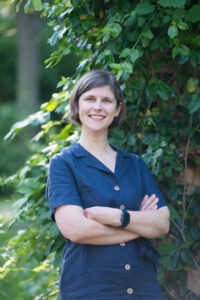
Betsy Bird is currently the Collection Development Manager of the Evanston Public Library system and a former Materials Specialist for New York Public Library. She has served on Newbery, written for Kirkus, and has done other lovely little things that she'd love to tell you about but that she's sure you'd find more interesting to hear of in person. Her opinions are her own and do not reflect those of EPL, SLJ, or any of the other acronyms you might be able to name. Follow her on BlueSky at: @fuse8.bsky.social
ADVERTISEMENT
ADVERTISEMENT
SLJ Blog Network
Notes on April 2026
Papercutz to Publish ‘Midnight Island’ | News and Preview
From Policy Ask to Public Voice: Five Layers of Writing to Advance School Library Policy
ADVERTISEMENT