A Talk with the Team Behind Racial Literacy in Libraries (which I may have helped to co-write)
Have I ever mentioned how extraordinary my co-workers are?
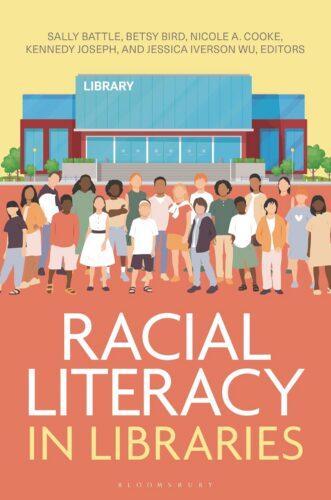
In my day job I’m the Collection Development Manager at Evanston Public Library. It’s a place where, over the years, I’ve had the privilege to work with some of the best librarians and library workers in the field. So when former Evanston librarian Sally Battle asked if I might be interested in contributing to a book on racial literacy (in my case, in how it relates to collections) I leapt at the chance. Thanks to Sally’s guidance and passion, Racial Literacy in Libraries (out now) is unique in its field. In an era where the current presidential administration seeks to curtail any and all discussions of race in our public institutions, this book is a hugely useful and desperately needed guide.
Here’s the official description from Bloomsbury:
Learn how libraries can develop and use collections, space, resources, and programs to expand racial literacy in their communities.
Libraries are no longer simply providers of basic literacy – they’re evolving to meet community needs for an expanding list of literacies: digital, health, information, financial. Racial Literacy in Libraries argues persuasively that libraries need to add racial literacy to that list. Its authors and contributors teach you how to understand and communicate about race and racism.
Since readers are likely to begin with different backgrounds on race, Part One offers a primer written by experts on the science and history of skin color, the invention of race and racism in the United States, and the development of racial identity. Part Two helps librarians bridge the gap between theory and practice. Chapters discuss the important concepts of representation, equity, and access and offer practical examples of how to apply them in libraries, including through collection development. Part Three offers real-life examples of libraries across the country who are bringing racial literacy to their communities through collections, curated resources, and programs. A companion website offers tools you can use right away, whenever you’re ready to put your racial literacy learning into practice.
All librarians who want to bring a more bias-free worldview to library work will benefit from this guide to racial literacy.
And the thing is, it’s actually useful and practical. For example, has your library ever done an equity assessment? Have you finished the assessment and then did you weed a bunch of the books you’d so meticulously categorized? That’s no good. So in my section on collections, I tell you how to do the Whole Collection Approach (my term, my rules) where you look at your collection from an equity standpoint from purchasing to displays to programming to weeding. The whole deal!
ADVERTISEMENT
ADVERTISEMENT
But there’s a LOT more useful info in the title beyond that, so today, I’m talking with some of my fellow contributors to the book, just so you can get a sense of why it’s the go-to guide for any library looking to make itself an equitable institution.
Betsy Bird: Well, hello, hello, hello! Welcome Sally, Kennedy, and Jess. First and foremost, tell me a little bit about yourselves and how you got involved in this project. What was it about the book that appealed to you?
Sally Battle: Way back in 2020, a group of us at Evanston Public Library had administrative and community support to put together a race/culture program for families. We worked with local author/illustrator, and all-around amazing human being, Cozbi A. Cabrera, to plan and present the “Dedicated to the Dream” series (you can learn more about it here). We’re so grateful to the families who went with us on that journey – we learned a ton! We hoped to jump-start a conversation around the country about race education in libraries, so we shared our experiences at ALA Annual in the summer of 2021. At that point, we were approached by an acquisitions editor, who suggested we submit a proposal for a book.
When we were considering whether or not to tackle the project, the one thing I was completely inflexible about was getting more people involved to create an anthology instead of trying to write the whole thing ourselves. Partly it was because I’m super aware of all that I still don’t know. And partly it was because I was curious about all the different ways that people have already brought the work of racial literacy into libraries. There’s not just one way to do it.
Cozbi said something in her skin tone mixing instruction video that continues to stick with me – something like, We don’t have all the answers – we have to experiment and find out what works. That felt like a metaphor for the whole of this type of work – we are all still experimenting.
It was appealing to me to share the results from lots of people’s “experiments” and also continue the conversation about how to do this work. That’s why the book has a companion website[racial-literacy.info] – so people can consider things others have tried, riff on them if it makes sense for their community, and contribute their own ideas.
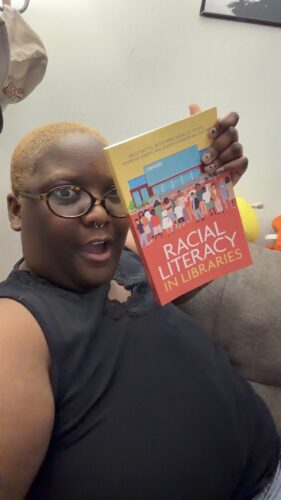
Kennedy Joseph: Sally is the glue that bonded everyone together. She basically led the charge for not only getting all the writers and editors together, but also co-leading the program that became the catalyst for the entire project.
I worked on the Dedicated to the Dream for the later cohorts. Sally provided more context about that initial program, but I did facilitate several family skill-building sessions. I also presented at the ALA panel where we were approached by an editor to submit a proposal. At the time, it seemed like quite a tall order, but Sally really held my hand through the process, so I am so grateful for her dedication for the project and patience as I worked on my chapter.
I’ve always been a big library kid, but it was never just the books that fascinated me about libraries – it was the community. It was knowing that wherever I was in life, there was a spot for me at my local library. Whether I was reading books, goofing off with my friends on the computer, or bothering the workers, the library was a space where I could be myself. My chapter is about racial affinity spaces and providing a space for young people of color to feel secure in their own identities, but it’s also a reflection about how libraries have supported me during my own childhood.
I’m always happy to sing the praises of the public library and I’m happy to have the opportunity to do so.
Jessica Wu: I was part of the multi-department team that developed and facilitated Dedicated to the Dream, with creative and thought support from Cozbi. From the start, we asked a lot of questions of ourselves, each other and of this racial literacy program we were growing. There were clear truths we wanted to center our work on and conscientiousness to bring to the community learning space. But the team had enough humility, flexibility and knowledge to know that there were a variety of ways to build programmatically on truths about race, bias, racism and antiracism. In many of these planning conversations, it felt overwhelmingly so.
Through hours of online calls we logged together, trust and intimacy grew. We showed up on those planning video calls set up in various rooms of our respective homes, backlit by sunny windows, sitting in front of real and virtual bookshelf backgrounds on personal laptops, desktop computers and phones sitting at tables and desks. Years ago, a Black woman elder at my Evanston church prepared the congregation for communion by noting that the true closeness between a visitor and host could be determined by whether the visitor was received in the parlor or at the host’s kitchen table. The kitchen was where unpretentious, real life happened. During the height of the COVID-19 pandemic, library staff across the country and world invited each other and patrons virtually into their homes, and with that I believe we were primed to show up in a way that was more tender and authentic.
Sally and Kennedy spoke about presenting on the program at the ALA conference, where we were approached by the acquisitions editor. I see this book as an invitation to library staff who serve kids in school and public library contexts to join us at the kitchen table for idea and resource-rich conversations centered on racial literacy, expanding on what the team of Evanston Public Library staff first conceived for the Dedicated to the Dream program. While the contributors may not know each reader who picks up this book, we are eager to share figurative food for thought with them because of our collective desire to serve our communities even better. And if this book draws the amount of readers I imagine it will, we’re going to need a lot of leaves added to that table!
BB: Well put. Now what were some of the challenges you encountered in the course of creating this book? Did you run into elements that were more difficult than you expected? Easier?
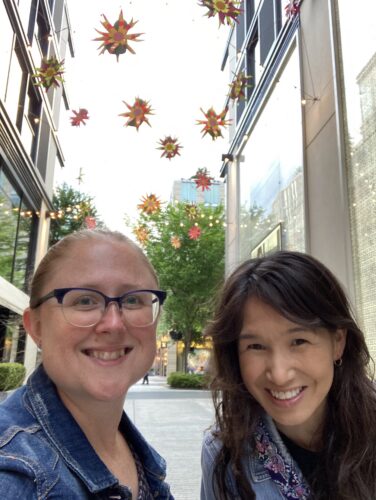
Sally: It’s incredibly hard for me to ask people for things. Time and again, I was so grateful for each contributor’s generosity and willingness to add their experiences, expertise, knowledge, and advice.
Kennedy: I am so happy to have connected with so many. talented writers and educators. I’ve learned so much through their words and experiences. I think the biggest challenge is knowing that there’s so much work to be done, but trying to figure out how to have a balanced, nuanced conversation about race. Any conversation about race has to acknowledge the realities of racism and contextualize that history, but people reading this book are also looking for ways to dig deeper and open up that dialogue. How does one engage in conversations about systemic racism in a way that feels hopeful? It’s one thing to create a space for patrons and families in my library community, but another to keep that conversation going with complete strangers reading about it in a book. In some ways, it was easier because I am just writing from my experience, but I did want to make the work I did seem applicable for other communities.
Another challenge in knowing that there is more work, is knowing that there’s still so much more to learn. The projects and work that we talk about is all on-going. We all wake up everyday and learn something new about the world and about ourselves, all of which impact the work we do at our libraries. Re-reading your own words on a page makes things seem so finite, or fixed, like they’re written in stone. It’s scary to think about how library practices or even public policy could change in a few months, or even years from when you’ve written them – especially in the political climate we live in at this moment.
Jessica: When it comes to creative writing, there are two methods – that of the plotter and pantser. For those unfamiliar with this concept, a plotter plots their story, making sure to follow the plan they’ve laid out and the pantser goes where the story takes them, flying by the seat of their… you guessed it, pants. I bring this up because I am a natural pantser. So when it comes to nonfiction expository writing, which requires a plan and a linear journey for the reader, I find it to be a great challenge. It’s not how my brain naturally works. Fortunately, this book was an amazing group effort, and receiving other editors’ feedback on the chapter I solo wrote was crucial to the version that’s been printed. Shout out to Sally, Kennedy and Betsy!
BB: Aw, thanks Jess. So this book is coming out in the wake of the current presidential administration’s war on DEI initiatives and public policy changes. In light of how different the world is now versus when this book was first dreamed up, what would your response be to someone that was quizzical about releasing this title at this specific moment in history?
Sally: Thankfully, so many brave people who came before us fought racial injustice throughout difficult times. That’s the only way that change happens. But yes – the question makes sense – we are in a different space now than we were when we started this project. If our goal was to sell a lot of books, this would be a disastrous time to release this book, though I’m not sure the market for librarian PD books is ever sky-high!
Our goal is to keep the conversation going while we are in this particular challenging time. Same as a few years ago, we still need basic education about the science of skin color and race, the truth that we are all 100% multitude-containing human, the well-researched evidence that societies based in superior/inferior hierarchies are harmful to everyone.
There are ways to do some of this work without using the word race. For example, at our companion website racial-literacy.info, you can find a coloring book for kids that explains the science of skin color and how the diversity that we see with our eyes belies our actual genetic differences – all without using the word race. Is this a perfect way to talk about race? No. Is it enough? No way. Ta-Nehisi Coates was right – racism came first for sure, and an exploration of race is incomplete without understanding who made it up and why.
But we’ve got to start somewhere, and we still have great tools to use – our language, our displays and collections, our chosen content and delivery in programs.
We still have opportunities to fight bias and stereotypes. We can still highlight differences as positive and fight the idea that our diversity is a limitation rather than a strength. We can still Venn-diagram our similarities and differences in ways that reduce fear of each other and help us find our common humanity. And we can continue to learn to see each person as an individual.
This type of work can happen wherever we are, but in many school and public libraries, we’re already doing some of this work simply due to our populations. One of the gold-standard interventions for racial bias happens when people from perceived-different groups socialize and develop relationships – known as intergroup contact in the psychology world. No matter the content area, we can use strategies to structure lessons and programs to make the most of these intergroup experiences.
Plus, we can still keep learning ourselves, and pass that on to our students and patrons through our body language (no small thing), our words, our displays, our programs, and more.
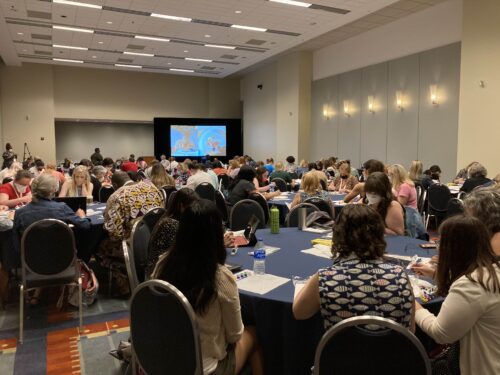
Kennedy: When I told my partner about the title of the book, they were a bit worried. They wondered whether we’d actually be able to publish a book like this right now or if it would be immediately targeted. But the work that these writers and educators have done is essential and critical for building more inclusive communities – especially as people in governance are trying to dismantle that work. We must persist and continue working towards building the future we want to see. And if these initiatives aren’t happening in your community, it’s books like these that help bridge that gap to unite, inspire, and make change. Even if it feels like you’re alone in your urgency to combat racism and dismantle white supremacy culture, especially if you’re surrounded by laws, bills, and policies working against you, but you’re not. We’re here and we are with you.
Jess: I believe that current events and policy changes have only inspired those in communities around the country more to stand up, show up for each other, and do what we can to preserve our humanity and take care of our neighbors, our patrons and our towns and cities. This is absolutely the time a book like this is needed. Library staff will find it (thanks so much for offering this interview, Betsy!) and hopefully gain encouragement knowing that they are not an island and there are many ways to approach racial literacy.
BB: After seeing the final product, what is your favorite element of the book? This could be something you were directly responsible for, or something written by someone else.
Kennedy: Personally, seeing my words amongst so many talented people is my favorite part of this whole process. I’m in libraries for the community engagement aspect of the job, so being part of this community is quite an honor.
Jess: Throughout the journey as chapters started coming in, I was so impressed and humbled by the vast knowledge and experience leveraged for the benefit of the book. I loved how many actionable ideas were offered up and how the diversity of thought on the subject of race literacy encourages the reader towards dialectical thinking, yes/and thinking versus the binary thinking, which is steeped in white culture. For example, while identifying a concept or approach by choosing a specific term can be helpful, it can also bring limitations with it. It can bring that binary thinking back in with a vengeance – an either you have it or you don’t perspective. It can also pit one group against another. Read chapter 3: Unpacking the Racial Literacy Turn for more! The science presented in Chapter 4, entitled, “The Evolution of Skin Color and the Invention of Color-Based Races deepened my knowledge and having gone through much of the Project READY curriculum in my library work, I was so happy when co-creators Casey H. Rawson and Sandra Hughes-Hassle signed on to offer a chapter (“Navigating Your Equity Journey”). I keep recommending this book to people, not because I contributed to it, but because I’ve read it and found it to be such a useful, encouraging resource to grow our racial literacy more!
BB: Can you tell me some companion books that you would recommend alongside this one? Texts that complement it?
Sally: Dr. Cooke has a new edition of Information Services to Diverse Populations: Developing Culturally Competent Library Professionals coming out in May 2026. You can find some of my other favorites in the resources section of our website – there are sections for both just general education and resources for people who work with kids.
Kennedy: Sally has compiled a list of companion texts already, so those would be a great place to start. Understanding theory is great. We could not have put this book together without the research done by so many historians, psychologists, scientists, and theorists, but it’s so important to read and pull knowledge from the personal, lived experiences and accounts of those impacted by race/racism. Authors like Assata Shakur (Assata: An Autobiography) or Audre Lorde (Sister Outsider) are a great starting point.
Jess: While we do highlight excellent nonfiction resources on the companion website, I’d recommend The Talk, in which established children’s book writers of color contributed creative entries inspired by their role of parenting children of color and the conversations that context necessitates when being out in a world still steeped in racism. We all know that the personal, the connections, the relationships we make inform how we show up in the world and to ourselves. Hearing from other librarians, educators and academics are important to building the antiracist toolkit we hold, but in our work serving kids, we also need to hear from parents. For my white colleagues out there, I’d also offer up Antiracism As a Daily Practice: Refuse Shame, Change White Communities, and Help Create a Just World by Jennifer Harvey. Being antiracist is a practice. While we can hold that as an identity, the choices we make in how we act and how we respond are the true determiner of whether we are showing up in racist or antiracist ways. In How to Be An Antiracist, Dr. Ibram X. Kendi reminded me of this. Holding ourselves accountable is important both to our integrity and honest self-reflection and growth and those people impacted by the racist moment. That does not mean you stop getting to be an antiracist. It is a way of being, a practice, and sometimes we fail. Keep trying. Keep working. We need you.
BB: Finally, what, as you see it, is the role of RACIAL LITERACY IN LIBRARIES for library staff and workers? How would you like to see it used?
Sally: I hope this book convinces folks that racial literacy deserves to be a part of how every library serves their patrons, and that people feel empowered to turn that goal into reality.
None of this is easy, and we need each other’s ideas and experience to figure out how to do it. I’m hoping that we can share what we’re learning and help each other. We’ve got a platform to start to do that at [racial-literacy.info]. We hope you’ll find inspiration there – if you work with kids and families there are a bunch of program ideas – and that you will share your own ideas as well. Who knows what we could accomplish together?
Kennedy: I’ll say this: This book is either a start to your learning or it’s a way to continue your learning. I can only hope that people reading this book will understand that they can make a difference. Maybe your work starts off as a display based on one of the titles referenced in this book. Maybe you’re working on a diversity audit of your collection for the first time. Maybe you’re working on some new innovative idea that you’re waiting to pitch to your administration that has nothing to do with this book – and you just picked it up anyways! Wherever you are in your learning, that matters. That’s the work right there and we’re happy to be right there with you. We may not know each other, but we’re library workers, and we, too, are a community.

Big time thanks to Sally, Kennedy, and Jess for taking so much care and time to answer my questions today. Racial Literacy in Libraries is, as I mentioned, on shelves now. Be sure to seek it out and consult it at your earliest convenience. It really is one of a kind.
Filed under: Interviews

About Betsy Bird
Betsy Bird is currently the Collection Development Manager of the Evanston Public Library system and a former Materials Specialist for New York Public Library. She has served on Newbery, written for Kirkus, and has done other lovely little things that she'd love to tell you about but that she's sure you'd find more interesting to hear of in person. Her opinions are her own and do not reflect those of EPL, SLJ, or any of the other acronyms you might be able to name. Follow her on BlueSky at: @fuse8.bsky.social
ADVERTISEMENT
ADVERTISEMENT
SLJ Blog Network
Books to Celebrate National Poetry Month 2026
Born in the USA | Review
From Policy Ask to Public Voice: Five Layers of Writing to Advance School Library Policy
Different Kinds of Funny: Character Humor for Middle Grade Readers, a guest post by Laurie Morrison
Sara Pennypacker visits The Yarn
ADVERTISEMENT