
The “hopeful dystopian” conclusion. A Firesnake talk with Donna Barba Higuera

You may have seen a video that circulated for a bit on Instagram and Tiktok and YouTube and the like. It featured a fellow complaining about “kids books today” and how it’s all just self-esteem nonsense. He then proceeds to explain that in his day (this man cannot be above the age of 35) they read tearjerkers like Where the Red Fern Grows and Old Yeller. Folks, it took all my restraint to keep myself from recording a response video pointing out the natural flaws in this arguments. First off, no one under the age of 55 has EVER actually read Old Yeller. He just saw the Disney movie as a kid. Second, if you don’t think today’s books for kids have sufficiently dramatic, emotional scenes then you are clearly not familiar with the current crop of books. Ever heard of a little book call The Last Cuentista? The one where a girl wakes up to discover that people with transparent skin are almost the last vestiges of humanity?
Then I launch into a list of all the recent dead dog books, but you get the picture.
I loved The Last Cuentista when it was released, and when it won the Newbery Award I felt this odd sense of vindication on its behalf. Its sequel, Alebrijes, was unlike any other book I’d ever encountered.
ADVERTISEMENT
ADVERTISEMENT
This year, we have a third. Its name is Firesnake and it’s out June 2nd.
Put plainly by the publisher:
“Itzel has never known a life on Earth. Growing up on Sagan, the granddaughter of the Cuentista, her years have been spent among the dactyls, griblets, and billow seeds of their new planet. But when a mysterious message arrives from across the cosmos, Itzel realizes that the home they thought destroyed hundreds of years ago has survived…and with it, another community of humans. Will she and the other Saganites brave the journey back to Earth? And what will they find? For they are not the only ones who have received this message…
Master storyteller Donna Barba Higuera brings her beloved Cuentista trilogy to a close in a book full of old friends and new, jaw-dropping twists, and a journey to the stars and back.”
Today, I have the very great pleasure to speak to Donna Barba Higuera herself about this finale to her epic science fiction trilogy for kids:
Betsy Bird: Donna! Such a pleasure to get a chance to interview you again. In preparing for this interview I figured I’d just read a page or two of Firesnake and be good to go. Next thing I know it’s midnight and I haven’t stopped. When first you wrote The Last Cuentista, was Firesnake even a distant idea in your mind or did the thought of creating this book and plot come later?
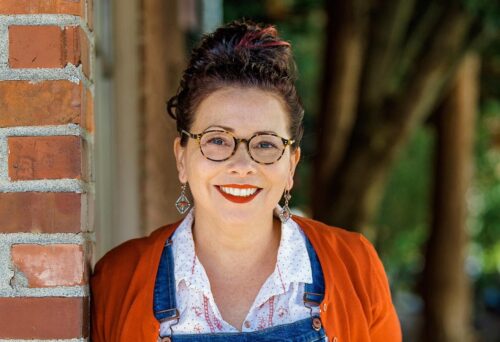
Donna Barba Higuera: Same! You know how chatty I am, so you are brave.
I would love to say I was that insightful. When I finished writing The Last Cuentista, the idea that it would become a series was not remotely in my mind. The second book, Alebrijes, was my sneaky attempt to write a book based on Earth after a “post-apocalyptic” event. I never say what that catastrophe was. But my editor saw right through it. I did not want to write a series. But that second book came about naturally, with its own distinct plot.
Then . . .
Questions from readers arrived.
When I started writing the third book in the series, this theme of the Firesnake, and the story created of how he traveled to another planet to protect humans came through naturally. It was in the very first chapter of The Last Cuentista, and so it seemed natural that this was how the series needed to close. Of course Firesnake would follow them back to their home planet.
But I don’t think my imagining of the Firesnake story and his coexistence with humans for hundreds of years is unique. I believe stories follow us throughout our lives and then generation after generation. The stories of our ancestors become ours.
BB: When you first sat down to write these pages, how clear was the plot in your mind? And was this book any easier or more difficult than the others in the series to write?
Donna: The plot was a disaster! In that I didn’t have one. I had no idea where this story was going. After The Last Cuentista, I needed to answer the question I got repeatedly from readers, “What happened next?” The second book in the series, Alebrijes, answered that question, but for those left behind on Earth.
It wasn’t so difficult to imagine an entirely new character on a brutal, Mad-Maxish Earth. Then, I thought I was so clever writing an enticing epilogue at the end of Alebrijes, a message sent from the survivors on Earth to the survivors on planet Sagan. Turns out, if you write something like that without a clear plan, you might write yourself into a bit of a corner.
Whose story would this be about? Where would it take place? I owed it to readers not to take any shortcuts.
I started that third book simply with a character, Itzel. A girl who is born and raised on Sagan. A girl who grows up in the shadow of the Cuentista’s stories; stories that are interwoven in Sagan’s culture. A girl who resents the stories in many ways.
How was I going to combine the distinctly strange storylines of the previous two books, and even incorporate the previous main characters from those books, Petra and Leandro? It was a 20,000 piece puzzle with only a few colors. Petra and Leandro would have to be older. Add that traveling across space takes hundreds of years.
What was I thinking!
BB: When last I interviewed you, you mentioned that you were working on this project. In fact, your exact words were, “The task hasn’t been easy. There are so many strange creatures and concepts in each of the first two books, but for the final book, I’m trusting what I’ve discovered. The more bizarre my ideas are, the wilder directions my imagination travels, the more those stories attract young readers.” Could you explain a little bit more about what you’ve discovered in the course of writing these books? How does leaning into your more out there ideas ultimately serve your young audience?
Donna: I’ve thought a lot about this exact topic recently. I’ve discovered to trust my imagination, the thing as a child I was often discouraged from doing. The daydreaming. The strange ideas I had always made me feel different, alone. But I now wonder if we all have those ideas, but are just afraid to share them. So much so that we lose some of that ability to wonder about all things strange. If this is what I’m finding connects me most to young readers, will my books encourage them to embrace the things that make them feel ‘different’? I hope so. I hope young writers will take it a step further, and create stories using the wildest ideas their imagination can come up with. But if I keep writing that weird stuff, maybe a young reader, who feels different like I did, won’t feel so alone in their love of the weird.

BB: I love that. You know, if there is a through line in each of these books, it’s a distinct dislike of authoritarianism, no matter what the form. To say such messages are timely would be a magnificent understatement. The Last Cuentista was published in 2021. Five years later, the world is a bit different than it was when that book first came out. What is it that you hope readers can take away from these books and use in the current world and political climate?
Donna: Five years! Holy moly! I have discovered during these past few years that I veer toward writing topics that scare me. I’m not a confrontational person. So, writing is my outlet on how I feel.
Even as I say this, I can already feel my discomfort in stating the obvious. Things in our world today are a mess. And young people feel it. The types of people I wrote about, who scared me, exist. Young people are scared too.
The books in this series have been called ‘hopeful dystopian.’ I love that. I write of harsh worlds. The irony is that the apocalyptic comet-strike on Earth that activated the entire trilogy turned out to not be the scariest part. Much like our world today, in all three books, nature is an antagonist, and an integral part of the characters’ struggle. But in each book, humans, and what they are capable of doing to one another, is far scarier than a comet strike on Earth or cyclic killer winds on a tidal-locked planet.
But throughout the threats of evil, I write of the good; good people who may feel helpless at times in apocalyptic worlds. Sometimes the characters make poor choices, but in the end they have hope for something better. At the moment however, this sense of helplessness feels a little true to life. I guess I still want readers to have that sense of hope. Hope for a better world.
BB: And was there anything you wanted to include in this book that simply didn’t make it out of the editing process?
Donna: Oh, many chapters ended up on the cutting room floor. I started the final book with Petra’s early days on the new planet, Sagan. I loved those chapters that took us back to Petra from The Last Cuentista. But they were a distraction.
The third book isn’t Petra’s story. It’s Itzel’s story.
But I think most writers have those exercises where you write a lot of backmatter that isn’t necessary, and actually takes away from the reader’s imagination of what they think happened during those times. I also could have continued on and on with the new discoveries Itzel makes on an Earth that is very different than what it once was. What creatures survived? Are there other pockets of humans? But there is a point where you must turn those questions over to readers. Let their imaginations think on what those answers may be.
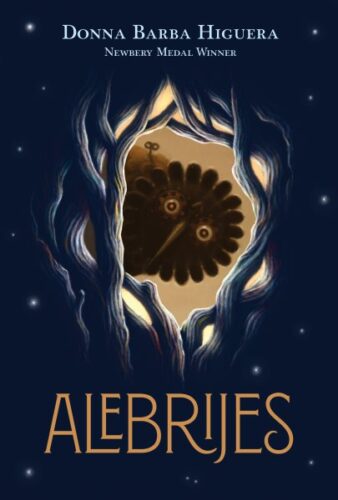
BB: You know, I don’t think I’ve ever had a chance to ask you about the jackets of your books. Each one is so distinctive and stands apart from whole swaths of fellow middle grade novels released this year. Can you tell us a little bit about your relationship to these covers and your thoughts on each one in this series?
Donna: One of my favorite topics! The illustrator, Raxenne Maniquiz, lives in the Philippines. She is an artist of many talents. She focuses on nature and botanical art. She is a fabric designer, art instructor, and now has done work for major corporations. My editor, Nick Thomas, discovered Raxenne’s work on Instagram long ago. The cover for The Last Cuentista was the first book cover she ever created. Raxenne has read each of the books, and designs these amazing covers based on her vision of what she reads. Her imagination! It doesn’t hurt that much of my books involve plants and animals. But, she creates imagery far beyond what my mind could drum up. I’m asked to chime in if I feel there’s an element we may want to incorporate on the cover. But, if anything, she finds parts of the stories I’d forgotten. Illustrators are magical. I know to step out of the way and let them do their work.
ADVERTISEMENT
ADVERTISEMENT
When I saw the first cover, I gasped. My teen daughter chimed in, “Mom, your book could suck, and people will still buy it because the cover is so beautiful.” Not only do I think my daughter was spot-on, I feel like that quote should be the cover blurb.
BB: Here’s the real question: The book certainly looks like the third in a trilogy. But is there any chance that a fourth might come along?
Donna: Absolutely not. (I said the same thing after the second book.)
But, truly, I have no intention of writing a fourth. However, when young readers ask questions like, “What was Bioloaf Boy’s life like on the ship?” they send me down a rabbit hole of asking myself, “Yeah, how did he endure being part of the Collective? Did he ever fall in love? Did he ever consider rebellion? Did he regret not escaping with Petra and the other kids?”
But no, no plans for a book called Bioloaf Boy.
And this is just one of the many offshoot topics readers ask about in these worlds and characters.
BB: Justice for Bioloaf Boy!!
Okay, finally, what else are you working on these days? After this release, what’s next for you?
Donna: I have had a handful of books released in the span of one year. That involved a lot of travel. What’s next? I’m going to go outside, talk to my chickens, curse at the weeds in my garden, take hikes in the pines with my local kidlit friends. Then, I will get back to work on the next project.
All I can say at the moment, is that it will be weird.
Oh man. That is all that we could ever ask.

Sandworm-sized thanks to Donna for putting such thought, care, attention, and downright HUMOR (take note, other interviewees) in her answers to me today. Firesnake is, as I mentioned before, out June 2nd. Thanks too to Gina Gagliano for helping to put this whole interview together. Should you need your science fiction fix this year, I think you know where to go now.
Filed under: Interviews
About Betsy Bird
Betsy Bird is currently the Collection Development Manager of the Evanston Public Library system and a former Materials Specialist for New York Public Library. She has served on Newbery, written for Kirkus, and has done other lovely little things that she'd love to tell you about but that she's sure you'd find more interesting to hear of in person. Her opinions are her own and do not reflect those of EPL, SLJ, or any of the other acronyms you might be able to name. Follow her on BlueSky at: @fuse8.bsky.social
ADVERTISEMENT
ADVERTISEMENT
SLJ Blog Network
It’s Dot Day! Here Are Some Ways to Celebrate
Feeling Like An ADHD Alien | This Week’s Comics
Heavy Medal by the Numbers….so far
From Policy Ask to Public Voice: Five Layers of Writing to Advance School Library Policy
At the Border Between Fantasy & Reality, a guest post by Romina Garber
Rex Ogle on His New Book Absent
ADVERTISEMENT