• Skip to primary navigation
  • Skip to main content
  • Skip to primary sidebar
  • About/Contact
  • Fusenews
  • Reviews
  • Librarian Previews
  • Best Books
    • Top 100
    • Best Books of 2022
    • Best Books of 2021
    • Best Books of 2020
    • Best Books of 2019
    • Best Books of 2018
    • Best Books of 2017
    • Best Books of 2016
    • Best Books of 2015
    • Best Books of 2014
    • Best Books of 2013
  • Fuse 8 n’ Kate
  • Videos
  • Press Release Fun

Go Tell It: How James Baldwin Became a Writer – A Talk with Quartez Harris and Gordon C. James

Go Tell It: How James Baldwin Became a Writer – A Talk with Quartez Harris and Gordon C. James

November 27, 2024 by Betsy Bird

Someone asked me recently to come up with a list of the 2025 children’s book releases that I’m already excited about. I’m currently typing up a nice, neat little list and guess what book is featured at the very top? This isn’t a cover reveal, it’s a friggin’ celebration today, so I have no problem with showing you. Your eyes? Feast ’em!

Is Go Tell It our first picture book bio of James Baldwin? Not at this point (though it was when it was written). But trust me when I say that this is one of those books you’ll be thinking about long after you put it down. Here’s the quick synopsis:

“Discover the story of young James Baldwin in this ode to the legendary writer and the power of the written word—with exquisite prose from acclaimed poet Quartez Harris, and breathtaking illustrations from New York Times bestselling creator and Caldecott Honoree Gordon C. James.

The first time Jimmy read a book the words clung to him like glitter…

Before James Baldwin was a celebrated novelist, essayist, playwright, poet, and activist, he was a boy who fell in love with stories. Words opened up new worlds for young Jimmy, who read and wrote at every opportunity. He ultimately realized his dreams of becoming an author and giving voice to his community, and in doing so he showed the world the fullness of Black American life.

This picture book biography of an American icon is a poetic introduction to James Baldwin and celebration of the power of language. Additional biographical information and personal notes from the author and illustrator round out this stunning celebration of Baldwin’s life and work.”

Poet Quartez Harris was a Baldwin House fellow and named Ohio Poet of the Year for his book We Made It to School Alive, and his poetry has garnered numerous accolades. He spent many years as a second grade teacher in the Cleveland public school system. You know what that means? It means he knows how kids work and how to write for them. As for Gordon C. James, you’re familiar with his work. How do I know that? Because I know you probably saw a little title called Crown: Ode to a Fresh Cut and saw that killer art. This book? On par.

In fact, after reading Go Tell It I said to its publicist, “… it’s the Baldwin book here that’s extraordinary. This is a debut author?!?! Feels like she’s been honing her craft for years. Could I interview both Quartez and Gordon? This thing is outta this world.”

Turns out, I could.


Betsy Bird: Quartez! Thank you so much for taking the time to answer some of my questions today! James Baldwin really hasn’t appeared in that many picture book bios for kids, inexplicably, until now. How did you get the idea for this book in the first place and what compelled you to write it?

Quartez Harris

Quartez Harris: Hey Betsy Bird, it’s a delight to be in conversation with you about my literary hero. So, back in the spring of 2021, I was on the phone with my dear friend and author, Alicia D. Williams, and I was sort of rambling on and on about my deeply felt love for Baldwin’s facility of language, his poetic mind (which felt in a lot of ways like how my own mind worked) and how he helped to clarify something within me.  And out of me meandering about Baldwin, she brought it to my attention that there were no picture books in tribute to his legacy. As you can imagine, this discovery was incredibly shocking. But it prompted me to search everywhere for a single children’s text that spelled out Baldwin. There was none. I mean, there was Your Dreams, Little One by Vashti Harrison, but in that picture book, Baldwin was featured among a cannon of black heroes. So, Alicia was correct; Baldwin was not fully represented in children’s literature. I decided right then that I was going to write a lyrical picture book detailing the life and legacy of James Baldwin for the minds of young readers.

When I sent my full-length manuscript to my agent back in Oct 2021, I was a second-grade teacher in Cleveland Public City Schools and had been for six years, so I was incredibly excited about the possibility of introducing children to this child of letters in classrooms across the country.  Also, this interesting thing happens when you ask people when they first discovered Baldwin; they usually point out that they discovered Baldwin later on in their lives. So, my inspiration also came from that. I wanted early readers to not have to wait until they got older to hear Baldwin’s voice in their heads or to peruse his story. If you think about it, Baldwin’s life is very much a story of childhood. So, I believe to prepare children to have a literary childhood, Baldwin is a good example of what it is like to read and write as a child.

BB: Fantastic answer. And, of course, it helps when that life is accompanied by stellar art. Gordon, a thousand thanks for also talking with me today. It’s always a treat to watch an incredible illustrator get paired with a text worthy of his skills. I’d say that’s precisely what we have here with GO TELL IT. How did you come to learn about this manuscript? And what made you want to work with it?

Gordon C. James

Gordon C. James: I love history. I’ve always had an interest in Baldwin. I’ve listened to his lectures and debates, but I really didn’t know very much about his life so I thought that this would be a unique opportunity to get to know more about this great creative.

BB: That’s awesome. Quartez, let’s talk a bit about some of the choices you made with this text. Your depiction of Jimmy’s stepfather is such an interesting study in nuance. When writing books for kids, people are very much inclined to paint people in black and white. You manage a bit of nuance to the man’s character that another author would eschew. It all seems tied up in Jimmy’s time preaching in his own church. Was this the intention from the start or did it come out naturally as you worked on the book?

Quartez: It was intentional because drawing on Jimmy’s experience as a 13-year-old preacher is crucial to understanding his contentious relationship with his stepfather. Jimmy’s decision to become a boy preacher in his stepfather’s church allowed him to resist his stepfather’s brutal anguish and power over him. In the pulpit, Jimmy had something to say and could, in a sense, confront his stepfather, who was a minister. Because Jimmy became a preacher, his stepfather couldn’t entirely diminish him. Jimmy had a voice, too, and his stepfather could not silence him on the pulpit. Among other things, Jimmy would use his experience in his stepfather’s church to speak, write, and work through social-political issues and racial prejudice.

BB: Piggybacking off of that, the element of religion and Jimmy’s relationship to it is, again, something that in the past might have been deemed too complex an issue for kids to understand. You break it down beautifully on the page. Why was it important to you to include this element of the man’s early life?

Quartez: It was important to me because Jimmy’s relationship to the Christian church was a deeply felt lived experience. It also felt very intimately familiar to me, as it reminded me of my own childhood in my father’s church. My father strongly imposed his religious beliefs on me and my siblings, making us go to church. When I read or listened to Jimmy discussing the complex topic of religion, I felt like he was giving me the gift of language to make sense of my personal relationship with the church. I also believe it’s important for children to learn about how religion influenced Jimmy’s thinking as well. It’s worth noting thatreligion was crucial to Jimmy’s development as a literary figure and his understanding of not only his stepfather but also the world. The Christian church shaped his writing, and he often drew from his religious upbringing and the sermon tradition, focusing on political and social transformation. Even though he openly critiqued the church as an entity, his time in the pulpit was central to his mixed genres. But it was really difficult to find a way to explain this aspect of Jimmy in a short amount of words and somehow make it accessible for children. But I did it in service of his legacy.

BB: Meanwhile, James, you had to bring all of this to life visually. Did you do each spread in sequence, or did you need to move around in the book?

James: I worked out of order.  I chose to start with the most detailed spreads and the cover early on so that I could go back to them and add more and more and more time and effort and emphasis on certain parts of the story.  I treat my book projects like fine art and starting with these “big”pages allows me to put the work in to achieve that goal.  

BB: Well and this is by no means your first picture book to feature historical figures. Still, one can’t help but think that James Baldwin in particular is an interesting physical subject to consider. He had such a distinctive look. Did you find that a help or a hindrance when rendering him in paint? 

James: I generally work with models that I hire.  I was fortunate to find two awesome young men and their families were willing to help me out with this book and they had a look that was relatively close to Baldwin’s.  Those families were were a great help and the look of both those young men was a great starting point for young James Baldwin.   

BB: Shoot. That’s fascinating. I’d love to know more about that but I also want to get back to the storytelling element. Quartez, let’s break down how you chose to tell this story. Some biographies go from birth to death while others circle around a pivotal moment in the subject’s life. You’ve opted for the latter, but was there a moment when you ever wanted to tell the birth-to-death version of Jimmy’s story?

Quartez; I actually knew at the start of the book that I didn’t want to give an account of Baldwin from birth to death. I wanted to start with Baldwin as an early reader because many people have a general knowledge of Jimmy the adult: Jimmy who went to Paris, Jimmy with arresting oratorical abilities, and Jimmy the poetic spokesperson during the civil rights movement. I felt like there wasn’t enough attention on his Harlem Childhood, though he would use details of his childhood as a thread through his autobiographical style of writing. I also wanted to focus a little bit more on Jimmy, the child, in part because he had a strong emotional awareness of children and a deep sense of compassion for them. He had the world of Harlem, which was difficult, but he also had this whole other world in books. Books were transformative for him early in life; he was an early reader. So it was also important that I started with the impact of language on young Jimmy and ended with his first book, a book he spent ten years writing.

BB: And how much of this story is the same from your very first draft? What did you change along the way? And what got left on the cutting room floor? And is there anything not in this book that you miss but that just didn’t fit?

Quartez: Conceptually, the first draft remained relatively the same, focusing on Jimmy’s love for words and his winding path toward writing his first book. Initially, the first draft was heavily lyrical, so I had to cut confusing images to ensure that the heart of Jimmy’s story came first. However, Baldwin used poetry to work out his prose, so I intentionally used visual language to detail his life in this picture book. This craft choice was important to me as a poet because I believed that a musical text would leave room for children to trust their imagination, allowing them to form their mental pictures of Baldwin.  Looking back, I wish I had included a spread about his time at the New York Liberal newspaper called PM, where he would be thrown books and tasked with writing reviews.

BB: Speaking of New York, that city gets a lovely cameo in the art. James, I’m a bit fascinated by the process it takes to render a famous figure recognizable as a child in something like a picture book biography. Plus you have to render a New York City from his past at the same time. What kind of visual research do you do when you have to make a book of this sort?

James: As far as the city, my father is from Harlem, born and raised raised across the river from the old Yankee Stadium.  I’ve spent an awful lot of there over the years.  A lot of the buildings that are still standing are older. The façades haven’t changed much.  I was able to use a combination of old family photos, some photos that are my own from being there, research and memory.   

BB: Quartez, getting the incredible Gordon C. James was a bit of a feather in your cap. Were you at all aware of his work before this book? How do you feel about the final product?

Quartez: I feel so lucky to have the opportunity to write a book as a tribute to Baldwin, and I also feel lucky to pair my words with the work of Gordon C. James, which has made the book all the more painterly. He is truly a fine artist. I was familiar with Gordon from my time as a teacher. I relied on his books to engage students for our interactive read-alouds and built lessons around his work. My students and I would read Crown: An Ode to the Fresh Cut over and over again. I also encouraged my son to use lines from I Am Every Good Thing as affirmations before he walked into his school.

In terms of the final product, this book feels like a great nostalgia. It gives the grittiness of Harlem, the texture encapsulates the climate at that time. It’s like when you open the book, you go back in time and see the things Jimmy would have seen and hear the things he would have heard. Not only did Gordon paint a book, but in some ways, he recreated the past. Jimmy would be very proud to see all the paint that went into his story. His contribution to his book will get kids to see all the many colors Jimmy came out of. I’m just honored that his paintbrush will make it possible for children to meet Jimmy.

BB: The end product couldn’t be more impressive. Finally, what else can we expect from the two of you? Do you have any other books for kids in the works? If not, what else is on your plate?

Quartez: I’m deep into editing a middle-grade novel. I feel like I’m teaching myself how to write again because the length of a novel is so long, and I’m a poet and we can finish a poem with a single line. 

Gordon: By the time this book comes out, I will have just wrapped up a book by Carol Boston Weatherford about Thurgood  Marshall and I will be working on my first book that I have written which is going to be a really really cute board book for our littlest readers. 


If I haven’t made it clear already, I really like this book. I’d like to thank both Quartez and Gordon for taking the time to answer all my myriad questions today. Go Tell It: How James Baldwin Became a Writer is out January 7th, so you haven’t too long to wait. Thanks too to Victoria Stapleton, Margaret Hansen, and the team and Little, Brown for bringing this Q&A all together.
Filed Under: Best Books, Best Books of 2025, Interviews Tagged With: 2025 picture book biographies, author interviews, Gordon C. James, illustrator interviews, picture book author interviews, picture book biographies, Quartez Harris

MORE 2025 ALA YMA Predictions! American Indian Youth, Asian/Pacific American Awards, and Schneider Family

November 26, 2024 by Betsy Bird

As odd as it may seem, I just can’t keep myself from making more and more predictions on what might win the upcoming ALA Youth Media Awards. I already did my Fall Prediction list of Newbery and Caldecott titles. But lest we forget, those are hardly all the awards out there.

Today, let’s consider the potential winners of the following awards:

  • American Indian Youth Literature Awards
  • Asian/Pacific American Awards for Literature
  • Schneider Family Awards

Let us begin!


American Indian Youth Literature Award 2026

Awarded biennially, the AIYLA identifies and honors the very best writing and illustrations by Native Americans and Indigenous peoples of North America. Which means, naturally, that it won’t be awarded in 2025 since they were last given out in 2024. That said, it would behoove the ALA to consider turning this into an annual award. I’m sure that in the past there might not have been enough books being published to warrant such frequency, but these days we’re getting not simply a bunch of books but a bunch of incredible titles. Some of these may be familiar to you. Some may be new. They are all incredible, though.

Picture Books

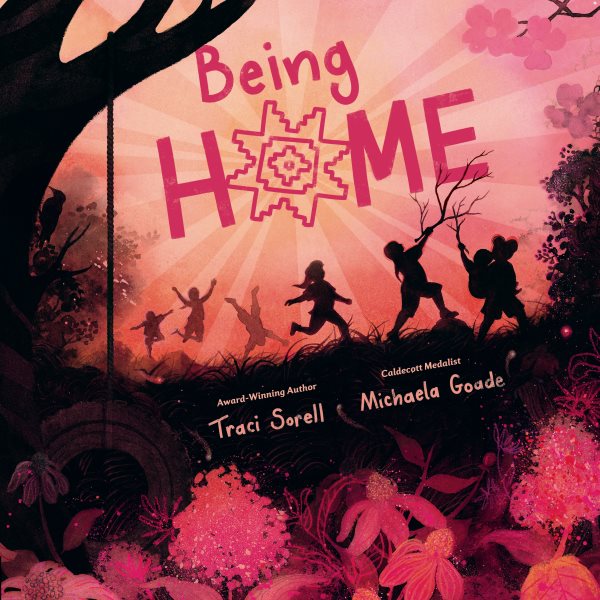
Being Home by Traci Sorrell, ill. Michaela Goade

“Today is moving day!” A happy tale of one indigenous family’s relocation from the city to ancestral lands and a “change in tempo”. Oh, absolutely. This is what you want to see in a book. First off, I’m fairly certain I’ve never even encountered a cheerful moving day book before. Most picture books that tackle moving are instructional, or trying to get the kids on board with such a major life change. This book takes an entirely different tactic, and I think it works wonders! I truly feel like Goade is just becoming more and more accomplished as an artist with every book she does. Here, the art seems to be all about juxtapositions. The mesh of the city life and people, and then later the very different crush of friends and family in the outdoors. And those images of the kids running in the twilight? They should be sold as framed art. Gotta love this.

Chooch Helped by Andrea L. Rogers, ill. Rebecca Lee Kunz

By now my co-workers have also seen this book, and they agree with me. This book has “award winner” written all over it. A lot to love in this one. Written and illustrated by a Cherokee author and artist, respectively, I hope we see a lot more from them in the future. This is an exceedingly simple text, but one that packs a big punch. In this story, Sissy has had it up to HERE with her little “baby” brother (she would be quick to inform you that he’s actually two-years-old) Chooch. As far as she’s concerned, the kid gets away with murder. She then recounts all the times that Chooch has “helped” their various relatives, never effectively. When Chooch attempts to “help” Sissy as she makes a bowl, she explodes at him. This leads to a rather clever part of the book where it reads, “My parents yelled, ‘Shouting is no help!’ ” This is one of those under-the-radar titles that may well win things come award season. The art is an incredible mix of Cherokee iconography and traditional motifs and symbols, all worked seamlessly into the story. Part of the reason this book works as well as it does is that everything about Cherokee life is built into both the text and the art without having to tell rather than show. It’s an elegant book when you get right down to it. Very much hope we see more from these two in the future.

Dance Fast by AR Cribbins

Bizzy cannot WAIT to make her own dance regalia dress for an upcoming ceremony. But what happens when a mistake in it is evident to everyone? A great Pomo tale on how perfection is the enemy of good. We’ve just seen so many picture books about dancing recently. From Jam Too to Soul Step to Why We Dance, it’s been a dancing year! But looking at all these books, I find that the ones I like best are the ones that are about more than just dancing. I like the dancing to be worked into a bit of a storyline. AR Cribbins is a Pomo author/illustrator and this story about Bizzy wanting to have her own regalia for an upcoming ceremony largely appeals to me because the art is just so charming. I love how Cribbins does faces and emotions. I love the sheer levels of frustration on display. This author/artist cleverly tied in the idea of purposefully leaving in imperfections (so that you can strive for quality and not perfection), which is a fantastic lesson for kids out there. I just have a lot of affection for this little book.

This Land: The History of the Land We’re On by Ashley Fairbanks, ill. Bridget George

Dang, this book is informative! I feel like this particular title didn’t get sufficient attention this year. This is a pity because Fairbanks and George (both Anishinaabe) do a great job of encapsulating what it means to live on land that was once inhabited by different tribal nations. Before you go any further, check out the endpapers on this book, which show a series of postcards from around America that show, say, NYC and say “Hello from Lenape Territory”. Of course, what the book does so well is show for very young kids what precisely happened to a great number of Indigenous people historically while also reinforcing the fact that they didn’t just “disappear” after that and have families and lives and homes today. The main character (who looks to be white) travels with her friend (who is Anishinaabe) and his grandmother to the Grand Canyon where she learns that eight tribes currently call it home (the Havasupai, Yava pai, Paiute, Hopi, Zuni, Hualapai, Apache, and Diné). There’s additional information about Land Acknowledgments (again, made simple so that kids can understand), as well as discussion questions and how to “Learn More About Indigenous People In Your Area.” As the book says so succinctly, “This land all has a history. Even my backyard.” There’s really nothing quite like this book out there. Perfect for literally every American library you can name.

Wings of an Eagle: The Gold Medal Dreams of Billy Mills by Billy Mills and Donna Janell Bowman, ill. S.D. Nelson

If you had asked me to name an Indigenous Olympian champion off the top of my head prior to reading this book, I admit that my first and only association would have been Jim Thorpe. And while I think we probably need a couple half dozen more Thorpe bios for kids, there’s something so thrilling about reading picture book AUTObiography to kids from someone who’s still alive to tell the tale. Here we’ve Billy Mills of the Oglala Lakota Pine Ridge Reservation paired up with Donna Jenell Bowman who knows precisely how to tell a picture bio for kids. But this book gets particular props for S.D. Nelson’s art. In this book he includes a fantastic note that explains how his art is inspired by the Lakota people’s paintings on discarded ledger books, which I really didn’t know much about (and, I suspect, is worthy of a picture book work of nonfiction in and of itself). Fantastic backmatter (with lots and lots of photographs!), key dates, and a marvelous list of Selected Sources. This is prime picture book bio material.

Middle Grade

On a Wing and a Tear by Cynthia Leitich Smith

Everyone I know who has read this book says the same thing. First, that it is great. Second, that it really shouldn’t work as well as it does. I mean, talking animals and realistic fiction? They should not gel. Road trips with loquacious furry creatures should, by definition, be impossible to write well, yet my librarians were just GOOFY for this book this year. As one of them wrote, “Although she has mostly written a comedy (something the book’s description seems to hide), Smith also makes some potent observations about appropriation, humans turning their backs on the natural world (always staring at their screens), and trying to erase hard facts about US history. She also gives shout outs to other Indigenous writers throughout the book and in her backmatter.” Pairs oddly well with the easy book The Good Game by Arihonni David.


Asian/Pacific American Award for Literature 2025

The Asian/Pacific American Award for Literature honors and recognizes individual works by Asian/Pacific American authors that highlight Asian/Pacific American cultures and experiences. For whatever reason, this particular award only ever seems to give out one Honor and one Winner in each of its categories. And, again, we’re just seeing so many incredible books out this year that the idea of just a single Honor? Impossible! If I could, I would give every single one of the books you’re about to see here ALL the things!

Picture Book Category

Home in a Lunchbox by Cherry Mo

A nearly wordless tale tells the story of one little immigrant girl from Hong Kong to America, and the ways that her favorite foods tie her to her memories. Evocative, engulfing art tells a tale of empathy and delicious dumplings. See, this is what I mean when I say that you take any subject, even one that’s been done a hundred times before, and put an entirely new spin on it. This book has a lot of similarities to others we’ve seen before (Gibberish by Young Vo comes to mind) in that it uses illustration to show disconnect, but Cherry Mo is so good at changing her illustration style throughout the story that the emotions of the reader are completely guided by how she switches from one kind of art to another. I actually had to look at the book again right now to remember whether or not it was wordless, because honestly it’s so good that you kind of put your own words onto it. A standout of the year.

My Lost Freedom: A Japanese American World War II Story by George Takei, ill. Michelle Lee

What would it feel like if your country went to war and then imprisoned you for no reason? A kid’s-eye-view of living through the Japanese internment camps. I really shouldn’t be surprised that this is good, but I admit that I kind of am. Actors write picture books all the time and only the smallest smidgen of them are ever any good. But Takei has been telling this story already to adults and then later in graphic novel form to teens. I guess it was just a matter of time before he’d make it into a picture book, but I sort of imagined it would be so-so. Instead, he does this really interesting thing where he explains everything in an authentically kid-friendly manner. You understand the plot from his very young point of view every step of the way, and I found it extraordinarily effective.

Simone by Viet Thanh Nguyen, ill. Minnie Phan

When Simone and her mom have to flee a wildfire threatening their home, she learns about  her mom’s long ago flight from Vietnam and considers how people can help one another.  I interviewed the author of this book earlier in the year, and did a kind of quick read of the book beforehand. In doing so, I think I did it a bit of a disservice, or maybe I just needed to see a physical copy in my hands. Whatever the case, something about this story and its writing hit a lot harder this second time around. It isn’t just the fact that it centers Vietnamese people who’ve had to flee war (in the past) and forest fires (in the present), though that’s a powerful connection for any picture book creator to make. There are just these little moments that stick with me so hard. Like when the girl finds out that prisoners fight fires and asks if they did bad things. The mom’s answer is, “Maybe, but now they’re doing good things.” This is just a deeply caring book.

Middle Grade (“Children’s”) Category

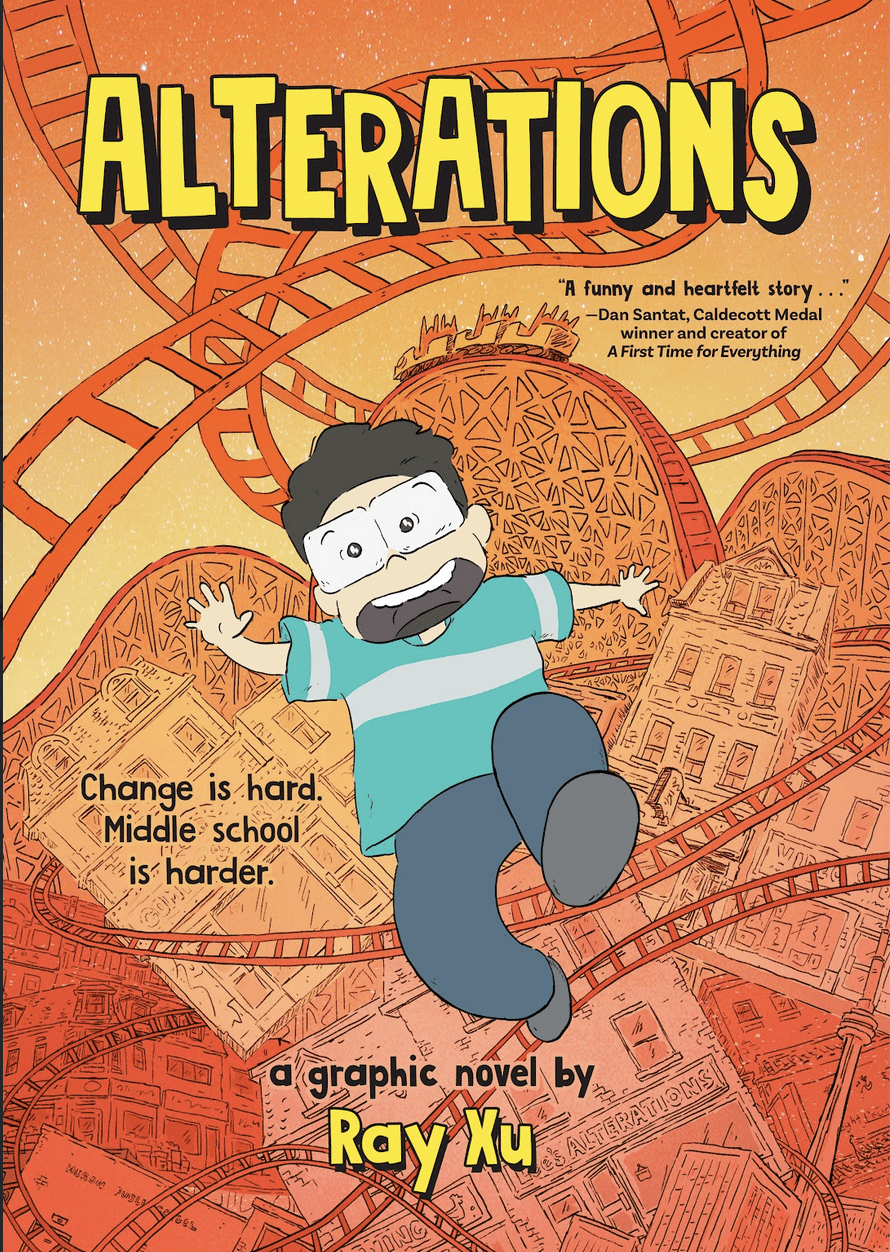
Alterations by Ray Xu

“Sometimes you have to take risks … and DEAL with the consequences!” When Kevin Lee brings a century egg to lunch, he has no idea the chaos he’s about to unleash (or the nickname he’s about to acquire). A hilarious tale of owning who you are.  I read this to my son and was surprised how much he enjoyed the book, in spite of the fact that there are only a few space invader sequences. Those parts read a lot like the Spaceman Spiff parts of Calvin and Hobbes, actually, which I really enjoyed. And both of us liked flipping to Ray Xu’s photo at the back of the book, where he looks completely badass, comparing him to the illustrated nerdy version of himself as a kid. We’re seeing a lot of nice memoirs these days and this one’s a bit more fictionalized than most. As a roller coaster enthusiast, my son was in no way buying that a kid would be able to sneak onto a roller coaster on his own, but that didn’t mean he didn’t enjoy the thrill ride anyway. This story has a nice relatable weirdness to it that I enjoy.

Continental Drifter by Kathy Macleod

Kathy may live in Thailand but her heart is filled with a love of America. When her family, including her Thai mom and American dad, visit Maine for the summer, will it live up to her expectations? You know, sometimes I pick up these books with an eye for elimination from my various Best Of lists, but this was incredibly honest and adept. After reading tons of camp-is-awesome-in-the-end stories, this one struck me as a lot more true to life. I’ve never really encountered a book where someone had a really old dad, and I loved the reveal with the sister at the end. This is hugely accomplished.

Magnolia Wu Unfolds It All by Chanel Miller

Magnolia Wu and new friend Iris are on the hunt to locate the owner of every missing sock found at her parents’ laundromat. An investigation that delves into the heart of what makes NYC special. I love a NYC middle grade where it feels like the author has actually lived in NYC for a significant amount of time. And I thought this book did such a nice job of showing both the dirty, grimy, hot and annoying side of the city as well as what makes it so special. It’s nice too to have a shorter middle grade work of fiction in the mix. Too often chapter books for kids are either early chapter books or heavy tomes. This book slots neatly into older but not too old fiction. Loved the characters and thought this was an original take on trying to see your immigrant parents through the lens of others.

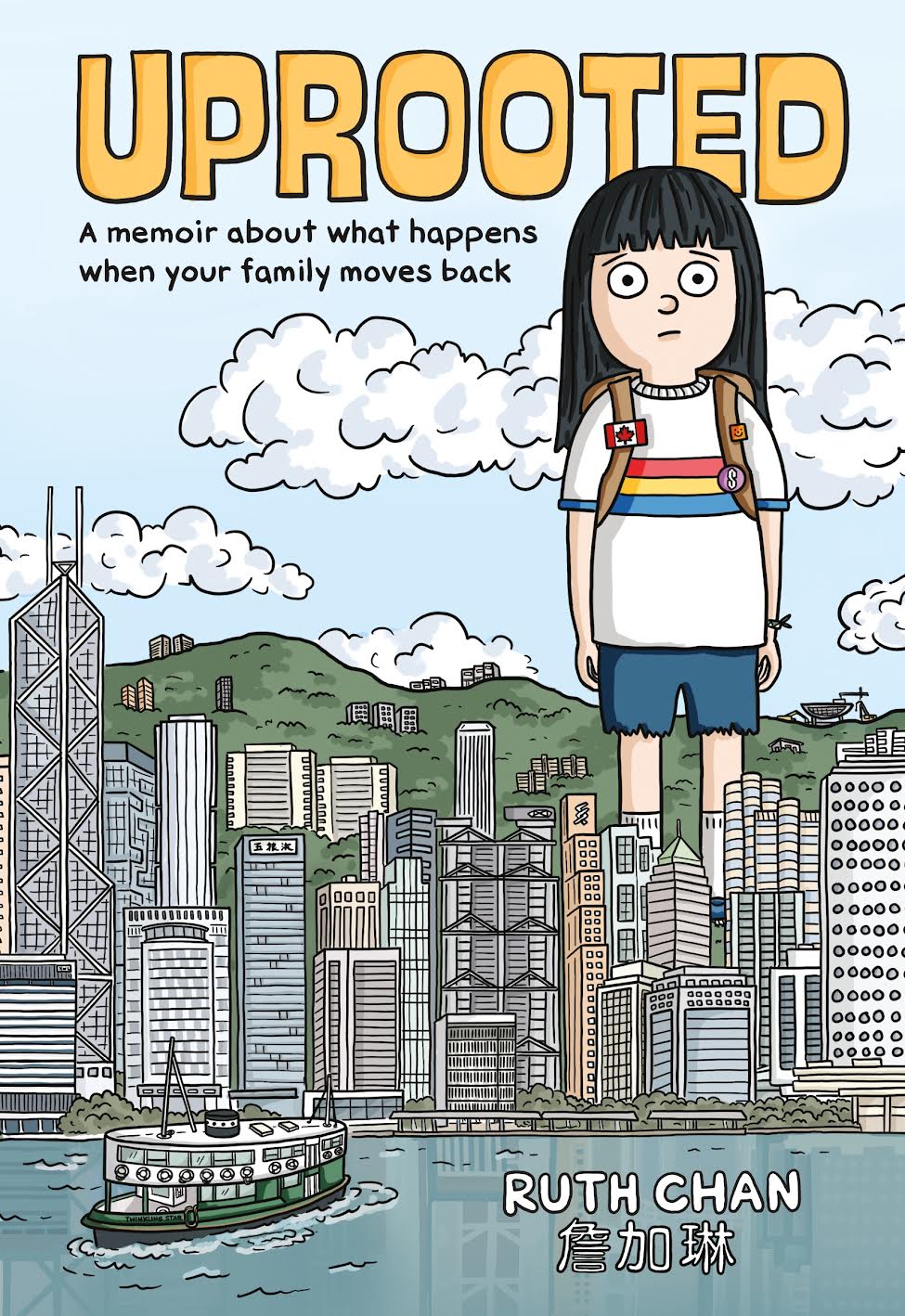
Uprooted: A Novel About What Happens When Your Family Moves Back by Ruth Chan

You’re thirteen and you’ve just been informed that your family is moving to Hong Kong for a while. What do you do? A fun fictionalized memoir rife with utter and complete culture shock. This works exceedingly well. A great deal of that is because Chan’s style (which I’d only ever really seen in picture books before) adapts well towards balancing out the lightness of her 90s experience and her ancestors’ experiences on the run during the second Sino-Japanese War. That kind of serious content shouldn’t gel with this style, but Chan makes it work. I thought she did a great job of putting the reader into her shoes. Definitely one deserving of more reads and serious award consideration.


Schneider Family 2025

The Schneider Family Book Awards honor an author or illustrator for a book that embodies an artistic expression of the disability experience for child and adolescent audiences. I’d love additional suggestions in this area.

Picture Books

Henry and the Something New by Jenn Bailey, ill. Mika Song

Jenn Bailey has a talent. She knows precisely how to write a neurodivergent kid character in such a way that the reader FEELS what he feels. We are all Henry. Now the previous Henry book (A Friend for Henry) was such a delight that when it won the Schneider Family Book Award Honor, I was vastly relieved. The next Henry book has now come out and I’d say it rivals the first in sheer literary goodness. In this story Henry’s class is going to the museum, which is something he is not really all that sure about. A class trip means a lot of new things, but it also means dinosaurs and he does love dinosaurs. Personally, one of the reasons I adore this series so much is because of Henry’s relationship to fellow classmate Samuel. Samuel seems to have some kind of attention deficit issues of his own, and so Henry keeps a close eye on that kid. Other times when Henry wants to see the dinosaurs at the museum but doesn’t want to say it out loud, oh man did I feel that. A delightful companion to the other Henry books with a happy ending. 

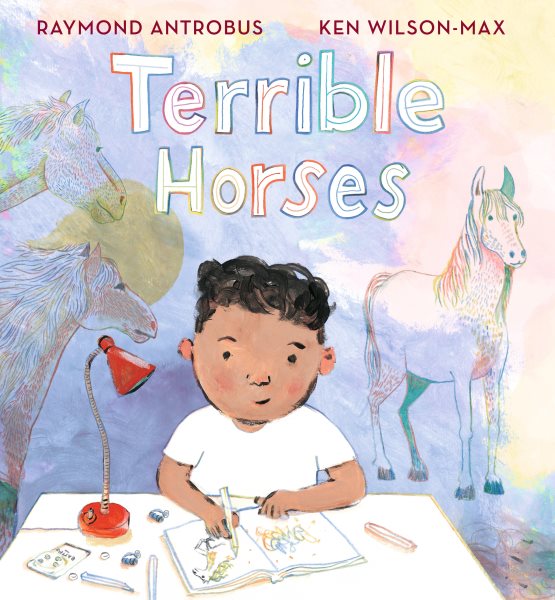
Terrible Horses by Raymond Antrobus, ill. Ken Wilson-Max

A little brother adores his older sister but when they clash he writes stories of terrible horses and the pony they ignore. An amazing inclusive story of sibling love and frustration. Do you happen to remember the picture book Can Bears Ski? that came out a couple years ago? I only mention it because its author is back with a new picture book, and to my mind it’s even better than his first. Recently a friend of mine reached out and wondered if I could recommend any books where a kid happened to have hearing aids. I had just read this book and I pretty much told her that this not only did I think it was perfect for her, it’s one of my favorites of the year. Antrobus does so much with so little. He just taps into that little sibling longing to be with the older kids so well. Plus just listen to his language. “… their terrible trampling, their ghastly galloping, their nagging neighing…” And I’ve been guilty of thinking of Ken Wilson-Max as a fairly simply illustrator in the past. I’ll never make that mistake again. This man KNOWS how to draw a horse. You gotta check this out.

Middle Grade

The Lumbering Giants of Windy Pines by Mo Netz

Jerry’s mom swears that this will be their last move, but Jerry’s not so sure. Adept in her wheelchair, she soon comes to suspect that her mom’s new job is not all that it seems. Particularly when folks have been disappearing in the nearby woods. So when it comes to Jerry, her use of the wheelchair, and her emotional state of being, the book is really strong. And I liked the fantasy elements considerably. Netz plays fair, never doing that thing I really hate where the author seemingly has forgotten what her character can and can’t do. Jerry’s wheelchair is always present but not the focus of the book itself. Yet, at the same time, the author never forgets about it. A delicate balancing act of writing.

Paige Not Found by Jen Wilde

What would you do if you discovered your parents had a device placed in your brain without your knowledge? Paige is autistic, and now she’s in serious danger of having her brain sold off to the highest bidder. The only thing to do? Bring the whole system down. At about page 17 I looked up from this book and exclaimed to my family, “This thing is REALLY moving!” This book doesn’t just hop. It runs into its own plot at a breakneck speed. By page 17 you already know that our heroine, who is autistic, is going to have to take down an Elon Musk-esque billionaire who has had a chip (essentially) implanted into her brain. And that’s not even getting into the fact that Paige is beginning to think that she may be nonbinary (this isn’t resolved by the story’s end, so I think the descriptions can continue to refer to Paige as “she/her”), that she has a crush on her best friend, and that there’s a wide range of different types of kids on the autism spectrum. By the point she’s rounding up the other kids with chips, I was reminded of one of my favorite books as a kid, The Girl With the Silver Eyes by Willo Davis Roberts. It rushes the ending, and gives the story a kind of deus ex machina of a scientist that strains credulity, but it’s a wild sci-fi ride all the same and the autism content is really very good.

Puzzled by Pan Cooke

When the intrusive thoughts first appeared in Pan’s mind when he was ten, he had no idea what they were. Now they’re taking over his entire life. A smartly rendered memoir on the puzzle that is OCD. Does the Schneider Family Awards consider OCD? I’m not sure, but I figured it couldn’t hurt to include this. We’ve a lot of GNs to look through this year, but this one really breaks down OCD in a way that felt far more real to me than some of the other OCD comics I’ve encountered in the past. Some of it really hit home too, since I had a best friend who went through this at the same ages as Pan in this book. I was particularly impressed by thinking of OCD as a puzzle that absolutely has to be completed. Certainly worth a couple more reads, I’d say.

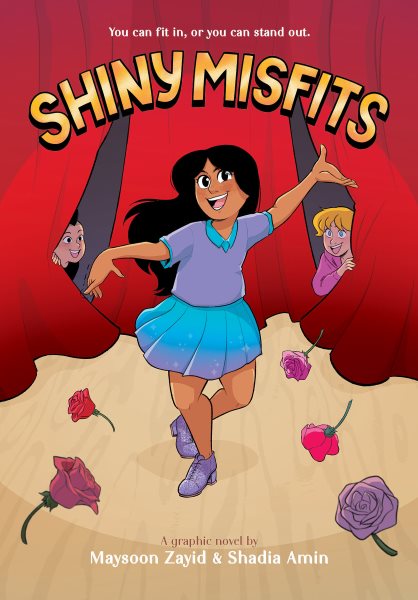
Shiny Misfits by Maysoon Zayid and Shadia Amin

Bay Ann is a star. But when her show stopping tap routine is overshadowed by a classmate’s viral video “helping her” because of her cerebral palsy, she’ll do anything to get the video clicks she feels she deserves. I experienced a bit of a rollercoaster ride with this one. I’ll tell you right now that in the first three or so pages I was NOT on board. It takes a little while to get used to the cadences and rhythms of Zayid’s writing. But once I was on board I was locked in. The jokes run fast and furious, like you’re watching a sitcom on triple speed. Is there a cat that talks in rhyme? There is. Did I somehow still like it? I did. Zayid skillfully makes it clear that while Bay Ann’s cerebral palsy is a part of who she is, the focus of the story is on her debilitating desire for internet fame more than anything else. And if you can think of another vegetarian Muslim heroine in a MG comic, I’d like to hear it. Now where we’re going to have to debate things out is on whether or not Bay Ann is too mean. Our heroine has to suffer and learn, but you might come away from this feeling like Davey Matt needs to find himself some new friends and stat. I dunno. I thought it worked enough in the end (and having a crush on your enemy felt a bit real as well). I’m very interested in what folks will think of this one.


Okay, folks. What are we missing in this line-up? Tell me your own favorites!

Filed Under: Newbery / Caldecott Predictions Tagged With: American Indian Youth Literature Awards, Asian / Pacific American Awards for Literature, predictions, Schneider Family Book Awards

Fuse 8 n’ Kate: Hard Scrabble Harvest by Dahlov Ipcar

November 25, 2024 by Betsy Bird

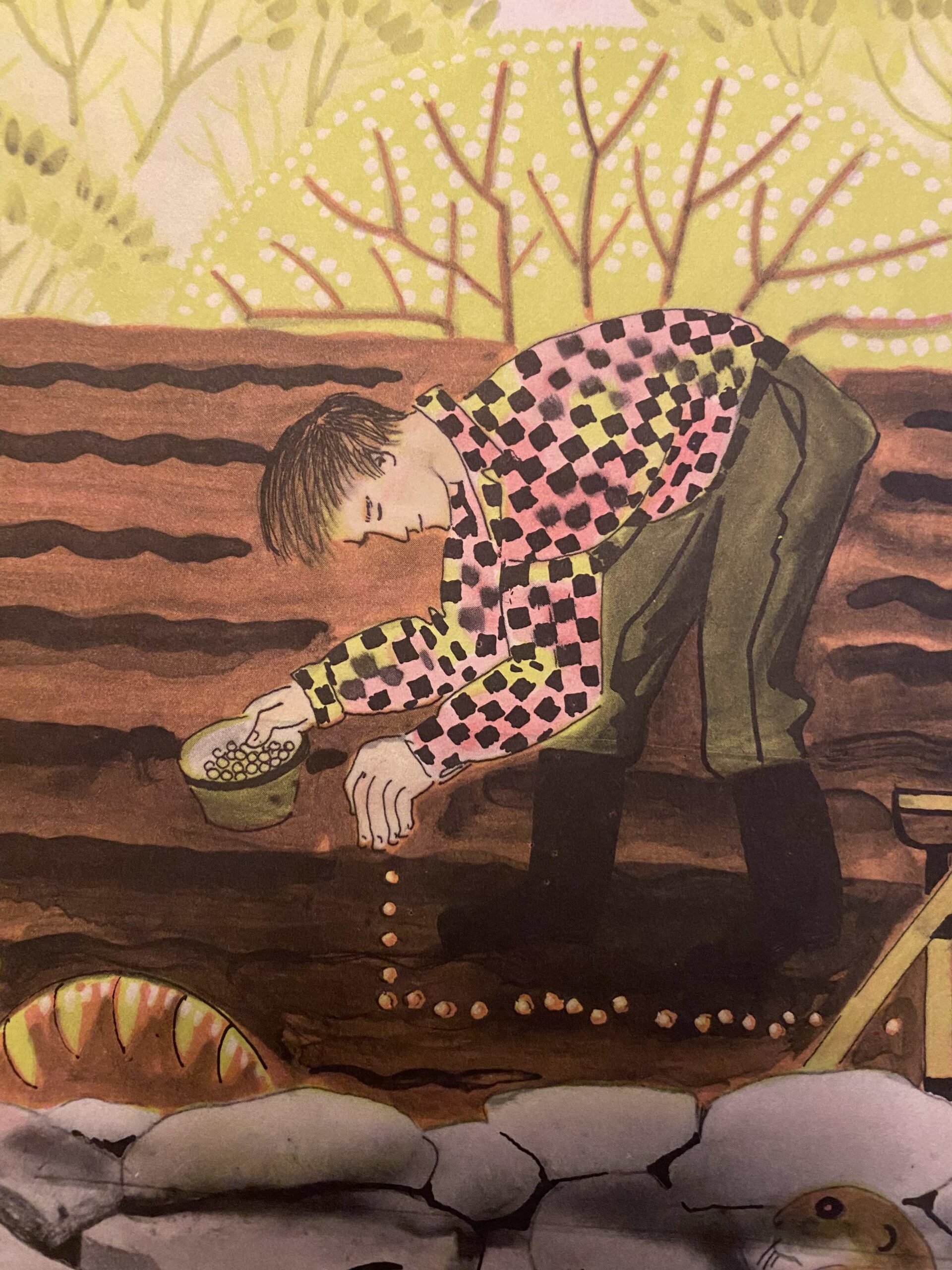
Turkey day approacheth and, let me tell you, it can be just a tiny bit difficult finding Thanksgiving Day picture books from 20+ years ago that aren’t offensive in some way. Today’s title came out originally in 1976, though you wouldn’t know it from the lead male’s shirt which is VERY 1985. We learn a bit about Dahlov Ipcar and consider a book where every single problem in this book could be solved if the farmer just installed, oh I dunno, A FENCE!! This is, to our mind, the story about a guy who went off the grid without doing any research. Enjoy it as we try to determine its place in the Gobble Day pantheon.

Listen to the whole show here on Soundcloud or download it through iTunes, Stitcher, Spotify, Google Play, PlayerFM, Audible, Amazon Music, or your preferred method of podcast selection.

Show Notes:

Buddy, what are you wearing? What we have here is a man out of time. And honestly, he should NOT be farming. This is a guy who is terrible at his job.

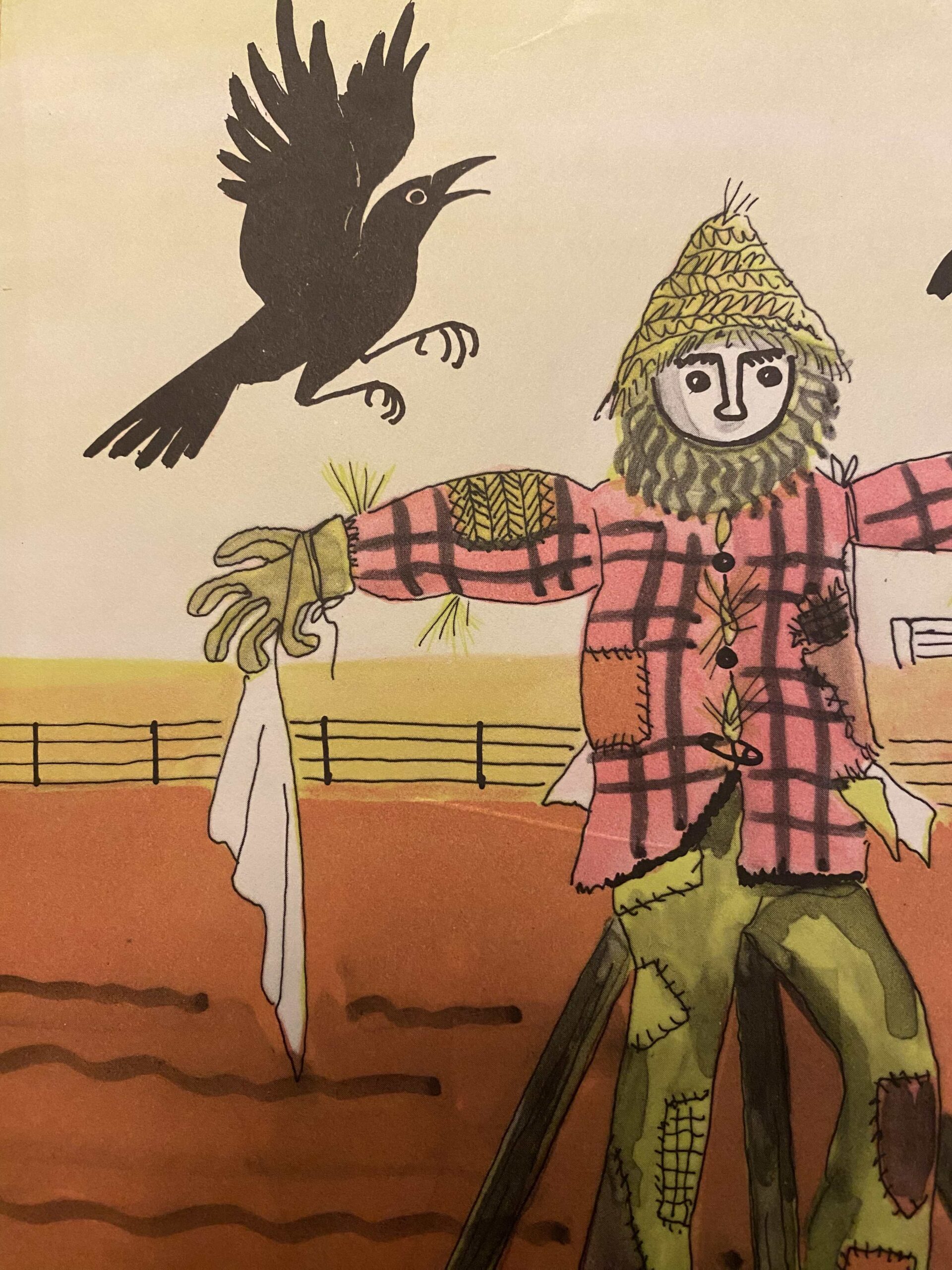
Why on earth is the scarecrow waving a white flag of truce at the crows? We can’t help but think that this is a farm fail.

When we look at the fanciness of these chickens, we immediately think of the book Going Down Home With Daddy. Whose chickens did it better?

Even when this doofus farmer does put up a fence, we suspect he just put it up for aesthetics, not practicality.

Ever seen a beagle crossed with a greyhound? Now you have!

We don’t think we want to eat any of the food from this man’s farm.

From 80s nightclub to… lumberjack! Or 90s grunge, if we’re feeling kind.

The all-pink and green cellar is quite a flex.

And suddenly we understand why the lady on this farm is with this terrible farmer. The man? he has some madass junk in his trunk. So much so that he’s literally splitting his pants on the sides!

We are enjoying this shirt. That said, what is going on with this outfit?

Kate Recommends: Further knowledge about black plastic and foods.

Betsy Recommends: Stand By Me

Filed Under: Fuse 8 n' Kate Tagged With: Dahlov Ipcar, Fuse 8 n' Kate, Hard Scrabble Harvest, Thanksgiving

Free Piano (Not Haunted): A Cover Reveal and Q&A with Whitney Gardner

November 24, 2024 by Betsy Bird

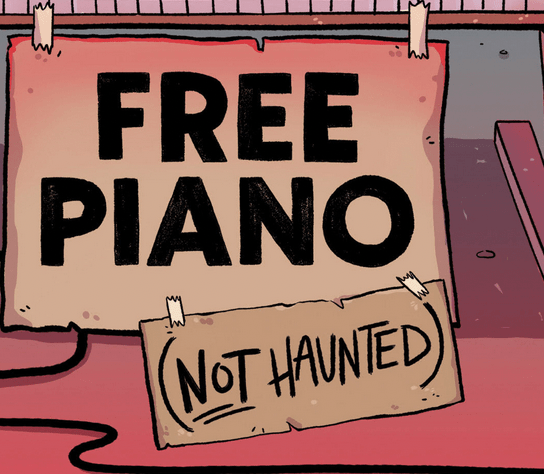
My 13-year-old asked for her own YouTube channel the other day. I said no, but it’s not the first time I’ve found the world of content creation to be so alluring to my offspring. With such thoughts on my mind these days, I was very drawn to graphic novelist Whitney Gardner and her upcoming comic (with a killer name) Free Piano (Not Haunted). Out July 15, 2025, here’s a quickie plot description for you:

“Margot’s determined to win her wannabee-webstar absent dad’s approval by becoming a famous songwriter, but her secret weapon—a haunted synthesizer—comes with some unexpected baggage: the ghost of an 80’s pop star, Vision. As Margot chases fame and followers, with her friends who run a popular Youtube channel for smashing things (Smash Bros), her unlikely friendship with the ghost of her thrifted instrument pushes her to question if “likes” are what she really wants, or if her real passion is offline (and for herself).”

I was asked to do the cover reveal, but I’ll do you one better. Let’s Q&A the heck out of this baby first! Whitney was kind enough to answer my questions, so here are some answers! 


Betsy Bird: Whitney! Thanks so much for joining me today. So first off, 10 out of 10 stars for the title FREE PIANO (NOT HAUNTED) right there. The book has a real Tiffany/TikTok/Exorcist vibe that I very much enjoyed. Can you tell us a bit about where the book came from?

Whitney Gardner

Whitney Gardner: Thank you! I’m so glad you enjoyed the title. It was such a fun idea to play around with. The story actually began with an actual ad I came across offering a free piano, with the odd reassurance that it wasn’t haunted. That line sparked my imagination and made me wonder… What if it was? It got me thinking about all the ways bringing home a supposedly ‘normal’ piano could go hilariously or terrifyingly wrong.

Once I started developing the story, I knew I wanted the ghost to have a unique personality, and that’s when the idea of an 80s pop star came in. It felt like the perfect mix of quirky and haunting, a spirit with style that would make the story both spooky and entertaining.

BB: And who doesn’t love spooky/entertaining (or, as I call it, spentertaining)? Your books often have this nice science fiction or supernatural element to them. In this case, it’s good old-fashioned dead people. Kids are suckers for ghost stories and this most certainly falls into that category. Were you a ghost story fan yourself in the past at all?

Whitney: Absolutely not! I was definitely not into spooky things as a kid. It’s only recently that I’ve started to appreciate scarier stories, though I still prefer them with a lighter twist. I think that’s why the supernatural elements in my books aren’t purely evil or sinister, they’re more playful or quirky than outright terrifying. Adding humor keeps things approachable and makes the ghostly elements feel more fun than frightening.

BB: Just to delve into this more on the cartooning side of things, what comics are you particularly influenced by? Or, for that matter, cartoons?

Whitney: There are so many incredible graphic novels and comics out right now! A few recent favorites of mine are Art Club by Rashad Doucet, Shark Summer by Ira Marcks, The Wizerd! and the Potion of Dreams by Michael Sweater, and Anzu and the Realm of Darkness by Mai K. Nguyen. Each one has a unique style that I find really inspiring. As for cartoons, Gravity Falls and Regular Show have definitely influenced my work. I love how both shows blend everyday life with the bizarre and supernatural in such an unexpected way. They each balance humor and mystery in a way that I try to bring into my own stories.

BB: Oh yeah. Love me some Gravity Falls. And you’ve some particularly pertinent things to say about art in an age of online followers. Was this a topic you’d been thinking about for some time or did it just suddenly come to you?

Whitney: Yes, it’s definitely something I’ve been grappling with for a long time. Once you turn your art into a profession, whether it’s music, drawing, or writing, the joy of creating can get overshadowed by audience expectations and sales goals. Social media amplifies this pressure even more. Suddenly, you’re not only thinking about sales but also about followers, likes, views, shares, and all these overwhelming metrics. Don’t even get me started on The Algorithm.

With this book, I wanted to remind kids just starting out in art that their joy should come from the process of creating itself, not from how it’s received online. Experimenting, discovering what you love, and making art that makes you happy—that’s what really matters, and it’s something I hope young artists can hold on to, even in an age of constant digital feedback.

BB: Okay, I have to know. Is Vision a variation on Tiffany or any other specific pop stars of the past? Because her whole early storyline felt very Robin Sparkles to me.

Whitney: It’s funny you picked up on that! When I first pitched this book to my editor, I described Vision as Robin Sparkles meets Tiffany. I wanted her to have that vibrant, iconic pop energy. In fact, before every writing session, I’d watch Tiffany’s I Think We’re Alone Now music video to get into the right headspace. There are even little easter eggs in the illustrations that nod to the video. Tiffany has this incredible pop aura that I wanted to bring to life in Vision’s character. I’m a huge fan!

BB: I’m just pleased that Robin Sparkles is having her due. Finally, what do you have coming up next? What can we look for?

Whitney: Right now, Free Piano (Not Haunted) is my big focus, but I’m also really excited for The Racc Pack Two: Prince and the Pawper, which comes out in January! I did the illustrations for this one, and it’s been a blast working with Stephanie Cooke on it. The Racc Pack series follows a raccoon family on all sorts of hilarious trash heists, and it’s full of laughs and adventure. I can’t wait for readers to dive into it!


All right, you patient people. Here’s the cover itself for your perusal and enjoyment!

Many many thanks to Whitney for taking the time to answer my questions today. Thanks too to Zoe-Aline Howard for helping to put all this together. Free Piano (Not Haunted) is out July 15, 2025 absolutely everywhere. Look for it then!
Filed Under: Cover Reveal, Interviews Tagged With: author interviews, cover reveal, illustrator interviews, Whitney Gardner

Cover Reveal and Q&A: Dusti Bowling’s Latest – The Beat I Drum (Apr 2025)

November 21, 2024 by Betsy Bird

Question: Were you all fans of Insignificant Events in the Life of a Cactus when it was released? Maybe so. Heck, maybe you still are a fan. Or your kids might be. As I recall, that book is one of those titles where kids just remain gaga about it, long after they’ve put it down. There have been many books since in what we call the “Aven Green” universe (The Greeniverse?) and now it is my sheer and utter delight to introduce you to the latest.

Remember Connor, the kid with Tourette’s Syndrome? Well, he’s back and he’s getting a book of his own:

“Connor Bradley is dreading the first day of high school. Not just because he is new, or because he misses his best friends, but because he knows the other kids won’t understand his barking and tics. Connor has Tourette Syndrome, and every day has been a challenge—from the mimicking to the laughing, the questions, and the stares.

It turns out school isn’t quite as bad as he expected. Connor forms a fast friendship with a girl who also has Tourette’s and is welcomed into her accepting circle of friends. He also meets a special music teacher who encourages him to take up the drums to manage his stress, and maybe get a break from his tics. But Connor’s world continues to be turned upside down by his father, who left the family a couple of years ago and is now trying to rekindle a relationship with them, and a school bully starts to escalate at school. All these problems—with family, with friends, and within himself—build and build until Connor feels ready to explode. Will a surprising revelation save him?”

Today, we’re revealing the cover of The Beat I Drum (out April 1, 2025), but first? A talk with author Dusti Bowling herself!


Betsy Bird: Dusti! Thank you so much for meeting with me today! Once more you are returning to the world of INSIGNIFICANT EVENTS IN THE LIFE OF A CACTUS. Did you ever think you’d keep coming back to that book from so many different angles and in so many different ways when you wrote it?

Dusti Bowling

Dusti Bowling: Thanks for having me again, Betsy! No, when I wrote the first book, I definitely wrote it as a standalone. I had no idea at the time I’d end up writing a sequel, a Connor spinoff, four chapter books, and a graphic novel!

BB: When I heard that Connor was to be the star of your latest book I was instantly intrigued. When did the idea for this book come to you?

Dusti: The idea actually came to me all the way back in 2019. A lot of things got in the way of developing it, but Connor’s story was always in the back of my mind. I was thrilled when my editor asked to hear the idea last year. 

BB: Connor’s Tourette’s Syndrome is uncommon in children’s books. There are a scant few titles that tackle the subject. It was originally introduced in INSIGNIFICANT EVENTS IN THE LIFE OF A CACTUS. Initially, why did you choose to include that diagnosis?

Dusti: I started writing INSIGNIFICANT EVENTS IN THE LIFE OF A CACTUS in 2014. I knew the character of Aven extremely well by the time I decided to write her a story. I just didn’t fully know what her story should be. I knew she’d move to Arizona and make friends with a boy, but that was about it. 

The very first scene I ever wrote for Aven was the scene when she plays the guitar for her friend for the first time. When she finishes her song, she looks over and sees he’s crying, and she wishes she could reach over and wipe his tears away. 

I didn’t know why the boy was crying at first. As I wrote the scene, though, my 11-year-old daughter was sitting next to me on the couch. She was also crying. Crying from the pain of the motor tics she was developing. Crying because she couldn’t stop doing the things that were harming her. It was then that I knew Connor was crying because of the pain caused by his Tourette syndrome. 

BB: Well, that leads into my next question anyway. What kind of firsthand knowledge or research have to done regarding Tourette’s? Where do you go when you need more information?

Dusti: My daughter was diagnosed with Tourette’s while I wrote this book, but I was already quite familiar with tic disorders because my husband has had tics his whole life. Like many children, though, he was never diagnosed with it. Instead, he was labeled a fidgety, hyperactive, and misbehaved kid. It’s because of the overwhelming amount of misinformation and bad representation that children with tic disorders don’t get the help and support they need. 

The stereotypical representation of people with Tourette syndrome compelled me to do the best, most accurate job I could do in depicting a child with Tourette’s. I knew for certain that Connor wouldn’t shout bad words because that only occurs in about 5 percent of people with Tourette’s (and it’s not always bad words), and yet this is how it is portrayed the vast majority of the time. We’ve had close family friends tell us our daughter can’t possibly have Tourette’s simply because she doesn’t shout bad words. They know this because they learned it from movies. Because of this, I’ve largely based my characters with Tourette’s on my family members, but I’ve also read every book I can get my hands on (there aren’t very many, as you said), spoke to doctors, and watched several documentaries like Teenage Tourette’s Camp, in order to create a representation I felt would apply to as many children as possible. 

BB: I don’t usually ask this, and you don’t have to answer if you don’t want to, but I’m very interested in the title of this book. THE BEAT I DRUM is interesting. How do you usually come up with your titles? They’re always pretty original and memorable (not an easy task).

Dusti: A lot of people are surprised to learn that I did not title INSIGNIFICANT EVENTS IN THE LIFE OF A CACTUS. Yes, I wrote the line that inspired the title, but it was definitely not my original title! I never would’ve thought of it in a million years and was quite surprised when my publisher came to me with it.

When it came to titling Connor’s story, I thought it would need another Cactus title, so I’d proposed “A Turn of Events in the Life of a Cactus.” But my publisher felt the cactus was far too tied to Aven, and Connor needed his own thing. Plus, they wanted this story to stand on its own. A big part of Connor’s story is him learning to play the drums as a way to relieve the pressure he feels to tic, so when they asked me if I had any other title ideas, the first thing that came to mind was THE BEAT I DRUM. I told them this title, fully expecting it would get changed, but it stuck. I’m glad it did because I was able to work it into the story in meaningful ways. 

BB: Finally, is this the last INSIGNIFICANT spinoff title or do you think you might have more in the works? And what else do you have coming out next?

Dusti: I always say this is the last, but I never know what ideas might strike me in the future. I do have the graphic novel version of INSIGNIFICANT EVENTS IN THE LIFE OF A CACTUS releasing in 2027, so that might be the last Cactus book. Maybe. I also have another middle grade novel releasing next fall, a new chapter book series beginning in 2026, and I’m delving into young adult as well! I’m extremely busy with several projects, so this very well might be the last Cactus-related book. But we’ll see 🙂


And on that note, enjoy this lovely book jacket!

Special thanks to Dusti for answering these questions (she’s in China and still took the time to answer them!) and thanks too to Blanca Oliviery and the team at Union Square for taking the time to help put these together. The Beat I Drum is on shelves everywhere April 1, 2025.

Filed Under: Cover Reveal, Interviews Tagged With: author interviews, cover reveal, Dusti Bowling

Mac Barnett Sleighs

November 20, 2024 by Betsy Bird

I’m sure you’ve seen it. When Mac Barnett announced that he and Jon Klassen had a Substack, I took a gander. Sure I did. And damned if it wasn’t good. Real good. Mac and Jon have a way of thinking deeply about children’s books in ways that are sometimes familiar yet always have a thought or a take that is wholly original. Does that make sense?

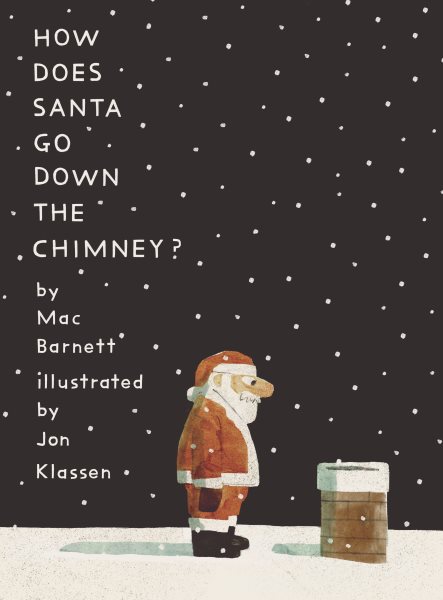
Anyway, Mac’s into Santa these days. I’m sure you’ve seen Jon and Mac’s recent challenge to stores to create a better window display for How Does Santa Go Down the Chimney? than they did. So when Lizzie Goodell with Penguin Young Readers said I could lob questions in the general direction of Mac’s head, there was only one thing I wanted to talk about.

I know it isn’t even Thanksgiving yet, but we are friggin’ talking about Santa today. As my 13-year-old daughter would say, sleigh.


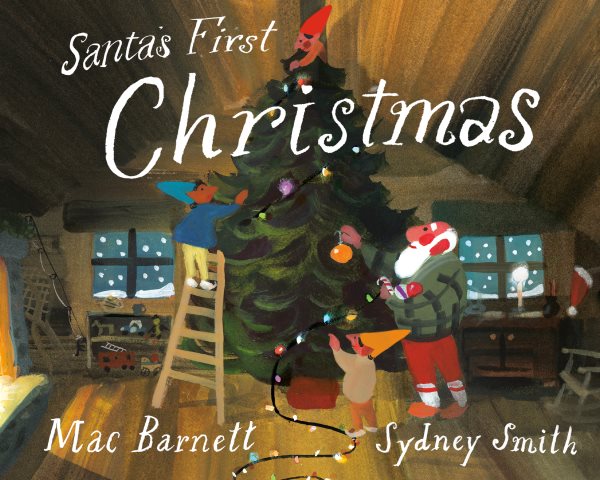
Betsy Bird: Mac! So good to talk to you today. Many congrats on the publication of Santa’s First Christmas (illustrated by Sydney Smith). Naturally you already touched on this particular character in last year’s How Does Santa Go Down the Chimney? (illustrated by Jon Klassen). I’ll delve into the greater ramifications of Santa in a bit here, but just to start us off, where did this particular idea come from?

Mac Barnett, photo credit Carson Ellis

Mac Barnett: This is a picture book about a character celebrating Christmas for the first time. It just so happens that this character is Santa Claus. And not, like, Baby Santa Claus. This is white-bearded old-man Santa Claus, centuries into Santa-ing. The idea of casting Santa as a naïf was appealingly counterintuitive to me—but it makes sense. Even though Santa is (obviously) closely associated with Christmas, his big day is really Christmas Eve. And he doesn’t celebrate—he’s working. So watching Santa learn about Christmas traditions felt interesting and funny, but also potentially full of pathos too.

BB: The real question I want to ask you is about Santa himself. A lot of picture book authors do a holiday title but they don’t usually return to the same subject unless it’s a sequel. What sets your Santa books apart is how incredibly different the two are from one another. The first was a delightful and wry examination of all the contradictions and oddities of the character while this one hits you in the gol durn heart. So why the return to Santa? What about the jolly guy keeps luring you back?
Mac: I love Christmas and I love Santa, and it may not be much more complicated than that. But if I were, for a minute, to play my own literary critic/psychoanalyst/psychoanalytic literary critic, I would note that I’ve always been interested in the porous borders between fiction and fact, lies and truth, and the imaginative and the empirical—and that Santa traverses these worlds in particularly interesting ways. But that’s looking at my work after the fact—it’s not what I’m thinking about when I sit down and write. And like I said, I love Christmas. I own a bright red turtleneck. The Santa books were probably inevitable.

BB: I’m wondering if you have any thoughts on holiday-related picture books as a whole. They seem to take up a very specific place in a family dynamic. I know a lot of people who keep the beloved holiday classics that they read as children in the family to read to their own children and grandchildren later on. The good ones live on in a way that even picture book classics outside of the holiday-sphere don’t quite enjoy. So how the heck do you write a good one? And what’s your take on the genre?

Mac: Growing up, my Christmas books definitely had special status. They were stored in boxes with all our ornaments and decorations. The books came out when we got our tree, and they got packed up again when my mom took down all the Christmas stuff and dragged the tree to the curb—first thing in the morning on December 26th. I didn’t have any other books like that: we read them repeatedly and loved them intensely for a few weeks, then put them into deep storage and pretty much forgot about them, only to be joyously reunited with them eleven months later. Those picture books were both familiar—imbued with all the warmth and coziness of Christmases past—but also different, because I was different, and a good story changes with its reader. Is that a take on the genre? I want to write something that gets put in a box with a broken nutcracker and a plastic Garfield wearing a Santa hat that nobody can bear to throw away.

BB: Is there anything you tried specifically to avoid when writing your two Santa books? Tropes you disliked or simply didn’t want to touch on? Or is that not even a factor when you’re coming up with a picture book idea?

Mac: I spent a long time thinking about this one—because I read and dislike picture books all the time, but when I’m actually sitting down and writing, I’m guided by some combination of enthusiasm for the idea and interest in the craftwork of telling a picture book story. I don’t know if this was always true for me or will always be true for me—and I do believe that writing is a way of reacting to the world, and especially to the stories I’m reading. But this was a very interesting question to me. One thing I guess I’m not really interested in when it comes to Santa is exploring “belief,” and especially a crisis of belief. There’s a lot to be explored there, but it’s not where my interest lies.

BB: You strike me as a fella who probably had his eye on Sydney Smith for a while. I mean, the man’s a blooming genius on the page. How was Sydney approached for this particular project? And was he your #1 pick from the start or did you come to him by and by? After all, this is a very different kind of book than the ones he usually does.

Mac: Oh yeah, I’ve known Sydney for years and wanted to work with him even before we met. He’s one of the great living painters and we’re very lucky to have him in picture books. But asking him to illustrate Santa’s First Christmas wasn’t my idea. Our editor, Tamar Brazis, suggested sending Sydney the manuscript. I thought it was an inspired choice, and feel that way even more so now. At various points, the text makes some very heavy demands of the pictures. I’m thinking particularly about a sequence in the middle of the book where Santa and the elves string the North Pole with lights, count to three, and then—after a page turn—turn the lights on. It’s a big moment in the book, emotionally, and it’s basically asking the illustration to perform a magic trick—to dazzle the reader with light and color and beauty. Sydney pulls it off so gracefully—he makes it look effortless, but it is a very very difficult series of spreads. The last few spreads are set up to be even more challenging—an extended description of a Christmas feast that is sumptuous and cozy and joyful and wistful. It’s a time where the text moves into a different register, and the pictures must do the same, and wow did Sydney ever nail it.

BB: You’ve paired with not one but two different Canadian artists for these books. This leads one to wonder what it is about the Canadians that makes them particularly adept at Santa-related fare. Do you have any insights on the matter?

Mac: I am not an American who feels comfortable generalizing about other countries but one thing I do feel ok saying about Canadians, and which may be relevant here, is that they are located north of us. 

BB: Finally, any chance of a third trip to St. Nick’s? Good things come in threes after all. Failing that, what else is coming out from you in 2025?

Mac: I wasn’t going to mention this earlier but now I have to: Santa’s First Christmas is my third book about Santa. Jack and Santa was the first, and the Santa in that book is a real blowhard, very unlike the Santa in the other two books. So, yes, good things do come in threes! Collect ‘em all!


Blast. He’s right. I completely forgot about that Jack book. That’s on me, folks!

In the meantime, I am happy to report that Santa’s First Christmas is already out (and How Does Santa Go Down the Chimney? was long since released) so there is literally nothing stopping you from getting your hands on them both right now. Thanks to Mac for taking the time to thoughtfully answer my questions, and thanks too to Lizzie Goodell and the team at Penguin Young Readers for putting it all together!

Filed Under: Best Books, Best Books of 2025, Interviews Tagged With: Mac Barnett, Santa

  • « Go to Previous Page
  • Page 1
  • Interim pages omitted …
  • Page 69
  • Page 70
  • Page 71
  • Page 72
  • Page 73
  • Interim pages omitted …
  • Page 1050
  • Go to Next Page »

Primary Sidebar