• Skip to primary navigation
  • Skip to main content
  • Skip to primary sidebar
  • About/Contact
  • Fusenews
  • Reviews
  • Librarian Previews
  • Best Books
    • Top 100
    • Best Books of 2022
    • Best Books of 2021
    • Best Books of 2020
    • Best Books of 2019
    • Best Books of 2018
    • Best Books of 2017
    • Best Books of 2016
    • Best Books of 2015
    • Best Books of 2014
    • Best Books of 2013
  • Fuse 8 n’ Kate
  • Videos
  • Press Release Fun

Photos Tell the Story: Fictional Picture Books with Photographic Illustrations

Photos Tell the Story: Fictional Picture Books with Photographic Illustrations

September 7, 2018 by Betsy Bird

Years ago at NYPL I had the pleasure of hosting a panel, as part of my Children’s Literary Salon series, that I’d been looking forward to doing for years. Back in my college days I was convinced that I had a future as a photographer. That plan didn’t pan out (my technical skills with a shutter are akin to that of a stoned sloth) but fortunately for me I’d hedged my bets and gotten an English degree to match. Still, my love of photography never waned and so on March 1, 2014 I lined up photographers Nina Crews, Joanne Dugan, Susan Kuklin and Charles R. Smith to talk about how children’s books illustrated by photographs are viewed, awarded, and how technological changes have affected them over the years. It was a great talk and opened my eyes on a lot of different topics.

Fast forward to 2018. I’m scrolling through the children-literature-uk listserv (populated by many people who once read the child_lit listserv) when I come across someone asking for a definitive list of picture book illustrated by photographs. And I paused.

In that pause I tried desperately to remember if I’d ever made this kind of a list before. Surely I had. Surely it’s hiding on this blog somewhere. So I did a search and came up with a 2011 post called Photography and Fiction. In it I wrote:

“Most photography in children’s books could be classified as nonfiction in a way.  We see a lot of them appear each season.  They do not lack.  But what about picture books that use photography and are fictional?  How common are they?  How often does one run across them?  Children love photos, after all.  So why are they so often relegated to the informative Tana Hoban / baby board book areas of the library?”

It’s a perfectly fine post but it doesn’t offer any kind of a definitive list. And you know me. I’m listy (the opposite of “listless”, I suppose). I’m a librarian. If my job was just making lists all day I’d probably die of delight.

And now the list . . .

Ah ah ah! Not so fast, missy!

Right. Ground rules. We definitely need to establish some ground rules for this sort of thing. We need to figure out exactly what we’re talking about when we say “fictional photography picture book”. Precision of language, darlings. For example, when we’re talking about photography, would you include those books that include photographed models? I’m thinking of titles like the remarkable Hank Finds an Egg or all those books by Terry Border. And what about books like The Lonely Doll? And if you include those then where do you draw the line? For his book Wabi Sabi, illustrator Ed Young photographed his cut paper art. Ditto Cynthia Von Buhler for Who Will Bell the Cats?. The shadows in particular have to be done just right. So do those count as an amalgamation of photography and art? Or are they separate? The only thing to do is to determine (and boy this is arbitrary) whether or not the book thinks of itself as a work of illustration, of models, or as a work of photography. For example, in the case of The Lonely Doll, I would argue that the doll and the bears are not truly the focus. The photography is (think of that shot on the Brooklyn Bridge). So I would categorize those books as works of fictional photography in a picture book form. The aforementioned Hank Finds an Egg, however, is remarkable because the models are the stars of the show. Also, we want to avoid Nonfiction. To do this, I’m making the requirement that the book has to have a plot. That cuts out cute baby face books, alphabet books, counting books, etc. No plot? No go. With all that in mind, this is the closest thing approximating a list that I can come up with. You are encouraged to add your own suggestions in the comments. Let’s work on this together so that in the future when someone asks for such a list, they’ll have one ready and at hand.

With the understanding that this is just a starter list and is by no means complete:

Fictional Photographic Picture Books

The Christmas Wish by Lori Evert, ill. Per Breiehagen

(also by these creators: Tiny Wish, The Puppy’s Wish, Reindeer Wish, The Brave Little Puppy, and The Polar Bear Wish)

 ChristmasWish

Fitcher’s Bird by Cindy Sherman

 FitchersBird

Frisky Brisky Hippity Hop by Alexina B. White with Susan Lurie, ill. Murray Head

(also by these creators: Swim, Duck, Swim and Will You Be My Friend?)

Jacket

Jack and the Beanstalk by Nina Crews

(also by this creator: The Neighborhood Mother Goose, The Neighborhood Sing-Along, Seeing Into Tomorrow, A High, Low, Near, Far, Loud, Quiet Story, Below, A Ghost Story, When Will Sarah Come, You Are Here, Snowball, and even more!)

Jacket

J.T. by Jane Wagner, photographs by Gordon Parks

J.T

The Lonely Doll by Dare Wright

(also by this creator, all subsequent Lonely Doll sequels)
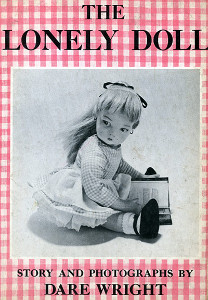
Lonely_Doll_Cover

Lulu and Pip by Nina Gruener, photos by Stephanie Rausser

(also by these creators: Kiki and Coco in Paris)

LuLuPip1

Step Gently Out by Helen Frost and Rick Lieder

(also by these creators: Wake Up!)

StepGentlyOut1

Stranger in the Woods by Carl Sam, photos by Jean Stoick

StrangerInWoods

Sweet Pea and Friends: The Sheep Over by John and Jennifer Churchman

(also by these creators, Brave Little Finn, Alpaca Lunch, and A Farm for Maisie)

SheepOver

All the William Wegman books, too numerous to mention individually

WilliamWegman

What would you include?

Filed Under: Uncategorized Tagged With: photography, picture book photography

Writing So That Barriers Might Fall: Ellen Klages Discusses Out of Left Field

September 6, 2018 by Betsy Bird

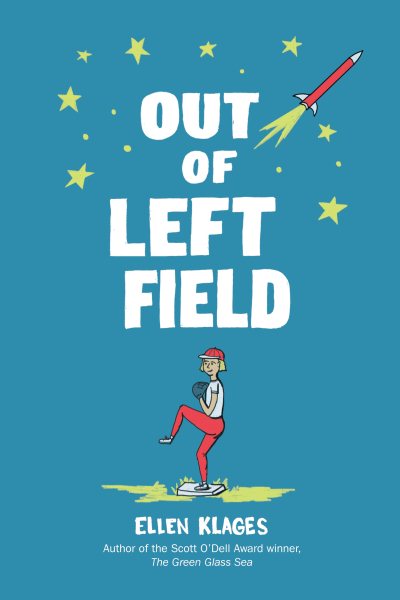
It was in 2006 that I read the book Green Glass Sea by Ellen Klages. Long before STEM was a common term and there was a national push for girls to embrace math and science, Klages told the story of two friends living in the very heart of the Manhattan Project. Two years later (after GGS had won a Scott O’Dell Award for historical fiction) it was followed up with White Sands, Red Menace with the same girls. A decade went by. This year, I’m so pleased to see that the third book in the series (if, indeed, a series is what it is) is out. But where its predecessors focused on the Cold War and science girls, Out of Left Field has a whole different take on feminism. One that involves . . . . wait for it . . . sports!!

I had the pleasure of sitting down with Ms. Klages to talk about the book, why it’s actually more STEM related than her previous books, the barriers that still need to be broken when it comes to women and baseball, and whether or not Ms. Klages is, in fact, a “pantser”.


OutLeftFieldBetsy Bird: I think one of the things I like the most about OUT OF LEFT FIELD was the connection to your previous books THE GREEN GLASS SEA and WHITE SANDS, RED MENACE. Did you always envision this as a series or did things just fall out that way naturally?

Ellen Klages: More fall-out than planning. I am completely a “pantser,” not an outliner. The Green Glass Sea started out as a robot/alien abduction short story. (Yeah, really.) It gradually morphed into a much longer tale (and lost the robots and aliens along the way), turned into a novel, and then two. When I finished White Sands, Red Menace, it seemed like a good place to stop — the story had wrapped up with expectations of a happy ending for Dewey and Suze, and there weren’t any events from the early 1950s that were sparking my curiosity. But I had also left it open-ended enough that I could come back if inspiration struck.

Ten years later — in real time as well as fictional time — I had an inkling of an idea for a story set in 1957. Unfortunately by then my main characters were adults. But they did have a little sister, who would be ten. That’s a great age. And she’d been raised by three of the most interesting women I know. Hmm. Things began to fall into place, and became Out of Left Field.

BB: When GREEN GLASS SEA was published it was before the huge push we’ve seen to get girls into the science and STEM fields. It was also before the word “feminist” came back into the public lexicon and was applied to countless biographies and anthologies. In this way, the book was clearly ahead of its time. OUT OF LEFT FIELD follows in its proverbial footsteps less as a STEM title and more as a work of feminism in sports. Why the shift?

EK: I don’t think it is a shift. While it’s true that the first two books had distinctly scientific settings and background events — the Manhattan Project, the beginning of the U.S. space program — and the third has a baseball-oriented focus (although with rockets and satellites in Current Events), for me, Out of Left Field is actually the most STEM-oriented of my books.

Why? Because the STEM skills that are emphasized at the elementary-school level are the ones Katy learns through her adventures: problem-solving; creative and critical thinking; collecting data, finding patterns, and creating logical arguments; learning to listen and communicate and ask good questions. As Terry Gordon says, “Good research skills are a secret weapon that will come in handy down the road.”

I love research. It’s like a treasure hunt, a scavenger hunt, where I follow my curiosity down twisting, branching paths that will take me places I didn’t know I wanted to go. It’s fun, and it’s my favorite part of the writing process.

BB: One of the things I love about the book is its clear cut focus on female baseball players throughout history. Beyond A LEAGUE OF THEIR OWN I doubt many people my age have encountered this story, and it’s almost impossible to find information in children’s books about it. Was there ever a point at which you thought to make a Nonfiction book on the subject, or was it always going to be fictional? Would you have any interest in writing something Nonfiction-based as well?

EK: Out of Left Field started out as non-fiction. Twenty years ago, when I worked at the Exploratorium museum in San Francisco, I was part of a team creating a website on The Science of Baseball. (http://www.exploratorium.edu/baseball/features/girls-of-the-summer.html)

Like Katy, I did a lot of research, spent hours in the library, found old photos in archives, conducted interviews, and read the handful of books on women in baseball that had been published (some of which I reference in my Author’s Notes in the back of Out of Left Field). I was so grateful to the writers who had gone before me, who had done the work of digging through primary sources like small-town newspapers, baseball programs, and other ephemera.

EllenKlagesBut those books were published in the 1980s and ’90s. I had access to them, but Katy wouldn’t. One of my biggest challenges was to find a way that she could reasonably find out about any of these women. I spent four days in the big downtown library wading through volumes of the Readers Guide, and when I found the article about Jackie Mitchell, I almost let out a whoop of my own.

It is still not easy for kids to find detailed information about the history of women in baseball, even with Google and modern access. There are at least a dozen non-fiction books written for children, but each of them concentrates on a single player: Jackie Mitchell, Alta Weiss, Toni Stone. Most of them are picture books, and are quite short, because even though these were remarkable women, and some played for decades, they were not allowed to achieve the kind of fame that would need a longer biography.

Women have been playing professional baseball for more than 140 years, but the scope of that history is still largely unknown. I think that Out of Left Field may be one of the few books to present that bigger picture to middle-grade readers, as well as being a gateway book for kids who like to play sports, but might be reluctant readers.

And while I love research, I also love playing with my imagination. For me, fiction is the best of both worlds.

BB: Your book does an excellent job at tapping into that universal feeling to which all children can relate: injustice. Everything that happens in this story hinges on something not being fair. What cuts deep is how unfair the situation remains to this day. Have things improved since 1957 for girls who want to play baseball? Can they ever hope to play in the big leagues?

EK: Yes and no. Girls have been allowed to play Little League for more than forty years now, but the vast majority of them play softball, not baseball. In many communities, there are opportunities for older girls and women to play baseball, but in many, many others, there are no girls’ teams (or mixed teams) at the middle school, high school, and college levels. Little League is the end of the road. Sure, there are softball teams, but softball is a very different game, and it’s really not “girls’ baseball.” Separate but equal just doesn’t cut it.

Knowing the history, knowing that it has never been solely a boys’ game, a man’s game, is important. It is not true that girls can’t play baseball — they have. Players like Toni Stone and Sophie Kurys ought to have gotten the opportunity to at least try out for the major leagues instead of getting the door slammed in their faces, over and over.

Will a woman break that barrier and play in the majors some day? I hope so. I think she is out there. Maybe she’s ten, and is reading Out of Left Field, and is inspired to keep playing, to keep fighting for her place on the “boys'” team. But it will be an uphill battle. Until boys and girls are taught the same skills, rules, strategies — starting in elementary school and going all the way through college — girls will always be at a disadvantage on the baseball diamond.

I was certainly thinking a lot about injustice and civil rights when I was writing the book, but those aspects feel even more topical now. For me, historical fiction is about opening a dialogue between the past and the present. The current events of 2018 are just as much about standing up for what you believe, fighting for what’s right, getting involved, resisting — and persisting — as they were in 1957. I hope today’s fifth graders will be able to relate.

I’ve written a whole essay on the importance of historical fiction, which you can read here.

Toni StoneBB: Were you a huge baseball fan when you started this project? Are you now?

EK: I’ve been a baseball fan since 1988, when I was living in a mountainous rural area and writing my first book (non-fiction). The libraries and archives and other sources I needed for my research were an hour or two away, so I was in my car a lot. The only radio station that came in clearly was a right-wing AM talk station. Not my cup of tea. I’d listened to all my cassette tapes so often they were wearing out. One day, turning the dial, hoping for anything, I found a baseball game.

Not my cup of tea, either, but it was better than Rush Limbaugh. And it was the bottom of the eighth inning, two men on, two out, so I decided to listen until I found out what happened. I was on the edge of my seat, and the lightbulb went on. There was a narrative, a story unfolding, every inning, every game. I got hooked.

I started scheduling my library trips around the baseball schedule that summer. The Giants or the As? Day game or night game? East coast, west coast, somewhere in between? I’d time my trip so that I got in the car around the third inning, arriving at my destination just as the game was ending,

That was the year the As went to the World Series, so it was a great introductory season. I moved back to Oakland, went to As games. I moved to Cleveland, became an Indians fan. Now I live in San Francisco, and root for the Giants. And I shop for groceries at the Safeway on the corner of 16th and Bryant, where Seals Stadium used to be, and try to imagine what it would be like to go back in time and watch them play.

BB: The unholy worst of all possible questions, but I have to ask it: Will there be any more books in this series? Related, what are you working on now? Or can you say?

EK: I don’t know. If readers fall in love with Katy (and Jules), then the girls may have more adventures. I have a few inklings on what those might be. I’ve also contemplated an adult book about Dewey and Suze and who they become. Both of those are in the “wisps of ideas” category.

In the meantime, I’m trying to write a memoir about my sister, Sally, who had Down Syndrome. She was funny and snarky and loving and tender and infuriating, sometimes all at the same time. I’ve been telling stories about her my whole life. She died two years ago, and I’m hoping to keep her memory alive by writing the best of them down. It’s an emotional journey ever time I open my notebook — some days I smile, some days I cry. So we’ll see.


Many thanks to Ellen Klages and Sharyn November for the interview. And yes indeed, it’s a great book to boot.

Filed Under: Interviews Tagged With: author interviews, Ellen Klages

Review of the Day: The Party and Other Stories by Sergio Ruzzier

September 5, 2018 by Betsy Bird

FoxChickThePartyFox & Chick: The Party and Other Stories
By Sergio Ruzzier
Chronicle Books
$14.99
ISBN: 978-1-4521-5288-2
Ages 4-7
On shelves now

Have you ever sat down and looked at books meant to instruct children in the art of reading from the early 18th to 19th centuries? When Americans colonists first came around to the idea of teaching children to read via books, the titles weren’t exactly what we’ve come to associate as kid friendly. “In Adam’s Fall we sinned all,” reads one particularly strident abecedarian title. Since that time we’ve moved away from heavy-handed didacticism couched as literacy aids, but here in the 21st century the tactics have shifted to a new angle. Now many schools have fully embraced the idea of “leveling” the books, which is to say each title is ascribed a distinct letter or number that indicates its text complexity, word count, etc. The idea is that you’d slot kids into a distinct level and then have them carefully read “up” from there. No backsliding. No skipping levels. No reading outside the box or exploring grown-up books on the sly or engaging with reading as anything but strictly leveled homework. Pleasure be darned. This is why I’m so grateful for books like Sergio Ruzzier’s new Fox and Chick series, starting with The Party and Other Stories. I don’t mean to imply that the book hasn’t already been “leveled” by its publisher (Lexile Scale: 370), but it’s one of those funny little titles that eschews the rigorous rote categorization educators try to place on it. It’s picture book sized with an easy book text (or is it an early chapter book?). The images look like comics but the humor is distinctly across ages. It is, in short, just the loveliest little book that ever you did see. To coin an overused but not inaccurate description: sublime.

Friends Fox and Chick may get on one another’s nerves from time to time, but their relationship is true blue. In this collection of three little stories, the first tale (“The Party”) follows Chick as he innocently asks Fox if he can use his bathroom. Fox agrees but when a great deal of time passes he discovers that the term “use the bathroom” can have multiple definitions. In “Good Soup”, Chick peppers Fox with questions about why he is denying his carnivorous tendencies. That is, until Fox reminds him that when you’re a baby chick in a great big world, maybe you shouldn’t go around pushing your luck. Finally, in “Sit Still”, Chick asks if he can be in Fox’s painting, but finds the art of posing more difficult than anticipated.

FoxChickTheParty1 Almost without meaning to, I found myself trying to define the relationship of the two main characters. When Publishers Weekly reviewed the book, its reviewer was baffled as to why Fox put up with Chick. That aspect actually made a lot of sense to my eyes. For me, the book’s most notable quality, in a way, is its utter and total lack of snark. True, Chick plays the role of jester, sometimes at Fox’s expense, but in this book Fox treats his little friend the way a patient big brother might. With that in mind, I was reminded of those Charlie and Lola books by Lauren Child. This book contains that same sweet patience, with the older, taller member considering the younger one with amusement and, at times, a touch of annoyance. Yet there is real love between these characters, and you get a sense of that. Fox never snaps at Chick, though he does occasionally take him to task on one matter or another. Why does Fox tolerate Chick? Well, why does any sibling tolerate their young, ardent, all-too frustrating relations? Because deep down they really like them, loathe though they might be to admit it out loud.

Now I don’t want to alarm you but Mr. Sergio Ruzzier isn’t like those other illustrators out there. Uh-uh, the man is very different in one very notable respect: He is Italian. Shhh! You didn’t hear it from me! And honestly, you might well forget it were it not for the fact that his books are unapologetically European. Americans are lovely artists, but after a while it can all look a bit samey. The nice thing about Mr. Ruzzier is that he never blends in with the crowd. He might change his medium slightly or tweak the colors, but he can’t really get away from the fact that he just doesn’t look like anyone else. For example, in a particularly non-American move he doesn’t fill his books with big, violent, loud, crazy, slapdash scenes. The biggest accident that happens in this book involves a broken window that is never commented upon and that we never see break. These three stories are droll, but not boring. They amuse without slapstick. In this way they remind me of the best easy books out there, like Frog and Toad and Houndsley and Catina. Friends being friends in a world where the sky is always blue.

FoxChickTheParty2One other way that Mr. Ruzzier makes this book so lovely is that he grants realism to the most unlikely of places. Put another way, he likes to include just the smallest of details to his scenes, lending them this ineffable sense of reality. When little animals leave Fox’s bathroom, the mole walks off, trailing a couple squares of toilet paper from his foot. Later, when Fox serves his soup to Chick in the kitchen/dining room, I noticed a single floor tile amongst the blue, yellow, and orange linoleum that was broken in half, revealing the concrete slab beneath (it’s on the endpapers too, if you notice). Look at the tiny remains of chopped vegetables lingering on the cutting board. Or (again with the tiles) the bathroom tile broken into three parts with the third long since missing. There’s some part of your brain that will notice this, even if the conscious part does not. Some part of you that will realize that the tile floor on the front endpapers of the book is clean and on the back endpapers is covered with detritus from the stories. And without even really realizing it, you’ll find that you like this book. You might not know why. But you will.

I haven’t even really gotten into the fact that this is the first time I’ve seen Mr. Ruzzier try out a comic paneled format, complete with speech balloons. It’s perfect for this kind of book. You’d never in a million years imagine that he’d been doing anything other than comics all this time. The panels themselves change from time to time, and follow a couple patterns. For example, each of the three stories begin and end with two-page spreads. That said, he isn’t afraid to do four long vertical columns or line-less panels, should the scene necessitate it. Now imagine that he does all this while also using a highly textured watercolor paper that draws a certain level of attention to itself. The end result is comics that are unafraid to highlight their own medium. In short, the perfect way to meld classic picture book techniques with contemporary sequential art.

For all that I rail against leveling children’s books, there’s one thing the whole process has done well: it has brought attention to easy books. They’re just so hard to find otherwise. Every year I try to find the best ones out there. Books with simple language and engaging plots, and every year I’m able to find only three or four (five if I’m lucky). This year, I was so grateful when I read this book. As you might imagine, it can be hard to locate easy books that aren’t just funny and sweet but also interesting and original. Ruzzier starts his new series off with a bang, melding art forms, employing great (and funny!) storytelling, and (maybe hardest of all) doing it with memorable characters. Can’t wait to see where he goes with it next.

On shelves now

Source: Final copy sent by publisher for review.

Like This? Then Try:

  • Snail and Worm by Tina Kugler
  • Frog and Toad Are Friends by Arnold Lobel
  • Houndsley and Catina by James Howe, ill. Marie-Louise Gay
  • Rabbit and Robot by Cece Bell

Interviews:

  • Be sure to read this talk with Sergio about the book over at Seven Impossible Things Before Breakfast.

Filed Under: Best Books, Best Books of 2018, Reviews, Reviews 2018 Tagged With: Chronicle, easy books, easy comics, easy picture books, Sergio Ruzzier

Cover Reveal & Interview: Bob Shea Talks Up Unicorn Is Maybe Not So Great After All

September 4, 2018 by Betsy Bird

When I am a good little blogger, and I mind my Ps and Qs, and catch all my spelling errors, and rein in my less than charitable attitudes for at least a good four hours, then once in the while the Blogging Gods will smile down upon me and I will be granted a boon. Today, that boon comes in the form of Bob Shea’s next book. No, not any of his 2018 titles (lovely though they might be). I’m talking about a sequel years in the making. A book that I didn’t know I needed until I understood that it was on the horizon. A book so good, and so funny that I am literally bouncing in my chair as I type this (necessitating that I go back and make more spelling corrections so that the Blogging Gods keep me in their favor).

Ladies and gentlemen . . . there is to be a sequel to Unicorn Thinks He’s Pretty Great!!!! After all these years! The original came out in 2013, a whopping five years ago. Now the time is right, the planets have aligned, and today we are going to get to see the new cover for Unicorn is Maybe Not So Great After All.

But wait! There’s more!

You also get to hear from Unicorn creator Bob Shea himself. Y’know. The guy behind those funny picture books in your library. The ones you hand to the kids who want honestly funny stuff from a consistent source. Well, it turns out that the man gives a good interview. I should know. I got to pepper him wildly with queries and he only got one thing wrong (re: chocolate chip cookies – Obviously he’s right about browning the butter but if you increase the ratio of the brown to white sugar at a 3:2 ratio you’ll avoid floppy cookies, thereby creating a superior chewy product and . . . oh, let’s just interview the doggone guy).


UnicornGreatBetsy Bird: You’ve made a whole slew of memorable picture book characters over the years (Dinosaur, Ballet Cat, Floyd Peterson, etc.) but I’m gonna come right out and say it. The dude I relate to the most is Goat. Now not only is Goat back (he had a nice Ballet Cat cameo, but one can always use more Goat in their lives) but so is Unicorn! Did you always plan to follow up UNICORN THINKS HE’S PRETTY GREAT or did you have to wait for an imaginative hook to come to you?

Bob Shea: It’s funny, most people relate to goat. I certainly do. It’s hard to stand out in a world filled with ostensibly perfect people living ostensibly perfect lives going around using words like, “ostensibly”. I’ve wanted to do a follow up for a few years but never had the right story. My original idea was much darker, with Unicorn on a lost weekend shuttered away in his Citizen-Kane-style mansion reading UNICORN THINKS HE’S PRETTY GREAT and cursing those who had wronged him.

My editor said no. My editor is smart.

BB: One of things I love about Unicorn is that he’s one of those people that gets accustomed to loads of attention naturally. Then, when all that is taken away, he’s completely unprepared for being treated like a regular person. Is Unicorn based on anyone you’ve ever known personally, or it is more the case that we’ve all got a bit of a Unicorn attention-seeker inside of us somewhere?

BS: I have a weird relationship with attention. I don’t seek it out and I shake it off like I walked into a spider web. Thankfully, I don’t get a ton. Unicorn isn’t based on any one person but if it was it would be Sergio Ruzzier. I hate that guy so much. I’m just kidding, Sergio is my friend and one of the nicest people in the world. Did you know he’s from Italy? It’s true. What were we talking about? Oh, attention seeking. You know, I don’t think it’s in everyone, but it’s in plenty of people. Unicorn finds out the hard way that seeking attention can mess up the things that are really important. Like cake. Oh, that’s the next question.

BB: One of my son’s favorite books is I WILL CHOMP YOU which may contain the greatest collection of cakes in children’s literature. In this book you’ve got flaming birthday cakes. Give it to me straight, man. What’s with you and cake?

BobSheaBS: Your son is smart and has good taste.

You’re onto me. I love baking. The first thing I do when I land in a new city on tour is Yelp a local bakery.

“Is this a crispy or soft chocolate chip cookie town?” I think. I prefer (as do smart, popular, kind people) the crispy ones. The brown sugar and butter caramelize and you get way more flavor than the sweet sugary ball of under cooked dough. I’m getting angry just thinking about it. When kids at school visits ask what I would do if I didn’t write books I tell them I would open a bakery. I’m probably lying though, it seems like a lot of standing. Plus people would ask if I had any soft chocolate chip cookies and I’d flip out on them bad. I’d be in the paper and everything. So yeah, I guess if I weren’t an author I’d probably fake a hard-to-verify back injury and collect some type of disability and watch TV all day. That’s what I’ll tell the kids from now on.

BB: Not to give it away, but there’s a rubber band / Silly Bandz running gag here that I really appreciated. You do a lot of school visits. Have you ever found yourself in Unicorn’s shoes, trying to do a talk, only to be ignored in favor of rubber bands?

BS: Not rubber bands, but whatever the latest obsession is pops up in the Q and A all the time. I’ve been asked numerous times (and have declined) to dab. I notice the younger grades are usually a couple years behind the trends. It’s a trickle down theory of popular culture. Then again, I usually show up in a flannel shirt like it’s Seattle in 1994 so I’m not one to talk.

BB: This is only going to fill the growing, gaping need for more Unicorn/Goat books (which I wholly approve of, since the world has been waiting for a classic picture book unicorn character for DECADES). With that in mind, do we dare hope for a #3?

BS: That’s a good question for my editor Stephanie Lurie whom I love dearly. So maybe everyone can write her a brief note.

Maybe write something like this:

Dear Stephanie,

Thank you for publishing those wonderful books by America’s Favorite Author™ Bob Shea. One time he did something nice for me, the details aren’t important. What is important is that he keep cranking out those charming unicorn books! I haven’t read them, but I hear good things. Give yourself a raise or at least load you bag with office supplies before you head out tonight.

Love,

(your name)


Thanks, Bob!

So when’s this bad boy hitting bookstore and library shelves? That would be September 9th . . .

2019.

That’s right! It ain’t a real cover reveal unless it’s coming out in more than a year, baby!

I’m not giving anything away. Truly, I cannot. I’ll just say this. In this story Unicorn discovers on the first day of the new school year that no one is paying attention to him because there’s this rubber band craze sweeping the school instead. In an effort to get back his former glory, he takes things to an extreme level. The book later contains what is now, officially, my favorite two lines from a picture book of all time: “Just look at this mess. Did a clown explode in here?”

Now let’s show you that cover, shall we?

UnicornNotSoGreat

And because I love you, and because Bob Shea loves you, and because Bob Shea’s publisher loves you, you’re gonna get yourself some interior spreads as well. First up, this is what it looks like when Unicorn is trying to think up a new look that will make everyone love him again:

UnicornNotSoGreat3

Now I know you can’t see it unless you blow up the image, but if you take a close look at the different designs Unicorn is working on, you’ll see one listed as Ska, one has sort of a country western flavor, and under his hoof is my favorite one: Emo. Coulda been a whole different book right there.

UnicornNotSoGreat2

I think if the television show Arrested Development taught us anything, it is that glitter is more weapon that portable sparkly joy.

Many thanks to Bob and the good folks at Disney Hyperion for the reveal. Looking forward to seeing this one in 2019! And for those of you who are curious, here’s an edelweiss link to the book. You betcha.

Filed Under: Best Books, Best Books of 2019, Cover Reveal, Interviews Tagged With: author interviews, Bob Shea, cover reveal, illustrator interviews, interviews, picture book author interviews

Fuse 8 n’ Kate: Blueberries for Sal by Robert McCloskey

September 3, 2018 by Betsy Bird

BlueberriesSalFiiiiiiiiiish . . .

An aquatic creature that has absolutely NOTHING to do with this week’s book!

So first and foremost, I am happy to announce that we now have our very own Twitter and Instagram accounts for this podcast. Woot! So tune in on Twitter @fuse_kate or on Instagram at fuse8kate. As for the podcast itself, Kate was semi-familiar with this book already. But did she remember anything about it at all? No, sir!  As it turns out, we were able to really dive into some of the details. Will we determine it’s a classic? Time will tell!

Listen to the whole show here on Soundcloud or download it through iTunes, Stitcher, Google Play, or your preferred method of podcast selection.


Source Notes:

– Well, I’m still not certain what this stove actually says, but oddly, there is a company out there today that produces woodburning stoves. Only the name isn’t Garmen or Carmen. It’s Harman. How’s that for coincidental?

Blueberries5

– How much sugar does it take to can blueberries? The internet has many opinions on the subject but generally speaking it appears that you want to add 1/2 Cup of sugar for each quart of berries. That’s not a ton of sugar. I guess Mom really worked double time while Sal was AWOL.

– If anyone is looking to update this book for the 21st Century, Kate’s suggestion of the title “Single Sassy Mom and Her Androgynous Child” has my vote. No ring here.

Blueberries4

– Really, Kate? Sal’s a little Mackelmore? Let’s compare.

Blueberries3

Mackelmore

Not seeing it.

– How fast can a little bear run? Hard to say. A grown bear can get up to 40 miles an hour. We have to assume that a baby bear just wouldn’t have that kind of speed. So even if it began to get ideas about the deliciousness of mom, it’s not happening.

– For those unfamiliar with it, I present One Morning in Maine:

OneMorningMaine

– I always feel like somebody’s watching meeeee.

Blueberries6

– What kind of car is this, people? Send us an answer for all the points! You won’t find a better offer than that today.

Blueberries7

-It showed up at #31 on the Top 100 Picture Books Poll.

– Here’s something I didn’t mention during the podcast, but there is a Blueberries for Sal statue out there. It was listed in The Complete Listing of All Public Children’s Literature Statues in the United States. Located in Boothbay Harbor, Maine, the statue is by Nancy Schön, the same woman who did the Make Way for Duckling Statues in Boston. In 2008 she was commissioned by the Board of Directors of the Coastal Maine Botanical Gardens to make a sculpture of Little Bear from the book Blueberries for Sal by the author Robert McCloskey.  The result is this cute little feller who is surrounded by actual honest-to-goodness blueberry bushes.  You can read more about it and see Ms. Schön’s process here.

BlueberriesSalStatue

– These are the two Josh Funk picture books I mention in the podcast:

ItsNotJack

LostInLibrary

– We had to check out what the heck “King of Tokyo” really is. So, you know Wil Wheaton (from Star Trek)? He started this YouTube series where he walks through how to play board games with celebrity friends of his and he did one for “King of Tokyo” – if you want to know what it’s about, check it out here:


-Here’s our number one fan’s latest deal announcement:

StephaniePW

– And her previous book for adults: Suffering Succotash: A Picky Eater’s Quest to Why We Hate the Foods We Hate.

SufferingSuccotash

Filed Under: Fuse 8 n' Kate Tagged With: Blueberries for Sal, fiiiiiiiiiish, Fuse 8 n' Kate

Weathering the Bully Spectrum: An Interview with Torrey Maldonado of Tight

August 30, 2018 by Betsy Bird

SecretSaturdaysYears ago I was at a house party in Brooklyn for a lovely writer friend. It was the kind of event where you could find a writer tucked away in every pantry, cupboard, and spare room. Lots of writers, is what I’m saying. Anyway, I’m not the world’s greatest mingler when it comes to people I don’t know, but there was this one guy who was just the most personable, easy to talk to fellow. Turned out he was a teacher, which made perfect sense. Who better to put awkward people at ease? Of course he was a writer as well, and had not too long ago published the book Secret Saturdays with Puffin Books. His name was Torrey Maldonado and there was just something about the guy that stayed memorable. Over the years I’ve forgotten the names of scads of people, even the ones I’ve had meals with, but him I remembered.

Now Torrey has a new book out. The kind that gets blurbs from people like Jacqueline Woodson and G. Neri. The kind that gets starred reviews in School Library Journal. Tight follows Bryan, a kid that has a hard time making friends, and who’s doing his best to stay out of trouble. When he befriends a boy named Mike, the two click. They’re good together. But Mike’s got something inside that’s eating him. As his behavior gets more and more extreme, Bryan has to figure out whether this friendship is worth the abuse that comes along for the ride.

I got a chance, after all these years again, to talk to Torrey about the book.


Betsy Bird: The easiest middle grade book to write is the kind with the stereotypical physical bully. The one who steals your lunch money and shoves you in your locker has been done to death. Far more interesting and malevolent is the bully who’s a friend with great qualities that you really like. How did you go about constructing the character of Mike?

Torrey Maldonado: There’s this saying, “Behind every kid acting out is a story that’ll make you cry”. As I saw the movie Black Panther I reacted to the antagonist—Kilmonger—the way you and other readers react to Mike. People find Mike is likable, interesting, and has great qualities. In that way, Mike mirrors Kilmonger and the “friend-emies” and bullies of my students’ and my life. He doesn’t steal your money; he steals your heart. I hope that through Tight my students and other kids build a similar empathy that you have for Mike. A fairly unknown playwright named William Shakespeare said, “There is nothing either good or bad, but thinking makes it so”. I want readers to ask themselves, “Is Mike good or bad?” I hope they walk away trying to pinpoint Mike on the bully spectrum and his underlying issues. If they do, maybe it will help them understand and interact with real-world Mikes better.

TightBB: I love that phrase. “The bully spectrum”. I feel like I’ll need to steal it someday.

Now sometimes I’ll read a book set in New York and it won’t feel like the city. Yours doesn’t have that problem. It’s timely and accurate, which is great. There’s this one moment too when the characters are meeting in a Starbucks and Bryan’s really loving it. This was written before the real world Starbucks incident when two black men were arrested while waiting for a friend. Did you have any thought when it occurred of how this could affect the reading of your passage? 

In my Brooklyn hometown where I was born and raised and in lots of neighborhoods, urban Black/Brown bookish boys were and are bullied and get called the “g” word for our bookishness. Not g for “genius” or g for “gangster”. When I author-visit across the U.S., I ask audiences, “What do kids call boys to make them stop reading or from doing anything positive?” The response always is unanimous: “Gay”. Unfortunately, our world can be homophobic where many boys don’t want to be seen as gay. Each year, kids feminize and interrupt our bookishness and it happened to me my whole life. I wish more urban Black/Brown males were allowed to be bookish. I dream that we can have more safe spaces for that. I don’t see many book characters that are bookish urban Black/Brown boys that my urban students see as cool. So my casting two urban Black/Brown boys that my students feel are cool as bookish in Starbucks is my yearning to fill a void in the real world and our book market. Also, my scenes cast a vision of Starbucks’ potential. I believe my Starbucks scenes can help start dialogues about race, Black/Brown males and safe spaces, who is allowed to be bookish, and “Have Nots” experiencing access and privilege and peace. I hope the Starbucks folks make life imitate my art because it would be great if males like me from tweens to adults can get the same Starbucks experience fully offered to others.

BB: One of my pet peeves when I read kids’ books is when the author feels obligated to make up fake superheroes or video games in the text. I guess they do it so that the book won’t date in some way, but it just drives me up the wall. One thing I really liked about the book is that you mention real superheroes in the here and the now. Are you a superhero fan yourself? Why did you make that the way the guys bond?

TM: Am I a superhero fan? Just you asking had a Pavlovian effect on me and I nearly flashed the Wakanda Forever gesture from Black Panther. Just like the boys of Tight, I follow and want to be our favorite heroes in comic-to-films, CW, Netflix, FX, and more. You also asked why my characters bond over comics and superheroes. I aim to spotlight a timeless trend that I lived that is a growing trend. The trend is superhero worship. As long as I have taught, kids visit my classroom at lunch and bond over superheroes the way my characters do. Time with students and my lifetime of superhero worship revealed a trend in a trend: the toxic masculinity modeled by superheroes. Many are stereotypes of manliness. Tight is a mirror for my students because of superhero worship. And through Tight we see a need for more 21st century complex male heroes. My students are multidimensional and heroic in many ways. So with Tight I tried to show a tween today with a complexity of character wanting a superpower and finding real ways to be super. I hope my students and other kids walk away from Tight knowing how they are heroic and can keep that going.

torrey-biopicBB: Have you gotten any feedback from kid readers yet? How do they feel about the ending? Are you getting any requests for a sequel yet?

TM: The Stanford University Graduate School for Education asked me to do an author-visit and I read Tight. I still have raised forearm-hairs from my visit. I’ve had middle schoolers before ask me to sign their sneakers. Yet after reading Tight, a first happened. Kids asked me to sign cellphones, hats, and shirts. A librarian from another school sent me an email with kid feedback about Tight. She said she listened to the audiobook’s first chapter with her son who ONLY likes graphic novels. He said, “This should be a graphic novel!” My secret-wish as a fifth grader was to someday write something as good as a graphic novel so the librarian’s son compliment is a dream come true. Now the Twitter feedback from librarians and educators is at a whole other level. I wish I could turn their tweets into coffee that powers me all mornings or turn their tweets into medals that I wear all the time. I hope Tight keeps making kids feel these ways too.

BB: Anything else in the works?

TM: I’m super thrilled to reveal that Nancy Paulsen and Penguin Kids and I will keep whipping up MG magic. In early 2020, they will release my book about a tween half Black and half White boy grappling with racial profiling in his community and figuring out how to navigate as a mixed boy in our world.


Incredibly awesome.

A ton of thanks to Torrey and the folks at Penguin for the chat. You can find Torrey’s book on my Alternative Anticipated Children’s Books of Fall 2018 List and wherever fine books are sold.


Filed Under: Interviews Tagged With: author interviews, Torrey Maldonado

  • « Go to Previous Page
  • Page 1
  • Interim pages omitted …
  • Page 329
  • Page 330
  • Page 331
  • Page 332
  • Page 333
  • Interim pages omitted …
  • Page 1049
  • Go to Next Page »

Primary Sidebar