
Writing Middle Grade that Readers Want to Read: An Author’s Perspective, A Guest Post by Barbara Dee

Betsy here. I was first made aware of Barbara Dee’s latest middle grade novel Nothing To See Here on one of my favorite Substacks, Reading Middle Grade. In the post Introducing: The Kid Cover Test, Afoma Umesi and her cadre of kid reviewers determine which middle grade covers appeal to their intended audience and which ones don’t. Nothing To See Here was ranked the absolute top. The best cover of a selected few.
Barbara Dee, of course, is well known to many of us. She’s written at least fifteen middle grade titles and those books have a tendency to show up on lists like The Washington Post’s Best Children’s Books, ALA Notable Children’s Books, ALA Rise: A Feminist Book Project List, School Library Journal’s Best Middle Grade Books, and the ALA Rainbow List Top Ten. Her books appear on numerous state awards lists as well.
ADVERTISEMENT
ADVERTISEMENT
Today, Barbara joins us for a special guest post that goes very well with Afoma’s assessment. How do you make a book appealing to its target audience?
Barbara Dee has thoughts:
At a recent event, I was chatting with another middle grade author about the decline of pleasure reading among middle schoolers. I asked if awareness of this troubling trend was affecting this author’s writing.
“Not at all,” the author said. “I don’t believe in pandering to readers.”
This reply got me thinking: Is it “pandering” to try to write books that are responsive to the needs and tastes of current readers? Are there ways to make our middle grade books more kid-friendly, without sacrificing literary quality?
I’m convinced that the answer to the first question is no, and the answer to the second is yes. Of course, what’s tricky is figuring out how to entice kids who’ve abandoned books for their phones and game consoles. So lately I’ve been thinking hard about my own approach to storytelling. At the same time, I’ve been asking teachers, librarians, parents—and yes, kids too–what they’d like from me as a middle grade author. Here’s what I’m hearing:
First, keep it short. When I’m writing a new book, I typically begin with a short synopsis as a kind of road map, and then allow myself to wander off-course. But I suspect that this sort of wandering results in too many steps, too many words. I need to consider what I’ve been hearing from educators: many kids these days lack the reading stamina to deal with thick books and inflated word counts (Harry Potter and The Lightning Thief notwithstanding).
So as I was writing my latest novel, Nothing to See Here (Scholastic, 10/20/2026), I paid close attention to the overall word count, and to the way that the book design affected the number of pages. I also strictly limited chapter length. If kids flip through the book before deciding whether or not to read, they’ll see that some chapters are four or five pages, while others are only a sentence or two long.
Second, play with format. From everything I’ve observed at book fairs and festivals, I know that kids are drawn to books that make the reading experience feel fresh. Most of my previous fifteen novels have been fairly traditional first-person narratives, so for Nothing to See Here (Scholastic, 10/20/2026), I decided to try something new, writing from the alternating perspectives of four eighth grade students. I chose this approach not just because it was unprecedented for me, but because it made sense for the theme of the book– the way anonymous gossip on social media affects not just one kid, but a whole school community. I also included many extended group chats and texts, which are written in kid-ese.
My upcoming middle grade novel, Lost for Words (Scholastic, 9/21/27), is an even bigger departure from my usual format. It’s a multi-POV narrative from the perspectives of three middle schoolers, but this time, all of the chapters by a girl named Daphne, who’s a poet, are in verse. One of these friends, Theo, has a crush on Daphne, but doesn’t know how to tell her, so he asks an app that resembles ChatGPT to “write” crush poems for him to send. You get to see Daphne’s actual poems, as well as the (dreadful!) poems produced by AI, along with Theo’s “conversations” with the app.
Of course if you’re a gifted artist/writer like Rex Ogle (Absent) or Jarrett Lerner (A Work in Progress), you can invent a hybrid format that marries words and pictures. For an author like me whose art never matured beyond stick figures, my challenge is to think about ways to make words pop on the page. Some of my favorite middle grade authors have been doing this with innovative multimedia books like Where Ella Went by Laurie Morrison, as well as What Happened to Rachel Riley? and Mr. Cooper Didn’t Do It by Claire Swinarski.
I’ve also been admiring verse novels like Louder than Hunger by John Schu, which does playful things with typography. Teachers say that when kids see plenty of white space on the page, they feel more confident as readers. Certainly the popularity of verse novels suggests that white space helps readers to focus on the printed words. Even for books that aren’t verse novels, I believe authors need to factor in page layout.
Third, treat heavy topics lightly. Despite the gloomy sales numbers, I’m convinced that realistic middle grade fiction is better than ever, with a wide range of books on many different topics, including previously taboo ones like mental health, sexual assault, and grief. I strongly believe that kids need books like these to help them process the world, discover their own identities, and learn empathy (which is why I’ve explored some of these subjects myself, in books like Maybe He Just Likes You, about sexual harassment, and Violets are Blue, about substance abuse).
But what I keep hearing lately is that middle graders are most attracted to books on heavy topics when they’re treated with a light touch—like Insignificant Events in the Life of a Cactus by Dusti Bowling and Counting by 7’s by Holly Goldberg Sloan. The lightness isn’t just the proverbial “spoonful of sugar”; it shows readers how humor and hope can be found even in the middle of the toughest circumstances.
ADVERTISEMENT
ADVERTISEMENT
I often think about an email a student wrote me after she read My Life in the Fish Tank: “I like your books because they’re happy-sad, and also sad-happy.” I always aim to combine this emotional yin/yang with multi-layered plots– like those in books such as A Scar Like a River by Lisa Graff and Listen to the Girls by Chrystal Giles. When the story has other things going on besides the heavy subject, I think it makes for a richer reading experience.
This is why I decided to write Nothing to See Here, about important topics like phone addiction and online bullying, as a friendship story with a touch of cringey eighth grade romance. It’s also why I wrote Lost for Words, about the limits of AI- produced art,as a rom-com about mistaken identity.
Does it diminish the seriousness of the topic—our dependence on, and addiction to, the digital world—to tell these stories in a way that’s meant to meet readers where they are right now? I don’t think it does. And if our goal is to keep kids turning the pages of our books, then strategies like limiting word count and re-imagining format aren’t “pandering”; they’re just adapting our approach to a fast-changing audience.


Thanks to Barbara for that post today, and thanks too to Abigail Jordan and the team at Scholastic for helping to put this together. Nothing To See Here is on shelves everywhere now.
Filed under: Guest Posts
About Betsy Bird
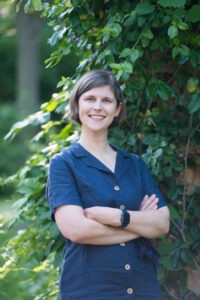
Betsy Bird is currently the Collection Development Manager of the Evanston Public Library system and a former Materials Specialist for New York Public Library. She has served on Newbery, written for Kirkus, and has done other lovely little things that she'd love to tell you about but that she's sure you'd find more interesting to hear of in person. Her opinions are her own and do not reflect those of EPL, SLJ, or any of the other acronyms you might be able to name. Follow her on BlueSky at: @fuse8.bsky.social
ADVERTISEMENT
ADVERTISEMENT
SLJ Blog Network
Name That LEGO Book Cover! (#81)
Nathan Hale’s Hazardous Tales: The Web of War | Review
Friday Exercise: READ THIS BOOK!
From Policy Ask to Public Voice: Five Layers of Writing to Advance School Library Policy
Teens Read YA: Scout Jensen reviews the latest entry into The Natural series by Jennifer Lynn Barnes
Luke Pearson Made a Picture Book!
ADVERTISEMENT