
The Uncanny: Five Questions for Aaron Starmer on You Are Now Old Enough to Hear This

Today, we do something a little differently here at Fuse 8. Taking my cues from Roger Sutton and the five questions he gives to authors and artists with new titles, I’d like to take some time to delve a bit deeper into some of the more fascinating books for young readers of the year. And as far as I’m concerned, few books deserve that moniker more than You Are Now Old Enough to Hear This by Aaron Starmer. Today, Aaron joins us to talk about the book’s larger implications, and where horror for kids stands in the current cultural moment.
Betsy Bird: Horror is having a moment. I don’t mean simply in literature (for both kids and adults) but in the culture at large. Black horror, indigenous horror, Latino horror, films like Backrooms and Obsession, and TV shows like Widows Bay (which just won ALL the things at the Emmys). You look around and it feels like what once felt like a cheap, schlocky way to tell a story, now has a weight and depth hitherto unexplored. It’s existed in middle grade children’s books for decades and decades (think of The House of Dies Drear by Virginia Hamilton, or the Newbery Honor winning title Doll Eyes) and now, this year, you’re unitizing it in a new way. Can you talk to us a little bit about how horrific elements, which I’ve detected in your work before, speak to kids today?
ADVERTISEMENT
ADVERTISEMENT
Aaron Starmer: Apologies for getting all Freudian up in here, but my novel, and pretty much all the examples you’re citing, are playing around with “the uncanny,” which is basically when you take familiar things and subtly twist them, making them horrific precisely because they’re only slightly off. We’re not talking about slobbering monsters and piles of gore. We’re talking about, well, severed pinky toes, ominous packs of wild dogs, and rusty, unsettling metal buckets. I’ve never been a straight-up horror aficionado, but I’ve always been drawn to this particular collision of spooky and strange. I think kids are naturally drawn to it too, because while it has the potential to haunt the heck out of them, it’s also very approachable. It’s personal. It’s relatable, even when it’s weird. And it’s not really a fad like, say, slashers or post-modern horror. If we’re talking about American art and literature, it spans from Poe to, as you pointed out, the overly clingy girlfriend and liminal spaces of Obsession and Backrooms.
BB: I look at how this book was laid out and I gape. As I read, I’m going to have to confess that I feared that you’d succumb to LOST syndrome. Which is to say, you’d introduce more mysteries than you were capable of answering (like LOST the TV show did). Yet by the story’s close, I couldn’t find a single dangling plotline or unanswered question. Either you have a heaven sent continuity editor or you have a preternatural ability to keep everything straight as you write. So which is it? How on earth did you manage to keep track of every problem, question, and mystery and tie them all up by the book’s conclusion?
Aaron: My issue with Lost was less about the number of mysteries than it was about the size of the mysteries. The first couple seasons focused on the characters and their surprising backstories. Once it expanded and became more about island lore, it was still fun and addictive, but it didn’t hold together in the same way. I kept that in mind while writing my novel. Everyone loves a good origin story. But I had to remind myself that this was the origin story of Roman and his immediate family, not the origin story of what came before them. By being laser-focused on solving only the mysteries that were directly connected to Roman, I knew the story could work on both a logical and emotional level. I didn’t discover some of the solutions until late in the revision process (e.g. the exact function of “the drain”), even though the ideas were hidden in the text from the beginning. Whether my writing has improved over the last fifteen years or not is up for debate! But I’ve worked with some talented and disciplined editors who demand firm logic and even firmer motivations. With their help, I’ve definitely gotten better at weaving together seemingly disparate strands because I’ve gotten better at knowing my limitations. If I introduce some story choice that becomes too cumbersome, I abandon it immediately so that it doesn’t sabotage the rest of the writing. If I realize the story could be strengthened by adding clarifying (or often essential) details at the last minute, I don’t worry it will mess up the flow because I can usually see where to naturally slot them into the text—I certainly don’t want anything to feel tacked on. And if I include something peculiar, I rarely do it just for flavor or atmosphere. I insist on making it serve the characters, the themes or the plot, and preferably all three.
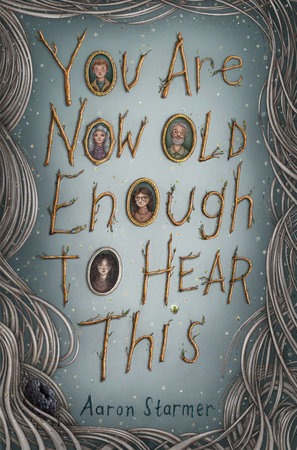
BB: Talk to me a little bit about the risks you took with the writing. It isn’t just the fact that you include a screenplay and a bit of folklore as alternate ways of telling this tale. The biggest shock to me, as a reader, was when you went from the third person to the first person late in the book. I had an actual visceral reaction to this. I’m sure it’s been done in a book for kids before, but I simply can’t recall an equivalent. Talk us through not simply how you pulled this off, but the thoughts and choices behind these different methods of telling a story.
Aaron: I didn’t look at the choices as risks, because they felt like the only choices at the time. When I originally came up with the idea for the book, I had already been working on the stories of the “Toe Beast” and “A Girl and Her Dogs.” The only connection I had made was that they were both part of one family’s astonishing history. That inspired me to challenge myself, to create a novel consisting of family stories that link together and feel like it does when you’re a kid discovering that your parents and grandparents have secret lives and flaws and fears. So the stories needed to feel like they came from a variety of voices and times and formats, like snippets in a dusty scrapbook. Then, when it finally reached the moment when Roman would tell his story, the book would become first person present. After all, he was taking the reins. Again, it felt like the only choice. (Oh, and just between you and me and whoever else is reading this, the screenplay section was originally envisioned as a graphic novel, but there wasn’t a budget for that – maybe in the 10th anniversary edition!)
BB: There is a great danger when you have a large cast of characters with different histories and personality quirks of making your main character dull. No author is immune to this problem. Side characters are so much fun to give secret histories, whereas main characters bear the brunt of the plot, and often come across as well meaning and boring. Roman, however, manages to both stand in for the reader and have a personality of his own. I know that this question sounds odd, but how do you make a main character a well-rounded person? How do you make them someone the reader roots for, in spite of the fact that they probably don’t have the funny traits of their compatriots on the page?
ADVERTISEMENT
ADVERTISEMENT
Aaron: I enjoy musicals, but I don’t know all that much about them. A friend who writes musicals was once telling me about the “I Want” or “I Wish” song that appears in the first act of almost every successful Broadway hit. It’s Writing 101 (introduce your main character’s goal early), but what makes it so effective in musicals is that it’s sung. It’s the definition of vulnerable. And that was my strategy for introducing Roman to readers. The first line and first chapter is all “I Want” and literally “I Wish” and he’s as vulnerable as can be. Is it an easy way to tug some heartstrings? Sure. But I also wanted to make Roman relatable in that what he wants is connection and what stands in his way is a bunch of people who seem larger than life. But by the end these people are no bigger than Roman. After all, imagine what will happen in a few decades when Roman’s kids learn his story! I don’t want to spoil anything, but I’m also hoping readers will have the opposite relationship to the book’s most enigmatic character. When you’re introduced to “The Girl,” you don’t have any idea what she wants and it’s hard to connect to her. But in the book’s final moments she ends up in a similar place to where Roman started.
BB: Finally, I want to talk a bit about giving young readers something to chew on after a book is done. Though I say you tie up all the book’s loose ends, that isn’t to say that there aren’t mysteries still to be solved. For example, and without giving too much away, a science experiment is referenced in your book. The perpetrators of the experiment are never named, yet you hand your young readers enough clues to make assumptions as to who those scientists might have been. To what degree do you hand a reader a fully developed storyline, and to what degree to you leave them mysteries to be solved on their own after they’ve closed the book at last?
Aaron: My experience with kids is that they reread books much more than adults. When they like a story, they want to go back and discover the clues they missed or the essential details that seemed inconsequential when they first read them. They don’t view the lack of answers as a flaw. It’s a puzzle for them to solve. For that reason, I make a point of burying easter eggs and puzzle keys throughout all my books. They might not solve everything, but I hope they’ll entertain the readers who like digging deeper. Ultimately, this doesn’t work for everyone, and I’m okay with that. While I always want to answer enough questions to make my stories feel like odd but well-built houses, I can’t resist cracking a few windows so that strange smells and insects can sneak inside. It all goes back to that feeling of the uncanny that I mentioned earlier. A book that’s a bit off-kilter almost always means more to me than one that conforms to expectations.
Great answers. Just what you’d expect from this guy. Thanks to him and thanks to Venessa Carson and the team at Penguin Young Readers for this deep dive.

Want a copy this book? Of course you do. We have 10 review copies of You Are Now Old Enough to Hear This to give away. Email SchoolandLibrary@penguinrandomhouse.com – first come, first served!
Filed under: Best Books, Best Books of 2026, Interviews
About Betsy Bird
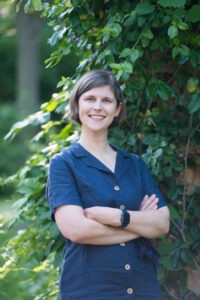
Betsy Bird is currently the Collection Development Manager of the Evanston Public Library system and a former Materials Specialist for New York Public Library. She has served on Newbery, written for Kirkus, and has done other lovely little things that she'd love to tell you about but that she's sure you'd find more interesting to hear of in person. Her opinions are her own and do not reflect those of EPL, SLJ, or any of the other acronyms you might be able to name. Follow her on BlueSky at: @fuse8.bsky.social
ADVERTISEMENT
ADVERTISEMENT
SLJ Blog Network
One Star Review, Guess Who? (#237)
And Then There Were None (The Manga Adaptation) | Review
Unconventional Narratives in Newbery Contenders
From Policy Ask to Public Voice: Five Layers of Writing to Advance School Library Policy
A Bad God’s Guide to Fart Jokes and Philosophy, a guest post by Louie Stowell
ADVERTISEMENT